


首頁Thailand

搜尋歷史
熱門搜尋
經銷商登入 / 註冊

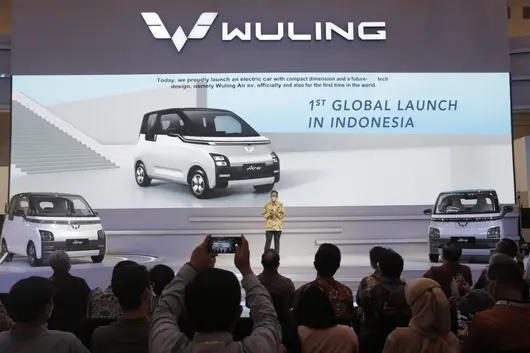
Wuling is experiencing a strange misalignment in Southeast Asia.
The micro EV nicknamed 'Diced Pepper Fish Head' domestically has a rather limited presence in the Chinese market. However, in Indonesia, it is the 'national miracle car' that has entered thousands of homes. Meanwhile, in Thailand, the Wuling Starlight 730 MPV quietly took the sales crown, even local officials started riding it for outings.
However, just as Wuling started to taste the sweetness, a bucket of cold water from Southeast Asia was already ready.
'Diced Pepper Fish Head' Finds Second Spring in Southeast Asia
Wuling Air EV, called Clear Sky domestically, sold only about 50 units in China throughout 2025, basically equivalent to 'non-existent'.
But in Indonesia, this is the true 'national miracle car'.
In 2022, Air EV entered the Indonesian market, selling over 8,000 units that year, capturing 68.7% of Indonesia's annual EV market share.

By 2025, Air EV was still the number one in Indonesia's urban micro EV sub-market, with annual sales nearing 3,900 units, far leaving VinFast VF3 and Seres E1 behind. From entering Indonesia in 2022 to 2025, Air EV cumulatively wholesale about 22,000 units.
A micro EV that almost no one wanted in China has become the 'national EV' in Indonesia. The reason is simple: cheap. Except for Indonesia, in Southeast Asian countries like Vietnam and Thailand, the price of micro EVs is becoming increasingly 'very low price'. Buying a four-wheeled electric car that can shelter from wind and rain costs about the same as buying a high-end scooter.
For cities like Jakarta, Bangkok, and Hanoi with high population density and traffic congestion, micro EVs are naturally a better option.
MPV Tops Sales, Even Thai Officials Love to Ride It?
If Air EV is 'so cheap it's irresistible', then the rise of Starlight 730 in Thailand follows a different logic.
In August 2026, Wuling Starlight 730 sold 897 units in a single month, taking the Thailand MPV sales crown.

In Thailand, Starlight 730 is renamed Darion EV, focusing on pure electric models, competing with Toyota Alphard and other gasoline vehicles in a different segment.
Darion EV mainly targets business reception scenarios, especially enterprises and institutions that need dignified reception but don't want to spend too much money. In Thailand, MPVs are the main model for business and official travel. With the combination of pure electric + large space + side sliding doors, Starlight 730 entered the MPV market long dominated by Japanese cars.
Southeast Asia Suppresses Chinese Cars, Wuling's Cheap Cars May Bear the Brunt First
However, tall trees catch the wind; Southeast Asia has already started hitting Chinese cars hard.
Thailand is tightening tax policies on Chinese EVs. On September 10, the Thailand National Electric Vehicle Policy Committee agreed in principle to introduce a three-tier consumption tax rate structure, where the consumption tax for purely imported models increased from 10% to 31%-39%.
To put it plainly, whoever builds in Thailand enjoys low tax rates; whoever only imports complete vehicles from China has to pay heavy taxes.
For Chinese brands like BYD, Great Wall, and Changan that have already built factories in Thailand, this hurdle might be passed. But for Wuling, the situation is completely different.

Wuling's main products in Thailand are exactly those high-volume models launched in import form. The Starlight 730 took the sales crown in Thailand, relying on pure electric + large space + relatively affordable prices. If the consumption tax on imported complete vehicles is significantly raised, this price advantage will be directly eaten up.
More importantly, Wuling's core competitiveness is 'extreme cost-performance'. People who buy Wuling are very sensitive to prices. Fluctuations of a few thousand baht could change decisions, let alone increases of tens of thousands of baht.
Thailand is not the only tightening market. Although Wuling has already set up a factory in Indonesia, localization requirements are also continuously increasing. Malaysia and Vietnam are also raising the threshold for imported EVs. Southeast Asian countries are shifting from 'welcome Chinese cars to sell' to 'require Chinese car companies to build'.

The explosion in sales of Wuling's 'Diced Pepper Fish Head' and the MPV sales crown in Southeast Asia are real tangible achievements. But Thailand's new tax policy reminds us of one thing: In Southeast Asia, the window period of selling cars without building factories is closing.
For Wuling, whose core competitiveness is 'cheap', this problem is particularly difficult to solve. Building a factory in Thailand means higher fixed costs and a longer return cycle; not building a factory, price advantages will be quickly eaten up by taxes.
It can be said that what Wuling does next in Thailand will be a key sample for Chinese car companies in Southeast Asia shifting from 'selling cars' to 'taking root'.
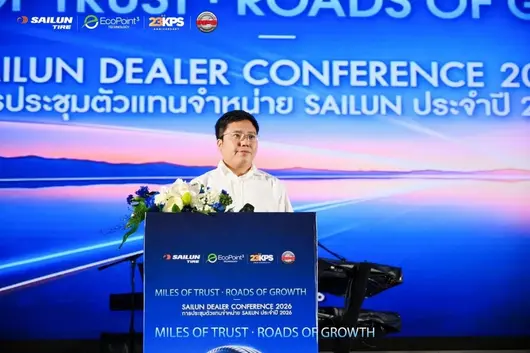
September 12, the Sailun Group Thailand Partners Conference concluded successfully in Bangkok. The on-site ordering session was incredibly popular, and the dealers' high enthusiasm for ordering became the most direct "vote of trust" for Sailun's product value and market prospects.

Executives Set the Tone: Boosting Thailand, Deepening Asia
At the conference, Cao Guoqiang, Assistant to the President of Sailun Group and General Manager of the Asia Region, made it clear: Sailun will continue to rely on the global R&D system, smart manufacturing capabilities, and supply service network, further increase resource investment and business support for the Thai market, and provide long-term value for partners with more competitive product portfolios, more stable and efficient supply chain guarantees, and localization services closer to the terminal.

Kitikorn Nilratanakul, CEO of KPS Company and a long-time Thailand partner, emotionally recalled the history of cooperation between the two sides, stating that the relationship between Sailun and KPS had long transcended business dealings, "upgraded to strategic partners who achieve each other and grow together".

Zhang Tianyu, General Manager of the Sales Center in Thailand for Sailun, revealed the "battle plan" for the Thai market: deeply penetrating markets and channels, strengthening product layout, brand building, and terminal empowerment, and converting technical advantages into tangible market growth.
EcoPoint³ Becomes the Spotlight, Tackling Rainy Season Pain Points Head-On
The biggest highlight of the conference was the special presentation of the EcoPoint³ product. Aiming at the typical working conditions of Thailand's long rainy season and slippery roads, Sailun used the form of "theme video + professional explanation" to fully show the core strength of this tire in drainage performance, wet grip, handling stability, and braking safety.
The video used "Meeting in the Rain" as the narrative theme, presenting real scenes such as mountain roads, urban commuting, and wet braking one by one, turning technical parameters into visible and tangible road experiences, and receiving an enthusiastic response on the site.

Roundtable Dialogue: Chinese Tire Brand Perception is "Shifting Gears"
In the Roundtable Talk session, five industry guests from the fields of wheel customization, automotive aftermarket, and tire service engaged in a deep dialogue. The real feedback from the front line has significant signal meaning: Thai consumers' attention to Chinese tire brands is gradually shifting from price dimensions to technology, quality, and comprehensive performance, and Sailun's brand recognition in the local market is continuously climbing.
During the conference, an awards ceremony for outstanding partners was held simultaneously, with heavy trophies paying tribute to every peer who explored side by side with Sailun.


At a time when global trade barriers occur frequently, Southeast Asia has become the core battlefield for Chinese tire enterprises going global. Sailun has both localized production capacity and continuous deep cultivation of channels in Thailand. The scene of the booming ordering at this conference confirms: "rooted in the market" with technical innovation and localization services is giving Sailun acceleration on the Chinese tire going global track.

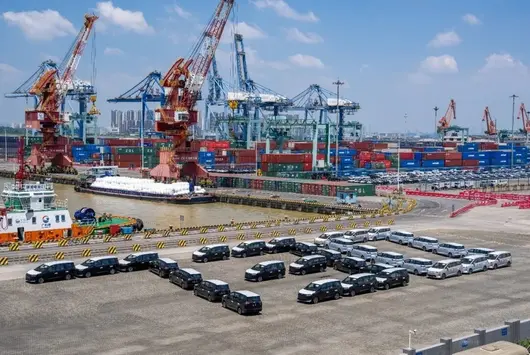
The road for Chinese new energy vehicles going global is not as smooth as imagined. Competition in overseas markets is also not as easy as imagined.
For overseas consumers, local products and Japanese products still have irreplaceable appeal.
Except Starlight 730.

While achieving 10 consecutive months of sales champion in the 150,000 RMB MPV category domestically, Starlight 730 also beat Japanese MPVs in the Thailand market, securing the sales champion title for all MPV categories in Thailand in August.
Why can an MPV originating from China break the monopoly of local Japanese MPVs and win the favor of high-net-worth users in Thailand?
In the Japanese MPV Home Ground, Overturning, What Is the Reason?
The Southeast Asian market has always been a major destination for Chinese automobiles going global, with Thailand being the most critical. However, in this vast market with high acceptance of new energy vehicles, Japanese brands have always dominated the MPV category.
Complete production supply chains, long-established car purchasing concepts, and various combined factors make local families and enterprises tend to prioritize Japanese MPVs when purchasing.
However, precisely under this market background, Starlight 730 from SAIC-GM-Wuling "surpasses from behind", taking the first sales place for all categories of MPVs in Thailand in August.

Starlight 730 reaching the top was not only about making the product well, but also a comprehensive breakthrough from production supply to consumption habits. The gold content of this achievement goes without saying.
More noteworthy is that Starlight 730 did not just rely on outstanding product strength to achieve hot sales among family user groups. Government and enterprise procurement, high-end hotel cooperation orders, also occupy a very key proportion in Starlight 730's sales composition.
Unlike family users who value product configuration and price more, government and enterprise as well as high-end hotels often rank product reputation and recognition as the first priority when purchasing. Because in commercial occasions, the product's tag attribute is the primary attribute.
And Starlight 730 receiving dual recognition from private and commercial markets, being accepted by different circles of users in Thailand, means Starlight 730 is not only relying on high quality-price ratio, but also achieving a surpass of Japanese MPVs represented by Toyota Alphard in brand power and social attributes.

This is not one voice or a corner, direct data can corroborate.
According to the survey of owners targeting the Thailand local market, Starlight 730's purchasing group is mainly the backbone of society. Specifically manifested, users aged 30-50 account for 76%, this age group has passed the stage of valuing vehicle freshness, paying more attention to a car's social value and long-term experience.
Additionally, in Starlight 730 users' career distribution, business personnel, company employees, and civil servants合计 account for 87%, among them business personnel account for 38%. 63% of owners convert monthly income above 10,000 Yuan, 25% of owners monthly income exceeds 20,000 Yuan, belonging to the high-net-worth circle of Thailand locals.

More noteworthy is that among Starlight 730's Thailand users, 47% of owners directly chose full payment. The reason behind this is not that Thailand users have sufficient budget and no money problem, but rather they have given full confidence to Starlight 730 and SAIC-GM-Wuling brand.
Why did Starlight 730 gain recognition from the Thailand high-net-worth group? Why can Starlight 730 receive consistent appreciation from commercial and home consumer groups at the same time?
We still answer with direct and objective numbers.
Taking home use as an example, in Starlight 730's family user group, 91% of owners' family population is 3 people or more, the proportion of large family user groups with more than 5 people is nearly 40%.

Multi-person families focus most on riding comfort and overall vehicle safety. Starlight 730 with electric sliding doors, 7-seat layout, and long range and large space, has perfectly aligned with family users' travel needs.
To gain recognition from Thailand local consumers, to achieve surpass in a market with 80% market share of Japanese MPVs, the most essential reason is Starlight 730 precisely met consumer needs, and achieved higher satisfaction than Japanese MPVs on this basis.
When merchants, doctors, civil servants and other high-net-worth groups choose Starlight 730, they have already jumped out of the fixed concept of "Only Japanese Brand Theory" because of Starlight 730's solid product strength and stable product reputation brought strength.
What they pay for is not a brand's logo and nationality, nor brand premium, but the value of the product itself behind the brand.
Starlight 730, has such high value.

The Right Product, The Right Model, Can Only Have Successful Going Global
In the process of going global, a point easily misunderstood is that product demand in different markets is vastly different. Another point easily overlooked is that the underlying demand of global families for vehicles is actually highly consistent.
For example MPV, whether China or Thailand consumers, the most underlying demand is spacious space, comfortable experience, and anxiety-free car use. Even commercial groups, increase high demand for social attributes on this basis.
Therefore when building an MPV, Starlight 730 did not isolate user groups by nationality, but to observe, understand and present the universal demand of global consumers for an excellent MPV.

For example dual side sliding doors standard on the whole series, on the basis of providing 9 control methods, also equipped with intelligent anti-pinch function, handle set at B-pillar. For family users, a series of details humanized design can facilitate elderly and children getting on and off. For commercial users, this series can make passengers get on and off more calmly and decently, letting users feel respected in details.
Taking power form as an example, Starlight 730 is based on the same-level leading "Tian-Ling-Shen" Wuling Native New Energy Technology Base, native adaptive plug-in hybrid PHEV, pure electric EV, fuel three power forms, bringing same-level unique "One Car Three Powers", giving choice power to users.

Including 2+2+3 true seven-seat layout, pure electric version 500km range (under CLTC conditions), these configuration performances show spacious, worry-free experience that MPV users of different professions, different purposes, different nationalities need and want.
In the past, before Starlight 730 appeared, for Thailand MPV users it was not not getting satisfied. It was only Japanese MPVs could give a passable satisfaction, and was under the premise of high prices, needing price add-ons, and money add-ons for options. Consumers did not turn to Japanese MPVs completely voluntarily, but helplessly had to choose Japanese MPVs with higher cost.
Until Starlight 730's appearance, their underlying demand was seen by brand's preliminary market research.
Worthy of other brands wanting successful going global to learn from is, Starlight 730 since development start, relied on SAIC-GM-Wuling smart island manufacturing system, completed vehicle manufacturing with international standards. The result brought by this way is, whether domestic or overseas markets, users get good products that are not compromised and treated differently.
Also this is why, Starlight 730 can grab the title "Double Champion".

When a brand is building a global product, with the world's highest standards self-requirement, then such product regardless placed in any regional market, will not be obscured.
Not making distinction, but achieving highest standard, "Uniform standard for all cars". In this way, Starlight 730's reputation will be accurate everywhere.
This also reminds other brands, in the new stage of Chinese automobile going global, solely relying on low prices has become hard to enter mature markets. Universal and hardcore product power, deep localized operation, stable and reliable quality, is the correct key to open global markets.
Final Words
Domestic market consecutive 10 months take 150,000 within MPV sales first, Thailand August all categories MPV sales first. Bright "Double Champion" title, behind is new energy largest market, most frontier position strength recognition, and overseas mature market's test and appreciation of this global car product power.
When global consumers are becoming more rational, not blindly worshipping brand premium halo, when global consumers are requiring higher and higher, not stopping at "Have to" and "Good Enough", when global new energy vehicle industry goes to maturity, after waves washing sand, what remains is products with both face and substance.
Starlight 730 is such product, but not the last such product of SAIC-GM-Wuling.

A domestic MPV has been in Thailand for less than half a year, in August it directly claimed the top sales spot, selling 897 units, finally pushing the perennial market leader Toyota Alphard/Vellfire to second place with 477 units. This car is the Wuling Starlight 730, called Starlight Darion EV in Thailand. Let's look at the data, the 2025 Thailand MPV full-year sales champion was the Toyota Alphard 5,438 units, the Starlight 730 was only officially launched in Thailand in March 2026, began delivery at the end of April, until July only sold 157 units, the result of August directly reached 897 units, monthly sales nearly 6 times growth directly surged to first place, this explosive power is too strong. Why can it explode? Actually there are 2 reasons, product fits the market, price is right.

Thailand is a typical multi-member family society, having 3-4 generations go out together is normal, large 7-seater MPV is a must-have. Starlight 730 car length 4.91 meters, wheelbase 2.91 meters, 2+2+3 true 7 seats, electric sliding doors, elderly and children getting on and off car convenient, fully stepped on Thai family demand. In terms of power 150 kW front-drive motor, 69.2 kWh LiFePO4 battery, NEDC range 500 km, charge from 30% to 80% less than 20 minutes, Thailand so hot weather, turn on AC not too worried. Most critical is price, 839,000-899,000 Baht, converted to RMB about 168,000-180,000.

The same level Toyota Alphard in Thailand start price already exceeds 3 million Baht, almost is Starlight 730 three times more, also long-term markup, oil price now fluctuates so much, you say Thai family who not willing to spend little money to do big things, same is large 7-seater MPV, Starlight 730 configuration still higher, price only one third, so August championship not accidental, is natural, Japanese MPV one third price, give to larger space, more complete configuration and lower usage cost, just hit Thai ordinary family pain point, this is Chinese new energy vehicle going global occupy Southeast Asian market logic.

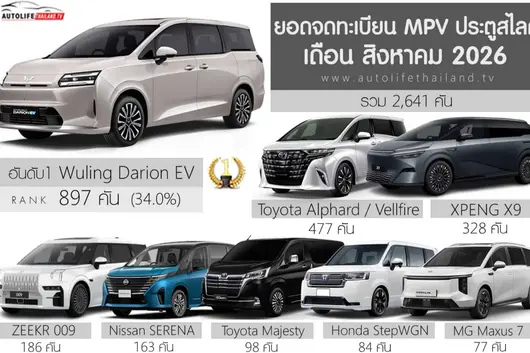

This news is truly exciting. Data shows, Starlight 730 overseas right-hand drive version Darion EV took the No. 1 registration volume in Thailand's August MPV niche market, with market share exceeding 34%, overpowering Toyota Alphard, Vellfire, Nissan Serena and other traditional Japanese MPV competitors. Meanwhile in the domestic market, since its launch, Starlight 730 has been the MPV sales champion under 150,000 RMB for 10 consecutive months, successfully securing ten consecutive championships in the niche market, truly achieving "flourishing both at home and abroad".
From the domestic 10-time champion national family MPV to the preferred car in Thailand that broke the Japanese monopoly, Starlight 730 proved one thing with solid results: excellent family cars know no borders, all-round capability is the biggest pass, and Starlight 730 has become a genuine "global car".
Behind Breaking the Japanese Monopoly in the Thailand Market
Anyone familiar with the Southeast Asian auto market knows, Thailand is the "absolute home court" for Japanese MPVs. Decades of in-depth layout have allowed Japanese brands to long-term occupy over 80% of the local MPV market share. For a long time, for domestic brands to break through in the Thailand MPV market can be said to be harder than reaching the sky.
But the arrival of Starlight 730 (DARION EV) completely broke this solidified pattern. Relying on cross-level product configuration, comfortable family experience, and reliable quality assurance, it secured the August Thailand MPV sales champion across all categories in one go, successfully shaking the Japanese monopoly pattern.
It is worth mentioning that Starlight 730 (DARION EV) Thailand official price is about 900,000 Thai Baht (about 176,000 RMB), while same-level Nissan Serena, Toyota Previa and other mainstream family MPV Thailand prices also reach 950,000-1,100,000 Thai Baht. In other words, Starlight 730's victory in the Thailand market does not rely on price advantage, more so relying on hardcore product power.
Official data also shows, the core age group of Starlight 730 Thailand car owners is concentrated in 30-50 year old young and middle-aged groups, accounting for up to 76%. User occupations are mainly business practitioners, corporate employees, civil servants, these three groups account for a total of 87%. Among them, business people account for the highest, reaching 38%, which is the preferred home and business dual-purpose car for local SME owners. These data are enough to confirm the high recognition of the high-end circle on Starlight 730 product strength and brand quality, definitely not a low-end commuter substitute, but rather a choice of quality that transcends levels.

Thai users' car buying preferences more accurately highlight Starlight 730's differentiation advantages. Data shows, local consumers choosing cars prioritize electric sliding doors, seven-seat layout and whole vehicle appearance texture, long range and large space follow closely. While Starlight 730's dual side sliding doors, ultra-large comfortable seven-seat space, worry-free range, minimalist atmospheric appearance styling, precisely hit the travel pain points of overseas high-end families. Whether it is daily family multi-person travel, business reception, or suburban long-distance travel, it can both balance decency and practicality. This is also the core password for it to surpass many joint venture and imported models, topping the Thailand MPV market.
10-Time Championship Forges National Family MPV Benchmark
While breaking through the circle strongly outside the wall, Starlight 730 has always firmly sat in the benchmark seat of the same level in the domestic market, with heat and reputation continuing to lead the industry. Since launch, Starlight 730 relied on precise family positioning and all-around product strength, consecutive 10 months champion of MPV sales under 150,000 RMB, becoming the preferred ride for Chinese happy families.
Why can Starlight 730 become legendary in the 150,000 RMB MPV market since launch, it is actually "no tricks, all sincerity".
First, exceeding many people's expectations is that Starlight 730 full series standard dual side sliding doors, can also option right side electric sliding door, supports nine smart opening methods, comes with anti-pinch protection, silky quiet, safe and decent, can be said to have both face and substance, good looking and practical. Need to know this in previous 200,000 RMB class MPV was also high to mid trim only configuration, same-price competitors almost had it cut across the board.
Safety and comfort dimensions are even more fully cross-level. Starlight 730 mid-high trim models equipped with 540° panoramic transparent image, far exceeding conventional 360° vision, completely eliminate large vehicle blind spots, solve family travel safety pain points. Paired with high-order NVH whole vehicle quiet calibration, rear privacy glass, high-speed quietness, driving quality benchmarking high-end MPV. Safety level equipped with 75.6% high-strength steel six-ring cage body, local steel strength reaches up to 1,500 MPa, paired with full set of active/passive safety configurations and Shenlian battery protection, max out the family safety bottom line.
At the same time, the new car also has auto-constant temperature AC, auto headlight, sensor wiper, etc. 200,000 RMB class comfort configurations, same level unique fuel, plug-in hybrid, pure electric three power layout, adapt to all scenarios travel, also ultra-low usage cost. Different from competitor single item configuration gimmick cross-level, Starlight 730 achieves safety, comfort, intelligence, convenience all-around inclusive cross-level, no high-low trim pathing, no harvesting premiums, far exceeded users' expectations for 150,000 RMB class models, letting 100,000+ RMB family MPV possess comfort, intelligence and safety texture far exceeding same price, even cross-level models. This is also the core confidence for Starlight 730 to lead the domestic market long-term, gaining trust of thousands of families.
Redefining Global Family MPV New Standards
Domestic 10-time championship is consumer's high recognition of Starlight 730's all-around strength; Thailand sales champion is global market's authoritative stamp on Starlight 730's product power. One inside one outside, double-line blossoming eye-catching record, is definitely not accidental, but is Starlight 730 "with user demand as core, with hardcore quality as foundation" inevitable result.
In domestic, it understands ordinary families' pragmatism and restraint, does not make premium tricks, does not pile flashy configurations, using friendly price, all-around experience, solve multi-population family travel's all pain points, become national-level family MPV. Overseas, it breaks foreign brand monopoly bias, with cross-level configuration, high-end texture, reliable quality, conquer overseas high-net-worth circles focusing on travel decency and comfort, prove China intelligent manufacturing's hardcore strength.
From product overseas, quality overseas to brand overseas, Starlight 730 using dual sales champion record, rewrote global MPV market's inherent pattern, using strength reshape industry value system. Can be said, Starlight 730's two-way legend status, is not only a model's success, but best witness of China auto from "follower" to "definer", let the world see China family MPV's true strength and warmth.


On August 13, the US White House released the report "The Great Transshipment Scam (Large-Scale Transshipment Scam)", placing Thailand on the Level 2 Risk Nation list, compounded by Thailand's continued ramp-up of tire market enforcement.
The gray path previously prevalent among some domestic tire traders and small-to-medium enterprises to evade US tariffs via "Thailand Transshipment Origin Laundering" has officially been declared invalid, sounding a compliance alarm for the entire tire export industry.
Thailand-origin gray transshipment has been officially classified
For a long time, suppressed by the high US dual anti-dumping tariffs on Chinese tires, domestic direct tire exports to the US have been costly. Some market players chose two completely different export routes: leading enterprises invested heavily in physical factories in Thailand, completing the full tire manufacturing process of rubber mixing, calendering, and vulcanization, obtaining a legal "Made in Thailand" status.
While another group of traders and small enterprises shipped finished domestic tires to Thailand, only changing packaging, tampering with sidewall labels, simple warehousing and assembly, and forging certificates of origin, exporting to the US under the name of Thai products to circumvent high tariffs, becoming a public gray operation in the industry.

US AI Full-Chain Strict Inspection
The American report this time directly classified such false transshipment as a systemic abuse of international trade rules. After Thailand was listed as a Level 2 Risk nation, US Customs upgraded inspection of tires exported from Thailand to the US from random sampling to normalized in-depth traceability verification.
The newly launched Detective Border AI inspection system is no longer limited to auditing paper customs declaration documents. It can cross-reference freight trajectories, corporate equity, and cargo characteristics, locking in high-risk containers before cargo arrives at the port.
More critically, the scope of accountability has expanded. Source factories, traders, overseas warehousing and processing parties, freight forwarders, and all subjects in the supply chain must bear compliance responsibilities, no longer just penalizing declaration enterprises.
Thailand Strict Crackdown on Tire Origin Fraud
Not only is there US pressure, local Thai regulations are also tightening simultaneously.
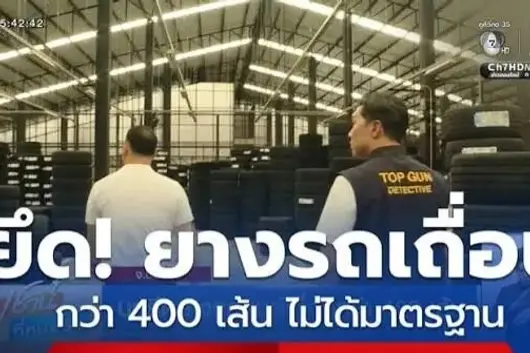
On August 20, a special investigation team from the Thai Ministry of Industry raided tire warehouses in Nonthaburi Province, seizing 408 defective tires. The case value was nearly 2.5 million Baht. Many tires lacked certification labels, and labels were manually tampered with. The involved brands have not yet been disclosed publicly.

Thai officials clarified that they will strictly check tire sources from both import and manufacturing ends. Violating entities face fines up to 500,000 Baht, 6 months imprisonment per Sina Finance.
At the institutional level, the Trade Department of the Thai Ministry of Commerce (DFT) completed the upgrade of rules of origin. All certificates of origin have been migrated to the e‑Service digital platform for online processing, divided into two major categories: General Certificate of Origin, Preferential Certificate of Origin.
To obtain genuine and valid "Made in Thailand" qualifications, tire products must meet one of five major conditions: Completely originated, substantive change in tariff classification, Regional Value Content (RVC) meets standards, meets tire category specific standards, adapts to differentiated requirements of the export destination country. Simply changing cardboard boxes or pasting labels cannot meet substantive processing standards, and legal origin status cannot be obtained. Enterprises using false certificates will face risks of cargo seizure and heavy fines.
Export Capacity Structure Accelerates Differentiation
The tightening of dual regulation by the US and Thailand will have a disruptive impact on the domestic tire export landscape. The industry formally welcomes compliance-driven reshuffling, with the differentiation between good and bad further exacerbating. This is mainly reflected in three dimensions:
First, the gray transshipment model has reached its end. Traders relying on warehousing and origin laundering arbitrage find their survival space sealed shut. For subsequent exports to the US, paper documents can no longer guarantee customs clearance. AI penetrative checks will trace the entire supply chain source of goods. Relying on luck makes it highly likely to face serious consequences such as cargo seizure, repayment of huge tariffs, and companies being placed on the US blacklist.
Second, distinguish "true factory construction" from "fake processing", further highlighting the value of overseas physical production capacity. Chinese tire factories that truly complete the full tire production process in Thailand, meeting hard standards for origin such as local value addition and tariff classification change, are not impacted by this rectification. Meanwhile, pseudo-overseas projects that only build warehouses without core production processes, merely relabeling and repackaging, will continue to face dual inspection pressure from both the US and Thailand.
Third, industry compliance costs rise, increasing pressure on small and medium foreign trade tire enterprises. Enterprises need to fully retain material procurement, production process, and cost accounting ledgers to respond to customs traceability verification at any time. Certificates of origin must be applied for through the Thai official system, eliminating third-party false certificates. In the future, tire exports will not just compete on price, but on supply chain compliance capabilities.

Core Points for Enterprise Compliance Export
CheYuanCheChe reminds, facing the new situation of current industry regulation, combining the latest rules of the US and Thai parties, tire foreign trade enterprises need to comprehensively adjust their export models, strictly adhere to compliance bottom lines. Core practical points are as follows:
1. Completely abandon the arbitrage thinking of origin laundering. The US AI inspection system can penetrate logistics, equity, and capital flow to identify false transshipment. The risk has been transmitted to the entire chain;
2. For Thai tires exported to the US, corresponding HS codes need to be verified, clarifying the applicable Tariff Change (CTC) or Regional Value Content (RVC) standards, fully retaining complete production, procurement, and cost archives;
3. All certificates of origin must be applied for through the Thai DFT official e‑Service platform. Reject non-formal false certificates of origin circulating on the market;
4. Even if local Thai origin rules are met, they must also adapt to the strict verification standards the US imposes on Level 2 Risk Nations. Be prepared to face on-site verification in advance.
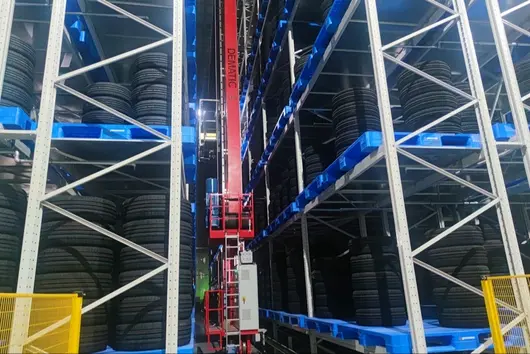
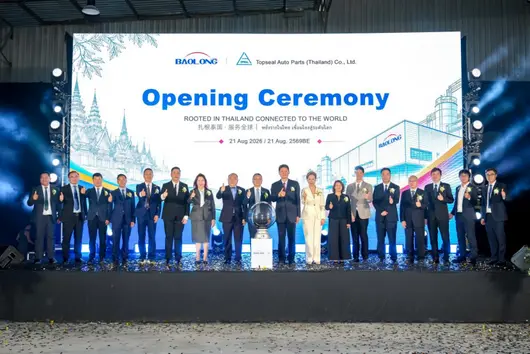
August 21st, Balong Technology Thailand Topseal Thailand Production Park held a grand opening ceremony. Local government officials, core industry partners, executives from Balong Technology, joint venture partners, and the joint venture company, as well as media representatives, attended together to witness an important milestone in Balong Technology's globalization strategy process, marking the official launch of the localized valve stem intelligent manufacturing platform for global supply.

The park is located in Wincost Industrial Park, Takham Subdistrict, Bang Pakong District, Chon Buri Province, Thailand, specializing in the production of automotive rubber valve stems and metal valve stems, with a planned annual capacity of 150 million valve stems, serving as a key cornerstone of Balong Technology's global layout. This project is not only the implementation of a modern production workshop but will also build a localized intelligent manufacturing platform facing the globe, integrating local R&D, manufacturing production, supply chain support, and customer service systems, to provide high-quality products and services for global customers with more efficient and faster response capabilities.

Against the backdrop of global supply chain restructuring, the opening and production of the Thailand factory is not only an extension of capacity but also a key strategic move by Balong Technology to practice the "Strengthening and Securing Chains" strategy and enhance the supply chain's risk resistance capability. The Thailand park will connect with Balong Technology's global production network to mitigate risks of single production sites, build a wider coverage and faster response high-resilience global supply chain, and bring stable and reliable supply guarantees for global customers. In the future, Topseal Thailand will continue to deepen operations, create long-term customer value with benchmark manufacturing capabilities, and assist Balong Technology in advancing steadily in the global automotive industry competition.

On August 20, the Thai Ministry of Industry's special investigation team raided a tire warehouse in Nonthaburi Province, seizing 408 substandard tires with a case value of nearly 2.5 million Baht.

Among them, 314 tires lacked standard certification labels, and 94 had tampered label information. Although Thai authorities have seized all involved tires, they have not released the specific brands involved, leaving the brand a mystery. Thai authorities clearly stated that the next step will be to strictly investigate the sources of tires from both import and manufacturing angles, with violators of illegal sales facing a maximum fine of 500,000 Baht and up to 6 months in prison.

This raid was not an isolated incident, but a continuation of Thailand's continuous rectification of problematic tires in recent years. In 2025, Thai police seized about 74,500 tires suspected of illegal processing in Rayong Province. Some products had grinding marks on the sidewalls, and brand names and production dates were artificially removed. Related cases implicated some Chinese tire brands, causing negative impact locally. In April of the same year, foreign media disclosed that a Chinese-funded tire manufacturer was suspected of smuggling defective tires into Thailand. After illegal modification and relabeling, they were sold as new tires, even with "Made in Thailand" labels intended for export to third countries. The Thai Ministry of Industry attached great importance to this and expressed concern that such behavior could damage the global reputation of "Made in Thailand".

On the manufacturing end, the Thai factory of Chinese-funded enterprise Pullman Hsin (01809.HK) also went through a "Compliance Controversy". In August 2025, the Industrial Estate Authority of Thailand (IEAT) was reported by media to order the "permanent closure" of the factory, accusing it of systematic violations such as illegal production without TIS certification, tearing off tire production dates, and illegal disposal of over 65 tons of hazardous industrial waste. However, Pullman Hsin stated in its announcement that it only received a "temporary production stop notice", attributing the issue to violations in carbon black packaging bag disposal and pending acceptance of emissions from expanded production lines. After rectification and a 28-day "observation period", the factory announced a temporary production stop again on September 5. The severe accusations in the official report contrasted sharply with the light-handed tone of the corporate announcement, making the truth of the event murky.


The regulatory storm in Thailand targeting the tire industry reflects the complex compliance environment faced by Chinese enterprises going global. In this industry reshuffle, the camp of Chinese-funded enterprises presents "starkly contrasting situations". Enterprises involved, represented by Pullman Hsin, are facing a major test of survival, with production resumption schedules and brand reputations facing uncertainty; while enterprises such as Zhongce Rubber, Linglong Tire, and Sentinel that strictly comply with local regulations continue to surge ahead in the Thai and global markets.

Industry insiders pointed out that with stricter global ESG standards, the tolerance of host countries for environmental protection, quality, and certification has dropped to freezing point. The "cost advantage" and "policy benefits" that Chinese tire enterprises once relied on are being replaced by high "compliance costs". Transforming from "unbridled expansion" to "compliant operation" and internalizing compliance into corporate genes has become a threshold that must be crossed in the process of globalization of Chinese manufacturing.

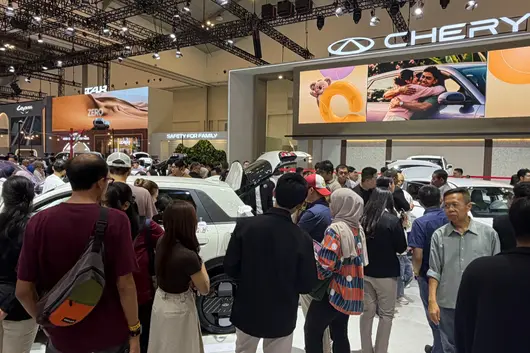
A lively and cute all-electric small car is becoming popular from China to Thailand. In the Chinese market, the CHERY Q new car pre-order received over 20,000 orders in just 2 hours, and orders in the first month after launch broke 56,000 units, showing amazing explosive power.
Now this trend crosses borders and received very good market feedback in Thailand as well: Since pre-orders started at the Bangkok International Motor Show on March 24, orders broke 1,000 units in just ten days; as of June 24 when it officially launched, cumulative orders have forcefully broken 3,000 units.
To live up to high expectations, on July 13, the first batch of over 2,000 CHERY Q units was officially shipped to Thailand from China. All vehicles will first undergo a strict Pre-Delivery Inspection (PDI) process upon arrival, and then be delivered to customers sequentially according to the booking order.
"Four Excellent" Advantages Captivate Thai Local Users
CHERY Q's ability to quickly capture the Thai younger generation is inseparable from its four core advantages of "Good Looking, Big, Good Driving, and Fun". Good Looking - Rounded design aesthetics, with smooth and timeless lines that capture hearts at first sight, combined with telescopic volume design, small and agile yet full of vibrancy.

Big - Although the body is small, the interior is surprisingly spacious, with a 2700mm ultra-long wheelbase bringing the largest in-class interior space comparable to B-segment cars, allowing for comfortable driving and riding. Good to Drive - A 50:50 golden axle load ratio endows agile and precise handling experience, and the APA automatic parking function makes parking effortless. Fun - Intelligent infotainment interaction is smooth and thoughtful, and the interior reserves personalized threaded interfaces, allowing free expansion of diverse accessories, turning the car into a mobile space to express oneself. Pushing "Fun" to the extreme is the highly sought-after Q Talk function.
Q Talk Inquiry Rate Reaches 88%, An "Socializing" Electric Car
According to statistics, the sales point inquiry rate for the Q Talk function at the terminal reaches 88%, and the inquiry rate for the electric front trunk also reaches 76%, known as two major eye-catching tools.

The charm of Q Talk lies in turning the car into a true "social tool". During daily travel, if encountering a motorcycle or vehicle ahead that needs yielding, the driver does not need to roll down the window, just press the button lightly, and a polite and clear prompt will be transmitted outside the car; passing through a small alley and seeing children playing, a warm reminder instantly fills with safety. Even more surprisingly, Q Talk supports voice modulation and external shouting - either humorous and quirky, or warm reminders, easily becoming the focus of street attention, perfectly matching the Thai young people's lifestyle attitude of being willing to express and love to share.
Co-creation by All, Local Inspiration Fully Blooms
The popularity of CHERY Q extends beyond sales figures to the realm of cultural co-creation. Recently, Chery Thailand launched the "All-People IP Design Contest", inviting Thai local designers and enthusiasts to create personalized IP characters and merchandise for CHERY Q. Currently, a large number of submissions full of local charm and imagination have been received.

At the same time, dealer road show activities are continuously expanding across Thailand, allowing more and more consumers to touch, test drive, and personally experience the wonderful interaction of Q Talk at zero distance, spreading the trendy spirit of "So Cute So You" to every street and alley.
Rooted in Thailand, Practicing "In Somewhere, For Somewhere, Be Somewhere"
"The first batch of CHERY Q shipped from China will be delivered into the hands of users, this is another important step we have taken in the Thai market. Behind the orders exceeding 3,000 is the valuable trust of Thai users in the Chery brand." Jim Lee, Brand Executive Director of Chery Thailand, said, "We have established a mature dealer network, service centers, and after-sales service teams, going all out to bring an electrifying travel experience beyond expectations to every Thai user."

The hotness of CHERY Q in Thailand is not only a victory of product power but also a resonance of brand, culture, and user emotions. It accurately echoes the marketing slogan "So Cute So You" in the Thai market, and more authentically interprets the deep core of Chery's globalization strategy - In Somewhere, For Somewhere, Be Somewhere. With Thailand as an important localization base, Chery is integrating into this land of smiles in all dimensions, from product definition to user co-creation, from service details to lifestyle. In the future, Chery will continue to center on Thai users, bringing more innovative, reliable, and fun electric vehicles, truly becoming a "brand belonging here" in the hearts of Thai consumers.

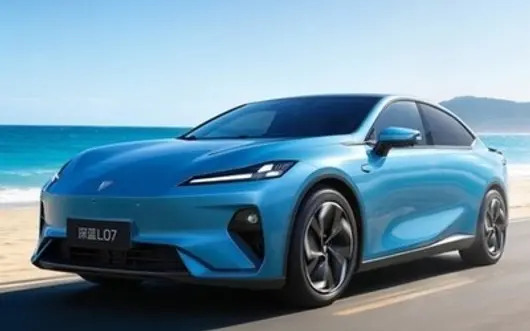
[CNMO Tech News] August 10, according to statistics compiled by blogger @EVOutbound, from 2024 to the first half of 2026, Deep Blue Cars have gone overseas for two years, covering 17 countries, with cumulative sales of 31,588 units.

Deep Blue L07
The statistics chart shows that Deep Blue's cumulative sales volume in the Thailand market is 19,235 units, accounting for up to 61% of the cumulative overseas sales volume. Specifically, sales volume in the Thailand market was 5,617 units in 2024, 7,824 units in 2025, 5,794 units in the first half of this year, with a monthly average stable at 800-1,000 units. The two models, Deep Blue L07 and S07, have successfully validated the business model in the Thailand market, and brand awareness has been initially established.

CNMO Tech learned that besides the Thailand market, the remaining overseas markets are still in the early volume expansion stage. Israel ranks second with 4,227 units (share 13%); the UK and Spain rank afterwards with 1,770 units (share 6%) and 1,753 units (share 6%) respectively. Australia and Norway cumulative sales are 1,218 units and 1,108 units, with shares of 4% each. Another 11 countries have sales volumes under 1,000 units each, presenting the characteristic of "wide country coverage, low sales per country". Worth noting is that the European markets such as Spain, UK, and Norway are gaining volume in the first half of 2026, but the absolute scale remains limited.
According to the blogger's analysis, Deep Blue adopted the "single-point breakthrough + regional replication" overseas expansion strategy, first concentrating resources to penetrate the Thailand market, then expanding outward. From the data, this strategy has been initially verified in Thailand, and the key for the follow-up lies in whether the European market can be advanced from "having sales" to "having scale".



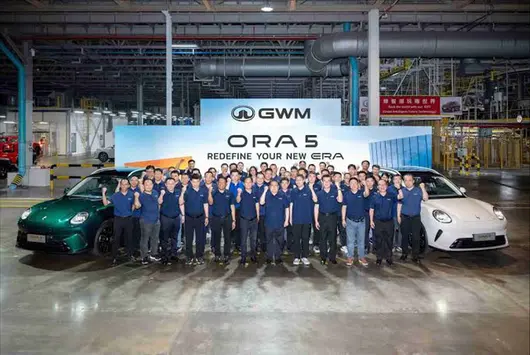
According to Thai media reports, the Federation of Thai Industries (FTI) and the Thailand Automotive Industry Association (TAIA) recently jointly urged the government to formulate more complete local parts policies in the future, encouraging or even requiring electric vehicle manufacturers to prioritize components produced by local suppliers when manufacturing in Thailand, rather than relying heavily on imports.

Currently, including Chinese brands such as BYD, Great Wall, MG, AION, and Changan, have already set up production bases in Thailand, and some models have even started CKD assembly locally. However, industry observers point out that many key parts are still imported from China, making it difficult for traditional Thai auto parts suppliers to truly benefit.
FTI Chairman Suwat Supakandechakul stated that Thailand already has the capability to produce many auto parts, including car seats, wiring harnesses (Wiring Harness), windshields, and other products, and local suppliers are fully capable of meeting factory needs. If these parts can be prioritized for Thailand manufacturing, it not only reduces overall production costs but also allows the local parts industry to gain greater development space.

In addition, he also suggested that the government could provide tax incentives (Tax Deduction) and other reward measures for factories with a higher proportion of local parts used, further encouraging factories to increase their localization rate, and even hoped that in the future, even high-value parts like chassis (Chassis) could be gradually realized for local production.
Besides supporting the local supply chain, Thailand's automotive industry also worries about the continuous changes in the international trade environment. Industry observers point out that the US has continued to strengthen inspections on "transshipment (Transshipment)" in recent years. If products exported to the US have most parts still from China and only assembled in Thailand, they may face stricter tariff inspections in the future, even affecting export competitiveness.
Therefore, increasing the proportion of local parts usage can not only strengthen Thailand's automotive industry competitiveness but also help reduce future international trade risks. On the other hand, the Thailand Automotive Industry Association (TAIA) also submitted several suggestions to the government, including adjusting the consumption tax policy for imported electric vehicles (CBU) to protect the local manufacturing industry.

At the same time, the association also suggested that the government could provide individual income tax incentives for consumers who purchase Thai-assembled cars, encouraging more consumers to choose locally produced models. In addition, government departments should also prioritize Thai-assembled electric vehicles when procuring official vehicles in the future to further drive market demand.
In fact, Chinese brands have invested heavily in Thailand in recent years, not only driving the location to become one of the most important EV production bases in Southeast Asia but also attracting a large number of related industries to move in. However, for the Thai government and local industries, the true goal is not merely to attract factory setup, but to hope these investments can further drive local supply chain growth, benefiting more Thai parts factories, component suppliers, and related employment opportunities.

If the government formally promotes stricter localization policies in the future, Chinese brands will inevitably need to further expand cooperation with local Thai suppliers and increase the proportion of parts procurement, which may become an important direction for Thailand's EV industry development in the future.
It is worth noting that this policy currently still belongs to suggestions proposed by industry groups to the government, not formal regulations. However, with Thailand continuing to promote automotive industry upgrades, whether more clear localization standards will be formulated in the future will become the focus of major factory owners.

[CNMO Tech News] On July 7, Bitauto Ranking released the first half of 2026 and June Thailand Auto Market Brand Sales Top 10. According to data organized by Bitauto based on official Thailand institutions/associations:

BYD
The top 3 brand sales in the first half are: Toyota, Honda, BYD, sales are respectively: 102,006 vehicles, 41,837 vehicles, 25,890 vehicles;
The top 3 brand sales in June are: Toyota, Honda, BYD, sales are respectively: 16,599 vehicles, 6,233 vehicles, 4,824 vehicles.


In the first half brand sales list, Toyota leads the Thailand market with absolute advantage, first half cumulative sales 102,006 vehicles, year-over-year rise 11.3%, it is the only brand in the list with sales breaking 100,000 units. The second on the list is Honda, sales 41,837 vehicles, year-over-year small growth 1.8%.
CNMO Tech notes that BYD, Chery, MG, AION, and Great Wall made it into the top 10 list: BYD ranks third on the list, the number one Chinese brand, first half sold 25,890 vehicles, year-over-year slight increase 0.9%; Chery presents phenomenal growth, ranks fifth, sales 20,163 vehicles, year-over-year surge 1066.8%, growth rate leads the list with a huge gap, becoming a growth dark horse in Thailand's first half market; MG ranks sixth, sales 16,263 vehicles, year-over-year growth 71.5%; AION ranks eighth, sales 10,393 vehicles, year-over-year growth 83.0%; Great Wall ranks tenth, sales 8,703 vehicles, year-over-year growth 62.5%.
Additionally, Isuzu is one of the few brands in the list with year-over-year decline, sales 22,862 vehicles, year-over-year slight drop 0.4%; Ford's drop is more obvious, sales 8,830 vehicles, year-over-year decline 14.3%.


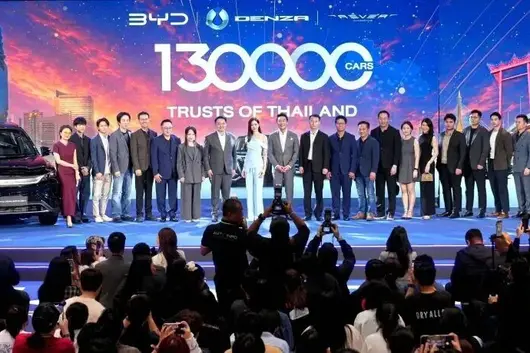
Gasgoo learned that recently, BYD reached an important milestone in the Thailand market, with cumulative deliveries of new energy vehicles officially exceeding 130,000 units. At the same time, the BYD Thailand factory located in Rayong Province WHA Industrial Park celebrated its second anniversary of production, and the new model BYD SEALION 5 DM-i was also officially released.

Image Source: BYD
The BYD Thailand factory is its first overseas passenger car production base, with a designed annual production capacity of 150,000 units. Currently, the factory has achieved localization production for five models: BYD DOLPHIN, BYD ATTO 3, BYD SEAL 5 DM-i, BYD SEALION 5 DM-i, and BYD SEALION 6 DM-i, and all have obtained the "Made in Thailand" (MiT) certification issued by the Federation of Thai Industries.
In two years since production started, BYD in Thailand has continuously deepened its localization development, with significant results: the factory has cumulatively created over 5,000 job positions, Thai employees account for about 93%, and the local parts procurement ratio has reached 50%. This marks that BYD has deeply integrated into the Thailand automotive industry chain, effectively driving local collaborative development.
At the event, BYD delivered the 130,000th new energy vehicle to Thai consumers, the model being BYD SEALION 5 DM-i. The pre-sale price for the Standard version of this model was announced simultaneously, which will further enrich its DM-i product matrix.

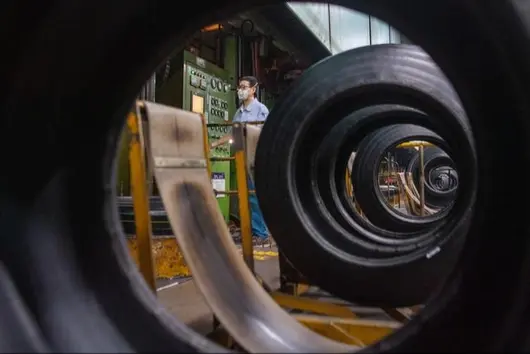
The Thai tire industry faced a structural shift in 2026: on one hand, global demand for electric vehicle tires drove steady growth in passenger car tire exports; on the other hand, truck and bus tires encountered high anti-dumping tariffs in key markets, causing a significant drop in export volumes.
The dual blow of electrification benefits and trade barriers is forcing the Thai tire industry to accelerate strategic adjustments.
EV Tire Demand Boosts Export Value
Latest data from the Thai Trade Policy and Strategy Office (TPSO) shows that Thailand's passenger car tire exports reached $3.88 billion in 2025, a year-on-year increase of 2.1%.Growth momentum mainly comes from the rapid expansion of the global electric vehicle market.

EV-specific tires are typically sold at 1.2 to 1.5 times the price of traditional tires, significantly increasing the unit value of exports.
TPSO pointed out that Thailand is leveraging its status as a globally leading natural rubber production base and its well-developed automotive supply chain to actively advance towards becoming a regional electric vehicle tire production center.
US Market Faces Tariff Divergence
The United States is the largest export market for Thai tires, with exports to the US totaling approximately $2 billion in 2025.
However, the anti-dumping tax rates imposed by the US on tires of different specifications vary significantly: the tax rate for Thai small car tires is 3.16%, still competitive; while the rate for large car tires reaches as high as 30.36%, far exceeding the 15% tariff level for Japanese products.

This led to a 15% year-on-year decline in passenger car tires imported from Thailand in Q1 2026, while truck and bus tires plummeted by 24%.
Some Japanese tire brands have considered moving their large tire production lines back to Japan to avoid high tariffs.
Multiple Countries Initiate Dual Investigations, Commercial Vehicle Tires Become "Heavily Impacted"
The trade blockade facing the Thai tire industry extends far beyond the United States.
The Eurasian Economic Union launched an anti-dumping investigation against Thai truck and bus tires in November 2025, preliminarily determining the dumping margin at 24.17%.

Brazil also issued the final ruling of the second anti-dumping sunset review at the end of 2025, deciding to continue levying anti-dumping duties on Thai tires for five years at approximately $1.35 per kilogram.
It is worth noting that these sanction measures are highly concentrated on commercial vehicle tires with rim diameters of 17.5 to 24.5 inches, reflecting main importing countries' vigilance against the rapid expansion of the Thai truck tire market share.
Nine Measures to Address Challenges
Facing the escalation of trade barriers, Thailand's TPSO has proposed nine policy measures, including raising inspection standards for EV tires, promoting cooperation between tire factories and EV factories, utilizing free trade agreements to expand into emerging markets, etc.
Meanwhile, localized production capacity of Chinese tire companies represented by Zhongce Rubber, Linglong Tire, and Tongyong Shares is rapidly expanding in Thailand. Tongyong Shares' Thailand Phase II project, with an investment of 1.884 billion yuan, has become a typical case of localization.

These Chinese-funded enterprises, on one hand, help Thailand consolidate its position as a tire manufacturing center, while on the other hand, they face potential risks related to origin certification and EU anti-circumvention investigations.
In the future, whether the Thai tire industry can break through in the wave of electrification will depend on the outcome of localization innovation and the game of global trade rules.

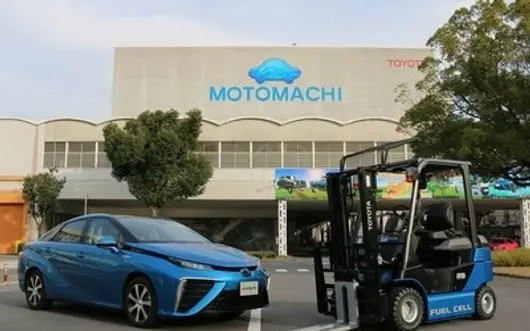
[CNMO Tech News] May 25, the Thai Federation of Industries released the latest data. Suffering a dual blow from export drag caused by Middle East conflicts and soaring energy prices, the country's April car production fell to a five-year low. Data shows that April Thailand car production totaled 103,794 units, down 0.44% year-on-year, reversing the 2.69% year-on-year growth momentum of March. The car export volume for the month was 60,190 units, sharply down 8.43% year-on-year; while driven by orders from the Bangkok Auto Show, domestic car sales defied the trend to grow 2.54%, reaching 48,394 units.

Toyota Products
CNMO Tech learned that "dual pressure" is the core reason for this sharp production drop. On one hand, the Middle East conflict caused severe logistics obstruction in the Strait of Hormuz, making the automotive export chain destined mainly for the Middle East nearly broken. As one of the three major overseas markets for Thai cars, Thailand exported 200,001 units of cars to the Middle East in 2025, accounting for 21.17%. of its total exports.
On the other hand, sustained high international oil prices pushed up Thailand's local energy and production costs. Facing increasingly intense operational pressure, many automakers were forced to delay production plans. As the largest automobile production base in Southeast Asia, Thailand hosts manufacturing plants of international automakers such as Toyota, Honda, BYD, Great Wall Motors, and others.

Toyota
It is worth noting that Suraphong Paisitapanapan, Chairman of the Automotive Division of the Thai Federation of Industries, stated at a press conference that despite weak April data, the Federation still maintains its forecast of 3% growth in full-year production in 2026 to 1.5 million units, contingent on maritime logistics recovering smoothly in the second half of the year and energy prices stabilizing.

[CNMO Tech News] May 25, the Thai Federation of Industries released the latest data. Suffering a dual blow from export drag caused by Middle East conflicts and soaring energy prices, the country's April car production fell to a five-year low. Data shows that April Thailand car production totaled 103,794 units, down 0.44% year-on-year, reversing the 2.69% year-on-year growth momentum of March. The car export volume for the month was 60,190 units, sharply down 8.43% year-on-year; while driven by orders from the Bangkok Auto Show, domestic car sales defied the trend to grow 2.54%, reaching 48,394 units.
Toyota Products
CNMO Tech learned that "dual pressure" is the core reason for this sharp production drop. On one hand, the Middle East conflict caused severe logistics obstruction in the Strait of Hormuz, making the automotive export chain destined mainly for the Middle East nearly broken. As one of the three major overseas markets for Thai cars, Thailand exported 200,001 units of cars to the Middle East in 2025, accounting for 21.17%. of its total exports.
On the other hand, sustained high international oil prices pushed up Thailand's local energy and production costs. Facing increasingly intense operational pressure, many automakers were forced to delay production plans. As the largest automobile production base in Southeast Asia, Thailand hosts manufacturing plants of international automakers such as Toyota, Honda, BYD, Great Wall Motors, and others.
Toyota
It is worth noting that Suraphong Paisitapanapan, Chairman of the Automotive Division of the Thai Federation of Industries, stated at a press conference that despite weak April data, the Federation still maintains its forecast of 3% growth in full-year production in 2026 to 1.5 million units, contingent on maritime logistics recovering smoothly in the second half of the year and energy prices stabilizing.


