首頁Tesla

搜尋歷史
熱門搜尋
經銷商登入 / 註冊

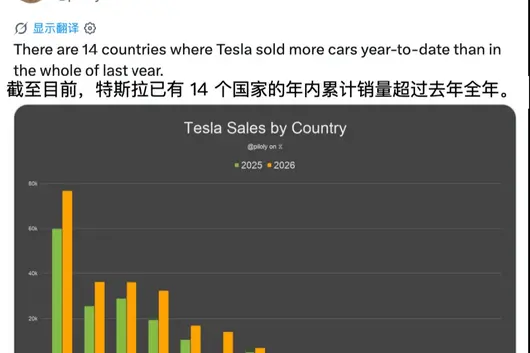
According to the latest sales data statistics by overseas blogger @piloly, as of August 2026, Tesla's cumulative sales in 14 countries globally this year have all exceeded the full year of 2025.
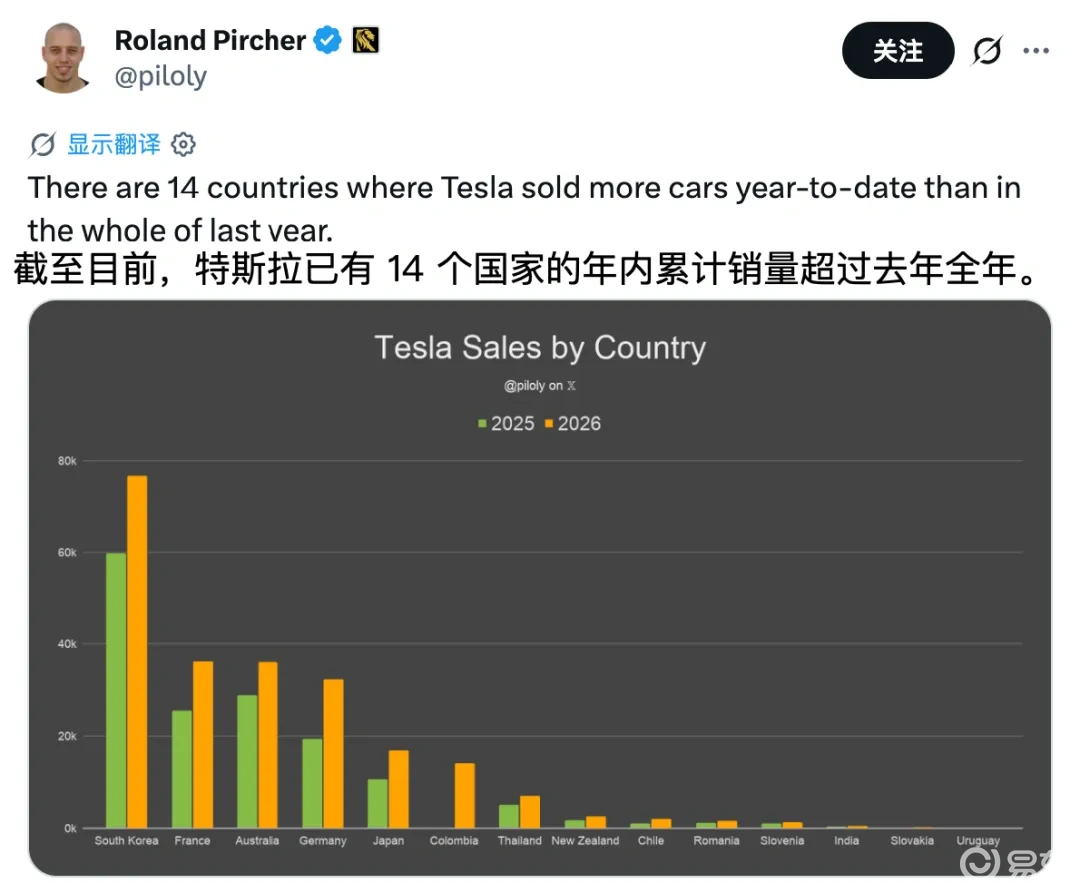
Specifically, these 14 countries include South Korea, France, Australia, Germany, Japan, Colombia, Thailand, New Zealand, etc., covering multiple regions such as Asia, Europe, Oceania, and South America.
Among them, as of August this year, Tesla's cumulative sales in the South Korean market have surpassed 76,000 units, with monthly sales again breaking 10,000, and ranking first in South Korean imported car sales for 7 consecutive months starting from February this year. In August, the Model Y also surpassed multiple popular local South Korean models, becoming the best-selling passenger car locally.
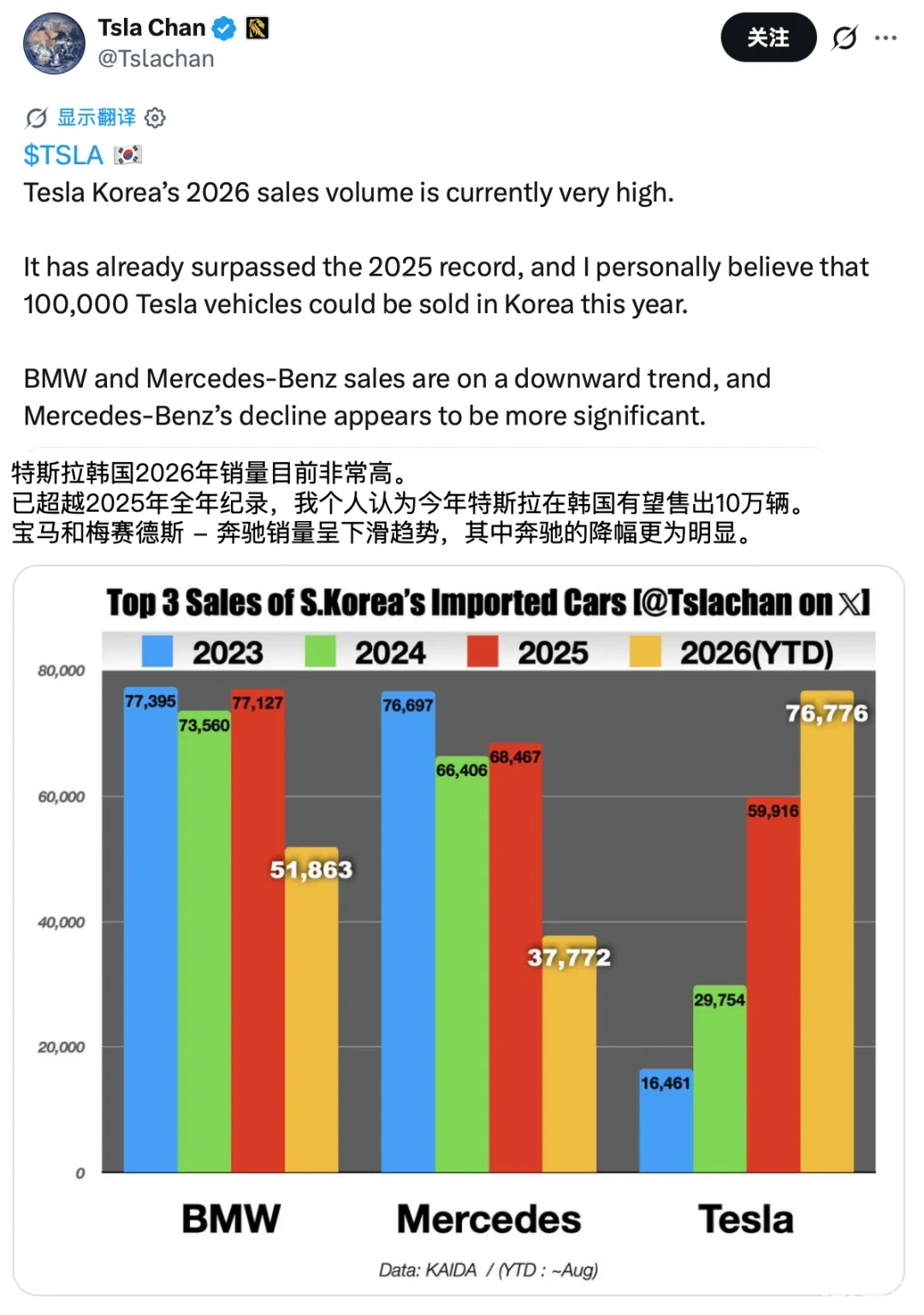
Similar to the South Korean market, the French market was previously dominated for a long time by French local brands such as Renault. Tesla has achieved rapid sales growth with strong product capabilities. From January to August 2026, Tesla's cumulative sales in France reached 36,000 units, a year-on-year growth of 148%. The Model Y became the best-selling model across all categories in France twice in June and August this year.

In the Australian market, Tesla's total delivery volume in August increased by 163% compared to the same period last year. This year, the Model Y became the best-selling model across all categories in the Australian market three times in May, June, and August successively.

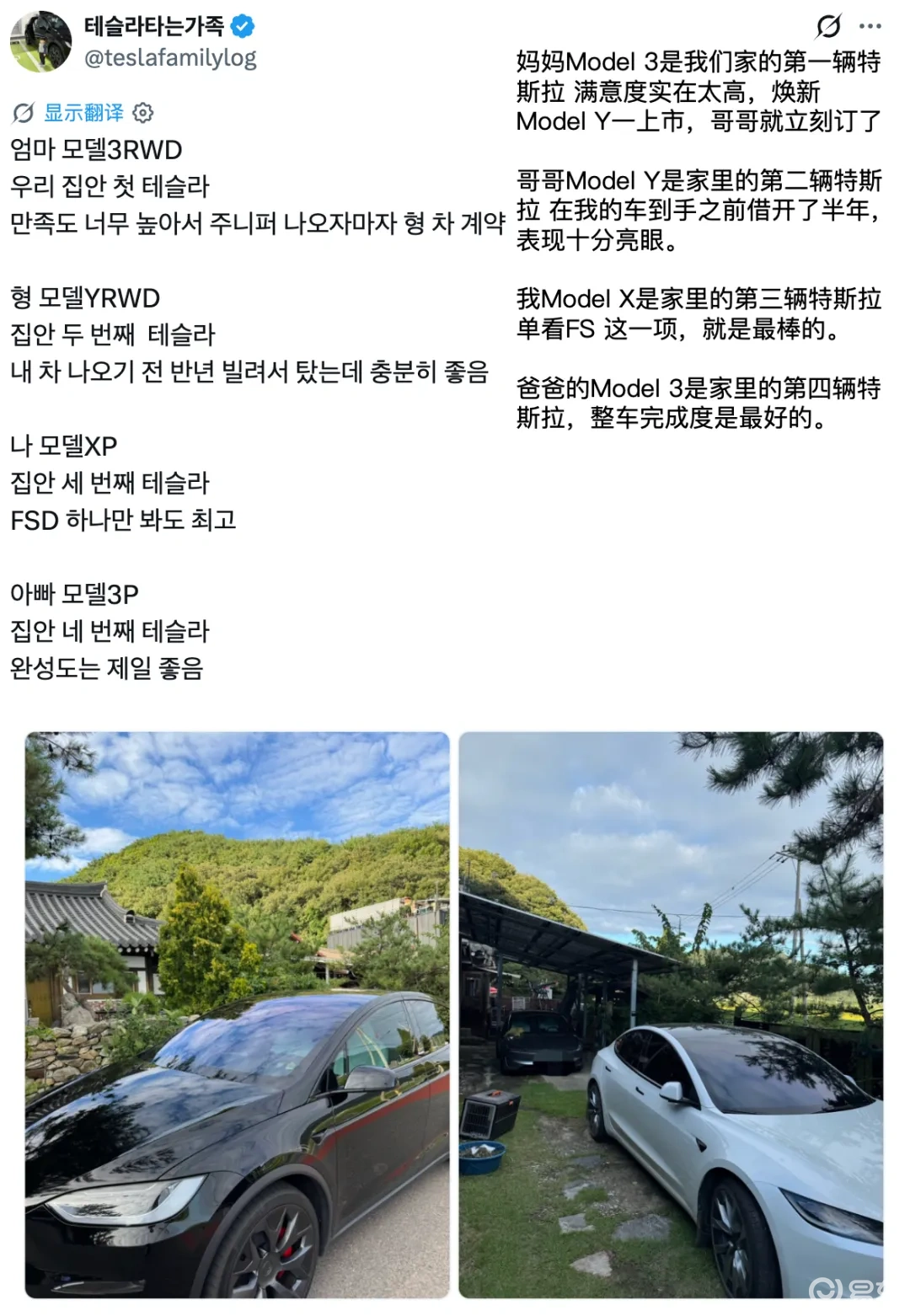
Apart from solid sales data, the real choices of owners also continue to prove Tesla's hot-selling strength. Owner @teslafamilylog shared their family experience: Since mom bought the first Model 3, the whole family quickly became fans of Tesla. He and his brother and dad then purchased 3 more cars successively, and the four cars directly covered the whole family's travel.

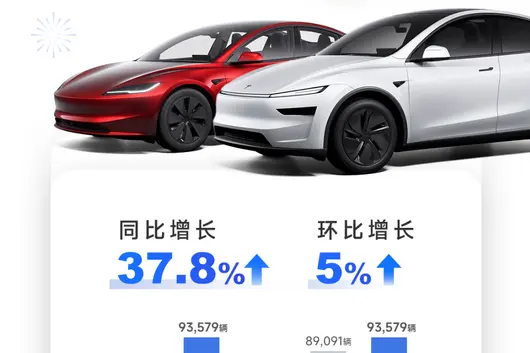
According to the latest statistics from the China Passenger Car Association, Tesla's Shanghai Gigafactory delivered over 93,000 vehicles in July 2026, setting a new high for monthly deliveries this year, up 37.8% year-on-year, up 5% month-on-month, equivalent to a new owner being born every 15 seconds.

Tesla's Shanghai Gigafactory is Tesla's largest global export center and a core capacity pillar supporting global order deliveries, with production and delivery performance remaining consistently strong.
Since the delivery of the first batch of China-made Model 3s in December 2019, the Shanghai Gigafactory has cumulatively produced over 4.5 million electric vehicles in six and a half years, accounting for more than 45% of Tesla's global total output, with more than half of globally popular orders delivered from here.
In the first half of 2026, the Shanghai Gigafactory's delivery volume reached nearly 468,000 vehicles, up 28.4% year-on-year, with production hitting a new high for the same period in the past three years.
Behind efficient deliveries lies extreme production and logistics efficiency: production can complete a whole vehicle every 30+ seconds, and transport can load 7,738 vehicles onto a single ship, providing solid assurance for orders in global markets.
Relying on powerful production capacity and export capabilities, Tesla models have become true "hit products going global," achieving sales success in multiple overseas markets.
In June 2026, Model Y sales in Australia exceeded 8,000 units, up 133.5% year-on-year, setting a new high for monthly sales, becoming the best-selling model across all categories in the local car market. This was also Model Y's second consecutive month as the passenger car sales champion in Australia.
The New Zealand market also saw strong sales, with Model Y becoming the best-selling model across all categories in the local car market in June.
In the Malaysian market, both models advanced side by side: Model Y became the best-selling imported brand electric vehicle in Malaysia in June, and Model 3 became the best-selling pure electric sedan in Malaysia in June.
During the same period, Tesla set a record single-month delivery volume in Singapore, with Model Y becoming the best-selling SUV locally; Tesla became the sales champion for electric vehicle brands in the Philippines in June.
Not limited to the output of China-made products, the large six-seater luxury SUV Model Y L, designed, developed, and manufactured under Chinese leadership, is being rolled out sequentially in multiple global markets including the US, UAE, South Korea, Japan, Singapore, and Australia, attracting many consumers to visit stores for test drives and stirring up a wave of ordering enthusiasm.


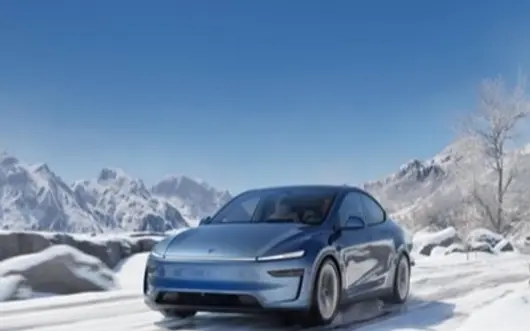
[CNMO Tech News] On July 31, @Tesla announced that in June 2026, Tesla set a new monthly delivery record in Singapore, and Model Y became Singapore's best-selling SUV.

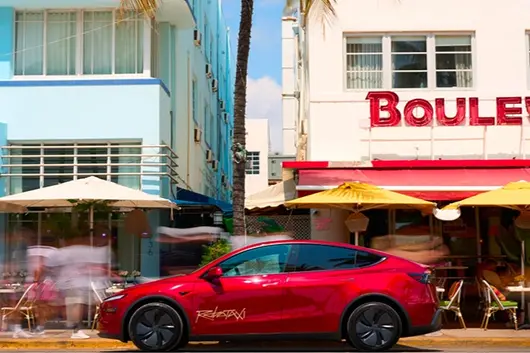
Tesla Model Y
According to Tesla, in the second quarter of 2026, the company set a historical high delivery record in multiple markets including South Korea, Australia, Colombia, Japan, Thailand, Portugal, Philippines, Chile, Slovenia, and Lithuania. In July, Tesla launched Model Y L in the US, receiving positive feedback.

CNMO Tech learned from "Speedy Car News" that Tesla's sales in Singapore in June 2026 were 783 vehicles, with a market share of 16.3%, an increase of approximately 65.9% year-on-year. Tesla had released financial report data for the second quarter of 2026 on July 23. The second quarter's total revenue was $28.236 billion, up 26% year-on-year; automotive business revenue was $20.516 billion, up 23% year-on-year. Data shows that in the second quarter of 2026, Tesla produced a total of 451,800 vehicles, up 10% year-on-year; delivered 480,100 vehicles, up 25% year-on-year, setting a new high for the same period in history.

It is reported that Model 3 and Model Y are Tesla's sales pillars. The two models combined produced 442,900 units and delivered 467,800 units in the second quarter, increasing by 12% and 25% year-on-year respectively, contributing about 97.4% of total deliveries. The large six-seater SUV Model Y L, produced by the Shanghai Gigafactory, is accelerating deliveries to multiple Asia-Pacific markets including Singapore, Australia, South Korea, Thailand, Philippines, etc.

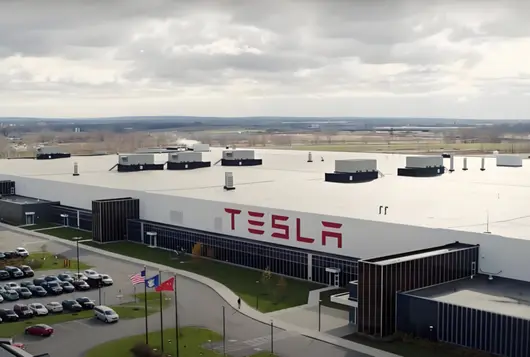
Recently, foreign media reported that Tesla is considering splitting, selling, or even closing all its China-based operations, aiming to clear compliance hurdles for the merger of Tesla and SpaceX. The root cause lies in SpaceX's identity as a US aerospace and defense contractor, holding numerous classified aerospace projects, which means the merger carries significant cross-border regulatory pressure.

Tesla's wholly-owned factory in China supports the brand's production capacity and profitability scale, balancing domestic supply and overseas exports. Once this asset is cut, Tesla's revenue, capacity, and valuation will all face a significant decline sh. It is understood that various divestment plans only remain at internal discussions, without an implementation timeline, with huge uncertainties downstream.
Merger Turmoil Between SpaceX and Tesla
Public opinion believes that selling domestic assets can open the compliance channel for merging Tesla and SpaceX. This assessment oversimplifies global regulation, excessively overestimating the influence of equity structure on corporate operations.

SpaceX undertakes US classified aerospace and defense supporting business, subject to strict constraints from the US side. Once this company obtains control of Tesla, all markets globally where Tesla is deployed will face targeted compliance screening. The EU has set rigid constraints on cross-border data transmission and data sharing for intelligent vehicles; Southeast Asian countries like Singapore, Thailand, and Malaysia are continuously improving data regulations, establishing data retention and cross-border review rules adapted for automakers.
From the perspective of corporate global operations, exchanging core assets like the Shanghai factory for compliance space does not yield actual benefits matching operational costs. Relying on the complete parts supply chain of the Yangtze River Delta, the Shanghai factory can maintain Tesla's complete vehicle manufacturing costs, bearing a large number of domestic deliveries and overseas sales orders, serving as an important support for the brand's global capacity and profitability. Sacrificing core high-quality capacity to solve compliance issues in a single region is difficult to adapt to the overall demands of Tesla's global operations.

At the cost of abandoning core capacity, raising manufacturing costs, and weakening global delivery efficiency, merely exchanging for local compliance buffering results in extremely low commercial cost-performance. Mainstream multinational automakers dealing with multi-regional regulation focus primarily on flexible digital rectification, completing compliance iteration by isolating internal and external office links, tightening data permissions, and building local data loops.
Cross-border compliance work for multinational automakers needs to adapt to policy rules in different regions, dealing with scattered and independent regulatory risks. Asset adjustments in a single market can only cover local compliance gaps, unable to complete global compliance adaptation. The merger path deduced by the market relying on asset stripping has obvious partiality and does not conform to the normalized compliance operation logic and business trade-off logic of multinational automakers.
Automaker Compliance Logic Simplified
Relevant news about Tesla's withdrawal this round is continuously spreading. Industry insiders judge compliance trends based on equity background. The industry's understanding of domestic automotive regulatory details has deviated, ignoring the real logic of regulation implementation.

Domestic automotive compliance builds a layered control framework. Daily operations use cross-border data control as the core verification item, running parallel with foreign investment security review layers, with two regulatory paths performing their respective duties. When enterprises carry out production and sales daily, regulatory personnel focus on verifying data storage methods, transmission channels, and circulation scopes, and will not limit compliant foreign automakers from conducting normal business solely based on the investor's background.
Domestic regulations set clear execution standards for intelligent vehicle in-vehicle data. Vehicle driving trajectories, in-vehicle captured video, and various driving behavior data, as long as they are collected domestically, must be stored on local servers. All operations transferring data out must complete the entire process of filing and approval. Tesla has many gentle ways to adapt to rules, reinforcing local network ports, dividing access permissions for domestic and overseas systems, building independent closed data management frameworks, to satisfy all control requirements. Schemes repeatedly discussed in the industry, such as selling equity and splitting China-based capacity, do not align with the path of regulation implementation and execution, and cannot be considered adapted schemes.
Tesla is successively implementing rectification work such as account permission division, local data loops, and office network partitioning. Many countries around the world are tightening automotive data regulations. This kind of adaptation suits large-scale policy changes, serving the enterprise's long-term risk control, and will not change rhythm with the rumors of Tesla and SpaceX's merger.

Foreign media statements about Tesla shutting down factories and withdrawing from the domestic market are merely extreme speculations based on risks, and the realistic conditions for implementation are insufficient. Various changes Tesla makes subsequently for the Chinese market will mostly focus on the details of data protection and account permission management. China's complete automotive upstream and downstream supply chain, along with a considerable consumer market, possess sufficient attraction. Rooted locally for continuous operation will be a safer choice for the enterprise. Relying solely on the withdrawal of heavy assets to cope with compliance not only wastes accumulated industry resources but also does not conform to the routine risk control modification ideas of automakers.
Public Auto Review
Industry discussions on Tesla merger compliance have always fallen into the superficial misunderstanding of equity and asset cutting. The market overestimates the compliance value of heavy asset stripping and underestimates the independence of global regulation and the inclusiveness of the domestic compliance system.
Domestic regulation has long abandoned rough equity-style control. Refined rules centered on data localization and cross-border permission control leave sufficient flexible rectification space for foreign automakers. Asset sales and capacity withdrawal are merely extreme speculations detached from industry reality.
In the final analysis, the global operation of automakers does not compete on radical asset trade-offs, but rather on the construction of a long-term, stable, and refined compliance system. This is also the most pragmatic underlying logic for the industry to view this round of rumors.

Good News Keeps Coming in Asia Pacific 🎉 June 2026
Tesla Sets New Record for Single-Month Deliveries in Singapore
Model Y Became Singapore's Best-Selling SUV 🚗
Innovated in China 💡 Setting Sail for the World 🌏
Thank you to every owner for your support ❤️



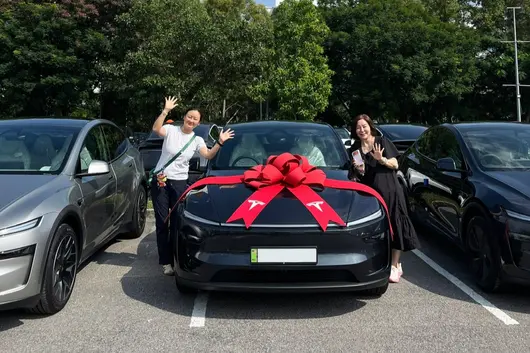
Today's happiness🎀
Welcome a new batch of Malaysian owners
Join the Tesla family❤️
This "gift" from the Shanghai Super Factory🎁
Will accompany everyone to go to more places you want to go⚡️




Written by | Zhang Linyu
Edited by | Zhang Nan
Designed by | Zhen Youmei
At 4:30 PM Central Time on July 22, Tesla's Q2 earnings call began, with little mention of its traditional automotive business.
During the Q&A session, analysts no longer asked when the low-cost model colloquially known as Model 2 would go into mass production. Tesla has never officially used this name, nor did they inquire about the progress of the next-generation model.
Elon Musk and his core executives shared information with the audience regarding FSD (Full Self-Driving, Tesla's fully autonomous driving software, which still requires driver supervision at all times in the current version), Robotaxi, Optimus robot, and chip factory.
This forms a certain contrast with Tesla's current revenue structure.
Revenue Increase Without Profit Increase
In Q2 2026, Tesla delivered a total of 480,126 vehicles globally, a 25% year-over-year increase and a 34% quarter-over-quarter increase, marking the company's best Q2 delivery record, second only to the historical record of 497,099 vehicles set in Q3 2025.
Among them, 467,762 Model 3 and Model Y vehicles were delivered, accounting for 97.4% of total deliveries; other models including Model S, Model X, Cybertruck, and Semi trucks totaled 12,364 deliveries, accounting for only 2.6%.

Production for the same period was 451,758 units. Deliveries exceeded production by 28,368 units, and global vehicle inventory days dropped from 27 days in the previous quarter to 15 days.
Tesla did not disclose absolute sales by region for Q2, but Chief Financial Officer Vaibhav Taneja revealed that compared to Q1, deliveries grew 60% in the Americas, 27% in Asia-Pacific, and 12% in EMEA. He also stated that Tesla ended Q2 with the largest order backlog since 2023.

The shareholder letter listed the markets where Q2 delivery records were set: South Korea, Australia, Colombia, Japan, Taiwan, Thailand, Portugal, Philippines, Chile, Slovenia, and Lithuania. Taneja additionally noted that Model Y set sales records in the Netherlands, Australia, and New Zealand.
Sales grew, but profits did not increase correspondingly.
In Q2, Tesla's total revenue was $28.236 billion, up 26% year-over-year, marking the first time revenue over the past 12 months exceeded $100 billion. Among them, automotive business revenue was $20.516 billion, up 23% year-over-year, accounting for 72.7% of total revenue; energy generation and storage business revenue was $3.139 billion, up 13%; service and other business revenue was $4.581 billion, up 50%, becoming the fastest-growing business.

Tesla's gross profit for the quarter was $4.751 billion, up 23% year-over-year; GAAP gross margin was 16.8%, down 41 basis points from 17.2% in the same period last year.
Operating profit was only $398 million, down 57% year-over-year; operating margin dropped from 4.1% to 1.4% compared to the same period last year.
In other words, Tesla's revenue increased by $5.74 billion year-over-year, but operating profit decreased by $525 million.
One source of pressure on profits came from expenses. In Q2, Tesla's R&D expenses reached $2.371 billion, up 49% year-over-year; sales, general, and administrative expenses reached $1.982 billion, up 45%. The two expenses totaled $4.353 billion, almost eating up all gross profit.
The shareholder letter attributed expense growth to three areas: R&D projects such as AI, equity incentives (including 2025 CEO compensation plan), and sales and admin expenses. Equity incentive expenses were $1.151 billion pre-tax this quarter, compared to $635 million in the same period last year.
Automotive regulatory credit revenue dropped from $439 million last year to $146 million, down 67% year-over-year; it was $380 million last quarter. The $7,500 U.S. federal EV tax credit expired on September 30, 2025; after federal law amendments, fines for automakers failing to meet fuel economy standards were zeroed out, removing the motivation to buy Tesla credits.
Automotive business GAAP gross margin was 16.9%; automotive gross margin excluding regulatory credit revenue was 16.3%, higher than 15.0% in the same period last year, but significantly lower than 19.2% in Q1 this year.
Taneja explained that Q1 automotive gross margin was helped by approximately $230 million in reserve reversals for warranties and tariff reductions; these benefits did not repeat in Q2; excluding these impacts, automotive gross margin excluding credits was roughly flat with the previous quarter.
In the attribution of revenue and profit in the shareholder letter, 'decline in average selling price per vehicle' is listed as a negative factor in two places.
The energy business also saw 'revenue increase without profit increase'.
In Q2, Tesla's energy storage deployment reached 13.5 GWh, up 41% year-over-year and 53% quarter-over-quarter, the second-highest quarter in history. However, due to approximately $240 million in warranty expenses caused by supplier cell issues, the energy business gross margin dropped from 39.5% in Q1 to 20.4%.
Service and other businesses became one of the few clear profit growth points.
This business's gross profit grew from $166 million in the same period last year to $648 million, an increase of $302 million quarter-over-quarter; gross margin rose from 5.5% last year and 9.2% last quarter to 14.1%, a historic high.
Tesla's GAAP net profit for the quarter was $1.114 billion, down 5% year-over-year; diluted EPS was $0.32, down 3% year-over-year.
This $1.114 billion includes an unrealized gain from a SpaceX equity investment, $1.005 billion pre-tax and $763 million after-tax. Tesla bought this SpaceX equity for $2.002 billion in Q1 2026, realizing a paper gain of $1.005 billion one quarter later.
Taneja said this approximately $1 billion gain was offset by approximately $300 million in foreign exchange losses and about $100 million in Bitcoin losses. On the income statement, the total 'Other income (expense), net' for the quarter was $590 million.
Excluding equity incentives, SpaceX paper gains, digital asset fluctuations, and special tax items, Tesla's non-GAAP net profit was $1.153 billion, down 17% year-over-year; non-GAAP diluted EPS was $0.33, down 18% year-over-year.
In Q2, Tesla's operating cash flow was $4.697 billion, up 85% year-over-year; capital expenditures reached $5.789 billion, up 142% year-over-year, resulting in $1.092 billion of negative free cash flow.
The company expects capital expenditures for the full year 2026 to exceed $25 billion, and capex will continue to grow in the next two to three years.
As of the end of June, Tesla held $43.524 billion in cash, cash equivalents, and short-term investments, down $1.219 billion from Q1.
Automotive remains Tesla's largest revenue source and the foundation supporting cash flow and capital expenditures, but the earnings call is no longer about cars.
Elon Musk Only Discussed Three Things
After the earnings call began, Elon Musk sounded emotionally down. He later explained to analysts that he was sick that day, 'If I sound a bit off, it's because I'm sick today and feeling unwell.'
He briefly mentioned three things.
The first thing was Cybercab. He announced that Cybercab production has started at the Texas Gigafactory. As a two-seater model designed specifically for Robotaxi with no steering wheel or pedals, Cybercab is seen as the core carrier for Tesla shifting from selling cars to operating an autonomous driving fleet. Tesla has provided Cybercab ride experiences for employees within the Texas factory campus since July.

However, Cybercab will not scale up rapidly in the short term.
Since it uses a completely new chassis, Tesla must first let test vehicles equipped with steering wheels, accelerator pedals, and brake pedals accumulate sufficient driving data to complete the autonomous driving system calibration for the Cybercab chassis.
The second thing was the Optimus robot.
Musk again called Optimus 'the largest product ever', but he also admitted this will be the hardest product for Tesla to date to achieve mass production.

Cars at least have mature supply chains for tires, glass, mirrors, and body parts, but almost all components of Optimus need to be redesigned and supply systems established.
Tesla has dismantled the Model S and Model X production lines at the Fremont factory and started installing the first-generation Optimus production line; the Optimus building at the Texas factory is also under construction.

The shareholder letter said the first batch of Optimus will be deployed within Tesla's Optimus Academy for collecting training data and developing features.
Musk stated that Optimus production ramp will follow a typical S-curve, but due to many new components, the initial flat phase of the curve will be very long.
Musk hopes the third-generation Optimus will eventually reach an annual production of 1 million units, and the fourth generation 10 million units. However, he immediately emphasized these are ideal targets, and achieving true mass production is 'surprisingly difficult'.
The third thing was the chip factory.
This is a massive chip manufacturing project in cooperation between Tesla and SpaceX. Terafab not only produces logic chips but also covers storage chips, advanced packaging, testing, and photomask manufacturing.
Musk did not disclose the site location at the earnings call, only stating there will soon be a separate launch event because this project 'deserves its own day' and should not be squeezed into an earnings call.
He envisioned placing photomask manufacturing, logic chips, storage chips, packaging, and testing in the same building to shorten chip design and validation cycles.
Terafab's main task is not to produce traditional chips for cars, but to solve the AI computing power needed for future large-scale Optimus mass production.
Musk believes that without its own chip manufacturing capability, Optimus will eventually be constrained by AI chip supply.
There was another chip statement in the shareholder letter: Tesla's semiconductor wafer fab in Austin is advancing construction and equipment procurement; the project is still in early stages, aiming to build its own chip manufacturing capability to ensure long-term supply of logic and storage chips. The full shareholder letter does not mention Terafab.
June 4, 2026, Hsinchu, Taiwan, TSMC 2026 Annual Shareholders' Meeting.
A corporate shareholder representative asked TSMC Chairman and CEO C.C. Wei how he viewed Musk building his own wafer fab. Wei said: 'My only comment is to 'bless him'.' He also said TSMC has never lacked opponents; the only way to face them is to continue to strive and win.

Cybercab, Optimus, and Terafab form the main axis of Musk's entire narrative at this earnings call. The traditional automotive business only exists as a cash source and AI implementation platform.
The Limitation on Production Is Not Demand, but Battery Packs
The shareholder letter stated in two places that battery pack capacity is the main limiting factor for recent vehicle production increases. Taneja added at the meeting that production growth will be limited by supply chains, not just batteries, but also electronic components.

In the same quarter, Tesla faced the largest order backlog since 2023.
As of the end of Q2, Tesla's paid FSD subscriptions reached 1.48 million, up 56% year-over-year; global paid users approached 1.5 million, with 55% one-time purchase and 45% subscription. Over 55% of new cars in North America had FSD subscriptions activated at delivery.
The shareholder letter stated Tesla has pushed FSD v14 lite to vehicles equipped with AI3 hardware in the U.S. and South Korea, by distilling driving behaviors from the v14 series on AI4 into the camera and compute configuration of AI3.
Hardware 3 and Hardware 4 correspond to AI3 and AI4. Musk said in the Q&A session that upgrading vehicles below Hardware 4 'will eventually be economically reasonable', but Tesla public documents have no hardware upgrade plans.
The shareholder letter listed nine Robotaxi metro areas: California's SF Bay Area with safety drivers; Texas Austin, Dallas, Houston and Florida Miami, Orlando, Tampa in unsupervised operational ramp-up phase; Arizona Phoenix, Nevada Las Vegas in preparation.

Tesla claimed Robotaxi is online in 7 major metro areas, cumulatively driving over 380,000 miles safely with no accident records.
Analyst Q&A Transcript
Below is the transcript of the Q&A session from Tesla's Q2 2026 Earnings Call, compiled by this publication from the conference call recording, with omissions.
Earnings Call Executive List
Host: Travis Axelrod (Travis Axelrod, Head of Investor Relations at Tesla)
Musk (Elon Musk, Tesla Co-founder and CEO)
Vaibhav Taneja (Vaibhav Taneja, Tesla CFO)
Ashok Elluswamy
Karn Budhiraj
Lars Moravy (Lars Moravy, Vice President of Vehicle Engineering at Tesla)
Brandon Ehrhart (Brandon Ehrhart, Tesla General Counsel and Corporate Secretary)
Q1: Currently there is no mature Optimus supply chain, so Tesla has to do much of the work internally. In the process of advancing this, are there suppliers willing to co-invest with you to establish local manufacturing capability in the U.S., helping Tesla achieve scale faster? From an investment cycle perspective, having partners advance together could improve capital efficiency. How do you consider this?
Musk: Our suppliers are performing exceptionally well. To support Optimus, Robotaxi, and other projects, they have invested and are continuing to invest huge funds.
Especially Samsung Electronics and TSMC, both building wafer fabs. TSMC is building in Arizona, Samsung is building in Texas, investing tens of billions of dollars to produce AI computing chips for Optimus and Robotaxi.
Panasonic has also invested billions of dollars to expand battery production.
Please excuse me, I'm feeling a bit unwell today, slightly sick. If my voice sounds off, it's because I'm indeed feeling unwell today.
Our partners are all excellent. I want to thank them for their support, their investments, and their hard work.
Karn Budhiraj: I want to add a point on this basis. A significant portion of Samsung's wafer fab capacity will be used for future projects. This is a massive investment involving billions of dollars.
We also see investment of similar scale in the storage chip sector. Additionally, investment has emerged in some new dedicated parts areas, such as metal injection molding parts, flexible printed circuits, and various non-traditional technologies. These technologies are mostly designed for robots, differing from our traditional automotive supply chains in the past.
In some areas, if we cannot find suitable partners, we never hesitate to move production internally. We have a very strong manufacturing engineering team and design team that can help us scale up production of these products.
Musk: I also want to thank Micron Technology (Micron Technology, U.S. storage chip manufacturer) for allocating storage chip capacity for us. They must make some very difficult decisions on storage chip capacity allocation. Given the crazy high price of storage chips today, we are very grateful that Micron is willing to reserve space for Tesla in the coming years and allocate considerable capacity to us under reasonable terms.
Q2: Regulations in U.S. states seem to be changing, possibly involving sensor configuration requirements. For Robotaxi deployment, what approach do you want regulators to take? To avoid excessive regulation while ensuring Robotaxi lands correctly, what regulatory environment do you hope to see?
Lars Moravy: When discussing regulations, especially the U.S. regulatory environment, significant progress has been made. The federal government has taken very proactive measures around the 'Federal Motor Vehicle Safety Standards' (FMVSS), beginning to accept and promote specifically designed autonomous vehicles. We are very grateful for the support from the U.S. National Highway Traffic Safety Administration (NHTSA) in this regard.
As for individual states, some recent movements in New Jersey are obviously somewhat disappointing.
But as Ashok said in his opening remarks, what we really care about is the vehicle's own performance. Ultimately, it is product performance that drives regulators and the public to accept this technology.
I believe the best way to regulate is to set a goal or task for companies and innovators, then let us find solutions ourselves. If some regulations define the solution before clearly stating the problem, we certainly won't welcome that practice.
Tesla has always proven itself with actual performance in the past, and will continue to do so in the future. This will also become the foundation for our continued expansion.
Q3: Next, what milestones should investors focus on? After reaching which milestones will you accelerate Robotaxi fleet expansion or market deployment? Is it further safety validation, such as mileage per accident, or other metrics? Additionally, will you consider partnering with third parties like ride-hailing platforms to increase vehicle utilization, or continue to maintain full vertical integration?
Musk: We expect Robotaxi to adopt a vertical integration model, like Tesla's other businesses. I don't think Robotaxi will face a problem of insufficient demand. Its economics will be extremely attractive, with many people wanting to use this service, and demand will exceed our service capacity. In this case, vertical integration is obviously the choice.
The real issue is just what we call the progression of reliability 'multiple 9s'. That is, to scale up, how many 9s of reliability does the system actually need to reach?
Ideally, we want reliability to reach 99.999999%. I believe the only limitation to Robotaxi growth is moving towards more 9s of reliability.
Q4: Outsiders have been discussing the possibility of SpaceX and Tesla merging in some way. The two companies have already carried out extensive cooperation. Will merging the two companies eventually produce synergies? As time passes, is this reasonable?
Musk: As everyone can see from the extensive cooperation carried out by the two companies in many fields, the overlap between their businesses is increasing, especially the Terafab project. This will be a true massive project.
But obviously, we cannot discuss matters like company mergers on an earnings conference call. Such matters must be carried out according to appropriate procedures.
Brandon Ehrhart: We have always benefited from our relationship with SpaceX. SpaceX is an excellent partner, and we have conducted many transactions beneficial to both parties with them.
Earlier this year, we deepened the relationship between the two sides through an investment and a framework agreement. This will enable us to continue working with SpaceX to advance the projects Elon just mentioned, such as Terafab and Digital Optimus.
Musk: Additionally, there are many other collaborations. Grok (the large model of Musk's AI company xAI) has now been integrated into the car, and Grok is also helping drive Digital Optimus. Starlink (SpaceX's satellite internet service) is being integrated into Cybercab. In the future, Starlink will also be integrated into all our automotive products, at least in markets where Starlink is already operating.
Because in Robotaxi application scenarios, the network must cover all places.
Even in Silicon Valley, there are many places with very poor mobile network signals, sometimes even no signal at all. When I drive to work, the first 10 to 15 minutes I cannot actually make calls because the mobile network connection is too poor.
We cannot let Robotaxi enter these 'Bermuda Triangles' lacking mobile network connections and get stuck there. Starlink can provide network connections anywhere, so it is very important. This avoids Robotaxi losing connection.
If people are sitting in the car, they might want to handle work efficiently, or they might hope to get an entertainment experience. With Starlink, people can watch 4K live sports events in the car, and the cost per GB of data is very low. This is actually difficult to achieve through mobile communication networks.
Vaibhav Taneja: You can understand this from the Cybercab ride experience. In a world where you don't need to focus on driving, all the time you sit in the car can be used for other things, whether attending conference calls, watching movies, or doing other activities.
Therefore, if you observe the design of Cybercab, you will see it is equipped with a very large screen.
We have started providing Cybercab ride experiences within the Austin factory. In the not-so-distant future, consumers will also be able to experience it. Once you truly experience it, you will understand why network connections become so important.
Q5: Currently Robotaxi is constantly adding operating cities, but according to media reports, the number of vehicles seems to still be only dozens, not hundreds. Why not concentrate on expanding the scale of Austin or one or two cities first? To achieve higher deployment volume in a major city, what else do you need to solve?
Ashok Elluswamy: The reason we chose to expand to different cities instead of focusing on only one city is that we want to ensure the tech stack has strong generality.
It is indeed a general system. We just want to prove to ourselves and the outside world that this system can run in many different cities, and entering each city does not require investing too much extra work. This is exactly what we see internally.
As Elon just mentioned, the growth rate is actually rising exponentially, it's just that it's currently in the early stage of the exponential curve, so the outside world finds it hard to understand this growth.
As for whether to focus on mileage or vehicle count, since vehicles in the Robotaxi fleet will basically run continuously, while human drivers might only use vehicles a few hours a day, there is a huge difference between the two.
These vehicles will operate continuously for the vast majority of the time. This means that even if the number of vehicles is small, a large amount of mileage can be generated. Therefore, we focus more on unsupervised driving mileage rather than simply the number of vehicles.
We hope to operate a very efficient fleet. All work that improves operational efficiency will further increase the mileage each vehicle in the fleet can contribute.
Vaibhav Taneja: We are trying to expand this business, while also ensuring to solve various problems that may exist. These problems involve not only software but also operations, and we are also working on handling them. Therefore, we hope to first expand the geographic coverage, and before truly large-scale deployment, solve these problems through a smaller, controllable fleet.
Musk: Regarding Cybercab, one point needs special explanation. Because Cybercab uses a completely new vehicle chassis, before mass deployment, we must accumulate driving data specifically for Cybercab.
Model 3, Model Y, and other models already have millions of cars driving on the road, we have a lot of data, but Cybercab does not yet have such data foundation.
We must first let Cybercab equipped with devices such as steering wheels, accelerator pedals, and brake pedals accumulate mileage, thereby completing system calibration for the Cybercab chassis.
When we establish sufficient confidence in this, everyone will see a significant increase in the number of Cybercabs in various cities.
Lars Moravy: Another reason to point out is that total cost of ownership and transportation regulatory environments are not the same between different cities and different states. Currently, there is no unified federal regulatory framework.
The reason we expand city by city is to ensure we can meet these requirements separately and respond to the specific requirements of each city as much as possible.
We must enter every city to meet local requirements. We will continue to do this, and expand the scale further after meeting all conditions.
Q6: The U.S. National Highway Traffic Safety Administration is pushing to cancel pedals and steering wheels. Will these become factors limiting Cybercab production expansion? At the federal level, are there any other problems that need to be solved to truly release your ability to expand Cybercab scale?
Lars Moravy: The short answer is, no. We maintain a very good relationship with the U.S. National Highway Traffic Safety Administration, especially with Administrator Jonathan Morrison.
I think they are just catering to public demand and the trend known worldwide to be coming. They are trying to stay ahead of the trend to ensure appropriate measures are taken.
In the past few years, we have always honestly introduced our plans and ongoing work to them.
I don't want to say the two sides are completely in step, but I feel we have a partner there, and both sides are advancing relevant work together.
[Editor's Note: Morrison was confirmed by the U.S. Senate to serve as NHTSA Administrator on September 18, 2025. He served as NHTSA General Counsel from 2017 to 2021. Before returning to NHTSA in 2025, he was responsible for legal, regulatory, government affairs, and policy in Apple's Special Projects Group (i.e., Apple's car project)]
Q7: Starlink has been integrated into Cybercab. Can Cybercab in turn become a remote hotspot for Starlink mobile services? Also, when do you expect to start developing autonomous driving for Tesla Semi? Considering the shortage of truck drivers, autonomous driving trucks also seem to be a market of large scale.
Musk: As you mentioned, there is indeed a very serious shortage of truck drivers now. Not enough people are willing to drive trucks, and trucks are crucial for U.S. freight transportation. Autonomous Semi will be very important for solving the truck driver shortage problem and also helps improve safety.
For Tesla Semi still driven by truck drivers, autonomous driving functions will also significantly improve driving safety and comfort.
Since the number of Tesla Semis is currently still very small, even by the end of this year, its proportion in Tesla's total vehicles will still be very low, therefore, it is reasonable to prioritize autonomous driving R&D resources for high-volume models.
We will prioritize solving the autonomous driving problems of Model 3, Model Y, and Cybercab, truly making these models achieve universal, unsupervised autonomous driving.
We expect Tesla Semi's autonomous driving function might be realized by the end of this year or early next year. I just don't want the Semi project to distract our attention from continuously improving safety reliability and moving towards more 9s on Model 3, Model Y, and Cybercab.
Therefore, in the next approximately six months, the priority of the autonomous Semi project will be slightly pushed back. However, it will definitely be achievable next year and able to catch up with Tesla Semi's process of large-scale production increase.
As for communication, we might treat the Starlink terminals in Tesla cars as mobile communication base stations, or some kind of network connection relay towers, providing network relay to mobile phones on the ground and anyone who wants to use Wi-Fi.
Obviously, fixed Starlink terminals can also provide similar services. [Editor's Note: Shareholder letter states Tesla Semi will start production at a new factory in Nevada this year]
Q8: Optimus will use microprocessors, microcontrollers, actuators, and other semiconductors. Tesla can purchase from the market, design them themselves and hand them over to third-party wafer fabs for manufacturing, or design and produce them themselves. For these components, which approach do you prefer?
Musk: Optimus uses a large number of highly specialized power electronic devices and circuit boards. All of these are designed by Tesla, but the manufacturing work is completed by suppliers.
Fourth-generation Optimus will be produced in Austin. Compared to third-generation products, the supply system of fourth-generation Optimus will achieve a higher degree of vertical integration.
Our goal is for the production volume of fourth-generation Optimus to be an order of magnitude higher than third-generation products. Ideally, the annual production of third-generation Optimus will be 1 million units, and fourth-generation products will reach 10 million units per year.
Of course, all relevant cautionary statements need to be added here, because scaling up production is an extremely difficult task.
Fourth-generation Optimus will adopt a higher degree of vertical integration. Therefore, at that time we may complete a large amount of printed circuit board related work internally.
Q9: Does Tesla still plan to upgrade Hardware 3 to Hardware 4 in order to run V15 and future versions of FSD? Will existing vehicles still undergo hardware upgrades?
Musk: I think upgrading all vehicles below Hardware 4 will eventually be economically reasonable, basically all cars already equipped with cameras.
If there is not even a camera system, the required modifications might be too many. For any vehicle already designed around the camera system, upgrading at a certain point in time will be economically reasonable. I think we hope to upgrade these vehicles directly to the next-generation AI compute board.
Specifically, there might be two options. We have an upgraded AI4 chip, with a certain degree of improvement compared to AI4, which might go into production around mid-next year. Then there is AI5, we hope AI5 can also achieve mass production around mid-next year. AI5 will initially be applied to Optimus.
Currently, we have made very good progress in AI5. Tesla's chip team is performing excellently, advancing AI5 R&D at an unbelievable speed.
I am very excited about the design of Tesla's AI6 chip. I think it will become the world's best edge computing chip. If someone owns a better chip, I really want to meet him and shake hands, because the AI6 chip is really too excellent.
Progress in chips is very smooth. Thank you again to TSMC, Samsung, and Micron for their support.
Q10: In the current round of capital expenditure cycle, to what extent is the investment speed limited by efficiency? If investment continues to increase, will it lead to a decrease in capital efficiency? To what extent does the capital expenditure speed determine Tesla's progress in lifting supply constraints?
Musk: The requirement I put to the Tesla team is that as long as it doesn't cause excessive waste, we should carry out capital expenditure as quickly as possible.
We are not pursuing extreme high efficiency of capital investment, because that would slow down project progress. We need to strike a balance between capital efficiency and time.
If the project can be completed earlier, then slightly lower capital efficiency is acceptable, because from the company's perspective, this will actually bring higher net present value.
Overall, I am quite satisfied with the current progress. We are carrying out construction and capacity expansion of astonishing scale in multiple completely different fields simultaneously.
I think, previously no company has advanced so much work on such a large scale at the same time. Perhaps when Henry Ford expanded Model T production, it was close to this situation in relative scale; or during World War II, enterprises once tried to massively expand weapon production.
I think, this might be the fastest industrial-scale expansion in the United States since World War II.
Vaibhav Taneja: If you observe our capital expenditure, you will find that all expenditures are used to build assets that can be put into production. We are expanding various factories, including Optimus factories, Cybercab factories, Lithium Iron Phosphate Battery factories that started production earlier this year, Semi factories, and even semiconductor wafer factories.
In addition, we also plan to build large-scale solar manufacturing capacity in the U.S., raising the scale of solar manufacturing in the U.S. by an order of magnitude. This point is very important, the importance of solar manufacturing is underestimated.
None of this work is easy. To build a factory, you must start from zero. Due to too many construction projects underway, Tesla eventually became the general contractor for almost all construction projects.
We are expanding at a very fast speed. This means we need to advance many things simultaneously. Therefore, we can only move forward at the fastest speed humans can reach to ensure these projects can truly operate in the real world.
Musk: I think our capital expenditure efficiency is good beyond conventional scales.
Q11: In the foreseeable future, to what extent will the energy storage business be limited by supply? Of the current energy storage projects, how much is used for public utility peak shaving and valley filling, and how much is used to solve power quality problems caused by drastic fluctuations in electricity consumption at data centers? What is the state of demand in the data center and utility sectors respectively?
Musk: This is not just peak shaving and valley filling, it also includes grid balancing. Battery packs are not only activated for short periods. For balancing the power generated by wind power and solar power, batteries are an excellent tool.
In the future, the vast majority of global energy will be produced through a combination of solar and batteries. All Starlink satellites are also powered by solar panels and batteries. You can completely imagine the Earth as a huge satellite.
The energy the sun can provide far exceeds any other energy source. We believe that power constraints will become a major problem facing AI. In fact, it is already a major problem.
Just starting AI computers requires consuming a large amount of power. The power demand for AI computing is very high, and even super-large cloud computing companies find it difficult to find enough power for AI computing and smoothly enable relevant equipment.
In addition, power fluctuations must be suppressed. Especially during AI model training, power demand will change drastically in a very short time.
During a training process, power consumption might drop 70% within 100 milliseconds. This requires very fast-responding advanced power electronic equipment to suppress large power changes, especially changes during AI model training.
This is why SpaceX bought a large number of Megapacks (Tesla's large-scale energy storage product) for data centers. They are mainly used to suppress power fluctuations appearing during training. Batteries can also help data centers obtain more power from the grid.
If you tell utility companies that during the few hours or days with the worst power usage conditions in the year, they don't need to supply power to you because batteries can undertake the power supply task, then they will be easier to provide power access to you.
In fact, the best way to increase the total output of energy in the United States might be to use batteries on a large scale. The United States has about 1.2 to 1.3 terawatts of power generation capacity, but the average power consumption is only about 0.5 terawatts. That is to say, the power generation capacity in the United States is about 2.5 times the average power consumption.
This means that by just using batteries, the energy output of the United States could potentially double. Therefore, we believe that the demand for Megapacks in the future market will be very high.
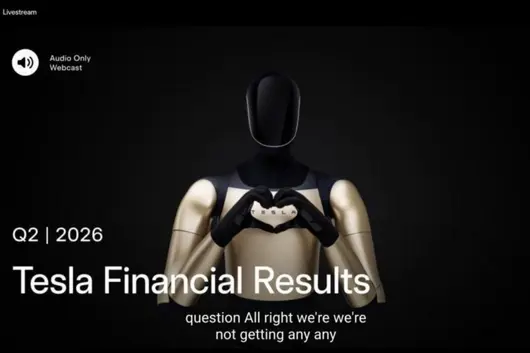

On July 23, 2026, Beijing Time, Tesla released its Q2 2026 earnings report.
This quarter, Tesla globally produced over 451,000 pure electric vehicles, a year-over-year increase of approximately 10%; deliveries exceeded 480,000 units, a year-over-year increase of approximately 25%, setting a new historical high. Regionally, the Americas, Asia-Pacific, and EMEA (Europe, Middle East, and Africa) markets saw quarter-over-quarter delivery growth of 60%, 27%, and 12% respectively. By the end of the second quarter, Tesla's undelivered orders had reached the highest level since 2023, with market demand remaining strong.
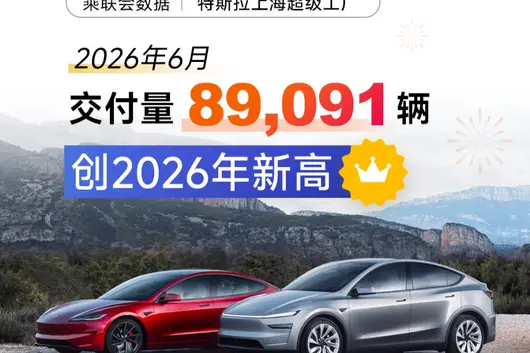
Shanghai Gigafactory delivered over 89,000 electric vehicles in June, a year-over-year increase of 24.4%, setting a new high for the year; it delivered nearly 468,000 units in the first half, a year-over-year increase of 28.4%. Thanks to increased vehicle deliveries and growth in other businesses, Tesla's total revenue for Q2 2026 grew by 26% year-over-year, reaching $28.2 billion.

In terms of model performance, Model Y remained the sales champion in multiple markets. The large six-seater luxury SUV Model Y L, designed and developed with China leading the initiative and manufactured there, is gradually being launched in multiple global markets including the United States, UAE, South Korea, Japan, Singapore, Australia, etc., attracting many consumers to test drive at stores and igniting a purchase craze. Currently, Tesla has over 9 million owners globally. Model Y has been the global sales champion for three consecutive years, with cumulative sales exceeding 4 million units. Against the backdrop of high global fuel prices, more and more gasoline car owners are choosing to trade in and purchase Tesla, switching to cost-saving and hassle-free pure electric travel.
Asia-Pacific market demand continues to grow. In June 2026, Model Y sales in Australia exceeded 8,000 units, a significant year-over-year increase of 133.5%, setting a new single-month sales record and becoming the best-selling vehicle across all categories in the local car market. This also marks the second consecutive month for Model Y to be the passenger car sales champion in Australia. The New Zealand market saw synchronized sales, with Model Y also becoming the best-selling vehicle across all categories in the local car market in June. In the Malaysian market, the two models progressed hand-in-hand: Model Y became the best-selling imported brand electric vehicle in Malaysia in June, and Model 3 became the best-selling pure electric sedan in Malaysia in June.
Sales in the European market continued to rise. Data shows, Model Y became the best-selling pure electric vehicle in Europe for May with single-month sales exceeding 17,000 units, while Model 3 followed closely with sales exceeding 11,000 units, seeing a year-over-year surge of 198%. Looking at cumulative sales from January to May 2026, Model Y cumulative sales have exceeded 76,000 units, firmly holding the position of the best-selling pure electric vehicle in the European market. Not long ago, Tesla Model Y cumulative sales in Norway broke 100,000 units; in Iceland, where the resident population is only about 380,000, Tesla sales have exceeded 10,000 units, once again breaking the stereotype that pure electric vehicles are unsuitable for cold regions with strong product power.


Additionally, Tesla set new delivery records in multiple markets, such as South Korea, Australia, Colombia, Japan, Thailand, Portugal, Philippines, Chile, Slovenia, and Lithuania.
Regarding product reliability and residual value, Tesla's latest impact report shows that after driving approximately 320,000 kilometers, the battery capacity of Model 3/Y still averages approximately 80%. Calculating based on 20,000 kilometers driven per year, a Tesla can be driven for over 15 years. Comparing with the industry durability test generally at the equivalent of 200,000-300,000 kilometers level, every mass-produced Tesla vehicle must complete equivalent 400,000 kilometers of extreme road tests before launch. In addition, according to data jointly released by the China Association of Automotive Distributors and Jingzhengu, Model X, Model 3, and Model Y have occupied the top three for the three-year resale value of pure electric vehicles in China for consecutive months, further verifying their long-term reliability and market recognition.

Regarding other vehicle products, the Tesla electric truck Semi will commence mass production this year as planned at the new factory in Nevada.


Author | Janson
Editor | Zhi Hao
Half-year revenue of 342.7 billion yuan yet revenue grew without profit growth, Musk bets on Robotaxi to break the deadlock.
Carwest news on July 23, just now, Tesla released its Q2 2026 financial report, and simultaneously held an earnings call to address investors' concerns.
In the second quarter, Tesla's automotive business recovered significantly, delivering 480,100 vehicles, a 25% year-on-year increase, setting a new historical high for the same period.

▲ Overview of Tesla's financial information for the second quarter of the past three years
Tesla's Q2 revenue reached $28.236 billion (approximately 191.2 billion yuan), up 26% year-on-year; Automotive business revenue reached $20.516 billion (approximately 138.9 billion yuan), up 23% year-on-year.
But sales and revenue growth did not bring proportional profit improvement. In the second quarter, Tesla's operating profit was only $398 million (approximately 2.7 billion yuan), a 57% year-on-year decrease; the operating profit margin dropped from 4.1% in the same period last year to 1.4%. Automotive gross margin also dropped from 21.1% in the first quarter of this year to 16.9%.
Looking at the entire first half of the year, Tesla's cumulative revenue reached $50.623 billion (approximately 342.7 billion yuan), of which Automotive business revenue was $36.750 billion (approximately 248.8 billion yuan), still contributing over 70% of revenue.

▲ Overview of Tesla's financial information for the first half of the past three years
On the profit front, Tesla's first-half gross profit totaled $9.471 billion (approximately 64.1 billion yuan), with an overall gross margin of about 18.7%. Regarding deliveries, Tesla produced approximately 860,100 vehicles and delivered approximately 838,100 vehicles in the first half of the year.
Overall, the delivery rebound in Q2 pushed Tesla's first-half revenue to a new high for the same period in the past three years, but the operating profit margin still dropped to 2.65%, and the problem of revenue growing without profit did not get resolved.
Compared to profit performance, Tesla's progress in FSD (Supervised), Robotaxi, and Cybercab was more prominent.
As of the end of the second quarter, Tesla FSD paid user numbers reached 1.48 million, a 56% increase from 950,000 in the same period last year, and up 200,000 from the end of the first quarter this year. Tesla CEO Musk said that as FSD receives regulatory approval in various countries, market demand will further surge.
In addition, Tesla has started pushing FSD v14 lite to vehicles equipped with AI3 (HW3) hardware, distilling the driving behavior of the v14 series on AI4 vehicles to the previous generation hardware platform.
Regarding Robotaxi, Tesla's service scope has expanded to multiple cities in the US. Meanwhile, Cybercab has started production at the Texas Gigafactory and has entered the public road engineering testing phase.
While the profit pressure on Tesla's Model 3/Model Y vehicle sales business continues, FSD subscriptions and Robotaxi are gradually becoming new growth sources outside of Tesla's automotive business.
I. Revenue Grows But Profits Don't, Automotive Gross Margin Declines Quarter-on-QuarterVehicle delivery volume recovered, driving Tesla's Q2 revenue to recover growth.
In the second quarter of this year, Tesla's total revenue reached $28.236 billion (approximately 191.16 billion yuan), up 26% year-on-year; Automotive business revenue reached $20.516 billion (approximately 138.89 billion yuan), up 23% year-on-year.
Specifically, Automotive sales revenue was $20.006 billion (approximately 135.4 billion yuan), Car rental revenue was $364 million (approximately 2.5 billion yuan), and Automotive regulatory credit revenue was $146 million (approximately 1 billion yuan).

▲ Detailed quarterly financial information of Tesla
Tesla stated that Q2 revenue growth was mainly driven by increased vehicle deliveries, FSD subscription growth, expansion of services and other businesses, growth in energy business, and a positive exchange rate impact of about $500 million (approximately 3.4 billion yuan).
However, the decline in average selling price of vehicles offset some of the growth.
In the second quarter, Tesla's gross profit was $4.751 billion (approximately 32.2 billion yuan), up 23% year-on-year; the overall gross margin was 16.8%, down 0.4 percentage points from 17.2% in the same period last year, and down 4.3 percentage points from 21.1% in the first quarter this year.
But the decline in average selling price of vehicles, reduction in regulatory credit revenue, and increased investment in AI projects dragged down overall profit performance.
In the second quarter of this year, Tesla's operating profit was $398 million (approximately 2.7 billion yuan), a 57% year-on-year decrease; the operating profit margin dropped from 4.1% in the same period last year to 1.4%, a year-on-year decline of 2.69 percentage points.
However, Tesla's GAAP net profit was also supported by an investment income. In the second quarter, Tesla recognized $1.005 billion (approximately 6.8 billion yuan) in unrealized gains from its SpaceX equity investment, which was included in other income.
Regarding R&D expenses, Tesla's R&D expenses in the second quarter reached $2.371 billion (approximately 16.1 billion yuan), an increase of about 49% year-on-year.
In terms of automotive manufacturing, Tesla stated that battery pack capacity remains the main factor limiting global automotive production growth.
Tesla is increasing 4680 cell production to support Cybercab, Tesla Semi capacity ramp-up, and Model Y production expansion.

▲ Tesla's battery capacity plans for each factory
Currently, Tesla's Texas 4680 cells have installed annual capacity exceeding 40GWh, the Nevada LFP (Lithium Iron Phosphate) battery project is in the early capacity ramp-up phase, with expected annual capacity of 7GWh, while the Berlin 4680 cell project is still under construction.
In addition, the Tesla Semi new factory is in the equipment debugging phase, planning to start production in 2026.
II. Q2 Deliveries Hit Record High, Cybercab Production Starts, FSD Users Reach 1.48 MillionIn the second quarter of this year, Tesla produced 451,800 vehicles, up 10% year-on-year; delivered 480,100 vehicles, up 25% year-on-year, setting a new historical high for the same period.
In the first half of 2026, Tesla cumulatively produced approximately 860,100 vehicles and delivered approximately 838,100 vehicles.

▲ Tesla's quarterly delivery situation
Among them, Model 3/Y remain the core sales driver, producing 442,900 vehicles and delivering 467,800 vehicles in the second quarter, up 12% and 25% respectively year-on-year, contributing approximately 97.4% of the delivery volume.
Other models including Cybertruck produced 8,822 units, down 34% year-on-year; delivered 12,400 units, up 19% year-on-year.
With deliveries exceeding production, Tesla's inventory pressure significantly eased, global vehicle inventory turnover days dropped from 27 days in the first quarter to 15 days, lower than 24 days in the same period last year.
Tesla set delivery records in multiple markets including South Korea, Australia, Japan, Taiwan, Thailand, etc.
Regarding capacity, Shanghai Factory Model 3/Y annual capacity exceeds 950,000 vehicles, still Tesla's largest vehicle production factory; California, Berlin, and Texas factory related model annual capacities exceed 550,000, 375,000, and 250,000 respectively.
Additionally, Cybercab designed specifically for Robotaxi has started production at the Texas Gigafactory, with installed annual capacity exceeding 125,000 vehicles.

▲ Tesla's installed annual capacity and production status for each factory
The mass-produced Cybercab began public road engineering testing in the second quarter, and in July provided ride services for employees at the Texas factory park.
Robotaxi is also accelerating expansion, currently entering 7 major metro areas in the US. Austin continues to expand areas with unsupervised operations, Dallas and Houston are promoting relevant operations, Miami, Orlando, and Tampa launched unsupervised services in July; San Francisco Bay Area still equips safety drivers. Phoenix and Las Vegas are in the pre-launch preparation phase.

▲ Mass-produced Cybercab in testing
FSD has become another growth point. As of the end of the second quarter, Tesla FSD paid users reached 1.48 million, up 56% year-on-year, up 200,000 from the first quarter; increased by approximately 380,000 in the first half of 2026 alone.
In the second quarter, Tesla FSD net new subscription users set a record, over 55% of new vehicles delivered in North America included FSD subscription, and the order rate also reached a historical high. FSD subscription growth has formed a positive contribution to automotive related revenue and operating profit.
Regarding software, Tesla began pushing FSD v14 lite to vehicles equipped with AI3 (previously referred to by Tesla as HW3) hardware in the US, and pushed it to South Korea in July.
This version distills driving behavior of the v14 series on the AI4 platform to the AI3 platform, adds destination options such as parking lots, roadside, lane entrances, and curbs, and improves performance in scenarios such as navigation, merging/diverging, pedestrian interaction, traffic lights, and vehicle cutting in.
FSD's overseas approvals also made new progress, after the Netherlands, Tesla obtained FSD deployment approval in Lithuania, Estonia, Denmark, and Belgium.
As of July, users in the above opened markets cumulatively used FSD to drive over 50 million kilometers. Tesla stated that FSD implementation is driving local consumers' interest in its vehicles.
III. Cybercab Has No Legal Barriers, Old Owners Need Hardware Upgrade AssessmentDuring the earnings call, Musk and Tesla management focused on responding to Robotaxi operations, Cybercab regulations, Starlink access, Semi autonomous driving capabilities, and AI3 model hardware upgrades. Carwest organized the following 8 key Q&As:
1. How is the current operation of Robotaxi? How to scale up next?
Tesla AI Head Ashok Elluswamy: Currently, Tesla Robotaxi has cumulatively completed over 380,000 miles (approximately 610,000 km) of unsupervised driving in two US states and six cities, with no safety accidents worth noting. Existing accident reports were all collisions or impacts by other road users when the vehicle was stationary.
Tesla started the Robotaxi project in Austin about a year ago, at that time the passenger seat was still equipped with a safety monitor; at the end of 2025, the first batch of fully unsupervised Robotaxi started operations. Since 2026, the weekly unsupervised driving mileage of the fleet has maintained double-digit quarter-over-quarter growth, expected to continue this pace within the year.
Currently, the Robotaxi fleet has been running early versions of FSD V15. V15 planned about seven major improvement routes, with about 40% of improvement content merged into the version used by the fleet. With subsequent capabilities going live, Tesla hopes the engineering investment and preparation time required to enter new cities will gradually approach zero, finally shifting from city-by-city expansion to state-wide operations.
2. How does Tesla want the US to regulate Robotaxi?
Tesla Automotive Engineering Head Lars Moravy: The US Federal level has made不少 progress, especially Federal Motor Vehicle Safety Standards (FMVSS) are gradually accepting vehicles designed specifically for autonomous driving.
Tesla believes reasonable regulation should be for regulatory agencies to propose safety goals and problems to be solved, then allow enterprises to choose technical solutions, rather than specifying beforehand that a certain technical route such as LiDAR or millimeter wave radar must be adopted.
Tesla ultimately still needs to win regulatory agency and public recognition with actual vehicle safety performance, which will also become the basis for Robotaxi to continue expanding.
3. What factors limit Robotaxi expansion? Will it integrate with third-party ride-hailing platforms?
Musk: Tesla expects Robotaxi will not face insufficient demand problems, its operational economics will be very attractive, and market demand may exceed Tesla's service capability for a long time. Therefore, Robotaxi business will continue to adopt a highly vertically integrated model, at this stage there is no need to rely on third-party ride-hailing platforms for customer flow.
What truly limits Robotaxi expansion is system reliability, which is increasing the "9" in reliability indicators. Musk stated that ideally, Robotaxi needs to achieve reliability close to 99.999999%. Continuously improving reliability is the main constraint for current fleet scaling.
4. Could Tesla and SpaceX merge?
Musk: Tesla and SpaceX have increasing business overlap and cooperation in many fields, but company merger is not suitable for discussion on earnings call, if future matters involve similar items, formal decision and approval process must be undergone.
Tesla General Counsel Brandon Ehrhart: In early 2026, Tesla deepened its relationship with SpaceX through equity investment and framework agreement, both parties are cooperating on projects such as Digital Optimus.
5. Why not expand the Austin fleet first?
Ashok Elluswamy: Tesla did not concentrate all vehicles in Austin, mainly to verify the generalization capability of the FSD tech stack, proving the system can adapt to multiple cities with different road environments without massive additional development.
Robotaxi is still in the early stage of exponential growth, the absolute number of vehicles seen by outsiders is not large, but the fleet operates basically continuously, single vehicle driving time is far higher than private cars. Therefore, Tesla focuses more on unsupervised driving mileage, rather than simply focusing on vehicle quantity.
Musk: Cybercab is a brand new model, not having millions of vehicles providing road data like Model 3 and Model Y. Tesla needs to use temporarily added steering wheel, acceleration and braking pedals Cybercab to accumulate mileage, complete calibration for chassis and vehicle dynamics. After relevant data meets requirements, Cybercab quantity in each city will increase significantly.
Additionally, ride-hailing and traffic regulatory requirements vary by city and state in the US. City-by-city expansion also helps Tesla solve software, operations, and local regulatory issues one by one, then expand single market fleet size.
6. What federal regulatory barriers remain for removing steering wheels and pedals from Cybercab?
Lars Moravy: Besides regulatory agencies promoting relevant rule adjustments, Cybercab currently has no other major federal regulatory barriers.
In the past few years, Tesla has explained Cybercab's product planning and technical progress to the National Highway Traffic Safety Administration and other departments. Although both sides cannot be completely consistent on all issues, communication is smooth, regulatory agencies are pushing to cancel traditional requirements such as vehicles must be equipped with steering wheels and pedals according to autonomous driving technology development.
7. Can Cybercab become a Starlink mobile hotspot? When will Tesla Semi add autonomous driving capabilities?
Musk: Starlink terminal mounted on Cybercab may become ground network relay in the future, providing Wi-Fi service for nearby mobile phones or other devices, but relevant solution has not been officially announced.
Regarding Semi, autonomous driving capabilities can alleviate US truck driver shortage, and improve safety and comfort of long-haul transport. However, Semi currently occupies a low proportion in Tesla fleet, Tesla will prioritize investment of R&D resources in larger models such as Model 3, Model Y, and Cybercab.
It is expected that Semi's autonomous driving capabilities will make substantive progress at the end of 2026 or early 2027, and will be put into use in 2027, catching up with the timing of Semi entering large-scale mass production.
8. Will old cars equipped with AI3 hardware be upgraded to new hardware?
Musk: In the long term, upgrading hardware for vehicles equipped with AI3 or earlier computing platforms, and already adopting camera-based solution, may be economically feasible. But if vehicles need massive structural modifications, upgrading may not be economically viable.
Tesla may not simply upgrade AI3 vehicles to existing AI4, but wait for the next generation computing platform. The company is developing improved AI4, performance has a moderate increase compared to existing AI4, expected to launch production around mid-2027.
AI5 is also expected to enter mass production around mid-2027, and will be applied to Optimus first. Musk also revealed that AI6 chip has entered the design phase, with the goal of becoming a globally leading edge computing chip.
Conclusion: Tesla Aggressively Pursues GrowthOverall, Tesla's first-half automotive sales walked out of the valley, but low pricing and increased R&D investment continue to squeeze profits, delivery growth has not yet translated into stronger profitability.
At the same time, FSD paid users growing rapidly, Cybercab put into production, Robotaxi accelerating city expansion, showing Tesla is shifting growth focus from simply selling cars to software subscriptions and mobility services.
Next, determining the success or failure of this transformation is not only whether FSD capabilities can continue to improve, but more importantly whether Robotaxi can cross the reliability and regulatory thresholds to achieve true large-scale commercial operations.

✨Key Points
– Tesla Cybercab has started production at the Texas Superfactory
– Tesla Electric Truck Semi will start mass production at the new factory in Nevada this year as planned
– Battery pack capacity expansion continues to make progress, battery pack capacity is the main limiting factor for recent EV production increases
– Texas Energy Superfactory is close to completion and plans to start production this year
– More and more customers are choosing to subscribe to Tesla Autopilot software when purchasing a vehicle!
– Tesla Robotaxi service area continues to expand, now launched in 7 major cities in the US
– After the Model S and Model X production lines were retired, the Fremont factory began building the Tesla Optimus humanoid robot production line, planned to start production later this year
We are committed to driving transformation in transportation, energy, and productivity through leading real-world AI technology, and there is still a huge amount of difficult work to be done. Scaling will not happen overnight, we will continue to focus on long-term value creation.
We have never been more optimistic about the future.
🚗EV Business
– Deliveries hit record highs in multiple markets: South Korea, Australia, Colombia, Japan, Thailand, Portugal, Philippines, Chile, Slovenia, Lithuania, etc.
– We launched Model Y L in the US in July, with a strong market response
☀️Energy Generation and Storage
– Shanghai Energy Superfactory production reached a new record, driving EMEA (Europe, Middle East, and Africa) market energy storage installations to hit record highs; Shanghai Energy Superfactory continues to ramp up capacity
– The new Energy Superfactory in Texas will start production of the third-generation Megapack and Megablock energy storage systems this year as planned
– Tesla Home Storage System Powerwall 3P (Three-phase version) is now available in Germany, 1 unit is sufficient to meet the power needs of an average German household
🤖Humanoid Robot Business
– We are installing the first generation production line for Tesla Optimus humanoid robots at the Fremont factory, expected to start production soon
– The first batch of Tesla Optimus robots will be used for our Optimus Academy, to collect training data and further develop new features
– In addition, we continue to advance the site development of the Texas Superfactory, construction work has fully commenced
⚙️AI Training Compute
– In the first half of 2026, our local compute scale in Texas (calculated by compute megawatts) increased by more than double
– Cortex 2 training cluster supports the development of EV autonomous driving and humanoid robot autonomy software, and will continue to scale up this year
🔋Battery
– New battery and material factories continue to ramp up capacity, including EV battery pack capacity in Berlin, cathode material production and lithium refining in Texas, and LFP cell production lines in Nevada for energy storage products
– We are increasing 4680 cell production to support the capacity ramp of Tesla Cybercab, Tesla Electric Truck Semi, and Model Y production increase
🏭Other Infrastructure
– Net addition of Superchargers exceeds 2,400, charging network scale grew 17% year-over-year
💡AI Software
– Started pushing Autopilot v14 lite to early customers in the US and South Korea markets equipped with AI3 Autopilot hardware
This software version migrates the driving capabilities of the AI4 Autopilot hardware v14 series to the camera and compute configuration of AI3 Autopilot hardware, bringing features such as destination options and speed settings. At the same time, this version further handles complex driving scenarios through stronger proactive prediction and real-time response capabilities.
🦾AI Inference Compute
– Construction and equipment procurement at our chip factory in Austin continue to make progress
🛜EV and Other Software
– Launching Summer Software Update:
Autopilot statistics can now be viewed in the mobile application
Grok can execute calls, search and play music, adjust air conditioning, etc.
Autopilot navigation functionality expands from home and workplace to more destinations, providing support based on personal habits and schedules
🚕Tesla Robotaxi Service
– Tesla Cybercab fully autonomous electric vehicle has started production. This is an EV built specifically for autonomous driving, intended to be the flagship model of the Tesla Robotaxi fleet
– Starting in July, Tesla Cybercab test ride services are being provided to employees within the Texas Superfactory campus
– Preparing to expand Tesla Robotaxi service to more US cities, including testing, permitting approvals, and frontline emergency response personnel training
– Tesla Robotaxi service without safety drivers has expanded to the entire Austin metropolitan area, and launched in Miami, Orlando, and Tampa in July
🧠Autopilot
– Net new subscriptions in Q2 hit a record high
– North American Autopilot option rate hit a record high, more than half of new vehicles subscribed to Autopilot at delivery
– Approved in Lithuania, Estonia, Denmark, and Belgium markets; as of July, customers in these countries have accumulated over 50 million kilometers using Autopilot
Thank you to all customers, employees, suppliers, shareholders, and supporters who helped us achieve these results ❤️



[CNMO Tech News] July 23, @Tesla released its Q2 2026 earnings report. Key points are as follows:

The Tesla Cyber Robotaxi Cybercab has started production at the Texas Gigafactory;
Tesla Electric Truck Semi will start mass production this year at the new factory in Nevada as planned;
Battery pack capacity expansion continues to make progress; battery pack capacity is the main limiting factor for recent EV production increases;
The Texas Energy Storage Gigafactory is nearing completion, and plans to start production this year;
More customers choose to subscribe to Tesla driver assistance software when purchasing a vehicle;
Tesla Robotaxi service coverage continues to expand, currently launched in 7 major cities in the US;
After the retirement of Model S and Model X production lines, the Fremont factory begins construction of the Tesla Optimus robot production line, planned to start production later this year.
Regarding the EV business, Tesla delivery volume set new records in multiple markets: South Korea, Australia, Colombia, Japan, Thailand, Portugal, Philippines, Chile, Slovenia, Lithuania, etc.

Regarding energy production and storage, Shanghai Energy Storage Gigafactory output hit a new record, driving EMEA (Europe, Middle East, and Africa) market energy storage installations to a new high; Shanghai Energy Storage Gigafactory continues to ramp up capacity. The new Energy Storage Gigafactory in Texas will start production of the third-generation Megapack and Megablock energy storage systems this year as planned.

Regarding the humanoid robot business, Tesla is installing the first generation Tesla Optimus robot production line at the Fremont factory, expected to start production soon. The first batch of Tesla Optimus robots will be used for our Optimus Academy, to collect training data and further develop new features. Additionally, Tesla continues to advance the site development of the Texas Gigafactory, currently construction work is fully underway.
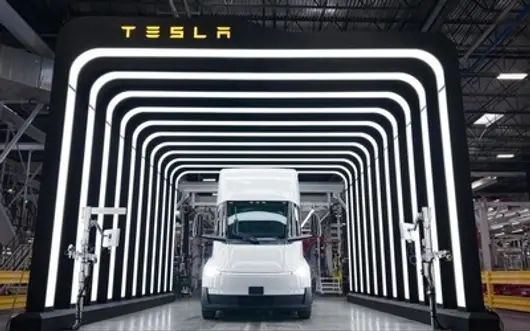
Tesla's ultimate trump card, hidden for half a year, finally lands! The widely rumored Budget Model Y has been officially confirmed, the Shanghai Super Factory has specifically built an exclusive production line, the new car has already passed listing certification in South Korea first, the battery still uses CATL lithium iron phosphate cells, expected to launch in the domestic market as early as this third quarter. Once the news broke, the entire 150,000-250,000 RMB pure electric SUV market exploded, all people preparing to buy cars are waiting for one answer: How much will this cheapest Tesla sell for?

Let's first calculate the most exciting price breakdown for everyone, which is also Tesla's core move to overturn the entire market this time. Currently sold in China, the starting price of the current Model Y is 249,900 RMB, while the upcoming budget version, through cost optimization, smashed through everyone's expectations directly. Referencing the budget Model 3 sold to Thailand earlier this year, which was nearly 30,000 RMB cheaper than the domestic same model, combined with CATL's latest low-cost lithium iron phosphate battery solution, and targeted simplification of interior and configurations, industry analysts generally predict, the starting price of the domestic budget Model Y will be set directly at 189,900 RMB, the top trim version will not exceed 220,000 RMB.
How outrageous is this price? You can buy a Tesla mid-size pure electric SUV for 189,900, 60,000 RMB cheaper than the current Model Y entry version directly, 10,000 RMB cheaper than BYD Song PLUS EV top trim, 20,000 RMB cheaper than Xiaomi SU7 entry version, even lower than the price of many domestic compact SUVs. Previously many people said Tesla is untouchable, now with just the cost of an ordinary family car, you can drive a Tesla, this was completely unimaginable a few years ago.
Many people worry cheap means bad quality, actually it's unnecessary. Tesla's budget version never cuts core major components, but removes unnecessary luxury configurations. From currently exposed information, the budget Model Y will continue to adopt Tesla's pure electric platform, equipped with a rear single motor, maximum power remains consistent with the current model, CLTC comprehensive driving range expected around 550km, completely meeting daily commute and short trip needs. The battery is still the lithium iron phosphate battery provided by CATL, safety and durability have all been verified by the market.
The real configuration reduction focuses mainly on non-core comfort configurations: interior will be replaced with more cost-effective eco-friendly materials, some ambient lights and decorative parts canceled; sound system reduced from 14 speakers to 8, subwoofer canceled; may use Tesla's latest pure vision solution, cancel ultrasonic radars, further reducing hardware costs. But it is worth noting, hardware for FSD full self-driving will be pre-installed on the whole series, later can be activated via payment, this is also Tesla's consistent sales strategy.
The reason Tesla is in a rush to launch the budget Model Y is fundamentally because the domestic market competition has reached an intense stage. Since the beginning of this year, BYD, Xiaomi, XPeng and other domestic brands have gone crazy in the 200,000 RMB level market, launching a large number of models with extremely strong product power, directly snatching away a large number of users who originally belonged to the Model Y. Sales of the current Model Y have declined for three consecutive months, Tesla must produce more lethal prices, to protect its market share.
And the capacity advantage of the Shanghai factory also gave Tesla the confidence to fight a price war. Currently, the annual capacity of the Shanghai Super Factory has exceeded 750,000 vehicles, the problem of insufficient capacity utilization is becoming increasingly prominent. Producing the budget Model Y not only absorbs excess capacity, but also further dilutes R&D and production costs through higher sales, forming a virtuous cycle of sales higher - cost lower - price cheaper.
It is foreseeable, once the 189,900 RMB Model Y launches, it will trigger chain reactions throughout the industry. First, the current Model Y will immediately start inventory clearance mode, terminal discounts are expected to reach 30,000-40,000 RMB, the opportunity to buy the current model at rock bottom is coming soon; Secondly, all domestic competitors will be forced to follow with price cuts, BYD Song PLUS, Geely Galaxy E8, XPeng G6 and other models, without price cuts they cannot compete with Tesla at all; Finally, the entire 150,000-200,000 RMB pure electric market price system will be completely reconstructed, consumers will become the biggest beneficiaries.
For ordinary consumers, the wisest choice right now is to wait and see. If you are not in a rush to use a car, strongly suggest waiting until the third quarter when the budget Model Y launches, the opportunity to buy a Tesla for 189,900 is not every year; if you need to buy a car now, endure it for a bit, at most two months, the entire 200,000 RMB level pure electric SUV market will welcome a wave of big price cuts, buying now is definitely being a sucker.
Of course, if you value rich configurations and localized intelligent experiences more, domestic models remain a better choice. Domestic SUVs at the same price point, not only have larger space, better interiors, but also high-level smart driving, seat ventilation massage and other luxury configurations, these are things the budget Model Y cannot compare with.
Tesla has never lost a price war, the arrival of this budget Model Y will completely rewrite the market landscape of China's new energy vehicles. So the question arises, with the same 190,000 RMB budget, would you choose the budget Model Y with stronger brand power, or a domestic top-trim SUV with full configurations? How low do you think Tesla can eventually drive the price?
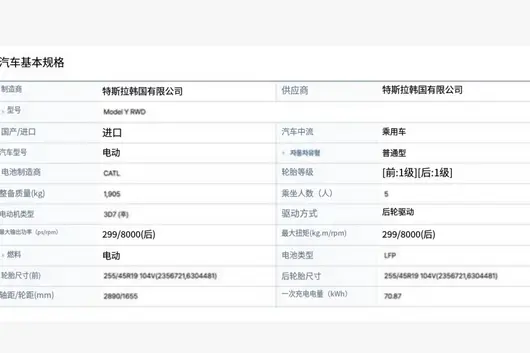

85,000 units. This is Geely's May overseas export report, a 184% year-on-year increase. Australia, Geely has only been there for 14 months, deliveries exceeded 10,000 units. EX5 was the first-quarter sales champion of pure electric SUV-C there, Zeekr 7X was even tougher, directly pulling down the long-dominant Tesla Model Y. Mexico cumulative 16,000+ from January to April, breaking records. Brazil single month hit 4,000+ units, also the highest record in that country's market.

After the order surge, logistics come first
Facing the sudden influx of orders, Geely didn't push all the pressure onto dealers and users to wait, but instead directly utilized the Ningbo overseas hub. Ro-ro ships, container ships, and international rail freight trains operated on three parallel lines, 4 major rail ports and 6 sea ports all got moving; Two self-owned ro-ro ships stood guard, China-Europe freight train special trains ran regularly, rail could cut dozens of days off the delivery time to Europe compared to sea transport.
Nearly 10,000 units are stably shipped to core ports monthly, it's not as light as a phrase "we will supply with all efforts", behind it is a net woven by routes, slots, customs affairs, loading/unloading yards, and long-term contracts. You can imagine, if there were no this sea-land-air intermodal chassis, even the best sales performance would vanish amidst the long sea shipping cycle and user complaints.

Rejecting the "cheap" logic, digging deep into local soil
Many people still look at domestic brand overseas expansion with old eyes, thinking it's just "cars are cheap, foreigners seek value". This logic might have held five years ago, but now it cannot explain why Zeekr 7X can pull down the long-dominant Tesla Model Y in Australia, let alone explain the pursuit of Dubai dealers.
What place is Dubai? It's an arena where luxury cars gather globally. What scenes haven't dealers there seen? They chase Geely for cars, what they seek is definitely not "cheap". The strategy of "One Geely" seems abstract, but when implemented, it is exceptionally specific: Geely, Lynk & Co, and Zeekr each keep their positions, maintaining brand tonality independence while sharing system capabilities behind the scenes. Right-hand drive adaptation, the introduction of 6AT versions, these trivial engineering details are the true roots taking deep into the local market.
The feedback from the Mexican market is particularly typical. The local team has a very simple sentence: "We will not change strategy due to short-term tariffs." Translated, it is: I am not here to make quick money, I am here to stay long-term. This mindset projected onto products, saw EX2 win the sales champion of B-segment hatchback new energy vehicles in Mexico, Indonesia, Costa Rica; projected onto channels, is the symbiotic ecosystem with dealers.

Systematic overseas expansion, winning in the unseen places
Explosive sales growth is most likely to expose shortcomings. Geely upgraded after-sales from "car repair" to user operations, super long warranties, three-level parts systems, a VOC user voice system covering the globe... These actions cannot be directly printed on posters, but they are the key deciding whether the reputation rises or collapses two years later.
One could say, Geely's 85,000 units overseas were not shouted out by loud voices, but operated by a precision machine from product definition, logistics delivery to user operations. When logistics fleets race day and night on the Eurasian land bridge, when Dubai dealers recommend Geely to customers in showrooms, the narrative logic of Chinese cars going overseas has turned the page.
#Geely Sells Explosively Overseas #Geely In Foreigners' Eyes
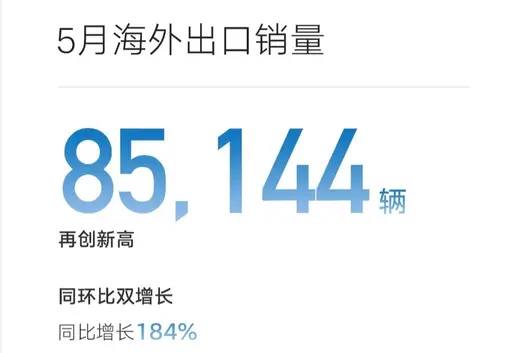

[CNMO Tech News] On May 29, Tesla officially announced that the Model Y L model has started its first deliveries in Singapore.

Model Y L First Deliveries Begin in Singapore
According to CNMO Tech, in May this year, the 6-seater version of the Model Y L received a five-star comprehensive safety rating from the Australasian New Car Assessment Program (ANCAP). The Model Y L scored high in all four major test categories: adult protection, child protection, pedestrian and cyclist protection, and safety assistance systems. The model has previously been launched in multiple markets and will be delivered to other markets in the future, and will also participate in evaluation and certification by local safety institutions.

In March this year, Tesla Executive Vice President Tao Lin stated that the Model Y has been on the market for 7 years and has been the world's best-selling passenger vehicle for three consecutive years. The Model Y was rated "Best Electric Car of 2026" by the authoritative magazine "Consumer Reports" and has won numerous awards in markets such as Australia, New Zealand, Japan, etc. The Model 3 also performed well, winning two major awards in Singapore: "Car of the Year 2026" and "Best Electric Sedan".
It is worth mentioning that recently, Tesla launched a June car purchasing benefit. The down payment for the Model Y L is only CNY 99,900, and the monthly payment can be as low as approximately CNY 3,985. Tesla also launched a new "Easy Loan" campaign. Taking the Model Y Rear-Wheel Drive version with a price of CNY 263,500 as an example, the balloon payment is CNY 52,700, with a down payment starting from CNY 55,900, and the minimum monthly payment for a five-year term is approximately CNY 2,691.
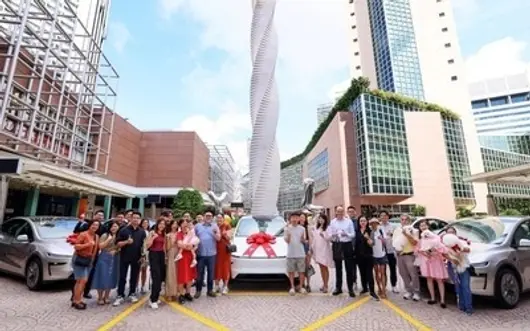

In Dubai where luxury cars are everywhere, what good cars has the dealer not seen?
But recently, an overseas dealer selling Chinese cars in Dubai came to domestic exhibitions, and was firmly won over by Zeekr. He stated directly, the technical iteration of Chinese cars has entered a new stage, traditional German luxury brands will hardly compete with Chinese brands like Zeekr anymore.

This sounds like politeness, but their actions are fiercer — he already has one Zeekr 9X, after Zeekr 8X launched, he turned around and blind-ordered two more.
This is the subtlest change happening in Chinese car exports: In the past, we actively "went out", now overseas quality dealers are starting to "reach out in reverse".
Hot sales overseas, not just a market feverGeely's latest disclosed overseas data is indeed confident.
This May, Geely Auto sales reached 238,000 units, achieving growth both year-on-year and month-on-month. Of which overseas exports exceeded 85,000 units, setting a historical high, year-on-year growth reached 184%.
Looking at the total amount alone is bright enough, but the deeper value lies in: This is not propped up by speculation in a single market, but blooms across the board.
In April, Geely overseas new energy sales year-on-year growth was 624.5%, consecutive first in Chinese new energy car export growth rate. North America, Asia, Europe, South America four continents are all picking up volume, multiple countries growth rate exceeded 300%.
Geely entered the Australian market only 14 months ago, vehicle delivery has broken through 10,000 units, becoming one of the fastest-growing Chinese car enterprises locally; Brazil market monthly sales rushed above 4,000 units, refreshing the local highest monthly sales record; Mexico market January to April cumulative sales exceeded 16,000 units, also set a historical high.

These markets are geographically dispersed, consumption habits, road environments, and policies/regulations vary greatly. Geely managing to run through simultaneously shows this wave of growth is by no means a chance hitting of a single trend.
Car models are also blooming in multiple points.
Geely EX2 in Mexico, Indonesia, Costa Rica and other markets, took first place in B-class hatchback new energy sales TOP1 of the first quarter; Geely EX5 in Australia, UAE, Uruguay and other countries, became the sales champion of the first quarter pure electric SUV-C market.
In the past, Chinese cars going overseas were often labeled with the value-for-money tag of "cheap, high configuration". And Geely now takes first place simultaneously in different markets and different niche categories, means products have truly invaded the car selection list of the local mainstream consumer group.
Zeekr Overthrows Model Y in AustraliaGeely's export wave this time is not just relying on ordinary models to move volume.
If Geely EX2 and EX5 are responsible for building a solid sales base, then Zeekr is responsible for another hard card: breaking the price ceiling of Chinese brands overseas.
In May, Zeekr brand delivery reached 34,377 units, reaching a new high. Of which, Zeekr 9 Series, 8 Series models share nearly 50%, brand unit transaction price year-on-year growth 52.4%, even exceeding traditional BBA.
High-end market is never shouted out, eventually needs real transaction prices to speak. Taking Australian market as an example, Zeekr 7X sales topped the list again, even surpassing the long-term dominant Tesla Model Y. Australia is not a virgin land for new energy, Tesla has cultivated deeply here for a long time, Zeekr can face off head-on and overtake, extremely valuable.
So, the Dubai dealer being moved by Zeekr is not an isolated little anecdote.

For many overseas users, Chinese cars have changed too fast in these years. In the past they might think Chinese cars just had high configuration, low price, but now truly sitting in the car, experiencing smart cockpit, tri-electric efficiency, chassis texture, luxury configuration and vehicle completion, feelings will be completely different.
Especially brands like Zeekr, no longer answering the question of "Can Chinese cars build new energy cars", but answering the question of "Can Chinese brands make high-end cars". This opened up more imagination for Geely's premium space overseas.
After cars sell explosively, logistics are the first to buckleAfter sales volume picks up, what is tested first is often not marketing, but delivery.
Overseas markets are not like domestic ones, new cars from factory to terminal, need to cross ports, sea freight, rail, customs clearance, distribution, dealer delivery and many other hurdles. Any blockage of capillaries will directly destroy user experience.
After "sellable", Geely's core task now is "supply-able".
To cope with the explosive overseas orders, Geely relies on Ningbo export hub, simultaneously activating Ro-Ro ships, container ships and international rail freight trains to carry out sea-land intermodal transport. Currently, Geely has added multiple transport routes, forming a capacity resource layout of 4 major rail ports, 6 major sea ports, and equipped with two self-owned Ro-Ro ships.

Meanwhile, Geely has also opened multiple cross-border transport special lines, continuously supplementing capacity resources, monthly can stably ship nearly 10,000 new cars to core European ports. China-Europe Railway Express Geely special train has also been operating normally, transport time compared to sea transport can be shortened by 40 days.
This turning point is very interesting: In the past, Chinese cars exports anxious about "how to sell out", while Geely now faces a sweet trouble "how to deliver cars faster".
This is exactly a microcosm of export logic iteration.
Early car exports were more like "trade business" one-off deals, on ship, sell to middlemen, task completed. But now different, overseas users buying Chinese cars, not only look at the product itself, but value delivery cycle, after-sales service, parts supply and warranty policy, they value whether the brand plans to cultivate deeply locally.
So, don't just stare at that 85,000 units export data of May. The real test is after cars sell explosively, can logistics deliver on time, after-sales can respond quickly. Geely this time is impressive, is it putting these logistics support ahead.
This is the mark of Chinese car companies entering the deep water zone of global competition.
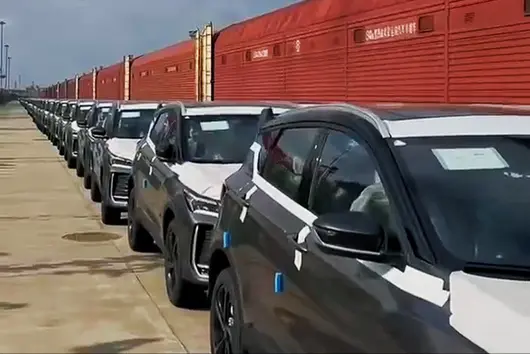
At the beginning of each month, major automakers reveal their report cards, and the "good student" Tesla is no exception.
According to the latest data from the China Passenger Car Association, Tesla Shanghai Factory deliveries in May exceeded 85,000 units, the highest single-month delivery this year.

This Tesla Shanghai Gigafactory was established in Lingang in 2019, completing the entire process of groundbreaking, production launch, and delivery in that year. It is now already Tesla's global production powerhouse, contributing more than half of the brand's deliveries. Whether sold domestically or exported overseas, most originate from here. The local parts rate exceeds 95%, with a car rolling off the line every 30-plus seconds on average. The so-called "Tesla Speed" is no mere talk.

So, what contributed to this record-breaking delivery this time?
First, the overseas market contributed significantly. The main models Model 3 and Model Y have consistently ranked high in premium pure electric rankings in Thailand, South Korea, Hong Kong and Macao, etc., so demand is naturally substantial.
Returning to the domestic market, regarding auto financing plans, Tesla recently launched an "Easy Loan" service, lowering the purchase threshold and stimulating many hesitant users to place orders.
Additionally, the charging network. Tesla has opened its Superchargers to vehicles of other brands, with over 1,000 stations, starting from 1.5 yuan/kWh, usable nationwide. No matter what brand of car you drive, having an extra charging option on the road allows many consumers hesitant about recharging to put their worries aside.

To be honest, in the current highly competitive environment for new energy vehicles, Tesla being able to achieve this result indeed shows some real skill.
However, after capacity and speed increase, the test on quality will be greater. Whether subsequent quality control remains stable is also a concern for many.
Plus, there are many uncertain factors overseas such as policies and tariffs, so export business may not always go smoothly.

So, do you think it can maintain this good performance in the second half of the year? Let's chat in the comments.
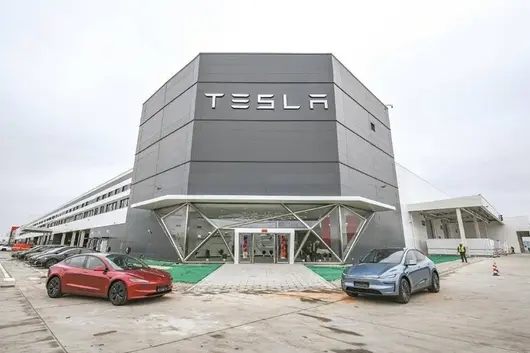

Recently, overseas blogger @muskonomy shared the usage experience of a Model 3 owner from the Philippines from the first month after purchasing the car.

After just one month of use, the Model 3 shows significant advantages in usage costs and smart experience, and space and practicality are also excellent, making him sigh he never wants to switch back to a fuel car.
Before buying the Model 3, this owner had been driving a Japanese B-class fuel car for a long time, with a fixed daily route, commuting on the highway from Monday to Wednesday, with an average weekly mileage of about 110 km. Year-round highway travel made him particularly picky about vehicle handling and driving quality.
What made him exclaim "Great Value" is Tesla's excellent usage economy. Previously driving a Japanese B-class fuel car, refueling costs remained high, "Before oil prices rose, just filling up cost about 13,200 pesos (approx. 1452 RMB) per month". After buying the Model 3, he used home charging for refueling, only needing to charge twice a week, monthly electricity cost about 2000 pesos (approx. 221 RMB), only one-sixth of the previous fuel car, commuting usage cost significantly reduced.

Even more surprising to the owner, the Model 3's space performance far exceeded expectations. "I am about 6.3 feet tall (approx. 191cm), weight 225 lbs (approx. 102 kg), worried before picking up the car that interior space was limited. After actual experience found, even if front seats are adjusted to comfortable position, rear seats can still easily accommodate adult passengers, daily commute completely sufficient, practicality maximized."
Singapore owner @Coco Silly Fish from Southeast Asian country also swapped her home's fuel car for Tesla. She shared on social platform, when driving fuel cars before, cost pressure brought by oil price rise, fuel anxiety from morning/evening peak traffic congestion, always troubled her greatly. After driving Tesla, commuting refuel cost even lower than public transport, overall usage experience also greatly improved.
Besides saving money and being worry-free, Tesla's powerful power response, easy and effort-saving driving feeling in congested sections all left a deep impression on her: "The current calm feeling of usage is something fuel cars cannot replace!"


At the beginning of each month, major automakers reveal their report cards, and the "good student" Tesla is no exception.
According to the latest data from the China Passenger Car Association, Tesla Shanghai Factory deliveries in May exceeded 85,000 units, the highest single-month delivery this year.
This Tesla Shanghai Gigafactory was established in Lingang in 2019, completing the entire process of groundbreaking, production launch, and delivery in that year. It is now already Tesla's global production powerhouse, contributing more than half of the brand's deliveries. Whether sold domestically or exported overseas, most originate from here. The local parts rate exceeds 95%, with a car rolling off the line every 30-plus seconds on average. The so-called "Tesla Speed" is no mere talk.
So, what contributed to this record-breaking delivery this time?
First, the overseas market contributed significantly. The main models Model 3 and Model Y have consistently ranked high in premium pure electric rankings in Thailand, South Korea, Hong Kong and Macao, etc., so demand is naturally substantial.
Returning to the domestic market, regarding auto financing plans, Tesla recently launched an "Easy Loan" service, lowering the purchase threshold and stimulating many hesitant users to place orders.
Additionally, the charging network. Tesla has opened its Superchargers to vehicles of other brands, with over 1,000 stations, starting from 1.5 yuan/kWh, usable nationwide. No matter what brand of car you drive, having an extra charging option on the road allows many consumers hesitant about recharging to put their worries aside.
To be honest, in the current highly competitive environment for new energy vehicles, Tesla being able to achieve this result indeed shows some real skill.
However, after capacity and speed increase, the test on quality will be greater. Whether subsequent quality control remains stable is also a concern for many.
Plus, there are many uncertain factors overseas such as policies and tariffs, so export business may not always go smoothly.
So, do you think it can maintain this good performance in the second half of the year? Let's chat in the comments.

85,000 units. This is Geely's May overseas export report, a 184% year-on-year increase. Australia, Geely has only been there for 14 months, deliveries exceeded 10,000 units. EX5 was the first-quarter sales champion of pure electric SUV-C there, Zeekr 7X was even tougher, directly pulling down the long-dominant Tesla Model Y. Mexico cumulative 16,000+ from January to April, breaking records. Brazil single month hit 4,000+ units, also the highest record in that country's market.
After the order surge, logistics come first
Facing the sudden influx of orders, Geely didn't push all the pressure onto dealers and users to wait, but instead directly utilized the Ningbo overseas hub. Ro-ro ships, container ships, and international rail freight trains operated on three parallel lines, 4 major rail ports and 6 sea ports all got moving; Two self-owned ro-ro ships stood guard, China-Europe freight train special trains ran regularly, rail could cut dozens of days off the delivery time to Europe compared to sea transport.
Nearly 10,000 units are stably shipped to core ports monthly, it's not as light as a phrase "we will supply with all efforts", behind it is a net woven by routes, slots, customs affairs, loading/unloading yards, and long-term contracts. You can imagine, if there were no this sea-land-air intermodal chassis, even the best sales performance would vanish amidst the long sea shipping cycle and user complaints.
Rejecting the "cheap" logic, digging deep into local soil
Many people still look at domestic brand overseas expansion with old eyes, thinking it's just "cars are cheap, foreigners seek value". This logic might have held five years ago, but now it cannot explain why Zeekr 7X can pull down the long-dominant Tesla Model Y in Australia, let alone explain the pursuit of Dubai dealers.
What place is Dubai? It's an arena where luxury cars gather globally. What scenes haven't dealers there seen? They chase Geely for cars, what they seek is definitely not "cheap". The strategy of "One Geely" seems abstract, but when implemented, it is exceptionally specific: Geely, Lynk & Co, and Zeekr each keep their positions, maintaining brand tonality independence while sharing system capabilities behind the scenes. Right-hand drive adaptation, the introduction of 6AT versions, these trivial engineering details are the true roots taking deep into the local market.
The feedback from the Mexican market is particularly typical. The local team has a very simple sentence: "We will not change strategy due to short-term tariffs." Translated, it is: I am not here to make quick money, I am here to stay long-term. This mindset projected onto products, saw EX2 win the sales champion of B-segment hatchback new energy vehicles in Mexico, Indonesia, Costa Rica; projected onto channels, is the symbiotic ecosystem with dealers.
Systematic overseas expansion, winning in the unseen places
Explosive sales growth is most likely to expose shortcomings. Geely upgraded after-sales from "car repair" to user operations, super long warranties, three-level parts systems, a VOC user voice system covering the globe... These actions cannot be directly printed on posters, but they are the key deciding whether the reputation rises or collapses two years later.
One could say, Geely's 85,000 units overseas were not shouted out by loud voices, but operated by a precision machine from product definition, logistics delivery to user operations. When logistics fleets race day and night on the Eurasian land bridge, when Dubai dealers recommend Geely to customers in showrooms, the narrative logic of Chinese cars going overseas has turned the page.
#Geely Sells Explosively Overseas #Geely In Foreigners' Eyes

[CNMO Tech News] On June 4, Tesla officially announced that the Tesla Model Y produced by the Shanghai Superfactory became the best-selling vehicle across all categories in Australia in May 2026, and also became the first electric vehicle to top the sales charts in local history.

Tesla Model Y

According to VFACTS data released jointly by the Federal Chamber of Automotive Industries (FCAI) and the Electric Vehicle Council (EVC), the Tesla Model Y topped the sales chart for new cars in Australia in May 2026 with sales of 5,605 units. This is the first electric vehicle to rank number one in sales in the history of the Australian car market. Ford Ranger and Toyota HiLux, two pickup trucks that often top the list, ranked second and third with sales of 4,474 and 4,005 units respectively. More notably, the Tesla Model Y's monthly sales of 5,605 units showed significant year-on-year growth of56.6%, setting a monthly sales record for this model in the Australian market.

Tesla
The Tesla Model Y that topped the charts this time was entirely produced and supplied by Tesla's Shanghai Superfactory. As Tesla's largest global export hub, deliveries from the Shanghai Superfactory account for more than half of the global total deliveries. According to the latest statistics from the China Passenger Car Association (CPCA), the Shanghai Superfactory delivered over 85,000 electric vehicles in May, setting a new single-month delivery record for 2026, with year-on-year growth of 39.4%.

Tesla Factory
Meanwhile, the large 6-seater luxury SUV Model Y L produced by the Shanghai factory is accelerating deliveries to multiple Asia-Pacific markets including Australia, Singapore, South Korea, Thailand, Philippines, and others. Thom Drew, Regional Director of Tesla Australia and New Zealand, stated regarding May delivery results that this achievement was thanks to "the continued loyalty of existing customers and an increasing number of Australian buyers choosing Tesla for the first time."