首頁Sports Car

搜尋歷史
熱門搜尋
經銷商登入 / 註冊


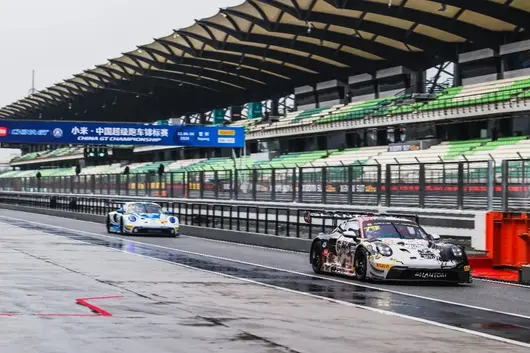
On November 7-8, the 2026 Xiaomi China Supercar Championship (hereinafter referred to as "CHINA GT") will go global and start the season finale competition at the Sepang International Circuit. This round brings together strong teams from around the world — a massive lineup of 35 cars composed of 22 GT3 cars, 6 GTS cars, and 7 GTC cars. Top teams gather elite drivers in the tropical venue to compete for the annual championship honor.
GT3 Class
Final showdown, top masters compete in the tropical battlefield

Entering the season finale, the Malaysia round in the GT3 class continues the intense competition pattern, with 22 cars forming a complete lineup. Audi, BMW, Ferrari, Lamborghini, Mercedes-AMG, and Porsche, the six major manufacturers, engage in a peak showdown. Elite drivers under each team will go all out to fight for victory.

In addition, this round's GT3 class will hold three rounds of main races. Compared to the regular schedule, the longer race distance not only tests drivers' physical management and endurance capability but also puts more stringent requirements on overall team collaboration. With the ultimate season battle opening up, the final outcome of the annual crown will also be officially revealed this weekend.

The championship contender Winhere Origine Motorsport maintained strong competitiveness throughout the season and still holds the top spot on the standings. Team lead driver Yuan Bo will return to the track after missing one round, partnering with Ye Hongli to drive the No. 96 Porsche 911 GT3 R EVO to challenge for the annual championship. In the Origine Motorsport No. 55 lineup, Xie Xinze and Gu Meng continue to fight side by side, driving the 911 GT3 R EVO to compete for a good result.

After competing in the first four rounds of the season, Climax Racing held the second place on the annual standings with steady performance. The team will send two cars to compete at Sepang. In the No. 999 lineup, lead member Zhou Bihuang will team up with young rising star Cui Yuanpu to drive the Mercedes-AMG GT3 EVO; in the No. 777 lineup, Li Dongsheng and Li Donghui will continue to steer the Audi R8 LMS GT3 EVO II together.

Absolute Racing sends a two-car lineup consisting of a Lamborghini Huracán GT3 EVO2 and a Porsche GT3 R EVO to compete. Thanks to their outstanding performance of winning the second round main race at the Shanghai round from the back of the grid, the No. 63 lineup Akash Nandy was boosted to the third place on the driver standings. He will partner with Liang Jiatong to launch a final sprint for the annual championship; the No. 22 lineup departs with a new driver lineup, with Min Heng and Li Kerong ready to face the test at the Sepang circuit.

Phantom Global Racing departs for the Malaysia round with the original lineup. The No. 66 Porsche 911 GT3 R EVO is driven by Xie An and Enzo TRULLI, while the No. 79 Porsche 911 GT3 R EVO is driven by Li Ning and Loek HARTOG.

Team KRC sends a BMW M4 GT3 EVO to compete at the Malaysia round. Zhang Zhendong and Zhang Mingyang will continue to form the No. 18 lineup.

Since the season opener, UNO Racing Team has maintained a momentum of steady improvement, securing class podiums multiple times. They will welcome the Malaysia round with full confidence, looking forward to achieving further breakthroughs. Wang Yibo and Mao Junhao will drive the No. 585 Mercedes-AMG GT3 EVO together; RIO and Bian Ye will drive the No. 71 Mercedes-AMG GT3 EVO to compete.

610Racing deploys four cars to embark on the Malaysia journey, with the lineup covering Porsche and Audi brands. In the Porsche lineup, Hu Bo and Cao Qikuan will drive the No. 16 Porsche 911 GT3 R EVO together, while Yang Haojie and Luo Kai Luo will drive the No. 97 Porsche 911 GT3 R EVO. In the Audi lineup, Huang Jinzhang will drive the No. 510 R8 LMS GT3 EVO II alone, and Benny SANTOSO and Yang Xiaowei will steer the No. 610 R8 LMS GT3 EVO II to compete.

The Harmony Racing No. 73 Ferrari 296 GT3 EVO will be driven together by Chen Yechong and Liao Qishun.

GAHA Racing competes in the GT3 class with the No. 328 BMW M4 GT3 EVO. Long-time partners Li Hanyu and Ou Ziyang continue to represent the team to go all out for the podium.

Wu Yifan of the 326 Racing Team will compete in a single driver lineup, driving the No. 511 Audi R8 LMS GT3 EVO II to face the three rounds of main races.

In LEVEL Motorsports, Huang Ruohan and Chen Junhua are at the helm of the No. 15 Mercedes-AMG GT3 EVO; Zhuang Jishun and Su Yanming will drive the No. 26 Audi R8 LMS GT3 EVO II. Both lineups have steadily entered the top of the class in previous events, and their performance at the Malaysia round is worth looking forward to.

Delta Garage Racing makes its first appearance at the CHINA GT track in Malaysia. This newcomer will participate in the battle with a two-car lineup consisting of a Porsche 911 GT3 and a Porsche 911 GT3 R EVO. Dypo FITRAMADHAN and Putera Adam HALIM MU'AZZAM will represent the No. 17 lineup, while Umar ABDULLAH and Milos PAVLOVIC form the No. 86 lineup.
GTS Class
Heroes compete for supremacy, pursuing the highest annual honor

There are 6 cars registered for the GTS class this round, covering Mercedes-AMG, Porsche, and Toyota, the three major brands. A group of strong drivers will engage in the season's final contest at the Sepang International Circuit.

Origin7 Racing fields two Porsche 718 Cayman GT4 RS Clubsports to compete for the GTS class podium. The No. 977 lineup Tian Weiyuan and Naquib AZLAN stood out at the Shanghai round, winning the class overall champion in the second round main race; the No. 621 lineup TANG Yile and Jiang Tengyi debuted in the GTS class at the Shanghai round, reaching the class podium twice with steady performance. The team aims to maintain competitive state at the Malaysia round and challenge for the top three in class.

Origine Motorsport No. 650 lineup Wu Zhenlong and Che Shaoyi demonstrated extremely excellent speed at the Zhuhai and Shanghai rounds, winning class first place twice. Setting off for Sepang this time, the two drivers will continue to drive the Toyota GR Supra GT4 EVO II to compete.

The KS by Pointer Racing No. 56 lineup Huang Hui and the STARCARS RACING No. 28 lineup Dennis CHAN/Ouyang Zhenwei will both use Mercedes-AMG GT4 to compete in the GTS class.

Climax Racing returns to the GTS class at the Malaysia round. XU Xin and Elias SEPPANEN will drive the No. 611 Porsche 718 Cayman GT4 RS Clubsport to compete.
GTC Class
Diverse lineup, striving to be at the top in the finale

The GTC class assembles 7 cars, with 610Racing, Harmony Racing, SCALEX BY ENGINEERING, and Origin7 Racing competing on the same track.

As the core force in the GTC class, 610Racing will deploy four Porsche 911 GT3 Cups. Yan Chuang will drive the No. 27 car alone, while Wang Yang/Gan Erfu, Deng Tianfu/HO Chong Yi Kenneth, and Tian Xu/He Xiaole will drive the No. 29, 53, and 77 cars to compete respectively.

Harmony Racing will send Feng Shaolun and Jiang Nan to drive the No. 23 Ferrari 296 Challenge car to compete.

SCALEX BY ENGINEERING will send one Porsche 911 GT3 Cup, with the competition lineup composed of LIM Junji and LIM Yuhan.

Origin7 Racing makes its first appearance on the GTC track at the Malaysia round. The team's No. 711 Porsche 911 GT3 Cup is driven by Hyung il KIM and Alexander PAQUETTE.

As the 2026 season enters its final stage, the battle at Sepang will determine the final outcome of the annual championship in each class. The variable weather brought by the Malaysia rainy season is undoubtedly the biggest tactical focal point in this ultimate showdown. In addition, the Saturday GTC/GTS class will also welcome a night race. The complex lighting conditions at night will bring more extreme challenges for drivers. From November 7 to 8, let's focus on the Sepang International Circuit in Malaysia together and witness the final showdown of the 2026 season CHINA GT!




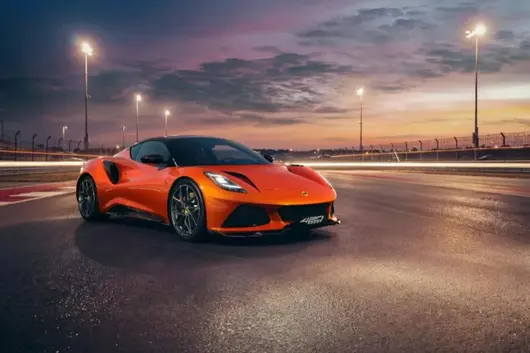
From 'Last Generation of Fuel Cars' to 'Multi-Energy Coexistence', Lotus Sports Cars clarifies in the 2030 Strategy: Lotus will no longer make all-electric sports cars; hybrid proportion will reach 60%, and annual sales of 30,000 units will achieve profitability.

On June 1, Lotus Group CEO Feng Qingfeng announced the brand's core plan for the next four years at the Focus 2030 Strategy Media Communication Meeting held in Beijing. Facing the reality of slowing global electrification policies, uneven charging infrastructure, and diverging consumer usage scenarios, Lotus actively adjusted the aggressive path of 'Full Electrification' since 2018, shifting to a multi-energy strategy of fuel, hybrid, and all-electric in parallel.
"What changes is happening in the market? Consumers have become clearer about usage scenarios for electric vehicles, hybrids, and fuel vehicles."
Feng Qingfeng stated at the communication meeting, "As a daily driving vehicle, electric vehicles are very suitable, but as a long-distance vehicle or a performance car, electric vehicles undoubtedly will face some challenges."
From five core sections: strategic adjustment, core technology, product matrix, global layout, to commercial goals, Feng Qingfeng detailed the clearer strategic layout of Lotus Cars.
I. Strategic Shift: No Longer Making All-Electric Sports Cars! From 'Full Electrification' to 'Multi-Energy Parallel'
Lotus announced in 2018 that Emira would become the last pure fuel car model, fully betting on electrification. However, in the Focus 2030 Strategy, the brand made a significant pullback.

Feng Qingfeng frankly stated that the global environment has changed: "In the past, governments, whether in Europe, UK, etc., all proposed strategies to support future electrification development, even governments proposing restrictions on fuel cars in a certain year, but undoubtedly all governments are postponing."
He gave examples, saying Italy's charging piles are mainly low power, and the Middle East has almost no commercial charging facilities, 'with no layout of charging facilities in action'.
Based on this, Lotus established a new power route combination: about 60% plug-in hybrid models, 40% all-electric models, and pure fuel only retains a small number of special markets (such as the Middle East).
Feng Qingfeng clearly stated: "For sports cars, we will pass on the all-electric road." Life vehicles will continue to develop all-electric, but sports cars will only do fuel and hybrid.
"The penetration rate of all-electric vehicles above $80,000 is less than 10%, even strong China is the same." Feng Qingfeng said, "In this market range, hybrids still have a lot of growth."
II. Core Technology: Self-developed V8 engine and torque gearbox, hybrid 'not a worm', chassis 'comes alive'
Lotus named its super hybrid technology 'Luyao', with the core selling point being no performance attenuation under no-fuel state.
Feng Qingfeng summarized the industry pain point and Lotus' solution with one sentence: "We used to say 'Full charge a dragon, depleted charge a worm', in the future depleted charge will no longer be a worm."
Take For Me (European name Eletre X) as an example; the car is equipped with a 900V Luyao Super Hybrid Architecture, total system power 952 horsepower, 0-100km/h acceleration 3.3 seconds with full charge, 3.5 seconds when battery power is only 10%, comprehensive range over 1400 km.
In the powertrain field, Lotus announced it will jointly develop a new V8 engine and large torque DCT gearbox with HORSE (Joint venture of Geely, Renault, Saudi Aramco). Feng Qingfeng called the large torque DCT 'The pearl on the crown of the automotive industry', 'To achieve over 900 Nm, this is also a very difficult, very big challenge'.
The new V8 hybrid supercar Type 135 is planned for launch in 2028, targeting 'Above 10,000 RPM', larger horsepower, lighter weight, and exploring the downscaling of F1 track technology (such as MGU-K) to mass production vehicles.
Regarding the chassis, Lotus emphasized that its core tuning capabilities are evolving through intelligence. "In the past, once a chassis was tuned, it basically became fixed... but with active chassis, changes are infinite."

Feng Qingfeng compared Lotus chassis tuning to a "Top-tier Conductor": "An orchestra can have any instrument, but only a good top-tier conductor can conduct a perfect symphony."
Lightweighting is still the bottom line for Lotus. Evija sets the benchmark with 2000 horsepower and 1.6 tons weight, "To surpass 1.6 tons, I think it is extremely extremely difficult". Feng Qingfeng explicitly refused to add weight-increasing configurations like refrigerators on sports cars.
III. Product Matrix: Fuel, Hybrid, All-Electric Each in Its Place
Under the Focus 2030 Strategy, Lotus forms three clear product lines:
Fuel Sports Cars: Emira 420 Sport launched globally in May 2026, known as "The Emira model with the strongest power, lightest weight, and best aerodynamic performance to date".
Super Hybrid: For Me (China) has been launched and delivered; European version Eletre X will be released in Summer 2026, deliveries start in the fourth quarter. The car is evaluated by some European media as "A car that will change the European power landscape".
All-Electric Life Vehicles: Eletre, Emeya, and supercar Evija continue to be on sale. Among them, Eletre received UN R171.01 certification in May 2026, becoming the first China-manufactured electric vehicle to receive this certification.
Future Flagship: Type 135 V8 Hybrid Supercar, planned for 2028 launch, produced in Europe.

Feng Qingfeng emphasized that sports cars will no longer explore the all-electric route, while life vehicles retain all-electric. "There is still much all-electric technology worth us researching and exploring... We focus on life vehicles."
IV. Global Market: Regional Differentiated Layout, Channels Continued Expansion
To date, Lotus has a total of 216 sales stores globally, among them 67 in Europe, 63 in China, 48 in North America, 38 in other regions. The number of stores in China has increased from about 50 in 2025 to 63, with year-end target of 80, "Basically consistent with Porsche's channels".
Regional strategies show obvious differences:
China: As the main sales growth engine, Wuhan Factory and China R&D Center play core roles. User proportion after For Me launch increased by 50%, high-spec models over 70%, old owner repurchase rate reaches 20%. Customer group expanded from business owners, second-generation entrepreneurs to corporate executives and financial professionals, proportion of financial industry executives among small reservation users is about 30%.
Europe: UK Hethel is the sports car manufacturing and performance engineering center. Lotus will use Eletre X to enter the European hybrid market, filling the local hybrid blank of 'Fuel-based'. New markets like Berlin will enter soon.
North America: Restricted by 125% tariff and ICTS Act, China-produced all-electric models cannot enter the US, only UK-made sports cars can be sold. Canada becomes the breakthrough point — in May 2026, the first batch of 18 Eletre units exported to Canada, becoming the first mass-exported Chinese brand after tariff reduction. Lotus has 6 dealerships in Canada, planning to expand to 12 by the end of the year.
Brazil: On May 27, 2026, Lotus launched the brand in Sao Paulo, officially entering South America's largest market. Feng Qingfeng mentioned the deep local brand recognition: "Two Brazilian F1 drivers—Senna and Fittipaldi—were both Lotus F1 drivers." Lotus directly started operations with Emira, Eletre, Emeya full product line, Eletre PHEV expected to launch in 2027.
Middle East and Asia-Pacific: Middle East network is relatively complete; right-hand drive markets (Malaysia, Australia, etc.) wait for 2027 For Me right-hand drive model launch before expansion.
"Lotus was born global." Feng Qingfeng said, "We want to reutilize Geely's R&D system, supply chain system, and global manufacturing system for collaboration, so as to maximize Lotus' benefits."
V. Commercial Goal: 30,000 Units Break-even, Profit Path Clear
Lotus explicitly proposed that with Geely synergy and efficiency improvement, annual sales reaching 30,000 units can achieve continuous profitability.
"In the past, our break-even point was relatively high, had to achieve 50,000, 80,000 units to reach break-even point." Feng Qingfeng said, "Now through Geely's empowerment, Geely's synergy, and through our own collaboration between China and UK, let Lotus become a small but beautiful company, achieve 30,000 units can let the company gain good returns."
Ideal global sales structure is '3331': China 30%, Europe 30%, US 30%, other regions 10%. Due to US policy restrictions, US share will decrease, taken over by China and Europe.
Cost control aspects, Lotus and Geely have deep synergy in electronic architecture, intelligence, joint procurement and other fields, "Below the iceberg common costs greatly reduced, while above the iceberg retain 100% of personalized investment" — including chassis tuning, aerodynamics, lightweight materials, etc. Wuhan Digital Twin Factory will compress new car production cycle from 8-12 months to 3 months, engineer onsite requirement reduced from 200 people to a dozen people.
"With Geely, Lotus finally has bullets to counter Porsche." Feng Qingfeng said, "30,000 units can profit, this is rare in the automotive industry, but Lotus can."
Focus 2030 Strategy marks Lotus shifting from single electrification route to more pragmatic, more flexible global multi-power strategy. In the context of super luxury car market growth slowing, policy rhythm differentiation, Lotus relies on complete coverage of three power lines: fuel, hybrid, all-electric, and Geely system technology and supply chain synergy, trying to run out a sustainable profit path in the sub-division track of personalized driving experience.
As Feng Qingfeng said at the end of the communication meeting: "We haven't learned how to cash in on online traffic yet, need to learn a bit more." But for a brand that has always taken handling, lightweight, and aerodynamics as faith for 78 years, traffic might never have been its most concerned — what it truly cares about is, whether drivers can find that unique, unhomogenized feeling on every Lotus.