首頁Production

搜尋歷史
熱門搜尋
經銷商登入 / 註冊


Revenue broke 10 billion but profit fell 17%, CIMC Vehicles led by Ding Zhengxiang is trapped in a gross margin dilemma.
After market hours on September 4, CIMC Vehicles (301039.SZ) announced the appointment of Senior Vice President Ding Zhengxiang as Company President, filling the vacancy left by former President Wang Zhujian's resignation due to personal health reasons.
Ding Zhengxiang joined CIMC Group in 1991 and entered the CIMC Vehicles system in 2004. He rose from production scheduling to President, dedicating 35 years to the CIMC system.
Behind the personnel changes lies a half-year report with increased revenue but no profit growth.
In the first half of 2026, CIMC Vehicles realized revenue of 10.737 billion yuan, up 10.09% year-on-year, but net profit attributable to shareholders was only 334 million yuan, down 17.04% year-on-year. Excluding non-recurring gains and losses, net profit decreased 13.13% year-on-year.
To truly improve the gross margin, one must rely on product structure upgrades, increasing the proportion of high-value-added products, and shifting from price competition to value competition.

The Counterattack of a 35-Year Production Veteran
From Workshop Scheduling to President of the Semi-Trailer Leader
Revenue exceeded 10 billion, yet profit is shrinking.
The problem lies in the gross margin. Global semi-trailer business revenue grew, but market competition intensified, product gross margins declined, causing profit levels to drop year-on-year. Ding Zhengxiang, a veteran from the production frontline, takes over not an easy legacy, but a battle for gross margins.
Ding Zhengxiang's resume is a typical history of CIMC's growth.

Born in 1967, he joined China International Marine Containers (Group) Ltd. in 1991, starting from the most basic production scheduling.
In the 1990s, CIMC was in the golden period of global expansion of container business. Ding Zhengxiang struggled and worked hard on the production frontline, accumulating solid manufacturing management skills.
2004 was the turning point in Ding Zhengxiang's career.
That year, he officially joined the CIMC Vehicles system, entering Shenzhen CIMC Special Purpose Vehicle Co., Ltd., successively serving as Deputy Manager of Production Department and Deputy Manager of Quality Control Department. From containers to special vehicles, Ding Zhengxiang completed a leap in business areas, but what remained unchanged was his deep investment in production and manufacturing.
From 2007 to 2010, Ding Zhengxiang was assigned to CIMC Vehicles Thailand Co., Ltd. as General Manager Assistant, then returned to Shenzhen CIMC Special Purpose Vehicle Co., Ltd., successively serving as General Manager Assistant and Vice General Manager.
Thereafter, he successively led CIMC Vehicles Jiangmen Company, Shenzhen CIMC Special Purpose Vehicle Company, Shandong Wanshida Special Automotive Company. His footsteps covered the core capacity bases of CIMC Vehicles in South China, East China, and North China.
In February 2023, Ding Zhengxiang served as Assistant President of the company, officially entering the group's core management. In December of the same year, he concurrently served as CEO of Starlink LTP Group, responsible for the operations of this innovative business segment.
After stepping down as CEO of Starlink LTP Group in June 2026, Ding Zhengxiang became Senior Vice President of the company and concurrently served as the Coordinating Leader of the Star LTP segment. From the production frontline to Group President, the 35-year resume has no weak links.
This type of President emerging from the workshop is not common among A-share listed companies. Most listed company Presidents are either from finance, marketing, or are returnee elites.
Ding Zhengxiang is different. Every step of his promotion was grounded in production and manufacturing. This background is exactly what CIMC Vehicles currently needs most.

The Real Challenge for Ding Zhengxiang
The interim report data has already explained the problem. In the first half of 2026, CIMC Vehicles realized revenue of 10.737 billion yuan, up 10.09% year-on-year, but net profit attributable to shareholders was only 334 million yuan, down 17.04% year-on-year.
Net profit excluding non-recurring gains and losses was 334 million yuan, down 13.13% year-on-year. Net cash flow from operating activities was 778 million yuan, down 16.14% year-on-year. Revenue was rising, while profit and cash flow were both falling.

The explanation given by the company itself was very straightforward. Global semi-trailer business revenue achieved growth, but market competition intensified, product gross margins declined slightly, causing profit levels to drop year-on-year.
In a word, sold more, but earned less. This is not a problem unique to CIMC Vehicles, but a common dilemma faced by the entire semi-trailer industry.
Gross margin decline is not a short-term fluctuation, but a deep change in the industry competition landscape. The semi-trailer industry has relatively low technical barriers, and the problem of overcapacity exists for a long time.
When demand growth slows, price wars become the most direct means of competition. As a global semi-trailer leader, CIMC Vehicles has obvious scale advantages, but it is also difficult to stay out of the trouble. Volume increase, price reduction, is a curse even the leader cannot avoid.
Ding Zhengxiang's production background is exactly the key to cracking the gross margin dilemma. People who come from the production frontline understand cost control and efficiency improvement best.
Thirty-five years of manufacturing management experience made him know the costs of every production link like the back of his hand. Against the background of raw material price fluctuations and rising labor costs, refined production management is the most direct means to improve gross margin.
But the gross margin dilemma is not just a problem at the production end, but also at the market and product ends. Cost reduction and efficiency improvement at the production end can solve internal efficiency problems. But if external market prices continue to decline, the space for internal cost reduction is ultimately limited.
The Starlink LTP business that Ding Zhengxiang previously led may well be one of the directions to break the deadlock. LTP is an innovative model of logistics transport equipment. Through digital and platform methods, it reconstructs the production, sales, and operation ecosystem of semi-trailers.
If this innovative business can succeed, it will open up new growth space for CIMC Vehicles and can fundamentally improve the gross margin structure. Ding Zhengxiang's familiarity with this business is his unique advantage.
The 35-year production veteran takes over a family business with revenue exceeding 10 billion but declining profit.
Whether Ding Zhengxiang can convert 35 years of production experience into a gross margin rebound, whether he can convert the innovative model of Starlink LTP into a new growth engine, is the real standard to test the success or failure of this leadership change.
Whether the President who walked out of the workshop can sit steadily in the boardroom, the market will give the answer.


[CNMO Tech News] On September 9, at the 2026 Private Economy Innovation Development Conference held in Wenzhou, Zhejiang, the All-China Federation of Industry and Commerce officially released the "2026 Cases of Private Enterprises Developing New Quality Productive Forces". Global autonomous driving technology company WeRide was successfully selected based on systematic practice in core technology innovation of autonomous driving and scaled commercial operations.

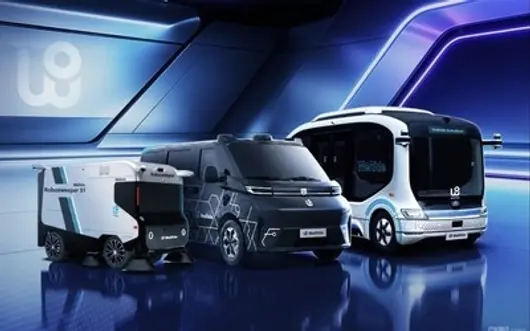
WeRide Product
The conference was co-hosted by the All-China Federation of Industry and Commerce and the People's Government of Zhejiang Province, with the theme "Innovation Gathering Power · Empowering the Future". Also released concurrently were "2026 Report on Innovation Status of the Top 1000 Private Enterprises in R&D Investment", "2026 Private Enterprise R&D Investment and Invention Patent Top 500 List", and other important results.
Since its establishment in Guangzhou in 2017, WeRide has always adhered to promoting industrial innovation through technological innovation. As a local high-quality private technology enterprise in Guangzhou, WeRide is a typical private benchmark for Guangdong to layout new tracks in autonomous driving and cultivate new quality productive forces.
Relying on the self-developed WeRide One autonomous driving general technology platform, WeRide landed open road Robotaxi commercial operation, autonomous driving shuttle paid operation, unmanned sanitation and unmanned freight and other full-scenario applications in Guangzhou first, effectively reducing the cost of scaled deployment. This platform modularizes software algorithms, hardware modules, and cloud architectures, allowing taxis, shuttles, sanitation vehicles, freight vehicles, etc., to share about 90% of the underlying algorithms. The HPC 3.0 computing platform equipped on the vehicle has computing power up to 2000 TOPS, completing 2 trillion operations per second.

WeRide Product
In the 2023 "59 Companies Changing the World" selection by the American "Fortune" magazine, WeRide ranked eighth, being the only Chinese enterprise selected.
As of now, WeRide's autonomous driving business has covered 13 countries and over 60 cities globally. The company is the only technology enterprise globally to simultaneously hold autonomous driving licenses from eight countries: China, UAE, Singapore, France, USA, Saudi Arabia, Belgium, and Switzerland.
Regarding fleet scale, as of July 31, 2026, WeRide's global L4 autonomous driving fleet scale is about 3400 vehicles, among which pure unmanned Robotaxis exceed 1800 units, having become one of the largest scale commercial Robotaxi fleets globally. Some overseas regional businesses have achieved phased operational profitability.
In the first half of 2026, WeRide achieved revenue of 346 million yuan, a year-on-year increase of 73.3%; overseas revenue increased year-on-year by 154.4%; gross profit margin increased from 30.6% in the same period of the previous year to 36.6%. In the second quarter, overseas revenue increased year-on-year by 164% and quarter-on-quarter by 169%.

[Car Insight Industry] Let's review the major events that happened in the auto world on September 8, 2026.
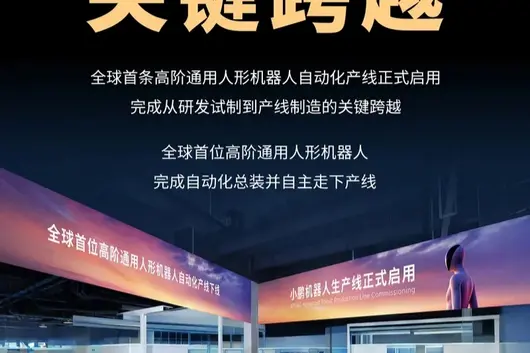
Car Event 1: XPeng Robot Production Line Officially Launched

On September 8, the XPeng robot production line was officially launched, the world's first advanced general-purpose humanoid robot completed automated assembly and walked off the line independently. XPeng Robot has completed a key leap.
XPeng Group Chairman He Xiaopeng stated: Today, we created an important moment that could be recorded in the history of robot development — the world's first automated production line for advanced general-purpose humanoid robots was officially launched, using "robots" to automatically produce "robots".
Car Event 2: Huawei Qiankun Smart Driving/HarmonyOS Cockpit Installation Hits 2 Million Milestone Moment

On September 8, Huawei Qiankun intelligent automotive solutions announced: ADS installation count, HarmonyOS Cockpit installation count, and Huawei Qiankun APP user count simultaneously reached the 2 million milestone across three major dimensions!
Huawei Qiankun adheres to safety first, taking over every user's trust with technology. 2 million is not the end, but a brand new starting point. Huawei Qiankun will continue to give back to more users with real technology, real experience, and real ecosystem.
Car Event 3: Zeekr 7X Global 200,000th Mass-Produced Vehicle Rolls Off the Line
On September 8, Zeekr Cars announced: The Zeekr 7X global 200,000th mass-produced vehicle rolled off the line. This marks that in nearly two years since the model's launch, it has achieved phased results in the global market.

As the flagship model for Zeekr targeting the luxury pure electric SUV market, Zeekr 7X has maintained a relatively fast market growth rhythm since its launch. Just 25 days after the model launch, delivery volume exceeded 10,000 units, setting a record for luxury pure electric model delivery speed; after officially launching the European export process in May 2025, it entered more than 50 countries and regions globally within just 15 months, covering major regions such as Europe, Oceania, Southeast Asia, Middle East, and North Africa. In July-August 2026, Zeekr 7X global monthly sales continuously maintained a scale of 10,000 units, and market demand remained strong.
Car Event 4: Yueda Kia August Sales Reach 19,588 Units
On September 8, Yueda Kia announced August 2026 sales reached 19,588 units, with January-August cumulative sales reaching 162,734 units; August total vehicle production was 20,600 units, January-August cumulative production was 167,600 units. This is mainly due to Yueda Kia adhering to the "user-centric" business philosophy and continuously iterating products around the travel needs of Chinese users.

Yueda Kia steadily promoted overseas export business, further consolidating the development trend where domestic and export sales progress together. Since starting export business in November 2018, Yueda Kia has cumulatively exported over 650,600 vehicles, with export sales revenue exceeding 7.22 billion USD, building an export matrix composed of 6 vehicle models including EV5, Sportage, Seltos, K5, Sonet, Soul, covering 92 countries and regions globally such as Australia, Mexico, Saudi Arabia; cumulatively exported 544,110 engines to countries such as South Korea, Russia, Czechia, Slovakia, Vietnam, Malaysia, India, Kazakhstan, Turkey, Uzbekistan.
"Daily Car News", here are the latest car news of the day, please continue to follow "Car Insight".