


首頁Mercedes GLC

搜尋歷史
熱門搜尋
經銷商登入 / 註冊

喺馬來西亞嘅 SUV 市場,好多買家喺揀車嘅時候都會拿 Mazda CX-3 同 Chery Tiggo 7 PHEV 嚟做比較。這兩款車喺價位同定位上都幾接近,而家我哋就由多個方面嚟做一個詳細嘅比較,幫你省返做功課嘅時間。
Mazda CX-3 喺馬來西亞嘅 OTR 售價係 RM 126,159 - 139,159,合共有 2 個版本,包括 2023 2.0L High(RM 139,159)、2023 2.0L Plus(RM 126,159)等等。
Chery Tiggo 7 PHEV 喺馬來西亞嘅 OTR 售價係 RM 129,750 - 129,750,合共有 2 個版本,包括 2025 1.5T 90km CSH(RM 129,750)、Tiggo 7 PHEV 支持邊種充電方法?可用家用電源插座充電嗎?(RM 117,478)等等。
從價錢嚟睇,Mazda CX-3 嘅起步價真係比 Chery Tiggo 7 PHEV 平咗 RM 3,591。如果你預算有限,Mazda 嘅入門版已經可以滿足日常需求。但都要留意,平嗰啲幾千蚊,可能喺配備上要有取捨,具體要睇你嘅需求。

Mazda CX-3 搭載 1.5L Turbo,馬力 140 hp。官方油耗 7.0 L/100km。
Chery Tiggo 7 PHEV 搭載 Hybrid,馬力 170 hp。官方油耗 4.5 L/100km。
動力方面,Chery Tiggo 7 PHEV 嘅 Hybrid 比 Mazda CX-3 嘅 1.5L Turbo 多出 30 匹馬力。不過日常喺市區開,兩款車嘅動力都夠用,唔會覺得唔夠力。

Mazda CX-3 嘅安全評級係 5★ (ASEAN NCAP),主動安全系統包括 i-Activsense。
Chery Tiggo 7 PHEV 嘅安全評級係 TBD,主動安全系統包括 Basic。
安全配備方面,兩款車都拿到不錯嘅評級。不過 Mazda CX-3 嘅 i-Activsense 同 Chery Tiggo 7 PHEV 嘅 Basic 喺功能上有啲分別,如果你比較睇重主動安全嘅話,可以仔細比較一下兩者嘅功能列表。

Mazda CX-3 車身長 4500 mm,尾箱 450 L。
Chery Tiggo 7 PHEV 車身長 4400 mm,尾箱 400 L。
空間方面,Mazda CX-3 嘅車身比 Chery Tiggo 7 PHEV 長咗 100 mm,車內乘坐空間會稍微寬鬆啲,尤其係後座腿部空間。如果你經常載家人或者需要放嬰兒車,大少少嘅車身真係更實用。

Mazda CX-3 同 Chery Tiggo 7 PHEV 都係馬來西亞市場嘅主流選擇,適合家庭使用、日常通勤。如果你更睇重品牌口碑同二手價,可以優先考慮口碑更好嗰款;如果你更在意性價比同配備,嗰就揀配置更豐富嗰款。最後都係建議兩款都去試駕,親身體驗先至最重要。

總體嚟講,Mazda CX-3 同 Chery Tiggo 7 PHEV 都係馬來西亞市場好唔錯嘅車款。揀邊輛,關鍵仲要睇你個人嘅需求同預算。建議大家做好功課,多比較幾間車行嘅報價,再去試駕先做最終決定。買車係件大事,花少少時間做功課絕對唔會錯。


喺馬來西亞嘅 SUV 市場,好多買家喺揀車嘅時候都會拿 Toyota Fortuner 同 Audi Q5 來做比較。這兩款車喺價位同定位上都幾接近,今日我哋就從多個方面做一個詳細嘅比較,幫你慳晒做功課嘅時間。
Toyota Fortuner 喺馬來西亞嘅 OTR 售價係 RM 195,880 - 241,880,一共有 3 個版本,包括 2024 2.8T VRZ Diesel(RM 241,880)、2024 2.7L SRZ Petrol(RM 202,880)、2024 2.4L Standard Diesel(RM 195,880) 等。
Audi Q5 喺馬來西亞嘅 OTR 售價係 RM 354,174 - 423,174,一共有 2 個版本,包括 40 TDI(RM 320,000)、45 TFSI(RM 350,000) 等。
由價錢睇嚟,Toyota Fortuner 嘅起步價真係比 Audi Q5 平咗 RM 158,294。如果你預算有限,Toyota 嘅入門版已經可以滿足日常需要。但都要注意,平嘅嗰幾千蚊,可能喺配備上有取舍,具體要睇你嘅需要。

Toyota Fortuner 裝載 2.5L Diesel,馬力 187 hp。官方油耗 8.5 L/100km。
Audi Q5 裝載 2.0L Turbo,馬力 220 hp。官方油耗 9.5 L/100km。
動力方面,Audi Q5 嘅 2.0L Turbo 比 Toyota Fortuner 嘅 2.5L Diesel 多咗 33 匹馬力。不過日常喺市區開,兩款車嘅動力都夠用,唔會覺得唔夠力。

Toyota Fortuner 嘅安全評級係 5★ (ASEAN NCAP),主動安全系統包括。
Audi Q5 嘅安全評級係 5★ (Euro NCAP),主動安全系統包括 Pre Sense + ACC。

Toyota Fortuner 保用 5 年/無限里程,保養間隔 每 10,000km 或 6 個月。
Audi Q5 保用 5 年/150,000km,保養間隔 每 10,000km 或 6 個月。

總體嚟講,Toyota Fortuner 同 Audi Q5 都係馬來西亞市場好唔錯嘅車型。揀邊一部,關鍵都要睇你嘅個人需要同預算。建議大家做足功課,多比較幾間車行嘅報價,再去做試駕做最終決定。買車係件大事,花費少少時間做功課絕對唔會錯。



Written by | Mo Li
Edited by | Huang Dalu
Designed by | Zhen Youmei
Featured Image | AI
BYD 2 million units, Chery over 2 million units, SAIC 1.8 million to 2 million units, Geely 1 million units, Great Wall and Changan total 1.5 million units, GAC 500,000 units, New Force Brands 1.5 million units.
Total approximately 11 million units.
On May 15, during the 18th Xuanyuan Auto Blue Book Forum Overseas Special Session "China's Global Market Share Ceiling" Top Debate, Zheng Yun, Head of Automotive Business, Asia Region, Roland Berger, did one thing: sum up the publicly disclosed 2027 overseas sales targets of major Chinese car companies one by one.
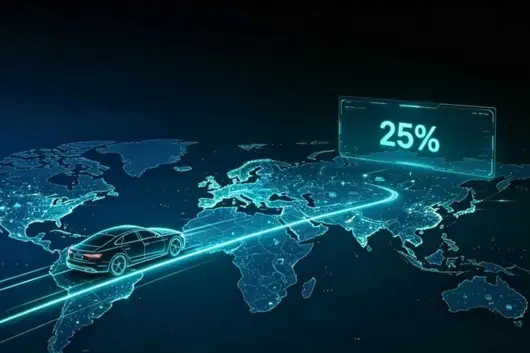
He divided this number by the total accessible overseas market volume for Chinese car companies, deducting markets that cannot enter in the short term such as the US, Japan, South Korea, India, etc., arriving at 25.5%.
This number almost completely coincides with the "25% ceiling" hypothesis proposed by Zheng Yun previously based on historical research. He stated a fact tacitly known in the industry at the forum: "The industry has all felt this ceiling, but no one has said it explicitly."

Chinese automotive global expansion has already moved past the stage of simply competing on export numbers.
In the past few years, the presence of Chinese car companies in overseas markets has strengthened rapidly. In 2025, China's automobile exports reached 7.098 million units, a year-on-year increase of 21.1%, continuing to rank first globally. Entering 2026, this curve is still going up.
Data from CAAM shows that in the first quarter of this year, China's automobile exports reached 2.226 million units, a year-on-year increase of 56.7%, among which new energy vehicle exports were 954,000 units, a year-on-year increase of 1.2 times. By April of this year, data from CPCA showed that China's passenger car exports reached 769,000 units, a year-on-year increase of 80.7%, with new energy vehicles accounting for 52.7% of total exports, surpassing fuel vehicles for the first time.
But the more cars sold, the harder the subsequent questions become to bypass.
Chinese car companies have already secured nearly 70% share domestically. In April of this year, the domestic retail share of independent brands reached 69.6%, and the penetration rate of new energy vehicle retail also exceeded 60% for the first time. However, once overseas, the growth experience from domestic markets cannot be directly copied.
Price, configuration, intelligence, and supply chain efficiency can indeed help Chinese cars open up the situation first, but whether they can truly stay depends on local production, compliance, after-sales service, spare parts, brand recognition, and cultural integration.
This is also the reason why "China's Global Market Share Ceiling" has become a realistic issue.
In the past fuel vehicle era, when US, Japanese, and German car companies expanded in the global market, they often encountered an invisible boundary in overseas share. Today, Chinese automobiles are re-entering the global market with new energy, intelligent connectivity, and a complete industrial chain. Does this boundary still hold?
In response, Wei Haigang, General Manager of GAC International, believes that Chinese car companies going global cannot simply copy the domestic "King of Competition" strategy. GAC's job is to implement "For Local, In Local" around products, channels, brands, localization, service, and ecology, completing the transition from "Going Out" to "Walking In" to "Walking Up".
Yan Huofeng, Global Senior Vice President of Mingshi Group, believes that the real difficulty in building factories overseas is not equipment and capacity, but people, compliance, and social value. Only by becoming part of the local community can a company operate sustainably for the long term.
In the view of Zhou Lingkun, President of Linglong Tire, the global supply chain is not simply more open or more closed, but is differentiating: parts involving security, data, chips, and software will tighten, but mature performance parts like tires will instead see new windows.

Yang Hongwei, Founder and CEO of Shanghai Huayi Auto Connect Auto Technology, believes that Chinese automotive global expansion is still in the early stage. Many "Belt and Road" markets are not lacking purchase demand, but lack after-sales service, spare parts, and repair systems. Parallel exports and local service networks still have space to fill.
Zheng Yun finally brought the question back to a more realistic judgment. 25% is not a mysterious number, but a reminder: for Chinese automobiles to go up, we cannot just look at export volume, but also whether we can truly operate overseas.
Where does 25% come from
This claim of 25% did not come out of nowhere.
Zheng Yun and the Roland Berger team reviewed three stages of automotive globalization history: US in the 1950s, Japanese in the 1980s, and German around 2000.
A common phenomenon is that no matter how strong the technology or brand of these countries' car companies is, once their overseas market share approaches a certain level, growth will slow down.
Toyota is often used as a reference. In 2025, Toyota's sales in the US market were about 2.518 million units, with a market share of about 15.5%. This is a mature market operated for decades, but Toyota also did not long break through 20%.
In this sense, overseas markets are not just about having a strong enough product to increase volume indefinitely. Local industry, employment, politics, supply chain, and consumer mindsets will all form boundaries.
Yan Huofeng mentioned at the forum that after US, Japanese, and German car companies develop to a certain stage overseas, they will often consciously control their share.
She gave an example of Toyota in the US pickup market. The three most profitable in Detroit are full-size pickups. Toyota is not unable to make them, but it has long not done too much in this area.

Behind this is not a capability issue, but a business choice. If an external brand charges too hard in the host country's most core and most profitable market, it is easy to trigger local industry and policy backlash.
Chinese car companies have been used to addition in the past few years. Adding configuration, adding speed, adding capacity, adding market, adding stores. Domestic price wars and product iteration also make it difficult for enterprises to slow down.
But going global is not a simple extension of domestic competition.
Zheng Yun said that Chinese independent brands have already secured nearly 70% share domestically, which can be seen as a ticket to enter the global top table. The key lies in the fact that Japanese, Korean, and German companies are not only strong in their local markets but also operate long-term in overseas markets.
Chinese automobiles now need to answer whether they can tear open the boundary left by the fuel vehicle era with new energy, intelligence, supply chain, and product efficiency.
This question placed in 2026 has more realism.
Chinese car exports are still in high growth, but barriers in European and American markets are rising. The EU has already imposed additional anti-subsidy tariffs on Chinese-made EVs, with BYD, Geely, and SAIC facing different tax rates, and they are stacked on top of the 10% standard import tariff. The US maintains a 100% tariff on Chinese EVs. Tariffs are just the surface; behind them there are also data compliance, software restrictions, supply chain reviews, and local production requirements.
In other words, Chinese cars are not unsellable; rather, as more are sold, the rules become more complex.
This is exactly the meaning of this 25% question.
Exports are still pushing forward
From a data perspective, the speed of Chinese automotive global expansion is indeed fast. At the same time, the domestic market is obviously under pressure.
From January to April 2026, domestic automobile sales were 6.447 million units, a year-on-year decline of 20.6%. The proportion of exports in total sales has risen significantly.
The new energy structure is also changing.
Data from CPCA shows that in April 2026, the domestic retail penetration rate of new energy passenger cars exceeded 60% for the first time, reaching 61.4%. The domestic market has been reshaped by new energy, and overseas markets are also receiving Chinese new energy products.
The larger background is that global electrification is still advancing. IEA mentioned in "Global EV Outlook 2025" that global EV sales exceeded 17 million units in 2024, a year-on-year increase of over 25%, with China's sales exceeding 11 million units. Reuters cited research firm Rho Motion predicting that in 2025, global pure electric and plug-in hybrid sales will exceed 20 million units.
This provides new opportunities for Chinese car manufacturers.
In the past, Chinese car exports relied more on fuel vehicles and price-performance. Now, China has formed relatively strong industrial chain capabilities in batteries, electric drive, motor control, hybrid, smart cockpits, assisted driving, and complete vehicle manufacturing efficiency. For many emerging market consumers, Chinese cars are not only cheap but also have higher configuration.
Yang Hongwei mentioned at the forum that in the Belt and Road markets he deeply cultivates, the penetration rate of Chinese cars is still very low; some places are not even 5%, but local consumers like it very much. Even Addis Ababa, the capital of Ethiopia, saw a situation where Chinese new energy vehicles were hard to find.

Ethiopia is a very typical example. AP reported that Ethiopia became the first country in the world to ban the import of non-electric private vehicles in 2024, but it is also facing problems with charging, maintenance, parts, and used car residual value. This case shows that emerging markets indeed have demand, but behind the demand follows a whole set of service issues.
This is also the reason Yang Hongwei repeatedly emphasized after-sales and parts.
Huayi Auto Connect where he works is positioned as an automotive global cooperation partner, mainly serving some markets that manufacturers temporarily cannot care for. He mentioned, the company exports about 15,000 to 16,000 cars annually, mainly flowing to Belt and Road countries, while building warehouses locally and incubating repair shops, many of which are husband-and-wife shops.
In these markets, whether parts arrive after cars are sold and whether maintenance can keep up is often more important than brand launch events.
This is different from the tactics familiar to Chinese car manufacturers domestically. Domestically, after a new car launch, it can quickly pull sales through dense channels, OTA, social media, and pricing strategies. But overseas, whether a city has a spare parts warehouse, whether a technician knows how to repair, or whether a user can get parts quickly after an accident will all affect brand reputation.
Therefore, the better the export data, the greater the pressure behind it.
Advantages cannot be copied directly
What Chinese car manufacturers can most easily bring out is price and product configuration. What they cannot directly bring out at all is the intelligence that has been hottest domestically in recent years.
Wei Haigang proposed at the forum that Chinese automobiles are forming two markets.
Domestic intelligent connectivity development is fast; some cars have reached L2++, even emphasizing city NOA, all-road intelligent driving. But overseas, in many markets, reaching L2+, Highway NOA plus parking is already considered advanced.
The reason is simple. City intelligent driving needs local road data, maps, regulations, network infrastructure, and user scenarios. Different countries have different data compliance requirements, road structures, and traffic habits. Intelligent driving capabilities that run well in the Chinese market cannot be directly copied overseas.
Wei Haigang said, if Chinese automobiles take off alone, making cars that fit domestic markets but detach from international markets, it will form two markets. For car companies, this is not a technical slogan, but a product definition issue.
Yang Hongwei's front-line observation is more specific.
He mentioned that Chinese new energy vehicles went out too fast. Many content inside domestic car machine screens, when overseas except for the vehicle itself functions, might be a burden. In some countries he deeply cultivates, local users may not care about LiDAR, millimeter-wave radar, or complex smart cockpit functions, but are more concerned about whether white robes can hang in the car or slippers can be put inside.
His judgment is: local users care more about whether your intelligence respects me.
Many things Chinese car manufacturers fought out domestically are not necessarily advantages overseas. Large screens are not needed by every market; intelligent driving cannot be used in every country; high configuration is not necessarily more moving than localization details.
This is also the reason Wei Haigang emphasized stratification and classification.

He believes that Chinese automobiles leveraged overseas markets early on with price-performance; in recent years, more with new car concepts, including intelligent connectivity, new energy, car design, and scenario definition.
But when going overseas, not every country wants you to have strong intelligence and electrification. Some countries have weak energy facilities; some countries have insufficient network conditions. Overseas markets must be layered.
GAC's approach is also pragmatic. Introducing products that meet local needs according to different overseas markets, while adopting因地制宜 overseas factory building models, investing and building KD factories in countries like Thailand, and adopting cooperative ODM modes in some countries.
This is not the most radical approach, but it fits the rhythm Wei Haigang spoke of. Different countries choose different entry methods; not rushing to fit one model to all markets.
Zhou Lingkun then added another layer of change from the supply chain perspective.
He believes that the global supply chain is not simply more open or more closed, but is differentiating. Parts involving security, privacy, data, chips, software, and three-electric systems will increasingly emphasize sovereignty and controllability in the future. National sovereignty will manifest through data compliance and supply chain security; walls in relevant fields will get higher.
But mature performance components like tires are different. They have both matching and aftermarket, and retail market size is large. Linglong has achieved supply for 8 of the top 10 global car manufacturers, with opportunities for further breakthroughs in the future.
What Zhou Lingkun means is that Chinese supply chains cannot only look at complete vehicle exports. The more mature, standardized, and able to reflect cost and manufacturing efficiency parts, the more opportunities they might get overseas.
New energy tires are an example. Pure electric vehicles are heavier than fuel vehicles, proposing higher requirements for load bearing, rolling resistance, and noise. After the engine is gone, vehicle interior noise comes more from road and wind noise, and the importance of tires increases. If tires have built-in sensors in the future, they can also transmit temperature, pressure, and ground status back to the complete vehicle system.
This shows that Chinese automotive global expansion is not just one company's business. Complete vehicles, parts, after-sales, logistics, maintenance, finance, software, and data will all connect together in the end.
Localization requires tuition fees
If intelligence tests product adaptation, localization tests organizational capability.
The Mingshi experience provided by Yan Huofeng offers another perspective: the real threshold of globalization is not technology, but people.
Mingshi first went to the US to buy a factory in 2007, and sequentially built factories in Mexico, Thailand, and Germany in 2012 and 2013. She said, in the first ten years, in the first 5 to 6 years after every overseas factory was established, it was basically headstrong and bloody, paying a high price. Until 2017, Mingshi overseas factories achieved comprehensive profitability.
But after 2017, the situation changed. Mingshi continued to expand in Serbia, France, UK, Poland, Czech Republic, Tennessee, USA, Canada, etc. New factories can even achieve profitability in the second year of mass production.
Yan Huofeng summarized the experience into three keywords: People, Compliance, Social Value.
Among them, the hardest is People.
She mentioned, in the early stage of overseas factories, the general manager must be dispatched by headquarters, and must undergo systematic training, having global project, factory management, or overseas factory work experience, and also possess language ability. For middle and team leader positions, Mingshi adopts a dual-post system, one person dispatched from headquarters, one local person, slowly cultivating local people. Once the local team matures, headquarters personnel go to the next place to build a factory.
Now, Mingshi overseas factory employee localization rate is roughly 50% to 70%.
Compliance is the bottom line; social value determines whether one can truly integrate.
Yan Huofeng gave an example of Serbia. Mingshi hosts one to two China-Serbia youth cultural exchanges annually, inviting local junior high, high school, and college students to visit China; expenses are borne by Mingshi. Candidates come from employee recommendations, school recommendations, government recommendations, or recommendations by influential figures in the local community.
She believes this method is more useful than writing CSR numbers in annual reports. Because employees' families and communities will truly feel that this enterprise is not just here to build a factory, but willing to engage with the locals.

This is different from the localization many car manufacturers are just starting.
Chinese car manufacturers have significantly increased overseas factory building actions in recent years, but shifting from export to production is only the first step. The real difficulty is local recruitment, local suppliers, local regulations, local unions, local service, and local social relations.
This is also the background for Wei Haigang mentioning borrowing ships to go out. Heavy asset factory building suits large-scale overseas markets, but in many countries and regions, entering the market first through cooperation, ODM, KD assembly, regional warehouses, and channel construction may be more stable than directly building complete factories.
However, looking long term, localization is inescapable.
Toyota, Hyundai, Kia, Volkswagen, and these car companies' global shares are not made solely through exports, but through overseas production, local procurement, local sales, and local employment. China is still a structure heavy on exports, light on overseas production. Japanese car companies have roughly formed a structure of 4 million exported, 17 million overseas produced, while China is still in a state of over 7 million exported and overseas production just starting.
This is also a lesson Chinese car manufacturers must make up in the next few years.
Exports can be fast; localization is slow. Exports look at sales; localization looks at patience.
After-sales is also business
In this roundtable, Yang Hongwei provided an easily overlooked angle: Used cars and after-sales.
He believes that Chinese automotive global expansion is still in a very early stage. Even if exported millions of units, penetration rates in many markets are still very low. What truly decides whether a brand can stay is not just how many new cars are sold, but whether they can be repaired after being sold, whether parts are available, and whether used car residual value can be formed.
He mentioned that the US and Japan export a considerable scale of used cars annually. Chinese new energy vehicle production and sales rise year by year; where these cars flow in the future will also become an issue. If China can build up used car exports in the future, there is an opportunity for over 2 million units annually.
This judgment currently needs more industry data verification, but the direction is worth noting.
Chinese cars previously discussed new car exports more, but rarely discussed existing car service. When overseas users buy a Chinese car, if it cannot be sold after three years, maintenance prices are high, and parts cycles are long, brand reputation will be affected.
In emerging markets, after-sales is even more important than advertising.
Yang Hongwei mentioned, in markets like Ethiopia, consumers find it hard to repair after buying cars, manufacturers can't care for it, and consumers cannot buy parts. They need to air freight parts from Guangzhou. Setting up warehouses in some places may not be cost-effective; even air freight from China is more convenient than adjusting goods from transshipment points.
These details sound trivial, but they are the real cost of going out.
Chinese car manufacturers in the past formed strong new car launch capabilities, supply chain response capabilities, and marketing capabilities domestically, but overseas markets test a different system. Whether there are regional parts warehouses, local technicians, repair training, financial services, residual value systems, or insurance cooperation, all these determine whether users will buy a second car.
Zheng Yun also mentioned at the roundtable that when Chinese automobiles discuss going global today, we cannot just look at the share of complete vehicle brands, but also how companies like Mingshi and Huayi embed into the global automotive industry. In other words, going global is not just the battlefield of complete vehicle factories.

This can also be linked with what Zhou Lingkun said about ecology.
If Chinese car manufacturers only export complete vehicles, once share growth reaches a certain level, it is easy to encounter tariffs and localization requirements. But if complete vehicles, parts, maintenance, logistics, finance, used cars, software, and services go out together, overseas markets will not see just external products, but a whole set of industrial capabilities.
Of course, this capability is harder to do. It needs time, and also enterprises need to have less short-term volume mentality.
Don't just count sales volume
Back to Zheng Yun's addition problem.
Wei Haigang believes that the rapid growth of Chinese new energy vehicles domestically has proven that many past judgments will be rewritten. In previous years, industry predictions for new energy penetration rates were far lower than actual results; now many consumers, after using EVs, cannot return.
Looking at the global market, if overseas energy environments, oil price changes, and industrial chain construction continue to advance, Chinese new energy vehicles still have opportunities.
But he also admits that 25%'s realistic restrictions exist. Markets like the US, Japan, South Korea, India are hard to enter in the short term; the markets truly accessible to Chinese car companies are limited. Whether remaining markets can make up enough share depends on product adaptation, localization, compliance, and service.
Yan Huofeng's answer emphasizes long-term operation more.
She believes 25% or 25.5% is not impossible to reach, but whether it can be maintained or even broken through long-term depends on whether Chinese OEMs consider sustainable development truly when going global. When reaching every place, whether they are operating locally, integrating into local culture, and digging deep into brands, these are very key.
She mentioned that Chinese OEMs need to use the mindset of global companies to do a global win-win cause. This win-win is not just between supply chains, but a win-win of all stakeholders.
Zhou Lingkun then reminded that the 25% historical experience of the past still has reference significance, but three premises have changed today.
First, the number of Chinese companies going global is far more than US, Japanese, and German companies of that time. It is not three companies covering the world, but a batch of enterprises and many service providers going out together.
Second, the power type has changed. The past 25% happened in the fuel vehicle era; this time it is the industrial chain changes brought by new energy and intelligence.
Third, production efficiency might have changed. If AI and intelligent manufacturing continue to develop, the original production organization methods will be rewritten.
But Zhou Lingkun didn't put it all out. He believes the Chinese automotive industry needs to answer, not just products and technology, but also what kind of business civilization is output. Besides products, technology, and employment, what else Chinese enterprises take out, this is a very meaningful question.
This sentence sounds a bit grand, but landing in enterprise actions, it is actually not complex.
If an enterprise goes overseas just to grab share, hit prices, and suppress suppliers, it is easy to trigger local resentment. If it can bring employment, training, supply chain opportunities, service capabilities, and long-term investment, the local market's acceptance of it will be different.
Yang Hongwei's judgment is the most optimistic. He believes the 25% ceiling is data from past traditional cars. For today's new cars, changes brought by intelligent connectivity, software, and new energy cannot be simply judged by past thinking.
But even so, the point he said is not relying only on sales, but after-sales supply chain and localization.
What this discussion finally left behind is not a certain answer. Whether 25% can be broken through, no one can give a final conclusion. But what can be determined is that Chinese automotive global expansion has passed the stage of just looking at export volume. Next, the questions enterprises need to answer will be more detailed and more difficult.
Whether a car can be sold is still the first step.
After selling, whether it can be repaired, whether parts can arrive, whether intelligence can adapt, whether factories can localize, whether employees can localize, whether brands can be trusted by local users, are the longer exam questions.
Chinese car manufacturers in the past were good at addition. Going to overseas markets, they may need to start learning another thing. Which functions should be kept, which configurations should be reduced, which markets should be done deeply, which boundaries cannot be forced, which local partners must be respected, which long-term investments cannot be saved.
How high the 25% wall is in the end depends not only on how many cars Chinese car companies can make, but also on how many Chinese cars overseas markets are willing to keep.


喺馬來西亞嘅 SUV 市場,好多買家喺揀車嘅時候都會拎豐田 Corolla Cross 同福特 Everest 嚟做比較。呢兩款車喺價位同定位上都幾接近,今日我哋就從多個方面做個詳細比較,幫你省咗做功課嘅時間。
豐田 Corolla Cross 喺馬來西亞嘅 OTR 售價係 RM 133,800 - 148,800,一共有 3 個版本,包括 2026 HEV 1.8L GR Sport(RM 148,800)、2026 HEV 1.8L Standard(RM 140,800)、2026 1.8L Standard(RM 133,800) 等。
福特 Everest 喺馬來西亞嘅 OTR 售價係 RM 266,338 - 430,838,一共有 6 個版本,包括 2026 3.0T 4WD Platinum(RM 430,838)、2026 2.0T 4WD Platinum(RM 348,838)、2026 2.0T 4WD Sport(RM 316,838) 等。
從價錢嚟睇,豐田 Corolla Cross 嘅起步價確實比福特 Everest 平咗 RM 132,538。如果你預算有限,豐田嘅入門版已經可以滿足日常需求。但都要留意,平嗰幾千蚊,可能喺配備上會有取舍,具體要睇你嘅需求。

豐田 Corolla Cross 搭載 1.5L Turbo,馬力 140 hp。官方油耗 7.0 L/100km。
福特 Everest 搭載 2.5L Diesel,馬力 187 hp。官方油耗 8.5 L/100km。
動力方面,福特 Everest 嘅 2.5L Diesel 比豐田 Corolla Cross 嘅 1.5L Turbo 多咗 47 匹馬力。不過日常喺市區開,兩款車嘅動力都夠用,唔會覺得唔夠力。
豐田 Corolla Cross 車身長 4400 mm,後備箱 400 L。
福特 Everest 車身長 4400 mm,後備箱 400 L。
兩款車嘅尺寸幾乎一樣,車內空間分別唔大。呢個級別嘅車,日常使用完全夠用。
豐田 Corolla Cross 保修 5 年/無限里程,保養間隔 每 10,000km 或 6 個月。
福特 Everest 保修 3 年/100,000km,保養間隔 每 10,000km 或 6 個月。

總括嚟講,豐田 Corolla Cross 同福特 Everest 都係馬來西亞市場幾唔錯嘅車型。揀邊一輛,關鍵都要睇你個人需求同預算。建議大家做好功課,多比較幾間車行嘅報價,再去試駕做最終決定。買車係件大事,花少少時間做功課絕對唔會錯。


In Malaysia's SUV market, many buyers compare the Toyota Corolla Cross and Chery Tiggo 7 PHEV when choosing a car. These two cars are quite close in price and positioning. Today, we will make a detailed comparison from multiple aspects to save you time on research.
The Toyota Corolla Cross OTR price in Malaysia is RM 133,800 - 148,800. There are a total of 3 versions, including 2026 HEV 1.8L GR Sport (RM 148,800), 2026 HEV 1.8L Standard (RM 140,800), 2026 1.8L Standard (RM 133,800), etc.
The Chery Tiggo 7 PHEV OTR price in Malaysia is RM 129,750 - 129,750. There are a total of 2 versions, including 2025 1.5T 90km CSH (RM 129,750), What charging methods does the Tiggo 7 PHEV support? Can it be charged using a home power socket? (RM 117,478), etc.
From a price perspective, the Chery Tiggo 7 PHEV's starting price is RM 4,050 cheaper than the Toyota Corolla Cross. Honestly, in this price range, a difference of a few thousand is not that big. The key is still the overall cost-effectiveness and long-term usage cost.
The Toyota Corolla Cross is equipped with a 1.5L Turbo, horsepower 140 hp. Official fuel consumption 7.0 L/100km.
The Chery Tiggo 7 PHEV is equipped with Hybrid, horsepower 170 hp. Official fuel consumption 4.5 L/100km.
In terms of power, the Chery Tiggo 7 PHEV's Hybrid has 30 more horsepower than the Toyota Corolla Cross's 1.5L Turbo. However, for daily city driving, the power of both cars is sufficient, and you won't feel like it lacks power.
The Toyota Corolla Cross safety rating is 5★ (ASEAN NCAP). Active safety systems include TSS (PCS, LDA, ACC, LTA).
The Chery Tiggo 7 PHEV safety rating is TBD. Active safety systems include Basic.
Regarding safety features, both cars have received good ratings. However, there are some differences in functionality between the Toyota Corolla Cross's TSS (PCS, LDA, ACC, LTA) and the Chery Tiggo 7 PHEV's Basic. If you value active safety, you can compare the feature lists of both carefully.
The Toyota Corolla Cross body length is 4400 mm, trunk 400 L.
The Chery Tiggo 7 PHEV body length is 4400 mm, trunk 400 L.
The dimensions of both cars are almost the same, with little difference in interior space. Cars of this level are fully sufficient for daily use.
The Toyota Corolla Cross adopts FWD drive mode.
The Chery Tiggo 7 PHEV adopts FWD drive mode.
Both cars have the same drive mode, which is FWD. The daily driving experience will not differ too much.
Overall, the Toyota Corolla Cross and Chery Tiggo 7 PHEV are both very good models in the Malaysian market. Which one to choose depends mainly on your personal needs and budget. We recommend doing your research, comparing quotes from multiple car dealers, and then test-driving to make a final decision. Buying a car is a big matter. Spending some time on research will definitely not be wrong.
In Malaysia's SUV market, many buyers compare Toyota Yaris Cross and Mazda CX-5 when choosing a car. These two models are quite close in price and positioning. Today, we will make a detailed comparison from multiple aspects to help you save time on research.
The OTR price of Toyota Yaris Cross in Malaysia is RM 99,900 - 109,900. There are a total of 2 versions, including 2026 1.5L Standard (RM 99,900), 2026 HEV 1.5L Standard (RM 109,900), etc.
The OTR price of Mazda CX-5 in Malaysia is RM 135,469 - 166,760. There are a total of 3 versions, including 2025 2.0L AT 35th Anniversary (RM 316,154), 2025 2.0L AT (RM 296,154), 2025 2.0L MT (RM 294,154), etc.
Looking at the price, the starting price of Toyota Yaris Cross is indeed RM 35,569 cheaper than Mazda CX-5. If your budget is limited, Toyota's entry-level version can already meet daily needs. However, note that the savings of a few thousand might involve trade-offs in features, depending on your needs.

Toyota Yaris Cross safety rating is 5★ (ASEAN NCAP), active safety systems include TSS.
Mazda CX-5 safety rating is 5★ (ASEAN NCAP), active safety systems include.
Both cars have the same safety rating, safety features are quite comprehensive for this level. New car safety is not bad nowadays, so no need to worry too much about this.

Toyota Yaris Cross body length 4400 mm, trunk 400 L.
Mazda CX-5 body length 4500 mm, trunk 450 L.
In terms of space, Mazda CX-5's body is 100 mm longer than Toyota Yaris Cross, offering more advantage in seating space. However, Toyota Yaris Cross is slightly more flexible for parking in the city, each has trade-offs.

Toyota Yaris Cross warranty 5 years/unlimited mileage, maintenance interval every 10,000km or 6 months.
Mazda CX-5 warranty 5 years/150,000km, maintenance interval every 10,000km or 6 months.

Both Toyota Yaris Cross and Mazda CX-5 are mainstream choices in the Malaysian market, suitable for family use and daily commuting. If you value brand reputation and resale value more, you can prioritize the one with better reputation; if you care more about value for money and features, choose the one with more features. Ultimately, it is recommended to test drive both, as firsthand experience is the most important.

Overall, Toyota Yaris Cross and Mazda CX-5 are both very good models in the Malaysian market. Which one to choose depends on your personal needs and budget. It is recommended to do your research, compare quotes from several car dealerships, and then test drive to make the final decision. Buying a car is a big matter, spending time doing research will never be wrong.


8 月 12 日,奇瑞風雲 T7 正式開啟預售,發布會以「慢工造好車,久等咗」為主題,傳遞長期主義造車理念。在家用純電賽道內捲加劇、不少品牌追求快速上市的行業背景下,風雲 T7 拒絕速成造車,倚靠奇瑞全球質造體系打造,同源車型 Lepas L6 已經在南非、泰國上市收穫海外口碑。如今回歸國內市場,它以全球驗證的產品實力,一站式解決家庭用戶出行、安全、智能、舒享、駕控、顏值六大核心剛需,為家用電動車市場樹立全新價值標尺。

行業進入品質下半場,拒絕速成先係家用電動車的底色
當下新能源市場已經告別參數堆砌的上半場,逐步邁入以可靠性、耐用性為核心的品質競爭時代。行業內部分車型壓縮研發週期,刪減環境、耐用測試,推出「速成車型」,讓消費者承擔產品試錯成本,也加劇用戶對於電動車耐用性、極端環境適應性的焦慮。購車時,用戶常常陷入兩難:想要長續航就要犧牲部分安全配置,追求智駕體驗就要拉高預算,各項優勢分散在不同價位車型,選車被迫不斷妥協取捨。

作為擁有 23 年中國品牌乘用車出口第一履歷、全球 2000 萬用戶積澱的奇瑞,给出了不一樣的解決思路。風雲 T7 歷經 2 年策劃、3 年研發,並非國內車型簡單改款出海,而係從立項之初就錨定全球標準、全球實測、全球用戶、全球耐用、全球質造五大體系。項目完成 5000+ 全球用戶調研、走訪 15 個典型國家,對標 2026 版 E-NCAP 五星安全、ASILD 高等級功能安全與全球數據合規。
整車投入 81 台耐用試驗車,累計測試里程超 600 萬公里,耐用專項實測 145 萬公里,跑遍歐盟、中東、南非、巴西等 100+ 極限路況,覆蓋 95% 全球道路類型。從東南亞高濕洪澇、北歐極寒低溫,到高原強紫外線、海外非鋪裝沙石路面,完成多地域極限試煉,全域環境適配 -40℃~55℃,用海量實測閉環潛在問題,把海外市場驗證的成熟產品帶回國內,從根源化解家庭用戶對電動車可靠性的顧慮。

六大剛需一步到位,打破家用電動車配置分級溢價套路
好多家庭選購純電 SUV,總要面對取捨:續航、安全、空間、智能很難全部兼顧,想要均衡實力就要不斷加預算。風雲 T7 跳出行業分級溢價的套路,把家庭最關心的六大剛需全部拉滿,一台車覆蓋通勤、親子、露營、長途自駕全場景。

出行剛需上,實現 600km 續航平權。全系標配 65.05kWh 犀牛電池,CLTC 續航 600km,實測續航可達 667km,做到反向虛標;30%-80% 快充僅 22 分鐘,一杯咖啡即可補能 300km。電池循環壽命超 2500 次,整車 15 年無需更換電池。搭配同級首發雙源寬溫域熱泵+PTC 熱管理系統,冬季續航達成率提升 30%,極寒酷暑環境下電池依舊穩定工作,告別里程焦慮。

安全剛需做到全系頂配無縮水。80% 高強度鋼車身搭配 18.84% 熱成型鋼,九橫五縱籠式車身搭配專屬結構加持;配備同級最多 9 個安全氣囊,搭載 6s 長效保壓技術。犀牛電池擁有 31 層 6D 鎖子甲防護,IP68 防水、抗擠壓、鹽霧、火燒測試標準遠超國標,完成正柱碰、側柱碰、MCB 碰撞後煞停等嚴苛測試,乘員艙與電池包雙重防護,守護全家出行安全。
智能剛需兼顧座艙與智駕雙重體驗。搭載同級首發 4nm 座駕一體 8775 晶片,72TOPS NPU 算力,系統響應低至 80ms。15.6 英寸 2.5K 防眩光大屏,靈犀智艙 2.0 接入豆包大模型,支援多平台手機互聯,小憩、露營、寶寶等六大場景模式一鍵切換。獵鷹 500 智駕搭載 22 顆高精度傳感器,支援全場景自動泊車、100 米循跡倒車、高速領航輔助,降低長途駕駛負擔。

舒享剛需打造家用移動大平層。2700mm 軸距帶來 84% 車內得房率,後排純平地板腿部空間 911mm,高個子乘客也能從容乘坐。9 層複合雲感座椅支援加熱通風,車內可拓展 1955mm×1310mm 大床模式,適配露營午休。後備箱最大拓展 1550L,豐富儲物點位滿足家庭裝載需求。瑪莎拉蒂前底盤專家團隊調校底盤,50.8:49.2 黃金軸荷,70mm 大襯套過濾顛簸,兼顧高速穩定性與爛路舒適性。
顏值剛需兼顧全球審美。全球設計師共創外觀內飾,6 款東方雅韻車漆搭配雙風格內飾,兼顧家用穩重感與年輕精緻感,滿足全家審美偏好。
全球品質國民定價,重新定義家庭純電 SUV 價值
中國汽車產業正迎來「中國時間」,2026 上半年國內汽車出口量達到 509.6 萬輛,新能源出口 235.5 萬輛,中國造車實力獲得全球市場認可。風雲 T7 正係這一背景下的代表產品,佢唔係為海外妥協再回國內,而係按照全球統一標準正向開發,焊裝±0.01mm 發絲級焊接精度,AI+5G 鷹眼檢測站 200+ 視覺檢測點位,以全球統一智造標準保障每一台車品質。

喺行業拼速度、拼噱頭的浪潮下,「慢工造好車」顯得格外珍貴。風雲 T7 把全球五星安全、百萬公里實測、全場景均衡產品力,帶比普通家庭用戶。唔使為單項優勢支付高額溢價,唔使在續航、安全、空間之間反覆妥協,讓普通家庭可以買到一台經過全球千錘百煉、值得長期信賴的純電 SUV。
從市場趨勢來看,家用純電消費正在回歸理性,用戶不再迷信花俏參數,更加看重真實耐用、全場景均衡的產品。風雲 T7 的預售,畀家用電動車市場提供了新範本:真正的好家用车,就係把用戶所有剛需,一次性做到位。


In Malaysia's SUV market, many buyers often compare Proton X90 and Mazda CX-8 when choosing a car. These two cars are quite close in price and positioning. Today, we will conduct a detailed comparison from multiple aspects to help you save time on research.
Proton X90's OTR price in Malaysia is RM 106,800 - 122,800, with a total of 4 versions, including 2026 1.5T Prime X (RM 122,800), 2026 1.5T Prime (RM 116,800), 2026 1.5T Lite (RM 106,800), etc.
Mazda CX-8's OTR price in Malaysia is RM 165,360 - 201,360, with a total of 5 versions, including 2025 2.5T 4WD High Plus Petrol (RM 201,360), 2025 2.2L 2WD High Plus Diesel (RM 193,123), 2025 2.5L 2WD High Plus Petrol (RM 186,360), etc.
From a price perspective, the starting price of Proton X90 is indeed RM 58,560 cheaper than Mazda CX-8. If your budget is limited, Proton's entry-level version can already meet daily needs. However, note that the savings of a few thousand ringgit may involve trade-offs in features, depending on your specific needs.

Proton X90 body length is 4400 mm, trunk 400 L.
Mazda CX-8 body length is 4500 mm, trunk 450 L.
In terms of space, Mazda CX-8's body is 100 mm longer than Proton X90, offering an advantage in seating space. However, Proton X90 is more flexible for parking in the city, each has trade-offs.
Proton X90 adopts FWD drive mode.
Mazda CX-8 adopts FWD drive mode.
Both cars share the same drive mode, both are FWD, and daily driving experience will not differ significantly.
Proton X90 and Mazda CX-8 are both mainstream choices in the Malaysian market, suitable for family use and daily commuting. If you value brand reputation and resale value more, you can prioritize the one with better reputation; if you care more about cost-performance and features, choose the one with richer configuration. Ultimately, it is recommended to test drive both, personal experience is the most important.

Overall, Proton X90 and Mazda CX-8 are both very good models in the Malaysian market. Which one to choose depends mainly on your personal needs and budget. We recommend doing your homework, comparing quotes from several dealerships, and then test driving to make a final decision. Buying a car is a major matter, spending some time on research will definitely not go wrong.


喺馬來西亞嘅 SUV 市場,好多買家在揀車嘅時候都會拿 Proton X90 同 Mazda CX-60 嚟做比較。呢兩款車喺價錢同定位上都幾接近,今日我哋就從多個方面做一個詳細嘅比較,幫你省返做功課嘅時間。
Proton X90 喺馬來西亞嘅 OTR 售價係 RM 106,800 - 122,800,一共有 4 個版本,包括 2026 1.5T Prime X(RM 122,800)、2026 1.5T Prime(RM 116,800)、2026 1.5T Lite(RM 106,800)等。
Mazda CX-60 喺馬來西亞嘅 OTR 售價係 RM 200,510 - 252,873,一共有 2 個版本,包括 2026 3.3T 4WD High Plus(RM 252,873)、2025 2.5L 2WD High(RM 200,510)等。
從價錢來看,Proton X90 嘅入門價確實比 Mazda CX-60 平咗 RM 93,710。如果你預算有限,Proton 嘅入門版已經可以滿足日常需要。但都要留意,平嗰啲幾千蚊,可能喺配備上要有取捨,具體就要睇你嘅需要。
Proton X90 嘅安全評級係 5★ (ASEAN NCAP),主動安全系統包括 ADAS (ACC, AEB, LKA, LDA, BSM, RCTA)。
Mazda CX-60 嘅安全評級係 5★ (Euro NCAP),主動安全系統包括 i-Activsense Pro。
安全配備方面,兩款車都拿到唔錯嘅評級。不過 Proton X90 嘅 ADAS (ACC, AEB, LKA, LDA, BSM, RCTA) 同 Mazda CX-60 嘅 i-Activsense Pro 喺功能上有啲差異,如果你比較重視主動安全嘅話,可以仔細比較吓兩者嘅功能列表。
Proton X90 車身長 4400 mm,行李廂 400 L。
Mazda CX-60 車身長 4500 mm,行李廂 450 L。
空間方面,Mazda CX-60 嘅車身比 Proton X90 長咗 100 mm,乘坐空間更有優勢。不過 Proton X90 喺城市入面泊車會靈活啲,各有取捨。
Proton X90 採用 FWD 驅動方式。
Mazda CX-60 採用 FWD 驅動方式。
兩款車嘅驅動方式一樣,都係 FWD,日常駕駛感受唔會有太大分別。

總體嚟講,Proton X90 同 Mazda CX-60 都係馬來西亞市場好唔錯嘅車型。揀邊一部,關鍵仲要睇你嘅個人需要同預算。建議大家做好功課,多比較幾間車行嘅報價,再試駕先做最終決定。買車係件大事,花少少時間做功課絕對唔會錯。

喺馬來西亞嘅 SUV 市場,好多買家喺揀車嗰陣都會拿 寶騰 X90 同 本田 CR-V 去做比較。兩款車喺價位同定位上都好接近,今日我哋就從多個角度做個詳細嘅比較,幫你節省做功課嘅時間。
寶騰 X90 喺馬來西亞嘅 OTR 售價係 RM 106,800 - 122,800,合共 4 個版本,包括 2026 1.5T Prime X(RM 122,800)、2026 1.5T Prime(RM 116,800)、2026 1.5T Lite(RM 106,800)等等。
本田 CR-V 喺馬來西亞嘅 OTR 售價係 RM 178,200 - 195,900,合共 4 個版本,包括 2026 e:HEV 2.0L 2WD RS(RM 195,900)、2026 1.5T 4WD V(RM 181,900)、2026 e:HEV 2.0L 2WD E(RM 178,200)等等。
從價錢睇,寶騰 X90 嘅起步價真係比 本田 CR-V 平咗 RM 71,400。如果你預算有限,寶騰嘅入門版已經可以滿足日常需求。但要留意,平嗰幾千蚊,可能喺配備上有取捨,具體要看你嘅需求。
寶騰 X90 嘅安全評級係 5★ (ASEAN NCAP),主動安全系統包括 ADAS (ACC, AEB, LKA, LDA, BSM, RCTA)。
本田 CR-V 嘅安全評級係 5★ (ASEAN NCAP),主動安全系統包括 Honda SENSING (ACC, CMBS, LKAS, RDM)。
兩款車嘅安全評級一樣,喺呢個級別入面安全配備都算好齊全。而家嘅新車安全性都唔錯,唔使太擔心呢一點。
寶騰 X90 車身長 4400 mm,行李廂 400 L。
本田 CR-V 車身長 4500 mm,行李廂 450 L。
空間方面,本田 CR-V 嘅車身比 寶騰 X90 長咗 100 mm,坐位空間更有優勢。不過寶騰 X90 喺城市入面泊車會靈活少少,各有取捨。
寶騰 X90 保固 5 年/150,000km,保養間隔 每 10,000km 或 6 個月。
本田 CR-V 保固 5 年/無限制里數,保養間隔 每 10,000km 或 6 個月。

寶騰 X90 同 本田 CR-V 都係馬來西亞市場嘅主流選擇,適合家庭使用、日常通勤。如果你更看重品牌口碑同二手價,可以優先考慮口碑更好嗰一款;如果你更在意性價比同配備,就揀配置更豐富嗰款。最終都係建議兩款都去試駕,親自體驗先係最重要嘅。

總括嚟講,寶騰 X90 同 本田 CR-V 都係馬來西亞市場好唔錯嘅車款。揀邊一輛,關鍵都要睇你嘅個人需求同預算。建议大家做好功課,多比較幾間車行嘅報價,再去試駕做最終決定。買車係件大事,花少少時間做功課絕對唔錯。

In the SUV market in Malaysia, many buyers compare the Proton X70 and Mitsubishi Xforce when choosing a car. These two models are quite close in price and positioning. Today, we will make a detailed comparison from multiple aspects to save you time doing your research.
The Proton X70 OTR price in Malaysia is RM 106,800 - 122,300, with a total of 3 versions, including 1.5L Standard 2WD (RM 106,800), 1.5L Executive 2WD (RM 115,800), 1.5L Premium 2WD (RM 122,300), etc.
The Mitsubishi Xforce OTR price in Malaysia is RM 109,930 - 119,930, with a total of 2 versions, including 2026 1.5L Ultimate (RM 119,930), 2026 1.5L Urban (RM 109,930), etc.
In terms of price, the starting price of the Proton X70 is indeed RM 3,130 cheaper than the Mitsubishi Xforce. If your budget is limited, the Proton entry-level version is already sufficient for daily needs. However, also note that the few thousand dollars saved might involve trade-offs in features, depending on your specific needs.

The Proton X70 is equipped with a 1.5L Turbo, 140 hp. Official fuel consumption is 7.0 L/100km.
The Mitsubishi Xforce is equipped with a 1.5L Turbo, 140 hp. Official fuel consumption is 7.0 L/100km.
Both cars use the same powertrain system, and the driving experience is basically no different. Fuel consumption is also similar, no need to worry too much about this.
The Proton X70 body length is 4400 mm, trunk 400 L.
The Mitsubishi Xforce body length is 4400 mm, trunk 400 L.
The dimensions of both cars are almost the same, and the interior space difference is not significant. For a car in this class, it is completely sufficient for daily use.
Both the Proton X70 and Mitsubishi Xforce are mainstream choices in the Malaysian market, suitable for family use and daily commuting. If you value brand reputation and resale value more, you can prioritize the one with better reputation; if you care more about cost-performance and features, choose the one with richer configurations. Ultimately, it is recommended to test drive both, as personal experience is the most important.
Overall, both the Proton X70 and Mitsubishi Xforce are very good models in the Malaysian market. Which one to choose depends mainly on your personal needs and budget. It is recommended that you do your homework, compare quotes from several dealerships, and then go for a test drive to make a final decision. Buying a car is a big matter; spending some time doing research will definitely not be a mistake.


