首頁Leapmotor

搜尋歷史
熱門搜尋
經銷商登入 / 註冊

September 16, 2026, Huzhou. Leapmotor laid out the thickest stack of technical cards it has had in its 11 years on the table at once: 8,500 R&D engineers, 65% of vehicle costs self-developed and self-manufactured, three consecutive semi-annual profits, etc.
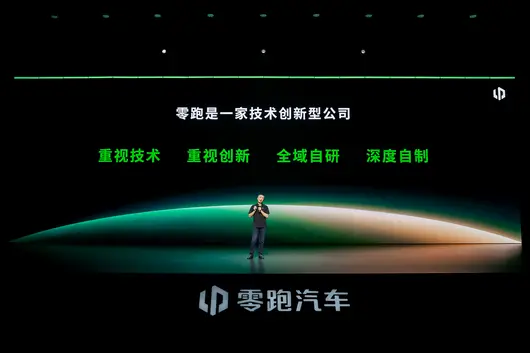
No slogans were shouted, no concepts were hyped. This launch event themed "Confidence" was more like a technical report from an engineering team—laying out one by one the underlying technologies hidden beneath the car body that users usually don't see.
As Leapmotor founder, chairman, and CEO Zhu Jiangming stated: "Leapmotor will not innovate for the sake of showing off skills; every innovation released this time will be implemented in the next generation of products, making good technology accessible to everyone."
The words "Confidence" were not shouted out of thin air. From 2015 to now, Leapmotor has walked a path recognized as much harder: full-domain self-research, deep self-manufacturing. While others look to suppliers for configurations, it chewed its way up the industrial chain step by step from battery cells to battery packs, from motors to controllers, from plastic particles to headlights. Now 18 manufacturing plants have been established, platform standardization reaches 90%, and 65% of vehicle costs are independently controlled.

In fact, many people only see Leapmotor's aggressive pricing but fail to see that its cost advantage does not come from cutting specifications, but from being nibbled out through full-link self-research.
The return on this investment is also straightforward: from selling 1,000 units annually in 2019 to now having monthly sales stable above 100,000 vehicles and ranking in the top three among China's new energy brands, and top four globally.
Even more rare is that the technical capability not only fed its own product line but also became an industry supplier—whole vehicle technology output to FAW, Stellantis, and the cooperating automakers for electronics, electric drive, and battery systems exceed 20, making technology external supply the second growth curve for Leapmotor.
01
Becoming the "Apple" of the Automotive Industry
"Broadband wireless communication was not invented by Apple, nor was the computer, neither were touch screens, digital cameras, nor MP3s. However, Jobs conducted excellent functional combination innovation, ecosystem innovation, and ultimate product innovation, achieving the Apple of today. Leapmotor also hopes for such innovation, striving to become the 'Apple' of the automotive industry." Standing at the 11th anniversary milestone, Zhu Jiangming set a new goal for Leapmotor.
In the past few years, Zhu Jiangming repeatedly compared Leapmotor to Uniqlo: "Leapmotor's positioning in the automotive industry should be like Uniqlo in the apparel industry, slightly more expensive than general products, but also with better quality."
Zhu Jiangming does not think these two things contradict.
He explained that Leapmotor's existing products will continue on the Uniqlo route, while the second brand to be launched next will do what iPhone did replacing feature phones.
The heaviest release at this Leapmotor Technology Day is undoubtedly the brand new LEAP 5.0 whole vehicle architecture. This architecture is not for existing model updates but is tailored specifically for the second brand to debut in 2027. The goal is clear: build a "new species of mobile space" that doesn't look like a traditional car.
How to understand? For example, traditional cars are like old houses with huge shared area, the engine occupies the front cabin, shock towers squeeze into the cabin, transmission shafts pass through the floor. The car looks big, but usable space is small. What Leapmotor does is return all this "shared area" to users, extending the cabin outward along the three dimensions of length, width, and height, achieving the official "Strong >100% Space Utilization Rate".
More importantly, space is no longer a fixed layout; seats and functional areas can be flexibly combined according to scenarios, switching between living rooms, cinemas, bedrooms, and coffee bars in the future.
Space reconstruction is just the skeleton. What truly makes this space "alive" is the Clover 5.0 Central Domain Control Electronic Architecture.

Traditional distributed architectures are like various departments managing their own turf, requiring layered approval for communication, many wiring harnesses, and slow response. Leapmotor's architecture goes further: true central integrated control, with only one central brain making decisions, other domain controllers only responsible for execution.
Full vehicle 48V power supply replaces traditional 12V, electricity capacity quadruples, and wiring harness weight is halved; full vehicle Ethernet uses a unified communication protocol, equivalent to paving an information expressway for the whole vehicle; the vehicle-cloud AgentOS makes the vehicle more fitting to user habits the more it is used. Ultimately, the total vehicle wiring harness is compressed to within 500 meters, the shortest in the industry.
Do not underestimate these 500 meters of wiring harness; behind it is the integration of the architecture, and the ceiling of a car's future OTA upgrade potential.
"After opening the doors of new energy vehicles, it remains 5 seats, 6 seats, 7 seats, with no changes. Functional areas are like original feature phones. Apple started designing with iPhone, making phones multi-functional, and that is innovation." Zhu Jiangming hopes the second brand will become "a completely new species."

02
Invest 50 Million Yuan to Upgrade Intelligent Driving for Existing Owners
If the architecture is the foundation, then intelligent driving is the strongest technical tag under current user perception.
This time Leapmotor presented the LWM World Model Intelligent Driving, taking a path somewhat different from the industry mainstream: not relying on BEV perception conversion, not depending on massive rule code, but letting the model truly understand road conditions and reason scenarios.
Leapmotor Technology Electronic Product Line Head Zhou Hongtao's statement is very direct: "The World Model lets vehicles move from 'remembering road conditions by rules' to 'truly understanding road conditions'."
The cloud large model is responsible for knowledge base precipitation and fleet collaborative learning—a vehicle encountering complex road conditions learns to handle it, and all vehicles can synchronize mastery through the cloud, hitting the pain point of long-tail scenarios being difficult to implement in the intelligent driving industry.
More solid is the commitment. Zhu Jiangming clarified on site: "As of the end of August, all 350,000 units of LiDAR version vehicles already delivered will be upgraded to World Model Intelligent Driving for free, and the use will be free for a lifetime."

You know the earliest over 10,000 users used the Orin-X platform, completely different from the mainstream 8650 Snapdragon platform architecture now; algorithm porting is equivalent to redeveloping the entire system, and the investment for just this item is at least 50 million yuan.
For other companies, this calculation would likely be "batch adaptation" or "gradual elimination". But Leapmotor chose the most arduous path. Zhu Jiangming explained in an interview: "Users are the foundation of Leapmotor's development. Early users with LiDAR and advanced intelligent driving chips are the core supporters of the brand."
Behind this is a deeper logic. Leapmotor Intelligent Driving's starting point was not high; in the past few years, its voice on the intelligent driving track was far less than that of a few top new forces.
The turning point occurred in October 2025, when Leapmotor internally ran three technology routes simultaneously: 2.0 was two-stage end-to-end, 3.0 increased the large model proportion and weakened rules, 4.0 directly made one-stage end-to-end World Model. These three lines raced for a few months; in the third-party test early this year, the 4.0 solution won with a comprehensive intervention rate only one-third of that of top car companies.
Even more ruthless is, Leapmotor brought this advanced intelligent driving down to the 100,000 RMB segment vehicles. In order to move the World Model from cloud to vehicle end, Leapmotor adapted 200 TOPS, 640 TOPS, 1,280 TOPS three computing power levels, and even A10 within 100,000 yuan can be used.
03
Plug-in Hybrid Goes Global, Battery Opens Source
As intelligent driving sinks, power layout complements all. The release of MM-i multi-mode hybrid electric drive this time marks Leapmotor officially entering the plug-in hybrid track, also completing the "pure electric + range extended + plug-in hybrid" full power map.
Many people ask, range extended sells well, why make plug-in hybrid? The answer is overseas and in complex domestic scenarios. Leapmotor Electric Drive Product Line Head Wu Cun stated: "Overseas new energy charging infrastructure lags far behind domestic, hybrid vehicles still have a 5 to 10-year or even longer lifecycle overseas."
From a global view, many places in Europe, Southeast Asia have imperfect charging facilities, users travel long distances more, requiring high acceleration at medium-high speeds. Traditional hybrid either weak in pure electric, or lack power at high speed. Leapmotor reconstructed this system from the bottom layer directly.
Three original creations sound professional, landing benefits are straightforward: generators can also participate in driving, system peak power 206kW, 28% stronger than same class; dual electromagnetic clutch coaxial integration, whole electric drive only 106kg, 40% lighter than same class, 25% smaller volume, A0 level small cars can also fit; intelligent control lets shift time shrink from 400ms to 150ms, lower than human perception threshold, switch process completely seamless.
Say plainly, it is combining the advantages of range extended and plug-in hybrid, city pure electric quiet and fuel-saving, highway direct drive powerful and not fuel-consuming.

While power system completes, battery technology also takes a step forward. CTC3.0 high-low voltage fusion battery, did something no one dared in the industry: cancel independent low-voltage batteries used for hundreds of years.
Anyone who drives knows this pain point: car sits for a long time loses electricity and won't start, every few years have to spend hundreds of yuan changing battery, lead-acid battery waste not eco-friendly. Leapmotor integrates low-voltage power supply module into power battery interior, sharing protection and thermal management system, low-voltage electricity capacity directly increases 7 times, maintenance-free for life, single car saves over 2,000 yuan in replacement costs.
Even more ambitious is, Leapmotor directly opens relevant patents to the entire industry. Calculate an account: if the entire industry uses them, over a million low-voltage batteries can be saved from scrapping every year, good for users, good for the environment.
Except for these technologies about to land, the scene also showed many reserves: fully self-developed embodied AI robots, 94% comprehensive efficiency three-level mixed transmission electric drive, self-developed all-solid-state LiDAR... but Zhu Jiangming's attitude is very clear, and also interesting: "Robots that can be walked are not a skill, robots that can make money are what can be presented."

This is very Leapmotor—over 11 years, it has never been the one shouting slogans the loudest, but the one working hard to make technology solid.
04
Technology Always Greater Than Sales Volume
Zhu Jiangming divides Leapmotor's 11 years into two segments: the first ten years are on foundation-laying, the next ten years will start building high-rise buildings. Back to the launch event theme "Confidence". What is a car company's confidence? Not the number of 100,000 vehicles monthly sales, not the overwhelming marketing, but holding core technologies in hand, standing on a solid manufacturing system, holding user trust in heart.
When the industry is frivolous, people who calm down to do underlying technology, short-term look slow, long-term walk the furthest.
Zhu Jiangming said one sentence at the climax of the Technology Day: "Technology always greater than sales volume, sales volume without technology support is unsustainable." Leapmotor proved one thing with 11 years: this technology road is hard, but if walked through, it is the hardest confidence.
Saying this words at Leapmotor's current node carries weight. Consecutive monthly sales broken 100,000 vehicles, ranking top three among China's new energy brands, top four among global new energy brand sales, products enter 45 countries and regions—looking from data, Leapmotor has passed the stage of needing to prove itself "can sell cars".
Zhu Jiangming has his eyes on further places: "The first ten years mainly doing foundation, building capabilities, the next ten years to accumulate wealth and make a big breakthrough. Enterprise without innovation has no future."
Interesting is, just around the Technology Day, Leapmotor simultaneously announced another set of numbers: First half of 2026 exports 96,300 vehicles, year-on-year growth 372.6%. Overseas market demand for hybrid products is still growing, and EU is tightening restrictions on China's plug-in hybrids.
Leapmotor's response is localization—leveraging Stellantis factories in Spain, Malaysia for production, rather than building from scratch. Zhu Jiangming's judgment on this is: "China already has many car companies built factories in Thailand, we hope Leapmotor does not go build factories, collaborate with them, able to utilize their factories is the best, reducing duplicate investment."
From "Uniqlo of the Car Circle" to "Apple of the Automotive Industry", what separates is not technology, is business model. Uniqlo good at making quality solid, bringing price down; Apple good at recombining existing technologies, changing product form. Leapmotor wants to do both things at once—build cars using Uniqlo's way, define second brand using Apple's logic.
As Zhu Jiangming said: "Technology and innovation are the confidence of enterprises facing the future, and also the core competitiveness."
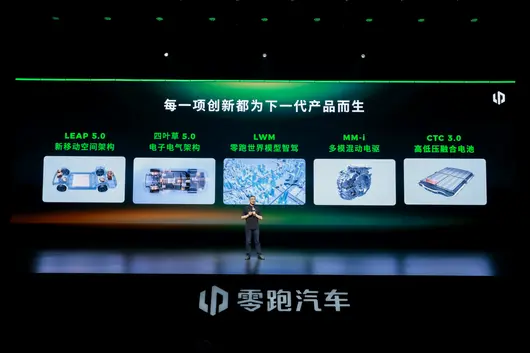

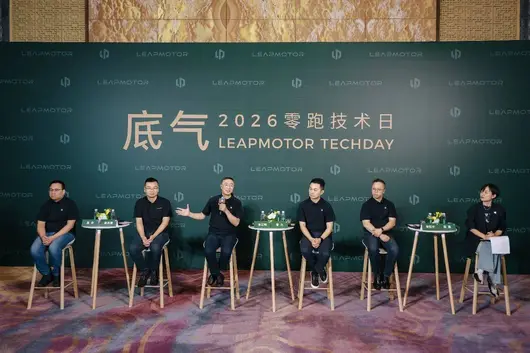
On the day of the 2026 Leapmotor Technology Day, Leapmotor unveiled a "One Architecture + Three Core Technologies + Multiple Reserves" in one go, which can be said to be full of substantial value. After the press conference, Leapmotor founder, Chairman, and CEO Zhu Jiangming led the whole vehicle product line head Cao Li, electronic product line head Zhou Hongtao, battery product line head Song Yining, and electric drive product line head Wu Cun to face the media directly. During the over one-hour group interview, almost all questions eventually landed on the same word: self-developed.

"Leapmotor is very willing to do technology, very ambitious." At the beginning of the group interview scene, the host quoted a netizen's comment. She said "Technology is our Leapmotor's confidence, and our current 9,500 engineers are also our confidence." This is almost the best footnote of the whole group interview.
"End-to-End Integration": The Foundation of R&D is Organizational Power
Facing the question of "how to manage the R&D system", Zhu Jiangming's answer was only four words: End-to-End Integration.
"Everyone is a piece, very clear, boundaries are also clear." For example, Cao Li is responsible for the whole vehicle, responsible for the entire process from product planning, initiation, development to delivery; cockpit and electrical architecture, then from design, iteration, manufacturing to delivery, pulled all the way to the line-side position of the whole vehicle factory.

Zhu Jiangming added that this stability also comes from people's stability. The four product line heads in the seat all joined Leapmotor in 2015, "Our team is very stable, no one has changed at all". Leapmotor has a total of 10,000 employees, of which 8,500 are R&D, sales, HR, finance, public relations only account for 1,500. In the 50-person team when the company was established, there were 41 engineers, and 21 remain in Leapmotor to this day.
World Model Intelligent Driving: Don't Throw Money at People, 100 km in the City by Year End Without Manual Takeover
LWM World Model Intelligent Driving is considered one of the biggest surprises of this release, but Leapmotor gave a counter-intuitive answer to "how to do intelligent driving".

"I don't really agree with the saying that intelligent driving needs to throw money and pile people to do it." Zhou Hongtao said straight, in the industry, competitors who previously invested thousands of people are now reducing significantly, often this thing is not something that can be done by just throwing money and people.
Zhu Jiangming then stated the goal more directly: "Our goal is to say Leapmotor will achieve 100 km in the city without manual takeover at the end of the year." In his view, Chinese auto companies' intelligent driving is getting closer to not needing manual takeover for a week, even half a month, finally gradually approaching L4.

What was even more unexpected to the on-site media was the benefits for old users. About 10,000+ old cars equipped with the Orin X platform (earliest including 2024 C16, C10, C11), will be upgraded to the latest World Model Intelligent Driving for free. Since Leapmotor's current main platform is Qualcomm 8650, this means "equivalent to we have to re-develop a whole batch, this is indeed a huge investment".
But Zhu Jiangming's attitude was firm: "Users are our bread and butter... Users in the early stage actually suffered a lot, bought Leapmotor's product, and if it turns out not to be good to use after buying, then we also have to think from the perspective of users." He said, "We are willing to spend as much effort as possible, to take our ten thousand plus users, to upgrade them to our latest version of this World Model Intelligent Driving."
High and Low Voltage Fusion CTC: One Innovation, Solving All Redundancy and Cost Issues
Battery product line head Song Yining brought two key pieces of information.
First, self-developed cell production line has been put into production: LFP (Lithium Iron Phosphate) system, winding process, capacity meets 500,000 to 600,000 vehicles; because standardized cells are made and deep participation in R&D customization, "will not be limited to a certain model, will be fully equipped", compared to external procurement has about 10% cost reduction.

The other half of cost reduction comes from standardization. Song Yining calculated an industry account: Cell factory customer demands are complex, "Even if achieving top cell factory, every line on average needs to cut 5 to 7 times a year", the most capable cuts one line also delays 20 days capacity, five times down two or three months are gone. After Leapmotor standardizes, it can guarantee 365 days no line stop, so efficiency lowest, cost can also be lowest, quality can also be best.

Second is High and Low Voltage Fusion CTC battery. Leapmotor cancelled the independent 12-volt lead-acid battery, integrated it into the large battery pack. Facing media concerns about collision safety, Song Yining emphasized safety redundancy did not change: "Still high voltage and low voltage two independent power supply... Door handle and other working principles are exactly the same."

Why do this thing? Pain points are realistic: Lead-acid battery loses electricity in one or two years, smart cars consume electricity large, switch to lithium battery mount in front compartment, sun exposure environment hurts life, after collision also easy to trigger whole vehicle unsafe. So Leapmotor gives low-voltage power supply directly to power cells. "Long standby time, no electricity loss, save user cost, put in chassis middle safer, can achieve same life as power battery".
MMi Multi-mode Hybrid: Turn Hybrid's "Powerless" into "Powerful"
Why when range extension is already done well, still release multi-mode hybrid? Wu Cun's answer is: Prepare for global customers.

"Foreign new energy charging facilities are relatively much behind China, we believe foreign hybrid market still has 5 to 10 years or even longer time." More importantly demand difference, foreign users have high requirements for medium-high speed acceleration, same level cars 80 km/h to 120 km/h acceleration ability generally is 8 seconds, "We can do 4.5 seconds", European users especially like.

Since 2022 when the first range-extended model went into mass production, Leapmotor has cumulatively launched 7 range-extended models. Leapmotor's release of MM-i multi-mode hybrid electric drive marks Leapmotor's formal entry into the plug-in hybrid track, completing a full power layout of "Pure Electric + Range Extension + Plug-in Hybrid" here.
"iPhone of the Auto World": Second Brand is a New Species of Mobile Space
About the underlying logic of the second brand, Zhu Jiangming believes that with energy replacement completion, autonomous driving becoming increasingly usable, the car's form will definitely be reconstructed, Leapmotor hopes the second brand, like the iPhone replacing feature phones, "to make revolutionary changes".

Cao Li then described the new species more specifically: Future cars "not only a transportation tool, it might be more a home, or moving residence also, office scene also", can replace hotel, camping, temporary rest, coffee shop, restaurant partial functions, "based on car autonomous driving arrival after, it as a can move life extension space". Second brand expected next year fourth quarter appearance and begin delivery.
R&D Overflow: External Supply, Going Overseas, and Competition
R&D results are overflowing outward. Zhu Jiangming introduced, Leapmotor with FAW, Stellantis is very close cooperation, mode is platform-level cooperation: one is production of already mass-produced cooperative components in Leapmotor factory, another is in partner's own factory production, but by Leapmotor providing self-developed manufacturing core components, "from battery pack, electric drive, our all controllers, car lights etc., just pack style".

He calculated an account: Complete set electric vehicle kit compared to partner choosing many suppliers, at least have 1,000 yuan, 2,000 yuan cost advantage, and matching grind time short, risk smaller. Self-developed components putting into market premise is also harsh: "Our PPM, our 3mis must be better than our suppliers, we will put into market."

Going overseas also emphasizes synergy. Zhu Jiangming believes automotive going overseas "must walk this localization path", more effective synergy is "use their existing some resources, for example factory surplus capacity"; in Thailand etc Southeast Asia market, already have many Chinese auto companies build factory, "hope Leapmotor not to go build factory, able to coordinate with them, able to use their factory, that is best. Reduce duplicate investment". Overseas product release rhythm will be slower than domestic about two quarters.

Finally, a media asked a very direct question: Why Leapmotor choose a "invest more, simultaneously more tired, explanation cost higher" road?
Zhu Jiangming believes, this answer hides in Leapmotor's ten years. From company establishment first day, Leapmotor set down "full domain self-research, deep self-making" mode, this is a road completely opposite to "integrated procurement", this road harder, slower, less popular, but also therefore harder to be copied. We also see results, in industry down 20% year, Leapmotor still can maintain 70% volume growth.
Looking back, 2026 Leapmotor Technology Day every set of numbers also answer this question. Leapmotor has already walked this road others look hardest into its own "Moat" (By Feng Ming, Decisive Move)

Recently, Leapmotor held its 7th Technology Day.
This year's theme has only two words: Confidence.
These two words placed in the current industry context are quite interesting. Now at press conferences, most brands talk about "Far Ahead" "Industry First", but Leapmotor specifically uses a word that looks a bit "down-to-earth". But after watching this press conference, you will find this word chosen very accurately — it is not just shouting slogans, but laying out everything accumulated over 11 years piece by piece for you to see.

Let's first look at a set of numbers: monthly sales breakthrough 100,000 vehicles, cumulative deliveries nearly 1.8 million vehicles, profitable for three consecutive half-years, net profit attributable to parent company in the first half of 2026 was 210 million yuan.
In the new energy industry, profitability is not an easy thing. Most new forces are still losing money, on what basis can Leapmotor make money? The answer lies in these eight words: "Full-Stack Self-Development, Deep In-House Manufacturing".
Leapmotor independently controls 65% of the vehicle cost. What does this mean? Most core components of a vehicle, from cells to battery packs, from motors to controllers, from components to headlights, Leapmotor makes them all itself. It has built 18 parts factories, and the platform generalization rate reaches 90%. The logic of this system is simple: hold core components in your own hands, costs can be pressed down, quality can be controlled, and configurations can be enhanced.
In short, Leapmotor takes the path of "thin profits and high turnover, spreading costs with volume". This path is not sexy, but it is viable. Continuous profitability is the best proof.
But what truly deserves attention is what was released at this Technology Day.

Leapmotor released a set of vehicle architecture plus three core technologies this time, plus Cloverleaf 5.0 Central Domain Controller, constituting five major system innovations. We do not stack parameters, we choose three to discuss that best illustrate the problem.
First, LEAP 5.0 New Mobility Space Architecture.
Leapmotor took the concept of "space efficiency ratio" to the extreme this time. Through the super-integrated air conditioning unit and rear-mounted powertrain, cabin longitudinal length increased by 19%; through upright layout of shock absorbers, front row legroom width increased by 37.5%; through pure flat low floor and integrated intelligent lifting roof, cabin height increased by 63.7%. In short, this car allows you to stand up inside.
What is the logic behind this? When intelligence makes cars look more and more like a "Third Mobility Space", the layout of traditional fuel cars — engine occupying front cabin, driveshaft passing through cabin, shock absorber tower squeezing wheel arch — seems outdated. Leapmotor chose to reconstruct from scratch, returning the space occupied by mechanics to the cabin. The second brand product debuting in 2027 is built based on this architecture.
Second, LWM World Model Intelligent Driving.
Intelligent driving is now the most competitive track in the industry, but the direction of competition is mostly "stacking computing power". Leapmotor takes a different path: not relying on BEV perception, not relying on rule-based code, using World Model to make decisions.
Simply put, traditional intelligent driving relies on rules — brake when seeing red light, yield when seeing pedestrians, written in item by item. World Model relies on learning — after the system sees a large number of scenarios in the cloud, it can understand physical laws, can predict the development of things, like an experienced old driver.
More critical is cost control. This system can be deployed on 200 TOPS, 640 TOPS, 1280 TOPS different computing power platforms, models under 100,000 yuan can also be equipped. Leapmotor also promises to upgrade 350,000 LiDAR version models to World Model Intelligent Driving for free, free usage for life. For the earliest over 10,000 LiDAR version users, although the hardware platform is inconsistent, algorithm migration costs 50 million, Leapmotor still upgrades it for free.
This attitude is more worth mentioning than the technology itself.
Third, CTC 3.0 High-Low Voltage Integrated Battery.
This technology solves a "century-old problem": since the fuel era, cars have always carried an independent low-voltage battery to power headlights and car systems. This battery needs to be replaced once every few years, costing a few hundred yuan, and lead-acid batteries pollute the environment when discarded.
Leapmotor's approach is: cancel independent low-voltage battery, integrate low-voltage battery function into the large battery pack. Low-voltage power increased 7 times, maintenance-free for life, vehicle cost saved over 2,000 yuan.
More worth mentioning is that Leapmotor open-sourced the patents of this technology to the entire industry. This move is rare in the auto industry, but the signal it conveys is clear: Leapmotor does not make money relying on technology blockades, but relies on making technology, scaling it up, and lowering costs.

Returning to the theme of the Technology Day. Leapmotor's confidence is not the breakthrough of a single technology, but the ability of the system.
It has a 9,500 engineer team, with 841 electric drive patents ranking first among new forces. From the mass production of the first 8-in-1 electric drive in 2019, to the domestic first 200kW oil-cooled electric drive in 2022, to the MM-i multi-mode hybrid electric drive released this time — 40% lighter than the same level, 25% smaller volume, 28% stronger power, it is currently the smallest hybrid electric drive in the industry by volume. It completed the "Pure Electric + Range Extender + PHEV" full power layout, covering A0 to D-class all categories.
The result brought by this system capability is reflected in the overseas market. Leapmotor has entered 45 countries and regions globally, overseas stores exceed 1,000, cumulative exports over two years exceed 200,000 units. January to June 2026, Leapmotor registered 24,269 units cumulatively in Italy, a 1448.8% surge year-on-year, ranking first in Italy's pure electric market for six consecutive months.
Relying on Stellantis's European dealer network and 140 logistics centers, Leapmotor achieved "Three Deliveries Daily" parts supply guarantee. Spain CKD factory plans to start production in October 2026, Malaysia and Myanmar factories are already in mass production.
These numbers explain one thing: Leapmotor is not just a vehicle manufacturer, it is becoming a leading supplier capable of outputting technology to the industry. Electronic systems received 5 collaborations, electric drive systems received 8 collaborations, battery systems received 10 collaborations, vehicle-level technology empowers FAW, Stellantis, and other partners.

Auto Network Review:
LEAP 5.0 Architecture, World Model Intelligent Driving, MM-i Hybrid Electric Drive, CTC 3.0 Battery, none of these five technologies were made for "showing off skills". They all solve practical problems: not enough space, intelligent driving too expensive, hybrid too heavy, batteries need replacement.
This is probably the "technical confidence" Leapmotor understands — letting more mainstream consumers access better configurations and functional experiences. The second brand product debuts in 2027, what Leapmotor wants to do is not "addition on traditional cars", but use the thinking of "smartphones replacing feature phones" to redefine cars.



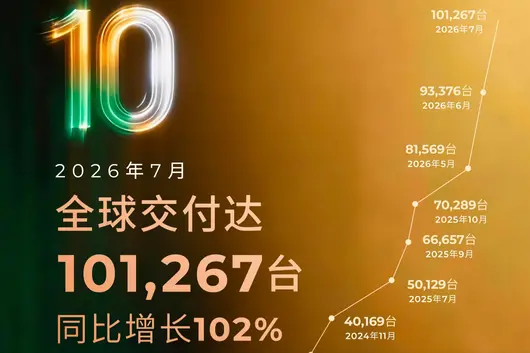
September 16, Leapmotor held a Tech Day with the theme "Confidence". On the same day, this company just reached a new milestone: July global deliveries 101,300 vehicles, year-on-year increase 102%, becoming the first domestic new force brand to break 100,000 vehicles in a single month delivery; August reached a new high. In 2025, Leapmotor annual deliveries 596,600 vehicles, sales doubled for two consecutive years; January to August 2026, global sales over 560,000 vehicles, year-on-year increase 70%, ranking top three among China's new energy passenger car brands. Just at a time when most new forces are still struggling near the break-even point and the price war continues relentlessly, this report stands out.
More striking is the expansion overseas. In the first half of the year, Leapmotor exported 96,300 vehicles, a year-on-year surge of 372.6%, exceeding the total export volume for the full year of 2025; Leapmotor International has built over 1,000 sales and service outlets in 45 markets, with pure electric market share in Italy exceeding 25%, and in June became the highest selling Chinese EV brand in the German market; T03, C10 have become popular choices in the European affordable pure electric market, and the Malaysia knock-down assembly plant has also started production. When most peers are still fighting closely domestically, this company has moved a considerable portion of its growth overseas.
Sales on the rise, global expansion accelerating, what does it rely on? The answer given by the Tech Day is the systematic capability accumulated over 11 years.

First, let's look at the cost structure. Leapmotor has built 18 parts factories, self-developed and self-produced covers 65% of total vehicle cost, and platform commonality reaches 90%. This explains why "Good technology should be accessible to everyone" is not just a slogan: Advanced intelligent driving goes down to the 100,000 yuan class; CTC 3.0 eliminates independent low-voltage batteries, saving 2,000 yuan per vehicle; for the earliest batch of LiDAR users upgrading to World Model Intelligent Driving, it requires an investment of 50 million yuan, but Leapmotor chose a free upgrade and free usage for life. Self-development squeezes costs to places others cannot, so cross-tier configurations can possibly become standard configurations.
Second, look at the technology system. Leapmotor released not just one highlight, but a set of architecture plus three major systems plus multiple reserves: LEAP 5.0 vehicle architecture achieves over 100% utilization rate; LWM World Model Intelligent Driving allows vehicles to go from "remembering road conditions" to "understanding road conditions"; long-tail scenarios encountered by a vehicle are learned via the cloud, allowing the fleet to collaboratively evolve; MM-i Multi-mode Hybrid Electric Drive completes the PHEV puzzle, completing "Pure Electric + Extended Range + PHEV" full power layout, with power 28% higher than peer vehicles and weight 40% lighter; CTC 3.0 eliminates independent low-voltage batteries, increasing energy capacity 7 times, with related patents open-sourced to the entire industry — and this generation of batteries is built upon verification from over 1 million vehicles installed. From architecture to batteries, from intelligent driving to robots, every item points to mass production and implementation. Zhu Jiangming said Leapmotor does not innovate for the sake of showing off skills — behind this statement is the industry stuck in stock competition on screens, computing power, and configurations.

The root of growth against the trend may lie in this kind of "hard work": not chasing short-term concepts, but sinking resources into underlying R&D and product experience. Embodied AI robot concepts are hot, but Leapmotor said "Only robots that can make money are worth showing off"; Direct-drive PHEV is viewed bearishly by some, but Leapmotor judges it still has a 5 to 10-year lifecycle. Technological pragmatism eventually manifests as operational stability. Since the mass production of the first extended-range model in 2022, Leapmotor has launched 7 extended-range models, and every structure of the electric drive system comes from internal co-creation, rather than bought solutions.
Why do sales and the capital market succeed frequently? The underlying logic is consistent: the positive cycle of scale and profitability. In the first half of the year, Leapmotor revenue was 38.1 billion yuan, net profit 210 million yuan, profits for three consecutive half-years — at a time when the industry generally doesn't make money, this profit is scarce. Overseas markets contribute high gross margin growth, with more than half of new sales coming from overseas in the first half of the year. What the capital market values is this "profitable long-termism". Since HK stock listing, Leapmotor market cap once stood at 60 billion HKD, and brokers still give overweight ratings and higher target prices. Of course, the market does have doubts: the year-start 5 billion yuan profit guidance was lowered to around 3 billion yuan, and the stock price still has corrections within the year. The quality of profits still needs time to test.
For China's automotive industry, Leapmotor's significance may not lie in the sales figures themselves. When price wars put pressure on the entire industry, it proves a different path: relying on full-domain self-research to keep both costs and experience in its own hands, going from "competing on price" to "competing on technology"; when whole vehicle export encounters resistance, it uses technology output, localization, and patent open-sourcing to turn "product export" into "capability export". As Zhu Jiangming said, technology and innovation are the confidence of enterprises facing the future. A car enterprise that can sustain profits and export systems overseas may well be the footnote most needed for China's automotive industry to become from big to strong.

On September 16, the 2026 Leapmotor Technology Day, themed on 'Confidence', took place. A set of LEAP 5.0 vehicle architectures, as well as LWM world model intelligent driving, MM-i multimodal hybrid electric drive, and CTC3.0 high-voltage-low-voltage integrated battery, three core technologies, were released on site, showcasing the results of its self-developed achievements since its establishment 11 years ago.

On the same day, Leapmotor announced that the subscription for the additional share issuance on FAW's equity investment had passed the CSRC review and completed registration. China FAW, a central state-owned enterprise, officially became a strategic shareholder holding 5%. Beyond the 3.744 billion yuan, what Leapmotor truly obtained was the credit endorsement of a central enterprise and the systematic industrial resources backed by a central enterprise group.
The day the status was finalized coincided with the day technology was complemented, which didn't seem like a coincidence. When the two parties signed the contract last December, the cooperation direction specified was the joint development of plug-in hybrids and extended-range powertrains. What Leapmotor released that day was indeed its first plug-in hybrid electric drive, the MM-i. From FAW paying platform licensing fees to Leapmotor for the Hongqi project to opening CTC3.0 patents to the entire industry, Leapmotor is taking what it has accumulated over 11 years, taking it out of its own products, and placing it on the industry's shelves.
What is Leapmotor's Confidence Actually?
The first question this technology day aims to answer is what the two words 'Confidence' refer to.
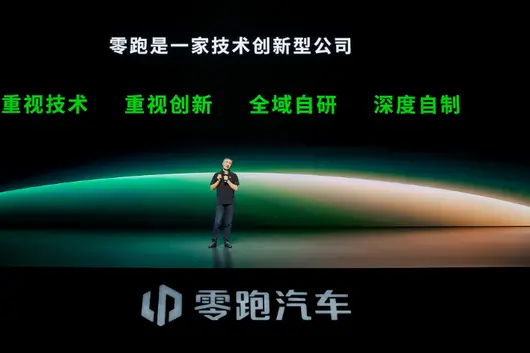
Zhu Jiangming, founder, chairman, and CEO of Leapmotor Technology, elaborated on the situation of the domestic automotive industry and new energy brands in 2026. In a stage where the industry faces challenges, Leapmotor's monthly sales reached 100,000 units and it has been profitable for three consecutive half-years, demonstrating its significance. Daring to talk about investment in a contracting market itself requires a foundation.
The first layer of the foundation is R&D density. Leapmotor has a total of 10,000 employees, with 8,500 in R&D, and Sales, HR, Finance, and Public Relations totaling 1,500 people.

The second layer is full-domain self-research and deep self-manufacturing, autonomously controlling 65% of the vehicle cost, built 18 parts factories, with a platform universality rate of 90%. However, Zhu Jiangming set a bottom line for this model: core components developed and manufactured in-house must have PPM and 3mis superior to suppliers before being released to the market. Quality must be ensured first, and cost optimization comes second. This statement directly responds to the most common external doubts regarding vertical integration: self-research is not about saving money, but about keeping quality in our own hands.
The third layer is where the true confidence lies: these technologies already have buyers. There are 5 external partnerships for electronic systems, electric drives have received designations from 8 OEMs, and battery systems have 10 external partnerships.
The strongest piece of evidence is the Hongqi G117. In March 2025, an announcement from the FAW Electronic Bidding Platform stated that the joint development of the Hongqi brand G117 vehicle and the technical procurement of platform licensing fees had a buyer: Zhejiang Leapmotor. An OEM paying platform licensing fees to another OEM is in itself a recognition of status; this speaks more to the role Leapmotor plays in the industry than any self-positioning could.
Betting on 2027
LEAP 5.0 is not prepared for existing models; it bets on a brand that hasn't been born yet.
The architecture is divided into physical and electronic layers. The physical layer enlarges the cabin simultaneously along the X, Y, and Z axes. Integrating the super air conditioning unit and swapping out the powertrain increased cabin length by 19%. The vertical layout of shock absorbers plus miniaturized shock absorber tower packages increased front legroom width by 37.5%. The flat low floor plus native integrated smart lift roof increased cabin height by 63.7%, ultimately achieving a space utilization rate of over 100%. The electronic layer is Cloverleaf 5.0, featuring 48V power for the whole vehicle, vehicle-wide Ethernet, and Vehicle-Cloud AgentOS. The central domain controller makes decisions while other domain controllers only execute, compressing the total vehicle wiring harness to within 500 meters.

Cao Li, Head of Vehicle Product Line at Leapmotor Technology, described this new species more specifically. It might replace some hotel functions, camping scenarios, and temporary rest, even offices, and leisure cafes and restaurants. The premise he emphasized is worth noting: the strongest attribute of the second brand is first solving the problem of advanced assisted driving.
This also explains why Leapmotor set a hard metric for intelligent driving. Zhu Jiangming said the goal is to achieve 100 kilometers of no-touch driving in urban areas by the end of this year.
The second brand will start debuting and delivering in the fourth quarter of 2027. Leapmotor now sells 100,000+ units monthly, with the main sales range between 100,000 and 200,000 yuan. This is a clear upward move.
A 100% utilization rate is a scenario worth contemplating. Whether it can transform from a concept at the launch event into a reason for users to pay for will have to wait until 2027 for an answer.
Pressing Intelligent Driving Down to 100,000
Leapmotor's approach to intelligent driving is the reverse of others. Others use compute power and headcount to drive prices up, while Leapmotor wants to pack the same capabilities into the entire model line.
It is sufficient to clarify three things about the characteristics of LWM world model intelligent driving: it does not rely on BEV perception, does not depend on rule-based code, and LiDAR is used only for safety redundancy. The cloud base model is responsible for learning and inference, while the vehicle-side real-time model handles decision-making. Rules only provide a fallback for traffic regulations such as traffic lights, reducing code volume by 90%. Compute power can be deployed on different platforms of 200, 640, and 1280 TOPS. The result is advanced assisted driving reaching models under 100,000 yuan, including the A10.
Zhou Hongtao, Head of Electronic Product Line at Leapmotor Technology, put forward his own viewpoint. He does not believe that intelligent driving requires throwing money and piling up personnel to be produced, on the grounds that the vast majority of peers who previously invested thousands of people are now cutting back significantly. This judgment is consistent with Leapmotor's path. Since one cannot trade headcount for progress, one must find space in algorithm efficiency.

Leapmotor has sold 350,000 LiDAR-equipped model vehicles that can be upgraded for free to the world model version and used for free for a lifetime. Among them, the earliest over 10,000 units used the Orin X platform, while Leapmotor now primarily uses the Qualcomm 8650 platform. Porting is equivalent to redeveloping an entire set of algorithms. Zhu Jiangming explained the decision-making process: those over 10,000 older users bought early when AI chips were expensive; they spent so much money to support Leapmotor, so if it was not usable after purchase, they would feel very sad. Therefore, we are willing to spend even more effort to upgrade them.
Regarding catching up to Tesla FSD, his answer was quite clever. There is no comparability with Tesla; Chinese cars cannot go to the United States, and FSD cannot easily land in China either. This is unsolvable. You can say anything, because neither can outmatch the other.
To spread the cost, intelligent driving must increase volume. Leapmotor is on the path of using scale to replace adoption. The cost of this path is slowness, but the benefit is that once it is proven, the coverage will be larger than others.
Filling the Plug-in Hybrid Gap
MM-i is not just filling a power form; from the day it was defined, it has been aimed at the overseas market.

Wu Cun, Head of Electric Drive Product Line at Leapmotor Technology, stated the positioning very directly: mainly for foreign markets. The reason is that charging facilities abroad are backward, and the hybrid market will last another 5 to 10 years or even longer. Foreign users have higher requirements for medium-to-high speed acceleration capabilities, while Toyota and Honda's iMMD are very weak at medium-to-high speeds. He gave a comparison: acceleration from 80 km/h to 120 km/h for vehicles in the same class is generally 8 seconds, while Leapmotor can achieve 4.5 seconds. The essence of new energy is not to eliminate internal combustion engines, but to decarbonize. If hybrid technology can deliver a pure electric experience while reducing carbon emissions, it is new energy technology.
However, there is a consensus among multiple domestic brands this year that hybrid models with small batteries still have a market in China, and multiple models have already started to enter the market. Leapmotor promoting them vigorously in China cannot be ruled out.
With the release of MM-i, Leapmotor has completed its full power layout covering pure electric, extended range, and plug-in hybrid, spanning from A0 to D-class. The overseas expansion line is also well-aligned; products have entered 45 countries and regions globally, with over 1,000 overseas stores, and cumulative exports over the past two years of overseas business exceed 200,000 vehicles,
Leapmotor's Exclusive Strategy
Leapmotor doesn't sell parts; it sells a complete, proven solution.
Zhu Jiangming explained the external supply model very clearly. Collaboration with FAW and Stellantis is at the platform level, sharing platforms. There are two ways to implement it: one is produced in Leapmotor's factories, and one is produced in the partners' own factories, but Leapmotor provides a packaged kit of core components including battery packs, electric drives, all controllers, lights, etc. His judgment is that this core kit saves at least 1,000 to 2,000 yuan compared to the other party selecting multiple suppliers themselves, and it is faster, has shorter commissioning time, and lower risk.
It is worth noting that Leapmotor announced opening relevant patents for high-low voltage integration to the entire industry. OEMs usually treat patents as a moat. Companies willing to open source want the industry to follow their own standards; this is already the mindset of a supplier.
Discussing the issue of overseas collaboration reflected Zhu Jiangming's vision. He stated that automobiles must pursue localization and there is also collaborative space with domestic automakers. For example, many Chinese automakers have already built factories in Thailand. Leapmotor hopes not to build factories repeatedly; it is best to use their factories to reduce duplicate investment. This aligns with the concept of systematic overseas expansion that Leapmotor has always emphasized. Rather than each building factories from scratch, it is better to utilize existing capacity.
When discussing embodied intelligent robots, Zhu Jiangming was very pragmatic. He said humanoid robots are still in a very early stage; while they can move now, there is a long growth process before they can work. Short-term, humanoids will not be the focus. He values non-humanoid, shape-shifting embodied intelligence more. The criteria for judgment are whether they can complete work and whether costs can be lower.
Sharp Perspective: Technology and Innovation are the Foundation for the Future
Quite a bit was released at this technology day; what is truly noteworthy is where they are going. One part is for the 2027 second brand, another part is sold to shareholders like FAW, and a third part is directly opened to the entire industry.
Zhu Jiangming's attitude towards competition is very straightforward. He said competition is inevitable, and only competition can drive enterprise progress, allowing consumers to buy better products for less money. However, he simultaneously raised a premise: do not compete on the internet; we must truly compete on product strength.
Three lines are laid out at the same time: FAW's equity and powertrain collaboration, Stellantis's overseas channels, and the second brand's upward move in the fourth quarter of 2027.
The challenges are also real. Zhu Jiangming's own saying is to anticipate danger in times of peace; all things are unlikely to go smoothly. The industry has entered negative growth, and the larger the scale, the greater the difficulty in taking the next step up.
Zhu Jiangming stated: "Technology and innovation are the foundation for enterprises facing the future and are also the core competitiveness."

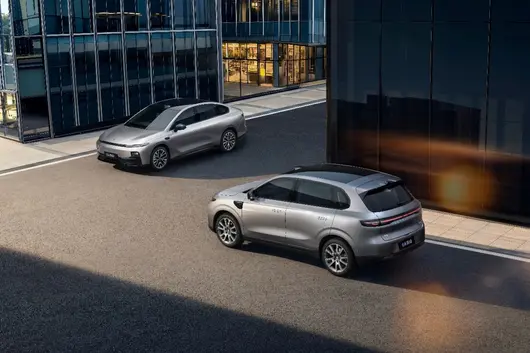
On September 14, 2026, the 300,000th vehicle of the Leapmotor B-series twin stars went off the production line. Since the B10 launched first in April 2025, followed by the B01 in July 2025, it took 1 year and 6 months, setting a record for the fastest achievement of this milestone in the Leapmotor product series. In the exceptionally competitive 100,000-level pure electric market, achieving monthly sales of nearly 20,000 units, the Leapmotor B-series twin stars have already become a phenomenon hit in its class. Meanwhile, the global model B10 also set a record for the fastest overseas sales breakthrough of 60,000 units for a single Leapmotor model. 1 year 6 months, 300,000 units off the line, 60,000 overseas. Behind these numbers is the hardcore product power of "cross-level full configuration" under Leapmotor's full-domain self-developed system, and more importantly, a trust vote cast by global users through their orders.

Hot Sales Globally: B10 Leads Europe's Mainstream Submarkets
The hot sales of the Leapmotor B-series twin stars are by no means accidental. As of now, the global model B10 has launched in over 40 countries and regions. In the first half of 2026, Leapmotor B10 won the first place in sales of Chinese brand compact pure electric SUVs in the European market, and simultaneously topped the sales charts in six submarkets in Germany, Italy, France, Belgium, the Netherlands, and Poland, becoming the undisputed "Chinese Business Card" on the export track. In August, global sales of the B10 exceeded 20,000 units, with overseas sales breaking 10,000 units. With high appearance, long range, cross-level configuration, an 87.4% ultra-high space utilization rate, and solid China-Europe joint chassis tuning, it has rewritten the competitive landscape of Chinese manufacturing in global mainstream submarkets, with global reputation continuing to climb. Relying on strategic synergy with the Stellantis Group, Leapmotor is exporting its product philosophy of "good quality but not expensive" to a broader world stage.

Standout Design: Tech-Nature Aesthetics Conquer Global Juries
Good products speak for themselves. Leapmotor collaborates across three locations: Hangzhou Headquarters R&D Center, Shanghai Forward Design Center, and the European German Munich Design Center, aligning with global aesthetics and technology trends. Long before the B10 launched, it received high recognition from a joint jury of designers from Stellantis Group brands Maserati, Alfa Romeo, and Jeep. Its minimalist, tech-focused, and atmospheric design concept aligns with global mainstream aesthetics, successively winning international awards such as the Muse Design Platinum Award, American Good Design Platinum Award, London Design Gold Award, French Design Gold Award, New York Design Silver Award, and International CMF Design Award Green Design Award. Every recognition confirms Leapmotor's success at the product design level — Chinese manufacturing is already beyond just price-performance ratio.

Global Quality: Five Bases and Global Verification Forge Trust
The confidence behind hot sales comes from the systemic capabilities of global manufacturing. Leapmotor has woven a global manufacturing network with five manufacturing bases in China, Myanmar, Indonesia, Malaysia, and Spain (to be put into production soon), coordinating with global top-tier brand supply chains, researching and manufacturing according to global standards — this is the underlying support that allows 300,000 units of "global cars" to be stably mass-produced.
But what truly makes users firmly choose the Leapmotor B-series is the hardcore quality that can withstand global verification. At the regulatory verification level, the B10 vehicle has passed EU WVTA certification, seat fabrics have obtained the OEKO-TEX® STANDARD 100 highest environmental certification, meeting maternal and infant safety standards; at the environmental verification level, it can calmly cope with extreme climates from Northern Europe -30°C to the Middle East 50°C; at the road condition verification level, it has undergone actual tests in 200 cities across Europe, the Middle East, South America, Africa, Asia, etc., with cumulative mileage reaching one million kilometers.

Regarding battery safety, covering a global meteorological database spanning 53 countries/regions and 195 major cities, it optimizes the battery thermal management system for high temperature, extreme cold, high humidity, and high altitude, achieving safety throughout the full lifecycle from cell selection, Pack design to BMS strategy.
Regarding chassis tuning, Leapmotor collaborates with the Stellantis Group chassis master team, using the same driving simulator as F1 racing cars for joint tuning, balancing Chinese-style comfort and European-style handling to provide driving experiences that meet local needs for users in multiple global markets.

Continuous Advancement, Continuous Progress
In July this year, the all-new B01 and B10 launched with renewed vigor featuring "Four Ace Cards": Full Domain 800V+3C Fast Charging, Front-row Dual Zero-Gravity Seats, Ultra-large Size AR-HUD, and 17.3-inch 3K Central Control Screen. They continue to advance in range, intelligence, and comfort, responding to global user expectations with higher quality. From the sales champion in Europe's mainstream submarkets to the 300,000th vehicle going off the line, the Leapmotor B01 and B10 use the double answer sheet of "Global Hot Sales" and "Global Quality" to interpret what true "Technology for All" means. Today, the Leapmotor B-series has grown from a mobility partner for Chinese families to a quality choice recognized by world users; on the upward path, Leapmotor stands shoulder to shoulder with every user, heading towards new realms together.


The value of the Leapmotor model lies in verifying a possibility: In the industrial cycle where new energy vehicles return from "tech consumer products" to "manufacturing commodities," vertical integration and cost efficiency remain the core propositions that cannot be bypassed.
By Intelligent Driving Network / Zero Sauce
Edited by Langlang Mountain and Mingzhi Mountain
Starting from the 2025 Leapmotor 10th Anniversary event, Leapmotor founder Zhu Jiangming and the management team have been preparing for the Leapmotor Technology Day in September this year through subsequent public events and media exchanges.
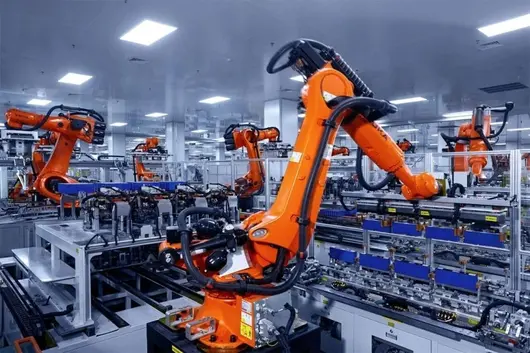
As the most important "appetizer" of the Leapmotor Technology Day, Leapmotor opened its Huzhou Super Five-Electric Factory to the media for the first time one week before the event—a core component self-research and self-manufacturing cluster with a total construction area of about 500,000 square meters, covering five major factory zones: batteries, electric drives, domain controllers, headlights, and electronics/power.
Just one day before the factory opened, major domestic automotive enterprises including Leapmotor announced their August sales, and Leapmotor once again led the New Force automakers with a new car sales volume of 103,129. Combining with the Q2 financial reports of each company, it can also be found that while Leapmotor's sales continue to grow, it has also become the only New Force automaker to achieve profitability for three consecutive semi-annual periods.
With the industry profit margin compressed to 3%, why can Leapmotor still make money? Placing this profit accounting in the factory makes it clearer.
01.
The Cost Ledger: Location Economics
The cost logic given by Leapmotor can be summarized in one sentence: full-domain in-house R&D, deep manufacturing, eliminating supplier gross margin.
Since the brand's establishment, 18 component factories have been built, and 65% of vehicle costs are under the enterprise's independent control.

Calculating with the industry supplier's common 15% gross margin, the 65% self-research and self-manufacturing ratio can save about 10% of costs compared to the external procurement mode—65%×15%≈9.75%, this arithmetic is self-consistent.

The Huzhou Electric Drive Integrated Factory is a specimen of this logic.
It concentrates the four core processes of stator manufacturing, rotor manufacturing, controller manufacturing, and electric drive system final assembly into one factory zone, reducing the production links of 3 times packaging, 3 times transportation, and 3 times warehousing and delivery of stators, rotors, and controllers.
Leapmotor calculated that the transportation packaging inventory dimension for a single electric drive system can save about 50 yuan. Based on an annual production of 1 million sets, a total manufacturing cost of about 50 million yuan is saved. This process model also applies to battery and electronic control factories.
Saving 50 yuan per vehicle is indeed not a very significant number, but reducing physical transport saves "links", not "materials".
This means Leapmotor's cost reduction path is process efficiency, not lowering material standards. The two are two philosophies: the former builds "cheap" on management precision, while the latter builds "cheap" on sacrificing experience.
On the side of the Electric Drive Integrated Factory, there is even an undeveloped river transport route. During the visit, Leapmotor relevant personnel also revealed to the Intelligent Driving Network that this factor was indeed considered when the factory was built. If this route can be navigated smoothly subsequently, transportation costs can continue to decline.

This "Location Economics" can be expanded to Leapmotor's entire Huzhou factory area. It is revealed that Leapmotor chose Huzhou instead of Jinhua or Hangzhou to build the factory. The two core reasons given by the official are: first, local government policy support; second, Huzhou has a superior location and convenient transportation, capable of covering supply to core markets such as Anhui.
Subsequently, Leapmotor will continue to expand the scale of component self-manufacturing. Production lines such as compressors, on-board power supplies, and electronic oil pumps were put into production one after another last year and are still in the production ramp-up phase. With the expansion of production scale, there is still further space for manufacturing costs to decline.
This space will be further amplified by platform commonality rates. Leapmotor vehicle architecture has an 88% component commonality rate. Under the same platform, a large number of components such as chassis parts, interior and exterior trim parts, seats, etc., achieve sharing except for styling and body shells. This means R&D costs, mold costs, and procurement costs are amortized on a larger sales volume base.
These two numbers, 65% and 88%, directly influenced Zhu Jiangming's pricing strategy: "cost pricing".
This pricing model, which is not oriented by brand premium but based on its own cost capability, gives the space saved by vertical integration to consumers. This forms an essential difference from the industry common "competitive benchmark pricing" or "brand premium pricing".
It is worth noting that Leapmotor's vertical integration is not a BYD-style full-chain heavy asset model. Leapmotor adopts an "invest in equipment only, not factories" light asset strategy. Among the 18 component factories, it focuses on high-value-added core components, while traditional interiors, tires, wheels, etc., are still resolved through external procurement or joint ventures.
This "selective vertical integration" allows it to achieve a specific balance between fixed asset investment and cost control.
02.
The Technology Ledger: Quality Economics
At the technical level, the five factories in Huzhou of Leapmotor constitute a complete chain of evidence: with micron-level even nanometer-level manufacturing precision as input, and PPM-level defect rate and 100% inspection coverage as output, ultimately realized as product failure rates below the industry average and promising lifetime warranties.
Electric Drive Integrated Factory: From Rotor Dynamic Balancing to 40PPM
Quality hazards in the electric drive system often arise in transport and assembly links. Leapmotor concentrates the four core processes in the same factory zone, eliminating intermediate transport loss, but this is only physical integration; what truly determines the yield is precision control within the process.

In the rotor dynamic balancing link, Leapmotor controls the positive and negative electrode calibration error at ≤100mg, far better than the industry common standard of 200—500mg, with the minimum remaining unbalance ≤0.1gmm/kg, equivalent to the rotor working center of gravity eccentricity ≤0.1μm. This precision directly determines the NVH performance and energy loss of the electric drive system—the larger the unbalance, the stronger the vibration induced by periodic centrifugal force, and the more energy the motor consumes to overcome vibration resistance. The electric control assembly link adopts a high-precision intelligent servo press, with pressure precision ≤0.5%FS and displacement precision ≤10μm, doubled compared to the industry mainstream standard. The direct benefit of precision improvement is ensuring the integrity of sealing rings and avoiding high-voltage insulation failure caused by water vapor intrusion. In the EOL testing link, NVH measurement system accuracy is ≤2dB (industry mainstream 3dB), and 100% off-line detection and speed/torque range test coverage are achieved.
The cumulative result of these technical investments is: Leapmotor oil-cooled electric drive 3mis quality average is 40PPM, less than one-ninth of the industry average 360PPM. As a comparison, Leapmotor promises a lifetime warranty for the electric drive system—the confidence of this commitment is not marketing rhetoric, but a loss probability calculation supported by 40PPM quality data.
SMT Factory: Chip-Level Environment Control and 99.995% Welding Yield
Domain controllers are the "brains" of intelligent electric vehicles. A circuit board the size of an A4 paper integrates about 8,000 electronic components. If any one is misaligned by 10μm or has a poor solder joint, it may lead to infotainment lag, function malfunction, or even safety hazards. Leapmotor's SMT factory raises the manufacturing environment to chip-level: temperature fluctuation ±0.5°C, humidity ±1%RH, cleanliness 100,000 grade, full-domain electrostatic protection voltage <100V. The purpose of this environment control level is to reduce the three quality control risks of poor welding, refusal of welding, and electrostatic breakdown from the production source.

In terms of process precision, the ultra-high speed precision placement link placement precision reaches ±15μm, better than the industry mainstream 25—30μm level; 3D optical reinspection precision is also ±15μm, process capability CPK ≥ 2.0, reaching top industry quality control standards; nitrogen vacuum reflow welding achieves welding yield > 99.995%. Three inspection links achieve 100% off-line full inspection, defective products automatically sorted and isolated. In May 2026, Leapmotor intelligent driving domain controller installation volume was 34,822 sets, ranking 5th in the industry, and promised an electronic control lifetime warranty. High welding yield and full coverage detection mean the base of after-sales repair rates is significantly compressed, and software OTA iteration efficiency is no longer dragged down by hardware defective products.
Battery Factory: 10nm Cleaning and 99.9% Welding Yield
The safety and consistency of power batteries depend on the "marching together" ability of hundreds of cells. Leapmotor battery factory module line automation rate reaches 90%, planned and designed independently by Leapmotor. The core logic is using machine certainty to replace human intervention uncertainty.

Cell nanoscale plasma cleaning raises cleanliness to 10nm, 10 times the industry average 100nm precision. Cleanliness directly determines coating adhesion and cell performance consistency. Spider arm cell stacking shortens single cell processing speed to 1 second, 20% higher than the industry traditional mechanical hand, but speed is not at the cost of precision. Ring spot Busbar welding reduces spatter by more than 99%, process yield rate reaches 99.9%, fundamentally reducing cell short circuit and thermal runaway risks. Airtightness test differential pressure sampling resolution 0.1Pa, reaching industry head standards, ensuring battery pack airtightness. Battery capacity test through high-precision SOX model controls SOC deviation at <3%, better than the national standard ≤5% requirement, reducing "hidden power" and the wooden bucket effect.
The production line achieves 100% full inspection and data traceability. The final result is: Leapmotor battery failure rate is about 30% of the industry average level, and promises a battery lifetime warranty. For users, this means slower range degradation and higher vehicle resale value; for enterprises, this means the probability distribution of after-sales battery replacement costs is significantly shifted left.
Headlight Factory: Grade 100 Cleanliness and 4-Camera 100% Visual Full Inspection
Headlight manufacturing seems far from "safety core", but Leapmotor's headlight factory technical standards are not downgraded due to this.

The factory has the industry's first 100% fully automated injection molding dark factory. The core area cleanliness reaches Grade 100 (chip-level), 10 times the sterile operating room cleanliness. Vacuum aluminum plating thickness is controlled at 0.1μm, reaching top industry standards, directly determining reflectivity and durability—the higher the reflectivity, the better the night lighting effect; the more uniform the plating, the stronger the thermal shock and aging resistance.
In the visual inspection link, four 20 million pixel high-definition industrial cameras are used to perform 100% beam pattern inspection and missing/leak installation inspection from four angles. Compared to the industry's usual two-camera configuration, it achieves double inspection redundancy. The direct benefit of this technical investment is to prevent defective products from flowing out, avoiding driving safety hazards and after-sales claims for users caused by headlight beam pattern deviation or assembly defects.
Electronics & Power Factory: 10μm Assembly Precision and Aerospace/Military Grade Standard
The Electronics & Power Factory is responsible for the manufacturing of three core components: electronic oil pumps, on-board power supplies, and heat pump compressors. Among them, Leapmotor electronic oil pump production line automation rate reaches 100%, leading the industry.
In the outer rotor assembly link, the production line achieves intelligent positioning through visual guidance, combined with high-precision sensors to control face dimension precision at 10μm—this level is better than the industry precision pump 15μm conventional standard, reaching aerospace/military grade requirements. The precision of face gap directly determines the volumetric efficiency of the pump: if the gap is too large, oil leakage increases and volumetric efficiency drops; if the gap is too small, friction resistance rises and mechanical losses intensify. 10μm precision control is to find the optimal balance point between leakage and friction.
In the on-board power supply signal board installation link, the production line uses 2D vision cameras to guide robots to complete automatic assembly, assembly precision also reaches 10μm, reaching the industry high-end level.

The heat pump compressor executes 100% online finished product insulation dielectric strength test. Test voltage is 2500V, higher than the industry common 2000V standard; test precision is controlled at ±3%, better than industry ±5% error level. Higher test voltage and stricter precision standards mean the missed inspection probability of insulation failure is further suppressed, and product reliability obtains substantial improvement.

The technical parameters of the five factories are not isolated. They all point to a quantifiable cost reduction result:
High technology brings not vanity on the spec sheet, but product stability supported by high yield, and loss reduction converted by stability—including manufacturing cost loss, after-sales repair loss, and brand trust loss.
Leapmotor dares to promise a lifetime warranty for the three core systems of electric drive, electronic control, and battery. Its underlying logic lies here: when manufacturing precision compresses the failure rate to 1/3 or even 1/9 of the industry average, the lifetime warranty is no longer risk gambling, but a cost-controlled service经过精算 (actuarially calculated).
Serving users, and serving customers.
03.
The Business Ledger: Tier 1 Economics
Among the information released in this open day, the component external supply is the most significant.

According to Leapmotor official news, the Huzhou headlight factory is Leapmotor's first headlight manufacturing factory facing external customers, and has reached cooperation with Stellantis and FAW, supplying full category lighting fixtures for different vehicle models;
Subsequently is the electric drive. Leapmotor's wholly-owned subsidiary LingSheng Power signed an agreement with Peugeot-Citroen (under Stellantis) to provide electric drive assembly development, factory prototypes, and special testing services for it. This means external supply jumps from finished components to the joint development stage.
Higher up is the vehicle architecture. Opel brand under Stellantis plans to adopt Leapmotor's latest pure electric architecture and core components of battery technology, retaining Opel's own design, chassis, and cockpit systems. Cooperation upgrades from "selling parts" to "selling platforms".
Along with the component penetration, there is continuous binding at the capital and equity level. In October 2023, Stellantis invested in Leapmotor for about 1.5 billion euros, obtaining about 20% equity (later increased to about 21%). In May 2024, both parties established a joint venture Leapmotor International, Leapmotor holds 49% equity, Stellantis holds 51% equity and leads it, responsible for sales and channels in markets outside Mainland China. In May 2026, both parties intend to further expand cooperation to joint procurement and shared production lines.
"Partnering to go global" at the channel level is the direct product of this binding. Leapmotor utilizes Stellantis's existing production capacity and channel networks in Malaysia, Spain, Brazil, etc., achieves local production in CKD/SKD mode, avoids trade barriers while reducing capital investment. This forms a sharp contrast with the heavy asset path of most Chinese automakers building overseas factories independently. Leapmotor International achieved profitability just two years after establishment, with overseas gross margin stable at 18%—20%, higher than the domestic level.
This "reverse technology export" has symbolic significance in the history of China's automotive industry.
In the past 40 years, China's automotive industry was dominated by the narrative "market for technology"; while the model of Leapmotor and Stellantis—Chinese automakers provide core technology, international giants provide brand and channels—is rewriting this narrative.
But Tier 1 business is not only for shareholders. Besides Stellantis, Leapmotor's component business has obtained cooperation from more than ten domestic and foreign automakers. Among them, FAW has reached cooperation with Huzhou headlight factory, supplying full category lighting fixtures for different vehicle models.
FAW's addition shows that external supply is an open business facing mainstream Chinese automakers. Leapmotor summarizes it as "Vehicle + Tier 1" dual-wheel drive.
"Vehicle + Tier 1" is not without precedent: BYD's FinDreams series external supply, CATL budded from ATL power battery department, are all paths verified on China's automotive industry chain.

Leapmotor's difference lies in the path sequence: first rely on self-supply to scale, then seek external supply.
Monthly sales of 100,000 units are the "order basic platform" of these component factories. External supply is incremental amortization, not a last resort. This model is coherent, but whether it can be established depends on whether external supply customer quantity and revenue proportion can be disclosed with data, whether internal and external supply pricing is fair, and whether external customers are willing to place orders with a vertical system of whole-vehicle peers for the long term.
It needs to be noted that vertical integration is not a consensus in the intelligent electric vehicle era. Most automakers choose "in-house R&D + external procurement" to maintain flexibility in technology generation switching.
But Leapmotor's self-manufacturing scope is actually selective: it does high value, high coupling components—domain controllers, electric drives, battery packs, headlights, electronics/power; while cell links etc. are not fully self-manufactured. This selective vertical integration is both different from "closed in-house R&D", and exactly the reason it dares to open orders to external customers.
Final Thoughts:
Of course, any business model has its applicable boundaries. Leapmotor's "full-domain in-house R&D + deep manufacturing" model is no exception.
First is scale dependency.
The cost reduction effect of vertical integration highly relies on sales volume to amortize fixed costs. Zhu Jiangming once publicly stated that new energy vehicle startups need "1 million annual sales to survive". Leapmotor's target for 2026 is to sprint to 1 million vehicles. Once the scale growth slows down, the capacity utilization rate of 18 component factories will decline, and its cost advantage will be quickly eroded by fixed costs.
Second is the "glass ceiling" of technical depth.
Leapmotor still has obvious boundaries at the core material level: cells come from external procurement (such as CATL), chips come from suppliers such as Qualcomm, NVIDIA, Leapmotor does not do wafer-level in-house R&D. This means during periods of raw material price volatility in batteries and chip supply tightness, Leapmotor's cost control capability will still be subject to pressure from upstream transmission.
Finally is the uncertainty of overseas policy. The EU's countervailing tariffs on Chinese electric vehicles, Malaysia's mandatory export quota requirements for new whole-vehicle factories, and the difficulty of building local supply chains in Europe all lay down variables for Leapmotor's global path.

Can the Leapmotor model be replicated? The answer is likely negative.
Its founder team comes from Dahua Technology, with deep electronics manufacturing genes; its "cost pricing" strategy requires extremely strong strategic firmness, which is not common in the capital-seeking new energy track; its "partnering to go global" global path relies on deep interest binding with international giants like Stellantis, having irreproducible contingency.
But the value of the Leapmotor model does not lie in becoming a template, but in verifying a possibility: In the industrial cycle where new energy vehicles return from "tech consumer products" to "manufacturing commodities," vertical integration and cost efficiency remain the core propositions that cannot be bypassed.
Monthly sales of 100,000 is just the visible result above the iceberg. Below the iceberg is a systemic capability reconstruction about how to build a good car.

Xinhua AUTO: In 2026, the Chinese new energy vehicle market is undergoing an unprecedented restructuring. As the industry shifts from widespread incremental expansion to fierce stock competition, an August sales report not only announces a complete reshuffle of the ranking among new car manufacturers, but also demonstrates the strong momentum of Chinese new energy automakers on the global track.

Leapmotor delivered 103,129 vehicles globally, with a year-on-year increase of 80.7%, solidly standing at the 100,000 monthly sales mark for the second consecutive month, unhesitatingly retaining the sales champion among new forces. What is more shocking is the gap of over 60,000 vehicles opened between it and the second-place Harmony Intelligence (42,101 vehicles) — Leapmotor's single monthly sales exceeded the sum of the second to fourth places. According to the comparable terminal registration data for the first 5 months of this year, Leapmotor ranks fourth globally among new energy passenger car brands, behind BYD, Tesla, and Geely, ranking third among Chinese new energy passenger car brands.
From 879 units sold per month in 2019 to 100,000 units today, Leapmotor took six years. This is not luck, but a manufacturing logic that has been repeatedly verified.
Sales Gap Leading, New Force Structure Faces Reshaping
First, let's look at how drastic the tier differentiation is in August's chess game.
Above Leapmotor, no one; below Leapmotor, crowded. Harmony Intelligence ranks second with 42,101 units, while Xpeng, Li Auto, Zeekr, and Nio are densely packed in the 35,000 to 40,000 unit range — the gap between them is less than 4,000 units. A production fluctuation in a key model or the launch of a new car is enough to rewrite monthly rankings. This is a typical "close-quarters combat" zone.
And Leapmotor has completely left this quagmire, pushing the new force competition threshold directly to the 100,000 units monthly scale.

Supporting this gap is the A, B, C, D four major product series covering the entire price band from 60,000 to 300,000 yuan. A series sold nearly 30,000 units in October, taking the sales champion of Chinese brand SUVs, and is the absolute main force in the entry market; B series monthly sales broke through 20,000 units, catering to the mid-range needs of young families; C series is a global model, C10 monthly sales continued to break 10,000, with the series global cumulative sales exceeding 850,000 units, among which C11 cumulative sales reached about 350,000 since its launch in 2021; the flagship sequence also achieved significant breakthroughs — D19 delivered 10,043 units in July, retaining the sales champion of large SUVs within 400,000 yuan for three consecutive months, the first MPV D99 first batch order average price broke through 300,000 yuan.

Four vehicles selling in volume simultaneously, without relying on a single hit, anti-risk ability is far stronger than opponents who "support the whole situation with one car". This is the product-end foundation for Leapmotor to stand out in the battlefield.
Stretching the time axis is more astonishing: 596,600 units delivered in full year 2025, up 103.1% year-on-year; 560,900 units reached in the first 8 months of 2026, up about 70% year-on-year; as of the end of July, Leapmotor's global cumulative delivery broke through 1.6 million units.
Jumping to Fourth Globally, Going Overseas Builds Second Growth Curve
If it's only price-performance ratio in the domestic market, Leapmotor can at most be a "China Sales Champion". What truly pushes it to fourth globally is the steep growth curve overseas.
In the first half of 2026, Leapmotor exported 96,294 units, a violent increase of 372.6% year-on-year — this number has already exceeded its total export volume for all of 2025, accounting for 27% of total sales in the first half. Equivalent to about one out of every four Leapmotor sold is sent overseas. Cumulative exports in January to July reached 113,863 units, the annual target has been adjusted from 100,000 to 150,000 units to 200,000 units, 2027 challenges 350,000 to 400,000 units.

The key lies in path selection: ride the boat to go out to sea, instead of building boats themselves.
In 2023, Stellantis obtained about 20% equity of Leapmotor for about 1.5 billion euros; in 2024, the two parties established a joint company "Leapmotor International" (Stellantis holding 51%, Leapmotor 49%), responsible for sales and production outside Greater China. Leapmotor's sales outlets are directly embedded into the dealer system of brands under Stellantis, channel costs are close to zero.
What does this mean? As of the end of June, Leapmotor International has entered more than 45 international markets, establishing more than 1,000 sales and after-sales outlets, among which Europe exceeds 900 — the same channel volume level, BYD spent nearly three years, Leapmotor only used one and a half years.
The battle results are very real: Italy pure electric registration 23,000 units in the first half, market share over 25%, ranking first in local pure electric sales for consecutive periods; June became the Chinese brand with the highest new pure electric vehicle registration volume in the German market; ranked third in Chinese brand pure electric retail in the UK. Revenue from markets outside mainland China in the first half reached 9.099 billion yuan, accounting for about 23.9% of total revenue, among which Europe contributed 8.875 billion yuan.

Another deeper step is local production: Malaysia Kedah factory C10 has completed mass production, Spain Zaragoza factory B10 starts production in the third quarter, Brazil Goiania factory is selected as the South American assembly base (mass production in the second half of 2027). This is both a passive choice to cope with EU tariff barriers, and an active layout rooted in the overseas market — CFO Li Tengfei said very clearly: "The improvement of local net profit is not in the present, but in the near future."
The Trump Card: Turn "Cost Structure" into a Moat
The majority of people's impression of Leapmotor stays at "cheap". But cheap is just the result, the real reason is that it re-disassembled the whole vehicle cost structure.
Leapmotor insists on "Full Domain R&D + Deep Self-Manufacturing": grasping more than 65% of the core components of the whole vehicle BOM cost, building 18 parts factories, whole vehicle architecture generalization rate exceeds 88% — more than a dozen cars only used 3 types of battery cells, 2 intelligent driving solutions.

The "Super Five-Electric Factory" in Huzhou, Zhejiang is the entity of this logic: total construction area about 500,000 square meters, concentrating Battery, Drive, Domain Control, Headlights, Electronic Power five key components in one park, is the largest area and highest integration pure core component R&D and self-manufacturing cluster in the global new energy field.
Traditional automobile industry has evolved over decades, forming a pyramid supplier system — whole vehicle factories mainly responsible for design and assembly, about 60% to 80% of the total vehicle cost comes from outsourcing and purchasing, suppliers on average take about 15% gross margin. Leapmotor internalized these links, whole vehicle cost is about 10% lower than pure purchasing schemes.
Specific to details, every cent has an origin:
Drive: Stator manufacturing, rotor manufacturing, controller manufacturing and drive assembly four processes concentrated in one factory, full process "zero transfer", saving 3 times packaging, 3 times cross-factory transport and 3 times entry and exit, single set manufacturing cost saves about 50 yuan — calculated at annual production of 1 million sets, one year is 50 million yuan. It is precisely because of this that Leapmotor dares to promise lifetime warranty for electric drive.
Domain Control: A circuit board the size of A4 paper integrates about 8,000 electronic components, any one sticking crooked 10 microns may affect driving safety. Leapmotor moved the chip manufacturing environment into the car factory, ultra-high speed precision pick and place accuracy reaches ±15 microns, better than industry mainstream ±25—30 microns, nitrogen vacuum reflow soldering yield exceeds 99.995%.

Battery: Follow "self-developed battery pack + purchased cells" route, annual production capacity over 380,000 sets production line has been put into production, module line automation rate as high as 90%, from cell to CTC battery pack through 56 processes, 100% full inspection and data traceability.
This 10% cost advantage is finally converted into pricing power. Zhu Jiangming said this very plainly: "We do not pursue high gross margin, this is not a result, but a choice." He set the target gross margin at 15%, "among which 10% is saved by self-research and self-manufacturing, users actually only pay 5%."
He compared Uniqlo to Zegna — Zegna gross margin is high, but must be placed in the best malls in top tier cities, operating costs high, sales low; Uniqlo gross margin low but turnover fast, scale large. "Zegna and Uniqlo who makes money? Answer is Uniqlo."
This is not "losing money to make noise", but by full domain self-research to reassign the money originally to be earned by others on the supply chain to users and itself.
Breaking Profit Curse, but Only Earn 589 Yuan Per Car
In the automobile industry, enterprises with 100,000 monthly sales often face huge profit tests. Leapmotor broke the new forces "sell more, lose more" curse.
In the first half of 2026, Leapmotor achieved operating revenue 38.11 billion yuan, up 57.2% year-on-year, creating a historical high for the same period; net profit 210 million yuan, up about 600%, maintaining profitability for three consecutive half-years. Second quarter gross margin increased 3.2 percentage points quarter-on-quarter to 12.6%, showing scale effect is being released.
Expense end data can illustrate the problem better: first half sales expense increased 41.1%, management expense increased 27.8%, R&D expense increased 22.8%, three expense growth rates were all lower than revenue 57.2% growth — R&D, production line depreciation, management these fixed costs were diluted by the rapidly expanded production and sales volume, full domain self-research heavy investment started entering return cycle.

But taking the financial report apart, under the halo there are three cracks.
First, profit making ability is far worse than selling cars ability. Calculating by net profit divided by sales, first half car net profit only about 589 yuan. More noteworthy structure: first half other revenue reached 1.08 billion yuan, financial income net 131 million yuan, while operating profit only 128 million yuan — deducting other revenue, main business operating level actually in loss state.
Gross margin decreased from 14.1% of the same period last year to 11.7%, company attributed to raw material cost increase and whole vehicle product combination changes (low price A series volume release). Management team has lowered annual net profit target from 5 billion yuan to 3 billion yuan, Li Tengfei said frankly, even if second half gross margin repair, only "basically back to last year same period level", "this cannot be called a particularly excellent performance".
Second, quality and after-sales arrears are catching up. 2025 Leapmotor complaint index grew 37% year-on-year, ranked third in new forces complaint list, C11, C10, C16 three cars accounted for 64% of total complaints. Chezhiwang data shows, 2026 C11, B10, C16 manufacturer reply rate respectively 72%, 81.7%, 86.9%, while same list many brands reached 100%; C11 and C16 user satisfaction only 2.0 points and 1.9 points.
100,000 monthly sales is a sales milestone, also after-sales system pressure test. Repair workstations, parts reserve and service response, run faster than orders? This bill, Leapmotor must make up as soon as possible.

Third, overseas structural dependence. Europe one place accounted for most of Leapmotor overseas volume, market highly single. While DAT data shows, April 2026 Chinese brand pure electric and plug-in hybrid models in Germany three-year second-hand car residual value only original price 47%, down 14 percentage points from 61% at beginning of 2024 — Chinese brand depreciation speed is twice industry average. In European market with loan car purchase, long-term lease, second-hand exchange mainly, residual value every drop is real cost.
In addition, carbon points are an undeniable "policy dividend": 2025 Leapmotor transferred EU carbon points to Stellantis, annual revenue reached 1.11 billion yuan, equivalent to Leapmotor annual profit two times; 2026 transaction amount limit has been raised to 2.8 billion yuan. This is cooperation dividend, not sustainable profit — once cooperation relationship changes, this profit source can be cut off at any time.
Next Challenge: From "Price-Performance" to "Technology Accessibility"
Facing new challenges in industry transformation period — extended range dividend gradually fading, low price product proportion expanding, raw material cost rising, overseas expansion high investment, Leapmotor is not satisfied with "price-performance" single label.
September 16, Leapmotor will hold 2026 annual technology conference in Huzhou, Zhejiang, release official preview as "entire industry first tier level" intelligent assisted driving world model, and new battery, new motor results in three electric field.
Leapmotor has always been a "late arrival" in intelligence. Zhu Jiangming judgment is: route not stable do not rashly heavy investment — from high precision map to map-less, to embodied model, large model, direction changed several times, Leapmotor choose to wait for direction clear, 2025 second half just increased investment.

It bets on self-developed VLA world model route: multi-modal input, not just relying on text, also through vision, sound and other perception understand world; code does not have if-else rules, but also different from fully unexplainable end-to-end "black box".
Its product goal is not to do strongest intelligent driving, but to make sufficient intelligent driving cheapest — put four or five ten thousand luxury car world model solution, down to 100,000 yuan entry model. This road needs to run smoothly, rely on cumulative 1.6 million delivery accumulated data loop.
Further back, Leapmotor has confirmed planning positioning 300,000 yuan above second brand, plan 2027 launch, adopt independent sales channel, role similar to Lexus to Toyota, Denza to BYD; brand warm-up expected 2026 year end launch. Zhu Jiangming long term goal is 10 years inside annual sales 4 million units.
Conclusion: Scale is Ticket, Not Endgame
Leapmotor story, essentially is a manufacturing logic defeating internet narrative sample. In a financing scale, founder halo dominant discourse industry, Leapmotor chose the most stupid path: make parts themselves, build factory themselves, press gross margin to lowest, use scale exchange survival. Its success proves one thing: in fully competitive manufacturing, cost structure difference is more reliable than brand premium.

But must also see clearly, global fourth this position, currently is sat on by "sales", not yet by "profit" or "brand" sit stable. 589 yuan car profit, run lose peer after-sales satisfaction, highly concentrated overseas market, not yet verified intelligent driving ability — these four questions, any one do wrong, will let "Unleashed" narrative suddenly stop.
True watershed may be in September 16, when saved costs start to convert into visible technology, not just visible configuration, Leapmotor just from "Price-Performance King" to "Technical Player". At that time, global fourth is not finish line, but new starting line.
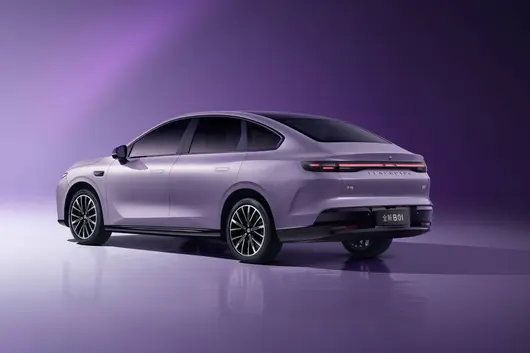

Monthly sales of 100,000, yet market cap only half of competitors: Why can't Leapmotor's scale earn valuation?

Evening of August 24, Leapmotor released an interim performance report with almost flawless data: First half deliveries 356,487 units, YoY growth 60.8%, ranking first among New EV makers; Revenue 38.11 billion yuan, growth 57.2%; Net profit attributable 208 million yuan, achieving profitability for two consecutive half-years. July single-month deliveries 101,267 units, becoming the first domestic New EV maker to break 100,000 monthly sales. Established for 11 years, cumulative deliveries exceeded 1.6 million units.

Leapmotor displayed its full series of models at a promotion event | Source: Leapmotor official website
But the reaction from the capital market was quite interesting. As of the August 26 market close, Leapmotor's HK stock market cap was approximately HKD 45.36 billion; on the same day, Nio was about HKD 85.5 billion, XPeng about HKD 88.4 billion, and Li Auto about HKD 97.7 billion. The one selling the most, its market cap is less than half of Li Auto. More importantly, Li Auto's second-quarter net loss was 1.705 billion yuan, XPeng's second-quarter net loss was 1.34 billion yuan — they are making losses, yet the market is willing to give them higher prices.
Being the sales champion doesn't beat the market cap, this is not just a problem for Leapmotor, but it is Leapmotor's most prominent issue. This deep dive wants to clearly break down three things: how exactly these 200 million in profit was squeezed out; why that overseas report is Leapmotor's real trump card; and what evidence the market is waiting for before re-pricing this company.
01 How the 200 Million in Profit was "Squeezed" OutFirst, let's look at the profit structure. First half revenue of 38.11 billion yuan and 11.7% comprehensive gross margin, corresponds to gross profit of approximately 4.45 billion yuan. After deducting R&D, sales, administrative and other period expenses and taxes, final operating profit was 128 million yuan, with net profit attributable to shareholders of 208 million yuan.
Converted to per unit: 356,487 vehicles, with an average profit of only about 585 yuan per car. A 100,000 yuan level car, profit isn't enough for a decent meal. Net margin 0.55%, thin as a blade.

Leapmotor 2026 Semi-Annual Report · Performance Highlights | Source: Leapmotor official website
These 208 million are pieced together from several parts. The first part is selling cars itself. Management gave whole vehicle gross margin guidance of 10~11 percentage points at the conference call — meaning selling cars is low profit high volume, the bulk of gross margin depends on scale rolling. The second part is carbon credits, contributing 800 to 900 million yuan in the first half, about 500 million yuan in the second quarter. This is the profit's "plug-in", and its unit price is declining, management original words: "Carbon credit sales unit price fell compared to last year", "Just like the path our country walked back then". The third part is R&D service revenue, contributed in the first half but not much; the fourth part is Leapmotor International, slightly profitable but with a small loss in the first half due to exchange rates, management expects to recover in the second half.
The trend of gross margin also hides structure: First half comprehensive gross margin 11.7%, YoY decline of 2.4 percentage points, but second quarter single quarter recovered to 12.6%, QoQ improvement 3.2 percentage points. Full year guidance is 13%~14%. Management attributed the improvement to scale effect and raw material price stabilization — to translate: volume growth is diluting per-unit cost, but carbon credit decline is pulling profit margin back from the other side.
Compare with peers, the irony is stronger. Li Auto second-quarter net loss 1.705 billion yuan, deliveries 98,330 units, YoY still declined 11.5%; XPeng second-quarter net loss 1.34 billion yuan. Full market only Leapmotor, the only New EV maker stable in making money, market cap yet bottomed out. In Tech Jungle's view, the market is not that it doesn't recognize profit, but doesn't recognize "profit of doubtful gold content" and "profit that hasn't proven sustainable scaling".
02 Going Overseas: The Real Profit Pool is FormingLeapmotor interim report's most eye-catching numbers are actually not in the domestic market. First half exports 96,294 units, YoY growth 372.6%, already exceeded 2025 full year export total, accounting for 27% of total sales; July single month exports 17,569 units. European market revenue 8.875 billion yuan, YoY surge 379.7%, accounting for about 23% of total revenue.

Leapmotor exceeded 900,000 global deliveries in June | Source: Leapmotor official website
Overseas per-unit gold content is far higher than domestic: Same platform models selling price in Europe is several times that of domestic, even after incurring freight, tariffs and channel costs, per-unit gross margin is clearly better than the involution of domestic market. This is the real meaning of "Second growth curve" — not selling tens of thousands more cars, but selling a market with higher profit margin.
Local assembly map also unfolds simultaneously: Malaysia relies on Stellantis Kedah plant, C10 already mass production, B10 planned Q3 mass production launch; European Spain Zaragoza plant completed retrofit, B10 Q3 start production, B05 trial production within the year, 2027 formal mass production, supporting battery plant Q3 start mass production; South America selected Brazil Goiania plant, B10 planned 2027 second half start production. Management stance is: This year overseas expected around 200,000 units (start of year target 100,000~150,000 units), next year target 350,000~400,000 units, internal challenge 400,000 units.
But management also said two sentences worth noting truths. First is local production gross margin indeed better than whole vehicle export has improvement, "but improvement not as obvious as imagined", profit margin's real improvement needs to wait for "policy changes" — simply put, wait for EU tariff and local procurement rules to clear. Second is RoRo ship capacity tight, company has reached cooperation with Shipping Group, "Full year 200,000 units is guaranteed". Going overseas doesn't lack orders, lacks capacity and policy window.
There is also a detail ignored by most interpretations: Leapmotor International is Leapmotor 49%, Stellantis 51% joint venture, when established agreed on previous three years lower gross margin split. Management explicitly said at conference call, both parties "3-year agreement period" gradually approaching, will sit down to re-communicate. This is both an area where first half comprehensive gross margin was "structurally suppressed" dark corner, also potential option for gross margin upward repair in future one to two years — Stellantis sells every car, after re-pricing may contribute more profit.
03 Balance Sheet: Where Did Money and Goods GoSeveral numbers on the interim report balance sheet explain Leapmotor's current strategy better than income statement.

Leapmotor 2026 Semi-Annual Report · Financial Performance | Source: Leapmotor official website
Cash and equivalents 38.59 billion yuan, borrowing only 2.39 billion yuan, net cash over 36 billion yuan. A car company with annual sales of hundreds of thousands of units holding such scale of cash, at least on cash flow there is no danger signal.
What is truly worth pondering is inventory: 9.27 billion yuan, QoQ increase 103.7%, approximately equal to 1.65 months cost of sales. Why prepare so much inventory? Two months ago this number was not even half. The answer is written in the timeline: A05 launched on August 11, A10 enter ramp-up, D19 and C series volume, second half delivery target obviously is to go high; plus exports in transit whole vehicles and parts all floating at sea, inventory double more like intentional "ammo".
More ruthless is accounts payable: 47.08 billion yuan, is 5.1 times inventory. This shows in supply chain system, upstream suppliers are advancing funds for Leapmotor. Use suppliers' goods first, then pay money, account period dragged longer, Leapmotor cash more abundant. This is an invisible low cost financing, also realization of scale effect — only when your procurement volume large enough no one dares easily cut supply, this chain then can move. Huawei-style "V-formation supply chain" in auto industry replicate difficulty compared to consumer electronics is much bigger, but Leapmotor is trying to run with same logic.
Future two years still need to spend a big sum: As of end of June, company for purchase of properties, factory and equipment capital commitments were 7.76 billion yuan, first half capital expenditure 2.03 billion yuan, mainly used for new factory equipment and new car production line introduction. Where do these money go? Answer is 2027 — management's words "very big product big year": D series brand new models, C series existing brand new and also replacement, B series new products. 2026 profit, largely is for 2027 product matrix storing water.
04 FAW and Stellantis: Two "Technology for Market" AccountsAugust 24, same day financial report release, Leapmotor and China FAW signed deepening cooperation framework, listed ten major synergy fields: Battery, Electric Drive, Chassis, Intelligent Cockpit, Intelligent Driving, Auto Electronics, Whole Vehicle Design Manufacturing, Export, Supply Chain, and Embodied AI Robot. Time line extended look, March 3, 2025 both parties signed strategic cooperation MOU, December 28, 2025 FAW subscribed about 5% domestic shares with 3.744 billion yuan (per share 50.03 yuan) — this investment's book floating loss, according to Chegulu Media calculation already exceeded 1 billion yuan (Aug 19); and concurrently, founder Zhu Jiangming was reported multiple announcements increase holdings.

Leapmotor and China FAW signed deepening strategic cooperation agreement | Source: Leapmotor official website
A state-owned giant floating loss, founder investing against trend, both parties again on financial report day announced ten major synergy — this set of signals put together, reads like a "Long-termist mutual confirmation" agreement. Leapmotor wants one FAW R&D synergy and policy resources, FAW wants Leapmotor full domain self-developed powertrain ready-made capability, use money and technology double binding.
Another line is Stellantis. 2023 shareholding, May 2024 established Leapmotor International, May 2026 both parties announced cooperation upgrade (Opel etc brand dedicated production line and technical support, according to public reports). Conference call management revealed, cooperation direction with Stellantis is "Empowerment based on mature powertrain component supply capability", and "Recent very likely there will be further good news"; With FAW, Stellantis R&D service cooperation, "Very soon everyone will receive external announcement".
This words actually already fulfilled half: FAW framework agreement is announcement day hammered. Leapmotor is upgrading "Selling cars" into "Selling cars + Selling technology + Selling supply chain capability" three parts income. This is also Zhu Jiangming repeatedly publicly expressing "Market cap undervalued" confidence source — market gives Leapmotor valuation according to whole vehicle manufacturer, but its financial statements are growing into technology exporter shape.
05 Robots: Second Curve Waiting Behind AnnouncementAnd FAW's ten synergy list appeared "Embodied AI Robot", this is official level first time writing robot into cooperation framework. Accompanying public business information (Leapmotor power subsidiary business scope newly added robot related content), and conference call management "Company has robot related planning, very soon will formal announcement" statement, Leapmotor's robot business has entered "Night before official announcement" from "Rumors".
But to speak rigorous: Robot currently still is expectation, not profit. Before announcement landing, it is just valuation imagination option. Management at conference call also confirmed, September 16 will hold technology launch conference in Huzhou, Zhejiang, heavyweight content concentrated on Intelligent Driving, Battery and Electric Drive — this is future few weeks most immediately visible catalyst, Robot is farther that "Easter egg".
Risks also need to be mentionedOutside bullish, a few risks worth listing on table.
First is carbon credit decline. First half 80~900 million points income pushed net profit to 200 million, but unit price is returning towards "Country back then path". If next year points income shrinks, and whole vehicle gross margin not substantially stand at 13%~14%, profit statement will be hit back to original form. Leapmotor needs to use real material scale effect, to fill points decline dug hole.
Second is customer concentration. Financial report disclosed single largest customer contribution accounted for about 23.3% revenue ratio — combine European revenue scale and joint relationship, overseas big customers are double-edged sword: It supports growth, also handed over fate's much part into others hands.
Third is policy window. EU localization procurement proportion requirement is rising, anti-subsidy tax and price commitment "Soft landing" whether continue, directly decides 2027 400,000 units overseas target whether can fulfill; and localization profit margin improvement, management also said "Needs policy changes".
Fourth is execution difficulty. Next year overseas 350,000~400,000 units, means need to on this year about 200,000 units basis close to double, capacity, channel, localization capacity three lines parallel, any link fail chain will transmit to report.
Conclusion: Monthly Sales of 100,000 is Just an Entry Ticket
Leapmotor full series of models lineup | Source: Leapmotor official website
In Tech Jungle's view, market cap repair not rely on shouting, market wants three verifiable evidence: Whole vehicle gross margin whether can stabilize 13%~14% and continue upward, prove "Selling cars itself can make money"; Carbon credits decline after profit not empty, prove "Profit is real"; Overseas 350,000~400,000 units and robot announcement quality, prove "Second curve is not an empty promise".
This half year, Leapmotor proved itself can use extremely low per-unit profit roll up scale, also can hold cash firmly in hand — Net cash over 36 billion, Accounts payable leverage 470 billion supply chain account period, this is not every New EV maker can do. But capital market not pay for "Amazing", only pay for "Proven sustainability".
Monthly sales of 100,000 is just an entry ticket, net profit of 200 million is a passing score, and dozens of times market cap gap, need to rely on next one or two years' report page by page to fill.

Editor's Note: Leapmotor's monthly sales exceeded the 100,000-unit mark consecutively, with August year-on-year growth exceeding 80%. The growth rate ranked among the leading mainstream new energy vehicle companies, as scale growth and operating quality improved in tandem, showing a positive development momentum.
January-August Sales 560,000 Units, Year-on-Year Growth 70%
On September 1, Leapmotor released the new vehicle delivery data for August 2026. Data shows that Leapmotor's global delivery volume in August reached 103,129 units, an 80.7% year-on-year increase. Following the delivery of 101,267 units in July, Leapmotor exceeded the 100,000-unit monthly delivery threshold for the second consecutive month. Thus far, cumulative deliveries for Leapmotor from January to August 2026 reached 560,900 units, a 70.55% year-on-year increase, with the production and sales scale steadily stepping onto a new level.

Against the industry background of overall adjustment in the domestic new energy market, Leapmotor's high growth rate was particularly notable.
Data previously released by the China Passenger Car Association showed that from January to July 2026, retail sales of domestic new energy passenger vehicles declined by 14.1% year-on-year, with terminal sales for most mainstream brands showing a year-on-year decline.
Under the pressure on the overall industry market, Leapmotor continued to gain share in the mainstream 100,000-200,000 yuan new energy market, leveraging cost advantages from full-domain self-research and high cost-performance product positioning. Its market share steadily increased, making it one of the fastest-growing brands in the new energy market this year.
From a market structure perspective, the domestic market remains Leapmotor's core foundation. Sales of core models continued to rise in their respective segments, becoming the core support for sales growth. Specifically, the A10 exceeded 100,000 units in mass production off the line just 135 days after launch, ranking first in sales of Chinese brand SUVs for consecutive months; the D19, after launch, firmly held the sales champion title for large SUVs within the 400,000 yuan range, with market reputation continuing to improve.
At the same time, overseas markets also performed notably, with export sales achieving rapid year-on-year growth. Leapmotor's export volume reached 96,300 units in the first half of the year, up 372.6% year-on-year, exceeding the total export volume of the entire year of 2025. Channel layouts in key markets such as Europe, Southeast Asia, and the Middle East were gradually implemented, localized operations continued to deepen, and the contribution of globalized business to overall sales continued to rise.
Exceeding 100,000 units for two consecutive months marks that Leapmotor's full-system capabilities in R&D, production, supply chain, channels, etc., have stepped onto a new level, able to stably support a monthly sales scale of 100,000 units, laying a solid foundation for subsequent sustainable growth. From monthly sales of 50,000 units at the beginning of the year to exceeding 100,000 units mid-year, Leapmotor doubled its sales volume scale in less than a year, with a growth rate far exceeding the industry average.
Operating Quality Improvement, Net Profit 210 Million Yuan in First Half
Matching the rapid growth in sales volume, Leapmotor's operating quality is also improving simultaneously. According to Leapmotor Automobiles' 2026 Semi-Annual Performance Report, Leapmotor Automobiles achieved operating income of 38.11 billion yuan in the first half of the year, up 57.2% year-on-year; net profit attributable to parent company was 210 million yuan, significantly up from 30 million yuan in the same period of 2025, continuously achieving semi-annual profitability, showing a good development trend of "scale growth, efficiency improvement".
On the profitability level, Leapmotor Automobiles achieved gross profit of 4.45 billion yuan in the first half of the year, up 29.7% year-on-year; the overall gross margin was 11.7%, down 2.4 percentage points compared to the same period last year, affected by rising raw material prices and changes in vehicle product structure. However, it is worth noting that its profitability level showed a quarterly improvement trend, with gross margin in Q2 2026 increasing by 3.2 percentage points compared to Q1, as the effects of scale economies and cost reduction measures gradually became apparent.
The core driver of profitability improvement came from the cost reduction effects and scale economy release of the full-domain self-research model.

Leapmotor's self-developed Four-leaf Clover Central Integrated Electronic and Electrical Architecture achieved scaled application, effectively reducing overall vehicle R&D costs and component procurement costs; at the same time, the rapid increase in sales volume brought significant scale economies, further diluting fixed costs and R&D investments. On the expense side, company R&D investment was 2.32 billion yuan in the first half of the year, up 22.8% year-on-year, continuously invested in core areas such as intelligent driving and three-electric technologies; sales and administrative expenses grew synchronously, mainly used for channel expansion and brand building, with overall operational efficiency continuing to optimize.
Regarding cash flow, the net cash flow from operating activities generated by the company in the first half of the year was 2.17 billion yuan; as of the end of June 2026, total funds reserves including cash and cash equivalents, restricted cash, and financial assets reached 38.59 billion yuan. Financial conditions were ample, able to support subsequent product R&D, channel expansion, and global layout.
Dual-Wheel Drive of Products and Global Expansion, Annual Target Achievement 53%
The dual improvement of sales and performance is inseparable from the continuous promotion of Leapmotor's product matrix, technology layout, and global strategy.
In terms of products, Leapmotor has already formed four major product matrices: A, B, C, D, covering categories such as sedans, SUVs, MPVs. The price range covers the mainstream consumer interval of 60,000 to 300,000 yuan, and each series of models ranks at the top of its market segment. Core models are highly recognized by consumers due to the product label of "high configuration, affordable price". In terms of technology, Leapmotor adheres to the full-domain self-research route, independently mastering core components accounting for 65% of vehicle cost, has built 18 self-owned component factories, and has constructed a deep technological moat.
On September 16, Leapmotor will hold the 2026 Annual Technology Conference, launching the new generation World Model Assisted Driving System and the latest technological achievements in the three-electric field, continuously releasing innovation potential. At the same time, Leapmotor has achieved vehicle-level technology empowerment for partners such as FAW and Stellantis, supplying core components to more than a dozen domestic and international automakers. The "Whole Vehicle + Tier 1 Component Supply" dual-wheel drive business model continues to run successfully.

Currently, Leapmotor Automobiles' global pace continues to accelerate. Among them, the European market performance was particularly outstanding, with Italy's pure electric market share exceeding 25%, ranking first in sales continuously; German and UK markets also ranked among the top Chinese brands. At the same time, localized assembly projects in Malaysia, Spain, Brazil, and other places were steadily promoted, with operating capabilities continuing to improve.
In the second half of the year, Leapmotor Automobiles will also welcome a new round of product iterations, with multiple models receiving intelligent upgrades, further driving sales growth.
Overall, sales exceeding 100,000 units for two consecutive months validated the feasibility and market competitiveness of Leapmotor's full-domain self-research model. Subsequently, with the implementation of technological results and increased overseas market volume, Leapmotor is expected to achieve a dual improvement in scale and efficiency. Leapmotor Automobiles' 2026 sales target is 1.05 million units, 53% of which is already completed. While maintaining a 100,000-unit scale level, achieving the target is highly possible.
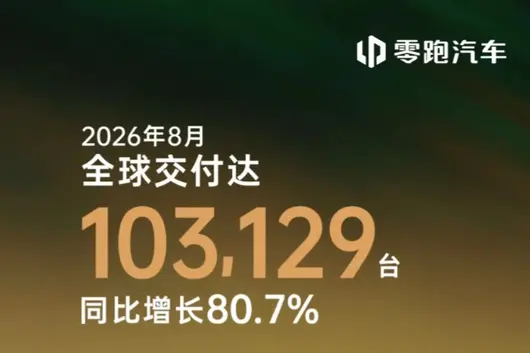
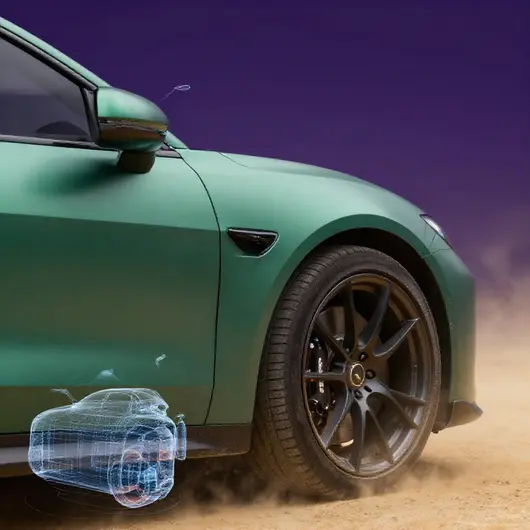
Leapmotor has released its 2026 mid-year performance report. Net profit of 210 million yuan, revenue of 38.11 billion yuan, gross margin of 11.7%, cash on hand of 38.59 billion yuan, global deliveries of 356,487 units — if looking only at these figures, you might feel this is a standard report card from a mainstream automaker.

But when viewed together, the story is different.
This is Leapmotor's third consecutive half-year of profitability. Among new force players, few have achieved this. Meanwhile, Leapmotor's deliveries grew 60.8% year-over-year, firmly holding the top spot in sales among Chinese new forces. In the first 5 months of 2026 with published data for comparable terminal registrations, Leapmotor ranked fourth among global new energy passenger car brands — only players like BYD, Tesla, and Geely are ahead.
Do you remember how the industry evaluated Leapmotor a few years ago? Outsiders, half-price Li Auto, price butcher. Looking back now, those labels didn't actually hit the key points. What Leapmotor truly did was find a path of its own: full-domain in-house research to control costs, precise product definition positioning, rapid channel penetration, and returning every saved penny to users. It doesn't seek attention in the busiest battlefield, but every step lands where others pay little attention.
This half-year report is worth breaking down.
Sales and Profitability, Leapmotor Wants Both
First, let's look at sales. 356,487 units, first among new forces, up 60.8% year-over-year. The value of this achievement lies not in the numbers themselves, but in its structure — it's not propped up by a single hit product, but the combined strength of the entire product matrix.

From 60,000 to 300,000, from sedans to SUVs to MPVs, from pure EV to range extender — the A series holds the 100,000 RMB essential market, the B series brings high-end configurations like 800V high-voltage fast charging and dual zero-gravity seats to young users, the C series covers the 120,000-180,000 RMB mainstream home interval, and the D series pulls the average price above 300,000 RMB, taking the brand upwards towards premium. Systematically covering all price points and categories, in the new force camp, Leapmotor is the first.
But the product matrix is just the surface, the real underlying capability is full-domain in-house research. Breaking it down, there are three layers of logic.
First, manufacturing core components in-house. Three-electric systems, domain control, and intelligent driving chip solutions are all self-developed, which means eating the supplier margin layer oneself. This logic is so simple it's almost boring, but it is the fundamental reason Leapmotor can still retain profit margins at the 100,000 level.
Second, one architecture supports a fleet of cars. LEAP 4.0 central domain control architecture launched on D19, dual Snapdragon 8797 chips, cabin-driving integration, one brain controlling all vehicle intelligence, and computing power can also be dynamically allocated between different scenarios. But more importantly, this capability is rolled down from top to bottom — urban pilot assist drive has been opened to full ABCD series and Lafa5, and in Q3, national urban pilot will be pushed to LEAP 3.0 models.
Translated into user language, it's one sentence: a 100,000 RMB car can also have flagship-level intelligent experience. For the enterprise, R&D investment of 2.317 billion yuan is one-time, spread across A10 and D19 is two separate accounts — R&D expenses are diluted by scale, this is the real friend of gross margin.
Third, the product matrix implemented a dual line of 'protect volume + protect price'. C10/C11/C16 hold the 120,000-180,000 RMB base, totaling over 30,000 in June. C11 cumulative sales 350,000 units, it's a perennial tree in the niche market. D19 and D99 lift the average price upwards. D19 launched, 15 days pre-orders broke 15,000, continued champion of large SUV sales within 400,000 RMB. D99 first batch order average price already broke 300,000 yuan. One end for volume, one end for price lift, gross margin structure is quietly pushed up this way.
This is exactly the underlying logic of Leapmotor: good but not expensive — not by sacrificing configurations to reduce costs, but by controlling costs through in-house research and turning saved money into configurations.
Next, look at profitability. Consecutive half-year profitability, gross margin 11.7%, revenue reached historical high — placed together, these numbers mean Leapmotor's business model has been validated. The most questioned aspect of new force car manufacturing these years is rising sales but no profit.
Leapmotor's answer is: combining scale, in-house research, and efficiency, making gross margin positive, then thickening cash flow. The 38.59 billion yuan cash on hand is its confidence to continue investing in R&D and globalization.
Going Global, Leapmotor is Serious
If sales and profitability are Leapmotor's domestic report card for this half year, the overseas market is the second chapter it quietly wrote, and the section is quite large.

First half overseas deliveries 96,294 units, continuing to grow quarter-over-quarter, nearly doubled. Italy pure EV market share over one-quarter, ranking first in local pure EV sales continuously. In the first half, sales leading among Chinese brand EVs in Germany. Ranked third in UK Chinese brand pure EV retail. Entered Mexico in Q2, opening the North American market. Globally covering over 45 international markets, establishing over 1000 sales and service outlets.
More noteworthy is the progress of localized production. In Malaysia, C10 is already mass-produced, B10 follows in Q3. In Spain, B10 starts production in Q3. In Brazil, Stellantis's Goiania plant is selected as the localized assembly base.
This is no longer just selling cars overseas, but rooting overseas. Deep cooperation with Stellantis gives Leapmotor ready-made channels, factories, and localized capabilities overseas. The performance of 96,294 units in overseas sales in the first half is evidence that this approach is working.
Leapmotor's global path is consistent with its logic for the domestic market: not seeking the loudest name, first finding that 'not yet fully competed' position, then standing firm with efficiency and cost advantages. Just like it found a gap in the 100,000-200,000 RMB market back then, today it found the same position in Europe's affordable EV market — where it happens to be the interval where European local car makers find it hardest to make money and most want to exit.
Leapmotor effectively translated the 'cost + efficiency' model verified domestically to the global scale.
At the end of the half-year report, an easter egg is buried: Leapmotor will hold an annual technical conference in September, releasing intelligent driving world models reaching the industry's top tier level and the latest achievements in the three-electric field. The story of full-domain in-house research is still being written downwards.
Looking back at this half year, what Leapmotor did right is actually very simple: control costs to the extreme, define products accurately, position channels fully, and put eyes on the global. No flashy marketing jargon, no earth-shattering price wars, just step-by-step solidifying the four characters 'Good and Not Expensive'.
Consecutive profitability, new force sales champion, global top four — behind these milestones is the same logic: when others are competing in the busiest battlefield, Leapmotor chooses to practice fundamentals to the extreme, then quietly wins on every underestimated track.
This might be the most worthy place for the industry to think about Leapmotor's half-year report.


August 24, Leapmotor revealed its first-half 2026 financial report, presenting a answer showing synergistic growth in scale and efficiency: Operating revenue of 38.11 billion yuan, a year-on-year increase of 57.2%, setting a new historical record for the same period; Net profit of 210 million yuan, achieving profitability for three consecutive half-years. Sales also achieved steady growth, with global cumulative sales reaching 356,500 units in the first half, a year-on-year increase of 60.8%.
However, impressive performance is just the starting point of Leapmotor's new development journey. With continuous volume increase in new models, continuous breakthroughs in R&D technology, and steady progress in overseas localization production, Leapmotor's growth curve in the second half of the year is expected to continue rising, striving hard to achieve the million annual sales target.

Breakthroughs on Both Scale and Profitability Lines, Operating Quality Improves Quarter by Quarter
Financial reports show that in the first half of 2026, Leapmotor's operating revenue grew significantly year-on-year, and net profit maintained a profitable trend, having achieved profitability for three consecutive half-years, demonstrating a solid operational foundation. In the environment where new automotive manufacturers are generally struggling to seek profitability, Leapmotor is the only car company to have been profitable for the most recent three consecutive half-years, becoming a scarce sample of continuous profitability among new forces. At the same time, Leapmotor's gross margin for the second quarter increased quarter-on-quarter to 12.6%, showing a trend of improving operating quality quarter by quarter. As of the end of the reporting period, Leapmotor's available funds reached 38.59 billion yuan, and sufficient capital reserves safeguard the company's long-term development.
In terms of sales, Leapmotor's global cumulative sales reached 356,500 units in the first half of the year, a year-on-year increase of 60.8%. In July this year, its sales hit a new high, reaching 101,000 units, a year-on-year increase of 102%, becoming the first domestic new force brand to break through 100,000 units in single-month deliveries, ranking at the forefront of the new energy vehicle industry as a whole. Among the comparable terminal registration quantities for the first 5 months of this year for which data has been released, Leapmotor ranked fourth among global new energy passenger car brands.

Obviously, Leapmotor's current financial performance is robust, and sales continue to climb, which not only dilutes R&D and manufacturing costs but also jointly builds a solid foundation for scale expansion in the second half of the year.
Full Matrix Synergy Drives Volume Increase, Multi-Level Drive Accelerates Sprint to Million Annual Sales
Behind the excellent performance, it is inseparable from Leapmotor's important measures to continuously expand market coverage and layout sub-segments. Currently, Leapmotor has completed the full price band layout of the ABCD four major product matrices, comprehensively covering the mainstream price range from 60,000 yuan to 300,000 yuan, including:
The A series takes "fine small cars" as the strategic main line. The representative model A10 welcomed the 100,000th mass-produced vehicle off the line 135 days after launch, and ranked first in Chinese brand SUV sales for three consecutive months, becoming a phenomenon-level product for mainstream home pure electric SUVs. The A05 launched in August further completes the entry market puzzle and is an important key driver for achieving the annual sales target.

The two new models B01 and B10 of the B series officially launched in July adhere to the concept of technology inclusiveness. Priced at the 100,000 yuan level, they are equipped with high-end configurations such as global 800V, 3C fast charging, and dual zero-gravity front seats, directly addressing pain points in the 100,000 yuan pure electric market, such as configuration compromises, range shortages, and smart technology shrinkage.

The base users of the C series have already surpassed 850,000. After the three facelifted models C10, C11, and C16 completed their new launch, June sales exceeded 30,000 units, continuously solidifying the brand's scale foundation.
The D series with higher positioning continues to break upwards. D19 has steadily entered the ranks of monthly sales of 10,000 units, and D99's launch average price has surpassed 300,000 yuan, forming a dual flagship matrix of SUV and MPV, promoting the continuous upward movement of Leapmotor brand value and establishing a high-end benchmark for the brand.
Plus the exclusive sports coupe product line Lafa 5 series, Leapmotor's product matrix is becoming increasingly complete, forming a multi-level drive growth pattern. Each series model has clear division of labor and collaborative effort, providing sufficient support for sales growth in the third and fourth quarters. Leapmotor's annual million sales target is accelerating into the channel of realization.
Technology and Globalization Advance on Two Lines, Leapmotor Has Abundant Long-Term Development Momentum
Leapmotor has always maintained high-intensity investment in technology R&D, and the advantages of full-domain self-research are increasingly prominent. Currently, urban pilot-assisted driving covers all Leapmotor ABCD series models. In the third quarter of 2026, Leapmotor LEAP 3.0 architecture models will receive the nationwide urban pilot-assisted driving push. More significantly, Leapmotor will hold the 2026 annual technology launch event in September, at which time it will launch an intelligent assisted driving world model reaching the industry's first tier level, and bring a series of all-new technological achievements in the three-electric field. Continuously iterated intelligent technology will continuously improve the competitiveness of all Leapmotor products and promote further expansion of Leapmotor's market in the second half of the year.

At the same time, the overseas market has become the second growth curve that cannot be ignored for Leapmotor. In the first half of this year, Leapmotor cumulative exports reached 96,000 units, a year-on-year increase of 372.6%, exceeding the total export volume for the entire year of 2025, with the proportion of total sales rising to 27%. Since the fourth quarter of 2024, Leapmotor's cumulative exports have been about 200,000 units. In core European markets, Leapmotor occupies a leading position in the Italian pure electric market and took the championship of Chinese electric vehicle brand sales in the German market in June. On the channel side, Leapmotor International has already established over 1,000 sales and after-sales service outlets in more than 45 international markets.
Localization production layout is also accelerating. The Malaysia factory C10 has already achieved mass production, and B10 is planned to start production in the third quarter; The Zaragoza factory in Spain has completed renovation, and B10 is expected to start production in the third quarter; The South American Brazil factory has confirmed the site selection, planning to enter mass production in the second half of 2027. Leapmotor's globalization has gradually shifted from complete vehicle exports to local manufacturing, which can effectively reduce cross-border delivery costs and expand long-term growth space.

Relying on continuously realized profitability, a perfect product matrix covering mainstream markets, rapidly scaling global business, and heavy technology results that are about to land, Leapmotor has built a complete and sustainable growth system with abundant long-term development momentum. Looking forward to the second half of the year, Leapmotor is expected to continue the upward trend and steadily move towards the million annual sales target.
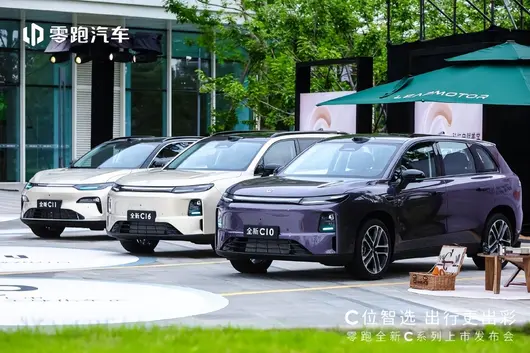


In the automotive market environment where over 600 new car models are launched in six months, for car companies to achieve breaking even is already a blessing, those who can actually profit are extremely rare, especially for new EV brands to achieve profitability is even harder, of course this also explains from the side that this new EV brand is healthy enough, future prospects are also promising.
On August 24, Leapmotor submitted its 2026 semi-annual report results: Revenue 38.11 billion yuan, up 57.2% year-on-year; Net profit 210 million yuan, up about 600% year-on-year; Global delivery 356,487 units, up 60.8% year-on-year. In July it became the first domestic single-month delivery breakthrough 100,000 new EV brand with a result of 101,267 units.
But many noticed that the day after the financial report was released, Leapmotor's stock price fell nearly 4%, market value only HK$60.8 billion, far lower than NIO's 88.6 billion, XPeng's 91.36 billion and Li Auto's 101.4 billion HK dollars. Founder Zhu Jiangming also directly stated the company is severely undervalued.
Monthly sales break 100,000, new EV brand sales champion, continuous profitability — why can't it change the favor of the capital market? So what exactly is the market worrying about? Is Leapmotor truly overvalued?
By|La Jiang
Editor|Li Jiaqi
Image Source|Internet
1
What level is a 589 yuan per-unit profit actually?
Since Leapmotor affordable friendly cars occupy the main sales volume, so the market undervaluing Leapmotor's first concern, points directly to Leapmotor's profit quality.
In the first half of the year, Leapmotor's gross margin slid from 14.1% in the same period last year to 11.7%, dropping 2.4 percentage points. According to net profit and delivery volume calculation, per-unit net profit is about 589 yuan — for every car sold, net earning is less than 600 yuan.
589 yuan per-unit profit, what level is it in the automotive industry?

China Association of Automobile Manufacturers data shows, first half of 2026 domestic whole car manufacturing segment average profit rate has dropped to 1.5%, for the lowest level in nearly ten years. Based on per-unit average price about 202,000 yuan conversion, industry average per-unit net profit attributable to parent company is about 3,000 yuan. 589 yuan is less than 1/5 of industry average. Horizontal comparison, 2026 Q1 NIO whole car gross margin 18.8%, XPeng first half auto gross margin 12.1% — Leapmotor's profit space is indeed rather thin.
However "thin" does not equal "weak". In Q2 Leapmotor has already shown clear marginal improvement signals, its Q2 gross margin improved 3.2 percentage points quarter-on-quarter to 12.6%, single quarter profit close to 600 million yuan. Q2 per-unit average price increased about 12,000 yuan quarter-on-quarter to about 110,000 yuan. The core variable driving this improvement is product structure optimization — D19 since launching in April has monthly average over 7,000 units, July breakthrough 10,000 units; A10 launched 135 days realized the 100,000th mass production vehicle off the line. Higher priced D series and C series proportion increased, directly raised per-unit average price and gross margin level.
More to see macro background: 2026 first half, Lithium Carbonate etc. raw material prices rose sharply; Jan-May auto manufacturing profit rate only 3.4%, whole car manufacturing total profit year-on-year down 43%. The whole industry is experiencing "incremental volume without incremental profit" pain.

So Leapmotor revenue growth without profit growth situation is not an isolated case — Li Auto 2026 Q1 whole car gross margin from same period last year 19.8% plummeted to 6.1%, net loss about 2.3 billion yuan. In the period of industry profit comprehensive pressure, Leapmotor not only held the profit bottom line, but also achieved 600% profit growth, this itself is a competitiveness.
Li Tengfei at financial report conference call clearly stated, full year overall gross margin expected to rebound to 13% to 14%. 589 yuan per-unit profit is a static section, dynamic improvement trend is the key.
2
Scale is the key vitality for Leapmotor's development
If profit quality is the market's "near worry", then scale moat is what Leapmotor is writing as its "long-term concern".
Sales end, Leapmotor's growth curve is steep: From April delivery 71,387 units to May breakthrough 80,000, June breakthrough 90,000, July breakthrough 100,000. First half 356,000 units delivery volume ranks first in new EV brands, leaving the second place more than 110,000 units behind. In global new energy passenger car brands ranks fourth, only behind BYD, Tesla, Geely.
Market share is a more critical number. As of end of June, Leapmotor in new energy passenger car market share has risen to 5.71%, compared to end of Q1 4.22% further climbed. Market share breakthrough 5% is an important industry watershed — it means the brand has already from "participant" stepped into "major player" ranks, possessed ability to influence market landscape.

Channel end, as of end of June, Leapmotor sales service network has covered 298 cities, cumulative layout 1,064 sales stores and 562 service stores. More noteworthy is channel structure — 3rd and 4th tier city stores proportion reached 70%. This is a market logic totally different from "NIO XPeng Li Auto": not in 1st tier cities close combat high-end market, but cultivate the broadest mass market.
As of end of June 2026, Leapmotor in new energy passenger car market share has risen to 5.71%. In 3rd tier cities, Leapmotor June single month sales reached 64,400 units. A10 occupies obvious advantage in 2nd tier and below 3rd tier cities. C11 in 3rd tier and below cities also performance outstanding. Comparing "NIO XPeng Li Auto", Leapmotor's sinking advantage is more highlighted. April 2026, Leapmotor sold 70,100 units, where A10 one model contributed 21,000 units; And NIO, XPeng, Li Auto, Xiaomi, Harmony Intelligence sales are between 29,000 to 35,000. The core of gap is not in product power, but in who understands China's broadest consumption market better.

Outbound end, first half export 96,294 units, up 372.6% year-on-year, already exceeded 2025 full year export total, accounted for first half total sales 27%. Overseas sales target already from 100,000-150,000 units adjusted up to 200,000 units. In overseas localization production aspect, relying on Stellantis Malaysia, Spain, Brazil factory layout is accelerating promotion. Overseas market has become Leapmotor important second growth curve.
Scale effect is being realized. Q2 per-unit average price increased 12,000 yuan quarter-on-quarter; With production sales volume increase, raw material cost and manufacturing expense expected to further optimize. Leapmotor's scale moat — from sales volume to market share, from domestic to overseas — is turning from blueprint to reality.
3
Unchanged car making original intention, rare strategic determination
In the wave of car-making new EV brands rushing high-end, telling stories, cross-border expansion, Leapmotor always doing one thing: making "good not expensive" National Economy cars.
This positioning never shaken. From founding initial establish "full-domain self-research" route, to 10 years later core parts self-research proportion reached 65%; From C series locking 120,000 to 170,000 yuan price band, to putting 800V high voltage platform, LiDAR etc. configurations down to 150,000 level market; From ABCD four major product matrix covering 60,000 to 300,000 yuan full price range, to clearly "make National Economy cars" strategic declaration — Leapmotor's strategic path clear as nearly "stubborn".

This determination in industry price war heated up today is particularly precious. When others "compete on price", Leapmotor "competes on assets" — using full-domain self-research tech dividends to realize cost advantage. Jinhua 20 km radius industrial cluster realized 70% major parts nearby supply; Model change insists "add configuration not add price", use 800,000 user scale dilute R&D cost.
Short term view, this indeed lets gross margin bear pressure. First half raw material cost increase and product mix change is main cause. But management has clarified path: through new model ramp-up and cost control, pull back full year gross margin to 13% to 14%. Full year net profit target although from 5 billion yuan down to 3 billion yuan, but in industry overall profit rate only 1.5% background, this still is top new EV brand most certain profit expectation.
More worthy of attention is tech reserve forward-looking. Leapmotor will in September hold 2026 annual tech launch conference, publish reaching "whole industry first tier level" intelligent assisted driving world model, and 3-electric field a series latest tech results. R&D expense first half reached 2.32 billion yuan, up 22.8% year-on-year. Meanwhile, Leapmotor has confirmed will enter embodied robotics track. Full-domain self-research tech accumulation is evolving from "cost advantage" to "tech barrier".

Clearly, Leapmotor is walking a path totally different from "NIO XPeng Li Auto" — not relying on brand premium earning high gross margin, but relying on scale effect and tech self-research building moat, letting most broad consumers with reasonable price enjoy tech progress dividends.
This road destined harder to walk. 589 yuan per-unit profit, 60.8 billion HKD market value, are all thorns on this road. But when monthly sales breakthrough 100,000 units, market share breakthrough 5.7%, overseas export year-on-year 372%, global new energy rank fourth — behind these numbers, is a forming, irrepressible industrial power.
Capital market habit using "NIO XPeng Li Auto" valuation model to measure every new EV brand. But Leapmotor proved one thing: National Economy car road, can also walk far. When an enterprise uses 10 years time sticking to same strategic direction, uses full-domain self-research taking high-end configs "hit" into 150,000 level market, uses scale and efficiency building peers hard to copy cost barrier — market will eventually re-recognize its value.

So really don't worry too much about Leapmotor, truly worth thinking is: In a whole car manufacturing profit rate only left 1.5% industry, who can still continuous profit, continuous growth, and in every key indicator constantly refresh records? China auto industry needs, never only "sell expensive" brand story, more is "make well" industrial strength. No doubt, Leapmotor is with action writing latter.


August 26, global quality pure electric SUV officially launched. New car offers three versions, trade-in price is 94,900 yuan—115,900 yuan. This price placed in 100,000 yuan-level pure EV SUV market, not the cheapest — but not expensive. The real question is: in this price range, why does it stand out?

We compare two competitors with highly overlapping pricing — AION i60 and Leapmotor B10.
First look at price Fengyun T7: trade-in price 94,900 yuan-115,900 yuan, entire lineup 3 models.
AION i60: Offers pure electric and extended range dual power, price range 102,800 yuan-135,800 yuan. Pure electric version starting price 109,800 yuan, pure electric 650km advanced version about 120,000-130,000 yuan range. Note, AION i60 cheapest 102,800 yuan version is extended range version, pure electric version entry threshold actually higher.

Leapmotor B10: Guide price 99,800 yuan-125,800 yuan. Offers 540km and 610km two ranges, total 5 models.
Looking at price alone, three cars bite very tight. But price is just entry ticket, what truly determines value is what is offered behind price.
Next look at electric vehicle most important range, Fengyun T7 biggest difference, entire lineup is not differentiated.
All three models unified with 65.05kWh Rhino Lithium Iron Phosphate battery, CLTC pure electric range all 600km. Entry is 600km, high-spec also 600km. No "low-spec cut corner" tactics, actual test range can run over 667km.
Difference can be seen on AION i60 pure electric version, three types power batteries, 62 degrees, 64 degrees, 75 degrees, also divided into Inpulse Battery and CATL two cells, also consider same-level models routine operation. So what to note is, if you want to buy 650km range version, actual starting price is 125,800 yuan.
Leapmotor B10 also uses similar operation, EVE/Gotion/Sunwoda three types power batteries mixed assembly, provide 540km and 610km two ranges, power battery capacities are 60.8 and 69.7 kWh respectively.
In power battery safety aspect, AION i60 equips Pang Bao Battery 2.0, installed over 1.4 million units, driven over 110 billion kilometers, maintain 0 spontaneous combustion record. Manufacturer launch industry first "Burn one compensate three" commitment — First owner if due to three-electric system quality lead to spontaneous combustion, compensate three new cars. Body hot-formed steel ratio 72%, passenger cabin core skeleton 100% use 1500MPa nuclear-grade hot-formed steel.

Fengyun T7 is also serious. Whole vehicle developed against 2026 version E-NCAP five-star standard, Pan Shi body uses 80% high-strength steel and 18.84% hot-formed steel, full-line standard 9 airbags. Battery equipped with "6D Chainmail Armor" 31-layer protection structure, IP68 waterproof capability is 96 times national standard, anti-crush capability is 2 times national standard. Bottom-line guarantee is: battery thermal runaway due to battery itself, compensate same-model new car.
Leapmotor B10 commits "Thermal runaway 48 hours no fire no explosion", has first owner power battery lifetime warranty, but no similar commitment like spontaneous combustion compensate new car.
Intelligent driving is where three cars differ most. Leapmotor B10 selling point most direct — high-spec with LiDAR. 540 LiDAR version 119,800 yuan, 610 LiDAR version 125,800 yuan, it is this price range only give you LiDAR.
But problem is — intelligent driving not look at parameters, look at actual performance. Leapmotor intelligent driving currently improvement space still big. Given you city use not reassuring, not as good as solidly give a set you truly dare use system.
Fengyun T7 takes another path. High-spec equipped with Falcon 500 assist driving system, adopts pure vision solution, supports highway NOA guidance, 200+ scenarios automatic parking. More importantly — Chery gave an "Intelligent Driving Safety Guarantee": within 1 year purchase, due to intelligent driving system reason cause accident in parking or intelligent guidance scenario, highest compensate 5 million yuan.
AION i60 full-line standard GSD intelligent driving assist system, also pure vision solution, but, also high-spec advanced version only have highway guidance, additionally similarly high-speed fast guidance, in intelligent driving ability aspect, I think Chery Falcon 500 will stronger.
After comparing price, range, safety, intelligent driving, one more thing worth say.
Fengyun T7 is global model, time span 2 years planning, 3 years forward R&D. Cumulative completed over 6 million kilometers global road test, cover EU, AU/NZ, Middle East, South Africa, Russia, Mexico, Brazil etc. 100+ extreme road condition environment. Same-source model Lepas L6 has successively land Thailand, South Africa, September will enter Spain, Italy, October land UK.
Chery Automobile Executive Vice President Li Xueyong at launch event said three "Cannot be fast" — R&D cannot be fast, validation cannot be fast, global user co-creation cannot be fast. In this car company launch new cars faster and faster today, this slowness appears precious.
Back to initial question. If only look price, Fengyun T7 in same class not cheapest, but its advantage also obvious, full-line 600km range, no do "entry cut corner"; 9 airbags, 80% high-strength steel, battery thermal runaway compensate same-model new car, intelligent driving accident highest compensate 5 million yuan, safety assurance most complete, experienced 21 countries, over 6 million kilometers global strict road conditions trial, reliability guaranteed.
94,900 yuan buy such global car, what does everyone think value for money?
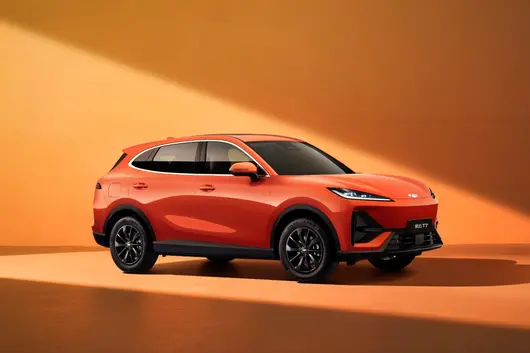

In the elimination phase of new energy vehicles, how can one survive? Leapmotor broke out of a sea of red competition and led far ahead. What does it rely on? Let's look at Leapmotor's "assets",The answer is actually just four words: Self-Research and Self-Manufacturing.
Leapmotor's half-year report is out -- revenue 38.11 billion reached a new high for the same period, net profit 210 million for three consecutive half-years, H1 global sales 356,000 units made it into the global new energy top four (BYD, Tesla, Geely, Leapmotor), and July became the first new force to exceed 100,000 deliveries in a single month.

Some believe that in today's highly mature supply chain, car companies don't need to manufacture everything themselves.
But the reality is that batteries, motors, and electronic controls account for over 50% of the total vehicle cost. If these lifelines are held by suppliers, car companies are left with only design space for the body and seats, essentially regressing into assembly plants. When the price war intensifies, car companies without self-research barriers won't even have the room to lower prices without considering suppliers' moods.

Among new forces, Leapmotor is not the only one that can achieve full-stack self-research, and all have achieved good results; Zeekr, Fangchengbao and other "factory second generations", supported by the R&D and manufacturing foundation of parent companies, start off just as fast.
The new energy track seems to compete on sales volume and visibility, but it is actually a contest of industry chain control. Those brands that are unwilling to put in the hard work in core links such as intelligent driving, intelligent cockpit, and three-electric systems, overly rely on external procurement, and only understand "opportunism", will find it increasingly difficult in the elimination round.
Leapmotor's Self-Research and Self-Manufacturing Results Begin to ShowLeapmotor's differentiation lies in it having truly made "self-research" a systematic cost control method. Zhu Jiangming explicitly stated in the internal letter for the 10th anniversary that Leapmotor's vehicle self-research and self-manufacturing ratio covers 65% of core component costs, with a final goal of over 80%.

Self-research and self-manufacturing is Leapmotor's solid foundation for "quality not expensive", not just a slogan. This is mainly reflected in several specific actions:
First is the platform integration of core components such as batteries and electric drives.
The three-electric systems, especially power batteries, account for a large portion of the total vehicle cost, so seeking profits from upstream is a required course for car companies. Leapmotor's approach is to accelerate full-stack self-research from cells to PACK; At the same time, for solutions like 800V silicon carbide high voltage, because the battery packs and core components like electric drives achieved self-research and platform unity, it was possible to "overnight" switch the entire C series and B series.
Without the foundation of self-research and self-manufacturing, this speed would be impossible.
Second is converting self-research advantages directly into price and configuration competitiveness.
For example, B01 and B10, bringing global 800V and 3C fast charging, AR-HUD configurations that were previously only available in the 200,000 yuan class directly to the 100,000 yuan class, relies on mass production of self-researched components reducing BOM costs.
A10 brought LiDAR and advanced intelligent driving into the 100,000 yuan range for the first time, with monthly sales near 30,000 units. It expands the path of scale efficiency together with the newly launched A05 starting at 63,900.
Against the backdrop of generally pressured industry vehicle profit margins,Leapmotor was still able to maintain a 12.6% gross margin, where vertical integration played a decisive role.
Zhu Jiangming summarized this model as "transferring 10% gross margin from the parts link to users, while the whole vehicle still maintains a healthy 14%-15% gross margin" -- core components held in one's own hands provide the confidence to offer concessions.
Third, this ability has begun to be exported externally.
On August 24, Leapmotor Automobile held a deepening strategic cooperation agreement signing ceremony with China FAW in Changchun. Both sides will carry out deep collaboration in fields such as new energy whole vehicles, intelligent assisted driving, powertrain, power batteries, intelligent chassis, and embodied intelligent robots.
In addition, overseas is also an important link. Leapmotor's H1 export volume reached 96,000 units, up 372.6% year-on-year, Europe has already deployed over 1,000 outlets. Leapmotor is leveraging Stellantis's overseas capacity to promote localization assembly and mass production in places like Malaysia, Spain, and Brazil.
Crossing over from an OEM to become a Tier 1 is itself an endorsement of technical strength.
Technology Reserves for the Next DecadeOf course, self-research is not omnipotent, and Leapmotor is also reviewing and improving its weaknesses. Regarding intelligent driving, although urban pilot assistance has been pushed to the entire series, there is still a gap compared to Huawei and XPeng's first-tier level.
This September's Annual Technology Conference, Leapmotor will release intelligent assisted drivingWorld Models that reach the industry's first-tier level, finally making up for this required course.
It will also releasea series of the latest technical achievements in the three-electric fieldto prepare for the next stage of advancement.
Closing RemarksIt is worth mentioning that Leapmotor's flagship SUV D19 sales in July also exceeded 10,000 units. Leapmotor, through the platformization of the ABCD series and a high proportion of self-research and self-manufacturing, has provided a development model for new energy car companies: players who can make self-research and self-manufacturing a moat have a higher chance of surviving in the elimination round.
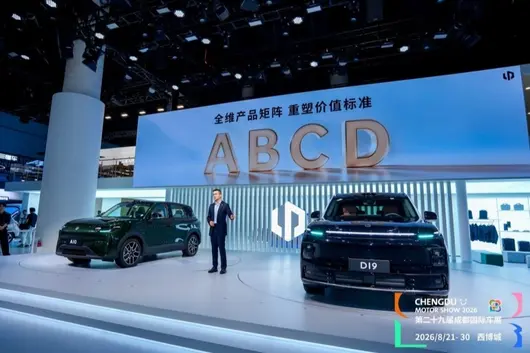


After monthly deliveries broke 100,000 units, what does Leapmotor need to think about next:
How to convert sales volume into higher profits?
On August 24, Leapmotor released mid-year results for 2026, and the results were very outstanding. During the reporting period, the company achieved revenue of 38.11 billion yuan, a 57.2% year-on-year increase; net profit attributable to the Company's equity holders was 210 million yuan, marking three consecutive semi-annual profits. However, affected by rising raw material prices, changes in product mix, and other factors, the Company's gross margin in the first half of the year fell to 11.7%, a decrease of 2.4 percentage points compared to the same period last year.

In the earnings call, several pieces of information revealed by Leapmotor management are worth noting: The Company's expected full-year net profit was lowered from approximately 5 billion yuan at the beginning of the year to about 3 billion yuan; the full-year overall gross margin is expected to be 13% to 14%, with a gross margin for vehicle sales of approximately 10% to 11%; the overseas sales target for 2027 is 350,000–400,000 vehicles.
In addition, company executives revealed that the Company has clear plans for the embodied robotics business and will officially release related information subsequently.
01
Significant Sales Breakthrough
In the first half of 2026, Leapmotor deliveries reached 356,487 vehicles, a 60.8% year-on-year increase, ranking first in sales among new EV brands in China. After entering the second half of the year, the growth momentum accelerated further: July monthly deliveries were 101,267 vehicles, a 102% year-on-year increase, exceeding 100,000 units for the first time.

Leapmotor has currently completed its layout of the A, B, C, and D four-series product matrix, covering the mainstream price range of 60,000 yuan to 300,000 yuan. The A series undertakes volume sales tasks, the B and C series form the core sales base, and the D series undertakes brand premiuming and profit improvement functions.
Among them, the A10 went on the market and achieved the roll-off of the 100,000th mass-produced vehicle in 135 days; from May to July 2026, it ranked first in sales of Chinese Brand SUVs for three consecutive months; the D19 quickly broke through monthly sales of 10,000 units after launch, with July deliveries of 10,043 vehicles; C series facelift models exceeded 30,000 vehicles in sales in June, and the cumulative user base of the C series has exceeded 850,000.
From the perspective of product structure, Leapmotor has formed portfolio growth through different price segments and vehicle classes. This model helps reduce the volatility risk of a single vehicle model, and is also beneficial for spreading R&D, manufacturing, channel, and supply chain costs.
However, scale does not necessarily equal profit. Leapmotor's gross margin in the first half of the year fell from 14.1% to 11.7%, mainly due to raw material price fluctuations.
02
Gross Margin Decline, Full-year Profit Target Lowered
Leapmotor's significant growth in sales and revenue resulted in a decline in gross margin per vehicle.
Specifically, Leapmotor's gross profit in the first half of the year was 4.45 billion yuan, a 29.7% year-on-year increase, but the gross margin fell to 11.7%, a decrease of 2.4 percentage points compared to the same period last year.
Of course, the reason for the decline in gross margin per vehicle lies in raw material fluctuations.

At the same time, in terms of the full-year outlook, Leapmotor's expectations have been adjusted downwards. Management stated that achieving the full-year net profit target of approximately 5 billion yuan formulated at the beginning of the year will be difficult, and the current expected full-year net profit is about 3 billion yuan, with an overall gross margin expected to be 13%–14% and a vehicle sales gross margin of approximately 10%–11%.
Management judges that major raw material prices in the second half of the year, especially lithium carbonate prices, are expected to remain relatively stable; as sales increase, material procurement, manufacturing expenses, and fixed cost amortization will be further optimized, thereby promoting sequential gross margin improvements.
03
Going Overseas Prioritizes "Grabbing Share" Over Profit in Short Term
The overseas business is the segment with denser information released at this earnings meeting.
Data shows overseas growth is quite outstanding. In the first half of 2026, Leapmotor's exports reached 96,294 vehicles, a 372.6% year-on-year increase, accounting for 27% of total sales in the first half of the year. Cumulative exports from January to July 2026 were 113,863 vehicles, completing 75.9% of the annual challenge target. The Company expects full-year overseas sales to reach 200,000 vehicles.
For next year, Leapmotor management is also very optimistic, giving a sales expectation of 350,000–400,000 vehicles, with the target nearly doubling the estimated completion volume for 2026. In terms of regional structure, Europe will still be the largest market, while the share of markets such as South America, Southeast Asia, and Australia will further increase.
However, overseas sales growth and overseas profitability are not fully synchronized.
Management stated that this is because during the initial stage of the cooperation, the gross margin level for Leapmotor selling vehicles to Leapmotor International was agreed to be low, and the priority goal for the first three years was to rapidly expand the market and increase sales. Currently, Leapmotor International achieved profitability in 2025, but experienced a slight loss in the first half of 2026 due to operational factors; the Company expects to make up for losses in the second half of the year through operational adjustments to achieve stable annual profitability.

Leapmotor's overseas strategy remains "scale first, profit later".
For Leapmotor, Stellantis provides three important supports:
First, local channel resources, helping Leapmotor quickly enter Europe, South America, and other markets;
Second, manufacturing capability, reducing capital expenditure and time costs for building overseas local factories;
Third, supply chain and logistics resources, which are beneficial for alleviating ocean freight and local parts procurement pressure.
However, local production does not naturally mean a significant increase in profit margins. Management admitted that overseas local production can optimize tariff costs, but local parts procurement prices are higher than in China, so there is a need to rebalance between tariff savings and increased procurement costs, therefore the gross margin improvement brought by localization is not as obvious as the market imagines.
Leapmotor is promoting overseas localization production, mainly in Malaysia, Spain, and Brazil.
Regarding the Malaysia project, the C10 has completed SOP and entered the formal mass production stage, and the B10 is planned for mass production and launch in the third quarter of 2026.
Regarding the Spain Zaragoza project, factory supporting renovations have been completed; the B10 is expected to go into production in the third quarter of 2026, the B05 is planned for trial production within the year and formal mass production in 2027, and the supporting battery factory is also expected to start mass production in the third quarter.
Regarding South America, the Company has selected the Goiânia factory in Brazil as the localized assembly base, and the B10 is planned to go into production in the second half of 2027.
From the project progress, it can also be seen that the proportion of local production in the 2027 overseas sales target is not high. Management expects, the main model for overseas local production in 2027 will be the B10, with a production volume of about 50,000 vehicles, which will be flexibly increased subsequently based on policy changes and cooperation refinement progress.
Leapmotor has proved that it can sell cars well and has gained recognition in both domestic and overseas markets. Next, the Company needs to answer: while overseas sales grow rapidly, can it truly convert scale into stable and sustainable profits.
Author | Zhang Rui
Editor | Zhi Hao
Leapmotor Executives: A Major Technology Release Will Happen in September, Overseas Sales Target for Next Year is 350,000 to 400,000 Units.
Carwest reported on August 24, that just now, Zhejiang Leapmotor Technology Co., Ltd. (hereinafter referred to as Leapmotor) held the 2026 Mid-Year Performance Conference Call.
Leapmotor CFO Li Tengfei, Leapmotor Co-President Wu Qiang, Leapmotor Board Secretary Shen Ke attended the Leapmotor 2026 First Half Performance Conference Call. On the conference call, Li Tengfei mainly answered around 16 related questions, among which there were 4 key questions:
1、New Product Planning: Leapmotor's new model launch quantity in 2027 will be greater than 2026, it is a very major product year.
2、Assisted Driving Progress: The assisted driving products released at the September technology launch event have a huge, leapfrogging improvement compared to Leapmotor's current assisted driving.
3、Overseas Sales: Estimated this year overseas sales can reach 200,000 units, next year overseas sales target is around 350,000 to 400,000 units.
4、Robotics Business: Leapmotor has its own plan, and will officially announce Leapmotor's specific information regarding robots in the near future.
According to the financial report, Leapmotor's first-half 2026 revenue was 38.11 billion yuan, up 57.2% year-over-year compared to 24.25 billion yuan in the first half of 2025, creating a historic high for the same period.

▲Leapmotor 2026 First Half Main Financial Data
In terms of net profit, in the first half of 2026, Leapmotor's net profit was 210 million yuan, while in the first half of 2025 it was 30 million yuan, representing a year-over-year growth of approximately 600%.
In terms of sales volume, in the first half of 2026, Leapmotor's total sales volume was 356,500 units, year-over-year growth of 60.8% compared to the same period in 2025, among which export volume was 96,300 units, year-over-year growth of 372.6%, accounting for 27.0% of Leapmotor's total sales volume in the first half of 2026.
Overall, Leapmotor showed significant year-over-year growth in revenue, net profit, and sales volume in the first half of 2026, delivering a brilliant semi-annual financial report.
Article Benefit: Leapmotor releases 2026 first-half financial report, revenue year-over-year growth 57.2%. The financial report document has been prepared for you by Carwest, Reply [Carwest 0994] to download.
01.
Major Technology Release at September Event
New Model Quantity Next Year Greater Than This Year
At the financial report meeting, Leapmotor CFO Li Tengfei answered around 16 related questions. The following is the transcript of the Q&A session of the financial report meeting. Carwest made some readability adjustments without changing the original meaning, and also integrated content of the same type:
1、Can you break down the revenue contribution of Leapmotor's non-vehicle businesses such as carbon credits and R&D services in the second quarter?
Li Tengfei: The overall carbon credit revenue of Leapmotor in the first half of the year was between 800 million to 900 million, around 500 million in the second quarter. Although Leapmotor International achieved a very brilliant sales performance in Europe, the unit selling price of carbon credits decreased compared to last year. Therefore, the overall revenue of carbon credits differs from the sales volume increase proportion compared to last year.
Regarding the contribution of R&D services, in the first half of the year, Leapmotor and FAW, Stellantis and other relevant partners explored R&D services deeper. Everyone will soon receive the good news of our external announcement regarding the reached cooperation.
2、Looking ahead to the second half of the year, will there be some changes in cost-side pressure? Has Leapmotor's latest profit guidance been updated?
Li Tengfei: From the perspective of the full year, we set an annual net profit target of around 5 billion yuan at the beginning of the year. But looking from now, it is indeed very difficult to achieve a net profit target of around 5 billion yuan.
Mainly due to the price increase of raw materials this year, bringing about a decline in gross margin.
From the company's current analysis, we expect the annual net profit level to be around 3 billion yuan, the gross margin level is expected to be around 13 to 14 percent, and the whole vehicle gross margin level should be around 10 to 11 percent.
3、How does Leapmotor realize revenue in cooperation with Stellantis? Will there be model expansion subsequently? Can Leapmotor International use Stellantis's supply chain?
Li Tengfei: We expect further good news to come recently. We reached further cooperation implementation with partners, which is actually more based on Leapmotor's current supply capability of mature three-electric components, empowering our partners in parts supply.
Regarding the revenue brought by cooperation to Leapmotor, I still hope to wait until our cooperation implementation, then elaborate on the specific revenue with everyone.
Regarding localized procurement, including whether to use Stellantis's supply chain, Stellantis Group's supply chain capability locally is certainly a very important resource for us. When we choose the supply chain, Stellantis Group will also give us Leapmotor and Leapmotor International very strong support.
Of course, we will not completely borrow or rely on Stellantis's existing local supply chain. We will also consider comprehensively. Based on the original intention of creating products with better quality and lower cost, we will select the supply chain with Leapmotor International and Stellantis.
Of course, with a flexible international localized supply chain as the foundation, our overall work will be more efficient, and cost control will also be more effective.
4、Can next year's overseas target be updated? How is it divided between regions?
Li Tengfei: This year we gave an overseas sales target of 100,000 to 150,000 units. Looking now, our originally set challenge target for this year, which is 150,000 units, is basically no problem. We expect this year's overseas sales can reach 200,000 units.
So for our next year's overseas sales target, from the company including Leapmotor International, also including Stellantis Group, we are very confident about next year's overseas sales. Our next year's overall overseas sales target is around 350,000 to 400,000 units level. We hope to challenge the sales level of 400,000 units.
Regarding sales distribution, from next year's situation, our overall sales distribution will not have too much difference from this year. The most important market is still Europe. Of course, next year we will further open up the South America market, including Southeast Asia market, Asia-Pacific region market, and Australia market, will also continue to exert effort.
5、What is Leapmotor's overseas capacity situation next year?
Li Tengfei: Actually, we now in Europe, South America, mainly utilize our partners' factories for localized production. We have full discussions with Stellantis Group, and our partners are very capable.
Whether in Europe, South America, or other regions, in the factories Stellantis Group cooperates with us, our partners fully guarantee Leapmotor's capacity, prioritizing Leapmotor's capacity.
Everyone knows, Stellantis Group in Europe, South America and other regions, capacity is still relatively sufficient. So in terms of capacity, this is actually Leapmotor's advantage. Because we have such powerful partners, so we do not need to worry about capacity matters. We both have full communication, also have very good planning for capacity, can fully meet Leapmotor's localization needs in Europe, South America, including other regions.
6、What is the actual profit level per vehicle overseas currently?
Li Tengfei: From the perspective of Leapmotor company, Leapmotor's actual gross margin is the gross margin of this period before selling models to Leapmotor International. We have an agreement between both parties, so our gross margin level is indeed relatively low. Now looking at it, the three-year agreement period is actually gradually coming.
Of course for both of us, we will sit down for full communication. From the actual situation, in these three years, our cooperation has made huge progress. Everyone can see it from sales volume. Also Leapmotor International realized profit last year, this year Leapmotor International's operation situation is also very good. We achieved rapid sales progress under such a model. So next, everyone will also further discuss Leapmotor International's operation.
From our perspective, now we still prioritize overseas market sales volume, because overseas market is currently a rapid growth period. We need to grab the critical period of overseas market development as quickly as possible.
From the perspective of profit, we of course also value profit, but we will put sales volume growth in the most important position.
7、Under the circumstance of small amount of R&D investment, what is the secret of Leapmotor's excellent assisted driving performance?
Li Tengfei: Leapmotor's overall intelligent driving performance this year has gained recognition from the vast number of consumers.
In September this year, we will launch intelligent driving products under the new architecture. I will give a spoiler in advance. Our intelligent driving products under the new architecture have a huge, leapfrogging improvement compared to current products.
As for why investment is small but output is high, actually Leapmotor has always had continuous investment in intelligent driving, not just started investing recently. It is just that the previous stage focused more on laying the foundation. Under the circumstance that the technical route is not clear, we did not rush to invest.
Until we saw technical routes such as physical models, and considered them as the development direction of future intelligent driving, in the second half of last year we overall increased investment in intelligent driving, both in terms of talent and investment.
Plus the models we launched last year, many models carried our own products, generated a large amount of data. So several reasons made our intelligent driving this year have a bigger improvement, which is also the core logic we can launch further products in September.
We have relatively precise grasp of the overall direction, took fewer detours. So our investment was relatively low. But once we determined it, we increased investment strength. Because we have a good foundation, in not too long a time, we achieved significant progress.
8、Is the upper limit of Leapmotor's intelligent driving technical route pure unmanned driving?
Li Tengfei: Actually, whether L2+, L3, or L4, Leapmotor has layout, including intelligent driving software and hardware.
This hardware includes intelligent driving itself's hardware, also includes intelligent chassis hardware. We have a full series layout.
9、In Leapmotor's overseas sales volume, what will be the localization rate? Is there a change in the expectation of Spain factory starting production in October?
Li Tengfei: Regarding Spain factory production start, Leapmotor plans in October for Mr. Zhu (Leapmotor Technology Founder, Chairman and CEO Zhu Jiangming) to lead the company management to Spain factory. Participate in B10 model's localized production start ceremony together with Stellantis executives. Overall timeline progress is very smooth.
Regarding next year's localized production volume, actually next year the main selling local model we have is only B10 one model. So next year in the whole 350,000 to 400,000 units sales volume, the B10 production volume from localized production is not that big.
Because this is also our first year overseas localized production. Involves our and partner's fit. We expect next year's localized production volume is around 50,000 units level.
If policy changes are more favorable, then our overall localized production volume can actually increase. Production is not a problem. Actually we are more with partners to create value for the whole Leapmotor sales volume.
Indeed localization can bring tariff optimization. But we also see localization in parts procurement, indeed compared to domestic parts procurement there will be relatively obvious price increase. Actually after offsetting both, localized gross margin level has improvement, but not as obvious as everyone imagined.
Of course, we are also predicting EU tariff policy changes. We think localization will have more favorable policies, or policies will lean more towards localization.
We think localization's improvement on net profit, actually is not at present, but in the near future. With further policy changes, enhance the important value of localization.
We think whether in Europe, in South America, or in other places in the world, localization is always pursued by Leapmotor. We think localization is always a major strategic direction for us going overseas.
10、Regarding Leapmotor September technology launch event, is there any other information leaked?
Li Tengfei: Regarding September technology launch event, basically set in September 16.
At the technology launch event, besides intelligent driving, actually there will be many major technology information releases. Also there will be many industry senior experts and major guests to participate.
I can tell everyone, whether in intelligent driving aspect, or in battery, electric drive aspects, there will be major technology releases.
11、What are the prospects regarding robotics business?
Li Tengfei: Previously in our newly set company, we added a business scope. This is also a normal addition action.
But I can say this to everyone, we think new energy vehicle enterprises, especially new energy vehicle enterprises with full-domain self-research capability, are one of the enterprises most qualified to do embodied robots.
Leapmotor has its own plan. Moreover, in the near future, everyone will receive our official announcement of Leapmotor's specific information release regarding robots.
12、What is the reason for gross margin expected increase in second half of year compared to previous quarter?
Li Tengfei: First is Leapmotor overall sales volume rise very fast. Product scale effect brought optimization.
Second point is material cost price increase aspect. Everyone can see bulk raw materials price increase. Actually after a wave of price increase in first half of year, now already stabilized. We judge second half bulk raw materials price increase will maintain in relatively stable state.
With our scale improvement bringing cost scale effect release. At the same time under further optimization of material cost and manufacturing expense, come to push our gross margin.
Of course our current gross margin, actually also basically returned to our same period last year level. This cannot be said as a particularly excellent performance. But we also think under such background, able to do this point, still went through whole company above and below unremitting efforts.
13、2027 new car planning currently what can be revealed?
Li Tengfei: Leapmotor this year's new cars already basically launched. Might later have individual model small change launch.
2027 Leapmotor new model launch quantity greater than 2026. D series will have new product launch. C series both has new product launch, also has existing C series new generation product launch. New generation product is our next generation product. C series and B series both will have.
So next year is still Leapmotor's product major year. Moreover it is a very major product year. Our company internal from product itself preparation aspect is not a problem. We are repeatedly pushing our product rhythm.
Due to indeed new products more, plus existing products also have annual change launch. So next year's listing rhythm, launch rhythm, how can ensure each product launch in good time point, this is what we are currently focusing on considering.
14、What is the reason for first half investment income loss?
Li Tengfei: One aspect is Leapmotor International has a little small loss. Main source is exchange gain/loss caused impact. Second half expected to make up first half loss. Leapmotor International this year overall profit. We feel no too big problem.
15、Does Leapmotor have some breakthroughs in shipping capability aspect?
Li Tengfei: Due to China new energy vehicle export explosive growth. Shipping whether RoRo ships or various aspects, indeed in first half presented relatively tense state.
Leapmotor also cooperates with major shipping companies. Also includes cooperating with Stellantis Group in deep communication and cooperation. Overall, currently compared to March, April time shipping speed has certain improvement. We think can guarantee our full year overseas 200,000 units sales.
16、Currently Leapmotor overseas channels exceeded 1,000 stores. Subsequent planning how?
Li Tengfei: Our channels mainly in Europe. In Europe our channels will also further develop. Especially our previously layout relatively small Eastern Europe, Northern Europe etc. countries.
Of course, our overseas channels next step focus point more will be in South America. Leapmotor South America channels quantity now rise speed very fast. Last month Leapmotor formally enter Argentina market. Including Brazil, Chile, Uruguay etc. South America markets. In rapid development and expansion. Also includes our Asia-Pacific region channels further development.
From our perspective, our partners in Europe, South America, Asia-Pacific channels very rich, strength very strong. Like Stellantis Group in South America is market share ranked number one group. Moreover leads second market share very much. So we borrow our partner's strength. Overseas channels progress will be very efficient. Lay foundation for our sales doubling.
02.
First Half Revenue 38.11 Billion Yuan
Net Profit Year-over-Year Growth About 600%
From the financial report meeting, can feel, Leapmotor executives for Leapmotor performance and subsequent development very confident. This naturally has Leapmotor in 2026 first half performance announcement expressed strong momentum support.
According to Zhejiang Leapmotor Technology Co., Ltd. (hereinafter referred to as Leapmotor) released ended June 30, 2026 six-month interim performance announcement. Leapmotor in 2026 first half revenue was RMB 38.11 billion yuan. Compared to 2025 first half 24.25 billion yuan increase 57.2%. Leapmotor side explained mainly due to whole vehicle and spare parts delivery volume increase.

▲Leapmotor 2026 First Half Revenue
Regarding gross margin aspect, Leapmotor 2026 first half gross margin was 11.7%. Compared to 2025 first half 14.1% decreased 2.4 percentage points. Leapmotor side explained mainly due to raw material cost increase impact and whole vehicle product mix changes.

▲Leapmotor 2026 First Half Gross Profit
First half 2026, Leapmotor's net profit was 210 million yuan. While 2025 first half was 30 million yuan. Year-over-year growth about 600%.

▲Leapmotor 2026 First Half Net Profit
Regarding sales volume aspect, first half 2026, Leapmotor total sales volume was 356,500 units. Compared to 2025 same period delivery volume growth 60.8%. In this year already published data first 5 months comparable terminal license quantity, Leapmotor ranked global new energy passenger car brand fourth name.
Among them, Leapmotor in 2026 first half export volume 96,300 units. Year-over-year growth 372.6%. Already exceeded 2025 full year export total. Accounted for 2026 first half Leapmotor total sales 27.0%. July 2026, Leapmotor export volume 17,600 units. 2026 Jan-July cumulative export volume already reached 113,900 units.
In July 2026, Leapmotor delivery volume reached new high, reached 101,300 units. Single month delivery first break 100,000 unit threshold. Become domestic first single month delivery volume break 100,000 units new force brand.
 Zoom In
▲Leapmotor 2026 First Half Sales
Leapmotor 2026 first half R&D expense was 2.32 billion yuan. Compared to 2025 first half 1.89 billion yuan increase 22.8%. Leapmotor side introduced this change mainly due to R&D investment intensity increase and R&D personnel increase.
Leapmotor side also specially mentioned. Currently City Navigation assisted driving function already at Leapmotor ABCD full series models open. At same time will 2026 third quarter to LEAP3.0 architecture models push national city navigation assisted driving. In addition, Leapmotor will 2026 September launch new architecture assisted driving solution.

▲Leapmotor 2026 First Half R&D Performance
Regarding cash reserve aspect, until June 30, 2026, Leapmotor's cash and cash equivalents, restricted cash, financial assets at fair value through profit or loss and bank time deposit balance is RMB 38.59 billion yuan.
Regarding sales channel aspect, until June 30, 2026, Leapmotor's sales service network has covered 298 cities. City coverage rate reached 87.4%. Cumulative layout 1,064 sales stores (including 459 Leapmotor centers and 605 experience centers) and 562 service stores. Compared to 2025 same period increase 258 sales stores and 101 service stores.

▲Leapmotor 2026 First Half Sales Channel Expansion
Regarding going overseas aspect, until 2026 June end, Leapmotor International B.V. (Leapmotor International) already in Europe, South America, North America, Asia-Pacific, Middle East and Africa etc. over 45 international markets established over 1,000 outlets both having sales and after-sales service functions. Among them Europe over 900 stores, Asia-Pacific market over 50 stores, South America market over 30 stores, North America market over 30 stores.
At same time, Leapmotor brand is accelerating promote overseas localized assembly production layout.
In Southeast Asia, Leapmotor Malaysia localized assembly project has achieved substantive progress: Relying on Stellantis Group located Malaysia Kedah State Gurun factory. C10 model completed SOP and entered formal mass production stage. Soon in Malaysia market start sales. B10 model planned to Q3 achieve mass production and simultaneous launch.
In Europe, Leapmotor Spain localized assembly project progressed simultaneously. Stellantis Group Zaragoza factory completed supporting transformation. B10 project expected Q3 formal production start. B05 project planned within year trial production, 2027 formal mass production. For above models matching battery factory also completed transformation, expected Q3 start mass production.
In South America, Leapmotor and Stellantis Group already selected Stellantis Group Brazil Goiania factory as South America localized assembly project assembly base. Will first start Leapmotor B10 localized assembly production. Planned to 2027 second half formally put into mass production.

▲Leapmotor 2026 First Half Globalization Progress
03.
Conclusion: Leapmotor Accelerates Sprinting
In fiercely competitive new energy vehicle market, Leapmotor in 2026 first half handed out a remarkable scorecard. Revenue and sales volume move together. Net profit also 600% growth. Showed strong development momentum.
In addition, Leapmotor single month delivery volume already broke 100,000 units threshold. Overseas market expansion also results splendid. Also is accelerating promote overseas localized assembly production layout. Further push global market performance.
Combining next year new model quantity greater than this year and next year 350,000 to 400,000 units overseas sales target looking, Leapmotor is accelerating sprinting.

August 24, Leapmotor (9863.HK) released its 2026 semi-annual financial report. During the reporting period, the company achieved operating revenue of RMB 38.11 billion, a historic high for the same period; achieved net profit of RMB 210 million, maintaining a profitable trend, with profitability realized for three consecutive semi-annual periods. The gross margin in the second quarter rose to 12.6% quarter-on-quarter, and operational quality improved quarter by quarter. As of the end of the reporting period, the company had sufficient cash on hand of RMB 38.59 billion, with cash flow remaining positive, providing solid guarantees for subsequent technology R&D and global expansion.

Sales ranking among top four global new energy vehicles, global expansion enters acceleration phase
In the first half of 2026, Leapmotor's global sales reached 356,487 units, a year-on-year increase of 60.8% compared to 221,664 units in the same period of 2025. Among the first 5 months with announced data in the current year, in terms of comparable terminal registration numbers, Leapmotor ranked fourth among global new energy passenger car brands, behind BYD, Tesla, and Geely; ranked third among China's new energy passenger car brands. In July, Leapmotor's global sales hit a new high again, reaching 101,267 units, a year-on-year increase of 102.0%, with monthly deliveries breaking through the 100,000 unit threshold for the first time, becoming the first new force brand to break through 100,000 units in a single month. As of the end of July 2026, Leapmotor's global cumulative deliveries surpassed 1.6 million units.

Currently, the overseas market has become an important second growth curve for Leapmotor. Since the fourth quarter of 2024, Leapmotor's cumulative export volume is about 200,000 units; in the first half of 2026, Leapmotor's export volume reached 96,294 units, a year-on-year increase of 372.6%, exceeding the total export volume of the full year of 2025, accounting for 27.0% of total sales in the first half; cumulative exports from January to July reached 113,863 units, and it is expected that the full year of 2026 will steadily break through 150,000 units, and has the potential to challenge the sales target of 200,000 units.
In the European market, Leapmotor's performance was particularly outstanding. In Italy, a traditional automobile powerhouse, the number of pure electric vehicle registrations in the first half reached 23,000 units, with a pure electric market share exceeding 25%, ranking first in Italy's pure electric vehicle sales for consecutive periods. In June 2026, Leapmotor became the Chinese electric vehicle brand with the highest sales volume in the German market; in the UK market, Leapmotor has become the third highest brand in retail sales of Chinese brand pure electric vehicles. Leapmotor has successfully won the favor of customers from traditional automotive industrial powers, not only verifying product strength but also meaning Leapmotor's internationalization strategy has taken root, taking a critical and solid step.
As of June 30, Leapmotor International has established over 1,000 outlets with both sales and after-sales service functions in more than 45 international markets including Europe, Middle East, Africa, and Asia Pacific. Leapmotor is accelerating the layout of overseas local assembly production. In the second quarter, it officially entered the Mexican market; as the first stop in North America, the local channel layout has taken preliminary shape. In terms of Southeast Asia, relying on Stellantis' Malaysia Gurun, Kedah factory, C10 has completed SOP and entered mass production, sales will start soon; B10 is planned for mass production and launch in the third quarter. In terms of Europe, Stellantis' Zaragoza, Spain factory has completed supporting renovation, B10 is expected to start production in the third quarter, B05 is planned for trial production this year and mass production in 2027, supporting battery factory renovation has also been completed, expected mass production in the third quarter. In terms of South America, Stellantis' Goiania, Brazil factory has been selected as the assembly base, B10 local production plan will formally mass produce in the second half of 2027.

Full price band coverage of ABCD four major product matrix, multi-polar driven growth
Currently, Leapmotor has completed the full price band layout of the ABCD four major product matrix, achieving comprehensive coverage of the mainstream price range from RMB 60,000 to RMB 300,000, with models of each series ranking at the head of the sub-market, forming a "multi-polar driven" growth pattern.
In terms of the A series, the A10 launched in March first brought LiDAR and parking spot to parking spot pilot assistance into the price range of within RMB 100,000; only 135 days after launch, the 100,000th mass-produced vehicle rolled off the line, refreshing the fastest record of 100,000 vehicles rolling off the line for the Leapmotor brand, and consecutively ranking first in China brand SUV sales for three consecutive months from May to July. The A05 launched in August starts pricing at RMB 63,900, completing an important piece of the puzzle for Leapmotor to impact an annual sales volume of one million this year.
In terms of the B series, the all-new B01 and B10 launched in July are equipped with global 800V and 3C fast charging, front row dual zero-gravity seats, super large size AR-HUD and other high-end configurations, with the value advancement of "100,000 price level, 200,000 range level, 500,000 configuration level", directly hitting the pain points of the 100,000-level pure electric market.
In terms of the C series, the all-new C10, C11, C16 with model changes completed in June comprehensively covered the mainstream consumption interval of RMB 120,000 to RMB 180,000 through more than 50 major upgrades, global sales exceeded 30,000 units in June, C series base users have exceeded 850,000, among them C11 since its launch in 2021, cumulative sales of about 350,000 units, becoming an evergreen tree in the sub-market.
In terms of the D series, the flagship SUV D19 launched in April consecutively ranked the sales champion of large SUVs within RMB 400,000 for three consecutive months, deliveries reached 10,043 units in July entering the monthly sales ten thousand unit camp, and won the number one place in the 200,000 to 300,000 RMB new car NPS sub-market; the flagship MPV D99 launched in June, the average selling price of the first batch exceeded RMB 300,000, successfully driving Leapmotor brand value upwards, forming a "flagship SUV + flagship MPV" dual flagship matrix.

Full-domain self-developed technology continues to break through, annual technology conference to be held in September
In terms of technology R&D, Leapmotor LEAP 4.0 central domain control architecture was first equipped on the D19, relying on dual Qualcomm 8797 chips to achieve cockpit and driving integrated super synergy, pioneering "one brain controls all vehicle intelligence". Currently, city pilot assisted driving has been open on all Leapmotor ABCD series models, and will push nationwide city pilot assisted driving to LEAP 3.0 architecture models in the third quarter of 2026. Relying on global self-developed strength, Leapmotor has achieved assisted driving coverage from the 100,000-level A series to the flagship D series, making good and high-level assisted driving become an accessible travel daily life.
It is worth mentioning that Leapmotor announced heavily to hold the 2026 annual technology conference in September, at which time it will release intelligent assisted driving world model reaching the top tier level of the whole industry, and a series of latest technical achievements in the three-electric systems field, which will inject new momentum for Leapmotor's next stage of growth.

Channel service dual upgrade, ESG rating continues to lead
In terms of channels, as of June 30, Leapmotor sales service network has covered 298 cities, city coverage rate reached 87.4%, cumulative layout of 1,064 sales stores and 562 service stores, increasing 258 stores and 101 stores respectively year-on-year. Shanghai and Shenzhen multi-functional flagship stores have officially opened, setting terminal experience benchmarks.
In terms of service, the first half year service NPS reached 57.8, year-on-year increase of 39.6%. Retail market share increased to 5.71%, firmly ranking first among new force brands.
In terms of ESG, Leapmotor won MSCI ESG AA rating for the third consecutive year, and advanced from bronze to silver in EcoVadis evaluation, comprehensive ranking jumped to the top 15% of participating enterprises globally.
With the continuous increase of the flagship D series, the C series and B series refreshed and launched, the A series continues to sell well, Leapmotor product matrix has been fully completed, the second half is accelerating the sprint for annual sales of one million units. Leapmotor will continue to adhere to the core strategy of full-domain self-development and deep self-manufacturing, driving product power improvement with technological innovation, opening growth space with global layout, and continuously creating "good but not expensive" smart travel experience for users.



In the first half of 2026, China's total automotive exports reached 5.31 million units, including 2.42 million new energy vehicle exports, a year-on-year increase of 70%. The image shows Leapmotor's B10 and C10 global models at the 2026 Indonesia International Motor Show.
Statistical data shows that in the first half of 2026, China's total automotive exports reached 5.31 million units, a year-on-year increase of 53%; among them, new energy vehicle exports reached 2.42 million units, a year-on-year increase of 70%, further consolidating China's position as the world's number one automotive exporting country.
On the one hand, geopolitical risks have driven up global oil prices, enhancing the competitiveness of Chinese new energy vehicles; on the other hand, the continuous expansion of the 'Global South' markets has prompted Chinese automakers to rush to accelerate their overseas layouts. For Leapmotor Motors, aiming to challenge the annual sales milestone of 1 million units, the July results further validate the effectiveness of the domestic and international dual-wheel drive.
It is understood that Leapmotor delivered 101,267 units in the domestic market in July, doubling year-on-year, becoming the first new force automaker to break the 100,000 units monthly sales mark. In the first half of this year, Leapmotor's cumulative sales reached 356,487 units, a year-on-year increase of about 97%, making it the only new force brand to break the 300,000 units sales milestone in the first half of this year. Models such as A10, B Series, C10, and D19 bloomed in multiple points, consolidating Leapmotor's growth foundation.
Recently, Leapmotor showcased its two global models, Leapmotor B10 and C10, at the 2026 Indonesia International Motor Show and officially announced its entry into the Indonesian market. Leapmotor also jointly announced with the Indonesian Indomobil Group the official launch of localized KD assembly production in Indonesia. Through deep cooperation with PT National Assemblers under the Indomobil Group, Leapmotor achieved a leap from product output to localized whole industry chain layout. As of now, Leapmotor has formed a dual manufacturing base layout in Malaysia and Indonesia, becoming one of the few Chinese new energy brands with dual KD capacity in Southeast Asia.
Some analysts believe that China's new energy vehicle industry has currently formed a development pattern of 'domestic scaling as a bottom line, global expansion adding volume', and neither aspect should be neglected. For example, Leapmotor's breakthrough of 100,000 units in monthly sales marks that new force automakers have officially entered the volume tier of mainstream automakers. Industry competition has shifted from single-product comparison to a long-term contest of comprehensive systems including supply chain, self-developed manufacturing, and channel services.
In recent years, Chinese new energy vehicles going global have bid farewell to simple whole vehicle exports, shifting to a new stage of 'technology export + local factory construction + ecosystem co-building'. It is understood that relying on the three-party synergy with Stellantis and the Indonesian Indomobil Group, Leapmotor adopts a brand co-store sales model, leveraging local mature distribution networks. The plan is to complete 50 service outlets in Indonesia by the end of the year, covering the full pre-sales and after-sales chain. In fact, localized production not only avoids import tariffs and shortens delivery cycles but also drives local employment and supporting industry chain upgrades, aligning with the policy orientation of ASEAN countries to cultivate their local new energy industries. As of now, Leapmotor's overseas business covers more than 40 countries and regions globally, with over 2,000 stores, and global cumulative deliveries have broken through 1.5 million units. Southeast Asian localized manufacturing will become a key fulcrum for its global expansion.
"Practice proves that Leapmotor is becoming a typical sample of new energy vehicle companies with the 'domestic scaling, global localization' dual-wheel drive." Independent auto analyst Bai De believes that on the one hand, the domestic market is responsible for 'revenue generation, training, building industry chains', and on the other hand, the international market is responsible for 'expansion, setting standards, sharing risks'. Only by making good use of the domestic and international market dual-wheel drive can Chinese new energy vehicles consolidate their global leading advantages and achieve high-quality development of the automotive industry.
Bai De emphasized that on the basis of achieving scaled growth, Chinese new energy vehicles must continue to invest in technological innovation. It is revealed that Leapmotor will hold a Technology Day in September 2026, upgrade the world model intelligent driving system, and achieve universal implementation of high-level intelligent driving with low computing power.
As more Chinese automakers adhere to technology-based enterprise development, delve into cutting-edge self-developed technologies, perfect product matrices, and promote localized industry layouts, China's new energy industry's global competitive advantage will continue to be consolidated, and the process of Chinese automotive industry upgrading and global green transportation transformation will also accelerate further.
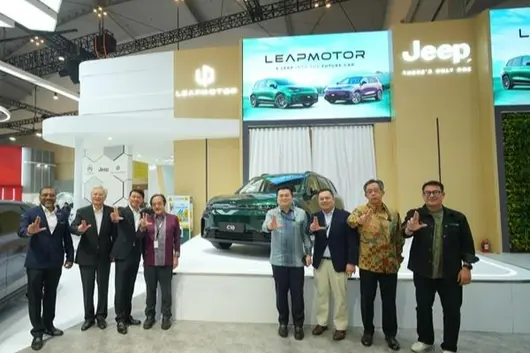

On August 1st, sales data for July for various new energy vehicle brands were released.
Leapmotor Cars revealed its July "achievements" first — 101,267 units, a year-on-year increase of 102%, equivalent to more than double the same period last year.
Leapmotor broke through the 100,000-unit delivery threshold for the first time, becoming the first vehicle manufacturer in the history of China's new car makers to achieve single-month deliveries exceeding 100,000 units.
The drama lies in: Xpeng 38,027 units, NIO 35,934 units, Li Auto 30,468 units — the former "Top 3 of NIO, Xpeng, and Li Auto" now only match Leapmotor when combined. Li Auto even saw double declines month-on-month and year-on-month for three consecutive months. Once the top dog among new forces, it is now far behind Leapmotor by more than three times.
Even Huawei's "Harmony Intelligence" alliance ("Five Realms"), which claimed to "lead far ahead," had July sales of 45,046 units.
Many car enthusiasts only realized at this point: When did Leapmotor become this amazing?

01. Others Make Money from Branding, Leapmotor Makes Money from "Factory" Costs
The core reason Leapmotor has reached today is four words: Full-Stack Self-Research.
Many people don't grasp these four words, thinking isn't it just about developing things yourself? But what Leapmotor does is far more extreme than most imagine.
As of now, Leapmotor's self-developed and manufactured parts account for 65% of the total vehicle BOM cost. What does that mean? From the core "three-electrics" (battery, electric drive, electric control) to smart cockpits, smart driving, and electronic architecture, extending to compressors, headlights, seats, bumpers, and on-board power supplies—things traditionally thought unnecessary to build in-house—as long as the value is high enough, Leapmotor does it all itself.

Zhu Jiangming calculated a figure: Based on the industry average gross margin of 15% for auto parts, just from self-research, Leapmotor's cost per vehicle is about 10% lower than competitors.
What does this 10% mean? It means with the same configuration, Leapmotor can be 10,000 to 20,000 cheaper than others and still make money; while selling at this price causes others to lose money, Leapmotor can still maintain a healthy gross margin.
This is not a marketing gimmick; it is a manufacturing gene carved into Zhu Jiangming's bones. Many may have forgotten that before making cars, Zhu Jiangming was one of the founders of Dahua Technology, engaged in security manufacturing for decades. What was the environment of the security industry? Price wars down to the bone, squeezing costs penny by penny. Others see suppliers that need management; Zhu Jiangming sees how much profit from middlemen can be squeezed out.
A classic example is headlights. When Leapmotor made its first car, supplier quotes were several thousand yuan per set. Zhu Jiangming led the team to calculate it themselves, using Dahua's embedded technology accumulation to self-develop, ultimately cutting the cost in half.
So you find Leapmotor's cars strange: Why is the configuration higher and the price lower than others? It's not Leapmotor losing money to shout for sales; it's because it gives all the profit from the middle of the supply chain to consumers. In Zhu Jiangming's own words: "We just make money from being a contract factory, everything else goes to the users."

02. Does Leapmotor Have Its Own Core Technologies?
Many people have a misconception about Leapmotor, thinking it relies solely on cheapness and lacks technology.
This is actually the biggest misunderstanding.
Low price is just the result; behind it is a whole self-developed technology system supporting it.
The most core is the "Cloverleaf" Central Integrated Electronic Electrical Architecture. This is complex if complicated, simple if simple: Traditional cars use a distributed architecture where dozens of ECUs manage their own tasks; Leapmotor uses one SOC chip plus one MCU to integrate the functions of the Cockpit, Smart Driving, Powertrain, and Chassis four domains together.
What is ruthless is that this architecture isn't just for flagship models; even the 100,000-level A10 has it as standard, which was unthinkable in the past.
With centralized architecture, the whole vehicle's response speed, OTA capability, and failure rate will be much better, and costs will drop instead.
Next is CTC 2.0 Plus Battery-Chassis Integration Technology. Leapmotor is one of the earliest Chinese vehicle manufacturers to mass-produce CTC; now cumulative installations exceed 500,000 units. Simply put, the battery is integrated directly with the chassis, removing the traditional battery pack cover, saving space and reducing weight while increasing body rigidity. Regarding safety, Leapmotor's battery achieves thermal runaway prevention for 48 hours without fire or explosion, which is 24 times the new national standard.

Regarding the three-electrics, Leapmotor's intelligent oil-cooled electric drive is fully self-developed and manufactured. The 8-in-1 integration degree is higher than the industry mainstream 3-in-1 or 6-in-1, with better efficiency and reliability. The 800V High-Voltage SiC platform is not exclusive to high-end cars; from the 200,000-level C series to the 100,000-level B series, everything needed is included. Coupled with 4C supercharging, the energy replenishment speed fully matches the first tier.
Smart driving was previously Leapmotor's weak point, but now it has caught up. The combination of LiDAR + Qualcomm 8650 smart driving chips can already achieve full-scenario navigation from parking spot to parking spot, and it is standard with permanent free use. In September's Technology Day, Leapmotor will also launch the next-generation smart driving based on world models, directly benchmarking the industry's first tier.
To put it plainly, Leapmotor isn't without technology; it puts all technology where users can touch it, rather than spending on marketing and brand premium.
03. Covering Everything from 60,000 to 300,000, This Is the Greatest Open Strategy
Leapmotor's second smart move is that it never had the "baggage of a new force" mindset.
When other new forces started, almost all focused on the high-end market above 300,000 yuan, talking about brand, tone, and user circles, as if they weren't qualified as new forces if they didn't sell a bit more expensive. Result? As soon as the market fluctuates and high-end consumption power drops, sales immediately come under pressure. Li Auto's current predicament is largely because its products are all stuck above 300,000 yuan, unable to go up or down.
Leapmotor is different; it never thought about doing only high-end from the start. Now Leapmotor's product matrix, A, B, C, D four series, covers from the 60,000 yuan entry-level car all the way to the flagship MPV above 300,000 yuan, covering all mainstream price bands without missing a single one.

The sales structure of the just-ended July explains the problem well:
1. A-series A10, monthly sales near 30,000 units; this is Leapmotor's basic base, firmly grasping the widest range of entry-level users;
2. B-series broke 20,000 units in July, with global cumulative sales already reaching 250,000 units;
3. C-series C10 global monthly sales steadily break 10,000, C-series cumulative sales reached 850,000 units;
4. High-end D19 monthly sales broke 10,000, newly launched MPV D99, the average price of the first batch of orders went directly to over 300,000 yuan.
Low-end cars drive volume to dilute costs, mid-range cars contribute profits, high-end cars build brand image, forming a complete pyramid across the entire price band.
Unlike other new forces that walk on one leg and wobble when the market changes, this is the most terrifying part of Leapmotor.
Many people look down on low-end cars, thinking 60,000 or 80,000 yuan cars don't make money.
But the fact is, it is precisely these volume-driving entry models that supported Leapmotor's supply chain scale.
The larger the scale, the lower the cost of self-developed parts; the lower the cost, the more competitive the product, then selling more — this is a positive cycle.
Now this cycle is already turning.

04. Leapmotor's Overseas Business Is More Intense Than Anyone Thinks
Many only see Leapmotor selling well domestically, failing to notice its overseas business has quietly become the number one among new forces.
Leapmotor's internationalization follows the "borrowing a boat to go overseas" route in cooperation with Stellantis. No need to build channels from scratch; directly use Stellantis' dealer network globally. Now Leapmotor has entered 35 countries and regions worldwide, with over 800 overseas sales service outlets.
In 2025, Leapmotor exported 60,000 units for the full year, the most among new forces. This year the speed is even faster; in July, it just started delivery in Mexico and announced local KD assembly production in Indonesia.

In Europe, Leapmotor B10 sells starting from €29,900, which converts to over 230,000 RMB, more than double the domestic price, yet it still sells well — in the Italian market, 1 out of every 3 pure electric cars is a Leapmotor B10.
Zhu Jiangming's goal is even more exaggerated; he says Leapmotor's future overseas sales share must account for 60% of total sales. What does that mean?
If Leapmotor really achieves annual sales of 1 million units next year, that is 600,000 units for export; this number is something even many traditional car manufacturers cannot achieve now.
In contrast, other new forces' overseas efforts, NIO and Xpeng, are still in a small-scale trial phase; Li Auto basically hasn't gone overseas at all. When the domestic market is fighting fiercely, Leapmotor has already opened a second battlefield overseas, using domestic cost advantages to fight the overseas market; this is another dimensional strike.

05. Does Leapmotor Have Weaknesses?
Monthly sales of 100,000 is naturally not the endpoint; Leapmotor itself knows very well where the weaknesses lie.
Previously many complained Leapmotor's smart driving was average, after all, money was spent on hardware and three-electrics, so software algorithm investment came relatively later.
But Zhu Jiangming has already announced that this September on Leapmotor Technology Day, Leapmotor will release a smart driving system based on world models and will catch up on smart driving.
In addition, the all-new model A05 will be released in August, making the product matrix denser.

From monthly sales of a few hundred units 6 years ago to 100,000 units today, the path Leapmotor took is actually not fresh at all — it's just the traditional manufacturing model: keep technology in your own hands, bring costs down, spread products fully, and take the market to the whole world.
It's just that in the industry where everyone wants to tell new stories and overtake on a bend, there are too few willing to put in this kind of hard work.
While other new forces were still struggling hard for monthly sales of 30,000 or 40,000 units, Leapmotor has quietly set its goal at annual sales of 1 million, even 4 million in the future.
Now looking back, it's not that Leapmotor suddenly became popular; it's just the harvest season.
Now looking back, it's not that Leapmotor suddenly became popular; it's just the harvest season.