首頁Leapmotor C10

搜尋歷史
熱門搜尋
經銷商登入 / 註冊

Leapmotor's monthly sales broke 100,000 again. It's not that the data lacks impact, but "100,000" is now as routine for them as refueling at a gas station. Meanwhile, the European registration volume sees pure electric models in the top three in France, Germany, Italy, and Spain. This number is more worth discussing than domestic monthly sales.

100,000 monthly sales have become a cost threshold rather than a performance benchmark
July, August, and September consecutively reached 100,000. September hit 105,656 units, a 59% year-over-year increase, ranking top four among global new energy brands, still number one among new forces. Two years ago this was big news; now it's just the baseline.
The underlying logic is still that proprietary cost accounting. The LEAP5.0 architecture was just explained at the September Technology Day, integrating CTC3.0 batteries, LWM assisted driving, and MM-i hybrid electric drive onto the same chassis platform. After raising architecture commonality, the more electric drives, wiring harnesses, and domain controllers shared between SUVs and sedans, the thinner the R&D cost per unit becomes.
 Top three in European registration volume is worth ten times more than exporting 150,000 units
September alone exported over 27,000 units, with cumulative exports over 150,000 units from January to September, submitting the 2026 export goal early. France, Germany, Italy, and Spain, the four core European markets, all saw pure electric registration volumes enter the top three.
Export volume is the number on the ship; registration volume is the number on the street. The former can be achieved by pressing inventory, while the latter requires users to truly pay, outlets to truly deliver, and after-sales to truly support. Leapmotor leveraged Stellantis channels to deploy over 1,000 European outlets, and localized assembly in Malaysia and Spain has also started, bypassing the most capital-intensive phase of new forces building their own channels.
 Taking the D19 to Paris is not showing off muscles, but probing the water level
At the October Paris Motor Show, Leapmotor will enter with the D19 and A05. A05 is easy to understand, 510 km range plus LiDAR compressed under 100,000, sticking to the tech accessibility approach, going to Europe as a cost-performance sample. D19 is different, a 5.2-meter flagship SUV, offering both pure electric and extended range, responsible for raising the average price domestically, while Paris is responsible for establishing the brand persona.
Foreign media are more concerned about whether a Chinese brand that grew volumes through cost strategies can stand the two words "high-end" at the doorstep of established car manufacturers. To put it bluntly, this trip for D19 is not to pick up orders, but to probe the European acceptance level for Leapmotor brand premium.
 Don't rush to hype it into a global brand
Writing to this point, I need to pour a cup of cold water. Monthly sales stabilizing at 100,000, European registration entering the top three, having a flagship standing at Paris, Leapmotor is indeed in the forefront among new forces, but it's not time to relax yet.
The fourth quarter looks at three things: Can monthly deliveries reach 110,000 without falling back? Can European registrations expand from top three in four countries to Northern Europe and the UK? After LEAP5.0 lands, can vehicles like D19 truly pull up the average price per unit? After passing these three hurdles, Leapmotor will not be just the brand best at saving money, but a Chinese automaker qualified to talk system competition with global players.
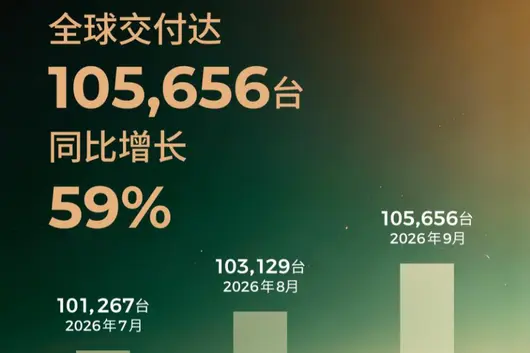


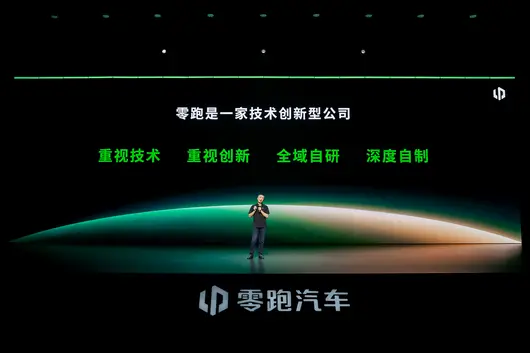
September 16, Leapmotor held a Tech Day with the theme "Confidence". On the same day, this company just reached a new milestone: July global deliveries 101,300 vehicles, year-on-year increase 102%, becoming the first domestic new force brand to break 100,000 vehicles in a single month delivery; August reached a new high. In 2025, Leapmotor annual deliveries 596,600 vehicles, sales doubled for two consecutive years; January to August 2026, global sales over 560,000 vehicles, year-on-year increase 70%, ranking top three among China's new energy passenger car brands. Just at a time when most new forces are still struggling near the break-even point and the price war continues relentlessly, this report stands out.
More striking is the expansion overseas. In the first half of the year, Leapmotor exported 96,300 vehicles, a year-on-year surge of 372.6%, exceeding the total export volume for the full year of 2025; Leapmotor International has built over 1,000 sales and service outlets in 45 markets, with pure electric market share in Italy exceeding 25%, and in June became the highest selling Chinese EV brand in the German market; T03, C10 have become popular choices in the European affordable pure electric market, and the Malaysia knock-down assembly plant has also started production. When most peers are still fighting closely domestically, this company has moved a considerable portion of its growth overseas.
Sales on the rise, global expansion accelerating, what does it rely on? The answer given by the Tech Day is the systematic capability accumulated over 11 years.

First, let's look at the cost structure. Leapmotor has built 18 parts factories, self-developed and self-produced covers 65% of total vehicle cost, and platform commonality reaches 90%. This explains why "Good technology should be accessible to everyone" is not just a slogan: Advanced intelligent driving goes down to the 100,000 yuan class; CTC 3.0 eliminates independent low-voltage batteries, saving 2,000 yuan per vehicle; for the earliest batch of LiDAR users upgrading to World Model Intelligent Driving, it requires an investment of 50 million yuan, but Leapmotor chose a free upgrade and free usage for life. Self-development squeezes costs to places others cannot, so cross-tier configurations can possibly become standard configurations.
Second, look at the technology system. Leapmotor released not just one highlight, but a set of architecture plus three major systems plus multiple reserves: LEAP 5.0 vehicle architecture achieves over 100% utilization rate; LWM World Model Intelligent Driving allows vehicles to go from "remembering road conditions" to "understanding road conditions"; long-tail scenarios encountered by a vehicle are learned via the cloud, allowing the fleet to collaboratively evolve; MM-i Multi-mode Hybrid Electric Drive completes the PHEV puzzle, completing "Pure Electric + Extended Range + PHEV" full power layout, with power 28% higher than peer vehicles and weight 40% lighter; CTC 3.0 eliminates independent low-voltage batteries, increasing energy capacity 7 times, with related patents open-sourced to the entire industry — and this generation of batteries is built upon verification from over 1 million vehicles installed. From architecture to batteries, from intelligent driving to robots, every item points to mass production and implementation. Zhu Jiangming said Leapmotor does not innovate for the sake of showing off skills — behind this statement is the industry stuck in stock competition on screens, computing power, and configurations.

The root of growth against the trend may lie in this kind of "hard work": not chasing short-term concepts, but sinking resources into underlying R&D and product experience. Embodied AI robot concepts are hot, but Leapmotor said "Only robots that can make money are worth showing off"; Direct-drive PHEV is viewed bearishly by some, but Leapmotor judges it still has a 5 to 10-year lifecycle. Technological pragmatism eventually manifests as operational stability. Since the mass production of the first extended-range model in 2022, Leapmotor has launched 7 extended-range models, and every structure of the electric drive system comes from internal co-creation, rather than bought solutions.
Why do sales and the capital market succeed frequently? The underlying logic is consistent: the positive cycle of scale and profitability. In the first half of the year, Leapmotor revenue was 38.1 billion yuan, net profit 210 million yuan, profits for three consecutive half-years — at a time when the industry generally doesn't make money, this profit is scarce. Overseas markets contribute high gross margin growth, with more than half of new sales coming from overseas in the first half of the year. What the capital market values is this "profitable long-termism". Since HK stock listing, Leapmotor market cap once stood at 60 billion HKD, and brokers still give overweight ratings and higher target prices. Of course, the market does have doubts: the year-start 5 billion yuan profit guidance was lowered to around 3 billion yuan, and the stock price still has corrections within the year. The quality of profits still needs time to test.
For China's automotive industry, Leapmotor's significance may not lie in the sales figures themselves. When price wars put pressure on the entire industry, it proves a different path: relying on full-domain self-research to keep both costs and experience in its own hands, going from "competing on price" to "competing on technology"; when whole vehicle export encounters resistance, it uses technology output, localization, and patent open-sourcing to turn "product export" into "capability export". As Zhu Jiangming said, technology and innovation are the confidence of enterprises facing the future. A car enterprise that can sustain profits and export systems overseas may well be the footnote most needed for China's automotive industry to become from big to strong.
Monthly sales of 100,000, yet market cap only half of competitors: Why can't Leapmotor's scale earn valuation?

Evening of August 24, Leapmotor released an interim performance report with almost flawless data: First half deliveries 356,487 units, YoY growth 60.8%, ranking first among New EV makers; Revenue 38.11 billion yuan, growth 57.2%; Net profit attributable 208 million yuan, achieving profitability for two consecutive half-years. July single-month deliveries 101,267 units, becoming the first domestic New EV maker to break 100,000 monthly sales. Established for 11 years, cumulative deliveries exceeded 1.6 million units.

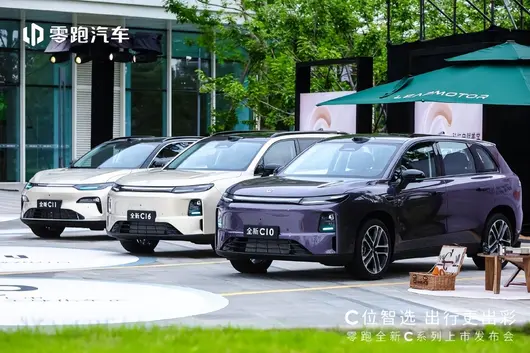
Leapmotor displayed its full series of models at a promotion event | Source: Leapmotor official website
But the reaction from the capital market was quite interesting. As of the August 26 market close, Leapmotor's HK stock market cap was approximately HKD 45.36 billion; on the same day, Nio was about HKD 85.5 billion, XPeng about HKD 88.4 billion, and Li Auto about HKD 97.7 billion. The one selling the most, its market cap is less than half of Li Auto. More importantly, Li Auto's second-quarter net loss was 1.705 billion yuan, XPeng's second-quarter net loss was 1.34 billion yuan — they are making losses, yet the market is willing to give them higher prices.
Being the sales champion doesn't beat the market cap, this is not just a problem for Leapmotor, but it is Leapmotor's most prominent issue. This deep dive wants to clearly break down three things: how exactly these 200 million in profit was squeezed out; why that overseas report is Leapmotor's real trump card; and what evidence the market is waiting for before re-pricing this company.
01 How the 200 Million in Profit was "Squeezed" OutFirst, let's look at the profit structure. First half revenue of 38.11 billion yuan and 11.7% comprehensive gross margin, corresponds to gross profit of approximately 4.45 billion yuan. After deducting R&D, sales, administrative and other period expenses and taxes, final operating profit was 128 million yuan, with net profit attributable to shareholders of 208 million yuan.
Converted to per unit: 356,487 vehicles, with an average profit of only about 585 yuan per car. A 100,000 yuan level car, profit isn't enough for a decent meal. Net margin 0.55%, thin as a blade.

Leapmotor 2026 Semi-Annual Report · Performance Highlights | Source: Leapmotor official website
These 208 million are pieced together from several parts. The first part is selling cars itself. Management gave whole vehicle gross margin guidance of 10~11 percentage points at the conference call — meaning selling cars is low profit high volume, the bulk of gross margin depends on scale rolling. The second part is carbon credits, contributing 800 to 900 million yuan in the first half, about 500 million yuan in the second quarter. This is the profit's "plug-in", and its unit price is declining, management original words: "Carbon credit sales unit price fell compared to last year", "Just like the path our country walked back then". The third part is R&D service revenue, contributed in the first half but not much; the fourth part is Leapmotor International, slightly profitable but with a small loss in the first half due to exchange rates, management expects to recover in the second half.
The trend of gross margin also hides structure: First half comprehensive gross margin 11.7%, YoY decline of 2.4 percentage points, but second quarter single quarter recovered to 12.6%, QoQ improvement 3.2 percentage points. Full year guidance is 13%~14%. Management attributed the improvement to scale effect and raw material price stabilization — to translate: volume growth is diluting per-unit cost, but carbon credit decline is pulling profit margin back from the other side.
Compare with peers, the irony is stronger. Li Auto second-quarter net loss 1.705 billion yuan, deliveries 98,330 units, YoY still declined 11.5%; XPeng second-quarter net loss 1.34 billion yuan. Full market only Leapmotor, the only New EV maker stable in making money, market cap yet bottomed out. In Tech Jungle's view, the market is not that it doesn't recognize profit, but doesn't recognize "profit of doubtful gold content" and "profit that hasn't proven sustainable scaling".
02 Going Overseas: The Real Profit Pool is FormingLeapmotor interim report's most eye-catching numbers are actually not in the domestic market. First half exports 96,294 units, YoY growth 372.6%, already exceeded 2025 full year export total, accounting for 27% of total sales; July single month exports 17,569 units. European market revenue 8.875 billion yuan, YoY surge 379.7%, accounting for about 23% of total revenue.

Leapmotor exceeded 900,000 global deliveries in June | Source: Leapmotor official website
Overseas per-unit gold content is far higher than domestic: Same platform models selling price in Europe is several times that of domestic, even after incurring freight, tariffs and channel costs, per-unit gross margin is clearly better than the involution of domestic market. This is the real meaning of "Second growth curve" — not selling tens of thousands more cars, but selling a market with higher profit margin.
Local assembly map also unfolds simultaneously: Malaysia relies on Stellantis Kedah plant, C10 already mass production, B10 planned Q3 mass production launch; European Spain Zaragoza plant completed retrofit, B10 Q3 start production, B05 trial production within the year, 2027 formal mass production, supporting battery plant Q3 start mass production; South America selected Brazil Goiania plant, B10 planned 2027 second half start production. Management stance is: This year overseas expected around 200,000 units (start of year target 100,000~150,000 units), next year target 350,000~400,000 units, internal challenge 400,000 units.
But management also said two sentences worth noting truths. First is local production gross margin indeed better than whole vehicle export has improvement, "but improvement not as obvious as imagined", profit margin's real improvement needs to wait for "policy changes" — simply put, wait for EU tariff and local procurement rules to clear. Second is RoRo ship capacity tight, company has reached cooperation with Shipping Group, "Full year 200,000 units is guaranteed". Going overseas doesn't lack orders, lacks capacity and policy window.
There is also a detail ignored by most interpretations: Leapmotor International is Leapmotor 49%, Stellantis 51% joint venture, when established agreed on previous three years lower gross margin split. Management explicitly said at conference call, both parties "3-year agreement period" gradually approaching, will sit down to re-communicate. This is both an area where first half comprehensive gross margin was "structurally suppressed" dark corner, also potential option for gross margin upward repair in future one to two years — Stellantis sells every car, after re-pricing may contribute more profit.
03 Balance Sheet: Where Did Money and Goods GoSeveral numbers on the interim report balance sheet explain Leapmotor's current strategy better than income statement.

Leapmotor 2026 Semi-Annual Report · Financial Performance | Source: Leapmotor official website
Cash and equivalents 38.59 billion yuan, borrowing only 2.39 billion yuan, net cash over 36 billion yuan. A car company with annual sales of hundreds of thousands of units holding such scale of cash, at least on cash flow there is no danger signal.
What is truly worth pondering is inventory: 9.27 billion yuan, QoQ increase 103.7%, approximately equal to 1.65 months cost of sales. Why prepare so much inventory? Two months ago this number was not even half. The answer is written in the timeline: A05 launched on August 11, A10 enter ramp-up, D19 and C series volume, second half delivery target obviously is to go high; plus exports in transit whole vehicles and parts all floating at sea, inventory double more like intentional "ammo".
More ruthless is accounts payable: 47.08 billion yuan, is 5.1 times inventory. This shows in supply chain system, upstream suppliers are advancing funds for Leapmotor. Use suppliers' goods first, then pay money, account period dragged longer, Leapmotor cash more abundant. This is an invisible low cost financing, also realization of scale effect — only when your procurement volume large enough no one dares easily cut supply, this chain then can move. Huawei-style "V-formation supply chain" in auto industry replicate difficulty compared to consumer electronics is much bigger, but Leapmotor is trying to run with same logic.
Future two years still need to spend a big sum: As of end of June, company for purchase of properties, factory and equipment capital commitments were 7.76 billion yuan, first half capital expenditure 2.03 billion yuan, mainly used for new factory equipment and new car production line introduction. Where do these money go? Answer is 2027 — management's words "very big product big year": D series brand new models, C series existing brand new and also replacement, B series new products. 2026 profit, largely is for 2027 product matrix storing water.
04 FAW and Stellantis: Two "Technology for Market" AccountsAugust 24, same day financial report release, Leapmotor and China FAW signed deepening cooperation framework, listed ten major synergy fields: Battery, Electric Drive, Chassis, Intelligent Cockpit, Intelligent Driving, Auto Electronics, Whole Vehicle Design Manufacturing, Export, Supply Chain, and Embodied AI Robot. Time line extended look, March 3, 2025 both parties signed strategic cooperation MOU, December 28, 2025 FAW subscribed about 5% domestic shares with 3.744 billion yuan (per share 50.03 yuan) — this investment's book floating loss, according to Chegulu Media calculation already exceeded 1 billion yuan (Aug 19); and concurrently, founder Zhu Jiangming was reported multiple announcements increase holdings.

Leapmotor and China FAW signed deepening strategic cooperation agreement | Source: Leapmotor official website
A state-owned giant floating loss, founder investing against trend, both parties again on financial report day announced ten major synergy — this set of signals put together, reads like a "Long-termist mutual confirmation" agreement. Leapmotor wants one FAW R&D synergy and policy resources, FAW wants Leapmotor full domain self-developed powertrain ready-made capability, use money and technology double binding.
Another line is Stellantis. 2023 shareholding, May 2024 established Leapmotor International, May 2026 both parties announced cooperation upgrade (Opel etc brand dedicated production line and technical support, according to public reports). Conference call management revealed, cooperation direction with Stellantis is "Empowerment based on mature powertrain component supply capability", and "Recent very likely there will be further good news"; With FAW, Stellantis R&D service cooperation, "Very soon everyone will receive external announcement".
This words actually already fulfilled half: FAW framework agreement is announcement day hammered. Leapmotor is upgrading "Selling cars" into "Selling cars + Selling technology + Selling supply chain capability" three parts income. This is also Zhu Jiangming repeatedly publicly expressing "Market cap undervalued" confidence source — market gives Leapmotor valuation according to whole vehicle manufacturer, but its financial statements are growing into technology exporter shape.
05 Robots: Second Curve Waiting Behind AnnouncementAnd FAW's ten synergy list appeared "Embodied AI Robot", this is official level first time writing robot into cooperation framework. Accompanying public business information (Leapmotor power subsidiary business scope newly added robot related content), and conference call management "Company has robot related planning, very soon will formal announcement" statement, Leapmotor's robot business has entered "Night before official announcement" from "Rumors".
But to speak rigorous: Robot currently still is expectation, not profit. Before announcement landing, it is just valuation imagination option. Management at conference call also confirmed, September 16 will hold technology launch conference in Huzhou, Zhejiang, heavyweight content concentrated on Intelligent Driving, Battery and Electric Drive — this is future few weeks most immediately visible catalyst, Robot is farther that "Easter egg".
Risks also need to be mentionedOutside bullish, a few risks worth listing on table.
First is carbon credit decline. First half 80~900 million points income pushed net profit to 200 million, but unit price is returning towards "Country back then path". If next year points income shrinks, and whole vehicle gross margin not substantially stand at 13%~14%, profit statement will be hit back to original form. Leapmotor needs to use real material scale effect, to fill points decline dug hole.
Second is customer concentration. Financial report disclosed single largest customer contribution accounted for about 23.3% revenue ratio — combine European revenue scale and joint relationship, overseas big customers are double-edged sword: It supports growth, also handed over fate's much part into others hands.
Third is policy window. EU localization procurement proportion requirement is rising, anti-subsidy tax and price commitment "Soft landing" whether continue, directly decides 2027 400,000 units overseas target whether can fulfill; and localization profit margin improvement, management also said "Needs policy changes".
Fourth is execution difficulty. Next year overseas 350,000~400,000 units, means need to on this year about 200,000 units basis close to double, capacity, channel, localization capacity three lines parallel, any link fail chain will transmit to report.
Conclusion: Monthly Sales of 100,000 is Just an Entry Ticket
Leapmotor full series of models lineup | Source: Leapmotor official website
In Tech Jungle's view, market cap repair not rely on shouting, market wants three verifiable evidence: Whole vehicle gross margin whether can stabilize 13%~14% and continue upward, prove "Selling cars itself can make money"; Carbon credits decline after profit not empty, prove "Profit is real"; Overseas 350,000~400,000 units and robot announcement quality, prove "Second curve is not an empty promise".
This half year, Leapmotor proved itself can use extremely low per-unit profit roll up scale, also can hold cash firmly in hand — Net cash over 36 billion, Accounts payable leverage 470 billion supply chain account period, this is not every New EV maker can do. But capital market not pay for "Amazing", only pay for "Proven sustainability".
Monthly sales of 100,000 is just an entry ticket, net profit of 200 million is a passing score, and dozens of times market cap gap, need to rely on next one or two years' report page by page to fill.

Leapmotor has released its 2026 mid-year performance report. Net profit of 210 million yuan, revenue of 38.11 billion yuan, gross margin of 11.7%, cash on hand of 38.59 billion yuan, global deliveries of 356,487 units — if looking only at these figures, you might feel this is a standard report card from a mainstream automaker.

But when viewed together, the story is different.
This is Leapmotor's third consecutive half-year of profitability. Among new force players, few have achieved this. Meanwhile, Leapmotor's deliveries grew 60.8% year-over-year, firmly holding the top spot in sales among Chinese new forces. In the first 5 months of 2026 with published data for comparable terminal registrations, Leapmotor ranked fourth among global new energy passenger car brands — only players like BYD, Tesla, and Geely are ahead.
Do you remember how the industry evaluated Leapmotor a few years ago? Outsiders, half-price Li Auto, price butcher. Looking back now, those labels didn't actually hit the key points. What Leapmotor truly did was find a path of its own: full-domain in-house research to control costs, precise product definition positioning, rapid channel penetration, and returning every saved penny to users. It doesn't seek attention in the busiest battlefield, but every step lands where others pay little attention.
This half-year report is worth breaking down.
Sales and Profitability, Leapmotor Wants Both
First, let's look at sales. 356,487 units, first among new forces, up 60.8% year-over-year. The value of this achievement lies not in the numbers themselves, but in its structure — it's not propped up by a single hit product, but the combined strength of the entire product matrix.

From 60,000 to 300,000, from sedans to SUVs to MPVs, from pure EV to range extender — the A series holds the 100,000 RMB essential market, the B series brings high-end configurations like 800V high-voltage fast charging and dual zero-gravity seats to young users, the C series covers the 120,000-180,000 RMB mainstream home interval, and the D series pulls the average price above 300,000 RMB, taking the brand upwards towards premium. Systematically covering all price points and categories, in the new force camp, Leapmotor is the first.
But the product matrix is just the surface, the real underlying capability is full-domain in-house research. Breaking it down, there are three layers of logic.
First, manufacturing core components in-house. Three-electric systems, domain control, and intelligent driving chip solutions are all self-developed, which means eating the supplier margin layer oneself. This logic is so simple it's almost boring, but it is the fundamental reason Leapmotor can still retain profit margins at the 100,000 level.
Second, one architecture supports a fleet of cars. LEAP 4.0 central domain control architecture launched on D19, dual Snapdragon 8797 chips, cabin-driving integration, one brain controlling all vehicle intelligence, and computing power can also be dynamically allocated between different scenarios. But more importantly, this capability is rolled down from top to bottom — urban pilot assist drive has been opened to full ABCD series and Lafa5, and in Q3, national urban pilot will be pushed to LEAP 3.0 models.
Translated into user language, it's one sentence: a 100,000 RMB car can also have flagship-level intelligent experience. For the enterprise, R&D investment of 2.317 billion yuan is one-time, spread across A10 and D19 is two separate accounts — R&D expenses are diluted by scale, this is the real friend of gross margin.
Third, the product matrix implemented a dual line of 'protect volume + protect price'. C10/C11/C16 hold the 120,000-180,000 RMB base, totaling over 30,000 in June. C11 cumulative sales 350,000 units, it's a perennial tree in the niche market. D19 and D99 lift the average price upwards. D19 launched, 15 days pre-orders broke 15,000, continued champion of large SUV sales within 400,000 RMB. D99 first batch order average price already broke 300,000 yuan. One end for volume, one end for price lift, gross margin structure is quietly pushed up this way.
This is exactly the underlying logic of Leapmotor: good but not expensive — not by sacrificing configurations to reduce costs, but by controlling costs through in-house research and turning saved money into configurations.
Next, look at profitability. Consecutive half-year profitability, gross margin 11.7%, revenue reached historical high — placed together, these numbers mean Leapmotor's business model has been validated. The most questioned aspect of new force car manufacturing these years is rising sales but no profit.
Leapmotor's answer is: combining scale, in-house research, and efficiency, making gross margin positive, then thickening cash flow. The 38.59 billion yuan cash on hand is its confidence to continue investing in R&D and globalization.
Going Global, Leapmotor is Serious
If sales and profitability are Leapmotor's domestic report card for this half year, the overseas market is the second chapter it quietly wrote, and the section is quite large.

First half overseas deliveries 96,294 units, continuing to grow quarter-over-quarter, nearly doubled. Italy pure EV market share over one-quarter, ranking first in local pure EV sales continuously. In the first half, sales leading among Chinese brand EVs in Germany. Ranked third in UK Chinese brand pure EV retail. Entered Mexico in Q2, opening the North American market. Globally covering over 45 international markets, establishing over 1000 sales and service outlets.
More noteworthy is the progress of localized production. In Malaysia, C10 is already mass-produced, B10 follows in Q3. In Spain, B10 starts production in Q3. In Brazil, Stellantis's Goiania plant is selected as the localized assembly base.
This is no longer just selling cars overseas, but rooting overseas. Deep cooperation with Stellantis gives Leapmotor ready-made channels, factories, and localized capabilities overseas. The performance of 96,294 units in overseas sales in the first half is evidence that this approach is working.
Leapmotor's global path is consistent with its logic for the domestic market: not seeking the loudest name, first finding that 'not yet fully competed' position, then standing firm with efficiency and cost advantages. Just like it found a gap in the 100,000-200,000 RMB market back then, today it found the same position in Europe's affordable EV market — where it happens to be the interval where European local car makers find it hardest to make money and most want to exit.
Leapmotor effectively translated the 'cost + efficiency' model verified domestically to the global scale.
At the end of the half-year report, an easter egg is buried: Leapmotor will hold an annual technical conference in September, releasing intelligent driving world models reaching the industry's top tier level and the latest achievements in the three-electric field. The story of full-domain in-house research is still being written downwards.
Looking back at this half year, what Leapmotor did right is actually very simple: control costs to the extreme, define products accurately, position channels fully, and put eyes on the global. No flashy marketing jargon, no earth-shattering price wars, just step-by-step solidifying the four characters 'Good and Not Expensive'.
Consecutive profitability, new force sales champion, global top four — behind these milestones is the same logic: when others are competing in the busiest battlefield, Leapmotor chooses to practice fundamentals to the extreme, then quietly wins on every underestimated track.
This might be the most worthy place for the industry to think about Leapmotor's half-year report.


August 24, Leapmotor revealed its first-half 2026 financial report, presenting a answer showing synergistic growth in scale and efficiency: Operating revenue of 38.11 billion yuan, a year-on-year increase of 57.2%, setting a new historical record for the same period; Net profit of 210 million yuan, achieving profitability for three consecutive half-years. Sales also achieved steady growth, with global cumulative sales reaching 356,500 units in the first half, a year-on-year increase of 60.8%.
However, impressive performance is just the starting point of Leapmotor's new development journey. With continuous volume increase in new models, continuous breakthroughs in R&D technology, and steady progress in overseas localization production, Leapmotor's growth curve in the second half of the year is expected to continue rising, striving hard to achieve the million annual sales target.

Breakthroughs on Both Scale and Profitability Lines, Operating Quality Improves Quarter by Quarter
Financial reports show that in the first half of 2026, Leapmotor's operating revenue grew significantly year-on-year, and net profit maintained a profitable trend, having achieved profitability for three consecutive half-years, demonstrating a solid operational foundation. In the environment where new automotive manufacturers are generally struggling to seek profitability, Leapmotor is the only car company to have been profitable for the most recent three consecutive half-years, becoming a scarce sample of continuous profitability among new forces. At the same time, Leapmotor's gross margin for the second quarter increased quarter-on-quarter to 12.6%, showing a trend of improving operating quality quarter by quarter. As of the end of the reporting period, Leapmotor's available funds reached 38.59 billion yuan, and sufficient capital reserves safeguard the company's long-term development.
In terms of sales, Leapmotor's global cumulative sales reached 356,500 units in the first half of the year, a year-on-year increase of 60.8%. In July this year, its sales hit a new high, reaching 101,000 units, a year-on-year increase of 102%, becoming the first domestic new force brand to break through 100,000 units in single-month deliveries, ranking at the forefront of the new energy vehicle industry as a whole. Among the comparable terminal registration quantities for the first 5 months of this year for which data has been released, Leapmotor ranked fourth among global new energy passenger car brands.

Obviously, Leapmotor's current financial performance is robust, and sales continue to climb, which not only dilutes R&D and manufacturing costs but also jointly builds a solid foundation for scale expansion in the second half of the year.
Full Matrix Synergy Drives Volume Increase, Multi-Level Drive Accelerates Sprint to Million Annual Sales
Behind the excellent performance, it is inseparable from Leapmotor's important measures to continuously expand market coverage and layout sub-segments. Currently, Leapmotor has completed the full price band layout of the ABCD four major product matrices, comprehensively covering the mainstream price range from 60,000 yuan to 300,000 yuan, including:
The A series takes "fine small cars" as the strategic main line. The representative model A10 welcomed the 100,000th mass-produced vehicle off the line 135 days after launch, and ranked first in Chinese brand SUV sales for three consecutive months, becoming a phenomenon-level product for mainstream home pure electric SUVs. The A05 launched in August further completes the entry market puzzle and is an important key driver for achieving the annual sales target.

The two new models B01 and B10 of the B series officially launched in July adhere to the concept of technology inclusiveness. Priced at the 100,000 yuan level, they are equipped with high-end configurations such as global 800V, 3C fast charging, and dual zero-gravity front seats, directly addressing pain points in the 100,000 yuan pure electric market, such as configuration compromises, range shortages, and smart technology shrinkage.

The base users of the C series have already surpassed 850,000. After the three facelifted models C10, C11, and C16 completed their new launch, June sales exceeded 30,000 units, continuously solidifying the brand's scale foundation.
The D series with higher positioning continues to break upwards. D19 has steadily entered the ranks of monthly sales of 10,000 units, and D99's launch average price has surpassed 300,000 yuan, forming a dual flagship matrix of SUV and MPV, promoting the continuous upward movement of Leapmotor brand value and establishing a high-end benchmark for the brand.
Plus the exclusive sports coupe product line Lafa 5 series, Leapmotor's product matrix is becoming increasingly complete, forming a multi-level drive growth pattern. Each series model has clear division of labor and collaborative effort, providing sufficient support for sales growth in the third and fourth quarters. Leapmotor's annual million sales target is accelerating into the channel of realization.
Technology and Globalization Advance on Two Lines, Leapmotor Has Abundant Long-Term Development Momentum
Leapmotor has always maintained high-intensity investment in technology R&D, and the advantages of full-domain self-research are increasingly prominent. Currently, urban pilot-assisted driving covers all Leapmotor ABCD series models. In the third quarter of 2026, Leapmotor LEAP 3.0 architecture models will receive the nationwide urban pilot-assisted driving push. More significantly, Leapmotor will hold the 2026 annual technology launch event in September, at which time it will launch an intelligent assisted driving world model reaching the industry's first tier level, and bring a series of all-new technological achievements in the three-electric field. Continuously iterated intelligent technology will continuously improve the competitiveness of all Leapmotor products and promote further expansion of Leapmotor's market in the second half of the year.

At the same time, the overseas market has become the second growth curve that cannot be ignored for Leapmotor. In the first half of this year, Leapmotor cumulative exports reached 96,000 units, a year-on-year increase of 372.6%, exceeding the total export volume for the entire year of 2025, with the proportion of total sales rising to 27%. Since the fourth quarter of 2024, Leapmotor's cumulative exports have been about 200,000 units. In core European markets, Leapmotor occupies a leading position in the Italian pure electric market and took the championship of Chinese electric vehicle brand sales in the German market in June. On the channel side, Leapmotor International has already established over 1,000 sales and after-sales service outlets in more than 45 international markets.
Localization production layout is also accelerating. The Malaysia factory C10 has already achieved mass production, and B10 is planned to start production in the third quarter; The Zaragoza factory in Spain has completed renovation, and B10 is expected to start production in the third quarter; The South American Brazil factory has confirmed the site selection, planning to enter mass production in the second half of 2027. Leapmotor's globalization has gradually shifted from complete vehicle exports to local manufacturing, which can effectively reduce cross-border delivery costs and expand long-term growth space.

Relying on continuously realized profitability, a perfect product matrix covering mainstream markets, rapidly scaling global business, and heavy technology results that are about to land, Leapmotor has built a complete and sustainable growth system with abundant long-term development momentum. Looking forward to the second half of the year, Leapmotor is expected to continue the upward trend and steadily move towards the million annual sales target.

Mid-August, Leapmotor released H1 2026 financial performance. Revenue 38.11 billion, YoY up 57.2%, Net Profit 210 million, YoY up 530%. For the first time achieved semi-annual profitability, on the surface looks like a beautiful report card. But capital market reaction was flat, stock price didn't move much. Why? Because industry insiders are all looking at another number — Gross Margin 11.7%, down 2.4 percentage points YoY. Made money, but not much, and the way of making money is a bit forced. Today let's open up Leapmotor's accounts to see, alongside Li Auto, Nio, Xpeng do a horizontal comparison, see exactly how is this 210 million's profit quality.

38.1 Billion Revenue Breakdown, Q1 Crash Q2 Recovery
First half 38.1 billion revenue, growth rate indeed bright, but breaking down shows huge gap between two quarters. Q1 revenue only 10.8 billion, net loss 390 million, gross margin only 9.4%, at that time outsiders once questioned if Leapmotor fell into a vicious cycle of "selling more losing more". Q2 suddenly turned around, revenue 27.29 billion, QoQ growth over 150%, single quarter net profit 600 million, gross margin rebounded to 12.6%. The problem is Q2 explosion mainly relied on volume pull of C16 and C10 two models, especially C16 this 150,000 class six-seat SUV directly sold explosively. But Leapmotor average selling price only around 110,000, bottoming among new EV makers. Same profit volume, Nio sells one equals Leapmotor sells nearly two, this is Leapmotor's core contradiction: sales went up, but single car profitability is weak. And first half overall gross margin 11.7% still 2.4 percentage points lower than last year, shows price promotion cost is showing.

210 Million Net Profit Quality, Horizontal Comparison of Four Companies
Put Leapmotor, Nio, Xpeng, Li Auto four new EV makers first half profit levels together look, very clear. Leapmotor first half net profit 210 million, only one profitable, but don't rush to clap — 210 million divided by 356,500 delivery volume, single car profit only around 590 yuan. Look at other three: Nio although still loss, but single car average price over 200,000, auto gross margin 19% (Q1), selling one loss amount also narrowing; Xpeng first half net loss 3.12 billion, but comprehensive gross margin 20.7%, auto gross margin 12.1%, key is service business contributed nearly half gross profit, profit margin as high as 75.1%, shows Xpeng found money making way outside selling cars; Li Auto most tragic, vehicle gross margin directly dropped to 6.1%, H1 net loss 2.29 billion, pure EV transformation pain much more violent than expected, i6 accounts for sales 62% but L Series completely crashed. Leapmotor is the only one making money among four for sure, but this profit quality, to be honest not high. Annual profit expectation already down from 5 billion to 3 billion, gross margin goal also from 13—14% lowered, management in earnings call said price reduction is active choice, to grab 100,000-150,000 class market share, but this price interval profit space originally thin as blade.

Going Overseas 96,000 Units, Is the Biggest Variable
Leapmotor first half another number worth attention is export 96,300 units, YoY up 372.6%, accounts for all delivery 27%. This proportion in new EV makers leads far. Leapmotor going overseas biggest backer is Stellantis Group cooperation, directly borrow its global channels, 45 overseas markets, over 1000 sales outlets, not paving from scratch. In Southeast Asia, South America, Europe etc markets, Leapmotor price advantage more obvious than domestic. And Leapmotor promoting Malaysia, Spain, Brazil three places localization production, avoiding tariff risk. Overseas car pricing usually higher than domestic by 30—50%, this means overseas profit contribution far exceeds sales proportion. If saying going abroad is Leapmotor biggest variable, then Stellantis is that leverage.

60.8 Billion Market Cap, Is It Expensive?
Leapmotor current market cap 60.8 billion HKD, TTM PE ratio over 70 times. Zhu Jiangming said Leapmotor worth at least 200 billion, but from financial view, according to 3 billion annual profit expectation, 70 times PE close to Tesla level — they have FSD and Robotaxi stories supporting, Leapmotor currently still relies on selling cars. From PS view, 60.8 billion HKD approximates 55 billion RMB, corresponding annual revenue about 76 billion, PS about 0.7 times, in new EV makers not expensive. Nio PS about 1.2 times, Xpeng about 1.5 times. So Leapmotor valuation logic is divergent: by profit looks expensive, by revenue scale has space. Key is see H2 C16 volume momentum can continue, and going overseas can keep each quarter 50,000 units growth rate. If can stabilize, profit elasticity still has large release space.
Summary: Leapmotor used half a year time proved low price strategy can swap for scale, but 210 million net profit also shows scale does not equal profit. Among four new EV makers, Leapmotor is only making money, but earning most hard. H2 real test is can scale advantage turn into profit advantage — going overseas growth rate and gross margin can rise synchronously, this will decide Leapmotor position in next elimination round.
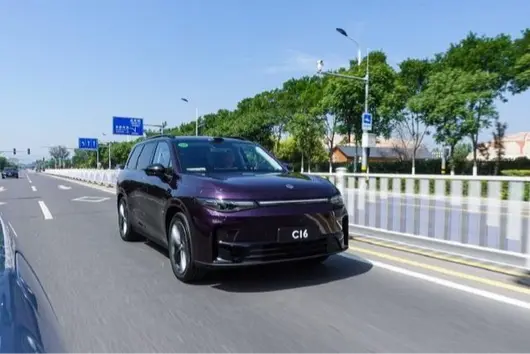


After monthly deliveries broke 100,000 units, what does Leapmotor need to think about next:
How to convert sales volume into higher profits?
On August 24, Leapmotor released mid-year results for 2026, and the results were very outstanding. During the reporting period, the company achieved revenue of 38.11 billion yuan, a 57.2% year-on-year increase; net profit attributable to the Company's equity holders was 210 million yuan, marking three consecutive semi-annual profits. However, affected by rising raw material prices, changes in product mix, and other factors, the Company's gross margin in the first half of the year fell to 11.7%, a decrease of 2.4 percentage points compared to the same period last year.

In the earnings call, several pieces of information revealed by Leapmotor management are worth noting: The Company's expected full-year net profit was lowered from approximately 5 billion yuan at the beginning of the year to about 3 billion yuan; the full-year overall gross margin is expected to be 13% to 14%, with a gross margin for vehicle sales of approximately 10% to 11%; the overseas sales target for 2027 is 350,000–400,000 vehicles.
In addition, company executives revealed that the Company has clear plans for the embodied robotics business and will officially release related information subsequently.
01
Significant Sales Breakthrough
In the first half of 2026, Leapmotor deliveries reached 356,487 vehicles, a 60.8% year-on-year increase, ranking first in sales among new EV brands in China. After entering the second half of the year, the growth momentum accelerated further: July monthly deliveries were 101,267 vehicles, a 102% year-on-year increase, exceeding 100,000 units for the first time.

Leapmotor has currently completed its layout of the A, B, C, and D four-series product matrix, covering the mainstream price range of 60,000 yuan to 300,000 yuan. The A series undertakes volume sales tasks, the B and C series form the core sales base, and the D series undertakes brand premiuming and profit improvement functions.
Among them, the A10 went on the market and achieved the roll-off of the 100,000th mass-produced vehicle in 135 days; from May to July 2026, it ranked first in sales of Chinese Brand SUVs for three consecutive months; the D19 quickly broke through monthly sales of 10,000 units after launch, with July deliveries of 10,043 vehicles; C series facelift models exceeded 30,000 vehicles in sales in June, and the cumulative user base of the C series has exceeded 850,000.
From the perspective of product structure, Leapmotor has formed portfolio growth through different price segments and vehicle classes. This model helps reduce the volatility risk of a single vehicle model, and is also beneficial for spreading R&D, manufacturing, channel, and supply chain costs.
However, scale does not necessarily equal profit. Leapmotor's gross margin in the first half of the year fell from 14.1% to 11.7%, mainly due to raw material price fluctuations.
02
Gross Margin Decline, Full-year Profit Target Lowered
Leapmotor's significant growth in sales and revenue resulted in a decline in gross margin per vehicle.
Specifically, Leapmotor's gross profit in the first half of the year was 4.45 billion yuan, a 29.7% year-on-year increase, but the gross margin fell to 11.7%, a decrease of 2.4 percentage points compared to the same period last year.
Of course, the reason for the decline in gross margin per vehicle lies in raw material fluctuations.

At the same time, in terms of the full-year outlook, Leapmotor's expectations have been adjusted downwards. Management stated that achieving the full-year net profit target of approximately 5 billion yuan formulated at the beginning of the year will be difficult, and the current expected full-year net profit is about 3 billion yuan, with an overall gross margin expected to be 13%–14% and a vehicle sales gross margin of approximately 10%–11%.
Management judges that major raw material prices in the second half of the year, especially lithium carbonate prices, are expected to remain relatively stable; as sales increase, material procurement, manufacturing expenses, and fixed cost amortization will be further optimized, thereby promoting sequential gross margin improvements.
03
Going Overseas Prioritizes "Grabbing Share" Over Profit in Short Term
The overseas business is the segment with denser information released at this earnings meeting.
Data shows overseas growth is quite outstanding. In the first half of 2026, Leapmotor's exports reached 96,294 vehicles, a 372.6% year-on-year increase, accounting for 27% of total sales in the first half of the year. Cumulative exports from January to July 2026 were 113,863 vehicles, completing 75.9% of the annual challenge target. The Company expects full-year overseas sales to reach 200,000 vehicles.
For next year, Leapmotor management is also very optimistic, giving a sales expectation of 350,000–400,000 vehicles, with the target nearly doubling the estimated completion volume for 2026. In terms of regional structure, Europe will still be the largest market, while the share of markets such as South America, Southeast Asia, and Australia will further increase.
However, overseas sales growth and overseas profitability are not fully synchronized.
Management stated that this is because during the initial stage of the cooperation, the gross margin level for Leapmotor selling vehicles to Leapmotor International was agreed to be low, and the priority goal for the first three years was to rapidly expand the market and increase sales. Currently, Leapmotor International achieved profitability in 2025, but experienced a slight loss in the first half of 2026 due to operational factors; the Company expects to make up for losses in the second half of the year through operational adjustments to achieve stable annual profitability.

Leapmotor's overseas strategy remains "scale first, profit later".
For Leapmotor, Stellantis provides three important supports:
First, local channel resources, helping Leapmotor quickly enter Europe, South America, and other markets;
Second, manufacturing capability, reducing capital expenditure and time costs for building overseas local factories;
Third, supply chain and logistics resources, which are beneficial for alleviating ocean freight and local parts procurement pressure.
However, local production does not naturally mean a significant increase in profit margins. Management admitted that overseas local production can optimize tariff costs, but local parts procurement prices are higher than in China, so there is a need to rebalance between tariff savings and increased procurement costs, therefore the gross margin improvement brought by localization is not as obvious as the market imagines.
Leapmotor is promoting overseas localization production, mainly in Malaysia, Spain, and Brazil.
Regarding the Malaysia project, the C10 has completed SOP and entered the formal mass production stage, and the B10 is planned for mass production and launch in the third quarter of 2026.
Regarding the Spain Zaragoza project, factory supporting renovations have been completed; the B10 is expected to go into production in the third quarter of 2026, the B05 is planned for trial production within the year and formal mass production in 2027, and the supporting battery factory is also expected to start mass production in the third quarter.
Regarding South America, the Company has selected the Goiânia factory in Brazil as the localized assembly base, and the B10 is planned to go into production in the second half of 2027.
From the project progress, it can also be seen that the proportion of local production in the 2027 overseas sales target is not high. Management expects, the main model for overseas local production in 2027 will be the B10, with a production volume of about 50,000 vehicles, which will be flexibly increased subsequently based on policy changes and cooperation refinement progress.
Leapmotor has proved that it can sell cars well and has gained recognition in both domestic and overseas markets. Next, the Company needs to answer: while overseas sales grow rapidly, can it truly convert scale into stable and sustainable profits.
Author | Zhang Rui
Editor | Zhi Hao
Leapmotor Executives: A Major Technology Release Will Happen in September, Overseas Sales Target for Next Year is 350,000 to 400,000 Units.
Carwest reported on August 24, that just now, Zhejiang Leapmotor Technology Co., Ltd. (hereinafter referred to as Leapmotor) held the 2026 Mid-Year Performance Conference Call.
Leapmotor CFO Li Tengfei, Leapmotor Co-President Wu Qiang, Leapmotor Board Secretary Shen Ke attended the Leapmotor 2026 First Half Performance Conference Call. On the conference call, Li Tengfei mainly answered around 16 related questions, among which there were 4 key questions:
1、New Product Planning: Leapmotor's new model launch quantity in 2027 will be greater than 2026, it is a very major product year.
2、Assisted Driving Progress: The assisted driving products released at the September technology launch event have a huge, leapfrogging improvement compared to Leapmotor's current assisted driving.
3、Overseas Sales: Estimated this year overseas sales can reach 200,000 units, next year overseas sales target is around 350,000 to 400,000 units.
4、Robotics Business: Leapmotor has its own plan, and will officially announce Leapmotor's specific information regarding robots in the near future.
According to the financial report, Leapmotor's first-half 2026 revenue was 38.11 billion yuan, up 57.2% year-over-year compared to 24.25 billion yuan in the first half of 2025, creating a historic high for the same period.

▲Leapmotor 2026 First Half Main Financial Data
In terms of net profit, in the first half of 2026, Leapmotor's net profit was 210 million yuan, while in the first half of 2025 it was 30 million yuan, representing a year-over-year growth of approximately 600%.
In terms of sales volume, in the first half of 2026, Leapmotor's total sales volume was 356,500 units, year-over-year growth of 60.8% compared to the same period in 2025, among which export volume was 96,300 units, year-over-year growth of 372.6%, accounting for 27.0% of Leapmotor's total sales volume in the first half of 2026.
Overall, Leapmotor showed significant year-over-year growth in revenue, net profit, and sales volume in the first half of 2026, delivering a brilliant semi-annual financial report.
Article Benefit: Leapmotor releases 2026 first-half financial report, revenue year-over-year growth 57.2%. The financial report document has been prepared for you by Carwest, Reply [Carwest 0994] to download.
01.
Major Technology Release at September Event
New Model Quantity Next Year Greater Than This Year
At the financial report meeting, Leapmotor CFO Li Tengfei answered around 16 related questions. The following is the transcript of the Q&A session of the financial report meeting. Carwest made some readability adjustments without changing the original meaning, and also integrated content of the same type:
1、Can you break down the revenue contribution of Leapmotor's non-vehicle businesses such as carbon credits and R&D services in the second quarter?
Li Tengfei: The overall carbon credit revenue of Leapmotor in the first half of the year was between 800 million to 900 million, around 500 million in the second quarter. Although Leapmotor International achieved a very brilliant sales performance in Europe, the unit selling price of carbon credits decreased compared to last year. Therefore, the overall revenue of carbon credits differs from the sales volume increase proportion compared to last year.
Regarding the contribution of R&D services, in the first half of the year, Leapmotor and FAW, Stellantis and other relevant partners explored R&D services deeper. Everyone will soon receive the good news of our external announcement regarding the reached cooperation.
2、Looking ahead to the second half of the year, will there be some changes in cost-side pressure? Has Leapmotor's latest profit guidance been updated?
Li Tengfei: From the perspective of the full year, we set an annual net profit target of around 5 billion yuan at the beginning of the year. But looking from now, it is indeed very difficult to achieve a net profit target of around 5 billion yuan.
Mainly due to the price increase of raw materials this year, bringing about a decline in gross margin.
From the company's current analysis, we expect the annual net profit level to be around 3 billion yuan, the gross margin level is expected to be around 13 to 14 percent, and the whole vehicle gross margin level should be around 10 to 11 percent.
3、How does Leapmotor realize revenue in cooperation with Stellantis? Will there be model expansion subsequently? Can Leapmotor International use Stellantis's supply chain?
Li Tengfei: We expect further good news to come recently. We reached further cooperation implementation with partners, which is actually more based on Leapmotor's current supply capability of mature three-electric components, empowering our partners in parts supply.
Regarding the revenue brought by cooperation to Leapmotor, I still hope to wait until our cooperation implementation, then elaborate on the specific revenue with everyone.
Regarding localized procurement, including whether to use Stellantis's supply chain, Stellantis Group's supply chain capability locally is certainly a very important resource for us. When we choose the supply chain, Stellantis Group will also give us Leapmotor and Leapmotor International very strong support.
Of course, we will not completely borrow or rely on Stellantis's existing local supply chain. We will also consider comprehensively. Based on the original intention of creating products with better quality and lower cost, we will select the supply chain with Leapmotor International and Stellantis.
Of course, with a flexible international localized supply chain as the foundation, our overall work will be more efficient, and cost control will also be more effective.
4、Can next year's overseas target be updated? How is it divided between regions?
Li Tengfei: This year we gave an overseas sales target of 100,000 to 150,000 units. Looking now, our originally set challenge target for this year, which is 150,000 units, is basically no problem. We expect this year's overseas sales can reach 200,000 units.
So for our next year's overseas sales target, from the company including Leapmotor International, also including Stellantis Group, we are very confident about next year's overseas sales. Our next year's overall overseas sales target is around 350,000 to 400,000 units level. We hope to challenge the sales level of 400,000 units.
Regarding sales distribution, from next year's situation, our overall sales distribution will not have too much difference from this year. The most important market is still Europe. Of course, next year we will further open up the South America market, including Southeast Asia market, Asia-Pacific region market, and Australia market, will also continue to exert effort.
5、What is Leapmotor's overseas capacity situation next year?
Li Tengfei: Actually, we now in Europe, South America, mainly utilize our partners' factories for localized production. We have full discussions with Stellantis Group, and our partners are very capable.
Whether in Europe, South America, or other regions, in the factories Stellantis Group cooperates with us, our partners fully guarantee Leapmotor's capacity, prioritizing Leapmotor's capacity.
Everyone knows, Stellantis Group in Europe, South America and other regions, capacity is still relatively sufficient. So in terms of capacity, this is actually Leapmotor's advantage. Because we have such powerful partners, so we do not need to worry about capacity matters. We both have full communication, also have very good planning for capacity, can fully meet Leapmotor's localization needs in Europe, South America, including other regions.
6、What is the actual profit level per vehicle overseas currently?
Li Tengfei: From the perspective of Leapmotor company, Leapmotor's actual gross margin is the gross margin of this period before selling models to Leapmotor International. We have an agreement between both parties, so our gross margin level is indeed relatively low. Now looking at it, the three-year agreement period is actually gradually coming.
Of course for both of us, we will sit down for full communication. From the actual situation, in these three years, our cooperation has made huge progress. Everyone can see it from sales volume. Also Leapmotor International realized profit last year, this year Leapmotor International's operation situation is also very good. We achieved rapid sales progress under such a model. So next, everyone will also further discuss Leapmotor International's operation.
From our perspective, now we still prioritize overseas market sales volume, because overseas market is currently a rapid growth period. We need to grab the critical period of overseas market development as quickly as possible.
From the perspective of profit, we of course also value profit, but we will put sales volume growth in the most important position.
7、Under the circumstance of small amount of R&D investment, what is the secret of Leapmotor's excellent assisted driving performance?
Li Tengfei: Leapmotor's overall intelligent driving performance this year has gained recognition from the vast number of consumers.
In September this year, we will launch intelligent driving products under the new architecture. I will give a spoiler in advance. Our intelligent driving products under the new architecture have a huge, leapfrogging improvement compared to current products.
As for why investment is small but output is high, actually Leapmotor has always had continuous investment in intelligent driving, not just started investing recently. It is just that the previous stage focused more on laying the foundation. Under the circumstance that the technical route is not clear, we did not rush to invest.
Until we saw technical routes such as physical models, and considered them as the development direction of future intelligent driving, in the second half of last year we overall increased investment in intelligent driving, both in terms of talent and investment.
Plus the models we launched last year, many models carried our own products, generated a large amount of data. So several reasons made our intelligent driving this year have a bigger improvement, which is also the core logic we can launch further products in September.
We have relatively precise grasp of the overall direction, took fewer detours. So our investment was relatively low. But once we determined it, we increased investment strength. Because we have a good foundation, in not too long a time, we achieved significant progress.
8、Is the upper limit of Leapmotor's intelligent driving technical route pure unmanned driving?
Li Tengfei: Actually, whether L2+, L3, or L4, Leapmotor has layout, including intelligent driving software and hardware.
This hardware includes intelligent driving itself's hardware, also includes intelligent chassis hardware. We have a full series layout.
9、In Leapmotor's overseas sales volume, what will be the localization rate? Is there a change in the expectation of Spain factory starting production in October?
Li Tengfei: Regarding Spain factory production start, Leapmotor plans in October for Mr. Zhu (Leapmotor Technology Founder, Chairman and CEO Zhu Jiangming) to lead the company management to Spain factory. Participate in B10 model's localized production start ceremony together with Stellantis executives. Overall timeline progress is very smooth.
Regarding next year's localized production volume, actually next year the main selling local model we have is only B10 one model. So next year in the whole 350,000 to 400,000 units sales volume, the B10 production volume from localized production is not that big.
Because this is also our first year overseas localized production. Involves our and partner's fit. We expect next year's localized production volume is around 50,000 units level.
If policy changes are more favorable, then our overall localized production volume can actually increase. Production is not a problem. Actually we are more with partners to create value for the whole Leapmotor sales volume.
Indeed localization can bring tariff optimization. But we also see localization in parts procurement, indeed compared to domestic parts procurement there will be relatively obvious price increase. Actually after offsetting both, localized gross margin level has improvement, but not as obvious as everyone imagined.
Of course, we are also predicting EU tariff policy changes. We think localization will have more favorable policies, or policies will lean more towards localization.
We think localization's improvement on net profit, actually is not at present, but in the near future. With further policy changes, enhance the important value of localization.
We think whether in Europe, in South America, or in other places in the world, localization is always pursued by Leapmotor. We think localization is always a major strategic direction for us going overseas.
10、Regarding Leapmotor September technology launch event, is there any other information leaked?
Li Tengfei: Regarding September technology launch event, basically set in September 16.
At the technology launch event, besides intelligent driving, actually there will be many major technology information releases. Also there will be many industry senior experts and major guests to participate.
I can tell everyone, whether in intelligent driving aspect, or in battery, electric drive aspects, there will be major technology releases.
11、What are the prospects regarding robotics business?
Li Tengfei: Previously in our newly set company, we added a business scope. This is also a normal addition action.
But I can say this to everyone, we think new energy vehicle enterprises, especially new energy vehicle enterprises with full-domain self-research capability, are one of the enterprises most qualified to do embodied robots.
Leapmotor has its own plan. Moreover, in the near future, everyone will receive our official announcement of Leapmotor's specific information release regarding robots.
12、What is the reason for gross margin expected increase in second half of year compared to previous quarter?
Li Tengfei: First is Leapmotor overall sales volume rise very fast. Product scale effect brought optimization.
Second point is material cost price increase aspect. Everyone can see bulk raw materials price increase. Actually after a wave of price increase in first half of year, now already stabilized. We judge second half bulk raw materials price increase will maintain in relatively stable state.
With our scale improvement bringing cost scale effect release. At the same time under further optimization of material cost and manufacturing expense, come to push our gross margin.
Of course our current gross margin, actually also basically returned to our same period last year level. This cannot be said as a particularly excellent performance. But we also think under such background, able to do this point, still went through whole company above and below unremitting efforts.
13、2027 new car planning currently what can be revealed?
Li Tengfei: Leapmotor this year's new cars already basically launched. Might later have individual model small change launch.
2027 Leapmotor new model launch quantity greater than 2026. D series will have new product launch. C series both has new product launch, also has existing C series new generation product launch. New generation product is our next generation product. C series and B series both will have.
So next year is still Leapmotor's product major year. Moreover it is a very major product year. Our company internal from product itself preparation aspect is not a problem. We are repeatedly pushing our product rhythm.
Due to indeed new products more, plus existing products also have annual change launch. So next year's listing rhythm, launch rhythm, how can ensure each product launch in good time point, this is what we are currently focusing on considering.
14、What is the reason for first half investment income loss?
Li Tengfei: One aspect is Leapmotor International has a little small loss. Main source is exchange gain/loss caused impact. Second half expected to make up first half loss. Leapmotor International this year overall profit. We feel no too big problem.
15、Does Leapmotor have some breakthroughs in shipping capability aspect?
Li Tengfei: Due to China new energy vehicle export explosive growth. Shipping whether RoRo ships or various aspects, indeed in first half presented relatively tense state.
Leapmotor also cooperates with major shipping companies. Also includes cooperating with Stellantis Group in deep communication and cooperation. Overall, currently compared to March, April time shipping speed has certain improvement. We think can guarantee our full year overseas 200,000 units sales.
16、Currently Leapmotor overseas channels exceeded 1,000 stores. Subsequent planning how?
Li Tengfei: Our channels mainly in Europe. In Europe our channels will also further develop. Especially our previously layout relatively small Eastern Europe, Northern Europe etc. countries.
Of course, our overseas channels next step focus point more will be in South America. Leapmotor South America channels quantity now rise speed very fast. Last month Leapmotor formally enter Argentina market. Including Brazil, Chile, Uruguay etc. South America markets. In rapid development and expansion. Also includes our Asia-Pacific region channels further development.
From our perspective, our partners in Europe, South America, Asia-Pacific channels very rich, strength very strong. Like Stellantis Group in South America is market share ranked number one group. Moreover leads second market share very much. So we borrow our partner's strength. Overseas channels progress will be very efficient. Lay foundation for our sales doubling.
02.
First Half Revenue 38.11 Billion Yuan
Net Profit Year-over-Year Growth About 600%
From the financial report meeting, can feel, Leapmotor executives for Leapmotor performance and subsequent development very confident. This naturally has Leapmotor in 2026 first half performance announcement expressed strong momentum support.
According to Zhejiang Leapmotor Technology Co., Ltd. (hereinafter referred to as Leapmotor) released ended June 30, 2026 six-month interim performance announcement. Leapmotor in 2026 first half revenue was RMB 38.11 billion yuan. Compared to 2025 first half 24.25 billion yuan increase 57.2%. Leapmotor side explained mainly due to whole vehicle and spare parts delivery volume increase.

▲Leapmotor 2026 First Half Revenue
Regarding gross margin aspect, Leapmotor 2026 first half gross margin was 11.7%. Compared to 2025 first half 14.1% decreased 2.4 percentage points. Leapmotor side explained mainly due to raw material cost increase impact and whole vehicle product mix changes.

▲Leapmotor 2026 First Half Gross Profit
First half 2026, Leapmotor's net profit was 210 million yuan. While 2025 first half was 30 million yuan. Year-over-year growth about 600%.

▲Leapmotor 2026 First Half Net Profit
Regarding sales volume aspect, first half 2026, Leapmotor total sales volume was 356,500 units. Compared to 2025 same period delivery volume growth 60.8%. In this year already published data first 5 months comparable terminal license quantity, Leapmotor ranked global new energy passenger car brand fourth name.
Among them, Leapmotor in 2026 first half export volume 96,300 units. Year-over-year growth 372.6%. Already exceeded 2025 full year export total. Accounted for 2026 first half Leapmotor total sales 27.0%. July 2026, Leapmotor export volume 17,600 units. 2026 Jan-July cumulative export volume already reached 113,900 units.
In July 2026, Leapmotor delivery volume reached new high, reached 101,300 units. Single month delivery first break 100,000 unit threshold. Become domestic first single month delivery volume break 100,000 units new force brand.
 Zoom In
▲Leapmotor 2026 First Half Sales
Leapmotor 2026 first half R&D expense was 2.32 billion yuan. Compared to 2025 first half 1.89 billion yuan increase 22.8%. Leapmotor side introduced this change mainly due to R&D investment intensity increase and R&D personnel increase.
Leapmotor side also specially mentioned. Currently City Navigation assisted driving function already at Leapmotor ABCD full series models open. At same time will 2026 third quarter to LEAP3.0 architecture models push national city navigation assisted driving. In addition, Leapmotor will 2026 September launch new architecture assisted driving solution.

▲Leapmotor 2026 First Half R&D Performance
Regarding cash reserve aspect, until June 30, 2026, Leapmotor's cash and cash equivalents, restricted cash, financial assets at fair value through profit or loss and bank time deposit balance is RMB 38.59 billion yuan.
Regarding sales channel aspect, until June 30, 2026, Leapmotor's sales service network has covered 298 cities. City coverage rate reached 87.4%. Cumulative layout 1,064 sales stores (including 459 Leapmotor centers and 605 experience centers) and 562 service stores. Compared to 2025 same period increase 258 sales stores and 101 service stores.

▲Leapmotor 2026 First Half Sales Channel Expansion
Regarding going overseas aspect, until 2026 June end, Leapmotor International B.V. (Leapmotor International) already in Europe, South America, North America, Asia-Pacific, Middle East and Africa etc. over 45 international markets established over 1,000 outlets both having sales and after-sales service functions. Among them Europe over 900 stores, Asia-Pacific market over 50 stores, South America market over 30 stores, North America market over 30 stores.
At same time, Leapmotor brand is accelerating promote overseas localized assembly production layout.
In Southeast Asia, Leapmotor Malaysia localized assembly project has achieved substantive progress: Relying on Stellantis Group located Malaysia Kedah State Gurun factory. C10 model completed SOP and entered formal mass production stage. Soon in Malaysia market start sales. B10 model planned to Q3 achieve mass production and simultaneous launch.
In Europe, Leapmotor Spain localized assembly project progressed simultaneously. Stellantis Group Zaragoza factory completed supporting transformation. B10 project expected Q3 formal production start. B05 project planned within year trial production, 2027 formal mass production. For above models matching battery factory also completed transformation, expected Q3 start mass production.
In South America, Leapmotor and Stellantis Group already selected Stellantis Group Brazil Goiania factory as South America localized assembly project assembly base. Will first start Leapmotor B10 localized assembly production. Planned to 2027 second half formally put into mass production.

▲Leapmotor 2026 First Half Globalization Progress
03.
Conclusion: Leapmotor Accelerates Sprinting
In fiercely competitive new energy vehicle market, Leapmotor in 2026 first half handed out a remarkable scorecard. Revenue and sales volume move together. Net profit also 600% growth. Showed strong development momentum.
In addition, Leapmotor single month delivery volume already broke 100,000 units threshold. Overseas market expansion also results splendid. Also is accelerating promote overseas localized assembly production layout. Further push global market performance.
Combining next year new model quantity greater than this year and next year 350,000 to 400,000 units overseas sales target looking, Leapmotor is accelerating sprinting.



In the first half of 2026, China's total automotive exports reached 5.31 million units, including 2.42 million new energy vehicle exports, a year-on-year increase of 70%. The image shows Leapmotor's B10 and C10 global models at the 2026 Indonesia International Motor Show.
Statistical data shows that in the first half of 2026, China's total automotive exports reached 5.31 million units, a year-on-year increase of 53%; among them, new energy vehicle exports reached 2.42 million units, a year-on-year increase of 70%, further consolidating China's position as the world's number one automotive exporting country.
On the one hand, geopolitical risks have driven up global oil prices, enhancing the competitiveness of Chinese new energy vehicles; on the other hand, the continuous expansion of the 'Global South' markets has prompted Chinese automakers to rush to accelerate their overseas layouts. For Leapmotor Motors, aiming to challenge the annual sales milestone of 1 million units, the July results further validate the effectiveness of the domestic and international dual-wheel drive.
It is understood that Leapmotor delivered 101,267 units in the domestic market in July, doubling year-on-year, becoming the first new force automaker to break the 100,000 units monthly sales mark. In the first half of this year, Leapmotor's cumulative sales reached 356,487 units, a year-on-year increase of about 97%, making it the only new force brand to break the 300,000 units sales milestone in the first half of this year. Models such as A10, B Series, C10, and D19 bloomed in multiple points, consolidating Leapmotor's growth foundation.
Recently, Leapmotor showcased its two global models, Leapmotor B10 and C10, at the 2026 Indonesia International Motor Show and officially announced its entry into the Indonesian market. Leapmotor also jointly announced with the Indonesian Indomobil Group the official launch of localized KD assembly production in Indonesia. Through deep cooperation with PT National Assemblers under the Indomobil Group, Leapmotor achieved a leap from product output to localized whole industry chain layout. As of now, Leapmotor has formed a dual manufacturing base layout in Malaysia and Indonesia, becoming one of the few Chinese new energy brands with dual KD capacity in Southeast Asia.
Some analysts believe that China's new energy vehicle industry has currently formed a development pattern of 'domestic scaling as a bottom line, global expansion adding volume', and neither aspect should be neglected. For example, Leapmotor's breakthrough of 100,000 units in monthly sales marks that new force automakers have officially entered the volume tier of mainstream automakers. Industry competition has shifted from single-product comparison to a long-term contest of comprehensive systems including supply chain, self-developed manufacturing, and channel services.
In recent years, Chinese new energy vehicles going global have bid farewell to simple whole vehicle exports, shifting to a new stage of 'technology export + local factory construction + ecosystem co-building'. It is understood that relying on the three-party synergy with Stellantis and the Indonesian Indomobil Group, Leapmotor adopts a brand co-store sales model, leveraging local mature distribution networks. The plan is to complete 50 service outlets in Indonesia by the end of the year, covering the full pre-sales and after-sales chain. In fact, localized production not only avoids import tariffs and shortens delivery cycles but also drives local employment and supporting industry chain upgrades, aligning with the policy orientation of ASEAN countries to cultivate their local new energy industries. As of now, Leapmotor's overseas business covers more than 40 countries and regions globally, with over 2,000 stores, and global cumulative deliveries have broken through 1.5 million units. Southeast Asian localized manufacturing will become a key fulcrum for its global expansion.
"Practice proves that Leapmotor is becoming a typical sample of new energy vehicle companies with the 'domestic scaling, global localization' dual-wheel drive." Independent auto analyst Bai De believes that on the one hand, the domestic market is responsible for 'revenue generation, training, building industry chains', and on the other hand, the international market is responsible for 'expansion, setting standards, sharing risks'. Only by making good use of the domestic and international market dual-wheel drive can Chinese new energy vehicles consolidate their global leading advantages and achieve high-quality development of the automotive industry.
Bai De emphasized that on the basis of achieving scaled growth, Chinese new energy vehicles must continue to invest in technological innovation. It is revealed that Leapmotor will hold a Technology Day in September 2026, upgrade the world model intelligent driving system, and achieve universal implementation of high-level intelligent driving with low computing power.
As more Chinese automakers adhere to technology-based enterprise development, delve into cutting-edge self-developed technologies, perfect product matrices, and promote localized industry layouts, China's new energy industry's global competitive advantage will continue to be consolidated, and the process of Chinese automotive industry upgrading and global green transportation transformation will also accelerate further.
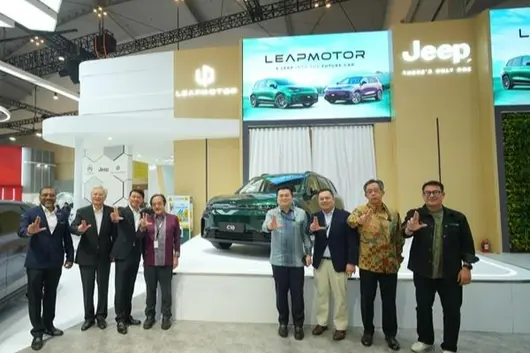

On August 1st, sales data for July for various new energy vehicle brands were released.
Leapmotor Cars revealed its July "achievements" first — 101,267 units, a year-on-year increase of 102%, equivalent to more than double the same period last year.
Leapmotor broke through the 100,000-unit delivery threshold for the first time, becoming the first vehicle manufacturer in the history of China's new car makers to achieve single-month deliveries exceeding 100,000 units.
The drama lies in: Xpeng 38,027 units, NIO 35,934 units, Li Auto 30,468 units — the former "Top 3 of NIO, Xpeng, and Li Auto" now only match Leapmotor when combined. Li Auto even saw double declines month-on-month and year-on-month for three consecutive months. Once the top dog among new forces, it is now far behind Leapmotor by more than three times.
Even Huawei's "Harmony Intelligence" alliance ("Five Realms"), which claimed to "lead far ahead," had July sales of 45,046 units.
Many car enthusiasts only realized at this point: When did Leapmotor become this amazing?

01. Others Make Money from Branding, Leapmotor Makes Money from "Factory" Costs
The core reason Leapmotor has reached today is four words: Full-Stack Self-Research.
Many people don't grasp these four words, thinking isn't it just about developing things yourself? But what Leapmotor does is far more extreme than most imagine.
As of now, Leapmotor's self-developed and manufactured parts account for 65% of the total vehicle BOM cost. What does that mean? From the core "three-electrics" (battery, electric drive, electric control) to smart cockpits, smart driving, and electronic architecture, extending to compressors, headlights, seats, bumpers, and on-board power supplies—things traditionally thought unnecessary to build in-house—as long as the value is high enough, Leapmotor does it all itself.

Zhu Jiangming calculated a figure: Based on the industry average gross margin of 15% for auto parts, just from self-research, Leapmotor's cost per vehicle is about 10% lower than competitors.
What does this 10% mean? It means with the same configuration, Leapmotor can be 10,000 to 20,000 cheaper than others and still make money; while selling at this price causes others to lose money, Leapmotor can still maintain a healthy gross margin.
This is not a marketing gimmick; it is a manufacturing gene carved into Zhu Jiangming's bones. Many may have forgotten that before making cars, Zhu Jiangming was one of the founders of Dahua Technology, engaged in security manufacturing for decades. What was the environment of the security industry? Price wars down to the bone, squeezing costs penny by penny. Others see suppliers that need management; Zhu Jiangming sees how much profit from middlemen can be squeezed out.
A classic example is headlights. When Leapmotor made its first car, supplier quotes were several thousand yuan per set. Zhu Jiangming led the team to calculate it themselves, using Dahua's embedded technology accumulation to self-develop, ultimately cutting the cost in half.
So you find Leapmotor's cars strange: Why is the configuration higher and the price lower than others? It's not Leapmotor losing money to shout for sales; it's because it gives all the profit from the middle of the supply chain to consumers. In Zhu Jiangming's own words: "We just make money from being a contract factory, everything else goes to the users."

02. Does Leapmotor Have Its Own Core Technologies?
Many people have a misconception about Leapmotor, thinking it relies solely on cheapness and lacks technology.
This is actually the biggest misunderstanding.
Low price is just the result; behind it is a whole self-developed technology system supporting it.
The most core is the "Cloverleaf" Central Integrated Electronic Electrical Architecture. This is complex if complicated, simple if simple: Traditional cars use a distributed architecture where dozens of ECUs manage their own tasks; Leapmotor uses one SOC chip plus one MCU to integrate the functions of the Cockpit, Smart Driving, Powertrain, and Chassis four domains together.
What is ruthless is that this architecture isn't just for flagship models; even the 100,000-level A10 has it as standard, which was unthinkable in the past.
With centralized architecture, the whole vehicle's response speed, OTA capability, and failure rate will be much better, and costs will drop instead.
Next is CTC 2.0 Plus Battery-Chassis Integration Technology. Leapmotor is one of the earliest Chinese vehicle manufacturers to mass-produce CTC; now cumulative installations exceed 500,000 units. Simply put, the battery is integrated directly with the chassis, removing the traditional battery pack cover, saving space and reducing weight while increasing body rigidity. Regarding safety, Leapmotor's battery achieves thermal runaway prevention for 48 hours without fire or explosion, which is 24 times the new national standard.

Regarding the three-electrics, Leapmotor's intelligent oil-cooled electric drive is fully self-developed and manufactured. The 8-in-1 integration degree is higher than the industry mainstream 3-in-1 or 6-in-1, with better efficiency and reliability. The 800V High-Voltage SiC platform is not exclusive to high-end cars; from the 200,000-level C series to the 100,000-level B series, everything needed is included. Coupled with 4C supercharging, the energy replenishment speed fully matches the first tier.
Smart driving was previously Leapmotor's weak point, but now it has caught up. The combination of LiDAR + Qualcomm 8650 smart driving chips can already achieve full-scenario navigation from parking spot to parking spot, and it is standard with permanent free use. In September's Technology Day, Leapmotor will also launch the next-generation smart driving based on world models, directly benchmarking the industry's first tier.
To put it plainly, Leapmotor isn't without technology; it puts all technology where users can touch it, rather than spending on marketing and brand premium.
03. Covering Everything from 60,000 to 300,000, This Is the Greatest Open Strategy
Leapmotor's second smart move is that it never had the "baggage of a new force" mindset.
When other new forces started, almost all focused on the high-end market above 300,000 yuan, talking about brand, tone, and user circles, as if they weren't qualified as new forces if they didn't sell a bit more expensive. Result? As soon as the market fluctuates and high-end consumption power drops, sales immediately come under pressure. Li Auto's current predicament is largely because its products are all stuck above 300,000 yuan, unable to go up or down.
Leapmotor is different; it never thought about doing only high-end from the start. Now Leapmotor's product matrix, A, B, C, D four series, covers from the 60,000 yuan entry-level car all the way to the flagship MPV above 300,000 yuan, covering all mainstream price bands without missing a single one.

The sales structure of the just-ended July explains the problem well:
1. A-series A10, monthly sales near 30,000 units; this is Leapmotor's basic base, firmly grasping the widest range of entry-level users;
2. B-series broke 20,000 units in July, with global cumulative sales already reaching 250,000 units;
3. C-series C10 global monthly sales steadily break 10,000, C-series cumulative sales reached 850,000 units;
4. High-end D19 monthly sales broke 10,000, newly launched MPV D99, the average price of the first batch of orders went directly to over 300,000 yuan.
Low-end cars drive volume to dilute costs, mid-range cars contribute profits, high-end cars build brand image, forming a complete pyramid across the entire price band.
Unlike other new forces that walk on one leg and wobble when the market changes, this is the most terrifying part of Leapmotor.
Many people look down on low-end cars, thinking 60,000 or 80,000 yuan cars don't make money.
But the fact is, it is precisely these volume-driving entry models that supported Leapmotor's supply chain scale.
The larger the scale, the lower the cost of self-developed parts; the lower the cost, the more competitive the product, then selling more — this is a positive cycle.
Now this cycle is already turning.

04. Leapmotor's Overseas Business Is More Intense Than Anyone Thinks
Many only see Leapmotor selling well domestically, failing to notice its overseas business has quietly become the number one among new forces.
Leapmotor's internationalization follows the "borrowing a boat to go overseas" route in cooperation with Stellantis. No need to build channels from scratch; directly use Stellantis' dealer network globally. Now Leapmotor has entered 35 countries and regions worldwide, with over 800 overseas sales service outlets.
In 2025, Leapmotor exported 60,000 units for the full year, the most among new forces. This year the speed is even faster; in July, it just started delivery in Mexico and announced local KD assembly production in Indonesia.

In Europe, Leapmotor B10 sells starting from €29,900, which converts to over 230,000 RMB, more than double the domestic price, yet it still sells well — in the Italian market, 1 out of every 3 pure electric cars is a Leapmotor B10.
Zhu Jiangming's goal is even more exaggerated; he says Leapmotor's future overseas sales share must account for 60% of total sales. What does that mean?
If Leapmotor really achieves annual sales of 1 million units next year, that is 600,000 units for export; this number is something even many traditional car manufacturers cannot achieve now.
In contrast, other new forces' overseas efforts, NIO and Xpeng, are still in a small-scale trial phase; Li Auto basically hasn't gone overseas at all. When the domestic market is fighting fiercely, Leapmotor has already opened a second battlefield overseas, using domestic cost advantages to fight the overseas market; this is another dimensional strike.

05. Does Leapmotor Have Weaknesses?
Monthly sales of 100,000 is naturally not the endpoint; Leapmotor itself knows very well where the weaknesses lie.
Previously many complained Leapmotor's smart driving was average, after all, money was spent on hardware and three-electrics, so software algorithm investment came relatively later.
But Zhu Jiangming has already announced that this September on Leapmotor Technology Day, Leapmotor will release a smart driving system based on world models and will catch up on smart driving.
In addition, the all-new model A05 will be released in August, making the product matrix denser.

From monthly sales of a few hundred units 6 years ago to 100,000 units today, the path Leapmotor took is actually not fresh at all — it's just the traditional manufacturing model: keep technology in your own hands, bring costs down, spread products fully, and take the market to the whole world.
It's just that in the industry where everyone wants to tell new stories and overtake on a bend, there are too few willing to put in this kind of hard work.
While other new forces were still struggling hard for monthly sales of 30,000 or 40,000 units, Leapmotor has quietly set its goal at annual sales of 1 million, even 4 million in the future.
Now looking back, it's not that Leapmotor suddenly became popular; it's just the harvest season.
Now looking back, it's not that Leapmotor suddenly became popular; it's just the harvest season.
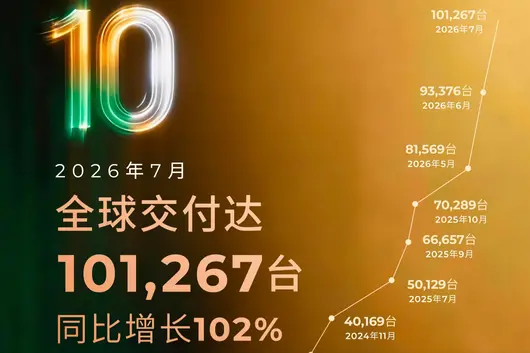

The 2026 Indonesia International Auto Show officially kicked off. Chinese smart electric vehicle brand Leapmotor appeared with global flagship models Leapmotor B10 and C10, announcing its entry into the Indonesian market. The simultaneous local KD assembly plant production plan is a significant milestone in Leapmotor's Southeast Asian localization production strategy. Leveraging full-domain self-developed technology and local channel resources, Leapmotor uses Indonesia as a core fulcrum to build a new energy industry layout covering the entire ASEAN region.
The B10 and C10 landing in Indonesia this time are strategic models built by Leapmotor for the global market, precisely aligning with the core needs of Indonesian family travel. Spacious interior space and a full suite of smart in-vehicle configurations have become the core competitiveness of the two models. Supporting the product differentiation advantage is Leapmotor's long-term full-domain self-research route. Core parts independently developed and manufactured by the brand account for over 65% of the total vehicle cost, covering key vehicle sections such as electric drive systems, power batteries, smart cockpits, and central electronic/electrical architecture. This highly vertically integrated self-research system not only continuously compresses R&D and manufacturing costs but also allows Leapmotor to quickly iterate electrification and intelligence technologies, providing product solutions adapted to local road conditions and driving habits for overseas markets.

Local manufacturing is Leapmotor's core lever for deep diving into the Indonesian market. Leapmotor reached deep collaboration with Indonesia's local top enterprise Indomobil Group, leveraging its subsidiary PT National Assemblers to build KD semi-knocked-down assembly lines. This production base located in Bekasi was completed for production and debugging as early as April 2026. The first batch of locally assembled B10 and C10 models will be officially delivered to Indonesian consumers in August 2026. With the Indonesian KD factory landing, Leapmotor simultaneously possesses two major Southeast Asian local production bases in Malaysia and Indonesia, becoming one of the few new energy vehicle enterprises in the region with dual KD manufacturing capacity. The local production model not only shortens vehicle delivery cycles and avoids cost pressure brought by whole vehicle import tariffs but also drives the development of the local automotive supply chain in Indonesia, creates a large number of technical jobs, and achieves two-way empowerment of brand development and local industrial upgrading.

A complete sales service network is an important support for overseas market development. Leapmotor leverages dual cooperation resources to build a service system covering all of Indonesia. On one hand, relying on Stellantis Group's mature brand house operation model, Leapmotor entered local Stellantis brand showrooms, displaying and selling alongside well-known models like Jeep and Citroën in the same store, creating a one-stop car viewing, buying, and maintenance service scenario. On the other hand, relying on Indomobil Group's distribution channels deeply cultivated in Indonesia for years, its subsidiary PT Indomobil National Distributor is fully responsible for retail layout. The brand plans to build 50 offline outlets integrating sales, after-sales, and maintenance in Indonesia by the end of 2026, eliminating channel concerns for local consumers purchasing new energy vehicles.

Entering the Indonesian market is also a key result of the landing of Leapmotor and Stellantis's global strategic cooperation. Both parties reached capital cooperation in 2023, and in 2024 formed an international joint venture focusing on overseas markets. Relying on multinational group global channel resources, Leapmotor products are now sold to over 40 countries globally, offline sales outlets exceeded 2,000, and global cumulative vehicle delivery volume exceeded 1.5 million units. Facing long-term development in Southeast Asia, Leapmotor has set a clear product iteration rhythm, planning to launch a new model for the ASEAN market every year, continuously enriching the pure electric and extended-range dual-line product matrix, covering consumer groups with different price points and usage scenarios.
The landing of this Indonesian market is not just a simple expansion of Leapmotor's overseas territory but also a brand new practice of the localization overseas model for Chinese new energy vehicle enterprises. In the future, Leapmotor will continue to deepen collaborative cooperation with Stellantis and Indomobil local partners, centered on the Indonesia manufacturing base, linking markets of various Southeast Asian countries, building a complete localized R&D, production, sales, service electric mobility ecosystem, letting Chinese new energy vehicles with both high cost-performance and cutting-edge intelligent technology benefit more ASEAN household users, continuously conveying a brand new lifestyle of green smart mobility.
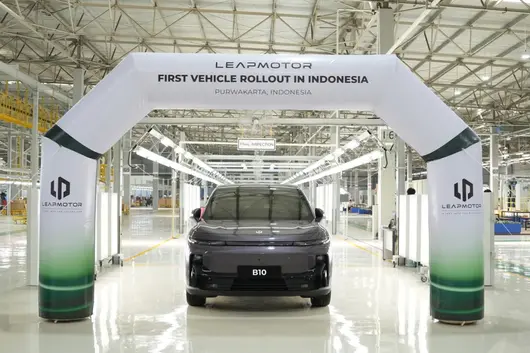

On July 24, at the GIIAS Indonesia International Auto Show, Leapmotor announced its official entry into the Indonesian market. Leapmotor's KD assembly plant, in cooperation with PT National Assemblers under the Indomobil Group, started operations in Purwakarta, West Java this April. The first batch of Leapmotor B10 and C10 units are expected to be delivered to Indonesian users starting in August.
 Light Asset Entry, Heavy Technology Backing
Against the backdrop of BYD's Subang plant putting 150,000 units of annual capacity into production and SAIC-GM-Wuling deepening its roots in Cikarang for many years, Leapmotor chose a differentiated light asset path, with its core chips lying in vertical technology integration. Leapmotor includes about 65% of core components in the total vehicle cost, such as electric drive, battery systems, and electronic/electrical architecture, into the self-research category. In this model, although only knock-down assembly is performed in Indonesia, core parts are supplied directly from the China headquarters. This effectively avoids quality control fluctuations caused by insufficient early localization rates and ensures the Purwakarta-made experience is consistent with the Hangzhou-made one.
 Channel Leverage, Avoiding Trial-and-Error Costs
Relying on Stellantis Group resources, Leapmotor will enter the Stellantis Brand House in Indonesia, sharing showroom traffic with Jeep and Citroën brands. Meanwhile, PT Indomobil National Distributor will undertake the national distribution task, planning to build 50 sales and service outlets by the end of 2026. The strategy of "leveraging the wall to take root" significantly shortens the market cultivation period. Under the current circumstance of Indonesia's after-sales infrastructure not yet being perfect, sharing the after-sales outlets of mature brands directly reduces consumers' purchase concerns and the brand's operational risks.
 Dual-Point Layout, Hedging Tariff Risks
With the Indonesian plant landing, Leapmotor has formed a dual KD pivot structure of the Malaysia Kulim Plant and the Indonesia Purwakarta Plant in Southeast Asia. This layout directly targets the complex Rules of Origin in ASEAN. Current Indonesian policy requires an EV localization rate of 40% in 2026, rising to 60% in 2027. Leapmotor meets the standard quickly through the KD model. Compared to the factory construction cycle of full processes that often takes 2 to 3 years, it secured at least an 18-month policy window period.
 Pricing Strategy Shows Cost Advantages
Prices announced on site show that the Leapmotor B10 Jakarta on-road price is 499 million Indonesian Rupiah (approx. 220,000 RMB), and C10 is 618 million Indonesian Rupiah. Combined with special discounts for the first 500 orders before the auto show, Leapmotor precisely cuts into the pure electric SUV consumption segment of middle-class families in Jakarta.
 An Attempt from Internal Competition to External Expansion
Currently, the market share of Chinese brands in Indonesia's new energy vehicle market exceeds 90%. Leapmotor's entry this time provides a new paradigm for going global: "full-domain self-research + local assembly + giant channel". Currently, Leapmotor's global cumulative deliveries have surpassed 1.5 million vehicles, with business covering more than 40 countries. The landing of this Indonesia KD project marks that its global expansion strategy is transforming from single-trade exports to a regional manufacturing center.
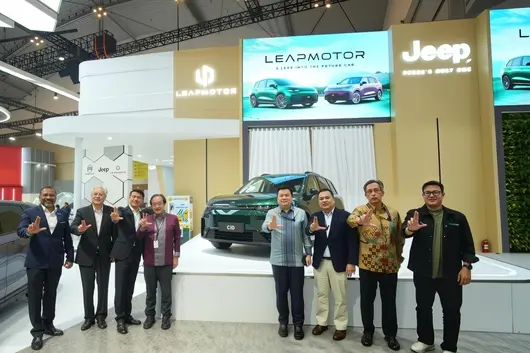

July 2026, Leapmotor showcased the two global models, Leapmotor B10 and C10, at the 2026 Indonesia International Motor Show (GIIAS 2026), and officially announced entry into the Indonesia market. On the same day, Leapmotor and Indonesia's Indomobil Group jointly announced the official initiation of localized KD assembly production in Indonesia. Through deep cooperation with PT National Assemblers, a subsidiary of Indomobil Group, Leapmotor brings an excellent smart mobility experience to Indonesian consumers.
Dual Model Premiere, B10 and C10 Debuts in Indonesia

These two global strategic models showcased at the 2026 Indonesia International Motor Show this time—Leapmotor B10 and C10—both reflect Leapmotor's core advantage of "Full-domain independent R&D". Leapmotor independently develops over 65% of vehicle core components exceeding the total vehicle cost, including electric drive, battery system, smart cockpit, and electronic and electrical architecture. This high degree of vertical integration capability enables Leapmotor to continuously optimize costs from design to production and quickly drive technological innovation.
With the growing family vehicle demand in the Indonesia market, Leapmotor B10 and C10 will bring high-quality electric mobility experience to local consumers through rich intelligent configurations and outstanding space performance.
Localized Manufacturing Implemented, KD Factory Officially Begins Production

Leapmotor cooperates with PT National Assemblers, a subsidiary of Indomobil Group, and has currently initiated localized KD assembly production in Indonesia. The Indonesia KD factory officially commenced operations in April 2026. The first batch of Leapmotor B10 and C10 models off the line are expected to start delivery from August.

With the official production of the Indonesia KD factory, Leapmotor has formed a Malaysia-Indonesia localized manufacturing layout, becoming one of the few new energy vehicle brands in Southeast Asia possessing dual KD production bases, laying a solid manufacturing foundation for next steps radiating to the entire ASEAN market. Leapmotor's localization layout in Indonesia not only can quickly respond to market demand but also will create technical jobs for the locality and promote the localization development of the supply chain.
Dual Support from Stellantis and Indomobil, Building a Complete Sales Service System

Leapmotor regards Indonesia as an important base for manufacturing and growth in the Southeast Asia region. Leveraging the Stellantis Brand House (Stellantis Brand House) model, Leapmotor will sell in the same store as brands such as Jeep and Citroën, providing consumers with a one-stop sales and after-sales service experience. Benefiting from Indomobil Group's nationwide distribution network and retail system, Leapmotor's sales and network development locally will be handled by PT Indomobil National Distributor, and it plans to build 50 sales and service outlets in Indonesia by the end of 2026.
Leapmotor's entry into the Indonesia market is another important result of global strategic cooperation with Stellantis. Currently, Leapmotor's business has expanded to over 40 countries globally, possessing over 2000 sales outlets, and the global cumulative delivery volume has exceeded 1.5 million units. With the gradual promotion of localized KD production and the continuous enrichment of product lines, Leapmotor plans to launch a new model annually, continuously bringing more electric vehicle models equipped with cutting-edge technology to Indonesia and surrounding markets.
Leapmotor persists in full-domain independent R&D of core technologies. In the future, Leapmotor will continue to deepen strategic synergy with Stellantis and local partners, with Indonesia as a fulcrum, accelerate the construction of an electric mobility ecosystem covering Southeast Asia, and allow more consumers to enjoy the new life of green smart mobility brought by technology inclusiveness.
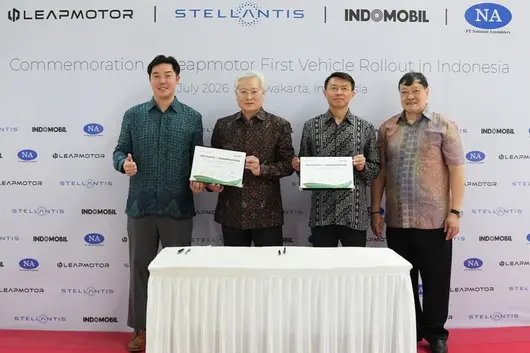


"In the first 5 months of this year, hundreds of new car models launched, but sales contracted. The combination of declining sales, revenue, and profits is unprecedented." At the just-concluded 2026 China Automotive Chongqing Forum, Wang Xia, President of the Automotive Division of the China Council for the Promotion of International Trade and President of the Automotive Chamber of the China Chamber of Commerce, pinpointed the chronic involution in the current auto market.

The first half of this year has not ended yet, with 544 new car models launched domestically, including 71 brand new and facelifted models. However, national passenger car retail sales dropped nearly 20% year-on-year in the first 5 months. If exports are excluded, this figure is 23.8%. Not only fuel vehicles, but new energy vehicles also declined over 15% year-on-year. The auto market has fallen into 'false diligence' where the more effort one puts in, the more poignant it becomes.
The most terrifying aspect is that the automotive industry's profit margin was only 3.2% in Q1, a historical low. Regarding this, President Wang Xia stated: "Sales without profit support are just empty number games; profits maintained by subsidies are ultimately a castle in the sand."

As top new force players, Li Auto and Xpeng reported revenue growth rates of -11.4% and -17.6% respectively in Q1 2026. NIO benefited significantly from high-end models like the new ES8 launched in Q4 last year, with a growth rate of 112.2% in Q1, but still reported a net loss of 330 million yuan. Leapmotor, ranked first in deliveries, had a growth rate of 8%, with revenue hitting a record high for the same period last year. Why was Leapmotor able to achieve a 'double kill' of sales and revenue during the Q1 downturn in the auto market? Will the newly launched C Series help Leapmotor achieve its annual million sales target?
C Series sales share decline 'reasonable'? Will it definitely return to 50% after new launch!
Leapmotor was the new force sales champion of 2025. Following a full-domain self-research route, over 65% of core components are self-produced, resulting in lower manufacturing costs than competitors. The product matrix simultaneously covers the 100,000-200,000 yuan market segment. Pure electric + extended range dual lines have no shortcomings. Coupled with sufficient capacity support for continuous delivery, the pragmatic industrialized car manufacturing route and the 'half-price home SUV' label perfectly fit current mainstream consumer demands. This is the reason for its counter-trend growth.

In the past two years, C10/C11/C16, C Series models contributed massively to Leapmotor's sales. Sales share was 77% in 2024, 55% in 2025, but only 36% in Q1 2026. Why do the sales pillars fail? Because Leapmotor knows that to achieve the million sales target, C Series alone cannot support it; they must optimize product structure and bloom at multiple points.

So at the end of last year we saw the volume-driving A Series, profit-guaranteeing B Series, foundation C Series, and premium D Series. These four pillars support Leapmotor's sales. This year Q1 was also the C Series gap period, old models clearing stock, users waiting for facelifts, demand will concentrate on the second half.

The recently launched Leapmotor C Series focuses on unchanged prices with upgraded configurations. The whole range gets 8295 chips, LiDAR is moved down, and range is improved. This product structure repair was very timely, filling all pain points, so C Series sales share will significantly recover in the second half. Bold prediction: it will return to 50%.
Can the million sales target still be achieved? Where is the bottleneck? How to win?
Conclusion first: The 1 million annual sales target is challenging to reach, but likely achievable. Leapmotor's annual sales target composition is 900,000 domestically, 100,000-150,000 overseas.

Bottlenecks remain, a well-worn topic being slow capacity ramp-up. The Jinhua, Zhejiang factory producing the 100,000 yuan main model A10 started two-shift production in April, aiming for 30,000+ capacity in June. It still has distance from the 100,000 per month target. The Hefei factory just started production in May, with two-shift annual output 200,000-400,000, but capacity release is late, contributing limitedly in the short term. Plus battery cells, chips, and automotive-grade storage are still tight and prices are rising, restricting full production progress.

However, Leapmotor is very confident in the Jinhua, Hangzhou, Hefei golden triangle capacity layout, with a total annual planned capacity of 1.46 to 1.51 million units, nearly 1.5 times the million sales target. There is determination that as long as orders continue to pour in, they can handle this tremendous fortune.

Back to products, A10 first month firm orders broke 40,000 units, D19 broke 15,000 firm orders in 15 days. Plus this month's facelifted C Series, sales will likely hit new highs in the second half. Also, there is an ace card positioning the 50,000-70,000 yuan range, targeting the sinking market—A05 launching soon. This small car can add L2-level driving assistance systems, crushing competitors at the same level.

As long as Leapmotor can take a huge market share in this price range, other competitors will have no chance to turn the tables. Consumers at this price point are usually very price-sensitive. Either first-time buyers with budget constraints, or second family cars with limited demand, so price will be the biggest factor in decision-making. A05 will likely become a rocket accelerator on Leapmotor's million sales journey.

Except for the domestic market, Leapmotor Q1 overseas exports were about 40,000 units, exports skyrocketed 442% year-on-year, ranking first in export volume and export share among new forces. This benefits from Stellantis Group's 40 countries, 800+ store resources. Leapmotor doesn't need to build global channels itself, which is unique among all new forces. In the second half, with factories in Spain, Malaysia, etc., going into production, Leapmotor's overseas sales might have even bigger surprises.

In the road to smashing the million sales target, Leapmotor has one last trick: trade price for volume. Compared to competitors, Leapmotor still has room for price cuts in the 100,000 yuan range, but Leapmotor leading sales won't take risks desperately. After all, once prices drop, it's hard to recover.

Another reason for confidence in Leapmotor's second half sales is market laws. Looking at the past 5 years, the auto market shows a pattern of slow first half, busy second half. Usually, the second half accounts for 55%–60% of the full year. As Leapmotor Vice President Li Tengfei said: "Annual sales will show a trend of first suppress then rise. We are very confident in the goal of hitting 1 million units."
Can selling at low prices break the predicament where bigger scale means weaker profitability?
From annual loss of 5.1 billion to profit of 540 million, Leapmotor interpreted a textbook loss reduction curve in just three years. But Q1 2026 Leapmotor welcomed new challenges. Gross margin 9.4%, less than the 14.9% of the same period last year. Net loss 390 million yuan. Last year same period lost only 130 million yuan. And last year Q4 still made 360 million.

Leapmotor car profit in 2025 was 903 yuan per unit, less than one-tenth of BYD, one thirty-fifth of Li Auto. Selling the most, but earning the least. And B10 new model R&D, overseas channel deployment, Malaysia and Spain factory production, all require continuous investment.

Although Leapmotor has run through the economies of scale loop through extreme cost control and high sales turnover, the profit ceiling under the low-price strategy is gradually becoming clear. Leapmotor sales are still new highs, scale is still growing. By 2028 economies of scale will be fully released, fixed cost per unit significantly diluted.

Additionally, Leapmotor's LEAP 3.5 architecture, C/B Series model component commonality rate reached 88%, amplifying 'reuse effect' not only shortened new model development cycle by 25% compared to previous generation, whole vehicle R&D investment will also reduce by 40%. It also improved procurement bargaining power by sharing core parts like chassis, lights, seats. Only then will economies of scale welcome the true inflection point on profits. At the same time, Leapmotor also announced plans to launch its own second high-end independent brand in 2027. New product pricing will target the 300,000 yuan+ high-end market, opening price ceiling, boosting brand premium.

Domestically using high specs low prices to seize market, overseas Leapmotor actively borships seeking premium space. Global fourth largest carmaker Stellantis Group, after announcing deepening strategic cooperation with Leapmotor on May 8 this year, decided to hand over operation rights even ownership of its European flagship factory to Leapmotor. In the near future the Spain Zaragoza Plant that once produced Opel, Peugeot will produce Leapmotor's B10. And the Madrid Villaverde Plant that once produced Citroën will also start producing Leapmotor in 2028.

Besides this, based on Stellantis Group's advantage of over 30% market share in South America, Leapmotor's Brazil Plant is also progressing in an organized manner. And with South East Asia market performance year-on-year improvement this year, Leapmotor is also actively advancing Indonesia, Malaysia, Thailand plant plans. In the future high gross margin overseas business share will rise, balancing Leapmotor's domestic low-price involution losses.
Conclusion
Leapmotor founder Zhu Jiangming once said: "Only by surviving can we develop. Making scale bigger is a goal more important than profitability." So at this stage after Leapmotor completes the million sales target, it will smoothly pass through the cycle. But profitability yields to scale expansion, annual 5 billion net profit goal will be missed.

Just as President Wang Xia said at the beginning, scale without profit is poison. In this final elimination race of global new energy giants, million sales were never the goal. To get the ticket to the future, either run through unmanned driving, get the next baton of technical revolution, or run through overseas markets, become the 'Toyota' of the new energy era.



Recently, Leapmotor announced May sales data, with single-month deliveries reaching 81,569 units, a year-on-year growth of 81%, and a month-on-month increase of 14.26%. This impressive performance report propelled Leapmotor to become the focus of the domestic new energy vehicle market. Following the current growth pace, the brand's annual sales are expected to break the million mark, joining the top ten domestic passenger car sales rankings. Comparing industry data reveals that last year the tenth domestic automaker had an average monthly sales volume of about 71,000 units, while Leapmotor's current monthly sales have surpassed this level. It also widened the gap with top new forces like Li Auto, Xpeng, NIO, Zeekr, etc., as the latter brands maintained May deliveries within the 30,000-unit range. Looking back at the development history, Leapmotor's growth speed is astonishing. In 2019, the first model's annual sales were less than 3,000 units; in 2025, annual deliveries approached 600,000 units; and by this May, it successfully stepped onto the monthly sales 80,000-unit plateau, becoming one of the fastest-growing new energy brands in China. As sales continue to rise, the market also began to explore which consumers are choosing Leapmotor vehicles.

Currently, the penetration rate of new energy vehicles in China has surpassed 50%, and the market development logic has witnessed a significant shift. In the early stage of industry development, new energy vehicles mainly relied on tech-savvy early adopters who love new things. Now, the core driving force for market growth has gradually shifted to the replacement demand of traditional fuel car owners. For ordinary family consumers, car purchasing focuses more on practicality and cost-effectiveness. Currently, in most regions in China, 92 octane gasoline prices have long stayed around 8 yuan per liter. Annual fuel costs for a conventional fuel car often exceed 10,000 yuan. The lower usage costs of new energy models have become a key factor in attracting replacement buyers. Leapmotor's main products focus on the 100,000 to 200,000 yuan price range, which is the largest passenger car volume segment in China, precisely capturing the two market trends of fuel car replacement and new energy vehicle penetration into lower-tier markets. Surveys show that many walk-in intention users originally drove mainstream family fuel cars like Sylphy, Lavida, Haval H6, etc. When choosing cars, they value interior space, range capability, practical configuration, and cost-performance ratio more. Meanwhile, charging infrastructure in tier-3, tier-4 cities and county markets continues to improve, making up for the shortfalls of new energy vehicle penetration. Leapmotor's entry-level model A10 has gathered numerous orders in tier-3 and lower cities. Only months after launch, this model's May sales reached 23,000 units, fully demonstrating the consumption potential of lower-tier markets.
Combining the domestic vehicle insurance data for the first four months of 2026, one can clearly outline the overall profile of Leapmotor's domestic users. Data shows that multiple models under Leapmotor share sales pressure, and the product matrix development is balanced. Among them, C10 cumulative insurance coverage is close to 30,000 units, accounting for the highest proportion of total sales. Models like B01, C11 also have impressive market performance. From the user attribute perspective, Leapmotor's core customer group is pragmatic family users. Purchase budgets are mostly concentrated around 150,000 yuan, pursuing high space utilization, reliable range, smart configuration, and low usage costs. Different models correspond to differentiated consumer groups: The entry model A10 mainly targets families with children, belonging to first-time purchase or additional purchase models for the family. Female user proportion is considerable, and many users prefer the long-range version. Usage scenarios include long-distance self-driving. While the flagship SUV D19 targets the middle-class upgrade replacement group. Car owners are mostly middle-aged and young workplace management levels. Among them, there are many old owners of luxury brands and old Leapmotor users. Positioning leans towards the high-end family market. From the city distribution perspective, Hangzhou, Guangzhou, Chongqing, Shanghai, Chengdu, and other tier-1 and new tier-1 cities are Leapmotor's main sales bases. The Zhejiang local market is particularly well-rooted, and sales in multiple prefecture-level cities remain firmly at the forefront. It is worth mentioning that Leapmotor's sales basically come from personal private car procurement. The proportion of operating vehicles is extremely low, and terminal market development is very healthy.

Besides deepening the domestic market, the overseas market has also become a brand new growth engine for Leapmotor. In the first four months of 2026, Leapmotor accumulated exports of 64,000 units. April single-month exports reached 22,000 units, accounting for 30% of that month's total sales. The brand tailored different models for different overseas road conditions, purchasing power, and driving habits, launching differentiated models to achieve precise layout. Europe is Leapmotor's largest overseas market. Local fuel costs are high, urban roads are narrow, and the compact and flexible T03 became the export mainstay. Relying on price and configuration advantages, it gained numerous orders in countries like Italy and Belgium. In the Southeast Asian market, local consumers have limited budgets, and the economic and practical T03 is equally popular. The South American Brazil market, with vast territory and high long-distance travel demand, focuses on the extended-range model C10, precisely adapting to local travel scenarios. In terms of channel layout, Leapmotor chose to cooperate with the international automotive giant Stellantis. Leveraging their mature distribution network and after-sales system, they quickly opened the overseas market, while also laying out local factories in places like Spain and Malaysia. This further reduced operating costs and avoided tariffs, accelerating overseas market expansion.
Leapmotor managed to stand out among a crowd of new energy new forces, achieving a monthly sales result of 80,000. Behind this is a clear development strategy and hard-core comprehensive strength. The brand did not blindly chase the high-end market and flashy tech concepts, but has been long rooted in the mainstream family market, creating a complete product matrix covering the 70,000 to 300,000 yuan price band to meet the car usage needs of families at different levels. Full-domain self-research is Leapmotor's core trick for controlling costs. Its core component self-research rate exceeds 65%, and the vehicle platform component commonality rate reaches as high as 88%. This effectively got rid of reliance on external supply chains, allowing products to maintain affordable prices while guaranteeing configuration. Now Leapmotor is working on both domestic and overseas lines, effectively hedging the operational risks of a single market. Financial performance has also remained stable. In 2025, it successfully achieved full-year profit. In the first quarter of this year, under the premise of continuous investment in overseas factory building and new product R&D, it still maintained a considerable gross profit margin.

Looking back at Leapmotor's development path, its success logic is simple and pragmatic: Conforming to the big trend of new energy vehicle popularization, targeting the huge base of ordinary family consumers, relying on R&D technology to control costs, relying on rich models to cover segmented needs, and leveraging cooperative channels to develop the overseas market. At a time when the car market is returning to rationality, consumers no longer simply chase brand gimmicks, but vote with actual consumption choices. Leapmotor's rise also confirms a truth: In the fiercely competitive automotive industry, accurately grasping the real needs of the masses and continuously providing high-value products is how one can stand firm and achieve long-term development.