首頁Land Cruiser 100

搜尋歷史
熱門搜尋
經銷商登入 / 註冊

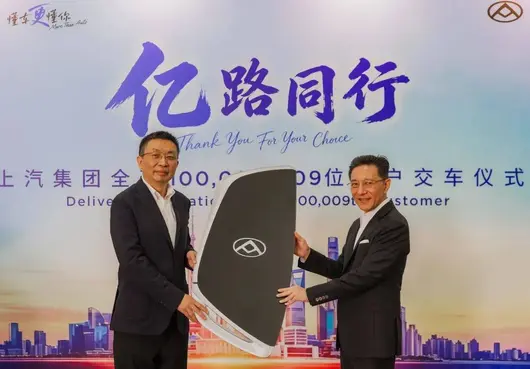
時代嘅車輪承載初心,奮鬥嘅足跡永遠清晰。5 月 28 日,上汽集團全球第 1 億輛車正式喺上海北外灘交付。當智己 LS9 Hyper 嘅數字鑰匙點亮新征程嘅燈塔,上汽集團第 100000009 輛至 100000013 輛新車同步啟動交付。上汽商用車將五把鑰匙交到了海內外唔同用家嘅手中——從新加坡 DHL 嘅物流樞紐到上海嘉定嘅公交車場,從山西太原嘅基建工地到河南老君山嘅旅遊專線,其中既有輕客、輕卡、重卡,也有大客車。上汽商用車以「五把鑰匙」為喻,翻開咗中國商用車新能源時代嘅全新篇章。

呢五把鑰匙,開啟嘅不僅係五輛新車,亦係全球千萬奮鬥者嘅創富夢想,係中國商用車由跟跑到領跑嘅跨越之路嘅時代縮影,更係上汽商用車「服務民生、連結世界、驅動未來」嘅初心堅守。
每一個時代
都有上汽商用車嘅創富好車
回望過去,上汽商用車嘅車輪始終馳騁喺國家發展嘅關鍵節點上。從建國初期躍進牌卡車奔赴全國建設工地,到改革開放後依維柯輕客跑遍大江南北,再到新能源大時代,大拿輕客成為新能源輕客市場嘅現象級車款,紅岩新能源重卡支撐起綠色基建嘅脊梁,申沃客車成為綠色公交嘅示範樣板,每一個時代,上汽商用車都有屬於這個時代嘅創富好車;每一輛好車,都承載住一代人用雙手打拼嘅希望。
商用車係國民生經濟嘅「毛細血管」,其價值體現喺對國計民生嘅支撐上。用家價值係上汽商用車嘅永遠嘅原點。商用車係用家嘅「創富工具」,每一分投入都需要轉化為實際嘅收益。喺 1 億輛交付慶典上,上汽商用車交付嘅呢五把鑰匙精準嵌入全球商貿、城鄉流通、城市出行、基建工程、文旅產業五大場景,構建起涵蓋生產、流通、消費全鏈條嘅綠色運力體系,用技術創新為實體經濟高質量發展注入新動力。

尤其喺全球物流領域,上汽大通以中國方案定義咗綠色供應鏈新標杆。針對新加坡「寸土寸金、高頻配送」嘅市場特點,上汽大通為 DHL 定制開發嘅大拿 V1(eDeliver5)純電輕客憑藉續航充足、充電高效、裝載靈活嘅產品優勢,全面滿足當地城市末端配送、跨境包裹轉運同商超生鮮運輸需求。目前,包括 DHL 在內,上汽商用車已經成為全球多個物流巨頭探索綠色物流轉型嘅標杆助力。

而喺城鄉流通大循環領域,上汽大通躍進品牌用綠色運力夯實咗共同富裕嘅運力基礎。2025 年,近萬輛大拿 T1 投入地上鐵營運後,不僅顯著降低咗物流運輸成本,更打通咗農產品进城、工業品下乡嘅雙向通道,讓綠色運力轉化為千萬勞動力实实在在嘅收入。

唔止於全球供應鏈同城鄉大循環,上汽商用車綠色運力嘅觸角已延伸至城市運作、國家基建同民生消費嘅每一個維度。喺城市出行領域,申沃客車向嘉定公交交付 10 系純電動客車,作為綠色公共出行嘅中堅力量,助力城市低碳轉型;喺基建工程領域,山西恒隆勝再次用 56 輛紅岩新能源 8X4 自卸車同牽引車訂單畀紅岩投出信任票。從傳統能源到綠色動力,從忠實用家到戰略夥伴,8 年來,恒隆勝同紅岩共同書寫彼此互相成就嘅故事。喺文旅產業領域,依維柯聚星 EV 同河南眾聯旅遊達成戰略合作,用綠色運力點亮地方文旅經濟。


從全球供應鏈到國內大循環,從城市物流到鄉村振興,從公共交通到基建工程,產品涵蓋重卡、大客車、輕卡、輕客、皮卡、MPV、房車等全係列,上汽商用車嘅綠色車輪已深度融入國計民生嘅方方面面。呢五把鑰匙,開啟嘅係唔同領域嘅綠色發展之門,堅守嘅係上汽商用車嘅不變初心。
五把鑰匙,一篇新章
讓技術服務於人,讓奮鬥更有價值。上汽集團 1 億輛交付儀式上嘅呢五把鑰匙,喺翻開商用車各個領域綠色發展新篇章嘅同時,彰顯出嘅,係上汽商用車喺全球商用車新能源轉型中嘅領跑實力。
一家企業嘅領先,只有放喺全球產業格局中,先至能夠彰顯佢真正嘅分量。當前,全球商用車新能源轉型普遍滯後:2025 年歐洲市場滲透率約 10%,北美市場不足 3%,日本頭部車廠仍喺度觀望。而申沃客車實現全面電動化,大通國內新能源車款滲透率單月屢破 50%,躍進新能源輕卡銷量繼續增長……上汽商用車以 35% 嘅整體新能源車款滲透率,猶如一座燈塔,照亮咗全球商用車轉型嘅方向。

呢份領先,源於對時代發展脈搏嘅精準把握,更源於對行業核心痛點嘅精準破解同技術創新。依靠上汽集團近十年 1500 億人民幣嘅研發投入,上汽商用車冇行「單點突破」嘅捷徑,而係構建咗「技術-智造-生態」全鏈條創新體系,堅持純電、插混、增程、氫燃料四路並進,並首創「大電池 + 小增程」技術路線。以「極致 TVO(全生命周期價值)同 TCO(全生命周期成本)」為基石,依靠「鴻圖」「星棧」等自研架構,從民生創富嘅「最後一公里」到全球物流嘅大動脈,全場景賦能,同奮鬥者同行,走出咗一條符合中國國情、可向全球複製嘅新能源轉型之路。

技術同智能嘅雙重優勢,轉化為咗全球市場嘅競爭力。新能源變革打破咗西方車廠數十年壟斷嘅格局,為中國品牌提供咗換道超車嘅歷史機遇。上汽商用車嘅版圖已覆蓋全球 100 多個國家同地區,構建五大「萬輛級核心市場」,輕商出口量升至中國車企第二,輕客出口量排名第一,皮卡出口量排名第二,並通過整合旗下全品類資源構建一體化發展體系,從單一產品出海邁向體系化、生態化、全球化發展新階段。
上汽商用車嘅領跑,係時代嘅饋贈。所有嘅技術突破同市場成就,都源於上汽商用車同千萬奮鬥者同行嘅初心。每一輛商用車嘅背後,都有一個以車為家嘅奮鬥者,係凌晨三點穿梭喺街巷嘅城配司機,係跑遍全國各地嘅重卡夫妻,係接送孩子上下學嘅鄉村客運師傅,係頂住烈日趕工期嘅基建工人……佢哋把車當做生產資料,當做養家致富嘅依靠,當做實現夢想嘅夥伴。正係千千萬萬用家嘅信賴與托付,同上汽商用車一同走過咗一路嘅奮鬥征程。
五把鑰匙,一篇新章。面向未來,上汽商用車提出咗五年內「銷量翻番、突破年銷量 50 萬輛」嘅目標,以「中國市場輕客第一」、「中國市場新能源輕商第一」、「海外市場輕商出口第一」為三大戰略支點,劍指全球商用車第一梯隊。
站喺上汽集團交付 1 億輛嘅新起點上,上汽商用車繼續傳承中國車企產業報國嘅初心,以「二次創業」嘅決心,持續深耕綠色智能技術,打造更多能夠賺錢、好開、可靠嘅創富好車。唔負時代嘅饋贈,唔負用家嘅信賴,讓中國商用車嘅綠色車輪,跑遍城鄉大地,駛向全球市場。

In May, China's automotive market overall presented a gentle recovery trend, with domestic brands still being the sales backbone of the market. Recently, BYD, Geely, Chery, Changan, and Great Wall, the top 5 domestic automakers, successively released their monthly performance reports. From the data, these five companies show a general characteristic of "stable total growth, divergence between domestic and international markets, and accelerated new energy penetration". Overseas exports and new energy vehicles have become the most core growth engines; export business has evolved from a "bonus item" to the "core foundation" for some companies. BYD's "dominant leader" status is further consolidated, Chery achieved high growth via exports, Geely's new energy penetration rate broke 56%, Changan focused steadily on balanced development, while Great Wall appeared slightly under pressure during structural transformation.
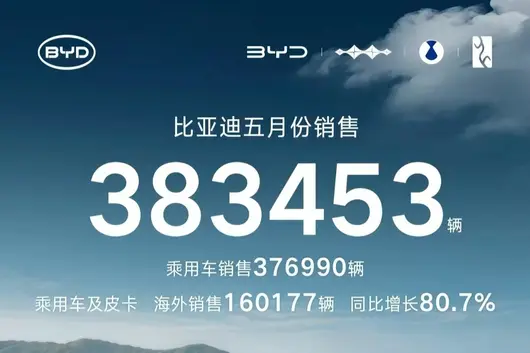
BYD: Export Hits New High Becomes Biggest HighlightIn May, BYD stood firmly at the top of domestic brands with a monthly sales volume of 383,500 vehicles, maintaining positive growth both year-on-year and month-over-month under a large base. Its two main brands, Dynasty and Ocean, sold a combined 330,200 vehicles, contributing 86.1% of total sales; Fangchengbao's monthly sales broke 30,000 units to reach 30,200, a year-on-year increase of 139.7%, setting a new high for the year; Denza sold 16,300 vehicles, and Yangwang delivered 286 vehicles. From a model perspective, BYD had eight models in May with monthly sales exceeding 20,000 vehicles. The Song Family and Yuan Family both broke 50,000 units, selling 51,370 and 56,691 vehicles respectively. The Sea Lion Family followed closely with 42,615 vehicles, and Seagull sales were also close to 40,000 vehicles.

BYD's biggest highlight in May was exports. Overseas new energy vehicle sales reached 160,600 units, an 80.4% year-on-year increase, accounting for about 42%. The sharp expansion of export scale effectively countered the phased weakness in domestic demand. Cumulative exports from January to May exceeded 620,000 vehicles. High export growth mainly benefited from continued ramping up of overseas factory capacity, improved ocean shipping capacity, and accelerated channel network expansion. In the domestic market, BYD promoted Megawatt Super Charging and intelligent strategies simultaneously—Megawatt charging achieved about 90% charge in 9 minutes; 20,000 super charging stations are planned to be built by 2026; all series models are available with Sky Eye B intelligent driving solutions and city navigation safety fallback plans, accelerating the popularization of high-level intelligent driving. As Gen 2 Blade Battery capacity gradually releases, the company's orders are expected to continue rising.
Chery: Sales Growth Leads the Top 5Chery Group's total sales volume in May was 247,800 vehicles, a significant year-on-year increase of 20.5%, ranking first in growth speed among the top 5. Exports remained its most core growth engine—May exports reached 181,900 vehicles, an 80.5% year-on-year increase, accounting for 73.4% of total sales that month, continuously breaking the single-month export record for Chinese brands for three months. In terms of new energy, Chery New Energy sold 100,300 vehicles, a 58.8% year-on-year increase. April and May consecutively saw monthly new energy sales breaking 100,000 vehicles.

The strong performance in exports benefited from Chery's long-term deep cultivation of overseas channel advantages and localized operation capabilities. While overseas orders continued to rise, high export growth formed a sharp contrast with domestic sales—Chery's domestic sales in May were only 60,000 vehicles, accounting for one-quarter of total sales. From cumulative data, Chery Group accumulated 1.101 million sales from January to May, but against the annual goal of 3.2 million vehicles, monthly averages need to reach about 420,000 vehicles later, and pressure remains significant.
Geely: New Energy Penetration Rate Breaks 56%Geely Auto's total sales volume in May was 237,600 vehicles, a 1% year-on-year increase, achieving month-over-month double growth for three consecutive months. In terms of structure, Geely's "New Four Transformations" transformation showed significant results: new energy vehicle sales reached 133,400 units, accounting for 56% of total sales, with new energy share exceeding 50% for four consecutive months.

From sub-brands, performance was significantly divergent. Zeekr brand sales in May reached 34,400 vehicles, a 82% year-on-year increase; Zeekr 9 Series and 8 Series models combined sales approached 50% of total sales, showing bright performance in the high-end market; Galaxy brand sales were 81,700 vehicles; Geely brand sales were 182,500 vehicles, among which China Star Series sales reached 100,800 vehicles; Lynk & Co brand sales were 20,700 vehicles, with new energy vehicle sales share rising to 71%.
In terms of exports, Geely's overseas vehicle exports in May reached 85,100 vehicles, a explosive 184% year-on-year increase, setting a brand single-month export record high. Among exported products, new energy vehicles reached 40,800 units, accounting for nearly half; hybrid and pure electric products have successively landed in Southeast Asia, Middle East, Latin America, and other markets, highlighting the results of global strategy implementation.
Changan: Multi-brand Matrix Balanced EffortChangan Auto's delivery volume in May was 209,100 vehicles, among which new energy deliveries were 92,400 vehicles, a 5.8% year-on-year increase, with new energy share about 44%. In terms of exports, overseas deliveries reached 70,700 vehicles, a 38% year-on-year increase, becoming another major growth highlight for Changan in May.
In the sub-brand matrix, Changan Qiyuan delivered 34,500 vehicles in May; All-New Q05 delivered 15,800 units, with orders breaking 3,000 units within three days of listing in Thailand; Deepal sales in May were 33,200 vehicles, a 30% year-on-year increase; January to May overseas cumulative sales were 28,700 vehicles, a significant 167% year-on-year increase; Avatr delivered 7,336 vehicles in May; Changan Auto (Gravity) delivered nearly 49,000 vehicles in May.

Changan Auto's balanced layout was fully reflected in May: the fuel car base remained stable, new energy brands Deepal and Qiyuan accelerated volume growth, high-end brand Avatr continued to break through in technical cooperation, and overseas markets simultaneously achieved breakthrough growth. The pattern of five brands working together, driven by both new energy and exports, is initially taking shape.
Great Wall: Overseas Sales Growth Year-on-Year 46.75%Great Wall Motor's sales in May were 100,400 vehicles, slightly down compared to last May's 102,200 vehicles, making it the only company among the top 5 to show a year-on-year negative growth. From sub-brands, Haval brand sales in May were 55,500 vehicles, remaining Great Wall's most important sales pillar; Tank brand sales were 17,100 vehicles; both Haval and Tank brand sales showed year-on-year declines; Wey brand sold 8,119 vehicles, a 31.78% year-on-year increase, achieving growth against the trend; Ora brand performance was most stunning, with sales of 6,018 vehicles, a significant 206.88% year-on-year increase. In terms of new energy, Great Wall sold 30,400 new energy vehicles in May, with new energy vehicle transformation gradually accelerating.

The overseas market became Great Wall's biggest highlight in May, with overseas sales growing 46.75% year-on-year. Against the background of pressure on the domestic market, strong growth in overseas business effectively made up for the decline in the domestic market. Great Wall Motor's current core contradiction lies in: Haval and Tank, the two traditional main-selling brands, face weak growth, while Wey and Ora brands, although growing notably, have relatively small volume and are not yet enough to support overall growth. How to complete the "relay" between old and new brands is the key issue Great Wall must solve subsequently.
Final ThoughtsFrom May data, the growth pattern of the top 5 domestic brands has clearly diverged, but there are three common trends worth noting: First, exports have become a key engine for domestic brands to seek stability and growth. Second, new energy transformation is still accelerating, but paths differ among enterprises. Third, technological innovation continues to deepen brand moats. Looking ahead to the second half of the year, competition in the automotive industry will continue to upgrade around these three trends. Although everyone has a common direction, these three trends are all competing for the entire enterprise's industrial chain strength, and the strong will remain strong, which has almost become an inevitable outcome.

Have you ever seen the roads in India?
I've seen them online.
The scene is usually like this: a sedan blocked behind a cow, motorcycles running wild nearby, even milk tea vendors nearby, so "clean and hygienic".

However, in a place where many feel physically uncomfortable after watching, Toyota, Suzuki, Honda and other Japanese car companies decided to bet on India.
According to the Indian "Brand Quality Foundation" website, the three car companies will invest nearly $11 billion to build factories, increase capacity, and develop exports in India.
Some netizens commented: Did the three Japanese car companies have too much money?
In fact, they didn't have endless money to spend, nor were they bewildered by Indian curry. These Japanese car executives are much clearer than us.
Current Japanese car revenue and market share are declining. Raw material costs are soaring. Looking at the world map, finding a market that can accommodate capacity, expand share, and has gentle competition is not easy.
So, it wasn't that Japanese car companies chose India, but because they had no choice.
The Pain of Japanese Car Companies
Past Japanese cars were truly the envy of others.
Ask old drivers who drove Japanese cars over ten years ago, talking about Japanese cars, almost no one doesn't give a thumbs up, cheap price, fuel saving, durable...
Even many Japanese cars needed to be bought at a markup, but who would think this iron fortress would be beaten out of sight in a few short years.
With the wave of new energy vehicles coming, electrification and intelligence became the goal for many domestic car companies to "leapfrog". Relying on China's strong new energy vehicle industry chain advantages and car companies' own persistence on R&D and technology, Chinese independent brands quickly achieved "leapfrogging".
Domestic cars once criticized are now becoming more and more common on the roads, even surpassing joint ventures in share.
According to CPCA data, in April 2026, the share of independent brands reached as high as 62.5%, far exceeding Japan's 13.1%.

You need to know, the Chinese car market is the largest car market in the world. Losing speed in the Chinese market is like losing a huge piece of cake.
Meanwhile, the main theme of the Chinese market in recent years is still price wars. Racing on configuration, price, and service has become a normal state, which also had a huge impact on Japanese cars' profits.
Apart from China, Japanese cars are also not doing well in the US.
On January 20, 2025, Trump swore in as the 47th US President, starting a series of chaotic operations, including imposing additional car tariffs in the name of national security, causing the tariff rate for imported Japanese cars to reach as high as 27.5% at one point. Although it decreased later, it was still far higher than the initial tax rate.
This operation directly led to a tariff loss of over 2 trillion yen for seven Japanese car companies in fiscal year 2025.
Looking at Japan itself, it is actually not easy either.
Middle East geopolitical conflicts blocked shipping in the Strait of Hormuz, transportation costs and raw material costs soared, Japanese car companies also had to suffer in silence.

Executives looking at the reports, their backs went cold, only to find a new growth curve.
So, Japanese car companies didn't fall in love with India, there was nowhere else to go.
Deep Thought on Choosing India
So, what magic does India have, to make Japanese car companies invest heavily?
The first advantage is big. In 2025, the Indian car market achieved 5.517 million new car sales, up 6% year-on-year, breaking the historical record, ranking as the third largest car market in the world, exceeding Japan for four consecutive years, second only to China and the United States.
The value of this doesn't need me to say much. India achieved this result mainly because India has been promoting tax reduction policies to promote consumption, which led to a significant increase in domestic consumption willingness.
The second advantage is close, meaning it is close to places where Japanese cars sell well, such as Africa.
So, India for Japanese car companies is more like a convenience store built in the center of a crossroad. You don't need to ship cars to eight countries separately, just build well at this stop in India, then unload ship by ship, and you can save a lot of costs.

The Nikkei also believes that India is expected to become its global car supply center.
The third advantage is stability. You know, Japanese cars' advantage is fuel cars, after all, the three major components of engines, gearboxes, and chassis, they have played for many years, technology accumulation is number one in the world.
But the Chinese car market has fully promoted electrification and intelligence development, leading to Japanese cars' advantage becoming weaker and weaker, impossible to play out. But India is different, it has the characteristics of few charging piles and slow electrification process. Indian old people buying cars still look for cheap, fuel saving, easy to fix, and these three points are exactly Japanese cars' old trade.
Especially Suzuki, always been India's car market evergreen, almost always sitting on the best-selling model throne, reputation of being worry-free, better than any advertisement.
So, Japanese car companies' vigorous layout of the Indian market is obviously carefully considered.
But, is the Indian market really that easy to mix?
The Hard-to-Bite Indian Market
Of course, India is not perfect like a hot commodity, its disadvantages are as obvious as its advantages, and every one is enough for Japanese car companies to face a hard time.
First talk about electrification. Yes, right now India has few charging piles and electric cars don't sell well, it is indeed a shelter for Japanese fuel cars. But you have to think, how long can this "shelter" avoid?
India previously shouted the slogan of 30% of new cars being electric vehicles by 2030. Although it sounds like bragging, but can't help but they really give subsidies, really build charging stations.
Imagine, what if one day India suddenly wakes up, starts vigorously promoting electrification, doing infrastructure, charging piles popping out like mushrooms after rain, then Japanese cars will be dumbfounded?
Isn't this a version of the Thai market?
Back then Japanese cars in Thailand won easily. The entire Southeast Asian market was called Japanese cars' backyard. Result Thailand took the lead in promoting electrification. Chinese electric vehicles came in, directly became a hot commodity. Look at Japanese cars again, share in Thailand falling down rapidly.

If India accelerates electrification, history will likely repeat, and this time, Japanese cars don't even have a place to flee, how to prevent will become the first problem for Japanese car companies.
Next talk about policy. India's policy is like a pot of curry, you never know if you will eat chicken or potato next time.
This magical country, today low tariff encourages building factories, tomorrow may fine you a huge amount. What's more annoying is mandatory joint venture. Foreign car companies want to sell cars in India, have to find local partners to partner up. When your factory is built, supply chain is done, India directly backstabs you. At that time whether adding money or withdrawing capital, what you get is heartache.
So you see, this market like India is like a mango that looks very sweet, bite the first mouth it's okay, chew two more mouths hit the hard core.
Japanese cars now is calculating, while the core hasn't bit the tooth, hurry up to nibble a few more mouths, but the core will bite sooner or later, just don't know which day.
Epilogue
Japanese cars this trip to India, not go for tourism, is go to make a living.
Chinese and Southeast Asian dining tables are more crowded, production and transportation costs have risen. Looking around the world, only this pot in India is still steaming, even if what is boiling inside is curry-flavored stones, have to bite hard and chew down.
Japanese car companies want to expand market, India wants to pull economy, solve employment, both sides have their own thoughts.
As for the ending is Japanese cars in India regain their glory, or like past competitors shamefully walk away, then is not known.
But no matter how, this play just started, we slowly watch is okay.
Anyway India's story, never bored.