首頁Implementation

搜尋歷史
熱門搜尋
經銷商登入 / 註冊

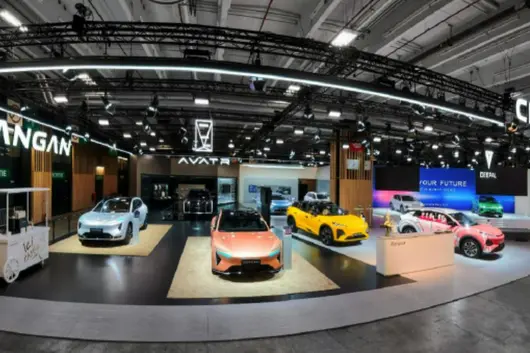
October 12, 2026, the 2026 Paris Auto Show officially opened. Deepal Automobile brought S05 and S07 models to the stage for display, becoming a key link for Chinese new energy brands to go global. The two new cars were not direct domestic imports, but underwent specialized development for the European market. Styling was led by the Turin Design Center, chassis engineering tuning was implemented in Birmingham, UK, fitting local user aesthetics and road conditions.
Both participating models obtained TÜV Rheinland EU WVTA whole vehicle type certification, equipped with self-developed Golden Bell battery, meeting Euro NCAP safety test standards and GDPR data security regulations, securing market entry qualifications for Europe. Market-wise, Deepal's European business growth momentum is strong, with wholesale volume from January to September 2026 exceeding 18,000 units, a year-on-year increase of over 106%. Among them, S05 ranked first in Spanish compact pure electric SUV registrations multiple times, topping Chinese brand sales in this sub-market in the first half of the year, attracting attention from multiple European authoritative automotive media reviews.
Deepal's overseas expansion adopted a full-system output model, relying on the "Six Countries, Ten Places" global R&D network, supporting multi-base production layout. The Thailand Rayong overseas complete vehicle factory has started production. The brand business covers more than 100 countries and regions globally, with 4 major manufacturing bases, nearly 1,800 global service outlets, establishing a localized service system, relying on the European parts center and 24/7 rescue guarantees for after-sales.

In September, Deepal reached a global cumulative mass production milestone of 1 million units, with global sales of 252,213 units in the first nine months of this year. The appearance at this Paris Auto Show is a phased display of Deepal's globalization strategy. The brand continues to push the technology equity concept to overseas markets, relying on the entire system of products, manufacturing, and services to participate in the global new energy vehicle market competition.


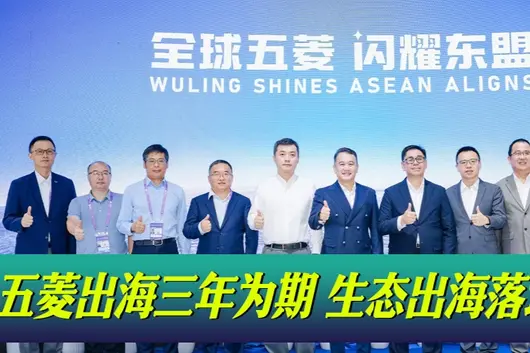
From "relying on others to go global" to "full-chain ecosystem" global expansion. On September 17, at the 23rd China-ASEAN Expo held in Nanning, SAIC-GM-Wuling officially released the Global 5 global strategy, and drew a clear scale for this transformation: 3 years to deepen layout in 150 countries, expand 500 strategic partners, and achieve an average annual sales growth of 50%.

At the press conference, Wuling signed a battery local CKD project agreement with Malaysia's Tan Cheng Group, becoming the first result of the new strategy implementation.
Detailed explanation of the Global 5 global strategy. The first is five major strength foundations: All-category products covering SUV, MPV, micro-commuting, urban new energy, and commercial vehicles, "Tian, Ling, Shen" technology system, the world's first MS Smart Island manufacturing system, synergy of "Smart Manufacturing Chain, Supply Chain, Sales Chain, Talent Chain, Finance Chain", plus 68 years of car manufacturing reputation and global cumulative sales and production of 32 million units.

The second is five major cooperation models: Open trade, distribution, production-sales, full industry chain, and technology licensing five paths for different markets, shallow to deep, selected on demand — among which "technology licensing" means Wuling not only exports products but also starts to export manufacturing and technology capabilities.
In addition, the strategy is also supported by five major service guarantees covering the full lifecycle of cooperation, five major markets ranging from ASEAN bridgehead to Asia, Africa, Americas, Europe, and Oceania, and a set of goals supported by a foundation: Wuling products are currently sold in more than 110 countries and regions, overseas marketing outlets exceed 230, and in the next 3 years, the layout will be deepened to 150 countries, 500 strategic partners will be expanded, and annual sales will grow by 50% on average — equivalent to taking nearly 40 new markets on the existing map.

Zhao Xiaobin, Vice General Manager of SAIC-GM-Wuling, provided the foundation data for the Global 5 strategy: global cumulative sales and production exceeded 32 million units, new energy vehicle sales exceeded 4 million units, overseas exports grew continuously for 10 years, and cumulative breakthrough exceeded 1.6 million units/sets. Shi Jiangong, Vice General Manager of the Overseas Business Department, stated that Wuling will transform the full-link self-research and self-construction capabilities into overseas market competitiveness systematically.
This strategy's weight must be viewed in the big picture of Chinese automotive exports. Data from China Association of Automobile Manufacturers shows that in the first 8 months of 2026, Chinese automobile exports reached 7.153 million units, up 66.7% year-on-year, exceeding the total amount of the whole year last year; monthly exports stood on the million-unit level for 3 consecutive months; new energy vehicle exports reached 3.435 million units, accounting for more than half for 3 consecutive months. Chen Shihua, Deputy Secretary-General of CAAM, judged that Chinese automotive exports are shifting from short-term sales expansion to a more stable scale stage, and enterprises need to move from "selling products" to "building systems."

Wuling's choice happens to step on this node. It did not stop the strategy at export targets, but packaged manufacturing, supply chain, finance, talent, and after-sales as a whole, and then used the five-level ladder from trade to technology licensing to adapt to markets at different development stages. This is exactly the typical play of "ecosystem going global."
ASEAN is the most realistic model: Wuling entered Indonesia in 2017. The Cikarang plant produced 200,000 units cumulatively over nine years, driven 16 domestic three-electric enterprises to land, cultivated over 100 local suppliers; from January to July this year, the enterprise's overseas sales exceeded 200,000 units/sets, and monthly sales exceeded 30,000 for 4 consecutive months. This Malaysia CKD project signing is replicating this localization play in another country.

When tariff barriers and localization requirements become the new normal for going global, the window for simply shipping cars out is narrowing. The significance of the Global 5 global strategy lies in equipping Wuling's overseas business with a replicable "systematic operating system" — foundation in ASEAN, protection of five chains, three years as the goal. In the second half of Chinese automotive globalization, the competition is no longer about who sells more, but who can truly take root overseas. Wuling's step is aimed at "rooting."

Malaysia's four-year electric vehicle import tax exemption policy has officially ended. The new regulations implemented on July 1 directly tightened the entry threshold for imported electric vehicles. Regarding complete vehicle imports, the new regulations require that the CIF price of all CBU electric vehicles must not be lower than 200,000 Ringgit (approximately 320,000 RMB), and the motor output power must not be lower than 180 kW (about 241 hp). Both conditions must be met simultaneously; neither can be missing.

Relying on the previously relaxed environment, Chinese brands once captured 60% of the new energy vehicle market share in Malaysia. Now, the local market intends to replicate the industrialization model of local automakers, forcing foreign investment to shift from complete vehicle trading to local manufacturing. After all, no one wants to be just a dumping ground for goods.
Electric Vehicle New Policy Heavy Implementation in July
After the four-year electric vehicle import tariff exemption period ends, Malaysia significantly tightened complete vehicle import rules, upgrading the previously duty-free 100,000 Ringgit CIF threshold to a mandatory 200,000 Ringgit entry baseline, while rigidly binding a 180 kW motor power lower limit; both conditions are indispensable. Previously, the 100,000 Ringgit was only the tariff exemption line, the price point perfectly fit the pricing system of main home-use models going overseas, BYD Dolphin, entry-level Atto 3, and other volume-selling models relied on cost advantages during the tax exemption period, becoming core products for Chinese brands to seize the local market.

After the CIF price is raised to 200,000 Ringgit, adding import tariffs, domestic sales tax, and dealer markups, estimated based on the current tax and fee structure of the Malaysian automotive market, the final vehicle price will reach above 300,000 Ringgit, converting to RMB, it is close to 480,000. Most Malaysian households' car purchasing budgets are in the range of 100,000 to 250,000 Ringgit, this price range of 300,000 Ringgit is a niche market where Tesla and BBA pure electric models have already dug deep, there are very few models domestically that can cross both rigid thresholds, the price-friendly family car base that Chinese brands originally stabilized via pure import routes is essentially locked by the policy; while vehicles assembled locally via CKD can still legally cover the mainstream family consumption price range of 100,000 to 250,000 Ringgit.
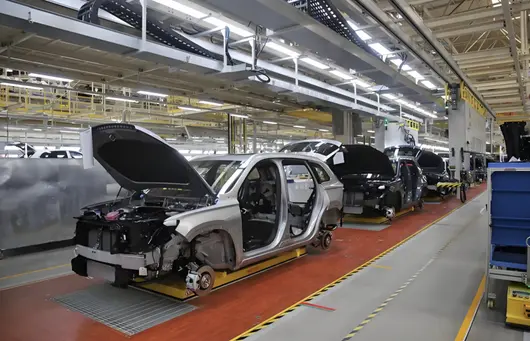
Many brands can choose to rent existing local factories for knocked-down assembly production, Leapmotor uses Stellantis idle production lines to launch C10, Xpeng partners with local manufacturers to launch right-hand drive G6, by reusing existing capacity to avoid the strict clauses of 80% mandatory export for new factories, this is the easiest flexible method to implement at present. However, this light-asset OEM model has many hidden dangers from the perspective of long-term industrial layout.

Car companies do not own production lines, unable to independently expand production schedules during peak order surges, production line modifications for model updates are also subject to the partner's will, the production rhythm is hard to control completely by themselves. More critically, core components like batteries, electronic controls still rely on being shipped separately from domestic sources, localization only stays at the final process. Referencing Indonesia's practice of continuously raising local component ratios, the local 2030 target for new energy vehicle local component penetration rate is set at 80%, the overall industrial orientation in Southeast Asia is forcing upstream supply chains to land locally, the model of only simple assembly will eventually face policy constraints.
Moreover, this detour route itself has no permanent guarantee at the legal level, Malaysia can update industrial regulations at any time later, including existing factory cooperation projects into export quota supervision, this shortcut could be tightened or blocked at any moment. The export strategy of only doing trade output and unwilling to deeply bind local industrial chains has no more sustainable space.
Chinese Automakers Face Major Differentiation
Geely Holdings is the biggest indirect beneficiary of this round of policies. Geely holds 49.9% of shares in Malaysia's traditional state-owned automaker Proton, and Proton itself holds original CKD production qualifications, it does not belong to the new foreign investment factory construction projects approved after September 2025. This means the strictest 80% mandatory export quota in the new regulations cannot constrain Proton from the start. Proton has no ratio restrictions on sales in the local market, and can long-term enjoy policy inclinations for local component support, effectively standing in the safe zone by nature within the environment of tightening policies.

In addition, Xpeng Motors relies on EPMB's existing factory in Melaka State to carry out CKD complete knocked-down assembly, Leapmotor uses Stellantis's own complete vehicle factory located in Kulim, Kedah, Malaysia for local assembly. Both types of projects belong to reusing existing local capacity, and can be exempted from the requirement of 80% mandatory export quota in the new regulations.
While BYD's wholly-owned new factory planned in Perak State, Chery's new industrial park planned in Selangor State, both belong to new manufacturing projects approved after September 2025, will be strictly constrained by the 80% export quota; brands like Great Wall Motors relying on pure imports of affordable models, directly face the impact of losing the access qualification for main models.
The core logic of the new regulations is actually setting up a double barrier for "new foreign players", clearly not welcoming foreign enterprises that only focus on building capacity in the local market. The remaining options for foreign brands are very limited: either introduce high-end models via pure import routes, giving up the mainstream volume market; or rent existing local production lines for knocked-down assembly, production capacity rhythm and cost control are all subject to others, hard to form scaled price competitiveness.
Viewing the entire Southeast Asian market dimension, this logic is not unfamiliar. Thailand and Indonesia's industrial policy directions have been highly consistent in the past two years: the threshold for complete vehicle imports continues to rise, the core conditions for market access are gradually shifting from product competitiveness to the depth of localization investment.

In early years, when most Chinese electric vehicle brands first entered Southeast Asia, they followed a typical trade route: controlling costs by relying on the scale advantages of the domestic supply chain, and rapidly distributing goods after complete vehicles are shipped by sea, relying on price differences, most stayed at the superficial cooperation stage of "selling products". However, a few brands like Geely have already completed deep localization layout through the method of investing in local car companies.
Now, the demands of ASEAN core markets have shifted from "richening consumption choices" to "driving local industrial upgrades", the exchange chips for market access have also changed from pure product power to capacity landing, technology transfer, and supply chain driving capabilities. Brands that only do commodity output and are unwilling to do industrial binding will sooner or later be squeezed into niche peripheral markets by gradually tightening rules.
In other words, the export 1.0 stage relying purely on complete vehicle distribution has reached its end in the Southeast Asian market.
Consumer Car Review
Actually, the screening logic of the Southeast Asian market has never changed: It welcomes co-builders who bring the industrial chain, not passersby who only sell products. When rules tighten step by step, the winning hand of going overseas has long shifted from product costs, pricing strategies, to the ability to predict industrial rules, and the depth of layout rooted in the local area.
After all, a model without an industrial anchor point will ultimately not go far.

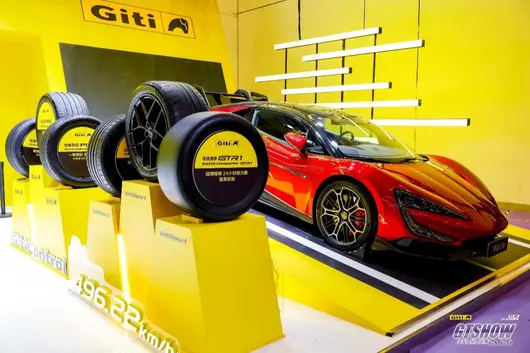
On the evening of June 11, the Chinese tire industry leader Zhongce Rubber (603049.SH) officially announced the implementation of the 2025 annual equity distribution plan, and will distribute a cash "big red envelope" exceeding 1.25 billion yuan to all shareholders.

Dividend of 1.43 yuan per share, encouraging long-term value investment
The announcement shows that this profit distribution is based on the company's total share capital of 874,485,598 shares, with a cash dividend of 1.43 yuan per share (tax included), totaling 1.251 billion yuan distributed, with a dividend payout ratio of 30.15%. In terms of timing, the record date is set for June 17, 2026, and the ex-rights (ex-dividend) date and cash dividend payment date are both June 18.
Regarding tax withholding rules, the company strictly implements differentiated policies to encourage long-term investment: for individuals and securities investment funds holding for over 1 year, dividend income is temporarily exempt from individual income tax; for holdings of 1 month to 1 year (inclusive), the actual tax burden is 10%; for holdings within 1 month (inclusive), the actual tax burden is 20%. For QFII and Shanghai Stock Connect investors, income tax is withheld and paid at a rate of 10%, resulting in an actual payment of 1.287 yuan per share after tax.

Three years of consecutive performance growth, high dividend confidence is solid
The large-scale dividend stems from solid performance support. In 2025, Zhongce Rubber achieved operating revenue of 44.956 billion yuan, a year-on-year increase of 14.52%; net profit attributable to parent company was 4.147 billion yuan, a year-on-year increase of 9.51%; basic earnings per share was 4.95 yuan.
As the absolute leader in the domestic tire industry, Zhongce Rubber has maintained a tradition of high dividends in recent years, launching a plan to distribute 13 yuan for every 10 shares in 2024. From 2023 to 2025, the company's revenue and net profit grew steadily for three consecutive years, profitability was continuously consolidated, providing solid support for high dividends.

Digital intelligence empowerment and global capacity expansion in parallel, building a growth engine
Behind the high dividends is the strong momentum of Zhongce Rubber's dual drive of digitalization and globalization. Founded in 1958, the company owns well-known brands such as Chaoyang, Weishi, and Haoyun. In terms of smart manufacturing, the company partnered with Huawei to create an F5G-A all-optical factory demonstration project, honored with the national-level energy efficiency "Leader". In terms of the market, the company successfully entered the supply chain for the AITO M6 new energy vehicle, expanding its market footprint.

The globalization layout has also yielded substantial results. In 2025, the company's overseas revenue share reached 47.86%. Currently, Thailand and Indonesia bases are steadily increasing production; the 1.041 billion yuan investment in the Vietnam base is proceeding smoothly; the planned 500 million USD Mexico base is also under construction. Overseas capacity release will effectively avoid trade barriers, consolidating global competitive advantages.
Rewarding shareholders with substantial dividends and leading the future with innovative smart manufacturing and overseas layout. Zhongce Rubber is demonstrating the responsibility of an industry leader, expected to continuously accelerate high-quality development on the global track, creating long-term value for investors.