


首頁Honda Vezel

搜尋歷史
熱門搜尋
經銷商登入 / 註冊

August 2026, Australia new car market deliveries reached 108,760 units, up 4.9% year-on-year. Behind the stable figures lies a historic shift in powertrains: 27,078 Battery Electric Vehicles (BEVs) were delivered, surging 169.4% year-on-year. With a market share of 24.9%, BEVs surpassed petrol, diesel, and hybrid for the first time, becoming the top powertrain type in Australia; Plug-in Hybrid Electric Vehicles (PHEVs) also grew 171.1% to 10,591 units. The Tesla Model Y topped the overall model sales list, while BYD secured second place among brands with 8,231 units (+68.8%), making New Energy brands the biggest winners of the month.

As pickups bear heavy-load tasks such as hauling, towing, and off-roading, their requirements for range and power are far higher than ordinary passenger cars; consequently, their electrification lags significantly behind the overall market — but August data shows they can no longer stay isolated.

Toyota Hilux retained the pickup title with 4,833 units, but saw only a slight increase of 0.2% year-on-year, essentially standing still. Ford Ranger suffered a cliff-like drop, delivering only 2,440 units, plummeting 50.6% year-on-year — primarily due to a temporary delivery halt caused by safety concerns with side air curtains, resulting in a monthly loss of about 2,500 units, which is a supply-side shock rather than a demand collapse.

Isuzu D-Max delivered 1,708 units (-26.2%), Mitsubishi Triton 1,161 units (-23.8%), and Mazda BT-50 recorded 804 units (-29.4%); all three Japanese diesel pickups declined by double digits. Volkswagen Amarok 306 units (-27.7%), Nissan Navara 277 units (-53.2%), and Kia Tasman performed the worst with only 312 units, down 61.1% year-on-year.

Pickups manufactured in China continued to expand their presence. BYD Shark 6 led Chinese brand pickups with 1,385 units, followed closely by Great Wall Cannon with 827 units. Adding Maxus LDV pickups (T60 + Terron 9 totaling 423 units), Foton Tunland V7 (124 units), MG U9 (115 units), JAC T9 (77 units), and others, total Chinese pickups reached approximately 2,951 units, accounting for about 18.5% of the Australian pickup market. In contrast, vehicles manufactured in Thailand delivered 15,658 units in August, down 24.7% year-on-year, driven almost entirely by the contraction of the pickup segment — Thailand is the main production base for Japanese pickups.

Amidst the general decline, BYD Shark 6 grew 9.8% year-on-year, reaching a year-to-date total of 12,094 units, becoming one of the few mainstream pickups with positive growth. Its PHEV positioning balances electric driving experience with pickup utility needs, coupled with BYD's strong brand power and more competitive pricing, opening up new volume outside of traditional diesel pickups. Notably, New Energy itself is not a guarantee of growth; brand momentum, pricing, and supply rhythm are key.

The full-size pickup market showed clear divergence. Ford F-150 delivered 152 units (surged from a low base), Chevrolet Silverado 1500 delivered 148 units (-6.9%), and RAM 1500 fell 32.6% to 149 units. Premium pickups above A$100,000 overall grew 18.1% to 764 units, forming a contrast with mainstream market weakness.

Final thoughts: August data clearly shows that even in the pickup segment where electrification is inevitably lagging, traditional fuel powertrains are also feeling a clear chill. Ranger's delivery halt amplified the decline. BYD Shark 6's growth against the trend validated the viability of PHEVs in the pickup market. Chinese brands like Great Wall Cannon, Maxus LDV, and others became an undeniable force in the Australian pickup market through stable sales volumes and forward-looking new energy layouts. With Ranger resuming deliveries in September and more hybrids and EV pickups entering the market, how the Australian pickup landscape will change again remains to be seen.


In Malaysia's SUV market, many buyers compare Honda WR-V and MG MG HS when choosing a car. These two cars are quite close in price and positioning. Today, we will make a detailed comparison from multiple aspects to help you save time on research.
Honda WR-V's OTR price in Malaysia is RM 89,900 - 107,900, with a total of 4 versions, including 2023 1.5L V (RM 99,900), 2023 1.5L E (RM 95,900), 2023 1.5L S (RM 89,900), etc.
MG MG HS's OTR price in Malaysia is RM 130,450 - 146,450, with a total of 2 versions, including 1.5L Standard (RM 105,000), 1.5L Executive (RM 115,000), etc.
From a price perspective, Honda WR-V's starting price is indeed RM 40,550 cheaper than MG MG HS. If your budget is limited, Honda's entry-level version can already meet daily needs. But note, the few thousand cheaper might have trade-offs in features, depending on your specific needs.

Honda WR-V's safety rating is 5★ (ASEAN NCAP), active safety systems include Honda SENSING.
MG MG HS's safety rating is TBD, active safety systems include Basic.
In terms of safety features, both cars received good ratings. However, there are some differences in function between Honda WR-V's Honda SENSING and MG MG HS's Basic. If you value active safety highly, you can compare the function lists of both carefully.

Honda WR-V body length 4400 mm, trunk 400 L.
MG MG HS body length 4400 mm, trunk 400 L.
The dimensions of both cars are almost the same, with little difference in interior space. Cars in this class are more than enough for daily use.

Honda WR-V adopts FWD drive mode.
MG MG HS adopts FWD drive mode.
Both cars have the same drive mode, both are FWD, so daily driving feel won't differ much.
Overall, Honda WR-V and MG MG HS are both very good models in the Malaysia market. Which one to choose depends on your personal needs and budget. We suggest doing your research well, comparing quotes from several dealerships, and then test driving to make the final decision. Buying a car is a big matter, spending time doing research will definitely not be wrong.


In the Malaysian SUV market, many buyers compare Honda WR-V and Chery Tiggo 8 when choosing a car. These two cars are quite close in price and positioning, so today we will make a detailed comparison from multiple aspects to save you time on research.
Honda WR-V's OTR price in Malaysia is RM 89,900 - 107,900, totaling 4 versions, including 2023 1.5L V (RM 99,900), 2023 1.5L E (RM 95,900), 2023 1.5L S (RM 89,900), etc.
Chery Tiggo 8's OTR price in Malaysia is RM 129,750 - 129,750, totaling 1 version, including 2026 1.6T Standard (RM 129,750), etc.
From a pricing perspective, the Honda WR-V's starting price is indeed RM 39,850 cheaper than the Chery Tiggo 8. If your budget is limited, Honda's entry-level version can already meet daily needs. However, keep in mind that the savings of a few thousand might involve trade-offs in features, depending on your specific requirements.
Honda WR-V body length is 4400 mm, trunk space 400 L.
Chery Tiggo 8 body length is 4400 mm, trunk space 400 L.
The dimensions of the two cars are almost identical, with little difference in interior space. For this class of vehicles, they are more than sufficient for daily use.
Honda WR-V warranty 5 years/unlimited mileage, maintenance interval every 10,000 km or 6 months.
Chery Tiggo 8 warranty 3 years/100,000 km, maintenance interval every 10,000 km or 6 months.
Both Honda WR-V and Chery Tiggo 8 are mainstream choices in the Malaysian market, suitable for family use and daily commuting. If you value brand reputation and resale value more, prioritize the one with better reputation; if you care more about value for money and features, choose the one with richer configuration. Ultimately, we recommend test driving both models, as personal experience is most important.

Overall, both Honda WR-V and Chery Tiggo 8 are very good models in the Malaysian market. The choice depends on your personal needs and budget. We suggest doing your research, comparing quotes from multiple dealerships, and test driving before making a final decision. Buying a car is a major decision, spending time on research will definitely not be a mistake.

In the SUV market in Malaysia, many buyers compare Proton X90 and Mazda CX-5 when choosing a car. Both cars are quite close in price and positioning. Today we will make a detailed comparison from multiple aspects to help you save the time spent on research.
The OTR price of Proton X90 in Malaysia is RM 106,800 - 122,800, with a total of 4 versions, including 2026 1.5T Prime X (RM 122,800), 2026 1.5T Prime (RM 116,800), 2026 1.5T Lite (RM 106,800), etc.
The OTR price of Mazda CX-5 in Malaysia is RM 135,469 - 166,760, with a total of 3 versions, including 2025 2.0L AT 35th Anniversary (RM 316,154), 2025 2.0L AT (RM 296,154), 2025 2.0L MT (RM 294,154), etc.
From a price perspective, the starting price of Proton X90 is indeed RM 28,669 cheaper than Mazda CX-5. If your budget is limited, Proton's entry-level version can already meet daily needs. However, note that the few thousand difference might involve trade-offs in features, it depends on your specific needs.

Proton X90 is equipped with 1.5L Turbo, 140 hp. Official fuel consumption is 7.0 L/100km.
Mazda CX-5 is equipped with 1.5L Turbo, 140 hp. Official fuel consumption is 7.0 L/100km.
Both cars use the same powertrain system, the driving experience feels basically the same in daily use. Fuel consumption is also similar, no need to worry too much about this point.

The safety rating of Proton X90 is 5★ (ASEAN NCAP), active safety systems include ADAS (ACC, AEB, LKA, LDA, BSM, RCTA).
The safety rating of Mazda CX-5 is 5★ (ASEAN NCAP), active safety systems include .
Both cars have the same safety rating, safety features in this class are quite comprehensive. New car safety is not bad nowadays, no need to worry too much about this.

Proton X90 body length is 4400 mm, trunk is 400 L.
Mazda CX-5 body length is 4500 mm, trunk is 450 L.
In terms of space, Mazda CX-5's body is 100 mm longer than Proton X90, offering an advantage in passenger space. However, Proton X90 is slightly more flexible for parking in the city, each has its trade-offs.

Proton X90 adopts the FWD drive system.
Mazda CX-5 adopts the FWD drive system.
Both cars have the same drive system, both are FWD, daily driving experience will not differ much.

Overall, Proton X90 and Mazda CX-5 are both very good car models in the Malaysia market. Choosing which one depends on your personal needs and budget. We suggest doing your research, comparing quotes from multiple dealerships, and test driving before making a final decision. Buying a car is a big matter, spending some time doing research will definitely not be wrong.


喺馬來西亞嘅 SUV 市場,好多買家喺揀車嘅時候都會拿 Proton X90 同 Mazda CX-5 嚟做比較。這兩款車喺價位同定位上都幾接近,今日我哋就從多個方面做一個詳細嘅比較,幫你節省做功課嘅時間。
Proton X90 喺馬來西亞嘅 OTR 售價係 RM 106,800 - 122,800,一共有 4 個版本,包括 2026 1.5T Prime X(RM 122,800)、2026 1.5T Prime(RM 116,800)、2026 1.5T Lite(RM 106,800) 等。
Mazda CX-5 喺馬來西亞嘅 OTR 售價係 RM 135,469 - 166,760,一共有 3 個版本,包括 2025 2.0L AT 35th Anniversary(RM 316,154)、2025 2.0L AT(RM 296,154)、2025 2.0L MT(RM 294,154) 等。
從價錢嚟睇,Proton X90 嘅起步價確實比 Mazda CX-5 平咗 RM 28,669。如果你預算有限,Proton 嘅入門版已經可以滿足日常需求。但都要注意,平嗰幾千蚊,可能喺配備上會有取捨,具體要睇你嘅需求。
Proton X90 採用 FWD 驅動方式。
Mazda CX-5 採用 FWD 驅動方式。
兩款車嘅驅動方式一樣,都係 FWD,日常駕駛感受唔會有太大區別。
Proton X90 保修 5 年/150,000km,保養間隔 每 10,000km 或 6 個月。
Mazda CX-5 保修 5 年/150,000km,保養間隔 每 10,000km 或 6 個月。
兩款車嘅保修條件一樣,呢方面唔使糾結。實際保養成本仲要睇品牌嘅服務網絡同零件價格,建議去車友群問下真實車主嘅經驗。
Proton X90 同 Mazda CX-5 都係馬來西亞市場嘅主流選擇,適合家庭使用、日常通勤。如果你更重視品牌口碑同二手價,可以優先考慮口碑更好嗰一款;如果你更在意性價比同配備,就揀配備更豐富嗰款。最終都係建議兩款都去試駕,親身體驗先係最重要。
總體嚟講,Proton X90 同 Mazda CX-5 都係馬來西亞市場幾唔錯嘅車型。揀邊一輛,關鍵都係要睇你嘅個人需求同預算。建議大家做好功課,多比較幾間車行嘅報價,先去試駕做最終決定。買車係件大事,花少少時間做功課絕對唔會錯。

In the SUV market in Malaysia, many buyers compare Proton X90 and Toyota Yaris Cross when choosing a car. These two cars are quite close in price and positioning. Today we will make a detailed comparison from multiple aspects to help you save time on research.
The OTR price of Proton X90 in Malaysia is RM 106,800 - 122,800, with a total of 4 variants, including 2026 1.5T Prime X (RM 122,800), 2026 1.5T Prime (RM 116,800), 2026 1.5T Lite (RM 106,800), etc.
The OTR price of Toyota Yaris Cross in Malaysia is RM 99,900 - 109,900, with a total of 2 variants, including 2026 1.5L Standard (RM 99,900), 2026 HEV 1.5L Standard (RM 109,900), etc.
From a price perspective, the starting price of Toyota Yaris Cross is RM 6,900 cheaper than Proton X90. To be honest, in this price segment, the gap of a few thousand is actually not significant; the key is to look at overall cost-performance ratio and long-term usage costs.
The safety rating of Proton X90 is 5★ (ASEAN NCAP), with active safety systems including ADAS (ACC, AEB, LKA, LDA, BSM, RCTA).
The safety rating of Toyota Yaris Cross is 5★ (ASEAN NCAP), with active safety systems including TSS.
Both cars have the same safety rating, and safety features in this class are quite comprehensive. New cars nowadays are not lacking in safety, so there is no need to worry too much about this point.
Proton X90 body length is 4400 mm, trunk 400 L.
Toyota Yaris Cross body length is 4400 mm, trunk 400 L.
The dimensions of both cars are almost the same, with little difference in interior space. Cars in this class are more than enough for daily use.
Proton X90 adopts FWD drive mode.
Toyota Yaris Cross adopts FWD drive mode.
Both cars have the same drive mode, both are FWD, so there will not be much difference in daily driving feel.

Overall, both Proton X90 and Toyota Yaris Cross are quite good models in the Malaysian market. Which one to choose mainly depends on your personal needs and budget. It is recommended to do your homework, compare quotes from several car dealerships, and then take a test drive to make the final decision. Buying a car is a big matter, spending time on research will never be wrong.

In the Malaysian SUV market, many buyers often compare Proton X70 and Hyundai Tucson when choosing a car. These two cars are quite close in price and positioning. Today we will make a detailed comparison from multiple aspects to help you save time on research.
The OTR price of Proton X70 in Malaysia is RM 106,800 - 122,300, with a total of 3 versions, including 1.5L Standard 2WD (RM 106,800), 1.5L Executive 2WD (RM 115,800), 1.5L Premium 2WD (RM 122,300), etc.
The OTR price of Hyundai Tucson in Malaysia is RM 143,888 - 197,888, with a total of 5 versions, including 2025 HEV 1.6T AT 2WD Prestige (RM 197,888), 2025 1.6T DCT 4WD Prestige (RM 186,888), 2025 1.6T DCT 2WD Prime (RM 164,888), etc.
From a pricing perspective, the starting price of Proton X70 is indeed RM 37,088 cheaper than Hyundai Tucson. If you are on a budget, Proton's entry-level version can already meet daily needs. But keep in mind, the savings of a few thousand RM might involve trade-offs in features, depending on your needs.

Proton X70 body length 4400 mm, trunk 400 L.
Hyundai Tucson body length 4400 mm, trunk 400 L.
The dimensions of both cars are almost the same, with little difference in interior space. For cars of this class, it is completely sufficient for daily use.

Proton X70 warranty 5 years/150,000km, service interval every 10,000km or 6 months.
Hyundai Tucson warranty 5 years/300,000km, service interval every 10,000km or 6 months.

Both Proton X70 and Hyundai Tucson are mainstream choices in the Malaysian market, suitable for family use and daily commuting. If you value brand reputation and resale value more, consider the one with better reputation first; if you care more about value for money and features, choose the one with richer configurations. In the end, we suggest test-driving both, as personal experience is the most important.
Overall, both Proton X70 and Hyundai Tucson are quite good models in the Malaysian market. Which one to choose mainly depends on your personal needs and budget. We suggest doing your homework, comparing quotes from several dealerships, and then test-driving to make the final decision. Buying a car is a big matter, spending some time doing research will definitely not be wrong.

In the Malaysian SUV market, many buyers compare the Proton X70 and Chery Tiggo 8 PHEV when selecting a car. Both vehicles are quite close in price and positioning. Today, we will do a detailed comparison from multiple aspects to save you time on research.
The Proton X70 has an OTR price in Malaysia of RM 106,800 - 122,300, with a total of 3 versions, including 1.5L Standard 2WD (RM 106,800), 1.5L Executive 2WD (RM 115,800), 1.5L Premium 2WD (RM 122,300), etc.
The Chery Tiggo 8 PHEV has an OTR price in Malaysia of RM 159,750 - 159,750, with a total of 2 versions, including 1.6L Turbo Standard (RM 130,000), 1.6L Turbo Premium (RM 145,000), etc.
From a price perspective, the Proton X70's starting price is indeed RM 52,950 cheaper than the Chery Tiggo 8 PHEV. If your budget is limited, Proton's entry-level version can already meet daily needs. But be aware, the few thousand dollars saved might involve trade-offs in features, depending on your specific needs.
The Proton X70 is equipped with a 1.5L Turbo engine, 140 hp. Official fuel consumption is 7.0 L/100 km.
The Chery Tiggo 8 PHEV is equipped with a Hybrid system, 170 hp. Official fuel consumption is 4.5 L/100 km.
In terms of power, the Chery Tiggo 8 PHEV's Hybrid has 30 more horsepower than the Proton X70's 1.5L Turbo. However, for daily city driving, both vehicles have sufficient power and won't feel underpowered.
The Proton X70 adopts FWD drive configuration.
The Chery Tiggo 8 PHEV adopts FWD drive configuration.
Both vehicles use the same drive configuration, both are FWD, so there won't be much difference in daily driving feel.
The Proton X70 warranty is 5 years/150,000 km, maintenance interval every 10,000 km or 6 months.
The Chery Tiggo 8 PHEV warranty is 3 years/100,000 km, maintenance interval every 10,000 km or 6 months.
Both the Proton X70 and Chery Tiggo 8 PHEV are mainstream choices in the Malaysian market, suitable for family use and daily commuting. If you value brand reputation and resale price more, you can prioritize the one with better reputation; if you care more about value for money and features, then choose the model with richer configurations. Ultimately, it is recommended to test drive both, as experiencing it personally is the most important.
Overall, both the Proton X70 and Chery Tiggo 8 PHEV are excellent models in the Malaysian market. Which one to choose depends on your personal needs and budget. We suggest doing your research, comparing quotes from multiple dealerships, and then test driving to make a final decision. Buying a car is a major matter, spending time on research is never a wrong move.

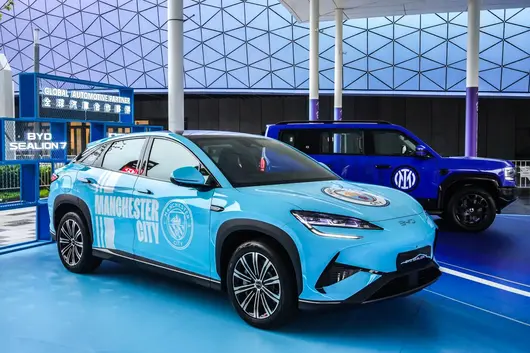
8月1日香港足球文化节迎来曼城与国米的重磅季前赛,而比亚迪作为两队共同的官方合作伙伴全程护航,这场新能源龙头企业与两大足坛豪门的相遇,更是充分彰显中国品牌的全球格局。最终国米点球4-2拿下比赛,无论赛场输赢,比亚迪都是本场比赛最大的赢家!

曼城、国米均拿下上赛季本土双冠,都曾创造足坛五冠王佳绩。而比亚迪更是稳居全球新能源销量榜首,2025年还跻身全球车企前五,在香港市场更是每五台新车就有一台出自比亚迪。赛事期间比亚迪全系车型负责球队通勤与后勤保障,场馆内品牌展示随处可见,排面直接拉满。

看台一众足球少年格外亮眼,比亚迪邀请了新疆、贵州、陕西山区小球员现场观赛。多年来也持续带青少年奔赴世界杯、欧洲杯观赛,还安排他们与海外青训梯队切磋。


目前比亚迪手握曼城、国米、大巴黎等顶级足球IP,用足球和硬核新能源技术开拓海外市场,同时深耕青少年足球公益,兼顾品牌实力与品牌温度!

喺馬來西亞嘅 SUV 市場,好多買家喺揀車嘅時候都會拿 寶騰 X70 同 奇瑞 瑞虎 Cross 嚟做比較。這兩款車喺價位同定位上都好接近,今日我就從多個方面做個詳細比較,幫你節省做功課嘅時間。
寶騰 X70 喺馬來西亞嘅 OTR 售價係 RM 106,800 - 122,300,一共有 3 個版本,包括 1.5L Standard 2WD(RM 106,800)、1.5L Executive 2WD(RM 115,800)、1.5L Premium 2WD(RM 122,300) 等。
奇瑞 瑞虎 Cross 喺馬來西亞嘅 OTR 售價係 RM 88,750 - 99,750,一共有 2 個版本,包括 2025 HEV 1.5L CSH(RM 99,750)、2025 1.5T Standard(RM 88,750) 等。
由價錢睇落,奇瑞 瑞虎 Cross 嘅起步價比 寶騰 X70 平咗 RM 18,050。老實講,喺呢個價位段,幾千蚊嘅差別其實唔算大,關鍵都係睇整體嘅性價比同長期使用成本。

寶騰 X70 搭載 1.5L Turbo,馬力 140 hp。廠方油耗 7.0 L/100km。
奇瑞 瑞虎 Cross 搭載 1.5L 4 缸,馬力 105 hp。廠方油耗 6.0 L/100km。
動力方面,寶騰 X70 嘅 1.5L Turbo 比 奇瑞 瑞虎 Cross 嘅 1.5L 4 缸多咗 35 匹馬力,中段加速更有信心,尤其係行高速公路上超車嘅時候。不過 奇瑞 瑞虎 Cross 嘅油耗可能更加經濟,日常市內通勤差別唔會太大。
寶騰 X70 車身長 4400 mm,車尾箱 400 L。
奇瑞 瑞虎 Cross 車身長 4400 mm,車尾箱 400 L。
兩款車嘅尺寸幾乎一樣,車內空間差別唔大。呢個級別嘅車,日常使用完全夠用。
寶騰 X70 採用 FWD 驅動方式。
奇瑞 瑞虎 Cross 採用 FWD 驅動方式。
兩款車嘅驅動方式一樣,都係 FWD,日常駕駛感受唔會有太大分別。
寶騰 X70 同 奇瑞 瑞虎 Cross 都係馬來西亞市場嘅主流選擇,適合家庭用、日常通勤。如果你更重視品牌口碑同二手價,可以優先考慮口碑更好嗰款;如果你更重視性價比同配備,就揀配備更豐富嗰款。最後都好建議兩款都去試駕,親身體驗先係最重要嘅。
總體嚟講,寶騰 X70 同 奇瑞 瑞虎 Cross 都係馬來西亞市場幾不錯嘅車型。揀邊一輛,關鍵都要睇你嘅個人需求同預算。建議大家做好功課,多比較幾間車行嘅報價,再去試駕做最終決定。買車係一件大事,花少少時間做功課絕對唔會錯。



“一个男人不可能同时拥有自卑和路虎。”
这句流传已久的段子,足以证明路虎的昔日光环。

对不少中年男人来说,“开路虎”堪称证明江湖地位的最佳名片,路虎车主不仅有钱,而且有排面。
尤其在县城和工程圈,路虎是大哥们的标配,既能撑场面,关键时刻甚至还能拿来抵债。
但如今,路虎在中国的地位大打折扣,“以前怕兄弟开路虎,现在是兄弟都开路虎。”

最典型的就是路虎旗下的极光L,它刚进入中国市场时,顶着“最美路虎”的光环,成为不折不扣的“加价王”。
剧央视报道,2011年这款车上市之初,北京经销商要求至少加价18万,甚至有的门店需要加价18万以上。
而且,有钱也不能保证提车,还要排队至少等8个月以上。

谁能想到,十几年后,这款车却从“加价也买不到”,变成了“打骨折还卖不动”。
到了2026年,部分门店的极光L叠加优惠后,价格已经下探至16万元左右,相比当年的落地价,跌幅超过八成。
价格跳水背后,销量同样难看。
2025年,揽胜极光销量约8229辆,发现运动版约4073辆,两款面向城市中产的入门车型加起来只有12302辆。八年时间,销量下降八成。

不仅个别车型,路虎在中国的社会地位也早已不复从前。
2017年是捷豹路虎在中国最风光的一年,官方数据显示,当年其在华销量首次突破10万辆,同比增长23%,中国市场贡献了全球近四分之一的销量。
可到了2025年,捷豹路虎在华销量只剩约6.76万辆,已经腰斩。
曾经县城大哥最爱的路虎,为什么在中国市场失宠了?
01
昔日女王座驾,变身“印度制造”
怎样形容路虎以前在中国的地位?
正如《蜗居》中的宋思明所说,“路虎就是男人的腿。”

曾经的路虎,在中国根本不愁卖。只需一句“英国女王同款座驾”,就能让无数县城大哥心甘情愿加价提车。
这份光环并非凭空捏造,1951年,路虎就首次获得英国王室认证,此后成为王室成员正式活动的专属座驾。
伊丽莎白二世不仅坐路虎,还亲自开路虎。丘吉尔、贝克汉姆、F1冠军简森·巴顿,也都曾是它的车主。

进入中国后,路虎凭借“豪华+越野”的标签大杀四方,成为了身份的象征。
有人说,“开奔驰可能是老板,开路虎的一定是大哥。”
就连自降身价的揽胜极光,刚进入中国时,价格也被炒到了将近90万元。

转折点发生在2008年,印度塔塔汽车花23亿美元,从福特手中收购捷豹路虎。
从商业上看,这笔收购并不失败。塔塔不仅给钱,还给了JLR更大的经营空间。2017年,捷豹路虎全球销量达到62.1万辆,是2009年的三倍多。
但在路虎车主的眼里,就完全不同了。
对路虎这种豪华品牌而言,最讲究的就是“血统”,产地变化会直接影响品牌形象。

当旗舰车型开始在印度生产,消费者不免产生一个疑问:以前卖得那么贵,究竟贵在产品本身,还是纯粹的智商税?
体现在价格上,2024年第一季度,捷豹路虎经销商价格倒挂比例达到38.87%。
部分指导价上百万元的车型,需要降价三四十万元才能卖出去,极端情况下甚至相差五六十万元。

这便形成了豪华品牌最怕的死循环——卖不动就降价,降价导致品牌价值缩水。
老车主觉得被背刺,新车主被养成了“等等党”,产品在价格战中越陷越深。
昔日的女王座驾,就这样一步步变成了网友口中的“印度制造”。
02
越野霸主,困在燃油车旧时代
“时代抛弃你的时候,连个招呼都不打”,这句话用来形容路虎再合适不过。
路虎的问题,从来不在产品上。
直到今天,它的机械素质、四驱系统和极限通过能力依然能打,是不折不扣的“越野霸主”。
但问题是,时代变了。中国消费者评价好车的标准,已经从越野能力,变成了“既要又要”,需要性价比高、配置豪华,智能化和电动化也不能拉胯。
路虎自己也犯下了三个致命错误,彻底失去了江湖地位。

其一,战略失误,错过电车转型的最佳时期。
2025年,中国新能源汽车产销量分别达到1662.6万辆和1649万辆,新能源新车销量占比已经超过50%。
这意味着,中国汽车市场完成了真正的换代,电车已经超越油车,成为真正的主角。
路虎是燃油车时代的霸主,但在电动化转型上,却明显慢了一步。
早在2021年它就宣布,未来五年将推出6款纯电车型。结果到了2026年6月,官方说法仍是纯电车型将在后半年上市,相当于首款纯电路虎至少推迟了4年。
汽车行业最怕的不是做错,而是迟到。

与此同时,同一价格带的中国品牌,已经把纯电或插混卷成了标准配置。
其二,轻视对手,智能化体验仅仅停留在及格线。
极光L并不是没有智能配置。自适应巡航、车道保持、紧急制动、交通标志识别、360度影像和智能泊车,该有的基本都有。
但这些配置放在今天,更像是传统豪华燃油车的标配,没有城市NOA,也缺少中国消费者已经逐渐习惯的辅助驾驶,更谈不上持续快速的OTA迭代。

2025年中国汽车科技体验指数中,路虎以593分位列豪华燃油车品牌第三,看起来成绩不错。
可豪华新能源阵营中,蔚来达到714分,腾势达到711分,分别比路虎高出121分和118分。
这说明,路虎在燃油豪车里仍是优等生,放进整个中国汽车市场,却只能站在及格线附近。
其三,为了保住利润,主动放弃了最需要升级的入门车型。
这些年,JLR把资源集中在揽胜、揽胜运动版和卫士三款高利润车型上。

2025财年,这三款车占其全球批发销量的67.8%。到2026财年第一季度,这一比例已经达到80.8%。
也就是说,JLR每卖出10辆车,大约8辆都来自三款旗舰产品。
全球利润暂时保住了,但极光、发现运动版等国产车型,却长期得不到真正的技术换代。

当技术升级追不上对手,路虎最后只能用价格补课。
路虎不是败给了某一个对手,而是败给了自己对旧时代的迷信。
电动化迟到,智能化掉队,产品换代停滞,最后再用降价透支品牌。
曾经帮助路虎登上神坛的燃油车优势,如今反而成了它最难走出的舒适区。
03
县城“加价王”,正集体败退中国
路虎的失宠,并不是一个孤立事件。那些曾经在中国市场横着走、加价几十万还要排队的国外豪车,如今正在集体经历一场祛魅。
2021年,保时捷在中国交付95671辆,中国连续第七年成为其全球最大单一市场。
可到了2025年,中国成了销量跌幅最大市场,保时捷在华交付量只剩41938辆,较巅峰时期下跌约56.2%,2026年上半年又只交付14501辆,同比再降32%。

玛莎拉蒂更惨。2017年,其在华销量约14498辆,一度是微商、婚庆公司和县城老板的“朋友圈标配”。
到了2024年,中国及香港市场销量只剩1209辆,较巅峰下跌约91.7%。

Jeep则展示了这条路最极端的结局,广汽菲克2017年销量超过22万辆,指南者、自由光都曾是SUV市场的明星。
到2021年,销量只剩2.01万辆,2022年上半年更是跌到1861辆,随后停产并进入破产程序。
这些品牌的问题其实高度相似,过去靠品牌溢价,让消费者乖乖买单,但如今,同样的价格,消费者有了太多新选择。

所以,路虎想要翻身,第一件事就是放下傲慢,紧跟中国消费者的需求开发设计产品。
揽胜和卫士必须与走量车型彻底分开,不能为了短期销量冲进低价混战。至于家庭和中产市场,可以交给重新复活的神行者品牌。
目前,JLR已经决定与奇瑞合作,基于中国电动化架构开发神行者新能源车型,并计划在2026年推出首款产品。
这条路既能借助中国供应链补上智能化和电动化,又能避免二三十万元的新能源车直接稀释揽胜的品牌价值。

好消息是,路虎的高端口碑并没有完全消失,中国消费者也没有抛弃越野车。
坦克、方程豹等品牌的崛起恰恰说明,越野正在走出小众圈层,从少数人的极限运动,变成一种新的生活方式。
这也意味着,路虎并非没有机会。
它真正需要做的,是把越野能力,与智能化、电动化真正结合起来,让过去的机械优势,变成电动时代依然拿得出手的技术壁垒。
因为再响亮的品牌故事,也经不起技术长期停滞。
固步自封的技术,终究撑不起品牌溢价的神话。


In the Malaysian SUV market, many buyers compare Proton X70 and Mazda CX-3 when choosing a car.
Proton X70 OTR price in Malaysia is RM 106,800 - 122,300, with a total of 3 versions, including 1.5L Standard 2WD (RM 106,800), 1.5L Executive 2WD (RM 115,800), 1.5L Premium 2WD (RM 122,300), etc.
Mazda CX-3 OTR price in Malaysia is RM 126,159 - 139,159, with a total of 2 versions, including 2023 2.0L High (RM 139,159), 2023 2.0L Plus (RM 126,159), etc.
In terms of price, Proton X70's starting price is indeed RM 19,359 cheaper than Mazda CX-3. If your budget is limited, Proton's entry-level version already meets daily needs. But note, the few thousand difference in price might mean trade-offs in features, depending on your specific needs.

Proton X70 is equipped with a 1.5L Turbo, 140 hp. Official fuel consumption 7.0 L/100km.
Mazda CX-3 is equipped with a 1.5L Turbo, 140 hp. Official fuel consumption 7.0 L/100km.
Both cars use the same powertrain system, the driving experience feels basically the same in daily use. Fuel consumption is also similar, no need to worry too much about this point.
Proton X70 safety rating is 5★ (ASEAN NCAP), active safety system includes ADAS (ACC, AEB, LKA, LDA, BSM, RCTA).
Mazda CX-3 safety rating is 5★ (ASEAN NCAP), active safety system includes i-Activsense.
Both cars have the same safety rating, safety features are quite comprehensive in this class. New cars nowadays are generally safe, no need to worry too much about this point.

Proton X70 body length 4400 mm, trunk 400 L.
Mazda CX-3 body length 4500 mm, trunk 450 L.
In terms of space, Mazda CX-3 body is 100 mm longer than Proton X70, offering better seating space. However, Proton X70 is more flexible for parking in the city, each has its trade-offs.
Both Proton X70 and Mazda CX-3 are mainstream choices in the Malaysian market, suitable for family use and daily commuting. If you value brand reputation and resale value more, prioritize the one with better reputation; if you care more about cost-performance ratio and features, choose the one with richer configurations. Ultimately, it is recommended to test drive both, personal experience is the most important.
Overall, Proton X70 and Mazda CX-3 are both very good models in the Malaysian market. Which one to choose depends mainly on your personal needs and budget. It is recommended to do your research, compare quotes from several dealerships, and then test drive to make the final decision. Buying a car is a major matter, spending some time doing research will definitely not go wrong.


喺馬來西亞嘅 SUV 市場,好多買家喺選車嘅時候都會拿 寶騰 X70 同 馬自達 CX-3 嚟做比較。這兩款車喺價位同定位上都蠻接近嘅,今日我哋就從多個方面做一個詳細嘅對比,幫你省下做功課嘅時間。
寶騰 X70 喺馬來西亞嘅 OTR 售價係 RM 106,800 - 122,300,一共有 3 個版本,包括 1.5L Standard 2WD(RM 106,800)、1.5L Executive 2WD(RM 115,800)、1.5L Premium 2WD(RM 122,300) 等。
馬自達 CX-3 喺馬來西亞嘅 OTR 售價係 RM 126,159 - 139,159,一共有 2 個版本,包括 2023 2.0L High(RM 139,159)、2023 2.0L Plus(RM 126,159) 等。
從價錢來看,寶騰 X70 嘅起步價確實比馬自達 CX-3 便宜咗 RM 19,359。如果你預算有限,寶騰嘅入門版已經可以滿足日常需求。但都要注意,便宜嘅嗰幾千蚊,可能喺配備上會有取捨,具體要看你嘅需求。
寶騰 X70 搭載 1.5L Turbo,馬力 140 hp。官方油耗 7.0 L/100km。
馬自達 CX-3 搭載 1.5L Turbo,馬力 140 hp。官方油耗 7.0 L/100km。
兩款車用嘅係同一套動力系統,日常開起嚟嘅感受基本沒有分別。油耗方面也差唔多,不用太糾結這一點。
寶騰 X70 車身長 4400 mm,後備箱 400 L。
馬自達 CX-3 車身長 4500 mm,後備箱 450 L。
空間方面,馬自達 CX-3 嘅車身比寶騰 X70 長咗 100 mm,乘坐空間更有優勢。不過寶騰 X70 喺城市入面停車會靈活少少,各有取捨。
寶騰 X70 同 馬自達 CX-3 都係馬來西亞市場嘅主流選擇,適合家庭使用、日常通勤。如果你更看重品牌口碑同二手價,可以優先考慮口碑更好嗰一款;如果你更在意性價比同配備,就選配置更豐富嗰款。最終都係建議兩款都去試駕,親身體驗先係最重要。
總體嚟講,寶騰 X70 同 馬自達 CX-3 都係馬來西亞市場幾唔錯嘅車款。揀邊一輛,關鍵都係睇你個人需求同預算。建議大家做好功課,多比較幾間車行嘅報價,再去試駕做最終決定。買車係件大事,花少少時間做功課絕對唔會錯。

喺馬來西亞嘅 SUV 市場,好買家喺揀車嘅時候都係會拿寶騰 X70 同本田 HR-V 嚟做比較。呢兩款車喺價錢同定位上都幾接近,今日我哋就從多個方面做一個詳細嘅對比,幫你節省咗做功課嘅時間。
寶騰 X70 喺馬來西亞嘅 OTR 售價係 RM 106,800 - 122,300,一共有 3 個版本,包括 1.5L Standard 2WD(RM 106,800)、1.5L Executive 2WD(RM 115,800)、1.5L Premium 2WD(RM 122,300) 等。
本田 HR-V 喺馬來西亞嘅 OTR 售價係 RM 115,900 - 143,900,一共有 4 個版本,包括 2026 e:HEV 1.5L RS(RM 143,900)、2026 1.5T V(RM 137,900)、2026 1.5T E(RM 130,900) 等。
由價錢睇,寶騰 X70 嘅起步價確實比本田 HR-V 平咗 RM 9,100。如果你預算有限,寶騰嘅入門版已經可以滿足日常需要。但都要留意,平嗰幾千蚊,可能喺配備上會有取舍,具體要睇你嘅需要。

寶騰 X70 配備 1.5L Turbo,馬力 140 hp。官方油耗 7.0 L/100km。
本田 HR-V 配備 1.5L Turbo,馬力 140 hp。官方油耗 7.0 L/100km。
兩款車用緊同一套動力系統,日常開開嚟嘅感覺基本上冇乜分別。油耗方面都差不多,唔使太煩惱呢一點。
寶騰 X70 嘅安全评分係 5★ (東協 NCAP),主動安全系統包括 ADAS (ACC, AEB, LKA, LDA, BSM, RCTA)。
本田 HR-V 嘅安全评分係 5★ (東協 NCAP),主動安全系統包括本田 SENSING (ACC, CMBS, LKAS, RDM)。
兩款車嘅安全评分一樣,喺呢個級別入面安全配備都算係好齊全。依家嘅新車安全性都唔差,唔使太擔心呢一點。
寶騰 X70 採用 FWD 驅動方式。
本田 HR-V 採用 FWD 驅動方式。
兩款車嘅驅動方式一樣,都係 FWD,日常駕駛感受唔會有太大分別。
寶騰 X70 同本田 HR-V 都係馬來西亞市場嘅主流選擇,適合家庭使用、日常通勤。如果你更睇重品牌口碑同二手價,可以優先考慮口碑更好嗰一款;如果你更在意性價比同配備,就揀配備更豐富嗰款。最終都係建議兩款都去試車,親身體驗先最重要。
總體嚟講,寶騰 X70 同本田 HR-V 都係馬來西亞市場好唔錯嘅車型。揀邊一部,關鍵仲係要睇你嘅個人需要同預算。建議大家做好功課,多比較幾間車行嘅報價,再去試車做最終決定。買車係件大事,花少少時間做功課絕對唔會錯。


