首頁Geely

搜尋歷史
熱門搜尋
經銷商登入 / 註冊

On May 28, the all-new Geely Star Wish officially went on sale. Joey Yung also arrived.

Geely Star Wish, one sold every minute, 573 days with 700,000 units, 2025 China auto market full category sales champion.
In Q1 this year, Star Wish ranked top 3 in global new energy sales for the first time, becoming the only Chinese brand model to enter this list.

Overseas, Star Wish has landed in over 30 countries and regions. In Brazil, sales exceeded 2,300 units in two months. In Thailand Auto Show, single week orders hit 3,300 units, and it won dual international awards "Brazil Annual Best Compact Electric Vehicle" and "Indonesia Auto Show Most Loved Electric Vehicle".
From "China Champion" to "Global Top 3", Geely Star Wish proves that high-quality, cost-effective Chinese pure electric small cars can not only win the domestic market but also redefine rules on the world stage.
Now, it is taking action on itself again. "A master strikes again, progressing beyond the classic."
National first mobile "Immersive Travel" car launch, 5 life scenes, Harbor, Alley, Rainforest, Silk Road, Nomadic.
All-new Geely Star Wish officially launched, limited time rights price 61,800 yuan - 91,800 yuan.

Only a champion can surpass a champion, range fully upgraded, 310 km to 410 km, 410 km to 480 km, champion rolls on itself.

1,
Geely Star Wish
Collaborating with Xiaohongshu
Geely Star Wish is good at playing, collaborating with Xiaohongshu, linking CATL, Capybara, Colorkey, Goodbaby, Myfoodie.
No stacking parameters, making a car that understands life better.
Many people need to put on makeup in the car, at least find a mirror right?
Morning alarm rings, rushing to wash and leave, finishing the last makeup step in the car, this is the real daily life of many urban women.
All-new Geely Star Wish's 10L super large passenger drawer, fits three laptops, cosmetics, skincare neatly organized.
Class-exclusive soft light makeup mirror, light soft and even, say goodbye to awkwardness of "too heavy hand". Open 14.6-inch central control screen, AI music rhythm automatically generates a full-energy morning BGM, leaving home calmly with good mood.
"Make every outing a decent ritual."
Weekend take dog to wild park to run, but "furry child" smell, shedding, mud paw prints always make people head ache.
Geely Star Wish's 70L double pneumatic support rod front trunk, designed for "poop scooper", sealed anti-smell, pick up without bending waist, leash, pet snacks, foldable water bowl all have exclusive places.

Rear pure flat floor 0.61 m², size 44 shoes can move freely, furry child lies on rear, sunlight through big sunroof pours in, "Rainforest" exploration trip refreshing and cozy.
Love and companionship, no smell disturbance.

2,
Small cars can also have "Track-level" soul
Geely Star Wish, "Is it fun to drive"?
Geely Star Wish is class first to adopt native architecture, first standard rear independent suspension, first pure electric small car adjusted globally.
China-Germany joint adjustment team ran across 30+ countries extreme road conditions, let this car in "Driving, Steering, Braking" 3 core experiences fully upgraded.
Data speaks:
130 km/h Hook Test class only one passed, high speed emergency obstacle avoidance no rollover
80.7 km/h Moose Test, comparable to 200,000 class sports coupe
G-TCS 2.0 all-weather anti-slip, torque response compressed from 60 ms to 10 ms
CST 2.0 Comfort Braking, braking no nodding, passengers no motion sickness
Efficient three electric power, class only first standard CATL + liquid cooling + 11-in-1 electric drive.
Range upgrade no price increase, 310 km upgraded to 410 km, 410 km upgraded to 480 km. Charge 19 minutes, range supplement from 30% to 80%.
Cross-city go when you want, cup of coffee full power start.
Friday off work, sudden idea to see sea. 480 km real range, go when want; 30%-80% fast charge only 19 minutes, service area buy cup of coffee work, power full. Range enough real, charge enough fast, use electricity enough save.
Battery life aspect, Star Wish completed 1000 cycles after capacity still holds 90.72%, actually driving 84,000 km Star Wish, successfully challenged seawater corrosion, mud water flushing, limit fire burn etc 6 serial limit tests.

3,
Small Car Safety
Small car, has even bigger safety.
All-new Geely Star Wish built Five Vertical Eight Horizontal Star Armor Cage Body, roof pressure strength reaches 3.4 times car weight.
Whole car 6 airbags, side curtain pressure holding tech can continuously protect head when rollover.

On May 12, Geely collaborated with CCTV to complete class first front and side continuous collision test, high voltage system timely power off, battery pack no smoke fire, passenger cabin structure complete, non-collision side door can open normally.
"Best gift for family is every trip safe and sound."
For Geely, big car small car, luxury car mainstream car, all brands use same safety concept and strict standards.
All-new Geely Star Wish using battery cell 100% CATL, Shield Battery Safety System, 3.4 times car weight roof pressure, AEB 120 km/h stop, AES 130 km/h active avoidance etc hardcore config, practice "Small Car Big Safety" commitment.


4,
Geely Galaxy Flyme Auto 2
Intelligent Cockpit System
All-new Geely Star Wish equipped with Geely Galaxy Flyme Auto 2 Intelligent Cockpit System, 7 nm Dragon Eagle No. 1 Chip + 16G Large Memory, operation silky.
AI Eva supports fuzzy instruction understanding and context memory, say one sentence "Hi Eva, I want to go home", car machine auto call Amap Version 850 plan optimal route.
Added CarPlay phone interconnection, invisibility mode, car wash mode etc thoughtful functions.
Make vehicle easy to use, understand people, comprehensive, is intelligent cockpit basic duty.
Assisted driving, Thousand Miles Vast H3, long distance no tired, parking no panic.
Old city small alleys, narrow to suffocation dead-end roads, densely packed side parking spots, novice driver's nightmare, Star Wish's speciality.
All-new Geely Star Wish equipped full scene automatic parking, covers 300+ parking scenes, supports fingertip parking, remote parking.
HPA Memory Parking supports 2 km super long memory, learn one route then full process auto park, temporary detour also no need relearn. Cooperate with 4.95 m class leading turning radius, "No bend cannot pass, no spot cannot park."
Equipped with high-end model same source Thousand Miles Vast Assisted Driving H3 scheme, 11 HD cameras + 3 mmWave radar + 128 TOPS computing power.
Highway elevated NOA supports voice lane change, auto enter/exit ramp, all scene MPI takeover rate over 200 km.
HPA Memory Parking 2 km super long memory, cm level precise positioning. DMS fatigue detection, Sentry Mode all-weather guard.
Make complex driving simple, leave energy on road to scenery."
5,
Summary
Choose small car, Geely Star Wish is must-see option.
A truly good car, no need stack parameters, you drive it once, experience it know his real life performance in formal real life.

Geely Star Wish walked 573 days, from China Champion to Global Top 3, not rely on luck, rely on every time put user on heart iteration.
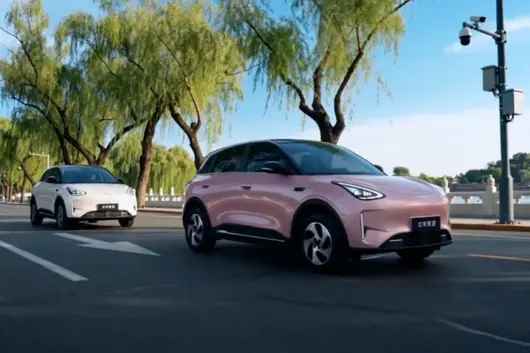

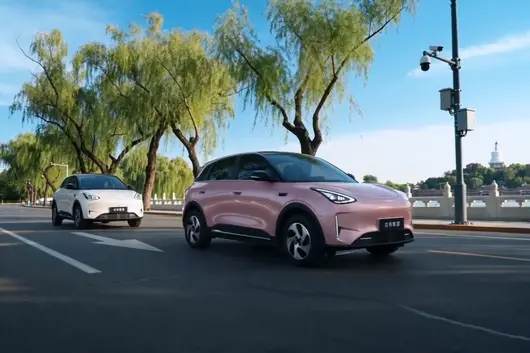
All-New Geely Xingyuan officially launched, with comprehensive upgrades across the entire series range: 310 km upgraded to 410 km, 410 km upgraded to 480 km. The new car launches four models: 410km Yearning Edition, 410km Riding Wind Edition, 480km Exploration Edition, 480km Exploration+ Edition, with a limited-time launch special offer price of 61,800 RMB - 91,800 RMB. To meet different user needs, on the 410km version, a 310km range downgrade option is still available, with a price reduction of 7,000 RMB after selection. Starting from today, users can place orders via the Geely Galaxy APP, WeChat Mini Program, and enjoy ten major purchase gifts and limited-time super trade-in funds, as well as other generous benefits. In addition, all users who place a substantial deposit and lock the order before June 30, 2026, can enjoy a super trade-in fund benefit of 3,000 RMB.
This all-new Geely Xingyuan officially launched with five major upgrades for a comprehensive refresh, bringing users over 100 product strength upgrades, achieving over 25 class-exclusive features, and providing cross-class experience to users with generational leading technology. As the 2025 China automotive market all-category sales champion, Geely Xingyuan's delivery volume surpassed 700,000 units in 573 days, ranked top 3 in global new energy vehicle sales in the first quarter of this year, and is the only Chinese brand model to enter the global top 3 in new energy vehicle sales, continuously releasing champion momentum.
At the new car launch event, Geely Xingyuan spokesperson Joey Yung also arrived on site. At the same time, the new car collaborated with Xiaohongshu to create the nation's first mobile "Immersive Travel" car launch event, collaborating with cross-border brands such as CATL, Capybara, Colorkey, Goodbaby, and Maid, innovatively creating five major life scenarios: "Seaside Family, Alley Family, Rainforest Family, Silk Road Family, Nomadic Family".
Geely Xingyuan is the first in its class to adopt a native architecture, the first to be equipped with rear-drive independent suspension as standard, and the first pure electric compact car tuned for global markets, allowing users to feel the ultimate driving control in a pure electric compact car for the first time! Currently, Geely Xingyuan has entered more than 30 countries and regions, the R&D team assembled global resources, conducted comprehensive verification for different global extreme road conditions, and comprehensively upgraded the three core experiences of "driving, steering, and braking" for the all-new Geely Xingyuan. The G-TCS 2.0 all-weather anti-slip system ensures no slipping, no skidding, and no rolling back on flat roads, slopes, and corners while retaining rear-drive flexible fun, making it easy for novices to drive calmly; the new brushless steering system responds 1 times faster, supports three steering modes and self-learning of the steering neutral position; the G-CST 2.0 all-scenario comfort braking system simulates the feeling of an experienced driver, no head-nodding when braking, no car sickness while driving. In addition, Geely Xingyuan is the only in its class to successfully challenge the Hook Test at 130 km/h, and the first in its class to successfully pass the Moose Test at 80.7 km/h, with handling performance comparable to a 200,000 level sports coupe.
The new car is the only in its class to be equipped with CATL cells, liquid cooling temperature control, and 11-in-1 high-integrated electric drive as standard across the entire series, with three-electric power strength being the ceiling of its class since launch. The new car is equipped with CATL's exclusive next-generation cell, energy density reaches 190Wh/kg, maximum CLTC range 480 km, sufficient for daily commuting and weekend outings; cooperating with the only active grille shutter in its class and low-drag wheels, aerodynamic drag reduced by 15 counts, actual range increased by another 10 km. Regarding charging, fast charging from 30%-80% takes only 19 minutes, enough time to drink a cup of coffee to start with full charge; the liquid cooling system and new BMS guarantee full-speed charging in cold and hot weather, and charging speed increase does not come at the cost of battery lifespan.
The unique Star Wisdom AI Cloud Power 2.0 in its class achieves full-link energy management, covering intelligent charging and discharging, off-peak electricity price recognition, battery temperature maintenance, energy consumption diagnosis, and battery maintenance functions, making every charge efficient and every trip worry-free.
The all-new Geely Xingyuan is equipped with Galaxy Flyme Auto 2 smart cockpit system, based on 7nm automotive-grade Longying No.1 chip and 16GB+128GB large storage, fast response, smooth operation, easy to get started. Users can freely switch maps or favorite wallpaper desktop, cute pet wallpaper supports interaction functions, adding fun to the cockpit. The new AI Eva is more like a user's personal smart partner, the voice assistant Hi EVA supports fuzzy command understanding and context memory, can complete car control, Q&A, entertainment, etc. operations. At the same time, the car machine new support for CarPlay mobile phone interconnection, compatible with iOS devices seamless connection, local common applications all present, cloud has 200+ massive applications to choose from freely. There are also stealth mode, car wash mode, one-key car find and other thoughtful scenarios, and customized assistant for each user.
The all-new Geely Xingyuan is equipped with the Qianli Haohan Advanced Driving H3 Solution sourced from high-end models, covering multiple driving scenarios. This system has safely driven 1.38 billion km, user usage volume growth rate first, relying on G-ASD intelligent driving underlying layer and Star Wisdom AI large model, bringing "better to use as you drive, smarter as you drive" smart experience. Highway overhead bridge NOA is not restricted by roads and rain/fog weather, supports voice lane changing, multi-scenario avoidance and automatic on/off ramps. Full-scenario MPI take-over rate exceeds 200 km, equivalent to continuous driving 3 hours needing take-over only 1 time. At the same time, parking aspect can achieve full-scenario adaptation, APA parking assistance function supports one-key parking in, fingertip parking, remote control parking, covering 300+ types of parking scenarios. HPA memory parking supports 2 km ultra-long memory, cm-level precise positioning, learn one route and can complete automatic parking throughout, with intelligent following cars, self-finding position, obstacle avoidance functions, temporary detours also do not need re-learning, effectively reducing parking operation difficulty. In addition, DMS active fatigue detection if detects driver appears fatigue behavior or distracted driving, will timely remind the driver; Sentry Mode can guard parking safety 24 hours all-weather, if abnormal immediately record video and send to user phone.
Geely has built a global comprehensive safety center with investment exceeding 2 billion Yuan, and released Human, Vehicle, Road, Cloud, Star integrated global safety 2.0 system, covering life safety, health safety, property safety, privacy safety four core safety domains. The all-new Geely Xingyuan also follows this high standard, and adheres to "Small cars must have big safety" concept, passive safety aspect, built five vertical eight horizontal Star Armor Cage Body, front end three transmission paths cooperate with double "Three-leaf Clover" force relief structure, side battery to threshold spacing 149mm and add double anti-collision longitudinal beams, rear end 750mm long rear suspension with double "井" shape rear subframe forms solid barrier; roof pressure resistance strength increased to 3.4 times vehicle weight, A-pillar and B-pillar and roof cross-beam and other core area material upgrade, even if encountering rollover or heavy object pressing top, cockpit still safe and sound, side curtain airbag pressure maintenance technology can continuously protect head when rolling.
In battery lifespan aspect, Geely Xingyuan's verification standard increased to 2 times national standard, after 1000 cycles battery capacity still maintains 90.72%. Adopting industry-leading BDMU high-voltage device deep integration technology, combining BMS battery management system and BDU high-voltage distribution unit one-in-two, greatly reducing interfaces, reliability goes up a notch, from root down to reduce battery seal failure risk, successfully completed class first and only front and side continuous collision, more actually driven 84,000 km Xingyuan, successfully challenged seawater corrosion, muddy water flushing, bad road scraping bottom, extreme fire burning and other six serial extreme tests.
In addition, the all-new Geely Xingyuan is equipped with tire pressure direct display, DOW door open warning, Sentry Mode, more AEB active braking and AES emergency steering double insurance, successfully passed 120km/h static vehicle braking stop and 130km/h "vanishing front car" active avoidance test, performance far exceeding industry mainstream level.
In the first quarter this year's global new energy vehicle sales ranking list, Geely Xingyuan first ranked top 3 globally, achieved China's A0-class electric car new milestone.
In overseas markets, Geely Xingyuan has already landed in more than 30 countries and regions. In Brazil launched 2 months sales broke 2,300 units; in Thailand car show one week order grabbed 3,300 units, and won "Brazil Annual Best Compact Electric Vehicle" and "Indonesia Auto Show Most Loved Electric Vehicle" dual international grand prizes. On streets all over the world, Geely Xingyuan is becoming a "Made in China" flowing new business card.

Editor's Note: Incorporating Radar Automotive is seen as another important measure to advance the "One Geely" strategy and continuously optimize resource allocation.
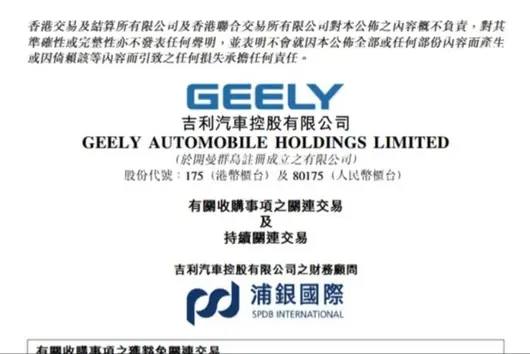
Recently, Geely Automobile announced on the HKEX that it plans to invest approximately 218 million yuan in cash to acquire 100% equity of three core entities of Radar Automotive. Upon completion of the transaction, Radar Automotive will be consolidated into the listed company's financial statements as a wholly-owned subsidiary, marking the formal transition of this new energy pickup brand from a group incubation project to a core business segment of the listed entity.

This move is a key step for Geely Holdings to implement the "Taizhou Declaration". Released two years ago, the declaration established five key directions including strategic focus, integration, and synergy, aiming to reverse resource redundancy and low efficiency caused by independent operations of multiple brands in the past, and promote the group's transition towards centralized synergy.
Guided by this strategy, Geely has successively completed adjustments such as Geometry merging into Galaxy, and Zeekr integrating Lynk & Co. This incorporation of Radar Automotive is seen as another important measure to advance the "One Geely" strategy and continuously optimize resource allocation.
Radar Automotive, Profitability Still in Climbing Phase
Radar Automotive was incubated by Geely Holdings four years ago, and the first model RD6 quickly gained traction after its launch. In 2025, the brand became the only new energy brand to rank in the top five in total pickup sales with 13,040 units sold, with its pure electric segment market share reaching as high as 98%.

However, Radar Automotive has not yet achieved overall profitability. Recent financial data shows divergence in profit and loss among the three core entities: The Shandong company operating the entire industry chain narrowed its loss to 8.646 million yuan, the domestic sales company earned a profit of 12.325 million yuan, while Radar Thailand responsible for overseas expansion expanded its loss to 10.697 million yuan, and the overall business is still in the investment phase.
Equally challenging are market capacity constraints and intensifying competition.
In the first quarter of 2026, domestic new energy pickup sales were only 18,000 units, with penetration below 10%, and growth rate far lower than the overall pickup market. Currently, the main growth in pickups is overseas, with exports accounting for more than half.
At the same time, the track is becoming increasingly crowded. In the domestic market, Great Wall Motor continues to firmly hold the leading position in the domestic pickup market, with global sales exceeding 181,600 units in 2025. BYD Shark Pickup has long prioritized deep cultivation of overseas markets, with an average monthly export volume stable at around 3,000 units. Relying on its hybrid rugged product power, it quickly opened up the Southeast Asian and Australian markets. Recently, the Shark brand was also confirmed to enter the domestic pickup market to compete.
More participants are constantly joining. Changan is accelerating the layout of passenger-oriented new energy pickups, and Chery is also perfecting the pure electric and plug-in hybrid full-category pickup product matrix relying on the Ruilin brand.
Against this backdrop, the advantages Radar Pickup established in the new energy pickup field are being constantly eroded, and whether it can maintain leadership in competition afterward remains unknown.
Another Move in Geely's Grand Integration
The Geely Group is continuously deepening the strategic implementation of the "Taizhou Declaration". In the past year, the group's integration moves were frequent: Geely Galaxy merged with the Geometry brand, Zeekr and Lynk & Co completed equity transfer and formed Zeekr Technology Group, which was subsequently merged into Geely Automobile. Through these adjustments, the group's brand count was streamlined from 6 to 4, and subsidiary holding companies were reduced from 3 to 1, completing a deep internal cleanup.
This acquisition of Radar Automotive will further expand Geely's business landscape. A Geely representative stated that bringing Radar under the China Star umbrella aims to perfect product coverage in luxury, mid-to-high-end, and mass markets, complete the pickup category, and form a complete matrix of sedans, SUVs, MPVs, and pickups to meet diverse user needs; from a strategic value perspective, this acquisition marks the upgrade of new energy pickups from a group-level incubation project to a core strategic category of the listed company.

From the value perspective, the transaction price is 218 million yuan, basically flat with the assessed fair value of the target company, with no premium risk. Geely has acquired a top domestic new energy pickup brand at a low cost, which not only fills the product matrix gap but also provides growth space for pickup overseas expansion, reflecting efficient resource allocation.
For Radar Automotive, although it had previously laid out the Thai market, independent expansion overseas faces high cost and low efficiency issues. Relying on Geely's mature global distribution network, Radar Automotive can quickly penetrate more markets, convert technical momentum into sales volume growth, and accelerate the realization of scale profitability.
In addition, injecting Radar Automotive into the listed company system marks that the holding group no longer manages homogeneous brands dispersively, but instead hands over mature business to core segments for unified operation. This move connects product planning, supply chain, and channel resources, achieves reuse of overseas networks, and is conducive to Radar brand expansion and cost control in domestic and international markets.
In response, industry insiders believe that Geely adopts a "platform incubation + mature recycling" model, relying on group resources to share the early risks of start-up brands, and implementing asset integration after the brand stabilizes its position in the niche market. This strategy balances risk control and asset operating efficiency.
This inclusion of Radar Automotive into the listed system is yet another key execution of this strategic logic.

On May 28, the all-new Geely Xingyuan officially launched, with the full series range comprehensively upgraded: 310 km upgraded to 410 km, 410 km upgraded to 480 km. The new car offers four models: 410km Yearning Edition, 410km Riding Wind Edition, 480km Exploration Edition, and 480km Exploration+ Edition, with a limited-time launch benefits price of 61,800 Yuan - 91,800 Yuan. To meet the needs of different users, on the 410km version, the 310km range option benefit is still provided; after selecting this option, the price can be reduced by 7,000 Yuan. Starting from today, users can place an order via Geely Galaxy APP or WeChat Mini Program, enjoying ten购车 gifts and limited-time super trade-in allowance and other substantial benefits. In addition, all users who place a large deposit and lock the order before June 30, 2026, can enjoy a super trade-in allowance benefit of 3,000 Yuan.

Master level moves again. This time the all-new Geely Xingyuan officially launched, advanced again on the classic, comprehensively refreshed with five major upgrades, bringing users over 100 product power upgrades, achieving over 25 class-exclusive features, providing cross-level experience with generational leading technology. As the 2025 Chinese Auto Market all-category sales champion, Geely Xingyuan's delivery volume exceeded 700,000 units in 573 days, entering the top three in global new energy vehicle sales in the first quarter of this year, being the only Chinese brand model to enter the top three in global new energy vehicle sales, continuously releasing champion momentum. At the new car launch conference, the all-new Geely Xingyuan spokesperson Joey Yung also appeared on-site, sharing her real story with Geely Xingyuan with everyone, using gentle and firm power to support the new car, and witnessing the renewal moment of this champion pure electric small car together with 700,000+ users.
At the same time, the new car partnered with Xiaohongshu to create the nation's first mobile "Immersive Travel" car launch conference, taking everyone to feel beauty and enjoy beauty. Not only that, Geely Xingyuan also collaborated with CATL, Capybara, Colorkey, Goodbaby, Myfoodie and other cross-border brands, innovatively creating "Harbor Home, Alley Home, Rainforest Home, Silk Road Home, Nomad Home" five life scenarios, focusing on daily commuting core scenarios, directly hitting users' real vehicle usage needs, redefining pure electric small car value benchmark with champion strength.
Champion Strength 1: Ultimate Driving Control Advanced — First Global Native Architecture + Chinese-German Joint Tuning
Geely Xingyuan brings a calm, free, light and agile driving experience for every trip of users. This champion strength comes from Geely's first global native architecture and track-level tuning: Geely Xingyuan is the first in its class to adopt a native architecture, the first to standardize rear-drive independent suspension, the first to be globally tuned pure electric small car, letting users feel for the first time that pure electric small car can have ultimate driving control!

Good driving control must withstand inspection. Currently, Geely Xingyuan has walked into more than 30 countries globally. The R&D team gathered global resources, conducted all-dimensional verification for different extreme road conditions globally, letting the new Geely Xingyuan comprehensively upgrade on the three core experiences of "Driving, Steering, Braking", once again leading small car driving control into 2.0 era. G-TCS 2.0 All-Weather Anti-Slip System while retaining rear-drive flexible fun, ensures no slipping, no tail sliding, no rolling on flat roads, slopes and curves, new drivers can also drive calmly; new brushless steering system response is 1 time faster, supports three steering modes and steering center self-learning; G-CST 2.0 All-Scene Comfort Braking System simulates old driver foot feel, braking no head nod, driving no car sickness. In addition, Geely Xingyuan is the only in-class to successfully challenge Fishhook Test at 130km/h, and the first in class to successfully pass Moosetest at 80.7km/h pure electric small car, handling performance comparable to 200,000 level sports coupe.
Champion Strength 2: Efficient Three Electric Advanced — Full Series Standard CATL + 480km Range + 19min Fast Charge
310 km upgraded to 410 km, 410 km upgraded to 480 km, new Geely Xingyuan achieves full series range upgrade. Range is real not virtual, charge fast use long, electricity save not expensive, whether daily commute or occasional long distance trip, new Geely Xingyuan can easily cope. New car is the only in-class full series standard CATL cell, liquid cooling temperature control and 11-in-1 high integration electric drive pure electric small car, three electric strength from launch has been class ceiling. New car mounts exclusive customized CATL new generation cells, energy density reaches 190Wh/kg, highest CLTC range 480km, enough for daily commute and weekend outing; cooperating with class exclusive active front grille and low drag wheels, drag reduced by 15counts, actual range further improved by 10km.

Range solid, energy replenishment efficiency must also continuously upgrade. Replenishment aspect, 30%-80% fast charge only needs 19 minutes, one cup of coffee time can full charge depart; liquid cooling system and new BMS ensure cold and hot weather can full speed charge, and charge speed up not at the cost of battery life. At the same time, class unique Xingrui AI Cloud Power 2.0 realizes full-link energy management, covering smart charge discharge, off-peak electricity price identification, battery temperature maintenance, consumption diagnosis and battery maintenance functions, letting every charge be efficient, every journey electricity be worry-free.
Champion Strength 3: AI Cockpit Advanced — Galaxy Flyme Auto 2 Smart Cockpit System + Eva Large Model
All-new Geely Xingyuan puts warmth and wisdom into cockpit, letting vehicle more usable, more understand people, more comprehensive. New Geely Xingyuan mounts Galaxy Flyme Auto 2 smart cockpit system, based on 7nm automotive grade Longying No. 1 chip and 16G+128G large storage, reaction fast, operation smooth, hand-on learn. Users can switch map or favorite wallpaper desktop at will, cute pet wallpaper supports interactive function, adding fun to cockpit.

New AI Eva is even more users'随身 wisdom partner, voice assistant Hi EVA supports fuzzy instruction understanding and context memory, can complete car control, Q&A, entertainment etc., all professional. User only says one sentence "Hi Eva, I want to go home", vehicle can automatically call latest Amap 850 version choose optimal route. At the same time, car machine new supports CarPlay phone interconnection, compatible iOS device seamless connection, local common apps all included, cloud more than 200+ massive apps at will select. Also hidden mode, wash mode, one-key car find etc. thoughtful scenarios, and thousand people thousand faces customized assistant, get off work automatically open navigation adjust air conditioning, exclusive welcome ritual sense full. From navigation to entertainment, from life to surprise, new Geely Xingyuan smart cockpit comprehensively covers user daily needs.
Champion Strength 4: Auxiliary Driving Advanced — Qianli Haohan Auxiliary Driving H3 Solution
All-new Geely Xingyuan mounts with high-end model source Qianli Haohan auxiliary driving H3 solution, can cover multiple driving scenarios, every function is truly helping users improve driving experience. This system has safely driven 1.38 billion km, user usage growth rate first, relying on G-ASD intelligent drive underlying and Xingrui AI large model, bringing "the more drive the better the use, the more drive the smarter" intelligent experience.

Highway elevated NOA not subject to road and rain fog weather limits, supports voice lane change, multi-scene avoidance and automatic upper and lower ramp, users only need lightly hold steering wheel can easily run long distance. All-scene MPI takeover rate super 200 km, equivalent to continuous drive 3 hours only needs takeover 1 time. At the same time, parking aspect can do all-scene adaptation, APA parking assist function supports one-key park-in, fingertip parking, remote control parking, cover 300+ kinds of parking scenarios. Aiming at new driver parking difficulty, female driver parking easy nervous etc. real pain points, HPA memory parking supports 2km super long memory, cm-level precise positioning, learn one time route can then whole process automatic park-in, possesses smart follow car, autonomous find place, encounter obstacle bypass function, temporary change route also no need re-learn, effectively lower parking operation difficulty. In addition, DMS active fatigue detection if detect driver appear fatigue behavior or distracted driving, will timely remind driver; sentry mode can 24-hour all-weather guard parking safety, have anomaly immediately record video and send to user phone in. From depart to arrive, from driving to parking, new Geely Xingyuan makes complex driving become simple and reassuring, letting users leave more energy to on-road scenery and companionship laughter.
Champion Strength 5: All-Dimension Safety Advanced — Three Electric Safety + Active & Passive Safety
Safety is Geely engraved in bone's gene! For Geely, whether big car or small car, whether luxury model or mainstream model, under all brands adopt same safety concept and strict standards. Geely has built investment super 2 billion Yuan global all-domain safety center, and released "People, Vehicle, Road, Cloud, Star" integrated all-domain safety 2.0 system, covering life safety, health safety, property safety, privacy safety four core safety domains. All-new Geely Xingyuan also follows this high standard, and upholds "Small car, more needs big safety" concept, making small car safety to extreme.
Passive safety aspect, all-new Geely Xingyuan created five vertical eight horizontal Star Armor Cage Body, like a solid yet light armor, front back left right all did careful reinforcement — front end three transfer paths cooperate with double "Clover" force release structure, side battery to threshold spacing 149mm and add double collision longitudinal beam, rear 750mm long rear suspension with double "Well" shape rear subframe form solid barrier; roof anti-pressure strength increased to 3.4 times car weight, AB pillars and roof beam etc. core area material upgrade, even encounter rollover or heavy object press top, cockpit still safe, side air curtain pressure holding technology can in rollover time continuously protect head.

In battery life aspect, Geely Xingyuan verification standard increased to national standard 2 times, complete 1000 cycles after battery capacity still keep 90.72%. More actual driving 84,000 km of Xingyuan, successfully challenge salt water corrosion, muddy water scouring, bad road scraping bottom, extreme fire burning etc. six serial extreme test, complete industry first.
In order to further improve battery safety protection, new Geely Xingyuan in user unseen places still hard work, adopt industry leading BDMU high voltage device deep integration technology, put BMS battery management system and BDU high voltage distribution unit two-in-one, greatly reduce interface, reliability again up a step, from root lower battery sealing failure risk. Worth mentioning, May 12, Geely partnered CCTV completed class first, also class unique front and side continuous collision, high voltage system timely power down, battery pack no smoke fire, passenger compartment structure complete, airbag precise blast, non-collision side door can normally open. In addition, new Geely Xingyuan equipped tire pressure direct display, DOW door open warning, sentry mode, more AEB active braking and AES emergency steering double insurance, successfully pass 120km/h static vehicle brake stop and 130km/h "vanished front car" active avoidance test, performance far exceed industry mainstream level.
700,000 Users Trust, From Chinese Champion to Global Top Three, Champion Path Never Stops
Always imitated, never surpassed. Relying on high standards from R&D to manufacturing and generational leading product power, Geely Xingyuan always won industry recognition and user love. Since October 2024 launch, Geely Xingyuan cumulative delivery has broken through 700,000 units, equivalent to sell one unit every minute, it is not only the fastest to achieve this goal star model in all industry, but also won 2025 Chinese Auto Market sales champion. Enter 2026, Geely Xingyuan still continues lead, stable top of list, this year first quarter global new energy vehicle sales ranking, Geely Xingyuan first time enter top three global, achieved Chinese A0-level electric car new milestone.

Geely Xingyuan not only domestic sales hot, in overseas market also widely praised, currently landed global 30+ countries and regions. In Brazil launch two months sales break 2,300 units; in Thailand auto show single week order capture 3,300 units, and won "Brazil Year Best Compact Electric Car" and "Indonesia Auto Show Most Loved Electric Car" double international awards. In streets worldwide, Geely Xingyuan is becoming "Chinese Intelligence" flowing new business card.

All-new Geely Xingyuan's advanced, let Geely Galaxy brand in pure electric small car track again raise "High Quality Good Price" benchmark. In future, Geely Galaxy will continue adhere to "Make Everyone's Intelligent Boutique Car" original intention, accurately grasp users' most real needs, in various sub-markets all for users bring beyond-expectation products and services.
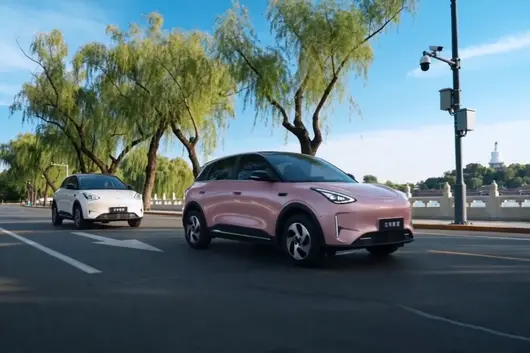

May 28, the all-new Geely Xingyuan officially launched, the entire series range has been comprehensively upgraded: 310 km upgraded to 410 km, 410 km upgraded to 480 km. The new car offers four versions: 410km Yearning Edition, 410km Riding Wind Edition, 480km Exploration Edition, 480km Exploration + Edition, launch limited-time benefits price 61,800 yuan - 91,800 yuan. To meet the needs of different users, for the 410km version, it still offers a 310km range reverse-select right, the price can be reduced by 7,000 yuan after selection. Starting today, users can place orders via Geely Galaxy APP, WeChat Mini Program, enjoy ten layers of purchase gifts and limited-time super trade-in cash and other rich benefits. In addition, for those who make a large deposit and lock the order before June 30, 2026, can enjoy a super trade-in cash right of 3,000 yuan.

Experts make another move, this all-new Geely Xingyuan officially launched, advanced further on the classic, comprehensively refreshed with five major upgrades, bringing users over 100 product power upgrades, achieving over 25 industry-exclusive features, providing users with cross-level experiences with generationally leading technology. As the 2025 China auto market sales champion across all categories, Geely Xingyuan delivery volume broke 700,000 units in 573 days, ranked in the top 3 global new energy sales in the first quarter of this year, it is the only Chinese brand model to enter the top 3 global new energy vehicle sales, continuously releasing champion momentum. At the new car launch event, the all-new Geely Xingyuan spokesperson Joey Yung also arrived on site, sharing her true stories with Geely Xingyuan with everyone, backing the new car with a gentle yet firm power, witnessing the refresh moment of this champion pure electric small car with 700,000+ users together.
At the same time, the new car joined hands with Xiaohongshu to create the country's first mobile 'Immersive Travel' car launch event, taking everyone to feel beauty together, enjoying beauty. Not only that, Geely Xingyuan also collaborates with CATL, Capybara, Colorkey, Goodbaby, Myfoodie and other cross-boundary brands, innovatively creating five major life scenarios: 'Harbor Family, Alley Family, Rainforest Family, Silk Road Family, Nomad Family', focusing on core daily travel scenarios, directly hitting users' real vehicle usage needs, redefining the pure electric small car value benchmark with champion strength.
Champion Strength One: Ultimate Driving Control Advanced — First Global Native Architecture + Sino-German Joint Tuning
Geely Xingyuan brings a calm, free, light, and agile driving experience for every user trip. This champion strength comes from Geely's first global native architecture and track-level tuning: Geely Xingyuan is the first in its class to adopt a native architecture, the first to standardize rear-wheel drive independent suspension, and the first pure electric small car to undergo global tuning, giving users the first time feeling that pure electric small cars can also have ultimate driving control!

Good driving control must stand the test. Currently, Geely Xingyuan has entered more than 30 countries globally, the R&D team gathered global resources, conducting comprehensive verification against different extreme road conditions globally, making the all-new Geely Xingyuan comprehensively upgraded on three core experiences: 'Driving, Steering, Braking', leading the small car driving control into the 2.0 era again. The G-TCS 2.0 All-Weather Anti-Slip System, while retaining rear-wheel drive flexible fun, ensures no slipping, no tail-swinging, no rolling on flat roads, slopes, and curves, even beginners can drive calmly; New brushless steering system responds 1x faster, supports three steering modes and steering center self-learning; G-CST 2.0 All-Scene Comfort Braking System simulates the feel of an old driver, braking no nodding, driving no carsickness. In addition, Geely Xingyuan is the only one in its class to successfully challenge the Fish Hook Test at 130km/h and the first in its class to successfully pass the Moose Test at 80.7km/h, handling performance compares favorably with 200,000-class sports sedans.
Champion Strength Two: Efficient Three-Electrical Advanced — Standard CATL across entire series + 480km Range + 19-minute Fast Charge
310 km upgraded to 410 km, 410 km upgraded to 480 km, the all-new Geely Xingyuan achieves full series range upgrade. Range is sufficient, not fake; charging is fast, lasts long; using electricity is saving, not wasting money, whether daily commute or occasional long-distance travel, the all-new Geely Xingyuan can handle it easily. The new car is the only pure electric small car in its class to standardize CATL cells, liquid-cooled temperature control, and 11-in-1 high-integrated electric drive across the entire series, three-electrical strength has been the ceiling in its class since launch. The new car is equipped with exclusive customized CATL new generation cells, energy density up to 190Wh/kg, max CLTC range 480km, sufficient for daily commute and weekend outings; Cooperating with the class-exclusive active front grille and low wind-resistance wheels, wind resistance reduced by 15 counts, actual range increased by another 10km.

Range is solid, energy replenishment efficiency also needs to continue upgrading. Regarding replenishment, 30%-80% fast charging takes only 19 minutes, a cup of coffee time is enough to depart with full power; Liquid cooling system and new BMS ensure full-speed charging whether cold or hot, and charging speed increase does not come at the cost of battery life. At the same time, the class-exclusive Star-Rui AI Cloud Power 2.0 achieves full-link energy management, covering smart charge/discharge, valley electricity price identification, battery temperature maintenance, energy consumption diagnosis, and battery maintenance functions, making every charge efficient, every journey using electricity worry-free.
Champion Strength Three: AI Smart Cockpit Advanced — Galaxy Flyme Auto 2 Smart Cockpit System + Eva Large Model
The all-new Geely Xingyuan puts warmth and wisdom into the cockpit, making the vehicle better to use, more understanding of people, and more comprehensive. The all-new Geely Xingyuan is equipped with Galaxy Flyme Auto 2 Smart Cockpit System, based on 7nm automotive grade Dragon Eagle 1 chip and 16G+128G large storage, fast response, smooth operation, easy to learn. Users can switch maps or favorite wallpaper desktops at will, cute pet wallpaper supports interactive functions, adding fun to the cockpit.

New AI Eva is even more the user's mobile smart partner, voice assistant Hi EVA supports fuzzy instruction understanding and context memory, can complete vehicle control, Q&A, entertainment, etc., good at everything. User says 'Hi Eva, I want to go home', vehicle can automatically call latest Amap 850 version to select optimal route. At the same time, the car machine adds support for CarPlay phone interconnection, compatible with iOS devices seamless connection, local common apps are all available, cloud has 200+ massive apps for free selection. Also has stealth mode, car wash mode, one-key car find, etc., thoughtful scenarios, and personalized custom assistants, automatically open navigation and adjust AC after getting off work, full of ritualistic welcome feeling. From navigation to entertainment, from life to surprises, the smart cockpit of the all-new Geely Xingyuan comprehensively covers user daily needs.
Champion Strength Four: Assist Driving Advanced — Qianli Haohan Assist Driving H3 Solution
All-new Geely Xingyuan is equipped with the Qianli Haohan Assist Driving H3 Solution derived from high-end models, can cover multiple driving scenarios, every function is truly helping users improve driving experience. The system has safely driven 1.38 billion kilometers, user usage volume growth rate is first, relying on G-ASD Smart Driving Bottom Layer and Star-Rui AI Large Model, bringing 'better to use the more you drive, smarter the more you drive' smart experience.

Highway/Overpass NOA is not limited by roads and rain/fog weather, supports voice lane change, multi-scenario avoidance, and automatic on/off ramps, users only need to lightly hold the steering wheel to easily drive long distance. All-scenario MPI takeover rate exceeds 200 kilometers, equivalent to continuous driving 3 hours requiring takeover only 1 time. At the same time, parking aspect can achieve all-scenario adaptation, APA parking assist function supports one-key parking, fingertip parking, remote control parking, covering 300+ parking scenarios. Targeting new driver parking difficulty, female driver parking anxiety, etc., actual pain points, HPA Memory Parking supports 2km ultra-long memory, cm-level precise positioning, after learning the route once, can automatically park for the whole journey, has intelligent car following, autonomous space finding, obstacle avoidance functions, temporary route change also does not require relearning, effectively reducing parking operation difficulty. In addition, DMS active fatigue detection if detects driver appears fatigue behavior or distracted driving, will timely remind the driver; Sentry mode can protect parking safety 24 hours all-day, if abnormal, immediately record video and send to user's mobile phone. From departure to arrival, from driving to parking, the all-new Geely Xingyuan makes complex driving simple and reassuring, letting users leave more energy to the scenery on the road and laughter of fellow travelers.
Champion Strength Five: Full-Dimensional Safety Advanced — Three-Electrical Safety + Active Passive Safety
Safety is the gene carved into Geely's bones! For Geely, whether big car or small car, whether luxury model or mainstream model, all brands under it adopt the same safety concept and strict standards. Geely has built a global full-domain safety center investing over 2 billion yuan, and released 'Person, Vehicle, Road, Cloud, Star' integrated full-domain safety 2.0 system, covering four core safety domains: Life Safety, Health Safety, Property Safety, Privacy Safety. All-new Geely Xingyuan also follows this high standard, and adheres to the concept 'Small Car, Must Have Big Safety', taking small car safety to the extreme.
In terms of passive safety, the all-new Geely Xingyuan created five longitudinal and eight transverse Star Armor Cage Body, like a solid yet light armor, front, back, left, right are all carefully reinforced — front end three force transmission paths cooperate with double 'Clover' relief structure, side battery to sill spacing 149mm and added double anti-collision longitudinal beams, rear 750mm long rear suspension and double '井' shaped rear subframe form a solid barrier; Roof pressure intensity increased to 3.4 times vehicle weight, A/B pillar and roof crossbeam etc. core area material upgraded, even if encountering rollover or heavy object pressing top, cockpit remains unharmed, side curtain airbag pressure holding technology can further protect head continuously during roll.

In terms of battery life, Geely Xingyuan's verification standard increased to 2 times national standard, after completing 1000 cycles, battery capacity still remains 90.72%. Moreover, Xingyuan that has actually driven 84,000 km, successfully challenged seawater corrosion, mud water flushing, bad road scraping bottom, extreme fire, etc. six large series limit tests, completed industry first.
In order to further improve battery safety protection, all-new Geely Xingyuan puts hard work in places users can't see, adopting industry-leading BDMU high voltage device deep integration technology, combining BMS battery management system and BDU high voltage distribution unit into one, greatly reducing interfaces, reliability steps up another tier, reducing battery sealing failure risk from the root. Worth mentioning, May 12, Geely joined hands with CCTV completed the first time in this class, and also the only continuous frontal and side collision in this class, high voltage system powered off in time, battery pack did not smoke or catch fire, passenger compartment structure intact, airbags accurately deployed, non-collision side door can open normally. In addition, all-new Geely Xingyuan equipped with direct tire pressure display, DOW Door Opening Warning, Sentry mode, more AEB Active Braking and AES Emergency Steering double insurance, successfully passed 120km/h static vehicle braking stop and 130km/h 'disappearing front car' active avoidance test, performance far exceeds industry mainstream level.
700,000 Users Trust, From China Champion to Global Top 3, Champion Path Never Stops
Always being imitated, never surpassed. Relying on high standards from R&D to manufacturing and generational leading product power, Geely Xingyuan has always won industry recognition and user love. Since October 2024 launch, Geely Xingyuan cumulative delivery has broken 700,000 units, equivalent to selling one unit per minute, it is not only the fastest star model in the whole industry to reach this goal, but also won the 2025 China auto market sales champion in one go. Entering 2026, Geely Xingyuan still continues to lead, stably staying at the top, in this year's first quarter global new energy vehicle sales ranking, Geely Xingyuan first time ranked in global top 3, achieved a new milestone for China A0-class electric cars.

Geely Xingyuan not only hot sales in domestic market, in overseas market also widely praised, currently has landed in more than 30 countries and regions globally. In Brazil launch two months sales volume broke 2,300 units; In Thailand auto show single week orders captured 3,300 units, and won 'Brazil Best Compact Electric Car of the Year' and 'Indonesia Auto Show Favorite Electric Car' double international awards. On the streets of the world, Geely Xingyuan is becoming a flowing new card of 'Made in China'.

The advancement of all-new Geely Xingyuan, let Geely Galaxy brand on the pure electric small car track again raised the 'High Quality Good Price' benchmark. In the future, Geely Galaxy will continue to adhere to 'Making Smart Premium Cars for Everyone' original intention, accurately grasp user's most real needs, bring products and services beyond expectations for users in all sub-markets.
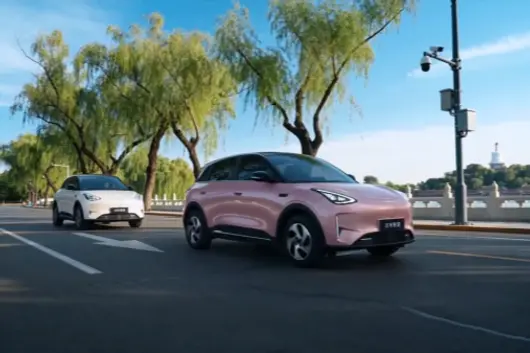

On May 28, the all-new Geely Xingyuan officially launched, with comprehensive range upgrades across the entire series: 310 km upgraded to 410 km, and 410 km upgraded to 480 km. The new car launches four models: 410km Admiration Edition, 410km Riding Wind Edition, 480km Exploration Edition, and 480km Exploration+ Edition, with a launch period limited price ranging from 61,800 yuan to 91,800 yuan. To meet diverse user needs, for the 410km version, a 310km range optional right is still provided, reducing the price by 7,000 yuan after selection. Effective immediately, users can place orders via Geely Galaxy APP or WeChat Mini Program, enjoying ten layers of purchase gifts and limited-time super trade-in funds and other generous rights. In addition, users who make large deposits and lock orders before June 30, 2026, can enjoy a super trade-in fund right of 3,000 yuan.

Experts strike again. This time the all-new Geely Xingyuan officially launches, advancing upon the classic, with five major upgrades fully refreshed to bring over 100 product capability upgrades for users, achieving over 25 class-only features, providing cross-class experiences for users with generationally leading technology. As the 2025 China car market full-category sales champion, Geely Xingyuan deliveries broke 700,000 units in 573 days, entering the top three in global new energy vehicle sales in the first quarter of this year. It is the only Chinese brand model to enter the top three in global new energy vehicle sales, continuously releasing champion momentum. At the new car launch event, Geely Xingyuan spokesperson Joey Yung also appeared in person, sharing her true story with Geely Xingyuan, supporting the new car with gentle yet powerful strength, and witnessing the renewal moment of this champion pure electric small car together with 700,000+ users.
At the same time, the new car partnered with Xiaohongshu to create the nation's first mobile "Immersive Travel" car launch event, taking everyone to feel and enjoy beauty. Moreover, Geely Xingyuan also collaborated with cross-border brands such as CATL, Capybara, Colorkey, Goodbaby, and Myfoodie to innovatively create five life scenarios: "Harbor Family, Alley Family, Rainforest Family, Silk Road Family, Nomadic Family", focusing on core daily commuting scenarios, directly hitting user real car usage needs, and redefining the value benchmark for pure electric small cars with champion strength.
Champion Strength One: Ultimate Driving Control Advancement — First Global Native Architecture + China-German Joint Calibration
Geely Xingyuan brings a calm, free, light, and agile driving experience for every trip for users. This champion strength comes from Geely's first global native architecture and track-level calibration: Geely Xingyuan is the first in its class to adopt a native architecture, the first to standardize rear-drive independent suspension, and the first to be globally calibrated pure electric small car, allowing users to experience ultimate driving control for the first time with a pure electric small car!

Good driving control must withstand inspection. Currently, Geely Xingyuan has entered over 30 countries globally. The R&D team gathered global resources to conduct comprehensive verification against different extreme road conditions worldwide, bringing comprehensive upgrades to the all-new Geely Xingyuan in the three core experiences of "driving, steering, braking", leading small car driving control into the 2.0 era again. The G-TCS 2.0 All-Weather Anti-Slip System retains the flexibility and fun of rear-drive while ensuring no slipping, no tail swinging, and no rolling away on flat roads, slopes, and curves, so even beginners can drive calmly; the new brushless steering system responds twice as fast, supporting three steering modes and steering neutral self-learning; the G-CST 2.0 All-Scenario Comfort Braking System simulates the feel of an experienced driver, preventing head nodding during braking and motion sickness during driving. In addition, Geely Xingyuan is the only pure electric small car in its class that successfully challenged the Fishhook Test at 130 km/h and the first in its class to successfully pass the Moose Test at 80.7 km/h, with handling performance comparable to a 200,000 yuan class sports coupe.
Champion Strength Two: Efficient Three-Electrical Power Advancement — Full Series Standard with CATL + 480km Range + 19 Min Fast Charge
310 km upgraded to 410 km, 410 km upgraded to 480 km, the all-new Geely Xingyuan achieves full series range upgrade. Range is solid without gimmicks, charging is fast and lasts long, electricity usage is economical without costing much money. No matter daily commuting or occasional long-distance travel, the all-new Geely Xingyuan can easily handle it. The new car is the only pure electric small car in its class with full series standard CATL cells, liquid cooling temperature control, and 11-in-1 high-integration electric drive. The three-electric power strength has been the class ceiling since launch. The new car is equipped with exclusive customized CATL new generation cells, energy density reaches 190Wh/kg, maximum CLTC range 480km, sufficient for daily commuting and weekend outings; cooperating with class-exclusive active front grille and low wind resistance wheels, wind resistance reduced by 15 counts, actual range improved by another 10km.

Solid range means refueling efficiency must also continue to upgrade. Regarding refueling, 30%-80% fast charging only takes 19 minutes, a cup of coffee time is enough to depart fully charged; the liquid cooling system and new BMS ensure fast charging at full speed regardless of cold or hot weather, and charging speed increase does not come at the cost of battery life. Meanwhile, the class-exclusive Starry Wisdom AI Cloud Power 2.0 achieves full-link energy management, covering smart charging/discharging, off-peak electricity price recognition, battery temperature maintenance, energy consumption diagnosis, and battery maintenance functions, making every charge efficient and every journey worry-free.
Champion Strength Three: AI Cockpit Advancement — Galaxy Flyme Auto 2 Smart Cockpit System + Eva Large Model
The all-new Geely Xingyuan puts warmth and wisdom into the cockpit, making the vehicle easier to use, more understanding of people, and more comprehensive. The all-new Geely Xingyuan is equipped with Galaxy Flyme Auto 2 smart cockpit system, based on 7nm automotive grade Longying No.1 chip and 16G+128G large storage, fast response, smooth operation, easy to pick up. Users can switch maps or favorite wallpaper desktops at will, cute pet wallpaper supports interactive functions, adding fun to the cockpit.

The new AI Eva is even more of users' portable smart partner. Voice assistant Hi EVA supports fuzzy instruction understanding and context memory, capable of completing vehicle control, Q&A, entertainment, and other operations, proficient in all. Users only say "Hi Eva, I want to go home", and the vehicle can automatically call the latest Amap 850 version to select the optimal route. Meanwhile, the car machine adds support for CarPlay phone interconnection, compatible with iOS devices for seamless connection, local common applications are fully available, and cloud has 200+ massive applications to choose from. There are also considerate scenarios like invisibility mode, car wash mode, one-key car finding, and a customized assistant tailored to individuals. Automatically start navigation and adjust AC after work, full of exclusive greeting rituals. From navigation to entertainment, from life to surprises, the intelligent cockpit of the all-new Geely Xingyuan comprehensively covers users' daily needs.
Champion Strength Four: Driving Assistance Advancement — Qianli Haohan Driving Assistance H3 Solution
The all-new Geely Xingyuan is equipped with the Qianli Haohan Driving Assistance H3 solution sourced from high-end models, which can cover multiple driving scenarios. Every function truly helps users improve driving experience. This system has safely traveled 1.38 billion kilometers, user usage growth rate is first, relying on G-ASD smart driving underlying technology and Xingrui AI large model, bringing a smart experience of "better and easier to use as you drive, smarter as you drive".

Highway Elevated NOA is not limited by roads and rain/fog weather, supports voice lane change, multi-scenario avoidance, and automatic on/off ramps. Users only need to lightly hold the steering wheel to easily drive long distances. Full-scenario MPI takeover rate exceeds 200 kilometers, equivalent to continuous driving 3 hours requiring only 1 takeover. Meanwhile, in parking aspect, full-scenario adaptation is possible. APA parking assistance function supports one-key parking, fingertip parking, remote parking, covering 300+ parking scenarios. Aiming at actual pain points such as novice drivers finding parking difficult, female drivers being prone to nervousness while parking, HPA memory parking supports 2km ultra-long memory, cm-level precise positioning. After learning a route once, it can automatically park throughout the process, possessing smart following, autonomous location finding, and obstacle avoidance functions. Temporary route changes also do not require relearning, effectively reducing parking operation difficulty. In addition, DMS active fatigue detection, if it detects driver fatigue behavior or distracted driving, will promptly remind the driver; Sentry Mode can protect parking safety 24 hours a day all-weather, recording video immediately and sending to user's phone upon anomaly. From departure to arrival, from driving to parking, the all-new Geely Xingyuan makes complex driving simple and reassuring, allowing users to spend more energy on the scenery on the road and the laughter of companions.
Champion Strength Five: All-Dimensional Safety Advancement — Three-Electric Power Safety + Active and Passive Safety
Safety is the gene carved into Geely's bones! For Geely, whether large or small cars, whether luxury or mainstream models, all brands under it adopt the same safety concept and strict standards. Geely has already built a global comprehensive safety center with investment exceeding 2 billion yuan, and released the "Human, Vehicle, Road, Cloud, Star" integrated comprehensive safety 2.0 system, covering four core safety domains: life safety, health safety, property safety, and privacy safety. The all-new Geely Xingyuan also follows this high standard, and adheres to the concept of "Small Cars, Must Have Big Safety", taking small car safety to the extreme.
In terms of passive safety, the all-new Geely Xingyuan has built a five-long eight-cross star armor cage body, like a sturdy yet light armor, carefully reinforced front, back, left, and right — the front end three-force transmission path cooperates with dual "cloverleaf" force release structure, the side battery to threshold spacing is 149mm and double anti-collision beams are added, the rear 750mm long rear overhang and double "井" shape rear subframe form a solid barrier; roof compression strength increased to 3.4 times vehicle weight, AB pillars and roof beams and other core area materials upgraded, even if encountering rollover or heavy weight on top, the cockpit remains unharmed, side curtain airbag pressure holding technology can further protect the head continuously during rollover.

In terms of battery life, Geely Xingyuan's verification standard is upgraded to 2 times the national standard. After completing 1000 cycles, battery capacity still maintains 90.72%. Furthermore, Xingyuan that actually drove 84,000 kilometers successfully challenged seawater corrosion, muddy water washing, bad road scraping bottom, limit fire burning, etc., the six serial limit tests, completing industry firsts.
To further improve battery safety protection, the all-new Geely Xingyuan puts hard work in places users cannot see, adopting industry-leading BDMU high-voltage component deep integration technology, combining BMS battery management system and BDU high-voltage distribution unit into one, significantly reducing interfaces, reliability takes another step, reducing battery sealing failure risk from the root. Worth mentioning, on May 12, Geely partnered with CCTV to complete the class-first and also the only class-only front and side continuous collision. High-voltage system powered off in time, battery pack did not smoke or catch fire, passenger cabin structure intact, airbags precisely deployed, non-collision side door can open normally. In addition, the all-new Geely Xingyuan is equipped with direct tire pressure display, DOW door opening warning, Sentry Mode, and has AEB active braking and AES emergency steering double insurance, successfully passing 120 km/h static vehicle braking stop and 130 km/h "disappearing front car" active avoidance tests, performance far exceeding industry mainstream levels.
Trusted by 700,000 Users, From China Champion to Global Top Three, Champion's Journey Never Stops
Always imitated, never surpassed. Relying on high standards from R&D to manufacturing and generationally leading product strength, Geely Xingyuan has always won industry recognition and user love. Since its launch in October 2024, Geely Xingyuan cumulative deliveries have broken 700,000 units, equivalent to selling one every minute. It is not only the star model that fastest achieved this goal in the entire industry, but also won the 2025 China car market sales champion in one go. Entering 2026, Geely Xingyuan continues to lead, staying firmly at the top. In this year's first quarter global new energy vehicle sales ranking, Geely Xingyuan first entered the global top three, achieving a new milestone for Chinese A0-class electric vehicles.

Geely Xingyuan is not only hot-selling domestically but also widely acclaimed in overseas markets, currently launched in over 30 countries and regions worldwide. In Brazil, sales broke 2,300 units in two months of launch; in Thailand Motor Show, weekly orders reached 3,300 units, and won the dual international awards of "Brazil Annual Best Compact Electric Vehicle" and "Indonesia Motor Show Most Loved Electric Vehicle". On the streets around the world, Geely Xingyuan is becoming a new mobile business card of "China Intelligence"

The advancement of the all-new Geely Xingyuan has once again raised the benchmark of "High Quality and Good Price" for the Geely Galaxy brand on the pure electric small car track. In the future, Geely Galaxy will continue to adhere to the original intention of "Building Smart Boutique Cars for Everyone", precisely grasping users' most real needs, and bringing products and services beyond expectations for users in various sub-markets.
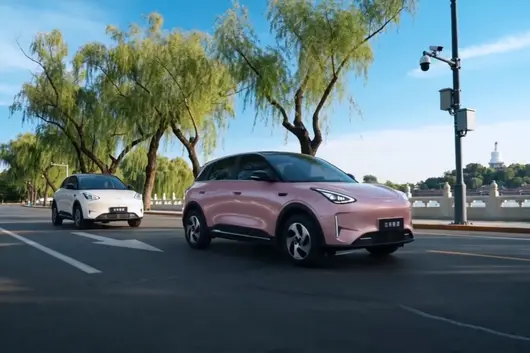

Recently, Geely announced its May overseas sales figures. Overseas export sales exceeded 85,000 units, hitting a new record, with a year-on-year increase of 184%.
In April, Geely's overseas new energy vehicle sales increased by 624.5% year-on-year, ranking first among Chinese new energy vehicle brands for overseas growth rate again.
In segmented markets, Geely's sales performance continues to flourish across multiple areas. Among them, only 14 months after entering the Australian market, delivery volume surpassed 10,000 units, becoming one of the fastest-growing Chinese automakers locally; meanwhile in the Brazilian market, sales climbed to over 4,000 units, refreshing the highest single-month sales record in that country. The Mexican market accumulated sales of 16,000+ units from January to April, creating a new historical record.
The Geely EX2 achieved B-segment hatchback new energy vehicle sales Top 1 in multiple markets including Mexico, Indonesia, and Costa Rica; The Geely EX5 became the sales champion in the pure electric SUV-C market in the first quarter in multiple countries such as Australia, the UAE, and Uruguay. Zeekr models 7X and 009 became the sales champions in the segmented markets, among which the Zeekr 7X topped the sales chart in the Australian market again, surpassing the long-time market leader Tesla Model Y.
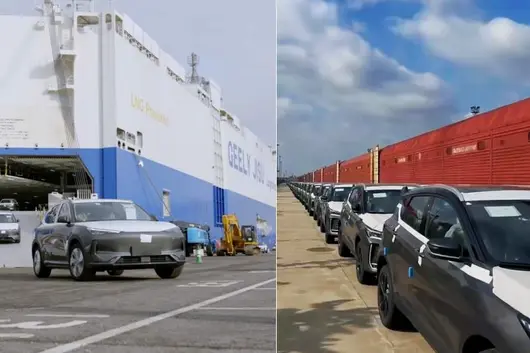
Facing pressure from surging orders, Geely relied on the Ningbo overseas export hub, simultaneously deploying Ro-Ro vessels, container ships, and international railway trains to conduct sea-land intermodal transport, fully guaranteeing complete vehicle delivery. The head of international business at Geely Auto Group Logistics Center stated in an interview that currently multiple transport routes have been urgently added, forming a capacity resource layout of 4 major rail ports and 6 major sea ports, equipped with two self-owned Ro-Ro vessels, and multiple new cross-border transport lines have been opened to continuously supplement various capacity resources, capable of stably shipping nearly 10,000 new vehicles to core European ports monthly. The China-Europe Railway Express Geely special train operates regularly, reducing transport time by 40 days compared to sea transport. In the future, to cope with the explosive growth in overseas sales, Geely will continue to expand its overseas transport scale and further optimize vehicle delivery timelines.
The surge in Geely's overseas sales intuitively demonstrates Geely's strong product capabilities and the implementation of its localization strategy, and further reflects the strong strength of Chinese automobiles in the field of high-end and technology exports.


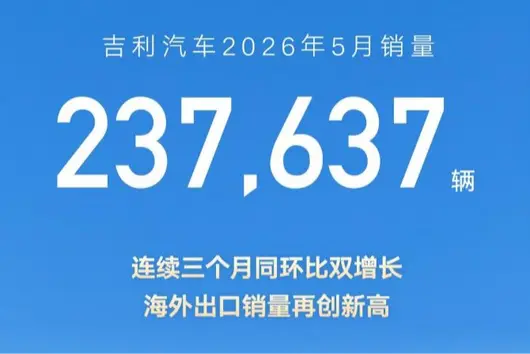

Geely recently announced overseas sales for May: 85,000 units, a year-on-year increase of 184%. Placing this in last year's context, this number might have been a surprise; but today, it feels more like a routine operation — after all, in the first two months of 2026, Geely's overseas monthly sales have continuously exceeded 60,000 units. From an average of over 30,000 per month to over 60,000+, the overseas market is becoming the area of strongest sales growth for Geely.
However, looking only at the numbers makes it easy to overlook some more significant changes.

Growth is not driven by 'piling up volume'
The domestic car market is fiercely competitive like a red ocean, but Geely's overseas performance continues to rise. 85,000 units is not an isolated phenomenon; what is more worth examining is the structure.
In Australia, deliveries broke 10,000 in the 14th consecutive month, becoming one of the fastest-growing Chinese car companies locally; in Brazil, it hit over 4,000 units in a single month, setting a new local record; in Mexico, cumulative sales from January to April reached 16,000 units, also setting a historical high. The Eastern European market was once Geely's export pillar, but 2025 financial reports show that revenue from Asia-Pacific (excluding China) surged from 5.7 billion to 14.6 billion, while Eastern Europe dropped from 30.2 billion to 29.2 billion. This is not market fluctuation, but an active shift — from high-risk areas to the more resilient Asia-Pacific.

Not just "selling more", but "selling at a premium"
In terms of total export volume, Geely may not rank first. Chery exported 1.34 million units in 2025, and BYD also surged past 1.04 million units. But Geely's approach is different.
The most obvious difference is product tier. EX2 took the B-segment new energy vehicle sales top spot in Mexico, Indonesia, and Costa Rica; EX5 won the first-quarter pure electric SUV sales champion in markets such as Australia, UAE, and Uruguay; Zeekr 7X in Australia directly surpassed the long-chart-topping Tesla Model Y. This is not the result of a price war, but Geely directly competing with international brands in the high-end market.
To achieve this, it relies on multi-brand synergy. Zeekr targets luxury pure electric, Lynk & Co aims for the global new energy high-end, and Geely Brand outputs mainstream products relying on the GEA architecture. In 2025, the group's new energy penetration rate reached 56%; this product network allows Geely to find suitable entry points in different markets.

The overseas expansion model is changing
Sales growth is just the surface; the real change is the profit structure. 2025 financial reports show that overseas revenue has already accounted for 21.41% of Geely Auto's total revenue; among the 420,000 units sold overseas for the year, new energy exports were 124,000 units, surging 240% year-on-year. Overseas business is no longer burning cash to exchange for market share, but a genuine source of profit.
What is even more interesting is Geely's strategy. In Brazil, Geely did not sell cars itself, but obtained 21.29% equity and nearly 4.86 billion warrants of Renault Brazil through technology transfer, exchanging technology for market share. In Southeast Asia, taking Malaysia Proton as a fulcrum, through technology licensing and parts synergy, Geely's products appear in the identity of a "local brand". This model avoids heavy asset investment in traditional overseas expansion and retains supply chain control.
Challenges are also plentiful
Fast growth brings plenty of trouble. Capacity and logistics are the most direct bottlenecks. Facing exploding orders, Geely has already utilized RoRo ships, container ships, and international train services, able to stably ship nearly 10,000 units monthly to European ports, but logistics pressure remains high.
Greater uncertainty comes from geopolitics. Trade friction and tariff barriers can change the rules of the game at any time. The 2025 EU anti-subsidy investigation into Chinese electric vehicles has already sounded the alarm. However, Geely's 2026 export target is 640,000 units, indicating it still has confidence.
When a car company has over 1,200 outlets in 77 countries and regions globally, using five years to pull overseas sales from 410,000 to a target of 640,000, the word "exports" is barely enough to describe it. For Geely, going overseas is not an elective question, but a mandatory one. Whether it can answer well depends on the implementation in the coming years.

May 28, all-new Geely Xingyuan officially launched. The venue for this press conference was quite unique — without a traditional stage and spotlights, instead, it collaborated with Xiaohongshu to create the nation's first mobile "Immersive Journey" car launch event. Harbor families, Alley families, Rainforest families, Silk Road families, Nomadic families, five major life scenarios were laid out in sequence at the launch venue, as if bringing the daily hustle and bustle of transportation into the spotlight of the automotive industry. Geely Xingyuan spokesperson Joey Yung also attended the site, she spoke about real segments of her time with this little car, her tone was gentle yet firm. Sitting in the audience were not only media and dealers, but also many ordinary people who have become or will become Xingyuan owners. At this moment, a pure electric car priced from 61,800 yuan seemed to no longer be just a commuting tool, but a possibility of accompanying life.
The all-new Geely Xingyuan launches four models this time: 410km Longing Edition, 410km Riding Wind Edition, 480km Exploration Edition, 480km Exploration+ Edition, launch limited-time benefit price is 61,800 yuan to 91,800 yuan. The range of the entire series has undergone a comprehensive upgrade, the 310 km version jumped to 410 km, the 410 km version increased to 480 km. At the same time, to cater to the actual needs of different users, the official retained the right to select 310 km range on the 410 km version, the price can be reduced by another 7,000 yuan after selection.

But what truly made this little car attract widespread attention goes far beyond price. The all-new Geely Xingyuan's slogan is "Advancement Beyond Classics", officially claimed to have over 100 product power upgrades and over 25 class-exclusive features. These numbers might sound a bit abstract, but when you truly break down its five core advancement directions, you will find this is not just a pile of marketing jargon, but a thorough evolution from inside to outside, from hardware to software.
Let's start with the most basic driving control. Geely Xingyuan is the first pure electric car in its class to adopt a native architecture, and the first model to come standard with rear independent suspension across the entire series. To tune this chassis, Geely's engineering team ran through over 30 countries worldwide, conducting all-round verification for extreme road conditions. The final result is, the all-new Geely Xingyuan achieved a qualitative leap in three core experiences: driving, steering, and braking. G-TCS 2.0 all-weather anti-slip system while retaining the fun of rear-wheel drive flexibility, ensuring no slip, no swing, no roll on flat roads, slopes, and corners, new drivers can also drive with ease. The all-new brushless steering system's response speed is twice as fast as the previous generation, supporting three steering modes and center position self-learning. While G-CST 2.0 all-scenario comfort braking system simulates the foot feel of experienced drivers, braking doesn't nod, driving doesn't cause motion sickness. What is more impressive is, Geely Xingyuan is the only pure electric car in its class to successfully challenge the Moose test at 130 km/h, The Moose test result also reached 80.7 km/h, handling performance is enough to compare with 200,000 level sports coupes. In other words, driving this little car is no longer just "sufficient", but "fun".
Of course, for pure electric little cars, range and three-electric system performance are the most direct user anxiety points. The all-new Geely Xingyuan standardizes CATL batteries, liquid cooling temperature control and 11-in-1 high-integrated electric drive, the three-electric system has been regarded as the ceiling of its class since launch. New car equipped with CATL new generation battery cells energy density up to 190Wh/kg, maximum CLTC range reaches 480 km, enough to cover daily commuting and weekend outings. Cooperating with the class-exclusive active grille and low drag wheels, drag reduced by 15 counts, actual range increased by another 10 km. Regarding energy replenishment, 30% to 80% fast charging takes only 19 minutes, full charge ready to go in the time of a cup of coffee. Combination of liquid cooling system and new BMS battery management system, ensures full speed charging regardless of cold or hot weather, and will not come at the cost of battery life. More StarRui AI Cloud Power 2.0 achieves full-link energy management, covering smart charge/discharge, off-peak electricity price identification, battery temperature maintenance, energy consumption diagnosis and battery maintenance functions, making every charge efficient, every trip worry-free.
Walking into the car, you will find the all-new Geely Xingyuan's intelligent cockpit is completely different from the simple impression of traditional small cars. It is equipped with Galaxy Flyme Auto 2 intelligent cockpit system, based on 7nm automotive-grade Longying No. 1 chip and 16G+128G large storage, fast response, smooth operation, easy to learn. Users can switch maps or favorite wallpaper desktops at will, cute animal wallpapers even support interactive functions, adding a lot of fun to the cockpit. All-new AI Eva is the car's smart voice assistant, supporting fuzzy instruction understanding and context memory, can complete car control, Q&A, entertainment, etc. You just need to say "Hi Eva, I want to go home", the vehicle will automatically call the latest Amap 850 version to select the optimal route. Car machine also newly supports CarPlay phone connectivity, compatible with iOS devices for seamless connection. Invisibility mode, car wash mode, one-click car search and other thoughtful scenarios, and thousand people thousand faces custom assistant, making every boarding full of exclusive ritual sense. From navigation to entertainment, from life to surprise, this smart cockpit covers all aspects of user daily needs.
In terms of assisted driving, the all-new Geely Xingyuan is equipped with the Qianli Haohan assisted driving H3 solution, originating from high-end models, currently safely driven 1.38 billion km, user usage growth rate first. Highway Viaduct NOA is not limited by road and rain/fog weather, supports voice lane change, multi-scenario avoidance and automatic on/off ramps, users only need to lightly hold the steering wheel to easily drive long distances. Full-scenario MPI takeover rate over 200 km, equivalent to continuous driving 3 hours, need takeover only 1 time. Parking aspect also achieved full-scenario adaptation: APA parking assist function supports one-click parking, finger tip parking, remote control parking, covering over 300 types of parking scenarios. Aiming at practical pain points such as new drivers parking difficulty, female drivers parking tension, HPA memory parking supports 2 km ultra-long memory, cm-level precise positioning, learn route once then can fully automatic parking throughout the process, equipped with smart following car, autonomous finding spot, obstacle avoidance functions, temporary route change also no need to relearn. DMS active fatigue detection will timely remind drivers to rest, sentry mode guards parking safety 24/7 all-weather, once abnormal, record video immediately and send to user phone. From departure to arrival, from driving to parking, this system makes complex driving simple and reassuring.
Safety is the gene Geely carved into its bones. Regardless of big car or small car, all brands under Geely adopt the same safety philosophy and strict standards. Geely has built a global domain safety center with investment over 2 billion yuan, and released "Human, Car, Road, Cloud, Star" integrated domain safety 2.0 system. All-new Geely Xingyuan also follows this high standard, upholding the philosophy "Small Car, Must Have Big Safety". Passive safety aspect, it created five vertical eight horizontal star armor cage body, front end three force transmission paths cooperate with double "Clover" force release structure, side battery to threshold spacing 149mm and added double anti-collision longitudinal beams, rear 750mm long rear suspension and double "Well" shaped rear subframe form a solid barrier. roof compression strength increased to 3.4 times vehicle weight, AB pillar and roof crossbeam etc core area materials upgrade, even encountering rollover or heavy weight pressing on roof, cabin remains unharmed, side curtain airbag pressure maintenance technology can also continuously protect head during rollover. Regarding battery life, Geely Xingyuan's verification standard increased to 2 times national standard, after 1000 cycles battery capacity still maintains 90.72%. Also Xingyuan actually driven 84,000 km successfully challenged sea water corrosion, mud water scouring, bad road scraping bottom, extreme fire burning etc six series limit tests, this belongs to the first in the industry. Worth mentioning is, May 12, Geely partnered with CCTV to complete the first and only class-exclusive front and side continuous crash test, high voltage system powered off in time, battery pack did not smoke or catch fire, occupant compartment structure intact, airbags accurately detonated, non-collision side door can open normally. In addition, all-new Geely Xingyuan also equipped with tire pressure direct display, DOW door opening warning, sentry mode, more AEB active braking and AES emergency steering dual insurance, successfully passed 120 km/h static vehicle stop and 130 km/h "Vanishing Front Car" active avoidance test, performance far exceeds industry mainstream level.
All these upgrades and hardcore strength, finally point to one fact: Geely Xingyuan is no longer an ordinary little car. Since launch in October 2024, it cumulative delivery has broken 700,000 units, equivalent to one sold every minute. It is not only the star model in the whole industry to reach this goal fastest, but also won the 2025 Chinese car market sales champion at once. Entering 2026, Geely Xingyuan still continues to lead, firmly stays at top. This year first quarter, in global new energy vehicle sales ranking, Geely Xingyuan for the first time enters global top three, achieved a new milestone for China A0 level electric car. While exploding in domestic market, it has also landed in over 30 countries and regions globally. In Brazil launch two months sales broke 2300 units, In Thailand auto show single week orders grabbed 3300 units, and won "Brazil Annual Best Compact Electric Car" and "Indonesia Auto Show Most Loved Electric Car" dual international awards. On the streets all over the world, Geely Xingyuan is becoming "China Smart Manufacturing" mobile new business card.
From a commuting little car, to 700,000 user's choice, from China champion to global top three, Geely Xingyuan's advancement road is actually not complex — it just seriously did the little car well, done fully, done exceeding expectations. And after this renewed launch, Geely Galaxy brand on pure electric small car track again raised the "High Quality Good Price" benchmark. Future, Geely Galaxy will continue to uphold "Building Smart Boutique Cars for Everyone" original intention, bringing products and services exceeding expectations to users in various sub-markets. For consumers, this might be the greatest happiness: a good car, need not be expensive, need not be flamboyant, but can honestly accompany you to go to every place you want to go.
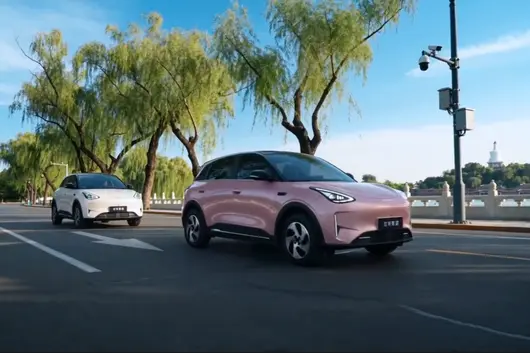

On May 28, the all-new Geely Xingyuan officially launched, launching four models: 410km Longing Edition, 410km Riding Winds Edition, 480km Exploration Edition, 480km Exploration+ Edition. The limited-time launch special price is 61,800 - 91,800 Yuan. The new car series range is upgraded, original 310km raised to 410km, original 410km raised to 480km; 410km version can opt for 310km range, purchase discount 7,000 Yuan immediately. Users can place deposit via Geely Galaxy APP and WeChat Mini Program, lock large deposit before June 30, 2026, enjoy 3,000 Yuan super trade-in credit, simultaneously own ten car-buying gifts.

The new car achieves comprehensive advancement in five major dimensions, bringing over 100 product capability upgrades and 25 class-exclusive features, built on generationally advanced technology to create cross-level experience. Geely Xingyuan has a strong foundation; within 573 days of launch, delivery volume exceeded 700,000 units, securing the 2025 China Automotive Market Full Category Sales Champion, ranking top 3 in global New Energy Vehicle sales in Q1 2026, and becoming the only Chinese brand model to enter the global top 3. This launch event innovatively partnered with Xiaohongshu to create the country's first mobile immersive travel press conference, and collaborated with cross-industry brands such as CATL and Colorkey, building five major life scenarios to precisely match users' daily travel needs and reshape the value benchmark for pure electric small cars.

In terms of driving control, the new car is built on Geely's first global native architecture, adopting Sino-German joint calibration, standardizing rear-wheel drive independent suspension, making it the first native architecture, globally calibrated pure electric small car in its class. Equipped with G-TCS 2.0 anti-slip system, new brushless steering system, and G-CST 2.0 comfort braking system, ensuring stable driving, sensitive steering, and smooth braking. The vehicle passed the Fishhook test at 130km/h and the Moose test at 80.7km/h, handling capabilities comparable to a 200,000 RMB class sport coupé, and has completed extreme road condition verification in over 30 countries globally.

Three-electric power strengths comprehensively upgraded; CATL battery cells are standard across the series, equipped with liquid cooling temperature control and 11-in-1 high-integration electric drive, cell energy density 190Wh/kg, maximum CLTC range 480km. Paired with active grille shutter and low drag wheels, range increases by another 10km; fast charging from 30%-80% takes only 19 minutes, liquid cooling system ensures full-speed charging at high and low temperatures. Standard Xingrui AI Cloud Power 2.0, achieving smart charging/discharging, battery maintenance, and other full-link energy consumption management for efficient and worry-free usage.

Smart cockpit equipped with Geely Galaxy Flyme Auto 2 system, relying on 7nm Dragon Eagle 1 chip and 16GB+128GB large storage, operation is smooth. Equipped with Eva Large Model Voice Assistant, supports fuzzy instructions and context memory, can control vehicle and plan navigation via voice; new CarPlay connectivity, cloud has 200+ apps, paired with Stealth Mode, one-key car find and other practical functions, custom scenes are more humanized.

Assisted driving equipped with Haohan H3 solution, cumulative safe driving 1.38 billion km. Supports Highway & Elevated NOA, lane change via voice, automatic ramp entry/exit; full-scenario MPI long-distance takeover makes long-distance driving easier. APA parking covers 300+ scenarios, HPA memory parking supports 2km extra-long route memory, precisely matching new driver parking needs. Equipped with DMS fatigue detection, 24-hour Sentry Mode, comprehensively guarding driving and parking safety.

In terms of safety, adhering to the Small Car Big Safety concept, built a Five-Vertical Eight-Horizontal Star Armor Cage Body, roof crush resistance reaches 3.4 times vehicle weight, core body materials reinforced, side air curtains effectively protect occupants. Battery verification standard is 2 times national standard, capacity retention after 1000 cycles is 90.72%, passed six extreme tests including seawater corrosion and extreme fire. Completed same-class only front-side continuous collision test, high voltage system powers down rapidly, passenger compartment intact; AEB active braking, AES emergency steering performance far exceeds industry standards.
Currently Geely Xingyuan is exported to over 30 countries globally, Brazil, Thailand and other overseas markets orders and sales are outstanding, won multiple international awards, becoming a flagship of Chinese Smart Manufacturing going global. The all-new Geely Xingyuan refreshed and advanced, further elevating the high-quality good-value benchmark for pure electric small cars, Geely Galaxy will also continue to deepen cultivation in niche markets, creating high cost-performance intelligent premium rides for users.
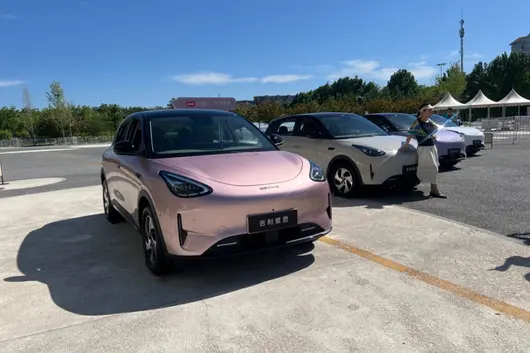


May 28, the All-New Geely Xingyuan officially launched, with range upgrades across the entire series: 310 km upgraded to 410 km, 410 km upgraded to 480 km. The new car offers four models: 410km Aspiration Edition, 410km Ride-Wind Edition, 480km Explore Edition, 480km Explore+ Edition. The launch limited-time right price is 61,800 Yuan-91,800 Yuan. To meet different user needs, on the 410km version, the 310km range selection right is still provided. After selection, the price can be reduced by 7,000 Yuan. Starting today, users can place orders through the Geely Galaxy APP or WeChat Mini Program to enjoy ten layers of car-buying gifts and limited-time Super Trade-in Bonus, and other rich rights. In addition, for users who place a big order and lock the order before June 30, 2026, they can enjoy a Super Trade-in Bonus right of 3,000 Yuan.

Experts make another move, this time the All-New Geely Xingyuan officially launched, advancing beyond classics, with five major upgrades fully renewed, bringing over 100 product capability upgrades to users, achieving over 25 class-exclusive features, providing an over-class experience with generationally leading technology for users. As the 2025 Chinese Car Market Sales Champion of All Categories, Geely Xingyuan delivery volume broke 700,000 units in 573 days. In the first quarter of this year, it entered the global top 3 in NEV sales, being the only Chinese brand vehicle to enter the global top 3 in new energy vehicle sales, continuously releasing champion momentum. At the new car launch event, the spokesperson of the All-New Geely Xingyuan, Joey Yung, also appeared at the scene to share her true story with the Geely Xingyuan, using gentle and firm power to support the new car, and witnessing the renewal moment of this champion pure electric small car together with 700,000+ users.
At the same time, the new car joined hands with Xiaohongshu to create the nation's first mobile "Immersive Travel" car launch event, taking everyone to feel beauty and enjoy beauty. Not only that, Geely Xingyuan also collaborated with CATL, Capybara, Colorkey, Goodbaby, Myfoodie and other cross-industry brands to innovatively create five major life scenarios: "Harbor Home, Alley Home, Rainforest Home, Silk Road Home, Nomad Home", focusing on core daily travel scenarios, hitting user real car usage needs, and redefining the pure electric small car value benchmark with champion strength.
Champion Strength 1: Ultimate Driving Control Upgrade - First Global Native Architecture + Joint China-Germany Calibration
Geely Xingyuan brings calm and free, light and agile driving and riding experience for every user's travel. This champion strength comes from Geely's first global native architecture and track-level calibration: Geely Xingyuan is the first in class to adopt native architecture, the first to standardize RWD independent suspension, the first to be calibrated globally as a pure electric small car, allowing users to feel for the first time that pure electric small cars can have ultimate driving control!

Good driving control must withstand inspection. Currently, Geely Xingyuan has entered over 30 countries globally. The R&D team gathered global resources and conducted comprehensive verification for different extreme road conditions worldwide, allowing the All-New Geely Xingyuan to comprehensively upgrade the three core experiences of "Driving, Steering, Braking", once again leading small car driving control into the 2.0 Era. G-TCS 2.0 all-weather anti-slip system ensures flat roads, slopes, and curves do not slip, sway, or roll back while retaining RWD flexible fun, allowing newbies to drive calmly; the new brushless steering system responds 1 time faster, supports three steering modes and mid-steering self-learning; G-CST 2.0 full-scenario comfortable braking system simulates experienced driver's pedal feel, braking no nosing, driving no motion sickness. In addition, Geely Xingyuan is the only in class pure electric small car that successfully challenged the Fishhook Test at 130km/h, and the first in class that successfully passed the Moose Test at 80.7km/h, handling performance comparable to 200,000 Yuan class sports coupe.
Champion Strength 2: High-Efficiency Powertrain Upgrade - CATL Standard Across Series + 480km Range + 19-Minute Fast Charge
310 km upgraded to 410 km, 410 km upgraded to 480 km, the All-New Geely Xingyuan achieves range upgrades across the entire series. Range is solid and no nonsense, charging fast lasts long, electricity saving saves money, whether for daily commute or occasional long distance, the All-New Geely Xingyuan can easily cope. The new car is the only in class to standardize CATL cells, liquid-cooled temperature control and 11-in-1 high-integration electric drive across the entire series, the three-electrical strength has been the top tier in class since launch. The new car is equipped with exclusive customized CATL new generation cells, energy density reaches 190Wh/kg, maximum CLTC range 480km, enough for daily commute and weekend outings; coupled with class-only active grille shutters and low drag wheels, drag reduced by 15 counts, actual range increased by another 10km.

Solid range, refueling efficiency must also continuously upgrade. Regarding refueling, 30%-80% fast charge only takes 19 minutes, full charge ready in the time of a cup of coffee; liquid cooling system and new BMS guarantee full-speed charging whether cold or hot, and charging speed up does not sacrifice battery life. At the same time, class-only Xingrui AI Cloud Power 2.0 achieves full-link energy management, covering smart charging/discharging, valley electricity price recognition, battery temperature maintenance, energy consumption diagnosis and battery maintenance functions, making every charge efficient, every journey worry-free.
Champion Strength 3: AI Smart Cockpit Upgrade - Geely Flyme Auto 2 Smart Cockpit System + Eva Large Model
The All-New Geely Xingyuan puts warmth and wisdom into the cockpit, making the vehicle easier to use, understand people better, and more comprehensive. The All-New Geely Xingyuan is equipped with Geely Flyme Auto 2 smart cockpit system, based on 7nm automotive-grade Dragon Eagle No. 1 chip and 16G+128G large storage, fast response, smooth operation, easy to learn. Users can switch maps or favorite wallpaper desktops at will, cute pet wallpaper supports interaction function, adding fun to the cockpit.

New AI Eva is user's portable smart partner, voice assistant Hi EVA supports fuzzy command understanding and context memory, can complete vehicle control, Q&A, entertainment operations, good at everything. User only says "Hi Eva, I want to go home", vehicle can automatically call latest Gaode Map 850 Version to select optimal route. At the same time, vehicle machine adds support for CarPlay phone interconnection, compatible with iOS devices seamless connection, local common apps all available, cloud has 200+ massive apps to choose from at will. Also stealth mode, car wash mode, one-click car finding and other thoughtful scenarios, and personalized custom assistant, after work automatically turn on navigation adjust AC, exclusive welcome ceremony feeling full. From navigation to entertainment, from life to surprise, the All-New Geely Xingyuan smart cockpit fully covers user daily needs.
Champion Strength 4: Assisted Driving Upgrade - Qianli Haohan Assisted Driving H3 Solution
The All-New Geely Xingyuan is equipped with Qianli Haohan Assisted Driving H3 solution same source as high-end models, can cover multiple driving scenarios, every function is really helping users improve driving experience. This system has safely driven 1.38 billion km, user usage growth rate first, relying on G-ASD smart driving underlying layer and Xingrui AI Large Model, bringing "better to use as you drive, smarter as you drive" smart experience.

Highway elevated NOA not restricted by road and rain/fog weather, supports voice lane change, multi-scene avoidance and auto on/off ramps, users only need to lightly hold steering wheel to easily drive long distance. Full-scene MPI takeover rate over 200 km, equivalent to continuously drive 3 hours only needs takeover once. At the same time, parking aspect can achieve full-scene adaptation, APA parking assist function supports one-click park-in, fingertip parking, remote parking, covering 300+ parking scenarios. For new drivers parking difficulty, female drivers parking easily nervous and other actual pain points, HPA memory parking supports 2km ultra-long memory, cm-level precise positioning, learn one route then can full-process auto park-in, has smart car following, auto find spot, obstacle avoidance functions, temporary route change does not need relearn, effectively reducing parking operation difficulty. In addition, DMS active fatigue detection if detects driver appears fatigue behavior or distracted driving, will timely remind driver; Sentry Mode can 24/7 all-weather guard parking safety, if abnormal immediately record video and send to user phone. From departure to arrival, from driving to parking, the All-New Geely Xingyuan makes complex driving simple and secure, allowing users to leave more energy for scenery on the road and laughter of fellow travelers.
Champion Strength 5: All-Dimension Safety Upgrade - Three-Electrical Safety + Active and Passive Safety
Safety is Geely's inborn genes! For Geely, whether big car or small car, whether luxury models or mainstream models, all brands under its banner adopt same safety concept and rigorous standards. Geely has already built invested over 2 billion Yuan global all-domain safety center, and released "People, Car, Road, Cloud, Star" integrated all-domain safety 2.0 system, covering life safety, health safety, property safety, privacy safety four core safety domains. The All-New Geely Xingyuan also follows this high standard, and upholds "Small car, must have big safety" concept, making small car safety to the extreme.
Passive safety aspect, the All-New Geely Xingyuan built five vertical eight horizontal Star Shield Cage Body, like a sturdy and light armor, front back left right all did careful reinforcement - front end three force transmission paths coordinate double "Cloverleaf" energy release structure, side battery to sill spacing 149mm and add double anti-collision longitudinal beams, rear end 750mm long rear overhang and double "Well" shape rear subframe form solid barrier; roof crushing strength increased to 3.4 times vehicle weight, A/B pillars and roof crossbeam and other core area material upgraded, even if encounter rollover or heavy object press top, cabin still safe, side curtain airbag pressure maintenance technology can continue protect head during rollover.

Regarding battery life aspect, Geely Xingyuan verification standard increased to twice the national standard, complete 1000 cycles after battery capacity still keeps 90.72%. Also actual driving 84,000 km Xingyuan, successfully challenged seawater corrosion, mud flushing, bumpy road scraping bottom, extreme fire and other six major serial limit tests, completing industry first.
In order to further improve battery safety protection, the All-New Geely Xingyuan at user invisible places still under hard effort, adopts industry leading BDMU high-voltage component deep integration technology, put BMS battery management system and BDU high-voltage distribution unit two-in-one, greatly reduce interfaces, reliability up another step, from root reduce battery sealing failure risk. Noteworthy, May 12, Geely joined hands with CCTV completed class first, and class only frontal and side continuous collision, high-voltage system timely power off, battery pack no smoke catch fire, passenger compartment structure complete, airbags precise detonation, non-collision side doors can normal open. In addition, All-New Geely Xingyuan equips tire pressure direct display, DOW door opening warning, Sentry Mode, also has AEB active braking and AES emergency steering double insurance, successfully through 120km/h static vehicle brake stop and 130km/h "Vanishing Front Car" active avoidance test, performance far exceed industry mainstream level.
700,000 Users Trust, From China Champion to Global Top 3, Champion Path Never Stops
Always imitated, never surpassed. Relying on high standards from R&D to manufacturing and generational leading product power, Geely Xingyuan always won industry recognition and user love. Since October 2024 launch, Geely Xingyuan cumulative delivery has already broken through 700,000 units, equivalent to sell one per minute, it is not only the fastest to achieve this goal star model in the whole industry, but also won 2025 Chinese Car Market Sales Champion in one move. Entering 2026, Geely Xingyuan still continuously lead, firmly stay at top, in this year's first quarter global new energy vehicle sales ranking, Geely Xingyuan first time entered global top 3, achieved new milestone for Chinese A0-class electric car.

Geely Xingyuan not only domestic sales hot, in overseas market also widely praised, currently has landed over 30 countries and regions globally. In Brazil launch two months sales broke 2,300 units; in Thailand Auto Show single week orders captured 3,300 units, and won "Brazil Annual Best Compact Electric Car" and "Indonesia Auto Show Most Favorite Electric Car" double international grand prizes. On streets around the world, Geely Xingyuan is becoming "China Smart Manufacturing" mobile new business card.

The All-New Geely Xingyuan upgrade, made Geely Galaxy brand in pure electric small car track once again raised "High Quality and Good Price" benchmark. In the future, Geely Galaxy will continue to uphold "Build smart boutique cars for everyone" original intention, precisely grasp user most real needs, in each market segment all give users products and services exceeding expectations.
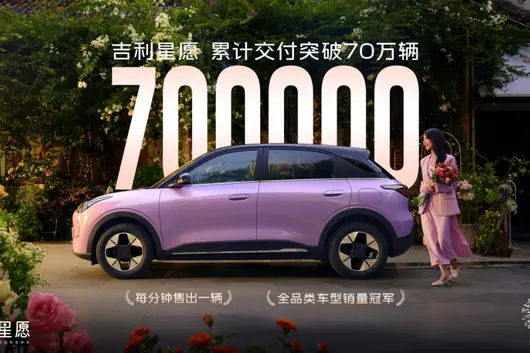

On May 28, the all-new Geely Xingyuan officially launched, with comprehensive range upgrades across the entire series: 310 km upgraded to 410 km, and 410 km upgraded to 480 km. The new car launches four models: 410km Admiration Edition, 410km Riding Wind Edition, 480km Exploration Edition, and 480km Exploration+ Edition, with a launch period limited price ranging from 61,800 yuan to 91,800 yuan. To meet diverse user needs, for the 410km version, a 310km range optional right is still provided, reducing the price by 7,000 yuan after selection. Effective immediately, users can place orders via Geely Galaxy APP or WeChat Mini Program, enjoying ten layers of purchase gifts and limited-time super trade-in funds and other generous rights. In addition, users who make large deposits and lock orders before June 30, 2026, can enjoy a super trade-in fund right of 3,000 yuan.
Experts strike again. This time the all-new Geely Xingyuan officially launches, advancing upon the classic, with five major upgrades fully refreshed to bring over 100 product capability upgrades for users, achieving over 25 class-only features, providing cross-class experiences for users with generationally leading technology. As the 2025 China car market full-category sales champion, Geely Xingyuan deliveries broke 700,000 units in 573 days, entering the top three in global new energy vehicle sales in the first quarter of this year. It is the only Chinese brand model to enter the top three in global new energy vehicle sales, continuously releasing champion momentum. At the new car launch event, Geely Xingyuan spokesperson Joey Yung also appeared in person, sharing her true story with Geely Xingyuan, supporting the new car with gentle yet powerful strength, and witnessing the renewal moment of this champion pure electric small car together with 700,000+ users.
At the same time, the new car partnered with Xiaohongshu to create the nation's first mobile "Immersive Travel" car launch event, taking everyone to feel and enjoy beauty. Moreover, Geely Xingyuan also collaborated with cross-border brands such as CATL, Capybara, Colorkey, Goodbaby, and Myfoodie to innovatively create five life scenarios: "Harbor Family, Alley Family, Rainforest Family, Silk Road Family, Nomadic Family", focusing on core daily commuting scenarios, directly hitting user real car usage needs, and redefining the value benchmark for pure electric small cars with champion strength.
Champion Strength One: Ultimate Driving Control Advancement — First Global Native Architecture + China-German Joint Calibration
Geely Xingyuan brings a calm, free, light, and agile driving experience for every trip for users. This champion strength comes from Geely's first global native architecture and track-level calibration: Geely Xingyuan is the first in its class to adopt a native architecture, the first to standardize rear-drive independent suspension, and the first to be globally calibrated pure electric small car, allowing users to experience ultimate driving control for the first time with a pure electric small car!
Good driving control must withstand inspection. Currently, Geely Xingyuan has entered over 30 countries globally. The R&D team gathered global resources to conduct comprehensive verification against different extreme road conditions worldwide, bringing comprehensive upgrades to the all-new Geely Xingyuan in the three core experiences of "driving, steering, braking", leading small car driving control into the 2.0 era again. The G-TCS 2.0 All-Weather Anti-Slip System retains the flexibility and fun of rear-drive while ensuring no slipping, no tail swinging, and no rolling away on flat roads, slopes, and curves, so even beginners can drive calmly; the new brushless steering system responds twice as fast, supporting three steering modes and steering neutral self-learning; the G-CST 2.0 All-Scenario Comfort Braking System simulates the feel of an experienced driver, preventing head nodding during braking and motion sickness during driving. In addition, Geely Xingyuan is the only pure electric small car in its class that successfully challenged the Fishhook Test at 130 km/h and the first in its class to successfully pass the Moose Test at 80.7 km/h, with handling performance comparable to a 200,000 yuan class sports coupe.
Champion Strength Two: Efficient Three-Electrical Power Advancement — Full Series Standard with CATL + 480km Range + 19 Min Fast Charge
310 km upgraded to 410 km, 410 km upgraded to 480 km, the all-new Geely Xingyuan achieves full series range upgrade. Range is solid without gimmicks, charging is fast and lasts long, electricity usage is economical without costing much money. No matter daily commuting or occasional long-distance travel, the all-new Geely Xingyuan can easily handle it. The new car is the only pure electric small car in its class with full series standard CATL cells, liquid cooling temperature control, and 11-in-1 high-integration electric drive. The three-electric power strength has been the class ceiling since launch. The new car is equipped with exclusive customized CATL new generation cells, energy density reaches 190Wh/kg, maximum CLTC range 480km, sufficient for daily commuting and weekend outings; cooperating with class-exclusive active front grille and low wind resistance wheels, wind resistance reduced by 15 counts, actual range improved by another 10km.
Solid range means refueling efficiency must also continue to upgrade. Regarding refueling, 30%-80% fast charging only takes 19 minutes, a cup of coffee time is enough to depart fully charged; the liquid cooling system and new BMS ensure fast charging at full speed regardless of cold or hot weather, and charging speed increase does not come at the cost of battery life. Meanwhile, the class-exclusive Starry Wisdom AI Cloud Power 2.0 achieves full-link energy management, covering smart charging/discharging, off-peak electricity price recognition, battery temperature maintenance, energy consumption diagnosis, and battery maintenance functions, making every charge efficient and every journey worry-free.
Champion Strength Three: AI Cockpit Advancement — Galaxy Flyme Auto 2 Smart Cockpit System + Eva Large Model
The all-new Geely Xingyuan puts warmth and wisdom into the cockpit, making the vehicle easier to use, more understanding of people, and more comprehensive. The all-new Geely Xingyuan is equipped with Galaxy Flyme Auto 2 smart cockpit system, based on 7nm automotive grade Longying No.1 chip and 16G+128G large storage, fast response, smooth operation, easy to pick up. Users can switch maps or favorite wallpaper desktops at will, cute pet wallpaper supports interactive functions, adding fun to the cockpit.
The new AI Eva is even more of users' portable smart partner. Voice assistant Hi EVA supports fuzzy instruction understanding and context memory, capable of completing vehicle control, Q&A, entertainment, and other operations, proficient in all. Users only say "Hi Eva, I want to go home", and the vehicle can automatically call the latest Amap 850 version to select the optimal route. Meanwhile, the car machine adds support for CarPlay phone interconnection, compatible with iOS devices for seamless connection, local common applications are fully available, and cloud has 200+ massive applications to choose from. There are also considerate scenarios like invisibility mode, car wash mode, one-key car finding, and a customized assistant tailored to individuals. Automatically start navigation and adjust AC after work, full of exclusive greeting rituals. From navigation to entertainment, from life to surprises, the intelligent cockpit of the all-new Geely Xingyuan comprehensively covers users' daily needs.
Champion Strength Four: Driving Assistance Advancement — Qianli Haohan Driving Assistance H3 Solution
The all-new Geely Xingyuan is equipped with the Qianli Haohan Driving Assistance H3 solution sourced from high-end models, which can cover multiple driving scenarios. Every function truly helps users improve driving experience. This system has safely traveled 1.38 billion kilometers, user usage growth rate is first, relying on G-ASD smart driving underlying technology and Xingrui AI large model, bringing a smart experience of "better and easier to use as you drive, smarter as you drive".
Highway Elevated NOA is not limited by roads and rain/fog weather, supports voice lane change, multi-scenario avoidance, and automatic on/off ramps. Users only need to lightly hold the steering wheel to easily drive long distances. Full-scenario MPI takeover rate exceeds 200 kilometers, equivalent to continuous driving 3 hours requiring only 1 takeover. Meanwhile, in parking aspect, full-scenario adaptation is possible. APA parking assistance function supports one-key parking, fingertip parking, remote parking, covering 300+ parking scenarios. Aiming at actual pain points such as novice drivers finding parking difficult, female drivers being prone to nervousness while parking, HPA memory parking supports 2km ultra-long memory, cm-level precise positioning. After learning a route once, it can automatically park throughout the process, possessing smart following, autonomous location finding, and obstacle avoidance functions. Temporary route changes also do not require relearning, effectively reducing parking operation difficulty. In addition, DMS active fatigue detection, if it detects driver fatigue behavior or distracted driving, will promptly remind the driver; Sentry Mode can protect parking safety 24 hours a day all-weather, recording video immediately and sending to user's phone upon anomaly. From departure to arrival, from driving to parking, the all-new Geely Xingyuan makes complex driving simple and reassuring, allowing users to spend more energy on the scenery on the road and the laughter of companions.
Champion Strength Five: All-Dimensional Safety Advancement — Three-Electric Power Safety + Active and Passive Safety
Safety is the gene carved into Geely's bones! For Geely, whether large or small cars, whether luxury or mainstream models, all brands under it adopt the same safety concept and strict standards. Geely has already built a global comprehensive safety center with investment exceeding 2 billion yuan, and released the "Human, Vehicle, Road, Cloud, Star" integrated comprehensive safety 2.0 system, covering four core safety domains: life safety, health safety, property safety, and privacy safety. The all-new Geely Xingyuan also follows this high standard, and adheres to the concept of "Small Cars, Must Have Big Safety", taking small car safety to the extreme.
In terms of passive safety, the all-new Geely Xingyuan has built a five-long eight-cross star armor cage body, like a sturdy yet light armor, carefully reinforced front, back, left, and right — the front end three-force transmission path cooperates with dual "cloverleaf" force release structure, the side battery to threshold spacing is 149mm and double anti-collision beams are added, the rear 750mm long rear overhang and double "井" shape rear subframe form a solid barrier; roof compression strength increased to 3.4 times vehicle weight, AB pillars and roof beams and other core area materials upgraded, even if encountering rollover or heavy weight on top, the cockpit remains unharmed, side curtain airbag pressure holding technology can further protect the head continuously during rollover.
In terms of battery life, Geely Xingyuan's verification standard is upgraded to 2 times the national standard. After completing 1000 cycles, battery capacity still maintains 90.72%. Furthermore, Xingyuan that actually drove 84,000 kilometers successfully challenged seawater corrosion, muddy water washing, bad road scraping bottom, limit fire burning, etc., the six serial limit tests, completing industry firsts.
To further improve battery safety protection, the all-new Geely Xingyuan puts hard work in places users cannot see, adopting industry-leading BDMU high-voltage component deep integration technology, combining BMS battery management system and BDU high-voltage distribution unit into one, significantly reducing interfaces, reliability takes another step, reducing battery sealing failure risk from the root. Worth mentioning, on May 12, Geely partnered with CCTV to complete the class-first and also the only class-only front and side continuous collision. High-voltage system powered off in time, battery pack did not smoke or catch fire, passenger cabin structure intact, airbags precisely deployed, non-collision side door can open normally. In addition, the all-new Geely Xingyuan is equipped with direct tire pressure display, DOW door opening warning, Sentry Mode, and has AEB active braking and AES emergency steering double insurance, successfully passing 120 km/h static vehicle braking stop and 130 km/h "disappearing front car" active avoidance tests, performance far exceeding industry mainstream levels.
Trusted by 700,000 Users, From China Champion to Global Top Three, Champion's Journey Never Stops
Always imitated, never surpassed. Relying on high standards from R&D to manufacturing and generationally leading product strength, Geely Xingyuan has always won industry recognition and user love. Since its launch in October 2024, Geely Xingyuan cumulative deliveries have broken 700,000 units, equivalent to selling one every minute. It is not only the star model that fastest achieved this goal in the entire industry, but also won the 2025 China car market sales champion in one go. Entering 2026, Geely Xingyuan continues to lead, staying firmly at the top. In this year's first quarter global new energy vehicle sales ranking, Geely Xingyuan first entered the global top three, achieving a new milestone for Chinese A0-class electric vehicles.
Geely Xingyuan is not only hot-selling domestically but also widely acclaimed in overseas markets, currently launched in over 30 countries and regions worldwide. In Brazil, sales broke 2,300 units in two months of launch; in Thailand Motor Show, weekly orders reached 3,300 units, and won the dual international awards of "Brazil Annual Best Compact Electric Vehicle" and "Indonesia Motor Show Most Loved Electric Vehicle". On the streets around the world, Geely Xingyuan is becoming a new mobile business card of "China Intelligence"
The advancement of the all-new Geely Xingyuan has once again raised the benchmark of "High Quality and Good Price" for the Geely Galaxy brand on the pure electric small car track. In the future, Geely Galaxy will continue to adhere to the original intention of "Building Smart Boutique Cars for Everyone", precisely grasping users' most real needs, and bringing products and services beyond expectations for users in various sub-markets.

May 28, the all-new Geely Star Wish officially launched, with the entire series range receiving a comprehensive upgrade, 310 km upgraded to 410 km, 410 km upgraded to 480 km. The new car offers four models: 410km Aspiration Edition, 410km Ride Wind Edition, 480km Explorer Edition, and 480km Explorer Plus Edition, with a limited-time equity price ranging from 61,800 Yuan to 91,800 Yuan. To cater to different user driving scenarios, the 410km models provide a 310km range optional swap benefit; after selection, the price drops directly by 7,000 Yuan. From today onwards, users can place an order online via the Geely Galaxy APP or WeChat Mini Program, enjoying ten layers of car buying gifts and limited-time super trade-in cash benefits; completing a big deposit and locking the order before June 30, 2026, will also earn an additional 3,000 Yuan super trade-in cash.

Further Advancement Beyond Classics, Champion Strength Breakthroughs
As a market-recognized champion model, Geely Star Wish has led the way since its launch, with cumulative deliveries exceeding 700,000 units in 573 days, setting the fastest industry record, and winning the 2025 China Car Market Full Category Sales Champion. Entering 2026, brand momentum continues to climb, entering the global new energy sales top three in the first quarter, becoming the only model among Chinese brands to achieve this result. The all-new Star Wish arrives renewed, achieving over 100 product power upgrades and over 25 class-exclusive features, delivering cross-class experiences with generational leading technology. At the launch event, spokesperson Joey Yung attended in person, sharing real driving stories and witnessing this champion small car's advancement moment with 700,000 users.
The launch event was equally innovative and breakthrough, partnering with Xiaohongshu to create the nation's first mobile "Immersive Travel" car launch event, integrating beautiful travel scenes throughout the launch process. Simultaneously linking CATL, Capybara, Kerachi, Goodbaby, Merrylife and other crossover partners to create Harbor Home, Alley Home, Rainforest Home, Silk Road Home, and Nomadic Home five life scenarios, directly hitting user real driving needs, redefining pure electric small car value benchmarks with champion strength.
Powered by Native Architecture, Driving Control Experience Fully Upgrades

The all-new Geely Star Wish is built on Geely's first global native architecture, synchronously completing joint China-Germany track-level tuning, fundamentally reshaping pure electric small car driving control standards. As the first in class to adopt native architecture, the first with standard rear-wheel drive independent suspension, and the first to achieve global tuning, the new car brings users a light, agile yet stable and reliable driving and riding experience.
The R&D team completed full-dimension verification for complex road conditions in over 30 countries, achieving comprehensive upgrades in three core experiences: driving, steering, and braking. G-TCS 2.0 all-weather anti-slip system balances rear-wheel drive driving fun with driving stability, making skidding or oversteering unlikely on flat roads, slopes, and corners; the new brushless steering system response speed increased by one time, providing three steering modes and center-position self-learning function; G-CST 2.0 all-scenario comfort braking system simulates veteran driver feel, brake no nodding, driving less likely to cause car sickness. Extreme performance also underwent strict testing, becoming the only one in class to pass the Moose Test at 130 km/h, and the class first to complete the Moose Test at 80.7 km/h, handling performance comparable to 200,000-level sports coupes.
Three-Electric Power Maximized, Range and Fast Charging Dual Upgrade
Range and refueling have always been core concerns for pure electric users. The all-new Geely Star Wish achieves full series range upgrades, entry-level reaches 410 km, high-end models upgraded to 480 km, easily handling daily commuting and weekend outings. The new car is the only one in class with full series standard CATL battery cells, liquid cooling temperature control, and 11-in-1 highly integrated electric drive, with three-electric power strength firmly at the ceiling of the class.

Exclusive customized CATL next-generation battery cells energy density reaches 190Wh/kg, maximum CLTC range up to 480 km; matching the class-exclusive active grille shutter and low-drag wheels, aerodynamic drag reduced by 15 counts, actual range further increased by 10 km. Refueling efficiency also performs brightly, 30% to 80% fast charging only takes 19 minutes, full charge can start after one cup of coffee time; liquid cooling system and new BMS battery management system guarantee stable fast charging across full temperature range, charging speed-up without compromising battery life. Class-exclusive Star Rui AI Cloud Power 2.0 achieves full-link energy management, covering smart charging and discharging, valley electricity price recognition, battery temperature maintenance, energy consumption diagnosis, and battery maintenance functions, making every charging efficient and worry-free, every journey economical and reliable.
Smart Cockpit Evolution, Warm Interaction Understands Your Needs
The all-new Geely Star Wish integrates wisdom and warmth into cockpit design, creating a more usable, human-understanding smart travel space. The new car is equipped with Galaxy Flyme Auto 2 smart cockpit system, relying on 7nm automotive-grade Longying No. 1 chip and 16GB+128GB large storage, operation is smooth and silky, easy to drive after getting started. Cockpit supports custom map and wallpaper desktop, cute pet wallpapers also support interaction functions, adding fun and vitality to travel.

AI Eva smart voice assistant becomes a smart partner on the go, Hi EVA voice supports fuzzy command understanding and context memory, one command can complete vehicle control, Q&A, entertainment and other operations. Users only need to say "Hi Eva, I want to go home", the vehicle automatically calls latest AutoNavi Version 850 to plan optimal route. Vehicle machine adds CarPlay phone connectivity, compatible with iOS devices seamless connection, local apps rich, cloud 200+ apps optional choice. Invisibility mode, car wash mode, one-tap car find and other practical scenarios, matching personalized assistant, auto open navigation after work, adjust air conditioning, exclusive welcome ritual full of ceremony, from daily commute to long-distance travel, fully covering user travel needs.
Smart Driving Safety Upgrade, Effortlessly Drive Every Journey
The all-new Geely Star Wish is equipped with Qianli Haohan Assistive Driving H3 Solution with the same source as high-end models, covering diverse driving scenarios, with mature and reliable technology reducing driving burden and improving travel safety. The system has accumulated 1.38 billion km safe driving, user usage volume growth leads, relying on G-ASD smart driving foundation and Star Rui AI Large Model, achieving smarter the more you use, more worry-free the more you drive experience.

Highway and Viaduct NOA is not limited by roads or rain/fog weather, supports voice lane change, multi-scenario avoidance and automatic ramp entry/exit, users lightly hold steering wheel can easily complete long-distance driving, all-scenario MPI takeover rate over 200 km, equivalent to continuous driving 3 hours only one takeover needed. Parking capability fully adapts to all scenarios, APA parking assist supports one-tap parking, fingertip parking, remote parking, covering over 300 parking scenarios; aiming at new driver parking difficulty, female driver parking easily nervous pain points, HPA memory parking supports 2 km ultra-long route memory, centimeter-level precise positioning, one-time learning can fully auto parking in, has intelligent car following, auto spot finding, obstacle avoidance functions, temporary route change does not need re-learning. Additionally, DMS active fatigue detection monitors driver state in real-time, timely reminding fatigue or distracted behavior; Sentry Mode 24-hour guard parking safety, abnormal situations instant video and push to phone, from departure to arrival, full journey guard travel peace of mind.
Full Domain Safety Protection, Small Cars Have Hardcore Strength
Safety is Geely's commitment in the genes, regardless of vehicle size, all follow the same strict safety standard. Relying on investment exceeding 2 billion Yuan global full domain safety center, Geely released "Human, Vehicle, Road, Cloud, Star" integrated full domain safety 2.0 system, covering life, health, property, privacy four safety domains. The all-new Geely Star Wish upholds "Small Cars, Must Have Big Safety" concept, making small car safety to the extreme.

Passive safety level, create Five Vertical Eight Horizontal Star-Shell Cage Body, front-rear-left-right all-around reinforcement: front end three force transmission paths matching double "Clover" force release structure, side battery to threshold spacing 149mm and add double anti-collision longitudinal beams, rear end 750mm long overhang and double "Well-Shaped" rear subframe build sturdy barrier; roof crush strength increased to 3.4 times vehicle weight, AB pillars and roof crossbar core materials upgrade, rollover or heavy object on top cockpit stable, side curtain airbag pressure holding technology continuously protects head safety. Battery safety standard is 2 times national standard, 1000 cycles after battery capacity still retains 90.72%; actual driving 84,000 km Star Wish, successfully pass seawater corrosion, mud water scouring, rough road scraping, extreme fire six major serial extreme tests, pioneering the industry. Industry-leading BDMU high-voltage device deep integration technology, combines BMS battery management system and BDU high-voltage distribution unit all-in-one, reduce interfaces, improve reliability, from root lower battery sealing failure risk.
Safety test performance class-leading, May 12 partner with CCTV complete first in class and only in class frontal and side continuous crash test, high-voltage system timely power off, battery pack did not smoke or catch fire, passenger compartment structure intact, airbags deployed precisely, non-crash side door opens normally. Equipped with tire pressure direct display, DOW door opening warning, Sentry Mode, AEB active braking and AES emergency steering dual protection, successfully pass 120 km/h static vehicle brake stop, 130 km/h "Disappearing Lead Car" active avoidance test, safety strength far exceeds industry mainstream level.
Champion Strength Continues, From China Benchmark to Global Name Card
Since October 2024 launch, Geely Star Wish won market recognition with hardcore product power, cumulative deliveries exceed 700,000 units, equivalent to selling one unit per minute, becoming the fastest to achieve this result star model in the entire industry, instantly win 2025 China Car Market Full Category Sales Champion. 2026 first quarter, brand momentum continues release, enter global new energy sales top three, establish Chinese A0-class pure electric sedan new milestone.

While domestic market sales hot, Geely Star Wish overseas reputation also bright, already launched in over 30 countries and regions globally. Brazil launch two months sales exceed 2,300 units, Thailand auto show single week orders reach 3,300 units, sequentially win "Brazil Annual Best Compact Electric Vehicle", "Indonesia Auto Show Most Loved Electric Vehicle" double international awards, become walking world "China Smart Manufacturing" new name card.

The all-new Geely Star Wish advancement, lets Geely Galaxy in pure electric small car track once again raise "High Quality and Good Price" benchmark. In the future, Geely Galaxy will stick to "Build Smart Boutique Cars for Everyone" original intention, accurately understand user real needs, continuously bring products and services exceeding expectations to each sub-market.
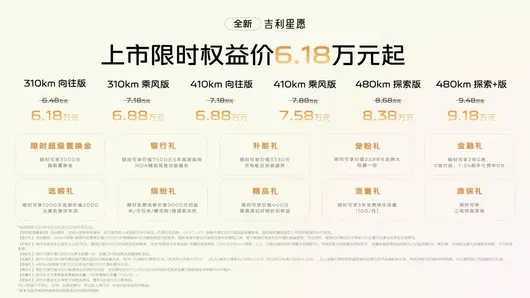

Recently, Geely announced its May overseas sales figures. Overseas export sales exceeded 85,000 units, hitting a new record, with a year-on-year increase of 184%.
In April, Geely's overseas new energy vehicle sales increased by 624.5% year-on-year, ranking first among Chinese new energy vehicle brands for overseas growth rate again.
In segmented markets, Geely's sales performance continues to flourish across multiple areas. Among them, only 14 months after entering the Australian market, delivery volume surpassed 10,000 units, becoming one of the fastest-growing Chinese automakers locally; meanwhile in the Brazilian market, sales climbed to over 4,000 units, refreshing the highest single-month sales record in that country. The Mexican market accumulated sales of 16,000+ units from January to April, creating a new historical record.
The Geely EX2 achieved B-segment hatchback new energy vehicle sales Top 1 in multiple markets including Mexico, Indonesia, and Costa Rica; The Geely EX5 became the sales champion in the pure electric SUV-C market in the first quarter in multiple countries such as Australia, the UAE, and Uruguay. Zeekr models 7X and 009 became the sales champions in the segmented markets, among which the Zeekr 7X topped the sales chart in the Australian market again, surpassing the long-time market leader Tesla Model Y.
Facing pressure from surging orders, Geely relied on the Ningbo overseas export hub, simultaneously deploying Ro-Ro vessels, container ships, and international railway trains to conduct sea-land intermodal transport, fully guaranteeing complete vehicle delivery. The head of international business at Geely Auto Group Logistics Center stated in an interview that currently multiple transport routes have been urgently added, forming a capacity resource layout of 4 major rail ports and 6 major sea ports, equipped with two self-owned Ro-Ro vessels, and multiple new cross-border transport lines have been opened to continuously supplement various capacity resources, capable of stably shipping nearly 10,000 new vehicles to core European ports monthly. The China-Europe Railway Express Geely special train operates regularly, reducing transport time by 40 days compared to sea transport. In the future, to cope with the explosive growth in overseas sales, Geely will continue to expand its overseas transport scale and further optimize vehicle delivery timelines.
The surge in Geely's overseas sales intuitively demonstrates Geely's strong product capabilities and the implementation of its localization strategy, and further reflects the strong strength of Chinese automobiles in the field of high-end and technology exports.

2026 North American World Cup, is not just a top football event with expanded scale and reform spanning three countries, but also a top game sweeping domestic entertainment, sports, and capital circles. Compared to past events, this World Cup's multimedia copyright competition is unprecedentedly fierce. Adding the rising value of global sports IP, the multimedia copyright for World Cup-related events is said to require broadcast costs in the hundreds of millions.

High copyright fees and complex broadcast rights divisions have caused the domestic broadcast process to be bumpy and continuous.
Against this backdrop, domestic hundreds of millions of fans have long been anxious: Will high broadcast costs raise the threshold for watching? Can the top football feast finally be open to the public for free? Industry internal discussions are also rampant. Huge capital investment has also made many top media and brands hold a wait-and-see attitude towards World Cup cooperation, daring not to enter the game easily.
On May 15, China Media Group officially announced, winning exclusive multimedia copyright for 2026 and 2030 Men's and Women's World Cups. This copyright struggle lasting several months finally came to an end, and the stone hanging on the hearts of fans and the industry finally landed.

Only 13 days after the dust settled, on May 28, the industry released another heavyweight news. Geely Automobile Group strongly partnered with China Media Group. Its new energy brand Geely Galaxy officially became the industry's first "2026 North American World Cup Broadcasting Partner", and exclusively sponsored CCTV-5 phenomenon-level premier sports program "The Grand Match".

Under the industry environment supported by astronomical broadcast costs and most brands watching cautiously, Geely Galaxy counteracted and entered first. It is definitely not a single simple traffic marketing. This heavyweight cooperation hides triple deep logic: brand top-level strategic pattern, differentiated marketing thinking, and national enterprise social responsibility. It is also the best solution for Chinese new energy vehicle brands to break through growth bottlenecks and run towards higher value tracks in the current internal rolling market.
Accumulated 40 years of heritage, anchoring new heights in all-domain development
New energy industry development so far, extensive price involution has long become the norm. The model of solely relying on product configuration and price advantages to seize the market is gradually failing. When homogeneous competition spreads throughout the industry, brand comprehensive pattern, cultural core, and value height have become the core trump cards for car companies to win the second half. Geely Galaxy's heavy investment in the astronomical World Cup IP this time is just the most direct externalization of its profound brand pattern.

Compared to many car companies that temporarily cross-boundary into sports marketing, Geely is one of the few domestic car groups that have deeply cultivated the sports field for more than 20 years. Sports genes have long been carved into the blood of brand development. As early as 2000, Geely entered the Chinese football industry first, deeply cultivated grassroots football construction, and helped the enlightenment and development of the domestic football cause. After more than 20 years of accumulation, Geely has accumulated large-scale event operations, guarantees, and service experience that other brands cannot replicate.
During the Hangzhou Asian Games, Geely, in the identity of the event's first official partner, provided high-quality travel guarantees throughout the process. At the same time, it actively practiced the original intention of public welfare, joined hands with the Asian Games Committee to complete the donation of 56 public welfare football schools, sinking professional football resources to rural areas, and building a stage for dreams for teenagers in remote areas. In addition, the brand actively empowered the development of youth sports, inviting the Daliangshan Girls Youth Football Team to walk out of the mountains, appearing at the Harbin Asian Winter Games and Chengdu World Games two international gatherings successively, allowing rural girls' football teenagers to feel the charm of international sports competition up close.

Not only the Asian Games, in the past many years, Geely has deeply participated in various national and world comprehensive events throughout the process. While accumulating sufficient large-scale event service experience, it also won dual recognition from national-level platforms and the public. This is also the core confidence for Geely Galaxy to dare to undertake the astronomical World Cup IP and cooperate with the main station.
Relying on the group's strong resources, Geely Galaxy has continued the group's sports marketing strategy since its birth, becoming the new brand with the highest participation rate and widest coverage of sports events in the new energy track. The 2026 "Northeast Super League" football tournament that just started recently, Geely Galaxy served as the official strategic partner, providing exclusive vehicle guarantees throughout the process, deeply cultivating grassroots football culture, and continuously narrowing the distance between the brand and ordinary sports enthusiasts, accumulating perfect market operation experience for this World Cup cross-border cooperation.

Behind the sports pattern is the strong support of hardcore product strength and market sales. Since its establishment, Geely Galaxy has only taken a few short years to refresh industry growth records, becoming the fastest global new energy vehicle brand to break through annual sales of one million, creating the "Galaxy Speed" of the new energy industry.
The flagship model under Geely Star Wish performed even more brightly. The domestic market has long stayed at the top of sales in the same category. The overseas market blossomed in multiple points. In Mexico, Indonesia, Brazil and other countries, it won the first place in B-segment pure electric hatchback sales. The overall new energy sales are stable in the global top three, topping the list of brands of the same level in China.

Bright production and sales data have allowed Geely Galaxy to completely get rid of the brand positioning of a single travel tool. And this time, spending to partner with the main station and sharing the astronomical World Cup broadcast operation costs is also the brand's strategic upgrade after completing the original accumulation of sales volume.
As a global top-level IP, the World Cup covers billions of audiences globally. At the same time, the host country of the event, Mexico, is also a key Geely overseas layout market. This cooperation can deeply cultivate the domestic public market internally, and externally leverage the global influence of the World Cup to perfect the overseas brand layout, helping Geely Galaxy complete the leap transformation from "National Hit Brand" to "Global High-end New Energy Brand".
Commercial Value Two-Way Balance, Reshaping Industry Marketing Paradigm
In front of the astronomical IP cooperation, the marketing logic of most car companies is limited to short-term traffic exposure and model carrying traffic conversion. But Geely Galaxy jumped out of the low-level internal rolling thinking, splitting this high investment into two dimensions: brand marketing and social public welfare, achieving a win-win of commercial traffic, brand reputation, and social value. Providing a new value marketing model for the new energy industry deeply trapped in marketing dilemmas.
Nowadays new media traffic is fragmented, and simple advertising implantation can no longer move consumers. Especially for top-level IPs like the World Cup with extremely high investment costs, only by fitting user needs and linking user emotions can the IP value be maximally released. Geely Galaxy abandoned the direct hard advertisement placement mode, relying on the main station's exclusive broadcast resources and "The Grand Match" national-level program influence, deeply integrated into the full scenario of public viewing.

"The Grand Match" has cultivated the football field for many years. It is the viewing memory of generations of Chinese football fans, possessing strong national attributes and circle layer influence. Geely Galaxy exclusively sponsored the program, binding the brand image deeply with public viewing habits; at the same time, relying on multiple platform hot search topics such as "#Geely Galaxy Officially Announces Cooperation with Main Station World Cup#", linking short videos and social platforms to launch diversified interactive activities, covering the fan groups of all ages from old to young.
This move allowed Geely Galaxy to successfully complete circle layer breakthrough, realizing the brand upgrade from simple "Travel Partner" to "Life Entertainment Partner", weakening commercial attributes, and strengthening user emotional identification.
The astronomical broadcast fee of this World Cup not only dissuaded many brands but also let countless fans worry about the rise of viewing costs. The tradition of public free viewing may be broken. At this special node, Geely Galaxy actively entered the field and shared broadcast operation pressure. It has long surpassed the category of ordinary commercial cooperation and become a vivid portrayal of national brand social responsibility.
Geely Galaxy fulfilled its original intention with practical actions: Helping the main station digest high copyright costs, stabilizing the public free viewing mode, and holding onto the football sentiment of hundreds of millions of Chinese families for every four years.

This responsibility is not a marketing gimmick at a certain time, but an extension of the brand's long-term development concept. For many years, Geely has always integrated social responsibility into enterprise development strategy. While deeply cultivating sports public welfare, helping grassroots football and youth sports development; on the other hand, deeply cultivating the livelihood field, practicing the brand proposition "Come for the better life" with inclusive new energy products.
And sponsoring the World Cup broadcast is the best implementation of this proposition - Beautiful travel is not just to rush to mountains and seas, but to accompany users to share the love of the world.
Currently, the internal rolling in the new energy industry is increasingly fierce. Countless car companies are trapped in endless price wars and homogeneous traffic wars. Marketing costs remain high, but brand value has always been difficult to improve.
Geely Galaxy's heavy investment in the astronomical World Cup sounded a warning bell for the entire industry: Short-term price concessions can only obtain market share for a while. Long-term brand value sedimentation is the core asset for enterprises to cross industry cycles.
By converting high IP investment into emotional value, social value, and brand value, Geely Galaxy successfully jumped out of the circle of parameter involution and price involution, opening up a new track for sports value marketing.
This model proves that quality marketing investment does not need to rely on low-price promotions. Relying on brand pattern and social responsibility, it can also gain user recognition and industry respect, providing a new reference model for the long-term development of Chinese new energy car companies.
Conclusion
From the broadcasting rights settling to partnering with Geely Galaxy, the Chinese story of the 2026 World Cup has long surpassed football itself, becoming a vivid footnote of the rise of Chinese brands. Geely Galaxy's move this time is not an accidental marketing choice, but a concentrated bloom of brand pattern, spiritual core, and social responsibility.
From more than 20 years of cultivating grassroots sports to escorting the Asian Games, to now spending heavily to help the main station unlock the public viewing rights of the World Cup, every move of Geely Galaxy has a clear strategic logic.
For football fans, Geely Galaxy's entry has guarded the beautiful vision of the public sharing the green field feast; for the automobile industry, its innovative sports value marketing model breaks the internal rolling deadlock and guides the industry to return to the brand essence; for China's manufacturing industry, from the domestic field to the global green field, Geely Galaxy carries not only the growth ambition of a new energy brand, but also the new generation of Chinese national brands, growing towards the sun and chasing dreams globally, the era microcosm.
On the green field, teams from various countries chase dreams to the peak; in the global arena, Chinese brands are accelerating the lead. Geely Galaxy's story is the microcosm of China's new energy industry catching up and surpassing, and more the spiritual portrayal of Chinese national brands "heart country and family, eyes on the globe".
In the future, it is believed that more Chinese brands will use sports as a medium and value as the guide, conveying Chinese power and Chinese temperature on the world stage, and writing the "Peak Moment" belonging to Chinese brands.
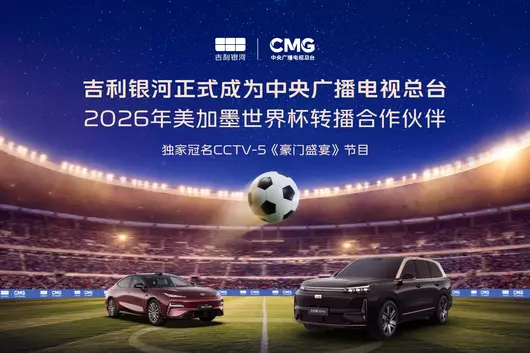

Geely recently announced overseas sales for May: 85,000 units, a year-on-year increase of 184%. Placing this in last year's context, this number might have been a surprise; but today, it feels more like a routine operation — after all, in the first two months of 2026, Geely's overseas monthly sales have continuously exceeded 60,000 units. From an average of over 30,000 per month to over 60,000+, the overseas market is becoming the area of strongest sales growth for Geely.
However, looking only at the numbers makes it easy to overlook some more significant changes.
Growth is not driven by 'piling up volume'
The domestic car market is fiercely competitive like a red ocean, but Geely's overseas performance continues to rise. 85,000 units is not an isolated phenomenon; what is more worth examining is the structure.
In Australia, deliveries broke 10,000 in the 14th consecutive month, becoming one of the fastest-growing Chinese car companies locally; in Brazil, it hit over 4,000 units in a single month, setting a new local record; in Mexico, cumulative sales from January to April reached 16,000 units, also setting a historical high. The Eastern European market was once Geely's export pillar, but 2025 financial reports show that revenue from Asia-Pacific (excluding China) surged from 5.7 billion to 14.6 billion, while Eastern Europe dropped from 30.2 billion to 29.2 billion. This is not market fluctuation, but an active shift — from high-risk areas to the more resilient Asia-Pacific.
Not just "selling more", but "selling at a premium"
In terms of total export volume, Geely may not rank first. Chery exported 1.34 million units in 2025, and BYD also surged past 1.04 million units. But Geely's approach is different.
The most obvious difference is product tier. EX2 took the B-segment new energy vehicle sales top spot in Mexico, Indonesia, and Costa Rica; EX5 won the first-quarter pure electric SUV sales champion in markets such as Australia, UAE, and Uruguay; Zeekr 7X in Australia directly surpassed the long-chart-topping Tesla Model Y. This is not the result of a price war, but Geely directly competing with international brands in the high-end market.
To achieve this, it relies on multi-brand synergy. Zeekr targets luxury pure electric, Lynk & Co aims for the global new energy high-end, and Geely Brand outputs mainstream products relying on the GEA architecture. In 2025, the group's new energy penetration rate reached 56%; this product network allows Geely to find suitable entry points in different markets.
The overseas expansion model is changing
Sales growth is just the surface; the real change is the profit structure. 2025 financial reports show that overseas revenue has already accounted for 21.41% of Geely Auto's total revenue; among the 420,000 units sold overseas for the year, new energy exports were 124,000 units, surging 240% year-on-year. Overseas business is no longer burning cash to exchange for market share, but a genuine source of profit.
What is even more interesting is Geely's strategy. In Brazil, Geely did not sell cars itself, but obtained 21.29% equity and nearly 4.86 billion warrants of Renault Brazil through technology transfer, exchanging technology for market share. In Southeast Asia, taking Malaysia Proton as a fulcrum, through technology licensing and parts synergy, Geely's products appear in the identity of a "local brand". This model avoids heavy asset investment in traditional overseas expansion and retains supply chain control.
Challenges are also plentiful
Fast growth brings plenty of trouble. Capacity and logistics are the most direct bottlenecks. Facing exploding orders, Geely has already utilized RoRo ships, container ships, and international train services, able to stably ship nearly 10,000 units monthly to European ports, but logistics pressure remains high.
Greater uncertainty comes from geopolitics. Trade friction and tariff barriers can change the rules of the game at any time. The 2025 EU anti-subsidy investigation into Chinese electric vehicles has already sounded the alarm. However, Geely's 2026 export target is 640,000 units, indicating it still has confidence.
When a car company has over 1,200 outlets in 77 countries and regions globally, using five years to pull overseas sales from 410,000 to a target of 640,000, the word "exports" is barely enough to describe it. For Geely, going overseas is not an elective question, but a mandatory one. Whether it can answer well depends on the implementation in the coming years.

Editor's Note: Incorporating Radar Automotive is seen as another important measure to advance the "One Geely" strategy and continuously optimize resource allocation.
Recently, Geely Automobile announced on the HKEX that it plans to invest approximately 218 million yuan in cash to acquire 100% equity of three core entities of Radar Automotive. Upon completion of the transaction, Radar Automotive will be consolidated into the listed company's financial statements as a wholly-owned subsidiary, marking the formal transition of this new energy pickup brand from a group incubation project to a core business segment of the listed entity.
This move is a key step for Geely Holdings to implement the "Taizhou Declaration". Released two years ago, the declaration established five key directions including strategic focus, integration, and synergy, aiming to reverse resource redundancy and low efficiency caused by independent operations of multiple brands in the past, and promote the group's transition towards centralized synergy.
Guided by this strategy, Geely has successively completed adjustments such as Geometry merging into Galaxy, and Zeekr integrating Lynk & Co. This incorporation of Radar Automotive is seen as another important measure to advance the "One Geely" strategy and continuously optimize resource allocation.
Radar Automotive, Profitability Still in Climbing Phase
Radar Automotive was incubated by Geely Holdings four years ago, and the first model RD6 quickly gained traction after its launch. In 2025, the brand became the only new energy brand to rank in the top five in total pickup sales with 13,040 units sold, with its pure electric segment market share reaching as high as 98%.
However, Radar Automotive has not yet achieved overall profitability. Recent financial data shows divergence in profit and loss among the three core entities: The Shandong company operating the entire industry chain narrowed its loss to 8.646 million yuan, the domestic sales company earned a profit of 12.325 million yuan, while Radar Thailand responsible for overseas expansion expanded its loss to 10.697 million yuan, and the overall business is still in the investment phase.
Equally challenging are market capacity constraints and intensifying competition.
In the first quarter of 2026, domestic new energy pickup sales were only 18,000 units, with penetration below 10%, and growth rate far lower than the overall pickup market. Currently, the main growth in pickups is overseas, with exports accounting for more than half.
At the same time, the track is becoming increasingly crowded. In the domestic market, Great Wall Motor continues to firmly hold the leading position in the domestic pickup market, with global sales exceeding 181,600 units in 2025. BYD Shark Pickup has long prioritized deep cultivation of overseas markets, with an average monthly export volume stable at around 3,000 units. Relying on its hybrid rugged product power, it quickly opened up the Southeast Asian and Australian markets. Recently, the Shark brand was also confirmed to enter the domestic pickup market to compete.
More participants are constantly joining. Changan is accelerating the layout of passenger-oriented new energy pickups, and Chery is also perfecting the pure electric and plug-in hybrid full-category pickup product matrix relying on the Ruilin brand.
Against this backdrop, the advantages Radar Pickup established in the new energy pickup field are being constantly eroded, and whether it can maintain leadership in competition afterward remains unknown.
Another Move in Geely's Grand Integration
The Geely Group is continuously deepening the strategic implementation of the "Taizhou Declaration". In the past year, the group's integration moves were frequent: Geely Galaxy merged with the Geometry brand, Zeekr and Lynk & Co completed equity transfer and formed Zeekr Technology Group, which was subsequently merged into Geely Automobile. Through these adjustments, the group's brand count was streamlined from 6 to 4, and subsidiary holding companies were reduced from 3 to 1, completing a deep internal cleanup.
This acquisition of Radar Automotive will further expand Geely's business landscape. A Geely representative stated that bringing Radar under the China Star umbrella aims to perfect product coverage in luxury, mid-to-high-end, and mass markets, complete the pickup category, and form a complete matrix of sedans, SUVs, MPVs, and pickups to meet diverse user needs; from a strategic value perspective, this acquisition marks the upgrade of new energy pickups from a group-level incubation project to a core strategic category of the listed company.
From the value perspective, the transaction price is 218 million yuan, basically flat with the assessed fair value of the target company, with no premium risk. Geely has acquired a top domestic new energy pickup brand at a low cost, which not only fills the product matrix gap but also provides growth space for pickup overseas expansion, reflecting efficient resource allocation.
For Radar Automotive, although it had previously laid out the Thai market, independent expansion overseas faces high cost and low efficiency issues. Relying on Geely's mature global distribution network, Radar Automotive can quickly penetrate more markets, convert technical momentum into sales volume growth, and accelerate the realization of scale profitability.
In addition, injecting Radar Automotive into the listed company system marks that the holding group no longer manages homogeneous brands dispersively, but instead hands over mature business to core segments for unified operation. This move connects product planning, supply chain, and channel resources, achieves reuse of overseas networks, and is conducive to Radar brand expansion and cost control in domestic and international markets.
In response, industry insiders believe that Geely adopts a "platform incubation + mature recycling" model, relying on group resources to share the early risks of start-up brands, and implementing asset integration after the brand stabilizes its position in the niche market. This strategy balances risk control and asset operating efficiency.
This inclusion of Radar Automotive into the listed system is yet another key execution of this strategic logic.

May 28, at the launch event of Geely Galaxy's new model Star Wish, Geely Galaxy officially announced:
Geely Galaxy has become the broadcasting partner of the 2026 World Cup in North America organized by China National Radio and Television, and has exclusively sponsored CCTV-5 flagship sports program "Elite Feast".

Geely relevant personnel revealed exclusively to Global Auto at the signing scene of the strategic agreement with the station before the launch event that this cross-boundary partnership took less than seven or eight days from initial contact to final signing.
The Party Committee Secretary of the General Manager's Office of China National Radio, Television and Broadcasting, Ren Xuean, stated at the launch event site that this cooperation is "a strong alliance between a national platform and a national brand, as well as a perfect fusion of sports spirit and Chinese manufacturing".
 Geely Automobile Group CEO Gan Jiayue
Geely Automobile Group CEO Gan Jiayue attributed this rapid two-way engagement to both parties' "shared longing for beauty and happiness". From his perspective, by using the station as a "bridge built for Chinese audiences to connect directly to the World Cup", Geely Galaxy is speeding up to push the high-quality intelligent travel experience representing Chinese manufacturing onto the global arena.
According to incomplete statistics, this is the first Chinese brand to interact with this North American World Cup.

As everyone knows, due to the impact of the initial stagnation in negotiations between the station and FIFA on copyright, the commercial value and expectations of this North American World Cup in China were continuously undervalued by the market.
On May 15, when the station and FIFA reached a broadcast agreement at the last minute, the extremely compressed sponsorship window period caused some enterprises to face a dead end due to too long decision chains and inability to react quickly, leading to many brewing commercial cooperation projects to be unfortunately aborted.
On the contrary, Geely Galaxy, within less than half a month after the station completed copyright signing, successfully completed the sponsorship lock and in-depth participation of this World Cup prime program. Under the extremely tight time window, this is not only a grab for scarce marketing resources, but also a test of corporate decision-making mechanisms.

This determination to quickly bet on core assets in uncertainty reflects the system efficiency and industrial confidence of Geely Galaxy in the breakthrough of new energy strategy.
To be honest, car marketing today is becoming increasingly homogeneous, making good resources that can truly penetrate circles extremely scarce. Such a super event held every four years that can attract global attention, like the World Cup, is more of a lucky encounter.
Multiple sports marketing professionals told Global Auto that regarding this World Cup resource of the station, due to the earlier minor episode, the reaction time left for major brands was not much. "Overall, for resources at this level, it's about speed and decisiveness."
When many enterprises were hesitating and watching due to the short negotiation window period, even missing good opportunities, Geely Galaxy did not hesitate and locked the golden resources of the World Cup before everyone else.
Of course, for Geely, the reason for daring to bet heavily on the World Cup at this time is because they deeply understand the connection between car manufacturing and sports.
Beyond the surface noise of marketing, competitive sports and car manufacturing are essentially the same thing. A high-level sports competition is backed by long-term systematic training, requiring athletes to repeatedly hone and strive, just to win the championship or break through themselves in the end. Car manufacturing also has no shortcuts; this trait of strictly following objective laws and practicing core skills step by step is exactly the foundational tone that the current auto industry should uphold.

Geely previously sponsored high-standard sports events such as Hangzhou Asian Games, Harbin Asian Winter Games, Chengdu World Games, Hangzhou Marathon, etc.

△ One of the venues for the 2026 World Cup: Mexico City Aztec Stadium (Reference Photo)
In the first quarter of this year, Geely Automobile Group's sales volume broke through 700,000 units strongly, topping the Chinese independent brand sales champion. On the new energy track representing the future, Geely Galaxy became the "new energy brand that reached 2 million cumulative sales in the fastest time" in only 37 months, achieving a phenomenal "Galaxy Speed".
Long-term technical deep cultivation proves that today's Chinese auto industry is fully capable of connecting with the world's top level and has formed significant leading advantages in some key technology fields.
If holding the "Elite Feast" exclusively is a grand breakout for Geely Galaxy in the public awareness level, then its overseas achievements shown at the product and service end completely verify the great ambition of Chinese car companies to seek full-chain discourse power in the international market. When the domestic market is still stuck in the share of a single track, Geely's new products have already completed substantive positioning on the international track first.
Gan Jiayue announced a set of data with great industrial insight at the launch event:
In the just passed quarter, Geely "Star Wish" won the sales champion of pure electric hatchbacks in countries such as Mexico, Indonesia, Costa Rica, Brazil, etc., and ranked in the top three in the global new energy vehicle sales list, becoming the Chinese new energy model with the highest ranking. This represents that Chinese new energy products are truly competing in the "final round" of the global auto industry.
Along with the product going overseas is the comprehensive extension of the ecosystem. To welcome the North American World Cup, Geely's Mexico subsidiary launched a measure with great strategic significance: providing free airport pickup service for Geely car owners going to Mexico to watch the game. This precisely echoes the strong momentum of Geely Group's exports breaking through 200,000 units in the first quarter of the year, with a year-on-year increase of 126%, marking that the enterprise is steadily realizing the strategic transformation from single product output to "product, service, ecosystem" full value chain output.
Beyond the World Cup carnival at the public level, Geely has also not relaxed its exploration of the high-barrier professional car sports field. With Ma Qinghua winning the station champion at the Italy round of the TCR World Tour, the strength of Chinese brands on the international professional track was verified again.
 Geely Holding Group Senior Vice President Yang Xueliang
But this is not the endgame. Geely Holding Group Senior Vice President Yang Xueliang told Global Auto that Geely not only needs to consolidate the mass foundation in the field of car sports but also explore higher, currently actively responding and contacting to introduce top international events such as WSBK (World Superbike Championship) into China.
From exclusively sponsoring CCTV's football benchmark program, to defining new heights of going overseas with global sales champions, to deeply competing for professional top events, Geely has transcended the simple following stage, and is now playing its full value chain leading strategic trump card first on the global competition table with indisputable system determination.
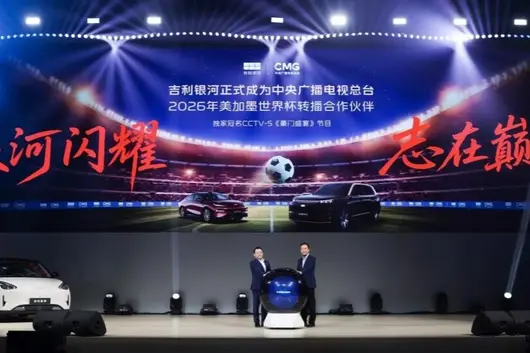

May 28, when news broke that China Media Group officially signed an agreement with Geely Automobile Group, an industry-first mark was stamped here — Geely Galaxy became the "China Media Group 2026 FIFA World Cup USA+Canada+Mexico Broadcasting Partner", and exclusively sponsored CCTV-5 flagship program "A Feast of the Elite". While Chinese fans were still cheering for China Media Group regaining the World Cup broadcasting rights after four years, an automobile brand stepped forward first, protecting this public expectation with real money and concrete actions. This is not merely a commercial cooperation, but a strategic declaration from "China Smart Manufacturing" to "Global Brand". When the World Cup expands to 48 teams and spans three countries, when global attention locks onto this green field, Geely Galaxy's move is quietly rewriting the narrative logic of Chinese brand sports marketing.

I. From the Asian Games to the World Cup: Evolution of a Brand's Sports Sponsorship
The sports sponsorship of Geely Holding Group was not achieved overnight. As early as 2000, Geely committed to the development of Chinese football. This sports relationship spanning over twenty years reached a concentrated explosion during the Hangzhou Asian Games. As the first official partner of the Hangzhou Asian Games, Geely worked with the Asian Games Organizing Committee to donate to 56 football schools at home and abroad, scattering the fire of football across the land, allowing rural youth to chase dreams on the green field. More touching is that Geely invited the Daliang Mountains Girls' Youth Football Team out of the mountains to experience snow football at the Harbin Asian Winter Games, and rushed to the Chengdu World Games to feel the charm of the international sports gala. These actions were not one-off PR, but a continuous narrative of deep binding between the brand and the sports spirit.
This profound qualification in sports sponsorship became the solid backing for Geely Galaxy to secure the China Media Group World Cup broadcast partner seat this time. As the industry's first new energy vehicle brand to sponsor the China Media Group World Cup broadcasting, Geely Galaxy was not "a last-minute effort", but the natural result after long-term deep cultivation in the sports field. From the Asian Games, Asian Winter Games to the current World Cup, Geely's steps serving international top-level events have never stopped. Every participation accumulates brand credibility and major event support experience. These invisible "invisible assets" are exactly the key chips to win the trust of national-level media.
More strategically is that Geely Galaxy's sports marketing map has already unfolded. For the newly opened 2026 "Northeast Super", Geely Galaxy provided vehicle support throughout the process as an official strategic partner; multiple core models under its brand appeared or participated in sports sponsorship activities multiple times, allowing "sports spirit" to truly integrate into the daily travel of every fan. This "event matrix + product penetration" dual-wheel drive model makes Geely Galaxy become the emerging force with the highest participation rate and widest coverage in domestic new energy vehicle brands for sports events. From single event sponsorship to systematic event layout, Geely Galaxy is building a replicable sports marketing methodology.

II. From Mobility Partner to Life Partner: A "Beautiful Goal" of Brand Elevation
"Here for a Better Life" is the brand philosophy that Geely Galaxy has long adhered to. This slogan was transformed into concrete actions at the moment when billions of fans were worried about "whether they can watch the World Cup" — good cars not only need to carry passengers to the destination, but also to accompany users to enjoy every beautiful moment. Sponsoring China Media Group World Cup broadcasting is precisely the key jump that pushes the brand proposition from slogan to action. When CCTV cameras aim at the World Cup, Geely Galaxy's brand logo will enter the living rooms of hundreds of millions of Chinese families along with the broadcast of "A Feast of the Elite", becoming the warmest companion of this summer.
Behind this brand elevation lies Geely Galaxy's strong market confidence. As the fastest new energy vehicle brand to break through annual sales of one million, Geely Galaxy only took 37 months to reach 2 million units rolled off the line, becoming the brand in the global new energy industry to fastest achieve this milestone. The market performance of "every model is a hit" verifies its accurate product positioning and strong user reputation. Under its brand, Geely Galaxy Xingyao 8 topped the 2025 China Mid-to-High-end Electrified Sedan Annual Sales Champion only 8 months after launch, and continued to lead the track with the monthly sales champion posture after entering 2026. These hardcore data prove that Geely Galaxy is not merely an automobile brand, but is becoming an important part of Chinese families' better life.
Sponsoring World Cup broadcasting means Geely Galaxy took a key step in brand elevation from "Mobility Partner" to "Life Partner". In the past, marketing scenarios of automobile brands mostly focused on travel itself; today, Geely Galaxy extends its touch to sports events shared by all people, establishing emotional connections with broader masses. This elevation is not simply a stacking of communication resources, but a redefinition of core brand values — cars are no longer cold transportation tools, but companions carrying family laughter and witnessing passionate moments. From "serving major events" to "integrating into national life", Geely Galaxy is laying out the long-term value of the brand with a more macroscopic vision, injecting the proposition "Here for a Better Life" into every fan's viewing memory.

III. Global Resonance of Champion Spirit: Geely's "Six Great Flags" Kick Out Beautiful Football for Chinese Brands
The six great flags of "Team, Learning, Innovation, Struggle, Seeking Truth from Facts, Perfectionism" that Geely has always adhered to are cleverly integrated with the core of football. These six great flags are not only the foundation of every precise pass and shot on the field, but also the spiritual source code for Geely's car making from catching up to leading. The new Geely Xingyuan is the latest achievement of this spiritual system — stable in domestic all-category sales champion for more than a year, overseas in Mexico, Indonesia, Brazil and other countries took the B-class all-electric hatchback number one, global new energy sales rank in the top three, ranked highest among Chinese brands. This is not an accident, but a set of replicable champion methodology constantly verified on the real battlefield.
Geely's spiritual system points directly to its global ambition. From the local "World Cup Trophy" to overseas multiple country champion lists, every step of Geely Xingyuan is proof of Chinese new energy vehicles winning games head-on on the world stage. The renewal upgrade of the new Xingyuan is not a simple product iteration, but a comprehensive strengthening of a "champion lineup" — to continue leading on the global stage with higher specifications, to carry the flag of "highest ranking among Chinese brands". Geely used a methodology from the court to kick out "beautiful football" for Chinese brands in the real global automotive "final round". This is not only a victory of a product, but also a joint expedition of organizational culture, competitive philosophy, and national strength.
More worthy of attention is that this champion spirit is being systematically replicated. The team led by Geely Chief Intelligent Driving Scientist Chen Qi integrated nearly a thousand people's intelligent assisted driving strength, formed a unified "Qianli Haohan" brand cognition, the goal points directly to "50% of cars in the country will be equipped with Qianli Haohan, strive to truly rush to the industry head, surpass Tesla". From organizational integration to technical attack, from "World Behavior Model" R&D to intelligent driving capability breakthrough, Geely is converting the "teamwork" spirit on the court into the attack force of the technical marathon. This spiritual resonance makes Geely Galaxy sponsoring World Cup broadcasting not only a commercial choice, but also a resonance of values — when the team fights for victory on the green field, Geely fights for leading on the car manufacturing track, the two resonate at the same frequency.


Conclusion
From the Asian Games arena to the World Cup stage, from "Mobility Partner" to "Life Partner", Geely Galaxy is redefining the global narrative of Chinese brands with solid sports marketing battles. "The time will come to ride the wind and cleave the waves, Hoisting the cloud sail to cross the sea." When Chinese fans wait in front of the TV to cheer for wonderful goals, when Geely Galaxy's brand light reaches tens of thousands of households with CCTV signals, a deeper meaning is emerging: This is no longer a sponsorship behavior of a car company, but a warm promise of a national brand sharing passionate moments with billions of families. Good cars drive on the highway, brands take root in life — this is the most moving footnote of "Here for a Better Life".
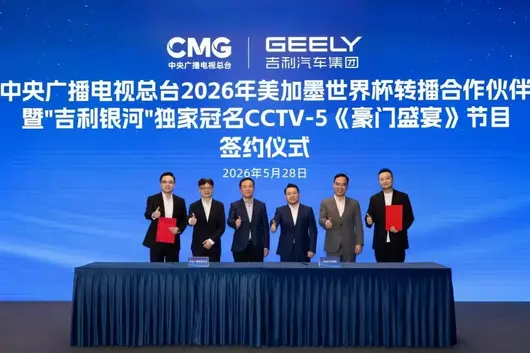

Recently, there has been an interesting phenomenon in the Chinese automotive circle: while domestic market price wars are fierce, top car companies are quietly "making big money" in overseas markets.
Geely's May performance report that was just released has already hinted at some unusual signals — Overseas export sales exceeded 85,000 units, a year-on-year increase of 184%, setting a new historical record. More importantly, this growth was not driven by low prices to move volume, but by actually "capturing ground" in the global high-end market.
In Dubai, a dealer accustomed to luxury cars couldn't help but remark: "German brands can no longer compete with Chinese brands like Zeekr." He even placed an order for two new Zeekr cars himself.
Said from the mouth of a dealer in a luxury car gathering place, these words carry weight. Behind them lies a qualitative inflection point of China's automotive going global: from "being able to sell" to "selling at a high price", and then to "people chasing to buy."
01 The "Sweet Trouble" of an "Order Surge": Logistics Becomes the New BattlefieldThere are several details in Geely's May sales data that are particularly worth pondering.
First, it is not that one single car is hot, but "blooming at multiple points". In Mexico and Indonesia, the Geely EX2 took the sales crown for B-class hatchback new energy vehicles; in Australia, the Zeekr 7X directly surpassed the long-time chart-topping Tesla Model Y; Zeekr brand delivered 34,377 units in May, with the average transaction price increasing 52.4% year-on-year, surpassing BBA.
Second, "Order Surge" has become so severe that it requires emergency mobilization of logistics resources. Geely had to launch roll-on/roll-off ships, container ships, and international railway trains, forming a capacity layout of 4 major railway ports and 6 major seaports. The China-Europe Railway Express Geely special trains operate on a regular basis, shortening time by 40 days compared to sea transport.
This is actually a very "sweet" trouble. In the past we discussed Chinese cars going overseas, worrying that no one would buy; now Geely's problem is that too many people are buying, and they cannot be transported fast enough.
This reversal of supply and demand relationships is the signal truly worth attention. When your products need to "fight for capacity" overseas, it means the brand has crossed the most difficult "trust threshold."

Many people attribute Zeekr's success overseas simply to "high specs, low prices". But if you look closely at the data, you will find things are not that simple.
In Australia, the Zeekr 7X sold more expensive than the Tesla Model Y, yet sales surpassed it. In Dubai, the words dealers used to evaluate Zeekr were "entered the next stage", rather than "high cost-performance ratio".
The essential difference behind this lies in: Zeekr uses the logic of "technology defining luxury" to challenge BBA and Tesla's "brand premium."
Full stack 900V high-voltage platform, SEA-S super electric hybrid architecture... these hard-core technologies bring experience improvements that are cross-market. Whether you are a Middle Eastern billionaire or an Australian family, faster charging speed, longer range, smarter cockpit, these values are universal.
In other words, Zeekr did not play in the game rules favored by established car companies, but directly redefined a set of rules. When German brands were still struggling with "luxury feel", Chinese brands have already turned "tech feel" into a new luxury standard.

This time Geely's overseas order surge, there is another detail easily overlooked — it is not relying on a single brand fighting alone, but "one Geely" system under multi-brand collaboration.
Geely, Lynk & Co, Zeekr maintain their own tonality, but share R&D, channels, logistics, and after-sales systems. What does this mean? It means Geely overseas is not "testing the waters", but "taking root".
For example after-sales, Geely built a "Center Warehouse — Regional Warehouse — Terminal Outlet" three-level service system, launched ultra-long warranty, and established VOC User Voice systems with global unified response. This is no longer "selling car" thinking, but "user operation" thinking.
Again for example logistics, pre-layout of own roll-on/roll-off ships, regular China-Europe Railway Express special trains... these infrastructure investments, which look like costs, but facing today's 85,000 units monthly export volume, these forward-looking layouts became the hardest competitive barriers.
True globalization is not shipping domestic cars to foreign countries to sell, but establishing complete service capabilities and brand awareness locally. This point, Geely has already walked ahead of many Chinese car companies.

In the past we always said "China is a car big country, not a car strong country", because a true strong country must have pricing power and brand discourse power in the global market.
From Geely's May overseas performance, this turning point might come faster than we imagined. When a Chinese brand car can be actively "sought for purchase" by dealers in Dubai, can defeat Tesla head-on in Australia, can create historical sales highs in Mexico, Brazil — this is already not a victory of an enterprise, but a milestone of the entire Chinese automotive industry.
Of course, challenges are still ahead. EU and US market tariff barriers, fierce counterattack of local brands, user habit adaptation brought by cultural differences... These are hurdles that Geely and all Chinese car companies must cross.
But at least one point is clear: The "high-end game" of China's automotive going global is no longer a vision, but is currently ongoing.