首頁Denza

搜尋歷史
熱門搜尋
經銷商登入 / 註冊

The 500,000 RMB MPV segment hasn't seen much activity in a long time.

On the evening of September 22, the VOYAH Dreamer 9 was launched at the National Speed Skating Oval, the Ice Ribbon, in Beijing. Six configurations, three trim levels, three PHEV and three pure electric models, priced from 419,900 RMB to 529,900 RMB. The price is 10,000 RMB cheaper than the pre-sale price opened on September 5. At that time, the pre-sale price was 429,900 RMB to 529,900 RMB. This 10,000 RMB looks small, but it directly pulls users who strictly stick to a budget under 500,000 RMB into the candidate list.
Let's talk about the pricing arrangement first. Within the same trim level, pure electric is always 10,000 RMB more expensive than PHEV; Ultra to Ultra+ costs 40,000 RMB more, and another 60,000 RMB more for Li Zun Edition. The entry and top trims differ exactly by 100,000 RMB. This pricing structure is quite standard, which is good for consumers — critical items like chassis, intelligent driving, and 800V are not forced onto the top trim. The main differences lie in the lifting emblem, two-tone body, side window dimming glass, exclusive wheel rims, and some luxury ambient parts. Ultra is positioned as a Family Tech Castle, Ultra+ as a Business Luxury Living Room, and Li Zun Edition follows an Eastern Craftsmanship route.
So the car selection logic is very direct: if budget is tight, look at Ultra; if you want to experience the full package, look at Ultra+; if you truly have business reception or image needs, consider the Li Zun Edition.
The 5.3-meter-long car has a turning radius of only 5.9 meters. My first reaction when I saw this data was that I checked wrong. With a length of 5,325 mm and a wheelbase of 3,200 mm, it has the body of a standard large MPV. By common sense, turning around in old residential garages and narrow roads is a nightmare. However, the whole series comes standard with 10-degree bi-directional rear-wheel steering, cutting the turning diameter by a full meter. The turning radius of many mid-size sedans is around 5.5 meters. The real beneficiaries are not high-speed lane changes, but the narrow road passing and garage maneuvers encountered daily.
The chassis is called Huju P, which VOYAH calls "The World's Best, China's Only", the country's first intelligent chassis independently developed and designed for flagship MPVs. Why did I pick this out to talk about? Because MPVs have a hidden ailment that most people don't realize before buying, but discover after taking delivery: high center of gravity, long wheelbase, and rear dizziness caused by electric drive acceleration and deceleration. This is one of the most concentrated areas for complaints, and this problem cannot be solved by adding ten seat massagers.
Three-chamber independent air springs plus dual-valve EDC, three-chamber air chambers can be combined to achieve 65% ultra-wide range, four-gear physical stiffness adjustment. The difficulty of traditional single-chamber air suspensions lies in that if the empty load is tuned comfortable, the full load sinks; if tuned hard, the full load doesn't sink but the empty ride bounces. These two demands are inherently conflicting. Dual-valve EDC controls compression and rebound damping separately. Air springs manage load bearing, dampers manage vibration filtering, dividing work instead of interfering with each other. This line of thinking is what truly makes it stand firm.
VMC domain control plus 15-meter pre-scan, high-definition pre-scan 15 meters ahead of the car scans the road surface 100 times per second, calculating optimal posture in real-time with six degrees of freedom. In terms of body feeling, this is the so-called "crab walk". When changing lanes at high speed, the car body approximates translation, with less roll and sway than traditional MPVs. In Prestige mode, after stopping, the car body automatically lowers by 40 mm, making it convenient for elderly and children to get in and out. The core load-bearing members are made of aviation aluminum alloy, accounting for over 90%. Sprung mass is reduced by about 30%, paired with front double wishbones, rear five-link suspension, and intelligent electric four-wheel drive.
VOYAH also performed two verification actions: six cars vertically stacked, total weight 18.1 tons, the bottom car completed 35 meters displacement, taking 28 seconds; 131 km/h extreme cold ice and snow road surface single-wheel blowout achieved autonomous stability control. Moose test over 80.5 km/h, braking distance reached the 36-meter class.
But whether it's good depends on the first batch of owners running over speed bumps and highways. If you really test drive, I suggest focusing on these three: whether continuous speed bumps and damaged roads can achieve soft but stable handling, how much space a U-turn in the garage takes, and whether the car body follows hands during high-speed lane changes. Parameters only explain the hardware foundation. Whether the chassis is good or not, the butt and hands will tell you the answer.
Safety configurations are also generous. 2,200 MPa hot-formed steel aluminum cage body, seven-layer frontal collision protection in the front compartment, five-layer rear-end collision protection in the rear compartment, 11 airbags covering front, middle, and rear three rows, Amber battery 16-layer whole-domain safety structure protection. For the three-electric systems, PHEV version 65 kWh, supports 5C super fast charging, 20 minutes from 20% to 80%, pure electric range 340 km, combined over 1,500 km; Pure electric version directly 120 kWh, currently the largest battery in the MPV category, CLTC range 701 km.
How to choose power? Just one question: Is there charging conditions? If there is no fixed parking space at home, frequent cross-city travel, and changing vehicle locations often, choosing PHEV basically won't be wrong. The 10,000 RMB price difference for pure electric, if you drive a lot in a year, is relatively easy to recover; if charging conditions are average, I still recommend PHEV.
A reminder here: the 12-minute fast charging refers to 20% to 80%. Real experience is also affected by charging pile power, temperature, and battery status. When viewing the car, don't just stare at the parameter table, casually check if there are stable output 800V piles near your company and home.
The whole series is designed according to the whole-domain L3 architecture, but architecture support for L3 does not equal L3 can be used now. This is hardware laid out, not function delivery. Current delivery functions are L2 level assisted driving. L3 opening needs to wait for regulations approval and official OTA. Hardware specifications are indeed high: 37 smart sensors, including one 896-line dual-optical path image-level main LiDAR, plus three high-precision solid-state blind-spot radar, CAS 5.0 full-dimension anti-collision system. Redundancy covers perception, computing, braking, steering, power supply, communication, interaction, positioning eight dimensions, IPB plus RBU dual independent hydraulic circuits, dual chip, dual motor fully redundant EPS architecture, when main system fails, backup system can intervene seamlessly within 100 ms.
Why is everyone rushing to talk about L3 architecture? Because "Intelligent Connected Vehicle Autonomous Driving System Safety Requirements" (GB 44721—2026) has been approved, proposed to be implemented from July 1, 2027, covering L3, L4 level system passenger and cargo vehicles. Inside, it clarifies hard requirements like takeover capability monitoring and minimum risk strategy. To put it simply, before that, all car companies can only do one thing: lay out the hardware first, wait for the gate to open. VOYAH's choice is to lay out this redundancy on the whole series, not just exclusive to top trim.
So my advice is to judge based on currently usable capabilities, don't count future possible unlocked functions into purchase value early. There is a supporting benefit on the intelligent driving software side: locked order users can enjoy ADS 5 high-level function package 21,000 RMB deduction, first sales period price 15,000 RMB.
No matter how much safety functions are promoted, it's better to personally test one automatic emergency braking, blind spot reminder, lane keeping, and lane change assistance. Whether these are smooth or not will directly determine your trust in driving this car in the future.

The "Kunpeng Lingyun" crystal lifting emblem on the car front, composed of 2,520 precisely cut surfaces, this number can be divided by 1 to 9, symbolizing wholeheartedness and perfection. The emblem rising has a spirit of upward progress, when retracted it hides sharpness with measure. With Star Vein Light-up Grille and HUAWEI XPIXEL dual million-pixel full-color smart headlights, bilateral total pixels 2.6 million, can project navigation arrows, lane departure warning, pedestrian crosswalk safety info, and can also perform "Step-by-Step Generating Gold" "Kunpeng Striking Waves" custom welcome light effects.
Some people think the emblem is a show-off, I don't agree very much. Traditional MPV business ritual sense is static, the car parked there you look around it. This system turns it into a dynamic sequence: approach, emblem rises, light language spreads, approach side body projects welcome light carpet, side sliding door opens at the same time chassis lowers to welcome posture, second row seats rotate outward 45 degrees bow to welcome. It solves an experience breakpoint long ignored by MPVs — at the moment guests get off, the car is "alive".
Body is square wide-body architecture, front grille uses dragon scale stacked vertical strip decoration, design concept called "Sky and Galaxy", borrowing ancient building beam-column symmetry aesthetics. Overall design language called "Extreme, Smooth, Elegant", not simple stacking of traditional symbols, but converting cultural spirit into industrial design language.

The logic inside the cabin is variable, not piling materials. "One Cabin, Eight Modes" — Executive Living Room, Prestige Neighbor, Full-view Viewing, Maternal Infant Companionship, Private Storage, Car Travel, Huge Cargo, One-key Bed. Translating into human language is, multi-child family doesn't want a boss seat, but a space that can solve meetings, napping, loading and overnight successively.
Second row protocol-level zero gravity seats are the world's first to integrate rotation, transverse slide, zero gravity and mechanical massage four-in-one super luxury seats, support 45°, 90°, 180° multi-angle rotation, eight modes flexible switching. Going out with children, 180° rotation can face to face accompany tell stories build blocks; Receiving guests, second row after rotation is face to face seating. Wandering mechanical massage matched with air bag tapping, simulates human hand massage. With LC intelligent dimming privacy glass, 13L dual-door intelligent cold and warm box, temp range from minus 6°C to 50°C, 21.4-inch second row ceiling screen and VOYAH Sound 35 speaker audio.
Don't just sit in zero gravity mode for one minute and leave. Is entering and exiting convenient, leg rest and seat cushion long enough, sit half hour tired or not, these are the true feelings of long-term car use. With children, entering and exiting and seat adjustment are things facing daily.
Pre-sale 48 hours small order broke 30,000 units, among them old user increase and exchange purchase over 20,000 units, Li Zun Edition proportion over half. More than half of people directly went for 519,900 RMB starting top trim. This number is more persuasive than any slogan on the launch site.
VOYAH in hand is not without cards. Dreamer launched in May 2022, is China's first high-end electric MPV, four years time collected over 200,000 users, won high-end MPV sales, reputation, quality "Triple Crown", also is Huawei series selling best MPV. In April 2026 with 7,017 vehicles topped full category MPV sales champion, domestic 350,000 RMB plus MPV market every sell three units one unit is Dreamer, users come from BBA this kind of traditional luxury brand exchange purchase proportion reaches 55%.
200,000 user feedback loop, is anything a new flagship can't give thing. Pre-sale that 48 hours inside over 20,000 old users increase exchange purchase, is most direct proof — they on chassis performance memory, than any configuration table more concrete.
This market is differentiating. First half of 2026 domestic MPV retail total about 417,000 vehicles, year on year decline 17.9%; But July 350,000 RMB plus MPV single month sales ring rise 61.7%, is current month only positive growth price segment, new energy penetration rate break 40%. In 2025 home use attribute MPV market proportion reached 58%, first time exceed business procurement.
Recent opponent is Luxeed V9, 389,800 RMB to 519,800 RMB, top trim compare Dreamer 9 cheap 10,000 RMB, super 80% users choose Ultra and above high trim, transaction average price stable around 500,000 RMB. Two cars both hang Huawei intelligent driving and cabin, users last choose who, basically depends on chassis experience and brand trust. DENZA D9 walk is 329,900 RMB to 459,900 RMB that gear, more lean mainstream high-end home and business, ownership amount is its confidence. Zeekr 009 is pure electric route, 439,000 RMB starting, price span can pull to 899,000 RMB.
Business reception this scene, Buick GL8 mind barrier still there. Car itself difference can chase by parameters, but "Company purchase MPV default option" this cognition, launch site can't solve, must rely on time.

Benefits this side must calculate total account, don't be taken away by 0% interest. Cutoff October 31, 2026, lock order can still get 7 layer benefits. Cash deduction is ADS 5 high-level function package 21,000 RMB, first sales period 15,000 RMB; Dual rotation zero gravity seats two plus 21.4-inch second row ceiling screen belong to limited time gift, total value 40,000 RMB; Usage benefits include 5 years or 100,000 km whole car warranty, first owner three-electric lifetime warranty, car machine traffic, predictable service and road rescue. Finance plans have several: 50% down payment start 1236 period 0% interest, or down payment 50%, tail amount 50%, 12 period 0% interest, also 0 down payment start 1260 period low interest. Trade-in subsidy divides three gears, Dreamer old owner 30,000 RMB, other VOYAH models 15,000 RMB, other brands 5,000 RMB.
This set of gears reveals VOYAH's real intention: it wants to grab is old owners upgrade, not new customers first purchase. For old owners, this may be change car most cost-effective one. But bare car price, selection, insurance, trade-in subsidy, function package deduction and interest, best spread calculate one total cost. Some benefits still limit first owner, non-operating vehicle or specific users, can superpose must view official APP and benefit instruction, and let sales write clear. Rotation zero gravity seats and ceiling screen are limited time gift, if buy then this time point than hesitate choose which configuration more should remember.
Finally talk about my selection method. Multi-child family, budget priority, directly Ultra PHEV, core chassis, ADS 5, 800V and variable space all in, 340 km pure electric range covers most daily commute, it is lowest threshold but configuration not cheap choice. Frequently family travel, don't want total find charging piles, up Ultra+ PHEV, second row and comfort config more complete, spend 40,000 RMB buy is daily experience, really high frequency use easy to value return. Business reception, value image, then consider Li Zun Edition, emblem, two-tone body, exclusive wheels and more complete luxury config, serve is this scene. Ordinary family no need for hardware rush top trim, because core mechanics and intelligent driving, entry model already give much.

This car really wants to solve is not how to defeat another MPV, but how to let a 500,000 RMB Chinese brand MPV at dinner table be naturally brought up. Business reception scene, this matter's weight higher than any item on config table.
Say two words heart words. What makes me care is it puts Chinese design, Huawei intelligent driving, 800V, three-chamber air suspension, rear wheel steering and rotatable second row put into same use logic, and low trim no in these key hardware significantly shrink, this point deserves affirmation.
Concerns also have three: L3 currently still architecture reserved; Pure electric fast charging must see infrastructure follow can keep up; Luxury config whether can endure long-term use test, also needs time verification. Also a detail, September 22 launch site came many Thailand media, Dreamer 9 right-hand drive version starting November land overseas, first stop is Thailand, right-hand drive high-end MPV this ground long is Toyota and Honda's.
If you are hesitating, my advice is to put test drive arrange full a bit: continuous bumping road, turn around, garage parking, second row sit long a bit, then bring child go up and down car once. Config table decide will you go into store, really let you take money, often these things long-term use stable or not, smooth or not.
400,000 RMB plus buy MPV, you choose Dreamer 9 whole series standard 800V and Huju Chassis P, or Luxeed V9 save that 10,000 RMB, or simply wait DENZA D9 next step? If is you, Li Zun Edition this price level, PHEV or Pure Electric?
Chat in comments section.


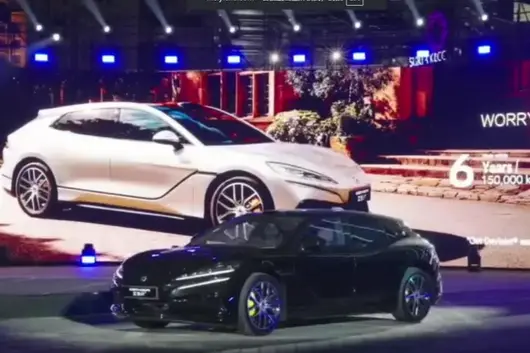
On the evening of September 16, BYD's luxury brand Denza Z9GT was launched in Thailand, priced at 2,999,900 Thai Baht, equivalent to starting at 600,000 RMB, over 200,000 RMB more expensive than the domestic price.

On a drizzly night, witnessing the significant moment when Denza's flagship model officially entered the Thai market. Luxury design + Cutting-edge technology + Superior performance. Top-tier luxury brand.

In the Thai market, it primarily targets imported luxury GT coupes such as the BMW 8 Series, Mercedes-Benz CLS, and Audi A7.
In the European market, the Denza Z9GT starts at 115,000 Euros (≈920,000 RMB), while in Brazil it is priced at 850,000, nearly 3 times the domestic price, directly targeting the Porsche Taycan.
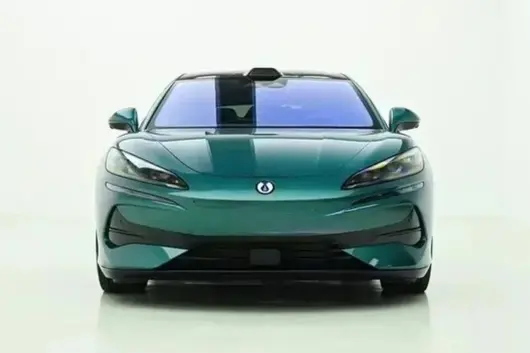

On September 15, Denza officially announced that the Denza Z9GT is scheduled to launch in the Thai market on September 16. The vehicle went on sale domestically in March this year, with 5 configurations available, priced from 269,800 to 369,800 yuan, and has already been sold in markets such as Europe and Malaysia.

Exterior: Retains family design. The front features split narrow headlight clusters, and the front bumper has a through-ventilation heat dissipation opening. New car color Fjord Green added; LiDAR moved to the roof, consistent with other family models; additionally added small blue smart driving indicator lights and brand new style 21-inch wheels. Side waistline and curved surface are integrated and coherent, with "Z" shaped decorative lines; rear features an integrated floating spoiler.

Interior: The interior features a Lava Red color scheme. Equipped with original factory colored carbon interior kit, diamond-quilted integrated sports seats, three-spoke sports steering wheel, BOOST paddles, and metal column shifter.

Configuration: Zero-gravity seats for the comfortable passenger seat, spacious rear row, streaming media side mirrors, intelligent warm and cold refrigerator, seat magnetic ecosystem, AR-HUD, etc., are all equipped.
Powertrain: Available in pure electric and plug-in hybrid powertrains. The plug-in hybrid version uses a 63.8kWh battery pack, with pure electric range of 401km and comprehensive range of 1301km; the pure electric version has a range of 1036km. The entire series is equipped with the second-generation Blade Battery and supports fast charging, official claims 5 minutes to charge sufficiently, 9 minutes to fully charge.
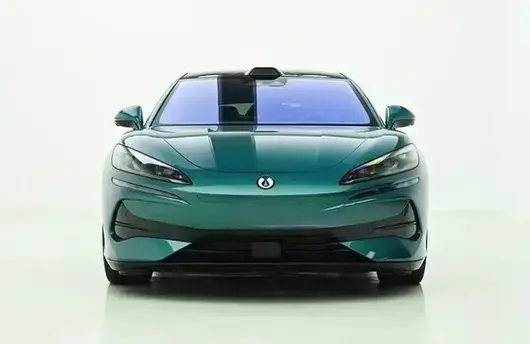

July 15, Denza brand officially launched its flagship pure electric shooting brake model — Denza Z9GT, in the Malaysian market. The new car's local official price is 358,800 Ringgit, equivalent to approximately 595,700 Yuan. This launch holds profound significance; Malaysia becomes the first Asia-Pacific overseas market in Denza Z9GT's layout, marking that Denza has completed a key move in the Southeast Asia high-end new energy segment, formally building a complete overseas product matrix.

Since officially entering the Malaysian market in February 2025, Denza relies on the local core dealer Sime Darby Group to launch flagship stores in Kuala Lumpur's core business district, steadily promoting the overseas market layout. The brand initially launched two main models: the luxury MPV Denza D9 and the high-end PHEV SUV Denza B8. Relying on mature three-electric technology, luxury cabin quality, and reliable product quality, they quickly established themselves in the local high-end new energy niche segment, accumulating a solid market reputation and user base.

As Denza's annual flagship model, Z9GT has already completed its domestic launch in March this year, gathering multiple top core technologies of the brand. The new car is equipped with e3 Intelligent Chassis Architecture, Second-generation Safety Blade Battery, Sky-Eye 5.0 Advanced Intelligent Driving System, and DiSus-A Intelligent Air Body Control System, with hardware configuration maxed out. In terms of range, the new car offers a maximum pure electric range of 1,036 kilometers, completely solving range anxiety for long-distance travel, combining ultimate performance, comfortable experience, and ultra-low energy consumption. It is a benchmark product of Denza's technology accumulation. Launching to the overseas market will further demonstrate China's new energy vehicle core manufacturing strength.
This time Denza Z9GT's entry successfully filled the brand's product gap in the high-performance luxury coupe field, allowing Denza to form a product layout covering three major categories: MPV, SUV, high-performance GT sedan in the Malaysian market, fully covering diverse scenarios of high-end home use, business reception, and performance travel, further improving brand market competitiveness.