首頁Changan Lumin

搜尋歷史
熱門搜尋
經銷商登入 / 註冊

Editor's Note: The tuition fee for transformation has already been paid; Changan calls this move "Highland Pace Adjustment"; whether the market is willing to wait for its acceleration in the second half depends on the pedal pressure of the Q06 entering the race, whether it is really more responsive than the PPT.
In late July, Changan Automobile released two key signals in succession: on one hand, the semi-annual performance forecast disclosed in mid-July — vehicle sales in the first half were 1.1189 million (down 17.44% year-on-year), net profit attributable to the parent company was only 740 million to 970 million yuan (down 57.66%—67.70% year-on-year), and deducting non-recurring net profit was 230 million to 330 million yuan (down 77.65%—84.42% year-on-year);

On the other hand, on July 23, an announcement of 5.267 billion yuan private placement was approved by the Shenzhen Stock Exchange, funds will be invested in new energy models and digital intelligence platforms (4.217 billion yuan) and the global R&D center (1.05 billion yuan).
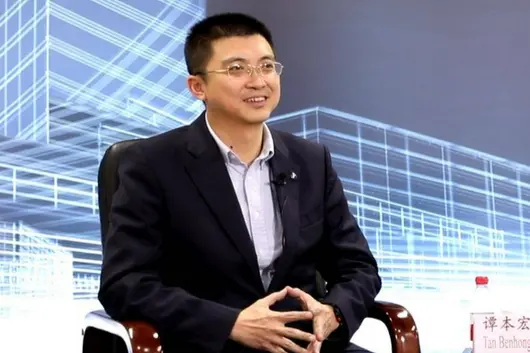
In this contrast of cold and heat, this central state-owned enterprise (SOE) auto company, approaching the 3 million vehicle level in annual sales, is actively removing the "scale halo". At the mid-year media communication meeting, Tan Benhong, deputy secretary of the Party Committee and director of Changan Automobile Group, stated this contrast very frankly: "In the first half of the year, the group proactively cut off low-margin inefficient products, no longer solely pursuing scale increments without profit." He used a marathon metaphor — "Running a marathon at high altitude, the pace for the first 5 kilometers and the last 5 kilometers must be different; blind acceleration will only deplete strength."
"Discarding" 70,000 vehicles: Not that they can't be sold, but don't want to sell them
At least one part of Changan's decline this round was cut by their own hand.
In April this year, the "1445" global strategy was implemented, compressing the product series from 63 models to 36 models. The most eye-catching move was halting production of Lumin — a micro electric car priced below 50,000 yuan, which was the volume leader last year, accounting for an empty gap of about 70,000 units in the first half alone. "The profit margin for low-end micro electric vehicles is extremely narrow, and enterprises no longer solely pursue scale increments without profit." Tan Benhong did not beat around the bush at the communication meeting: "After halting Lumin, the average price and profit margin of the new energy sector actually rose; excluding the reduction from Lumin, Changan's new energy sales actually grew 11.2% year-on-year in the first half."

China Auto Network consulted an insider close to Changan's internal team, who calculated a bill of account: "Lumin's peak monthly sales exceeded 10,000, but the gross profit per vehicle hovered for a long time between a few hundred yuan to a little over a thousand. Including channel rebates and capital occupation, sometimes selling one vehicle results in a loss. Rather than using it to rush the ranking list, it is better to give the production line to new energy like Qiyuan Q05 and Deepal S05 that can run through the gross profit." In his view, cutting Lumin is not admitting defeat, it is "exchanging ineffective scale for effective R&D bandwidth".
But proactively losing weight cannot explain everything. The fuel base is retreating even faster: CS75 fuel version fell more than 37% year-on-year in the first half, Eado relied on terminal price cuts to hold market share, CS55, UNI-T/K and other old SUVs weakened环比。New energy sales were 414,200 vehicles, a year-on-year decline of 8.3%, Qiyuan Q05 (about 72,000) and Deepal S05 (about 79,000) held up the market, Avatr sold only 27,600 vehicles in the first half, nearly halved year-on-year, cumulative losses over four years exceeded 13 billion yuan. Tan Benhong also admitted: "We have not yet fully mastered the operating ability of multiple brands."
External squeezing is equally real. The company attributes the primary cause of profit shrinkage to exchange rate losses + raw material price hikes: Overseas sales in the first half were 454,700 vehicles, up 51.87% year-on-year, overseas accounted for about 33.6% of the total; a slight fluctuation in exchange rates causes profit bleeding; lithium carbonate prices rebounded to 180,000 yuan/ton, storage chip unit prices jumped several times, the industry average profit margin was squeezed to around 3.4%. Securities Auto Analyst Li Qiang believes: "Changan's 'decline' is active + passive twisted together, but the active part accounts for a higher proportion than the market thinks — it chooses to step on the brakes at the 3 million vehicle high point itself, rather than waiting until the bottom of the slope to brake."
Betting on self-developed intelligent driving, refusing to be an "assembly plant"
Where money goes explains the problem better than the money itself.
This private placement was fully covered by cash from the controlling shareholder; even if the stock price was below the issuance price, it still locked for three years, and the market generally interpreted it as "Central SOE major shareholder backing confidence". The fundraising does not expand capacity, only invests in R&D: 4.217 billion yuan into new energy models and digital intelligence platforms, 1.05 billion yuan into the global R&D center. Corresponding to Changan's past five years of intelligent accumulation input exceeding 10 billion, team exceeding 7,500 people, 2026 single computing center smashing about 3 billion yuan rhythm.
Intelligent driving is the core landing point of this money. Tan Benhong threw a sharp judgment at the communication meeting: "If automakers give up intelligent driving self-research and only rely on external supply, essentially they are only retaining an assembly factory with a car chassis, without core technology barriers." He calls himself a "heavy intelligent driving user", driving Avatr 90% scenarios with intelligent driving, but emphasized Changan does not choose an aggressive route, "Focus core energy on raising the safety ceiling and polishing the experience".

The landing carrier is the "Tianshu Pilot" system — one-step end-to-end + multimodal large model, scheduled to go into mass production in Qiyuan Q06 this September. Executive Vice President Yang Dayong defined Q06 as the flagship of "Qiyuan fighting for intelligent driving in the second half of the year": "Tianshu Pilot Ultra is not piling on functions, but realizing Changan's digital intelligence promise to mainstream family users." And the "one brain, multiple bodies" in Tan Benhong's mouth is using the intelligent driving large model as the "brain", to radiate to robots, low-altitude travel and other "bodies", Changan Tianshu Intelligent Robot subsidiary is already on the table.
Forcing this logic to ask a new power intelligent driving director, he replied restrainedly: "If 7,500 people are intelligent driving + cockpit + tri-electric packed, single track concentration is not as good as Huawei Car BU (7,000—8,000 people full-time intelligent driving), XPeng (about 3,000 people intelligent driving team + 10 billion R&D). Changan's advantage is the whole vehicle sales base and central SOE financing channel, the disadvantage is C-end users have not yet established mindshare like 'XNGP' 'ADS' for 'Tianshu'. Whether Q06 can fight, depends on national availability and takeover rate, not the press conference PPT."
Organization side is also consolidating: Deepal and Avatr mid-to-back coordination, goal 1.5 million vehicle level mid-to-high-end cluster, cost reduction 20%—30%; four vice presidents focus on overseas, Thailand base has already scaled up production, Tan Benhong put a word "Future domestic and overseas 50/50 split". These actions short-term save no profit, but past "many children good fight" scattered shipping towards "zone complement" gather.
Changan's dual decline in volume and profit in the first half of 2026 is not a collapse narrative, but a central SOE at the 3 million vehicle level in "fuel retreat faster than new energy handover, low-end scale yielding to gross margin quality, intelligent driving heavy investment not yet at realization period" three cracks opened at the same time's active slow driving.

Tan Benhong cut off the 70,000 units of Lumin, exchanging for the bottom line of not using ineffective scale to dress up the financial statements; 5.267 billion private placement passed, exchanging for Tianshu intelligent driving and digital intelligence platform to run for 18 months of ammunition.
The three variables really to watch in the second half are very specific — Qiyuan Q06 Tianshu Pilot real takeover performance after mass production, whether Deepal/Qiyuan/Avatr three-brand internal consumption really reduced, whether overseas 450,000 vehicle sales base can offset the exchange rate backlash.
The tuition fee for transformation has already been paid, Changan calls this move "Highland Pace Adjustment"; whether the market is willing to wait for its acceleration in the second half depends on the pedal pressure of the Q06 entering the race, whether it is really more responsive than the PPT.


In the first half of 2026, it's not just automotive stocks that kept falling. Data from the China Passenger Car Association shows that cumulative retail sales of passenger cars declined over 20% year-on-year, and industry profit margins have dropped to a historic low of 3.4%. The new energy vehicle penetration rate surged from 39% at the beginning of the year to 63% in June. Every number needs digesting, but there isn't much time left for participants.
Against this background, Changan Automobile released its semi-annual report: overseas sales reached 454,700 units, a 51.87% year-on-year increase; but net profit attributable to shareholders is expected to decline by 57% to 67% year-on-year. 7 July 16, Tan Benhong, Deputy Secretary of the Party Committee and Director of China Changan Automobile Group, used an analogy that ran through the whole session to respond to all doubts at the mid-year media communication meeting.
"The strategy for pacing in the first 5 kilometers versus the last 5 kilometers must be completely different. At this stage, Changan is in a critical cycle of the second phase, gathering strength and adjusting structure." In his words, Changan is in a critical period of fighting a marathon.
Cutting 70,000 Units of Sales, What is Changan Swapping For?
When an automaker with 3 million annual sales chooses to actively discontinue a product with about 200,000 annual sales, what is it thinking?
In the first half of 2026, Changan decisively cut off the micro EV Lumin priced below 50,000 yuan. This single decision directly resulted in a sales gap of about 70,000 units. But this was not all.
In the "1445" global strategy released in April, Changan streamlined its product line from 63 models down to 36 models, a compression of 43%, while clearly aiming to build "one global blockbuster with annual sales of 500,000 units, and five with 300,000 units annually."

This courage to do subtraction is rare in the current Chinese automotive market. Many brands practice crazy product line expansion, stacking sales volume with SKU quantity, while Changan chose to operate in the opposite direction.A noteworthy detail is that, excluding the reduction impact of Lumin, Changan's new energy vehicle sales actually grew by 11.2% year-on-year in the first half of the year.
Changan Qiyuan's new Q05 cumulative deliveries broke 80,000 units in the first half of the year, with 21,137 vehicles delivered in June alone, winning the compact pure electric SUV sales champion for 3 consecutive months; Deepal S05 global cumulative sales broke 240,000 units, up 78.86% year-on-year. These numbers indicate that Changan's new energy business is actively choosing "what to sell".
In addition, Changan has established an internal "operational co-investment" mechanism. If a product does not make money, even if it sells enough volume, the people who invested in the project must bear the loss.

In the frenzied expansion of China's automotive industry over the past three years, "raising more children for better fighting" was almost the consensus among all players.
Now Changan is the first to call a halt, which is not only due to the SOE gene of "quality first, stability first", but also a clear judgment on the competition logic of the second half of the industry.When the industry profit margin has been compressed to the limit of 3.4%, the game of exchanging losses for scale will eventually see someone exit first. Tan Benhong obviously does not want that person to be Changan.
Start the "Second Half", Changan Digs Deep into Three Moats
If "doing subtraction" is Changan's move on the defensive end, then on the offensive end, Changan's three moats are also very clear: technical self-research, globalization, and refined operations, none of which can be missing.
Among them, the most unexpected is Changan's firm attitude towards autonomous driving self-research. There are plenty of mature autonomous driving supplier solutions available on the market. External procurement and integration is the lowest cost and fastest path, but Tan Benhong gave a judgment that left almost no room: "If automakers abandon autonomous driving self-research and rely solely on external supply, essentially they are just retaining assembly factories with car shells, without core technology barriers."

Currently, Changan's intelligent R&D team has exceeded 7,500 people, with cumulative investment exceeding 10 billion yuan in the past five years. Its self-developed "Tian Shu Pilot" system was officially unveiled at the Chongqing Auto Show in June and will be mass-produced on Changan Qiyuan Q06 in September.
Tan Benhong calls himself a "heavy autonomous driving user". When driving Avatr daily, autonomous driving is enabled in 90% of scenarios. His core positioning for his own products is safety rather than aggression: "Not following the aggressive involution route, focusing core energy on raising the safety ceiling and polishing the user experience."
This choice may not bring too much value at the market level in the short term, but Tan Benhong's ambition clearly extends beyond automobiles himself. He revealed that Changan is extending AI capabilities to more intelligent terminal fields such as intelligent robots: "In the next one to two years, everyone will see Changan's new products and landed experiences in the fields of artificial intelligence and intelligent robots."
Globalization is then the most eye-catching growth pole of Changan at present.In the first half of the year, overseas sales accounted for about 33.6% of total deliveries, equivalent to one out of every three cars sold went overseas. Four deputy general managers of the group are leading overseas business lines at the same time, and the Thailand base has achieved large-scale production.
Tan Benhong made it clear: "In the future, achieving a 50/50 ratio of domestic and overseas market sales." For Changan, it has already achieved full-chain overseas expansion covering product planning, regulation adaptation, supply chain procurement, and local operations.
When the domestic market falls into a zero-sum game, the incremental space overseas is almost an "oxygen tank" for every Chinese automaker, and Changan is clearly already ahead.

As for the strategic integration of Avatr and Deepal, Tan Benhong gave a framework of "Three Unchanged, Three Shared": the front-end brand and channel remain independent, while mid-to-back-end technology, supply chain, and ecosystem resources are fully shared. The synergy in platform architecture and supply chain procurement between the two is expected to bring a cost reduction effect of 20% to 30%.
This multi-brand operation model of "front-end in full bloom, back-end intensive and efficient" is also an embodiment of the scale management capability unique to Changan as a large group. In the future, what Changan needs to do is further bring it to the extreme.
Written at the end:
At this media communication meeting, Tan Benhong said a sentence worth thinking about: "In favorable industry conditions, enterprises still harbor hidden risks; it is easier to see their own shortcomings during industry stress periods."
This sentence can almost be considered the footnote to all of Changan's current strategic actions. Cutting products, adjusting structure, investing long-term, controlling rhythm, these decisions are hard to "prove correct" in a semi-annual report, and may even be interpreted as "stalled speed".
But if the perspective is extended to three or even five years, an enterprise choosing not to follow the herd when the industry is at its craziest, choosing not to lie flat when profits are under pressure, and choosing to adjust pacing when everyone is sprinting, this strategic stability can be seen as a scarce capability.
Of course, all strategic narratives must eventually accept the test of market results.In the second half of the year, mass production of the Tian Shu Pilot autonomous driving system, centralized launch of multiple new products, and continuous increase in overseas business volume, whether these can be converted into real market data is the key evidence for whether Changan's "marathon pacing theory" can hold water.
Tan Benhong also admitted himself: "All strategic adjustments and resource tilt will eventually fall to business performance and market results, this is the assessment goal we always do not change."
Although marathons are never won by sprinting, the audience's patience is always limited. Changan needs to prove in the following race that it not only runs steadily but also runs far.