首頁Car Manufacturing

搜尋歷史
熱門搜尋
經銷商登入 / 註冊

Nowadays in the pure EV market, "crash-course" has almost become an industry tacit rule.
Creating a brand new model in 18 months, facelift or shell replacement counts as a new generation. Durability road tests halved, extreme validation scaled back, many problems are left for slow patches via OTA after launch, and the first batch of owners actually serve as free testers. More ironically, many of these models dare to claim the title of "global car" right after being released domestically, yet haven't even finished basic overseas regulatory certification. It is just exporting a few prototype cars to put on a show.
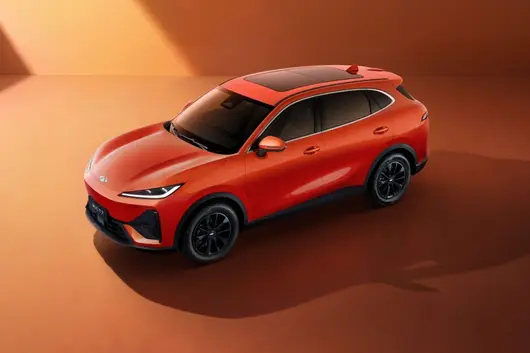
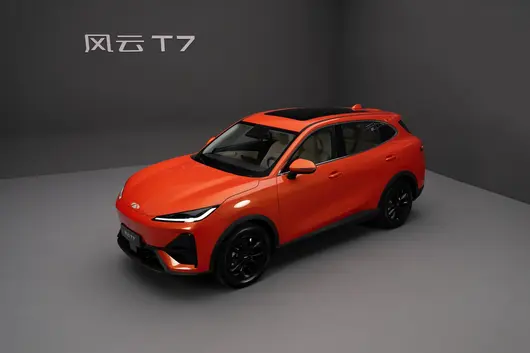
The Chery Fengyun T7 officially launched on August 26 chose a completely opposite path: start projects based on the strictest global standards first, run through extreme road conditions on all five continents, undergo real market validation in overseas markets, then return to the domestic market for launch.

The new car was released in 3 versions. All models come standard with a 65.05kWh Rhino battery. CLTC pure EV range is 600km, actual test reaches 681.6km, achieving the industry's rare "reverse false marking". Official guide price 97,900 - 118,900 RMB. Early trade-in price starting at 94,900 RMB. It does not play the industry's common "range discrimination" tactic -- the entry model does not reduce battery capacity. 30%-80% fast charge in 20 minutes, dual-source wide temperature range heat pump air conditioning, and other core configurations are also standard across the whole series, without tiered scaling back.
Calling it an "Original Global Car" stems from the fact that it anchors global standards from the start of R&D, rather than domestic models modified later for export.
3-year R&D cycle, nearly an outlier in the "18-month new car" industry rhythm. It directly targets the 2026 Edition E-NCAP 5-star safety standard for development, adapting to global regulations two years in advance. Covers 5000+ global user research, 15 typical countries' deep visits, placing regional road conditions, driving habits, and environmental tolerance early into product definition.
The verification process cost heavily too: investing in 81 exclusive durability test cars for simultaneous road testing, cumulatively completing 1.45 million km durability verification. It crushed over Brazilian high speed bumps, Mexican cobblestone roads, German highway high-curvature curves, South African unpaved muddy roads, covering 95% of global road types. Tolerating extreme environments from -40°C Nordic extreme cold to 55°C Middle East scorching sun.
Its sibling model Lepas L6 has already landed in South Africa and Thailand, and will subsequently enter markets like the EU, Australia & New Zealand, UK, etc. It is truly a model that passes the global gauntlet before selling in the domestic market.

The core product logic of Fengyun T7 is the word "redundancy" -- not satisfied with just meeting the standard, but leaving sufficient margin. This is exactly the cost that crash-course car making is most willing to cut.
• Collision safety redundancy: 80% high strength steel creates nine cross five longitudinal cage body. Unique dual frame subframe + Pack anti-collision beam in its class. Paired with 9 airbags (including 48L far-end airbag). Use structural margin to build a safe survival space.
• Battery safety redundancy: 6D Lock Armor 31-layer protection structure. IP68 waterproof capability reaches 96 times the national standard. Side anti-crush strength is 2 times the national standard. Passed 1008-hour salt spray test, ultra-national standard duration fire test. Comprehensively avoiding thermal runaway risks.
• Range equality redundancy: All models share the same large-capacity battery. No high/low trim range differentiation. Entry level gets long range immediately.
• Global energy saving redundancy: All models standard with dual-source heat pump + High Voltage PTC. Range increased by 15%-20% in -10°C environment. Winter and summer range performance is stable, no plummeting.

• Handling performance redundancy: 50.8:49.2 Golden weight distribution ratio. Paired with four-wheel independent suspension. Balances daily smoothness and extreme handling margin.
• Whole vehicle verification redundancy: Million-kilometer level global road testing placed upfront. Solves abnormal sounds, environmental adaptation, reliability issues all closed before launch. No need for users to step in pitfalls.
This launch event invited Kevin Wu to serve as the "Happiness Experience Officer". The most talked about throughout the event was not parameters, but "steady happiness".
In real vehicle usage scenarios, this sense of security is quite concrete: 600km range covers one week of urban commuting, no need to calculate battery every day. 300+ full-scenario automated parking, no need to repeatedly move the car in old residential narrow parking spots. Folding down the rear seats becomes a 1955x1310mm pure flat large bed, weekend camping, long-distance rest can all lie flat. Solid chassis tuning, going over speed bumps, driving on bad roads are all stable and not shaking. Old people and children sit comfortably. Multiple safety redundancy covers the bottom, encountering sudden situations gives peace of mind.
These qualities polished through long-term verification are exactly what crash-course cars cannot stack up with paper specs.

Currently, the intense competition of the 100,000 RMB level pure EV has long rolled to the ceiling on the surface: comparing screen sizes, comparing airbag counts, comparing range numbers. Yet few people are willing to put effort in invisible places -- such as chassis durability, safety redundancy amount, full environment adaptability.
Fengyun T7's approach is very simple: bring the strict standards of making the global market down to the 100,000 RMB price point. Turn the "global quality" others use for PR into a sense of security users can touch. It may not be the flashiest car in the same price range, but it is likely one of the options with the most solid foundation.

In the end, what buying a car seeks is never the glamour of the launch event, but the stability in daily commuting where one does not have to worry.
In a track where everyone seeks speed, someone is willing to slow down to make products. For ordinary consumers, this is ultimately a good thing.
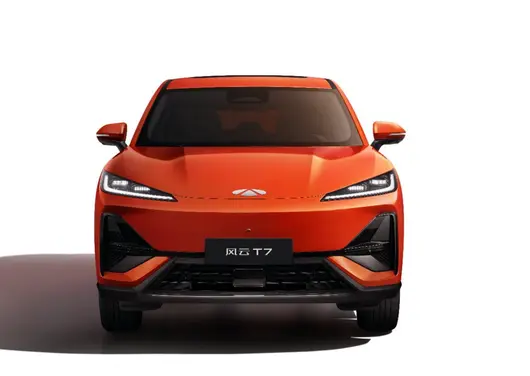

Recent discussions about the launch of Chery Fengyun T7 mostly revolve around two terms: price and range.
On August 26, Chery's global quality pure electric SUV officially launched, 3 versions, MSRP 97,900 - 118,900 RMB, early trade-in price 94,900 - 115,900 RMB; all trims CLTC range 600 km, all trims standard heat pump AC, 9 airbags, 8775 cockpit-driving integrated chip.
On the same day, musician Wu Kequn appeared at the press conference as a "Happiness Experience Officer", discussing "Steady Happiness" with Chery Executive Vice President Li Xueyong, launching the "Happiness Co-creation Plan" on-site.
From pre-heat to launch, the Fengyun T7 story flowed smoothly: global quality, six major redundancies, delivery upon launch. Everything seems to be heading towards the concept of "stability".
But looking at this car within the 100,000 RMB-level pure electric SUV category, the story might not be that simple.

An "Unconventional" Car
In today's industry, "Only speed prevails" is almost the default rule. Rapid project initiation, rapid launch, rapid iteration. Those who are slow will be eliminated.
Fengyun T7 focuses on the word "Slow".
Not slow by half a beat, but it truly invested time upfront: 3-year R&D cycle, relying on the global 1+7+N R&D system; developed according to the 2026 European E-NCAP five-star standard; whole vehicle durability validation 1.45 million km, real vehicles tested in 21 countries, 100+ extreme road conditions; invested 81 exclusive durability cars for simultaneous road testing; homologous overseas version Lepas L6 launched first in South Africa and Thailand, entering EU in September, entering Australia & New Zealand in October.

1.45 Million Km Durability Validation · 21-Country Real Vehicle Testing · 80% High-Strength Steel · All Trims 600km Range · 9 Airbags.
In other words, it is not "Made well in China then tested elsewhere", but refined from the start according to global regulations and global road conditions, accepting overseas market tests first, then selling back in China.

This strategy is indeed somewhat "Against the Tide" in today's Chinese car market. When others are competing on faster iteration cycles, Chery chose to complete the validation mileage first. Logically, it makes no sense, but it is betting on another matter: users will ultimately care about "Reliability", not just "How fast it comes".
Dislocation Competition in the Red Ocean
The 100,000 RMB-level pure electric SUV is the biggest baseline of the new energy car market, and also the fiercest battleground of price wars. This sub-segment has long had several "Industry Conventions": entry-level range shrinkage, safety configurations quietly cut, advanced intelligence requires upgrading to higher trims, chassis and battery validation cycles compressed. When consumers vote with their feet, they often have to choose between two, either accept shrinkage or pay extra.
Fengyun T7's reverse operation treats its "Six Major Redundancies" as basic items: Range Parity: All three versions are 600km, no lower trim shrinkage; Media tests achieved 681.6km, reverse false rating; 30% to 80% charging takes only 20 minutes.
Safety Redundancy: Car body 80% high-strength steel, 9 airbags (including 48L far-side airbags), battery pack 31-layer protection, waterproof IP68, side squeeze resistance reaches twice the national standard.
Validation Redundancy: 21 countries, 1.45 million km pre-run complete, closing issues like noise, faults, and environmental adaptability in the R&D stage.

Essentially, it wants to use "Global Standards" to fight "Domestic Cost-Performance", a dislocation competition - others compete on price, it competes on fundamentals.
But problems arise with it: Will domestic users pay for the three words "Global Car"?
From a product logic perspective, 21-country validation, E-NCAP five-star, are real existing barriers, especially in safety and durability dimensions, cannot be fabricated by PPT. But falling into real car buying scenarios, ordinary people's top three decisions are usually: Is price low enough, is range real, is space big, brand is secondary.

"Global Quality" is a hidden plus point, hard to perceive, harder to spread. It's not as easy to understand as "20,000 cheaper", someone needs to translate it into plain language for users. And Chery's consumer-side new energy brand mindshare still lags behind the top, the "Fengyun" series needs to build the perception "Global Car = Reliable", it still needs time and luck.
The Two Faces of Slow Work
"Slow work makes good cars", placed in an intense competition context, is a clear-headed move, and also an adventure. Its opportunity is clear: When the industry is all fighting for speed, T7 chose to downgrade high-end configurations to the 100,000 RMB level, 84% space utilization rate, 1955x1310mm pure flat bed, 450L expandable to 1550L trunk, 9-layer cloud-feel seats, Falcon 500 assisted driving (300+ all-scenario parking, highway pilot). These are hard metrics users can perceive by sitting in and driving around, easier to convert into orders than "21-country validation".

Real and perceivable hard metrics often become sales faster than "Hidden Barriers". Its risks are equally real: Slow means a window. The 100,000 RMB-level price war is intensifying, waiting for the "Global Car" narrative to be understood by the market, opponents may have already fought back with price cuts. Traffic windows do not wait, and "Slow Work" fears most is missing that hottest wind.

A more realistic judgment is: Whether Fengyun T7 succeeds is not about how loud the two words "Global" sound, but whether it can translate this pitch into a few sentences ordinary people can understand: Range not fake, space sufficient, safety in place, price real.

Where is the Road
The launch of Fengyun T7 reflects the differentiation happening in the Chinese car market in a certain way.
Some people continue to fight "Only speed prevails", grabbing mindshare with speed and volume; another group starts to look back, make up the "Quality" lesson - run validation enough, give configurations, press price to fight. Chery chose the latter path.
The era of high growth is ending. When "Only Fast" no longer equals "Can Win", the next keywords might become "Reliable". A pure electric SUV just over 90,000 RMB, verified in 21 countries, all trims 600km, fits right on the point of "Reliable".
But whether the car is good or not is ultimately user voting. Whether "Steady Happiness" in Wu Kequn's mouth can turn into real orders, it depends on whether Chery can tell "Global Quality" into ordinary people's bills.
The story of Fengyun T7 has just begun. And within the framework of "Long-termism", being a little slower might not be wrong.
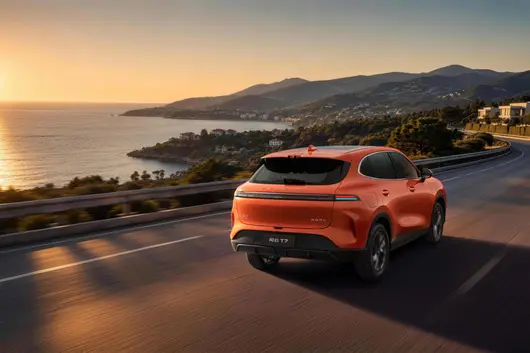

In the current hyper-competitive new energy vehicle landscape, many brands pursue rapid updates, compressing R&D and validation cycles, making 'quick-made car manufacturing' a hot industry topic. On August 12, the global premium pure electric SUV Fengyun T7 officially launched pre-sales, delivering a different car-making attitude with the phrase 'A global car cannot be rushed at all'. After 2 years of planning and 3 years of meticulous refinement, after surviving rigorous trials in multiple global regions, it returns to the domestic market with pre-sale prices of 109,900‑129,900 Yuan, crafting a pure electric SUV for the global market and families with slow craftsmanship.

The phrase 'A global car cannot be rushed at all' does not refer to limitations in R&D efficiency, but rather a firm rejection of shortcuts in key areas such as safety, environmental adaptation, and user experience. From the project planning phase, Fengyun T7 targeted the global market, relying on Chery's 1+7+N global R&D system, assembling over 100 designers for collaborative development, and gathering over 5,000 domestic and overseas users to participate in co-creation. The sibling model Lepas L6 debuted at the Milan Design Week to receive overseas praise. The product incorporates regulations, standards, and local usage habits of different countries into the development phase upfront, rather than simply adapting modifications after the domestic version is finalized.

To adapt to complex road conditions and extreme climates around the world, Fengyun T7 invested heavily in the validation phase. The project deployed 963 test vehicles, completing 1.45 million kilometers of durability road tests, traveling to various parts of the world, enduring extreme scenarios such as Nordic extreme cold, Southeast Asian high humidity and heavy rain, Middle East high temperature exposure, Brazilian bumpy roads, and coastal high salinity and alkalinity environments. It can withstand extreme temperatures from -40℃ to 55℃ and is adaptable to 95% of global road types. 500mm off-road wading performance, dual-source heat pump heating system, anti-aging body paint, dual protection for the battery and chassis. Every hardcore capability comes from countless field testing and polishing sessions. The model has already been launched in Thailand and South Africa. Markets such as Indonesia, the EU, and Australia/New Zealand will follow successively. It first undergoes real-world testing in overseas markets before returning to the domestic market for Chinese families.

The entire vehicle is built according to the 2026 version of the E-NCAP 5-star safety standard, building a strong safety defense line for family travel. Nine horizontal and five longitudinal cage-type body, 80% high-strength steel matched with 18.84% hot-formed steel, combined with a unique shotgun structure in the class and dual-frame subframes. 9 airbags include far-side protection airbags; The Rhinoceros battery features 6D 'chainmail' multi-layer protection. The IP68 waterproof level is 96 times the national standard, layer by layer resisting impact, piercing, and water ingress risks.

In terms of actual driving experience, Fengyun T7 achieves range parity across the entire series. The entire series is standard-equipped with a 65.05kWh Rhinoceros battery. CLTC range reaches 600km, actual test range exceeds 667km, and 30%-80% fast charging can be completed in 20 minutes. Equipped with a 4nm process 8775 Cockpit-Driving Integrated Chip, response time is as low as 80ms; Falcon 500 Intelligent Driving System supports 300+ all-scenario automatic parking. 2700mm wheelbase achieves 84% interior space utilization rate. The rear floor is completely flat. Folded seats can expand into a 1955mm flat large bed, meeting various needs such as commuting, camping, and family outings. The chassis is tuned by the former Maserati chassis expert team, with a 50.8:49.2 golden axle load ratio, balancing ride comfort and driving stability.

Purchase protection is equally guaranteed, featuring two lifetime benefits combined with two safety net benefits. The first non-commercial owner enjoys lifetime warranty for the whole vehicle including the three-electric system, and can also purchase a lifetime basic maintenance package at a low price; Power battery thermal runaway compensation for a new car, and intelligent driving scenario accident safety net up to 5 million, eliminating users' worries.

Automobiles are far from fast-moving consumer goods; iteration speed cannot supersede quality. This 'slowness' of Fengyun T7 is a long-term commitment to not simplifying R&D processes, not reducing validation standards, and sincerely listening to global user demands. With a pre-sale price starting from 109,900 Yuan, ordinary families can own a pure electric SUV that has passed rigorous global tests. As the industry begins to reflect on the hazards of quick-made cars, Fengyun T7 proves with actual products: Good cars are worth the patience, and quality admits no compromise.
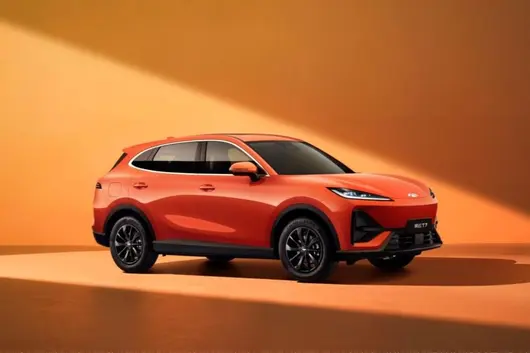

On August 12, Chery Fengyun T7 officially started pre-sale, 3 models, priced from 109,900 to 129,900 Yuan. The theme of the press conference was quite interesting—Slow craftsmanship builds good cars, thank you for waiting.

In the current rhythm where releasing a new car every 12 months has almost become the industry standard, the word "slow" feels a bit out of place. But taking a closer look, this car has been polished for nearly 5 years, starting from preliminary research in 2022. In today's era where quick-built cars are frequent, this slowness has become a scarce value proposition.
Go overseas first, then return home, this car allows foreign users to verify the product first
The most special thing about Fengyun T7 is its launch path—going around the world first before returning to the domestic market. Its homologue model Lepas L6 has already started pre-sale in South Africa and is launching in Thailand, next it will enter markets such as the EU, Australia & New Zealand, UK, etc. This is not a car built domestically first and then trying to sell abroad, but a product developed according to global standards from the beginning, verified globally, and returning to the domestic market with real feedback from foreign markets.
Chery has ranked first in passenger car exports among Chinese brands for 23 consecutive years, with global users exceeding 20 million. This global car building system adapts to regulations, road conditions, and user needs in different global regions from the beginning of R&D. Behind Fengyun T7 are 8 global R&D design centers collaborating, over 5,000 global users participating in research, and 15 typical countries for in-depth visits.

The verification process also explains the issue—81 dedicated durability vehicles undergoing simultaneous road testing, the whole vehicle cumulative test mileage exceeds 6 million km, durability special actual test is 1.45 million km. Covering the EU, Australia & New Zealand, Middle East, South Africa, Russia, Mexico, Brazil and other 100+ extreme road environments. The global environment adaptation interval covers minus 40°C to 55°C. Simply put, this car is checked by global users first before coming to Chinese consumers.

All series 600km range, breaking the industry "tiered pricing premium"
In the past, the common trick of 100,000-class pure electric SUVs was "entry-level 400+ km, long range added to mid-high trims for extra cost". Fengyun T7 went the opposite way—all series standard equipped with 65.05kWh Rhinoceros Battery, CLTC range all locked at 600 km. Entry models don't cut range, high trims don't add price for range. Official actual test range even reached 667 km. 30% to 80% charging takes only 20 minutes. Battery cycle life over 2,500 times, calculating 20,000 km annually for a family car, the whole vehicle needs no battery replacement for 15 years.
This "Range Equality" approach is indeed rare in the same class.

Safety configuration maxed out, 100,000-class gets 9 airbags
Fengyun T7 is developed according to the 2026 version E-NCAP 5-star safety standard, functional safety reaches ASILD highest level. The body uses 80% high-strength steel, 18.84% hot-formed steel, 9 transverse 5 longitudinal cage body structure. 9 front plus 6 side collision force paths, maximizing the dispersion of collision energy.

Airbags given 9, including 48L dual-chamber remote airbags and rear side airbags. In the same class, this configuration is basically maxed out. Rhinoceros Battery has 31-layer 6D protection, IP68 waterproof reaches 96 times the national standard. Vehicle wading depth reaches 500mm. Behind these data is the investment of 2 years planning and 3 years forward engineering.
8775 Chip on board, intelligence didn't fall behind
In terms of smart cockpit, Fengyun T7 is equipped with a 4nm process Qualcomm SA8775 Cockpit-Integrated Chip, 72 TOPS computing power. 15.6-inch 2.5K HD large screen, supports CarPlay, Huawei HiCar, CarLink wireless connection. Lingxi Smart Cockpit 2.0 integrates Doubao large model.

On the intelligent driving level, Falcon 500 ADAS system is equipped with 22 high-precision sensors—3 mmWave radars, 7 cameras, 12 ultrasonic radars. All series support automatic parking in over 200 scenarios, high trims also have remote parking in, leave vehicle parking, 100m trail reverse and Highway NOA Pilot. In this price segment, the Cockpit-Driving Integrated Chip solution and this sensor configuration, the competitiveness is real.
Space and chassis, home scenarios considered very thoroughly
In terms of dimensions, 4570×1852×1694mm, wheelbase 2700mm. Interior space utilization 84%, rear legroom 911mm. After rear seats fold down, it can form a near 2m x 1.3m flat large bed. Trunk 450L standard, max expandable to 1550L. 38 storage spaces throughout the car. 9-layer cloud-feel seats, front seats standard with heating and ventilation.

The chassis is polished by a team led by front Maserati chassis tuning experts, 50.8:49.2 axle load ratio. Front MacPherson rear multi-link independent suspension. Over 100,000 getting this chassis spec and tuning resources, indeed rare.
Post-purchase worries, manufacturer basically covers it
Pay 1,000 Yuan deposit during pre-sale can enjoy 7 benefits. Two safety net guarantees are worth noting: Power battery thermal runaway damage due to internal reasons, compensate with a new car of the same model; accidents caused by intelligent driving system within one year of purchase, up to 5 million compensation. At the same time, provide lifetime warranty for the whole vehicle (including three-electrics), can also spend 666 Yuan to purchase lifetime basic maintenance package. This policy basically removes all worries about future vehicle usage.
In conclusion
Fengyun T7 has a somewhat different logic—it does not fight for market share by compressing the R&D cycle and skipping verification steps, but uses a longer cycle to solidify the car build, then returns to the domestic market with global market verification results. In this era of frequent quick-built cars, this "slowness" indeed requires a bit of determination.
The price range of 109,900 to 129,900 Yuan, 600 km all-series range, 9 airbag safety configuration, 8775 Chip smart cockpit, independent rear suspension chassis, plus lifetime warranty for the whole vehicle—packaging all this together, in the same price range it is indeed rare. Fengyun T7 is not a car that stuns at a glance, but it is likely a car you feel like "made the right choice" after using it for a few years.


Written By | Du Yongfang
Editor | Huang Dalu
Designer | Zhen Youmei
Featured Image | AI Xiao Xuan
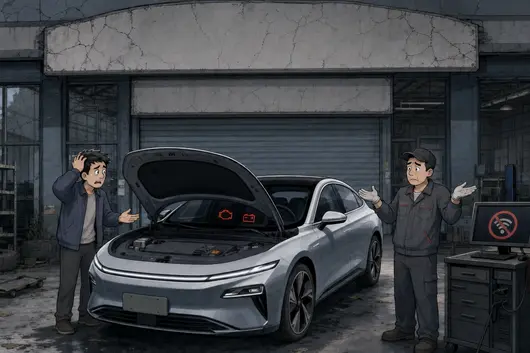
The cars are still driving on the road, but the company that made them collapsed first.
In Neta owner groups, a helpless self-mockery circulates: Now when driving on the road, one fears bumping into others, and fears being bumped into — being hit, you might wait forever for parts; hitting someone, next year you might even struggle to buy insurance.
This dilemma is not an isolated case. In recent years, brands such as WM Motor, Aiways, HiPhi, Jiyue, and Neta have successively fallen into bankruptcy reorganization, halted operations, or contracted after-sales systems. After enterprises exit the market, a large number of vehicles continue to operate, but parts supply, repair authorization, internet car services, and "Three Guarantees" responsibilities may simultaneously be left hanging.
The problem is growing rapidly.
As of the end of 2025, the stock of new energy vehicles in China has reached 43.97 million, whereas at the end of 2014 it was only 120,000.
Over the past decade, new energy vehicles completed a textbook-scale expansion, but the supporting repair service system did not mature synchronously: parts cannot be sourced on time, diagnostic permissions are not granted, technicians with deep repair capabilities for "Three Electrics" are insufficient, and insurance institutions also worry about high payout risks.
Every car sold is a long-term bill for the after-sales system. Now, the first batch of mass-delivered new energy vehicles is approaching their warranty periods, and this bill is starting to mature en masse.
On June 23, 2026, the Ministry of Commerce and eight other departments published the "Notice on Several Measures to Cultivate and Expand the After-Market Consumption of the Automotive Industry," proposing 17 measures around six major areas.
Among them, "optimizing automobile repair and insurance services" was listed separately: whole vehicle enterprises shall not refuse to bear statutory "Three Guarantees" responsibilities on the grounds that consumers choose their own repair enterprises; the policy also proposes guiding whole vehicle and power battery enterprises to open repair technology authorization, encouraging "repair instead of replacement," and exploring "Vehicle-Battery Separation" insurance models.
This is not the first time the national level has prescribed a remedy for new energy vehicle repair.
The new version of the "Provisions on the Liability for Repair, Replacement, and Return of Household Automobile Products" published in 2021 incorporated dedicated parts for new energy vehicles such as power batteries and drive motors into the "Three Guarantees" scope, and clearly stated that operators shall not refuse to bear responsibilities solely on the grounds that consumers have not maintained them at designated repairers.
In 2023, the Ministry of Commerce and eight other departments released the automotive after-market guidance opinion, again proposing to accelerate the construction of repair technology standard systems.
The power battery recycling and utilization management measures implemented from April 2026 also further opened up paths for querying battery-related technical information in the repair and disassembly links.
Rules are constantly being perfected, but why are cars in reality still difficult to repair? More importantly, when a car manufacturer exits the market, who will take over the responsibilities left behind?
Behind the frenzied sales volume, the capacity to bottom out stock vehicles is under test. A simple truth repeatedly emphasized by traditional car manufacturers is reappearing in significance: making a car is not difficult; what is difficult is providing parts, repair, and services continuously over the decades that follow.
For the new energy vehicle industry, true long-termism is reflected not only in product updates and sales growth, but also in whether enterprises can be responsible for every car already sold.

Dilemma of Repair Rights:
The After-Market Locked by Software-Hardware Closed Loops

Source: Consumer Reports
In the fuel vehicle era, an independent repair shop could cover multiple brands relying on repair manuals, general diagnostic equipment, and mature parts supply chains. New energy vehicles changed this logic.
Today, a new energy vehicle is both a mechanical product and a digital terminal composed of power batteries, electronic control systems, sensors, vehicle software, and cloud services. After parts replacement, software matching, fault code clearing, and online authorization are often required.
Lang Xuehong, Deputy Secretary-General of the China Association of Automobile Distributors, said: "If you replace a certain part, even a tire, without the OEM's dedicated diagnostic equipment and corresponding software, you might not be able to clear the fault or complete the matching."
Therefore, "allowing consumers to choose where to get repaired" is only the first step. Whether independent repair enterprises can obtain continuously updated technical data, diagnostic tools, software permissions, and compliant parts truly determines if owners have a choice.
Compared to the fuel vehicle era, new energy vehicle manufacturers control not only parts supply, but also software OTA, underlying communication protocols, fault diagnosis permissions, and cloud account systems. Hardware, software, and data are encapsulated within the same technical closed loop; manufacturers effectively control the entry point for whether a vehicle can be identified, matched, and repaired.
The "data hegemony" referred to in the industry points precisely to this inequality of capability: owners nominally own the vehicles, and independent repair enterprises have operating qualifications, but as long as they cannot obtain necessary data and authorization, both parties cannot fully exercise "repair rights."
This closed model protects the manufacturer's technical security and service quality, but it may also block independent repair shops outside the system, leaving consumers with less bargaining power and bearing higher repair costs after the original factory exits.
Data openness does not equal having no boundaries. Vehicle safety, personal privacy, and network security all require protection. What truly needs to be established is a hierarchical, compliant, and traceable authorization mechanism: which data is necessary to complete repairs, who is qualified to obtain it, how to record the usage process, and within what timeframe manufacturers should provide it. Only by turning these questions into executable rules will "repair choice rights" not remain on paper.
Currently, there are about 20,000 to 30,000 enterprises nationwide with new energy vehicle repair service capabilities, far fewer than traditional fuel vehicle repair enterprises; among them, the proportion of stores capable of conducting "Three Electrics" system deep detection and repair is even lower.
The talent gap is also obvious; many social repair stations can only handle tires, sheet metal painting, and routine maintenance. Once involving battery packs, electronic control systems, or intelligent driving components, they must revert to the authorized system.

Source: Pixabay
The iteration speed of new energy vehicles is far faster than that of fuel vehicles. Different batches of the same car model may have changes in battery cells, modules, sensors, and software versions. Independent repair enterprises not only find it difficult to "anticipate" by stocking up on parts, but must also continuously invest in high-voltage safety equipment, diagnostic systems, and personnel training. For small and medium-sized stores, this is a cost they cannot bear alone.
When the original factory system is still operating normally, these problems can still be solved through 4S stores. Once a car manufacturer collapses, the repair capabilities originally sealed within the enterprise may also disappear.
Owners of abandoned cars first face parts supply cutoff. Key components affecting driving safety are out of stock; from ordering to installation often requires waiting months; helplessly, some owners can only seek dismantled parts or counterfeit parts. Originally promised long-term warranties for power batteries and electric drive systems may also disappear due to the responsible subject losing the ability to perform, ultimately forcing owners to pay tens of thousands of yuan for repairs themselves.
More troublesome than hardware is software. Third-party service providers not receiving fees may lead to internet of vehicles service interruptions; mobile phone keys, remote air conditioning control, and vehicle location functions fail accordingly. Some owners have to purchase data traffic from service providers themselves to maintain basic vehicle connectivity.
Insurance will quickly perceive these risks. Parts scarcity, opaque repair prices, and declining vehicle residual value will all push up the uncertainty of payouts.
In 2025, China's insurance industry underwrote 43.58 million new energy vehicles, with insurance premium income of 190 billion yuan, while the underwriting end still lost 5.6 billion yuan. Faced with brands that have already lost original factory after-sales support, insurance institutions are naturally more cautious.
In January 2025, the National Financial Regulatory Administration and three other departments issued new energy vehicle insurance guidance opinions. The "Good Car Insurance" platform was subsequently launched, providing underwriting channels for new energy vehicles that find it difficult to insure through conventional channels. The platform requires relevant insurance companies to refuse to insure vehicles meeting conditions, alleviating the dilemma of some owners "having no insurance to buy."
But getting a vehicle an insurance policy cannot solve where parts come from or who repairs it after an accident. Insurance difficulty is the phenomenon; the rupture of after-sales capability is the root cause.

Post-Bankruptcy Vacuum:
Car Manufacturers Exit, Responsibilities Cannot Be Cleared
The after-sales for abandoned cars currently rely on a self-formed system to maintain itself.
Some original factory dealers and technical personnel have not completely disappeared after the car manufacturer halted operations; instead, they have transformed into social repair stations, continuing to undertake original brand vehicles. They are familiar with the car models and master certain parts channels and repair experience, partially filling the void left by the original factory's exit.
Owners are also building their own "folk repair networks." They exchange parts information in chat groups, look for original factory technicians still willing to take orders, and even save repair manuals that the manufacturer stopped updating, then instruct local repair shops to disassemble gradually.
However, whether this self-rescue system can operate largely depends on brand stock. The larger the stock, the easier it is for dismantled parts to circulate, and the more likely it is to sustain a group of technicians specializing in repairing that brand.
Neta's cumulative sales are relatively high, and some parts and repair resources can still be found in the market. After Jiyue halted operations, shareholders Geely and Baidu jointly proposed follow-up arrangements, and Geely also opened some after-sales outlets to undertake maintenance.

In 2023, Neta Automotive Thailand factory held the Neta V-II exit ceremony
Source: Autodang
Even more difficult are those brands with small stock sizes and no shareholders or supply chain entities willing to take over after-sales. Vehicles are scattered across the country, dismantled parts cannot form a stable market, original factory technical personnel are limited in number, and social repair enterprises lack the commercial motivation to invest in training and equipment. These owners are most easily forgotten by the entire service system.
According to current automobile sales management regulations, suppliers shall guarantee parts supply within a certain period after a model is discontinued or sales stop. But when enterprise cash flow dries up or bankruptcy proceedings begin, how paper obligations continue to be fulfilled remains a realistic difficulty.
Parts are just one item. Intelligent cars also bring new problems not present in the fuel vehicle era: who will migrate vehicle accounts and cloud data? Who will maintain mobile applications? Who will open diagnostic permissions? Can features already sold to consumers disappear because the server stops running?
The WM Motor bankruptcy reorganization case added a key judicial puzzle piece to this institutional vacuum.
In this case, to maintain internet car services and necessary after-sales operations, relevant enterprises and investors advanced service fees. The reorganization plan recognized these fees as common benefit debt, to be paid off first in bankruptcy proceedings. Later, the reorganization team also promoted vehicle data migration, key parts supply, and software updates.

In 2018, WM Motor's booth at the Shenzhen Auto Show
Source: Internet
The important significance of this case is not that all repair or "Three Guarantees" claims filed by ordinary owners will be prioritized for compensation, but that the Supreme People's Court, in the form of a reference case, clarified: maintaining internet car and after-sales operations is not just an ancillary affair after enterprise bankruptcy, but also relates to the basic usage rights of a large number of owners, vehicle safety, enterprise brand value, and reorganization possibilities. Necessary expenditures incurred for this can be included as common benefit debt and obtain priority compensation in bankruptcy proceedings under qualified conditions.
This changed the position of after-sales services in bankruptcy proceedings. In the past, it was easily regarded as ordinary costs that can be compressed after enterprises stop operations; in the WM Motor case, it was regarded as necessary expenditures to preserve enterprise operational value and protect the interests of all relevant subjects.
For "abandoned cars" still driving on the road, this is a realistic path to stay alive; for future car manufacturer reorganization cases that may appear, it is also a institutional sample that administrators, investors, and courts can refer to when arranging after-sales guarantees.
But judicial cases cannot replace a universally applicable exit system. Not every car manufacturer in difficulty can find investors, nor is every bankruptcy reorganization guaranteed to retain enough funds for the after-sales system.
Current regulations more stipulate what responsibilities an enterprise should bear during normal operation, but rarely answer how responsibilities and data should be transferred after an enterprise loses the ability to perform. If repair data, software permissions, and parts drawings are still sealed within the enterprise until bankruptcy, even if administrators are willing to maintain after-sales, they may have nowhere to start.
New energy vehicles need not only a production access system, but also an executable exit aftercare system.

How to Insure the Pricey Battery:
Capabilities and Boundaries of Financial Instruments
The new policy proposed exploring "Vehicle-Battery Separation" insurance models because power batteries have become one of the biggest variables in new energy vehicle insurance payouts.
Power batteries have high value, and detection and repair require high specialization. Once an accident occurs, insurance institutions not only need to judge whether the battery is damaged but also know whether the battery can be repaired and how much the repair will cost. Without unified inspection standards and real repair data, replacing the entire battery pack often becomes the simplest and most expensive option.
"Vehicle-Battery Separation" can have two layers of meaning. One is property rights separation, meaning the body belongs to the owner and the battery belongs to the battery asset company; the other is determining premiums and rates separately for the vehicle and battery in the policy even when property rights are not separated.
Nio's BaaS mode is a more typical sample of the former mode. Users purchase vehicles without batteries; batteries are held by the asset company and used, detected, and repaired through the battery swap system. This arrangement helps centralize battery risk management and makes it easier to split insurance responsibilities.

Source: Nio Automotive
However, for the vast majority of models sold as whole vehicles with batteries, "pricing separation" in the short term is still more realistic. For insurance institutions to price batteries separately, they must first obtain trustworthy battery health status, accident data, and repair costs.
This brings us back to the same origin: whether car manufacturers and battery companies are willing to open data, and whether the independent repair system has the ability to detect and repair.
Some car manufacturers are also trying to open up vehicle data, parts supply, and repair services through insurance business. Car manufacturers have more complete data on driving behavior, parts prices, and repair costs; theoretically, this can improve pricing efficiency and reduce sales and claims costs.
But this model is also difficult to replicate universally. Insurance license thresholds are high, and car manufacturers themselves must bear capital occupation and business cycle risks. More importantly, if a car manufacturer is already in operational crisis, sealing insurance, repair, and software services entirely within the enterprise might instead cause owners to suffer more thorough service interruptions when the enterprise exits.
Whether "taking the battery out" or including insurance into the car manufacturer's service system, all can only solve how risks are identified and priced. Insurance can compensate for losses but cannot produce discontinued parts out of thin air, nor can it replace a repair system that has lost authorization and data.

After-Market Filling the Gap:
A Race with the Vehicle's Insurance Expiration Speed

Xpeng Automotive highly automated factory in Zhaoqing, China
Source: THE NEW YORK TIMES
The new energy vehicle after-market has begun to fill the gap.
Top-chain repair enterprises are establishing authorized cooperation with whole vehicle manufacturers and power battery companies to obtain parts, technical data, and in-warranty repair qualifications; power battery manufacturers, relying on technology and supply chain advantages, are extending into after-sales, building battery detection and repair networks. Some professional stores transformed from original factory technicians are also beginning to concentrate on digging deep into a few brands.
These explorations will gradually improve the capacity of the social repair system, but the market can only enter places with commercial value. Brands with large stock sizes and cities with dense demand are more likely to obtain services; brands with small stock sizes and scattered vehicles, still abandoned brands, may still have no one willing to take over.
True bottom-out mechanisms should prepare for the worst during normal enterprise operations.
For example, during model launch and continuous sales periods, establish exit plans covering parts, repair technology, software permissions, and internet car services; for technical data relating to vehicle safety and basic use, independent institutions can be explored to hold them in trust, to be legally activated when the car manufacturer stops operations or loses the ability to perform; the supply period, inventory arrangement, and replacement production responsibility of discontinued parts also need clearer execution and accountability mechanisms.
After entering bankruptcy proceedings, the public value of the after-sales system should be identified as early as possible. Funds required to maintain necessary internet car services, open repair data, migrate owner accounts, and guarantee key parts supply should not be seen only when enterprise asset disposal is nearing its end.
For enterprises with reorganization value, these investments can maintain brand and vehicle residual value; for enterprises ultimately liquidating, they also relate to whether tens of thousands of vehicles can continue to drive safely.
Between car manufacturers, battery companies, insurance institutions, and the social repair system, there also needs to be a responsibility handover. Car manufacturers exiting should not mean repair data and software permissions for sold vehicles permanently disappear; suppliers stopping cooperation should not let safety-critical components completely lose their source.
In the past ten years, China's new energy vehicles solved the problem of "whether they exist" and "how fast they sell." Next, it must prove it can also solve "how long they can be used" and "what to do if the enterprise is gone."
43.97 million new energy vehicles are still very young. Currently, the average age of new energy passenger vehicles is not high, and deep repair needs have not been fully released, leaving a window period to complete the after-sales system. But this window period will not last long. As early vehicles go out of warranty one after another, repair, parts, and insurance demand will all grow rapidly.
The speed of "making up lessons" must be faster than the speed of stock vehicles going out of warranty, and also faster than the speed of the next car manufacturer collapsing. After all, companies can exit the market, but cars still need to drive on the road every day.

In recent years, "fast-track car making" has become a pain point that cannot be avoided in the automotive industry. Against the backdrop of universally chasing fast-paced new launches, on August 12, the global quality pure electric SUV Chery Fengyun T7 officially started pre-sales. With the theme ""Crafting good cars takes time, you've waited long enough"", it proposed the thought of ""Global cars can't be rushed at all".
Relying on Chery's 23 years of globalized technology accumulation and market endorsement from 20 million global users, Fengyun T7 abandons the fast-track model and persists in exquisite polishing. The new car underwent 2 years of preparation, 3 years of R&D, and 1.45 million kilometers of global road condition verification. Strictly benchmarking the 2026 Edition E-NCAP five-star safety standards, it creates high-spec quality pure electric SUVs through rigorous global car-making trials.

According to Feilu Auto, this pre-sale brings three configuration versions. Centered around six core new necessities for quality life, it integrates aesthetic needs, safety needs, travel needs, smart needs, comfort needs, and peace of mind needs to create a global quality pure electric SUV. It adapts to diverse scenarios such as commuting, long-distance, outdoor, and multi-person travel. The new car pre-sale guide price is 109,900 to 129,900 yuan.
"Slow" in Product Polishing
Completing the full process of 2 years of market planning and 3 years of whole-vehicle R&D, relying on Chery's global 1+7+N R&D system, synchronously adapting to regulations, road conditions, and user habits in 15 typical countries globally, thousands of cross-border adaptation details — this is not simply a stack of numbers, but a car-making philosophy where "slow" is "fast".
During the R&D process, to break free from limitations brought by traditional closed development models, Fengyun T7 connects Chery's top 10 design center resources distributed globally, while inviting over 5,000 ordinary domestic and overseas users to deeply participate in product co-creation. Real car usage difficulties from around the world such as severe Nordic winters, continuous rains in Southeast Asia, and persistent high temperatures in the Middle East were included in whole-vehicle design considerations from the beginning of vehicle development, adapting to the travel reality of different regions from the source.
Many details at the hardware level are directionally optimized for complex overseas working conditions. Dual-source wide heat pump air conditioning can achieve stable heating in minus 30 degrees Celsius environments; 500mm level wading capability can cope with urban waterlogging in tropical rainy seasons; chassis structures undergo reinforced protection processing to fully adapt to raised speed bumps in Brazil and muddy unpaved roads in South Africa. Every targeted adjustment relies on large-scale real car calibration and goes through multiple rounds of repeated tuning; there are no short cuts.

Rigorous test verification is precisely the most essential gap between fast-food new cars and truly high-quality models facing the global market. Fengyun T7's entire test system sets thresholds far higher than domestic current national standards. The entire project invested in 81 dedicated durability test vehicles and 963 various test vehicles cumulatively. The comprehensive test mileage of all vehicles broke through 6 million kilometers. Only the durability sector's real car test mileage reached 1.45 million kilometers. Test footprints covered seven major categories of global extreme environments, including hundreds of complex road conditions.
Test scenarios spanned Siberian extreme cold zones at minus 40°C, Middle East high-temperature sun exposure areas, as well as Indonesia's high-humidity acid rain, high-salt mist coastal areas, high-UV plateaus, and Mexican cobblestone bumpy roads, completing full-cycle extreme working condition assessments. The Rhino Battery in the three-electric system completed 1008 hours of salt spray corrosion tests. Fire test duration reached 1.5 times the national standard requirement. Body paint executes overseas peer weather resistance specifications; long-term sun exposure is not easy to cause fading or cracking phenomena. Whole vehicle sealing strips and interior leather materials undergo large amounts of hot-cold alternation cycle tests to reduce the risk of hardening and aging after long-term use.
The three core sectors of smart driving, chassis, and three-electric systems also carried out massive special verification work. The project completed over 10,000 brake durability tests, over 19,000 full-amplitude steering tests, and over 400 chassis impact simulations. All problems exposed during testing were fully rectified with closed loops. Many models on fast iteration routes mostly only complete simple tests on domestic city roads. Fengyun T7 verifies all harsh climates and complex road conditions consumers might encounter in the future in advance, avoiding ordinary users becoming actual testers of the new cars.
It is precisely such a high-standard development logic that makes this model difficult to cater to the industry's rhythm of pursuing rapid launches.
"Slow" in Product Experience
The long R&D and verification cycle eventually translates into Fengyun T7 covering the six core needs of family users: appearance, safety, travel, smart, comfort, and peace of mind, landing the product strength facing the global market to ordinary consumers' reach.

At the aesthetic needs level, the model balances international mainstream minimalist design trends and unique Eastern aesthetic expression. Wind-riding front face, full-streamlined satin body, and sky-sunset tailgate form a set of appearance language with high recognizability. The new car offers six body color schemes in total. Among them, the Blazing Orange paint uses the Tri‑coat eight-layer spray process commonly used in luxury models, showing more prominent UV resistance and scratch resistance.
The interior offers two cabin styles: Warm Black-Brown and Polar Night Black Obsidian. The Cloud Wing Hugging Cabin uses soft wrapping materials on a large area, paired with pebble-shaped floating speakers and diamond-quilted workmanship, with overall texture being delicate and refined. Whole vehicle interior selects raw materials conforming to EU environmental standards, balancing texture and in-car health.

Safety needs are the core footing of Fengyun T7 persisting in slow polishing products. The whole vehicle adopts a nine-transverse-five-longitudinal cage body structure. High-strength steel accounts for over 80%. Multiple force transmission paths are built, constructing solid body protection. Plus nine airbags, forming all-around protection for in-car passengers. The standard Rhino Battery across the series possesses 6D three-dimensional protection structure, can withstand multi-dimensional external force impact. IP68 level waterproof protection capability, protection upper limit reaches 96 times the national standard. Facing extreme working conditions like deep water wading, it also has reliable performance, building a solid whole vehicle safety foundation.

In terms of travel needs, Fengyun T7 jumps out of the industry's common range grading routine, achieving a unified 600 km range standard for all models. It features a standard 65.05kWh Rhino Battery, actual test range breaks through 667 km. Under fast charging conditions, charging from 30% to 80% takes only 20 minutes, largely alleviating user range concerns. The vehicle is equipped with an integrated all-domain thermal management system composed of dual-source wide heat pumps and high-voltage PTC. Paired with AGS intelligent intake grille and 14 detail optimizations for reducing wind resistance, it can work stably in an extremely wide temperature range from -30°C to 55°C.
In terms of smart needs, Fengyun T7 takes a 4nm process, 72 TOPS computing power 8775 cockpit-driving integrated chip as the core, achieving efficient collaboration between cockpit and smart driving domains. 15.6-inch 2.5K anti-glare HD central control screen, compatible with mainstream mobile brand wireless interconnection functions. Lingxi Smart Cabin 2.0 system supports six groups of humanized voice interaction, built-in multiple scenario modes, making the cockpit no longer just simple tools. Falcon 500 Assistive Driving System relies on 22 high-precision sensors to build a sensing network. It can handle over 300 complex real-world road conditions such as blind alley parking and cross-floor parking, bringing a more relaxed intelligent driving experience to daily travel.
In terms of comfort needs, relying on Fengyun T7's 2700mm wheelbase and high "space utilization rate" of 84%, it creates a rear pure flat floor and 911mm class-leading legroom. Cooperating with a pure flat big bed up to 1955mm after folding down and a maximum 1550L extended trunk, it fits family multi-person travel and outdoor camping needs. Inside the car, 9-layer cloud-feel seats not only have soft but non-collapsing touch but are also equipped with suction ventilation and 3-gear temperature control heating functions, ensuring suitability for winter and summer. With 38 storage spaces and high load-bearing anchor points throughout the car, storage and loading are organized in an orderly manner.

It is also worth mentioning that an international team led by a former Maserati chassis expert, combined with Chery's 26 years of chassis technology accumulation, tuned a golden axle load ratio of 50.8:49.2 for it. This effectively suppressed understeer and oversteer phenomena during cornering, endowing the whole vehicle with a more steady and calm driving quality.
Peace of mind needs directly hit multiple concerns of consumers. Chery sets two special fallback policies for Fengyun T7: Regarding power batteries, if battery body quality issues cause vehicle thermal runaway damage, the manufacturer directly compensates with the same model or higher configuration new car. Regarding intelligent assistive driving, in the first year of purchase, in parking and intelligent pilot scenarios, accidents caused by assist system failure can be compensated up to 5 million yuan for third-party liability and personal injury losses. In addition, for the first non-commercial owner, whole vehicle and three-electric system lifetime warranty rights are also provided. Users only need 666 yuan to purchase a lifetime basic maintenance package originally priced at 3999 yuan.

This confidence of Fengyun T7 not chasing speed but deeply cultivating quality comes from Chery's years of global market accumulation. It also reflects industry changes in the domestic new energy industry saying goodbye to extensive expansion and turning towards high-quality development. The market will not pay for fast-track products, but the strength polished out with honesty will eventually be recognized by consumers.

Written by | Ying Liu
Edited by Dalu Huang
Designed by | Youmei Zhen
On June 5, 1950, Kiichiro Toyoda resigned as president. This founder, who brought the family loom business into the automotive industry, could not hand over the company directly to his children.
A labor-management standoff lasting two months ended with large-scale layoffs and executive resignations; 2,146 employees left, and the vice president and executive directors resigned alongside Kiichiro Toyoda on the same day. Over a month later, Juzo Ishida, president of Toyota Automatic Loom Works, concurrently took over as president of Toyota Motor Corporation, while Fumio Nakagawa and others from the banking background entered the new management team.
The turning point occurred on the twentieth day after Kiichiro Toyoda's resignation.
The outbreak of the Korean War brought truck orders from the US military, giving the bankrupt Toyota a reprieve. By March 1951, cumulative orders reached 4,679 units, totaling 3.66 billion yen. Factories resumed operations, and the books once again showed cash flow. By early 1952, the company was preparing to ask the founder to return and resume the presidency. However, just before the official comeback, Kiichiro Toyoda suddenly passed away at the age of 57.
Succession moments for Toyota have frequently undergone changes.
In 1967, President Fumio Nakagawa suffered a sudden heart attack after returning from a business trip to Tokyo; the presidential position remained vacant until after his funeral. In 1995, Shoichiro Toyoda was hospitalized for six months due to illness, interrupting the period of family control once again. In 2009, Akio Toyoda took charge amidst the company's predicted first annual operating loss since inception, later became involved in one of Toyota's most severe recall crises, and testified before the US Congress alongside Yoshimi Inaba, head of Toyota North America, in 2010.

Toyota also once had a secret succession.
In late 2022, at the Buriram Circuit in Thailand, Akio Toyoda asked Koji Sato, an engineer beside him, if he was willing to assume the presidency. Sato officially took office in April 2023. In April 2026, he transferred to the position of Vice Chairman and Chief Industry Officer, with Kenji Kondo succeeding him as President and CEO.
In 2026, another personnel change sparked external attention to the fifth generation of the family, but Toyota did not define it as a succession plan.
On August 1, 2026, Daisuke Toyoda, 38-year-old son of Akio Toyoda, will leave Woven by Toyota, the software company he co-created, and the first phase of Woven City, which has already been launched, as well as the second phase still under construction, to return to Toyota Motor Corporation. He will not join the board of directors, nor will he receive an executive title; instead, he will enter a department close to the vehicle development "frontline" (genba) as a project manager. Toyota has not disclosed the specific department or model.
Toyota has not publicly announced any successor. The company's history of nearly ninety years repeatedly proves that a name can provide credit during a crisis but may also raise doubts during a power transition.
The Fifth Generation Returns to the Vehicle Development Frontline
Woven City is built on the site of the old Toyota East Fuji factory, testing autonomous vehicles, robots, and logistics equipment in a real urban environment. In September 2025, Phase 1 officially launched, and the first residents began moving in, with multiple partner enterprises entering the co-creation phase; Phase 2 is currently still under construction.
As a founding member of Woven by Toyota, Senior Vice President, and core head of Woven City, Daisuke Toyoda once turned his gaze beyond automobiles. In a 2025 interview, he compared this city to his great-grandfather Kiichiro Toyoda entering the automotive industry and posed a question: "When we truly become a mobility company, will Toyota Motor still be the group's core? We don't know."
Less than a year later, he began to move back.

On June 1, 2026, Woven announced that Daisuke Toyoda would transfer to Toyota Motor Corporation on August 1. The company announcement did not disclose the new position. A Toyota spokesperson subsequently confirmed to Reuters that he would serve as a project manager, entering a department close to the vehicle development "frontline" (genba), but refused to specify the specific business division and model.
This means his work focus will shift from a city-level testing platform to vehicle development. However, since Toyota has not yet explained specific duties, it is currently impossible to judge whether he will independently be responsible for a specific model, nor can this confirm it is a succession training arrangement.
This is not his first time entering Toyota Motor Corporation. In 2016, he worked in the Electronic Control Engineering Department; in 2018, he transferred to Toyota's Advanced R&D subsidiary. Since then, his work has mainly focused on software, autonomous driving, and future mobility.
Counting from Sakichi Toyoda, he is the fifth generation of the family. Counting from Kiichiro Toyoda, the founder of Toyota Motor, he is the fourth generation of the automotive business.
However, Toyota's succession history has never followed a bloodline straight line since the first president.
1937: The First President Was Not a Blood Relative of Sakichi Toyoda
At the founding conference in August 1937, the person appointed as the first president was not Kiichiro Toyoda, who opened the automotive business, but Riichiro Toyoda. Kiichiro served as vice president and only assumed the presidency in 1941.
Riichiro was originally Riichiro Kodama. After marrying Aiko Toyoda, the eldest daughter of Sakichi Toyoda, in 1915, he was adopted by the family and changed his surname to Toyota. He came from the cotton textile industry, managed the family business for years, and naturally took the presidential seat upon the company's establishment.
In other words, the first president of Toyota Motor was both a family member and not a blood relative of Sakichi Toyoda. Marriage, adoption, management ability, and family trust, several forces together decided where this position would fall.
The early family boundaries of Toyota were inherently wider than a straight-line genealogy.
In 1936, the automotive business intentionally distanced itself from the family name. The logo solicitation received about 27,000 submissions, and finally, the brand name was changed from the Katakana writing of the family surname "トヨダ" (Toyoda) to "トヨタ" (Toyota), and the Roman alphabet spelling was also changed to "Toyota".
Toyota's official reasons included: the new name uses unvoiced sounds, sounding clearer than the voiced sound of "Toyoda"; the Katakana writing of "トヨタ" is exactly eight strokes, and eight strokes are considered related to wealth and good fortune. This name change also symbolized the enterprise moving from a small independent company to a larger-scale company.

In Chinese, both "Toyoda" and "Toyota" are written as "Toyota", a subtle distinction that is easily overlooked. But this rewrite of the Japanese and English names drew a clear line: the enterprise comes from the Toyota family but does not belong solely to the Toyota family.
Even so, the Toyota surname remains deeply embedded in the company's DNA. Sakichi Toyoda left the automatic loom and the concept of "Stop at anomaly," while Kiichiro Toyoda turned family technical accumulation toward automobiles and bred the prototype of just-in-time production. Later, Eiji Toyoda, Shoichiro Toyoda, and Akio Toyoda passed the torch to mature the production system, expand globally, and drive product transformation.
This family has never provided a stable majority shareholding, but rather an industrial narrative spanning generations. Whenever the company intrudes into unfamiliar fields or hits major crises, the Toyota surname is always pushed back to the forefront. However, after experiencing the first true life-and-death test, it proved the company could actually invite the founding family off the driver's seat.
1950: The Founder Was Forced to Leave the Management Frontline
In the spring of 1950, Toyota's cash flow had reached the breaking point. Post-war economic tightening crushed automotive demand, and steel and non-ferrous metal prices soared; bank negotiation representatives sat across the conference table, demanding business restructuring, downsizing layoffs, and spinning off the sales department separately.
In April 1950, Toyota Motor Sales Co., Ltd. was established, separating manufacturing and sales, a split that lasted 32 years.
The split failed to put out the crisis immediately.
Starting from April 11, labor and management clashed over wages, layoffs, and reconstruction plans. People at both ends of the negotiation table almost met every day, negotiating for two months straight. The company eventually closed its Shibaura and Kameido factories in Tokyo; 2,146 people left, and the total number of employees plummeted from 8,140 to 5,994. The vacant workstations in the factory area were temporarily unfilled, and those who stayed had to accept pay cuts.

On June 5, Kiichiro Toyoda, Vice President Kazuo Kumabe, and Executive Director Takahachi Nishimura resigned on the same day. After the extraordinary general meeting on July 18, Juzo Ishida, president of Toyota Automatic Loom Works, concurrently assumed the presidency of Toyota Motor Corporation, while Fumio Nakagawa from the Imperial Bank entered management.
Toyota Motor had been established for only 13 years when the founder already lost control of operations.
20 days after Kiichiro Toyoda's resignation, the Korean War broke out. The US military quickly procured trucks from Toyota, issuing a first batch of 1,000 units on July 31, followed by additions of 2,329 and 1,350 units, totaling 4,679 units and 3.66 billion yen. War orders stabilized Toyota's operations after layoffs, split, and management changes.
Kiichiro Toyoda did not return immediately.
After leaving office, he continued to privately follow passenger car development, with sketches and parts lists on his desk. By early 1952, with the company's operations improving, Juzo Ishida began arranging for his comeback. Facing the invitation, he only said: "A company that doesn't build passenger cars is not a car manufacturer."
This statement sounded tough, but Eiji Toyoda later recalled that he was actually very happy inside.

The company originally planned to officially announce his comeback at the July 1952 shareholder meeting, and the new passenger car project had already launched in January of that year. However, on March 27, Kiichiro Toyoda suddenly passed away, abruptly ending the comeback plan, and the planned welcome ceremony was never held. The development of the Crown, which later became Toyota's representative model, also launched during this period.
The founder created the automotive business himself but was forced to leave during the company's most difficult moment. Orders flooded in after he left, and when the company was ready to welcome him back, he suddenly passed away.
Toyota's first succession was not completed. The company continued to be managed by professional managers, while the founding family retreated to the edge of power for a long time, waiting for the next turning point.
1967 to 1995: Sudden Succession
On October 13, 1967, Toyota President Fumio Nakagawa attended all-day meetings in Tokyo and was driving back to Nagoya. In the dead of night, he suffered a sudden heart attack and did not wait until dawn.
The company did not announce a successor on the second day. Since other representative directors were still maintaining operations, the president position remained temporarily vacant. It was not until October 30, after the funeral ended, that Vice President Eiji Toyoda officially assumed the role.
Eiji Toyoda was the cousin of Kiichiro Toyoda. He had long been rooted in the factory and technical system, promoting the Toyota Production System to maturity together with Taiichi Ohno and others. Before being pushed to the highest position, he had worked in the company for decades.
He later recalled that the position itself did not make him feel strange, "what surprised me was the change in the attitude of people around me."

This sudden succession reflected a typical way of Toyota family influence: Family members would never sit in the highest position solely based on bloodline. However, when the company suddenly lost a leader, someone with deep internal experience who could represent the company's tradition was easier for management to accept.
Eiji Toyoda served as president for 15 years until 1982, when the manufacturing and sales companies were recombined.
At that time, Japan-US automotive trade friction intensified, and Toyota began considering overseas production. Communication costs resulting from the separation of manufacturing and sales rose higher and higher. The company urgently needed to unify products, funds, personnel, and international decision-making. In January 1982, the two signed a merger memorandum, then immediately handled merger ratios, board seats, and organizational structure.
At 9:30 AM on July 1, 53 executives attended the establishment ceremony of the new company at headquarters. Eiji Toyoda and Shoichiro Toyoda unveiled the company sign for "Toyota Motor Corporation," recombining the manufacturing and sales system separated for 32 years into one.

At the subsequent board meeting, Eiji Toyoda served as chairman, and Shoichiro Toyoda, son of Kiichiro Toyoda, became president. Eiji Toyoda wrote in a letter to employees: "Toyota's post-war era has ended."
This was a true return of the family, but still not a direct baton handover between father and son. After Kiichiro Toyoda left in 1950, three presidents passed: Juzo Ishida, Fumio Nakagawa, and Eiji Toyoda. 32 years passed before his son sat in the presidency of the merged Toyota.
Shoichiro Toyoda subsequently promoted North American localization production. In 1983, Toyota and General Motors established the New United Motor Manufacturing, Inc. (NUMMI). His younger brother, Daigo Toyoda, deeply participated in the North American production system and succeeded to the presidency in 1992.
Family continuous control lasted only three years.

Daigo Toyoda had long suffered from health issues. He resigned after being hospitalized for about six months in 1995 and transferred to Vice Chairman. Toyota did not look for another family member to fill the position but appointed Minoru Oda, who had worked in the company for about 40 years, as president.
After that, Minoru Oda, Fujio Cho, and Takeo Hashimoto successively led Toyota, and professional managers held power for 14 years.
The family did not truly leave. Shoichiro Toyoda continued to serve as chairman and honorary chairman, retaining a voice in group relations and major directions, while daily operations were handed to internal professional managers.
Toyota thus formed a structure that repeatedly appeared: the family was responsible for preserving history, sense of direction, and symbolic meaning during crises, while professional managers were responsible for maintaining operational continuity in a huge organization. The boundaries between the two were not clear, but they checked and balanced each other for a long time.
2009: The Family Returns in a Crisis
In late 2008, the global financial market was full of alarm bells, and Akio Toyoda's name began to appear frequently in succession rumors.
At that time, the global financial crisis rapidly suppressed automotive demand. Toyota had just surpassed General Motors to become the global sales champion but was expected to face its first annual operating loss since inception. Whether to have the founding family retake the helm at this moment, there were different opinions within the company.
According to Reuters reports at the time, key figures such as Fujio Cho, Minoru Oda, and Shoichiro Toyoda weighed whether to arrange a transitional manager first to let Akio Toyoda accumulate a few more years of experience. Ultimately, Toyota chose to have 52-year-old Akio Toyoda assume the role directly.
His surname was both a talisman and a shackle.

When Akio Toyoda joined the company in 1984, his father Shoichiro Toyoda warned him that no one wanted to become "the president's son's subordinate." Many employees kept their distance from him for a long time. He rotated through production, sales, North American joint ventures, and Asian and Chinese businesses, moved his desk time and time again, only entering the board of directors in 2000 and officially assuming the presidency in 2009.
Soon after taking office, a large-scale recall crisis came head-on. Between 2009 and 2011, over 10 million Toyota vehicles were recalled due to issues such as accelerator pedals and floor mats. In 2010, Akio Toyoda testified before the US Congress alongside Yoshimi Inaba, head of Toyota North America.
At that hearing, he linked his family identity with personal responsibility: "I am the grandson of the founder, and all Toyota cars carry my name. When the car gets hurt, I feel hurt too."

After this, Akio Toyoda served as president for 14 years but did not hand the position to his son. In late 2022, at the Buriram Circuit in Thailand, he asked Koji Sato, head of Lexus and GR: "Would you be willing to assume the presidency?"
Koji Sato officially took office in April 2023, and Akio Toyoda transferred to Chairman. According to his own words, an important reason for selecting Sato was that he was young, loved cars, and demonstrated Toyota's philosophy and way of doing things on the vehicle development frontline.
2026: Kenji Kondo Assumes Presidency
In February 2026, Toyota announced that Sato would transfer to Vice Chairman and Chief Industry Officer in April, with Kenji Kondo succeeding him as President and CEO.
This adjustment occurred amidst Toyota facing multiple pressures. The certification violation incident of 2024 is still testing the group's governance. At the same time, uncertainty in trade policy, costs, and industry competition is rising. Toyota listed improving profitability and reducing break-even sales volume as urgent tasks in official explanations and stated that Sato still needs to devote more energy to the Japan Automobile Manufacturers Association and industry collaboration.
Therefore, the change of command should not be simply understood as a negation of Sato's three-year term but more like a reorganization of responsibilities for operations and industry affairs.
Kenji Kondo's most important resume is serving as Executive Officer and Chief Financial Officer of Toyota Motor Corporation. He has long engaged in finance and operation management, having served as Akio Toyoda's secretary early on, and later concurrently served as a Woven director and CFO.

These experiences concentratedly reflect his trust relationship with Akio Toyoda, financial expertise, and cross-departmental experience. According to Toyota's published division of labor, Sato will mainly be responsible for industry cooperation and external affairs, while Kenji Kondo will be responsible for corporate operations, profitability improvement, and reducing break-even sales volume.
From Akio Toyoda stepping down to Koji Sato and Kenji Kondo succeeding one after another, the presidential position was handed to non-family members twice. Akio Toyoda still serves as Chairman and Representative Director, continuing to exert influence in products, culture, group relations, and manager training.
This influence cannot be explained solely from shareholding ratios.
Akio Toyoda's personal shareholding is less than 0.2%, and the total family shareholding is also lower than 2%, making it impossible to influence the board of directors with majority shareholding. Toyota's current major shareholders are mainly trust banks, financial institutions, and group enterprises; family members don't even squeeze into the top ten shareholder seats.

Scholars researching Japanese family enterprises call names, reputation, internal relations, social networks, and long-term accumulated management knowledge "soft family assets." At Toyota, it is precisely these assets that allow the family to influence corporate culture and strategy even after shareholding is constantly diluted.
This influence is also constrained by shareholders. In 2024, dragged down by certification violations and corporate governance controversies, Akio Toyoda's shareholder support rate once fell to about 72%. In 2025, the support rate rose back to 96.72%. A surname can bring authority within the company but cannot exchange for unconditional support in the capital market.
Beyond the Surname, There Is Also a System
In Toyota's current company documents, there are no clauses like "Family Priority," "Primogeniture," or "Founding Family Reserved Seat."
According to Japanese company law and Toyota's governance structure, shareholder meetings are responsible for electing directors, and the board of directors selects representative directors from them and appoints positions such as Chairman and President. Akio Toyoda personally does not possess legal "power of transmission," and Daisuke Toyoda cannot directly inherit the presidency by a surname.
Toyota did not start disclosing president training and selection mechanisms only in 2026. As late as 2023, its comprehensive report and shareholder meeting notices had already listed links such as talent training, evaluation feedback, candidate determination, and external director participation. The 2026 shareholder meeting notice, combined with the appointment of Kenji Kondo, once again and more centrally explained how this mechanism works.

Potential candidates will be sent to serve as internal company presidents, regional CEOs, and functional heads, taking on management responsibilities in product, regional, and professional posts. Candidates will also demonstrate judgment, skills, and working style through regular operational discussions and frontline work. Independent external directors observe their execution through listening to internal heads and regional executive reports and visiting business sites.
Toyota also conducts interviews with over 40 management executives and senior management talents each year to understand their personal characteristics. Candidates receive comprehensive evaluations and 360-degree feedback from multiple superiors and relevant personnel annually, with evaluation results continuously accumulated for several years. Finally, candidates must also undergo individual interviews.
Final choices are deliberated by the executive appointment meeting.

This meeting currently has three members, including two independent external directors and one internal director, with external directors holding the majority. The meeting is responsible for discussing executive and director candidates, forming appointment plans, and then submitting them to the board of directors for a vote; director candidates must finally be handed to the shareholder meeting for formal election.
Toyota told The Financial Times that the company will not be subjected to "inappropriate influence" from the Toyota family, and family members joining the company must go through the same procedures as other employees.
Beyond the system, personal trust still truly exists.
The fact that Koji Sato received the inquiry by the race track indicates that the formal nomination procedure cannot completely present the entire process of succession brewing. Long-term observation and personal trust still affect when candidates enter the formal procedure.

Akio Toyoda's arrangement for his son is constrained by company systems but also carries the consideration of family heritage.
When asked in 2025 whether Daisuke Toyoda would continue the family business, Akio Toyoda said: "He is my son, but also a completely different person." He does not want his son to replicate the path he walked but still hopes something can be passed down.
"The driver decides the flavor of the brand."
Daisuke Toyoda has participated in endurance races and also participated in the vehicle evaluation of the Toyota GR GT flagship sports car from the concept stage. Official materials list him as one of the drivers involved in development evaluation. He has provided feedback to the engineering team on vehicle performance alongside Akio Toyoda, professional drivers, and internal evaluation drivers.
These experiences can prove he understands driving and products but cannot replace a complete management resume. In public materials, he has not yet independently been responsible for a global mass-produced model, nor has he managed a large factory, a major regional market, or a business requiring profit responsibility.
The position of Project Manager is therefore worth attention. Woven and Woven City gave him experience in software, partners, and future mobility. After returning to Toyota Motor, whether he can supplement the vehicle development and operation management resume depends on specific duties and actual results.

In 1936, Toyota proactively distanced itself from the family surname in brand spelling, hoping the automotive business would grow into a socially broader enterprise. Nearly ninety years later, the Toyota family has never truly exited this company, but they also did not guard a stable hereditary channel.
The founder was once forced to resign, professional managers held power for consecutive years, and family members also left the scene in disgrace due to illness. The presidential seat can be temporarily filled after a funeral or decided with a question by the side of a track, but finally, everything must go through corporate governance procedures and the test of operational results.
The Toyota surname offers an earlier opportunity to be seen and brings a more difficult responsibility to shoulder.
On August 1, 2026, Daisuke Toyoda will enter a department close to the vehicle development frontline as a project manager. For him, this is a position transition. Whether it is also a path to higher management positions, there is no answer yet.
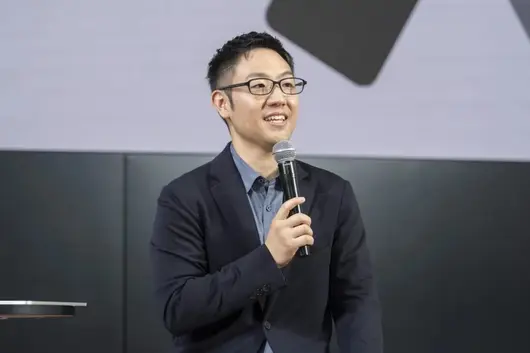

【Written by/ Caiquan Circle&Dao Ge Auto Talk Ma Jianyu】In the first half of 2026, the most surreal story in the automotive industry is that Zotye Automobile, which produced no cars, achieved profitability. Referring to other automakers that continued to lose money or turned from profit to loss in the first half of 2026, if ranking automakers by profit, Zotye Automobile that produced no cars would even leave everyone far behind.
Even more surreal is that Zotye Automobile, which has paused its whole-vehicle business for a long time, is beginning to export its car-making capabilities to overseas markets. This is also a slap in the face to many domestic automakers, because Zotye Automobile proved one thing to them — exporting KD for Chinese automotive enterprises is not difficult, and automakers that have been out of production for years can also achieve it.

On July 16, Zotye Automobile's official public account published a post stating that Zotye Automobile and India Kaly Emotors formally signed a KD strategic cooperation master agreement, planning to jointly build an SKD construction cooperative project with an annual capacity of 30,000 sets. This means Zotye Automobile's car-making capabilities are starting to be exported to Indian local automakers.
And will this also become the beginning of Zotye Automobile transitioning from inflated profits to real profits?
Exporting Car-Making Capabilities to India, Just Connected with Indonesia Not Long Ago
As the global automotive industry enters the transformation of electrification and intelligence, China's automotive industry is rising quietly, and Chinese automobiles have gained an unprecedented status in the global automotive market with the three words "New Energy". Against this backdrop, China's automobile exports have repeatedly hit new highs, ranking first in the world for three consecutive years. Even many automakers are starting to support sales with exports.
Against this backdrop, Chinese automakers' car-making capabilities have been recognized by overseas markets, even Zotye Automobile which has been out of production for many years. According to the cooperation signed between Zotye Automobile and India Kaly Emotors, both parties will fully integrate Zotye Automobile's existing industrial resources, carry out all-around deep collaboration in the fields of production line construction, special equipment supporting, parts localization adaptation, sales channel expansion, cloud platform construction, and quickly import Zotye Automobile's A0-class models, planning to achieve the SOP mass production off the line for this model in the Indian market.

In addition, start the development of other A0-class and B-class models at an opportune time, planning to continue to expand Zotye Automobile's market share and industry influence in the Indian market. Looking at Zotye Automobile's history, it has certain experience in New Energy A0-class models, having introduced models such as Zotye E200 and Cloud 100 in the early stage, and later also introduced models such as Jiangnan U2. To a certain extent, Zotye Automobile has a foundation in A0-class new energy models.
At the same time, as communicated by both parties, India's new energy vehicle market also indeed has good growth potential. Data shows that the penetration rate of electric vehicles (EV) in India's passenger car market in 2025 was 4.0%. It is worth mentioning that deepening the overseas market layout is one of the strategic priorities of Zotye Automobile. Not long ago, Zotye Automobile also reached a consensus on strategic cooperation for the new energy vehicle whole industry chain with Indonesia BPKN.

According to official statements, both parties initially discussed the phased promotion plan of the project: Phase I plans to adopt the SKD model to explore a fast production path, gradually increasing the localization rate of parts; Phase II preliminarily plans to explore the investment and construction of an integrated smart factory with an annual production capacity of 150,000 units, supporting four major processes of whole vehicle manufacturing and power battery production lines, laying out the landing of home, logistics, and pickup series new energy models.
Zotye Restart Beginning? Can Overseas Markets Redeem its "Chaotic" Self?
According to Zotye Automobile's 2025 annual report, in 2026, Zotye Automobile will persist in the overall idea of focusing on main business, low-cost operation, rapid resumption of production, and overseas priority, with molds and stamping parts as cash flow support, and whole vehicle resumption and new energy model landing as long-term directions. From the trends within the year, Zotye Automobile is indeed moving towards this plan.
However, whether Zotye Automobile can be re-redeemed by overseas markets still faces many tests. First, Zotye Automobile in 2026 can be described as "chaotic" to a certain extent. In June this year, Zotye Automobile fell into a boardroom "internal struggle" storm, three directors jointly proposed to remove current Chairman Han Biwen, followed by shareholders stepping in to support Han Biwen, requesting the removal of the above three directors (due to one resignation canceling the removal against them), and then the three directors who originally proposed to remove the chairman were ousted.

As the saying goes, when it rains it pours. On the evening of July 10, Zotye Automobile announced in a notice that the company received the "Filing Notice" issued by the China Securities Regulatory Commission, and due to suspected information disclosure violations, the China Securities Regulatory Commission decided to file against Zotye Automobile. Of course, the more important thing is financial support, after all, Zotye Automobile has lost money for too long.
Financial data shows that since 2019, as of the end of 2025, Zotye Automobile has had annual losses for seven consecutive years, with a total net loss exceeding 25 billion yuan. At the same time, the 2025 annual report shows that the company achieved operating revenue of 521 million yuan, a year-on-year decrease of 6.66%; net loss of 367 million yuan, a year-on-year shrinkage of 63.29%; as of the end of the reporting period, the company's asset-liability ratio reached 96.54%. These directly led to Zotye Automobile's inability to restart whole vehicle manufacturing business.
Despite the fact that in the first half of 2026, Zotye Automobile achieved profitability, "far ahead" among a group of loss-making automakers. But this time the profit is quite inflated, according to the profit forecast, Zotye Automobile expects the net profit attributable to shareholders of the parent company in the first half of the year to be between 78 million and 105 million yuan. But the core reason is that the company carried out business contraction, cancelled a large number of long-term idle, no operating activities subsidiaries and production sites, obtained compensation income of about 200 million yuan. At the same time, a number of past lawsuits reached settlements, bringing additional income of about 30 million yuan. The sum of the two one-time incomes exceeds 230 million yuan.
In other words, Zotye Automobile's main business or car-making business has made no significant progress. And will the cooperation with Indian local automakers become the beginning of Zotye Automobile's restart?


Written by | Wang Jing
Edited by | Huang Dalu
Designed by | Zhen Youmei
Another cross-border player buying a shell to make cars brings new news.
On July 11, Chunan Automobile completed the rollout of the first ET engineering prototype car. Its helmsman Dai Deming is both the head of Hengxin Auto Group, the fourth largest dealer group in the country, and the operator of Chunan New Energy, one of the top five global energy storage battery shippers. Chunan Automobile's manufacturing qualification comes from taking over the WM Motor Huanggang factory. (See Automotive Commercial Review's previous report "Exclusive | After He Xiaopeng and Lei Jun, Hubei Veteran Enters the Red Sea of Car Manufacturing")
Buying a shell to get qualifications is nothing new. In Putian, Fujian, a company walked for ten years, first called Yundou, later JoyAir. After two rounds of shareholder changes, it now only has a qualification document and a silent factory.

As new cross-border players enter the arena, this ten-year story is worth telling from the beginning.
Former Mixed-Ownership Reform Model
On December 11, 2015, in Xiuyu District, Putian, the Yundou New Energy establishment ceremony.
Red banners hung high above the temporary stage, representatives of four shareholders took the stage one by one—Fujian Automotive Group 39%, Putian State-owned Investment 34.44%, listed company Haiyuan Composites 11%, and the management team centered on founder Liu Xinwen 15.56%, contributing a total of 900 million yuan.
State-owned capital provided policy and land, private capital provided efficiency, management provided industry experience. Some media reported at the time it was called a "Perfect Model": having state-owned capital backing, yet combining market vitality.

Liu Xinwen came with real skills. He entered Chery Automobile in 1998, working his way up from a grassroots engineer to General Manager of Chery New Energy, personally making Chery QQ3 EV and Chery eQ—the latter sold 25,000 units in 2015, accounting for 12% of the pure electric market.
He recruited Lin Mi from BYD DENZA. This young man who became DENZA Vice President at 32 served as Executive Vice President and General Manager of Marketing of Yundou. The vehicle technology was managed by Chery veteran Chen Zihuang, who has 20 years of vehicle development experience; the addition of three-electric expert Liu Yan filled the core weakness. She led the team to develop the BMS system, which can maintain 90% range at minus 20 degrees Celsius.
The R&D team started with 200 people, the Putian base was built to an annual capacity of 50,000 units, with a total investment of nearly 1.9 billion yuan, planned according to "Industry 4.0" standards.
What is worth remembering is that 2015, when Yundou was established, was almost the common starting point for a generation of new car forces. NIO was established at the end of 2014, XPeng launched in 2014, Li Auto was founded in July 2015, Leapmotor was registered in December of the same year—they all stood on the same starting line.

But at that time, NIO still relied on JAC for OEM, XPeng R&D was fewer than 50 people, Li Auto was still researching the micro mobility car SEV. Yundou's starting conditions were considered superior among new forces at the same period.
The more crucial chip was qualifications. In January 2017, Yundou obtained the NDRC's new pure electric passenger vehicle qualification, becoming the 10th in the country; in July, it obtained MIIT access, becoming one of the first batch of "Dual Qualification" automakers. This was one year earlier than Leapmotor and two years earlier than NIO's mass production.
At that time, registered car companies once approached 500, PPT car manufacturing was prevalent, and those who could list and deliver were few. "Dual Qualification + Current Stock" was the hardest entry pass.
An 80,000 yuan car sold fewer than 9,000 units
On October 10, 2017, at the Xiamen International Convention and Exhibition Center, π1 was officially launched.
Liu Xinwen stood on the stage wearing a dark suit, wearing Yundou's blue Logo on his chest, and said a sentence that colleagues would remember: "We are the fastest new force to achieve mass production and delivery. No PPT, no concept car. Today it launches, tomorrow you can pick up the car."
π1 is equipped with a 38.5kWh ternary lithium battery, NEDC range 251km, maximum power 55kW, peak torque 170N·m, priced at about 80,000 yuan after subsidy. In the year of PPT car manufacturing prevalence, the two words "Current Stock" were the biggest trust endorsement.

Quanzhou dealer Boss Zhang remembered the grand scene at that time: "The store was only 50 square meters, crowded every day, receiving a maximum of 37 orders in one day. A customer drove three hours from Longyan, looked at it on the spot and swiped the card, saying 'No need to wait for the car, there is still government subsidy, it is reassuring'."
In the first month after launch, π1 sales broke through 1,200 units.
In March 2018, π3 followed up, positioned at A0+ pure electric SUV, range 310km, priced at 109,800 to 149,800 yuan, forming a product matrix with π1.
Lin Mi led the "Hundred Cities Thousand Stores" plan, betting heavily on third and fourth-tier cities. These places are price-sensitive and subsidies are tilted. π1 relied on the combination of "80,000 yuan after subsidy + Current Stock" to become the first pure electric car for many families. By the end of the year, dealerships expanded to 103, covering 28 provinces, with third and fourth-tier cities accounting for 70%.
"We do not compete with NIO for the rich in first-tier cities, nor do we compete with Chery for the low-end market of 50,000 to 60,000 yuan. We just do 'Good Cars that People Can Afford'." Lin Mi said at the 2018 marketing conference.

The annual delivery was about 9,000 units, second among new forces, second only to NIO's 11,348 units. But a car selling for 80,000 yuan after subsidy, selling fewer than 9,000 units in a year, itself indicates a problem.
Yundou's "Second Place" is picking a general among dwarfs—new forces were extremely small in volume at that time, rankings did not mean anything. 9,000 units was not the starting point, it was the limit this hand of cards could play in the window period.
200 million yuan turned into 50 million yuan
In the fourth quarter of 2018, the real fork in the road arrived.
Liu Xinwen submitted π7 model R&D budget: 200 million yuan. Plan to build a pure electric exclusive platform, do dual motor four-wheel drive, push the range over 500km, while building a battery Pack factory in Putian at the same time—then batteries were all purchased externally from CATL, procurement cost accounted for 35% of the whole vehicle, autonomous production was expected to reduce costs by 10% to 15%.
His judgment was clear: not building technical barriers is waiting to die.
Fujian Automotive Group's board representative rejected it on the spot: "π1 and π3 are selling well, we should take the opportunity to expand capacity, not put money into R&D where returns are not visible."
The four shareholders had their own calculations.

Fujian Automotive Group required 2019 production capacity utilization to reach 80%, i.e., 40,000 units, opposing long-term R&D investment. Putian State-owned Investment focused on short-term performance, disliked π7 "Three years to break even", better to expand existing capacity directly. Haiyuan Composites didn't even need to talk, in the second half of 2018 they announced plans to reduce Yundou 5% equity, wanting to cash out and exit, this action directly scuttled the originally agreed 500 million yuan Series B financing.
Management team holds 15.56% equity, no veto power in the board.
200 million yuan was finally approved at 50 million yuan, only enough for basic design. Lin Mi's proposed 100 million marketing plan was compressed to 30 million yuan, of which 15 million yuan was still Putian State-owned Investment's local advertising subsidy, designated to be invested in Putian locally, to promote "Made in Putian" city card. Battery Pack factory was not built, three-electric R&D team cut from 50 people to 15 people, core technical personnel began to flow out.
A core technical personnel later recalled: "Like a high-speed car suddenly braked. We knew the opponents were doing intelligence, long range, but shareholders only looked at the present."
偏偏同年 6 月,补贴退坡的刀落下来。四部委联合发文,续航低于 250km 的车型不再享受补贴。π1 续航 251km,刚刚踩线,单车补贴从 3.6 万元腰斩到 1.8 万元;π3 从 4.5 万元降到 2.25 万元。
偏偏 on the same year June, the knife of subsidy rollback fell. Four ministries issued a joint document, models with range lower than 250km no longer enjoy subsidies. π1 range 251km, just stepped on the line, single car subsidy halved from 36,000 yuan to 18,000 yuan; π3 dropped from 45,000 yuan to 22,500 yuan.

Two knives fell at the same time: internal R&D rejected, external competition accelerating.
Boss Zhang calculated: "After subsidy rollback, π1 profit per vehicle dropped from 8,000 yuan to 2,000 yuan, not profitable at all. Chery Small Ant dealers' profit could still reach 5,000 yuan, BYD Yuan EV also had 3,000 yuan, we simply couldn't compete. For a few months I sold cars at a loss just to keep customers, but finally couldn't hold out."
At the end of 2018, 17 of Yundou's 103 dealerships left.
In that year's year-end summary meeting, Liu Xinwen did not propose a clear sales target for the first time, just repeatedly said "Survive".
Dispersed
After Spring Festival 2019, Liu Xinwen resigned. Core team dispersed accordingly. Chen Zihuang went to XPeng, Liu Yan took people to BYD, left a letter on departure: "Yundou had the best starting point, but no correct direction, the value of technical personnel cannot be realized here."
R&D team shrank from 200 people to 80 people, π7 has not been mass-produced to this day.
Fujian Automotive Group's new CEO was from a traditional automaker, lacking new energy industry experience, leading direction was "Cost reduction and efficiency increase"—actual operation was cutting R&D, suppressing marketing, changing to low-price alternative parts.
Quality complaints immediately erupted: in 2019 alone air conditioning failures had 127 cases, involving π1 and π3 two models. A Shandong owner's message was very representative: "Air conditioning cannot adjust temperature, adjustment button simply does not work, air outlet cannot be sealed, now need to wear gloves and hat when driving."

Sales cliff: 2,600 units in 2019, down 72% year-on-year; 1,800 units in 2020.
Four years cumulative loss exceeded 600 million yuan, asset-liability ratio 95%, current liabilities exceeded 1.7 billion yuan, only 80 million yuan left on account, already unable to cover employee wages and supplier payments.
In March 2021, multiple suppliers surrounded factory gates to claim debts, longest arrears reached 18 months.
On the road to collapse, Yundou also wanted to grab a lifebuoy.
In February 2019, Putian Mayor led team to Changchun, Yundou signed formal cooperation agreement with FAW Cars: Both parties planned to jointly develop a pure electric passenger vehicle, FAW provides platform and production manufacturing system, Yundou provides three-electric technology and sales network and qualification, launch by end of year; at the same time cooperate comprehensively in mobility, autonomous driving, supply chain, finance.
If landed, Yundou might turn over relying on FAW's system ability. But this car was never mass-produced—Liu Xinwen had already left, R&D team dispersed, capital chain broke, Yundou could not take on this cooperation. FAW did not really enter, agreement stopped on paper.
In May 2020, Lin Mi returned to serve as CEO again. The first thing he did was abolish rigid systems, "I returned first month abolished attendance, KPI, abolished everything managing people in the enterprise."

He spent one month time to find 200-plus employees of different levels interview, found everyone generally fell into confusion: "Their doubt is, how big can Yundou do? Where to go next for oneself?"
Lin Mi recalled models with air conditioning faults, replaced with qualified parts; old models supplemented with central control big screen and Internet of Vehicles functions; launched old customer trade-in plan, 10,000 yuan subsidy; cooperated with Didi to launch ride-hailing custom version, trying to make up C-end through B-end.
These moves made the enterprise have scattered warm-up, December 2020 monthly sales rose to 320 units. But without new models, without R&D funds, repair cannot save structural collapse.
2021 industry big restructuring accelerated. Saleen bankrupt, Byton stopped, Bojun dissolved. Yundou also fully stopped production, employees shrank from 1,200 to less than 100, dealerships shrank from 103 to 23. Boss Zhang's store also closed in August 2021, ending four-year cooperation.
"Worst time, company account only had 3 million yuan, could not even pay next month wages." A留守 employee recalled.
On June 28, 2022, Junyao Group through its subsidiary Zhuhai Yucheng Investment Center acquired 85.31% equity of Yundou for 450 million yuan. Yundou Dual Qualification shell, waited for Junyao.
Junyao's Wish Calculation
A group doing aviation and milk takes over a car company losing 600 million yuan in four years, fully stopped production, this combination shocked the industry, but Junyao's idea has its logic.
Wang Junjin with his brother Wang Junyao started in 1991 contracting the first private chartered airline route, always wanted to connect sky business to ground. In 1998 obtained Wenzhou 100 taxis permanent operating rights, became Wenzhou's largest taxi operator at the time; in 2010 layout logistics transportation; in 2015 cooperated with Didi to deploy 1,000 new energy ride-hailing vehicles in Shanghai, Hangzhou.

Automotive is just one piece in "JoyAir Big Mobility" ecosystem puzzle, is the missing link in "Home—Car—Cabin" full chain, alongside aviation, milk products, finance. Essentially, Junyao entering automotive industry is sweeping grass hitting rabbits: investment not large, success is ecosystem plus points, failure is stop loss exit.
为此,吉祥汽车走的是低成本造车模式。王均金弟弟王均豪解释得形象:“喝牛奶不一定要养牛,我们不搞重资产自研。”
为此 JoyAir Car followed low-cost car manufacturing model. Wang Junjin's brother Wang Junhao explained vividly: "Drinking milk does not necessarily require raising cows, we do not do heavy asset R&D."
On operation, Junyao used mainly agent model. Former SAIC Group President Chen Zhixin as consultant identity actually controlled decision-making. Daily management handed to Wei Yong. Wei Yong January 2022 from SAIC-GM-Wuling procurement负责人岗位过来,任云度总经理。他重新组建了供应商体系,在莆田扎下根来。
In operation, Junyao used mainly agent model. Former SAIC Group President Chen Zhixin as consultant identity actually controlled decision-making. Daily management handed to Wei Yong. Wei Yong January 2022 from SAIC-GM-Wuling procurement personnel position came over, served as Yundou General Manager. He reorganized supplier system, rooted in Putian.
On November 16, 2023, Junyao Group held "From Rushing to Rushing 2023 JoyAir Big Mobility" Airborne Global Press Conference on JoyAir Aircraft, officially launched "JoyAir Big Mobility" strategy and JoyAir Automobile brand.

However, "Automotive Commercial Review" believes, this operation method made JoyAir Automobile brand from the very beginning have no success opportunity.
Furthermore, when Junyao entered, market environment was already completely different from Yundou start time. 2015 was policy dividend explosion period, competition not full, with qualification and subsidy could sell cars; 2022 was eve of price war, new energy penetration rate approaching 30%, began to enter market driven stage.
In 2023, JoyAir Car (Junyao holding Yundou Car) on old Yundou π1 basis launched Yundus Rabbit: Small pure electric SUV, 69,800 yuan starting, 320km and 415km two versions, mainly 100,000 yuan below market. This naturally impossible to have success possibility.
Actually, JoyAir Car had already discovered this terrible situation early. So, it changed playing method.
In November 2024, JoyAir Car first new car AIR was chosen to be launched in Thailand. There is new energy vehicle relatively competition compared to domestic to be mild, but 159,000 yuan standard version starting sales price, still no one asks about it.
Overseas launch not successful, May 7, 2025, JoyAir AIR model in Beijing launched. This car positioned 150,000 yuan level pure electric sedan, differentiation fully bet on JoyAir Airlines company rights, but relying on plane tickets and gold card cannot fill product power gap.

However, whether in foreign testing or domestic symbolic launch, JoyAir AIR always not successful. And Junyao actually had already early realized this problem. After Thailand launch failure second month, December 2024, Zhuhai Yucheng held equity from 85.31% reduced to 15.55%, Putian State-owned Investment equity from 8.69% increased to 49.44%, Fujian Leading Industry Equity Investment Fund equity from 6% increased to 35%.
From acquisition to exit, two and a half years. For Junyao, this is rational enterprise decision. But for this shell, back to starting point—Ten years, going around and around back to Fujian local state-owned capital hands.
Junyao Group Party Committee Secretary, President Wang Junhao on exit before and after 2025 China Enterprise Competitiveness Annual Conference publicly criticized new car forces: "Now new car forces, many people doing and doing just raise capital, doing and doing just prepare to run."
Indeed, Junyao did not rely on JoyAir Car to raise capital, of course loss also not large. Finally, Wang Junjin personal paid-in 190 million yuan, Group promised three years investment not less than 1 billion yuan, but final arrived less than half.
Whose Net Worth on Table
Yundou and JoyAir story, placed in China new forces ten years restructuring full landscape look, not an exception, is a category.
Put failed list out one by one: Yundou (Liu Xinwen, Chery System), JoyAir (Chen Zhixin + Wei Yong, SAIC/Wuling System), WM Motor (Shen Hui + Hou Haijing, Geely, Volvo/SAIC-GM System), Aiways (Fu Qiang + Chen Zhixin, Volvo/SAIC System), Enovate (Zhang Hailiang, SAIC System), HiPhi (Ding Lei, SAIC System), Neta (Fang Yunzhou + Zhang Yong, Chery/BAIC System), pure traditional automaker born professional managers at helm.

Then look at surviving that few: Li Bin sold Easy Car founded NIO, He Xiaopeng sold UC founded XPeng, Li Xiang sold Autohome founded Li Auto, Zhu Jiangming is Dahua Co-founder, invested 500 million yuan personal funds founded Leapmotor, all wealth free after take own money enter scene.
Difference not only in know or not know new automotive, but also in who bears risk.
Professional manager spends shareholders' money, investors' money, local government's money, do decision naturally has retreat road—worst is also change one company continue to be executive.
And NIO, XPeng, Li Auto, Leapmotor founders, net worth bet on this one thing. Li Bin 2019 almost bankrupt also did not leave, He Xiaopeng repeatedly add personal assets, Zhu Jiangming take own money smash in. "Unsuccessful return to zero" people and "Unsuccessful change place" people, do out decision weight different.
Junyao is third kind variant: Money is own, but mind not all here. Automotive just is ecosystem puzzle piece, use agent operation, one risk just pull back. Funds in place, determination not in place.

Governance structure problem also runs through all. Yundou is four-party system, JoyAir is external shareholders plus consultant plus general manager multi-head pattern, WM Motor has multi-round VC each has demands, Aiways shareholders changed several rounds, Neta then 360 and local government both have voice.
Decision power dispersed, no one willing to bet full on long-term investment. Liu Xinwen held Yundou 15.56% equity, no decision power, R&D budget 200 million yuan cut to 50 million yuan stop not stop.
Putian Xiuyu District sea breeze still blowing. Dual Qualification shell still there, Putian State-owned Investment again become largest shareholder. Ten years, this card from scarce turned into chicken rib—2017 it worth 2 billion yuan entry fee, now 450 million yuan no one willing to pay out again.


The all-new V9X that I endorse recently launched and received quite positive feedback.
There is a joke on the internet saying, "Big leather shoes, Baoding stride, remember my name is Jianjun". But today I want to add a sentence: "Rest easy, I put my heart into it, Old Wei's endorsement is something to trust."

Cars are built with real money, the heart has not changed in 36 years. But if you only remember those jokes, you missed the real thing I want to say.
Someone asked me, you run every day, and control your diet, isn't it tiring? I said, it is tiring. But making cars is 10,000 times harder than running. Running only requires managing yourself, making cars requires managing 10,000 links, 10,000 people, 10,000 temptations.
In these years, I condensed all my insights into six words: Aspiration, Steps, Long Road, Devotion, Persistence, Mind. This is not some deep theory, this is a path I stepped out on, one step at a time with every pitfall, on the road of car making.
Aspiration: Not aiming for first place just at home
More than 30 years ago, Great Wall was just an inconspicuous local small factory. At that time I asked myself: What kind of enterprise do you want to be?
Many people run enterprises to make money, go public, cash out. But since I was young I had a thought — can Chinese people build their own good cars? Can we build cars to compete on the same stage as Mercedes-Benz and BMW?
I once said a sentence that was remembered by many later: "Not aiming for first place just at home."
What does it mean? If you are first in Baoding, it's useless. If you are first in Hebei, it's also useless. The automotive industry is a global competition, your opponent is not in the neighboring county, but in Stuttgart, in Toyota City, in Detroit. If you want to compare, compare with the best in the whole world.

Aspiration is setting a grand ambition. Not to brag, but to stand firm and not shake when everyone wants to make quick money.
In recent years the industry has been very frivolous, capital poured in, new forces gathered, price wars fought until heads bled. Someone asked me, will you follow? I said no. The wish in my heart is not short-term sales first, but ten years later, twenty years later, Great Wall can still represent Chinese cars, standing on the world stage.
Small Steps: Progress a little bit every day
Having a grand ambition doesn't mean achieving success overnight. On the contrary, I especially believe in these four words: Advance a pawn every day.

There is a stone in the Great Wall factory area, carved with a sentence — "Progress a little bit every day". This is not a slogan, it is a true portrayal of how we have done things for over 30 years.
Over 10 years ago, Chinese car enterprises generally were still taking the path of technology introduction, we had already started investing billions in Baoding to build our own science and technology building.
At that time many people didn't understand, saying you are a local small factory, why spend so much money to build a building? I said, technology is built, not bought. If you really want to do high-end and go global, you must have your own roots. In 2014, this technology center with an investment of 5 billion yuan went into use, later becoming the source of all core technologies of Great Wall.

Look at how we do products: Haval focuses on SUV, for over 10 years; WEY brand settles high-end, not in a hurry for success; Tank roots into hardcore off-road, slowly cultivating users. We do not pursue releasing a dozen new cars in a year, we pursue that every car can withstand the test of time.
Technology is the same. From the earliest engine self-research, to Lemon Platform, Tank Platform, to today's Origin Platform — There is no myth of overnight subversion, only 10 years, thousands of people, changing a parameter every day, optimizing a craft process every day, the hard work of being slow.

Some people mock us for being slow. I said, making cars is not the internet, an APP can iterate in a few days. Making cars is heavy asset, long cycle, every step you take today determines whether your car is safe, durable five years later.
In the factory, we optimize a craft process every day, R&D polishes a parameter every day, quality control digs into a detail every day. No drama, only silent nourishment. But it is this silent accumulation that finally becomes a moat others cannot catch up with.
Long Journey: Only without a way back do you see a way out
When Great Wall celebrated its 30th anniversary, someone said, it's time to look back. I said, no, we should look forward. The past 30 years are already set there. For me, looking back has no meaning. I already have a distance in my heart, my mission is to take Great Wall to that distance.

Only with no retreat do you see an exit.
Because if I leave myself a way back, I won't go all out. When I make decisions, I never think what if it doesn't work. If it doesn't work, then it proves this path doesn't work, change one. But in the process of walking, you cannot retreat, cannot hesitate.
Going out is the same. Great Wall Auto would rather die on the road of going out, than die inside the country. The true way out lies in the distance.

Why? Because no matter how big the Chinese car market is, it is only one-third of the globe. If you don't go global, you will forever only compete on price and configuration with domestic peers at home, finally no one makes a profit, no one survives.
But going out is not just shipping cars abroad to sell them and that's it. That is doing trade, not building a brand.

Great Wall's global expansion is the expansion of the whole ecosystem. We have built complete vehicle factories in Thailand, Brazil, Russia, have over 1,400 sales channels globally, service networks, supply chains, R&D centers, all localized.
More importantly, we do not dump at low prices. The best-selling models overseas have a premium 30% higher than domestic, competing head-on with luxury brands. Single car gross profit 33,000, higher than domestic.

Some people say, on what basis do you sell so expensive? I said, based on quality. Cars are not fast-moving consumer goods, users drive for five years, ten years. If you cut corners overseas, one time will ruin the whole brand.
In Brazil, we voluntarily made 12 user commitments, exceeding local legal requirements. What was the result? Users actively helped us spread the word, saying Chinese cars are not bad, even better.
Long Journey, means not looking at the present, looking at the future. It is daring to leave the comfort zone, to the cruelest market, to clash head-on with the world's top opponents. Lost, we accept; but at least we fought.
Devotion: 1,000 weekly meetings, I attended 950
At Great Wall, there is an iron rule: hold a quality appreciation meeting once a week, all executives must attend.
This meeting is not a formality. We drive the cars in, everyone squats down, look at gaps, touch paint, listen for noise, check user complaints. Whoever finds a problem, decides on rectification plan on the spot, no shirking, no delaying.
This meeting, we have held over 1,000 sessions. Over 1,000 weeks, over 1,000 times of being serious. And myself, attended over 950 sessions.

I am not showing off. What I want to say, reverence for quality, is not a slogan pasted on the wall, is that you are willing to spend time, energy, to pick details again and again. I can push off business activities, push off social engagements, but I don't want to push off this meeting. Because if I don't go, the people below will think — the boss doesn't value it, why should I take it seriously?
Devotion is like prostrating yourself. You put your head on the ground, it is reverence for the thing of making cars. You can never feel you are perfect, always like the first day, responsible for every car.
Persistence: Car manufacturing is a marathon
I run 5 kilometers every day, rain or shine. Every year Great Wall Factory Marathon, I personally lead 8 kilometers, not fast not slow, at my own pace.

Why run? Because car manufacturing is a marathon.
You cannot sprint in the first 100 meters, then you won't reach the finish line. You cannot walk and stop, then you will never finish. You must find your own rhythm, save energy, exert force at key times.
Persistence, means not pausing. In good times not lying flat, in bad times not stopping steps.

In these years, we made the Origin Platform, one platform compatible with all powertrains — Fuel, Hybrid, Pure Electric, Hydrogen. We layout chips, batteries, core components, do not let others strangle us. When others chase windmills, we do basic R&D; when others fight price wars, we polish next-gen technology.
People who run marathons know, the hardest is not the last kilometer, it's the middle part — stamina dropping, finish line still far, people around you some surpass you, some withdrew. At this time ask yourself: Why still running?
Because you know, the finish line is there. If you don't stop, you will surely arrive.
Guarding the Mind: Have resolve, don't rush
Company executives privately discussed something: They said, Mr. Wei is too self-disciplined. His belt is always tied on the same buttonhole, eating halfway feel tight, immediately put down chopsticks, stop eating.
I said, this is not being pretentious. You can't even manage your own waistline, how do you manage an enterprise of tens of thousands of people? The essence of self-discipline is knowing what you want, more knowing what you don't want.

Precisely because knowing what not to want, I can in this era where everyone rushes for success, rushes for monetization, rushes for fame, guard my own rhythm. Guarding the Mind, means not rushing.
I set "Four Things Not to Do" for myself: Revere capital, not wrapped by capital; Value users, do not do excessive marketing; Abide by bottom line, do not pursue short-term interests; Cherish industry, do not damage industry ecosystem.
Many people feel strange — other bosses hire celebrities for endorsement, why do you go yourself?
Because I do not trust. Can celebrities tell the WEY brand story well? Can he explain clearly how we pick details, how we run tests, how we endured three years in a winter to solve one technical difficulty? Cannot tell. Only I can tell.

So I do not hire celebrities, do not seek traffic, I stand on stage myself, use surname to establish brand, use body to endorse. I bet over 30 years of reputation, win, everyone benefits; lose, I bear.
Guarding the Mind, means guarding that most foolish, slowest, but most stable path. Not kidnapped by capital, not wrapped by traffic, not messing up own pace because others run fast.
Conclusion
From Aspiration to Guarding the Mind, these six words, are 30 years earned by me with sweat, with trial and error, with countless sleepless nights.
Aspiration, is setting a great ambition; Small Steps, is advancing a pawn every day; Long Journey, is walking towards global; Devotion, is revering quality; Persistence, is never stopping; Guarding the Mind, is not messing up rhythm.

This era is too rushed. But I believe, the one who can truly reach the end, is not the one running fastest, but the one running most steadily.
Great Wall's road, is still very long. But as long as we don't rush, don't stop, don't pretend, don't follow trends, walk step by step, one day, the whole world will see — Chinese cars, can also stand on the highest stage.