首頁CATL

搜尋歷史
熱門搜尋
經銷商登入 / 註冊

Zhiliao Auto/Fed

September 2026, US Transportation Secretary Sean Duffy sent a letter to Ford Motor CEO Jim Farley, requesting Ford abandon its strategic partnership with Chinese companies. The letter directly targets Ford's use of CATL-licensed lithium iron phosphate battery technology at its Marshall plant in Michigan.

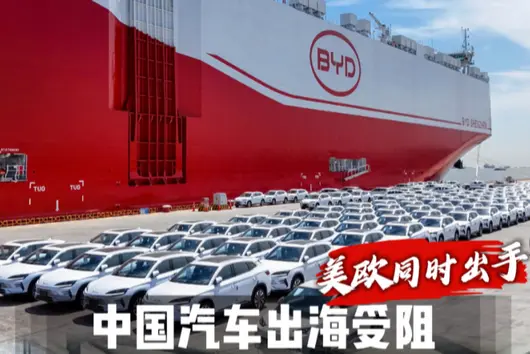
In past years, restrictions by Europe and US on China's auto industry focused mainly on complete vehicles. In October 2024, the EU added countervailing duties on EVs produced in China on top of 10% import tariffs, with comprehensive rates reaching up to 45.3%.
However, the US approach follows FEOC rules under the Inflation Reduction Act. Starting from 2026, over 60% of cell material costs must come from eligible companies to qualify for tax credits, rising to 75% by 2030.

These barriers previously only focused on "where the car comes from", now they also manage "where the technology comes from".
Ford employs about 1700 American workers at its Michigan plant, the plant is fully owned and operated by Ford, but solely because battery technology comes from CATL via licensing agreement, it was deemed "deeply concerning" by the US Department of Transportation.

EU countervailing duties also brought high costs for Chinese car makers. BYD was levied 17.0% countervailing duties, Geely 18.8%, SAIC Motor reached 35.3%. A Chinese EV priced at 38,000 euros, just tariff cost exceeds 10,000 euros.
But the price commitment mechanism agreed between China and EU in January 2026 provided a buffer channel. Chinese car makers can replace high countervailing duties by committing to minimum import prices and annual export quotas.

This practice of sacrificing some pricing freedom to exchange for qualification to stay in the European market is essentially a strategy of exchanging space for time, but indicators do not treat the root cause.
Take the cooperation between Ford and CATL for example. Ford stated this is not a joint venture, nor foreign manufacturing business, CATL only provides technology licensing and training services, Ford owns the plant and controls operations. But even so, the US government does not allow it.

Of course, from the US government perspective, this concern has its logic. After all, CATL was listed on the so-called "Chinese Military Enterprise List" by the US Department of Defense as early as 2025. Such policy environment, even just technology licensing, faces various uncertainties.
Despite such harsh environment, Chinese auto export data remains strong. First 8 months of 2026, passenger car cumulative exports 6.098 million units, YoY growth 75.7%, annual export volume expected to reach 11.5 to 12 million units.

But export volume is one thing, global capability is another.
Report by global consultancy AlixPartners shows Chinese car makers plan to layout production bases in at least 16 overseas countries. By 2030, overseas production expected to rise from about 1.2 million units in 2025 to 3.4 million. BYD has layouted factories in Thailand, Brazil, Hungary, etc., where Hungary factory expected to produce in 2026, annual capacity 150,000 units. SAIC Thailand factory local content rate has broken 80%.

Actually not only Chinese enterprises, this practice of localizing core supply chain links as much as possible is a general strategy for many multinational car makers to cope with policy risks.
To put it plainly, Chinese car makers doing this is forced by EU/US restrictions on Chinese auto supply chains. Tariffs are one aspect, various technology source reviews, localization rate requirements, and supply chain security rules are deeper constraints.
Chinese car makers' advantages in battery technology, manufacturing costs, and product iteration speed still exist, but now looking, to convert these advantages into global market share, it's not just about selling cars, must build manufacturing, supply chain, and service systems into target markets.

So, this new round of competition triggered by Chinese NEV industry going overseas, is shifting from the product itself to who can build a complete operational system in more markets.
Zhiliao Auto original article, please contact us if reprinting.
*Pictures from internet, please contact author to delete if infringing*


Author | Hao Wen
Editor | Qujie Business News Group
In this round of car manufacturers developing batteries in-house, what might be rewritten is not just the supplier list, but also CATL's profit model relying on a complete battery system to obtain premiums.
On the evening of September 18, after the Xpeng G9L launch event, Xpeng founder He Xiaopeng stated in response to media inquiries about whether they would develop batteries in-house, "Starting this year, Xpeng will handle batteries entirely in-house;" previously, Li Auto also announced that self-developed batteries will gradually cover all models.
Car manufacturers' accelerated commitment to developing batteries quickly formed a response in the capital market. On September 18, CATL's A-share closed at 301.95 yuan/share, a drop of more than 35% from the year's high of 467.34 yuan on May 7. The HK share closed at 507 HKD/share, a new intraday low since March 10. The total market capitalization of A+H shares evaporated by more than 700 billion yuan from the peak.

Image Source: Baidu Screenshot
The market generally views car manufacturers developing batteries in-house as two things: saving costs and ensuring supply. But the changes happening in the industry are far more than just replacing suppliers. Car manufacturers are seeking to regain product definition rights over batteries. CATL's past profit path relying on complete battery system solutions to obtain premiums is being impacted, and the original business model is facing structural adjustments.
1. Definition Rights Shift Down, Manufacturing Rights Remain CentralFirst, clearly see what car manufacturers are actually doing. They are not fully building battery cell factories themselves, but are keeping product definition rights such as battery formulas, fast-charging logic, BMS strategies, and vehicle integration standards in their own hands, while handing over the battery cell manufacturing process to battery suppliers.
For example, Xiaomi's "Longjia Battery" involves Xiaomi responsible for product definition and battery pack design and development, with CALB and Sunwoda customizing battery cells according to Xiaomi standards; Li Auto's battery self-research involves self-developed and self-made battery packs, with cells produced by Sunwoda and CALB; Xpeng has taken back the entire battery pack chain, retaining only the procurement of battery cells.
This exactly hits CATL's core source of high gross margins. In the past, it delivered a complete set of "battery solutions + exclusive designated supply", obtaining technology, system solutions, and pricing dividends from exclusive supply in one order. Nowadays, car manufacturers hold formulas, structures, vehicle integration, and other links in their own hands, only purchasing customized battery cells from battery manufacturers. CATL's business space for obtaining premiums relying on complete battery packs is facing obvious squeezing.
Changes are also reflected in financial report data. In the first half of 2026, CATL's largest revenue source - power battery system gross margin dropped to 20.63%, a year-on-year decline of 1.78 percentage points.

Image Source: Semi-Annual Report Screenshot
The rising logic of second-tier battery factories has also become clear. In addition to their own technology iterations, the key lies in being willing to adapt to car manufacturers' product definitions and undertake deep customization development. Li Auto injected 2.65 billion yuan to increase capital in Sunwoda, becoming its second-largest shareholder. CALB has also grown into Xpeng's main supplier. Under the current industry chain pattern, manufacturers capable of implementing car manufacturer customized battery cell solutions are expected to capture the incremental share released by CATL.
2. "Know How to Build Cars, Not Necessarily How to Build Batteries"Car manufacturers regaining definition rights is essentially a redistribution of profits.
In the past few years, profits in the new energy vehicle industry chain have concentrated heavily on the battery segment. In the first half of 2026, CATL's net profit attributable to parent company was 43.284 billion yuan, while according to statistics, the combined net profit of 15 mainstream listed car manufacturers such as BYD, SAIC, Geely, Chery, etc., was 21.048 billion yuan, less than half of CATL alone. As early as 2022, GAC Group's then Chairman Zeng Qinghong openly complained: "Batteries account for 60% of the vehicle cost, aren't I just working for CATL?"

Image Source: Semi-Annual Report Screenshot
In this round, car manufacturers developing batteries in-house combined with multiple suppliers running in parallel, the goal is to squeeze excess profits in the battery segment and promote profits to flow back to the vehicle end. The lithium battery industry may return from past phased high returns to a relatively fair profit level of manufacturing.
But inferring "CATL will be replaced" based on this is still premature. Car manufacturers' battery self-research has a natural ceiling. He Xiaopeng explicitly stated in an interview that Xpeng does not intend to enter the production of battery cells itself; investing in battery cells is ultimately for others.
Car manufacturers are good at vehicle product definition and system integration, but face high thresholds in yield, consistency, and cost control of mass production of battery cells; battery cell manufacturing belongs to capital-intensive industries, only sufficient scale can dilute costs. Once sales fluctuate, capital-intensive capacity will drag down the car manufacturer's balance sheet. CATL's Chief Manufacturing Officer Ni Jun once openly stated: "Knowing how to build cars doesn't mean knowing how to build batteries, professionals should do professional things."
Definition rights can be contested, but barriers to mass production are difficult to migrate quickly. In the first half of this year, CATL's battery system capacity utilization rate reached 94.86%, with 764 GWh of capacity under construction; the German plant has already achieved profitability, and bases in Hungary, Spain, and Indonesia are landing successively. According to data released by Korean market research firm SNE Research, from January to May 2026, CATL's global power battery market share broke through 40% for the first time, reaching 40.2%.

Image Source: Semi-Annual Report Screenshot
CATL has even started to fight back for definition rights. It launched the 75# standardized battery swapping block for heavy trucks, laid out passenger car integrated smart chassis, packaged "battery + chassis" into a standardized solution that vehicle manufacturers can procure, trying to turn itself back into the "person who sets standards". On high-end models above 300,000 yuan, Qilin and Shenxing supercharging remain the mainstream technical solutions in terms of performance and safety. Although car manufacturers generally introduce second and third suppliers and carry out diversified supply chain layouts, for main-selling high-end flagship models, most will still keep CATL in the supplier list.
Therefore, the industry is unlikely to move towards simple substitution. In the domestic power battery track, a two-way check and balance pattern is more likely to form: car manufacturers strive for product definition rights, promoting more industry chain profits to flow back to the vehicle end; CATL guards the core capabilities of high-end manufacturing.
However, challenges still objectively exist. If more high-end models deeply dominate battery definitions later, the product performance advantages of leading battery enterprises gradually turn into industry general capabilities, and CATL's existing product premiums still have the possibility of being continuously compressed.
Facing the gaming pressure of the domestic market, CATL has not bet all its chips on domestic car manufacturers' power battery businesses. Overseas markets and energy storage businesses have become important growth pillars. In the first half of the year, the energy storage business achieved revenue of 53.261 billion yuan, a year-on-year increase of 87.54%; overseas revenue was 87.129 billion yuan, a year-on-year increase of 42.35%, with overseas business gross margin at 29.97%, significantly higher than the domestic business's 21.16%.
For CATL, the real risk does not lie in being completely replaced by car manufacturers, but in whether it can adapt to the gross margin in the domestic market that is tending to thin out, relying on manufacturing advantages, global layout, and energy storage business to continuously obtain reasonable returns.

Have you ever calculated this: For a new energy vehicle selling at 200,000, how much money can the car manufacturer keep in their pocket at the end?
The answer is possibly less than 10,000. And how much can the battery supplier take from these 200,000? More than 60,000. This isn't the most heartbreaking part. What truly makes the industry restless is that CATL earned 20.7 billion in the first quarter of this year, while the combined earnings of several top domestic car manufacturers are less than a fraction of that. Some joke that building cars nowadays isn't working for CATL, it's working for free for CATL. This sounds exaggerated, but looking at the freshly released Q1 report, most car manufacturers probably can't smile.
Car manufacturing profits all ran into the battery factory's pocketCATL's numbers for Q1 2026 are truly eye-catching, achieving 129.131 billion yuan in revenue, with a net profit attributable to shareholders of the listed company at 20.738 billion yuan, a year-on-year increase of 48.52%, earning a net profit of 230 million yuan daily. What does this concept mean? Just look at the report cards submitted by car manufacturers in the first quarter to understand.

In Q1, BYD achieved revenue of 150.225 billion yuan, with net profit attributable to shareholders of 4.085 billion yuan. Geely Automotive's Q1 revenue was 83.776 billion yuan, with net profit attributable only 4.166 billion yuan. Great Wall Motor's situation is similar, Q1 revenue 45.109 billion yuan, but net profit attributable is only 945 million yuan. Looking at Changan Automobile, Q1 revenue is about 32.706 billion yuan, net profit attributable to shareholders is only 351 million yuan.
That is to say, BYD's profit in three months is less than 4.1 billion, Geely less than 4.2 billion, Great Wall less than 1 billion, and Changan is only 351 million. CATL's single-quarter net profit is five times that of BYD, more than twice that of Geely and Great Wall combined, and Changan is left behind by an order of magnitude.
Putting these numbers into perspective, a more intuitive comparison comes from the industry as a whole. Cui Dongshu, Secretary General of CPCA, previously gave data showing that in Q1 2026, China's automotive industry revenue was 2.4128 trillion yuan, profit was 78.4 billion yuan, down 18% year-on-year, sales profit margin further dropped to 3.2%. And a year ago, the profit margin for the entire domestic automotive industry in the first half of the year had already been compressed to around 4.8%. Now it's not only not improved but worse.

According to industry data, the proportion of power batteries in the total cost of a vehicle has reached 30% to 40%. If the price of lithium is high, this proportion could be even higher. Considering the fierce price war in the new energy vehicle market price today, with an average drop of 38,000 yuan, the profit space for car manufacturers has been compressed to the extreme.
This is why many consumers find that new energy vehicles of the same level have small price differences, but configurations are getting more competitive. Because the only thing that can make a difference is remaining in intelligence and cockpit experience, while the most valuable batteries, everyone basically gets goods from the same supplier. A single quarter's profit of a battery supplier is higher than the combined profit of several top car manufacturers. Is this really a healthy industry ecosystem?
A car holds batteries, but more importantly, others' profitsZeng Qinghong of GAC Group said at the 2022 World Power Battery Conference that power battery costs account for 40% to 60% of the total vehicle cost. He joked saying "Am I not working for CATL now?". Fast forward nearly 4 years, this sentence remains a true portrayal of the entire industry.
When an ordinary car owner buys a car, they of course care most about range and reliability, and CATL's reputation in these two matters is indeed solid. But the greater the reputation, the harder it is for car manufacturers to break free from dependence. When a supplier accounts for over 43% of the power battery installation share in China, any car manufacturer wanting to switch supply plans has to consider whether consumers will approve. At the same time, battery companies have also unknowingly grasped pricing power and discourse power. Car manufacturers not only have to pay money but also queue up to pay prepayments to lock capacity. This kind of supply chain relationship was almost unimaginable in the traditional automobile industry era.

If we compare CATL with an engine-making enterprise, this contrast becomes clearer. Taking Weichai Power as an example, as the leading enterprise in the domestic engine field, 2025 full-year revenue was 231.8 billion yuan, net profit attributable to 10.9 billion yuan. While CATL's single-quarter net profit in 2026 alone exceeded 20 billion yuan, close to twice Weichai's full-year profit.

If Weichai represents the traditional internal combustion engine era still maintaining balance between vehicle manufacturers and parts suppliers, then in the power battery field, this balance has been completely broken. An owner might rarely ask what brand of engine is in the car when buying, but more and more people will actively check if this car uses CATL's battery. This is the power of consumer-end cognition, and this power in turn gives battery manufacturers greater bargaining confidence.
When battery manufacturers grasp the "steering wheel" of the industry, what do consumers feel?For ordinary consumers, changes in the profit structure of the industry upstream will eventually fall on the reality of car selection and driving experience. The most direct manifestation is the "breaking out" of battery brands. A few years ago, few people would care which company's cells an electric vehicle used, but now many potential car buyers will actively check which company is the battery supplier of a certain car when browsing forums or watching car reviews, or even take "CATL" as an important car purchasing decision factor. This cognitive migration objectively gives CATL greater market appeal and makes car manufacturers more cautious in supplier selection.

From a more realistic driving scenario, this trend of upstream profit centralization is also affecting product definition and pricing strategies. Batteries account for over 30% of the total vehicle cost, meaning that for car manufacturers to launch an affordable model, they must make trade-offs in battery capacity. This is why there are some entry-level models in the market with shorter range but guaranteed battery brands. It's not that car manufacturers don't want to give big batteries, but the batteries themselves are too expensive. For budget-limited family users, this sometimes becomes a dilemma: if you want long range, you have to accept a higher car price; if you want it cheap, range and battery brand may have to compromise.
Another noteworthy phenomenon is that car manufacturers, in order to cope with battery cost pressure, are ganging up to build their own battery production lines. Whether it is a car manufacturer like BYD which already has battery self-supply capability, or other car manufacturers that have entered or are entering the field, they are all trying to master the battery business themselves. But whether this practice can fundamentally change the profit distribution pattern is still hard to say. After all, building a complete battery production line requires throwing billions in, technology accumulation and yield ramp-up also require a long cycle, not every car manufacturer can afford it. And in this process, car manufacturers' R&D expenses continue to rise, while terminal prices drop again and again, and profits are squeezed even thinner.

This phenomenon of profit inversion between battery manufacturers and car manufacturers is unlikely to reverse in the short term. CATL's domestic installation share has risen to 47.7% in Q1 2026, increasing by another 3.4 percentage points year-on-year, and market concentration is further improving. For consumers who want to buy new energy vehicles, this means that battery brands will remain a realistic proposition that must be faced when selecting cars for a long time. And when the most cost item of a car is in the hands of one supplier, the discourse power of the entire industrial chain is also transferring quietly. This transfer will eventually reflect in the choices of every car buyer in terms of price, configuration, driving experience, etc.
To put it simply, the growth of the domestic new energy vehicle market now is not as crazy as the previous two years, the growth rate of new car registration volume is slowing down, the penetration rate in first and second-tier cities is gradually hitting the ceiling, and the consumer power of third and fourth-tier markets needs time to cultivate. In this situation, whether car manufacturers or battery manufacturers, they have to fight for meat in the stock market, and price wars will inevitably get fiercer, and profits will naturally become thinner. Although CATL's Q1 net profit of 20.7 billion yuan is eye-catching, this is behind the squeezed survival space of small and medium battery enterprises and vehicle manufacturers. If we only look at this domestic cake, sooner or later everyone will be unable to fight for it.

So, going overseas is the solution. Europe, Southeast Asia, the Middle East, South America, the penetration rate of new energy vehicles in these places is still very low, and the market space is much larger than in China. CATL has already built factories in Germany and Hungary, and recently there are reports that they intend to further layout in Spain or Indonesia. On the car manufacturer side, BYD, SAIC, Geely, etc., are also accelerating the landing of overseas factories and sales networks. Selling products and technology to the global market, making the global market capacity larger, only then will the entire industrial chain have the opportunity to move from "rolling profits" to "sharing increments".
If Chinese new energy vehicles and batteries can stand firm overseas, scale effects will further reduce costs, and domestic car prices are expected to become more reasonable. At the same time, the competitive environment of the overseas market forces enterprises to improve product quality and service standards, and the ultimate beneficiary is still the ordinary car buyer. Instead of consuming each other in the domestic red ocean, why not work together to make the cake bigger. The pattern of battery manufacturers eating meat and car manufacturers drinking soup will not change in a day, but when everyone turns their eyes to a wider world, at least the meat in this pot of soup will be much more than now.

People's sorrows and joys are not shared.
This statement also applies to the automotive industry this year.
Chip price hikes, memory price hikes, precious metal price hikes...The three heavy mountains press the car manufacturers until they can't catch their breath.
The profit margin of complete vehicle manufacturing has dropped toa historical low of 1.5%,even lower than bank fixed deposits.
In contrast, neighbors CATL are experiencing an unprecedented performance explosion.
In the first half of this year, CATLreported revenue of 276.9 billion yuan,a year-on-year increase of 54.8%.What makes people even more envious isa net profit of over 43 billion yuananda profit margin of 15.6%.

After comparison, an old topic is brought up again:
Are car manufacturers working for battery factories? Why does CATL make money?
Actually, the answer lies in a very Chinese business logic - "Win hearts and minds through virtue". This is not empty emotion, but hard core strength in every link of the industry chain.
Today, we will discuss CATL using the semi-annual financial report.
01. Supply Chain System Must Withstand Pressure
In 2022, new energy vehicle sales exploded, but lithium mining couldn't keep up, leading to severe shortage. Battery-grade lithium carbonate reached a historical high of 550,000 yuan/ton;procurement prices shot up like rockets.
At that time, some owners complained:"If the car breaks, changing a battery might be more expensive than the residual value!"

This year, the rapidly rising AI industry not only boosted chips and memory, but also made energy storage batteries, which provide stable power, become a rigid standard for computing power systems.
Consequently, car manufacturers in the manufacturing sector had to fight directly with high-profit tech companies,using high prices to snatch battery capacity.
Combined with the levy of battery consumption tax on Sept 1 this year, battery factories producing in advance, and continuous growth in NEV production and sales, battery-grade lithium carbonate once soared from a low of 58,000 yuan/ton last year to nearly 200,000 yuan/ton,more than 3 times the price!

The new round of battery price hikes,made CATL the target of public criticism once again.
But CATL really shouldn't carry this burden.
According to financial report data, in the first half of this year, CATL battery unit price was about 0.56 yuan/Wh,basically flat with last year.However, the gross profit margin of power battery businesswas 20.6%,down 1.7 percentage points year-on-year, a new low since 2024.
This means,CATL did not raise prices opportunistically, instead yielding part of the profit,actively "blocking bullets" for car manufacturers.

The reason CATL can withstand pressure is partly because since 2021, it has participated in the operation of raw materials like lithium, nickel, cobalt, phosphorus and related industries through self-construction, equity participation, joint ventures, acquisitions, and other methods,
Apart from a few domestic mines and salt lakes, CATL has also made industrial layouts in North America, Congo, Indonesia, Bolivia and other countries and regions,and useslong-term supply agreementsto hedge against the impact of raw material fluctuations on costs.
Taking the cooperation between CATL and Australia's Pilbara Minerals and Indonesian nickel giant ANTAM,supply prices and real-time market prices are decoupled,determined half a year or even a year in advance.

On the other hand, the effectiveness of this strategy of backward pressure on upstream is inseparable from a key factor:
Shipment volume.
In the first half of this year, CATL's total battery capacity was 498GWh,capacity utilization rate 94.86%,leading other battery manufacturers by a landslide.
Global market share of 40.2%, up 2.2 percentage points compared to last year,ranking first globally for 9 consecutive years.
For upstream, this means stable high-value orders and large-scale shipments;
For thecapital-intensivebattery industry, this means fixed costs of production, equipment, and labor can be fully amortized, and no impairment for idle production lines needs to be accrued.
For the same battery selling price of 0.56 yuan/Wh,CATL's cost might be only 0.44 yuan;for battery manufacturers with 60% capacity utilization, the cost might be 0.52 yuan.

Thisflexible profit margin,not only became the confidence for CATL to withstand pressure, but also "saved the day" for car manufacturers who urgently need supply chain support and cost control.
In the first half of this year, CATL's domestic market share has approached the high of 50%.
For every 2 cars sold, 1 uses CATL!

Taking the initiative to withstand upstream cost pressure during industry cyclical fluctuations and not transferring risks to downstream car manufacturers,this responsibility to bear pressure is the first layer of confidence for "winning hearts and minds through virtue"."Winning hearts and minds through virtue" is not enough.
So, why do car manufacturers choose CATL? Is it really just because prices and capacity are stable?
02. Battery Safety Relies on Strength
Only 7 months into this year, there have already been 3 recall-related events triggered by batch quality issues in power batteries.
In users' eyes, the primary responsible party is not the battery manufacturer, but thecar manufacturer they directly interact with.
For car manufacturers, this will quickly causea crisis of trust.The blow to sales and even the brand is devastating.
To reduce power battery failures, we cannot rely solely onvehicle-end softwaremonitoring, temperature control, and early warning, nor can we rely on post-event tracing and accountability, but need battery manufacturers inR&D and production phases,to build a solid foundation.
In plain terms, price stability is just the basic foundation.When car manufacturers choose battery suppliers,the real weakness lies in quality and safety.

In the electrochemical system, micrometer-level defects, one-in-a-million impurities, millivolt-level voltage fluctuations... These process deviations imperceptible to ordinary people can ultimately lead to internal resistance differentiation, temperature rise differences, and self-discharge imbalance constantly accumulating, eventually triggering the butterfly effect, causing irreversible huge losses.
What truly determines the safety and reliability of new energy vehicles over a lifecycle of hundreds of thousands of kilometers is not paper parameters like energy density and charging speed, butthe production consistency of hundreds of cells within the battery pack.
AndSafety brought by quality is exactly where CATL's greatest value lies.

Before leaving the factory, CATL's cells have a very strict hard indicator, known in the industry asPPB— for every 1 billion cells produced, less than 1 is allowed to have defects, 3 orders of magnitude lower than the industry average.
Even large-scale energy storage stations composed of millions of series-parallel connected cells will not trigger system-level safety accidents due to battery quality issues.
But putting effort only at the production end is not enough.
What many people don't know is that CATL has an independent department dedicated to battery safety, led personally by Zeng Yuqun, with over 500 R&D staff, internally called"the Adversarial Team".

Looking at the literal meaning, many would think this is a technical task force of CATL targeting competitor companies.
But in reality,what they fight is not others, but themselves:
"Will CATL's new technology or new products have problems under certain conditions? How big is the problem? Will it affect user life safety? Will it cause a trust crisis for car manufacturers?"
Using this kind of self-doubt, self-evidence, and self-analysis to ensure that even after the battery goes on the market, it can withstand extreme working conditions.
Here, there is also a little-known detail.
Even for niche models likePolestar 2,after a scrape, bottoming out, or replacing the entire battery pack, CATL will still take the damaged battery pack back fordisassembly and research.

On one hand, it is to self-check design defects and be responsible for other users of the same car model;on the other hand, it is to provide practical cases for subsequent R&D in the field ofbattery safety.
Thisattitude of wanting to do a little more on top of the safety bottom lineis something other battery manufacturers do not possess and is a unique competitiveness of CATL.
For this reason, the popular high-end large 6-seaters domestically, NIO ES8, AITO M9, Zeekr 9X, Li Auto L9, are all CATL series;
Including a list of global luxury brands such as Porsche, Maserati, Mercedes-Benz, BMW, Lotus, Volvo, are also using CATL.
Good cars use CATL, which has become an industry consensus.

But in the commercial world of batteries,quality and safety should not be divided by price segments; it should be a basic guarantee.
So even on pure electric cars worth tens of thousands of yuan, CATL's presence can be seen in large quantities.
Even Geely Xingyuan worth tens of thousands of yuan, adoptsCATL cells across the entire series.Relying on advantages in design, space, intelligence, and safety, it delivered over 800,000 units in 664 days since launch, and won the single-car sales champion for the past two years.
This once again verifies that only by earnestly making cars and ensuring safety and quality can one gain the joint recognition of the industry and users.
Carving safety into every detail of the production process, backing up user travel safety and car manufacturer brand reputation, this persistence in integrity is the second layer core of "winning hearts and minds through virtue".
03. The Automotive Industry Lacks Steadfastness
In an era where price cuts are almost instinctive,the steadfastness to resist the temptation of "bleeding involution" has instead become a scarce ability. Holding 372 billion yuan in cash and not starting a price war is much harder than starting one."Winning hearts and minds through virtue" is not enough.
In the past two years, the two terms frequently mentioned in the industry are "Anti-Involution" and "High-Quality Development".
Perhaps these two words are too formal, let's change the wording—"
There is no true "good goods at a low price" in the automotive industry; ultimately, it must return to the business logic of "you get what you pay for".

Unrestrained price wars will only fill the entire market with low-quality products, engulfing everyone involved, pushing the fast-moving train of new energy towards the abyss.
At this time, responsible leading enterprises need to stand up more,provide value through technology and service,rather than taking the whole industry to compete on price to the death.
In the first half of this year, CATLR&D investmentwas 11.4 billion yuan,a year-on-year increase of 12.7%;R&D personnel exceeded 20,000.

What does this concept mean?
CATL's R&D spending over half a year is not only more than the profits of some battery manufacturers, but also exceeds the full-year R&D investment of "Wei Xiao Li" (NIO, XPeng, Li Auto) from last year,on the same level as car manufacturers selling millions annually like SAIC and Geely.
Even looking globally, the automotive groups that can stabilize CATL are no more than a dozen.

It is worth noting that car manufacturers need to self-develop and pre-research new technologies, covering multiple fields such as three-electric systems, engines/transmissions, chassis, electronic/electrical architecture, cockpits, bodies, and assisted driving;batteries are just one of them.
From this perspective, CATL is more like "concentrating resources to do big things",helping car manufacturers take over the heavy responsibility of battery R&D with the strongest professionalism and most complex system,avoiding car manufacturers' repeated investments and resource waste at the frontend.

In this process, CATL also naturally becamea price anchor for high quality.
First, the big brother stands at the front with a 20% high gross margin, only then do the second-tier battery manufacturers behind have room to survive with 15-18% gross margins.
If CATL were to take out over 300 billion yuan in cash reserves to fight a price war, all industry profits would be wiped out instantly.
In the short term, indeed car manufacturer procurement prices were lower and users bought cars cheaper; everyone got a benefit, but it was actually exchanged by breaking industry bottom lines and abandoning safety redundancy.
Long-term low profit margins will further discourage the enthusiasm for R&D.As innovative small and medium enterprises go bankrupt one after another,the industry will become a pool of stagnant water,welcoming an absolute monopoly lacking competition.

Nowadays, the reason why the complete vehicle manufacturing industry in China and Europe has been rolled into a situation with no winners is precisely becauseno car manufacturer has the absolute charismato lead everyone to resist the industry's spontaneous bottomless competition;
It is precisely because competition is too fierce that no car manufacturer can maintain its market share while stabilizing prices.
This led everyone to struggle with costs, efficiency, services, and industry chain relationships in the mud, trying to survive in the cracks.The most important design, tuning, quality control, and brand concepts intended to be expressed, instead became secondary.

This situation against the wind requires one or a few star enterprises to rush to the front, not to snatch the cake, butto make the cake bigger.
Holding hundreds of billions in cash but not initiating vicious price wars, using continuous technology investments to support the entire industry upward; this steadfastness in leading the way is the third layer of "winning hearts and minds through virtue".
04. Final Words
In the current Chinese automotive market,we never lack players who can fight price wars, nor lack "king of cost-performance" with stacked configurations.
What is truly scarce is exactly this steadfastness — some are willing to withstand the temptation of short-term profits, sticking to the basic foundation of safety and quality; some are willing to be the industry's value anchor, leading upstream and downstream to make the cake bigger, rather than fighting until everyone loses in the stock market.
In the final analysis, "winning hearts and minds through virtue" in the new energy industry has never been a floating slogan.
It is the responsibility to stabilize prices when raw materials soar, the persistence to fight for safety among billions of cells, and more so, the generosity of staying at the top while leaving enough room for the industry to survive.

A company's true influence has never come from the monopoly status gained by squeezing peers, but from its own shoulders,shouldering risks, holding the bottom line, and leading the entire industry to higher ground.
I sincerely hope that more such enterprises will emerge in the Chinese automotive industry; I also hope that meaningless involution and price wars will come to an end sooner.


More shocking than CATL's performance is the provision of 76.1 billion "return" to shareholders -- dividend of 36.1 billion + buyback of 40 billion and cancellation.
On July 24, CATL released another outstanding half-year performance report.In the first half of 2026, CATL achieved operating revenue of 276.9 billion CNY,year-on-year increase of 54.8%; net profit attributable to shareholders of the parent company 43.28 billion CNY, year-on-year increase of 42.0%; basic earnings per share 9.51 yuan, year-on-year increase of 37.4%. This performance basically reached the upper limit of market expectations.

What shocked the market even more is,the company simultaneously launched a huge A-share buyback cancellation plan of 20 billion to 40 billion yuan.For comparison, according to Wind data, approximately 700 listed companies in the A-share market implemented share buybacks in the first half of 2026, with a cumulative buyback amount of approximately 65 billion yuan. The scale of CATL's buyback is evident from this.
However, interestingly, on one hand, CATL is doing a large buyback in the A-share market; on the other hand, it is also conducting equity financing as high as 39.1 billion HKD in the HK market, and issuing low-cost green tech innovation bonds with a limit of 40 billion yuan.
The reason is also simple,conducting A-share shareholder returns with domestic cash to solidify domestic market reputation; obtaining overseas financing through the HK market and issuing low-interest bonds for domestic and overseas expansion. The two sums of money have two uses, perfectly balancing expansion and shareholder returns. In addition, A-share buybacks can also hedge the equity dilution brought by H-share placement.
01
Energy Storage Business Booms, Second Growth Pole Maturing
Looking at the income statement, what is most worth paying attention to at CATL is not the steady growth of power batteries, but the continuous boom of energy storage business.
In the first half, power battery system revenue was 192.1 billion yuan, a year-on-year increase of 46%, gross margin 20.63%, a slight decline year-on-year but still healthy. But the real focus is on energy storage battery systems -- revenue reached 53.26 billion yuan, a year-on-year surge of 87.54%, the growth rate being almost twice that of power business. Energy storage revenue accounts for 19.2% of total revenue.

At the investor meeting, CATL disclosed more granular data:The combined sales volume of power and energy storage batteries in the first half increased by about 60% year-on-year, of which the proportion of energy storage battery sales has reached about 1/4, and the proportion of energy storage systems (not just cells) is close to 70%.
On the product level, 587Ah large capacity dedicated energy storage cells have achieved large-scale delivery, and the supporting 6.25MWh Tianheng energy storage systems and the world's first nearly 9MWh TENER Stack super-large capacity systems continue to mass-produce. The company also signed a 3-year, total scale of 60GWh sodium-ion battery energy storage strategic cooperation agreement with Hopewind.
02
Global Market Share Rises Against the Trend, Overseas Footprint Accelerates Expansion
Against the backdrop of trade tensions and complexifying geopolitics, CATL's global market share has risen instead of falling, which is truly rare.
According to SNE Research data, from January to May 2026, CATL's global power battery market share reached 40.2%, up 2.2 percentage points year-on-year, ranking first globally for nine consecutive years. In overseas markets (excluding China), the company's market share was 33.7%, up 3.7 percentage points year-on-year.

European market is an important incremental source.In the first half of 2026, new energy passenger car sales in Europe reached 2.351 million vehicles, a year-on-year increase of 31.7%, and penetration rate rose to 32.5%. CATL deeply supplies top overseas automakers such as Volkswagen, Stellantis, BMW, Volvo, Toyota, etc., and the Hungary factory and Spanish joint venture factory are steadily advancing, and localization delivery capabilities continue to enhance.
CATL also won bids for multiple energy storage system integration projects in countries such as Germany, Spain, Chile, Malaysia, and Australia, and overseas energy storage business is replicating the success path of power batteries.
Performance data shows,CATL's overseas revenue reached 87.1 billion yuan, accounting for 31.46% of revenue, a year-on-year increase of 42.35%.
03
High Potential Areas: AIDC and Sodium Batteries
If power and energy storage are CATL's "present", then AI Data Centers (AIDC) and sodium batteries are the "future".
Currently, global AI computing power demand is surging, and AIDC power guarantee and energy efficiency management have become a rigid demand. CATL has laid out AIDC full-scenario energy solutions, covering power generation side, medium voltage distribution side to inside the data center, which can address challenges such as compute-intensive and large load fluctuations.
It should be noted that AIDC demand is tied to global AI computing power investment, and currently this field is in an explosive phase. Company investor relations records also clearly state: "The rapid development of AI globally has driven requirements for AI-related infrastructure, such as AIDC, with huge future potential."CATL has entered a new trillion-level AI infrastructure track by selling batteries.
In addition, CATL's deeply deployed sodium batteries have already borne fruit. However, the market still focuses on the cost competitiveness of sodium batteries compared to lithium batteries. The company responded that after scaled production, sodium batteries have certain advantages in material costs compared to lithium iron phosphate batteries under current lithium carbonate prices, and possess differentiated characteristics such as wide temperature range adaptation, excellent low-temperature performance, and long life.Currently, the production line can achieve flexible lithium-sodium switching, and customers have sequentially signed contracts.
04
CATL Buyback History: From 2 Billion to 40 Billion
Another noteworthy point is CATL's 40 billion buyback cancellation this time. To understand this buyback, we need to first look at the market environment it is situated in.
Firstly, it needs to be stated that CATL's buyback at this point in time is not an isolated case.
According to Wind data statistics, in the first half of 2026, approximately 700 listed companies in the A-share market implemented share buybacks, with a cumulative buyback share quantity of approximately 5.06 billion shares, and a cumulative buyback amount of approximately 65 billion yuan. "Cancellation-style buyback" has also evolved from scattered cases into an increasingly common choice.
This is because, since 2026, the A-share market overall has presented a volatile pattern. In the first half of the year, the Shanghai Composite Index repeatedly pulled between 3,000 and 3,300 points, market sentiment was biased towards caution, and investor attention on listed company profitability quality and shareholder returns rose to unprecedented levelsThe regulatory layer is also continuously guiding listed companies to enhance investment value through dividends, buybacks, etc., conveying long-term bullish signals, further solidifying market bottom confidence.
Back to the lithium battery sector, the situation is more complex. From an industry fundamentals perspective, new energy vehicle penetration and energy storage demand remain strong, but capital market expectations often run ahead.In the peak period of 2021, the lithium battery sector index PE ratio once exceeded 100 times. However, with the emergence of capacity surplus worries, lithium carbonate prices dropped sharply from historical highs, and US and Europe trade barriers continued to increase, sector valuation experienced a long digestion process over the past few years.
Later, in late 2025, with the correction of lithium carbonate prices, lithium battery sector companies regained vitality.
On May 7, 2026, CATL A-share stock price surged again to a near-year high of 468.75 yuan, and was subsequently affected by factors such as concentrated institutional rebalancing (capital flowing to AI computing power tracks) and continuous foreign capital reduction, the stock price continued to fall. The company itself admitted in investor exchanges:"There has been certain volatility in the capital market recently, and the company's stock price has also fallen"—this directly explains the trigger for this round of buybacks.
This upper limit 40 billion yuan A-share largest scale cancellation-style buyback directly conveys a "stock price is undervalued" signal to the market, effectively hedging the selling pressure brought by previous concentrated institutional reductions, and driving market cap to repair quickly.
Looking back at CATL's buyback history, we can clearly see an "evolution" trajectory:
First time: October 2023, CATL launched the first round of buyback plan,proposed using 2 billion to 3 billion yuan to buyback shares, buyback purpose is to implement equity incentive plan or employee stock ownership plan.This round of buyback was completed in 2024 implementation,actual funds used were approximately 2.7 billion yuan. This was CATL's first attempt at buyback in the capital market.

Source: CATL New Energy Technology Co., Ltd. announcement on share buyback results
Second time: April 2025 to April 2026,the company announced it proposed using not less than 4 billion yuan and not more than 8 billion yuan to buyback A-shares.This round of buyback concluded successfully in April 2026, cumulative buyback shares 15,990,782 shares,total transaction amount 4.386 billion yuan, highest transaction price 317.63 yuan/share, lowest transaction price 231.50 yuan/share. But the purpose is still for equity incentive or employee stock ownership plan, no cancellation.

Source: CATL New Energy Technology Co., Ltd. announcement on A-share buyback results and share changes
Third time: July 2026,CATL announced it proposed using not less than 20 billion yuan and not more than 40 billion yuan to buyback shares, and clearly stated it will cancel the bought-back shares to reduce registered capital.

This is the company's first large-scale buyback for the purpose of cancellation in its history, the amount is 5-10 times the second round, nearly 20 times the first round.
Incentive-style buyback distributes value to employees, cancellation-style buyback returns value to all shareholders. The former is a management tool, the latter is a capital commitment.From 2 billion to 40 billion, from incentive to cancellation, CATL conveyed a clear signal to the market: the company is willing to convert profits into tangible returns for all shareholders.

Of course, the confidence for this large dividend comes from massive cash reserves. CATL market company cash on books as high as 372 billion yuan, in the first half of 2026 only interim dividend reached 6.493 billion yuan, annual dividend (including special dividend) total reached 36.1 billion yuan, free cash flow is sufficient. In addition to H-share placement completion, overseas financing channels are further broadened, providing sufficient ammunition for large-scale buyback.


Suddenly, the "Ning King" came out to make a splash again.
On the evening of July 24, CATL released two major documents simultaneously. One was the 2026 Interim Financial Report. Revenue in the first half was 276.91 billion yuan, a year-on-year increase of 54.80%. Net profit attributable to the parent company was 43.284 billion yuan, a year-on-year increase of 41.98%. Calculated, this means daily earnings of 240 million yuan.
The other was a buyback plan, proposing to use funds not less than 20 billion yuan and not more than 40 billion yuan to buy back A-share shares for cancellation, with a buyback price cap of 573 yuan per share, a premium of nearly 50% compared to the closing price of the day. This amount cap set a record high for single share buybacks in the history of A-shares.
At the same time, multiple new energy vehicle manufacturers successively released half-year profit forecasts, with many facing profit pressure. Industry chain profits are visibly concentrating on the battery segment, and this is indeed a major source of CATL's profits. However, if you turn to the details of CATL's financial report, you will find a fact overlooked by the outside world.
That is CATL's true growth engine is actually not just power batteries. Or rather, the game CATL is playing is far bigger than what the outside world sees.
Beyond Vehicle Power Batteries, Pulling Up a Second Growth Curve
In CATL's financial report, the most worth noting is its healthy revenue structure. In the first half, the power battery business contributed 192.125 billion yuan in revenue, accounting for 69.38%, remaining the absolute major portion. However, the performance of the other two businesses is also inescapable, showing a trend of accelerated growth.

First, energy storage battery business revenue was 53.261 billion yuan, accounting for 19.23%, a year-on-year increase of 87.54%. Battery materials and recycling, mineral resource business revenue was 18.811 billion yuan, a year-on-year increase of 67.23%.
More critically, power battery gross margin of 20.63% and energy storage battery 23.96% both saw year-on-year declines, while the gross margin of battery materials and recycling business reached 27.04%, an increase of 5.81 percentage points year-on-year.
That is to say, among the three major main businesses, the only one achieving gross margin improvement is the "recycling business" that outsiders ignore most easily.
Looking further down, CATL has also accumulated considerable capital in the ship power battery field.
Already cumulatively delivered over 900 ship batteries. The first all-electric inland container ship exported from China delivered in the first half of 2026, also equipped with CATL's battery energy storage system. In July, also acquired a stake in Jiangsu Kaiyang Shipbuilding Company, increasing investment in the technical development of ocean-going ship battery systems.
In the commercial vehicle field, sodium-ion batteries have gone into mass production installation, the Tianxing series covers multiple sub-scenarios from logistics vehicles to heavy trucks. In the battery recycling field, holding company Bangpu Recycling has built the nation's largest directional recycling base, with an annual retired battery processing capacity of 270,000 tons, and nickel, cobalt, and manganese recovery rate is as high as 99.6%. The team also won two honors at the European Patent Office's "2026 European Inventor Award" this year, becoming the first Chinese team to win dual awards since the award's inception.

These businesses together constitute CATL's second growth curve beyond power batteries.
When lithium battery scrap volume grows at a speed of more than 20% annually, when the commercialization window for electric ships opens gradually, and when AI computing power data centers begin to propose new structural demands on energy supply, CATL has already extended its tentacles into these tracks. Company executives also clearly stated at the performance exchange meeting that AIDC presents a clear structural market opportunity. CATL will not just provide single product supply, but wants to provide more comprehensive solutions around new energy scenarios.
Therefore, from the financial report it can be seen that CATL's high-speed profit growth in the first half, a large part comes from storage, from recycling, from overseas, rather than simply "earning one more cent" from vehicle manufacturers.
Of course, a fact must be admitted here. The gross margin of the power battery business is indeed declining, price competition pressure in the domestic market is real. Moreover, CATL also has its shortcomings.
The "poaching talent and stealing technology" publicly condemned by Zeng Yuqun previously, lost orders in the Middle East market, additional costs brought by consumption tax policies, these are challenges on the table. It's just that these challenges have not covered up the longer-term growth curve.
Earn Money from "Foreigners", Also Earn Money for the Future
If diversification is CATL's first line of defense against industry risk, then globalization is the second moat it built. From this point of view, CATL is also half a step ahead of current auto companies. The overseas dividends it received are exactly the "big results" that current auto companies are striving hard to layout overseas business to obtain.

In the first half, CATL overseas revenue reached 87.1 billion yuan, gross margin 29.97%, nearly 9 percentage points higher than domestic business gross margin. Overseas market share 33.7%, Hungary, US, Indonesia three overseas factories successively put into production, Volkswagen, BMW, Toyota and other global mainstream car companies lie in the customer list.
Morgan Stanley gave a judgment in the latest report. Diesel vehicle electrification, storage super cycle, sodium-ion battery product cycle, will jointly support CATL to continue strong growth in 2027.
The key point is, CATL overseas business gross margin is significantly higher than domestic. This means, its bargaining power in the global market is actually stronger than in domestic. This is somewhat different from the common perception that "Made in China conquers the world with low prices".
CATL management gave the explanation at the exchange meeting as "Competing on value, not price". This sounds a bit official, but combining with gross margin data, it indeed has its confidence.
Zeng Yuqun summarized CATL's current strategic positioning into one sentence: From "New Energy Industrialization" to "Industrial New Energyization". The first half is what CATL did in the past ten years, making the concept of new energy into a real industry. The second half is what it plans to do in the future, using new energy to transform more traditional industries.
Ships, commercial vehicles, computing power data centers, mineral resources, these are all the landing points of "Industrial New Energyization". Zeng Yuqun himself judged, the future downstream industry boundaries may reach over a thousand times the current level.
And if this judgment holds, then the 40 billion buyback big move is easy to understand.
The company's current stock price is undervalued, this is the core logic of the buyback. On the day the financial report was released, CATL A-share closing price was 383.01 yuan, while the 52-week high was 468.75 yuan. Performance hit a new high, but the stock price fell nearly 20% in half a year. CITIC Securities gave a target price of 490 yuan, UBS 600 yuan, Macquarie HK stock target price 700 HKD.
Under this premise, the real money 40 billion buyback is an attitude given by management to the market.

More importantly, the implementation, all bought-back shares are used for cancellation, not kept for equity incentives, nor placed in treasury stock accounts. This means total share capital decreases by about 69.8 million shares, rights allocated to each shareholder will rise.
Of course, this confidence also needs some question marks. Lithium prices recently showed a rebound, Yichun Jianxiwo lithium mine resumption approval may bring cost fluctuations, consumption tax phased collection from 2% to 4% test on downstream bargaining power, are realities CATL must face next.
However, compared to challenges, this financial report indeed let us see a strong resilience and strategic vision shown by an industry leader. From this point of view, CATL is still the undoubted leader of the new energy sector, without a doubt.

July 16, Geely Galaxy unveiled the "Thunder 16-in-1 Smart Electric Drive" at a press conference named "Star Drive Era" to the world.
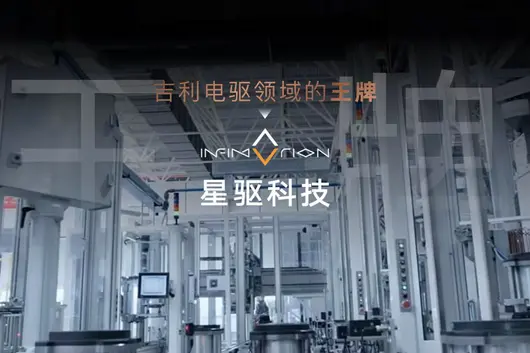
This not only announces that electric drive technology has officially entered a new era of high integration, but also pushes a company established only 5 years ago—Xingqu Technology—from behind the scenes to the center of the spotlight.
As the core ace of Geely's electric drive technology, Xingqu Technology uses its all-stack self-research hard power to connect the complete chain of electric drive technology. Although it is the first formal public debut, the market dominance of this young enterprise is already impossible to ignore: 2026 revenue is expected to exceed 20 billion yuan, firmly staying in the top tier of domestic electric drives.

As early as its inception, the goal of Xingqu Technology was clear: to set a technical benchmark for global electric drives and make electric drive solutions of "Made in China" the world standard.
Although the press conference has concluded, a judgment has become clearer: on the electric drive track, Xingqu Technology has the strength to become the next "CATL".
How deep has Xingqu dug this technological moat?
At this press conference, Geely Galaxy TT made its debut. Relying on extreme energy efficiency and handling performance, this coupe set two Guinness World Records: "Lowest energy consumption for driving a mass-produced pure electric sedan around Qinghai Lake" and "Longest continuous dual-car drift on wet roads".
Low energy consumption and strong handling are often difficult to achieve simultaneously in the electric vehicle era, why can Galaxy TT achieve it?
The answer lies in its "power heart".
Providing core power for Geely Galaxy TT is exactly the protagonist of this press conference: Thunder 16-in-1 Smart Electric Drive. This system achieves deep cross-domain integration of 16 core hardware and functions such as motors, motor controllers, gearboxes, etc., and the whole system weighs only 75kg.

Behind the successful mass production and release of the Thunder 16-in-1 Smart Electric Drive is the deep technical accumulation of Geely's core ecosystem partner—Xingqu Technology—and the strength of the global industrial system.
As the electric drive technology ace of Geely, Xingqu Technology has been redefining the boundaries of electric drive technology:

In 2021, it pioneered self-developed 400V silicon carbide electric drive, equipped on Zeekr 001, and remains a classic benchmark for electric drive efficiency and performance; In 2024, it was the industry's first to launch ultra-high integrated 11-in-1 smart electric drive, becoming the lightest weight, smallest volume, and highest comprehensive efficiency electric drive product in the industry at that time; In 2025, it released the world's first 900V high-performance magnesium alloy coaxial dual electric drive, setting records for the highest power density and highest torque density of mass-produced magnesium alloy dual electric drive assemblies in the industry.
Xingqu Technology defining a new benchmark for global electric drive technology is not just a slogan, but a systemic capability based on a full-stack technical moat where "mass production + pre-research" advance in tandem.
At the mass production level, 900V high-voltage magnesium aluminum alloy electric drive assemblies, all-series silicon carbide motor controllers, and X-pin platform motors have been mass-produced, proving reliability and advancement in large-scale market verification; At the pre-research level, next-generation technologies such as amorphous alloy motors, three-level motor controllers, and embedded motor controllers have completed reserves, leaving sufficient "technical margin" for subsequent product iterations.
In addition, Xingqu Technology has also extended its technical map to the fields of intelligent driving and energy replenishment—the 1400 TOPS computing power ADCU Ultra intelligent driving super brain, and the HPC V4.0 liquid-cooled supercharging equipment capable of achieving 5-minute rapid energy replenishment, are providing comprehensive empowerment for the next generation of intelligent travel experiences.
Overall, Xingqu Technology's business segments cover the full-chain development from underlying software to hardware integration, deeply cultivating the new energy core power field, mainly operating pure electric and hybrid system electric drives, power supplies, and electronic products, and proactively planning multi-power scenarios such as intelligent driving, charging and energy replenishment, battery management, AI power, and low-altitude flight.
Revenue to exceed 20 billion, what supports it?
The thickness of technology must ultimately be measured by the speed of the market.
Xingqu Technology used a set of numbers to outline a growth curve that is steep to the point of being unbelievable:
2022 revenue 40 million, 2023 leaped to 600 million, 2024 broke through 1.7 billion, 2025 reached 14.8 billion directly. From 1.7 billion to breaking 10 billion, it took only 1 year, nearly 6 times annual growth, which is rare in the auto parts industry. According to predictions, in 2026, Xingqu Technology revenue will exceed 20 billion yuan.
What justifies such speed?
The first keyword is manufacturing implementation capability.
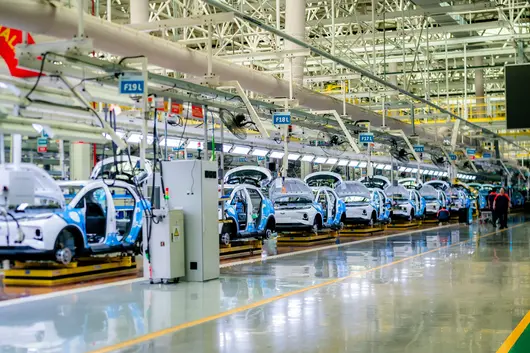
Xingqu Technology has deployed five major intelligent manufacturing bases in Wuxi, Jiaxing, Hangzhou, Ningbo, and Quzhou, adopting highly automated production lines leading both domestically and internationally, with core assembly process precision controlled at ±25 microns.

Even more amazing is its factory construction speed. Signed in Wuxi in 2022, achieving signing, breaking ground, topping out, production, and invoicing throughout the entire process in that year, running the industry record of "signing in the year, production in the year" in 352 days; 2025 Phase III project, signed in August, topped out in November, taking only 90 days.
This replicable ultra-fast implementation capability is the hardest bottom-line support for "Xingqu Speed".
In the first half of this year, the installation volume of Xingqu Technology's motor and electronic control firmly stays in the industry top 3, and technical strength ranks in the world's first echelon.
The second keyword is the full industry chain layout.
It is reported that Xingqu Technology covers the full-chain development from underlying software to hardware integration: at the core component level, motors, electronic controls, and gearboxes are all independently developed; at the assembly system level, it has the ability to integrate the full value chain of multi-in-one electric drive assemblies.
On the software side, the dual motor controller software development process has met ASPICE L3 certification, and functional safety reaches ASIL D level; On the hardware side, self-built shaft gear machining lines, SMT surface mount lines, stator-rotor lines, assembly lines and other automated production lines, realizing the self-research and self-production of key components such as shaft gears and PCBA boards.
From chips to electronic control, from software algorithms to hardware assemblies—Xingqu Technology has built a complete and independently controllable technical closed loop.
Behind this, Xingqu Technology's supply chain system also provided key support. It is reported that Xingqu Technology takes "ecosystem synergy" as its core strategy, and has built a deep cooperation network with global and local partners. Not only has it established deep cooperation with global top semiconductor and energy giants such as Infineon, Onsemi, Shell, but it has also actively built a localized supply chain ecosystem.
Global customers, why do they all stick with Xingqu?
If doing it, do global electric drive technology! This is the creed Xingqu Technology has set since its inception, and also the most concise footnote to its globalization strategy.
Speaking with hard-core technology, dealing with the world with a global layout, Xingqu Technology is turning ambition into reality.
Starting from all Geely brands, Xingqu Technology quickly opened the situation and has become the electric drive partner chosen and recognized by global top automakers together.
So, why do global customers choose Xingqu Technology one after another? The answer is simple: it can withstand the strictest tests.

Such capabilities have been repeatedly proven in cooperation with global top clients time and again.
This year, Xingqu Technology won an order from a European luxury brand client. The counterpart set out over 9,000 test indicators, among which one was particularly harsh: requiring a large SUV to achieve 107% gradeability—calculated down, the grade angle is about 47 degrees. As a reference, ordinary family sedan gradeability is usually between 15 to 20 degrees, professional off-road vehicles between 30 to 40 degrees, and mass-produced models that can reach 45 degrees are extremely rare.
Xingqu Technology achieved it.
It is precisely this ability to "dare to take the hardest questions and submit the best answer sheets" that made Xingqu Technology gain the trust of global top automakers within a few short years.
Currently, Xingqu has smoothly entered the supply chain system of Volvo, Polestar, Renault, Jaguar Land Rover and other global well-known vehicle plants, and multiple deep cooperation projects are being steadily promoted. It is understood that Xingqu Technology has signed 30 billion overseas orders, and the export in 2026 is expected to increase by 100%.
Behind the orders is a global layout map that is becoming more and more perfect. Currently, Xingqu Technology has established R&D and after-sales service centers in Gothenburg, Sweden and many places around the world, with Chinese and European teams relaying cooperation, possessing the ability to respond in time serving global clients 24 hours.
As early as its inception, Xingqu Technology has established a top-notch R&D and project management team in Europe, and the current scale has approached nearly 100 people.
To overcome the natural barriers of time difference, language, and culture, Xingqu Technology independently developed the "World Tree" cloud collaborative development platform, through which Chinese and European teams completed the deep collaborative development of software, hardware, and algorithms in the cloud.
It is worth noting that the globalization of Xingqu Technology is also accelerating. According to public reports, Xingqu Technology's first overseas factory located in Malaysia will be put into production in 2026, becoming a bridgehead radiating the Southeast Asian market.

Conclusion:
In the new energy vehicle era, the power core has switched from internal combustion engines to electric drives, and in this global competition, China is already running at the very front.
The original industrial logic is being rewritten by enterprises such as Xingqu Technology.
When a Chinese electric drive enterprise established only 5 years ago, uses a combination punch of technical depth, manufacturing speed, and global vision, to complete the road of traditional giants for decades, it proves one thing: the power structure of the global automotive supply chain is being reshaped.
On the electric drive track, as the invisible champion of the Chinese automotive industry chain breaking out upward, Xingqu Technology has the strength to become the next "CATL".
(All images in this article are from Geely)