


首頁BYD Qin

搜尋歷史
熱門搜尋
經銷商登入 / 註冊

In Malaysia's SUV market, many buyers compare Toyota Corolla Cross and Mazda CX-8 when choosing a car. These two cars are quite close in price and positioning. Today, we will do a detailed comparison from multiple aspects to help you save time on research.
Toyota Corolla Cross OTR price in Malaysia is RM 133,800 - 148,800, with a total of 3 versions, including 2026 HEV 1.8L GR Sport (RM 148,800), 2026 HEV 1.8L Standard (RM 140,800), 2026 1.8L Standard (RM 133,800) etc.
Mazda CX-8 OTR price in Malaysia is RM 165,360 - 201,360, with a total of 5 versions, including 2025 2.5T 4WD High Plus Petrol (RM 201,360), 2025 2.2L 2WD High Plus Diesel (RM 193,123), 2025 2.5L 2WD High Plus Petrol (RM 186,360) etc.
Looking at the price, Toyota Corolla Cross's starting price is indeed RM 31,560 cheaper than Mazda CX-8. If your budget is limited, Toyota's entry-level version can already meet daily needs. But note that the few thousand dollars cheaper might involve trade-offs in features, depending on your needs.

Toyota Corolla Cross safety rating is 5★ (ASEAN NCAP), active safety system includes TSS (PCS, LDA, ACC, LTA).
Mazda CX-8 safety rating is 5★ (ASEAN NCAP), active safety system includes Brand ADAS.
Both cars have the same safety rating, safety features are quite complete within this class. New cars nowadays have good safety, no need to worry too much about this.

Toyota Corolla Cross body length 4400 mm, trunk 400 L.
Mazda CX-8 body length 4500 mm, trunk 450 L.
In terms of space, Mazda CX-8 body is 100 mm longer than Toyota Corolla Cross, seating space has an advantage. However, Toyota Corolla Cross is more flexible for parking in the city, each has trade-offs.

Toyota Corolla Cross warranty 5 years/unlimited mileage, maintenance interval every 10,000km or 6 months.
Mazda CX-8 warranty 5 years/150,000km, maintenance interval every 10,000km or 6 months.

Toyota Corolla Cross and Mazda CX-8 are both popular choices in the Malaysian market, suitable for family use, daily commuting. If you value brand reputation and resale value more, consider the one with better reputation first; if you care more about value for money and features, choose the one with richer configuration. Ultimately, it is recommended to test drive both, personal experience is the most important.

Overall, Toyota Corolla Cross and Mazda CX-8 are both very good models in the Malaysian market. Which one to choose mainly depends on your personal needs and budget. It is suggested to do your research, compare quotes from multiple car dealerships, and then test drive to make a final decision. Buying a car is a big matter, spending time on research will never go wrong.


On September 22, Chery held the "QQ Show and Friends" / QQ3 Modern Edition Launch Event at Jiuzi Square, Wuhu, Anhui. The new Chery QQ3 Modern Edition has officially launched. The car's official guide price is 88,900 Yuan, the trade-in price is 86,900 Yuan, and the limited-time trade-in price starts from 83,900 Yuan.
Purchasing benefits include four tiers: trade-in subsidy of 2,000 Yuan, trade-in subsidy of 5,000 Yuan (trade-in and purchase subsidy cannot be enjoyed simultaneously); financial plans up to 70,000 Yuan 36-month 0% interest, starting from 0 Yuan down payment for all series; lifetime free basic data + 2 years of entertainment data (10GB/month), lifetime OTA; lifetime warranty for the first non-commercial owner, 8-year/150,000 km battery degradation guarantee, lifetime roadside assistance. Orders placed within the limited time can also select Sun Li signed car models, factory-original Wind Trace Racing Stripes, etc. Specific qualifications, regional price differences, and trade-in audits are subject to Chery QQ and dealer current policies.

The Chery QQ3 Modern Edition is not a brand new platform vehicle, but an original factory adaptation of the "Neo Retro" retro style based on the existing Chery QQ3. Compared to the standard version, the differences mainly lie in color schemes, exterior kits, interior materials, and some comfort configurations. The target users are groups who want personalized transportation but do not want to modify colors or parts themselves later.
Exterior offers two exclusive color schemes: "Modern Era" and "Anne Pearl", equipped with Time Badge Wheels, Wind Trace Racing Stripes, Retro White Front and Rear Bumpers, Gilded Chrome Trim; wheel arches and side skirts are changed to match the body color; paint uses 6-layer 2K process, suppliers include Kansai, PPG. The overall idea is to incorporate modification directions such as Chinese style, holidays, pets, city retro, etc., into the factory configuration list, reducing user later registration and adaptation costs.
Dimensions and Space: A0-Class Pure EV, Wheelbase 2700mmThe new QQ3 Modern Edition body dimensions are 4229/1812/1573mm, wheelbase 2700mm; multiple storage areas throughout the car, rear seats support expansion, conventional trunk and folded loading are subject to the official configuration sheet. The front trunk is a 70L drainable electric compartment, supporting 8 opening methods, including outside voice, App, etc.; more practical for city item retrieval, camping miscellaneous items, wet part storage compared to traditional small cars.

The interior is dominated by "Cloud Velvet Beige", the ceiling, A/B pillars, and sun visors are wrapped in velvet, the central control and door panels add houndstooth texture, the armrest box matches contrasting tape; provides dual soft light makeup mirrors, 50W wireless charging, 256-color ambient light, steering wheel heating, front seat heating/ventilation, etc. Materials are more "delicate" compared to commuting cars at the same price point.
Cockpit and Intelligent Driving: 8155 + 15.6-inch Screen, L2 and Auto ParkingThe cockpit is equipped with Qualcomm 8155, 15.6-inch 2.5K central control screen, built-in Carmind AI agent, supports natural language interaction, vehicle status Q&A, intelligent car control, compatible with CarPlay/HiCar/CarLink. In terms of assisted driving, equipped with 540° panoramic image, 12 ultrasonic radars, 100+ scenario automatic parking; L2 assistance covers adaptive cruise, lane keeping, AEB, blind spot monitoring, front and rear collision warning, door opening warning, etc. Outside voice can control front and rear luggage compartments, supports shouting, App can remotely prepare car, control AC and seat functions.
The safety structure is a 5-longitudinal 8-transverse cage body, high-strength steel proportion 82%, hot-formed steel about 16%, integrated hot-formed door ring 1300MPa, all series 6 airbags; battery is Rhino Battery, equipped with CATL cells, IP68 protection, vehicle passes China Automotive Technology and Research Center NESTA six-dimensional electrical safety certification. Active safety includes AEB, BSD, etc.
Power is divided into two gears:
58kW motor, 90N·m, 29.48kWh battery, CLTC 310km;
90kW motor, 115N·m, 41.28kWh battery, CLTC 420km.
All series rear-motor rear-wheel drive, front MacPherson + rear multi-link independent suspension, minimum turning radius 5.2 meters; fast charge 30%-80% fastest about 16.5 minutes, all series 6.6kW external discharge. Rear drive + independent rear suspension is rare in A0 pure EVs, helpful for city lane changing and shock filtering.


Background data provided by Chery: QQ series cumulative sales 1.6 million+, covering 100+ countries and regions; new QQ3 sales exceed 10,000 for 5 consecutive months, August delivery 19,103 units, month-over-month growth 64.07%; currently overseas and domestic orders exceed 100,000 units, among them Thailand, Indonesia etc. markets pre-sale orders exceed 20,000. The Modern Edition's task is not to lower the sales floor, but to make differentiation with "Factory Retro + Thicker Interior + Front Trunk/External Discharge" in the 80,000 Yuan pure EV class, when comparing to Seagull, Bingo, Star Wish, Nano 01 it will be more inclined to personality and scenario, not solely relying on low price.
New QQ3 Modern Edition, does not change platform, does not change powertrain main body, makes colors, stripes, interior materials that users often modify themselves into factory original, then stacks 8155, 70L front trunk, rear-drive independent suspension, 83,900 Yuan trade-in price is still very attractive.
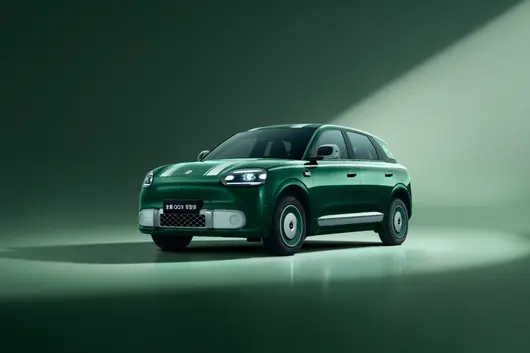


In the Malaysian SUV market, many buyers compare Honda CR-V and Volkswagen Tiguan when choosing a car. These two cars are quite close in price and positioning. Today we will make a detailed comparison from multiple aspects to save you time on research.
Honda CR-V's OTR price in Malaysia is RM 178,200 - 195,900, with a total of 4 versions, including 2026 e:HEV 2.0L 2WD RS (RM 195,900), 2026 1.5T 4WD V (RM 181,900), 2026 e:HEV 2.0L 2WD E (RM 178,200), etc.
Volkswagen Tiguan's OTR price in Malaysia is RM 206,540 - 260,024, with a total of 2 versions, including 2025 Allspace 2.0T R-Line (RM 260,024), 2025 Allspace 1.4T Elegance (RM 206,540), etc.
In terms of price, the Honda CR-V's starting price is indeed RM 28,340 cheaper than the Volkswagen Tiguan. If your budget is limited, Honda's entry-level version can already meet daily needs. However, note that the lower price might mean compromises on features, depending on your specific requirements.

Honda CR-V comes with a 2.0L 4-cyl, 170 hp. Official fuel consumption 8.0 L/100km.
Volkswagen Tiguan comes with a 2.0L 4-cyl, 170 hp. Official fuel consumption 8.0 L/100km.
Both cars use the same powertrain system, the driving feel is basically the same in daily use. Fuel consumption is also similar, no need to worry too much about this.
Honda CR-V uses FWD drive type.
Volkswagen Tiguan uses FWD drive type.
Both cars have the same drive type, both are FWD, daily driving experience will not be much different.

Honda CR-V warranty 5 years/unlimited mileage, maintenance interval every 10,000km or 6 months.
Volkswagen Tiguan warranty 3 years/100,000km, maintenance interval every 10,000km or 6 months.

Honda CR-V and Volkswagen Tiguan are both mainstream choices in the Malaysian market, suitable for family use, daily commuting. If you value brand reputation and resale value more, you can prioritize the one with better reputation; if you care more about cost-performance ratio and features, choose the one with richer configurations. Ultimately, it is recommended to test drive both, personal experience is the most important.

Overall, Honda CR-V and Volkswagen Tiguan are both very good models in the Malaysian market. Which one to choose depends mainly on your personal needs and budget. We suggest doing your homework, compare quotes from several dealerships, then test drive to make the final decision. Buying a car is a big matter, spending time on research will never be wrong.


In the Malaysian SUV market, many buyers compare the Proton X90 and Hyundai Tucson when choosing a car. These two cars are quite close in price and positioning, so today we will make a detailed comparison from multiple aspects to help you save time on research.
The Proton X90 OTR price in Malaysia is RM 106,800 - 122,800, with a total of 4 versions, including 2026 1.5T Prime X (RM 122,800), 2026 1.5T Prime (RM 116,800), 2026 1.5T Lite (RM 106,800), etc.
The Hyundai Tucson OTR price in Malaysia is RM 143,888 - 197,888, with a total of 5 versions, including 2025 HEV 1.6T AT 2WD Prestige (RM 197,888), 2025 1.6T DCT 4WD Prestige (RM 186,888), 2025 1.6T DCT 2WD Prime (RM 164,888), etc.
Looking at the price, the starting price of the Proton X90 is indeed RM 37,088 cheaper than the Hyundai Tucson. If your budget is limited, the entry-level version of Proton is already enough to meet daily needs. But be aware that the savings of a few thousand might involve trade-offs in features, depending on your specific needs.

The Proton X90 is equipped with a 1.5L Turbo, 140 hp. Official fuel consumption is 7.0 L/100km.
The Hyundai Tucson is equipped with a 1.5L Turbo, 140 hp. Official fuel consumption is 7.0 L/100km.
Both cars use the same powertrain system, so the driving experience feels basically the same for daily use. Fuel consumption is also similar, so there is no need to worry too much about this point.

The Proton X90 adopts FWD drive configuration.
The Hyundai Tucson adopts FWD drive configuration.
Both cars have the same drive configuration, both are FWD, so there won't be much difference in daily driving experience.
The Proton X90 warranty is 5 years/150,000km, maintenance interval every 10,000km or 6 months.
The Hyundai Tucson warranty is 5 years/300,000km, maintenance interval every 10,000km or 6 months.

The Proton X90 and Hyundai Tucson are both mainstream choices in the Malaysian market, suitable for family use and daily commuting. If you value brand reputation and resale value more, you can prioritize the one with better reputation; if you care more about value for money and features, then choose the one with richer configurations. Ultimately we suggest test driving both, as hands-on experience is the most important.

In general, the Proton X90 and Hyundai Tucson are both very good car models in the Malaysian market. Which one to choose depends mainly on your personal needs and budget. We suggest doing your research well, comparing quotes from multiple dealerships, and then test driving to make a final decision. Purchasing a car is a major decision, spending time on research will never be wrong.


This domestic car's launch pace differs from most Chinese domestic brands' new cars.
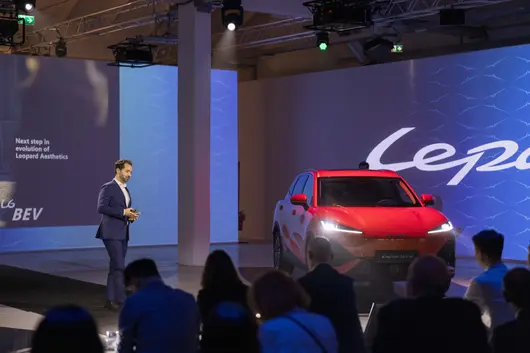
Before the Chery Fengyun T7 started its pre-sale in China, its overseas version, the Lepas L6, had already debuted at the Milan Design Week and was officially launched in Thailand.

In other words, the Fengyun T7 debuted and launched in the overseas market first, then turned back to attack the Chinese market. This "going overseas first, returning home later" path is not common among Chinese brands.

The common pattern in the past was for products to launch domestically first, verify, and sell in volume, then export overseas depending on the situation. The Fengyun T7 does the reverse; the underlying product logic reflects Chery's clear understanding of this car's positioning. The Fengyun T7 is not a domestic exclusive car, but a native global car developed for multi-regional markets from the start of R&D.

According to local media reports, the overseas model of the Fengyun T7—the Lepas L6—was launched in Thailand at a price of 769,900-829,900 Thai Baht (approximately 157,100 Yuan onwards), while domestically the car is expected to launch Joy Edition, Comfort Edition, and Smart Edition, with pre-sale prices of 109,900, 119,900, and 129,900 yuan respectively.

From the product itself, the Fengyun T7 is a standard-sized compact pure electric SUV for home use, with a length of 4570mm, wheelbase 2700mm, interior volume rate 84%, rear legroom 911mm, and folding the rear seats can form a 1955mm pure flat space.
In the Chinese market, the Fengyun T7 did not deliberately elongate due to different market environments, but maintained a size ratio acceptable in multiple global markets.

Body safety can also undergo "global trials". 80% of the body is high-strength steel, 18.84% is hot-formed steel, nine horizontal five longitudinal cage structure, equipped with 9 airbags, including the rare 48L dual-chamber remote airbags and rear side airbags for its class.

The battery adopts IP68 waterproofing, 96 times the grade of the national standard. These configurations are not just compliance bottom lines for a specific country's regulations, but are directly benchmarked against the 2026 Edition E-NCAP 5-star standard. The cumulative test mileage of the whole vehicle exceeds 6 million km, of which the durability special test is 1.45 million km, with test vehicles covering extreme environments such as the Southeast Asian rainy season, Middle East sun exposure, and Indonesian high humidity.
This verification intensity is essentially using the global market's entry threshold to force product maturity.

In terms of range, the Fengyun T7 series is equipped with 65.05kWh batteries throughout, CLTC condition 600km, actual measured range over 667km. This "reverse false labeling" calibration method actually uses measured data to offset users' range anxiety, which is more pragmatic than simply stacking large batteries. Charging time from 30% to 80% is 20 minutes, combined with a wide-heat pump air conditioner and high voltage PTC, the official calibrated applicable temperature range is from -30°C to 55°C.

This means its thermal management system is designed for multi-climate regions, not just for the temperature difference between north and south of China, but also to cover scenarios such as Middle East high temperatures, Southeast Asia high humidity, and Nordic severe cold.
Intelligence is another point worth discussing in detail for the Fengyun T7. It is equipped with a Cockpit-Driving Integrated 8775 chip, 4nm process, 72 TOPS computing power, integrating 3 mmWave radars, 7 cameras, and 12 ultrasonic radars, totaling 22 sensors. The Falcon 500 driving assistance system supports high-speed NOA, and long-distance parking memory parking up to 2km, covering over 300 parking scenarios.

It is worth mentioning the Fengyun T7's driving assistance backup policy: Within one year of purchase, if an accident occurs due to system reasons in parking or intelligent navigation scenarios, the maximum compensation is 5 million yuan. At the same time, it provides lifetime warranty for the whole vehicle and a 666 yuan purchase of lifetime basic maintenance package. The setting of these rights and interests is not only an expression of confidence in the self-developed intelligent driving system, but also lowers the psychological threshold for users to try higher-level driving assistance. After all, no matter how advanced the technology is, if users dare not use it, it equals zero.

Back to the "overseas first, domestic later" path. Chery has eight major design centers globally. The Fengyun T7 was jointly created by over 100 designers, bringing together over 5000 global users co-creation. The homologous model Lepas L6 received international recognition at the Milan Design Week. From Milan to Bangkok to China, this route shows that Chery is trying a new logic: define products with global resources, verify quality with global markets, and bring products verified in multiple regions back to China.

The actual effect of this model is that when the Fengyun T7 returns to the Chinese market, it is no longer a "to-be-verified" new product, but a mature model that has undergone regulations and road conditions tests in the EU, Australia, Southeast Asia, the Middle East, South America and other regions.
For domestic consumers, "overseas launch first" itself constitutes a quality endorsement. In the 100,000 yuan level pure electric SUV, the most competitive sub-segment, the Fengyun T7 needs to use the identity of "global car" to establish wider, stricter, and more scenario-based standard differentiation.

Of course, the pre-sale price starting from 109,900 yuan means the Fengyun T7 will ultimately have to face the price blood war of the domestic market. Whether global quality can be converted into sales depends on whether consumers are willing to pay for "wider standards". But at least, it provides a different product idea: not exporting cars that cannot be sold domestically, but letting global demand define a car, and then letting this car return to the world's largest new energy market for inspection.
From "Chinese cars going overseas" to "Global cars returning home", the Fengyun T7's path may signal that China's automotive globalization has entered the next stage.

喺馬來西亞嘅 SUV 市場,好多買家喺揀車嗰陣都會用 寶騰 X90 同 奇瑞 Tiggo 8 PHEV 做比較。這兩款車喺價位同定位上都好接近,今日我哋就由多個方面做個詳細比較,幫你省返做功課時間。
寶騰 X90 喺馬來西亞嘅 OTR 售價係 RM 106,800 - 122,800,總共 4 個版本,包括 2026 1.5T Prime X(RM 122,800)、2026 1.5T Prime(RM 116,800)、2026 1.5T Lite(RM 106,800) 等。
奇瑞 Tiggo 8 PHEV 喺馬來西亞嘅 OTR 售價係 RM 159,750 - 159,750,總共 2 個版本,包括 1.6L Turbo Standard(RM 130,000)、1.6L Turbo Premium(RM 145,000) 等。
由價錢嚟睇,寶騰 X90 嘅起步價確實比 奇瑞 Tiggo 8 PHEV 平咗 RM 52,950。如果你預算有限,寶騰嘅入門版已經可以滿足日常需求。但都要注意,平嗰幾千塊,可能喺配備上會有取捨,具體睇你需求。
寶騰 X90 嘅安全評級係 5★ (ASEAN NCAP),主動安全系統包括 ADAS (ACC, AEB, LKA, LDA, BSM, RCTA)。
奇瑞 Tiggo 8 PHEV 嘅安全評級係 TBD,主動安全系統包括 Basic。
安全配備方面,兩款車都拿到唔錯嘅評級。不過 寶騰 X90 嘅 ADAS (ACC, AEB, LKA, LDA, BSM, RCTA) 同 奇瑞 Tiggo 8 PHEV 嘅 Basic 喺功能上有些差異,如果你比較看重主動安全嘅話,可以仔細比較一下兩者嘅功能列表。
寶騰 X90 車身長 4400 mm,行李廂 400 L。
奇瑞 Tiggo 8 PHEV 車身長 4400 mm,行李廂 400 L。
兩款車嘅尺寸幾乎一樣,車內空間差別唔大。呢個級別嘅車,日常使用完全夠用。
寶騰 X90 同 奇瑞 Tiggo 8 PHEV 都係馬來西亞市場嘅主流選擇,適合家庭使用、日常通勤。如果你更看重品牌口碑同二手價,可以優先考慮口碑更好嗰款;如果你更在意性價比同配備,就揀配置更豐富嗰款。最終仲建議兩款都去試駕,親身體驗先至最要緊。
總括嚟講,寶騰 X90 同 奇瑞 Tiggo 8 PHEV 都係馬來西亞市場好唔錯嘅車型。揀邊一輛,關鍵仲係要睇你嘅個人需求同預算。建议大家做好功課,多比較幾間車行嘅報價,再去試駕做最終決定。買車係件大事,花少少時間做功課絕對唔會錯。


In Malaysia's SUV market, many buyers compare Proton X90 and Toyota Yaris Cross when choosing a car. These two models are quite close in price and positioning. Today, we will make a detailed comparison from multiple aspects to help you save time on research.
The OTR price of Proton X90 in Malaysia is RM 106,800 - 122,800, with a total of 4 versions, including 2026 1.5T Prime X (RM 122,800), 2026 1.5T Prime (RM 116,800), 2026 1.5T Lite (RM 106,800), etc.
The OTR price of Toyota Yaris Cross in Malaysia is RM 99,900 - 109,900, with a total of 2 versions, including 2026 1.5L Standard (RM 99,900), 2026 HEV 1.5L Standard (RM 109,900), etc.
In terms of price, the starting price of Toyota Yaris Cross is RM 6,900 cheaper than Proton X90. Honestly, in this price range, a difference of a few thousand is actually not significant. The key is to look at overall value for money and long-term usage costs.
Proton X90's safety rating is 5★ (ASEAN NCAP), with active safety systems including ADAS (ACC, AEB, LKA, LDA, BSM, RCTA).
Toyota Yaris Cross's safety rating is 5★ (ASEAN NCAP), with active safety systems including TSS.
Both cars have the same safety rating. In this class, safety features are quite comprehensive. New cars nowadays generally have good safety, so there is no need to worry too much about this.
Proton X90 warranty 5 years/150,000km, service interval every 10,000km or 6 months.
Toyota Yaris Cross warranty 5 years/unlimited mileage, service interval every 10,000km or 6 months.
Both Proton X90 and Toyota Yaris Cross are mainstream choices in the Malaysian market, suitable for family use and daily commuting. If you value brand reputation and resale value more, you can prioritize the one with better reputation. If you care more about value for money and features, choose the one with more configurations. Ultimately, it is recommended to test drive both models; personal experience is the most important.

Overall, Proton X90 and Toyota Yaris Cross are both very good models in the Malaysian market. Which one to choose depends on your personal needs and budget. We suggest doing your research, comparing quotes from several dealerships, and then test driving to make a final decision. Buying a car is a big matter, spending some time doing research is never wrong.


