首頁BMW E36 M3

搜尋歷史
熱門搜尋
經銷商登入 / 註冊

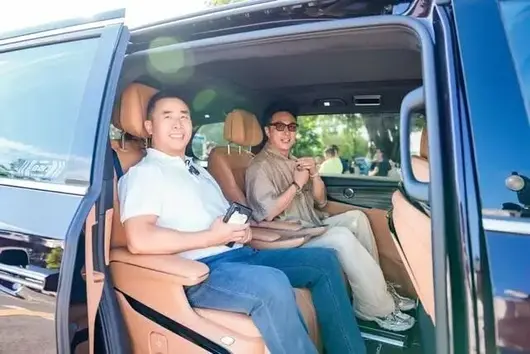
一台真正的豪华 MPV,究竟需要怎样的制造体系支撑?6 月 11 日,中国香港演员吴镇宇 —— 同时也是风行星海 V9 的真实车主 —— 走进东风风行柳州生产基地,从总装车间到研发试验中心,再到专业试验场,全程深度探访智能制造全流程,亲眼见证每一道严苛品控标准,并亲自试驾体验刚刚上市的 2027 款星海 V9。这不仅是一次明星与品牌的跨界互动,更是一位资深车主对产品品质的实地验证,亦是东风柳汽完整制造体系力的全景呈现。

总装车间:四大工艺段、122个工位,严苛制造标准就此铸就
作为东风风行智能制造的核心环节,总装车间按照工艺结构分为内饰、底盘、整车、调试四大工艺段,拥有122个生产工位,设计极限节拍可达50台/小时。在星海V9产品总监陈正宇的讲解中,吴镇宇近距离观摩了AGV自动牵引车精准配送物料、动力总成合装、五轴拧紧机对轮胎螺母进行扭矩检测等关键工序。
超5亿元研发投入:消声室与道路模拟试验室背后的技术沉淀
东风风行完整的体系力,不仅体现于高效的总装线,也离不开总投资超5亿元、国内领先的自主研发测试基地。在研发试验中心,吴镇宇走进消声室、四通道道路模拟试验室等专业试验室,体验2027款星海V9极致静谧、出色耐久背后的技术沉淀,并由衷表示:“以后收音,想借用风行的消声室。”
东风风行占地460亩的研发试验场同样令吴镇宇印象深刻。他评价道:“这么大的场地,很适合电影取景。”该试验场是国内极少数由车企自建、能同时满足全系列商用车与乘用车的综合型专业试验场,场内建有性能路、动态广场、强化坏路、NVH评价路、坡道等7大类55种特殊路面,可开展整车在动力性、经济性、可靠性、环保噪声及主观评价等领域的全面道路测试。

试验场实地体验:160km/h加速、冲坡涉水,吴镇宇连连点赞
在研发试验场,吴镇宇亲自体验了20度冲坡、30度下坡,驶过鹅卵石路和商用车测试规格的涉水路,对2027款星海V9在复杂路况下的底盘滤震、通过性及车身稳定性表示认可。内部测试道路上,2027款星海V9加速到160km/h以上,提速快、加速稳的表现赢得他连连点赞。
2027款星海V9再升舱,星海V6智慧启程
走出试验场,吴镇宇坐进刚刚上市的2027款星海V9。使用星海V9老友高定版半年有余,他对星海V9的豪华感与专属体验早已了然于心,但2027款星海V9依然带给他新的惊喜。超广角全景天窗让他表示“能让我晒到太阳”;车内小桌板与车载冰箱被评价为“非常实用”;85.2%得房率、220mm二排通道和第三排4/6比例下沉放平设计,让他联想到剧组转场时的真实需求:“2027款星海V9的空间大,特别是第三排,非常宽敞。”他还特别关注到外放电功能:“这个功能很实用,如果以后有机会去内蒙古拍戏,可以用来吃火锅
智能化方面,升级后的自动泊车、遥控泊车和50米循迹倒车功能,让2027款星海V9在柳州市区穿行、泊车时灵活从容。新车搭载高通骁龙8295P芯片、双15.6英寸大屏,以及百度文心一言与DeepSeek双AI大模型,人机交互流畅自然。

体验期间,吴镇宇还看到了即将上市的风行星海V6。这款“亲民智慧大六座”搭载华为乾崑智驾系统,拥有10个摄像头、12个超声波雷达和3个毫米波雷达,结合2900mm轴距和第三排座椅下沉式收纳,实现华为智驾能力与家庭空间需求的深度融合,满足跨城出行、市区代步所需。
从智能制造的每一道工序,到研发验证的每一次测试;从面向商务场景的星海 V9,到主打家庭智慧出行的星海 V6,东风风行用二十余年的造车积淀,构建起覆盖全场景的产品矩阵与完整的制造体系。2027 款星海 V9 以 17.99 万元起的诚意定价,让豪华 MPV 真正触手可及;即将上市的星海 V6 搭载华为乾崑智驾系统,将为家庭用户带来更智能的出行体验。
吴镇宇的这次探厂之旅,既是一位车主对品质的实地检验,也是市场对东风柳汽体系力的一次公开审视。以品质为根,以用户为本,东风风行正用扎实的制造功底与不断迭代的产品力,为千万中国家庭打造更安心、更可靠的出行选择。

In May, China's automotive market overall presented a gentle recovery trend, with domestic brands still being the sales backbone of the market. Recently, BYD, Geely, Chery, Changan, and Great Wall, the top 5 domestic automakers, successively released their monthly performance reports. From the data, these five companies show a general characteristic of "stable total growth, divergence between domestic and international markets, and accelerated new energy penetration". Overseas exports and new energy vehicles have become the most core growth engines; export business has evolved from a "bonus item" to the "core foundation" for some companies. BYD's "dominant leader" status is further consolidated, Chery achieved high growth via exports, Geely's new energy penetration rate broke 56%, Changan focused steadily on balanced development, while Great Wall appeared slightly under pressure during structural transformation.
BYD: Export Hits New High Becomes Biggest HighlightIn May, BYD stood firmly at the top of domestic brands with a monthly sales volume of 383,500 vehicles, maintaining positive growth both year-on-year and month-over-month under a large base. Its two main brands, Dynasty and Ocean, sold a combined 330,200 vehicles, contributing 86.1% of total sales; Fangchengbao's monthly sales broke 30,000 units to reach 30,200, a year-on-year increase of 139.7%, setting a new high for the year; Denza sold 16,300 vehicles, and Yangwang delivered 286 vehicles. From a model perspective, BYD had eight models in May with monthly sales exceeding 20,000 vehicles. The Song Family and Yuan Family both broke 50,000 units, selling 51,370 and 56,691 vehicles respectively. The Sea Lion Family followed closely with 42,615 vehicles, and Seagull sales were also close to 40,000 vehicles.

BYD's biggest highlight in May was exports. Overseas new energy vehicle sales reached 160,600 units, an 80.4% year-on-year increase, accounting for about 42%. The sharp expansion of export scale effectively countered the phased weakness in domestic demand. Cumulative exports from January to May exceeded 620,000 vehicles. High export growth mainly benefited from continued ramping up of overseas factory capacity, improved ocean shipping capacity, and accelerated channel network expansion. In the domestic market, BYD promoted Megawatt Super Charging and intelligent strategies simultaneously—Megawatt charging achieved about 90% charge in 9 minutes; 20,000 super charging stations are planned to be built by 2026; all series models are available with Sky Eye B intelligent driving solutions and city navigation safety fallback plans, accelerating the popularization of high-level intelligent driving. As Gen 2 Blade Battery capacity gradually releases, the company's orders are expected to continue rising.
Chery: Sales Growth Leads the Top 5Chery Group's total sales volume in May was 247,800 vehicles, a significant year-on-year increase of 20.5%, ranking first in growth speed among the top 5. Exports remained its most core growth engine—May exports reached 181,900 vehicles, an 80.5% year-on-year increase, accounting for 73.4% of total sales that month, continuously breaking the single-month export record for Chinese brands for three months. In terms of new energy, Chery New Energy sold 100,300 vehicles, a 58.8% year-on-year increase. April and May consecutively saw monthly new energy sales breaking 100,000 vehicles.

The strong performance in exports benefited from Chery's long-term deep cultivation of overseas channel advantages and localized operation capabilities. While overseas orders continued to rise, high export growth formed a sharp contrast with domestic sales—Chery's domestic sales in May were only 60,000 vehicles, accounting for one-quarter of total sales. From cumulative data, Chery Group accumulated 1.101 million sales from January to May, but against the annual goal of 3.2 million vehicles, monthly averages need to reach about 420,000 vehicles later, and pressure remains significant.
Geely: New Energy Penetration Rate Breaks 56%Geely Auto's total sales volume in May was 237,600 vehicles, a 1% year-on-year increase, achieving month-over-month double growth for three consecutive months. In terms of structure, Geely's "New Four Transformations" transformation showed significant results: new energy vehicle sales reached 133,400 units, accounting for 56% of total sales, with new energy share exceeding 50% for four consecutive months.

From sub-brands, performance was significantly divergent. Zeekr brand sales in May reached 34,400 vehicles, a 82% year-on-year increase; Zeekr 9 Series and 8 Series models combined sales approached 50% of total sales, showing bright performance in the high-end market; Galaxy brand sales were 81,700 vehicles; Geely brand sales were 182,500 vehicles, among which China Star Series sales reached 100,800 vehicles; Lynk & Co brand sales were 20,700 vehicles, with new energy vehicle sales share rising to 71%.
In terms of exports, Geely's overseas vehicle exports in May reached 85,100 vehicles, a explosive 184% year-on-year increase, setting a brand single-month export record high. Among exported products, new energy vehicles reached 40,800 units, accounting for nearly half; hybrid and pure electric products have successively landed in Southeast Asia, Middle East, Latin America, and other markets, highlighting the results of global strategy implementation.
Changan: Multi-brand Matrix Balanced EffortChangan Auto's delivery volume in May was 209,100 vehicles, among which new energy deliveries were 92,400 vehicles, a 5.8% year-on-year increase, with new energy share about 44%. In terms of exports, overseas deliveries reached 70,700 vehicles, a 38% year-on-year increase, becoming another major growth highlight for Changan in May.
In the sub-brand matrix, Changan Qiyuan delivered 34,500 vehicles in May; All-New Q05 delivered 15,800 units, with orders breaking 3,000 units within three days of listing in Thailand; Deepal sales in May were 33,200 vehicles, a 30% year-on-year increase; January to May overseas cumulative sales were 28,700 vehicles, a significant 167% year-on-year increase; Avatr delivered 7,336 vehicles in May; Changan Auto (Gravity) delivered nearly 49,000 vehicles in May.

Changan Auto's balanced layout was fully reflected in May: the fuel car base remained stable, new energy brands Deepal and Qiyuan accelerated volume growth, high-end brand Avatr continued to break through in technical cooperation, and overseas markets simultaneously achieved breakthrough growth. The pattern of five brands working together, driven by both new energy and exports, is initially taking shape.
Great Wall: Overseas Sales Growth Year-on-Year 46.75%Great Wall Motor's sales in May were 100,400 vehicles, slightly down compared to last May's 102,200 vehicles, making it the only company among the top 5 to show a year-on-year negative growth. From sub-brands, Haval brand sales in May were 55,500 vehicles, remaining Great Wall's most important sales pillar; Tank brand sales were 17,100 vehicles; both Haval and Tank brand sales showed year-on-year declines; Wey brand sold 8,119 vehicles, a 31.78% year-on-year increase, achieving growth against the trend; Ora brand performance was most stunning, with sales of 6,018 vehicles, a significant 206.88% year-on-year increase. In terms of new energy, Great Wall sold 30,400 new energy vehicles in May, with new energy vehicle transformation gradually accelerating.

The overseas market became Great Wall's biggest highlight in May, with overseas sales growing 46.75% year-on-year. Against the background of pressure on the domestic market, strong growth in overseas business effectively made up for the decline in the domestic market. Great Wall Motor's current core contradiction lies in: Haval and Tank, the two traditional main-selling brands, face weak growth, while Wey and Ora brands, although growing notably, have relatively small volume and are not yet enough to support overall growth. How to complete the "relay" between old and new brands is the key issue Great Wall must solve subsequently.
Final ThoughtsFrom May data, the growth pattern of the top 5 domestic brands has clearly diverged, but there are three common trends worth noting: First, exports have become a key engine for domestic brands to seek stability and growth. Second, new energy transformation is still accelerating, but paths differ among enterprises. Third, technological innovation continues to deepen brand moats. Looking ahead to the second half of the year, competition in the automotive industry will continue to upgrade around these three trends. Although everyone has a common direction, these three trends are all competing for the entire enterprise's industrial chain strength, and the strong will remain strong, which has almost become an inevitable outcome.

兄弟姐妹們,今日講一個出海嘅大新聞——唔係賣車,係賣「司機」。6 月 2 號,文遠知行同 Uber 聯合宣佈咗一件事:計劃喺西班牙馬德里推出該國首個商業化 Robotaxi 試點服務。意思就係:西班牙人好快就可以用 Uber 叫到一台冇司機嘅出租車。呢次係文遠知行同 Uber 第一次一齊進入歐洲市場。馬德里亦成為文遠知行 Robotaxi 駛入嘅全球第十二個城市。
官方消息話,喺馬德里自治區政府嘅支持下,呢項服務今年內就會正式啟動。到嗰陣,馬德里嘅朋友哋打開 Uber App,就有一鍵呼叫文遠知行嘅 Robotaxi。同叫普通網約車一樣,分別係嚟嘅車冇駕駛員——至少喺初期,仲係有分別嘅。運營初期,車入面會配備經過專業培訓嘅安全員,終究係剛上線,穩妥第一。
文遠知行呢間公司,你可能聽過,也可能冇聽過。簡單介紹下:2017 年成立,一直埋頭搞 Robotaxi 技術研發同商業化。而家佢嘅 Robotaxi 已經覆蓋咗廣州、北京、新加坡、阿布達比、迪拜、利雅得、蘇黎世……加埋而家嘅馬德里,一共 12 個城市。西班牙亦係文遠知行進入嘅第五個歐洲市場——之前已經入咗瑞士、法國、比利時、斯洛伐克。按照文遠知行同 Uber 喺 2025 年 5 月達成嘅規劃,佢哋要喺五年內新增 15 個國際城市部署 Robotaxi 服務,全球部署數萬輛 Robotaxi。隨著馬德里落地,目前已經完成咗 4 個城市嘅佈局,仲有 11 個會喺 2030 年前陸續覆蓋。
講真嘅,中國自動駕駛公司出海唔係頭一回,但中國技術 + 全球出行平台 + 歐洲市場呢個組合,定係好有意思。馬德里係歐洲最具商業潛力嘅 Robotaxi 市場之一,人口多、出行需求大,當地政策都好友善。喺呢個市場站穩腳根,對文遠知行嚟講係個唔小嘅里程碑。對 Uber 嚟講,引進 Robotaxi 都係為咗降低成本——終究司機唔使發人工。對馬德里市民嚟講,以後打車可能更平。



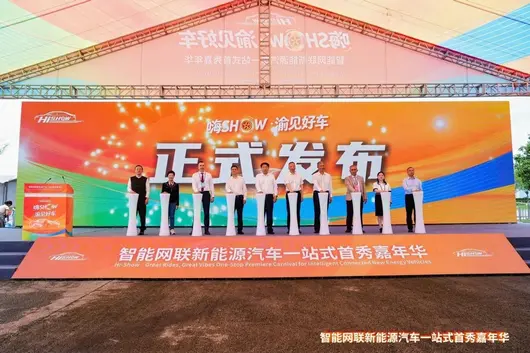
Zhou Weidong, Chairman of the Machinery Industry Branch of the China Council for the Promotion of International Trade, He Yi, Party Secretary of the Chongqing Municipal Committee of the China Council for the Promotion of International Trade and Chairman of the Chongqing Chamber of International Trade, Yao Jie, Chairman of the Supervisory Board and Executive Deputy Secretary-General of the China Association of Automobile Manufacturers, Yang Xuchao, Member of the Party Leadership Group of the Chongqing Municipal Committee of the China Council for the Promotion of International Trade and Vice President, Zheng Ling from the State Key Laboratory of Mechanical Transmission of Chongqing University, Liu Chengfang, Deputy Secretary-General of the Machinery Industry Branch of the China Council for the Promotion of International Trade and General Manager of Beijing Zhongqi Sifang Exhibition Co., Ltd., Tao Zhijun, Director Assistant of the China Automotive Industry Consulting Committee, Wen Yi, General Manager of Yibin International Exhibition Group Co., Ltd., Traukauskas Eric, Representative of the Russia SCO Civil Foreign Exchange Center in China, Yunusov Vadim, Chairman of the Russia SCO Cultural Council, Altynmyshev Aubek, Vice Chairman and Minister of International Cooperation of the Kyrgyzstan State Chamber of Commerce and Industry, Alikmuradov Dilshad, Vice Chairman of the Uzbekistan Energy Association, Muhmat, Minister of International Liaison and Representative in China of the Tajikistan Chamber of Commerce and Industry, as well as dozens of government, business association and entrepreneur representatives from Russia, Kyrgyzstan, Uzbekistan, Tajikistan, Cambodia, Thailand and other countries, and guests representing mainstream domestic and foreign car companies, new brands, industry institutions and media gathered together to witness this innovative gathering of the Western automotive industry.

Yang Xuchao, Member of the Party Leadership Group and Vice President of the Chongqing Council for the Promotion of International Trade, pointed out in his speech at the opening ceremony that the current automotive industry is accelerating its transformation towards electrification, intelligence and connectivity. Chongqing, as a major town of the Western automotive industry, is striving to promote high-quality development of the intelligent connected new energy vehicle industry. This carnival relies on the Western China International Trade Fair platform, gathers mainstream domestic and foreign car companies and new brands, concentrates on displaying the latest models and cutting-edge technologies of 2026, is a concentrated review of innovation achievements in the automotive industry, and is also a vivid practice of Chongqing's opening up and industrial upgrading.

Traukauskas Eric, Representative of the Russia SCO Civil Foreign Exchange Center in China, highly affirmed the professionalism and innovative vitality of this carnival, emphasizing that Chongqing's substantial strength in the fields of new energy vehicles and intelligent manufacturing is expected to become an important fulcrum for cooperation between the Russian and Chinese automotive industries. He introduced that Russia is actively developing hydrogen energy and other clean energy transportation projects, and expressed that it will continue to promote pragmatic cooperation between the two sides in the fields of intelligent connectivity, technology research and development, standard docking and brand co-construction.

Yao Jie, Chairman of the Supervisory Board and Executive Deputy Secretary-General of the China Association of Automobile Manufacturers, stated that China's automotive industry is moving towards a stage of high-quality development. China has become the world's largest new energy vehicle market, and the advantages of the industrial chain are gradually becoming apparent. The Western region, especially Chongqing, has a good industrial foundation and great potential. This carnival is held in parallel with the Western China International Trade Fair, which is an important platform for showcasing innovation, promoting docking, and spreading brands, and will further stimulate the vitality of the Western market. The association will continue to play the role of a bridge, helping China's automotive industry move towards the high and medium end of the global value chain.

Zhou Weidong, Chairman of the Machinery Industry Branch of the China Council for the Promotion of International Trade, pointed out in his introduction of the overall situation of this carnival that this activity is a concrete practice of promoting high-quality development of the intelligent connected new energy vehicle industry. Through the diversified model of technology display + challenge activity + economic and trade docking, it builds an efficient link platform between car companies and the market, technology and capital, and industry and city. Choosing to hold the debut carnival during the Western China International Trade Fair is exactly due to the appreciation of Chongqing's concentration effect and radiation ability as a highland of the Western automotive industry.

When Professor Zheng Ling from the State Key Laboratory of Mechanical Transmission of Chongqing University spoke as an expert representative, he emphasized that the deep integration of intelligent connectivity and new energy technologies is reconstructing the automotive industry technology system at an unprecedented speed. Seeing new models equipped with domestic independent electric drive and intelligent driving platforms make a centralized appearance, he felt greatly encouraged. In the future, we will continue to strengthen university-enterprise collaborative innovation, helping the high-quality development of the automotive industry in Chongqing and the Western region.

Debut new product centralized release session. Product launch officer and senior media person Qing Qin pointed out that different from traditional auto shows, this carnival realizes centralized release and centralized display of new products. The audience can not only see cars but also test drive, which is a brand new model, business format and experience. He focused on introducing multiple debut new cars and innovative products for the 2026 model year, covering categories such as high-end intelligence, performance hunting equipment, national hybrid, intelligent driving SUV, welfare cars, electric heavy trucks and more.

After the opening ceremony, leaders and guests moved to the first appraisal exhibition area to visit and experience the dynamic debut activity.

The Hi SHOW · Chongqing Meets Good Cars Intelligent Connected New Energy Vehicle One-Stop Debut Carnival was held on May 21 to 24, 2026 at the North Plaza of Chongqing International Expo Center. As an important supporting activity of the 8th Western China International Trade Fair, it is organized by the China Council for the Promotion of International Trade Machinery Industry Branch, China Society for Electrical Engineering, Beijing Zhongqi Sifang Exhibition Co., Ltd., and Chongqing Chamber of International Trade. This activity takes Technology Empowerment · Intelligence Leading the West as the core, focuses on cutting-edge technologies of intelligent connectivity and new energy, and creates a high-end platform for the automotive industry integrating debut, dynamic experience, technology science popularization, and economic and trade docking. The activity covers six core modules: new product roadshow release area, intelligent electric new product first appraisal exhibition, new product dynamic experience camp, assisted parking challenge, debut technology science popularization hall and new electricity safety experience camp, gathering 23 mainstream domestic and foreign car brands and new forces, with 62 popular models making a centralized appearance.
Six major modules comprehensively upgraded to create a full-scenario automotive carnival with technology, experience, and competition
This carnival attracted 23 brands and 62 popular models to make a centralized appearance, including Avatr, Deepal, Qiyuan, Gravitation, Kaicheng, AITO, Tesla, Mengshi Technology, Dongfeng Aeolus, Leapmotor, Onvo, Arcfox, Geely Galaxy, MG, Exeed, Jetour, GAC Aion, Jetta, Hongyan, Qingling, Nium Intelligent, Zhongchuang Youpin, etc. Among them, there are many new models newly launched in 2026, such as the all-new Avatr 12, Avatr 06T, all-new AITO M9, AITO M6, Mengshi M817, Leapmotor D19, GAC Aion N60, i60, Hongyan i · Jieshi, etc., as well as Changan Gravitation all-new launch and first batch delivery models fourth generation CS75 and Eado Blue Whale Super Engine, as well as Nium Intelligent new safety hardware, Zhongchuang Xinghang modified, Southwest Region debut Avatr welfare cars, etc.

The Chongqing Launch Debut · New Product Roadshow Release Area, as the core main stage of this carnival, is the core benchmark area for the entire automotive carnival ceremony, brand voice, traffic gathering, and honor coronation. During the four-day activity, major mainstream and new car companies held new car releases and strategic briefing activities here intensively, concentrating on displaying the latest results and brand moves in the fields of intelligent connectivity and new energy.

The Debut Appreciation · Intelligent Electric New Product First Appraisal Exhibition serves as the core static brand image display window for this automotive carnival, providing customized immersive display space for each brand. The special zone focuses on diverse display dimensions. The audience can contact all five brands of Changan, Avatr, Deepal, Qiyuan, Gravitation, Kaicheng, and their main selling new products, Seres AITO series models, Tesla Model 3, Model Y twin star and other characteristic models product display, core technology dissection analysis, intelligent cockpit immersive experience cabin, on-site appointment ride and test drive links, etc., making cutting-edge technology visible, touchable, and experienced.

The Chongqing Rush First Drive · New Product Dynamic Experience Camp is the most popular core immersive experience home for this carnival. On the opening day, it attracted a large number of audiences to actively book and experience. The experience camp sets up four hard-core matrices:
Off-road ride experience: Professional all-terrain tracks cover topics such as驼峰 (Humps) and cross-axis, on-site driven by professional drivers in Deepal G318, Mengshi M817, M917, Jetour and other hard-core new energy off-road models, leading audiences to unlock vehicle extreme rescue capabilities in real scenes.

Vehicle chassis stability experience: Through continuous curves, emergency avoidance, slippery road conditions, etc., intuitively presenting the excellent performance of Avatr 12, Geely Xingyao 8, Boyue REV, Xingtu and other models' air suspension and intelligent torque distribution systems.
Smart cockpit experience: Audiences can sit inside popular models such as Seres all-new AITO M9, Geely Galaxy Starship 7, Onvo L90, etc., personally unlock full-scenario smart interaction of human-vehicle-home, and experience voice assistants, multi-screen linkage and immersive audio-video space under the support of large models.
Karting experience: Drivers drive performance models such as MG 26 edition MG4, Deepal L06, GAC Aion N60, Jetta VS8, etc., performing ground-flying flight in the mini track composed of cones. The shortest time wins, fully demonstrating the instantaneous torque and precise handling of electric vehicle models.

The Intelligent Connection Peak · Assisted Parking Challenge has become the most interactive and viewing point competitive project at the scene. Relying on the new models of this debut and their automated parking systems, it creates an immersive and competitive interactive experience. The challenge uses a unified Devil parking spot scenario to test the extreme performance of vehicle intelligent parking in narrow parking spaces, intrusion parking spaces, dead-end parking spaces, etc. Vehicles equipped with parking systems have entered the garage smoothly and precisely, drawing repeated惊叹s from the scene, truly realizing technology showing muscles and audience enjoying themselves.


Scientific Innovation Future · Debut Technology Science Popularization Hall focuses on cutting-edge technologies of intelligent connectivity and new energy vehicles. During the activity, science popularization explanation activities are carried out synchronously with static displays. Industry experts and car company technology engineers are invited to teach on-site, unlocking the mysteries of smart electric and connectivity core technologies in easy-to-understand language.
Smart Safety Driving Electricity · New Electricity Safety Experience Camp opens urban roads and short-distance test drive routes to guests. The routes cover real traffic scenarios such as urban congestion and ramp merging. Guests can book in advance and sign a safety commitment letter, personally drive popular new cars with the company of professional test drivers, and deeply experience core highlights such as power performance, intelligent cockpit interaction and navigation assisted driving. The experience camp is fully equipped with safety guarantee vehicles and on-site engineers to ensure the test drive activity is safe and orderly.
Frontier display links market demand, diversified experience empowers industrial ecology
The Hi SHOW · Chongqing Meets Good Cars Intelligent Connected New Energy Vehicle One-Stop Debut Carnival was held from the afternoon of May 21 to the morning of 24 at the North Plaza of Chongqing International Expo Center. During the activity, multiple enterprise new car releases, roadshows and technology science popularization activities will be interspersed. Among them, an opening ceremony was held in the morning of the 22nd, and a closing ceremony and award ceremony were held in the afternoon of the 24th. It is worth mentioning that the 23rd evening session specially added a Blue Whale Super Engine Night - a night session activity and dual car launch delivery ceremony hosted by Changan Gravitation.

We sincerely invite citizens, industry guests and car enthusiasts to visit the North Plaza of Chongqing International Expo Center, feel the technological charm of intelligent connected new energy vehicles at close range, and jointly witness the wonderful moment of innovative development of the Western automotive industry.
This carnival is not only a centralized display platform for technology and products, but also an important carrier for promoting the deep integration of the automotive industry and Western manufacturing, services and digital economy. Through the diversified model of technology display + challenge activity + economic and trade docking, it gathers high-end talents, innovative capital and high-quality projects, helping to build a more competitive industrial ecology. As an important industrial supporting highlight of the Western China International Trade Fair, this carnival drives with industrial docking + consumption promotion wheels, further enriching the industrial connotation and public participation of the exhibition, and demonstrating the strong potential of high-quality development in the Western region with the innovative vitality in the automotive field.

Xie Lei was a classmate in my university department, same grade but different major. He took the Gaokao multiple times before getting in. Once in college, he went completely wild, playing football, gaming, playing poker, and reading novels with great enjoyment. When graduating, he had failed too many courses and didn't even get a graduation certificate.
It was natural that he didn't find a job, so he told his family he was preparing for graduate school, and continued to ask for living allowance to live a loose life around the school. He joined some training class, where there was an international student in the class, and he became friends with the international student.
After a long time, he couldn't hide it anymore and went back to his hometown. In the first few years, life was quite tight. Even at his wedding, he didn't have a suitable set of clothes, so he ran to the mall with the first batch of gift money to buy a new suit and then rushed back to the wedding. Later, inspired by his international student friend, he opened a bilingual kindergarten locally, starting from scratch. Unexpectedly, in just a few short years, he made a name for himself, and he couldn't stop.
When he returned to school for a 10-year anniversary reunion, he drove a Buick Enclave, becoming the standout of the whole class, the most successful classmate in his cohort in terms of career.
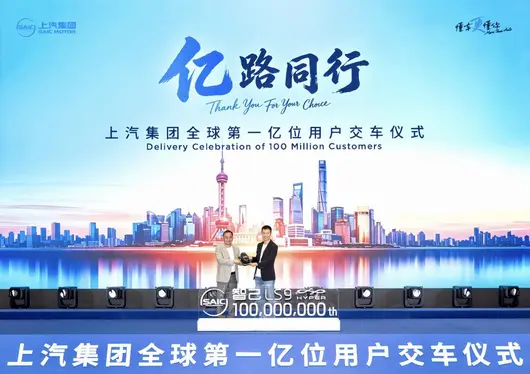
On May 28, 2026, SAIC Group held the "Global 100 Millionth User" delivery ceremony. The event was relayed across the country and even overseas, from the 99,999,996th vehicle to the 100,000,013th vehicle. Owners included Momenta CEO Cao Xudong, Dedao APP founder Luo Zhenyu, former German men's national football team player Yang Chen, and Pang Fuqiang, a post-85s village party branch secretary from Lantian, Shaanxi, who persisted in cooking and delivering meals for elderly people left behind, and so on.
Watching the delivery livestream, I thought of my university classmate Xie Lei. He is also one in 100 million.

Behind the 100 million vehicles are 100 million stories about struggle, about striving to live, about rushing towards ideals, and are 100 million lives that are either wonderful, ordinary, passionate, or rough. Among them are geniuses like Cao Xudong, trendsetters in the era of transformation like Luo Zhenyu, grassroots good cadres who serve the people wholeheartedly like Pang Fuqiang, and redemption stories of prodigals like Xie Lei.
100 million stories gathered together paint the torrent of the times in China, especially the booming development of China's economy and the rapid changes in Chinese society since the Reform and Opening Up.
SAIC Group is an important part of this torrent. Starting in an alley in 1955, hammering out the Phoenix brand sedan by hand in 1958, establishing China's first car joint venture in 1985, launching the world's first internet car in 2016, and returning to the position of China's largest production and sales car group in the first four months of 2026, continuing to be China's largest car group comprehensively developing autonomous and joint ventures, passenger cars and commercial vehicles, new energy and fuel cars, and local and overseas.
When the first Phoenix sedan was born in 1958, China's vehicle inventory was 172,600, and private cars were basically zero. National vehicle production was 16,000, the vast majority of which were trucks, and there were only 57 sedans.
By the end of 2025, the national vehicle inventory reached 366 million, which is over 2,000 times that of 1958. Private cars grew from zero to 323 million. Annual vehicle production and sales broke through 34 million, ranking first in the world for new car sales for 17 consecutive years. Among them, exports were nearly 7.1 million. In 2023, it became the world's first major car exporting country. In 2025, it became the world's first major car production country.

SAIC Group's 100 million vehicles participated in and witnessed the complete history of China's automotive industry from nothing to something, from small to large, from weak to strong, and from China to the world, playing an important role and exerting important influence within it.
The delivery of the 100 millionth vehicle is a glorious moment for SAIC Group and a birth node for China's first billion-level car company. In my opinion, what is more moving is that it allows people like Pang Fuqiang to come to the forefront, allows people like Xie Lei to break into our minds, and allows us to take this opportunity to look back at the road we have come. 100 million vehicles are not just the combination of assembly lines and steel and rubber. Behind them are 100 million vivid people, 100 million families, and 100 million versions of stories silently striving upwards.
Of course, for China's automotive industry, this is also a brilliant milestone moment.
The Whampoa Military Academy of China's Automobiles
China's modern automotive industry started with a Santana.
In 1983, SAIC began producing Santana models in SKD (Semi-Knocked Down) assembly. In 1985, after 6 years of negotiations,
SAIC Group and Volkswagen Germany established China's first sedan joint venture SAIC Volkswagen, producing domestic Santanas.
From then on, China officially introduced advanced global automotive technology and management systems and established a complete automotive parts system. In this process, the most important driving force was Santana localization.

At that time, China's industrial base was weak, and parts quality was low. German Volkswagen's standards were extremely strict, and vehicles were not allowed to be assembled if they did not meet Volkswagen standards. At the beginning of Santana production, only 5 parts could be matched domestically, and the localization rate was 2.7%.
In 1987, Zhu Rongji proposed that Santana localization should absolutely not do "substitutes" (using lower quality alternatives) and must insist on international standards. By 1993, the Santana localization rate exceeded 80%, and in 1996 it exceeded 90%.
In this process, over 400 local parts enterprises were reformed according to German standards, with materials, heat treatment, stamping, welding, coating, and testing comprehensively upgraded. A large number of local supply chain enterprises such as Yanfeng Automotive Trim, Fuyao Glass, Huayu Automotive, Yapu Auto Systems, Ningbo Huaxiang, Desay SV, Joyson Electronics, Wanxiang Qianchao, and Shanghai Tire completed the original accumulation of technology, quality, and management in the Santana project, and later grew into industry giants.
It can be said that without Santana localization, there would be no China's automotive industry system today, and SAIC Volkswagen is the Whampoa Military Academy of China's automobiles.
The stories of transformation and counterattack in here still read as hot and intense today. For example, Volkswagen's durability standard for Santana horns was 50,000 sounds and still qualified. In the Santana localization project, the German engineer raised the horn durability standard to 150,000 times—higher than the German standard.
At that time, China's domestic automotive horn durability standard was only 20,000 to 30,000 times. The Chinese side thought the German side was deliberately making difficulties. After in-depth understanding, they knew this was the conclusion drawn by the German team's field research. Germany's traffic order was mature, and drivers rarely honked, so 50,000 times left a large redundancy. But China at that time, drivers honked at least 10 times more than Germany. 150,000 times was a reasonable standard given after the German team's weighing.
The samples from the Shanghai Traffic Electrical Factory responsible for matching were returned 11 times. Previous standards and processes were all pushed back to the drawing board, improving contact material, thickening diaphragms, optimizing waterproofing, and adjusting circuits. Finally, they successfully passed the new standard test and became the first key part to achieve domestic localization in the Santana.
Thus, the standard for domestic Santana horns surpassed that of Germany. The horns from the Shanghai Traffic Electrical Factory were more durable and cheaper than the German original parts. After mass supply to SAIC Volkswagen, they were also exported back to Germany and mounted on local Santanas. Later, the Shengjia brand won the US General Motors global bid and entered the global supply chain.
Automotive horns were not isolated cases. When China's automotive industry, which was completely empty, met global first-class standards like German Volkswagen, the sparks and energy released were huge. The stimulation and promotion to local enterprises were unprecedented, forcing companies to tackle difficulties and undergo a complete metamorphosis.
It can be said that a Santana localization project allowed China's automotive industry to skip grades from the Iron Age to the Electrical Age. Santana localization not only bred a large number of supply chain giants but also cultivated a large number of modern automotive industry management talents and formed a complete automotive production system, quality system, inspection system, parts supply system, and process. Later, multiple local car companies developed on the basis of this mature system and supply chain.
So it can be said that without Santana localization, there would be no China's automotive industry system today, and SAIC Volkswagen is the Whampoa Military Academy of China's automobiles.

SAIC Spirit: Three Cultures and One Philosophy
SAIC Group served 100 million users in over 70 years, promoted the development of China's automotive industry, experienced four major development stages of hard startup, joint venture cooperation, independent brand construction, and intelligent electric transformation, and always stood at the forefront of the mainstream car companies.
In the times of change and industry transformation, crossing the cycle and always moving upward, SAIC Group relies not only on products, technology, and systems but also on an invisible power behind them, the SAIC Spirit.
What is the SAIC Spirit? It is rooted in the Haipai culture soil of openness, innovation, inclusiveness, and pragmatism, built on the rigor, refinement, cooperation, and integration of the automotive industry, and enriched and iterated by drawing on Western modern management thought and commercial civilization in cooperation with partners such as Germany, the United States, the United Kingdom, etc.
Car Riff believes the SAIC Spirit includes at least three cultures and one philosophy: Breakthrough Culture, Cooperation Culture, Quality Culture, and the "Know cars, understand you better" user philosophy.
Breakthrough Culture is not being satisfied with the status quo, daring to step out of the comfort zone, daring to be the first, and embracing change. From the small parts factory in the alley daring to build cars at the beginning, to daring joint venture cooperation in the early stage of Reform and Opening Up, to boldly developing the independent sector in the golden period of joint ventures, daring to be the first in the fields of electrification, intelligence, and going global, all embody this breakthrough culture.
Under the guidance of Breakthrough Culture, SAIC Group has pioneered many industries.

In 2002, established China's first automotive logistics joint venture with Netherlands TNT.
In the same year, established SAIC-GM-Wuling through a joint venture with GM China and Wuling, pioneering the three-party cooperation mode in complete vehicles.
In 2003, established China's first automotive dedicated RoRo terminal joint venture with Shanghai Port Group.
In 2004, established China's first automotive finance joint venture with General Motors.
In 2007, merged with Nanjing Auto Group, becoming an important milestone in the strategic restructuring of China's automotive industry.
In 2012, Roewe E50 went on sale, becoming China's first mass-produced pure electric sedan.
In 2016, cooperated with Alibaba to launch the world's first mass-produced internet car Roewe RX5, opening a new track for automotive intelligence.
In July 2025, became the only enterprise in the industry to obtain passenger car and commercial vehicle L4 level licenses.
In the same year December, globally premiered the semi-solid battery model new MG4 Anxin Edition.
From technology, products to models, SAIC Group's breakthrough culture has never stopped.
Cooperation Culture, SAIC Group is the car company with the richest and most widespread cooperation models among domestic car companies, from China-foreign joint ventures to China-China cooperation (SAIC-Nanjing merger), to China-China-foreign (SAIC-GM-Wuling). SAIC Group is also the only one among domestic car companies with two luxury brand partners, SAIC-GM Cadillac and SAIC Audi.
Cooperation beyond complete vehicles is even wider. Many of the aforementioned industry pioneers are cooperation results, covering logistics, finance, and internet. SAIC Group's cooperation culture, from pioneering the joint venture paradigm to building a whole industry chain alliance and creating a global cooperation network, covers the entire industry value chain.

Quality Culture, from the horn case in Santana localization above, it can be seen that from Santana, quality culture has been deeply carved into the gene of SAIC Group.
Day after day for decades, high standards on quality eventually turned into reputation like "10-year non-fading paint", "Zero spontaneous combustion battery", "300,000 km without major repair", etc.
And also the "Know cars, understand you better" user philosophy.
In April 2025, SAIC Group held "Know cars, understand you better · SAIC Night" on the banks of the Huangpu River in Shanghai, formally proposing the development strategy centered on "Empowerment-driven advancement, co-creating better mobility".
Actually, the "Know cars, understand you better" user philosophy has been flowing in SAIC's blood for decades, it was just formally proposed at this time.
The horn case in Santana localization above is a typical "Know cars, understand you better". The durability standard for car horns is not unchangeable, nor is it decided by the manufacturer, but is tailored to the local conditions according to different market users' usage habits. It is not how much technology the manufacturer can do that is set, but how much users need, how much the manufacturer's technology must do.

Product standards are not decided by manufacturer technology but by user needs. This thinking and way of doing things was born from Santana localization, taught by German teachers, and has grown and iterated for over 40 years. Today it has surpassed the former teachers.
Users want to use the internet in the car, so SAIC developed the first internet car. Users want to use smart driving, so SAIC cooperated with Momenta and Huawei, striving to gather the strongest smart driving technology.
This time, the 100 millionth delivery is distributed in 4 countries, nearly 20 delivery points, each with themes and characteristics. The biggest commonality is pushing the users to the center of the stage. SAIC Group used one delivery ceremony to thank users, thank these 100 million trust commitments, and give back to users with better products and services.
Written at the End
The small broken factory that hammered cars with hammers 68 years ago has grown into an industry giant, building a global business map covering the whole industry chain, covering complete vehicles, parts, mobility and services, finance, international operations, and innovative businesses, entering the Fortune Global 500 list 21 times.
SAIC first realized passenger car exports in 2001. Now products and services are all over the world in over 170 countries and regions, with cumulative overseas delivery exceeding 7 million. Overseas, SAIC has over 100 parts production bases, over 3,000 dealer networks, built 3 major R&D innovation centers such as London, and Thailand, Indonesia, India, Pakistan 4 production and manufacturing centers, and formed China's first, globally leading complete vehicle logistics self-owned fleet.

SAIC Group's first 100 million vehicles were mostly Chinese stories. Next, the 2nd, 3rd, 4th 100 million vehicles, will write world stories, stories of all humanity.

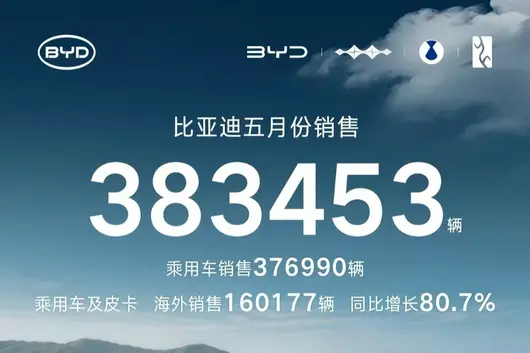
比亞迪正式發布 2026 年 5 月產銷快報,全品牌新能源汽車單月銷量 383453 輛,同比微增 0.26%,時隔十個月實現單月銷量同比轉正;其中乘用車交付 376990 輛,環比大漲 19.4%,一掃前期車型換代陣痛,呈現國內基本盤穩固、海外銷量狂飆、高端品牌全線放量的全新格局,在國內新能源內捲加劇、特斯拉 FSD 入華、自主新品密集上市的市場環境中,走出獨有的結構性增長路線。

王朝 + 海洋兩大主力品牌 5 月合計售出 330215 輛,佔據集團總銷量超八成,仍是比亞迪銷量壓艙石,全系列共 8 款車型單月銷量突破 2 萬台,產品從 5 萬入門代步到 20 萬家用 SUV 實現全覆蓋。

王朝網內部,元家族 56691 輛、宋家族 51370 輛。雙雙跨過五萬門檻,成為品牌兩大銷量支柱,兼顧家用代步與城鄉出行需求;秦家族緊隨其後交出 28360 台穩定表現,漢、唐系列月銷維持六千級體量,深耕中大型家用轎車、SUV 細分市場;全新車型夏處於市場培育期,單月交付 1810 台,後續隨渠道鋪開有望穩步上量。
海洋網增長勢頭更為迅猛,全系五款車型跨入兩萬俱樂部:海獅 42615 台、海豹 34117 台、海鷗 39919 台、海豚 22260 台、宋 PLUS 27755 台。其中海鷗憑藉 6-8 萬親民定價穩居入門代步銷冠,海獅作為全新走量車型上市即站穩四萬量級,補齊海洋網中型 SUV 產品空白,完善海洋產品梯隊佈局。從代步小車到緊湊 SUV,兩大主品牌依托 DM-i 混動與純電雙線技術,牢牢鎖住 15 萬以內國內主流家用市場份額。
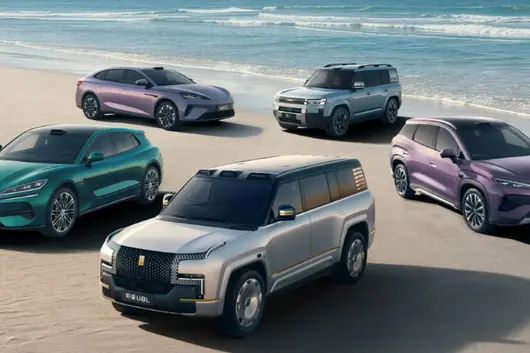
方程豹同比暴漲 139.7% 品牌向上落地見效騰勢、方程豹、仰望組成的高端矩陣 5 月合計銷售 46489 輛,正式擺脫小眾定位,成為比亞迪品牌溢價與利潤增長新支點,打破自主品牌高端化難破局的行業魔咒。

越野品牌方程豹單月 30186 輛,同比暴漲 139.7%,創下品牌上市以來月度銷量新高,旗下鎦 7 單月 18280 台,豹 5、豹 8 穩定輸出,在 25-40 萬硬派越野細分市場持續擠壓合資、進口車型生存空間。

騰勢 5 月交付 16303 台,MPV 標桿 D9 售出 6721 台,Z9 系列近 6000 台,MPV、中大型轎車雙線發力,站穩豪華新能源賽道;百萬元級超豪華品牌仰望穩步爬坡,當月交付 286 台,同比增幅 105.8%,完成自主品牌天花板產品的市場驗證,形成從十幾萬家用、三四十萬越野、五十萬豪華 MPV 到百萬元級旗艦的全價格帶產品佈局。

5 月比亞迪乘用車和皮卡海外銷量 160177 輛,同比大漲 80.7%,出口佔全系總銷量突破 42%,創下品牌出海歷史新高,成為穩住 5 月整體銷量、實現同比轉正的核心驅動力。
東南亞、歐洲、拉美成為主力增量市場,海鷗、宋 PLUS、元系列持續登頂多國新能源熱銷榜單,SHARK 皮卡連續兩月單月出口突破 4000 台;依托泰國、巴西、匈牙利、烏茲別克斯坦四大海外整車工廠落地投產,本地化生產持續落地,規避關稅同時快速下沉終端渠道。在國內車市存量競爭、價格戰常態化背景下,高速擴容的海外市場有效對沖國內車型換代帶來的銷量波動,正式從補充市場升級為比亞迪核心增長引擎。截至當前,比亞迪新能源汽車全球累計銷量已經突破 1650 萬輛,全球化版圖持續拓寬。
智駕賦能產品迭代 下半年新品蓄力衝量5 月比亞迪智能化落地迎來關鍵節點,天神之眼智駕系統成為車型核心加分項:全品牌搭載高級智駕車型保有量突破 315 萬輛,日均路測數據超 2 億公里;當月比亞迪落地城市領航、智能泊車雙安全兜底服務,成為全球首家實現兩項智駕兜底的車企,政策落地三天後,搭載天神之眼系統車型的城市 NOA 激活率暴漲 50%,智能化體驗升級直接拉動終端到店訂單轉化,為後續車型持續走量築牢產品競爭力,直面 FSD 入華帶來的智駕市場衝擊。
從數據細節來看,2026 年 1-5 月比亞迪累計銷量 1405039 輛,同比下滑 20.32%,核心誘因是全系主力車型集中換代、第二代閃充刀片電池產能爬坡受限。新款閃充電池升級快充與低溫性能,全系換代車型優先換裝新電池,但產線改造拖累產能釋放,熱門車型訂單積壓、交付延後,一定程度壓縮 5 月交付體量。
隨著二季度末二代刀片電池產能持續釋放,疊加騰勢 N8L、方程豹鎦 7 純電版、海獅 05、夏 L 等多款新車陸續登陸市場,業內普遍預判比亞迪 6 月全品牌銷量有望突破 40 萬輛。依托低端走量鎖份額、高端提利潤、海外衝增量、智能化提產品力的四維發展邏輯,在國內新能源淘汰賽加劇的當下,比亞迪全品類佈局優勢持續放大,坐穩國內新能源龍頭,加速向著全球頭部車企穩步邁進。


港交所網站掛出一咗一份熟悉嘅招股書。
5 月 28 日,繼去年 10 月首次遞表失效後,智能駕駛解決方案提供商蘇州天瞳威視電子科技股份有限公司(天瞳威視)再次向港股主板發起重衝,由匯豐及華泰國際聯席保薦。

喺智能駕駛賽道從「講故事」轉向「拼量產」嘅 2026 年,天瞳威視嘅二次遞表唔單止係一次資本試探,更係一場關於中國智駕供應商生存現狀嘅集中檢閱。
呢間被認為係「算力效率派」代表嘅公司,一邊連住從采埃孚到上汽、北汽嘅豪華產業資本陣營,一邊卻面臨住現金流緊繃、海外明顯回落嘅現實困境。喺呢場 IPO 嘅博弈中,光鮮同陣痛並存。
01
邊個係「天瞳威視」?
天瞳威視嘅創辦人王曦係一位典型嘅「回國」技術派。佢畢業於北京航空航天大學,後喺英國雷丁大學攻讀計算機科學博士學位。
喺決定創業之前,王曦曾經喺汽車零部件供應商天合汽車(TRW)及采埃孚擔任算法工程師同技術負責人,深度參與咗早期 ADAS 系統嘅開發。
2016 年,王曦捕捉到國內汽車智能化嘅風口,回國喺蘇州創立咗天瞳威視,定位係「以軟件算法驅動智能駕駛」嘅本土解決方案提供商。
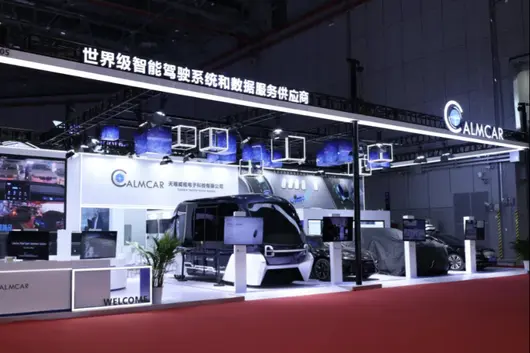
公司嘅名字「天瞳」寓意「天之眼」,意在打造車輛感知萬物嘅視覺中樞。佢從最初嘅視覺感知算法起步,逐步擴展至行泊一體域控制器、L4 級自動駕駛系統等軟硬件結合嘅整體方案。

天瞳威視融資情況。資料來源:企查查
成立後不久,天瞳威視就獲得德聯資本、盛世投資嘅天使輪融資。此後十年時間,天瞳威視累計完成咗超過 10 輪融資,融資總額近 10 億元。
從招股書披露嘅股權結構嚟睇,天瞳威視構建咗深度綁定嘅「產業 + 資本」生態圈。
一方面,產業夥伴站台,全球汽車零部件巨頭采埃孚唔單止係其 C 輪領投方,亦係其戰略合作夥伴,持有天瞳威視 6.93% 嘅股份,位列第四大股東;國內方面,上汽集團通過上汽北美產投持股,北汽集團通過北汽產投佈局其中,地平線同商湯科技亦係戰略投資者。
另一方面,地方國資護航,唐山機器人基金、吳中金控等國資背景基金喺 D 輪及 D+ 輪入場,提供咗約 5.23 億元嘅資金支持。

截至最後實際可行日期股權架構
截至目前,王曦透過直接持股同員工持股平台合共控制公司約 40.84% 嘅權益,依然保持住對公司嘅控制權。
02
「兩條腿」行路
天瞳威視喺業務佈局上採取咗「雙軌並行」嘅策略。

喺 L2-L2+ 級輔助駕駛領域,天瞳威視嘅選擇非常務實。佢並冇盲目追逐算力堆疊嘅「軍備競賽」,而係走咗一條高性價比路線。
作為典型嘅視覺派智駕供應商,佢喺 L2 量產方案上以視覺感知為主,融合毫米波雷達同超聲波雷達,能夠喺較低算力平台上實現高級功能。例如,基於地平線 J6B 芯片(約 20TOPS)嘅方案即可支持行泊一體、高速 NOA。
呢種打法擊中咗 10 萬 -20 萬級主流車款對成本敏感嘅痛點。根據灼識諮詢嘅數據,按 2024 年裝機量計,天瞳威視係中國第二大同時提供行車同泊車解決方案嘅以軟件為核心嘅 L2-L2+ 級方案提供商,市場份額為 14.3%。

2024 年中國具備行泊一體能力嘅以軟件為核心供應商格局
截至最後實際可行日期,天瞳威視獲得 23 個汽車品牌嘅 198 款車款嘅 L2-L2+ 級解決方案定點函,並實現 6 個汽車品牌嘅 105 款車款嘅量產;獲得定點函嘅 198 款車款中有 87 款覆蓋海外市場,其中 59 款已實現量產。
但值得注意嘅係,L2-L2+ 市場正在經歷劇烈嘅「紅海化」。
一方面,經緯恆潤、福瑞泰克等本土 Tier1 正在加速追趕;另一方面,部分頭部車廠開始將低階智駕方案從外購轉為內部集成。
天瞳威視能否維持佢喺「性價比方案」領域嘅領先地位,取決於佢能否持續保持算法對低算力平台嘅優化能力,而這需要喺研發投入上持續加碼。

喺高級 L4 級自動駕駛領域,天瞳威視更多扮演「先鋒」角色。這亦係佢近兩年增長最快嘅板塊。
早在 2019 年,佢就參與咗上海洋山港嘅 5G 智能重卡項目。目前佢嘅 L4 方案覆蓋 Robobus、Robotaxi 同 Robotruck。其中,Robobus 係佢最具代表性嘅產品線,已喺蘇州、天津等城市嘅公開道路投入常態化試營運。
2025 年,天瞳威視從 L4 級解決方案產生收入 3.75 億元,佔公司總收入嘅 68% 以上,大部分收入來自 L4 級軟件解決方案。
然而,硬幣嘅另一面係商業化嘅曲折。雖然 L4 業務營收暴增,但佢嘅交付形態目前以「軟硬件一體解決方案」為主,呢種模式本質上接近「項目制交付」或「小規模車隊部署」,與 L2 業務中「純軟件授權 + 白盒交付」嘅高毛利、大規模複製邏輯存在顯著差異。
呢就直接導致 L4 業務毛利率嘅大幅波動:喺部分自研硬件佔比较高嘅項目中,毛利率一度低至 15%。

截至遞表日,公司雖手握超 10 億元嘅 L4 意向訂單,涵蓋 2500 架車,但呢啲訂單預計要喺未來三至五年內先會陸續交付,短期內對現金流嘅改善作用有限。
此外,天瞳威視仲有部分應收來自工程服務,主要涉及道路測試、數據收集支援及數據標註服務以及公司嘅專有工具鏈。
03
財務嘅雙面鏡
招股書嘅財務部分,展現咗智駕行業最真實嘅「B 面」:規模同虧損嘅極限拉扯,同埋賬面現金同營運消耗之間嘅緊張博弈。

營收高增長,但結構劇烈波動。
財務數據顯示,公司嘅營收呈現爆發式增長,從 2022 年嘅 1.72 億元增長至 2024 年嘅 4.83 億元,複合年增長率高達 67.7%。2025 年全年營收進一步增長至 5.5 億元。
但收入結構嘅變化明顯。2023 年,公司依賴 L2-L2+ 業務,佔比 90.2%;去到 2024 年,L4 業務佔比升至 50.2%;2025 年,L4 業務佔比進一步拉高至 68%。呢種「斷崖式」嘅結構切換,雖然證明佢 L4 技術搵到咗落地場景,但亦令市場質疑佢 L2 業務係咪已觸及天花板。
毛利率同純利潤嘅背離,呢係天瞳威視面臨嘅最大挑戰。
從毛利睇,整體毛利率喺 30% 左右徘徊,喺呢個技術密集型嘅智駕行業屬於中等水平。但細拆睇嚟,L2-L2+ 業務嘅毛利率通常能維持喺 40% 以上,純軟件授權模式,而 L4 業務嘅毛利率則因「軟硬件一體」交付中硬件佔比提高而被顯著拉低。
從純利潤睇,雖然表面虧損額較大,2024 年虧損 4.63 億、2025 年虧損約 2 億,呢度包含大量因優先股公平值變動帶來嘅「紙面虧損」。剔除呢個因素後嘅經調整純利潤更能反映公司嘅真實經營狀況:2024 年已收窄至 -438 萬元,但 2025 年並未如市場預期實現轉正,而係錄得約 -1086 萬元,虧損較 2024 年有所擴大。
呢個背後有一個不可回避嘅關鍵前提:調整後嘅「減虧」乃至「接近盈虧平衡」,係喺公司持續壓縮研發投入嘅基礎上實現嘅,研發費用從 2024 年嘅 1.17 億元降至 2025 年嘅 9231 萬元,研發費用率從 2024 年嘅 24.3% 進一步降至 16.8%,而 2022 年呢個數字曾高達 108.7%。對於一家科技公司嚟講,研發強度嘅「退坡」是否會影響未來嘅技術護城河,係一個潛在風險點。
現金流持續告急,最令人擔憂嘅信號。
根據最新招股書,截至 2025 年 12 月 31 日,公司賬上嘅現金及現金等价物為 2.35 億元,較 2025 年 6 月 30 日嘅 3.74 億元淨減少 1.39 億元,現金消耗速度較快。

更值得警惕嘅係經營現金流由正轉負且缺口持續擴大嘅趨勢。2023 年,公司經營活動現金流淨額為正向流入 1.15 億元,但 2024 年迅速轉為淨流出 1.89 億元,2025 年進一步惡化至淨流出 2.93 億元。
與此同時,應收賬款周轉急劇惡化。公司嘅貿易應收款項從 2023 年嘅 0.89 億元升至 2025 年嘅 5.48 億元,三年增長超過五倍,而同期營收增幅僅約 2.7 倍。
更令人擔憂嘅係應收款項周轉天數從 2023 年嘅 191 天同 2024 年嘅 166 天,到 2025 年驟升至 300 天,意味著公司從完成交付到收回款項平均需要接近一年時間。呢相當於變相為客戶提供長期無息墊資,喺資金本就緊張嘅情況下進一步加劇咗流動性壓力。

此外,雖然天瞳威視係首家出海嘅中國智駕軟件供應商,但 2025 年佢嘅海外業務遭遇咗明顯回落。2023 年天瞳威視海外收入為 1.27 億元,佔總營收比重達到 62.2%;到 2025 年海外收入降至 1100 萬元,佔比僅 2.0%。
喺而家全球地緣政治複雜、部分國家對智能汽車數據監管趨嚴嘅背景下,為佢嘅全球化故事增添咗一絲不確定性。
04
結語
天瞳威視嘅二次闖關,係智能駕駛行業進入「淘汰賽」階段嘅一個縮影。
從好嘅方面睇,佢踩準咗 L2 性價比同 L4 場景化落地嘅雙重節奏,且經調整純利潤喺特定口徑下已接近盈虧平衡,呢啲都畀投資者提供咗「有亮點可講」嘅故事線。
但從風險嘅角度睇,情況遠比首次遞表時更為嚴峻。業務重心嘅急速漂移、L4 業務商業化初期嘅盈利磨難、研發投入嘅被動收縮,呢啲此前就已存在嘅問題並未緩解。

天瞳威視 L4 級智能巴士
而真正令此次 IPO 帶「求生」色彩嘅,係現金流數據嘅實質性惡化:2.35 億元嘅賬面現金,面對每年近 3 億元嘅经营性現金淨流出,安全邊際已不足一年。疊加 300 天嘅應收賬款周轉天數,意味著公司每交付一筆訂單,都要墊付近一年嘅資金成本。
換言之,天瞳威視正處喺一個危險嘅財務窗口期:賬上嘅錢僅夠維持唔足一年嘅正常運作,而 L4 業務嘅大規模交付同回款卻需要更長時間。喺呢個智駕資本熱潮退去、一級市場融資邊際收緊嘅時刻,公司已冇太多等待嘅餘地。
首次遞表失效後僅隔半年便再次衝擊港股,對天瞳威視而言,與其話係戰略選擇,唔如話係現金倒逼下嘅必然之舉。