


首頁黃花魚

搜尋歷史
熱門搜尋
經銷商登入 / 註冊


Author | Hao Wen
Editor | Qujie Business News Group
In this round of car manufacturers developing batteries in-house, what might be rewritten is not just the supplier list, but also CATL's profit model relying on a complete battery system to obtain premiums.
On the evening of September 18, after the Xpeng G9L launch event, Xpeng founder He Xiaopeng stated in response to media inquiries about whether they would develop batteries in-house, "Starting this year, Xpeng will handle batteries entirely in-house;" previously, Li Auto also announced that self-developed batteries will gradually cover all models.
Car manufacturers' accelerated commitment to developing batteries quickly formed a response in the capital market. On September 18, CATL's A-share closed at 301.95 yuan/share, a drop of more than 35% from the year's high of 467.34 yuan on May 7. The HK share closed at 507 HKD/share, a new intraday low since March 10. The total market capitalization of A+H shares evaporated by more than 700 billion yuan from the peak.

Image Source: Baidu Screenshot
The market generally views car manufacturers developing batteries in-house as two things: saving costs and ensuring supply. But the changes happening in the industry are far more than just replacing suppliers. Car manufacturers are seeking to regain product definition rights over batteries. CATL's past profit path relying on complete battery system solutions to obtain premiums is being impacted, and the original business model is facing structural adjustments.
1. Definition Rights Shift Down, Manufacturing Rights Remain CentralFirst, clearly see what car manufacturers are actually doing. They are not fully building battery cell factories themselves, but are keeping product definition rights such as battery formulas, fast-charging logic, BMS strategies, and vehicle integration standards in their own hands, while handing over the battery cell manufacturing process to battery suppliers.
For example, Xiaomi's "Longjia Battery" involves Xiaomi responsible for product definition and battery pack design and development, with CALB and Sunwoda customizing battery cells according to Xiaomi standards; Li Auto's battery self-research involves self-developed and self-made battery packs, with cells produced by Sunwoda and CALB; Xpeng has taken back the entire battery pack chain, retaining only the procurement of battery cells.
This exactly hits CATL's core source of high gross margins. In the past, it delivered a complete set of "battery solutions + exclusive designated supply", obtaining technology, system solutions, and pricing dividends from exclusive supply in one order. Nowadays, car manufacturers hold formulas, structures, vehicle integration, and other links in their own hands, only purchasing customized battery cells from battery manufacturers. CATL's business space for obtaining premiums relying on complete battery packs is facing obvious squeezing.
Changes are also reflected in financial report data. In the first half of 2026, CATL's largest revenue source - power battery system gross margin dropped to 20.63%, a year-on-year decline of 1.78 percentage points.

Image Source: Semi-Annual Report Screenshot
The rising logic of second-tier battery factories has also become clear. In addition to their own technology iterations, the key lies in being willing to adapt to car manufacturers' product definitions and undertake deep customization development. Li Auto injected 2.65 billion yuan to increase capital in Sunwoda, becoming its second-largest shareholder. CALB has also grown into Xpeng's main supplier. Under the current industry chain pattern, manufacturers capable of implementing car manufacturer customized battery cell solutions are expected to capture the incremental share released by CATL.
2. "Know How to Build Cars, Not Necessarily How to Build Batteries"Car manufacturers regaining definition rights is essentially a redistribution of profits.
In the past few years, profits in the new energy vehicle industry chain have concentrated heavily on the battery segment. In the first half of 2026, CATL's net profit attributable to parent company was 43.284 billion yuan, while according to statistics, the combined net profit of 15 mainstream listed car manufacturers such as BYD, SAIC, Geely, Chery, etc., was 21.048 billion yuan, less than half of CATL alone. As early as 2022, GAC Group's then Chairman Zeng Qinghong openly complained: "Batteries account for 60% of the vehicle cost, aren't I just working for CATL?"

Image Source: Semi-Annual Report Screenshot
In this round, car manufacturers developing batteries in-house combined with multiple suppliers running in parallel, the goal is to squeeze excess profits in the battery segment and promote profits to flow back to the vehicle end. The lithium battery industry may return from past phased high returns to a relatively fair profit level of manufacturing.
But inferring "CATL will be replaced" based on this is still premature. Car manufacturers' battery self-research has a natural ceiling. He Xiaopeng explicitly stated in an interview that Xpeng does not intend to enter the production of battery cells itself; investing in battery cells is ultimately for others.
Car manufacturers are good at vehicle product definition and system integration, but face high thresholds in yield, consistency, and cost control of mass production of battery cells; battery cell manufacturing belongs to capital-intensive industries, only sufficient scale can dilute costs. Once sales fluctuate, capital-intensive capacity will drag down the car manufacturer's balance sheet. CATL's Chief Manufacturing Officer Ni Jun once openly stated: "Knowing how to build cars doesn't mean knowing how to build batteries, professionals should do professional things."
Definition rights can be contested, but barriers to mass production are difficult to migrate quickly. In the first half of this year, CATL's battery system capacity utilization rate reached 94.86%, with 764 GWh of capacity under construction; the German plant has already achieved profitability, and bases in Hungary, Spain, and Indonesia are landing successively. According to data released by Korean market research firm SNE Research, from January to May 2026, CATL's global power battery market share broke through 40% for the first time, reaching 40.2%.

Image Source: Semi-Annual Report Screenshot
CATL has even started to fight back for definition rights. It launched the 75# standardized battery swapping block for heavy trucks, laid out passenger car integrated smart chassis, packaged "battery + chassis" into a standardized solution that vehicle manufacturers can procure, trying to turn itself back into the "person who sets standards". On high-end models above 300,000 yuan, Qilin and Shenxing supercharging remain the mainstream technical solutions in terms of performance and safety. Although car manufacturers generally introduce second and third suppliers and carry out diversified supply chain layouts, for main-selling high-end flagship models, most will still keep CATL in the supplier list.
Therefore, the industry is unlikely to move towards simple substitution. In the domestic power battery track, a two-way check and balance pattern is more likely to form: car manufacturers strive for product definition rights, promoting more industry chain profits to flow back to the vehicle end; CATL guards the core capabilities of high-end manufacturing.
However, challenges still objectively exist. If more high-end models deeply dominate battery definitions later, the product performance advantages of leading battery enterprises gradually turn into industry general capabilities, and CATL's existing product premiums still have the possibility of being continuously compressed.
Facing the gaming pressure of the domestic market, CATL has not bet all its chips on domestic car manufacturers' power battery businesses. Overseas markets and energy storage businesses have become important growth pillars. In the first half of the year, the energy storage business achieved revenue of 53.261 billion yuan, a year-on-year increase of 87.54%; overseas revenue was 87.129 billion yuan, a year-on-year increase of 42.35%, with overseas business gross margin at 29.97%, significantly higher than the domestic business's 21.16%.
For CATL, the real risk does not lie in being completely replaced by car manufacturers, but in whether it can adapt to the gross margin in the domestic market that is tending to thin out, relying on manufacturing advantages, global layout, and energy storage business to continuously obtain reasonable returns.

In the Malaysian SUV market, many buyers compare Honda HR-V and Subaru Forester when choosing a car. These two cars are quite close in price and positioning. Today, we will make a detailed comparison from multiple aspects to help you save time on research.
Honda HR-V OTR price in Malaysia is RM 115,900 - 143,900, with a total of 4 versions, including 2026 e:HEV 1.5L RS (RM 143,900), 2026 1.5T V (RM 137,900), 2026 1.5T E (RM 130,900), etc.
Subaru Forester OTR price in Malaysia is RM 174,000 - 197,000, with a total of 3 versions, including 2024 2.0L S EyeSight GT Edition (RM 189,538), 2024 2.0L S EyeSight (RM 177,538), 2024 2.0L L EyeSight (RM 167,538), etc.
From the price perspective, Honda HR-V's starting price is indeed RM 58,100 cheaper than Subaru Forester. If your budget is limited, Honda's entry-level version can already meet daily needs. But note that the difference of a few thousand might involve trade-offs in features, depending on your specific needs.

Honda HR-V is equipped with 1.5L Turbo, 140 hp. Official fuel consumption 7.0 L/100km.
Subaru Forester is equipped with 2.0L 4-cyl, 170 hp. Official fuel consumption 8.0 L/100km.
In terms of power, Subaru Forester's 2.0L 4-cyl has 30 more horsepower than Honda HR-V's 1.5L Turbo. However, for daily city driving, both cars have sufficient power, you won't feel underpowered.

Honda HR-V safety rating is 5★ (ASEAN NCAP), active safety systems include Honda SENSING (ACC, CMBS, LKAS, RDM).
Subaru Forester safety rating is 5★ (Euro NCAP), active safety system includes EyeSight.
Regarding safety features, both cars received good ratings. However, Honda HR-V's Honda SENSING (ACC, CMBS, LKAS, RDM) and Subaru Forester's EyeSight have some differences in functionality. If you value active safety highly, you can carefully compare their feature lists.

Honda HR-V body length 4500 mm, trunk 450 L.
Subaru Forester body length 4400 mm, trunk 400 L.
In terms of space, Honda HR-V's body is 100 mm longer than Subaru Forester, interior seating space is slightly more spacious, especially rear legroom. If you frequently carry family or need to fit a stroller, the larger body is indeed more practical.

Honda HR-V uses FWD drive type.
Subaru Forester uses FWD drive type.
Both cars have the same drive type, FWD, there won't be much difference in daily driving experience.

Overall, Honda HR-V and Subaru Forester are both very good models in the Malaysian market. Which one to choose depends mainly on your personal needs and budget. We recommend doing research, comparing quotes from several dealerships, and then test driving to make the final decision. Buying a car is a major event, spending time on research will definitely not go wrong.


Monthly sales of 100,000, yet market cap only half of competitors: Why can't Leapmotor's scale earn valuation?

Evening of August 24, Leapmotor released an interim performance report with almost flawless data: First half deliveries 356,487 units, YoY growth 60.8%, ranking first among New EV makers; Revenue 38.11 billion yuan, growth 57.2%; Net profit attributable 208 million yuan, achieving profitability for two consecutive half-years. July single-month deliveries 101,267 units, becoming the first domestic New EV maker to break 100,000 monthly sales. Established for 11 years, cumulative deliveries exceeded 1.6 million units.

Leapmotor displayed its full series of models at a promotion event | Source: Leapmotor official website
But the reaction from the capital market was quite interesting. As of the August 26 market close, Leapmotor's HK stock market cap was approximately HKD 45.36 billion; on the same day, Nio was about HKD 85.5 billion, XPeng about HKD 88.4 billion, and Li Auto about HKD 97.7 billion. The one selling the most, its market cap is less than half of Li Auto. More importantly, Li Auto's second-quarter net loss was 1.705 billion yuan, XPeng's second-quarter net loss was 1.34 billion yuan — they are making losses, yet the market is willing to give them higher prices.
Being the sales champion doesn't beat the market cap, this is not just a problem for Leapmotor, but it is Leapmotor's most prominent issue. This deep dive wants to clearly break down three things: how exactly these 200 million in profit was squeezed out; why that overseas report is Leapmotor's real trump card; and what evidence the market is waiting for before re-pricing this company.
01 How the 200 Million in Profit was "Squeezed" OutFirst, let's look at the profit structure. First half revenue of 38.11 billion yuan and 11.7% comprehensive gross margin, corresponds to gross profit of approximately 4.45 billion yuan. After deducting R&D, sales, administrative and other period expenses and taxes, final operating profit was 128 million yuan, with net profit attributable to shareholders of 208 million yuan.
Converted to per unit: 356,487 vehicles, with an average profit of only about 585 yuan per car. A 100,000 yuan level car, profit isn't enough for a decent meal. Net margin 0.55%, thin as a blade.

Leapmotor 2026 Semi-Annual Report · Performance Highlights | Source: Leapmotor official website
These 208 million are pieced together from several parts. The first part is selling cars itself. Management gave whole vehicle gross margin guidance of 10~11 percentage points at the conference call — meaning selling cars is low profit high volume, the bulk of gross margin depends on scale rolling. The second part is carbon credits, contributing 800 to 900 million yuan in the first half, about 500 million yuan in the second quarter. This is the profit's "plug-in", and its unit price is declining, management original words: "Carbon credit sales unit price fell compared to last year", "Just like the path our country walked back then". The third part is R&D service revenue, contributed in the first half but not much; the fourth part is Leapmotor International, slightly profitable but with a small loss in the first half due to exchange rates, management expects to recover in the second half.
The trend of gross margin also hides structure: First half comprehensive gross margin 11.7%, YoY decline of 2.4 percentage points, but second quarter single quarter recovered to 12.6%, QoQ improvement 3.2 percentage points. Full year guidance is 13%~14%. Management attributed the improvement to scale effect and raw material price stabilization — to translate: volume growth is diluting per-unit cost, but carbon credit decline is pulling profit margin back from the other side.
Compare with peers, the irony is stronger. Li Auto second-quarter net loss 1.705 billion yuan, deliveries 98,330 units, YoY still declined 11.5%; XPeng second-quarter net loss 1.34 billion yuan. Full market only Leapmotor, the only New EV maker stable in making money, market cap yet bottomed out. In Tech Jungle's view, the market is not that it doesn't recognize profit, but doesn't recognize "profit of doubtful gold content" and "profit that hasn't proven sustainable scaling".
02 Going Overseas: The Real Profit Pool is FormingLeapmotor interim report's most eye-catching numbers are actually not in the domestic market. First half exports 96,294 units, YoY growth 372.6%, already exceeded 2025 full year export total, accounting for 27% of total sales; July single month exports 17,569 units. European market revenue 8.875 billion yuan, YoY surge 379.7%, accounting for about 23% of total revenue.

Leapmotor exceeded 900,000 global deliveries in June | Source: Leapmotor official website
Overseas per-unit gold content is far higher than domestic: Same platform models selling price in Europe is several times that of domestic, even after incurring freight, tariffs and channel costs, per-unit gross margin is clearly better than the involution of domestic market. This is the real meaning of "Second growth curve" — not selling tens of thousands more cars, but selling a market with higher profit margin.
Local assembly map also unfolds simultaneously: Malaysia relies on Stellantis Kedah plant, C10 already mass production, B10 planned Q3 mass production launch; European Spain Zaragoza plant completed retrofit, B10 Q3 start production, B05 trial production within the year, 2027 formal mass production, supporting battery plant Q3 start mass production; South America selected Brazil Goiania plant, B10 planned 2027 second half start production. Management stance is: This year overseas expected around 200,000 units (start of year target 100,000~150,000 units), next year target 350,000~400,000 units, internal challenge 400,000 units.
But management also said two sentences worth noting truths. First is local production gross margin indeed better than whole vehicle export has improvement, "but improvement not as obvious as imagined", profit margin's real improvement needs to wait for "policy changes" — simply put, wait for EU tariff and local procurement rules to clear. Second is RoRo ship capacity tight, company has reached cooperation with Shipping Group, "Full year 200,000 units is guaranteed". Going overseas doesn't lack orders, lacks capacity and policy window.
There is also a detail ignored by most interpretations: Leapmotor International is Leapmotor 49%, Stellantis 51% joint venture, when established agreed on previous three years lower gross margin split. Management explicitly said at conference call, both parties "3-year agreement period" gradually approaching, will sit down to re-communicate. This is both an area where first half comprehensive gross margin was "structurally suppressed" dark corner, also potential option for gross margin upward repair in future one to two years — Stellantis sells every car, after re-pricing may contribute more profit.
03 Balance Sheet: Where Did Money and Goods GoSeveral numbers on the interim report balance sheet explain Leapmotor's current strategy better than income statement.

Leapmotor 2026 Semi-Annual Report · Financial Performance | Source: Leapmotor official website
Cash and equivalents 38.59 billion yuan, borrowing only 2.39 billion yuan, net cash over 36 billion yuan. A car company with annual sales of hundreds of thousands of units holding such scale of cash, at least on cash flow there is no danger signal.
What is truly worth pondering is inventory: 9.27 billion yuan, QoQ increase 103.7%, approximately equal to 1.65 months cost of sales. Why prepare so much inventory? Two months ago this number was not even half. The answer is written in the timeline: A05 launched on August 11, A10 enter ramp-up, D19 and C series volume, second half delivery target obviously is to go high; plus exports in transit whole vehicles and parts all floating at sea, inventory double more like intentional "ammo".
More ruthless is accounts payable: 47.08 billion yuan, is 5.1 times inventory. This shows in supply chain system, upstream suppliers are advancing funds for Leapmotor. Use suppliers' goods first, then pay money, account period dragged longer, Leapmotor cash more abundant. This is an invisible low cost financing, also realization of scale effect — only when your procurement volume large enough no one dares easily cut supply, this chain then can move. Huawei-style "V-formation supply chain" in auto industry replicate difficulty compared to consumer electronics is much bigger, but Leapmotor is trying to run with same logic.
Future two years still need to spend a big sum: As of end of June, company for purchase of properties, factory and equipment capital commitments were 7.76 billion yuan, first half capital expenditure 2.03 billion yuan, mainly used for new factory equipment and new car production line introduction. Where do these money go? Answer is 2027 — management's words "very big product big year": D series brand new models, C series existing brand new and also replacement, B series new products. 2026 profit, largely is for 2027 product matrix storing water.
04 FAW and Stellantis: Two "Technology for Market" AccountsAugust 24, same day financial report release, Leapmotor and China FAW signed deepening cooperation framework, listed ten major synergy fields: Battery, Electric Drive, Chassis, Intelligent Cockpit, Intelligent Driving, Auto Electronics, Whole Vehicle Design Manufacturing, Export, Supply Chain, and Embodied AI Robot. Time line extended look, March 3, 2025 both parties signed strategic cooperation MOU, December 28, 2025 FAW subscribed about 5% domestic shares with 3.744 billion yuan (per share 50.03 yuan) — this investment's book floating loss, according to Chegulu Media calculation already exceeded 1 billion yuan (Aug 19); and concurrently, founder Zhu Jiangming was reported multiple announcements increase holdings.

Leapmotor and China FAW signed deepening strategic cooperation agreement | Source: Leapmotor official website
A state-owned giant floating loss, founder investing against trend, both parties again on financial report day announced ten major synergy — this set of signals put together, reads like a "Long-termist mutual confirmation" agreement. Leapmotor wants one FAW R&D synergy and policy resources, FAW wants Leapmotor full domain self-developed powertrain ready-made capability, use money and technology double binding.
Another line is Stellantis. 2023 shareholding, May 2024 established Leapmotor International, May 2026 both parties announced cooperation upgrade (Opel etc brand dedicated production line and technical support, according to public reports). Conference call management revealed, cooperation direction with Stellantis is "Empowerment based on mature powertrain component supply capability", and "Recent very likely there will be further good news"; With FAW, Stellantis R&D service cooperation, "Very soon everyone will receive external announcement".
This words actually already fulfilled half: FAW framework agreement is announcement day hammered. Leapmotor is upgrading "Selling cars" into "Selling cars + Selling technology + Selling supply chain capability" three parts income. This is also Zhu Jiangming repeatedly publicly expressing "Market cap undervalued" confidence source — market gives Leapmotor valuation according to whole vehicle manufacturer, but its financial statements are growing into technology exporter shape.
05 Robots: Second Curve Waiting Behind AnnouncementAnd FAW's ten synergy list appeared "Embodied AI Robot", this is official level first time writing robot into cooperation framework. Accompanying public business information (Leapmotor power subsidiary business scope newly added robot related content), and conference call management "Company has robot related planning, very soon will formal announcement" statement, Leapmotor's robot business has entered "Night before official announcement" from "Rumors".
But to speak rigorous: Robot currently still is expectation, not profit. Before announcement landing, it is just valuation imagination option. Management at conference call also confirmed, September 16 will hold technology launch conference in Huzhou, Zhejiang, heavyweight content concentrated on Intelligent Driving, Battery and Electric Drive — this is future few weeks most immediately visible catalyst, Robot is farther that "Easter egg".
Risks also need to be mentionedOutside bullish, a few risks worth listing on table.
First is carbon credit decline. First half 80~900 million points income pushed net profit to 200 million, but unit price is returning towards "Country back then path". If next year points income shrinks, and whole vehicle gross margin not substantially stand at 13%~14%, profit statement will be hit back to original form. Leapmotor needs to use real material scale effect, to fill points decline dug hole.
Second is customer concentration. Financial report disclosed single largest customer contribution accounted for about 23.3% revenue ratio — combine European revenue scale and joint relationship, overseas big customers are double-edged sword: It supports growth, also handed over fate's much part into others hands.
Third is policy window. EU localization procurement proportion requirement is rising, anti-subsidy tax and price commitment "Soft landing" whether continue, directly decides 2027 400,000 units overseas target whether can fulfill; and localization profit margin improvement, management also said "Needs policy changes".
Fourth is execution difficulty. Next year overseas 350,000~400,000 units, means need to on this year about 200,000 units basis close to double, capacity, channel, localization capacity three lines parallel, any link fail chain will transmit to report.
Conclusion: Monthly Sales of 100,000 is Just an Entry Ticket
Leapmotor full series of models lineup | Source: Leapmotor official website
In Tech Jungle's view, market cap repair not rely on shouting, market wants three verifiable evidence: Whole vehicle gross margin whether can stabilize 13%~14% and continue upward, prove "Selling cars itself can make money"; Carbon credits decline after profit not empty, prove "Profit is real"; Overseas 350,000~400,000 units and robot announcement quality, prove "Second curve is not an empty promise".
This half year, Leapmotor proved itself can use extremely low per-unit profit roll up scale, also can hold cash firmly in hand — Net cash over 36 billion, Accounts payable leverage 470 billion supply chain account period, this is not every New EV maker can do. But capital market not pay for "Amazing", only pay for "Proven sustainability".
Monthly sales of 100,000 is just an entry ticket, net profit of 200 million is a passing score, and dozens of times market cap gap, need to rely on next one or two years' report page by page to fill.
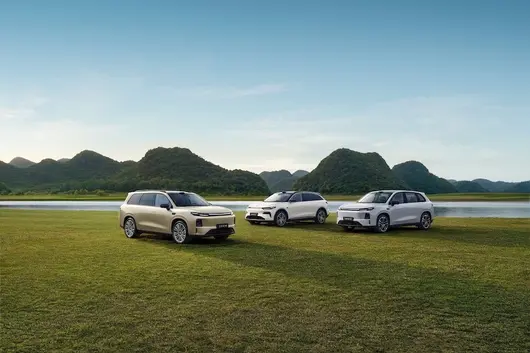

In the SUV market in Malaysia, many buyers compare the Proton X90 and Honda WR-V when choosing a car. Both cars are quite close in price and positioning. Today, we will make a detailed comparison from multiple aspects to help you save time on research.
The Proton X90 OTR price in Malaysia is RM 106,800 - 122,800, with a total of 4 versions, including 2026 1.5T Prime X (RM 122,800), 2026 1.5T Prime (RM 116,800), 2026 1.5T Lite (RM 106,800), etc.
The Honda WR-V OTR price in Malaysia is RM 89,900 - 107,900, with a total of 4 versions, including 2023 1.5L V (RM 99,900), 2023 1.5L E (RM 95,900), 2023 1.5L S (RM 89,900), etc.
From a price perspective, the starting price of the Honda WR-V is RM 16,900 cheaper than the Proton X90. Honestly, in this price range, a gap of a few thousand is not really that big. The key is to look at the overall cost-performance ratio and long-term usage costs.

The Proton X90 safety rating is 5★ (ASEAN NCAP), with active safety systems including ADAS (ACC, AEB, LKA, LDA, BSM, RCTA).
The Honda WR-V safety rating is 5★ (ASEAN NCAP), with active safety systems including Honda SENSING.
Both cars have the same safety rating. In this class, safety equipment is quite complete. New cars nowadays have good safety, so there is no need to worry too much about this.
The Proton X90 body length is 4400 mm, and trunk capacity is 400 L.
The Honda WR-V body length is 4400 mm, and trunk capacity is 400 L.
The dimensions of both cars are almost the same, and the interior space difference is not significant. Cars in this class are completely sufficient for daily use.
The Proton X90 warranty is 5 years/150,000 km, and maintenance intervals are every 10,000 km or 6 months.
The Honda WR-V warranty is 5 years/unlimited mileage, and maintenance intervals are every 10,000 km or 6 months.

Both the Proton X90 and Honda WR-V are mainstream choices in the Malaysian market, suitable for family use and daily commuting. If you value brand reputation and resale value more, you can prioritize the one with better reputation; if you care more about cost-performance and equipment, then choose the one with richer configurations. Ultimately, it is recommended to test drive both. Experiencing it personally is the most important.

Overall, both the Proton X90 and Honda WR-V are very good models in the Malaysian market. Choosing one depends mainly on your personal needs and budget. We recommend doing your homework, comparing quotes from several dealerships, and then test driving to make the final decision. Buying a car is a major matter. Taking some time to do your homework will never go wrong.


