首頁西医

搜尋歷史
熱門搜尋
經銷商登入 / 註冊

August 2026, the automotive industry repeatedly mentioned a term — “Speed-build cars”.
In the industry, some new cars have development cycles compressed to 18 months or even 12 months, parts verification passes in one round, durability road tests are cut in half directly. Cars go on the market first, users act as “test drivers”, problems lead to OTA recalls later, becoming routine operation for some automakers. What consumers buy is “half-baked cars” — products that are half-baked, things to be verified weren’t, things to be run weren’t completed.
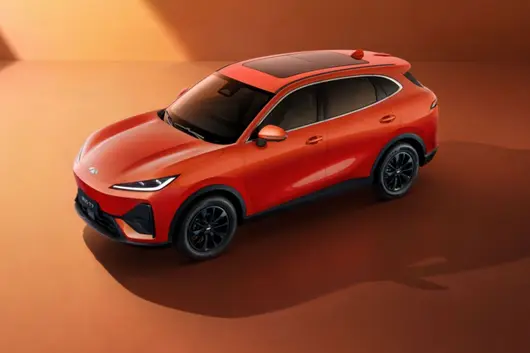
August 12, Chery Fengyun T7 launched pre-sales, putting out a completely opposite tag — “Global car cannot be fast at all”. 109,900 RMB to 129,900 RMB, three configurations. Full system unified 65.05kWh Rhinoceros Battery, CLTC range 600km.
The 16th Hexagram of the “I Ching” is “Yu”, Upper Zhen Lower Kun, Thunder rises from the earth and stirs. The hexagram text says, with preparation, there will be no panic. The 17th Hexagram is “Sui”, Upper Dui Lower Zhen, Thunder in the marsh. The hexagram text says, move in accordance with the timing, achieving smoothness and success. First comes Yu, then comes Sui. Fengyun T7 spent four years completing “preparation”, then used today’s product to respond to the market’s “timing”.

Fengyun T7 is not a “China Special” car made for domestic first then exported. Its overseas homologous model is called LEPAS L6, already pre-sold in South Africa, launched in Thailand, subsequently entering the European Union, Australia, New Zealand, United Kingdom, and more than 130 other countries and regions. A car must meet regulatory standards of so many countries simultaneously, the R&D starting point is different.
In terms of safety, Fengyun T7 targets the 2026 version E-NCAP 5-star standard, functional safety reaches ASIL D highest level. The 2026 version E-NCAP breaks vehicle safety down into four pillars: safe driving, collision avoidance, collision protection, and post-collision safety. If any item has obvious weakness, 5-star rating cannot be achieved. Body adopts 80% high-strength steel, hot-formed steel accounts for 18.84%, nine cross five longitudinal cage body structure. Most safety airbags in class 9 airbags, including 48L dual-chamber far-end airbags and rear side airbags. Rhinoceros Battery IP68 water resistance reaches 96 times national standard.
These standards are not added later, they were written into product definition from the first day of R&D.

Chery Automobile Executive Vice President Li Xueyong said, Fengyun T7’s four-year cycle was spent on three “cannot be fast” places — R&D cannot be fast, products need repeated polishing; verification cannot be fast, reliability needs real scenario testing; global user co-creation cannot be fast, need to hear voices from different markets.
81 exclusive durability cars simultaneous road testing, vehicle cumulative test mileage over 6 million kilometers, durability special actual measured 1.45 million kilometers. Covers -40°C to 55°C full range environment, covers 95% global road types. Conducted extreme real car trials for different global regions such as Southeast Asian rainy season, Middle East high-temperature sun exposure, Indonesia high humidity, etc.
Global invested 963 test cars. 5000+ global user research, 15 typical countries in-depth visits. Optimized product design starting from actual vehicle usage needs, not engineers guessing what users want in the office.
Fengyun T7’s “Global Verification” is not going overseas to run around for show, it includes global different markets’ regulations, road conditions, user habits into the verification system from the R&D stage. European users habit car front into storage, vehicle within 70cm automatically displays front camera. Thai users prefer heavier steering hand feel, engineers increase steering force by one level. Turkey and Israel users prefer physical buttons, high-frequency functions keep physical switches. Indonesia bumpy road sections make users lack sense of security, engineers optimize steering return quality. These details are not post-event patches, they are adaptations included in consideration from the R&D stage.

Fengyun T7’s pricing is the last link of this “Global Standards” logic. 109,900 RMB to 129,900 RMB, three configurations price difference is 10,000 RMB each, battery unified 65.05kWh, range unified 600km. No lower configuration cutting range, higher configuration adding range graded premium tricks.
Put this price on the market, in the same price range pure electric SUVs, full series 600km range, full series 9 airbags, full series 8775 chip, full series independent rear suspension models, currently only Fengyun T7 one model.
The meaning of this price is not only “cheap”, but “buy products verified with global standards with national prices”. Fengyun T7 ran verification process overseas first, then landed domestically with China market pricing logic. Homologous model LEPAS L6 price in Thailand about 160,000 RMB, domestic pre-sale 109,900 starting — same set of global standards, two pricing logics. Overseas verification costs shared by global sales, domestic consumers enjoy price dividends brought by scale effects.
Smart Cockpit. Class first 4nm process Qualcomm SA8775 Cockpit-Driver integrated chip. 15.6 inch 2.5K HD large screen, Lingxi Smart Cockpit 2.0 equipped with Doubao Large Model. Falcon 500 Smart Driving equipped with 22 high-precision sensors.
Comfortable and solid. 2700mm wheelbase, 84% utilization rate. Seats folded down form 1955mm×1310mm pure flat large bed. Chassis involved senior engineer from former Maserati in tuning.
109,900 to 129,900 RMB price range, let this set of global standard products entered China mainstream family selectable range.

First half of 2026, Chery in Europe cumulative sales 174,000 units, among them new energy 86,000 units, year-on-year growth 385%. For every 5 cars exported from China, 1 comes from Chery. Consecutive 23 years China brand passenger car export No.1.
Fengyun T7’s “Global Rebound” is not a slogan, it is solid verification result. The gold content of this logic does not lie in the export quantity itself, but in the standards, systems, and quality cognition behind the export. When the industry is still consuming each other with price wars, Chery uses a car verified by global market, pulling competition back from “who is cheaper” to “who is more trustworthy”.
Yu Hexagram says “Prepare for the unexpected”, Sui Hexagram says “Move according to timing”. First spend four years preparing global standards, then use this car to respond to the market’s “timing”. Global verification, Chinese prices — this is Fengyun T7 “Global car cannot be fast at all” true meaning.



More than 700 years ago, a young Venetian departed from his hometown, following a path trodden by camel caravans eastward for four years to reach Shangdu of the Yuan Dynasty.
His dictated account later while in prison became the starting point for Europeans to imagine the East.
More than 700 years later, a team of Chinese vehicles with green plates departed from the Italian Peninsula, heading in the opposite direction, eastward and then eastward again, stopping by Shenzhen Bay 43 days later.
The entire journey was 15,000 kilometers, crossing 11 countries, burning not a drop of fuel.
This is BYD's "Marco Polo New Silk Road." Long-distance travel with pure electric vehicles is no longer news, but that was within the country.
From Rome to Khorgos, separated by Balkan mountain roads, the Anatolian plateau, and the Central Asian Gobi, where are the charging piles in those places? How was this ten-thousand-kilometer journey charged?
Only by understanding this question can you truly understand the significance behind BYD revisiting the Silk Road.

01.From Rome to Shenzhen, This Road Took 700 Years
Let's first trace the route.
On June 13, 2026, the BYD team departed from Palazzo Orsini Taverna in Rome, Italy.
This palace itself is a relic left 500 years ago by a family involved in East-West trade. Choosing to start here spoke volumes without words.
The subsequent route crossed Croatia, Slovenia, Serbia, Bulgaria, Turkey, Georgia, Azerbaijan, Kazakhstan, and Uzbekistan in order, a total of 10 foreign countries. Finally, it entered via the Khorgos port in Xinjiang, passing through Xi'an, Luoyang, Suzhou, and Shanghai, concluding in Shenzhen on July 25.
Calculated by fingers, it was 43 days, 11 countries, 15,000 kilometers.
If you draw this line on a map, you will find it highly overlaps with the main line of the ancient Silk Road.
Leaving the Italian Peninsula of Southern Europe, crossing the Balkans, crossing the Bosphorus Strait into Asia, crossing the Anatolian plateau, climbing the Caucasus Mountains, arriving in Central Asia via the Caspian Sea ferry, then advancing eastward through the Kazakh wilderness until Khorgos.
This is not a route designed for self-driving tours. The terrain and climate differences along the way are ridiculous.

The Mediterranean coast is dry and hot in summer, the Balkan mountains are foggy and rainy, the eastern part of Turkey exceeds two thousand meters in altitude, the winding mountain roads in Georgia have sharp turns and steep slopes, the Central Asian Gobi scorches the car paint by day and cools down at night, arriving in China you still have to experience the headwinds in the Northwest and the plum rain in Jiangnan.
Temperature difference, altitude, road conditions, each item is a real test for the electric vehicle's three-electric system and thermal management.
More critically, the ones completing the journey were not special modified vehicles, but mass-produced vehicles available on the BYD market. All matrix of Dynasty, Ocean, Denza, Fang Cheng Bao, and Yangwang participated, without special reinforcement, without extra fuel tanks, even the charging ports remained in factory original condition.
More than 700 years ago, Marco Polo walked this road relying on camels' endurance and human stamina.
More than 700 years later, the team walked the same road relying on electricity in the batteries and charging stations along the way. The carrier changed, but the essence of this road connecting East and West has not changed.

02.How to Achieve 15,000 Kilometers Pure Electric Cross Silk Road?
An outsider looking at this trip, the first reaction is to ask if the range is enough.
This question placed in 2026 is actually no longer valid. Pure electric vehicles now generally achieve 600 km or more in CLTC range. Long-distance travel is not impossible, the real pain point has always been one—charging.
Especially abroad. Charging pile standards in Europe are not unified, operators are fragmented, in some parts of Central Asia even stable grids are a problem.
You drive an electric car departing from Rome, no matter how long the range, if you cannot find a reliable fast charging pile midway, it will break down.
BYD's solution is simple and rough: build it themselves.
After the team entered Uzbekistan, passing through the four ancient cities of Khiva, Bukhara, Samarkand, and Tashkent, there was a BYD exclusive flash charging station waiting at every stop.
Note this order, not the car team arrived and then looked for electricity everywhere, but the piles were secured before the car arrived, and then the car drove over.
These four cities are exactly the core nodes on the Silk Road in Central Asia. BYD pinned the flash charging piles in these places, both as a safety net for this trip and paving the way for long-term deep cultivation in the Central Asian market.
So, BYD dared to use pure electric vehicles to cross the Silk Road. The confidence to do so comes from BYD's Megawatt Flash Charge technology.
BYD's Megawatt Flash Charge is based on the Super e-Platform. Simply put, it is a middle school physics problem.
Power equals Voltage times Current. To charge fast, either increase current or raise voltage. Too large current causes wire harnesses to be bulky, severe heat generation, and high energy loss. So the industry consensus is to take the high-voltage route.
BYD directly pulled the voltage to 1000V, two and a half times the mainstream 400V platform, cooperating with 1000A maximum current and 10C charging rate, peak charging power reached 1000 kilowatts, which is one megawatt.

What is the concept of one megawatt, how fast can charging be? Official data says "in normal temperature, fully charged in 5 minutes, fully saturated in 9 minutes", meaning electricity from 10% to 70% takes only 5 minutes, from 10% to 97% takes only 9 minutes, averaging about two kilometers of range increase per second, charging for 5 minutes can supplement more than 400 kilometers.
Achieving this charging speed in technical engineering is not easy.
On one hand, battery internal resistance must be reduced. BYD cut internal resistance by about half by reconstructing ion channels, using still the second-generation Blade Battery, long structure for uniform heat dissipation. On the other hand, the charging gun must be light. Using conventional cables for over a thousand amperes current would be too heavy to lift, BYD used fully liquid-cooled terminals to control the gun cable to two kilograms.
Finally, Silicon Carbide power chips must be manufactured themselves. Electronic control, air conditioning, motors all unified to 1000V standard. No component could stay in the low-voltage zone dragging behind. This is a whole set of full-stack self-researched system, not gathered from buying a pile of supplier parts.
In August 2026, this Megawatt Flash Charge system received the German International Paul Pich Award. The award was founded by the European authoritative automotive media "Automotor & Sport". Established in 1989, now 37 years, BYD is the first Chinese enterprise to win. The jury believes it "is expected to push the adoption of pure electric vehicles from the root".
Domestic energy replenishment networks have also spread. As of the end of June this year, BYD has built 7,018 flash charging stations in 325 cities nationwide, grid-like coverage of urban areas, highways, and townships.
So you see, 15,000 kilometers run, on the surface the car is running, underneath is a pre-woven charging network supporting it.
Range is the car's capability, being able to charge is the system's capability.

03.Crossing 11 Countries Complex Road Conditions, Intelligent Driving Helped a Lot
Ten thousand plus kilometers of long-distance travel, human fatigue is unavoidable. Especially abroad, road signs unreadable, traffic regulations different, mountain roads and highways alternating, anyone cannot endure continuous driving for several days.
On this trip, BYD's God's Eye assisted driving system was basically online throughout.
Urban congestion road following car start-stop, long-distance highway automatic cruise maintaining distance, mountain tunnels recognizing lane lines and curves, continuous winding mountain roads decelerating in advance. These functions taken individually each item is not new, most 200,000 RMB level cars at home have them.
But what is new is the scenario—from Italian roundabouts to Turkish mountain roads, from Kazakh desert highways to domestic highway tunnels, traffic signs, driving habits, and road conditions of 11 countries are completely different. One system needs to adapt to all, this is an extreme test for the algorithm's generalization ability.

The trump card of God's Eye is data. According to official disclosure, BYD assisted driving system daily real driving data exceeds 210 million kilometers. These data flow back from mass-produced cars, after labeling and training then OTA pushed to users, forming a continuous evolution closed loop.
To be blunt, this system is not calculated by engineers in an office, it is driven out by millions of car owners on the road. The more road conditions seen, the more stable the handling of weird scenarios.
I have always felt, intelligent driving cannot be viewed from launch event demos. Demo videos are all selected. True persuasiveness lies in this long-distance real run, over forty days different countries different road conditions run without major issues, more useful than any spec sheet.
Of course assisted driving is ultimately assistance, driver's hand cannot leave the steering wheel, but it can cut down a large chunk of long-distance driving fatigue intensity, making ten thousand plus kilometers not turn into torment.

04.Driving Out is Not Just Cars, BYD is Under a Bigger Game
If only understanding this trip as a car long-term test, the perspective is too small.
You notice events happening along the way. The team arrived in Belgrade, Serbia, BYD Executive Vice President Li Ke accepted an "Award for Sustainable Development and Interconnectivity". The award giver was a local institute, this is not an enterprise awarding itself.
In Uzbekistan, the four flash charging stations are not temporary facilities, part of BYD's joint venture factory plan with local. Uzbekistan Q1 BYD sales volume 7,799 vehicles, year-on-year growth 93%, directly knocking Chevrolet which monopolized the local market for thirty years off the table.
Looking bigger. BYD's factories in Thailand, Brazil, Uzbekistan have entered production. Hungary Szeged factory invested 4 billion euros, started production in Q2 this year, Turkey factory also landed this year.
From whole vehicle manufacturing to charging network to local R&D and sales channels, it is not transporting cars over to sell and leave, but moving the whole industry chain over, hiring locally, building factories, paying taxes locally.

Sales figures also support. In the first half of this year, BYD sold 174,100 vehicles in Europe, year-on-year growth 145.5%, already surpassing Japanese brands like Nissan, Honda that cultivated Europe for many years. June single month exports to EU plus UK plus EFTA 54,000 vehicles. In UK, first half sold nearly 38,000 vehicles, surpassing Tesla, BMW, Volkswagen topping EV sales champion. Germany July single month sales 5,240 vehicles, year-on-year growth 365%. Overseas annual sales target from beginning of year 1.3 million vehicles up revised to 1.5 million vehicles.
These numbers placed three years ago are inconceivable. China's automotive exports in the past relied on low prices and volume, selling cheap cars to Southeast Asia, Middle East, Latin America. Now BYD sells products with Megawatt Flash Charge and high-level intelligent driving in Europe, prices not cheaper than Volkswagen, Toyota, still people pay. This Silk Road trip used wheels rolling over 11 countries, essentially making a real field endorsement for "Chinese Smart Manufacturing" four words.
Marco Polo brought Eastern product information back to Europe, relying on a pen.
BYD spreads China's electric vehicles and charging technology across Eurasian continent, relying on an entire industry chain.

05.Ancient Silk Road Spoke with Medicines, Silk, Porcelain, Tea, New Silk Road with What?
Return to the cultural line.
What circulated on the ancient Silk Road, was silk, porcelain, tea, medicinal herbs.
Interesting, almost at the same time, BYD's other team departed from Xi'an, following ancient path to Bozhou seeking medicinal herbs, to Jingdezhen fetching porcelain, to Hangzhou collecting silk, to Mount Wuyi picking tea leaves, taking the four legendary items "Medicines, Silk, Porcelain, and Tea" 33 days later to Shenzhen going overseas walked again.
These products in that year were hard currency, material carriers of Eastern civilization external output.
Then what is transported on the New Silk Road?
First stop after team entering was Xi'an. Chinese and foreign guests were invited into BYD Smart Manufacturing Base, from batteries to motors to electronic control full-link self-research looked through thoroughly.
Arriving Luoyang, Tang and Song family carrying people under Longmen Grottoes chatted about Silk Road culture.
Arriving Suzhou, Ocean series cars drove into water town alleys, echoing across with records of "Venice of the East" under Marco Polo's pen.
Arriving Shanghai, Denza representatives sat on the East-West dialogue table with Eastern New Luxury.

You see, Ancient Silk Road transported products, New Silk Road transports technology and standards. Three-electric system is technology, high-voltage charging architecture is standard, intelligent driving algorithm is ability, whole vehicle manufacturing system is strength.
These things like silk and porcelain are products a civilization most proud to present in specific era, only carrier changed from fine silks to chips and batteries.
Interesting is direction, Marco Polo walked from West to East, bringing Eastern prosperity back to Europe.
BYD's trip also walked from West to East, departing from Rome returning to Shenzhen, but cars made in China, technology developed in China, flash charging piles erected by Chinese brands on Central Asian land.
Same direction, the output entity is completely reversed.

Final Thoughts
43 days, 11 countries, 15,000 kilometers, full journey pure electric, mass-produced vehicles no modification. Wheels have replaced camel bells, on that ancient road rolled out a new wheel track, this event itself worthy of being remembered.
BYD revisiting the Silk Road proved pure electric vehicles crossing Eurasian continent technically completely feasible, and not that kind of feasible by gritting teeth to endure, but with flash charging network safety net, intelligent driving system sharing burden, full matrix models completed run with composure, proving China's automotive industry's three-electric technology and replenishment system already possessed confidence to accept testing under global most complex road conditions, injecting green new energy into traditional Silk Road.
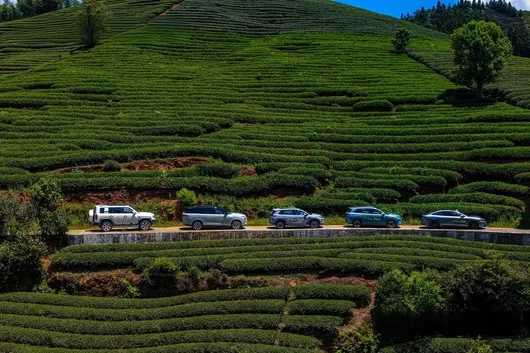
In the Malaysian SUV market, many buyers compare Proton X90 and Mazda CX-5 when choosing a car. Both cars are quite close in price and positioning, so today we will make a detailed comparison from multiple aspects to help you save time on research.
The OTR price of Proton X90 in Malaysia is RM 106,800 - 122,800, with a total of 4 versions, including 2026 1.5T Prime X (RM 122,800), 2026 1.5T Prime (RM 116,800), 2026 1.5T Lite (RM 106,800), etc.
The OTR price of Mazda CX-5 in Malaysia is RM 135,469 - 166,760, with a total of 3 versions, including 2025 2.0L AT 35th Anniversary (RM 316,154), 2025 2.0L AT (RM 296,154), 2025 2.0L MT (RM 294,154), etc.
In terms of price, the starting price of Proton X90 is indeed RM 28,669 cheaper than Mazda CX-5. If your budget is limited, Proton's entry-level version is already sufficient for daily needs. But be aware, the few thousand ringgit difference may involve trade-offs in features, specifically depending on your requirements.

Proton X90 is equipped with 1.5L Turbo, 140 hp. Official fuel consumption 7.0 L/100km.
Mazda CX-5 is equipped with 1.5L Turbo, 140 hp. Official fuel consumption 7.0 L/100km.
Both cars use the same powertrain system, the daily driving experience is basically no different. Fuel consumption is also similar, no need to stress too much about this.

Proton X90 adopts FWD drive type.
Mazda CX-5 adopts FWD drive type.
Both cars have the same drive type, both are FWD, daily driving feel will not differ too much.

Proton X90 warranty 5 years/150,000km, maintenance interval every 10,000km or 6 months.
Mazda CX-5 warranty 5 years/150,000km, maintenance interval every 10,000km or 6 months.
Warranty conditions for both cars are the same, no need to worry about this aspect. Actual maintenance cost also depends on brand service network and parts price, suggest asking real owners in car groups about their experience.

Proton X90 and Mazda CX-5 are both mainstream choices in the Malaysian market, suitable for family use and daily commuting. If you value brand reputation and resale value more, you can prioritize the one with better reputation; If you care more about cost-performance ratio and features, choose the one with richer configuration. Ultimately recommended to test drive both, personal experience is the most important.

Overall, Proton X90 and Mazda CX-5 are both very good models in the Malaysian market. Which one to choose, key still depends on your personal needs and budget. Suggest everyone do research well, compare quotes from several car dealerships, then test drive to make final decision. Buying a car is a big matter, spending time on research will definitely not be wrong.


喺馬來西亞嘅 SUV 市場,好多買家喺揀車嘅時候都會拎 Proton X90 同 Honda CR-V 做比較。呢兩部車喺價位同定位上都幾接近,今日我哋就從多個方面做個詳細嘅比較,幫你省下做功課嘅時間。
Proton X90 喺馬來西亞嘅 OTR 售價係 RM 106,800 - 122,800,合共有 4 個版本,包括 2026 1.5T Prime X(RM 122,800)、2026 1.5T Prime(RM 116,800)、2026 1.5T Lite(RM 106,800)等等。
Honda CR-V 喺馬來西亞嘅 OTR 售價係 RM 178,200 - 195,900,合共有 4 個版本,包括 2026 e:HEV 2.0L 2WD RS(RM 195,900)、2026 1.5T 4WD V(RM 181,900)、2026 e:HEV 2.0L 2WD E(RM 178,200)等等。
睇返價錢,Proton X90 嘅起步價確實比 Honda CR-V 平咗 RM 71,400。如果你預算有限,Proton 嘅入門版已經可以滿足日常需要。不過要留意,嗰幾千元,可能喺配備上會有取舍,具體要看你嘅需要。
Proton X90 嘅安全評級係 5★ (ASEAN NCAP),主動安全系統包括 ADAS (ACC, AEB, LKA, LDA, BSM, RCTA)。
Honda CR-V 嘅安全評級係 5★ (ASEAN NCAP),主動安全系統包括 Honda SENSING (ACC, CMBS, LKAS, RDM)。
兩部車嘅安全評級一樣,喺呢個級距入面安全配備都算好齊全。而家嘅新車安全性都唔差,唔使太擔心呢一點。
Proton X90 車身長 4400 mm,后备厢 400 L。
Honda CR-V 車身長 4500 mm,后备厢 450 L。
空間方面,Honda CR-V 嘅車身比 Proton X90 長咗 100 mm,乘坐空間更有優勢。不過 Proton X90 喺市區停車會靈活啲,各有優缺。
Proton X90 採用 FWD 驅動方式。
Honda CR-V 採用 FWD 驅動方式。
兩部車嘅驅動方式一樣,都係 FWD,日常駕駛感覺唔會有太大分別。

總體嚟講,Proton X90 同 Honda CR-V 都係馬來西亞市場幾唔錯嘅車型。揀邊一部,關鍵仲要睇你嘅個人需要同預算。建議大家做好功課,多比較幾間車行嘅報價,再去做試駕同做最終決定。買車係一件大事,花少少時間做功課絕對唔會錯。

喺馬來西亞嘅 SUV 市場,好多買家喺揀車嗰陣都會拿 Proton X70 同 Chery Tiggo 7 PHEV 做比較。這兩款車喺價錢同定位上都幾接近,今日我哋就由多個方面做一個詳細嘅比較,幫你省下做功課嘅時間。
Proton X70 喺馬來西亞嘅 OTR 售價係 RM 106,800 - 122,300,一共有 3 個版本,包括 1.5L Standard 2WD(RM 106,800)、1.5L Executive 2WD(RM 115,800)、1.5L Premium 2WD(RM 122,300) 等。
Chery Tiggo 7 PHEV 喺馬來西亞嘅 OTR 售價係 RM 129,750 - 129,750,一共有 2 個版本,包括 2025 1.5T 90km CSH(RM 129,750)、Tiggo 7 PHEV 支援咩充電方法?係咪可以用家用電源插座充電?(RM 117,478) 等。
從價錢嚟看,Proton X70 嘅起步價確實比 Chery Tiggo 7 PHEV 平咗 RM 22,950。如果你預算有限,Proton 嘅入門版已經可以滿足日常需求。但都要留意,平嗰幾千蚊,可能喺配備上會有取捨,具體要睇你嘅需求。

Proton X70 嘅安全評級係 5★ (ASEAN NCAP),主動安全系統包括 ADAS (ACC, AEB, LKA, LDA, BSM, RCTA)。
Chery Tiggo 7 PHEV 嘅安全評級係 TBD,主動安全系統包括 Basic。
安全配備方面,兩款車都拿到唔錯嘅評級。不過 Proton X70 嘅 ADAS (ACC, AEB, LKA, LDA, BSM, RCTA) 同 Chery Tiggo 7 PHEV 嘅 Basic 喺功能上有些分別,如果你比較睇重主動安全嘅話,可以仔細比較下兩者嘅功能列表。

Proton X70 採用 FWD 驅動方式。
Chery Tiggo 7 PHEV 採用 FWD 驅動方式。
兩款車嘅驅動方式一樣,都係 FWD,日常駕駛感受唔會有太大分別。

Proton X70 保修 5 年/150,000km,保養間隔 每 10,000km 或 6 個月。
Chery Tiggo 7 PHEV 保修 3 年/100,000km,保養間隔 每 10,000km 或 6 個月。
總括嚟講,Proton X70 同 Chery Tiggo 7 PHEV 都係馬來西亞市場幾唔錯嘅車型。揀邊一輛,關鍵始終都要睇你嘅個人需求同預算。建議大家做好功課,多比較幾間車行嘅報價,再去試駕做最終決定。買車係件大事,花啲時間做功課絕對唔會錯。


喺馬來西亞嘅 SUV 市場,好多買家喺揀車嘅時候都會拿 Proton X70 同 Toyota Yaris Cross 嚟做比較。呢兩款車喺價位同定位上都幾接近,今日我哋就從多個方面做一個詳細嘅比較,幫你省返做功課嘅時間。
Proton X70 喺馬來西亞嘅 OTR 售價係 RM 106,800 - 122,300,一共有 3 個版本,包括 1.5L Standard 2WD(RM 106,800)、1.5L Executive 2WD(RM 115,800)、1.5L Premium 2WD(RM 122,300) 等。
Toyota Yaris Cross 喺馬來西亞嘅 OTR 售價係 RM 99,900 - 109,900,一共有 2 個版本,包括 2026 1.5L Standard(RM 99,900)、2026 HEV 1.5L Standard(RM 109,900) 等。
由價錢睇,Toyota Yaris Cross 嘅起步價比 Proton X70 平咗 RM 6,900。老實講,喺呢個價位段,幾千蚊嘅差距其實唔算大,關鍵仲係睇整體嘅性價比同長期使用成本。

Proton X70 裝 1.5L Turbo,馬力 140 hp。官方油耗 7.0 L/100km。
Toyota Yaris Cross 裝 1.5L 4-cyl,馬力 105 hp。官方油耗 6.0 L/100km。
動力方面,Proton X70 嘅 1.5L Turbo 比 Toyota Yaris Cross 嘅 1.5L 4-cyl 多咗 35 匹馬力,中段加速更有信心,尤其係行高速公路超車嘅時候。不過 Toyota Yaris Cross 嘅油耗可能會抵啲,日常市區通勤差別唔會太大。

Proton X70 車身長 4400 mm,尾箱 400 L。
Toyota Yaris Cross 車身長 4400 mm,尾箱 400 L。
兩款車嘅尺寸幾乎一樣,車內空間分別唔大。呢個級別嘅車,日常使用完全夠用。
Proton X70 採用 FWD 驅動方式。
Toyota Yaris Cross 採用 FWD 驅動方式。
兩款車嘅驅動方式一樣,都係 FWD,日常駕駛感受唔會有太大分別。
Proton X70 同 Toyota Yaris Cross 都係馬來西亞市場嘅主流選擇,適合家庭使用、日常通勤。如果你更睇重品牌口碑同二手價,可以優先考慮口碑更好嗰款;如果你更介意性價比同配備,嗰就揀配備更豐富嗰款。最後始終建議兩款都去試駕,親自體驗先係最重要。
總嚟講,Proton X70 同 Toyota Yaris Cross 都係馬來西亞市場好唔錯嘅車型。揀邊一輛,關鍵仲係睇你嘅個人需求同預算。建議大家做功課,多比較幾間車行嘅報價,先再試駕做最終決定。買車係件大事,花少少時間做功課絕對唔會錯。

【懂车之道 产业】我们来盘点一下2026年7月22日,汽车圈都发生了一些什么大事件。
汽车事件一:通用汽车发布2026年第二季度财报

7月21日,通用汽车公司(纽交所代码:GM)发布2026年第二季度财报,净收入达480亿美元,净利润达13亿美元,调整后息税前利润达39亿美元。
通用汽车2026年全年财务最新预期:调整后息税前利润从135亿美元至155亿美元区间上调至140亿美元至160亿美元区间;调整后汽车业务现金流从90亿美元至110亿美元区间上调至95亿美元至115亿美元区间;调整后摊薄后每股收益从11.50美元至13.50美元区间上调至12.00美元至14.00美元区间。
汽车事件二:郑州日产近千台锋坦起航拉美

近日,近千台锋坦Frontier Pro正式从上海港启程,驶向拉美市场。作为日产汽车首款由中国团队主导设计、研发、生产并面向全球输出的皮卡车型,锋坦Frontier Pro的批量出海,标志着郑州日产“技术+产品+品牌+服务”全链路出海体系进入规模化运营新阶段。
锋坦Frontier Pro依托日产LCV研发中心技术实力,经过长达一年多海外市场的专属开发与严苛验证,在日产汽车全球严格的品控标准下完成量产。为确保每一台出口车辆都符合日产汽车的严苛品质要求,郑州日产在全流程实施了严格的质量管控。
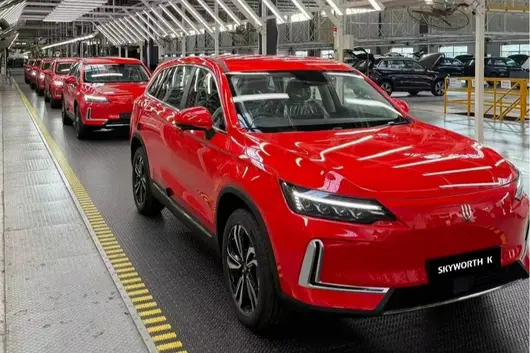
汽车事件三:创维汽车SKYWORTH K正式下线

7月21日,创维汽车官宣旗下SKYWORTH K系列车型正式下线,首批车辆将作为出租车投入香港市场运营,并定于7月30日完成交付亮相。
作为创维汽车针对右舵市场打造的核心产品,此次下线的SKYWORTH K右舵车型专为香港交通场景优化。该车系定位中型纯电动SUV,整合了创维在智能家居与家电领域的生态优势,致力于打造"移动的第三空间"。
汽车事件四:Stellantis集团任命行业资深高管领导Ram和Jeep品牌
日前,我们从Stellantis集团官方了解到,其任命两位汽车行业资深高管领导Ram和Jeep品牌。其中Matt VanDyke被任命为Ram品牌新任首席执行官,此任命自7月20日起生效;Branden Coté将接替Bob Broderdorf,并担任Jeep品牌的新任首席执行官,此任命将于8月3日起生效。

据介绍,2025年7月,Tim Kuniskis在担任Ram品牌首席执行官时,另被任命为Stellantis集团北美营销和零售战略及美国品牌负责人。Matt VanDyke的本次任命将接替 Tim Kuniskis担任的Ram品牌首席执行官一职。

自2025年2月以来担任Jeep品牌首席执行官的Bob Broderdorf将休假进行个人就医治疗,在其治疗结束后,他将回归集团并在集团内部担任新的领导职务。
上述变动是Stellantis集团首席执行官安东尼奥·菲洛萨(Antonio Filosa)实施现有战略的一部分,即旨在建立一支由经验丰富的管理人员所组成的团队,这些管理人员有能力推动集团的增长计划。上述新任命的两位品牌首席执行官将向Tim Kuniskis汇报工作。
《每天车闻》,这里有最新的当天汽车新闻,请继续关注《懂车之道》

In the SUV market in Malaysia, many buyers compare Perodua Aruz and Hyundai Tucson when choosing a car. These two cars are quite close in price and positioning. Today, we will make a detailed comparison from multiple aspects to save you the time of doing research.
The OTR price for Perodua Aruz in Malaysia is RM 72,900 - 77,900, with 2 versions available, including 1.5L X (RM 72,900), 1.5L AV (RM 77,900), etc.
The OTR price for Hyundai Tucson in Malaysia is RM 143,888 - 197,888, with 5 versions available, including 2025 HEV 1.6T AT 2WD Prestige (RM 197,888), 2025 1.6T DCT 4WD Prestige (RM 186,888), 2025 1.6T DCT 2WD Prime (RM 164,888), etc.
From a price perspective, the starting price of Perodua Aruz is indeed RM 70,988 cheaper than Hyundai Tucson. If your budget is limited, Perodua's entry-level version is enough to meet daily needs. However, be aware that the few thousand ringgit saved might involve trade-offs in features, depending on your specific needs.

Perodua Aruz is equipped with a 1.5L 4-cyl, 105 hp. Official fuel consumption 6.0 L/100km.
Hyundai Tucson is equipped with a 1.5L Turbo, 140 hp. Official fuel consumption 7.0 L/100km.
In terms of power, the 1.5L Turbo in Hyundai Tucson has 35 more horsepower than the 1.5L 4-cyl in Perodua Aruz. However, for daily city driving, both cars have enough power and won't feel underpowered.

Perodua Aruz's safety rating is 5★ (ASEAN NCAP), active safety systems include .
Hyundai Tucson's safety rating is 5★ (ASEAN NCAP), active safety systems include SmartSense.
Both cars have the same safety rating, safety features are quite comprehensive within this class. New cars nowadays generally don't have poor safety, so there is no need to worry too much about this point.
Perodua Aruz warranty 5 years/150,000km, service interval every 10,000km or 6 months.
Hyundai Tucson warranty 5 years/300,000km, service interval every 10,000km or 6 months.

Both Perodua Aruz and Hyundai Tucson are mainstream choices in the Malaysian market, suitable for family use and daily commuting. If you value brand reputation and resale value more, prioritize the one with better reputation; if you care more about cost-performance and features, choose the one with richer configuration. Ultimately, it is recommended to test drive both, as personal experience is the most important.

Overall, both Perodua Aruz and Hyundai Tucson are excellent models in the Malaysian market. Which one to choose depends on your personal needs and budget. We suggest doing your research, comparing quotes from several car dealers, and then test driving to make the final decision. Buying a car is a major matter, spending time doing research will never be wrong.


In the Malaysian SUV market, many buyers compare Perodua Aruz and MG MG HS when choosing a car. These two cars are quite close in price and positioning. Today we will make a detailed comparison from multiple aspects to help you save time on research.
Perodua Aruz OTR price in Malaysia is RM 72,900 - 77,900, with a total of 2 versions, including 1.5L X (RM 72,900), 1.5L AV (RM 77,900), etc.
MG MG HS OTR price in Malaysia is RM 130,450 - 146,450, with a total of 2 versions, including 1.5L Standard (RM 105,000), 1.5L Executive (RM 115,000), etc.
In terms of price, Perodua Aruz's starting price is indeed RM 57,550 cheaper than MG MG HS. If your budget is limited, Perodua's entry-level version can already meet daily needs. However, note that the few thousand difference might involve trade-offs in equipment, depending on your specific needs.
Perodua Aruz safety rating is 5★ (ASEAN NCAP), active safety systems include .
MG MG HS safety rating is TBD, active safety systems include Basic.
Perodua Aruz body length 4400 mm, trunk 400 L.
MG MG HS body length 4400 mm, trunk 400 L.
The dimensions of the two cars are almost the same, the interior space difference is not significant. Cars in this class are fully sufficient for daily use.
Perodua Aruz adopts FWD drive mode.
MG MG HS adopts FWD drive mode.
The drive mode of the two cars is the same, both are FWD, daily driving experience will not have much difference.
Overall, Perodua Aruz and MG MG HS are both quite good models in the Malaysian market. Which one to choose mainly depends on your personal needs and budget. It is recommended to do your research, compare quotes from multiple dealerships, and then go for a test drive to make a final decision. Buying a car is a major matter, spending some time on research will never be wrong.


Author: Zhong Sheng
Editor: Mark
Producer: Red Interstellar
Header Image: Autonomous Driving Image
Recently, WeRide announced a one-stage end-to-end assisted driving solution developed in cooperation with Bosch, which is conducting road testing and adaptation verification in countries such as Germany, France, and Japan. This can be said to be the first overseas launch of a domestic one-stage end-to-end system.
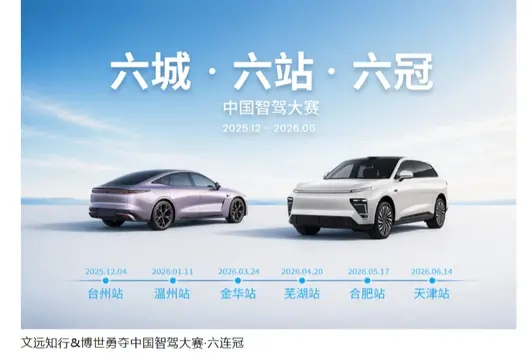
WeRide has been very dominant domestically with its one-stage end-to-end assisted driving solution, not only achieving "six consecutive championships" in the Autonomous Driving Competition, but also continuously winning multiple project bids with leading companies, cumulatively securing over 30 project nominations from GAC Group and Chery Group.
AION N60 is equipped with this one-stage end-to-end solution
It is reported that in this overseas road test by WeRide, it demonstrated outstanding performance in dealing with overseas scenarios such as German unlimited speed limit highways, French dense roundabouts, and Japanese right-hand drive left-hand traffic rules.
From the perspective of autonomous driving going global, this is not just an overseas verification, but China's autonomous driving global expansion will enter a new mode stage.
In the past, autonomous driving going global not only had fewer features, generally limited to Highway NOA, and required deploying significant manpower overseas for localization engineering. But this time WeRide is bringing the one-stage end-to-end solution overseas, not only pushing City NOA features overseas, but also intends to solve the issue of how to move from single-market adaptation to global adaptation.
Therefore, this is also a global exam for China's Physical AI capabilities.
Autonomous driving is a typical Physical AI scenario, requiring deep interaction with the physical world and handling complex multi-tasks.
And L4 autonomous driving is the most stringent, direct verification field for Physical AI capabilities. It is not simply identifying objects and then doing path planning, but requires understanding the world and predicting trends to make safe and reliable decisions.
This requires the ability to reconstruct the physical world, able to generate real scenes at the pixel level within seconds; learning the physical laws behind complex traffic; deducing the causal logic behind driving behavior; pre-playing spatiotemporal evolution, deducing multiple possibilities within the next few seconds in a continuously changing road environment.
As the company with the widest global business coverage in the autonomous driving field, WeRide transforms the massive data, technical systems, and engineering experience accumulated over years of L4 autonomous driving R&D and operations into a one-stage end-to-end solution for mass-produced L2++ models. This is also why the one-stage end-to-end solution from WeRide&Bosch can win the "six consecutive championships" in the Autonomous Driving Competition, essentially bringing the capabilities of the more difficult L4 autonomous driving down to L2++.
WeRide&Bosch win China Autonomous Driving Competition · Six Consecutive Championships
In addition, a major threshold for autonomous driving going global is data, overseas real road scenario data.
Physical AI models and internet large language models have fundamental differences. Every decision plan interacts with the real world, so the error tolerance is extremely low. Therefore, Physical AI models need cognitive data from the real world to help models learn the laws of the real world.
Overseas data is a challenge for companies that have always done domestic L2++ autonomous driving, but for WeRide which has already operated Robotaxis globally, it is an existing advantage.
WeRide's Robotaxi operations currently cover Guangzhou, Beijing, Singapore, Abu Dhabi, Dubai, Riyadh, Zurich, and other domestic and overseas core markets, conducting autonomous driving R&D, testing, and operations in over 40 cities in 12 countries globally. According to previous disclosures, WeRide has deployed over 3000 autonomous driving vehicles globally. The global massive fleet provides sufficient scenario depth and breadth for training the L2++ one-stage end-to-end AI large model.
Chery Exeed EX7 comes standard with this one-stage end-to-end solution
One can say WeRide is one of the few companies globally that has accumulated real-world cognitive data. This is also a barrier for autonomous driving going global. To provide rich nutrition for the evolution of the one-stage end-to-end AI large model, the countries/regions covered must be wide enough, and the accumulated road scenario data must be rich enough.
More importantly, massive global data provides new gameplay for autonomous driving going global.
Previously, a huge difficulty faced by China's autonomous driving going global was the scenario gap.
Overseas road traffic scenarios differ significantly from domestic ones, and differences between different countries/regions are also very large. For example, German highway speed limit rules, French dense roundabouts, and many countries/regions use right-hand drive vehicles.
In the past, the differentiation of these overseas road scenarios required investing significant manpower in "localization" adaptation and deployment, doing a large amount of technical engineering hard labor and tiring work. This led to high difficulty and high cost for China's autonomous driving going global, and the speed of laying out overseas markets was very slow, because each country/region needed "localization" technical engineering to be done over again.
Chery Exeed ES also equipped with this one-stage end-to-end solution
Therefore, for Chinese autonomous driving companies, the problem at hand is: Can L2++ autonomous driving going global break through the scenario gap with lower cost and more efficient methods?
WeRide's answer is: Yes, and must do so.
By training the one-stage end-to-end AI large model through massive global real operation data, modeling using the WeRide GENESIS world model that conforms to the objective laws of the physical world, further generating scenarios, training algorithms, verifying safety. This is a new gameplay for China's autonomous driving going global, and also the underlying logic of AI. For humans, road scenarios and rules differ by country, but for AI, it belongs to the same world.
So autonomous driving going global ultimately comes down to one thing: Is AI capability strong enough? And WeRide is verifying this. Does AI learn Chinese road experience, or physical world laws?
Autonomous driving going global has welcomed the best timing. The global automotive market is looking up to the Chinese market in autonomous driving.
Firstly, the scale of Chinese car makers going global continues to surge, with overseas sales accounting for nearly one-third. Autonomous driving is becoming a key competitiveness for overseas models, and Chinese car makers are also preparing to upgrade to City NOA advanced autonomous driving features.
Secondly, not only will Chinese car makers' overseas models carry City NOA advanced autonomous driving features, but overseas car makers in their own home markets are also starting to layout City NOA. For example, Porsche and Audi chose to cooperate with Mobileye respectively, using Mobileye's solution, covering point-to-point assisted driving for highways and urban areas.
One-stage end-to-end solution test vehicle in Germany
This is different from the situation in the past few years. Previously overseas car makers were more conservative in Europe and the US markets, autonomous driving features were generally limited to Highway NOA, but now they also need to align with the Chinese market.
Therefore, currently is the best timing for China's autonomous driving going global. Firstly, the demand in overseas markets is being released. Secondly, autonomous driving suppliers in Europe and the US markets, such as Mobileye, International Tier 1, are behind domestic in autonomous driving solution technology and mass production efficiency.
Large market scale, rigid customer demand, weak competitors, this is a profitable track with a long slope and thick snow.
However, this time WeRide's overseas layout is not simply copying the global expansion model of International Tier 1s. In the past, International Tier 1s relied on a model of stacking manpower, stacking adaptation, stacking rule algorithms, while WeRide relies on AI capabilities, data-driven, using AI models as the leverage. Therefore, this is AI capability going global.
What WeRide represents is not just a globalization attempt of an autonomous driving enterprise, but also an important mark that China's Physical AI capabilities are starting to accept systematic verification from the global road system.
-END-

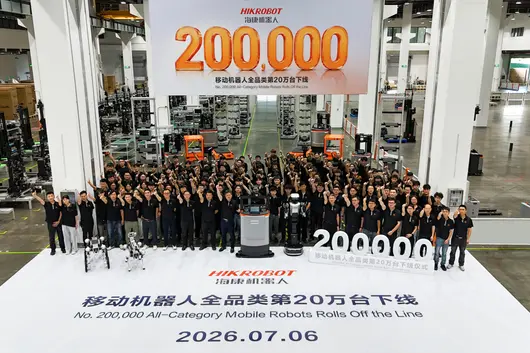
July 6, 2026, as a forklift mobile robot walked off the production line, Hikvision Robotics officially announced that its cumulative mobile robot units of all categories rolled off the production line exceeding 200,000.

From May 2024 when the 100,000th unit rolled off until now, Hikvision Robotics has completed the leap of the second 100,000 units in just two years. According to the latest statistics from the Mobile Robot Industry Alliance, its market share of mobile robots in 2025 ranked first globally. Against the backdrop of the intelligent transformation of manufacturing, China's mobile robot industry is accelerating from demonstration applications to a new stage of scaled popularization, and the speed change of Hikvision Robotics' 200,000 units rolling off represents a microcosm of this trend.
From Technology to Standards: Systemic Accumulation Behind Scale
The scale of the mobile robot industry is not only an expansion of capacity but also the result of long-term accumulation by leading enterprises in technology, products, scenarios, industry standards, and other dimensions. From the development laws of the global industry, enterprises that can truly achieve large-scale mass production and landing are those that have continuously invested and accumulated for a long time in these dimensions, eventually forming productized and engineering systemic capabilities.
Hikvision Robotics' development trajectory provides a reference for this law. From the gradual improvement of early product lines—Crawler, Forklift, Omni-directional Forklift, and other categories successively launched—to the Safety Controller obtaining the world's first SIL3 certification, the Omni-directional Forklift obtaining the country's first full-instruction CE certification, and the Fourth Generation Architecture Platform "Intelligent Base" being launched—these nodes string together a clear path of capability leap: Mobile robots are gradually evolving from "able to run" to being able to operate safely, stably, and schedulably in complex industrial environments. The continuous evolution of technology has laid the engineering foundation for large-scale delivery.
This accumulation does not stop at hardware. The core software architecture has undergone four iterations, evolving from early warehousing scheduling control to an intelligent platform supporting mixed scheduling and low-code secondary development; core links such as electronic control, algorithms, and perception equipment have achieved full-stack self-development. With mature capabilities, hardware and software interfaces are standardized and opened to the outside, allowing upstream and downstream industries to perform secondary development and scenario adaptation on the same platform, thereby broadening the application boundaries of the industry.
In terms of standards, Hikvision Robotics has cumulatively formulated and revised more than 37 mobile robot standards at various levels. In June 2026, its leading development of the national standard "General Technical Specification for Logistics Robot Information Systems" won the Zhejiang Province Standard Innovation Major Contribution Award. As the first systemic general standard in the field of global logistics robot information, it fills the gap in standards in this field, standardizes large-scale cluster scheduling planning technology, reduces redundant construction costs in the scaled deployment of mobile robots, and accelerates the standardization process of the industry.
Scenario Accumulation: The Market Foundation of Scale
As of April 2026, Hikvision Robotics has cumulatively served more than 20,000 customers, implemented in over 1,000 niche application scenarios, covering automotive and auto parts, 3C electronics, photovoltaic, lithium battery, commercial circulation, food and pharmaceuticals, tobacco, footwear and apparel, and many other industries. Massive customer needs have formed a stable market basic foundation and also provided continuous real feedback for the iteration of products and technologies.
 In the automotive industry, Hikvision Robotics has cumulatively invested more than 2,000 mobile robot units in multiple production bases of FAW Toyota, achieving the first deployment of over 1,000 units in a single factory in the automotive industry. In the Changan Digital Intelligence Factory, 687 mobile robot units were landed at once, manufacturing efficiency increased by 20%, and line costs were reduced by 20%. In the new energy field, Hikvision Robotics has landed more than 500 projects in the lithium battery industry, with shipments exceeding 10,000 units. In the circulation and pharmaceutical fields, benchmark projects such as Watsons, Winic, Singapore YCH Group, and Sinopharm General are continuously expanding the efficiency boundaries of warehousing logistics.
Relying on massive implementation experience, Hikvision Robotics has accumulated rich scenario Know-how, enabling the replication of mature solutions from a single scenario, iterating products through real-time data reverse iteration, and forming a positive loop of "scenario refines products, products support mass production".
Ecosystem Construction: Solving Industry Fragmentation Challenges
Facing the extremely fragmented demands of the mobile robot industry, ecosystem capabilities have become one of the keys to scaled landing.
Since launching its ecosystem strategy in 2020, Hikvision Robotics has gathered more than 500 ecosystem partners around the three business lines of Machine Vision, Mobile Robots, and Articulated Robots, cumulatively training more than 200,000 engineers, and built a multi-level ecosystem system covering hardware, software, services, and talent.
 In the mobile robot field, Hikvision Robotics has completed the delivery of a large number of fragmented scenarios in partnership with partners. At the implementation level, tooling products such as EasyAMR for small and micro factories and 3D logistics simulation software PlantMirror make flexible automation transformation for SMEs lighter and trial and error costs lower. At the talent end, through paths such as the Engineer Certification System and Industry College co-construction, an "Industry-Education-Research-Application" integrated ecosystem covering talent training, technology verification, and industry transfer has been built.
Intelligent Manufacturing Upgrade: The Future of the Industry from Line Intelligence
 In the Tonglu Science and Technology Park of Hikvision Robotics covering more than 200 mu, mobile robots, machine vision, and articulated robots have achieved deep collaboration of "eyes, feet, hands" multiple devices on the production line, from perception, decision-making to execution seamlessly: mobile robots complete factory-wide automated turnover and workstation delivery, articulated robots matched with machine vision complete precision operations such as screwing and calibration, AI vision algorithms perform real-time error correction and positioning; wheeled humanoid robots, quadruped robots, and other embodied series are being tested in loading and unloading, picking, and transport links, supporting a massive capacity of 75,000 mobile robots, 5 million sets of machine vision products, and 20,000 sets of articulated robots annually.

From "machines assist humans" to "robots make robots", intelligence runs through the entire production process of Hikvision Robotics. It is precisely the combination of self-developed production lines and sufficient capacity that makes embodied intelligence no longer stay only in the laboratory, but use Tonglu as a validation platform to quickly replicate mature "eyes-feet-hands" collaboration solutions to various industries, benefiting more manufacturing enterprises with this technology loop.
Looking Forward: The Next Stop After Scale
From the perspective of industry laws, a technology from start to maturity often needs to go through a leap from verification to scaled landing. 200,000 units rolling off is a node for Hikvision Robotics and also a footnote in this process. Behind this acceleration is the technology inclusion path of mobile robots moving from benchmark factories to more widespread industrial scenarios. When deployment thresholds continue to decrease and intelligent technology begins to penetrate every link of manufacturing, the application boundaries of mobile robots will be further expanded.
繼全球多地密集調整產能後,固特異輪胎再次按下「暫停鍵」。近日,固特異宣佈其土耳其伊茲米特工廠將於 7 月 2 日至 8 月 2 日停產一個月,預計 8 月 3 日恢復生產。
固特異官方表示,此次停產旨在進行庫存管理及計劃內的定期維護,期間生產線將實施技術調整與現代化改造,不會對營運和財務造成負面影響,員工權益也不受影響。然而,此次停產時機頗為微妙——距該工廠因違反反壟斷法被土耳其政府重罰 6.72 億里拉僅過去一週。值得一提的是,該工廠在 2025 年 6 月也曾以「調整庫存」為由停產過一個月。

巨頭深陷調整陣痛,關停裁員接踵而至
固特異土耳其工廠的停產,只是全球輪胎行業劇烈震盪的一個縮影。2026 年以來,國際輪胎巨頭頻現「關停潮」:
5 月,普利司通突然宣佈關停營運超 40 年的台灣新竹工廠;同月,倍耐力阿根廷工廠宣佈停產,該廠自 2023 年以來已累計裁員 700 人;大陸集團也宣佈在全球調整約 3000 個職位,其中 1600 人被納入裁員範圍。

作為百年巨頭,固特異自身的「陣痛」更為劇烈。在「固特異前進」重組計劃下,其已先後關閉或出售了德國富爾達(營運 125 年)、南非 Kariega(營運 78 年)、馬來西亞莎阿南等多地工廠,並出售了鄧祿普品牌及化工等非核心業務。今年 4 月,固特異美國唯一的 OTR 工程輪胎老廠托皮卡也實施了短期停工。

亞洲低價輪胎衝擊,全球競爭白熱化
這場席捲全球的停產關廠潮背後,是供需失衡與亞洲(特別是中國)高性價比輪胎的強力衝擊。
近年來,中國輪胎企業憑藉性價比優勢在全球攻城略地,直插外資大牌市場腹地,使其原有高價定位難以為繼,利潤空間被大幅壓縮。固特異財務數據顯示,其 2025 年全年淨銷售額同比下降近 5% 至 183 億美元,淨虧損高達 17 億美元;預計 2026 年第一季度全球銷量同比將下降約 10%,並面臨 1.85 億美元的成本增加壓力。
面對高成本區域的產能冗餘與亞洲輪胎的價格衝擊,國際巨頭不得不通過「斷臂求生」來降本止損。固特異預計其重組計劃全年將節省約 3 億美元成本。然而,在競爭遠超預期的全球輪胎市場中,這種「刮骨療毒」式的自救能否換來真正的復興,仍需時間檢驗。