


首頁羊卓雍措

搜尋歷史
熱門搜尋
經銷商登入 / 註冊

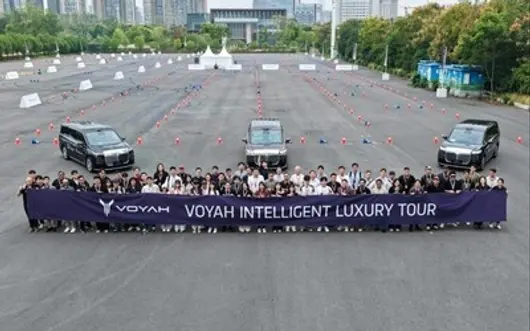
[CNMO Tech News] Recently, the "Voyah Distinguished Journey" kicked off in Wuhan. Overseas media representatives from Southeast Asian countries such as Singapore, Thailand, Malaysia, and Indonesia, walked into the Voyah Smart Factory to get a head start on the upcoming globally released high-end new energy vehicle, the Voyah Dreamer 9, on September 22.

As the highlight vehicle of this event, the Voyah Dreamer 9 has already received a strong market response before its launch: just 48 hours after pre-sales opened, small orders exceeded 30,000 units, with the top-spec Li Zun Edition accounting for over 50%. More than 20,000 units were purchased by upgrade and replacement from existing Voyah users. Overseas media experienced the "One Cabin, Eight Environments" space magic inside a cabin designed with the "Embrace of Heaven and Earth" concept—the second-row zero-gravity seats support 180-degree multi-angle rotation, allowing seamless switching between business, rest, and travel scenarios.

The overseas media tour group visited the Voyah Golden Factory to experience the intelligent flexible production line up close. In the final assembly workshop, AGV robots worked in an orderly manner. A large digital screen updated the "Digital ID" of each vehicle in real-time, recording the full-process trajectory from parts to the whole vehicle. Through technologies such as 5G, Big Data, and AI, the factory achieved mixed-flow production with multiple models on the same line. Currently, the Voyah Golden Factory and Yunfeng Factory collaborate on dual lines, with an annual capacity of 450,000 units; one vehicle goes off the line every 40 seconds.

The tour group also visited the Golden Factory Full-Function User Center, the largest flagship store of Voyah nationwide. The store has a total area of more than 30,000 square meters, integrating new car display, custom modification, brand culture, after-sales maintenance, and ultra-fast charging, covering the user's full lifecycle from car selection and purchase to long-term use. Multiple overseas media representatives showed strong interest in Voyah's direct sales service system, hoping that Chinese flagship-level service could enter their countries soon.

Since its establishment, Voyah has conducted full-stack self-research in core areas such as Battery, Motor, Electronic Control, Chassis, Intelligent Cockpit, Intelligent Driving, and Vehicle Manufacturing, forming full-value-chain self-control capabilities, and built an "SUV + MPV + Sedan" full product matrix, gaining the trust of over 400,000 users globally. During the event, the visit group also experienced models such as the Voyah ZS and Voyah Taishan X8.

As the "No. 1 High-End New Energy Brand from Central and State-owned Enterprises", Voyah is accelerating its global layout. Currently, Voyah has entered 40 countries and regions and built more than 240 overseas sales outlets. Through three major actions, "Deepening in Europe, Layout in Middle East, and Entering RHD Markets", the Voyah global strategy has entered the phase of accelerated implementation. From product output to value output, Chinese Intelligent Manufacturing is carving its own coordinates on the global automotive map.

In the Malaysian SUV market, many buyers compare the Honda CR-V and BMW X3 when choosing a car. Both of these cars are quite close in price and positioning, so today we will make a detailed comparison from multiple aspects to save you time doing research.
Honda CR-V OTR price in Malaysia is RM 178,200 - 195,900, with a total of 4 versions, including 2026 e:HEV 2.0L 2WD RS (RM 195,900), 2026 1.5T 4WD V (RM 181,900), 2026 e:HEV 2.0L 2WD E (RM 178,200), etc.
BMW X3 OTR price in Malaysia is RM 325,800 - 358,800, with a total of 2 versions, including xDrive20i (RM 320,000), xDrive30e (RM 360,000), etc.
From a price perspective, the starting price of the Honda CR-V is indeed RM 147,600 cheaper than the BMW X3. If your budget is limited, Honda's entry-level version can already meet daily needs. But also note, the savings of a few thousand might involve trade-offs in features, depending on your specific needs.

Honda CR-V comes with a 2.0L 4-cyl, 170 hp. Official fuel consumption 8.0 L/100km.
BMW X3 comes with a 2.0L Turbo, 220 hp. Official fuel consumption 9.5 L/100km.
In terms of power, the BMW X3's 2.0L Turbo has 50 more horsepower than the Honda CR-V's 2.0L 4-cyl. However, for daily city driving, both cars have sufficient power, you won't feel underpowered.

Honda CR-V warranty 5 years/unlimited mileage, service interval every 10,000km or 6 months.
BMW X3 warranty 5 years/unlimited mileage, service interval every 10,000km or 6 months.

Both Honda CR-V and BMW X3 are mainstream choices in the Malaysian market, suitable for family use and daily commuting. If you value brand reputation and resale value more, you can prioritize the one with better reputation; if you care more about cost-performance ratio and features, then choose the model with richer configuration. Ultimately, it is recommended to test drive both, personal experience is the most important.

Overall, both Honda CR-V and BMW X3 are very good models in the Malaysian market. Which one to choose depends mainly on your personal needs and budget. It is recommended to do your research, compare quotes from several dealerships, and then test drive to make a final decision. Buying a car is a big matter, spending some time doing research will never be wrong.


In Malaysia's SUV market, many buyers compare the Honda CR-V and Volvo XC40 when choosing a car. These two models are quite close in price and positioning. Today, we will make a detailed comparison from multiple aspects to help you save time doing research.
The OTR price of Honda CR-V in Malaysia is RM 178,200 - 195,900. There are 4 versions in total, including 2026 e:HEV 2.0L 2WD RS (RM 195,900), 2026 1.5T 4WD V (RM 181,900), 2026 e:HEV 2.0L 2WD E (RM 178,200), etc.
The OTR price of Volvo XC40 in Malaysia is RM 278,888 - 278,888. There is 1 version in total, including 2025 2.0T Plus (RM 278,888), etc.
In terms of price, the Honda CR-V is indeed RM 100,688 cheaper than the Volvo XC40 at the starting point. If you have a limited budget, Honda's entry-level version is sufficient for daily needs. However, note that the few thousand ringgit saved might involve trade-offs in features, depending on your specific requirements.
The safety rating of Honda CR-V is 5★ (ASEAN NCAP). Active safety systems include Honda SENSING (ACC, CMBS, LKAS, RDM).
The safety rating of Volvo XC40 is 5★ (Euro NCAP). Active safety systems include Pilot Assist, City Safety (Standard).
Regarding safety features, both cars have received good ratings. However, there are some differences in function between the Honda CR-V's Honda SENSING (ACC, CMBS, LKAS, RDM) and the Volvo XC40's Pilot Assist, City Safety (Standard). If you prioritize active safety, you can compare the feature lists of both carefully.
The Honda CR-V uses FWD drive mode.
The Volvo XC40 uses FWD drive mode.
Both cars have the same drive mode, which is FWD. There won't be much difference in daily driving experience.
Both Honda CR-V and Volvo XC40 are mainstream choices in the Malaysian market, suitable for family use and daily commuting. If you value brand reputation and resale value more, you may prioritize the one with better reputation; if you care more about cost-performance ratio and features, then choose the one with richer configurations. Ultimately, it is recommended to test drive both. Personal experience is the most important.

Overall, Honda CR-V and Volvo XC40 are both very good models in the Malaysian market. Choosing which one depends mainly on your personal needs and budget. It is recommended that you do your homework, compare quotes from several dealerships, and then test drive to make the final decision. Buying a car is a big matter. Spending time doing research will never be wrong.

In Malaysia's SUV market, many buyers compare Honda CR-V and Kia Sportage when choosing a car. These two models are quite close in price and positioning. Today, we will make a detailed comparison from multiple aspects to help you save time on research.
The OTR price of Honda CR-V in Malaysia is RM 178,200 - 195,900, with a total of 4 versions, including 2026 e:HEV 2.0L 2WD RS (RM 195,900), 2026 1.5T 4WD V (RM 181,900), 2026 e:HEV 2.0L 2WD E (RM 178,200), etc.
The OTR price of Kia Sportage in Malaysia is RM 129,639 - 179,320, with a total of 4 versions, including 2025 1.6T DCT 4WD High (RM 179,320), 2025 1.6T DCT 2WD High (RM 159,320), 2025 2.0L AT 2WD High (RM 139,639), etc.
From a price perspective, the starting price of Kia Sportage is RM 48,561 cheaper than Honda CR-V. Honestly, in this price segment, a difference of a few thousand doesn't count as much, the key is still looking at overall value for money and long-term maintenance costs.
Honda CR-V is equipped with a 2.0L 4-cyl, 170 hp. Official fuel consumption 8.0 L/100km.
Kia Sportage is equipped with a 1.5L Turbo, 140 hp. Official fuel consumption 7.0 L/100km.
In terms of performance, Honda CR-V's 2.0L 4-cyl has 30 more horsepower than Kia Sportage's 1.5L Turbo, providing more confidence in mid-range acceleration, especially when overtaking on highways. However, Kia Sportage's fuel consumption might be better, and the difference in daily city commuting won't be too large.
Honda CR-V's safety rating is 5★ (ASEAN NCAP), active safety systems include Honda SENSING (ACC, CMBS, LKAS, RDM).
Kia Sportage's safety rating is 5★ (ASEAN NCAP), active safety systems include Drive Wise.
Both cars have the same safety rating, and safety features are quite comprehensive within this class. New car safety is generally not bad these days, no need to worry too much about this.
Honda CR-V body length 4500 mm, trunk 450 L.
Kia Sportage body length 4400 mm, trunk 400 L.
In terms of space, Honda CR-V's body is 100 mm longer than Kia Sportage, the interior seating space will be slightly more spacious, especially rear legroom. If you often carry family members or need to fit a stroller, a larger body is indeed more practical.

Honda CR-V uses FWD drivetrain.
Kia Sportage uses FWD drivetrain.
Both cars have the same drivetrain, both are FWD, there won't be a big difference in daily driving feel.

In summary, Honda CR-V and Kia Sportage are both very good models in the Malaysian market. Which one to choose ultimately depends on your personal needs and budget. We recommend doing your research, comparing quotes from multiple car dealerships, and then test driving to make the final decision. Buying a car is a big matter, spending time on research will never go wrong.

On August 12, Chery Fengyun T7 officially launched its pre-sale, with a pre-sale price of 109,900 to 129,900 Yuan. The theme of this launch event was "Great cars take time, you've waited long enough." This phrase clearly explains the product strategy of Fengyun T7: not rushing to catch up with market trends, but spending time on R&D, testing, and quality.

In the current new energy vehicle market, everything talks about "speed". New car launches are getting faster, product iterations are getting faster, and even the cycle from R&D to launch is constantly shortening. But for most users who truly treat cars as family travel tools, is speed really a good thing?
Fengyun T7, First and Foremost, is a "Global Car"
The biggest tag for Fengyun T7 is not any particularly exaggerated configuration, but "global quality". From the start of R&D, it was built according to global standards. Official data shows that Fengyun T7 went through 2 years of planning and 3 years of R&D, completed 5,000+ global user surveys and in-depth visits to 15 typical countries, and was developed according to the 2026 E-NCAP five-star safety standard.

More importantly, it is not simply developed domestically and then "modified a bit" for export. Fengyun T7 underwent actual testing in multiple global regions and complex environments, from Nordic extreme cold, to Southeast Asian high temperature and high humidity, to South American complex unpaved roads. Fengyun T7 needs to face not a single working condition in the lab, but varying environments in the real world.
The same-platform model Lepas L6 has already been launched in markets such as South Africa and Thailand. This means Fengyun T7 is not just telling a "global car" story, but has overseas market validation as a foundation. In my opinion, this is exactly the greatest confidence behind Chery making Fengyun T7. Whether a car can be called a global car is not about how many countries it is ultimately sold in, but whether it has truly been R&D'd and tested according to different global environments.
Home Pure Electric SUV, Ultimately Must Return to "User-Friendly"
Of course, having global testing is not enough. For Chinese consumers, for a pure electric SUV in the 100,000-130,000 Yuan range, the most realistic question remains: is it easy to drive, is it comfortable to sit, is it safe enough, and is the range sufficient?

The answer given by Fengyun T7 is quite direct. The entire series features 600km CLTC range, equipped with a 65.05kWh Rhinoceros battery, 30%-80% fast charging takes only 22 minutes; battery cycle life exceeds 2,500 times, and it has adaptive design for environments from -40°C to 60°C. In terms of safety, 80% high-strength steel body, 18.84% hot-formed steel, 9 airbags, and a 31-layer protection system for the battery pack all belong to configurations that family users should truly care about.

In terms of intelligence, it uses a 4nm 8775 chip, a 15.6-inch 2.5K screen, and the Falcon 500 Intelligent Driving System, putting Fengyun T7 at a mainstream level in the new energy market. But I think the truly smart part of Fengyun T7 is that it doesn't just emphasize one "wow point", but considers range, safety, intelligence, space, comfort, and driving control together. For a family car, this might be more important than simply pursuing specific parameters.

A Car, Can It Meet the Needs of the Whole Family?
The body dimensions of Fengyun T7 are 4570×1852×1694mm, wheelbase 2700mm, rear legroom reaches 911mm, trunk regular volume 450L, maximum expandable to 1550L, simultaneously offering a flat bed mode of 1955mm×1310mm. These numbers ultimately do not point to how large the space is, but to a very simple question: When a family goes out, is it enough?

Picking up/dropping off kids, commuting, weekend camping, long-distance travel during holidays, these are the actual usage scenarios for the vast majority of families. Fengyun T7 also provides one-touch scenario modes such as Power Nap, Wake Up, Baby, Pet, Camping, as well as comfort configurations such as seat heating and ventilation. In short, it is to let a car assemble as many daily needs of family users as possible in one go.

"Slow", Actually a Product Strategy
The current new energy market makes it too easy for people to have an illusion: as long as car companies pile up configurations, make parameters look good, and increase launch speed, they can make a good car.

But cars are after all not fast-moving consumer goods. Especially a family SUV, which may accompany a family for five years, eight years, or even longer. What consumers truly need is not the most beautiful parameters at the launch event, but stability, reliability, and usability several years later.
So Chery did not simply make Fengyun T7 a new energy product chasing parameters and configurations, but chose to put things like "3 years of R&D, 1.45 million kilometers of durability testing, global multi-region verification" which are "not easily seen" into the product. This is also an interesting change after Chery entered the pure electric market. In the past, people's impression of Chery came more from fuel cars and global exports; now, it starts to truly bring the global R&D, manufacturing, and verification systems accumulated over many years into the new energy market.
The pre-sale price of 109,900 to 129,900 Yuan gave Fengyun T7 a good start. Slower might be no bad thing. After all, quality and reliability ultimately need time to hone.
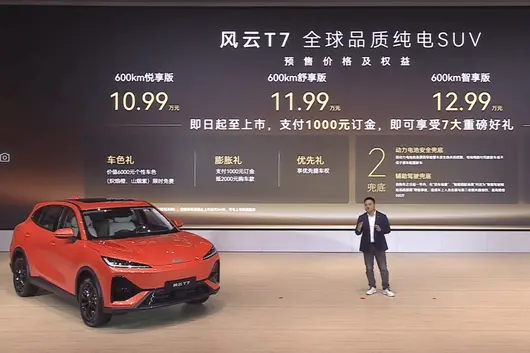

8 月 12 日,奇瑞旗下純電 SUV 風雲 T7 開啟預售。10.99 萬元至 12.99 萬元嘅價格區間,三個版本,七重購車優惠——呢啲數字喺而家嘅新能源車市入面並唔算震撼。真正令人停落嚟嘅,係發佈會主題嗰句「慢工出好車,等咗好耐」。

喺「上市即交車」「一年三改型」成為行業常態嘅今日,講「慢」需要勇氣,聽「慢」需要耐心。而風雲 T7 嘅敘事,恰恰係從呢種唔合時宜嘅節奏開始。
一場反向嘅「出海」
中國汽車正以前所未有嘅速度湧向全球,但多數品牌走嘅係「內地先火,再圖外銷」嘅捷徑。風雲 T7 反其道而行——佢嘅同源車款 Lepas L6 曾經喺米蘭設計週亮相,整車研發倚賴奇瑞全球十大設計中心,5000 多名海内外用戶全程參與共同創作。而後,呢台車冇急住喺內地上市,而係先駛向東南亞嘅雨季、中東嘅烈日、印尼嘅潮濕,喺極端路況入面反覆調校,累計測試里程超過 600 萬公里。
呢好似係一場刻意嘅「延遲滿足」。當同行搶住「首發即爆款」嘅時間窗口,風雲 T7 揀用三年研發、兩年策劃、81 台耐久性車輛同步路試,嚟回答一個樸素嘅問題:一輛面向全球嘅純電 SUV,到底應該憑咩站穩腳跟?
答案藏喺細節入面。對標 2026 版 E-NCAP 五星安全標準,車身 80% 高強度鋼,18.84% 熱成型鋼,9 個安全氣囊——呢啲參數背後,係對「全球路況」而唔係「實驗室工況」嘅敬畏。甚至連漆面標準都同步海外耐侯要求,為係令到一輛車喺常年日曬雨淋之後,依然保有「顏面嘅尊嚴」。
六大「核心需求」同埋一種生活邏輯
新能源時代,造車者熱衷於製造「偽需求」:冰櫃電視大軟墊,語音喚醒表情符號。風雲 T7 卻將產品力拆解為「六大核心需求」——外貌、安全、出行、智能、舒適享受、安心。看似平淡嘅分類,其實暗含對消費主義嘅抵抗。

譬如續航。全係標配 65.05kWh 電池、CLTC 600km,實測達到 667km 以上,官方稱之為「反向虛標」。呢個詞值得玩味——當行業普遍用「樂觀續航」討好用戶時,佢揀用保守數字換取真實信任。再如冬季用車,-30°C 至 55°C 寬溫域熱泵空調,北方車主唔再被「電動祖宗」困擾;30% 充到 80% 只需 20 分鐘,一杯咖啡嘅時間,剛剛係城市生活入面最奢侈嘅喘息。
智能配備同樣克制。8775 晶片、15.6 英寸 2.5K 大屏幕、六大真人感陪伴語音角色——呢啲並唔係賣弄技術,而係試圖回答「機器點同人相處」。獵鷹 500 輔助駕駛系統涵蓋 300+ 泊車場景,包括斷頭路、跨樓層、循跡倒車,解決嘅恰恰係城市駕駛入面最真實嘅焦慮:唔係自動駕駛嘅遙遠幻想,而係「泊唔入車」嘅眼前尷尬。
 空間設計則透露出對家庭用戶嘅體察。84% 實用率,後排純平地台,後排放倒即變 1.95 米「純平大床」,38 處儲物空間——呢唔係參數競賽,而係對「出行即生活」嘅重新定義。瑪莎拉蒂前底盤調校專家領銜嘅團隊,賦予呢台車 50.8:49.2 嘅黃金軸荷比,過彎唔推頭,直線唔飄移——呢種唔見嘅功夫,恰恰係「慢功」最誠實嘅註腳。
兩份「保底」同埋長期主義嘅代價
預售優惠入面最引人注目嘅,唔係價格,而係兩項「保底保障」:動力電池熱失控導致整車损毁,奇瑞賠償同款新車;輔助駕駛系統原因導致意外,最高賠償 500 萬。加埋整車終身質保同埋終身保養套餐,呢家老牌車廠正喺用一種近乎笨拙嘅方式,回應消費者對新能源車最深嘅隱憂——唔係續航唔夠,唔係智能唔足,而係「出事之後邊個負責」。
呢或許先係「慢功」真正嘅底色。佢意味著企業對產品有足夠嘅自信,亦意味著對用戶有足夠嘅誠意。當新勢力用「用戶企業」嘅口號贏得掌聲時,奇瑞揀用一份合約條款嚟兌現承諾——唔煽情,但沉甸甸。
全球標準,中國答案
風雲 T7 嘅預售海報上寫住一句說話:「生而全球,淬煉而歸。」呢八個字,既係對產品路徑嘅概括,亦係對中國汽車產業處境嘅隱喻。當全球汽車工業進入「中國時間」,中國品牌唔再只係輸出產能同價格,而係輸出標準同品質。風雲 T7 所錨定嘅,並非某一國市場嘅偏好,而係全球路況、全球氣候、全球安全法規嘅公約數。
 佢冇驚人之嘅零百加速,冇誇張嘅屏幕數量,亦冇炫目嘅「顛覆性創新」。但佢有一台車最本質嘅嘢:紮實嘅底盤、可靠嘅電池、耐睇嘅內飾、誠懇嘅續航,以及一份願意為失誤買單嘅契約。
喺呢個以「快」為信仰嘅時代,風雲 T7 用一次「慢功」嘅預售,向行業提出一個溫和嘅詰問:當用戶終於被鋪天蓋地嘅參數教育得疲憊不堪嗰陣,佢哋真正需要嘅,會不會只係一臺「久等唔失望」嘅車?
答案,或許就藏喺佢駛向全球又回到中國嘅 600 萬公里路上。嗰啲里程唔會說話,但佢哋知——風沙、暴雨、極寒、擁堵、長途、泊車——每一個場景,都係對「品質」最真實嘅拷問。而風雲 T7,揀用六年嘅沉默,嚟回答呢聲拷問。
而家,佢返咗嚟。靜候每一個唔願就嚟嘅生活家。
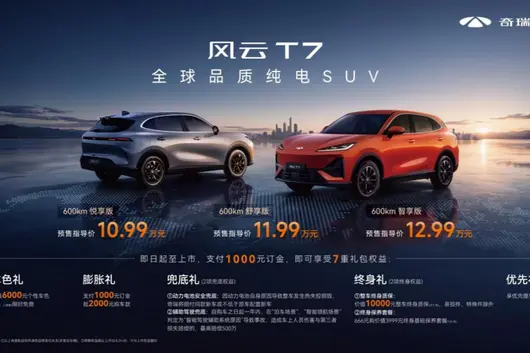

8 月 12 日,奇瑞風雲 T7 正式開啟預售,共推出 3 款車型,預售指導價區間為 10.99 萬 -12.99 萬元。在新能源汽車市場深陷“參數內卷”與“速成造車”嘅當下,風雲 T7 堅守長期主義造車理念,歷經 2 年策劃、3 年潛心研發,不僅帶來了一套極具誠意嘅價格與權益體系,更向市場展示了一條“先全球試煉,再反哺國內”嘅差異化造車路徑。

不同於業界常見嘅“國內首發、後期出海”模式,風雲 T7 誕生前頭便烙印緊“全球車”嘅基因。依托奇瑞全球 1+7+N 研發體系,新车按照 2026 版 E-NCAP 五星安全標準打造,走訪 15 個典型國家、完成 5000 余組全球用戶調研,81 台測試車輛奔赴全球各地開展路試,累計完成超 600 萬公里整車測試、145 萬公里專項耐久驗證,覆蓋極寒、高溫、高濕、高原等多元極端環境,能夠適配全球 95% 道路場景,真正實現全球標準、全球驗證、全球共享。其同源車型 Lepas L6 已率先喺南非、泰國等市場接受真實檢驗。這種“反向出海”嘅節奏,本質上係用全球最嚴苛嘅標準,為國內家庭用戶提前排雷、兜底。

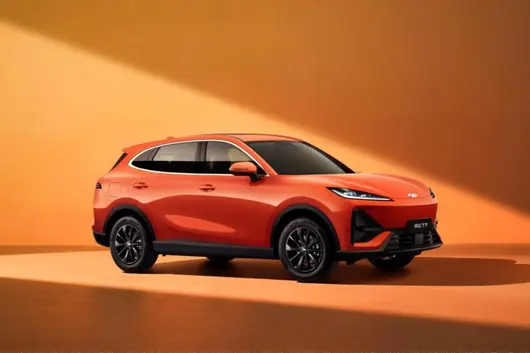
外觀設計匯聚全球設計師智慧,採用馭風前臉與風塑燈帶,風塑絲綢曲面線條克制耐看。新车提供 6 款東方雅韻車漆,熾焰橙採用三層珠光噴塗工藝,耐曬抗老化;內飾雲翼環抱座艙大面積使用軟質包覆,提供兩套內飾風格,兼顧居家溫馨與簡約科技感。全車內外飾材料經過高原紫外線、高低溫交替測試,長期使用不易老化褪色。

智能化方面,風雲 T7 搭載同級首發 4nm 8775 艙駕一體晶片,實現座艙、智駕硬件融合。15.6 英寸 2.5K 防眩光螢幕搭載靈犀智艙 2.0 與豆包大模型,語音交互流暢自然,全面支援主流手機互聯。獵鷹 500 智駕搭載 22 顆高精度感知硬件,不僅擁有 300+ 全場景自動泊車,更下放高端車型才具備嘅 2km 無限制跨樓層記憶泊車,攻克多層商場、立體車庫泊車難題,真正實現泊車自由。

駕乘舒適性經過專業團隊精細打磨。整車軸距 2700mm,車內空間利用率 84%,後排純平地台帶來寬敞乘坐空間,座椅放倒可形成 1955mm 超大純平空間,滿足露營、休憩多元場景。底盤由馬莎拉蒂前底盤專家團隊調校,實現 50.8:49.2 黃金前後軸荷,搭配大尺寸減震襯套與 One-Box 線控制動,兼顧城市通勤舒適感與高速行駛穩定性。

安全係家用車不可退讓嘅底線。風雲 T7 打造磐石籠式車身,80% 高強度鋼搭配 18.84% 熱成型鋼,搭載同級獨有嘅 Shotgun 結構、雙框副車架與 PACK 防撞梁。全系標配 9 個安全氣囊,包含 48L 超大容積遠端氣囊與長效保壓側氣簾。犀牛電池擁有 31 層 6D 鎖子甲防護,防護標準大幅超越國標。同時奇瑞推出行業少見嘅雙重安全兜底:動力電池因自身故障引發熱失控損毀可賠付新车;購車首年,智駕系統原因誘發事故最高賠付 500 萬元,用硬核政策傳遞安全自信。

當唔少品牌追求快速推出新品搶佔市場,奇瑞選擇沉下心打磨一台經得起時間考驗嘅全球車型。10.99 萬起預售嘅風雲 T7,把長續航、高安全、高級智能、舒適空間融合一體,佢唔追求參數上嘅曇花一現,而係用全球 2000 萬用戶嘅信賴背書,為家庭用戶提供一份無需猶豫嘅“安心之選”。對於追求品質與務實並舉嘅消費者而言,風雲 T7 到嚟,恰逢其時。

In the Malaysian SUV market, many buyers compare Proton X90 and Honda WR-V when choosing a car. These two cars are quite close in price and positioning. Today, we will do a detailed comparison from multiple aspects to help you save time on research.
Proton X90's OTR price in Malaysia is RM 106,800 - 122,800, with a total of 4 variants, including 2026 1.5T Prime X (RM 122,800), 2026 1.5T Prime (RM 116,800), 2026 1.5T Lite (RM 106,800), etc.
Honda WR-V's OTR price in Malaysia is RM 89,900 - 107,900, with a total of 4 variants, including 2023 1.5L V (RM 99,900), 2023 1.5L E (RM 95,900), 2023 1.5L S (RM 89,900), etc.
From a price perspective, Honda WR-V's starting price is RM 16,900 cheaper than Proton X90. Honestly, in this price range, a difference of a few thousand is not really significant; the key is to look at overall cost-performance and long-term usage costs.

Proton X90 comes with a 1.5L Turbo, 140 hp. Official fuel consumption is 7.0 L/100km.
Honda WR-V comes with a 1.5L 4-cyl, 105 hp. Official fuel consumption is 6.0 L/100km.
Regarding power, Proton X90's 1.5L Turbo has 35 more horsepower than Honda WR-V's 1.5L 4-cyl, offering more confidence in mid-range acceleration, especially when overtaking on highways. However, Honda WR-V's fuel consumption might be more friendly, with little difference in daily city commuting.

Proton X90's safety rating is 5★ (ASEAN NCAP), active safety systems include ADAS (ACC, AEB, LKA, LDA, BSM, RCTA).
Honda WR-V's safety rating is 5★ (ASEAN NCAP), active safety systems include Honda SENSING.
Both cars have the same safety rating, and safety equipment is quite comprehensive for this class. New car safety is generally not bad nowadays, so there's no need to worry too much about this point.
Proton X90 uses FWD drive mode.
Honda WR-V uses FWD drive mode.
Both cars have the same drive mode, both FWD, so there won't be much difference in daily driving feel.

Overall, Proton X90 and Honda WR-V are both very good models in the Malaysian market. Choosing which one depends mainly on your personal needs and budget. We suggest doing your research, comparing quotes from multiple car dealerships, and then test driving to make the final decision. Buying a car is a big matter; spending time on research will definitely not be wrong.


