


首頁網球

搜尋歷史
熱門搜尋
經銷商登入 / 註冊

In Malaysia's SUV market, many buyers compare Honda HR-V and Hyundai Santa Fe when choosing a car. These two cars are quite close in price and positioning, so today we will make a detailed comparison from multiple aspects to help you save time doing research.
The Honda HR-V OTR price in Malaysia is RM 115,900 - 143,900, with a total of 4 versions, including 2026 e:HEV 1.5L RS (RM 143,900), 2026 1.5T V (RM 137,900), 2026 1.5T E (RM 130,900), etc.
The Hyundai Santa Fe OTR price in Malaysia is RM 225,000 - 270,000, with a total of 3 versions, including 2025 2.5T DCT 4WD Calligraphy 6 Seats (RM 270,000), 2025 HEV 1.6T AT 2WD Prestige 7 Seats (RM 245,000), 2025 HEV 1.6T AT 2WD Prime 7 Seats (RM 225,000), etc.
From a price perspective, the Honda HR-V starting price is indeed RM 109,100 cheaper than the Hyundai Santa Fe. If your budget is limited, Honda's entry-level version can already meet daily needs. However, note that the few thousand Ringgit saved might involve trade-offs in features, specifically depending on your needs.

The Honda HR-V safety rating is 5★ (ASEAN NCAP), active safety systems include Honda SENSING (ACC, CMBS, LKAS, RDM).
The Hyundai Santa Fe safety rating is TBD, active safety systems include Basic.
Regarding safety features, both cars have received good ratings. However, there are some functional differences between the Honda HR-V's Honda SENSING (ACC, CMBS, LKAS, RDM) and the Hyundai Santa Fe's Basic. If you value active safety, you can compare the feature lists of both closely.

Honda HR-V warranty 5 years/unlimited mileage, maintenance interval every 10,000km or 6 months.
Hyundai Santa Fe warranty 5 years/300,000km, maintenance interval every 10,000km or 6 months.

Both Honda HR-V and Hyundai Santa Fe are mainstream choices in the Malaysian market, suitable for family use and daily commuting. If you value brand reputation and resale value more, you can prioritize the one with the better reputation; if you care more about price-performance ratio and features, then choose the one with richer configurations. Ultimately, it is recommended to test drive both, as personal experience is the most important.

Overall, both Honda HR-V and Hyundai Santa Fe are very good models in the Malaysian market. Which one to choose, the key depends on your personal needs and budget. We suggest doing your homework, comparing quotes from several car dealerships, and then test driving to make a final decision. Buying a car is a big matter, spending time on research will definitely not be wrong.

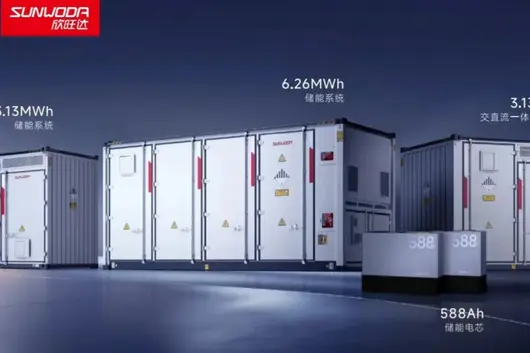
Some time ago, SUNWODA, this "battery giant," held an energy storage new product launch event in Chengdu. Without grand but empty concepts, it presented a very practical combination: a self-developed 588Ah large-capacity energy storage cell, plus three liquid-cooled energy storage systems of the NoahX 3.0 series based on this cell.

The logic is simple—first solidify the cell as the underlying component, then use the same cell to assemble different sized "energy storage cabinets" to adapt to real scenarios like large power stations, overseas transport, and fast grid connection. The Mobility Bureau will break it down for everyone to understand below.
Let's first look at this 588Ah cell. Everyone knows the energy storage industry has been crazily competing on cell capacity in the past two years, from 280Ah to 314Ah, and today 500+Ah. Increasing the numbers is not difficult. The challenge is whether the cycle life can withstand 20 years, whether heat generation can be controlled under high current, and whether energy efficiency will drop?

SUNWODA's this 588Ah cell has a cycle life of 10,000 times, a designed service life of over 20 years, and energy efficiency greater than 96.5%. This is because it uses low lithium loss technology to delay capacity degradation, and the positive and negative electrode materials adopt a high compaction design. More active material is packed into the same volume, raising the electricity storage upper limit of a single cell.
Efficiency is very practical for power stations—every bit higher in cell energy efficiency reduces charging and discharging losses over the full life cycle. Roughly calculated for a 200MWh scale power station, 96.5% cell energy efficiency can save tens of millions of kWh of charging loss compared to early industry levels. This saved portion is real profit for the owner.

Based on this cell, the NoahX 3.0 series cabinets follow the "one cell, three cabinets" route. The 6.26MWh 20-foot large cabinet is reserved for domestic hundred-megawatt-scale large bases. Energy density improves by nearly 25% compared to the previous generation. The whole station footprint and part count are significantly reduced, directly lowering BOP costs like cables and civil engineering through "fewer cabins, simplified wiring." Large power stations love this approach.
The 3.13MWh 10-foot cabinet is prepared for overseas markets. Single cabin weight is compressed to within 24 tons, specifically adapted to hard constraints like weight limits in Northern Europe and restricted lifting in Southeast Asia. The goal is "transportable and liftable." The third model of the same size integrates AC/DC. Batteries, PCS, temperature control, and fire protection are fully pre-installed before leaving the factory. It just connects to the grid on-site, targeting projects with tight schedules in commercial and industrial sectors and data centers where complex wiring on-site is avoided.

All three models share a common safety foundation—PPB-level cell screening, graded protection, and multiple fire protections meeting NFPA standards. The entire series passes UL/CE/AS certification. For owners, the benefit is practical: regardless of which model is chosen, the O&M logic and spare parts are compatible, so there is no need to relearn a system when switching projects.
The value of full-stack self-research lies here. Traditional solutions have cells, PCS, and cabinets seeking their own suppliers. Parameters look beautiful individually, but in operation, thermal management doesn't match cell characteristics, BMS strategies decouple from electrochemical curves, and long-term degradation becomes hard to control. SUNWODA redefines BMS sampling, liquid cooling control, and electrical topology based on the 588Ah chemical characteristics. Cell-to-system three-level verification standards are aligned. Ultimately, what is optimized is LCOS rather than a single point parameter. The IRR that power station investors truly watch is hidden in the 20-year efficiency degradation curve and downtime losses, not on the initial quotation sheet.
Regarding production capacity, cells are being laid out in Nanchang, Deyang, Zaozhuang, plus Thailand. Systems are made in the Huizhou, Longxi area. The Deyang base is equipped with AI full-process visual inspection and full-process data tracing. Every process from electrode sheets to finished cells is traceable. Manufacturing transparency itself is also a strict condition required by large customers before placing orders.
Overall, this launch does not deviate from the industry main line of "Large Cell + High-Integration Liquid-Cooled Cabinet", but the focus is practical: 588Ah first establishes the foundation of 20-year life and 96.5% efficiency. The three cabinets respectively cover three scenarios: large bases, overseas limitations, and commercial/industrial fast delivery. In between, full-stack integration binds cells and systems into a single account. Everyone can compete on capacity upwards. Whether a large cell can truly run for 20 years in a power station, and whether the same cell can adapt to multiple scenarios without adding O&M trouble for customers, is what is harder than Ah numbers.

In Malaysia's SUV market, many buyers compare Proton X70 and Toyota Fortuner when choosing a car. These two models are quite close in price and positioning, so today we will make a detailed comparison from multiple aspects to help you save time on research.
The OTR price of Proton X70 in Malaysia is RM 106,800 - 122,300, with a total of 3 versions, including 1.5L Standard 2WD (RM 106,800), 1.5L Executive 2WD (RM 115,800), 1.5L Premium 2WD (RM 122,300), etc.
The OTR price of Toyota Fortuner in Malaysia is RM 195,880 - 241,880, with a total of 3 versions, including 2024 2.8T VRZ Diesel (RM 241,880), 2024 2.7L SRZ Petrol (RM 202,880), 2024 2.4L Standard Diesel (RM 195,880), etc.
In terms of price, the Proton X70's starting price is indeed RM 89,080 cheaper than the Toyota Fortuner. If your budget is limited, Proton's entry-level version can already meet daily needs. However, keep in mind that the few thousand cheaper, there may be trade-offs in features, depending on your specific needs.

Proton X70 body length is 4400 mm, trunk 400 L.
Toyota Fortuner body length is 4400 mm, trunk 400 L.
The dimensions of both cars are almost identical, with little difference in interior space. Vehicles in this class are fully sufficient for daily use.

Proton X70 warranty 5 years/150,000 km, service interval every 10,000 km or 6 months.
Toyota Fortuner warranty 5 years/unlimited mileage, service interval every 10,000 km or 6 months.

Both Proton X70 and Toyota Fortuner are mainstream choices in the Malaysian market, suitable for family use and daily commuting. If you value brand reputation and resale value more, you may prioritize the one with a better reputation; if you care more about cost-performance and equipment, then choose the one with richer configuration. Ultimately, it is recommended to test drive both, as personal experience is the most important.
In general, Proton X70 and Toyota Fortuner are both very good models in the Malaysian market. Which one to choose depends mainly on your personal needs and budget. We suggest doing your research, comparing quotes from several dealerships, and then test driving to make the final decision. Buying a car is a big deal, taking time to do your research will definitely not be wrong.


