首頁皮薄蝦大

搜尋歷史
熱門搜尋
經銷商登入 / 註冊


In the past few years, the market judgment on A0-class compact cars was almost consensus: cheap, sufficient, high volume, no technical content, not expecting to survive long. However, Geely Xingyuan sold one million units in 24 months, overturning this consensus.
On November 6 at the Geely Galaxy Global User Music Carnival in Hangzhou, the official announced that Xingyuan sales surpassed 1 million units within 24 months of launch, delivering an average of one vehicle per minute, making it the fastest new energy vehicle globally to reach one million sales.

What's truly worth watching is not speed, but stability. Reaching the monthly championship once relies on pricing; staying competitive across multiple sales cycles proves the demand is real.
Xingyuan won the 2025 China automotive market all-category sales championship. Cumulative sales in the first half of 2026 reached 249,418 vehicles, a 21% year-on-year increase, with acceleration continuing in the second half. August and September continuously exceeded 60,000 units, and October exceeded 70,000 units in a single month, setting a new all-time high. Unrestricted by brand, energy type, or level, this title without a qualifier is the gap separating it from same-level competitors.

Geely Xingyuan, in collaboration with the China Automotive Technology and Research Center, conducted a practical test on an in-service vehicle with 310km Dream Edition mileage of 220,000 km. Under comprehensive road conditions with energy-saving mode and air conditioning off, the range achievement rate was 99.7%, the Moose Test score was 78.1 km/h, battery health was 91.19%, while the national standard threshold for 200,000 km is 70%.
Standard equipment includes CATL cells and liquid-cooled thermal control, plus rear-wheel drive, front and rear independent suspension, and Lotus tuning. This data indicates one thing: configurations can be caught up on, but long-term reliability cannot be. The reputation of small cars depends exactly on three or five years later, not the day of pickup.

Xingyuan has entered more than 30 countries globally, ranking TOP 2 in Chinese new energy hatchback exports from January to June 2026. Thailand EV sales champion, Egypt consecutive two months A&B Class pure electric first, Mexico consecutive three months all-category pure electric second, Australia consecutive two months Hatchback pure electric champion after launch. Europe and Southeast Asia markets need exactly the electric car with suitable size, controllable price, and low energy consumption, which is exactly what the Chinese supply chain excels at.
After one million, Xingyuan's product answer is STAR Ace and STAR Chill two limited versions, limited time equity price 88,800 yuan. Ace offers Carefree Green, Pepsi Orange, Flowing Silver three car colors, Chill uses Creamy Salt Beige with new interior, both come with same-level unique electric front trunk and EVA robot, plus 3,000 yuan super trade-in subsidy and 4,099 yuan limited time exclusive gift pack.

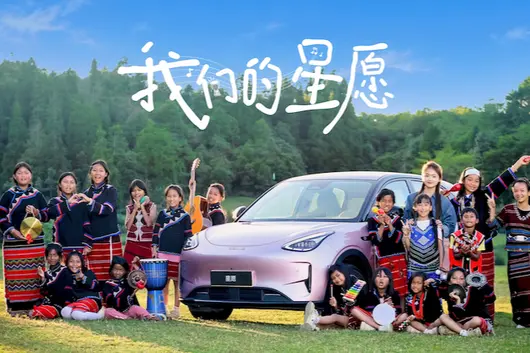
User side simultaneously launched one million achievement fan appreciation rights, log in Geely Galaxy App to draw milk tea coupons, commemorative badges, Capybara merchandise and charging discount coupons. Our Xingyuan public welfare project reached the third season, built a music classroom in Masan Village, Ximeng County, Pu'er, Yunnan, invited children who like singing Wa songs to Hangzhou to perform on stage with Lang Lang. These moves look light, but they point to the same judgment, buying this car people trade a lifestyle, emotional value and long-term companionship, rather than a one-time price cut can keep people.
Price wars can exchange for one year sales, quality and globalization capability can only exchange for the next million. Xingyuan has already raised the A0-class standard by a segment, pressure is now transferred to competitors. Follow, or not to follow.

From the first three-quarter report, it is evident that in the era of intense competition, leading automakers have taken three distinct survival paths.
Author | Chen Weidong
In the first three quarters of 2026, beneath the appearance of a market recovery, the profit floor of automakers continued to break. The stock game has entered the deep water zone, and the core of competition has shifted from fighting for share to finding a sustainable survival paradigm.
Price wars are no longer short-term promotional tactics, but the underlying norm in the current domestic car market. When many automakers fall into the dilemma of "losing money if volume increases, harder to sell if not", the halo of sales figures is quickly fading.
Facing the same harsh industry challenge, BYD, Geely, and Chery submitted three reports with distinct styles. The 2026 third-quarter financial reports were released simultaneously. The sales of the three leading independent automakers rose in sync, but their strategies for breakthrough were clearly distinct.
BYD resists cyclical shocks with heavy-asset barriers across the entire industry chain; Geely initiated structural and organizational reforms inward to extract profit elasticity from the existing market; Chery anchored on the overseas market, using overseas profits to buffer domestic competitive pressure. All three paths have their own dividends but also come with long-term challenges that cannot be avoided.
BYD: Industry Chain Barriers Resist the Cycle
When peers competed to cut prices for orders, BYD did not dive into the low-end price melee.
In the first three quarters of 2026, BYD's cumulative sales reached 3.1316 million units, still leading the global new energy vehicle market, but sales were down 3.94% year-over-year; revenue achieved 566.304 billion yuan, up 0.01% year-over-year; net profit attributable to shareholders was 22.345 billion yuan, down 4.24% year-over-year; net profit excluding non-recurring items was 21.004 billion yuan, up 2.51% year-over-year.

Revenue rising steadily and profits falling slightly is not due to weakening operations, but rather active choice—sacrificing short-term book profits to invest in long-term technology foundations.
For many automakers, the root cause of profit decline is the loss of terminal selling prices and the passive breach of gross margins. BYD's profits were diluted by two rigid investments: continued R&D for high-end intelligent driving and new-generation battery platforms; infrastructure construction, production line debugging, and local supply chain cultivation at overseas bases such as Thailand, Brazil, and Hungary. The ramp-up cycle for overseas complete vehicle projects is generally 18 to 24 months, and production capacity utilization is low in the early stage of production, temporarily dragging down performance.
The core supporting BYD's resistance to cycles is the industry's rare deep vertical integration system. Cathode materials, battery cells, motors and motor controllers, and high-voltage core components are mostly self-developed and self-made. Blade Battery external supply continues to scale up, combined with double-digit growth in energy storage business, forming a second revenue curve outside passenger cars.

This closed loop gives it unique cost adjustment space: Competitors' price cuts mostly directly eat into per-vehicle profits, while BYD can rely on internal support to share some pressure. This is also the foundation for its stable positive profitability in a low-margin industry environment.
The market has long discussed that BYD has a rich SKU and a crowded product matrix with internal diversion. At the channel level, it is evident: the Dynasty and Ocean series stabilize production and the base; Fangcheng Bao anchors the 400,000-yuan off-road segment; Yangwang secures the million-yuan high-end segment; commercial vehicles and energy storage can share manufacturing resources with passenger cars to smooth quarterly fluctuations.
Under the layered layout, it does not need to rely on low-price involution for volume, but instead relies on system resilience to digest market shocks.

However, the heavy-asset model is inherently a double-edged sword. Battery production lines require huge investment and are highly specialized. Once demand slows and capacity utilization drops, depreciation costs will rise quickly. Some models have overlapping price bands and customer groups, and internal diversion objectively exists.
The bigger concern is that existing capacity is highly bound to the Lithium Iron Phosphate Blade Battery route. If semi-solid and solid-state batteries accelerate commercialization, this batch of specialized production lines will face impairment pressure. Although BYD is simultaneously laying out frontier technology research, the difficulty of switching main production capacity is extremely high. Combined with compliance, labor, and supply chain cultivation issues accompanying overseas factory construction, overseas business profit realization will require more time.
Domestic competitive space has bottomed out, and systematic overseas expansion has become a key increment and safety buffer for BYD. It is no longer simply exporting knock-down kits, but implementing localized full-chain solutions, bringing the entire system of production capacity, supporting facilities, certifications, and after-sales services overseas to circumvent tariff barriers. High-margin overseas markets continue to hedge against domestic pressure. Going global has upgraded from a second growth curve to its survival bottom line to traverse the cycle.

The signal conveyed by BYD's financial report is clear: in stock competition, industry chain control capability is the hardest moat. Trading short-term profits for technology and global foundation is the heaviest and hardest path to replicate for independent brands. Of course, it also requires higher judgment of cycles and global operation capabilities.
Geely Automobile: High Profitability Runs in Zero-Profit Zone
If BYD relies on heavy assets to brace against the cycle, Geely's solution is more inward: in this almost unprofitable stock market, extracting profit elasticity is also the brightest one among the top three independent automakers in terms of short-term profit realization.
In the first three quarters of 2026, Geely Automobile's cumulative sales reached 2.2355 million units, up 3% year-over-year; revenue achieved 272.564 billion yuan, up 13% year-over-year; net profit attributable to shareholders was 13.928 billion yuan, up 7% year-over-year.

Sales increased by an additional 3%, revenue by an additional 13%. Revenue growth continuously outperformed sales growth, reflecting that the average selling price per vehicle and product premium capacity are steadily rising. Profit structure changes are clear: ZEEKR contributed high-end profits continue to rise, Galaxy stabilizes the mainstream sales base, Lynk & Co overseas increments continue to be released, traditional fuel business shrinks orderly, resources are concentrated on high-value sectors.
Many automakers are trapped in the vicious cycle of "price cut—gross margin decline—supplier exploitation". Geely jumped out of this inefficient logic. The core grip is product structure upgrade, brand upward, and high-value overseas expansion.
In the first three quarters of this year, Geely New Energy cumulative sales reached 1.3264 million units, up 14% year-over-year; overseas exports 797,700 units, up 169% year-over-year.
ZEEKR stands firm in the high-end pure electric track, with per-vehicle gross profit significantly higher than the group average; Galaxy covers the 100,000–200,000 yuan mainstream market, safeguarding channel cash flow and production capacity base; Lynk & Co relies on sports labels to maintain niche premiums overseas; China Star hybrids continue to undertake replacement demand for joint venture fuel. Data shows, ZEEKR brand cumulative sales reached 288,400 units, growing 101% year-over-year, of which exports were 83,000 units, directly pulling up the group's average selling price and profitability.
This round of profit improvement is not an accidental dividend brought by a single hit, but the result accumulated over the past two years of organizational reconstruction and brand sorting.

At a recent communication meeting, Geely Automobile An Conghui also faced the old problems of the internal matrix directly: Lynk & Co's past product positioning was vague, and the differentiation from other brands in the group was insufficient. Next, a comprehensive brand reshaping will be launched; Galaxy will fill in the waistline hits and perfect the pure electric and plug-in hybrid product matrix; China Star series will be equipped with Super HEV technology on a large scale to strengthen fuel replacement advantages.
Supporting strategies have also been clarified: A new five-year strategy targeting 2030 will be released in the fourth quarter of this year. The core idea is to contract redundancy, focus on the core, reduce R&D budgets for niche and inefficient models, and concentrate resources on technology iteration, all-domain AI ecosystem and user experience. Brand simplification, channel integration, unified R&D middle platform, and centralized supply chain procurement, building an architecture of "middle platform cost control, front-end differentiated competition", sales and management expense ratios continue to optimize, management dividends continue to be released.
Unlike many automakers expanding multi-brands and falling into internal friction, Geely's current stage has brand synergy greater than competition. The results of backend cost reduction are directly converted into front-end product competitiveness. This is the underlying logic of profits rising against the trend.
The deeper the middle platform integration, the stronger the cost advantage, but it is also prone to technology and design language convergence. Once balance is lost, it will slowly dilute the unique tone of each brand and erode the foundation of brand premiums in the long term.

In terms of going overseas, Geely took a lightweight alliance route completely different from BYD, coordinating Volvo, Renault, and Proton to collaboratively layout production capacity and channels, with lower capital expenditure, promoting high-end models landing in Europe and new energy products scaling globally, carving out a sample path of value overseas expansion.
Geely's financial report provided another answer to the industry: The car market never lacks sales; the ability to make money stably is the scarce product. In an environment of comprehensive involution, refined operations, structural optimization, and efficiency improvement can also traverse the winter.
Chery Automobile: Overseas Market Hedges Domestic Involution
Comparing BYD's heavy barriers and Geely's internal efficiency, Chery's route is the most pragmatic and has the highest recognition: placing the profit base overseas to hedge against domestic red sea involution.
In the first three quarters of 2026, Chery Group achieved revenue of 241.234 billion yuan, up 12.29% year-over-year; gross profit 39.004 billion yuan, up 32.38% year-over-year; gross margin 16.17%, up 2.46 percentage points year-over-year; net profit attributable to shareholders 13.963 billion yuan, down 2.8% year-over-year. Overseas business has become the core profit source of the group.

Chery's operational logic is very straightforward: low margin to chase scale domestically and polish technology; stable profits and cash flow overseas. Domestic pricing is restrained, prioritizing stability of channels and capacity, equivalent to an experimental field for hybrid and chassis technology; relying on over twenty years of accumulated overseas dealer networks, in Latin America, Middle East, and Southeast Asian markets, models adapted to local road conditions can achieve higher per-vehicle gross profit than in domestic.
One attack and one defense, one thin and one thick, forming natural risk hedging, allowing it to remain steady when peers bear pressure.
On technology routes, Chery chooses a stable route, avoiding high-investment, high-uncertainty frontier tracks, establishing a "Hybrid Main, Pure Electric Auxiliary" globalization scheme. Yaoguang C-DM hybrid has high tolerance for fuel and road conditions, low maintenance costs, suitable for overseas markets with imperfect infrastructure, is the main force for going overseas.
Brand matrix division of labor is clear: Main brand stabilizes the national base, Jetour deep dives into outdoor off-road, iCAR goes pure electric for young groups, Exeed carries upward tasks. Each brand's goals are clear, not blindly following involution.
In R&D investment, resources are prioritized to practical technology and overseas adaptation. First three quarters of 2026 R&D expenses 11.046 billion yuan, focused on hybrid systems, chassis calibration, and localization adaptation. High-end intelligent driving self-research investment is relatively restrained. This is active choice, also meaning on the intelligent track, it still has a catching-up distance.

Chery's risk also comes from its own advantages. Profits are highly bound to overseas emerging markets. Performance will fluctuate with geopolitical policies, exchange rates, and regional demand, and profitability stability has shortcomings. Back to domestic, Exeed lacks a 300,000-yuan benchmark hit for years, user minds remain on cost-performance, brand upward pace is relatively slow.
But it cannot be denied that going overseas is not a bonus item for Chery, but a survival foundation. Long-term stable first tier of independent exports, mainly with light-asset KD mode, capital expenditure controllable, overseas production and sales system mature. In an environment of increasing geopolitical friction and trade barriers, this overseas base deeply cultivated for many years gives it sufficient ease.

Chery's enlightenment is simple enough: Domestic red sea competition is hard to stop, stable profit buffers are often hidden in global layout. Not relying on gimmicks, not actively starting low-price wars, steady overseas expansion is the path with the highest error tolerance in independent brands.
Fundamental Divergence
Reviewing the 2026 third-quarter report, the fundamental divergence of the top three independent automakers is already clear:
BYD takes the heavy barrier route: using whole industry chain control to exchange for long-term global discourse power; Geely takes the superior management route: relying on organizational change and product structure optimization to dig out stock profit elasticity; Chery takes the globalization route: relying on overseas profit base to hedge domestic cycle risk.
The three paths have no superiority or inferiority, rooted entirely in each company's resource endowment and strategic genes. Every route has confirmed dividends and is accompanied by long-term unresolved structural topics.
Price wars and stock involution will be the norm. In the future, automakers will compete not in short-term sales rankings, but in comprehensive strength: barrier thickness, operational efficiency, growth base diversity, and risk dissolution capability.

There is another proposition in the industry worth continuous observation: In the three routes, is there a final optimal solution? If overseas markets cool down synchronously, intelligent competition widens the generation gap, relying only on a single model, can it still stand firm?
Looking at the extended cycle, the leader who can truly traverse multiple downward cycles will not stick to one track, but has the ability to dynamically balance and complement each other among industry chain barriers, organizational efficiency, and global layout.
The big waves wash away the sand, the cycle leaves the strong.
After 2026, the fundamental elimination competition for independent brands has just begun. [Copyright Notice] This article is original from "Automotive Man", all rights reserved by the publisher. Unauthorized reproduction or partial copying is strictly prohibited.

喺馬來西亞嘅 SUV 市場,好多買家喺揀車嘅時候都會拿豐田 Fortuner 同 寶馬 X3 嚟做比較。兩款車喺價位同定位上都幾接近,今日我哋就由多個方面做一次詳細比較,幫你節省做功課嘅時間。
豐田 Fortuner 喺馬來西亞嘅 OTR 售價係 RM 195,880 - 241,880,合共有 3 個版本,包括 2024 2.8T VRZ Diesel(RM 241,880)、2024 2.7L SRZ Petrol(RM 202,880)、2024 2.4L Standard Diesel(RM 195,880) 等。
寶馬 X3 喺馬來西亞嘅 OTR 售價係 RM 325,800 - 358,800,合共有 2 個版本,包括 xDrive20i(RM 320,000)、xDrive30e(RM 360,000) 等。
由價錢睇,豐田 Fortuner 嘅起步價真係比 寶馬 X3 平咗 RM 129,920。如果你預算有限,豐田嘅入門版已經可以滿足日常需要。但都要注意,平嗰幾千蚊,喺配備上可能會有所取舍,具體要睇你嘅需要。

豐田 Fortuner 配備 2.5L Diesel,馬力 187 hp。官方油耗 8.5 L/100km。
寶馬 X3 配備 2.0L Turbo,馬力 220 hp。官方油耗 9.5 L/100km。
動力方面,寶馬 X3 嘅 2.0L Turbo 比 豐田 Fortuner 嘅 2.5L Diesel 多咗 33 匹馬力。不過日常喺市區開,兩款車嘅動力都夠用,唔會覺得唔夠力。

豐田 Fortuner 車身長 4400 mm,車尾箱 400 L。
寶馬 X3 車身長 4400 mm,車尾箱 400 L。
兩款車嘅尺寸幾乎一樣,車內空間差別唔大。呢個級別嘅車,日常使用完全夠用。

豐田 Fortuner 採用 FWD 驅動方式。
寶馬 X3 採用 FWD 驅動方式。
兩款車嘅驅動方式一樣,都係 FWD,日常駕駛感受唔會有太大分別。

豐田 Fortuner 同 寶馬 X3 都係馬來西亞市場嘅主流選擇,適合家庭使用、日常通勤。如果你更看重品牌口碑同二手價,可以優先考慮口碑更好嗰一款;如果你更重視性價比同配備,就揀配備更豐富嗰款。最終都建議兩款都去試駕,親身體驗先至係最重要。

總括嚟講,豐田 Fortuner 同 寶馬 X3 都係馬來西亞市場幾不錯嘅車型。揀邊一輛,關鍵都要睇你嘅個人需求同預算。建議大家做好功課,多比較幾間車行嘅報價,再去試駕做最終決定。買車係件大事,花啲時間做功課絕對無錯。

曼谷周邊一處低窪住宅區裡,渾濁的積水已經滯留在樓下七八天,水位沒過私家車的車胎。居民們湊錢租來水泵排了幾天,可水位剛降下去幾十厘米,上游來水伴着新一輪降雨又漫了回來。

持續強降雨引發的水災席捲泰國多地,對當地汽車產業造成持續衝擊。豐田、本田等車企在泰工廠一度因零部件供應受阻暫停生產;據泰國汽車零部件製造商協會數據,全國約 10 家零部件企業暫停營運,部分未直接受災的企業也因物流中斷无法正常交貨。

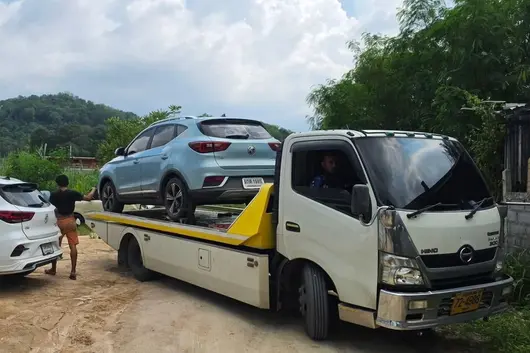
面對災情,MG 泰國公司突破行業常規災後服務模式,將救援環節前置,在洪水尚未退去階段即投入道路救援力量轉移受災車輛。截至 10 月 13 日晚,已累計為當地車主救援受災車輛 804 輛。

救援前置
洪水未退 拖車已進災區
受上游來水與本地降雨疊加影響,泰國本輪水災呈現多輪反覆的特點。“洪水是一波一波的,水稍微退一點,新一輪降雨又讓水位漲起來。”MG 泰國售後總監賈偉超表示,車輛浸泡時間越長,電子元件腐蝕、底盤鏽蝕的風險越高,救援“越快越好”。
按照泰國汽車行業的常規做法,車企多在洪水完全退去後,推出免費檢測、配件折扣、工時減免等災後維修服務。但此次 MG 將服務端口前移,在災情持續期間就調動合作救援力量進入積水區域,為車主提供免費拖車服務,將受浸車輛轉移至維修站點,降低車主財物損失。

據了解,洪水等自然災害導致的車輛困境,原本不在常規免費道路救援的保障範圍內。此次 MG 主動擴大服務邊界,除免費拖車外,還同步開放免費車輛檢測、維修費用減免,並針對未投保、保險賠付額度不足的車主推出特別費用支援。
為確保不漏掉一個求助,MG 開通了多渠道接觸機制:24 小時 1267 熱線服務全天候受理,LINE 官方賬號、官網同步發布救援信息,向全體車主推送預警提醒短訊,同時組織當地經銷商主動致電受災區域車主,逐一確認車輛狀況與救援需求。
“我們在后台給所有的車主都發了短訊息,告知車主,你需要幫忙的話,馬上可以聯繫我們。” 賈偉超說。


MG 客戶在社交平台上發文,感謝 MG 主動聯繫客戶詢問是否需要幫助
目前救援工作仍在持續。10 月 12 日正值泰國公眾假期,MG 泰國售後團隊全員在崗加班,應對 10 日至 13 日的新輪強降雨過程。據介紹,一線團隊從 9 月底起持續投入救援,部分人員連日工作至深夜,甚至凌晨兩三點仍在現場作業。
中泰聯動
國慶加急調運配件保障維修
車輛脫困只是第一步,及時維修才能真正降低車主損失。隨着數百台受浸車輛陸續運抵維修站點,電子元件等零部件需求量短期內大幅攀升。
此輪需求高峰恰好撞上中國國慶假期,國內倉庫常規營運與跨境物流均受影響。賈偉超表示,如果配件供應斷檔,獲救車輛也只能停放在維修站,前期救援的成效會大打折扣。
為保障維修節奏不中斷,上汽乘用車與上汽國際等團隊緊急啟動保障機制,國慶假期內安排專人前往國內的配件倉庫,針對泰國市場急需的零部件進行揀選、包裝,最終通過人員隨機託運的方式搭乘客機航班發往泰國,以最直接的方式打通補給通道。

10 月 11 日,這批緊急調撥的零部件順利抵達泰國,維修環節配件供應實現無縫接駁。
能力支撐
十餘年深耕構建成熟服務體系
此次應急響應能夠快速落實,並非臨時湊合資源,而是依托 MG 進入泰國市場十餘年逐步搭建的成熟服務體系。

在泰國媒體舉辦的投票中,MG 在當地成為最值得信賴的中國電動車品牌
作為最早進入泰國市場的中國汽車品牌之一,MG 早年曾面臨當地消費者對中國品牌售後保障能力的顧慮。“以前大家會覺得,中國企業的配件供應可能跟不上。” 賈偉超回憶,正是為了打破這一偏見,MG 長期將配件供應與道路救援作為售後體系兩大核心持續深耕。
在配件供應端,MG 泰國目前的配件一次供應滿足率已超過 99%,常用零部件可實現 24 小時內配送至全國各服務網點,維修效率處於當地行業前列。

在道路救援端,MG 與當地多家專業救援企業長期合作,構建起覆蓋曼谷、羅勇、春武里等多府的協作網絡,由統一平台調度派單,無需自持大量救援車輛即可實現快速響應。針對曼谷市區交通擠塞的特點,MG 日常還配備了電單車救援隊伍,可快速抵達現場提供搭電、換胎、緊急送油等服務。“客戶需要救援的時候,一定是緊急時刻。” 賈偉超表示,MG 持續強化這項能力,就是為了在車主最需要的时候能及時到場。
近年來,MG 還通過 MG SMILE 服務品牌,進一步整合維修保障、道路救援、移動服務與客戶營運,將服務從單一車輛維修延伸至全使用週期。

在泰國,MG 車身修復服務(意外車維修)滿意度排名第二,這一排名超過了許多日系品牌
據了解,本輪水災中,豐田、本田、日產等日系品牌及多家中國車企,也相繼推出了免費檢測、配件折扣、維修優惠等措施。對深耕泰國市場的車企而言,災後提供維修支持已是行業常規動作,而在洪水尚未退去時,能否快速調動救援、人員與零部件資源,更能檢驗企業服務體系的基礎能力。

一場洪水,讓平時不容易被消費者看見的售後能力有了更直接的體現。對中國汽車品牌而言,海外競爭不僅要讓消費者願意買車,更要讓他們在遇到困難時,知道可以找誰、能夠得到怎樣幫助。

In the Malaysian SUV market, many buyers compare Toyota Corolla Cross and Volkswagen Tiguan when choosing a car. The price and positioning of these two cars are quite close. Today, we will make a detailed comparison from multiple aspects to help you save time on research.
The OTR price of Toyota Corolla Cross in Malaysia is RM 133,800 - 148,800, with a total of 3 versions, including 2026 HEV 1.8L GR Sport (RM 148,800), 2026 HEV 1.8L Standard (RM 140,800), 2026 1.8L Standard (RM 133,800), etc.
The OTR price of Volkswagen Tiguan in Malaysia is RM 206,540 - 260,024, with a total of 2 versions, including 2025 Allspace 2.0T R-Line (RM 260,024), 2025 Allspace 1.4T Elegance (RM 206,540), etc.
From a price perspective, Toyota Corolla Cross's starting price is indeed RM 72,740 cheaper than Volkswagen Tiguan. If your budget is limited, Toyota's entry-level version is already enough to meet daily needs. However, note that the few thousand difference might involve trade-offs in equipment, it depends on your specific needs.

Toyota Corolla Cross is equipped with 1.5L Turbo, 140 hp. Official fuel consumption 7.0 L/100km.
Volkswagen Tiguan is equipped with 2.0L 4-cyl, 170 hp. Official fuel consumption 8.0 L/100km.
In terms of power, Volkswagen Tiguan's 2.0L 4-cyl has 30 hp more than Toyota Corolla Cross's 1.5L Turbo. However, for daily city driving, both cars have sufficient power, you won't feel underpowered.

Toyota Corolla Cross body length 4400 mm, trunk 400 L.
Volkswagen Tiguan body length 4400 mm, trunk 400 L.
The dimensions of the two cars are almost identical, with little difference in interior space. For this class of cars, it is completely sufficient for daily use.

Toyota Corolla Cross adopts FWD drive mode.
Volkswagen Tiguan adopts FWD drive mode.
Both cars have the same drive mode, both are FWD, there won't be much difference in daily driving experience.

Overall, Toyota Corolla Cross and Volkswagen Tiguan are both excellent models in the Malaysian market. Which one to choose mainly depends on your personal needs and budget. We suggest doing your research, comparing quotes from several car dealerships, and then test driving to make a final decision. Buying a car is a big matter, spending time doing research will never be wrong.


喺馬來西亞嘅 SUV 市場,好多買家喺揀車嘅時候都會拿 Toyota Yaris Cross 同 Mazda CX-3 嚟做比較。呢兩款車喺價位同定位上都好接近,今日我哋就從多方面做一個詳細嘅比較,幫你攞返做功課嘅時間。
Toyota Yaris Cross 喺馬來西亞嘅 OTR 售價係 RM 99,900 - 109,900,一共有 2 個版本,包括 2026 1.5L Standard(RM 99,900)、2026 HEV 1.5L Standard(RM 109,900) 等。
Mazda CX-3 喺馬來西亞嘅 OTR 售價係 RM 126,159 - 139,159,一共有 2 個版本,包括 2023 2.0L High(RM 139,159)、2023 2.0L Plus(RM 126,159) 等。
由價錢睇落,Toyota Yaris Cross 嘅起步價真係比 Mazda CX-3 平咗 RM 26,259。如果你預算有限,Toyota 嘅入門版已經可以滿足日常需要。不過都要注意,平嗰幾千蚊,可能喺配備上面會有取舍,具體要睇你嘅需要。

Toyota Yaris Cross 車身長 4400 mm,車尾箱 400 L。
Mazda CX-3 車身長 4500 mm,車尾箱 450 L。
空間方面,Mazda CX-3 嘅車身比 Toyota Yaris Cross 長咗 100 mm,乘坐空間更有優勢。不過 Toyota Yaris Cross 喺城市入面泊車會靈活少少,各有利弊。

Toyota Yaris Cross 保養 5 年/無限制里程,保養間隔 每 10,000km 或 6 個月。
Mazda CX-3 保養 5 年/150,000km,保養間隔 每 10,000km 或 6 個月。

Toyota Yaris Cross 同 Mazda CX-3 都係馬來西亞市場嘅主流選擇,適合家庭用、日常通勤。如果你更睇重品牌口碑同二手價,可以優先考慮口碑更好嗰一款;如果你更在意性價比同配備,那就揀配置更豐富嗰款。最後都建議兩款都去試駕,親身體驗先係最重要嘅。

總體嚟講,Toyota Yaris Cross 同 Mazda CX-3 都係馬來西亞市場幾不錯嘅車型。揀邊架,關鍵都要睇你嘅個人需要同預算。建議大家做好功課,多比較幾間車行嘅報價,再去試駕做最終決定。買車係件大事,花少少時間做功課絕對唔會錯。


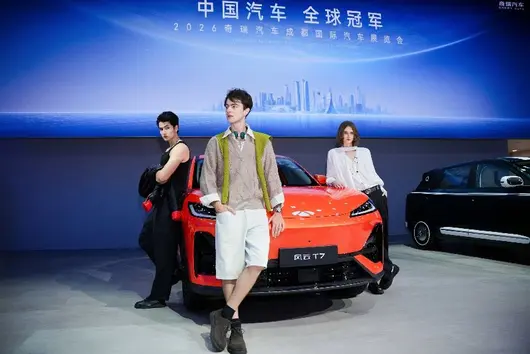
風雲 T7 上市指導價區間 9.79‑11.89 萬元,搶先置換價 9.49‑11.59 萬元,作為一款面向全球市場開發的純電 SUV,該車圍繞超能跑、美全球、更安全、好智慧四大方向,通過碰撞安全、電池安全、續航平權、全域節能、操控性能、整車驗證六大冗餘設計,平衡續航、安全、智能、空間等家用用戶的核心訴求。

車身尺寸 4570×1852×1694mm,軸距 2700mm,車內得房率 84%,後排地板純平。常規後備箱容積 450L,後排放倒後拓展至 1550L,車內可形成 1955mm×1310mm 純平空間,全車設置 38 處儲物點位,適配家庭出行、露營等場景。外觀由全球多中心聯合設計,提供 6 款車漆,內飾提供兩套配色,座艙採用環抱式佈局,座椅為 9 層複合結構,部分版本配備加熱、通風功能,兼顧日常乘坐舒適性。

智能化部分,高配車型搭載 4nm 製程 8775 艙駕一體芯片,運算力 72TOPS,系統響應 80ms。整車搭載 22 顆傳感器,支持高速領航輔助、300 + 場景自動泊車,可完成跨樓層泊車、100 米循跡倒車。座艙搭載靈犀智艙 2.0 系統,接入豆包大模型,支持模糊語音交互,內置小憩、寶寶、露營等多種場景模式,兼容主流手機無線投屏。

三電系統上,風雲 T7 採用續航平權的配置思路,三款版型全部搭載 65.05kWh 犀牛電池,CLTC 續航 600km,實測續航 681.6km,不存在入門版本縮減電池容量的情況。30%‑80% 快充時間約 20 分鐘,電池循環壽命大於 2500 次。電機最大功率 178kW,峰值扭矩 275N・m。全系配備雙源寬溫域熱泵空調加高壓 PTC 以及 AGS 智能進氣格柵,可適應‑30℃‑55℃的環境區間,通過熱管理和空氣動力學優化,緩解冬季低溫續航衰減,控制高速行駛能耗波動,實現不同地域、季節的續航穩定性。

安全冗餘是該車的重點設計。整車按照 2026 版 E‑NCAP 五星標準開發,車身高強度鋼佔比 80%,採用九橫五縱籠式車身,配備 Shotgun 結構、雙框副車架以及電池 Pack 防撞樑,增加碰撞能量的分散路徑。車輛配備 9 個安全氣囊,包含遠端氣囊與一體式長側氣簾,提升乘員的防護覆蓋範圍。電池包採用 31 層防護結構,具備 IP68 級防水,側邊抗擠壓能力為國標 2 倍,完成長時間鹽霧、火燒等測試,降低磕碰、涉水、腐蝕環境下電池故障風險。底盤採用四輪獨立懸掛,50.8:49.2 軸荷分配,500mm 涉水深度,底盤經過國際化團隊調校,對高速、坑窪、積水等工況預留性能餘量。

整車驗證冗餘方面,風雲 T7 並非國內車型簡單改款出海,前期完成全球多地區實車測試。項目投入 81 台耐久試驗車,專項耐久驗證里程 145 萬公里,整車累計測試里程超 600 萬公里,實車測試覆蓋 21 個國家,環境跨度‑40℃~55℃,對高溫暴曬、極寒雨雪、高鹽鹼、非鋪裝道路等場景開展測試,在研發階段處理異響、部件耐久、環境適應等問題。同源車型 Lepas L6 已在泰國、南非上市,後續計劃進入歐盟、澳新市場,國內上市同步開啟交付。

綜合來看,風雲 T7 的產品邏輯,是把長續航、車身及電池安全、底盤耐久、智能輔助等配置,下放至十萬級價位區間。同時官方配套對應的購車兜底權益,動力電池自身原因造成熱失控可賠償新車,智能駕駛輔助系統原因造成事故可提供最高 500 萬賠償,搭配整車終身質保等政策,覆蓋用戶購車之後的長期用車風險。