首頁瓯江

搜尋歷史
熱門搜尋
經銷商登入 / 註冊

喺馬來西亞嘅 SUV 市場,好多買家喺揀車嗰陣都會拿 Toyota Yaris Cross 同 Mitsubishi Xforce 嚟做比較。呢兩款車喺價位同定位上都幾接近,而家我哋就從多個方面做一個詳細嘅比較,幫你省咗做功課嘅時間。
Toyota Yaris Cross 喺馬來西亞嘅 OTR 售價係 RM 99,900 - 109,900,總共有 2 個版本,包括 2026 1.5L Standard(RM 99,900)、2026 HEV 1.5L Standard(RM 109,900) 等等。
Mitsubishi Xforce 喺馬來西亞嘅 OTR 售價係 RM 109,930 - 119,930,總共有 2 個版本,包括 2026 1.5L Ultimate(RM 119,930)、2026 1.5L Urban(RM 109,930) 等等。
從價錢嚟睇,Toyota Yaris Cross 嘅起步價確實比 Mitsubishi Xforce 平咗 RM 10,030。如果你預算有限,Toyota 嘅入門版已經可以滿足日常需求。但都要留意,平嗰幾千蚊,可能喺配備上會有取舍,具體就要睇你嘅需求。

Toyota Yaris Cross 搭載 1.5L 4-cyl,馬力 105 hp。官方油耗 6.0 L/100km。
Mitsubishi Xforce 搭載 1.5L Turbo,馬力 140 hp。官方油耗 7.0 L/100km。
動力方面,Mitsubishi Xforce 嘅 1.5L Turbo 比 Toyota Yaris Cross 嘅 1.5L 4-cyl 多咗 35 匹馬力。不過日常喺市區開,兩款車嘅動力都夠用,唔會覺得唔夠力。

Toyota Yaris Cross 嘅安全評級係 5★ (ASEAN NCAP),主動安全系統包括 TSS。
Mitsubishi Xforce 嘅安全評級係 5★ (ASEAN NCAP),主動安全系統包括 MI-PILOT。
呢兩款車嘅安全評級一樣,喺呢個級別入面安全配備都算好齊全。而家嘅新車安全性都唔差,唔使太擔心呢一點。

Toyota Yaris Cross 保修 5 年/無限制里程,保養間隔 每 10,000km 或 6 個月。
Mitsubishi Xforce 保修 3 年/100,000km,保養間隔 每 10,000km 或 6 個月。

總體嚟講,Toyota Yaris Cross 同 Mitsubishi Xforce 都係馬來西亞市場幾唔錯嘅車款。揀邊一輛,關鍵始終都要睇你嘅個人需求同預算。建議大家做好功課,多比較幾間車行嘅報價,再去試車做最終決定。買車係件大事,花少少時間做功課絕對唔會錯。


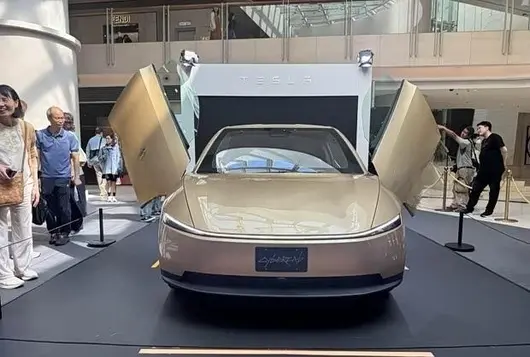
特斯拉无人驾驶车型Cybercab近日在中国香港特别行政区完成首秀。根据计划,这款备受瞩目的产品将从9月中旬起,先后在北京、上海等内地多个城市进行巡回展出,这将是其首次面向中国内地公众亮相。目前,该车型已正式在美国奥斯汀启动商业运营。


从设计细节来看,Cybercab延续了特斯拉特有的极简主义风格,但融入了更具前瞻性的视觉元素。据特斯拉CEO马斯克介绍,这款车型的设计灵感源于经典科幻影片《银翼杀手》。车辆前端与尾部均采用收窄轮廓,整体造型呈现流畅的溜背线条,并配备了尺寸醒目的封闭式轮圈,旨在有效优化空气动力学表现。值得留意的是,该车的充电接口被巧妙布置在车尾保险杠的左下方,视觉上颇为隐蔽。车身侧门采用飞翼式蝴蝶门设计,增添了不少科技氛围。


内饰布局方面,Cybercab的车内只设有两个座位,中控区域仅保留一块显示屏,没有配备方向盘和踏板等传统操控装置。其座椅并未采用常见的运动型包裹设计,反而借鉴了居家沙发的宽大造型,更侧重乘坐舒适度。根据官方信息,乘客可通过中央屏幕操作座椅调节、空调及车门开关,并支持登录个人音乐账号、玩游戏、观看影片或使用卡拉OK等娱乐功能。此外,在车顶阅读灯中央设置了一个紧急停车按键,便于乘客在特殊情况下随时采取制动措施。


在核心技术上,Cybercab依靠8颗高清摄像头实现环境感知,并搭载AI 4硬件系统,该方案采用端到端纯视觉技术,与Model 3和Model Y所应用的辅助驾驶系统在技术层面一脉相承。据悉,这款车型将采用纯电驱动,配备容量小于50千瓦时的电池组,凭借轻量化车身和紧凑尺寸,其实际续航里程可接近500公里,有效平衡了能效表现与日常使用需求。

喺馬來西亞嘅 SUV 市場,好多買家揀車嗰陣都會拿 Honda HR-V 同 GWM Haval H6 嚟比較。呢兩款車嘅價位同定位都幾接近,而家我哋就由多個角度做詳細比較,幫你節省做功課嘅時間。
Honda HR-V 喺馬來西亞嘅 OTR 售價係 RM 115,900 - 143,900,合共 4 個版本,包括 2026 e:HEV 1.5L RS(RM 143,900)、2026 1.5T V(RM 137,900)、2026 1.5T E(RM 130,900)等等。
GWM Haval H6 喺馬來西亞嘅 OTR 售價係 RM 139,750 - 139,750,合共 2 個版本,包括 1.5L Turbo Standard(RM 140,000)、1.5L Turbo Premium(RM 155,000)等等。
由價錢睇落,Honda HR-V 嘅起步價確實比 GWM Haval H6 平咗 RM 23,850。如果你預算有限,Honda 嘅入門版已經夠滿足日常需要。但都要注意,平嘅嗰幾千蚊,配備上可能有取捨,具體就要睇你嘅需要。

Honda HR-V 搭載 1.5L Turbo,馬力 140 hp。官方油耗 7.0 L/100km。
GWM Haval H6 搭載 Hybrid,馬力 170 hp。官方油耗 4.5 L/100km。
動力方面,GWM Haval H6 嘅 Hybrid 比 Honda HR-V 嘅 1.5L Turbo 多咗 30 匹馬力。不過日常喺市區行,兩款車嘅動力都夠用,唔會覺得唔夠力。
Honda HR-V 嘅安全評級係 5★ (ASEAN NCAP),主動安全系統包括 Honda SENSING (ACC, CMBS, LKAS, RDM)。
GWM Haval H6 嘅安全評級係 TBD,主動安全系統包括 Basic。
安全配備方面,兩款車都拿到唔錯嘅評級。不過 Honda HR-V 嘅 Honda SENSING (ACC, CMBS, LKAS, RDM) 同 GWM Haval H6 嘅 Basic 喺功能上有些分別,如果你比較重視主動安全嘅話,可以仔細比較下兩者嘅功能列表。

Honda HR-V 車身長 4500 mm,尾箱 450 L。
GWM Haval H6 車身長 4400 mm,尾箱 400 L。
空間方面,Honda HR-V 嘅車身比 GWM Haval H6 長咗 100 mm,車內乘坐空間會稍為寬鬆啲,尤其係後座腿部空間。如果你經常載家人或者需要放嬰兒車,大啲嘅車身確實更實用。
Honda HR-V 採用 FWD 驅動方式。
GWM Haval H6 採用 FWD 驅動方式。
兩款車嘅驅動方式一樣,都係 FWD,日常駕駛感受唔會有太大分別。
總括嚟講,Honda HR-V 同 GWM Haval H6 都係馬來西亞市場幾唔錯嘅車款。揀邊輛,關鍵都係要睇你嘅個人需要同預算。建議大家做足功課,多比較幾間車行嘅報價,再去試車先做最後決定。買車係件大事,花少少時間做功課絕對唔會錯。


The narrative of "cool domestically and hot internationally" has become the main theme of China's automotive market.
According to the latest data from CPCA, July domestic passenger car retail sales reached 1.461 million units, a 20.9% year-over-year decline. Year-to-date cumulative retail sales stand at 10.173 million units, down 20.3% from last year.
Meanwhile, July passenger car exports hit 918,000 units, surging 87.8% year-over-year, with the proportion of export volume to total manufacturer sales climbing to 41% (37% last month, 21% in the same period of 2025).

Regarding the "cool domestic market," CPCA analysis suggests this is due to the resonance of multiple factors, including oil price rebounds, weakening macroeconomics, seasonal slumps, prior demand exhaustion, and policy shifts.
Conversely, the contraction of domestic demand has accelerated the pace of Chinese car companies "going global"—since the domestic market is overcrowded, they go overseas to find blue oceans.
On this rising export curve, BYD's performance has been the most striking.
Data released by BYD shows that overseas sales reached 179,800 units in July, a 124.3% year-over-year increase. Even according to CPCA's statistical standards, BYD's 174,000 unit NEV export sales in July exceeded the combined total of the second-ranked (Chery, 83,000 units) and third-ranked (Tesla, 66,000 units) exporters, establishing a fractured leading advantage.

More importantly, BYD's export proportion of total sales in July rose to 43.1%. It is worth noting that just two years ago in 2024, this proportion was only a little over 10%.
This means BYD is no longer a Chinese brand simply relying on the domestic market, but a truly global car company. This has prompted the outside world to re-examine the strategic vision previously proposed by Wang Chuanfu of "achieving the largest scale globally in five years."
If BYD wants to "achieve the #1 global scale," it will face Toyota, this "giant."
Toyota's strength lies in its global production and sales network and extreme cost control in the fuel vehicle era. What BYD currently demonstrates is the ability to reconstruct the global market on the new energy track.
CPCA data shows that July NEV passenger car exports reached 540,000 units, up 147.8% year-over-year, accounting for 58.8% of total exports, an increase of 14 percentage points compared to the same period last year.
According to CPCA Secretary-General Cui Dongshu's statistics, from January to June 2026, China's NEV passenger car world share reached 62%, and the share in the plug-in hybrid field was as high as 71%.

The share of Chinese NEVs worldwide is rising rapidly. As the global NEV sales champion, BYD is actually standing at the forefront of the global output of China's supply chain.
Data shows that in the first half of 2026, Toyota's global sales were 5.0089 million units, ranking first globally for seven consecutive years; BYD's first-half global sales were 1.8085 million units, ranking sixth. The difference between the two was 3.62 million units, but the speed of narrowing the gap is accelerating—the gap was 13.4 times in 2021, narrowed to 2.7 times in 2023, and by the first half of 2026, the gap between the two is less than 1.7 times.
It took BYD less than two years to increase the export proportion from 10% to 40%. If the overseas market can maintain this growth rate, and Toyota continues to struggle in the quagmire of electrification transformation, then "surpassing" will no longer be a "whether possible" question, but a "when it happens" question.
But sales figures are just the most superficial things. What is truly worth thinking about is, what does BYD rely on to fill this gap of over 3 million units?
Toyota's foundation is a global fuel vehicle system that has been operating for decades; from supply chain to channels to brand perception, it is all stacked up by time.
BYD's opportunity lies in the fact that the technical logic and cost structure of NEVs are completely different from fuel vehicles. It does not need to fight position warfare in Toyota's home field, but uses a new product logic to find its entry point in every regional market.
BYD's overseas strategy can be summarized as "precise entry" and "deep localization." This strategy shows highly flexible adaptability in different regional markets. A highly representative case is the launch of BYD's K-Car in the Japanese market.

On July 28, BYD's pure electric K-Car "Sea Otter Racco," built specifically for the Japanese market, was launched. As of August 9, in less than two weeks, orders broke 1,000 units, with 80% coming from the top-spec version. For any car company wanting to penetrate the Japanese market, this is a capital worth "boasting" about.
It is worth noting that the Japanese market has long been a solid fortress of the global auto industry, with local brands holding absolute dominance. Even "giants" like Volkswagen and Hyundai find it difficult to open the Japanese market. Especially the K-Car market, which has an annual retail volume exceeding 1.6 million units and is known as the totem of Japanese auto culture, has been monopolized for over thirty years by three local giants: Suzuki, Daihatsu, and Honda.
More importantly, due to the adoption of Chinese self-developed parts, the Sea Otter can only receive a subsidy of 150,000 yen in Japan, while local competitors like Nissan Sakura can receive 580,000 yen. Under the subsidy disadvantage of three times that of competitors, orders still exceeded expectations. This directly shows that BYD has already possessed the strength to directly confront Japanese car companies in manufacturing processes and cost control.

An earlier example is BYD's Shark Pickup launched for the Americas, Australia, and other markets. It accurately hit the pain point of combining commercial and home use in the local market, becoming one of the best-selling Chinese brand models. CPCA data shows that BYD Shark Pickup overseas market monthly average sales are about 3,000 units, with sales in some months even exceeding 4,500 units.
Data released by BYD shows that under the boost of the Shark Pickup and subsequent imported Seagull and other NEV models, Brazil has become BYD's largest overseas market, with cumulative export volume reaching 194,700 units in the first half. Meanwhile, just on July 16, the 100,000th car of BYD Brazil factory officially rolled off the production line.
From Japan's exquisite K-Car to America's tough Pickup, BYD is no longer exporting "global products," but providing "regional customization." This transformation allows it to quickly fill the market void left by traditional brands.
Orient Securities forecasts that BYD's 2026 full-year sales will exceed 5 million units, with overseas sales between 1.8 million and 1.9 million units, a year-over-year growth of 75%.
Morgan Stanley predicts that BYD overseas sales will reach 1.6 million to 1.8 million units, with a year-over-year growth of 68% to 89%. It estimates that the company's passenger car share in markets like Brazil, Thailand, and Australia has exceeded 5%, and NEV sales share in multiple regions exceeds 20%.
Under the dual drive of "involution" and "going overseas," Chinese car companies represented by BYD are gradually transforming "surpassing Toyota" from a vision into reality through differentiated product strategies and deep localization layout. Whether it is the K-Car in the Japanese market or the Shark Pickup in the Americas, it proves that China's automotive industry has the ability to compete in the global diverse market.
In the future, with more companies like BYD digging deep in the overseas market, China's automotive industry's global share is expected to further increase, and the industry trend of "East Rising, West Declining" will be irreversible.

In the first half of 2026, the domestic sales and export data of China's automotive market point in two distinctly different directions.
Domestically, car sales reached 9.921 million vehicles, a sharp year-on-year decline of 21.1%, where the contraction in volume represents real operational pressure; overseas, however, presents another scene — car exports reached 5.096 million vehicles in the first half, a year-on-year increase of 65.3%, achieving a breakthrough of 5 million vehicles in exports for a half-year for the first time.
Between one cold and one hot, a clear signal has been sent: the growth engine of China's automotive market is shifting from relying on the domestic single market to a "domestic + overseas" dual-drive. Relevant predictions indicate that in 2026, China's automotive exports are expected to reach 10 million vehicles, becoming the first country in the world to break through the 10 million vehicle export mark.
But more worth questioning than the number itself is: Can this growth trend continue? How much incremental space is there for China's automotive industry on the overseas expansion line in the coming years? To answer this question, we must first understand a more fundamental proposition — on what basis can China's automotive industry continue to gain increments in someone else's home court?
What was forged in domestic "Hellish" competition?
On what basis can Chinese automakers break into someone else's home court? Is it because prices are cheap? Not entirely. The real answer must be found in the domestic market.
For European automakers, the R&D cycle for a new car is typically 5 to 7 years, and the usage cycle of a generation of platforms can last up to 10 years; whereas Chinese automakers can complete the R&D of a new car in 2 to 3 years and complete platform upgrades in 3 to 5 years. This means that while overseas competitors spend time developing a car, Chinese cars have already completed 2 to 3 iterations. This crushing advantage in time dimensions is not simply "fast" — the technological gap is widened step by step through such rhythm differences.
Secondly, cost efficiency. The cost of China's power batteries is over 30% lower than Europe's. This is not stacked by subsidies, but the result of 分摊 after volume of tens of millions, a structural advantage that no other global market can replicate.
Conversely, once leaving this cluster, the cost advantage disappears quickly — taking CATL's factory in Thuringia, Germany as an example, its production cost is clearly higher than domestic ones — this is not a management issue, but a direct reflection of the industrial cluster gap.

Image Source: Huaban Network
Additionally, it can be said that Chinese consumers have the highest requirements for intelligence and connectivity globally. The intensity of competition in the domestic market forces automakers to perfect infotainment system fluency, voice interaction, and advanced intelligent driving to the extreme. The most common evaluation European consumers have for Chinese new energy vehicles is: "Vehicle systems are like smartphones, European cars are like feature phones." Chen Shihua, Deputy Secretary-General of China Association of Automobile Manufacturers, uses this analogy: "Good products will naturally be favored by global consumers, which is consistent with the logic of Apple phones and Japanese cameras in the Chinese market at that time."
These three generations of disparity — faster iterations, lower costs, and better experiences — combined together, constitute the capability base for sustainable growth of China's automotive industry going global. As long as the "Hellish" competition in the domestic market does not end, industrial efficiency will not stop, and going global will have a constant supply of ammunition.
After Capability, Where Is the Growth Space?
Having capability, we still need to look at space. The incremental growth of China's automotive industry overseas in the future will not be a straight line; different markets and different strategies will release different growth curves.
First, look at the data. According to Gasgoo Automotive Research Institute data, the TOP 10 destination countries for China's passenger car exports in the first half of 2026 saw significant changes.

Russia, with 432,698 vehicles and a year-on-year increase of 154.2%, returned to the No. 1 export market, surpassing Brazil to take the top spot. The market vacuum left after European, American, Japanese, and Korean automakers withdrew is being rapidly filled by Chinese automakers. With the gradual release of localized production capacity such as Great Wall's Tula plant, Geely's Belarus joint venture plant, and Chery's KD assembly lines, exports rebound further.
Brazil, with 394,410 vehicles and a year-on-year increase of 158.6%, ranked second. In the first half of the year, Chinese automakers stocked up centrally before Brazil raised the whole vehicle import tariff to 35% in July, which was the direct cause of the export surge. Of course, the reason such "sprint" holds is the objectively existing long-term demand of the Brazilian market. In the first half of this year, Brazil's new energy sales increased by 125% year-on-year, and the penetration rate has reached 18%. As the KD assembly tariff will also be raised to 35% in 2027, local factories of automakers such as BYD, Great Wall, and Changan in Brazil have been put into production or started construction successively, and the export model is shifting from complete vehicles to localized production.
The European market remains the core growth pole for China's passenger car exports. The UK remained stable at third place with 251,290 vehicles; Belgium with 215,184 vehicles, Italy with 146,769 vehicles, and Spain with 115,264 vehicles all entered the top 10. Among them, Italy increased by 141.9% year-on-year, continuing the high-speed growth trend.
The Latin American market, however, shows obvious differentiation. Although Brazil grew strongly, Mexico's exports were 148,154 vehicles, a year-on-year decline of 33.7%, affected by tariff policy adjustments and tightening of North American trade environment. The Middle Eastern market also entered an adjustment period, with UAE exports at 135,713 vehicles, a year-on-year decline of 36.4%. In comparison, the Asia-Pacific market maintained steady expansion, with Australia at 211,965 vehicles, an 84.2% increase year-on-year, and Malaysia at 103,745 vehicles, breaking through 100,000 vehicles for the first time.
Gasgoo Automotive Research Institute's judgment on this stated: "Growth momentum is shifting from single market driven to multi-region collaborative development. European high value, Latin American scale, and Southeast Asian substitution effect — the combination of the three constitutes a multi-level space for overseas growth increments."
Just as Lin Huaibin, Director of China Light Vehicle Sales Forecasting at Mobility Global predicted, "The focus of China's automotive industry overseas production will shift from Russia-Belarus to Brazil-South Europe — overseas production was about 1 million vehicles in 2025, close to 4 million vehicles by 2030, and frankly stated, 'The total production volume of Spain including Hungary and the UK in Europe will exceed that of Russia.'" "
When looking at corporate overseas expansion, one cannot only focus on sales; one must see the strategic logic behind it. Actually, stripping away the appearance, everyone's commonality is to pursue "localization", but how to implement it specifically has led to different paths.
Taking BYD as a representative, it can be classified as the "Heavy Asset Self-Build School". Not only do they build RoRo ships to solve logistics themselves, but they also invest heavily in building factories in Brazil, Hungary, and other places. Although this approach requires large initial investment, once capacity ramp-up is completed, it can avoid tariff barriers, achieve full cost autonomy control from battery to complete vehicle, and firmly hold the discourse power and risk resistance capability of going global in their own hands.

Image Source: Geely Automobile
Of course, not all automakers need to take this heavy asset route. Geely and Chery have explored another solution of "Industrial Symbiosis". They are not keen on "building from scratch" but are good at borrowing strength: Geely leans towards capital and technology output, such as investing in Ford's Spanish plant and jointly producing with Renault in Brazil, exchanging European manufacturing identity with very low light asset investment, landing quickly and having strong risk resistance; Chery revived the Spanish Ebro brand through "Technology Investment", avoiding trade friction and winning local cultural identity.
As Tang Liming, Chief Product Strategy Officer of Geely Automobile Group, said: "It's not going out alone, but partners going out together." Geely cooperates with Renault on Horse Powertrain, co-builds Smart Joint Venture Company with Mercedes-Benz, and realizes industrial going global with the Proton brand in Malaysia — "What we take is not zero-sum game, but letting partners participate in ecosystem cooperation and share value."

Image Source: Leapmotor
And for new forces like Leapmotor, funds and volume determine they must take the "Light Asset Borrowing Boat" path. It directly allows Stellantis to hold shares and establish a joint venture company, comprehensively reusing the mature network and capacity of giants globally. This "leveraging small force for great effect" approach allowed Leapmotor to rapidly expand over 1,000 outlets in Europe and Southeast Asia. Not only did it take the sales champion of the Italian pure EV market, but it also realized quick profitability of overseas business with extremely low trial-and-error costs.
In short, whether it is heavy asset self-build, capital leverage, or joint venture path, everyone ends up the same, all moving from simple "selling cars" to deep "ecosystem going global".
But going global is not without hidden concerns. Lin Huaibin reminded that China's new energy vehicles in mature markets like the UK and Germany face the risk of high used car depreciation rates — "Although cars sell well, fierce price competition leads to high depreciation rates in the used car market."
Complete Vehicle Going Global Hits Ceiling, Supply Chain "Collective Move"
The quantity growth of complete vehicle exports will eventually hit a ceiling; trade barriers and tariff policies could cut off increments at any time. But once the industry chain goes global, it becomes irreversible. The upper limit of China's automotive industry going global in the coming years does not depend on how many cars are sold, but on how deep and wide the industry chain goes out.
Nowadays, parts manufacturers are following OEMs in a collective "move".
CATL invested 7.34 billion euros in a battery factory in Debrecen, Hungary, with a planned total capacity of 100GWh, serving a service radius covering the core automotive production areas of Central and Eastern Europe and Western Europe. Mercedes-Benz has been confirmed as the first major customer of this factory, and BMW will also become one of the customers.

Image Source: Sunwoda
Gotion's four overseas bases in Germany, Vietnam, Indonesia, and Thailand have been put into production successively. Sunwoda's first European battery factory in Hungary has also entered the key stage of construction, expected to be put into production in the second half of 2026. This is no longer simple "matching", but the entire supply chain system is moving collectively.
But this is not enough. Tang Liming emphasized, "Not only must enterprises 'go out', but also help the supply chain 'go out'." Geely established a 1 billion yuan supply chain going global special fund to provide financing guarantees and low-interest loans for SMEs — "If going out oneself, competitiveness might be weak. Taking the advantage of the industry chain out is where the competitiveness of Chinese enterprises for future overseas development lies." This judgment correlates with the trend of parts manufacturers collectively "moving": The upper limit of going global does not depend on how many cars are sold, but on how deep the industry chain goes out.
Meanwhile, intelligent solutions are also being output in reverse. Huawei Qiankun has cooperated with over 25 brands and more than 50 models, including international brands like Audi and Toyota, with total intelligent driving installations exceeding 1.9 million vehicles.

Image Source: Horizon Robotics
In the fuel vehicle era, Chinese automakers bought Bosch and Continental chassis solutions; in the smart vehicle era, overseas automakers are now buying Chinese intelligent driving solutions. Horizon's Journey series chips have received over 25 automaker and over 100 model confirmations. Even international Tier 1 giants like ZF began confirming domestic chip solutions, just to shorten development cycles and reduce costs.
The significance of this "reverse output" is that overseas increments are expanding from "complete vehicle exports" to "technology exports", the latter's growth ceiling is much higher than the former. As Chen Shihua said at the 2026 China Auto Forum: "Chinese-made new energy intelligent connected cars show strong competitiveness in overseas markets."
The deeper contest is standards. Jia Jianxu, President of SAIC Motor, made a clear judgment at the 2026 China Auto Forum: China's automotive industry is shifting from simple product output to comprehensive industry chain collaborative going global, upgrading from trade exports to full value chain local deep diving. He summarized this shift with one sentence: "China's automotive industry needs to change from going out to going in. Truly going to this country to deeply dive into this market, roots must be planted deep."
Jia Jianxu also particularly emphasized compliance awareness in local operation. He gave an analogy: "Going into someone's home as a guest, guests must follow the host's rules. If entering the host's home and not following the host's rules, you will be kicked out by the host sooner or later." Behind this is a deeper judgment: The endpoint of going global is not "selling more cars", but for China's automotive industry to change from "rule takers" to "rule makers".
Conclusion
5.096 million vehicles exported in half a year are just the tip of the iceberg of this industrial big going global.
The growth momentum of China's automotive industry on the overseas expansion line in the coming years is not linear, but stacked upward — from complete vehicles to brands, from brands to technology, from technology to standards. Each level of leap will push the growth ceiling up another tier.
Of course, this road is not smooth, but the direction is already clear.
When the domestic market falls into stock game, going global has become the most certain incremental direction. This increment is not exchanged by low-price dumping, but is the natural result of China's automotive industry capability overflow. The 2026 export breaking through 10 million vehicles is likely to become reality, but more worth paying attention than numbers is that in the overseas wave, China's automotive industry has truly completed the leap from "quantity" to "quality".

喺馬來西亞嘅 SUV 市場,好多買家喺揀車嗰陣都會拿寶騰 X90 同奇瑞 Tiggo 7 Pro 嚟比較。兩部車喺價錢同定位上都幾近,今日我哋就從多個方面做一個詳細嘅對比,幫你省咗做功課嘅時間。
寶騰 X90 喺馬來西亞嘅 OTR 售價係 RM 106,800 - 122,800,合共 4 個版本,包括 2026 1.5T Prime X(RM 122,800)、2026 1.5T Prime(RM 116,800)、2026 1.5T Lite(RM 106,800) 等。
奇瑞 Tiggo 7 Pro 喺馬來西亞嘅 OTR 售價係 RM 123,750 - 123,750,合共 2 個版本,包括 1.6L Turbo Standard(RM 125,000)、1.6L Turbo Premium(RM 140,000) 等。
由價錢睇,寶騰 X90 嘅起步價的確比奇瑞 Tiggo 7 Pro 平咗 RM 16,950。如果你預算有限,寶騰嘅入門版已經可以滿足日常需要。但亦要小心,平嗰幾千蚊,可能喺配備會有取舍,具體要睇你嘅需要。

寶騰 X90 搭載 1.5L Turbo,馬力 140 hp。官方油耗 7.0 L/100km。
奇瑞 Tiggo 7 Pro 搭載 1.5L Turbo,馬力 140 hp。官方油耗 7.0 L/100km。
兩部車用咗同一套動力系統,日常行車嘅感覺根本無分別。油耗方面都差唔多,唔使太糾結呢一點。
寶騰 X90 車身長 4400 mm,行李廂 400 L。
奇瑞 Tiggo 7 Pro 車身長 4400 mm,行李廂 400 L。
兩部車嘅尺寸差唔多,車內空間分別唔大。呢個級別嘅車,日常使用完全夠用。
寶騰 X90 採用 FWD 驅動方式。
奇瑞 Tiggo 7 Pro 採用 FWD 驅動方式。
兩部車嘅驅動方式一樣,都係 FWD,日常駕駛感覺唔會有太大分別。
寶騰 X90 同奇瑞 Tiggo 7 Pro 都係馬來西亞市場嘅主流選擇,適合家庭使用、日常通勤。如果你更睇重品牌口碑同二手價,可以優先考慮口碑更好嗰款;如果你更在意性價比同配備,嗰就揀配置更豐富嗰款。最終都建議兩款都去試駕,親身體驗先至最重要。
總括嚟講,寶騰 X90 同奇瑞 Tiggo 7 Pro 都係馬來西亞市場好好嘅車型。揀邊一輛,關鍵都要睇你個人需要同預算。建議大家做好功課,多比較幾間車行嘅報價,先至去試駕做最後決定。買車係件大事,花少少時間做功課絕對唔會錯。


喺馬來西亞嘅 SUV 市場,好多買家喺揀車嘅時候都會用 Proton X50 同 Honda HR-V 嚟做比較。兩款車喺價位同定位上都幾接近嘅,今日我哋就從多個方面做一個詳細嘅比較,幫你節省做功課嘅時間。
Proton X50 喺馬來西亞嘅 OTR 售價係 RM 89,800 - 113,300,合共有 4 個版本,包括 1.5T Executive(RM 89,800)、1.5T Premium(RM 101,800)、1.5T Flagship(RM 113,300)等。
Honda HR-V 喺馬來西亞嘅 OTR 售價係 RM 115,900 - 143,900,合共有 4 個版本,包括 2026 e:HEV 1.5L RS(RM 143,900)、2026 1.5T V(RM 137,900)、2026 1.5T E(RM 130,900)等。
由價錢睇落,Proton X50 嘅起步價確實比 Honda HR-V 平咗 RM 26,100。如果你預算有限,Proton 嘅入門版已經可以滿足日常需求。不過都要注意,平嘅嗰幾千塊,可能喺配備上要有取舍,具體要睇你嘅需求。

Proton X50 嘅安全評級係 5★ (ASEAN NCAP),主動安全系統包括 ADAS (ACC, AEB, LKA, LDA, BSM, RCTA)。
Honda HR-V 嘅安全評級係 5★ (ASEAN NCAP),主動安全系統包括 Honda SENSING (ACC, CMBS, LKAS, RDM)。
兩款車嘅安全評級一樣,喺呢個級別入面安全配備都算好齊全。而家嘅新車安全性都唔差,唔使太擔心呢一點。

Proton X50 保修 5 年/150,000km,保養間隔 每 10,000km 或 6 個月。
Honda HR-V 保修 5 年/無限制里程,保養間隔 每 10,000km 或 6 個月。

Proton X50 同 Honda HR-V 都係馬來西亞市場嘅主流選擇,適合家庭使用、日常通勤。如果你更重視品牌口碑同二手價,可以優先考慮口碑更好嗰一款;如果你更在意性價比同配備,就揀配置更豐富嗰款。最後始終建議兩款都去試駕,親身體驗先至最重要。
總括嚟講,Proton X50 同 Honda HR-V 都係馬來西亞市場好唔錯嘅車型。揀邊一輛,關鍵始終要睇你嘅個人需求同預算。建議大家做足功課,多比較幾間車行嘅報價,再去試駕做最終決定。買車係件大事,花少少時間做功課絕對唔會錯。


In the Malaysian SUV market, many buyers often compare Perodua Aruz and GWM Haval H6 when choosing a car. Both cars are quite close in price and positioning, so today we will make a detailed comparison from multiple aspects to help you save time on research.
Perodua Aruz has an OTR price in Malaysia of RM 72,900 - 77,900, with a total of 2 versions, including 1.5L X (RM 72,900), 1.5L AV (RM 77,900), etc.
GWM Haval H6 has an OTR price in Malaysia of RM 139,750 - 139,750, with a total of 2 versions, including 1.5L Turbo Standard (RM 140,000), 1.5L Turbo Premium (RM 155,000), etc.
From a pricing perspective, Perodua Aruz's starting price is indeed cheaper by RM 66,850 than GWM Haval H6. If your budget is limited, Perodua's entry-level version already meets daily needs. However, note that the few thousand difference might involve trade-offs in features; it depends on your specific needs.

Perodua Aruz's safety rating is 5★ (ASEAN NCAP). Active safety systems include.
GWM Haval H6's safety rating is TBD. Active safety systems include Basic.
Perodua Aruz adopts FWD drive mode.
GWM Haval H6 adopts FWD drive mode.
Both cars have the same drive mode, both are FWD, so there will not be much difference in daily driving feel.
Perodua Aruz and GWM Haval H6 are both mainstream choices in the Malaysian market, suitable for family use and daily commuting. If you value brand reputation and resale value more, you can prioritize the one with better reputation. If you care more about cost-effectiveness and features, then choose the one with richer configuration. Ultimately, we recommend test driving both; personal experience is the most important.
Overall, Perodua Aruz and GWM Haval H6 are both very good models in the Malaysian market. Which one to choose mainly depends on your personal needs and budget. We suggest everyone do their homework, compare quotes from several dealerships, then test drive to make the final decision. Buying a car is a big deal, and spending time on research will never be wrong.


喺馬來西亞嘅 SUV 市場,好多買家喺揀車嘅時候都會拿 Perodua Ativa 同 Proton X70 嚟做比較。這兩款車喺價位同定位上都幾接近,今日我哋就從多個方面做一個詳細嘅比較,幫你省下做功課嘅時間。
Perodua Ativa 喺馬來西亞嘅 OTR 售價係 RM 62,500 - 73,400,一共有 3 個版本,包括 1.0L Turbo X(RM 62,500)、1.0L Turbo H(RM 67,300)、1.0L Turbo AV(RM 73,400) 等。
Proton X70 喺馬來西亞嘅 OTR 售價係 RM 106,800 - 122,300,一共有 3 個版本,包括 1.5L Standard 2WD(RM 106,800)、1.5L Executive 2WD(RM 115,800)、1.5L Premium 2WD(RM 122,300) 等。
由價錢睇,Perodua Ativa 嘅起價確實比 Proton X70 平咗 RM 44,300。如果你預算有限,Perodua 嘅入門版已經可以滿足日常需求。但都要注意,平嗰幾千蚊,可能喺配備上會有取舍,具體要看你嘅需求。

Perodua Ativa 搭載 1.5L 4 缸,馬力 105 hp。官方油耗 6.0 L/100km。
Proton X70 搭載 1.5L Turbo,馬力 140 hp。官方油耗 7.0 L/100km。
动力方面,Proton X70 嘅 1.5L Turbo 比 Perodua Ativa 嘅 1.5L 4 缸多咗 35 匹馬力。不過日常喺市區開,兩款車嘅動力都足夠,唔會覺得唔夠力。
Perodua Ativa 採用 FWD 驅動方式。
Proton X70 採用 FWD 驅動方式。
兩款車嘅驅動方式一樣,都係 FWD,日常駕駛感受唔會有太大分別。
Perodua Ativa 保修 5 年/150,000km,保養間隔 每 10,000km 或 6 個月。
Proton X70 保修 5 年/150,000km,保養間隔 每 10,000km 或 6 個月。
兩款車嘅保修條件一樣,呢方面唔使糾結。實際保養成本仲要睇品牌嘅服務網絡同零件價格,建議去車友群問下真實車主嘅經驗。
Perodua Ativa 同 Proton X70 都係馬來西亞市場嘅主流選擇,適合家庭使用、日常通勤。如果你更睇重品牌口碑同二手價,可以優先考慮口碑更好嗰款;如果你更在意性價比同配備,就揀配置更豐富嗰款。最終都係建議兩款都去試駕,親身體驗先係最重要嘅。
總體嚟講,Perodua Ativa 同 Proton X70 都係馬來西亞市場幾唔錯嘅車款。揀邊一輛,關鍵都要睇你嘅個人需求同預算。建議大家做好功課,多比較幾間車行嘅報價,再去試駕做最終決定。買車係件大事,花啲時間做功課絕對唔會錯。


BYD officially released the May 2026 production and sales flash report, with new energy vehicles from all brands reaching a monthly sales volume of 383,453 vehicles, a slight increase of 0.26% year-on-year, achieving year-on-year positive growth in monthly sales after ten months; among them, passenger car deliveries reached 376,990 units, surging 19.4% month-on-month, wiping out the pain of previous model iterations, presenting a new pattern where the domestic base is stable, overseas sales are soaring, and high-end brands are scaling up across the board. Amidst the market environment of intensified competition in the domestic new energy sector, Tesla FSD entering China, and an intense launch of independent new products, it has forged a unique structural growth path.

The Dynasty and Ocean main brands combined sold 330,215 vehicles in May, accounting for over 80% of the group's total sales, remaining the stabilizer for BYD's sales volume. The full series had 8 models exceeding 20,000 units in monthly sales, covering products from 50,000 entry-level commuter to 200,000 home SUV.

Inside the Dynasty Network, the Yuan family sold 56,691 units, and the Song family 51,370 units. Both crossed the 50,000 threshold, becoming two major sales pillars for the brand, catering to home commuter and urban-rural travel needs; the Qin family followed closely with a stable performance of 28,360 units. The Han and Tang series maintained a volume in the six-thousand range, deeply cultivating the mid-to-large home sedan and SUV niche markets; the brand new model Xia is in the market cultivation phase, delivering 1,810 units monthly, with potential for steady volume growth as channels expand.
The Ocean Network's growth momentum is even more rapid, with 5 models entering the 20,000 club across the series: Sealion 42,615 units, Seal 34,117 units, Seagull 39,919 units, Dolphin 22,260 units, and Song PLUS 27,755 units. Among them, Seagull remains the best-selling entry-level commuter model thanks to its affordable pricing of 60,000-80,000. Sealion, as a new volume model, stands firm at the 40,000 level upon launch, filling the mid-size SUV product gap in the Ocean Network and perfecting the Ocean product tier layout. From commuter small cars to compact SUVs, the two main brands rely on DM-i hybrid and pure electric dual-line technologies to牢牢锁住 the mainstream home market share within 150,000 domestically.
Fang Cheng Bao Year-on-Year Surges 139.7%, Brand Upward Positioning Takes EffectThe high-end matrix of Denza, Fang Cheng Bao, and Yangwang sold a combined 46,489 vehicles in May, officially breaking away from the niche positioning to become a new pivot for BYD's brand premium and profit growth, breaking the industry curse of difficulty in high-end breakthrough for domestic brands.

The off-road brand Fang Cheng Bao sold 30,186 units monthly, surging 139.7% year-on-year, creating a new high in monthly sales since the brand launched. Its Titanium 7 model sold 18,280 units monthly, while Leopard 5 and Leopard 8 output remained stable, continuously squeezing the survival space for joint venture and imported models in the 250,000-400,000 hardcore off-road niche market.

Denza delivered 16,303 units in May, with the MPV benchmark D9 selling 6,721 units, and the Z9 series close to 6,000 units. MPV and mid-to-large sedan dual-line efforts helped them stand firm in the luxury new energy track; the million-level ultra-luxury brand Yangwang continued its steady climb, delivering 286 units that month, a year-on-year increase of 105.8%, completing market verification of the domestic brand ceiling product and forming a full price range product layout from 100,000+ home, 300,000-400,000 off-road, 500,000 luxury MPV to million-level flagship.

In May, BYD's overseas sales of passenger cars and pickup trucks reached 160,177 units, surging 80.7% year-on-year. Exports accounted for over 42% of the full series total sales, setting a new historical high for brand export and becoming the core driving force to stabilize May overall sales and achieve year-on-year positive growth.
Southeast Asia, Europe, and Latin America became the main incremental markets. Seagull, Song PLUS, and Yuan series continued to top new energy best-seller lists in multiple countries; the SHARK pickup truck exceeded 4,000 units in monthly exports for two consecutive months. Relying on the completion of localization production in Thailand, Brazil, Hungary, and Uzbekistan with four overseas vehicle factories, localized production continues to land, avoiding tariffs while rapidly penetrating terminal channels. Against the background of stock market competition in the domestic auto industry and normalized price wars, the rapidly expanding overseas market effectively counteracts sales volatility brought by domestic model iterations, officially upgrading from a supplementary market to BYD's core growth engine. As of now, BYD's global cumulative new energy vehicle sales have exceeded 16.5 million units, with the globalization map continuously broadening.
Intelligent Driving Empowers Product Iteration, H2 New Products Prepare to Surge VolumeMay marked a key node in BYD's intelligent driving landing, with the God's Eye intelligent driving system becoming a core bonus point for models: the number of vehicles with advanced intelligent driving across all brands exceeded 3.15 million, with daily road test data exceeding 200 million kilometers; that month, BYD implemented City Pilot and Smart Parking dual safety backup services, becoming the world's first auto manufacturer to achieve dual intelligent driving backups. Three days after policy implementation, the activation rate of models equipped with the God's Eye system in cities surged 50%. Intelligent driving experience upgrades directly drove in-store order conversion, solidifying product competitiveness for subsequent models to continue volume sales, and facing the intelligent driving market shock brought by FSD entering China.
From data details, BYD's cumulative sales from January to May 2026 were 1,405,039 units, down 20.32% year-on-year. The core reason is that the full series of main models were concentratedly iterated, and the capacity ramp-up of the 2nd Gen Fast Charge Blade Battery was restricted. The new Flash Charge Battery upgraded fast charging and low-temperature performance. Full series iteration models prioritized installing new batteries, but production line retrofitting dragged down capacity release. Order backlogs on popular models and delayed deliveries compressed the May delivery volume to a certain extent.
As the end of the second quarter approaches and the 2nd Gen Blade Battery capacity continues to release, coupled with new models such as Denza N8L, Fang Cheng Bao Titanium 7 Pure Electric Version, Sealion 05, and Xia L landing the market, the industry generally predicts that BYD's full brand sales in June are expected to exceed 400,000 vehicles. Relying on the four-dimension development logic of low-end volume locking share, high-end raising profit, overseas pushing volume, and intelligence improving product power, amidst the intensified new energy elimination round in the domestic market, BYD's full category layout advantage continues to amplify, securing its status as the domestic new energy leader, accelerating steadily towards global top auto manufacturers.


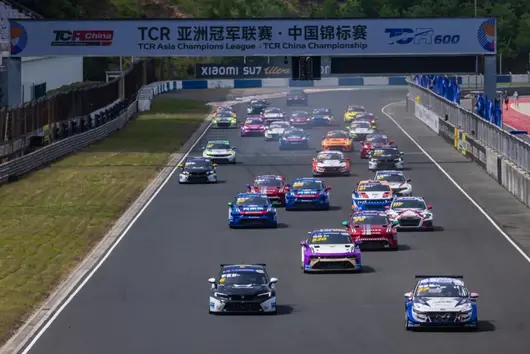
5月30—31日,2026赛季小米·CTCC中国汽车场地职业联赛浙江宁波站在宁波国际赛道燃情上演。TCR亚洲冠军联赛·中国锦标赛、CTCC中国杯、CTCC一圈成名挑战赛、领克杯·城市竞速赛四大赛事轮番登场,过百辆赛车在山海赛道极速狂飙,王者登顶、老将圆梦、黑马逆袭,每一个冲线瞬间都值得被铭记。速度与荣耀的周末落下帷幕,冠军与领奖台得主悉数就位。让我们一同见证浙江宁波站各赛事的王者与登台英雄。
TCR亚洲冠军联赛·中国锦标赛
TCR亚洲冠军联赛·中国锦标赛
第三回合

冠军 领克捷凯车队 张志强
亚军 珠海桑田车队 李家禧
季军 中国香港Team TRC 李富堃
冠军

领克捷凯车队 张志强
亚军

珠海桑田车队 李家禧
季军

中国香港Team TRC 李富堃
TCR亚洲冠军联赛·中国锦标赛
新秀挑战杯第三回合

冠军 珠海桑田车队 李家禧
亚军 中国香港Team TRC 李富堃
季军 PAR By 300+车队 杨政
冠军

珠海桑田车队 李家禧
亚军

中国香港Team TRC 李富堃
季军

PAR By 300+车队 杨政
TCR亚洲冠军联赛·中国锦标赛
挑战杯第三回合

冠军 汽车之家By 300+车队 梁奇
亚军 湖南吉人自有天相 林志山
季军 珠海桑田车队 刘洪志
冠军

汽车之家By 300+车队 梁奇
亚军

湖南吉人自有天相 林志山
季军

珠海桑田车队 刘洪志
第三回合米其林竞驰之星奖
浙江宁波站米其林杆位奖

珠海桑田车队 李家禧
TCR亚洲冠军联赛·中国锦标赛
第四回合

冠军 汽车之家By 300+车队 梁奇
亚军 中国香港Team TRC 李富堃
季军 领克捷凯车队 朱戴维
冠军

汽车之家By 300+车队 梁奇
亚军

中国香港Team TRC 李富堃
季军

领克捷凯车队 朱戴维
TCR亚洲冠军联赛·中国锦标赛
新秀挑战杯第四回合

冠军 中国香港Team TRC 李富堃
亚军 PAR By 300+车队 杨政
季军 广州星火Spark Racing 孙居然
冠军

中国香港Team TRC 李富堃
亚军

PAR By 300+车队 杨政
季军

广州星火Spark Racing 孙居然
TCR亚洲冠军联赛·中国锦标赛
挑战杯第四回合

冠军 汽车之家By 300+车队 梁奇
亚军 珠海桑田车队 刘洪志
季军 中国澳门Macpro Racing Team 文绍明
冠军

汽车之家By 300+车队 梁奇
亚军

珠海桑田车队 刘洪志
季军

中国澳门Macpro Racing Team 文绍明
第四回合米其林竞驰之星奖

中国香港Team TRC 李富堃
CTCC中国杯
TCS组第三回合

冠军 太和霸王龙艾瑞泽赛车队 孙正
亚军 太和霸王龙艾瑞泽赛车队 黄颖
季军 佛山雄基车队 陈炳雄
TCR组第三回合

冠军 湖南吉人自有天相车队 钟毅展/傅斌
亚军 湖南吉人自有天相车队 韩昌
季军 广东高卡车队 麦一波
TC1组第三回合

冠军 上海Delta Racing Team 房俊言/张佳琪
亚军 CRS777 Racing 曹丹阳/史殷荣/李翁勣
季军 北京DTM Racing任永鑫/丁科寅
TC2组第三回合

冠军 LPCC车队 张大胜/吴佩
亚军 领克纵横车队 朱胡安/李丹
季军 宁波金驭图GYT Racing 陈阳/朱升栋/诸张毅
TC3组第三回合
冠军

上海重心MOTVE车队
成思墨/何贶/卢亦晟
亚军

广州星火Spark Racing
钟嘉庆/崔静瑜
季军

PG SICA制动·深圳博努车队
李家俊/喻筱博/黄毓彬
TCS组第四回合

冠军 北京宏誉基江日亚车队 张蝶/郑晚成
亚军 宁波Only Racing Team 颜瀚诚/宾泽菁
季军 太和霸王龙艾瑞泽赛车队 孙正
TCR组第四回合

冠军 湖南吉人自有天相车队 钟毅展/傅斌
亚军 湖南吉人自有天相车队 韩昌
季军 浙江326车队 杨安
TC1组第四回合

冠军 上海Delta Racing Team 房俊言/张佳琪
亚军 CRS777 Racing 曹丹阳/史殷荣/李翁勣
TC2组第四回合
冠军

领克纵横车队
李丹/朱胡安
亚军

LPCC车队
张大胜/吴佩
季军

领克纵横车队
方紫
TC3组第四回合

冠军 广州星火Spark Racing 梁锦升/吴昊霖
亚军 广州星火Spark Racing 程耀锋
季军 广州星火Spark Racing 钟嘉庆/崔静瑜
CTCC一圈成名挑战赛
PRO组

冠军 李惠玮
亚军 杨晨顺
季军 朱玺锦
AM组

冠军 朱佐君
亚军 汤一楠
季军 季澄

从东海之滨到草原赛道,CTCC的极速征程从未停歇。8月7—9日,CTCC将在鄂尔多斯国际赛车场将迎来年度第三分站的角逐。新的故事等待书写,新的冠军即将诞生。让我们不见不散!

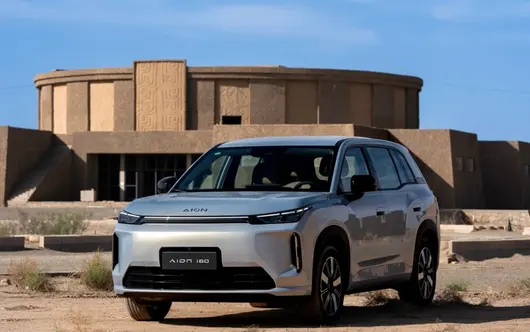
广汽埃安AIONS i60 530宁德版正式上市,推出2个配置,标准版限时优惠10.36万,进阶版优惠价11.36万。
这车从去年11月上市到现在,每个月都卖出一万多台,加起来已经超过4万台了。
新车电池供应商换成了宁德时代。现在A级纯电SUV竞争胶着,这个价位区间的用户其实也特别看着电池安全与续航。新车搭载 64.6 度电池包,CLTC 续航标到 530 公里;官方数据显示,快充5分钟可补能约200公里。

前脸不规则大灯,里面是双组LED光源,贯穿式日行灯带横跨整个车头,“AION”字样嵌在灯带上方。仪表 8.88 英寸,中控屏尺寸给到 14.6 英寸,每台车都自带哨兵监控,支持iOS、安卓和鸿蒙系统手机互联。智驾系统是广汽自己的GSD,支持高速上自动领航和记忆泊车。
全系标配五连杆后悬架,过沟过坎不颠。前排是双层夹胶玻璃,跑到100公里/小时,车里只有64分贝,挺安静。后排空间你不用担心,头顶和腿前都超过一米宽裕,靠背还能调到137度,半躺着很放松。

动力方面,150千瓦的前电机,峰值扭矩205牛·米。用的是弹匣电池2.0,据说拿枪打都不会着火。这个电池已经装到超过140万辆上车,累计跑了1100亿公里,没出过一起自燃事故。广汽埃安继续提供三电烧一赔三政策,如果因三电系统自燃导致车辆损毁,官方承诺赔付三台新车。
对手是吉利银河 E5比亚迪元 PLUS、元 UP,零跑 B10 、长安启源 Q05也是来分市场蛋糕。
埃安和昊铂合并板块五月总销量 33140 台,同比涨了 23.76%,连着好几个月销量都增长。单独看 i60,三四月销量都过万,五月稍微下滑也有九千多台。香港运输署放出四月私家电动车上牌统计,埃安全系 1596 台上牌,比特斯拉 1389 台数量更高,比亚迪 871 台排在第三位。

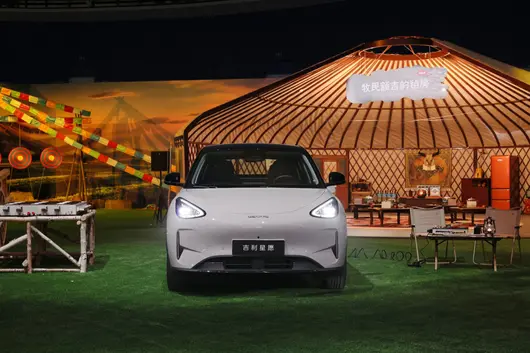
Recently, the all-new Geely Star Wish, a pure electric compact car under the Geely Galaxy brand, has officially launched. The new car offers four models: 410km Yearning Edition, 410km Riding Wind Edition, 480km Exploration Edition, and 480km Exploration+ Edition. The launch limited-time benefit price range is 61,800 yuan to 91,800 yuan. The all-new Geely Star Wish undergoes upgrades in driving control, three-electric systems, smart cockpit, assisted driving, and safety, with over 100 product capability improvements involved. Among them, over 25 features are unique configurations in the same class.

The all-new Geely Star Wish is built on Geely's first global native architecture. All trims feature rear independent suspension as standard, jointly tuned by China and Germany. It is equipped with G-TCS 2.0 all-weather anti-slip system, a new brushless steering system (response speed doubled), and G-CST 2.0 all-scene comfort braking system. Official data shows the vehicle passed the Elk test at 80.7km/h and successfully completed the Fishhook test at 130km/h.

All trims are standard with CATL cells, liquid cooling temperature control, and an 11-in-1 highly integrated electric drive. Cell energy density is 190Wh/kg, with a maximum range of 480km. Combined with active grille and low-drag wheels, aerodynamic drag is reduced by 15 counts, and actual range is increased by another 10km. Fast charging from 30% to 80% takes 19 minutes, equipped with Star Rui AI Cloud Power 2.0 for full-link energy management.

In terms of the smart cockpit, it is equipped with Galaxy Flyme Auto 2 system, based on the 7nm Dragon Eagle No. 1 chip and 16G+128G storage. It supports CarPlay phone connectivity. The voice assistant Hi EVA features fuzzy command understanding and context memory. The infotainment system includes Amap 850 version map and provides Invisibility Mode, Car Wash Mode, and One-key Car Find functions.

In terms of assisted driving, it is equipped with the Qianli Haohan H3 solution. Officially, it has accumulated over 1.38 billion kilometers of safe driving. Highway and elevated road NOA supports voice lane change, evasion, and auto on/off ramps. Full-scene MPI takeover mileage exceeds 200 kilometers. Parking functions include APA one-key parking, remote parking, and HPA memory parking (up to 2km route memory). Additionally, it is equipped with DMS fatigue monitoring and Sentry Mode.

The all-new Geely Star Wish adopts a Five Longitudinal, Eight Transverse Star Armor Cage Body, with roof crush strength reaching 3.4 times the vehicle weight. The battery system maintains 90.72% capacity after 1000 cycles; the validation standard is 2 times the National Standard. Officially announced on May 12, it passed front and side continuous collision tests witnessed by CCTV. The high-voltage system powered off timely, and the battery pack did not smoke or catch fire. Regarding active safety, it is equipped with AEB active braking and AES emergency steering, passing 120km/h static vehicle stop and 130km/h "Disappearing Lead Car" evasion tests.

Since launching in October 2024, Geely Star Wish cumulative deliveries have surpassed 700,000 units, becoming the fastest model in the industry to achieve this goal, and winning the 2025 China Auto Market Sales Champion. In Q1 2026, this model entered the top 3 global new energy sales for the first time, and is the only Chinese brand to achieve this ranking. Currently, Geely Star Wish has launched in over 30 countries and regions globally. In Brazil, sales exceeded 2,300 units within two months of launch. At the Thailand Auto Show, weekly orders reached 3,300 units, and it received international awards such as "Brazil Best Compact EV of the Year".