喺馬來西亞嘅 SUV 市場,好多買家喺揀車嗰陣都會拿寶騰 X90 同奇瑞 Tiggo 7 PHEV 嚟做比較。呢兩部車喺價位同定位上都幾接近,今日我哋就從多個角度做個詳細比較,幫你省返做功課嘅時間。
寶騰 X90 喺馬來西亞嘅 OTR 售價係 RM 106,800 - 122,800,合共有 4 個版本,包括 2026 1.5T Prime X(RM 122,800)、2026 1.5T Prime(RM 116,800)、2026 1.5T Lite(RM 106,800)等。
奇瑞 Tiggo 7 PHEV 喺馬來西亞嘅 OTR 售價係 RM 129,750 - 129,750,合共有 2 個版本,包括 2025 1.5T 90km CSH(RM 129,750)、Tiggo 7 PHEV 支援邊幾種充電方法?可以用家用插座充電嗎?(RM 117,478)等。
由價錢睇落,寶騰 X90 嘅入門價確實比奇瑞 Tiggo 7 PHEV 平咗 RM 22,950。如果你預算有限,寶騰嘅入門版已經可以滿足日常需求。不過都要注意,平嗰幾千塊,可能喺配備上要有取舍,具體要看你嘅需求。

寶騰 X90 嘅安全評級係 5★ (ASEAN NCAP),主動安全系統包括 ADAS (ACC, AEB, LKA, LDA, BSM, RCTA)。
奇瑞 Tiggo 7 PHEV 嘅安全評級係 TBD,主動安全系統包括 Basic。
安全配備方面,兩部車都拿到唔錯嘅評級。不過寶騰 X90 嘅 ADAS (ACC, AEB, LKA, LDA, BSM, RCTA) 同奇瑞 Tiggo 7 PHEV 嘅 Basic 喺功能上有些差異,如果你比較看重主動安全嘅話,可以仔細對比下兩者嘅功能列表。

寶騰 X90 保養 5 年/150,000km,保養間隔 每 10,000km 或 6 個月。
奇瑞 Tiggo 7 PHEV 保養 3 年/100,000km,保養間隔 每 10,000km 或 6 個月。

寶騰 X90 同奇瑞 Tiggo 7 PHEV 都係馬來西亞市場嘅主流選擇,適合家庭使用、日常通勤。如果你更看重品牌口碑同二手價,可以優先考慮口碑更好嗰一款;如果你更在意性價比同配備,那就揀配置更豐富嗰款。最終都建議兩款都去試駕,親自體驗先至最重要。

總括嚟講,寶騰 X90 同奇瑞 Tiggo 7 PHEV 都係馬來西亞市場好唔錯嘅車款。揀邊一輛,關鍵仲要睇你嘅個人需求同預算。建議大家做好功課,多比較間車行嘅報價,再去做試駕做最終決定。買車係件大事,花少少時間做功課絕對唔會錯。

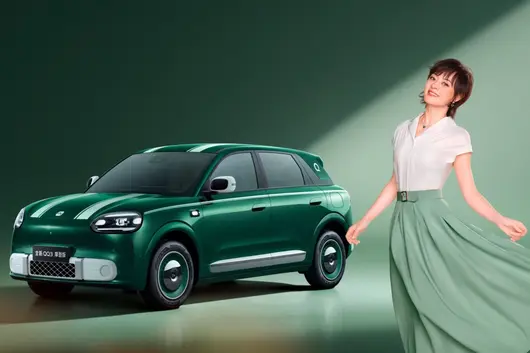
Recently, the all-new Chery QQ3 officially launched in the Southeast Asian market under the overseas name "Chery Q", and debuted in the Thai and Indonesian markets successively, becoming the first overseas landing position of Chery QQ's global strategy.

Chery Q launched in the Thai and Indonesian markets almost simultaneously, both delivering order performance exceeding expectations. Since pre-sales started at the Bangkok International Motor Show on March 24, orders broke 1,000 units in just ten days; as of the official launch on June 24, cumulative orders have forcefully surpassed 3,000 units. In the Indonesian market, as of July 25 / end of July, orders have exceeded 6,000 units. This is not an accidental explosion in a single market, but a verification of the systematic competitiveness of Chinese premium compact cars in the Southeast Asian market.

In 2006, the old QQ entered Thailand and Indonesia, becoming a youthful memory for a generation of Southeast Asians. In 2026, the all-new QQ3 returns in the name of Chery Q, completing a brand leap from "national transport car" to "global premium compact car" over 20 years. Chery Thailand General Manager Jim Lee stated directly at the launch event: "Chery QQ has accompanied Thai users for 20 years, this is the strongest confidence in our deep cultivation of the local market." The Indonesian market also attracted a large number of middle-aged family users to reserve Chery Q due to "nostalgia".

62% of Chery Q's orders in Thailand come from female users, with many young people spontaneously checking in and sharing on Facebook and Instagram. Real user word-of-mouth is far more persuasive than official publicity. Product advantages are highly matched with local terrain: small and easy to park (Bangkok narrow streets), extremely low operating costs (electricity cost per 100km is only 5 Baht), no worries about wading in rainy season (IP68 waterproofing), cute design with high recognizability ("cute shape, high head-turn rate").

Chery Q is not a cheap special model for Southeast Asia, but a global product with the same platform, standards, and quality as the domestic all-new QQ3. Zhang Hongyu, Vice President of Chery Automobile Co., Ltd. and Executive Deputy General Manager of Chery Brand Domestic Business Group, stated clearly: "From chassis architecture, battery safety to body structure, we synchronously adapt to Southeast Asian right-hand drive regulations, undergo strict tests in multiple global regions, do not reduce specifications, do not produce special models." Zeng Shuo, Assistant General Manager of Chery Sales Indonesia (CSI), also emphasized: "In Indonesia, Chery always prioritizes quality over profit."


August 12, Chery Fengyun T7 officially opened pre-sale, three configurations pre-sale price 109,900 Yuan to 129,900 Yuan. Launch event theme defined as "Slow craftsmanship builds good cars, we've kept you waiting". In industry generally pursuing "18 months new car" rhythm, this theme itself is a statement — this car does not rush time.
Fengyun T7's R&D path differs from most domestic models. Its overseas counterpart model Lepas L6 debuted at Milan Design Week two months ago, and recently launched in Thailand. This means Fengyun T7 is not first launched domestically then exported, but first verified overseas then returned to China.
Relying on Chery's 23-year global technology accumulation, Fengyun T7 synchronously meets EU, UK, Australia, Southeast Asia, Middle East, South America and other countries and regions' regulatory standards. This 'reverse export' logic is not complex: products verified in overseas markets, upon return to domestic market, have already completed high-standard adaptive testing. Whole vehicle cumulative test mileage exceeds 6 million km, durability special test 1.45 million km, targeted Southeast Asia rainy season, Middle East high-temperature sun exposure, Indonesia high-humidity etc. global multi-regions conducted extreme real-vehicle trials. The cost of this path is time — but its return is, when the product finally faces users, it has already undergone enough extreme working condition verification.
Fengyun T7's design team is composed of Chery's 10 major global design centers, over 5,000 domestic and overseas users participated in co-creation throughout. Counterpart model Lepas L6 appearing at Milan Design Week received international recognition, overseas users called it "Little Macan". A set of design simultaneously appealing to European and Asian users, in automotive design field is not easy.
Fengyun T7 made an unconventional decision: all configuration versions uniformly equipped with 65.05 kWh Rhino Battery, CLTC range uniformly 600 km. In the industry convention where most car companies use low-range versions to lower entry price, range does not discount due to price, this logic is not common. Actual test range over 667 km, battery 30% charge to 80% only needs 20 minutes. Full series standard equipment dual-source wide-temperature-range heat pump air conditioning, -30°C to 55°C super wide temperature range stable operation, Northern user winter range attenuation problem was included in product definition stage.
In terms of safety, body adopts 80% high-strength steel, 18.84% hot-formed steel building 9 horizontal 5 vertical cage body, equipped with 9 airbags, including 48-liter dual-chamber far-end airbags and rear seat side airbags. Full series standard equipment Rhino Battery, IP68 waterproof is national standard 96 times. On active safety level, high-spec version equipped with Falcon 500 driving assistance system, composed of 22 high-precision sensors forming perception network, supports 300+ full-scenario automatic parking, including dead-end road parking, one-key tracking reverse, cross-floor parking etc. scenarios. Cockpit equipped with cockpit-integrated 8775 chip, 4nm process, 72 TOPS computing power.
Fengyun T7 launched two bottom-line guarantees: power battery safety bottom-line — caused by battery self-reasons resulting in whole-vehicle thermal runaway damage, compensate same model new car; driving assistance bottom-line — within one year of purchase due to intelligent driving system reasons causing accident, highest compensation 5 million Yuan. This 'bottom-line' is essentially a trust mechanism — rather than letting users worry about what to do if problem occurs, better directly write solution into rights. Current 100,000 to 150,000 Yuan pure electric SUV market, Leapmotor B10, BYD Yuan PLUS, Geely Galaxy E5, Deepal S05 etc. models have formed dense layout.
Fengyun T7 entering the competition is exactly the price segment where competition is most intense. Its differentiation strategy is clear: using overseas-verified quality standards, full-series 600 km range equality, cockpit-driving integrated chip and bottom-line rights, establish recognizability on configuration list. The true test is not whether pre-sale price is low enough, but after delivery, whether users can give 'worth waiting' evaluation on this 'slow work' polished car.

Many people have such experiences.
Strolling through the mall with the whole family, circling the underground garage three times without finding a parking spot; driving skills are slightly lacking, only able to stare helplessly in front of a mechanical parking lot; or encountering a narrow parking spot at a dead-end road when it is windy or rainy, struggling for a long time but unable to park.
In the past, car brands categorized their products into levels. To thoroughly solve the difficulty of parking, you had to spend at least over 200,000 to buy a high-end electric vehicle with cross-floor memory parking, while the basic models around 100,000 only had the most superficial intelligent experience.
Now this unwritten rule has been broken.

Chery Fengyun T7 officially starts pre-sale.
The new car has three configurations, covering a price range from 109,900 to 129,900, with 600 kilometers of range across the entire series. At first glance, this configuration seems to only pass in many new energy models, but what truly makes the Fengyun T7 seem "out of place" among 100,000-level pure electric SUVs is that it has put a dedicated function long monopolized by high-end electric cars, cross-floor memory parking, into the product list of 100,000-level family cars.
Let's look at the intelligent configuration again.
Fengyun T7 is equipped with the Falcon 500 driver assistance system, the whole vehicle is equipped with 22 high-precision sensors, including 3 millimeter-wave radars, 7 high-performance cameras and 12 ultrasonic radars, see far, see clearly, measure accurately. In the automotive industry, it is considered to have broken the price barrier first.
Cross-floor memory parking is undoubtedly Fengyun T7's biggest selling point. There is no floor limit, supporting up to two kilometers of memory parking. Coupled with over 300 all-scenario automatic parking functions, dead-end road parking, irregular parking spots, and one-touch track reverse are all supported.

This means ordinary families do not need to spend double the budget to own the experience of automatic cross-floor travel in mall underground garages and automatic parking in narrow spots. New drivers don't need to panic in front of narrow parking spots, and experienced drivers can cope calmly when encountering irregular parking spots.
What the industry calls "parking freedom" has also been implemented on 100,000-level family SUVs.
If it is just downgrading a high-end configuration, that is called spec stacking.
But Fengyun T7 is far more than parking freedom. Its difference lies in that it is a global car with reverse input. The overseas version is called Lepas L6. Pre-sales have started in South Africa, and Thailand launched in July. Next, Indonesia, EU, Australia/New Zealand, and the UK will follow in succession.
Accepting global market testing first, then launching domestically, this process is not common among local car companies because there are not many car companies that can do it. But behind Fengyun T7 happens to be Chery, ranking first in exports of Chinese brand passenger cars for 23 consecutive years, with an accumulation of global users breaking 20 million.

Admittedly Fengyun T7, anchored global standards from the beginning of R&D, developed according to the 2026 version E-NCAP five-star safety standards. 81 exclusive durability cars are undergoing road tests simultaneously. The whole vehicle cumulative testing mileage exceeds 6 million kilometers, covering -40 degrees to 55 degrees whole environment, adapting to 95% of global road types.
Body safety is also unquestionable.
80% high-strength steel, 18.84% hot-formed steel, 9 airbags. However, for a car to simultaneously meet regulations, climate conditions, road conditions characteristics, and user habits of so many countries and regions such as Europe, Australia/New Zealand, Middle East, Southeast Asia, Latin America, the R&D cycle is destined not to be short. In this industry rhythm where delivery happens upon launch and iteration happens upon delivery, Fengyun T7 used two years for planning and three years for R&D. Chery seems anti-trend, but slow manufacturing builds good cars.
It is exactly this five-year slowness that makes this car perform differently in many dimensions. The entire series is standardly equipped with a 65.05kWh Rhino battery, CLTC range 600 kilometers, actually running over 670 kilometers; without distinction of high or low configuration; no need to pay extra for a large battery pack; Fengyun T7 directly treated this heart disease of 100,000-level pure electric SUV users.

But the most interesting thing is Chery's two bottom-line guarantees on rights.
Battery power safety bottom line, first-time non-operating owner, thermal runaway caused by battery reasons, compensate with a new car of the same model; Assistant driving bottom line, first-time non-operating owner within one year of buying a car, parking or intelligent pilot scenarios, accidents caused by intelligent driving system reasons, compensate up to 5 million yuan.
Daring to make such a promise shows confidence in their own technology.
Back to the original question, what exactly are 100,000-level pure electric SUV users paying for?
Range, space, safety, intelligence... In the past, these needs were split across models of different price levels. To achieve all-dimension balance, you have to keep adding money to upgrade. Fengyun T7 is very pure. Cross-floor memory parking that should belong to high-end models, 600-kilometer long range that should be added for selection, 8775 chip and nine airbags that should be exclusive to high configuration are all packed into the 100,000-level price range.

This is no longer a simple price war.
Instead, Chery uses product power verified by the global market to tell the domestic home pure electric car market what exactly is a good product and what is worth buying.

In Malaysia's SUV market, many buyers compare Proton X90 and Toyota Fortuner when choosing a car. These two cars are quite close in price and positioning. Today, we will make a detailed comparison from multiple aspects to help you save time doing research.
The OTR selling price of Proton X90 in Malaysia is RM 106,800 - 122,800, with a total of 4 versions, including 2026 1.5T Prime X (RM 122,800), 2026 1.5T Prime (RM 116,800), 2026 1.5T Lite (RM 106,800) etc.
The OTR selling price of Toyota Fortuner in Malaysia is RM 195,880 - 241,880, with a total of 3 versions, including 2024 2.8T VRZ Diesel (RM 241,880), 2024 2.7L SRZ Petrol (RM 202,880), 2024 2.4L Standard Diesel (RM 195,880) etc.
From a price perspective, the starting price of Proton X90 is indeed RM 89,080 cheaper than Toyota Fortuner. If your budget is limited, Proton's entry-level version can already meet daily needs. But please also note, the few thousand dollars cheaper, there might be trade-offs in specifications, it depends on your specific needs.

Proton X90 is equipped with a 1.5L Turbo, 140 hp. Official fuel consumption 7.0 L/100km.
Toyota Fortuner is equipped with a 2.5L Diesel, 187 hp. Official fuel consumption 8.5 L/100km.
In terms of power, Toyota Fortuner's 2.5L Diesel has 47 more horsepower than Proton X90's 1.5L Turbo. However, for daily driving in the city, both cars' power is sufficient, you won't feel underpowered.

Proton X90 body length 4400 mm, trunk 400 L.
Toyota Fortuner body length 4400 mm, trunk 400 L.
The dimensions of the two cars are almost the same, interior space difference is not large. For this class of cars, daily use is completely sufficient.

Proton X90 adopts FWD drive mode.
Toyota Fortuner adopts FWD drive mode.
The drive mode of the two cars is the same, both are FWD, daily driving experience won't have too much difference.

Proton X90 warranty 5 years/150,000km, maintenance interval every 10,000km or 6 months.
Toyota Fortuner warranty 5 years/unlimited mileage, maintenance interval every 10,000km or 6 months.

Overall, Proton X90 and Toyota Fortuner are both very good models in the Malaysia market. Which one to choose, key still depends on your personal needs and budget. It is recommended to do your research, compare quotes from several car dealers, then go for a test drive to make the final decision. Buying a car is a big matter, spending some time doing research will definitely not be wrong.


In the first half of 2026, China's total automotive exports reached 5.31 million units, including 2.42 million new energy vehicle exports, a year-on-year increase of 70%. The image shows Leapmotor's B10 and C10 global models at the 2026 Indonesia International Motor Show.
Statistical data shows that in the first half of 2026, China's total automotive exports reached 5.31 million units, a year-on-year increase of 53%; among them, new energy vehicle exports reached 2.42 million units, a year-on-year increase of 70%, further consolidating China's position as the world's number one automotive exporting country.
On the one hand, geopolitical risks have driven up global oil prices, enhancing the competitiveness of Chinese new energy vehicles; on the other hand, the continuous expansion of the 'Global South' markets has prompted Chinese automakers to rush to accelerate their overseas layouts. For Leapmotor Motors, aiming to challenge the annual sales milestone of 1 million units, the July results further validate the effectiveness of the domestic and international dual-wheel drive.
It is understood that Leapmotor delivered 101,267 units in the domestic market in July, doubling year-on-year, becoming the first new force automaker to break the 100,000 units monthly sales mark. In the first half of this year, Leapmotor's cumulative sales reached 356,487 units, a year-on-year increase of about 97%, making it the only new force brand to break the 300,000 units sales milestone in the first half of this year. Models such as A10, B Series, C10, and D19 bloomed in multiple points, consolidating Leapmotor's growth foundation.
Recently, Leapmotor showcased its two global models, Leapmotor B10 and C10, at the 2026 Indonesia International Motor Show and officially announced its entry into the Indonesian market. Leapmotor also jointly announced with the Indonesian Indomobil Group the official launch of localized KD assembly production in Indonesia. Through deep cooperation with PT National Assemblers under the Indomobil Group, Leapmotor achieved a leap from product output to localized whole industry chain layout. As of now, Leapmotor has formed a dual manufacturing base layout in Malaysia and Indonesia, becoming one of the few Chinese new energy brands with dual KD capacity in Southeast Asia.
Some analysts believe that China's new energy vehicle industry has currently formed a development pattern of 'domestic scaling as a bottom line, global expansion adding volume', and neither aspect should be neglected. For example, Leapmotor's breakthrough of 100,000 units in monthly sales marks that new force automakers have officially entered the volume tier of mainstream automakers. Industry competition has shifted from single-product comparison to a long-term contest of comprehensive systems including supply chain, self-developed manufacturing, and channel services.
In recent years, Chinese new energy vehicles going global have bid farewell to simple whole vehicle exports, shifting to a new stage of 'technology export + local factory construction + ecosystem co-building'. It is understood that relying on the three-party synergy with Stellantis and the Indonesian Indomobil Group, Leapmotor adopts a brand co-store sales model, leveraging local mature distribution networks. The plan is to complete 50 service outlets in Indonesia by the end of the year, covering the full pre-sales and after-sales chain. In fact, localized production not only avoids import tariffs and shortens delivery cycles but also drives local employment and supporting industry chain upgrades, aligning with the policy orientation of ASEAN countries to cultivate their local new energy industries. As of now, Leapmotor's overseas business covers more than 40 countries and regions globally, with over 2,000 stores, and global cumulative deliveries have broken through 1.5 million units. Southeast Asian localized manufacturing will become a key fulcrum for its global expansion.
"Practice proves that Leapmotor is becoming a typical sample of new energy vehicle companies with the 'domestic scaling, global localization' dual-wheel drive." Independent auto analyst Bai De believes that on the one hand, the domestic market is responsible for 'revenue generation, training, building industry chains', and on the other hand, the international market is responsible for 'expansion, setting standards, sharing risks'. Only by making good use of the domestic and international market dual-wheel drive can Chinese new energy vehicles consolidate their global leading advantages and achieve high-quality development of the automotive industry.
Bai De emphasized that on the basis of achieving scaled growth, Chinese new energy vehicles must continue to invest in technological innovation. It is revealed that Leapmotor will hold a Technology Day in September 2026, upgrade the world model intelligent driving system, and achieve universal implementation of high-level intelligent driving with low computing power.
As more Chinese automakers adhere to technology-based enterprise development, delve into cutting-edge self-developed technologies, perfect product matrices, and promote localized industry layouts, China's new energy industry's global competitive advantage will continue to be consolidated, and the process of Chinese automotive industry upgrading and global green transportation transformation will also accelerate further.

喺馬來西亞嘅 SUV 市場,好多買家喺揀車嘅時候都會拿 Perodua Ativa 同 Chery Tiggo Cross 嚟做比較。這兩款車喺價位同定位上都幾近嘅,今日我哋就從多個方面嚟做一次詳細嘅比較,幫你慳做功課嘅時間。
Perodua Ativa 喺馬來西亞嘅 OTR 售價係 RM 62,500 - 73,400,一共有 3 個版本,包括 1.0L Turbo X(RM 62,500)、1.0L Turbo H(RM 67,300)、1.0L Turbo AV(RM 73,400) 等。
Chery Tiggo Cross 喺馬來西亞嘅 OTR 售價係 RM 88,750 - 99,750,一共有 2 個版本,包括 2025 HEV 1.5L CSH(RM 99,750)、2025 1.5T Standard(RM 88,750) 等。
從價錢嚟睇,Perodua Ativa 嘅起步價確實比 Chery Tiggo Cross 慳 RM 26,250。如果你預算有限,Perodua 嘅入門版已經足夠滿足日常需求。但亦都要注意,慳嗰幾千蚊,可能喺配備上會取捨,具體要看你嘅需求。

Perodua Ativa 車身長 4400 mm,尾箱 400 L。
Chery Tiggo Cross 車身長 4400 mm,尾箱 400 L。
兩款車嘅尺寸幾乎一樣,車內空間差別唔大。呢個級別嘅車,日常使用完全夠用。

Perodua Ativa 保修 5 年/150,000km,保養間隔 每 10,000km 或 6 個月。
Chery Tiggo Cross 保修 3 年/100,000km,保養間隔 每 10,000km 或 6 個月。

Perodua Ativa 同 Chery Tiggo Cross 都係馬來西亞市場嘅主流選擇,適合家庭使用、日常通勤。如果你更看重品牌口碑同二手價,可以優先考慮口碑更好嗰款;如果你更在意性價比同配備,那就揀配置更豐富嗰款。最終都係建議兩款都去試駕,親身體驗先係最重要嘅。

總計嚟講,Perodua Ativa 同 Chery Tiggo Cross 都係馬來西亞市場好唔錯嘅車型。揀邊架,關鍵都係要看你嘅個人需求同預算。建議大家做好功課,多比較幾間車行嘅報價,再去試駕做最終決定。買車係件大事,花少少時間做功課絕對唔會錯。

喺馬來西亞嘅 SUV 市場,好多買家喺揀車嘅時候都會揀 Mazda CX-80 同 Chery Tiggo 8 Pro 嚟做比較。呢兩款車喺價位同定位上都蠻接近嘅,今日我哋就從多個方面做個詳細嘅比較,幫你省下做功課嘅時間。
Mazda CX-80 喺馬來西亞嘅 OTR 售價係 RM 296,610 - 296,610,合共有 1 個版本,包括 2025 2.5L 65km High Plus(RM 296,610) 等。
Chery Tiggo 8 Pro 喺馬來西亞嘅 OTR 售價係 RM 159,750 - 159,750,合共有 2 個版本,包括 1.6L Turbo Standard(RM 130,000)、1.6L Turbo Premium(RM 145,000) 等。
由價錢睇落,Chery Tiggo 8 Pro 嘅起步價比 Mazda CX-80 便宜咗 RM 136,860。老實講,喺呢個價位段,幾千塊嘅差距其實唔算大,關鍵仲係睇整體嘅性價比同長期使用成本。

Mazda CX-80 嘅安全評級係 5★ (ASEAN NCAP),主動安全系統包括 Brand ADAS。
Chery Tiggo 8 Pro 嘅安全評級係 TBD,主動安全系統包括 Basic。
安全配備方面,兩款車都拿到唔錯嘅評級。不過 Mazda CX-80 嘅 Brand ADAS 同 Chery Tiggo 8 Pro 嘅 Basic 喺功能上有啲差異,如果你比較看重主動安全嘅話,可以仔細對比下兩者嘅功能列表。

Mazda CX-80 採用 FWD 驅動方式。
Chery Tiggo 8 Pro 採用 FWD 驅動方式。
兩款車嘅驅動方式一樣,都係 FWD,日常駕駛感受唔會有太大區別。

Mazda CX-80 同 Chery Tiggo 8 Pro 都係馬來西亞市場嘅主流選擇,適合家庭使用、日常通勤。如果你更看重品牌口碑同二手價,可以優先考慮口碑更好嗰一款;如果你更在意性價比同配備,就揀配備更豐富嗰款。最終仲係建議兩款都去試駕,親身體驗先至最重要。
總體嚟講,Mazda CX-80 同 Chery Tiggo 8 Pro 都係馬來西亞市場好唔錯嘅車型。揀邊輛,關鍵仲係睇你個人需求同預算。建議大家做好功課,多比較幾間車行嘅報價,再去試駕做最終決定。買車係件大事,花少少時間做功課絕對唔會錯。

喺馬來西亞嘅汽車市場,好多買家喺揀車嘅時候都會拿 Mazda CX-60 同 Mercedes-Benz GLC 嚟做比較。今日我哋從多個方面做一個詳細嘅比較,幫你攞省做功課嘅時間。

Mazda CX-60 喺馬來西亞嘅 OTR 售價係 RM 200,510 - 252,873,合共有 2 個版本,包括 2026 3.3T 4WD High Plus(RM 252,873)、2025 2.5L 2WD High(RM 200,510) 等。
Mercedes-Benz GLC 喺馬來西亞嘅 OTR 售價係 RM 336,888 - 336,888,合共有 2 個版本,包括 GLC 200(RM 290,000)、GLC 300(RM 340,000) 等。
從價錢嚟看,Mazda CX-60 嘅起步價確實比 Mercedes-Benz GLC 平咗 RM 136,378。如果你預算有限,Mazda 嘅入門版已經可以滿足日常需求。但都要注意,平嗰幾千蚊,可能喺配備上會有取舍,具體要看你嘅需求。

Mazda CX-60 搭載 2.0L 4-cyl,馬力 170 hp。官方油耗 8.0 L/100km。
Mercedes-Benz GLC 搭載 2.0L Turbo,馬力 220 hp。官方油耗 9.5 L/100km。
動力方面,Mercedes-Benz GLC 嘅 2.0L Turbo 比 Mazda CX-60 嘅 2.0L 4-cyl 多咗 50 匹馬力。不過日常喺市區開嘅話,兩款車嘅動力都夠用,唔會覺得唔夠力。

Mazda CX-60 保修 5 年/150,000km,保養間隔 每 10,000km 或 6 個月。
Mercedes-Benz GLC 保修 3 年/100,000km,保養間隔 每 10,000km 或 6 個月。
Mazda CX-60 同 Mercedes-Benz GLC 都係馬來西亞市場嘅主流選擇,適合家庭使用、日常通勤。如果你更看重品牌口碑同二手價,可以優先考慮口碑更好嗰一款;如果你更在意性價比同配備,那就選配置更豐富嗰款。最終都係建議兩款都去試駕,親身經歷先係最重要嘅。
總體嚟講,Mazda CX-60 同 Mercedes-Benz GLC 都係馬來西亞市場幾唔錯嘅車型。揀邊一輛,關鍵都要睇你嘅個人需求同預算。建議大家做好功課,多比較幾間車行嘅報價,再去試駕做最終決定。買車係件大事,花少少時間做功課絕對無錯。