首頁好去处

搜尋歷史
熱門搜尋
經銷商登入 / 註冊

喺馬來西亞嘅 SUV 市場,好多買家喺揀車嗰陣都會拿寶騰 X90 同奇瑞 Tiggo 7 PHEV 嚟做比較。呢兩部車喺價位同定位上都幾接近,今日我哋就從多個角度做個詳細比較,幫你省返做功課嘅時間。
寶騰 X90 喺馬來西亞嘅 OTR 售價係 RM 106,800 - 122,800,合共有 4 個版本,包括 2026 1.5T Prime X(RM 122,800)、2026 1.5T Prime(RM 116,800)、2026 1.5T Lite(RM 106,800)等。
奇瑞 Tiggo 7 PHEV 喺馬來西亞嘅 OTR 售價係 RM 129,750 - 129,750,合共有 2 個版本,包括 2025 1.5T 90km CSH(RM 129,750)、Tiggo 7 PHEV 支援邊幾種充電方法?可以用家用插座充電嗎?(RM 117,478)等。
由價錢睇落,寶騰 X90 嘅入門價確實比奇瑞 Tiggo 7 PHEV 平咗 RM 22,950。如果你預算有限,寶騰嘅入門版已經可以滿足日常需求。不過都要注意,平嗰幾千塊,可能喺配備上要有取舍,具體要看你嘅需求。

寶騰 X90 嘅安全評級係 5★ (ASEAN NCAP),主動安全系統包括 ADAS (ACC, AEB, LKA, LDA, BSM, RCTA)。
奇瑞 Tiggo 7 PHEV 嘅安全評級係 TBD,主動安全系統包括 Basic。
安全配備方面,兩部車都拿到唔錯嘅評級。不過寶騰 X90 嘅 ADAS (ACC, AEB, LKA, LDA, BSM, RCTA) 同奇瑞 Tiggo 7 PHEV 嘅 Basic 喺功能上有些差異,如果你比較看重主動安全嘅話,可以仔細對比下兩者嘅功能列表。

寶騰 X90 保養 5 年/150,000km,保養間隔 每 10,000km 或 6 個月。
奇瑞 Tiggo 7 PHEV 保養 3 年/100,000km,保養間隔 每 10,000km 或 6 個月。

寶騰 X90 同奇瑞 Tiggo 7 PHEV 都係馬來西亞市場嘅主流選擇,適合家庭使用、日常通勤。如果你更看重品牌口碑同二手價,可以優先考慮口碑更好嗰一款;如果你更在意性價比同配備,那就揀配置更豐富嗰款。最終都建議兩款都去試駕,親自體驗先至最重要。

總括嚟講,寶騰 X90 同奇瑞 Tiggo 7 PHEV 都係馬來西亞市場好唔錯嘅車款。揀邊一輛,關鍵仲要睇你嘅個人需求同預算。建議大家做好功課,多比較間車行嘅報價,再去做試駕做最終決定。買車係件大事,花少少時間做功課絕對唔會錯。



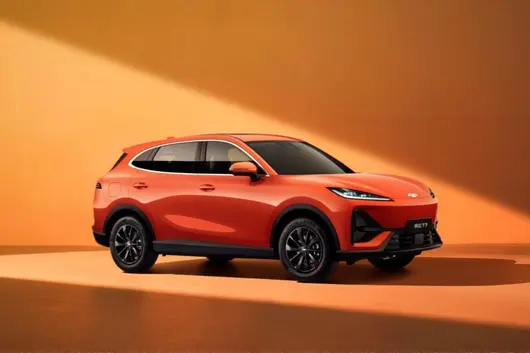
August 12, Chery Fengyun T7 officially opened pre-sale, three configurations pre-sale price 109,900 Yuan to 129,900 Yuan. Launch event theme defined as "Slow craftsmanship builds good cars, we've kept you waiting". In industry generally pursuing "18 months new car" rhythm, this theme itself is a statement — this car does not rush time.
Fengyun T7's R&D path differs from most domestic models. Its overseas counterpart model Lepas L6 debuted at Milan Design Week two months ago, and recently launched in Thailand. This means Fengyun T7 is not first launched domestically then exported, but first verified overseas then returned to China.
Relying on Chery's 23-year global technology accumulation, Fengyun T7 synchronously meets EU, UK, Australia, Southeast Asia, Middle East, South America and other countries and regions' regulatory standards. This 'reverse export' logic is not complex: products verified in overseas markets, upon return to domestic market, have already completed high-standard adaptive testing. Whole vehicle cumulative test mileage exceeds 6 million km, durability special test 1.45 million km, targeted Southeast Asia rainy season, Middle East high-temperature sun exposure, Indonesia high-humidity etc. global multi-regions conducted extreme real-vehicle trials. The cost of this path is time — but its return is, when the product finally faces users, it has already undergone enough extreme working condition verification.
Fengyun T7's design team is composed of Chery's 10 major global design centers, over 5,000 domestic and overseas users participated in co-creation throughout. Counterpart model Lepas L6 appearing at Milan Design Week received international recognition, overseas users called it "Little Macan". A set of design simultaneously appealing to European and Asian users, in automotive design field is not easy.
Fengyun T7 made an unconventional decision: all configuration versions uniformly equipped with 65.05 kWh Rhino Battery, CLTC range uniformly 600 km. In the industry convention where most car companies use low-range versions to lower entry price, range does not discount due to price, this logic is not common. Actual test range over 667 km, battery 30% charge to 80% only needs 20 minutes. Full series standard equipment dual-source wide-temperature-range heat pump air conditioning, -30°C to 55°C super wide temperature range stable operation, Northern user winter range attenuation problem was included in product definition stage.
In terms of safety, body adopts 80% high-strength steel, 18.84% hot-formed steel building 9 horizontal 5 vertical cage body, equipped with 9 airbags, including 48-liter dual-chamber far-end airbags and rear seat side airbags. Full series standard equipment Rhino Battery, IP68 waterproof is national standard 96 times. On active safety level, high-spec version equipped with Falcon 500 driving assistance system, composed of 22 high-precision sensors forming perception network, supports 300+ full-scenario automatic parking, including dead-end road parking, one-key tracking reverse, cross-floor parking etc. scenarios. Cockpit equipped with cockpit-integrated 8775 chip, 4nm process, 72 TOPS computing power.
Fengyun T7 launched two bottom-line guarantees: power battery safety bottom-line — caused by battery self-reasons resulting in whole-vehicle thermal runaway damage, compensate same model new car; driving assistance bottom-line — within one year of purchase due to intelligent driving system reasons causing accident, highest compensation 5 million Yuan. This 'bottom-line' is essentially a trust mechanism — rather than letting users worry about what to do if problem occurs, better directly write solution into rights. Current 100,000 to 150,000 Yuan pure electric SUV market, Leapmotor B10, BYD Yuan PLUS, Geely Galaxy E5, Deepal S05 etc. models have formed dense layout.
Fengyun T7 entering the competition is exactly the price segment where competition is most intense. Its differentiation strategy is clear: using overseas-verified quality standards, full-series 600 km range equality, cockpit-driving integrated chip and bottom-line rights, establish recognizability on configuration list. The true test is not whether pre-sale price is low enough, but after delivery, whether users can give 'worth waiting' evaluation on this 'slow work' polished car.

Many people have such experiences.
Strolling through the mall with the whole family, circling the underground garage three times without finding a parking spot; driving skills are slightly lacking, only able to stare helplessly in front of a mechanical parking lot; or encountering a narrow parking spot at a dead-end road when it is windy or rainy, struggling for a long time but unable to park.
In the past, car brands categorized their products into levels. To thoroughly solve the difficulty of parking, you had to spend at least over 200,000 to buy a high-end electric vehicle with cross-floor memory parking, while the basic models around 100,000 only had the most superficial intelligent experience.
Now this unwritten rule has been broken.

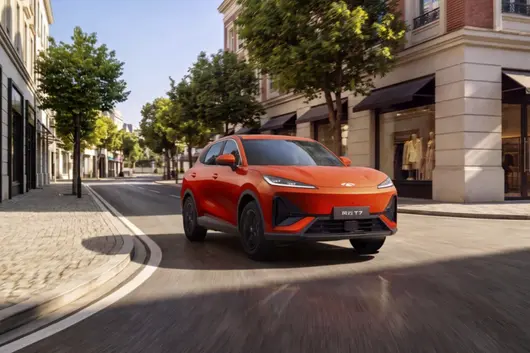
Chery Fengyun T7 officially starts pre-sale.
The new car has three configurations, covering a price range from 109,900 to 129,900, with 600 kilometers of range across the entire series. At first glance, this configuration seems to only pass in many new energy models, but what truly makes the Fengyun T7 seem "out of place" among 100,000-level pure electric SUVs is that it has put a dedicated function long monopolized by high-end electric cars, cross-floor memory parking, into the product list of 100,000-level family cars.
Let's look at the intelligent configuration again.
Fengyun T7 is equipped with the Falcon 500 driver assistance system, the whole vehicle is equipped with 22 high-precision sensors, including 3 millimeter-wave radars, 7 high-performance cameras and 12 ultrasonic radars, see far, see clearly, measure accurately. In the automotive industry, it is considered to have broken the price barrier first.
Cross-floor memory parking is undoubtedly Fengyun T7's biggest selling point. There is no floor limit, supporting up to two kilometers of memory parking. Coupled with over 300 all-scenario automatic parking functions, dead-end road parking, irregular parking spots, and one-touch track reverse are all supported.

This means ordinary families do not need to spend double the budget to own the experience of automatic cross-floor travel in mall underground garages and automatic parking in narrow spots. New drivers don't need to panic in front of narrow parking spots, and experienced drivers can cope calmly when encountering irregular parking spots.
What the industry calls "parking freedom" has also been implemented on 100,000-level family SUVs.
If it is just downgrading a high-end configuration, that is called spec stacking.
But Fengyun T7 is far more than parking freedom. Its difference lies in that it is a global car with reverse input. The overseas version is called Lepas L6. Pre-sales have started in South Africa, and Thailand launched in July. Next, Indonesia, EU, Australia/New Zealand, and the UK will follow in succession.
Accepting global market testing first, then launching domestically, this process is not common among local car companies because there are not many car companies that can do it. But behind Fengyun T7 happens to be Chery, ranking first in exports of Chinese brand passenger cars for 23 consecutive years, with an accumulation of global users breaking 20 million.

Admittedly Fengyun T7, anchored global standards from the beginning of R&D, developed according to the 2026 version E-NCAP five-star safety standards. 81 exclusive durability cars are undergoing road tests simultaneously. The whole vehicle cumulative testing mileage exceeds 6 million kilometers, covering -40 degrees to 55 degrees whole environment, adapting to 95% of global road types.
Body safety is also unquestionable.
80% high-strength steel, 18.84% hot-formed steel, 9 airbags. However, for a car to simultaneously meet regulations, climate conditions, road conditions characteristics, and user habits of so many countries and regions such as Europe, Australia/New Zealand, Middle East, Southeast Asia, Latin America, the R&D cycle is destined not to be short. In this industry rhythm where delivery happens upon launch and iteration happens upon delivery, Fengyun T7 used two years for planning and three years for R&D. Chery seems anti-trend, but slow manufacturing builds good cars.
It is exactly this five-year slowness that makes this car perform differently in many dimensions. The entire series is standardly equipped with a 65.05kWh Rhino battery, CLTC range 600 kilometers, actually running over 670 kilometers; without distinction of high or low configuration; no need to pay extra for a large battery pack; Fengyun T7 directly treated this heart disease of 100,000-level pure electric SUV users.

But the most interesting thing is Chery's two bottom-line guarantees on rights.
Battery power safety bottom line, first-time non-operating owner, thermal runaway caused by battery reasons, compensate with a new car of the same model; Assistant driving bottom line, first-time non-operating owner within one year of buying a car, parking or intelligent pilot scenarios, accidents caused by intelligent driving system reasons, compensate up to 5 million yuan.
Daring to make such a promise shows confidence in their own technology.
Back to the original question, what exactly are 100,000-level pure electric SUV users paying for?
Range, space, safety, intelligence... In the past, these needs were split across models of different price levels. To achieve all-dimension balance, you have to keep adding money to upgrade. Fengyun T7 is very pure. Cross-floor memory parking that should belong to high-end models, 600-kilometer long range that should be added for selection, 8775 chip and nine airbags that should be exclusive to high configuration are all packed into the 100,000-level price range.

This is no longer a simple price war.
Instead, Chery uses product power verified by the global market to tell the domestic home pure electric car market what exactly is a good product and what is worth buying.

In Malaysia's SUV market, many buyers compare Proton X90 and Toyota Fortuner when choosing a car. These two cars are quite close in price and positioning. Today, we will make a detailed comparison from multiple aspects to help you save time doing research.
The OTR selling price of Proton X90 in Malaysia is RM 106,800 - 122,800, with a total of 4 versions, including 2026 1.5T Prime X (RM 122,800), 2026 1.5T Prime (RM 116,800), 2026 1.5T Lite (RM 106,800) etc.
The OTR selling price of Toyota Fortuner in Malaysia is RM 195,880 - 241,880, with a total of 3 versions, including 2024 2.8T VRZ Diesel (RM 241,880), 2024 2.7L SRZ Petrol (RM 202,880), 2024 2.4L Standard Diesel (RM 195,880) etc.
From a price perspective, the starting price of Proton X90 is indeed RM 89,080 cheaper than Toyota Fortuner. If your budget is limited, Proton's entry-level version can already meet daily needs. But please also note, the few thousand dollars cheaper, there might be trade-offs in specifications, it depends on your specific needs.
Proton X90 is equipped with a 1.5L Turbo, 140 hp. Official fuel consumption 7.0 L/100km.
Toyota Fortuner is equipped with a 2.5L Diesel, 187 hp. Official fuel consumption 8.5 L/100km.
In terms of power, Toyota Fortuner's 2.5L Diesel has 47 more horsepower than Proton X90's 1.5L Turbo. However, for daily driving in the city, both cars' power is sufficient, you won't feel underpowered.
Proton X90 body length 4400 mm, trunk 400 L.
Toyota Fortuner body length 4400 mm, trunk 400 L.
The dimensions of the two cars are almost the same, interior space difference is not large. For this class of cars, daily use is completely sufficient.
Proton X90 adopts FWD drive mode.
Toyota Fortuner adopts FWD drive mode.
The drive mode of the two cars is the same, both are FWD, daily driving experience won't have too much difference.

Proton X90 warranty 5 years/150,000km, maintenance interval every 10,000km or 6 months.
Toyota Fortuner warranty 5 years/unlimited mileage, maintenance interval every 10,000km or 6 months.

Overall, Proton X90 and Toyota Fortuner are both very good models in the Malaysia market. Which one to choose, key still depends on your personal needs and budget. It is recommended to do your research, compare quotes from several car dealers, then go for a test drive to make the final decision. Buying a car is a big matter, spending some time doing research will definitely not be wrong.

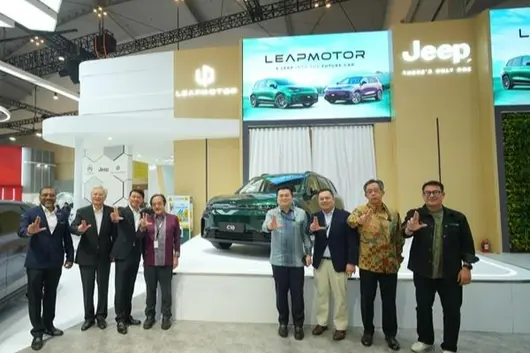
In the first half of 2026, China's total automotive exports reached 5.31 million units, including 2.42 million new energy vehicle exports, a year-on-year increase of 70%. The image shows Leapmotor's B10 and C10 global models at the 2026 Indonesia International Motor Show.
Statistical data shows that in the first half of 2026, China's total automotive exports reached 5.31 million units, a year-on-year increase of 53%; among them, new energy vehicle exports reached 2.42 million units, a year-on-year increase of 70%, further consolidating China's position as the world's number one automotive exporting country.
On the one hand, geopolitical risks have driven up global oil prices, enhancing the competitiveness of Chinese new energy vehicles; on the other hand, the continuous expansion of the 'Global South' markets has prompted Chinese automakers to rush to accelerate their overseas layouts. For Leapmotor Motors, aiming to challenge the annual sales milestone of 1 million units, the July results further validate the effectiveness of the domestic and international dual-wheel drive.
It is understood that Leapmotor delivered 101,267 units in the domestic market in July, doubling year-on-year, becoming the first new force automaker to break the 100,000 units monthly sales mark. In the first half of this year, Leapmotor's cumulative sales reached 356,487 units, a year-on-year increase of about 97%, making it the only new force brand to break the 300,000 units sales milestone in the first half of this year. Models such as A10, B Series, C10, and D19 bloomed in multiple points, consolidating Leapmotor's growth foundation.
Recently, Leapmotor showcased its two global models, Leapmotor B10 and C10, at the 2026 Indonesia International Motor Show and officially announced its entry into the Indonesian market. Leapmotor also jointly announced with the Indonesian Indomobil Group the official launch of localized KD assembly production in Indonesia. Through deep cooperation with PT National Assemblers under the Indomobil Group, Leapmotor achieved a leap from product output to localized whole industry chain layout. As of now, Leapmotor has formed a dual manufacturing base layout in Malaysia and Indonesia, becoming one of the few Chinese new energy brands with dual KD capacity in Southeast Asia.
Some analysts believe that China's new energy vehicle industry has currently formed a development pattern of 'domestic scaling as a bottom line, global expansion adding volume', and neither aspect should be neglected. For example, Leapmotor's breakthrough of 100,000 units in monthly sales marks that new force automakers have officially entered the volume tier of mainstream automakers. Industry competition has shifted from single-product comparison to a long-term contest of comprehensive systems including supply chain, self-developed manufacturing, and channel services.
In recent years, Chinese new energy vehicles going global have bid farewell to simple whole vehicle exports, shifting to a new stage of 'technology export + local factory construction + ecosystem co-building'. It is understood that relying on the three-party synergy with Stellantis and the Indonesian Indomobil Group, Leapmotor adopts a brand co-store sales model, leveraging local mature distribution networks. The plan is to complete 50 service outlets in Indonesia by the end of the year, covering the full pre-sales and after-sales chain. In fact, localized production not only avoids import tariffs and shortens delivery cycles but also drives local employment and supporting industry chain upgrades, aligning with the policy orientation of ASEAN countries to cultivate their local new energy industries. As of now, Leapmotor's overseas business covers more than 40 countries and regions globally, with over 2,000 stores, and global cumulative deliveries have broken through 1.5 million units. Southeast Asian localized manufacturing will become a key fulcrum for its global expansion.
"Practice proves that Leapmotor is becoming a typical sample of new energy vehicle companies with the 'domestic scaling, global localization' dual-wheel drive." Independent auto analyst Bai De believes that on the one hand, the domestic market is responsible for 'revenue generation, training, building industry chains', and on the other hand, the international market is responsible for 'expansion, setting standards, sharing risks'. Only by making good use of the domestic and international market dual-wheel drive can Chinese new energy vehicles consolidate their global leading advantages and achieve high-quality development of the automotive industry.
Bai De emphasized that on the basis of achieving scaled growth, Chinese new energy vehicles must continue to invest in technological innovation. It is revealed that Leapmotor will hold a Technology Day in September 2026, upgrade the world model intelligent driving system, and achieve universal implementation of high-level intelligent driving with low computing power.
As more Chinese automakers adhere to technology-based enterprise development, delve into cutting-edge self-developed technologies, perfect product matrices, and promote localized industry layouts, China's new energy industry's global competitive advantage will continue to be consolidated, and the process of Chinese automotive industry upgrading and global green transportation transformation will also accelerate further.

喺馬來西亞嘅 SUV 市場,好多買家喺揀車嘅時候都會拿 Perodua Ativa 同 Chery Tiggo Cross 嚟做比較。這兩款車喺價位同定位上都幾近嘅,今日我哋就從多個方面嚟做一次詳細嘅比較,幫你慳做功課嘅時間。
Perodua Ativa 喺馬來西亞嘅 OTR 售價係 RM 62,500 - 73,400,一共有 3 個版本,包括 1.0L Turbo X(RM 62,500)、1.0L Turbo H(RM 67,300)、1.0L Turbo AV(RM 73,400) 等。
Chery Tiggo Cross 喺馬來西亞嘅 OTR 售價係 RM 88,750 - 99,750,一共有 2 個版本,包括 2025 HEV 1.5L CSH(RM 99,750)、2025 1.5T Standard(RM 88,750) 等。
從價錢嚟睇,Perodua Ativa 嘅起步價確實比 Chery Tiggo Cross 慳 RM 26,250。如果你預算有限,Perodua 嘅入門版已經足夠滿足日常需求。但亦都要注意,慳嗰幾千蚊,可能喺配備上會取捨,具體要看你嘅需求。

Perodua Ativa 車身長 4400 mm,尾箱 400 L。
Chery Tiggo Cross 車身長 4400 mm,尾箱 400 L。
兩款車嘅尺寸幾乎一樣,車內空間差別唔大。呢個級別嘅車,日常使用完全夠用。

Perodua Ativa 保修 5 年/150,000km,保養間隔 每 10,000km 或 6 個月。
Chery Tiggo Cross 保修 3 年/100,000km,保養間隔 每 10,000km 或 6 個月。

Perodua Ativa 同 Chery Tiggo Cross 都係馬來西亞市場嘅主流選擇,適合家庭使用、日常通勤。如果你更看重品牌口碑同二手價,可以優先考慮口碑更好嗰款;如果你更在意性價比同配備,那就揀配置更豐富嗰款。最終都係建議兩款都去試駕,親身體驗先係最重要嘅。

總計嚟講,Perodua Ativa 同 Chery Tiggo Cross 都係馬來西亞市場好唔錯嘅車型。揀邊架,關鍵都係要看你嘅個人需求同預算。建議大家做好功課,多比較幾間車行嘅報價,再去試駕做最終決定。買車係件大事,花少少時間做功課絕對唔會錯。


喺馬來西亞嘅 SUV 市場,好多買家喺揀車嘅時候都會揀 Mazda CX-80 同 Chery Tiggo 8 Pro 嚟做比較。呢兩款車喺價位同定位上都蠻接近嘅,今日我哋就從多個方面做個詳細嘅比較,幫你省下做功課嘅時間。
Mazda CX-80 喺馬來西亞嘅 OTR 售價係 RM 296,610 - 296,610,合共有 1 個版本,包括 2025 2.5L 65km High Plus(RM 296,610) 等。
Chery Tiggo 8 Pro 喺馬來西亞嘅 OTR 售價係 RM 159,750 - 159,750,合共有 2 個版本,包括 1.6L Turbo Standard(RM 130,000)、1.6L Turbo Premium(RM 145,000) 等。
由價錢睇落,Chery Tiggo 8 Pro 嘅起步價比 Mazda CX-80 便宜咗 RM 136,860。老實講,喺呢個價位段,幾千塊嘅差距其實唔算大,關鍵仲係睇整體嘅性價比同長期使用成本。

Mazda CX-80 嘅安全評級係 5★ (ASEAN NCAP),主動安全系統包括 Brand ADAS。
Chery Tiggo 8 Pro 嘅安全評級係 TBD,主動安全系統包括 Basic。
安全配備方面,兩款車都拿到唔錯嘅評級。不過 Mazda CX-80 嘅 Brand ADAS 同 Chery Tiggo 8 Pro 嘅 Basic 喺功能上有啲差異,如果你比較看重主動安全嘅話,可以仔細對比下兩者嘅功能列表。

Mazda CX-80 採用 FWD 驅動方式。
Chery Tiggo 8 Pro 採用 FWD 驅動方式。
兩款車嘅驅動方式一樣,都係 FWD,日常駕駛感受唔會有太大區別。

Mazda CX-80 同 Chery Tiggo 8 Pro 都係馬來西亞市場嘅主流選擇,適合家庭使用、日常通勤。如果你更看重品牌口碑同二手價,可以優先考慮口碑更好嗰一款;如果你更在意性價比同配備,就揀配備更豐富嗰款。最終仲係建議兩款都去試駕,親身體驗先至最重要。
總體嚟講,Mazda CX-80 同 Chery Tiggo 8 Pro 都係馬來西亞市場好唔錯嘅車型。揀邊輛,關鍵仲係睇你個人需求同預算。建議大家做好功課,多比較幾間車行嘅報價,再去試駕做最終決定。買車係件大事,花少少時間做功課絕對唔會錯。


喺馬來西亞嘅汽車市場,好多買家喺揀車嘅時候都會拿 Mazda CX-60 同 Mercedes-Benz GLC 嚟做比較。今日我哋從多個方面做一個詳細嘅比較,幫你攞省做功課嘅時間。

Mazda CX-60 喺馬來西亞嘅 OTR 售價係 RM 200,510 - 252,873,合共有 2 個版本,包括 2026 3.3T 4WD High Plus(RM 252,873)、2025 2.5L 2WD High(RM 200,510) 等。
Mercedes-Benz GLC 喺馬來西亞嘅 OTR 售價係 RM 336,888 - 336,888,合共有 2 個版本,包括 GLC 200(RM 290,000)、GLC 300(RM 340,000) 等。
從價錢嚟看,Mazda CX-60 嘅起步價確實比 Mercedes-Benz GLC 平咗 RM 136,378。如果你預算有限,Mazda 嘅入門版已經可以滿足日常需求。但都要注意,平嗰幾千蚊,可能喺配備上會有取舍,具體要看你嘅需求。
Mazda CX-60 搭載 2.0L 4-cyl,馬力 170 hp。官方油耗 8.0 L/100km。
Mercedes-Benz GLC 搭載 2.0L Turbo,馬力 220 hp。官方油耗 9.5 L/100km。
動力方面,Mercedes-Benz GLC 嘅 2.0L Turbo 比 Mazda CX-60 嘅 2.0L 4-cyl 多咗 50 匹馬力。不過日常喺市區開嘅話,兩款車嘅動力都夠用,唔會覺得唔夠力。

Mazda CX-60 保修 5 年/150,000km,保養間隔 每 10,000km 或 6 個月。
Mercedes-Benz GLC 保修 3 年/100,000km,保養間隔 每 10,000km 或 6 個月。
Mazda CX-60 同 Mercedes-Benz GLC 都係馬來西亞市場嘅主流選擇,適合家庭使用、日常通勤。如果你更看重品牌口碑同二手價,可以優先考慮口碑更好嗰一款;如果你更在意性價比同配備,那就選配置更豐富嗰款。最終都係建議兩款都去試駕,親身經歷先係最重要嘅。
總體嚟講,Mazda CX-60 同 Mercedes-Benz GLC 都係馬來西亞市場幾唔錯嘅車型。揀邊一輛,關鍵都要睇你嘅個人需求同預算。建議大家做好功課,多比較幾間車行嘅報價,再去試駕做最終決定。買車係件大事,花少少時間做功課絕對無錯。


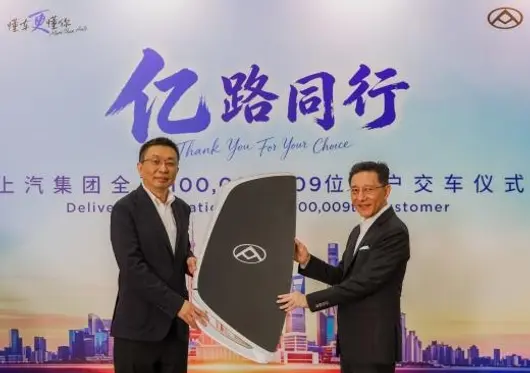
When SAIC Motor reached a cumulative production and sales breakthrough of 100 million vehicles, becoming the first member of the "100 Million Club" in the history of China's automotive industry, the spotlight should not only shine on the world's first smart car and high-end independent brand passenger cars, but also on the silent force that supported modern logistics, public transportation, and infrastructure pillars, and completed the five-vehicle relay delivery at this grand event — SAIC Commercial Vehicles segment.

In the second half of the hundred-year change in the automotive industry, the new energy transformation of commercial vehicles is not only a key battle for the "Dual Carbon" goals, but also the core ruler to measure a country's automotive industry green competitiveness. SAIC Commercial Vehicles, carrying five brands including Maxus, Yuejin, IVECO, Hongyan, and SINOWO, submitted a highly valuable report card: the overall new energy penetration rate reached 35%, leading far ahead of traditional commercial vehicle enterprises, and injecting powerful "green momentum" into SAIC Motor's 100 million monument with its full-scenario product matrix, global top partner endorsements, and full-dimension user ecosystem. Behind this number is the profound transformation of China's commercial vehicles from "scale expansion" to "value leadership".

Structural Leadership: How does 35% penetration break the commercial vehicle "high emission, difficult decarbonization" curse?
For a long time, commercial vehicles were regarded as a "hard bone" for new energy transformation due to complex usage scenarios, high cost sensitivity, and high range requirements. However, SAIC Commercial Vehicles proved that this "bone" could be chewed up with a 35% overall new energy penetration rate. This number far exceeds the industry average, marking that its new energy strategy has crossed the policy-driven stage and entered the "harvest period" driven by the market.
This leading position is built on a complete and layered technical implementation logic.

First, there is the saturated coverage of "all energy routes". Unlike some companies betting on a single technical route, SAIC Commercial Vehicles has achieved a comprehensive layout of fuel, pure electric, plug-in hybrid, range extender, and hydrogen fuel. Especially at the 2026 Beijing Auto Show, "Maxus Da Na Super Range Extender", the "industry's first super range-extending large light commercial vehicle" launched by Maxus, accurately cut into the core pain points of city distribution logistics with the "large battery + small range extender" collaborative mode. Its CLTC comprehensive range exceeded 1,260 kilometers, pure electric range 312 kilometers, and the energy consumption per 100 kilometers was as low as 2.65L. This technical "precision calculation" directly translates into the "economic account" in users' hands, which is the key to the large-scale popularization of new energy commercial vehicles.
Second, the "penetration rate flying together" of core brands. The 35% overall data is composed of a solid base formed by multiple points blooming across brands. SINOWO buses achieved 100% comprehensive electrification, becoming a benchmark for urban public transportation zero-carbon transformation; the Yuejin brand's new energy light truck proportion approached 57% in all of 2025, meaning that for every two light trucks sold, one was new energy; Maxus's domestic new energy penetration rate frequently broke through 50% in single months, especially in its traditional strong light commercial vehicle sector, achieving a switch from "quantity" to "quality". This full-brand collaborative penetration, rather than reliance on a single "sharp spear" advance, has built SAIC Commercial Vehicles' irreproducible systematic advantage.

Finally, deep co-research in the industrial chain. The strategic cooperation with CATL's "technical co-research, ecosystem co-construction" has allowed SAIC Commercial Vehicles to occupy the commanding height in the core battery link. The equipped CATL Tianxing battery not only has an extremely low failure rate of one in a billion levels, but also provides a cycle life of 7,000 cycles and warranty of 8 years or 600,000 kilometers, which hits the fundamental concerns of commercial vehicle users on "reliability and residual value". Solving user anxiety from the bottom layer technology, SAIC Commercial Vehicles' new energy leading is the successful conversion of technical dividends to market dividends.
From "Product Overseas Expansion" to "Solution Export": Brand Dimension War Behind Globalization
On the global automotive stage, the internationalization degree of commercial vehicles is a direct embodiment of measuring a country's automotive industry competitiveness. SAIC Commercial Vehicles not only leads the new energy transformation in the domestic market, but also reshapes the gold content of "Made in China" in the global market. The core of its globalization story has upgraded from early "selling products" to "exporting systems, standards, and ecosystems".
Data is the most intuitive proof. In 2025, SAIC Commercial Vehicles exported 103,000 vehicles overseas, with a year-on-year growth of over 25%, and light commercial vehicle exports ranked first among Chinese brands, with pickups ranking second. Entering 2026, this momentum has increased, with overseas sales breaking through 10,000 vehicles in April alone, a year-on-year increase of 40%. This is not only an increase in quantity but a qualitative leap. In markets such as Australia, Chile, and Malaysia, SAIC Commercial Vehicles' new energy products not only secured large orders but also occupied over 50% of the market share for pure electric commercial vehicles in Chile. This simultaneous breakthrough in developed countries and "Belt and Road" market lines proves that its products have reached global leading levels in quality, safety, and adaptability.
"Return orders" from global top customers are the best endorsement of brand power. At the SAIC Group 100 million vehicle delivery ceremony, international logistics giant DHL once again became the focus customer, receiving the Maxus delivered eDeliver 5. Since the cooperation in 2017, Maxus not only won DHL's largest procurement order in the European region but also became its preferred partner for global green logistics transformation. From DHL, FedEx, OnRoad, to SF Express, these industry giants who are picky about operating efficiency and TCO (Total Cost of Ownership) continuously choosing SAIC Commercial Vehicles is itself the highest evaluation of its product reliability, economic efficiency, and service support capabilities.

More worth noting is that SAIC Commercial Vehicles is completing the strategic dimension upgrade of the overseas expansion model. During the 2026 Beijing Auto Show, over 200 overseas dealers from more than 100 countries and regions gathered together to witness its four core strengths of "Quality, Technology, Ecosystem, Globalization". This marks that its overseas strategy has shifted from simple trade relations to a new stage of deep localization and full-scenario business solution export. By establishing overseas service centers, perfecting terminal sales networks, and initiating global modification ecosystem alliances, SAIC Commercial Vehicles is building a symbiotic and win-win global business ecosystem. It is not only selling a vehicle but exporting a green transport solution integrating vehicles, finance, services, and data. This transformation from "product output" to "capability output" is the inevitable path for China's commercial vehicles to truly walk to the center of the global stage.
Full-Scenario Coverage and User Value Reconstruction: From "Production Tools" to "Livelihood Partners" Dimension Upgrade
Commercial vehicles naturally have the attribute of "production tools", but SAIC Commercial Vehicles, by building a full-scenario product matrix and full-lifecycle user ecosystem, is redefining its social role. It is both the "wealth creation tool" of thousands of industries and the "warm partner" connecting livelihood.
In the product dimension, its coverage breadth is impressive. From heavy trucks supporting infrastructure projects, passenger cars serving city buses, to light trucks and light commercial vehicles deepening city distribution logistics, to pickups serving both commercial and outdoor needs, MPVs satisfying business and families, and even RVs carrying poetry and distance, SAIC Commercial Vehicles has built a full-scenario matrix of 7 car series. This "no blind spot" coverage ability enables it to provide highly customized solutions for different users. For example, in this 100 million vehicle delivery, IVECO Juxing EV broke through the mountainous passenger transportation range problem with its 100-degree large capacity battery, serving Henan Zhonglian Tourism; Hongyan i Jieshi Dump Trucks rode the complex road conditions of Shanxi with military-grade quality, escorting Hengtong Sheng Industry & Trade Company's infrastructure project. This precise scenario matching is the best embodiment of its product power.

In the value dimension, its service ecosystem construction goes beyond traditional buying and selling relationships. The "Lingju Capacity" built "Vehicle, Cargo, People, Data" integrated smart logistics ecosystem, and the "Star Plan" invested 15 million in farmer assistance funds, indicating SAIC Commercial Vehicles is thinking about how to help users better "make money". It is no longer passively providing transportation tools, but actively intervening in users' operation processes, lowering TCO through data empowerment and improving operational efficiency. Especially the "Star Plan" Motuo Action, assisted high-altitude area agricultural product transportation with pickup capacity, integrating commercial value and social responsibility, exploring a new path for rural revitalization of "Cars to the Countryside + Agricultural Products Going Up".
In the social responsibility dimension, its public welfare actions show enterprise warmth. Launching the AED Worry-Free Rescue Fund, creating the country's first commercial vehicle mobile AED public welfare fleet, this measure upgrades commercial vehicles from simple transport tools to mobile "Life Guardians". When vehicles become mobile emergency nodes, SAIC Commercial Vehicles' social value has achieved a qualitative leap. The landing of the 8S User Super Experience Center broke the traditional 4S Dealership boundary, providing integrated experiences of sales, service, ecosystem, and co-creation. This is itself a profound reconstruction of user relationships, shifting from the end of transactions to the starting point of relationships.
Conclusion:
SAIC Motor's 100 million vehicles is a period for an era, and more like a colon for the next journey. Behind this heavy milestone, SAIC Commercial Vehicles, with its 35% new energy penetration rate, full-scenario product strength, global brand influence, and warm user ecosystem, has strongly proved that it is not only the "ballast stone" for the group scale's summit, but also the "engine" leading the green transformation of China's commercial vehicle industry.
100 million users are not the end point, but a new starting point of trust. When the original intention of "serving livelihood, linking the world, driving the future" meets the era tide of new energy and globalization, SAIC Commercial Vehicles is driving China's commercial vehicle industry from scale leadership to value and brand full-range leadership with its systematic competitive advantages. On the map of the global green transport revolution, it has already become a key force that cannot be ignored.

兄弟姐妹們,今日講一個出海嘅大新聞——唔係賣車,係賣「司機」。6 月 2 號,文遠知行同 Uber 聯合宣佈咗一件事:計劃喺西班牙馬德里推出該國首個商業化 Robotaxi 試點服務。意思就係:西班牙人好快就可以用 Uber 叫到一台冇司機嘅出租車。呢次係文遠知行同 Uber 第一次一齊進入歐洲市場。馬德里亦成為文遠知行 Robotaxi 駛入嘅全球第十二個城市。
官方消息話,喺馬德里自治區政府嘅支持下,呢項服務今年內就會正式啟動。到嗰陣,馬德里嘅朋友哋打開 Uber App,就有一鍵呼叫文遠知行嘅 Robotaxi。同叫普通網約車一樣,分別係嚟嘅車冇駕駛員——至少喺初期,仲係有分別嘅。運營初期,車入面會配備經過專業培訓嘅安全員,終究係剛上線,穩妥第一。
文遠知行呢間公司,你可能聽過,也可能冇聽過。簡單介紹下:2017 年成立,一直埋頭搞 Robotaxi 技術研發同商業化。而家佢嘅 Robotaxi 已經覆蓋咗廣州、北京、新加坡、阿布達比、迪拜、利雅得、蘇黎世……加埋而家嘅馬德里,一共 12 個城市。西班牙亦係文遠知行進入嘅第五個歐洲市場——之前已經入咗瑞士、法國、比利時、斯洛伐克。按照文遠知行同 Uber 喺 2025 年 5 月達成嘅規劃,佢哋要喺五年內新增 15 個國際城市部署 Robotaxi 服務,全球部署數萬輛 Robotaxi。隨著馬德里落地,目前已經完成咗 4 個城市嘅佈局,仲有 11 個會喺 2030 年前陸續覆蓋。
講真嘅,中國自動駕駛公司出海唔係頭一回,但中國技術 + 全球出行平台 + 歐洲市場呢個組合,定係好有意思。馬德里係歐洲最具商業潛力嘅 Robotaxi 市場之一,人口多、出行需求大,當地政策都好友善。喺呢個市場站穩腳根,對文遠知行嚟講係個唔小嘅里程碑。對 Uber 嚟講,引進 Robotaxi 都係為咗降低成本——終究司機唔使發人工。對馬德里市民嚟講,以後打車可能更平。


6 月 7 日,東風柳州汽車喺廣西柳州國際會展中心舉行第 10 屆 67 品牌客戶日活動。

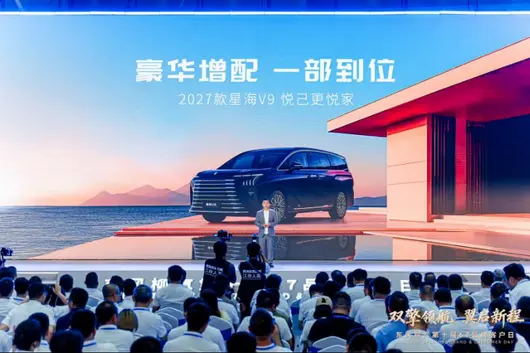
正值「十五五」開局之年,現場正式發布「十五五」戰略規劃,首次展示商用車 T1 平台技術成果,推出兩款戰略重卡;亮相翼威 2 房車;官宣 2027 款星海 V9 上市;落實女性卡友關懷計劃、迭代升級公益項目。
十五五戰略規劃——「725·雙領先」
「十四五」期間,東風柳州汽車完成燃油、混動、純電產品初步佈局,構建起完善的供應鏈、終端渠道與服務網絡。數據顯示,2025 年東風柳州汽車全年銷售 13.3 萬輛,同比增長 12%,商用車同比增長 40.3%,其中新能源商用車增長 181%;乘用車新能源同比增長 25.1%;海外出口連續三年創歷史新高。
面向「十五五」,東風柳州汽車正式發布「725·雙領先」戰略規劃:商用車聚力 7 萬輛,實現南方區域市場領先,全面佈局純電、氫燃料、甲醇、混動等全棧技術,打造全場景運輸解決方案;乘用車衝刺 25 萬輛,聚焦 MPV 賽道;海外市場錨定 2030 年銷量達 15.5 萬輛,深耕越南、印尼等東南亞核心市場,加速拓展歐洲、中東、非洲等新興區域,兌現「在海外再造一個東風柳州汽車」。

東風柳州汽車有限公司總經理林長波表示,公司將以此為目標,推動從「製造型」向「服務型 + 生態型」企業轉型,為客戶提供覆蓋全場景的一站式解決方案。
商用車 T1 平台技術成果及兩款戰略重卡——乘龍 H7 PRO 氫耀版 乘龍翼威 5 超能版電動重卡
本屆品牌日,東風柳州汽車首次展示東風集團 T1 商用車新能源平台技術成果。該平台於 2026 年 5 月 20 日由東風集團正式發布,作為面向全場景的「4.0 氫電一體化模塊化平台」,它以氫能錨定科技方向、純電夯實價值根基,整合燃料電池、儲氫、動力電池、中央域控、集成熱管理及電驅動六大核心模塊,具備自重輕、補能快、能耗低、高安全四大核心優勢,重新定義商用車客戶價值新高度。

基於 T1 平台,東風柳州汽車重磅發布兩款戰略車型,精準覆蓋幹線物流、城市配送等全場景運輸需求:

乘龍 H7 PRO 氫耀版 聚焦中長途幹線物流場景,主打「低氫耗、長續航、長壽命、高效率、高可靠」五大硬核優勢。首推「大氫堆 + 小電量」方案,搭載 400kW 大功率高效氫堆,配合場景化動力鏈匹配技術,百公里綜合氫耗低至 7 公斤;配備 75MPa 高壓儲氫系統(可擴展液氫),最大儲氫量 125 公斤,續航超 1700 公里。同時推出可氫可電的「小氫堆 + 大電量」定制版,搭載自研氫燃料增程技術,續航覆蓋 500-1000 公里。

乘龍翼威 5 超能版電動重卡 聚焦城市配送、港口倒短等場景,具備「超輕、超省、超快、高安全、高可靠、高智能」六大核心優勢。整車自重 8.8 噸,搭載 68 項輕量化技術;綜合電耗低至 1 度/1 公里;支持兆瓦級超充,20 分鐘內可完成補能;電池採用納米阻燃技術,搭配全流程嚴苛測試,安全性與可靠性對標燃油車;配備智能行駛輔助、AI 雲跟車等功能,優化長途駕駛體驗。

翼威 2 房車東風柳州汽車還將新能源探索延伸至房車場景,翼威 2 房車正式亮相。該車搭載 100 度電池與 120L 油箱,綜合續航可達 1400 公里,駐車可滿足空調、冰箱、影音等全屋電器全天候運行。
2027 款星海 V9 上市 超級置換價 16.99 萬起
乘用車領域也迎來重磅煥新——2027 款星海 V9 正式上市。

2027 款星海 V9 定位「豪華智電頭等艙」,官方指導價 17.99 萬 -22.99 萬元,超級置換價 16.99 萬 -21.99 萬元。

2027 款星海 V9 圍繞豪華、寬敞、智能、安全、無憂五大維度全面進階,帶來 20 多項軟硬件升級。
豪華 配備主駕座椅 + 女王副駕、二排 12 向電動調節按摩座椅、5L 冷暖車載冰箱,打造尊享出行體驗;
空間 車身尺寸優化,儲物空間達 2792L,滿足全家出行裝載需求;
智能 搭載高通驍龍 8295P 旗艦芯片與雙 15.6 英寸大屏,配合雙 AI 大模型,車機流暢度與交互體驗大幅提升;
安全 超 70% 高強鋼車身 + 哨兵模式,築牢安全防線;
能耗 馬赫混動發動機饋電油耗低至 5.27L,兼顧動力與經濟性。
華為智駕賦能,首款落地車型星海 V6 將於下半年上市
十五五戰略發布後,東風柳州汽車與華為乾崑智駕正式簽約,風行星海系列將搭載華為智駕系統,首款落地車型為星海 V6,定位「華為乾崑智駕親民大六座」,預計今年下半年上市。此次合作是「央企製造」與「華為智駕」的深度融合,雙方將在智能座艙、車聯網、數字化生態等領域協同發力,以頂尖智駕技術賦能親民車型,推動智能駕駛普惠化,助力東風柳州汽車乘用車智能化實力跨越式提升。

首映主題紀錄片《她・在路上》及乘龍 H5V 木蘭版
活動現場,東風柳州汽車發布女性卡友關懷計劃,首映主題紀錄片《她・在路上》,致敬女性卡友的堅守與付出。

同時推出乘龍 H5V 木蘭版車型,圍繞駕乘起居、私密安全兩大維度升級:標配 360° 全景影像、駐車監控、SOS 緊急求助功能,築牢安全屏障;搭載隱藏式車載洗手間、隱私隔簾、駐車熱水系統、座椅加熱等配置,全方位守護女性卡友出行舒適與安全。

此外,發布「她・港灣」女性卡友關懷計劃,從健康守護、卡姐同行、事業賦能三大維度,構建全方位關懷生態,讓女性卡友出行更安心、生活更舒心。
迭代公益項目
東風柳州汽車還迭代升級了公益項目——「望子乘龍」,該計劃自啟動以來,已累計資助近 2000 名卡友學子圓夢大學。2025 年,該計劃升級至 2.0 版本,而在此次品牌客戶日,這一公益計劃迎來又一次跨越——「望子乘龍·青衿築業計劃」正式發布。