


首頁天堂

搜尋歷史
熱門搜尋
經銷商登入 / 註冊

September has historically been the traditional peak season for car consumption. The market performance this year showed characteristics different from previous years: a rebound month-on-month, but still facing pressure year-on-year. According to industry data forecasts, the narrow passenger car retail market size for the month was approximately 1.69 million vehicles, with a month-on-month growth of 9.7%; influenced by the high base of 2.241 million vehicles last year at this time, there was a year-on-year decline of 24.6%, and no explosive market like previous years was seen during the peak season. In an environment of stock competition, only car companies that have been polished by the market and continuously iterate products can gain their own growth share.

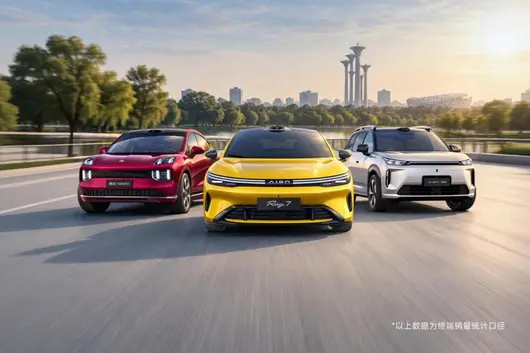
Against this backdrop, Hyper AION released September results: terminal sales of 35,494 units, with a year-on-year growth of 21.91%, achieving positive growth against the trend for 7 consecutive months. This performance is considered related to the system potential released by the BU system reform. Unlike relying on short-term price volume pushing, its growth relies on multi-dimensional drive of continuous evolution of blockbuster products, succession of new models, and incremental growth in overseas markets.
In terms of the high-end market, the Hyper brand steadily broadened simultaneously. The Hyper S600, as the Hyper brand's first sports SUV, is equipped with the only dual-chamber air suspension with four-wheel drive within the 200,000 price range, equipped with Eagle Claw System 2.0, all trims standard equipped with LiDAR and ADiGO GSD 3.0 intelligent driving assistance system, standard equipped with over 140 configurations. GAC Hyper stated, it will continue to uphold the proposition of 'Smart Enjoy Life'.

In terms of main models, AION i60 reached a milestone: users exceeded 100,000 cumulative within less than a year since launch, the September 2027 model officially launched refreshed, orders exceeded 20,000 units. The new car completed multiple practical optimizations based on real feedback from owners, including charging port moved to rear, newly added 66L front trunk etc. Simultaneously bringing refresh of 'Tech Trinity', equipped respectively with CATL batteries and Blade batteries, as well as Amorphous Alloy Electric Drive and Huawei Electric Drive, and introduced L4 co-source advanced intelligent driving.
Facing young groups pursuing driving control and personal expression, Ray series first model Ray7 welcomed interior premiere, and simultaneously launched Enjoyment Plan. Users paying 299 yuan reservation fee can lock a total of 8999 yuan in full Enjoyment rights, brand simultaneously established RC Club (Ray Racing Club), and limited delivery of drift experience courses. This model equipped with Super Chassis, Super Three-Electric Systems, Super Intelligence and Exterior Design, equipped with Huawei DriveONE full suite drive-brake integration architecture, pure-blood rear-drive built with aluminum-hybrid front double wishbone and rear five-link suspension, and WeRide L4 co-source intelligent driving.

AION N60, also part of the '60 Twin Stars', continued to exert force in the national intelligent driving track. After winning both preliminary and final championships in Guiyang Intelligent Driving Competition, it also won the Shenyang station competition. As a model facing young people, the car reached 20,000 users in less than 5 months since launch, cumulatively won the 100,000 to 130,000 yuan LiDAR sales champion for 5 months, bringing LiDAR and L4 co-source intelligent driving technology into mainstream price points.
In terms of technology level, 2027 AION RT relies on GAC self-developed amorphous alloy electric drive, with 8.571kWh/100km energy consumption results, set Guinness World Record. The electric drive core uses amorphous alloy thin strip with thickness of only 0.025mm, jointly tackled by CAS Dongguan Institute of Materials Science and Technology and GAC Group, broke mass production manufacturing barriers and achieved scaled application first, relevant manufacturing processes listed in National 'Prohibited and Restricted Export Technology Catalog', and obtained 2025 Global New Energy Vehicle Only Powertrain Innovation Technology Award. Currently this technology is synchronized to main models such as AION N60, 2027 i60 etc.

While the domestic market bloomed in multiple points, overseas markets have become an important growth pole for Hyper AION. Products continued to land in Singapore, Thailand, Colombia, Saudi Arabia, UAE, etc. markets, rankings firmly stayed at the front locally. In the Greek market, its July ranked second in the pure electric sub-market, August ranked third, forming a growth pattern of domestic and overseas two-way pull.
Facing the current accelerated new car launch rhythm, discussions triggered by shortened development cycles of some models, for consumers, choosing cars focuses more on quality stability and brand longevity. Hyper AION relies on GAC Group system, with characteristics of more after-sales outlets, stable parts supply etc., core three-electric systems are self-developed and self-produced, and tech companies jointly participate in ecosystem construction.

National Day holiday is the window period for families to view and change cars, Hyper AION also launched corresponding car purchasing policies. GAC AION launched 'Good Time Good Festival Buy Good Car, Perfect Ten Perfect Come to AION' campaign, covering multiple models such as i60, N60, RT, UT and V Home, up to enjoy 10 layers of privileges, including up to 8000 yuan trade-in subsidy; during National Day, placing orders also allows participating in 10,000 shares of Compulsory Traffic Insurance and Shopping Card lottery. October 1st to 7th, GAC Hyper launched 'National Day Buy Hyper Duo Good Gifts Draw Continuously' campaign, give large amount car purchase cash coupons or iPhone Duo. Additionally, visiting store in October to test drive can collect 'Good Persimmon becomes Pair' Dried Persimmon Gift Box, limited quantity.

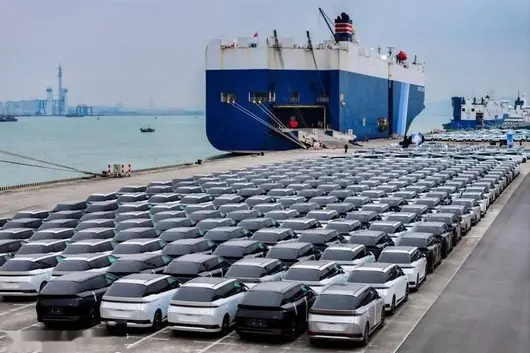
When domestic market growth slows and price wars push industry profit margins to a low of 1.5%, the overseas market is shifting from a "supplementary option" to a key factor determining the life or death of automakers. Leading automakers are seizing profits overseas, marginal brands are seeking survival opportunities overseas, and even Zotye, which has been nearly dormant domestically, has fired its first shot of revival overseas.
With the export share of new energy vehicles exceeding half for three consecutive months, Chinese automakers are accelerating their seizure of the overseas market. Under these impressive data figures, is this path to going global truly smooth?

China Association of Automobile Manufacturers data shows, from January to August 2026, Chinese new energy vehicle exports reached 3.435 million vehicles, a 1.2 times year-on-year increase, with the share of total car exports exceeding 50% for three consecutive months. Under the statistics of China Passenger Car Association, new energy passenger car exports in August reached 518,000 vehicles, a 154.7% year-on-year increase, accounting for 58.4% of total passenger car exports.

The overseas growth rate of leading automakers far exceeds the industry average.
From January to August, Chery's overseas sales reached 1.34 million vehicles, a 68.1% year-on-year increase, still the strongest; BYD's overseas sales reached 1.158 million vehicles, factories in Uzbekistan, Thailand, Brazil and other places have been put into operation, eight own roll-on roll-off ships have been put into operation, and the delivery system is rapidly taking shape; SAIC's overseas sales reached 1.016 million vehicles, a 52.9% year-on-year increase; Geely's overseas sales reached 690,000 vehicles, a 170% year-on-year increase, completing the brand layout in five core European countries: Spain, Germany, Netherlands, Belgium, Luxembourg; GAC's independent brand overseas sales reached 172,000 vehicles, a 136% year-on-year increase, becoming the greatest driver of group sales growth.

In the first half of the year, Chery, BYD, and Geely, three Chinese independent brands, entered the global top ten simultaneously, which is the first time in history. At the same time, the global market share of European automakers such as Renault-Nissan, Stellantis, and Volkswagen is accelerating its decline.
With new energy, "The Rise of the East and the Decline of the West" is no longer a rhetorical device, but a structural trend being verified by data.

Shifting focus is also a trend. This can be seen from the performance of single models.
Taking BYD Seagull as an example, in August, Seagull's retail sales were 10,103 vehicles, but wholesale sales were as high as 40,473 vehicles, which means that this model, once the king of domestic sales, has put more energy into the overseas market.

This is a very wise strategy, given that the profit margin at this level is not high and internal competition is fierce. Geely Xingyuan seized a large share with larger space and rear independent suspension, while new products such as Wuling Bingo and Leapmotor A10 fully attacked Seagull's positions with long endurance and advanced intelligent driving.
Dolphin is the same, August retail sales were only 16,829 vehicles, but wholesale sales were as high as 40,473 vehicles; Seal 07 EV was even harsher, retailing 107 vehicles in August, but wholesale sales reached a stunning 12,343 vehicles.

Actually, it is not just BYD; many automakers have set their sights on the overseas market. Those with a large gap between retail and wholesale sales include SAIC MG's MG4, SAIC-GM-Wuling's Wuling Hongguang MINI EV, Deepal's S05, and so on. Although wholesale sales do not absolutely equal export volume, high wholesale sales basically indicate a strong export effort.

Admittedly, the elimination competition in the Chinese automobile market is producing a batch of models that are "dead domestically but alive overseas." For automakers, this is a secondary utilization of assets; for overseas consumers, it is obtaining mature products at a lower price, seemingly a win-win situation.
The disadvantages are equally obvious. Disposing domestic elimination products overseas may reinforce the stereotype of "Chinese cars = low price and low quality," damaging the overall image of Chinese automobile brands. More importantly, this model highly relies on the "time lag" between overseas and domestic markets. Once overseas markets also enter full competition, these models will lose their survival space again.

Zotye Automobile's movements are the most symbolic. In September 2026, Zotye officially released the Wink Y01 International Edition, clearly "mainly targeting the overseas market," and started mass trial production. Zotye admitted in the announcement that the model "has not yet formed sales so far," and the company "still faces certain capital pressure." In other words, the overseas market has become the only fulcrum for this marginal automaker to restart its complete vehicle business.
Zotye's choice is not an isolated example. As early as many years ago, automakers such as Leopaard and Huatai, which had a certain share domestically, were gradually eliminated due to low product competitiveness, and later, under policy dividends, managed to sell abroad to make a profit.
The logic of overseas market becoming a "resurrection point" holds. It provides a channel to extend the product life cycle outside the red ocean of the domestic market, aligning with the national strategy to encourage automobile exports. However, it needs to be clearly seen that "resurrection" and "rebirth" are two different things. Issues such as channel construction, brand awareness, after-sales systems, and continued capital investment are before us; it is not as simple as transporting cars abroad.

New energy vehicles have achieved the scale expansion of Chinese automobiles; at the same time, due to the previous price wars, a series of chain reactions have been generated.
On the one hand, the driving force behind the high growth of going global is essentially the gap between the collapse of domestic profitability and the temptation of overseas profit margins. Goldman Sachs calculates that the export profit margin of domestic automakers overseas is overall more than 40% higher than domestically. This means that going overseas is not "icing on the cake" for automakers, but a "lifeline" for the profit structure.

On the other hand, selling models with poor sales performance and low product competitiveness domestically to foreign countries, theoretically, will affect the overall image of Chinese automobile brands. On the policy end, it has recently been explicitly proposed that enterprises formulating overseas retail prices "should avoid affecting the interests of overseas consumers and the brand image due to frequent and large price fluctuations."
Premium pricing for high-end models will certainly exist, but achieving "New Energy Vehicle Export Share Exceeds 50% for Three Consecutive Months" is still driven by those low-price volume-selling models. How to balance this will be a problem to face after accelerating the run.

In the Malaysian SUV market, many buyers compare Toyota Yaris Cross and Chery Tiggo 7 Pro when choosing a car. These two cars are quite close in price and positioning. Today, we will do a detailed comparison from multiple aspects to help you save time on research.
The OTR price of Toyota Yaris Cross in Malaysia is RM 99,900 - 109,900, with a total of 2 versions, including 2026 1.5L Standard (RM 99,900), 2026 HEV 1.5L Standard (RM 109,900), etc.
The OTR price of Chery Tiggo 7 Pro in Malaysia is RM 123,750 - 123,750, with a total of 2 versions, including 1.6L Turbo Standard (RM 125,000), 1.6L Turbo Premium (RM 140,000), etc.
From a pricing perspective, Toyota Yaris Cross's starting price is indeed RM 23,850 cheaper than Chery Tiggo 7 Pro. If your budget is limited, Toyota's entry-level version can already meet daily needs. However, be aware that the lower price may involve compromises on features, depending on your specific requirements.

Toyota Yaris Cross safety rating is 5★ (ASEAN NCAP), active safety system includes TSS.
Chery Tiggo 7 Pro safety rating is TBD, active safety system includes Basic.
Regarding safety features, both cars received good ratings. However, there are some differences in functionality between Toyota Yaris Cross's TSS and Chery Tiggo 7 Pro's Basic. If you value active safety, you can compare the feature lists of both.

Toyota Yaris Cross adopts FWD drive mode.
Chery Tiggo 7 Pro adopts FWD drive mode.
Both cars have the same drive mode, both are FWD, daily driving experience will not be significantly different.

Toyota Yaris Cross warranty 5 years/unlimited mileage, maintenance interval every 10,000km or 6 months.
Chery Tiggo 7 Pro warranty 3 years/100,000km, maintenance interval every 10,000km or 6 months.
Both Toyota Yaris Cross and Chery Tiggo 7 Pro are mainstream choices in the Malaysian market, suitable for family use and daily commuting. If you value brand reputation and resale value more, prioritize the one with better reputation; if you care more about cost-performance and features, choose the one with richer configuration. Ultimately, it is recommended to test drive both, personal experience is the most important.
Overall, Toyota Yaris Cross and Chery Tiggo 7 Pro are both very good models in the Malaysian market. Which one to choose depends on your personal needs and budget. It is recommended to do your homework, compare quotes from several dealerships, and then test drive to make the final decision. Buying a car is a big matter, spending time researching is never wrong.


