首頁墨鱼

搜尋歷史
熱門搜尋
經銷商登入 / 註冊

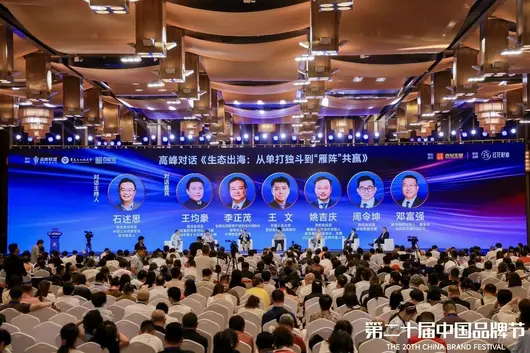
8 月 8 日,第二十屆中國品牌節喺北京盛大開幕。玲瓏輪胎新任總裁周令坤獲邀出席開幕式高峰對話,圍繞“生態出海:從單打獨鬥到‘雁陣’共贏”主題展開深度交流。呢次係周令坤作為玲瓏輪胎新總裁嘅公開首秀。喺全球產業鏈深度重構嘅背景下,佢系統闡述咗玲瓏輪胎近二十年前嘅全球化歷程,指出中國企業嘅出海正步入一場涉及技術、標準、品牌與生態嘅系統性進化。

歷經四大階段,由產品輸出邁向生態昇維
作為行業最早出海嘅先行者,玲瓏輪胎嘅全球化進程堪稱中國製造出海嘅生動注腳。喺對話現場,周令坤將玲瓏嘅出海之路總結為四個遞進階段:
第一階段係“拓荒”。自 2009 年起,玲瓏連續 13 年位居中國內資輪胎企業出口第一名,但早期模式係“一個人扛住樣品走遍全世界”,渠道、標準同品牌仍掌握喺他人手中。
第二階段係“跨洋建廠”。2014 年,玲瓏泰國工廠投產,係中國最早赴海外建廠嘅輪胎企業之一;2024 年 9 月,塞爾維亞工廠正式量產,被武契奇總統譽為“塞爾維亞最大嘅綠地投資項目”,標誌住玲瓏由“賣產品”邁入“建產能”階段。
第三階段係“體系制勝”。玲瓏喺“三國八地”建立研發中心,開始定義自身嘅技術同產品標準。
第四階段則係“生態昇維”。喺每一個海外市場扎根融入,以 ESG 為內核,實現由能力輸出向系統輸出嘅跨越。

“四個階段行落嚟,我哋最深嘅體會係——單打獨鬥可以活落嚟,但要贏,必須靠生態。”周令坤強調,各生態協同作戰,企業先至行得更遠、打得更穩。
構建“雁陣組合”,多角色協同共進
當俾主持人問到玲瓏最希望邊嚟“帶飛”時,周令坤表示,生態出海並非依賴某一家企業,而係一個完整嘅生態組合。佢形象咁提出中國品牌出海嘅“雁陣組合”:

主機廠係“領航雁”,玲瓏與主機廠深度參與、聯合攻關,主機廠開拓邊度,玲瓏就跟進支撐邊度;專業服務商係“托底雁”,金融、法律、合規、物流等軟基建需要專業夥伴共同托舉;行業協會、智庫與檢測機構則係“護航雁”,助力中國標準獲得同等嘅全球話語權。
會上,玲瓏輪胎獲頒中國品牌 500 強價值證書。

中國企業需合力“一起飛”
“中國品牌出海,唔係比邊個飛得快,而係比邊個飛得遠、飛得穩、飛成一隊。”周令坤喺對話最後總結道,“雁陣入面冇配角,每一隻雁都有自己嘅方向感,同時又朝著同一個目的地。”

當前,中國品牌出海已全面進入生態競爭嘅新階段。這不仅需要單一企業嘅覺醒,更呼籲全條產業鏈嘅合力——主機廠開路、供應鏈托底、服務商護航、標準引領,每一個角色都不可或缺。當越來越多嘅中國企業選擇“一起飛”,中國品牌先至真正實現由“走出去”向“走上去”嘅跨越,喺全球舞臺抵達新嘅遠方,讓中國品牌更受世界尊敬。

In Malaysia's SUV market, many buyers compare Proton X70 and Kia Sportage when choosing a car. These two models are quite close in price and positioning. Today, we will make a detailed comparison from multiple aspects to help you save time on research.
The Proton X70 OTR price in Malaysia is RM 106,800 - 122,300, with a total of 3 versions, including 1.5L Standard 2WD (RM 106,800), 1.5L Executive 2WD (RM 115,800), 1.5L Premium 2WD (RM 122,300), etc.
The Kia Sportage OTR price in Malaysia is RM 129,639 - 179,320, with a total of 4 versions, including 2025 1.6T DCT 4WD High (RM 179,320), 2025 1.6T DCT 2WD High (RM 159,320), 2025 2.0L AT 2WD High (RM 139,639), etc.
In terms of price, the starting price of Proton X70 is indeed RM 22,839 cheaper than Kia Sportage. If your budget is limited, Proton's entry-level version can already meet daily needs. But keep in mind, the few thousand savings might involve trade-offs in features, depending on your specific needs.

Proton X70 is equipped with 1.5L Turbo, horsepower 140 hp. Official fuel consumption 7.0 L/100km.
Kia Sportage is equipped with 1.5L Turbo, horsepower 140 hp. Official fuel consumption 7.0 L/100km.
Both cars use the same powertrain, and the driving experience feels basically the same. Fuel consumption is also similar, so there's no need to worry too much about this point.

Proton X70 adopts FWD drive method.
Kia Sportage adopts FWD drive method.
Both cars have the same drive method, both are FWD, and there won't be much difference in daily driving experience.

Proton X70 warranty 5 years/150,000km, service interval every 10,000km or 6 months.
Kia Sportage warranty 5 years/300,000km, service interval every 10,000km or 6 months.
Proton X70 and Kia Sportage are both mainstream choices in the Malaysian market, suitable for family use and daily commuting. If you value brand reputation and resale value more, you can prioritize the one with better reputation; if you care more about cost-performance and features, choose the one with richer configurations. Ultimately, it is recommended to test drive both, personal experience is the most important.
Overall, Proton X70 and Kia Sportage are both very good models in the Malaysian market. Which one to choose ultimately depends on your personal needs and budget. It is recommended to do your research, compare quotes from multiple dealers, and then test drive to make the final decision. Buying a car is a big matter, spending some time on research will never be wrong.


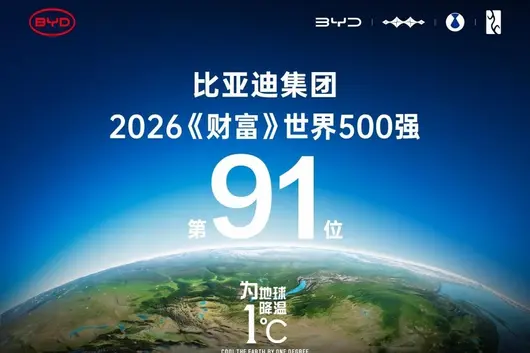
On July 28, the 2026 Fortune Global 500 list was officially announced. BYD made the list for the 5th consecutive year, ranking 91st, firmly joining the global top 100. This achievement confirms the company's comprehensive strength has received international authoritative recognition, and its status as a global benchmark for new energy vehicles continues to be solidified.

Operationally, BYD's production, sales, and revenue maintained strong growth. In 2025, the company's revenue was 804 billion yuan, net profit 32.6 billion yuan. Annual new energy vehicle sales reached 4.6 million units, securing the double champion title for global and domestic automaker sales. In the first half of 2026, cumulative sales exceeded 1.8 million units. In July, the 17 millionth new energy vehicle rolled off the production line, making BYD the world's first automaker to reach this milestone.
Technological innovation is the core driver of BYD's growth. Adhering to the philosophy of "Technology is King, Innovation is the Foundation", R&D investment in 2025 reached 63.4 billion yuan, a 17% year-on-year increase, ranking first among A-share listed companies for two consecutive years, with cumulative R&D investment exceeding 250 billion yuan. This year, multiple core technologies were implemented: Second-generation Blade Battery and fast-charging technology released. By the end of the year, 20,000 domestic fast-charging stations and 6,000 overseas fast-charging stations will be built. The entire series can be equipped with advanced laser-assisted driving. It was the first to launch a one-year safety guarantee promise for city navigation, popularizing advanced intelligent driving.
Global expansion has entered the fast lane. Overseas sales exceeded 1 million units in 2025, up 145% year-on-year. In the first half of 2026, overseas sales exceeded 780,000 units, forming a pattern of "leading in Latin America, breakthrough in Europe, blooming at multiple points in Asia". The Brazil SkyRail opened, and the 100,000th complete vehicle rolled off the production line at the factory. Exclusive models landed in Japan. The Thailand factory completed two years of production. Business covers 121 countries and regions worldwide.
Sustainable development and social responsibility are advancing in sync. As of the end of June, BYD new energy vehicles have cumulatively reduced carbon emissions by 149 million tons, equivalent to planting 2.48 billion trees; a 3 billion yuan education charity fund was established, partnering with 127 universities to assist over 6,000 students in their growth.
Looking to the future, BYD will continue to drive deep global expansion through technological innovation, practice a green and low-carbon route, and use its full industrial chain strength to support the sustainable vision of "Cooling the Earth by 1°C".
(Total 762 words)

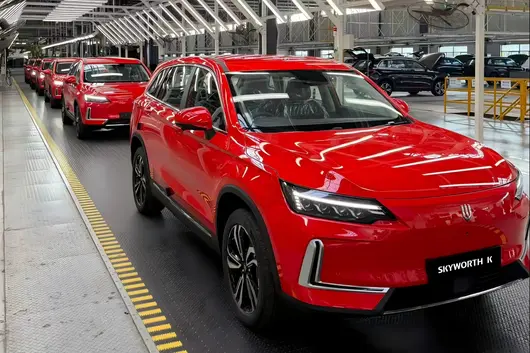
7月30日的香港,将会有一批挂着“Skyworth”字样的创维纯电SUV,从拖车上驶下来,替代部分红色车身,在香港街头跑了快三十年的丰田皇冠Comfort。

回顾丰田皇冠Comfort在出租车业界的“统治”史,会发现它的统治力,实在强得有点不讲理:它的发动机三十万公里不修,零件在锦田拆车场随拆随有,全港任何一个车房师傅闭着眼都能修它的底盘。
这种近乎疯狂的耐用度,不仅为司机带来了安心感,将“皇冠=的士”深刻地镌刻在港人,乃至对香港文化感兴趣的其他人记忆中。那么,创维汽车是凭借什么,来替代丰田皇冠Comfort的位置?
销量不是武器,是致命伤
如果是“销量”这个可以约等于用车体验和品质的原因,那么不好意思,创维汽车并不具备。
2022年,创维汽车卖了21900辆,勉强还算叫得上号。事过境迁,今年前五个月,创维汽车在国内累计交付331辆,平均下来一个月六十多台。来到五月,单月销量更仅为38辆,说一句“惨淡”,一点都不过分。
没有销量,研发投入无法分摊,产线开工率会不足,经销商和售后网点也会随之萎缩。换言之,一旦销量和保有量跌破某个阈值,以上所有环节同时开始失血,而且越失血越难止血,产品体验和品质,自然也无从谈起。
创维当前的处境,就是如此的窘迫。

内地经销商网络,从高峰期约370家,萎缩到部分门店匿名吐槽库存积压和返利难结。哪怕是出海,英国进口商Innovation Automotive,也在六月底停止运营。BE11车型从32500英镑,一路降到13999英镑清仓,降幅超过一半,几乎等于承认这款车在欧洲没有市场。
所以,当创维汽车宣布批量交付香港出租车市场,带来的不仅是惊讶,还有创维汽车背后那个男人的态度——
“还没到认输的时候呢。”
彩电大王、阶下囚、造车赌徒
创维汽车背后那个男人,名叫黄宏生。

1988年,三十二岁的黄宏生在香港注册了创维,带着五百万贷款做电视遥控器和电视。不到四年,遥控器业务亏损见底,濒临破产。面临绝境,黄宏生他转身押注彩电整机,从东芝引入技术团队,把创维做成了中国彩电三强。2000年,创维数码在香港上市,黄宏生身家数十亿,是那个年代最标准的"成功企业家"模板。
然而,短短四年后,黄宏生就因为涉嫌挪用公司资金和串谋盗窃,被香港廉政公署拘捕,并在2006年被判处有期徒刑六年。
虽然创维没有停下发展的脚步,意味着在2009年保释出狱的黄宏生,理论上可以退休,但黄宏生非但没有这样做,还转身投向风马牛不相关的汽车行业。
2010年,他在南京成立开沃新能源汽车集团。2011年,他买下濒临倒闭的南京金龙客车,花了几年时间把这家公司重新做到全国新能源客车销量第二。2019年,他杀进了乘用车市场,推出天美汽车品牌。
对于黄宏生这10年的折腾,汽车圈的普遍反应是,一个做电视的人,做客车已经跨了半个行业,再做乘用车,跟推倒重来没有区别。也许是为了增强认知,天美汽车在2021年,改名为创维汽车。

值得注意的是,用在汽车上的“创维”,是黄宏生花了2800万,从创维集团买来的品牌使用权。品牌是借的,钱是黄宏生自己掏的,理论上来说,创维汽车如果倒了,和创维集团乃至股民,都没有任何关系。但黄宏生自己,已经把所有筹码扔在桌上了。
从遥控器厂到彩电帝国,从年销两万到月销三十八,黄宏生的职业履历,称得上波澜起伏,但唯一不变的,也许是这个人的字典里,没有“认输”二字。他也为了这份新的事业频频站台,说过“要做汽车行业的传音”,要放弃国内内卷全力出海之类的话。
有产品,更有一个好口子
所以,创维汽车是凭什么,获得了香港出租车市场的订单?

从产品角度看,这批进入香港市场的SUV,是SKYWORTH K RHD,右舵版去年十二月已经上市。值得一提的是,这是一个专门为右舵市场从头设计的版本,不是在国内左舵车上改一改把方向盘移到右边就应付了事。动力形式选择是纯电版,续航数据对标的士一班十二小时约三百到四百公里的实际运营里程。
黄宏生拼了命要将SKYWORTH K RHD登陆香港市场,是因为香港是整个右舵世界的入口。
零跑的高管公开说过,香港是进军澳洲、新西兰、英国市场的关键门户;广汽也把香港定位为“中国车企走向世界的桥头堡”。创维在国内市场跌到冰点,英国市场也几乎归零。香港是与出海高度关联的市场,这条救命稻草,必须要握住。
但更重要的,是香港政府,刚好开了一个有利于创维汽车的口子。

2018年挪威科技大学做了个全球1.3万城市的碳足迹排名,香港排第四,仅次于首尔、广州、上海。作为一个第三产业占比超过九成的经济体,这个成绩单实在不好看。因此,香港决定向欧盟看齐,要在2050年实现碳中和。

运输业占全港碳排放近两成,公交和的士每年排放超140万吨、占总量4%。不在2030年前把1.8万辆燃油的士换成零排放,这个碳账本根本平不了。因此,香港政府决定,2027年前,淘汰至少一半燃油出租车;2030年前,香港所有注册的士必须实现零排放。
1.8万辆的士,每一辆都在换车清单上。政府的新能源运输基金已经预留超过六亿港元,资助每辆燃油的士换购纯电车辆的差价。哪怕是落在运营端,账也算得过来——香港充电电价2.4到3.5港元一度,对比日渐上涨的石油气价格,电动的运营成本确实更低。
哪怕,“算得过来”和“用得顺手”之间,差着一整个基础设施的鸿沟。

十年前,香港引进过比亚迪e6作为纯电的士进行试验,结果因为续航不够和充电桩太少,所有车辆全部退回。十年后,电池能量密度和快充速度都跨了一代,但全港十万多辆电动车只有一万一千个充电桩,快充桩不到两成,私人小区申请装桩审批排两三年,也是家常便饭。

政策开了一道门,不等于门里面是坦途。但门开着,就有人会进来试试,何况是喊过“出海”的创维汽车,以及它背后不认输的黄宏生。
门后的世界,引来万千可能
对“门后世界”感兴趣的,其实并不止创维。

最先到的是上汽大通。MIFA 7纯电MPV已经以香港的士的身份上路载客,车身大、乘坐舒适,天然适合香港狭窄街道中需要频繁上下客的场景。然后是广汽传祺E9,也在香港的士市场投了运。
比亚迪虽然在的士市场还没有太多动静,但在香港私家车市场是绝对销冠,品牌认知度已经不需要培养。就在不久之前,比亚迪还推出了家商两用的全新品牌领汇。如果比亚迪决定要杀入香港出租车市场,他们并不是没牌可打。
当红色车身的丰田皇冠,从香港街头一辆接一辆消失,来接棒的不会是某一家的车,一群打法各异的中国品牌,在一个右舵城市里抢一个一万八千辆的盘子。创维也许体量没有竞对大,但它的确有着坚韧的信心。

不过,单凭一款产品和难以量化的决心,是很难满足香港的士司机这群世界上对车最挑剔的人。一台能在他们手里跑满两年不出大故障的车,才有资格谈“替代皇冠”。

車型概覽

奧迪R8 值唔值得睇,第一步唔係望牌子或者外形,而係睇佢能唔能夠配合你嘅香港日常。 呢篇會集中講續航、電池同補電安排,幫你用買家角度篩走唔適合嘅選擇。
完稅價 HK$ 2,552,000 - 2,580,000 令預算位置更清楚,買家可以先估算月供、保險、泊車同日常開支。
購車價格指南
奧迪R8 嘅購車預算可以先由 完稅價 HK$ 2,552,000 - 2,580,000 開始計。香港買車唔只係睇車價,月供、保險、牌費、泊車同能源成本都會影響每月壓力。
如果有幾個版本可揀,可以先將 2025 Coupé V10 GT(HK$ 2,552,000)、2025 Coupé V10 Performance(HK$ 2,580,000)、2025 Spyder V10(價格待確認) 放喺同一張清單。日常通勤重視舒適同易用,家庭買家就要優先睇後排、尾箱同安全配置。
核心規格重點
睇 奧迪R8 嘅規格,重點唔係背數字,而係理解佢喺香港用車場景會帶嚟咩分別。
奧迪R8 現階段最值得留意係車型定位同版本方向,詳細取捨應該等價格同規格更清楚再作決定。
優缺點分析
奧迪R8 嘅優點唔需要講到天花龍鳳,真正有價值係佢能唔能夠令日常用車更省心:預算位置清楚,方便同同級車直接比較。
要留意嘅係,要先確認屋苑、公司或常去商場嘅充電條件。呢啲唔一定係缺點,但係落訂前應該先諗清楚。
買家常見問題
買 奧迪R8 之前,真正要問嘅唔係單一規格,而係佢可唔可以融入你每日嘅生活節奏。
常見疑問係「奧迪 Audi R8 喺香港仲有冇新車?」簡單講,奧迪 Audi R8 已於 2024 年正式停產,目前香港市場只有極少量庫存或二手車。 放到實際用車,就係要睇佢對通勤、泊車、家庭乘坐同長期成本有幾大幫助。
同級對比內容
將 奧迪R8 放入同級車清單時,唔建議只用外形或者品牌光環決定。比較順序可以係:先用 完稅價 HK$ 2,552,000 - 2,580,000 鎖定預算圈。
咁樣篩選會貼近香港買家真實生活:平日塞車、商場泊車、周末去新界、甚至一家人出入,先係一部車每日要面對嘅考驗。
用車全周期指南
擁有 奧迪R8 最重要係先諗清楚充電節奏。屋苑、公司或者常去商場只要有穩定充電選項,電動化用車就會容易相處好多。
如果你主要喺市區行,視野、低速順滑度同泊車輔助會好影響心情;如果經常行高速或跨區,座椅舒適度、隔音同動力從容感會更重要。


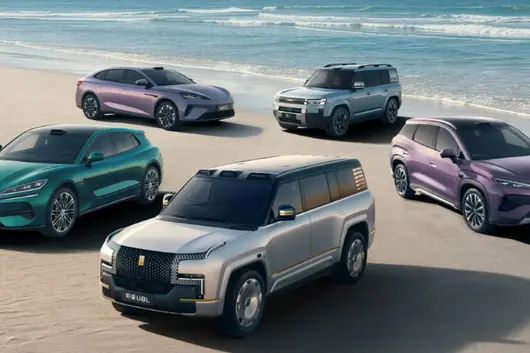
BYD officially released the May 2026 production and sales flash report, with new energy vehicles from all brands reaching a monthly sales volume of 383,453 vehicles, a slight increase of 0.26% year-on-year, achieving year-on-year positive growth in monthly sales after ten months; among them, passenger car deliveries reached 376,990 units, surging 19.4% month-on-month, wiping out the pain of previous model iterations, presenting a new pattern where the domestic base is stable, overseas sales are soaring, and high-end brands are scaling up across the board. Amidst the market environment of intensified competition in the domestic new energy sector, Tesla FSD entering China, and an intense launch of independent new products, it has forged a unique structural growth path.

The Dynasty and Ocean main brands combined sold 330,215 vehicles in May, accounting for over 80% of the group's total sales, remaining the stabilizer for BYD's sales volume. The full series had 8 models exceeding 20,000 units in monthly sales, covering products from 50,000 entry-level commuter to 200,000 home SUV.

Inside the Dynasty Network, the Yuan family sold 56,691 units, and the Song family 51,370 units. Both crossed the 50,000 threshold, becoming two major sales pillars for the brand, catering to home commuter and urban-rural travel needs; the Qin family followed closely with a stable performance of 28,360 units. The Han and Tang series maintained a volume in the six-thousand range, deeply cultivating the mid-to-large home sedan and SUV niche markets; the brand new model Xia is in the market cultivation phase, delivering 1,810 units monthly, with potential for steady volume growth as channels expand.
The Ocean Network's growth momentum is even more rapid, with 5 models entering the 20,000 club across the series: Sealion 42,615 units, Seal 34,117 units, Seagull 39,919 units, Dolphin 22,260 units, and Song PLUS 27,755 units. Among them, Seagull remains the best-selling entry-level commuter model thanks to its affordable pricing of 60,000-80,000. Sealion, as a new volume model, stands firm at the 40,000 level upon launch, filling the mid-size SUV product gap in the Ocean Network and perfecting the Ocean product tier layout. From commuter small cars to compact SUVs, the two main brands rely on DM-i hybrid and pure electric dual-line technologies to牢牢锁住 the mainstream home market share within 150,000 domestically.
Fang Cheng Bao Year-on-Year Surges 139.7%, Brand Upward Positioning Takes EffectThe high-end matrix of Denza, Fang Cheng Bao, and Yangwang sold a combined 46,489 vehicles in May, officially breaking away from the niche positioning to become a new pivot for BYD's brand premium and profit growth, breaking the industry curse of difficulty in high-end breakthrough for domestic brands.

The off-road brand Fang Cheng Bao sold 30,186 units monthly, surging 139.7% year-on-year, creating a new high in monthly sales since the brand launched. Its Titanium 7 model sold 18,280 units monthly, while Leopard 5 and Leopard 8 output remained stable, continuously squeezing the survival space for joint venture and imported models in the 250,000-400,000 hardcore off-road niche market.

Denza delivered 16,303 units in May, with the MPV benchmark D9 selling 6,721 units, and the Z9 series close to 6,000 units. MPV and mid-to-large sedan dual-line efforts helped them stand firm in the luxury new energy track; the million-level ultra-luxury brand Yangwang continued its steady climb, delivering 286 units that month, a year-on-year increase of 105.8%, completing market verification of the domestic brand ceiling product and forming a full price range product layout from 100,000+ home, 300,000-400,000 off-road, 500,000 luxury MPV to million-level flagship.

In May, BYD's overseas sales of passenger cars and pickup trucks reached 160,177 units, surging 80.7% year-on-year. Exports accounted for over 42% of the full series total sales, setting a new historical high for brand export and becoming the core driving force to stabilize May overall sales and achieve year-on-year positive growth.
Southeast Asia, Europe, and Latin America became the main incremental markets. Seagull, Song PLUS, and Yuan series continued to top new energy best-seller lists in multiple countries; the SHARK pickup truck exceeded 4,000 units in monthly exports for two consecutive months. Relying on the completion of localization production in Thailand, Brazil, Hungary, and Uzbekistan with four overseas vehicle factories, localized production continues to land, avoiding tariffs while rapidly penetrating terminal channels. Against the background of stock market competition in the domestic auto industry and normalized price wars, the rapidly expanding overseas market effectively counteracts sales volatility brought by domestic model iterations, officially upgrading from a supplementary market to BYD's core growth engine. As of now, BYD's global cumulative new energy vehicle sales have exceeded 16.5 million units, with the globalization map continuously broadening.
Intelligent Driving Empowers Product Iteration, H2 New Products Prepare to Surge VolumeMay marked a key node in BYD's intelligent driving landing, with the God's Eye intelligent driving system becoming a core bonus point for models: the number of vehicles with advanced intelligent driving across all brands exceeded 3.15 million, with daily road test data exceeding 200 million kilometers; that month, BYD implemented City Pilot and Smart Parking dual safety backup services, becoming the world's first auto manufacturer to achieve dual intelligent driving backups. Three days after policy implementation, the activation rate of models equipped with the God's Eye system in cities surged 50%. Intelligent driving experience upgrades directly drove in-store order conversion, solidifying product competitiveness for subsequent models to continue volume sales, and facing the intelligent driving market shock brought by FSD entering China.
From data details, BYD's cumulative sales from January to May 2026 were 1,405,039 units, down 20.32% year-on-year. The core reason is that the full series of main models were concentratedly iterated, and the capacity ramp-up of the 2nd Gen Fast Charge Blade Battery was restricted. The new Flash Charge Battery upgraded fast charging and low-temperature performance. Full series iteration models prioritized installing new batteries, but production line retrofitting dragged down capacity release. Order backlogs on popular models and delayed deliveries compressed the May delivery volume to a certain extent.
As the end of the second quarter approaches and the 2nd Gen Blade Battery capacity continues to release, coupled with new models such as Denza N8L, Fang Cheng Bao Titanium 7 Pure Electric Version, Sealion 05, and Xia L landing the market, the industry generally predicts that BYD's full brand sales in June are expected to exceed 400,000 vehicles. Relying on the four-dimension development logic of low-end volume locking share, high-end raising profit, overseas pushing volume, and intelligence improving product power, amidst the intensified new energy elimination round in the domestic market, BYD's full category layout advantage continues to amplify, securing its status as the domestic new energy leader, accelerating steadily towards global top auto manufacturers.


港交所網站掛出一咗一份熟悉嘅招股書。
5 月 28 日,繼去年 10 月首次遞表失效後,智能駕駛解決方案提供商蘇州天瞳威視電子科技股份有限公司(天瞳威視)再次向港股主板發起重衝,由匯豐及華泰國際聯席保薦。

喺智能駕駛賽道從「講故事」轉向「拼量產」嘅 2026 年,天瞳威視嘅二次遞表唔單止係一次資本試探,更係一場關於中國智駕供應商生存現狀嘅集中檢閱。
呢間被認為係「算力效率派」代表嘅公司,一邊連住從采埃孚到上汽、北汽嘅豪華產業資本陣營,一邊卻面臨住現金流緊繃、海外明顯回落嘅現實困境。喺呢場 IPO 嘅博弈中,光鮮同陣痛並存。
01
邊個係「天瞳威視」?
天瞳威視嘅創辦人王曦係一位典型嘅「回國」技術派。佢畢業於北京航空航天大學,後喺英國雷丁大學攻讀計算機科學博士學位。
喺決定創業之前,王曦曾經喺汽車零部件供應商天合汽車(TRW)及采埃孚擔任算法工程師同技術負責人,深度參與咗早期 ADAS 系統嘅開發。
2016 年,王曦捕捉到國內汽車智能化嘅風口,回國喺蘇州創立咗天瞳威視,定位係「以軟件算法驅動智能駕駛」嘅本土解決方案提供商。
公司嘅名字「天瞳」寓意「天之眼」,意在打造車輛感知萬物嘅視覺中樞。佢從最初嘅視覺感知算法起步,逐步擴展至行泊一體域控制器、L4 級自動駕駛系統等軟硬件結合嘅整體方案。

天瞳威視融資情況。資料來源:企查查
成立後不久,天瞳威視就獲得德聯資本、盛世投資嘅天使輪融資。此後十年時間,天瞳威視累計完成咗超過 10 輪融資,融資總額近 10 億元。
從招股書披露嘅股權結構嚟睇,天瞳威視構建咗深度綁定嘅「產業 + 資本」生態圈。
一方面,產業夥伴站台,全球汽車零部件巨頭采埃孚唔單止係其 C 輪領投方,亦係其戰略合作夥伴,持有天瞳威視 6.93% 嘅股份,位列第四大股東;國內方面,上汽集團通過上汽北美產投持股,北汽集團通過北汽產投佈局其中,地平線同商湯科技亦係戰略投資者。
另一方面,地方國資護航,唐山機器人基金、吳中金控等國資背景基金喺 D 輪及 D+ 輪入場,提供咗約 5.23 億元嘅資金支持。

截至最後實際可行日期股權架構
截至目前,王曦透過直接持股同員工持股平台合共控制公司約 40.84% 嘅權益,依然保持住對公司嘅控制權。
02
「兩條腿」行路
天瞳威視喺業務佈局上採取咗「雙軌並行」嘅策略。

喺 L2-L2+ 級輔助駕駛領域,天瞳威視嘅選擇非常務實。佢並冇盲目追逐算力堆疊嘅「軍備競賽」,而係走咗一條高性價比路線。
作為典型嘅視覺派智駕供應商,佢喺 L2 量產方案上以視覺感知為主,融合毫米波雷達同超聲波雷達,能夠喺較低算力平台上實現高級功能。例如,基於地平線 J6B 芯片(約 20TOPS)嘅方案即可支持行泊一體、高速 NOA。
呢種打法擊中咗 10 萬 -20 萬級主流車款對成本敏感嘅痛點。根據灼識諮詢嘅數據,按 2024 年裝機量計,天瞳威視係中國第二大同時提供行車同泊車解決方案嘅以軟件為核心嘅 L2-L2+ 級方案提供商,市場份額為 14.3%。

2024 年中國具備行泊一體能力嘅以軟件為核心供應商格局
截至最後實際可行日期,天瞳威視獲得 23 個汽車品牌嘅 198 款車款嘅 L2-L2+ 級解決方案定點函,並實現 6 個汽車品牌嘅 105 款車款嘅量產;獲得定點函嘅 198 款車款中有 87 款覆蓋海外市場,其中 59 款已實現量產。
但值得注意嘅係,L2-L2+ 市場正在經歷劇烈嘅「紅海化」。
一方面,經緯恆潤、福瑞泰克等本土 Tier1 正在加速追趕;另一方面,部分頭部車廠開始將低階智駕方案從外購轉為內部集成。
天瞳威視能否維持佢喺「性價比方案」領域嘅領先地位,取決於佢能否持續保持算法對低算力平台嘅優化能力,而這需要喺研發投入上持續加碼。

喺高級 L4 級自動駕駛領域,天瞳威視更多扮演「先鋒」角色。這亦係佢近兩年增長最快嘅板塊。
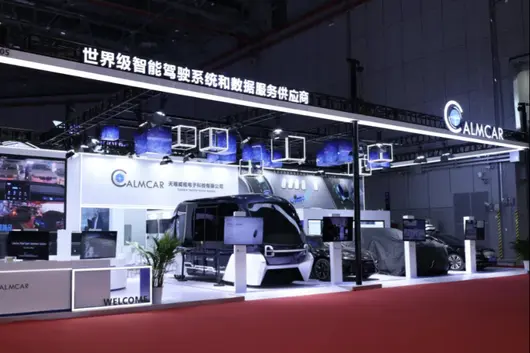
早在 2019 年,佢就參與咗上海洋山港嘅 5G 智能重卡項目。目前佢嘅 L4 方案覆蓋 Robobus、Robotaxi 同 Robotruck。其中,Robobus 係佢最具代表性嘅產品線,已喺蘇州、天津等城市嘅公開道路投入常態化試營運。
2025 年,天瞳威視從 L4 級解決方案產生收入 3.75 億元,佔公司總收入嘅 68% 以上,大部分收入來自 L4 級軟件解決方案。
然而,硬幣嘅另一面係商業化嘅曲折。雖然 L4 業務營收暴增,但佢嘅交付形態目前以「軟硬件一體解決方案」為主,呢種模式本質上接近「項目制交付」或「小規模車隊部署」,與 L2 業務中「純軟件授權 + 白盒交付」嘅高毛利、大規模複製邏輯存在顯著差異。
呢就直接導致 L4 業務毛利率嘅大幅波動:喺部分自研硬件佔比较高嘅項目中,毛利率一度低至 15%。

截至遞表日,公司雖手握超 10 億元嘅 L4 意向訂單,涵蓋 2500 架車,但呢啲訂單預計要喺未來三至五年內先會陸續交付,短期內對現金流嘅改善作用有限。
此外,天瞳威視仲有部分應收來自工程服務,主要涉及道路測試、數據收集支援及數據標註服務以及公司嘅專有工具鏈。
03
財務嘅雙面鏡
招股書嘅財務部分,展現咗智駕行業最真實嘅「B 面」:規模同虧損嘅極限拉扯,同埋賬面現金同營運消耗之間嘅緊張博弈。

營收高增長,但結構劇烈波動。
財務數據顯示,公司嘅營收呈現爆發式增長,從 2022 年嘅 1.72 億元增長至 2024 年嘅 4.83 億元,複合年增長率高達 67.7%。2025 年全年營收進一步增長至 5.5 億元。
但收入結構嘅變化明顯。2023 年,公司依賴 L2-L2+ 業務,佔比 90.2%;去到 2024 年,L4 業務佔比升至 50.2%;2025 年,L4 業務佔比進一步拉高至 68%。呢種「斷崖式」嘅結構切換,雖然證明佢 L4 技術搵到咗落地場景,但亦令市場質疑佢 L2 業務係咪已觸及天花板。
毛利率同純利潤嘅背離,呢係天瞳威視面臨嘅最大挑戰。
從毛利睇,整體毛利率喺 30% 左右徘徊,喺呢個技術密集型嘅智駕行業屬於中等水平。但細拆睇嚟,L2-L2+ 業務嘅毛利率通常能維持喺 40% 以上,純軟件授權模式,而 L4 業務嘅毛利率則因「軟硬件一體」交付中硬件佔比提高而被顯著拉低。
從純利潤睇,雖然表面虧損額較大,2024 年虧損 4.63 億、2025 年虧損約 2 億,呢度包含大量因優先股公平值變動帶來嘅「紙面虧損」。剔除呢個因素後嘅經調整純利潤更能反映公司嘅真實經營狀況:2024 年已收窄至 -438 萬元,但 2025 年並未如市場預期實現轉正,而係錄得約 -1086 萬元,虧損較 2024 年有所擴大。
呢個背後有一個不可回避嘅關鍵前提:調整後嘅「減虧」乃至「接近盈虧平衡」,係喺公司持續壓縮研發投入嘅基礎上實現嘅,研發費用從 2024 年嘅 1.17 億元降至 2025 年嘅 9231 萬元,研發費用率從 2024 年嘅 24.3% 進一步降至 16.8%,而 2022 年呢個數字曾高達 108.7%。對於一家科技公司嚟講,研發強度嘅「退坡」是否會影響未來嘅技術護城河,係一個潛在風險點。
現金流持續告急,最令人擔憂嘅信號。
根據最新招股書,截至 2025 年 12 月 31 日,公司賬上嘅現金及現金等价物為 2.35 億元,較 2025 年 6 月 30 日嘅 3.74 億元淨減少 1.39 億元,現金消耗速度較快。

更值得警惕嘅係經營現金流由正轉負且缺口持續擴大嘅趨勢。2023 年,公司經營活動現金流淨額為正向流入 1.15 億元,但 2024 年迅速轉為淨流出 1.89 億元,2025 年進一步惡化至淨流出 2.93 億元。
與此同時,應收賬款周轉急劇惡化。公司嘅貿易應收款項從 2023 年嘅 0.89 億元升至 2025 年嘅 5.48 億元,三年增長超過五倍,而同期營收增幅僅約 2.7 倍。
更令人擔憂嘅係應收款項周轉天數從 2023 年嘅 191 天同 2024 年嘅 166 天,到 2025 年驟升至 300 天,意味著公司從完成交付到收回款項平均需要接近一年時間。呢相當於變相為客戶提供長期無息墊資,喺資金本就緊張嘅情況下進一步加劇咗流動性壓力。

此外,雖然天瞳威視係首家出海嘅中國智駕軟件供應商,但 2025 年佢嘅海外業務遭遇咗明顯回落。2023 年天瞳威視海外收入為 1.27 億元,佔總營收比重達到 62.2%;到 2025 年海外收入降至 1100 萬元,佔比僅 2.0%。
喺而家全球地緣政治複雜、部分國家對智能汽車數據監管趨嚴嘅背景下,為佢嘅全球化故事增添咗一絲不確定性。
04
結語
天瞳威視嘅二次闖關,係智能駕駛行業進入「淘汰賽」階段嘅一個縮影。
從好嘅方面睇,佢踩準咗 L2 性價比同 L4 場景化落地嘅雙重節奏,且經調整純利潤喺特定口徑下已接近盈虧平衡,呢啲都畀投資者提供咗「有亮點可講」嘅故事線。
但從風險嘅角度睇,情況遠比首次遞表時更為嚴峻。業務重心嘅急速漂移、L4 業務商業化初期嘅盈利磨難、研發投入嘅被動收縮,呢啲此前就已存在嘅問題並未緩解。

天瞳威視 L4 級智能巴士
而真正令此次 IPO 帶「求生」色彩嘅,係現金流數據嘅實質性惡化:2.35 億元嘅賬面現金,面對每年近 3 億元嘅经营性現金淨流出,安全邊際已不足一年。疊加 300 天嘅應收賬款周轉天數,意味著公司每交付一筆訂單,都要墊付近一年嘅資金成本。
換言之,天瞳威視正處喺一個危險嘅財務窗口期:賬上嘅錢僅夠維持唔足一年嘅正常運作,而 L4 業務嘅大規模交付同回款卻需要更長時間。喺呢個智駕資本熱潮退去、一級市場融資邊際收緊嘅時刻,公司已冇太多等待嘅餘地。
首次遞表失效後僅隔半年便再次衝擊港股,對天瞳威視而言,與其話係戰略選擇,唔如話係現金倒逼下嘅必然之舉。