首頁凤爪入味

搜尋歷史
熱門搜尋
經銷商登入 / 註冊

In Malaysia's SUV market, many buyers compare Proton X90 and MG MG HS when choosing a car. These two cars are quite close in price and positioning. Today we will make a detailed comparison from multiple aspects to help you save time on research.
The OTR price of Proton X90 in Malaysia is RM 106,800 - 122,800, with a total of 4 versions, including 2026 1.5T Prime X (RM 122,800), 2026 1.5T Prime (RM 116,800), 2026 1.5T Lite (RM 106,800), etc.
The OTR price of MG MG HS in Malaysia is RM 130,450 - 146,450, with a total of 2 versions, including 1.5L Standard (RM 105,000), 1.5L Executive (RM 115,000), etc.
From a price perspective, the starting price of Proton X90 is indeed RM 23,650 cheaper than MG MG HS. If your budget is limited, Proton's entry-level version can already meet daily needs. But note, the few thousand cheaper might involve trade-offs in features, depending on your specific needs.

The safety rating of Proton X90 is 5★ (ASEAN NCAP), active safety systems include ADAS (ACC, AEB, LKA, LDA, BSM, RCTA).
The safety rating of MG MG HS is TBD, active safety systems include Basic.
Regarding safety features, both cars received decent ratings. However, there are some differences in function between Proton X90's ADAS (ACC, AEB, LKA, LDA, BSM, RCTA) and MG MG HS's Basic. If you value active safety more, you can compare the function lists of both in detail.

Proton X90 adopts FWD drive mode.
MG MG HS adopts FWD drive mode.
Both cars have the same drive mode, both are FWD, daily driving experience will not differ too much.

Proton X90 warranty 5 years/150,000km, service interval 10,000km or 6 months.
MG MG HS warranty 7 years/150,000km, service interval 10,000km or 6 months.
Overall, Proton X90 and MG MG HS are both very good models in the Malaysian market. Which one to choose depends mainly on your personal needs and budget. We suggest doing your research, comparing quotes from several dealerships, and then test driving to make a final decision. Buying a car is a big deal, spending time researching is never wrong.


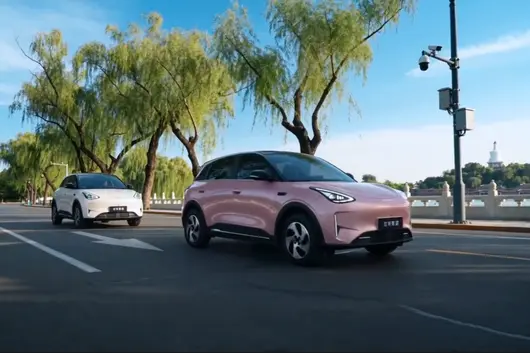
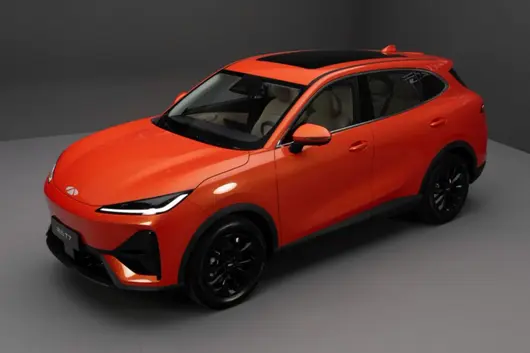
2026 年 8 月 12 日,奇瑞風雲 T7 正式開啟預售。新車共推出 3 款配備車型,預售價格區間為 10.99 萬 -12.99 萬元。其中悅享版 10.99 萬元、舒享版 11.99 萬元、智享版 12.99 萬元,新車預計 8 月底正式上市。
本次預售發佈會以“慢功造好車,久等了”為主題。作為一款已在海外市場以"LEPAS L6”之名先行上市的全球車型,風雲 T7 此次回歸國內市場,試圖以全車系 600km 續航和跨樓層記憶泊車兩大差異化賣點,在 10 萬級純電 SUV 市場建立競爭力。

風雲 T7 定位緊湊型純電 SUV,車身尺寸為 4570×1852×1694mm,軸距 2700mm。整車採用"禦風"設計語言,前臉配備 L 形日行燈,側面線條流暢,車尾為貫穿式燈組。提供 17、18 英寸兩種輪轂尺寸。

該車的特殊之處在於其“全球車”身份。風雲 T7 由奇瑞全球 8 大研發設計中心聯合 5000 餘名海内外用戶共創,同源車型 LEPAS L6 已在泰國、南非等海外市場先行上市。研發周期歷時 2 年策劃、3 年研發,累計測試里程超 600 萬公里。按照官方說法,這是一款“先外售、再內銷”的車型——先在海外市場驗證品質,再回國參與競爭。

外觀方面,提供熾焰橙、山煙紫、雲粉米、流光銀、青竹灰、墨石黑六款車色。內飾提供黑棕、純黑兩種風格,採用環抱式佈局,大面積軟包材質。
動力方面,搭載後置單電機,最大功率 178kW,峰值扭矩 275N·m,最高車速 180km/h。底盤採用前麥弗遜 + 後多連桿獨立懸掛,由瑪莎拉蒂前底盤調校專家領銜的國際化團隊調校。官方稱實現 50.8:49.2 前後軸荷比。

續航方面,全車系標配 65.05kWh 犀牛電池,CLTC 續航 600km,實測續航官方稱可达 667km 以上。快充 30%-80% 需 20 分鐘左右。配備雙源寬溫域熱泵空調 + 高壓 PTC,工作溫域 -30℃至 55℃。全車系標配 AGS 主動進氣格柵,14 項低風阻設計。

智能駕駛是核心賣點。風雲 T7 搭載獵鷹 500 駕駛輔助系統,集成 3 顆毫米波雷達、7 個高性能攝像頭、12 個超聲波雷達,共 22 顆高精度傳感器。芯片方面採用 4nm 製程高通 SA8775 艙駕一體芯片,NPU 算力 72TOPS,系統響應延遲 80ms。

功能層面,智享版搭載最長 2km 無樓層限制跨樓層記憶泊車,以及覆蓋 300+ 場景的自動泊車功能。悅享版和舒享版在智駕功能上有所精簡,標配全速自適應巡航等基礎功能,具體配置以最終上市官方配置表為準。高配版本額外支持高速 NOA 領航、遠程泊入、離車泊車、100 米循跡倒車等功能。這套配置組合的核心邏輯是:將此前 20 萬級以上車型才配備的跨樓層記憶泊車功能下放至 10 萬級。

安全方面,風雲 T7 對標 2026 版 E-NCAP 五星安全標準設計。車身採用 80% 高強度鋼、18.84% 熱成型鋼,配備 9 個安全氣囊(含 48L 雙腔遠端氣囊和後排側氣囊)。電池具備 IP68 級防水(為國標 96 倍)和 31 層 6D 鎖子甲防護結構。

座艙方面,配備 15.6 英寸 2.5K 懸浮中控屏(1000nit 亮度、防眩光/抗指紋塗層),支持 CarPlay、HUAWEI HiCar、CarLink 無線連接。全車得房率 84%,後備廂常規容積 450L,最大可擴展至 1550L。後排座椅放倒後可形成 1955mm 純平大床。

奇瑞風雲 T7 的預售,是這家傳統車企在 10 萬級純電 SUV 市場的一次差異化嘗試。從產品策略來看,風雲 T7 的打法很清晰:全車系統一續航 + 高配智駕下放下放。600km 續航不分高低配、頂配 12.99 萬就能買到跨樓層記憶泊車,這兩點在當前 10-13 萬價位的純電 SUV 中確實不多見。

對續航敏感、預算 10-12 萬的家庭用戶,風雲 T7 值得納入備選。但建議重點關注:一是 600km 續航在實際使用中的達成率(尤其是冬季),二是跨樓層記憶泊車在本地商場的實際覆蓋情況,三是後驅佈局在所在地區氣候條件下的適應性。不急購的用戶,不妨等首批車主的真實續航和智駕反饋後再做決策。對底盤操控有要求的用戶,建議實地試駕體驗後多連桿懸掛的實際表現。

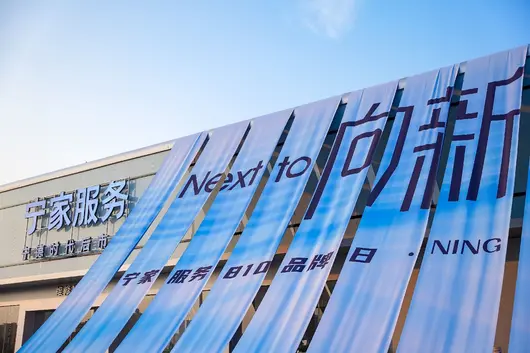
8月10日,宁德时代旗下独立后市场品牌宁家服务,在海口直营体验中心开启2026年度品牌日。活动以“Next to New向新”为主题,围绕技术、服务、生态全面升级,进一步兑现“您身边的新能源服务专家”的品牌承诺。
活动当日,宁家服务全球十大站点同步开业,涵盖海口、杭州、淄博、沈阳、广州、遂宁、宁波、香港、土耳其伊斯坦布尔和挪威奥斯陆。按照规划,下半年宁家服务直营体验中心将逐步落地全球100座城市,标志着品牌正式迈入规模化扩张、全场景覆盖的崭新阶段。

随着全球新能源汽车保有量的持续攀升,动力电池维修技术授权、“以修代换”及汽车后市场品牌化、专业化发展,正成为行业共识。
面对机遇,宁家服务围绕“技术向新、服务向新、生态向新”完成全方位升级,服务边界持续拓宽。目前,品牌服务已从动力电池售后,延伸至延保、金融、回收再生等环节,覆盖电池全生命周期的闭环管理。
目前,宁家服务已为1,505座换电站提供运维支持;2026年6月,为时代电船提供首台船舶动力电池售后服务;成为峰飞航空eVTOL销售代理,进入低空服务领域;与银河通用机器人达成战略签约,布局智能服务赛道;储能领域,依托卫星遥感、无人机、具身机器人与机器狗,布局“空、地、云”多维空间,构建起全域感知、风险前置的主动预测性运维体系,使运营安全风险降低90%,运维成本降低30%。

宁德时代质量体系&后市场业务部总裁 李伟
宁家服务依托大数据与智能技术,持续迭代维修服务体系,搭建起可量化、可追溯、可复制的标准化流程。
基于宁德时代产线标准,智能车间实现了切割、涂胶、喷漆等关键流程的自动化维修。独家研发的鹰眼系统,覆盖超150个深度维修作业监控点,可完整记录电池进出厂数据,维修效率与质量管控能力提升1倍以上。凭借这一系统,宁家服务成为新能源后市场唯一实现维修全链路可追溯的品牌。
针对故障电池,宁家服务将可维修车型覆盖率提升至76.8%。并通过R1-R4分级技术授权体系和CTP深度维修技术,有效打破行业“只换不修”的困局。并严格兑现“一般故障24小时修复、疑难故障72小时修复”的时效承诺。目前,宁家服务已主导及参与制定超过70项行业标准,为新能源后市场品质发展筑牢根基。

品牌日活动上,宁家服务发布了首款电动商&乘通用动力电池维修检测车。该车型综合续航达800km,可将疑难故障维修时间从72小时缩短至48小时,拥有超30项检测及超50项维修作业能力,覆盖除深度维修外90%的维修场景。用户无需再经历报修、拖车、排队等配件的繁琐流程,只需一键报修即可现场修复,真正体验到从“用户找服务”到“服务找用户”的转变。

当前,新能源汽车产业的发展已进入全生命周期服务的新阶段。作为宁德时代在后市场领域的重要布局,宁家服务持续开放技术、标准、人才、数字化和供应链等核心能力,携手产业伙伴构建更规范、高效、可信赖的服务新生态。未来,随着百城网络的逐步落地与生态合作的不断深化,宁家服务将以持续的技术创新与模式革新,为新能源后市场的高质量发展提供实践范本。

Chery's foot has already stepped into the threshold of South Korea's local automotive industry.
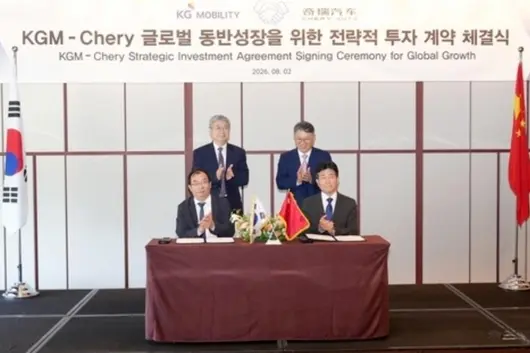
On August 2, at the signing ceremony at Grand Hyatt Hotel, Yongsan District, Seoul, Chery Automobile Chairman Yin Tongyue presented a robot dog to KG Mobility Chairman Kwak Jae-seon.
Behind this tech-savvy gift lies a $75 million strategic investment made by Chery through the purchase of convertible bonds issued by KG Mobility (converted at the current exchange rate, approx. 507 million RMB). If Chery converts all bonds upon maturity in July 2029, it will hold approximately 10% of KG Mobility's shares, becoming a key shareholder.

KG Mobility, formerly known as SsangYong Motor, is the third largest local automobile brand in South Korea after Hyundai and Kia. It's worth mentioning that SsangYong Motor has strong ties with the Chinese automotive industry. Back in October 2004, SAIC Group acquired 48.9% of SsangYong Motor for $500 million, becoming its largest shareholder and opening the trend of Chinese automakers acquiring foreign automakers.
However, the story between KG Mobility and Chery goes back even further.
In October 2024, both parties signed a strategic cooperation and platform licensing agreement. In April 2025, the 'SE-10' project was officially launched. This model, positioned as the successor to the Rexton, will be equipped with Chery's T2X platform developed specifically for plug-in hybrids, and will also offer a 2.0L gasoline version, scheduled to debut in January 2027. This is just an appetizer. The second global model is already on the way, and range-extended electric vehicles are also on the agenda.

The boundaries of cooperation are extending beyond whole vehicle manufacturing. Both parties decided to set up a special task force in the fields of robotics and automotive chips to explore the possibilities of joint verification and commercialization; regarding semiconductors, joint investment and development of automotive-grade chips will be discussed. Ambassador Dai Bing of the Chinese Embassy in South Korea commented on the spot, 'Economic cooperation between South Korea and China has shifted from existing vertical division of labor to a horizontal cooperation structure. The community of interests involving competition within cooperation and cooperation within competition is becoming the new normal.'
Money is spent, technology is given, what does Chery aim for?
Chery Automobile Vice President Zhang Guibing's answer was reserved. In an interview with Korean media, he stated, 'If there is a significant demand from Korean consumers to purchase vehicles, we will enter the South Korean market. However, at this stage, our primary goal is to rely on this cooperation to let KGM gain consumer recognition. The consumer atmosphere in Korean society, which values differentiation and pursues personal characteristics, is growing stronger. If Chery's sub-brands land in Korea, we can also tap into a consumer group with different preferences from KGM.'
When discussing the possibility of Chery models being produced at KG Mobility factories, he responded, 'Chery has multiple production bases globally. We believe these bases could become important areas of cooperation between the two companies in the future. For example, we can explore sharing global production capacity and carry out multi-faceted cooperation in the manufacturing field.'
After Geely obtained 34.02% shares in Renault Korea through subscription for capital increase, the Polestar 4 has already rolled off the production line at the Busan factory, handling both domestic sales and exports without missing a beat. With this precedent, Chery's calculations are not hard to guess.
And more than two months ago in Tokyo, Chery played a different game.
On May 27, the new brand EMTA was launched quietly. Chery did not stand in the spotlight, but instead partnered with Jiangsu Yueda Automobile Group, Autobacs, Gotion High-tech, and Anest Iwata to form a joint venture company in Singapore, with Chery holding 27.27% shares. The brand is Japanese, the design is done by a Japanese team, and even the sales channels use over 600 Autobacs stores in Japan, starting with setting up 100 branches.
But if you lift the lid and look, the three-electric system is Chery's, intelligent driving is Chery's, and whole vehicle production is placed in Yancheng, Jiangsu. The so-called 'Japanese shell, Chinese heart, global chain' is basically bypassing the hurdle of 'foreign brands are not trusted'.
Chery is targeting the fattest and most stubborn piece of cake in the Japanese market — the K-Car.
In recent years, the sub-market with annual sales exceeding 1.5 million units has been firmly held by Honda N-BOXes. Chery's approach is very direct: pure electric K-Car, rumored range between 155 and 220 km, with pricing on par with fuel version K-Cars. Deliveries are planned for spring 2027, rolling out four models by 2029.

This 'shell borrowing' strategy is essentially bypassing the trust barriers Japanese consumers have towards foreign brands. The Japanese automotive market has long been monopolized by domestic giants like Toyota, Honda, and Nissan, making it one of the most closed automotive markets in the world. Zhang Guibing, head of Chery's overseas business, previously told Japanese media that the enterprise will compete relying on differentiated characteristic products that Japanese automakers do not yet possess.
South Korean capital enters, Japanese brand incubates, behind these two strategies lies Chery's unhidden ambition to go global.
Chery official data shows that in 2025, the group's total sales reached 2.806 million units, of which exports were 1.344 million units, ranking first among Chinese brand passenger car exports for 23 consecutive years. Entering 2026, Chery's global expansion pace accelerated further. Cumulative exports from January to July reached 1.146 million units, a year-on-year increase of 71%; global market share in the first half reached 4.1%, tied with Ford for ninth globally.
The wind direction in nearby markets is indeed changing. First, look at South Korea.
According to South Korean automotive data agency Carisyou, from January to May 2026, a total of 146,278 new cars were registered in the South Korean passenger car import market, among which BYD reached 7,023 units, accounting for 4.8%, ranking fourth, just behind Tesla, BMW, and Mercedes-Benz, even surpassing the Japanese luxury brand Lexus.
Among the 70,078 new passenger cars registered in South Korea in the first quarter of 2026, 25,595 were produced in China, accounting for 36.5%. This includes not only Chinese brands but also Teslas produced at the Shanghai Superfactory — the latter significantly cut prices relying on the cost advantages of the Chinese supply chain, directly boosting sales growth.
The Japanese market is slower, but the ice surface is also cracking.
BYD opened its first store in Tokyo in January 2023, becoming the first Chinese brand to fully enter the Japanese passenger car market. In 2025, BYD's pure electric vehicle sales in Japan were about 3,870 units, a year-on-year increase of 62%; entering 2026, the growth speed accelerated further, with February single-month sales reaching 439 units, a surge of 153% year-on-year.
Of course, the road won't be too smooth.
In the subsidy list released by the South Korean Ministry of Environment at the end of June, BYD was excluded. Buying BYD after July 1 will not get government subsidies. The reason is low localization rate and limited contribution to local employment. Japan's subsidy policies have also been pointed out as 'double standards', the subsidy amount Chinese brands can get is far behind local brands. These are all obstacles on the surface.
But some things cannot be stopped by subsidies. Lee Hye-min, the sales section chief of BYD Seoul Mapo store, said a frank truth in an interview: 'Bias against Chinese brands still exists among South Korean consumers, but they are not stupid, and the proportion of consumers who decide to purchase after test driving is quite high.'
From BYD tearing open a gap with cost-performance, to Zeekr moving upmarket, and then to Chery walking on two legs with capital and technology, Chinese automakers in these two traditional automotive strongholds of South Korea and Japan are gradually turning 'impossible' into 'possible'.
Source: Car Observation

In the Malaysian SUV market, many buyers compare Proton X70 and Toyota Corolla Cross when choosing a car. These two models are quite close in price and positioning. Today, we will make a detailed comparison from multiple aspects to save you the time of doing research.
Proton X70 OTR price in Malaysia is RM 106,800 - 122,300, with 3 versions in total, including 1.5L Standard 2WD (RM 106,800), 1.5L Executive 2WD (RM 115,800), 1.5L Premium 2WD (RM 122,300), etc.
Toyota Corolla Cross OTR price in Malaysia is RM 133,800 - 148,800, with 3 versions in total, including 2026 HEV 1.8L GR Sport (RM 148,800), 2026 HEV 1.8L Standard (RM 140,800), 2026 1.8L Standard (RM 133,800), etc.
From a price perspective, Proton X70's starting price is indeed RM 27,000 cheaper than Toyota Corolla Cross. If your budget is limited, Proton's entry-level version can already meet daily needs. But be aware that the difference of a few thousand might involve trade-offs in features, it depends on your specific needs.

Proton X70 safety rating is 5★ (ASEAN NCAP), active safety systems include ADAS (ACC, AEB, LKA, LDA, BSM, RCTA).
Toyota Corolla Cross safety rating is 5★ (ASEAN NCAP), active safety systems include TSS (PCS, LDA, ACC, LTA).
Both cars have the same safety rating, safety features in this class are quite comprehensive. New cars nowadays do not have poor safety, no need to worry too much about this point.
Proton X70 body length 4400 mm, trunk 400 L.
Toyota Corolla Cross body length 4400 mm, trunk 400 L.
The dimensions of both cars are almost the same, interior space difference is not significant. Cars of this class are more than enough for daily use.

Proton X70 warranty 5 years/150,000km, service interval every 10,000km or 6 months.
Toyota Corolla Cross warranty 5 years/unlimited mileage, service interval every 10,000km or 6 months.
Both Proton X70 and Toyota Corolla Cross are mainstream choices in the Malaysian market, suitable for family use and daily commuting. If you value brand reputation and resale value more, you can prioritize the one with better reputation; if you care more about value for money and features, then choose the one with richer configurations. Finally, it is suggested to test drive both, personal experience is the most important.
Overall, Proton X70 and Toyota Corolla Cross are very good models in the Malaysian market. Which one to choose, the key still depends on your personal needs and budget. It is recommended to do your homework, compare quotes from several dealerships, and then go for a test drive to make the final decision. Buying a car is a big matter, spending time doing research is never wrong.


In the Malaysian SUV market, many buyers compare Proton X50 and Subaru Forester when choosing a car. These two cars are quite close in price and positioning. Today, we will make a detailed comparison from multiple aspects to help you save time on research.
The OTR price of Proton X50 in Malaysia is RM 89,800 - 113,300, with a total of 4 versions, including 1.5T Executive (RM 89,800), 1.5T Premium (RM 101,800), 1.5T Flagship (RM 113,300), etc.
The OTR price of Subaru Forester in Malaysia is RM 174,000 - 197,000, with a total of 3 versions, including 2024 2.0L S EyeSight GT Edition (RM 189,538), 2024 2.0L S EyeSight (RM 177,538), 2024 2.0L L EyeSight (RM 167,538), etc.
From a pricing perspective, the starting price of Proton X50 is indeed RM 84,200 lower than Subaru Forester. If your budget is limited, Proton's entry-level version can already meet daily needs. However, be aware that the savings of a few thousand could involve trade-offs in features, depending on your specific requirements.

The safety rating of Proton X50 is 5★ (ASEAN NCAP), active safety systems include ADAS (ACC, AEB, LKA, LDA, BSM, RCTA).
The safety rating of Subaru Forester is 5★ (Euro NCAP), active safety systems include EyeSight.
In terms of safety features, both cars have received good ratings. However, Proton X50's ADAS (ACC, AEB, LKA, LDA, BSM, RCTA) and Subaru Forester's EyeSight have some differences in functionality. If you value active safety highly, you can compare the feature lists of both carefully.

The Proton X50 body length is 4400 mm, trunk space 400 L.
The Subaru Forester body length is 4400 mm, trunk space 400 L.
The dimensions of both cars are almost the same, interior space difference is not significant. For cars at this level, daily use is perfectly adequate.

Proton X50 warranty 5 years/150,000km, maintenance interval 10,000km or 6 months.
Subaru Forester warranty 3 years/100,000km, maintenance interval 10,000km or 6 months.

Proton X50 and Subaru Forester are both mainstream choices in the Malaysian market, suitable for family use and daily commuting. If you value brand reputation and resale value more, consider prioritizing the one with better reputation; if you care more about cost-effectiveness and features, choose the model with a richer specification list. Ultimately, it is recommended to test drive both models, as experiencing them in person is the most important.

Overall, Proton X50 and Subaru Forester are both very good models in the Malaysian market. Choosing which one depends on your personal needs and budget. It is recommended to do your homework, compare quotes from several dealerships, and then test drive to make the final decision. Buying a car is a big matter, spending some time on research is never wrong.


Folks, today let's talk about big news on going global—not selling cars, but selling "drivers". On June 2, WeRide and Uber jointly announced a plan: to launch the country's first commercial Robotaxi pilot service in Madrid, Spain. In other words: Spanish residents will soon be able to hail a driverless taxi via Uber. This is the first time WeRide and Uber are partnering to enter the European market. Madrid also becomes the 12th city globally where WeRide's Robotaxi arrives.
According to official news, with the support of the Madrid regional government, this service will officially launch within this year. At that time, friends in Madrid can open the Uber App and call WeRide's Robotaxi with one click. It's just like calling an ordinary ride-hailing service, the difference is the arriving car has no driver—at least initially, there is still a difference. In the initial operation phase, a professionally trained safety monitor will be on board, as it's just launched, safety comes first.
This company, WeRide, you might have heard of it, or you might not. A brief introduction: Established in 2017, it has been dedicated to Robotaxi technology R&D and commercialization. Currently, its Robotaxis cover Guangzhou, Beijing, Singapore, Abu Dhabi, Dubai, Riyadh, Zurich... plus Madrid now, totaling 12 cities. Spain is also the 5th European market WeRide has entered—previously entered Switzerland, France, Belgium, Slovakia. According to the plan agreed by WeRide and Uber in May 2025, they plan to deploy Robotaxi services in 15 new international cities within five years, deploying tens of thousands of Robotaxis globally. With the Madrid launch, the deployment in 4 cities has been completed, and 11 more will be covered successively before 2030.
To be honest, it's not the first time Chinese autonomous driving companies are going global, but the combination of Chinese technology + global mobility platform + European market is quite interesting. Madrid is one of the European Robotaxi markets with the most commercial potential, with a large population, high travel demand, and friendly local policies. Being able to take root in this market is a significant milestone for WeRide. For Uber, introducing Robotaxis is also a way to reduce costs—after all, drivers don't need salaries. For Madrid residents, hailing a taxi might be cheaper in the future.


5 月 28 日,全新吉利星願正式推出市場。這場發布會的選址有些特別——沒有傳統的舞臺和聚光燈,取而代之的是與小紅書聯手打造的全國首個流動式「沉浸旅行」汽車發布會。海港人家、小巷人家、雨林人家、絲路人家、游牧人家,五大生活場景在發布會現場依次鋪開,像是把日常出行的煙火氣搬進工業汽車的聚光燈下。吉利星願的代言人容祖兒也來到現場,她講起自己與這台小车相處的真實片段,語氣溫柔而篤定。台下坐着的不只是媒體和經銷商,還有許許多多已經或即將成為星願車主的普通人。這一刻,一台售價 6.18 萬元起的純電小車,似乎已經不再只是代步工具,是一種陪伴生活的可能。
全新吉利星願此次共推出四款車型:410 公里嚮往版、410 公里乘風版、480 公里探索版、480 公里探索 + 版,上市限時權益價為 6.18 萬元至 9.18 萬元。全系續航迎來全面升級,310 公里版本躍升至 410 公里,410 公里版本則提升至 480 公里。同時,為照顧不同用戶的實際需求,官方在 410km 版型上仍保留了 310km 續航的反選權益,反選後價格可再減 7,000 元。

但真正讓這台小車引發廣泛關注的,遠不止價格。全新吉利星願打出的旗號是「經典之上再進階」,官方宣稱擁有超 100 項產品力升級和超 25 項同級唯一。這些數字聽起來或許有些抽象,但當你真正拆解它的五大核心進階方向時,會發現這並不是營銷話術的堆砌,而是一次從裡到外、從硬體到軟體的徹底進化。
先從最基礎的駕控說起。吉利星願是同級第一個採用原生架構的純電小車,也是第一個全系後驅獨立懸掛的車型。為了調校這套底盤,吉利的工程師團隊跑遍了全球 30 多個國家,針對極端路況進行了全方位驗證。最終的結果是,全新吉利星願在行駛、轉向、煞車三大核心體驗上都實現了質的飛躍。G-TCS 2.0 全天候防滑系統在保留後驅靈活樂趣的同時,確保平路、坡道、彎道不打滑、不甩尾、不溜車,新手司機也能從容駕馭。全新無刷轉向系統的響應速度比上一代快了一倍,支持三種轉向模式及轉向中位自學習。而 G-CST 2.0 全場景舒適制動系統則模擬了老司機的腳感,煞車不點頭、行車不暈車。更令人印象深刻的是,吉利星願是同級唯一以 130km/h 成功挑戰魚鉤測試的純電小車,麋鹿測試成績也達到了 80.7km/h,操控表現足以媲美 20 萬級別的運動轎跑。換句話說,這輛小车開起來,不再只是「夠用」,而是「有趣」。
當然,對於純電小車而言,續航和三電系統的表現才是最直接用戶焦慮點。全新吉利星願全系後驅寧德時代電芯、液冷溫控以及 11 合 1 高集成電驅,三電系統自上市起就被視為同級天花板。新車搭載的寧德時代全新一代電芯能量密度高達 190Wh/kg,最高 CLTC 續航達到 480 公里,足以覆蓋日常通勤和週末郊遊。配合同級唯一的主動式進氣格柵與低風阻輪轂,風阻降低了 15 個單位,實際續航再提升 10 公里。補能方面,30% 到 80% 的快充僅需 19 分鐘,一杯咖啡的時間就能滿電出發。液冷系統與全新 BMS 電池管理系統組合,確保無論天冷天熱都能保持滿速充電,而且不會以犧牲電池壽命為代價。更有星睿 AI 云動力 2.0 實現全鏈路能量管理,涵蓋智能充放電、波谷電價識別、電池維溫、能耗診斷及電池養護等功能,讓每一次充電都高效,每一程用電都省心。
走進車內,你會發現全新吉利星願的智能座艙已經完全不同傳統小車的簡陋印象。它搭載了銀河 Flyme Auto 2 智能座艙系統,基於 7nm 車規級龍鷹 1 號晶片及 16G+128G 大儲存,反應迅速,操作絲滑,上手就會。用戶可以隨心切換地圖或喜歡的壁紙桌面,萌寵壁紙甚至還支持互動功能,為座艙增添了許多趣味性。全新 AI Eva 是隨車的智能語音助手,支持模糊指令理解及上下文記憶,能完成車控、問答、娛樂等操作。你只需要說一句「Hi Eva,我要回家」,車輛就會自動調用最新高德 850 版選擇最優路線。車機還新增支持 CarPlay 手機互聯,兼容 iOS 設備無縫連接。隱身模式、洗車模式、一鍵尋車等貼心場景,以及千人千面的自定義助手,讓每一次上車都充滿專屬的儀式感。從導航到娛樂,從生活到驚喜,這套智能座艙覆蓋了用戶日常所需的方方面面。
在輔助駕駛方面,全新吉利星願搭載了與高端車型同源的千里浩瀚輔助駕駛 H3 方案,目前已安全行駛 13.8 億公里,用戶使用量增速第一。高速高架 NOA 不受道路與雨霧天氣限制,支持語音變道、多場景避讓以及自動上下匝道口,用戶只需輕扶方向盤就能輕鬆跑長途。全場景 MPI 接管率超 200 公里,相當於連續開 3 小時僅需接管 1 次。泊車方面同樣做到了全場景適配:APA 泊車輔助功能支持一鍵泊入、指尖泊車、遙控泊車,覆蓋 300 多種停車場景。針對新手司機停車難、女性司機停車易緊張等實際痛點,HPA 記憶泊車支持 2km 超長記憶、cm 級精準定位,學習一次路線後即可全程自動泊入,具備智能跟車、自主找位、遇障繞行功能,臨時改道也無需重新學習。DMS 主動式疲勞檢測會及時提醒駕駛員注意休息,哨兵模式則 24 小時全天候守護停車安全,一旦有異常立刻錄下視頻並發送到用戶手機。從出發到抵達,從行車到泊車,這套系統把複雜的駕駛變得簡單安心。
安全,是吉利刻進骨子裡的基因。無論大車還是小车,吉利旗下所有品牌都採用相同的安全理念與嚴苛標準。吉利已建成投資超 20 億元的全球全域安全中心,並發布了「人、車、路、雲、星」一體化全域安全 2.0 體系。全新吉利星願同樣遵循這一高標準,秉持「小車,更要有大安全」的理念。被動安全方面,它打造了五縱八橫星甲籠式車身,前端三傳力路徑配合雙「三葉草」泄力結構,側面電池至門檻間距 149mm 並增加雙重防撞縱梁,後端 750mm 長後懸與雙「井」字形後副車架形成堅固屏障。車頂抗壓強度提升至 3.4 倍車重,AB 柱及頂蓋橫樑等核心區材料升級,即便遇到側翻或重物壓頂,座艙依然安然無恙,側氣簾保壓技術更能在翻滾時持續保護頭部。電池壽命方面,吉利星願的驗證標準提升至國標的 2 倍,完成 1000 次循環後電池容量仍保持 90.72%。還有實際行駛 8.4 萬公里的星願成功挑戰了海水腐蝕、泥水沖刷、爛路刮底、極限火燒等六大串行極限測試,這在行業內屬於首創。值得一提的是,5 月 12 日,吉利攜手央視完成了同級首次也是同級唯一的正面和側面連續碰撞測試,高壓系統及時下電,電池包未冒煙起火,乘員艙結構完整,氣囊精準點爆,非碰撞側車門可正常開啟。此外,全新吉利星願還配齊了胎壓直顯、DOW 開門預警、哨兵模式,更有 AEB 主動煞車與 AES 緊急轉向雙保險,成功通過 120km/h 靜態車輛剎停和 130km/h「消失的前車」主動避讓測試,性能遠超行業主流水平。
所有这些升級和硬核實力,最終都指向了一個事實:吉利星願已經不是一款普通的車。自 2024 年 10 月上市以來,它累計交付已經突破 70 萬輛,相當於每分鐘就賣出一台。它不僅是全行業最快達成這一目標的明星車型,更是一舉斬獲了 2025 年中國車市銷量冠軍。進入 2026 年,吉利星願依然持續領跑,穩居榜首。今年第一季度,在全球新能源汽車銷量排行榜中,吉利星願首次躋身全球前三,達成了中國 A0 級電動車的一個全新里程碑。在國內市場火爆的同時,它已經登陸全球 30 多個國家和地區。在巴西上市兩個月銷量突破 2,300 台,在泰國車展單周訂單斬獲 3,300 台,並拿下「巴西年度最佳緊湊型電動車」和「印尼車展最受喜愛電動車」的雙重國際大獎。在全世界的街頭,吉利星願正在成為「中國智造」流動的新名片。
從一款代步小车,到 70 萬用戶的選擇,從中國冠軍到全球前三,吉利星願的進階之路其實並不複雜——它只是認真認地把小车做好了,做全了,做得超出期待了。而這次煥新上市之後,吉利銀河品牌在純電小车賽道上再次拉高了「高質優價」的標桿。未來,吉利銀河將繼續堅守「造每個人的智能精品車」的初心,在各個細分市場為用戶帶來超越期待的產品和服務。對於消費者而言,這或許才是最大的幸事:一輛好車,不必昂貴,不必張揚,卻能踏踏實實地陪伴你去往每一個想去的地方。