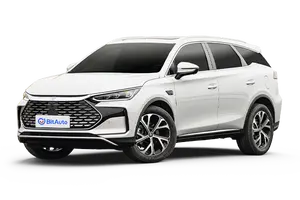
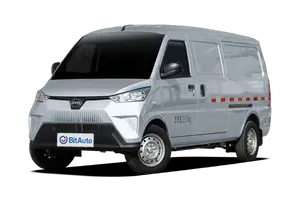
a compact body that's easy to thread through Hong Kong traffic and car parks
low running cost where you can charge
up to 330 km of range
Which car suits your lifestyle best?
Family buyers: Tang — 7 seats suits family duty better
Cross-border drivers: Tang — refuels anywhere without hunting for a charger
Performance seekers: Tang — 156 hp beats the V3's 101 hp
Price & Ownership Costs
ParameterBYD TangBYD V3
PriceTBCTBC
Body Type / Seats5 door SUV · 7 seats5 door Van · 2 seats
Energy & Consumption
ParameterBYD TangBYD V3
Fuel TypePHEV · 92BEV
Max Range (Full Tank/Charge)115 km · CLTC330 km · NEDC
The V3 is pure electric; the Tang adds a petrol engine for longer runs. That engine is a 1.5-litre turbocharged engine. On battery alone the Tang manages 95 km against 330 km for the V3. Battery capacity is 21.5 kWh versus 47.52 kWh.
Power & Performance
ParameterBYD TangBYD V3
MotorFrontRear
Max Power156 Ps-
Max Torque225 N·m-
DrivetrainFWDRWD
TransmissionE-CVTFixed Gear Ratio
Dimensions
ParameterBYD TangBYD V3
Length4,870 mm ✓4,490 mm
Width1,950 mm ✓1,610 mm
Height1,725 mm1,900 mm ✓
Wheelbase2,820 mm3,050 mm ✓
Boot Capacity235-1655 L-
The Tang is the longer car — 380 mm up at 4870 mm versus 4490 mm. The V3 counters on wheelbase, 3050 mm versus 2820 mm. The Tang seats 7.
Sales Comparison
Monthly new car sales in Hong Kong SAR China, with data for the past 6 or 12 months, or the full sales history since launch.
Monthly Sales Trend (Hong Kong SAR China)
Loading sales data…
Monthly Registrations
Monthly Registrations
Data from Hong Kong Transport Department, updated monthly on the 10th. Check Hong Kong car sales, brand ranking, model sales & EV sales.
Key Specs Compared
ParameterBYD TangBYD V3
Overview
Body Type5 door SUV5 door Van
Seats7 seats ✓2 seats
Performance
MotorFrontRear
Max Power156 Ps-
Max Power115 kW-
Max Torque225 N·m-
0–100 km/h7.5 s-
Top Speed200 km/h ✓90 km/h
DrivetrainFWDRWD
TransmissionE-CVTFixed Gear Ratio
Battery & Charging
Battery TypeLFP batteryLFP battery
Battery Capacity21.5 kWh47.52 kWh ✓
Electric Range115 km · CLTC330 km · NEDC
AC Charging Time3.3 h-
DC Charging Time30 min-
Dimensions
Length4,870 mm ✓4,490 mm
Width1,950 mm ✓1,610 mm
Height1,725 mm1,900 mm ✓
Wheelbase2,820 mm3,050 mm ✓
Kerb Weight2,130 kg-
Boot Capacity235-1655 L-
FAQs
Which one is more powerful?
The Tang is more powerful — 156 hp against 101 hp.