One is a pure electric, the other a non-plug-in hybrid — only one needs charging at all, which matters in a city where home charging is rare. The V-Class is the cheaper way in at HK$ 930,000, undercutting the Range Rover Sport Electric by HK$ 1,168,002 on-the-road. With no clear hardware advantage to justify the difference, the Range Rover Sport Electric is harder to recommend.
Key Differences
Price (on-the-road, incl. first-registration tax):Range Rover Sport Electric HK$ 2,098,002; V-Class HK$ 930,000
Power:Range Rover Sport Electric 460 hp; V-Class 231 hp
Boot space:Range Rover Sport Electric 835 L; V-Class 5010 L
Length:Range Rover Sport Electric 4946 mm; V-Class 5370 mm
Pros & Cons
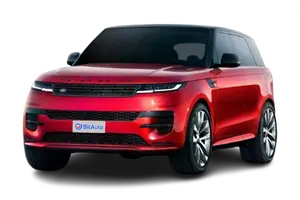
Land Rover Range Rover Sport Electric P460e Dynamic SE (2027)
Pros
Stronger 460 hp
Cons
Higher on-the-road price
Smaller boot
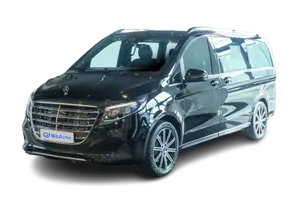
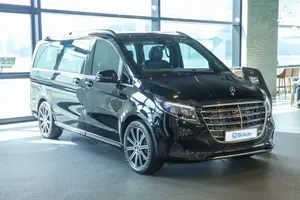
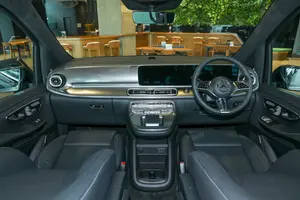
Mercedes-Benz V-Class V300 Avantgarde Extra Long (2026)
Pros
Lower list price at HK$ 930,000
5010 L boot
Cons
Less power
Find the Right Car
Choose the Range Rover Sport Electric if you want...
a compact body that's easy to thread through Hong Kong traffic and car parks
stronger 460 hp performance and a 5.6 s sprint
835 L of boot space
Choose the V-Class if you want...
the lowest list price (HK$ 930,000)
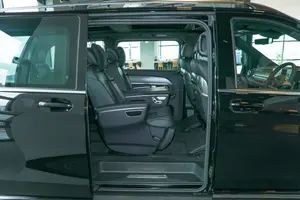
6 seats and 5010 L of boot space
a 2-litre engine
Which car suits your lifestyle best?
Family buyers: V-Class — a larger 5010 L boot and 6 seats suit family duty better
Daily commuters: V-Class — the lower list price makes it a frugal city car
Cross-border drivers: V-Class — refuels anywhere without hunting for a charger
Performance seekers: Range Rover Sport Electric — 460 hp beats the V-Class's 231 hp
Price & Ownership Costs
ParameterLand Rover Range Rover Sport ElectricMercedes-Benz V-Class
PriceHK$ 2,098,002HK$ 930,000 ✓
Body Type / Seats5 door SUV · 5 seats5 door MPV · 6 seats
Engine, Fuel Economy & Refuelling
ParameterLand Rover Range Rover Sport ElectricMercedes-Benz V-Class
Engine Capacity2,997 cc ✓1,999 cc
Rated Economy1.6 L/100km · NEDC-
Fuel Tank71.5 L ✓70 L
Only the V-Class is a hybrid; the Range Rover Sport Electric runs a conventional petrol engine. The V-Class uses a 2-litre turbocharged engine; the Range Rover Sport Electric a 3-litre turbocharged engine.
Power & Performance
ParameterLand Rover Range Rover Sport ElectricMercedes-Benz V-Class
Max Power460 Ps ✓231 Ps
Max Torque660 N·m ✓370 N·m
Drivetrain4WDRWD
TransmissionATAT
Dimensions
ParameterLand Rover Range Rover Sport ElectricMercedes-Benz V-Class
Length4,946 mm5,370 mm ✓
Width2,047 mm2,249 mm ✓
Height1,822 mm1,901 mm ✓
Wheelbase2,997 mm-
Boot Capacity835-1860 L5,010 L ✓
The V-Class is the longer car — 424 mm up at 5370 mm versus 4946 mm. The V-Class has the much larger boot, 5010 L against 835 L. The V-Class seats 6.
Comfort & Technology
Range Rover Sport Electric
13.1" central touchscreen + 13.1" digital cluster
Dual-zone automatic climate control
Heated front seats
Panoramic sunroof
Wireless phone charging
V-Class
Dual-zone automatic climate control
Ventilated front seats
Wireless phone charging
Power tailgate
Heated and power-folding door mirrors
Sales Comparison
Monthly new car sales in Hong Kong SAR China, with data for the past 6 or 12 months, or the full sales history since launch.
Monthly Sales Trend (Hong Kong SAR China)
Loading sales data…
Monthly Registrations
Monthly Registrations
Data from Hong Kong Transport Department, updated monthly on the 10th. Check Hong Kong car sales, brand ranking, model sales & EV sales.
Key Specs Compared
ParameterLand Rover Range Rover Sport ElectricMercedes-Benz V-Class




 Mercedes-Benz G-Class BEV

