English
Download App
Follow Us
  • Facebook
  • YouTube
  • Instagram
  • TikTok
  • X
HomeCompareHyundai IONIQ vs Xiaomi SU7

Hyundai IONIQ vs Xiaomi SU7: Price, Specs & Which to Buy

Last updated: 21 Nov 2026 · Hong Kong SAR China Market
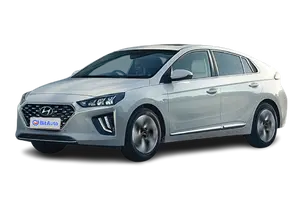
Hyundai IONIQ
Hyundai IONIQ
HK$ 262,800
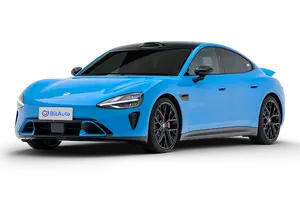
Xiaomi SU7
Xiaomi SU7
TBC

Key Differences

  • Power: IONIQ 105 hp; SU7 315 hp
  • 0–100 km/h: IONIQ 10.8 s; SU7 5.3 s
  • Boot space: IONIQ 563 L; SU7 493 L
  • Length: IONIQ 4470 mm; SU7 4997 mm

Pros & Cons

Hyundai IONIQ 1.6L Standard (2021)

Pros

  • 563 L boot

Cons

  • Less power

Xiaomi SU7 720km RWD (2026)

Pros

  • Stronger 315 hp

Cons

  • Smaller boot

Find the Right Car

Choose the IONIQ if you want...

  • a compact body that's easy to thread through Hong Kong traffic and car parks
  • 5 seats and 563 L of boot space
  • refuels anywhere in minutes

Choose the SU7 if you want...

  • stronger 315 hp performance and a 5.3 s sprint
  • low running cost where you can charge
  • 493 L of boot space

Which car suits your lifestyle best?

  • Family buyers: IONIQ — a larger 563 L boot suits family duty better
  • Cross-border drivers: IONIQ — refuels anywhere without hunting for a charger
  • Performance seekers: SU7 — 315 hp and a 5.3 s sprint beats the IONIQ's 105 hp

Price & Ownership Costs

ParameterHyundai IONIQXiaomi SU7
Price HK$ 262,800TBC
Body Type / Seats 5 door Hatchback · 5 seats4 door Sedan · 5 seats

Energy & Consumption

ParameterHyundai IONIQXiaomi SU7
Fuel Type HEVBEV
Consumption -11.7 kWh/100km
Max Range (Full Tank/Charge) -720 km · CLTC

The SU7 runs on electricity alone; the IONIQ pairs a petrol engine with a battery that recovers braking energy, so it never needs plugging in.

Power & Performance

ParameterHyundai IONIQXiaomi SU7
Motor FrontRear
Max Power 105 Ps-
Max Torque 147 N·m-
Drivetrain FWDRWD
Transmission DCTFixed Gear Ratio

Dimensions

ParameterHyundai IONIQXiaomi SU7
Length 4,470 mm4,997 mm ✓
Width 1,820 mm1,963 mm ✓
Height 1,450 mm1,460 mm ✓
Wheelbase 2,700 mm3,000 mm ✓
Boot Capacity 563 L ✓493 L

The SU7 is the longer car — 527 mm up at 4997 mm versus 4470 mm. The IONIQ has the slightly larger boot, 563 L against 493 L. The SU7 also leads on wheelbase, 3000 mm versus 2700 mm.

Comfort & Technology

IONIQ

  • Dual-zone automatic climate control
  • Ventilated front seats
  • Sunroof
  • Wireless phone charging
  • Power-folding door mirrors

SU7

Key Specs Compared

ParameterHyundai IONIQXiaomi SU7
Overview
Price HK$ 262,800TBC
Body Type 5 door Hatchback4 door Sedan
Seats 5 seats5 seats
Performance
Motor FrontRear
Max Power 105 Ps-
Max Power 77.2 kW-
Max Torque 147 N·m-
0–100 km/h 10.8 s5.28 s ✓
Top Speed 185 km/h240 km/h ✓
Drivetrain FWDRWD
Transmission DCTFixed Gear Ratio
Battery & Charging
Battery Type Li-ion batteryLFP battery
Battery Capacity -73 kWh
Electric Range -720 km · CLTC
DC Charging Time -20 min
Dimensions
Length 4,470 mm4,997 mm ✓
Width 1,820 mm1,963 mm ✓
Height 1,450 mm1,460 mm ✓
Wheelbase 2,700 mm3,000 mm ✓
Kerb Weight 1,463 kg2,055 kg
Boot Capacity 563 L ✓493 L

FAQs

Which one is more powerful?

The SU7 is more powerful — 315 hp against 105 hp.

Which is quicker from 0 to 100 km/h?

The SU7 hits 100 km/h in 5.3 s versus 10.8 s.

Which has more boot space?

The IONIQ has the larger boot at 563 L against 493 L.

Which is bigger?

The SU7 is longer, at 4997 mm against 4470 mm.

Feedback