Both run conventional petrol engines. The GTS uses a 4-litre turbocharged engine; the Raptor PHEV a 1.5-litre turbocharged engine.
Power & Performance
ParameterMcLaren GTSHaval Raptor PHEV
Motor-Front+Rear
Max Power635 Ps ✓156 Ps
Max Torque630 N·m ✓243 N·m
DrivetrainRWD4WD
TransmissionDCTDHT
Dimensions
ParameterMcLaren GTSHaval Raptor PHEV
Length4,683 mm4,800 mm ✓
Width2,045 mm ✓1,950 mm
Height1,213 mm1,843 mm ✓
Wheelbase2,675 mm2,738 mm ✓
Boot Capacity420 L-
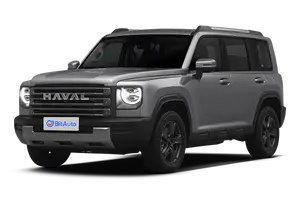
The Raptor PHEV is the longer car — 117 mm up at 4800 mm versus 4683 mm. The Raptor PHEV also leads on wheelbase, 2738 mm versus 2675 mm. The Raptor PHEV seats 5.
Comfort & Technology
GTS
Dual-zone automatic climate control
Panoramic sunroof
Power tailgate
Heated door mirrors
Raptor PHEV
Sales Comparison
Monthly new car sales in Hong Kong SAR China, with data for the past 6 or 12 months, or the full sales history since launch.
Monthly Sales Trend (Hong Kong SAR China)
Loading sales data…
Monthly Registrations
Monthly Registrations
Data from Hong Kong Transport Department, updated monthly on the 10th. Check Hong Kong car sales, brand ranking, model sales & EV sales.
Key Specs Compared
ParameterMcLaren GTSHaval Raptor PHEV
Overview
Body Type2 door Sports Car5 door SUV
Seats2 seats5 seats ✓
Performance
Motor-Front+Rear
Max Power635 Ps ✓156 Ps
Max Power467 kW ✓115 kW
Max Torque630 N·m ✓243 N·m
0–100 km/h3.2 s ✓5.9 s
Top Speed326 km/h ✓190 km/h
DrivetrainRWD4WD
TransmissionDCTDHT
Battery & Charging
Battery Type-Ternary lithium battery
Battery Capacity-35.43 kWh
Electric Range-200 km · CLTC
Dimensions
Length4,683 mm4,800 mm ✓
Width2,045 mm ✓1,950 mm
Height1,213 mm1,843 mm ✓
Wheelbase2,675 mm2,738 mm ✓
Boot Capacity420 L-
FAQs
Which one is more powerful?
The GTS is more powerful — 635 hp against 156 hp.
Which is quicker from 0 to 100 km/h?
The GTS hits 100 km/h in 3.2 s versus 5.9 s.
Which is bigger?
The Raptor PHEV is longer, at 4800 mm against 4683 mm.