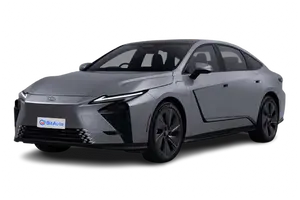
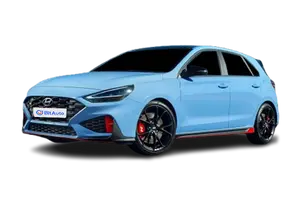
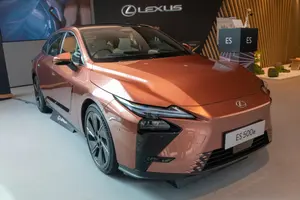
One is electric and one runs on petrol — in Hong Kong the split usually comes down to charging access rather than distance. The i30 N is the cheaper way in at HK$ 348,800, undercutting the ES BEV by HK$ 380,325 on-the-road. With no clear hardware advantage to justify the difference, the ES BEV is harder to recommend.
a compact body that's easy to thread through Hong Kong traffic and car parks
stronger 280 hp performance and a 5.9 s sprint
refuels anywhere in minutes
Which car suits your lifestyle best?
Daily commuters: i30 N — the lower list price and compact dimensions that are easy to park make it a cheap city runabout
Cross-border drivers: i30 N — refuels anywhere without hunting for a charger
Performance seekers: i30 N — 280 hp and a 5.9 s sprint beats the ES BEV's 224 hp
Budget-conscious buyers: i30 N — saves HK$ 380,325 upfront
Price & Ownership Costs
ParameterLexus ES BEVHyundai i30 N
PriceHK$ 729,125HK$ 348,800 ✓
Body Type / Seats4 door Sedan · 5 seats4 door Hatchback · 5 seats
Over five years the i30 N's HK$ 380,325 head start is unlikely to be erased by running costs — five-year ownership still lands about HK$ 226,345 in the i30 N's favour. The deciding factor is whether you can charge at home or at work — most Hong Kong owners cannot rely on home charging.
Energy & Consumption
ParameterLexus ES BEVHyundai i30 N
Fuel TypeBEVPetrol
Consumption-8 L/100km
Max Range (Full Tank/Charge)510 km · WLTC-
The ES BEV runs on electricity alone; the i30 N burns petrol. Charged electricity costs roughly 93% less per kilometre than petrol. Refuelling the i30 N takes minutes and covers about 625 km per fill, against 510 km per charge for the ES BEV.
Power & Performance
ParameterLexus ES BEVHyundai i30 N
MotorFront-
Max Power-280 Ps
Max Torque-392 N·m
DrivetrainFWDFWD
TransmissionFixed Gear RatioMT
Dimensions
ParameterLexus ES BEVHyundai i30 N
Length5,145 mm ✓4,340 mm
Width1,920 mm ✓1,795 mm
Height1,560 mm ✓1,445 mm
Wheelbase2,950 mm ✓2,650 mm
Boot Capacity-395 L
The ES BEV is the longer car — 805 mm up at 5145 mm versus 4340 mm. The ES BEV also leads on wheelbase, 2950 mm versus 2650 mm.
Comfort & Technology
ES BEV
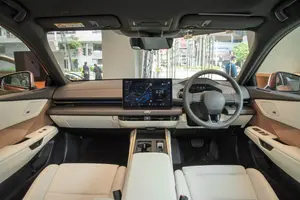
14" central touchscreen + 12.3" digital cluster
Dual-zone automatic climate control
Ventilated front seats
Sunroof
Wireless phone charging
i30 N
Dual-zone automatic climate control
Heated front seats
Wireless phone charging
Sales Comparison
Monthly new car sales in Hong Kong SAR China, with data for the past 6 or 12 months, or the full sales history since launch.
Monthly Sales Trend (Hong Kong SAR China)
Loading sales data…
Monthly Registrations
Monthly Registrations
Data from Hong Kong Transport Department, updated monthly on the 10th. Check Hong Kong car sales, brand ranking, model sales & EV sales.




 BMW i5
 Mercedes-Benz CLA BEV
 Mercedes-Benz C-Class BEV
 MINI Cooper
 BMW 3 Series
 BMW 1 Series

