English
Download App
Follow Us
  • Facebook
  • YouTube
  • Instagram
  • TikTok
  • X
HomeCompareGAC E8 PHEV vs Baojun Yunhai

GAC E8 PHEV vs Baojun Yunhai: Price, Specs & Which to Buy

Last updated: 21 Nov 2026 · Hong Kong SAR China Market
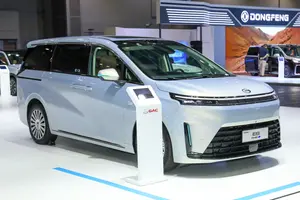
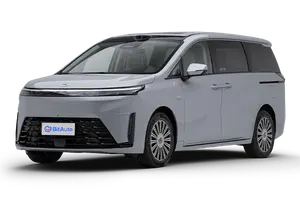
GAC E8 PHEV
GAC E8 PHEV
TBC
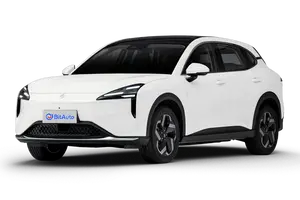
Baojun Yunhai
Baojun Yunhai
TBC

Key Differences

  • Engine + battery: E8 PHEV 2L, 25.57 kWh, 116 km; Yunhai 56.7 kWh
  • Power: E8 PHEV 140 hp; Yunhai 201 hp
  • Boot space: E8 PHEV 345 L; Yunhai 567 L
  • Length: E8 PHEV 4920 mm; Yunhai 4541 mm

Pros & Cons

GAC E8 PHEV 2.0L 150km FWD (2025)

Pros

  • Competitive on price for what it offers

Cons

  • Less power
  • Smaller boot

Baojun Yunhai BEV 500km FWD (2026)

Pros

  • Stronger 201 hp
  • 567 L boot

Find the Right Car

Choose the E8 PHEV if you want...

  • 345 L of boot space
  • a 8.8 s 0-100 km/h time
  • a 2-litre engine

Choose the Yunhai if you want...

  • a compact body that's easy to thread through Hong Kong traffic and car parks
  • 5 seats and 567 L of boot space
  • stronger 201 hp performance
  • low running cost where you can charge

Which car suits your lifestyle best?

  • Cross-border drivers: E8 PHEV — refuels anywhere without hunting for a charger
  • Performance seekers: Yunhai — 201 hp beats the E8 PHEV's 140 hp

Price & Ownership Costs

ParameterGAC E8 PHEVBaojun Yunhai
Price TBCTBC
Body Type / Seats 5 door MPV · 7 seats5 door SUV · 5 seats

Energy & Consumption

ParameterGAC E8 PHEVBaojun Yunhai
Fuel Type PHEV · 92BEV
Consumption 18.8 kWh/100km13.3 kWh/100km ✓
Max Range (Full Tank/Charge) 150 km · CLTC500 km · CLTC

The Yunhai is pure electric; the E8 PHEV adds a petrol engine for longer runs. That engine is a 2-litre naturally-aspirated engine. Battery capacity is 25.57 kWh versus 56.7 kWh.

Power & Performance

ParameterGAC E8 PHEVBaojun Yunhai
Motor FrontFront
Max Power 140 Ps-
Max Torque 180 N·m-
Drivetrain FWDFWD
Transmission DHTFixed Gear Ratio

Dimensions

ParameterGAC E8 PHEVBaojun Yunhai
Length 4,920 mm ✓4,541 mm
Width 1,900 mm ✓1,880 mm
Height 1,760 mm ✓1,608 mm
Wheelbase 2,930 mm ✓2,750 mm
Boot Capacity 345-1917 L567-1570 L ✓

The E8 PHEV is the longer car — 379 mm up at 4920 mm versus 4541 mm. The Yunhai has the much larger boot, 567 L against 345 L. The E8 PHEV also leads on wheelbase, 2930 mm versus 2750 mm. The E8 PHEV seats 7.

Key Specs Compared

ParameterGAC E8 PHEVBaojun Yunhai
Overview
Body Type 5 door MPV5 door SUV
Seats 7 seats ✓5 seats
Performance
Motor FrontFront
Max Power 140 Ps-
Max Power 103 kW-
Max Torque 180 N·m-
0–100 km/h 8.8 s-
Top Speed 170 km/h170 km/h
Drivetrain FWDFWD
Transmission DHTFixed Gear Ratio
Battery & Charging
Battery Type Ternary lithium batteryLFP battery
Battery Capacity 25.57 kWh56.7 kWh ✓
Electric Range 150 km · CLTC500 km · CLTC ✓
AC Charging Time 3.5 h ✓8.7 h
DC Charging Time 30 min20 min ✓
Dimensions
Length 4,920 mm ✓4,541 mm
Width 1,900 mm ✓1,880 mm
Height 1,760 mm ✓1,608 mm
Wheelbase 2,930 mm ✓2,750 mm
Kerb Weight 2,175 kg1,675 kg
Boot Capacity 345-1917 L567-1570 L ✓

Image Gallery

FAQs

Which one is more powerful?

The Yunhai is more powerful — 201 hp against 140 hp.

Which has more boot space?

The Yunhai has the larger boot at 567 L against 345 L.

Which is bigger?

The E8 PHEV is longer, at 4920 mm against 4541 mm.

Feedback