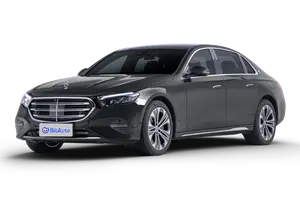
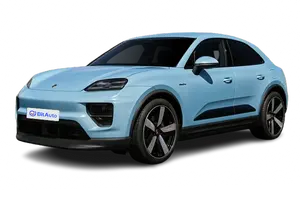
One is a plug-in hybrid, the other a pure electric — both need charging to make sense, but only the hybrid can fall back on petrol. The E-Class PHEV is the cheaper way in at HK$ 829,000, undercutting the Macan Electric by HK$ 26,000 on-the-road. The Macan Electric earns its premium on boot space, power and battery capacity.
0–100 km/h:E-Class PHEV 6.4 s; Macan Electric 5.7 s
Boot space:E-Class PHEV 370 L; Macan Electric 540 L
Length:E-Class PHEV 4949 mm; Macan Electric 4784 mm
Pros & Cons
Mercedes-Benz E-Class PHEV E 300e Hybrid Exclusive Line (2026)
Pros
Lower list price at HK$ 829,000
Cons
Less power
Smaller boot
Porsche Macan Electric Macan (2026)
Pros
Stronger 355 hp
540 L boot
Cons
Higher on-the-road price
Find the Right Car
Choose the E-Class PHEV if you want...
the lowest list price (HK$ 829,000)
a 360-degree camera as standard
370 L of boot space
Choose the Macan Electric if you want...
a compact body that's easy to thread through Hong Kong traffic and car parks
5 seats and 540 L of boot space
stronger 355 hp performance and a 5.7 s sprint
low running cost where you can charge
Which car suits your lifestyle best?
Family buyers: Macan Electric — a larger 540 L boot suits family duty better
Daily commuters: E-Class PHEV — the lower list price makes it a city car that can run electric-only for the daily commute
Cross-border drivers: E-Class PHEV — refuels anywhere without hunting for a charger
Performance seekers: Macan Electric — 355 hp and a 5.7 s sprint beats the E-Class PHEV's 204 hp
Price & Ownership Costs
ParameterMercedes-Benz E-Class PHEVPorsche Macan Electric
PriceHK$ 829,000 ✓HK$ 855,000
Body Type / Seats4 door Sedan · 5 seats5 door SUV · 5 seats
Energy & Consumption
ParameterMercedes-Benz E-Class PHEVPorsche Macan Electric
Fuel TypePHEV · 95BEV
Consumption0.8 L/100km · WLTP-
Max Range (Full Tank/Charge)116 km · WLTP-
The Macan Electric is pure electric; the E-Class PHEV adds a petrol engine for longer runs. That engine is a 2-litre turbocharged engine. Battery capacity is 25.4 kWh versus 100 kWh.
Power & Performance
ParameterMercedes-Benz E-Class PHEVPorsche Macan Electric
MotorFrontRear
Max Power204 Ps-
DrivetrainRWDRWD
TransmissionATFixed Gear Ratio
Dimensions
ParameterMercedes-Benz E-Class PHEVPorsche Macan Electric
Length4,949 mm ✓4,784 mm
Width2,065 mm ✓1,938 mm
Height1,480 mm-
Wheelbase-2,893 mm
Boot Capacity370 L540-1348 L ✓
Comfort & Technology
E-Class PHEV
Dual-zone automatic climate control
Ventilated front seats
Sunroof
Wireless phone charging
17-speaker Burmester system
Macan Electric
Dual-zone automatic climate control
Heated front seats
15W wireless phone charging
10-speaker sound system
Power tailgate
Sales Comparison
Monthly new car sales in Hong Kong SAR China, with data for the past 6 or 12 months, or the full sales history since launch.
Monthly Sales Trend (Hong Kong SAR China)
Loading sales data…
Monthly Registrations
Monthly Registrations
Data from Hong Kong Transport Department, updated monthly on the 10th. Check Hong Kong car sales, brand ranking, model sales & EV sales.
Key Specs Compared
ParameterMercedes-Benz E-Class PHEVPorsche Macan Electric
Overview
PriceHK$ 829,000 ✓HK$ 855,000
Body Type4 door Sedan5 door SUV
Seats5 seats5 seats
Performance
MotorFrontRear
Max Power204 Ps-
Max Power150 kW-
0–100 km/h6.4 s5.7 s ✓
Top Speed236 km/h ✓220 km/h
DrivetrainRWDRWD
TransmissionATFixed Gear Ratio
Battery & Charging
Battery Capacity25.4 kWh100 kWh ✓
Electric Range116 km · WLTP-
DC Charging Time-21 min
Dimensions
Length4,949 mm ✓4,784 mm
Width2,065 mm ✓1,938 mm
Height1,480 mm-
Wheelbase-2,893 mm
Kerb Weight2,190 kg-
Boot Capacity370 L540-1348 L ✓
FAQs
Is the E-Class PHEV or Macan Electric better?
The E-Class PHEV is the cheaper of the two at HK$ 829,000, but the Macan Electric answers back with more equipment for the money.
What is the price difference between the E-Class PHEV and Macan Electric?
The E-Class PHEV starts at HK$ 829,000, the Macan Electric at HK$ 855,000 — about HK$ 26,000 in favour of the E-Class PHEV.
Which one is more powerful?
The Macan Electric is more powerful — 355 hp against 204 hp.
Which is quicker from 0 to 100 km/h?
The Macan Electric hits 100 km/h in 5.7 s versus 6.4 s.
Which has more boot space?
The Macan Electric has the larger boot at 540 L against 370 L.
Which is bigger?
The E-Class PHEV is longer, at 4949 mm against 4784 mm.
Do both cars come with advanced driver assistance?
Both list autonomous emergency braking, lane-keeping assist and adaptive cruise control; the E-Class PHEV adds a 360-degree camera.




 Lexus ES BEV
 BMW i5
 Mercedes-Benz CLA BEV
 BMW iX3
 Denza B8
 Volvo EX90

