Verdict: Which Car Should You Buy? One is a pure electric, the other a non-plug-in hybrid — only one needs charging at all, which matters in a city where home charging is rare. The CX-60 is the cheaper way in at HK$ 419,990, undercutting the E-Class PHEV by HK$ 409,010 on-the-road. With no clear hardware advantage to justify the difference, the E-Class PHEV is harder to recommend.
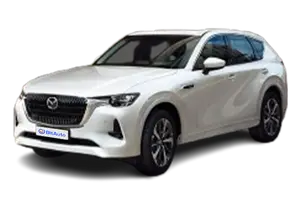
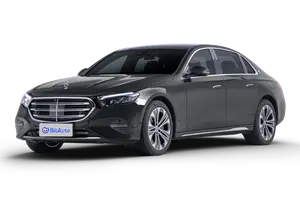
Key Differences Price (on-the-road, incl. first-registration tax): CX-60 HK$ 419,990 ; E-Class PHEV HK$ 829,000 Boot space: CX-60 477 L ; E-Class PHEV 370 L Length: CX-60 4740 mm ; E-Class PHEV 4949 mm Pros & Cons Mazda CX-60 2.5L Standard (2024) Pros Lower list price at HK$ 419,990 477 L boot Mercedes-Benz E-Class PHEV E 300e Hybrid Exclusive Line (2026) Pros Competitive on price for what it offers Cons Higher on-the-road price Smaller boot Find the Right Car Choose the CX-60 if you want... the lowest list price (HK$ 419,990) a compact body that's easy to thread through Hong Kong traffic and car parks 5 seats and 477 L of boot space Choose the E-Class PHEV if you want... 370 L of boot space a 6.4 s 0-100 km/h time a 2-litre engine Which car suits your lifestyle best? Family buyers: CX-60 — a larger 477 L boot suits family duty betterDaily commuters: CX-60 — the lower list price and compact dimensions that are easy to park make it a cheap city runaboutCross-border drivers: CX-60 — refuels anywhere without hunting for a chargerBudget-conscious buyers: CX-60 — saves HK$ 409,010 upfront Price & Ownership Costs Parameter Mazda CX-60 Mercedes-Benz E-Class PHEV
Price HK$ 419,990 ✓ HK$ 829,000
Body Type / Seats 5 door SUV · 5 seats 4 door Sedan · 5 seats
Engine, Fuel Economy & Refuelling Parameter Mazda CX-60 Mercedes-Benz E-Class PHEV
Engine Capacity 2,488 cc ✓ 1,999 cc
Fuel Grade - 95
Rated Economy 7.87 L/100km 0.8 L/100km · WLTP
Fuel Tank 58 L ✓ 50 L
Both run conventional petrol engines. The CX-60 uses a 2.5-litre naturally-aspirated engine; the E-Class PHEV a 2-litre turbocharged engine.
Power & Performance Parameter Mazda CX-60 Mercedes-Benz E-Class PHEV
Motor - Front
Max Power 191 Ps 204 Ps ✓
Max Torque 261 N·m -
Drivetrain 4WD RWD
Transmission AT AT
Dimensions Parameter Mazda CX-60 Mercedes-Benz E-Class PHEV
Length 4,740 mm 4,949 mm ✓
Width 1,890 mm 2,065 mm ✓
Height 1,680 mm ✓ 1,480 mm
Wheelbase 2,870 mm -
Boot Capacity 477-1148 L ✓ 370 L
The E-Class PHEV is the longer car — 209 mm up at 4949 mm versus 4740 mm. The CX-60 has the noticeably larger boot, 477 L against 370 L.
Comfort & Technology CX-60 12.3" central touchscreen + 12.3" digital cluster Dual-zone automatic climate control Ventilated front seats Panoramic sunroof Wireless phone charging E-Class PHEV Dual-zone automatic climate control Ventilated front seats Sunroof Wireless phone charging 17-speaker Burmester system Sales Comparison Monthly new car sales in Hong Kong SAR China, with data for the past 6 or 12 months, or the full sales history since launch.
Loading sales data…
Data from Hong Kong Transport Department, updated monthly on the 10th. Check Hong Kong car sales, brand ranking, model sales & EV sales.
Please enable JavaScript to view the sales comparison.
Key Specs Compared Parameter Mazda CX-60 Mercedes-Benz E-Class PHEV
Overview
Price HK$ 419,990 ✓ HK$ 829,000
Body Type 5 door SUV 4 door Sedan
Seats 5 seats 5 seats
Performance
Motor - Front
Max Power 191 Ps 204 Ps ✓
Max Power 140.4 kW 150 kW ✓
Max Torque 261 N·m -
0–100 km/h - 6.4 s
Top Speed - 236 km/h
Drivetrain 4WD RWD
Transmission AT AT
Battery & Charging
Battery Capacity - 25.4 kWh
Electric Range - 116 km · WLTP
Dimensions
Length 4,740 mm 4,949 mm ✓
Width 1,890 mm 2,065 mm ✓
Height 1,680 mm ✓ 1,480 mm
Wheelbase 2,870 mm -
Kerb Weight - 2,190 kg
Boot Capacity 477-1148 L ✓ 370 L
FAQs Is the CX-60 or E-Class PHEV better? The CX-60 is the cheaper pick at HK$ 419,990 and also adds boot space. The E-Class PHEV has to justify its premium elsewhere.
What is the price difference between the CX-60 and E-Class PHEV? The CX-60 starts at HK$ 419,990, the E-Class PHEV at HK$ 829,000 — about HK$ 409,010 in favour of the CX-60.
Which one is more powerful? The two are closely matched on power, at about 191 hp apiece.
Which has more boot space? The CX-60 has the larger boot at 477 L against 370 L.
Which is bigger? The E-Class PHEV is longer, at 4949 mm against 4740 mm.
Do both cars come with advanced driver assistance? Both list ADAS including autonomous emergency braking, lane-keeping assist and adaptive cruise control.




 Lexus NX
 Subaru Forester
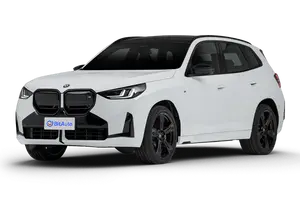 BMW X3
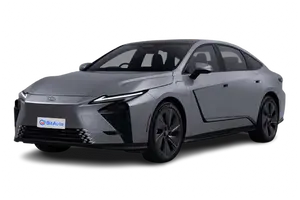 Lexus ES BEV
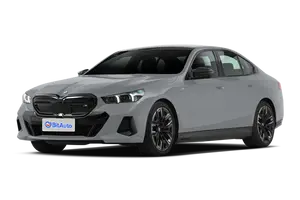 BMW i5
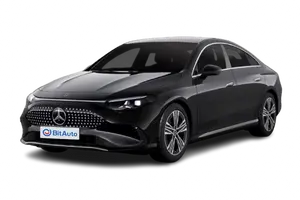 Mercedes-Benz CLA BEV

