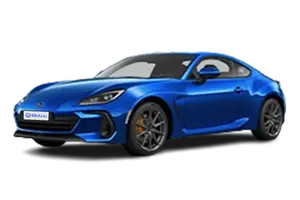
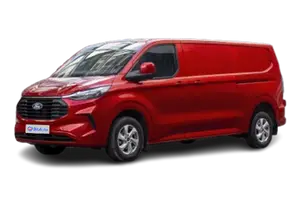
Both run on petrol, so fuel bills and running costs stay in the same ballpark. The Transit Custom is the cheaper way in at HK$ 289,990, undercutting the BRZ by HK$ 69,810 on-the-road. With no clear hardware advantage to justify the difference, the BRZ is harder to recommend.
Body Type / Seats2 door Sports Car · 4 seats5 door Van · 6 seats
Engine, Fuel Economy & Refuelling
ParameterSubaru BRZFord Transit Custom
Engine Capacity2,387 cc ✓1,996 cc
Rated Economy9.5 L/100km11.7 L/100km · WLTP
Fuel Tank50 L55 L ✓
Both run conventional petrol engines. The Transit Custom uses a 2-litre turbocharged engine; the BRZ a 2.4-litre naturally-aspirated engine.
Power & Performance
ParameterSubaru BRZFord Transit Custom
Max Power234 Ps ✓170 Ps
Max Torque250 N·m390 N·m ✓
DrivetrainRWDFWD
TransmissionMTAT
Dimensions
ParameterSubaru BRZFord Transit Custom
Length4,265 mm5,450 mm ✓
Width1,775 mm2,032 mm ✓
Height1,310 mm1,989 mm ✓
Wheelbase2,575 mm3,500 mm ✓
Boot Capacity226 L-
The Transit Custom is the longer car — 1185 mm up at 5450 mm versus 4265 mm. The Transit Custom also leads on wheelbase, 3500 mm versus 2575 mm. The Transit Custom seats 6.
Comfort & Technology
BRZ
Dual-zone automatic climate control
Transit Custom
13" touchscreen with Apple CarPlay
Automatic climate control
Wireless phone charging
Power-folding door mirrors
Sales Comparison
Monthly new car sales in Hong Kong SAR China, with data for the past 6 or 12 months, or the full sales history since launch.
Monthly Sales Trend (Hong Kong SAR China)
Loading sales data…
Monthly Registrations
Monthly Registrations
Data from Hong Kong Transport Department, updated monthly on the 10th. Check Hong Kong car sales, brand ranking, model sales & EV sales.
Key Specs Compared
ParameterSubaru BRZFord Transit Custom
Overview
PriceHK$ 359,800HK$ 289,990 ✓
Body Type2 door Sports Car5 door Van
Seats4 seats6 seats ✓
Performance
Max Power234 Ps ✓170 Ps
Max Power172.1 kW ✓125 kW
Max Torque250 N·m390 N·m ✓
0–100 km/h6.3 s-
Top Speed226 km/h-
DrivetrainRWDFWD
TransmissionMTAT
Dimensions
Length4,265 mm5,450 mm ✓
Width1,775 mm2,032 mm ✓
Height1,310 mm1,989 mm ✓
Wheelbase2,575 mm3,500 mm ✓
Kerb Weight1,289 kg2,105 kg
Boot Capacity226 L-
FAQs
Is the Transit Custom or BRZ better?
The Transit Custom is the cheaper of the two at HK$ 289,990, but the BRZ answers back with more equipment for the money.
What is the price difference between the Transit Custom and BRZ?
The Transit Custom starts at HK$ 289,990, the BRZ at HK$ 359,800 — about HK$ 69,810 in favour of the Transit Custom.
Which one is more powerful?
The BRZ is more powerful — 234 hp against 170 hp.
Which is bigger?
The Transit Custom is longer, at 5450 mm against 4265 mm.
Do both cars come with advanced driver assistance?
Both list autonomous emergency braking and adaptive cruise control; the BRZ adds lane-keeping assist and blind-spot monitoring.




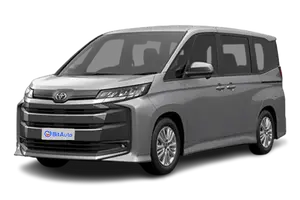 Toyota Noah
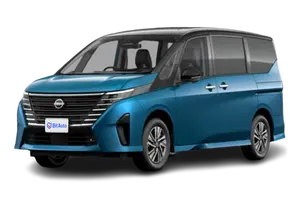 Nissan Serena
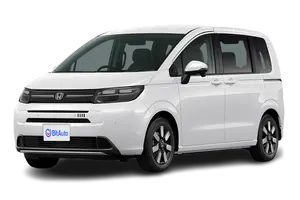 Honda Freed

