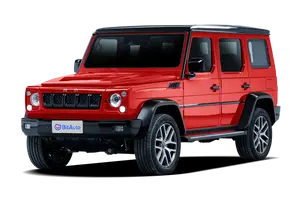
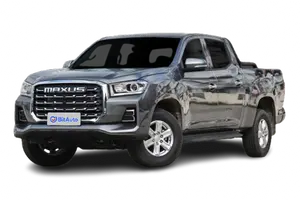
Key Differences
- Power: BJ80 231 hp; Xingji 261 hp
- Length: BJ80 4765 mm; Xingji 5365 mm
Pros & Cons
BAIC BJ80 2.3T AT (2023)
Pros
- Competitive on price for what it offers
Cons
Maxus Xingji 2.0T SWB (2025)
Pros
Find the Right Car
Choose the BJ80 if you want...
- a compact body that's easy to thread through Hong Kong traffic and car parks
- a 2.3-litre engine
- seating for 5
Choose the Xingji if you want...
- stronger 261 hp performance
- a 2-litre engine
Which car suits your lifestyle best?
- Performance seekers: Xingji — 261 hp beats the BJ80's 231 hp
Price & Ownership Costs
ParameterBAIC BJ80Maxus Xingji
Price TBCTBC
Body Type / Seats 5 door SUV · 5 seats4 door Pickup · 5 seats
Engine, Fuel Economy & Refuelling
ParameterBAIC BJ80Maxus Xingji
Engine Capacity 2,290 cc ✓1,986 cc
Fuel Grade 9592
Rated Economy 11.2 L/100km · NEDC-
Fuel Tank 85 L-
Both run conventional petrol engines. The BJ80 uses a 2.3-litre turbocharged engine; the Xingji a 2-litre turbocharged engine.
Power & Performance
ParameterBAIC BJ80Maxus Xingji
Max Power 231 Ps261 Ps ✓
Max Torque 345 N·m410 N·m ✓
Drivetrain 4WD4WD
Transmission ATMT
Dimensions
ParameterBAIC BJ80Maxus Xingji
Length 4,765 mm5,365 mm ✓
Width 1,955 mm ✓1,900 mm
Height 1,985 mm ✓1,809 mm
Wheelbase 2,800 mm3,165 mm ✓
The Xingji is the longer car — 600 mm up at 5365 mm versus 4765 mm. The Xingji also leads on wheelbase, 3165 mm versus 2800 mm.
Sales Comparison
Monthly new car sales in Hong Kong SAR China, with data for the past 6 or 12 months, or the full sales history since launch.
Loading sales data…
Data from Hong Kong Transport Department, updated monthly on the 10th. Check Hong Kong car sales, brand ranking, model sales & EV sales.
Key Specs Compared
ParameterBAIC BJ80Maxus Xingji
Overview
Body Type 5 door SUV4 door Pickup
Seats 5 seats5 seats
Performance
Max Power 231 Ps261 Ps ✓
Max Power 170 kW192 kW ✓
Max Torque 345 N·m410 N·m ✓
Top Speed 160 km/h-
Drivetrain 4WD4WD
Transmission ATMT
Dimensions
Length 4,765 mm5,365 mm ✓
Width 1,955 mm ✓1,900 mm
Height 1,985 mm ✓1,809 mm
Wheelbase 2,800 mm3,165 mm ✓
Kerb Weight 2,315 kg-
FAQs
Which one is more powerful?
The Xingji is more powerful — 261 hp against 231 hp.
Which is bigger?
The Xingji is longer, at 5365 mm against 4765 mm.