English
Download App
Follow Us
  • Facebook
  • YouTube
  • Instagram
  • TikTok
  • X
HomeCompareToyota Alphard vs Ford Transit Custom

Toyota Alphard vs Ford Transit Custom: Price, Specs & Which to Buy

Last updated: 21 Nov 2026 · Hong Kong SAR China Market
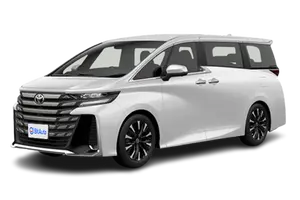
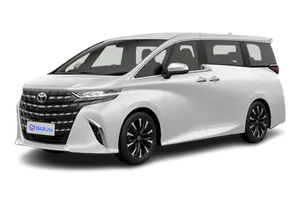
Toyota Alphard
Toyota Alphard
HK$ 699,670
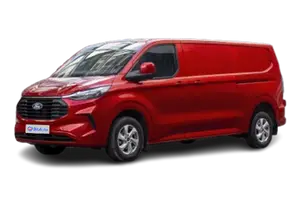
Ford Transit Custom
Ford Transit Custom
HK$ 289,990

Verdict: Which Car Should You Buy?

Both run on petrol, so fuel bills and running costs stay in the same ballpark. The Transit Custom is the cheaper way in at HK$ 289,990, undercutting the Alphard by HK$ 409,680 on-the-road. With no clear hardware advantage to justify the difference, the Alphard is harder to recommend.

Key Differences

  • Price (on-the-road, incl. first-registration tax): Alphard HK$ 699,670; Transit Custom HK$ 289,990
  • Length: Alphard 5010 mm; Transit Custom 5450 mm

Pros & Cons

Toyota Alphard A250 (2025)

Pros

  • Competitive on price for what it offers

Cons

  • Higher on-the-road price

Ford Transit Custom 2.0T Standard (2025)

Pros

  • Lower list price at HK$ 289,990

Find the Right Car

Choose the Alphard if you want...

  • a compact body that's easy to thread through Hong Kong traffic and car parks
  • a 360-degree camera as standard
  • a 2.5-litre engine

Choose the Transit Custom if you want...

  • the lowest list price (HK$ 289,990)
  • a 2-litre engine
  • seating for 6

Which car suits your lifestyle best?

  • Family buyers: Alphard — 7 seats suits family duty better
  • Daily commuters: Transit Custom — the lower list price makes it a cheap city runabout
  • Budget-conscious buyers: Transit Custom — saves HK$ 409,680 upfront

Price & Ownership Costs

ParameterToyota AlphardFord Transit Custom
Price HK$ 699,670HK$ 289,990 ✓
Body Type / Seats 5 door MPV · 7 seats5 door Van · 6 seats

Engine, Fuel Economy & Refuelling

ParameterToyota AlphardFord Transit Custom
Engine Capacity 2,494 cc ✓1,996 cc
Rated Economy 9.52 L/100km11.7 L/100km · WLTP
Fuel Tank 75 L ✓55 L

Both run conventional petrol engines. The Transit Custom uses a 2-litre turbocharged engine; the Alphard a 2.5-litre naturally-aspirated engine.

Power & Performance

ParameterToyota AlphardFord Transit Custom
Max Power 182 Ps ✓170 Ps
Max Torque 235 N·m390 N·m ✓
Drivetrain FWDFWD
Transmission CVTAT

Dimensions

ParameterToyota AlphardFord Transit Custom
Length 5,010 mm5,450 mm ✓
Width 1,850 mm2,032 mm ✓
Height 1,950 mm1,989 mm ✓
Wheelbase 3,000 mm3,500 mm ✓

The Transit Custom is the longer car — 440 mm up at 5450 mm versus 5010 mm. The Transit Custom also leads on wheelbase, 3500 mm versus 3000 mm. The Alphard seats 7.

Comfort & Technology

Alphard

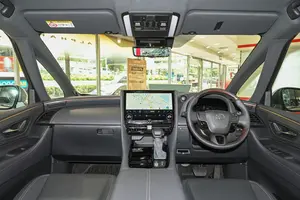
  • 14" central touchscreen + 12.3" digital cluster
  • Dual-zone automatic climate control
  • Ventilated front seats
  • Wireless phone charging
  • 15-speaker JBL system

Transit Custom

  • 13" touchscreen with Apple CarPlay
  • Automatic climate control
  • Wireless phone charging
  • Power-folding door mirrors

Key Specs Compared

ParameterToyota AlphardFord Transit Custom
Overview
Price HK$ 699,670HK$ 289,990 ✓
Body Type 5 door MPV5 door Van
Seats 7 seats ✓6 seats
Performance
Max Power 182 Ps ✓170 Ps
Max Power 134 kW ✓125 kW
Max Torque 235 N·m390 N·m ✓
Drivetrain FWDFWD
Transmission CVTAT
Dimensions
Length 5,010 mm5,450 mm ✓
Width 1,850 mm2,032 mm ✓
Height 1,950 mm1,989 mm ✓
Wheelbase 3,000 mm3,500 mm ✓
Kerb Weight -2,105 kg

Image Gallery

FAQs

Is the Transit Custom or Alphard better?

The Transit Custom is the cheaper of the two at HK$ 289,990, but the Alphard answers back with more equipment for the money.

What is the price difference between the Transit Custom and Alphard?

The Transit Custom starts at HK$ 289,990, the Alphard at HK$ 699,670 — about HK$ 409,680 in favour of the Transit Custom.

Which one is more powerful?

The two are closely matched on power, at about 170 hp apiece.

Which is bigger?

The Transit Custom is longer, at 5450 mm against 5010 mm.

Do both cars come with advanced driver assistance?

Both list autonomous emergency braking and adaptive cruise control; the Alphard adds lane-keeping assist and blind-spot monitoring.


Feedback