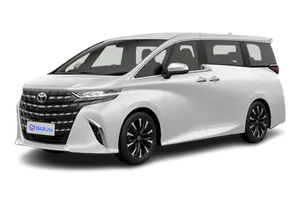
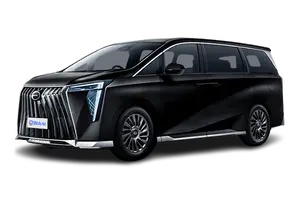
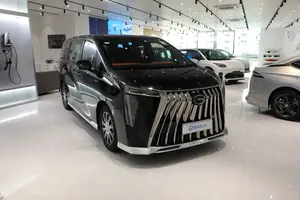
One is a pure electric, the other a non-plug-in hybrid — only one needs charging at all, which matters in a city where home charging is rare. The E9 PHEV is the cheaper way in at HK$ 399,000, undercutting the Alphard by HK$ 300,670 on-the-road. With no clear hardware advantage to justify the difference, the Alphard is harder to recommend.
Body Type / Seats5 door MPV · 7 seats5 door MPV · 7 seats
Over five years the E9 PHEV's HK$ 300,670 head start is unlikely to be erased by running costs — five-year ownership still lands about HK$ 425,016 in the E9 PHEV's favour. The deciding factor is how often you can plug in between petrol stops, which depends on charger access where you live.
Engine, Fuel Economy & Refuelling
ParameterToyota AlphardGAC E9 PHEV
Engine Capacity2,494 cc ✓1,991 cc
Rated Economy9.52 L/100km6.1 L/100km
Fuel Tank75 L ✓56 L
Both run conventional petrol engines. The E9 PHEV uses a 2-litre turbocharged engine; the Alphard a 2.5-litre naturally-aspirated engine. The E9 PHEV is more frugal at 6.1 L/100km versus 9.5 L/100km. On a full tank the E9 PHEV covers roughly 918 km versus 788 km for the Alphard.
Power & Performance
ParameterToyota AlphardGAC E9 PHEV
Motor-Front
Max Power182 Ps190 Ps ✓
Max Torque235 N·m330 N·m ✓
DrivetrainFWDFWD
TransmissionCVTDHT
Dimensions
ParameterToyota AlphardGAC E9 PHEV
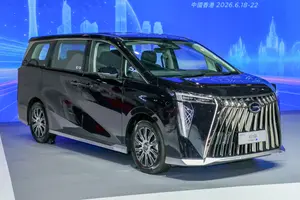
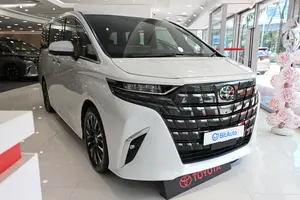
Length5,010 mm5,212 mm ✓
Width1,850 mm1,893 mm ✓
Height1,950 mm ✓1,823 mm
Wheelbase3,000 mm3,070 mm ✓
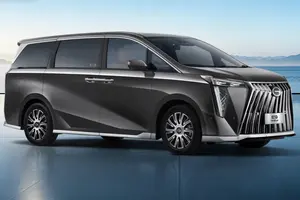
The E9 PHEV is the longer car — 202 mm up at 5212 mm versus 5010 mm. The E9 PHEV also leads on wheelbase, 3070 mm versus 3000 mm.
Comfort & Technology
Alphard
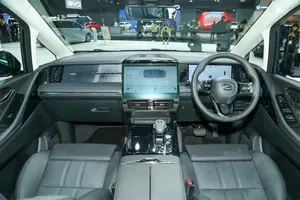
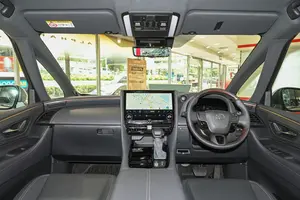
14" central touchscreen + 12.3" digital cluster
Dual-zone automatic climate control
Ventilated front seats
Wireless phone charging
15-speaker JBL system
E9 PHEV
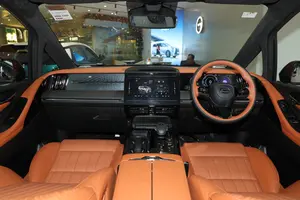
10.1" central touchscreen + 12.3" digital cluster
Dual-zone automatic climate control
Ventilated front seats
Sunroof
Wireless phone charging
Sales Comparison
Monthly new car sales in Hong Kong SAR China, with data for the past 6 or 12 months, or the full sales history since launch.
Monthly Sales Trend (Hong Kong SAR China)
Loading sales data…
Monthly Registrations
Monthly Registrations
Data from Hong Kong Transport Department, updated monthly on the 10th. Check Hong Kong car sales, brand ranking, model sales & EV sales.


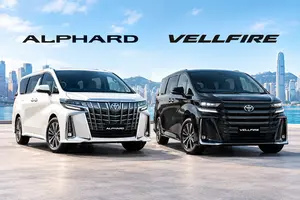
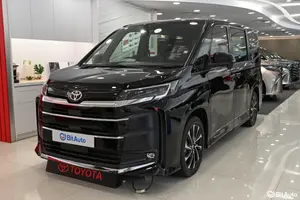
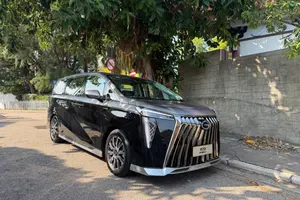






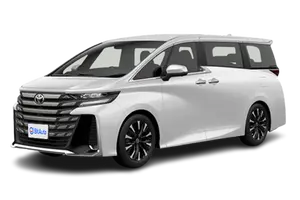 Toyota Vellfire
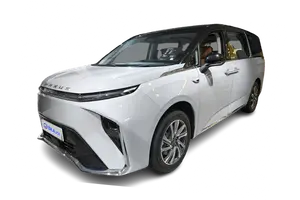 Maxus Mifa 9
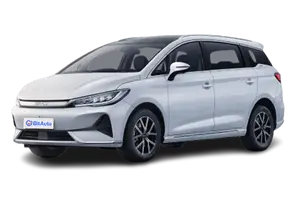 BYD M6

