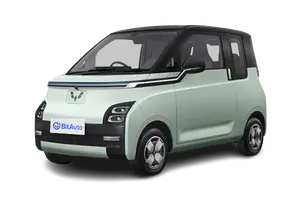
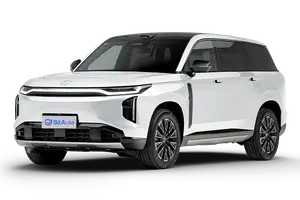
Engine + battery:Air EV 26.7 kWh; S7 1.5L, 36.3 kWh
Power:Air EV 40 hp; S7 160 hp
Length:Air EV 2974 mm; S7 4900 mm
Pros & Cons
Wuling Air EV 300km Standard (2025)
Pros
Competitive on price for what it offers
Cons
Less power
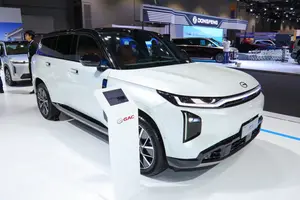
GAC S7 1.5T 205km Max (2026)
Pros
Stronger 160 hp
Find the Right Car
Choose the Air EV if you want...
a compact body that's easy to thread through Hong Kong traffic and car parks
low running cost where you can charge
704 L of boot space
Choose the S7 if you want...
stronger 160 hp performance
a 1.5-litre engine
seating for 5
Which car suits your lifestyle best?
Family buyers: S7 — 5 seats suits family duty better
Cross-border drivers: S7 — refuels anywhere without hunting for a charger
Performance seekers: S7 — 160 hp beats the Air EV's 40 hp
Price & Ownership Costs
ParameterWuling Air EVGAC S7
PriceHK$ 89,800TBC
Body Type / Seats3 door Hatchback · 4 seats5 door SUV · 5 seats
Energy & Consumption
ParameterWuling Air EVGAC S7
Fuel TypeBEVPHEV
Max Range (Full Tank/Charge)300 km · CLTC205 km · CLTC
The Air EV is pure electric; the S7 adds a petrol engine for longer runs. That engine is a 1.5-litre turbocharged engine. Battery capacity is 36.3 kWh versus 26.7 kWh.
Power & Performance
ParameterWuling Air EVGAC S7
MotorRearFront
Max Power-160 Ps
Max Torque-220 N·m
DrivetrainRWDFWD
TransmissionFixed Gear RatioDHT
Dimensions
ParameterWuling Air EVGAC S7
Length2,974 mm4,900 mm ✓
Width1,505 mm1,950 mm ✓
Height1,631 mm1,780 mm ✓
Wheelbase2,010 mm2,880 mm ✓
Boot Capacity704 L-
The S7 is the longer car — 1926 mm up at 4900 mm versus 2974 mm. The S7 also leads on wheelbase, 2880 mm versus 2010 mm. The S7 seats 5.
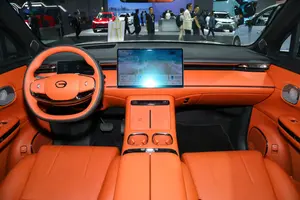
Comfort & Technology
Air EV
10.25" central touchscreen + 10.25" digital cluster
S7
Sales Comparison
Monthly new car sales in Hong Kong SAR China, with data for the past 6 or 12 months, or the full sales history since launch.
Monthly Sales Trend (Hong Kong SAR China)
Loading sales data…
Monthly Registrations
Monthly Registrations
Data from Hong Kong Transport Department, updated monthly on the 10th. Check Hong Kong car sales, brand ranking, model sales & EV sales.