
搜尋歷史
熱門搜尋
經銷商登入 / 註冊

How long does it take for an A0-class pure electric small car to go from zero to one million units? The answer from BYD Dolphin is about four years, which is already the fastest record in the previous China A0-class pure electric small car market. Since deliveries began in 2020, Volkswagen ID.3 has a global cumulative total of about 628,000 units, still not reaching the one million unit threshold for a single model. Geely Star Wish compressed this cycle to 24 months — not cumulative across multiple models for the brand, but a one-million-unit scale for a single model with a single name.
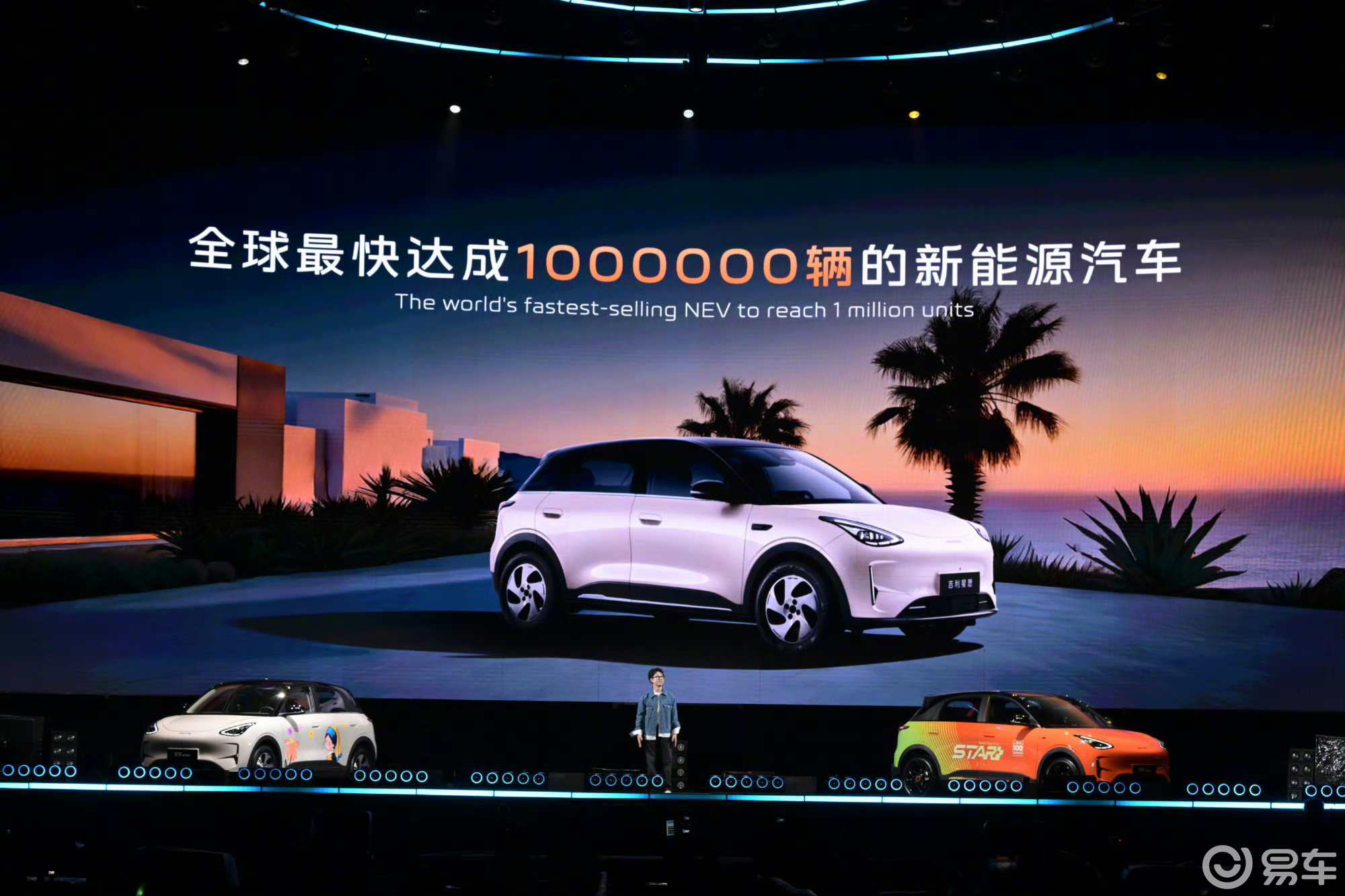
The speed itself is worth noting, but more worth analyzing is: why Star Wish? And what structural problems in the A0-class pure electric small car market, which have been covered up for a long time, does this speed expose?

The product logic for A0-class pure electric cars over the past decade-plus has essentially been a compromise of 'good enough'. Cramped space, flimsy chassis, mixed battery packs, and intelligence limited to radio plus Bluetooth. Consumers at this price point are assumed not to expect quality driving and riding experiences.
What Star Wish does is move the line of 'good enough' up overall: rear-wheel drive plus rear multi-link independent suspension, made as standard across the range for cars starting at the 60,000 price range; 2650mm wheelbase and flat rear floor, giving A0-class for the first time 'daily usability where sitting three people in the middle does not require splaying legs'; 70L front trunk and 10L passenger seat drawer, solving storage pain points small car users have endured for years but no one took seriously. These are not icing on the cake on the spec sheet, but a systemic response to the real usage scenarios of A0-class pure electric small cars.

A more critical layer lies in the redistribution of 'hidden costs'. At this price point, mixed cells and lottery-style batch purchasing are not rare. Star Wish chose CATL cells across the range plus liquid cooling temperature control, with an aluminum alloy protective cabin layered outside the battery pack. A vehicle in service that has driven 220,000 km achieved a test range reach rate of 99.7%, moose test 78.1 km/h, battery health 91.19% — the significance of these numbers lies not in the tests themselves, but in how they answer an unspoken industry question: Can the 'reliability' of a low-price small car withstand time, not just the launch event? When an entry-level product maintains core qualities close to new after long mileage, 'high quality and good value' changes from a marketing term to a verifiable engineering conclusion.
Looking at it on a global coordinate, Star Wish's million-unit speed carries another signal. In August 2026, A00 plus A0-class pure electric accounted for 56.5% of China's pure electric passenger car exports. Small cars are becoming the category where Chinese new energy truly sells in volume, while Star Wish has entered 30+ countries, achieving segment sales champion in markets like Thailand, Egypt, Australia, etc. In the past, the global competitiveness narrative of Chinese cars focused highly on 'value for money', the sample Star Wish provides is: creating product definitions and engineering quality that withstand long-term testing at entry-level prices can also form scale, and this scale has more barriers than simple low-price exports. European streets are naturally suitable for small cars, local car companies have been slow to convert this category advantage into competitive products during their electrification transition, leaving gaps being filled by Chinese car companies with completely different product grammar.

For other car companies, the most warning point about Star Wish is: the competition threshold for A0-class pure electric small cars has been permanently raised. When rear-wheel drive independent suspension, CATL cells, and near-B-class space become the reference for 70,000 price range products, later entrants wanting to enter this market relying on 'cheap but just enough' will find the window narrowing. For ordinary consumers, its value is even simpler — for the first time, a small car does not need to make a single-choice selection between 'affordable' and 'comfortable to use'.

24 months, one million units is a speed record, but the record itself will become outdated. What Star Wish truly leaves behind is a starting line redrawn. The challenge after one million is not on the production line pace, but whether overseas channels can keep up with the speed of selling cars, and what to rely on to maintain the gap after competitors collectively catch up. Speed proves the existence of the entry point, while stability determines how far this road can go.


