


首頁weather

搜尋歷史
熱門搜尋
經銷商登入 / 註冊

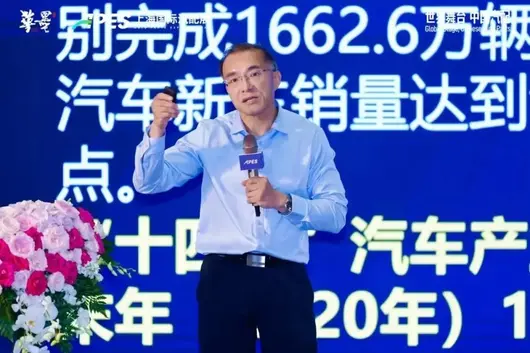
The 2026 Shanghai APES International Auto Parts Exhibition concluded. In a keynote speech, Secretary General Xu Haodong of the China Association of Automobile Manufacturers revealed the clearest development logic in the auto parts industry at present: China's automotive industry has completed the pure product export stage and officially entered the ecological globalization era.

As a core component in essential automotive needs, tires are firmly riding two major trends: the explosive growth of complete vehicle exports and the new energy boom, with a completely new model of integrated OEM-parts R&D, overseas local manufacturing, and technology customization upgrades, thoroughly reshaping the global tire market landscape.
Explosive Growth in Complete Vehicle Exports
Opening Global Incremental Channels for Tires
China's automotive industry has ranked first in global production and sales for 17 consecutive years. A massive domestic market has solidified the cost base for parts R&D and manufacturing. Large-scale export of complete vehicles directly supplies a continuous stream of matching orders for tires:
In 2025, domestic automotive production and sales exceeded 34 million units. Full-year complete vehicle exports reached 7.098 million (more than 28 million tires supplied), a year-on-year surge of 21.1%, and a surge of over 6 times compared to 2020; among them, new energy vehicle exports reached 2.615 million units, achieving doubled growth.

Unlike the scattered tire foreign trade exports of the early years, OEMs like BYD, Geely, and Chery are no longer fighting alone when going global; instead, they are launching collectively with the local parts industry chain. Currently, over 23 overseas CKD complete vehicle factories have been established domestically. More than 80% of the top 100 parts companies have established production bases in over 50 countries globally. As car companies establish factories locally, tire matching supply nearby has become the industry standard.
Wherever complete vehicles go, the market for domestic tires extends; after millions of new exported cars hit the road, the accompanying demand for replacement tires opens up a long-term and stable overseas aftermarket space.
Overtaking on the New Energy Curve
Domestic Brands Gain Power in Premium Original Equipment
New energy vehicles have greater weight, stronger torque, and stricter requirements for low rolling resistance, energy saving, quietness, comfort, abrasion resistance, and stable low-temperature range. This technical threshold for tires is far higher than traditional fuel vehicles, making it the perfect track for domestic tires to achieve technical leapfrogging.

Chaoyang Tire (Zhongce Rubber) customized the Chaoyang No. 1 ARISUN1 Tire for the million-level flagship Zunjie S800 this year, abandoning universal specifications: Low-temperature active rubber improves EV winter range, with winter range increased by 15% compared to overseas high-end tires; combined with adaptive stability structure and multi-layer noise reduction structure, balancing shock absorption, handling, and cabin quietness; can also interact with smart chassis and intelligent driving systems to perceive road conditions and adjust body posture, breaking the inherent perception that premium cars are originally equipped with foreign tire brands, creating a category of original high-end custom tires for independent car manufacturers.
On the production capacity level, in 2026, Zhongce invested 1.04 billion yuan to build a Vietnamese tire base, succeeding Thailand, Indonesia, and Mexico to finalize the fourth major overseas factory. Relying on the tariff advantage in Southeast Asia to stabilize EU supply, under trade barriers, European orders continue to concentrate on top-tier companies, and the dividend of overseas expansion continues to release.

Linglong Tire's overseas journey has gone through four stages: Initial foreign trade customer expansion, establishing a factory in Thailand to achieve capacity export, global R&D center layout to master self-research standards, and current stage deepening localized ecosystem operations. The Thailand factory radiates to Asia-Pacific and North America; the Serbia Europe factory has successfully started production, securing matching qualifications for European and American car companies such as Volkswagen, Renault, and Ford. Domestically matching BYD, Geely, and Hongqi, the new energy original equipment tire sales rank among the top domestic brands. Following OEM overseas CKD factories to supply nearby, effectively reducing logistics and tariff costs.
Sailun Tire, in response to EU anti-dumping and global trade barriers, proactively laid out overseas factories in multiple countries including Vietnam, Cambodia, Mexico, and Egypt. European orders are transferred to overseas bases for delivery, successfully avoiding tariffs . After European local supply was reduced, enterprise order volume continued to rise, and multiple price adjustments still resulted in supply falling short of demand.
Recently, Sailun reached a deep strategic cooperation with BYD, focusing on joint R&D, green manufacturing, and industrial chain synergy. Relying on BYD's global export channels to promote the Liquid Gold EV Tire, adapting to new energy vehicle usage scenarios in many places globally with low rolling resistance and high wear resistance characteristics.
Three Major Advanced Stages of OEM-Parts Collaboration
Breaking Away from Traditional European/American and Japanese/Korean Models
In the past, the global mainstream supply chain was divided into two categories: loose strategic cooperation in Europe and America, and Japanese/Korean car companies' shareholding deep binding mode, but hierarchical management and departmental barriers were obvious, difficult to adapt to the new energy rapid iteration, global variable market environment.
Xu Haodong proposed three levels of industry chain synergy path in the speech, which is exactly the development direction of domestic tires and complete vehicle factories:
Regulatory Cooperation: Completing basic supply only according to hard requirements, companies fight alone, low efficiency;
Tacit Cooperation: Upstream and downstream actively collaborate, prioritizing the overall revenue of the entire industry chain, significantly improving response speed to overseas markets;
Collaborative Innovation: Car companies and tire companies jointly develop R&D, co-develop adaptive products, jointly explore overseas markets, unifying the assessment of global regional road conditions, climate, and regulatory needs. This is also the core competitiveness of Chinese tires to stand in the global market for a long time.
Relying on the massive domestic market volume to share R&D costs, massive vehicle ownership to cultivate technical talents, and new energy technology leading advantages, domestic tires are no longer simply competing on low prices, but adopting a four-dimensional integrated model of vehicle development + tire matching + overseas after-sales + talent localization, building a Chinese characteristic automotive supply chain ecosystem.
Opportunities and Challenges Coexist
Ecological Globalization is the Way to Break the Pattern
Trade barriers and geopolitical conflicts remain industry problems that cannot be avoided. Top tire companies have already found solutions: Diversifying risk through multiple regional overseas production capacities, relying on vehicle exports to provide matching supply nearby to avoid tariffs; Deeply cultivating new energy differentiated technology, creating a gap using exclusive performance such as low rolling resistance, quietness, snow adaptation, and intelligent synergy; Cutting in from OE original equipment matching, in turn driving the overseas replacement tire market reputation and sales growth.
Once, Chinese tires were sold worldwide relying on good quality and low prices; now, riding the vast wave of China's automotive globalization, Zhongce, Linglong, Sailun and others are stepping into the mid-to-high end of the global tire value chain step by step, with technology as the core, OEM-parts collaboration as the link, and global capacity as support.

GAC Group officially released July production and sales data on August 4. Overall, the first seven months of this year saw the group's cumulative vehicle sales cross the 886,000 units threshold, achieving a 1.28% year-on-year growth. Notably, cumulative sales of new energy vehicles reached 311,700 units, a surge of 66.20% year-on-year, further increasing the proportion of energy-saving and new energy vehicles in total sales to 63.96%. Meanwhile, the pace of overseas exports for independent brands accelerated significantly, with cumulative exports reaching 145,000 units in the first seven months, a 130% year-on-year soar; this figure has already surpassed the 2025 full-year target. Additionally, in the recently passed July, GAC Group welcomed a major milestone of cumulative production and sales breaking 30 million units.

Focusing on the independent brand segment, its cumulative sales from January to July exceeded 400,000 units, a year-on-year increase of 33.31%. Looking at July alone, independent brand sales exceeded 54,200 units, with a year-on-year growth of 19.91%. By brand, the Hyper Aion BU performed strongly, with cumulative sales reaching 210,400 units in the first seven months, up 62.08% year-on-year; July single-month sales were 28,807 vehicles, up 36.37% year-on-year. As for GAC Trumpchi, cumulative sales this year exceeded 187,100 units, up 9.83% year-on-year, with July sales at 22,739 vehicles. Of note, the newly launched Enjing GT7 delivered 2,658 units in its first full sales month, preliminarily gaining market and consumer recognition.

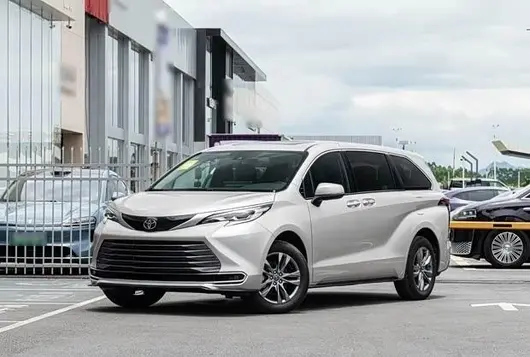
In the joint venture sector, GAC Toyota's cumulative sales from January to July exceeded 402,500 units, with July sales at 46,500 vehicles. The three flagship models composed of Camry, Highlander, and Sienna sold a combined 22,843 units in July, accounting for a high of 49% in the brand's total sales. Meanwhile, the bZ Series continued a stable monthly sales over 10,000 trend, contributing 12,002 vehicles in July, accounting for over 25%; its main model, the bZ3X, had single-month sales of 9,546 vehicles. GAC Honda achieved sales of 11,686 vehicles in July and welcomed a milestone of cumulative sales breaking 11 million units during this period. More importantly, both shareholders of GAC Honda have officially signed a renewal agreement, extending the cooperation period to 2038, aiming to jointly accelerate electrification and intelligence transformation. According to the established plan, GAC Honda will launch 5 new vehicles within the next two years, including two locally developed new energy vehicles and brand new iteration of hybrid products.


Regarding overseas market expansion, GAC's independent brands reached single-month exports of 23,575 vehicles in July, a 119% year-on-year growth. Reviewing the first seven months, the cumulative export of 145,000 units has already exceeded the annual target. Entering July, GAC's layout in the five major regional markets sped up significantly, focusing on three directions: localization production, new product launch, and policy coordination simultaneously. In the American market, terminal sales increased by 139% year-on-year, with vehicle sales in countries like Uruguay, Costa Rica, Colombia, and Brazil all achieving several-fold growth. Additionally, GAC successfully approved joining Brazil's "Green Mobility and Innovation Plan," marking its deep integration into local green development strategies. In the CIS region, terminal sales increased by 112% year-on-year, and the world's 7th KD factory has officially landed in Kazakhstan, with the first model rolled off the line being the GS8.

Good news continued to spread in the Asia-Pacific market, with terminal sales increasing by 78% year-on-year in July. The Thailand factory has cumulatively achieved over 10,000 complete vehicles rolled off the line, and multiple new models have also landed in the Philippines market. In the Middle East and Africa region, GAC terminal sales increased by 51% year-on-year, and it has officially entered the Morocco market; the first three SUVs launched will cover fuel, hybrid, and plug-in hybrid powertrain types. Meanwhile, GAC maintains a steady breakthrough trend in the European market; especially in the Greek pure electric passenger car market, its market share has increased to 7.7%, ranking second in that market, with model promotion and listing preparation work in multiple countries also being steadily promoted.

In terms of infrastructure, so far, GAC's "9 Verticals and 10 Horizontals" recharging network has covered 31 provinces and 213 cities across the country, achieving the goal of "a station within 1 km in the core urban area". The number of self-operated charging piles exceeds 27,000 units, with supercharging piles breaking 20,000 units. Looking forward to the second half of the year, GAC's product offensive remains strong, planning to heavily launch multiple models including Trumpchi's first hardcore off-road SUV Yue 7, Aion's all-new pure electric coupe RAY 7, and Enjing GX7.

In the Malaysian SUV market, many buyers compare Proton X70 and Chery Tiggo 8 PHEV when choosing a car.
Proton X70 OTR price in Malaysia is RM 106,800 - 122,300, totaling 3 versions, including 1.5L Standard 2WD (RM 106,800), 1.5L Executive 2WD (RM 115,800), 1.5L Premium 2WD (RM 122,300) etc.
Chery Tiggo 8 PHEV OTR price in Malaysia is RM 159,750 - 159,750, totaling 2 versions, including 1.6L Turbo Standard (RM 130,000), 1.6L Turbo Premium (RM 145,000) etc.
From a price perspective, Proton X70's starting price is indeed RM 52,950 cheaper than Chery Tiggo 8 PHEV. If your budget is limited, Proton's entry-level version can already meet daily needs. But keep in mind, the few thousand dollars saved may mean compromises on features, depending on your specific needs.
Proton X70 features 1.5L Turbo, 140 hp. Official fuel consumption 7.0 L/100km.
Chery Tiggo 8 PHEV features Hybrid, 170 hp. Official fuel consumption 4.5 L/100km.
In terms of power, Chery Tiggo 8 PHEV's Hybrid has 30 more horsepower than Proton X70's 1.5L Turbo. However, for daily city driving, the power of both cars is sufficient, you won't feel a lack of power.
Proton X70 warranty 5 years/150,000km, service interval every 10,000km or 6 months.
Chery Tiggo 8 PHEV warranty 3 years/100,000km, service interval every 10,000km or 6 months.
Both Proton X70 and Chery Tiggo 8 PHEV are mainstream choices in the Malaysian market, suitable for family use and daily commute. If you value brand reputation and resale price more, you can prioritize the one with better reputation; if you care more about value for money and features, then choose the better-equipped one. Ultimately, it is recommended to test drive both, personal experience is the most important.
In general, both Proton X70 and Chery Tiggo 8 PHEV are quite good car models in the Malaysian market. Which one to choose depends on your personal needs and budget. We suggest everyone do their research, compare quotes from several dealerships, and then go test drive for the final decision. Buying a car is a big matter, spending time on research will never go wrong.

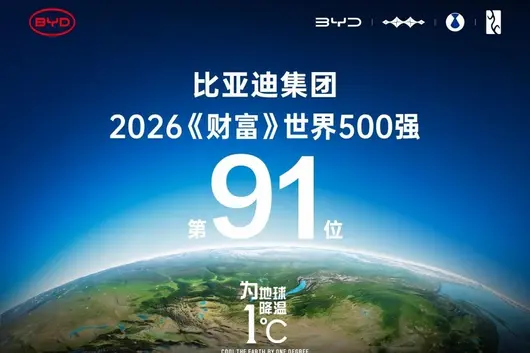
Chinese automakers are going absolutely crazy! On July 28, the 2026 Fortune Global 500 Ranking was just released, with BYD directly reaching 91st globally!

Listed for 5 consecutive years, firmly ranking among the global top 100. Do you know what this means? Among all automakers worldwide, BYD is the highest-ranked Chinese automaker, and also the only Chinese automotive brand to break into the top 100!
Some might say, what's there to brag about being ranked 91st? Come, let me run the numbers for you.
In 2025, BYD's full-year revenue was 804 billion, net profit 32.6 billion. Sold 4.6 million new energy vehicles all year, consecutively winning the title of global new energy vehicle sales champion, China market automaker sales champion, etc., and is a benchmark enterprise for global new energy vehicles. In the first half of this year, it sold another 1.8 million+, the 17 millionth new car rolled off the production line in July, making BYD the first automaker globally to achieve this number!
Do you think that's it? The most fierce part is R&D investment.
BYD has always adhered to the development concept of "Technology is King, Innovation is the Foundation". Invested 63.4 billion in R&D in 2025! A year-on-year increase of 17%, ranked 1st among all A-share listed companies for two consecutive years. Invested another 11.3 billion in Q1 this year. Until now, cumulative R&D investment has surpassed 250 billion! What concept? For many automakers, one year's revenue isn't even this much.
Where was the money spent? The 2nd Gen Blade Battery + Super Flash Charge technology released in March this year. By the end of the year, nationwide to build 20,000 Super Flash Charge stations, another 6,000 overseas. Even fiercer in May, all vehicle series can be equipped with Sky-Eye B Assisted Driving Laser Version, and also promises City Navigation Safety Guarantee for 1 year, full guarantee for smart parking, ushering in the era of public city navigation.
The overseas market is also expanding wildly. In 2025, overseas sales surpassed 1 million for the first time, surging 145%. Sold another 780,000 in the first half of this year. BYD's overseas expansion strategy has formed a pattern of "Latin America leading, Europe breaking through, Asia blooming at multiple points". This year, BYD's first overseas Cloud Rail was opened in Brazil, the Brazil factory reached the 100,000th new energy vehicle rolled off the line; Denza Z, Z9GT and D9 jointly opened a new chapter of European tech luxury; BYD's first overseas specialized model Sea Otter (BYD RACCO) landed in Japan; the Thailand factory welcomed its 2nd anniversary of production. BYD is accelerating into a deep-rooted local, high-quality development globalization new stage. As of now, BYD's business has spread to 121 countries and regions worldwide.
There is another detail: As of June 30, BYD new energy vehicles cumulative carbon emission reduction was 149 million tons, equivalent to planting 2.48 billion trees. In terms of social responsibility implementation, BYD launched a 3 billion yuan education charity fund, and reached donation agreements with 127 universities nationwide, incentivizing over 6,000 students.
From a small battery factory to a global top 100 automaker, BYD took 20 years. Some say Chinese brands are no good. Some say Chinese automakers can only compete fiercely domestically. What's the result? BYD's presence can be seen in hundreds of countries worldwide, Europeans are queuing to buy Denza, developing new models specifically for the Japanese market. What expressions are those who looked down on Chinese cars back now making?
804 billion revenue, 4.6 million sales, 63.4 billion R&D, 17 million cars rolled off, the story behind these numbers boils down to one sentence: Chinese automobiles, have truly stood up!
As the global leader in new energy vehicles, BYD firmly ranks in the world's top 100 camp, which is the result of its persistence in technological innovation and global breakthroughs. Looking forward, BYD will continue to unswervingly uphold sustainable development concepts, with more cutting-edge technology and a more perfect global layout, to cool down the Earth by 1°C.

In the Malaysian SUV market, many buyers compare the Proton X70 and Honda CR-V when choosing a car. These two cars are quite close in price and positioning. Today, we will make a detailed comparison from multiple aspects to help you save time on research.
The OTR price of Proton X70 in Malaysia is RM 106,800 - 122,300, with a total of 3 versions, including 1.5L Standard 2WD (RM 106,800), 1.5L Executive 2WD (RM 115,800), 1.5L Premium 2WD (RM 122,300), etc.
The OTR price of Honda CR-V in Malaysia is RM 178,200 - 195,900, with a total of 4 versions, including 2026 e:HEV 2.0L 2WD RS (RM 195,900), 2026 1.5T 4WD V (RM 181,900), 2026 e:HEV 2.0L 2WD E (RM 178,200), etc.
In terms of price, the starting price of Proton X70 is indeed RM 71,400 cheaper than Honda CR-V. If your budget is limited, Proton's entry-level version is already sufficient for daily needs. But be aware, the few thousand cheaper might involve trade-offs in features, which depends on your specific needs.

Proton X70 is equipped with 1.5L Turbo, 140 hp. Official fuel consumption 7.0 L/100km.
Honda CR-V is equipped with 2.0L 4-cyl, 170 hp. Official fuel consumption 8.0 L/100km.
In terms of power, Honda CR-V's 2.0L 4-cyl has 30 more horsepower than Proton X70's 1.5L Turbo. However, for daily city driving, both cars have sufficient power and won't feel underpowered.

Proton X70 body length 4400 mm, trunk 400 L.
Honda CR-V body length 4500 mm, trunk 450 L.
In terms of space, Honda CR-V's body is 100 mm longer than Proton X70, with an advantage in passenger space. However, Proton X70 is more flexible for parking in the city, each has trade-offs.

Proton X70 uses FWD drive system.
Honda CR-V uses FWD drive system.
Both cars use the same drive system, FWD, so there won't be much difference in daily driving experience.
Both Proton X70 and Honda CR-V are mainstream choices in the Malaysian market, suitable for family use and daily commuting. If you value brand reputation and resale value more, prioritize the one with better reputation; if you care more about cost-performance ratio and features, choose the one with richer configuration. Ultimately, it is recommended to test drive both, personal experience is the most important.
Overall, both Proton X70 and Honda CR-V are very good models in the Malaysian market. Which one to choose depends mainly on your personal needs and budget. It is recommended to do your homework, compare quotes from several car dealers, and then test drive to make the final decision. Buying a car is a big deal, spending time on research is definitely not wrong.


