首頁taihu

搜尋歷史
熱門搜尋
經銷商登入 / 註冊

From the green belt to the bamboo cicada, the 'hidden war' between Chinese automakers has gone public.
Regarding the 'Bamboo Cicada' incident that has caused a storm in the industry, on August 5, official media 'Zhejiang Propaganda' published an article like this: 'Four Thoughts on the Bamboo Cicada Incident.'

The article states: The stronger the enterprise, the greater its tolerance for discussion. In the 'Bamboo Cicada' incident, many netizens participated in the discussion by releasing videos, etc. This was not to deny Huawei's technical strength, nor was it to question China's technological innovation, but rather grassroots expression centered around certain communication symbols of enterprises. This expression is more about exploring the boundary between commercial rights protection and internet meme culture, reflecting higher scrutiny standards for behavior of top enterprises, and is a soft form of public opinion feedback.
But what netizens worry about is: If various jokes and teasing are considered attacks, and if brand dignity is equated to 'cannot be discussed', then the margin for error for online expression will continue to be compressed, derivative creation and memes will be easily over-interpreted, and making statements will become increasingly restrained.
Zhejiang Propaganda also specifically mentioned: High-profile expression must withstand scrutiny. Zhejiang Propaganda pointed out: For example, Huawei Executive Director and Terminal BG Chairman Richard Yu stated at a press conference that whether within 5 million or 10 million, AITO M9 is the most powerful SUV among currently launched models on Earth, hands down.
'Most Powerful' 'Hands down' such unreserved statements, indeed tend to be amplified in communication. When an enterprise emphasizes its own advantages with absolute language, consumers will naturally ask: Why is it the 'most powerful'? What is the standard? Once a disconnect appears between communication expression and user actual feelings, the rhetoric originally used to build trust may become a target for netizen jokes or even sarcasm.
After Zhejiang Propaganda published this article, it immediately triggered an uproar. Surprisingly, 'Half-Month Talk', a magazine under Xinhua News Agency, reprinted the article verbatim. Does this mean official media collectively stepped in to criticize Harmony Intelligent Mobility's 'dominance'?
Regarding the so-called 'Bamboo Cicada' incident, the AI software Doubao gave such an explanation:
In the December 2023 AITO M9 press conference, Richard Yu said the hit line 'Best SUV within 10 million', and the audience on site let out continuous 'Wow' sounds of surprise, becoming a network meme circulated for years in the auto circle.
In July 2026, some netizens accidentally found that the wawa sound emitted by the Bamboo Cicada rotating is highly similar to the collective surprise sound of the audience at the press conference. Many bloggers started making derivative short videos: the screen shows hand-cranking the Bamboo Cicada, the soundtrack is the original press conference audio, and the caption plays on the meme: Best toy within 10 million, leading by shaking.
At that time, it was widely rumored online that Harmony Intelligent Mobility legal department complained and took down videos as soon as they saw Bamboo Cicada videos, even videos that only posted Bamboo Cicada without any follow-up interpretation were also complained and taken down. Public opinion was immediately in an uproar.
How real is the situation? On August 4, a Harmony Intelligent Mobility spokesperson issued a statement:
For a long time, malicious editing, impersonation of relevant executive voices, using AI to defame portraits, false attribution, slander, etc., content infringing on personal legal rights has been continuously existing on the network. We have always conducted daily evidence collection and complaints in accordance with the law. This complaint is part of daily rights protection work, targeting specific infringing content, not targeting the 'Bamboo Cicada' toy. As of the evening of August 4, a total of 56,000+ relevant online information was monitored. We actually initiated complaints against 171 specific infringing content items, and the platform feedback indicated 144 were taken down.

The Harmony Intelligent Mobility spokesperson clearly pointed out in the statement that complaints were initiated against only 171 items, and the platform feedback indicated 144 were taken down. In other words, among these 171 videos, at least 84% of videos were judged as non-compliant by the platform. Then, where did the information spread on the internet that Harmony Intelligent Mobility complains whenever seeing Bamboo Cicada come from?
Even more shocking is, regarding the same event, official media showed divergence, with high tension between them. On the evening of August 5, 'Jiangsu News', also an official media, published an article like this: Those advising Huawei to be generous, are you suitable?
Jiangsu News stated: It is quite rare that when Huawei is maliciously attacked and takes rights protection action voluntarily, someone still jumps out to advise it — large enterprises should be generous, only listening seriously to advice is true confidence, etc., with an air of teaching large enterprises how to do things,
Essentially, it is a posture of justifying black traffic, guiding public opinion with words that seem rational, neutral, and objective on the surface, but actually blur legal boundaries, affect market judgment, and damage the business environment, which is a bit inappropriate.
Since 'Jiangsu News' mentioned in the article 'Someone jumps out to advise it — large enterprises should be generous', which is highly related to what was mentioned in 'Zhejiang Propaganda' article 'The stronger the enterprise, the greater its tolerance for discussion', outsiders widely speculate that Jiangsu News is directly 'retorting' against relevant figures represented by the 'Zhejiang Propaganda' article.
Official media directly stepping in to 'fight', this is a rare thing in the past car circle.
Coincidentally, on July 30, Xiaomi Auto held the Xiaomi Pengcheng Technology Launch Event, when Xiaomi Company founder Lei Jun announced the price of Xiaomi's new car N90 Max, he specially said such a sentence: 'I can assertively say that N90 Max is one of the best models among Range Extender SUVs within 500,000 yuan.' What is interesting is, when Lei Jun mentioned 'models' here, he intentionally made a longer pause, and then added words like 'one of'.
After the Xiaomi Pengcheng Technology Launch Event, on August 3, Xiaomi PR Head Xu Jieyun posted a Weibo like this: 'Encourage real awesome, strike down exaggerating awesome', presumably alluding to the industry 'exaggerated marketing' phenomenon. The two events happened one after the other, since it coincided with the escalation of the Harmony Intelligent Mobility 'Bamboo Cicada' incident, triggering extensive discussion in the industry.

Is this Xiaomi intentionally targeting Huawei?
It is not an isolated incident. As early as September 16, 2025 at the Harmony Intelligent Mobility Stelato S9T New Product Launch Event, Huawei's Richard Yu publicly said such a paragraph: 'You say our cars are racing for two-second acceleration performance, or three-second acceleration performance, this is meaningless, you know? What is truly important is safety. Drifting directly on the road, drifting to other lanes, drifting to the green belt. Everyone thinks drifting is a very impressive performance, on highways, in city roads, you simply cannot drift easily, drifting will only bring traffic accidents. You think drifting in the city is how cool, I say that is the most stupid behavior, safety is the most important.'
Since Xiaomi SU7 Max version and SU7 ULTRA version both have extremely strong acceleration capabilities, and frequently there are incidents of Xiaomi SU7 running onto green belts in folklore, some netizens called Xiaomi SU7 'Green Belt God of War', and Xiaomi also specifically debunked rumors for this. In such a background, Richard Yu's paragraph is generally interpreted by the industry as alluding to Xiaomi.
Added to that in the early years Lei Jun had publicly called out to 'Defeat Huawei'. No matter what background this sentence was based on, at first glance, this information undoubtedly conveyed the signal to people that Xiaomi and Huawei are 'arch enemies'.
This time Bamboo Cicada incident, Zhejiang Propaganda, Jiangsu News stepped in turn, standing at completely opposite positions to comment on the same thing, which is truly rare.
What felt unexpected was, on August 6, a netizen posted a Lianhe Zaobao article, Lianhe Zaobao stated in the article: 'Facing the huge Chinese public opinion market, using power to pressure netizens is actually the lower strategy, ignoring it is the middle strategy, being able to like Lei Jun turn positive communication through self-mockery or other techniques is the upper strategy'. From Lianhe Zaobao's viewpoint, its stance of praising Xiaomi and mocking Huawei is obvious. This again triggered an uproar in domestic public opinion.

From multiple angles, the hidden struggle between Huawei and Xiaomi seems to be upgrading. Our view is: Two top enterprises hidden struggle, and duration is prolonged, is both a manifestation of the industry competition becoming fierce, and also caused by the objective factors of industry high-speed development. In such a scenario, whether it is Huawei or Xiaomi, remaining restrained in public opinion, maintaining high standards in products, ensuring legal compliance in marketing communication, or perhaps is the way to solve mutual respect.


In the Malaysian SUV market, many buyers compare the Proton X70 and Kia Sportage when choosing a car. Both cars are quite close in price and positioning. Today, we will make a detailed comparison from multiple aspects to help you save time on research.
The OTR price of the Proton X70 in Malaysia is RM 106,800 - 122,300. There are 3 versions in total, including 1.5L Standard 2WD (RM 106,800), 1.5L Executive 2WD (RM 115,800), and 1.5L Premium 2WD (RM 122,300).
The OTR price of the Kia Sportage in Malaysia is RM 129,639 - 179,320. There are 4 versions in total, including 2025 1.6T DCT 4WD High (RM 179,320), 2025 1.6T DCT 2WD High (RM 159,320), and 2025 2.0L AT 2WD High (RM 139,639).
From a price perspective, the starting price of the Proton X70 is indeed RM 22,839 cheaper than the Kia Sportage. If you have a limited budget, Proton's entry-level version is already sufficient for daily needs. However, keep in mind that the few thousand ringgit difference might involve compromises in features, depending on your specific needs.

The safety rating of the Proton X70 is 5★ (ASEAN NCAP). Active safety systems include ADAS (ACC, AEB, LKA, LDA, BSM, RCTA).
The safety rating of the Kia Sportage is 5★ (ASEAN NCAP). Active safety systems include Drive Wise.
Both cars have the same safety rating, and safety features are considered quite comprehensive within this class. New cars nowadays generally have good safety standards, so there is no need to worry too much about this.

The Proton X70 adopts a FWD drive system.
The Kia Sportage adopts a FWD drive system.
Both cars have the same drive system, both are FWD, so there will not be much difference in daily driving experience.

The Proton X70 has a 5-year/150,000km warranty, with maintenance intervals every 10,000km or 6 months.
The Kia Sportage has a 5-year/300,000km warranty, with maintenance intervals every 10,000km or 6 months.
Overall, both the Proton X70 and Kia Sportage are excellent models in the Malaysian market. Which one to choose mainly depends on your personal needs and budget. We suggest you do your research, compare quotes from multiple dealerships, and then test drive to make the final decision. Buying a car is a big matter, and spending some time on research will never go wrong.


In Malaysia's SUV market, many buyers compare the Proton X70 and Mazda CX-3 when choosing a car. These two models are quite close in price and positioning. Today, we will make a detailed comparison from multiple aspects to help you save time on research.
The Proton X70's OTR price in Malaysia is RM 106,800 - 122,300, with a total of 3 versions, including 1.5L Standard 2WD (RM 106,800), 1.5L Executive 2WD (RM 115,800), 1.5L Premium 2WD (RM 122,300), etc.
The Mazda CX-3's OTR price in Malaysia is RM 126,159 - 139,159, with a total of 2 versions, including 2023 2.0L High (RM 139,159), 2023 2.0L Plus (RM 126,159), etc.
In terms of price, the Proton X70's starting price is indeed RM 19,359 cheaper than the Mazda CX-3. If your budget is limited, Proton's entry-level version can already meet daily needs. But be aware, the few thousand cheaper might involve compromises on features, depending on your specific needs.

The Proton X70's safety rating is 5★ (ASEAN NCAP), and active safety systems include ADAS (ACC, AEB, LKA, LDA, BSM, RCTA).
The Mazda CX-3's safety rating is 5★ (ASEAN NCAP), and active safety systems include i-Activsense.
Both cars have the same safety rating, and safety features are quite complete for this level. New cars nowadays don't have poor safety, so no need to worry too much about this.
The Proton X70 uses FWD drive configuration.
The Mazda CX-3 uses FWD drive configuration.
Both cars have the same drive configuration, both are FWD, so daily driving feel won't differ much.
Both the Proton X70 and Mazda CX-3 are mainstream choices in the Malaysian market, suitable for family use and daily commuting. If you value brand reputation and resale value more, prioritize the one with better reputation; if you care more about value for money and features, choose the one with richer configuration. Ultimately, it is recommended to test drive both; experiencing it personally is the most important.
Overall, both the Proton X70 and Mazda CX-3 are quite good models in the Malaysian market. Which one to choose depends on your personal needs and budget. It is suggested to do your homework, compare quotes from several dealerships, and then test drive to make the final decision. Buying a car is a big matter, spending time on research will never be wrong.


喺馬來西亞嘅 SUV 市場,好多買家喺揀車嗰陣都會拎 Proton X70 同 Mazda CX-3 嚟做比較。呢兩款車嘅價位同定位都幾接近,今日我哋會由多個角度做一個詳細嘅對比,幫你省返做功課嘅時間。
Proton X70 喺馬來西亞嘅 OTR 售價係 RM 106,800 - 122,300,合共有 3 個版本,包括 1.5L Standard 2WD(RM 106,800)、1.5L Executive 2WD(RM 115,800)、1.5L Premium 2WD(RM 122,300) 等。
Mazda CX-3 喺馬來西亞嘅 OTR 售價係 RM 126,159 - 139,159,合共有 2 個版本,包括 2023 2.0L High(RM 139,159)、2023 2.0L Plus(RM 126,159) 等。
單計價錢方面,Proton X70 嘅起跳價的確比 Mazda CX-3 平咗 RM 19,359。如果你預算有限,Proton 嘅入門版已經可以滿足日常需要。但都要留意,平嗰幾千塊,可能在配備上面會有取舍,具體要睇你嘅需要。
Proton X70 車身長 4400 mm,行李箱 400 L。
Mazda CX-3 車身長 4500 mm,行李箱 450 L。
空間方面,Mazda CX-3 嘅車身比 Proton X70 長咗 100 mm,坐落空間更有優勢。不過 Proton X70 喺城裏面泊車會靈活啲,各有取舍。
Proton X70 採用 FWD 驅動方式。
Mazda CX-3 採用 FWD 驅動方式。
兩款車嘅驅動方式一樣,都係 FWD,日常駕駛感受唔會有太大分別。
Proton X70 同 Mazda CX-3 都係馬來西亞市場嘅主流選擇,適合家庭使用、日常通勤。如果你更睇重品牌口碑同二手價,可以優先考慮口碑更好嗰一款;如果你更在乎性價比同配備,那就揀配置更豐富嗰款。最尾都好建議兩款都去試駕,親身感受先係最重要嘅。
總體嚟講,Proton X70 同 Mazda CX-3 都係馬來西亞市場好唔錯嘅車型。揀邊一輛,關鍵都要睇你嘅個人需要同預算。建議大家做好功課,多比較幾間車行之嘅報價,再去試駕做最終決定。買車係件大事,花少少時間做功課絕對唔會錯。

In the Malaysian SUV market, many buyers compare Proton X50 and Honda HR-V when selecting a car. These two vehicles are quite close in price and positioning. Today, we will conduct a detailed comparison from multiple angles to help you save time on research.
The OTR price for Proton X50 in Malaysia is RM 89,800 - 113,300, with a total of 4 versions, including 1.5T Executive (RM 89,800), 1.5T Premium (RM 101,800), 1.5T Flagship (RM 113,300), etc.
The OTR price for Honda HR-V in Malaysia is RM 115,900 - 143,900, with a total of 4 versions, including 2026 e:HEV 1.5L RS (RM 143,900), 2026 1.5T V (RM 137,900), 2026 1.5T E (RM 130,900), etc.
From a price perspective, the Proton X50's starting price is indeed RM 26,100 cheaper than the Honda HR-V. If your budget is limited, Proton's entry-level version can already meet daily needs. However, keep in mind that the cheaper price might involve compromises in features, which depends on your specific requirements.

Proton X50 body length 4400 mm, trunk 400 L.
Honda HR-V body length 4500 mm, trunk 450 L.
Regarding space, the Honda HR-V body is 100 mm longer than the Proton X50, offering an advantage in seating space. However, the Proton X50 is more flexible for city parking, each having its own trade-offs.

Proton X50 warranty 5 years/150,000km, maintenance interval every 10,000km or 6 months.
Honda HR-V warranty 5 years/unlimited mileage, maintenance interval every 10,000km or 6 months.

Both Proton X50 and Honda HR-V are mainstream choices in the Malaysian market, suitable for family use and daily commuting. If you value brand reputation and resale price more, you can prioritize the one with better reputation; if you care more about value for money and features, then choose the model with richer specifications. Ultimately, it is recommended to test drive both, as personal experience is the most important.

Overall, both Proton X50 and Honda HR-V are very good models in the Malaysian market. Which one to choose depends mainly on your personal needs and budget. It is recommended to do your research, compare quotes from several dealerships, and then test drive to make the final decision. Buying a car is a major decision, spending some time doing your research is never wrong.


BYD officially released the May 2026 production and sales flash report, with new energy vehicles from all brands reaching a monthly sales volume of 383,453 vehicles, a slight increase of 0.26% year-on-year, achieving year-on-year positive growth in monthly sales after ten months; among them, passenger car deliveries reached 376,990 units, surging 19.4% month-on-month, wiping out the pain of previous model iterations, presenting a new pattern where the domestic base is stable, overseas sales are soaring, and high-end brands are scaling up across the board. Amidst the market environment of intensified competition in the domestic new energy sector, Tesla FSD entering China, and an intense launch of independent new products, it has forged a unique structural growth path.

The Dynasty and Ocean main brands combined sold 330,215 vehicles in May, accounting for over 80% of the group's total sales, remaining the stabilizer for BYD's sales volume. The full series had 8 models exceeding 20,000 units in monthly sales, covering products from 50,000 entry-level commuter to 200,000 home SUV.

Inside the Dynasty Network, the Yuan family sold 56,691 units, and the Song family 51,370 units. Both crossed the 50,000 threshold, becoming two major sales pillars for the brand, catering to home commuter and urban-rural travel needs; the Qin family followed closely with a stable performance of 28,360 units. The Han and Tang series maintained a volume in the six-thousand range, deeply cultivating the mid-to-large home sedan and SUV niche markets; the brand new model Xia is in the market cultivation phase, delivering 1,810 units monthly, with potential for steady volume growth as channels expand.
The Ocean Network's growth momentum is even more rapid, with 5 models entering the 20,000 club across the series: Sealion 42,615 units, Seal 34,117 units, Seagull 39,919 units, Dolphin 22,260 units, and Song PLUS 27,755 units. Among them, Seagull remains the best-selling entry-level commuter model thanks to its affordable pricing of 60,000-80,000. Sealion, as a new volume model, stands firm at the 40,000 level upon launch, filling the mid-size SUV product gap in the Ocean Network and perfecting the Ocean product tier layout. From commuter small cars to compact SUVs, the two main brands rely on DM-i hybrid and pure electric dual-line technologies to牢牢锁住 the mainstream home market share within 150,000 domestically.
Fang Cheng Bao Year-on-Year Surges 139.7%, Brand Upward Positioning Takes EffectThe high-end matrix of Denza, Fang Cheng Bao, and Yangwang sold a combined 46,489 vehicles in May, officially breaking away from the niche positioning to become a new pivot for BYD's brand premium and profit growth, breaking the industry curse of difficulty in high-end breakthrough for domestic brands.

The off-road brand Fang Cheng Bao sold 30,186 units monthly, surging 139.7% year-on-year, creating a new high in monthly sales since the brand launched. Its Titanium 7 model sold 18,280 units monthly, while Leopard 5 and Leopard 8 output remained stable, continuously squeezing the survival space for joint venture and imported models in the 250,000-400,000 hardcore off-road niche market.

Denza delivered 16,303 units in May, with the MPV benchmark D9 selling 6,721 units, and the Z9 series close to 6,000 units. MPV and mid-to-large sedan dual-line efforts helped them stand firm in the luxury new energy track; the million-level ultra-luxury brand Yangwang continued its steady climb, delivering 286 units that month, a year-on-year increase of 105.8%, completing market verification of the domestic brand ceiling product and forming a full price range product layout from 100,000+ home, 300,000-400,000 off-road, 500,000 luxury MPV to million-level flagship.

In May, BYD's overseas sales of passenger cars and pickup trucks reached 160,177 units, surging 80.7% year-on-year. Exports accounted for over 42% of the full series total sales, setting a new historical high for brand export and becoming the core driving force to stabilize May overall sales and achieve year-on-year positive growth.
Southeast Asia, Europe, and Latin America became the main incremental markets. Seagull, Song PLUS, and Yuan series continued to top new energy best-seller lists in multiple countries; the SHARK pickup truck exceeded 4,000 units in monthly exports for two consecutive months. Relying on the completion of localization production in Thailand, Brazil, Hungary, and Uzbekistan with four overseas vehicle factories, localized production continues to land, avoiding tariffs while rapidly penetrating terminal channels. Against the background of stock market competition in the domestic auto industry and normalized price wars, the rapidly expanding overseas market effectively counteracts sales volatility brought by domestic model iterations, officially upgrading from a supplementary market to BYD's core growth engine. As of now, BYD's global cumulative new energy vehicle sales have exceeded 16.5 million units, with the globalization map continuously broadening.
Intelligent Driving Empowers Product Iteration, H2 New Products Prepare to Surge VolumeMay marked a key node in BYD's intelligent driving landing, with the God's Eye intelligent driving system becoming a core bonus point for models: the number of vehicles with advanced intelligent driving across all brands exceeded 3.15 million, with daily road test data exceeding 200 million kilometers; that month, BYD implemented City Pilot and Smart Parking dual safety backup services, becoming the world's first auto manufacturer to achieve dual intelligent driving backups. Three days after policy implementation, the activation rate of models equipped with the God's Eye system in cities surged 50%. Intelligent driving experience upgrades directly drove in-store order conversion, solidifying product competitiveness for subsequent models to continue volume sales, and facing the intelligent driving market shock brought by FSD entering China.
From data details, BYD's cumulative sales from January to May 2026 were 1,405,039 units, down 20.32% year-on-year. The core reason is that the full series of main models were concentratedly iterated, and the capacity ramp-up of the 2nd Gen Fast Charge Blade Battery was restricted. The new Flash Charge Battery upgraded fast charging and low-temperature performance. Full series iteration models prioritized installing new batteries, but production line retrofitting dragged down capacity release. Order backlogs on popular models and delayed deliveries compressed the May delivery volume to a certain extent.
As the end of the second quarter approaches and the 2nd Gen Blade Battery capacity continues to release, coupled with new models such as Denza N8L, Fang Cheng Bao Titanium 7 Pure Electric Version, Sealion 05, and Xia L landing the market, the industry generally predicts that BYD's full brand sales in June are expected to exceed 400,000 vehicles. Relying on the four-dimension development logic of low-end volume locking share, high-end raising profit, overseas pushing volume, and intelligence improving product power, amidst the intensified new energy elimination round in the domestic market, BYD's full category layout advantage continues to amplify, securing its status as the domestic new energy leader, accelerating steadily towards global top auto manufacturers.

車型概覽

五菱星辰 值唔值得睇,第一步唔係望牌子或者外形,而係睇佢能唔能夠配合你嘅香港日常。 呢篇會集中講整體購車判斷,幫你用買家角度篩走唔適合嘅選擇。
售價仍待確認,買家可以先把佢放入候選名單,等價格落實後再同同級車逐項比較。
購車價格指南
五菱星辰 目前售價仍未清晰,較理性嘅做法係先睇版本、車身大小同動力形式,等價格落實後再決定值唔值得落訂。
如果有幾個版本可揀,可以先將 2022 2.0L DHT版(價格待確認) 放喺同一張清單。日常通勤重視舒適同易用,家庭買家就要優先睇後排、尾箱同安全配置。
核心規格重點
睇 五菱星辰 嘅規格,重點唔係背數字,而係理解佢喺香港用車場景會帶嚟咩分別。
1.8 kWh 嘅電池容量,真正意義係可以幫你估算一星期通勤同周末出車要唔要中途補電。 136 Ps / 100 kW / 130 kW、175/320 N·m 嘅輸出,令高速併線同短距離超車更有信心。 車長 4594 mm、車闊 1820 mm、車高 1740 mm、軸距 2750 mm 可以幫你預判商場停車場、屋苑車位同後排腿部空間。 混合動力專用(DHT)、前置前駆 會影響起步順滑度、濕地穩定感同長途巡航性格。
優缺點分析
五菱星辰 嘅優點唔需要講到天花龍鳳,真正有價值係佢能唔能夠令日常用車更省心:電池同續航資訊有助安排通勤同補電、動力輸出對高速同上斜更有底氣、空間同車身尺寸方便家庭買家預判實用性。
要留意嘅係,要先確認屋苑、公司或常去商場嘅充電條件、香港停車場同窄路使用要留意車身闊度。呢啲唔一定係缺點,但係落訂前應該先諗清楚。
買家常見問題
買 五菱星辰 之前,真正要問嘅唔係單一規格,而係佢可唔可以融入你每日嘅生活節奏。
常見疑問係「五菱 Wuling 星辰 適合邊類家庭?」簡單講,五菱 Wuling 星辰 非常適合追求舒適性同科技感嘅 5 口之家。 放到實際用車,就係要睇佢對通勤、泊車、家庭乘坐同長期成本有幾大幫助。
同級對比內容
將 五菱星辰 放入同級車清單時,唔建議只用外形或者品牌光環決定。比較順序可以係:先等售價落實,再決定佢應該同邊個級距比較、再睇動力係咪足夠應付高速併線同滿載、再比較能源成本同補能便利、最後睇車身大小、座位同尾箱是否適合家人。
咁樣篩選會貼近香港買家真實生活:平日塞車、商場泊車、周末去新界、甚至一家人出入,先係一部車每日要面對嘅考驗。
用車全周期指南
擁有 五菱星辰 最重要係先諗清楚充電節奏。屋苑、公司或者常去商場只要有穩定充電選項,電動化用車就會容易相處好多。
如果你主要喺市區行,視野、低速順滑度同泊車輔助會好影響心情;如果經常行高速或跨區,座椅舒適度、隔音同動力從容感會更重要。


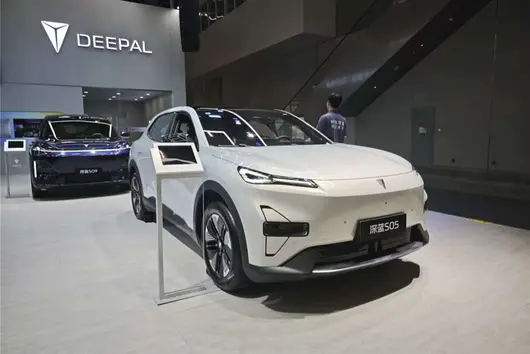
5 月 29 日,2026 粵港澳大灣區車展於深圳國際會展中心(寶安)正式拉開帷幕。作為國內新能源汽車市場嘅中堅力量,深藍汽車攜旗下6 款主力車型集體亮相(7 號館 09 展位),涵蓋家用、智能駕駛、性能、越野等全場景需求。同時,品牌官方宣佈成為葡萄牙國家隊全球官方合作夥伴,以硬核產品實力與親民嘅購車優惠,引發現場廣泛關注。

深耕全球市場,銷量與口碑雙豐收
深耕新能源賽道多年,深藍汽車憑藉成熟嘅技術積累與清晰嘅產品佈局,市場表現持續領跑。數據顯示,2026 年 3-4 月,深藍汽車連續兩個月銷量突破3 萬輛;截至目前,全球累計交付量已突破80 萬輛,穩居央企新能源品牌銷量榜首。
此次車展前夕,深藍汽車在葡萄牙首都里斯本官方宣佈與葡萄牙國家隊達成合作,並向球隊交付全球爆款車型深藍 S05,同步開啟 1000km 歐洲長測。這既係中國新能源品牌與國際頂級球隊嘅強強聯手,亦標誌著深藍汽車全球化佈局邁入新階段。

全陣列車型亮相,涵蓋灣區多元出行需求
粵港澳大灣區作為國內新能源消費嘅核心市場,用戶需求呈現多元化、精細化特徵。本次車展,深藍汽車一次性帶來 6 款車型,從 15 萬級家用车到 30 萬級旗艦,從城市通勤到戶外越野,全面涵蓋灣區用戶日常出行場景。

深藍 S05:全球爆款 SUV,家用代步省心之選
作為深藍汽車嘅「全球大單品」,深藍 S05 上市後月均銷量破萬,全球累計銷量超20 萬輛,並斬獲德國 iF 設計大奬、泰國年度汽車大奬等國際榮譽。
該車主打安全耐用、長續航、快補能,全系搭載寧德時代電芯與金鐘罩電池,適應深圳高溫多雨氣候;CLTC 續航達620km,支援 3C 超充,15 分鐘可將電量從 30% 充至 80%,日常通勤、週末周邊遊都無里程焦慮。

深藍 L06 Max:性能駕控首選,年輕人嘅「駕駛樂趣」
面向追求操控感嘅年輕用戶,深藍 L06 Max 搭載300 萬級超跑同款磁流變底盤,轉向精準、濾震細膩,無論是城市穿梭還是山路馳騁,都能帶來流暢嘅駕駛體驗。
此外,該車配備一體化大壓鑄技術,CLTC 續航最高670km,5.9 秒即可破百,兼顧性能與實用性,係 15 萬級少有嘅「駕控取向」家轎。

深藍 S07 華為乾崑激光版:高級智駕下放,複雜路況從容應對
本次車展嘅智能擔當——深藍 S07 華為乾崑激光版,將高級激光智駕配置普及至主流價位。該車搭載華為乾崑激光 ADS 4 Pro 增強版,配備激光視覺 Limera,支援城區/高速全場景 NCA 輔助駕駛,能輕鬆應對深圳早晚高峰、老城窄巷等複雜路況。
續航方面,CLTC 續航達630km,搭配 3C 超充,跨城出行亦無需頻繁補能,係都市高知人群嘅智駕首選。

深藍 S09:旗艦大六座,家用商務兩不誤
定位智慧旗艦大六座 SUV,深藍 S09 精準匹配灣區多孩家庭、商務接待嘅雙重需求。車內採用三排六座佈局,行業首創中排可橫滑雙零重力座椅與一體式智能移動中島,空間靈活多變。
動力上,純電續航310km,支援 5C 超充,10 分鐘可將電量從 30% 充至 80%;全系標準配備華為乾崑智駕 ADS 4.1 與鴻蒙座艙,兼顧豪華感與智能化。

深藍 L07:15 萬級智駕家轎,上班族通勤好拍檔
作為15 萬級唯一全系標準配備華為乾崑智駕嘅轎車,深藍 L07 完美契合灣區上班族嘅通勤需求。其搭載新一代原力超集電驅,純電續航660km、增程續航1500km,高速智駕覆蓋率超 99.2%,能有效緩解廣深、莞深等城際高速嘅駕駛疲勞。
同時,全系標準配備金鐘罩電池,累計裝車 70 萬台保持零自燃記錄,安全可靠,係日常代步嘅「省心之選」。

深藍 G318 無憂穿越版:硬派越野氣質,解鎖戶外多元樂趣
打破硬派車型與城市用車嘅邊界,深藍 G318 無憂穿越版配備雙電機真四驅、兩把機械差速鎖與全地形駕駛系統,能輕鬆征服粵北山區、戶外野地等複雜路況。
同時,同級獨有嘅空氣懸掛、CDC 減震與主動魔毯系統,又能保證城市行駛嘅平穩舒適,適合週末露營、長線自駕嘅戶外愛好者。
車展專屬優惠,誠意回饋灣區消費者
除咗全陣容好車,深藍汽車本次仲帶來實打實嘅購車優惠,降低用戶購車門檻。
活動時間為5 月 29 日至 6 月 14 日,用戶喺廠方原有基礎權益之上,可額外享受:
下定即贈深藍商場價值1000 元藍寶石,可兌換原廠精品;深圳區域購車用戶,額外享受交通強製險免單優惠。
無需複雜規則,沒有隱藏套路,真正做到「好車不貴,優惠到位」,讓灣區消費者逛展、選車、享優惠一步到位。

扎根用戶需求,持續打造高價值出行體驗
從產品佈局嚟睇,深藍汽車 6 款車型精準切入家庭、性能、智駕、越野四大核心場景,不堆砌冗餘配置,只聚焦用戶真實需求;從技術實力嚟講,無論係與華為深度合作嘅智能系統,定係自研嘅三電與底盤技術,都經過市場驗證,可靠耐用。
粵港澳大灣區作為深藍汽車嘅重點戰略市場,此次車展既係產品實力嘅集中展示,亦係貼近用戶、回饋用戶嘅契機。未來,深藍汽車將繼續立足用戶需求,以更成熟嘅技術、更豐富嘅產品、更實在嘅優惠,為消費者帶來高價值嘅智慧出行體驗。
目前,2026 粵港澳大灣區車展仍在進行中(6 月 7 日前),歡迎前往深圳國際會展中心(寶安)7 號館 09 展位,近距離體驗深藍全系車型嘅硬核實力,把握購車良機。

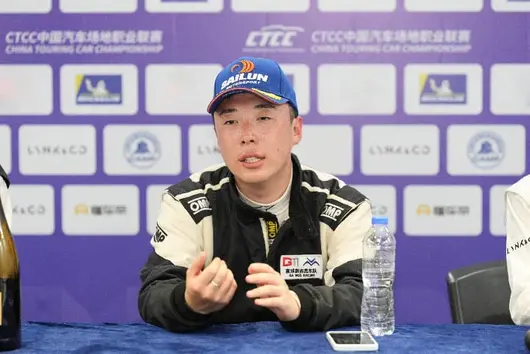
On May 30, the Lynk & Co Cup City Racing League Ningbo Station kicked off in a blaze. The Global Xingo Team brought good news once again. The team's lead driver, Chen Hanqi, performed excellently in the first race heat, securing the overall championship with absolute advantage by starting from pole position and leading throughout the race, while also setting the fastest lap of the event, sweeping both major honors alone.

From the Malaysia Sepang F1 Circuit to China's Ningbo F2 Circuit, Chen Hanqi and the team broke through consecutively and won continuously, becoming a new benchmark among Chinese motorsport media drivers.
Looking back to late November 2025, the Malaysia Sepang International Circuit welcomed the Lotus Cup season finale. At that time, the Global Xingo Team, as the first domestic media team to go overseas and participate in National Level A-class events, immediately took the runner-up position in the first round category and the champion position in the second round category, while also securing the fifth place overall.

With two consecutive events and two podium appearances, this impressive result allowed the team to make a brilliant transformation from "Industry Recorders" to "Track Practitioners", injecting solid professional strength into the domestic automotive review industry.
The continuous breakthroughs on the track could not be separated from the team's clear strategic layout. At the Global Auto Annual Gala early this year, the team officially proposed the 2026 development direction of "Racing to Enhance Reviews", striving to enrich the professionalism and credibility of automotive reviews through professional racing events.

Now, the team has launched the dual-track operation mode as promised. While continuing to fight in the Lotus Cup Series, they are fully committed to the Lynk & Co Cup City Racing League, forging the true strength of the team and drivers through multi-track, high-intensity practical combat.

Each trophy is a footnote to strength, every departure is the unchanged original aspiration. From Sepang to Ningbo, from Lotus Cup to Lynk & Co Cup, the Global Xingo Team and Chen Hanqi took every step firmly, breaking through themselves in racing and working in-depth in the professional field without cease. In the future, this team will continue to gallop on various racing tracks, interpret passion with speed, empower the industry with professionalism, and write more brilliant chapters belonging to media drivers on the track.


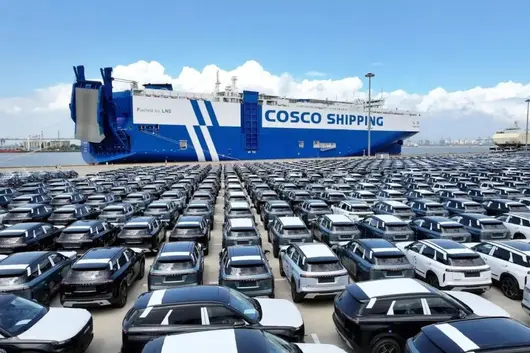
Less than half of 2026 has passed, but one thing can be concluded in advance: without the support of overseas markets, the production and sales data of China's automotive industry this year will look very bad.
First, let's look at the domestic market.
Jan-April, domestic passenger car cumulative retail sales reached 5.604 million, down 18.5% year-on-year. Among them, fuel vehicle sales fell by approximately 19.8%, while new energy vehicles also declined by 17.2%. April retail sales alone were 1.384 million, down 21.5% year-on-year and down 16.0% month-on-month.
This is not a problem of a specific segment, but rather the entire market is contracting.
Now let's look at exports.
For the same period, China's cumulative auto exports reached 3.25 million, a year-on-year increase of 50.6%. New energy vehicle exports were nearly 1.5 million, accounting for 48%, up 69% year-on-year.
In April alone, passenger car exports accounted for 36% of manufacturer sales, compared to only 19% at the same time last year. It was precisely the strong performance of exports that stabilized the slowdown in the domestic market.
In Jan-April this year, China's auto production and sales overall declined year-on-year by 4.8% to 5.5%. Although this negative growth is rare in recent years, it is still a single digit. Without exports, this number would look much worse.
Auto exports are no longer an optional peripheral business; they are profoundly changing the business structure of Chinese automakers.
So the question arises: Where exactly did these cars go?
Brazil: A Qualitative ChangeLet's look at two rankings first.
In the top ten exports of all passenger car categories, Brazil ranks first, and Russia ranks second.
In the top ten new energy vehicle exports, Brazil is still first. 280,000 and 210,000 vehicles—these two numbers added to Brazil's account, with year-on-year growth rates reaching 226.1% and 220.9% respectively.
What does this mean?
BYD alone exported nearly 90,000 units to Brazil in the first quarter of this year, including battery electric and plug-in hybrid models. Great Wall Motor has already built two factories in Brazil, with the second one having an annual capacity as high as 200,000 units.
But the signal truly worth remembering is not these numbers.
In April this year, BYD sold 14,911 units in Brazil, surpassing Volkswagen to take the first place on the total monthly retail sales list for the first time.

The Brazilian market has long been dominated by European, American, and Japanese brands. This is the first time Chinese new energy vehicle brands have surpassed traditional fuel giants in monthly sales.
The psychological impact of this event in Brazil is no less than when Apple first surpassed Nokia in China back then.
And this result was not unexpected.
First, Chinese automakers entered densely. GAC, Chery, Geely, Leapmotor, and Changan have already laid out their plans in Brazil, with a solid grassroots foundation.
Second, local production is accelerating. BYD's factory in Camaçari has already exceeded 4,100 employees and will soon add another 1,600 to start the third shift.
Third, although the policy environment in Brazil has tariffs, it does not engage in backdoor deals. The product competitiveness of Chinese cars is strong enough; no extra privileges are needed, only fair rules.

From 2026 onwards, Brazil will no longer be an overseas market in the conventional sense; it has become the second home market for Chinese automakers.
Local market refers to the qualitative change from "export destination" to "production and sales integrated market", representing a fundamental shift in the logic of China's automotive going global.
Now let's look at Europe.
In the all-category rankings, the UK ranks third with 151,000, up 99.3%; Belgium ranks fourth with 130,000, up 40.3%; Italy ranks seventh with 92,000, up 121.2%.
If looking at the new energy rankings alone, Italy grew by 460.7%, Germany by 295%. From the UK to Spain, growth rates were all above 80%.
The data for the European market is very impressive. Behind this lies a key factor: Chinese-style hybrid.
Data from the China Passenger Car Association shows that in the export structure in April, the share of plug-in hybrids has reached 18%, up 4 percentage points year-on-year.
This is a move of avoiding the strong and striking the weak adopted by Chinese automakers facing tariff barriers from Europe and the US.

The EU began implementing anti-subsidy tariffs on April 15, raising the comprehensive tax rates for BYD, Geely, and SAIC to 27% to 45.3%. This greatly weakened the price advantage of pure electric models.
However, hybrid models equipped with engines are not subject to the same degree of tariff constraints. Chinese automakers quickly adjusted their strategy to penetrate the European market with hybrid models.
No need for direct confrontation, but to find loopholes within the rules.
This ability to adapt flexibly is built on the strong R&D and manufacturing capabilities of Chinese automakers. This is also the biggest hidden advantage of China's automotive going global.
Amidst the growth, two markets declined: the UAE down 13.2%, and Mexico down 46.6%.
The UAE's new energy data is still surging, balancing the trend, but Mexico's decline is more pronounced.
Analysis reveals two reasons.
Subjectively, the substitution rate of local production in Mexico is increasing.
More and more Chinese automakers are building factories in Mexico, so the volume of complete vehicle exports naturally declines. This is essentially not a bad thing, but rather a necessary stage for the upgrade of China's automotive going global.

Objectively, the uncertainty of US policies has increased investment risks in the Mexican market. The closer to the US, the harder the business, and this does exist.
In the future, when looking at China's auto export data, one cannot simply assume something is wrong when seeing a decline in a certain market. First, check if the power of local production has become stronger, rather than looking at new things with old eyes.
In the rankings, only Malaysia from Southeast Asia ranks tenth.
This does not mean the Southeast Asia market is declining. On the contrary, the current performance of Southeast Asia is a typical case of "surface slowdown, actual transformation".
In 2025, the market share of Chinese brands in Thailand, Indonesia, and Malaysia reached 22%, 22.8%, and 26% respectively, with Japanese brand shares falling completely.
In January this year, the share of Chinese brands in Thailand's pure electric market approached 50%.

The export volume did not make the top ten not because Chinese cars could not sell there, but because a large number of products have achieved local production and are no longer counted in the data in the form of complete vehicle exports.
This is a signal sent in advance: in the future, the "cooling" of many markets may actually be an "upgrade".
Through these data, we can see deeper industrial changes.
On one hand, exports drive wholesale.
The China Passenger Car Association clearly pointed this out. Since the beginning of this year, exports have continued to strengthen, forming a clear trend of "exports driving wholesale". Top automakers rely on exports to digest capacity and reduce inventory backlog.
On the other hand, 2026 is the watershed from complete vehicle exports to supply chain going global. Whether active or passive, Chinese automakers are shifting from simply selling products to building factories, supply chains, and after-sales service systems in target countries.
Finally, and most crucially, the logic of making money has finally been established, and the model of making money has finally been proven.
In the past, when discussing going global, everyone was used to calculating sales volume and market share.
But from Jan-April 2026, the automotive industry profit margin was only 3.4%, at a historical low. If we simply copy the domestic price wars overseas, blindly pursuing sales growth without contributing to profits, that is fake globalization.
True globalization is like Toyota, building sustainable profitability in different markets.

BYD and Great Wall's localization in Brazil, Chery's deep cultivation in Europe, Geely's precise efforts in emerging markets, are all essentially doing the same thing: shifting from scale-oriented to profit-oriented.
The destinations of Chinese automotive exports in the first four months of 2026 tell us that Brazil, Russia, and the EU are all very important, but whoever can let us complete the loop of industry chain, service chain, and marketing chain faster beyond just selling cars is the true favorable land.
Like Southeast Asia.