首頁speeding up

搜尋歷史
熱門搜尋
經銷商登入 / 註冊
Recently, there's an interesting topic in the automotive world — "rapid-production cars are being stopped".
The issue started at the 2026 China Auto Forum, where automotive executives publicly criticized some brands for cutting necessary testing phases to accelerate market entry, effectively making consumers act as "test drivers" and creating safety hazards. At almost the same time, the National Automotive Standardization Technical Committee proposed increasing the total mileage for reliability driving tests for new energy vehicle models to 30,000 kilometers. From industry self-reflection to standard upgrades, the gears calling for "rapid-production cars" to be stopped are accelerating their rotation.
Simply put, some brands, in order to grab market share, have forcibly compressed R&D testing that should take several years down to 18 months or even shorter. In the fuel vehicle era, it generally took over 36 months from design to market launch for a new car; now many brands cut it in half. A netizen commented poignantly: "Even QQ Speed new cars have to be tested on the test server for half a year before officially launching." Virtual racing cars in games need half a year of testing, while real cars worth over 100,000 in reality, some brands only give half a year.

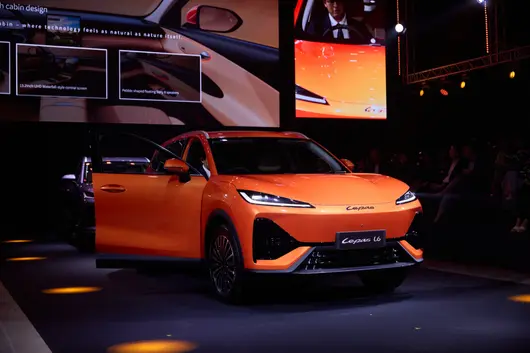
In this wave of "nothing works faster than speed," Chery Fengyun T7 appears a bit out of place.
On August 9, "Auto Man Old Xu" publicly questioned on Weibo: Others have finished the facelift for three generations of cars, but Fengyun T7 is still "coming soon". Is this due to poor R&D efficiency, or is there another reason? After the question was raised, Li Xueyong, Executive Vice President of Chery Automobile, gave three responses to "cannot be fast" — R&D cannot be fast, testing cannot be fast, co-creation cannot be fast.
To be honest, this response sounds quite official. But if you see what Fengyun T7 has actually been doing over the years, you might understand a bit.

Fengyun T7 is not a "China-exclusive car" — it is called LEPAS L6 overseas. South Africa has already pre-sold, Thailand has already launched, and it will subsequently enter over 130 countries and regions including the EU, Australia-New Zealand, UK, etc. A car must meet regulatory standards of so many countries at the same time; just in terms of regulatory adaptation, this cannot be completed in 18 months.
Let's look at testing. Fengyun T7 has cumulatively invested 963 test vehicles, with global durability test mileage reaching 1.45 million kilometers. Test routes cover the EU, Australia, South America, Middle East, Southeast Asia, Russia, experiencing extreme environments such as high temperature, extreme cold, high humidity, and high salinity. This is not beautiful data run out in a lab, but polished inch by inch on real extreme road conditions. Regarding safety, it benchmarks the 2026 version E-NCAP Five-Star standards, covering four dimensions: safe driving, collision avoidance, collision protection, and post-collision safety. These testing phases cannot be saved on any single one, nor can any be rushed.

Additionally, there are the top 10 global R&D design centers, over a hundred designers collaborating, and over 1,000 global users deeply co-creating. From design to verification to user feedback polishing for a car, every link requires time.
Of course, from the consumer's perspective, whether these reasons for "slowness" hold water is a topic worth discussing. After all, the market waits for no one — while you spend five years polishing a car, competitors may have already completed the iteration of two generations of products. Technology updates so fast, will long-cycle R&D lead to obsolescence upon launch? For this question, I'm afraid no one can give a standard answer.

But thinking from another angle, building cars is ultimately not building phones. If a phone has bugs, a restart fixes it; if a car has issues on the highway, that is a life-threatening matter. Rather than letting users act as "test drivers" to find issues after launch, it's better to solve all issues before launch. Fengyun T7 follows a path of "go overseas first, then return home" — first run around the globe to verify quality, then return to the domestic market. This path spends several times more time than "rapid production", but every step is unavoidable.
At the end of the day, this controversy of "fast and slow" reflects the clash of two car-building logics: one treats cars as fast-moving consumer goods, pursuing speed and traffic; the other treats cars as durable goods, obsessing over quality and safety. "Rapid-production cars" being stopped is never about the ability to iterate quickly, but rather about neglecting safety and perfunctorily handling quality.

Is Fengyun T7's "slowness" actually a shortcoming in R&D efficiency, or is it a time cost that a global car must pay? This question, perhaps only after it truly launches and stands the test of the market and time, can we get a clear answer.
Do you think, when it comes to building cars, should it be fast or should it be slow?