首頁puzzle

搜尋歷史
熱門搜尋
經銷商登入 / 註冊

喺馬來西亞嘅 SUV 市場,好多買家喺揀車嘅時候都會拿 Proton X90 同 Mazda CX-8 做比較。呢兩款車喺價位同定位上都好接近,今日我哋就由多個方面做一個詳細嘅比較,幫你省返做功課嘅時間。
Proton X90 喺馬來西亞嘅 OTR 售價係 RM 106,800 - 122,800,一共有 4 個版本,包括 2026 1.5T Prime X(RM 122,800)、2026 1.5T Prime(RM 116,800)、2026 1.5T Lite(RM 106,800) 等。
Mazda CX-8 喺馬來西亞嘅 OTR 售價係 RM 165,360 - 201,360,一共有 5 個版本,包括 2025 2.5T 4WD High Plus Petrol(RM 201,360)、2025 2.2L 2WD High Plus Diesel(RM 193,123)、2025 2.5L 2WD High Plus Petrol(RM 186,360) 等。
由價錢睇,Proton X90 嘅起步價真係比 Mazda CX-8 平咗 RM 58,560。如果你預算有限,Proton 嘅入門版已經可以滿足日常需要。但亦都要注意,便宜嗰幾千蚊,可能會喺配備上有取捨,具體就要睇你嘅需要。

Proton X90 嘅安全評級係 5★ (ASEAN NCAP),主動安全系統包括 ADAS (ACC, AEB, LKA, LDA, BSM, RCTA)。
Mazda CX-8 嘅安全評級係 5★ (ASEAN NCAP),主動安全系統包括 Brand ADAS。
兩款車嘅安全評級一樣,喺呢個級數入面安全配備都算好齊全啦。而家嘅新車安全性都唔錯,唔使太擔心呢一點。

Proton X90 採用 FWD 驅動方式。
Mazda CX-8 採用 FWD 驅動方式。
兩款車嘅驅動方式一樣,都係 FWD,日常駕駛感覺唔會有太大分別。

Proton X90 同 Mazda CX-8 都係馬來西亞市場嘅主流選擇,適合家庭使用、日常通勤。如果你更重視品牌口碑同二手價,可以優先考慮口碑更好嗰一款;如果你更在意性價比同配備,嗰就揀配備更豐富嗰款。最後都係建議兩款都去試駕,親身體驗先至係最重要嘅。

總括嚟講,Proton X90 同 Mazda CX-8 都係馬來西亞市場好唔錯嘅車型。揀邊輛,關鍵始終都要睇你嘅個人需求同預算。建議大家做好功課,多比較幾間車行嘅報價,再去做試駕做最後決定。買車係件大事,花少少時間做功課絕對唔會錯。


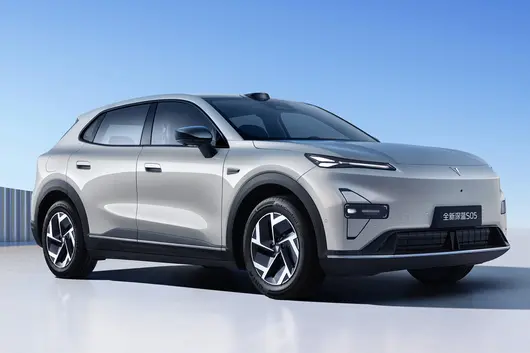
August 6, the new Deepal S05 was launched. Five models, limited-time discounted price ranging from 115,900 to 144,900 RMB.

Olympic Champion He Kexin stood on the launch event stage, supporting this car as an owner. But what truly makes people remember this car is not the spokesperson, but a set of numbers: "150,000 RMB L2-3", meaning one LiDAR, two Horizon Robotics J6M chips, one-segment end-to-end algorithm, 3nm automotive-grade cockpit chip, FSD+HRS variable adaptive suspension, all packed into a car under 150,000.
One year ago, this configuration belonged only to flagship models above 250,000. Now, the new Deepal S05 packs technology previously exclusive to high-end cars into the mainstream price range all at once.
Intelligent Driving is Moving from "Optional" to "Standard"
The strongest card of the new Deepal S05 is the Tianshu Pilot Intelligent Driving Assistance System. 27 perception sensors on the entire vehicle, including 1 LiDAR. Two Horizon Robotics J6M chips provide 256 TOPS computing power, running the one-segment end-to-end algorithm.

What is the difference between end-to-end algorithms and traditional intelligent driving? Traditional systems rely on engineers writing rules, while end-to-end allows the car to learn driving strategies directly from sensor data, shifting from "machine execution" to "human-like decision making". 90-plus lane assist functions cover 99% of daily high-frequency road conditions. More worth mentioning is the full-scenario roaming assistance, which does not require high-precision maps and can find its own way in parks and country roads.
The cockpit is no slouch either. The 3nm automotive-grade cockpit chip allows the infotainment chip and top-tier mobile phone chip to use the same process for the first time. The industry is generally still using 7nm or even more backward processes. Coupled with the 15.6-inch 2.5K Sunflower Screen, 18-speaker audio system, and four-map fusion real-scene navigation, this cockpit is indeed a bit "above standard" for the 150,000 class.

Regarding the chassis, the FSD+HRS high-order variable adaptive suspension is standard across the entire range. FSD adjusts damping hardness in real-time, and HRS uses hydraulic rebound buffering to eliminate small bumps. In actual driving: no head dip during braking, no body roll in corners, and no bumpiness on rough roads.
Range offers two versions, 520 km and 620 km. Zero-to-hundred acceleration is 6.28 seconds. The 3C Super Charging is standard across the range, charging from 30% to 80% takes only 15 minutes. Home charging costs 6 cents per km. The battery uses CATL cells and the Golden Shield Battery, with imperceptible degradation over 600,000 km.

Space does not lag behind either. The 2,880 mm wheelbase is more than 100 mm longer than mainstream competitors in the same class. 4,620 mm length, 1,900 mm width. A compact size delivers mid-size space. 159 L front trunk, 492 L double-layer trunk, 37 storage spaces throughout the car. Passengers can cross their legs in the rear seat. A family of five can go out without feeling cramped.
150,000-class SUV Market is Being Reshuffled
In 2026, the compact pure electric SUV market has split into two camps.
On one side are the "Hardware Aggressive Camp" represented by Aion N60 and Leapmotor C10, packing LiDAR, 600 km range, and Zero Gravity Seats into the configuration list. On the other side is the "Prudent and Practical Camp" represented by BYD Yuan PLUS and Sea Lion 05 EV, defending the basic market with mature three-electric systems, after-sales service outlets, and resale value.
Deepal S05 takes the third path. It did not overturn the original product skeleton, but rather on the "Large Space + Long Range" hit formula, pulled intelligent driving capabilities to the forefront of the class. This strategy is smart. S05 already has a good foundation: 2,880 mm wheelbase, 620 km range, 3C Super Charging. Facelift upgrades need only target three areas where consumers complain most: is the intelligent driving hardware top-tier enough, is the cockpit chip new enough, and is the suspension shock absorption refined enough.

In comparison, the BYD Yuan PLUS 2026 model 630 km Excellent Edition has a guide price of 149,900 RMB. Its three-electric system is mature, outlets are numerous, and resale value is high, but intelligent driving configuration is relatively basic. The Aion N60 has LiDAR standard across the range, but cockpit materials involve compromises. Deepal S05, with a starting price of 115,900 RMB, packages LiDAR, end-to-end algorithm, 3nm cockpit chip, and variable suspension all at once. In the same price range, this combination has almost no competitors.
Competition in the 150,000-class pure electric SUV market is shifting from "Range & Space" to "Intelligent Driving & Chassis". LiDAR, adaptive suspension, and other configurations previously belonging to 300,000-class models are accelerating downward. In this window period, whoever solidifies the experience and reputation of high-order intelligent driving first will establish cognitive first-mover advantages in the 150,000-class market.
One Car Supports Half a Brand
S05's significance to Deepal goes far beyond being a key model.
According to public data, S05 accounts for about 57% of Deepal brand sales. In the first half of 2026, Deepal's monthly sales were stable at around 30,000 units. One car, S05, supports half the market. Deepal's global sales target for 2026 is 480,000 units, with 340,000 domestic and 140,000 overseas. Whether S05 can continue to perform well largely determines whether this target can be achieved.

More crucially, Deepal is undergoing a brand-level integration. Changan Automobile has announced a strategic integration of the Avatr and Deepal two brands, expected to be completed by the end of 2026. After integration, Deepal will focus on the 150,000-300,000 RMB mainstream new energy market, aiming for 1 million annual sales by 2030. Deepal is Changan's vanguard in the mainstream electric market, and S05 is the sharpest knife in that vanguard's hand.
At the same time, Deepal S05 is also the pioneer of Changan's Open & Inclusive Plan 2.0. The first new car to roll off the line from the Rayong Factory, Thailand, was the Deepal S05 Right-hand drive version. It has already entered 73 countries and regions globally. This is not a new car starting from zero, but a product already verified in the global market.

Final Thoughts
The launch of the new Deepal S05, on the surface, is a product facelift, but essentially it is a strategic positioning by Deepal in the wave of intelligent driving democratization.
LiDAR costs are dropping rapidly, and end-to-end algorithms are becoming an industry standard rather than a unique skill. What seems like an "above standard" config today might be an entry ticket in six months. What Deepal S05 does is, before the window period closes, pull the experience threshold of high-order intelligent driving to the lowest level, allowing more people to experience cross-level technology at mainstream prices.
This is not defense, it is offense. Using a hit model with monthly sales exceeding 10,000 units to redefine what a 150,000-class SUV should have. When LiDAR, end-to-end algorithms, and 3nm cockpit chips shift from high-end exclusive to mainstream standard, the entire industry's value anchor is being rewritten.


GM's world still exists, but there aren't enough new cars.
Author|Liu Xinyi Editor|Mao Shiyang
Auto Pixel (ID:autopix)Original
SAIC-GM's farewell and rebirth arrived in almost the same month.
On August 5, SAIC and GM extended SAIC-GM's joint venture term by 20 years, until 2047.
Four words stood on site: Together to a New Realm. Along with the renewal, the new task for this joint venture was also confirmed.
Three weeks later, on August 28, the Buick Envision 2026 model will be discontinued in the US.
The two events are independent but coincided in the same month.
The Envision story goes back eleven years. At the end of 2015, the first batch of Envisions destined for North America departed from Yantai Port, entering Buick dealerships in the US, Canada, and Mexico the following year. Over the next ten years, cumulative exports reached 420,000 units. After 2017, it became GM's only model imported from China to the US.
Starting in 2018, the Envision bore a 25% tariff, and GM's application for exemption was unsuccessful. On January 22, 2026, GM announced stopping production of Envisions for the US market in China; the next generation will move to the Fairfax, Kansas factory in 2028.
By May this year, the inventory cycle for this model in the US had exceeded 300 days.

▍Old photo of Buick Envision at Yantai Port
One door is closing, while another is opening. According to the arrangement after the renewal, the Buick Zhijing series independently developed by SAIC-GM will be exported overseas starting from October this year, with target markets including the Middle East, Africa, South America, Mexico, and Asia-Pacific.
Tariffs shut out the US car market, and GM hands the world outside to Shanghai.
01
Outside the US, GM is Short of Cars
This renewal did not change the 50:50 equity ratio, nor disclose new investment amounts. What changed is the division of labor.
At the signing ceremony, GM Global Senior Vice President and China President Luo Xu said, SAIC-GM has established local capabilities in engineering, manufacturing, and quality, "We can bring these advantages to the international markets of the Middle East, Africa, South America, Mexico, and the Asia-Pacific region", relying on GM's existing sales and service layouts in these regions.
In organizational language, what he revealed is that SAIC-GM and Pan Asia define the products, while GM provides global channels outside the US market.
The specific implementation method is quite light. SAIC-GM will not build its own sales network overseas, but will fully reuse GM's existing system.
The first exported car is the Buick Zhijing E7, with the first stop in South Korea. GM Korea is responsible for pricing, marketing, and after-sales, while SAIC-GM is only responsible for production, supply, and technical support. Later in other markets, a similar model is expected to be used.
The flow of products and resources has changed. In the past, GM brought global products to China; next, SAIC-GM will send products developed in China back to the world.
This is not common in "Joint Venture 2.0". When most foreign parties allow Chinese joint ventures to go global, they first demarcate their core markets. GM did not give SAIC-GM just an edge market to test the waters; it opened the Middle East, Africa, South America, Mexico, and Asia-Pacific all at once, almost including everything GM owns outside the US. And it allows Chinese products to directly connect to its sales and service system built over many years.
Why now, why these markets, the answers are written on GM's two reports respectively.

▍Group photo when GM Brazil was founded in 1925
The first is North America. In Q2 2026, GM North America's adjusted EBIT margin reached 8.6%, full-size pickup share 43%, No. 1 for the seventh consecutive year. The company raised its performance guidance for the second time this year, raising the adjusted EBIT expectation to $14-16 billion.
This is a self-sustaining machine, expensive, large, high-spec, with brand premium, plus the cash flow of subscription services. It does not need external funding and less external products.
The second report is outside the US.
In 2025, the US market contributed nearly 70% of GM's global sales. Following the US were China, Uzbekistan, Brazil, Kazakhstan, Colombia, Chile, Ecuador, Peru, Kuwait. Apart from the US and China, the rest are all emerging markets.
The cars these markets want have almost no overlap with the cars produced by that machine in North America.
And GM's position in these places is very uneven.
Mexico remains GM's stronghold, market share long second only to Nissan. South America slowed down in defense: In 2025, GM's share in Brazil dropped from 12.0% to 10.3%, Volkswagen rose to 17.1%, BYD rose to 4.4%.
The absence in the Middle East is even more obvious. In Saudi Arabia, GM has fallen out of the top mainstream brands, while SAIC MG has entered the top sales list. Africa has left a damaged network; Egypt still has manufacturing and operational systems, but GM has long exited the major business of South Africa and East Africa.
For Mexico and South America, SAIC-GM is defending the ring; for the Middle East, it's supplementing products; for Africa, there is a hint of returning to old markets.
02
Ultium Failed to Stitch GM Together
In 2014, Mary Barra became GM's first female CEO.
The GM she took over had just emerged from bankruptcy restructuring, still retaining a huge global business map. Opel and Vauxhall in Europe, Chevrolet laying networks in India, South Africa, and Southeast Asia, Holden stayed in Australia, Korea Daewoo system responsible for small cars, Brazil responsible for South American products.
These businesses allowed GM to maintain the image of a global automaker, but also kept it burdened with the costs of a global automaker for a long time.

Mary Barra adopted a clear financial standard. If a business cannot generate sufficient returns, it is no longer retained due to scale, history, or global status.
From 2015 to 2020, GM began to intensively take action against markets that could not generate sufficient shareholder returns, withdrawing from Europe, Russia, India, Southeast Asia, and Australia, selling Opel, Vauxhall, and the Thailand factory.
Profit discipline achieved results, capital gradually flowed to large cars North America was best at; the cost was that GM simultaneously dismantled the product system serving global needs.
Opel once provided front-wheel-drive sedans and European engineering capabilities, Holden mastered rear-wheel-drive platforms, Korea was responsible for low-cost small cars. After exiting these markets, GM also lost most of the capabilities to serve global needs.
By 2020, GM had basically completed global contraction. North America kept pickups, large SUVs, and high-profit fuel cars; China still had a huge joint venture system; markets like South America, Korea, Middle East were compressed into regional businesses maintaining their own profitability.
They were like isolated islands scattered on the world map. With the competitive landscape unchanged, they could continue to exist relying on inertia, contributing limited but stable profits.
But now, competition has intensified.
In 2025, the Brazilian car market continued to grow, but GM's share dropped from 12.0% to 10.3%; Volkswagen rose to 17.1%, BYD rose to 4.4%. In the Mexican market, GM's sales dropped 3.4%, while Nissan, Toyota, Kia, and Mazda all grew.
The results are written on GM's International Operations (GMI) report outside North America. In 2025, GMI wholesale sales dropped 8.1%, revenue dropped 3.3%; excluding Chinese joint venture business, adjusted EBIT dropped 32.8%, leaving only $426 million.
What these regional businesses lacked was not brand and channels, but a set of new products that could be continuously delivered to dealerships.
GM certainly knew the side effects of contraction. Once contraction was basically completed, Mary Barra had to find a new technical base, without re-establishing those regional R&D centers, to reconnect North America, China, and the remaining international markets.
Electric vehicles seemed to provide this opportunity exactly.
By 2019, Tesla had completed the difficult climb of Model 3, delivering 367,500 units for the year; the Shanghai factory from groundbreaking to delivery took less than a year, proving that a highly centralized model, battery, and software system can be quickly replicated between the US and China.
The signal from the capital market was more direct. In January 2020, Tesla's market value surpassed GM and Ford combined for the first time, and exceeded Toyota six months later. For GM which had just completed global contraction, electrification not only represents the future of the auto industry but also provides a shortcut to cover the global again without rebuilding the old system.
Starting in 2018, GM turned the funds saved after cutting losses to electrification and autonomous driving; by March 2020, GM officially released Ultium and promised to invest over $20 billion before 2025. China subsequently held the corresponding technology release.
Ultium's engineering ambition is huge. GM hopes it will simultaneously cover compact crossover vehicles, SUVs, Hummers, and large pickups, and allow North America and China to share scale, supply chain, and R&D costs.

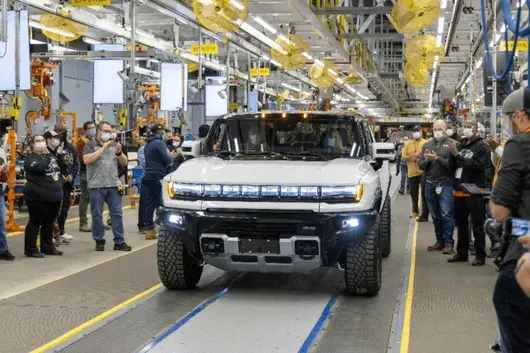
But the product that first proved Ultium was the Hummer EV equipped with about 205 kWh batteries. This number is double the common battery capacity of China's mainstream large pure electric vehicles. From the beginning, Ultium was pulled towards American-style large cars by the goals of ultra-long range, thousand-horsepower power, and large pickups; it can continuously add modules to cover upwards, but it is difficult to use the same system to build down cheap models.
More fatally, GM bet on the wrong direction of market convergence. Ultium bet on highly modular battery cells, modules, and e-drive to拼出 as many models as possible; the place where markets truly form barriers has shifted to software, electrical/electronic architecture, and continuous iteration capabilities, while model diversity is actually converging.
In April 2026, GM notified suppliers to indefinitely postpone the development of the next generation Silverado EV and Sierra EV models; major platform updates are not expected until after 2030.
China, however, quickly shifted to lower-cost lithium iron phosphate, faster charging speeds, plug-in hybrids and range extender, and smart cockpits and assisted driving driven by local suppliers.
The base originally used to unify China and the US ultimately failed to connect either end.
Ultium did not stitch GM back together after it was dismantled. It left behind battery, e-drive, manufacturing, and safety verification capabilities, and made an inescapable conclusion: North America, China, and outside the US can no longer be defined by the same base.
03
SAIC-GM, Established Twice
At the end of 2024, SAIC-GM was not facing how to go global, but whether this company was worth continuing to exist.
That year, SAIC-GM sales dropped to 435,000 units, down 56.54% year-on-year, the largest decline among SAIC Motor's whole vehicle enterprises. In December, GM accrued 2.6 to 2.9 billion USD in impairment for its Chinese joint venture business, and confirmed about 2.7 billion USD in restructuring costs, totaling over 5 billion USD.
This money was both a settlement for the past and drew the survival line for SAIC-GM.
Ultium did not bring the expected transformation to the China business, and Detroit had no other mature global plan to send over. SAIC-GM must reduce scale, restore profitability, and rely on the China team to re-answer the most basic question: How exactly should the next generation of products be built.
In April 2025, the Xiaoyao Architecture and Buick's high-end new energy sequence Zhijing were released together.
Xiaoyao retained Ultium's e-drive, manufacturing, and safety accumulation, but the technical route has shifted to China: batteries switched to 6C Lithium Iron Phosphate, power covers pure electric, plug-in hybrid and range extender, electronic/electrical architecture also shifted to central computing.
More important than parameter changes is that product definition rights remain in China.
In the past, Pan Asia mainly adapted Detroit platforms for China. With Xiaoyao and Zhijing, technical routes, product forms, prices, and supply chains started to be defined by the China team.
The results came faster than expected.
Zhijing L7 first stabilized in the mid-to-large new energy sedan market; on April 22, 2026, Zhijing E7 went on sale, with the lowest trade-in equity price of 154,900 yuan, breaking 10,000 major orders within 90 minutes of launch, exceeding 10,000 deliveries in the first month, becoming the first joint venture new energy model to achieve this.

The reversal at the operational level started earlier. In 2025, SAIC-GM sales rebounded to 535,000 units, up 22.99% year-on-year; GM's business in China achieved profitability for consecutive quarters.
It first proved it no longer needed continuous blood transfusion from headquarters, and then proved that new energy vehicles defined by the China team can obtain the market.
Thus, the direction of renewal discussion changed. From whether SAIC-GM needed to continue existing to how to maximize its value.
This capability did not appear suddenly. In 1997, Pan Asia and SAIC-GM were established on the same day, going from localization, model modification all the way to whole vehicle forward development. In 2010, the new S-Orio developed throughout Pan Asia went on sale and went overseas; in over twenty years, it developed over 30 series and over 150 models for Buick, Chevrolet, and Cadillac.
In the past, this capability was mainly used to change GM's global products into what China needs. In the Zhijing era, the direction reversed; products defined by the China team began to fill the gaps in GM's global product line.
Chinese joint ventures outputting products in reverse is no longer an isolated case. Volkswagen, Nissan, Mazda, and Kia are all sending models developed and produced in China overseas.
The real difference is the scale of openness; the more important overseas profits and capacity are, the clearer the boundaries drawn by the foreign side are; the more the overseas system needs replenishment, the larger the space gained by the China team.
GM's speciality lies in that its most protected North American profit core has almost no conflict with products SAIC-GM can provide. What GM needs most to protect is large pickups and SUVs in North America, which happen to fill the product gaps in GM's overseas network.
South America, Korea, Middle East, and Africa still have GM's brands, factories, and channels, but new product supply has become thin. Incorporating Chinese models is faster and cheaper than rebuilding R&D systems for each region.
Eleven years ago, the Envision sailed from Yantai to the US, China's role in GM's global system was still a manufacturing base. Eleven years later, SAIC-GM went global again with products it defined itself.
What GM handed over was not a world still growing, but a network where channels are still valuable but products are increasingly cut off. What SAIC-GM obtained was not a ready-made market, but the power to repair it.
This 20-year contract is not just a continuation of the previous joint venture relationship. It is more like SAIC-GM's second establishment.

This article is original content by Auto Pixel (autopix)
Unauthorized, do not reproduce

In the SUV market in Malaysia, many buyers compare the Proton X70 and Toyota Yaris Cross when choosing a car. These two cars are quite close in terms of price and positioning. Today, we will do a detailed comparison from multiple aspects to help you save time on research.
The OTR price for the Proton X70 in Malaysia is RM 106,800 - 122,300, with a total of 3 versions, including 1.5L Standard 2WD (RM 106,800), 1.5L Executive 2WD (RM 115,800), 1.5L Premium 2WD (RM 122,300), etc.
The OTR price for the Toyota Yaris Cross in Malaysia is RM 99,900 - 109,900, with a total of 2 versions, including 2026 1.5L Standard (RM 99,900), 2026 HEV 1.5L Standard (RM 109,900), etc.
From a price perspective, the starting price of the Toyota Yaris Cross is RM 6,900 cheaper than the Proton X70. Honestly, at this price range, the difference of a few thousand is not actually significant; the key is to look at the overall value for money and long-term usage costs.

The Proton X70 uses FWD drive configuration.
The Toyota Yaris Cross uses FWD drive configuration.
The drive configuration for both cars is the same, both are FWD, so there shouldn't be a huge difference in daily driving experience.

Proton X70 warranty 5 years/150,000km, maintenance interval every 10,000km or 6 months.
Toyota Yaris Cross warranty 5 years/unlimited mileage, maintenance interval every 10,000km or 6 months.
Both the Proton X70 and Toyota Yaris Cross are mainstream choices in the Malaysian market, suitable for family use and daily commuting. If you value brand reputation and resale value more, you can prioritize the one with better reputation; if you care more about value for money and features, choose the one with richer configurations. Finally, it is recommended to test drive both, as hands-on experience is the most important.
Overall, both the Proton X70 and Toyota Yaris Cross are quite good models in the Malaysian market. Which one to choose depends mainly on your personal needs and budget. It is recommended to do your research, compare quotes from several car dealerships, and then test drive to make the final decision. Buying a car is a big matter, spending some time doing research will definitely not be wrong.


In the Malaysian SUV market, many buyers compare the Proton X50 and Hyundai Tucson when choosing a car. These two vehicles are quite close in price and positioning. Today we will make a detailed comparison from multiple aspects to help you save time on research.
The Proton X50 OTR price in Malaysia is RM 89,800 - 113,300, with a total of 4 versions, including 1.5T Executive (RM 89,800), 1.5T Premium (RM 101,800), 1.5T Flagship (RM 113,300), etc.
The Hyundai Tucson OTR price in Malaysia is RM 143,888 - 197,888, with a total of 5 versions, including 2025 HEV 1.6T AT 2WD Prestige (RM 197,888), 2025 1.6T DCT 4WD Prestige (RM 186,888), 2025 1.6T DCT 2WD Prime (RM 164,888), etc.
From a price perspective, the starting price of the Proton X50 is indeed RM 54,088 cheaper than the Hyundai Tucson. If your budget is limited, the entry-level Proton can already meet daily needs. However, also note that the few thousand cheaper might mean compromises in features, it depends on your specific needs.

Proton X50 safety rating is 5★ (ASEAN NCAP), active safety systems include ADAS (ACC, AEB, LKA, LDA, BSM, RCTA).
Hyundai Tucson safety rating is 5★ (ASEAN NCAP), active safety systems include SmartSense.
Both cars have the same safety rating, safety features are quite comprehensive in this class. New cars nowadays are not lacking in safety, no need to worry too much about this.

Proton X50 body length 4400 mm, boot 400 L.
Hyundai Tucson body length 4400 mm, boot 400 L.
Both cars are almost the same size, cabin space is not much different. Cars in this class are more than enough for daily use.

Proton X50 and Hyundai Tucson are both mainstream choices in the Malaysian market, suitable for family use and daily commuting. If you value brand reputation and resale value more, prioritize the one with better reputation; if you care more about value for money and features, choose the one that is better equipped. Ultimately, it is recommended to test drive both, personal experience is the most important.

Overall, Proton X50 and Hyundai Tucson are both quite good models in the Malaysian market. Which one to choose depends mainly on your personal needs and budget. It is recommended to do your research, compare quotes from several dealerships, and then test drive to make a final decision. Buying a car is a big matter, spending time researching will never be wrong.


喺馬來西亞嘅汽車市場,好多買家喺揀車嘅時候都會拿 Honda WR-V 同 Mazda CX-8 嚟做比較。今日我哋從多個方面做一個詳細嘅比較,幫你省下做功課嘅時間。

Honda WR-V 喺馬來西亞嘅 OTR 售價係 RM 89,900 - 107,900,一共有 4 個版本,包括 2023 1.5L V(RM 99,900)、2023 1.5L E(RM 95,900)、2023 1.5L S(RM 89,900)等。
Mazda CX-8 喺馬來西亞嘅 OTR 售價係 RM 165,360 - 201,360,一共有 5 個版本,包括 2025 2.5T 4WD High Plus Petrol(RM 201,360)、2025 2.2L 2WD High Plus Diesel(RM 193,123)、2025 2.5L 2WD High Plus Petrol(RM 186,360)等。
從價錢睇,Honda WR-V 嘅起步價真係比 Mazda CX-8 平咗 RM 75,460。如果你預算有限,Honda 嘅入門版已經可以滿足日常需求。但都要注意,平嗰幾千塊,可能在配備上會有取捨,具體要看你嘅需求。
Honda WR-V 嘅安全評級係 5★ (ASEAN NCAP),主動安全系統包括 Honda SENSING。
Mazda CX-8 嘅安全評級係 5★ (ASEAN NCAP),主動安全系統包括 Brand ADAS。
兩款車嘅安全評級一樣,喺呢個級別入面安全配備都算好齊全。而家嘅新車安全性都唔差,唔使太擔心呢一點。
Honda WR-V 採用 FWD 驅動方式。
Mazda CX-8 採用 FWD 驅動方式。
兩款車嘅驅動方式一樣,都係 FWD,日常駕駛感受唔會有太大區別。

Honda WR-V 保修 5 年/無限制里程,保養間隔 每 10,000km 或 6 個月。
Mazda CX-8 保修 5 年/150,000km,保養間隔 每 10,000km 或 6 個月。

總括嚟講,Honda WR-V 同 Mazda CX-8 都係馬來西亞市場幾唔錯嘅車型。揀邊台,關鍵仲係睇你嘅個人需求同預算。建議大家做好功課,多比較幾間車行嘅報價,再去試駕做最終決定。買車係件大事,花少少時間做功課絕對唔會錯。


Folks, today let's talk about big news on going global—not selling cars, but selling "drivers". On June 2, WeRide and Uber jointly announced a plan: to launch the country's first commercial Robotaxi pilot service in Madrid, Spain. In other words: Spanish residents will soon be able to hail a driverless taxi via Uber. This is the first time WeRide and Uber are partnering to enter the European market. Madrid also becomes the 12th city globally where WeRide's Robotaxi arrives.
According to official news, with the support of the Madrid regional government, this service will officially launch within this year. At that time, friends in Madrid can open the Uber App and call WeRide's Robotaxi with one click. It's just like calling an ordinary ride-hailing service, the difference is the arriving car has no driver—at least initially, there is still a difference. In the initial operation phase, a professionally trained safety monitor will be on board, as it's just launched, safety comes first.
This company, WeRide, you might have heard of it, or you might not. A brief introduction: Established in 2017, it has been dedicated to Robotaxi technology R&D and commercialization. Currently, its Robotaxis cover Guangzhou, Beijing, Singapore, Abu Dhabi, Dubai, Riyadh, Zurich... plus Madrid now, totaling 12 cities. Spain is also the 5th European market WeRide has entered—previously entered Switzerland, France, Belgium, Slovakia. According to the plan agreed by WeRide and Uber in May 2025, they plan to deploy Robotaxi services in 15 new international cities within five years, deploying tens of thousands of Robotaxis globally. With the Madrid launch, the deployment in 4 cities has been completed, and 11 more will be covered successively before 2030.
To be honest, it's not the first time Chinese autonomous driving companies are going global, but the combination of Chinese technology + global mobility platform + European market is quite interesting. Madrid is one of the European Robotaxi markets with the most commercial potential, with a large population, high travel demand, and friendly local policies. Being able to take root in this market is a significant milestone for WeRide. For Uber, introducing Robotaxis is also a way to reduce costs—after all, drivers don't need salaries. For Madrid residents, hailing a taxi might be cheaper in the future.