


首頁nutrition

搜尋歷史
熱門搜尋
經銷商登入 / 註冊

In the SUV market in Malaysia, many buyers compare Proton X90 and Chery Tiggo Cross when choosing a car. These two cars are quite close in price and positioning. Today, we will do a detailed comparison from multiple aspects to help you save time on research.
Proton X90's OTR price in Malaysia is RM 106,800 - 122,800, with a total of 4 versions, including 2026 1.5T Prime X (RM 122,800), 2026 1.5T Prime (RM 116,800), 2026 1.5T Lite (RM 106,800), etc.
Chery Tiggo Cross's OTR price in Malaysia is RM 88,750 - 99,750, with a total of 2 versions, including 2025 HEV 1.5L CSH (RM 99,750), 2025 1.5T Standard (RM 88,750), etc.
In terms of price, the starting price of Chery Tiggo Cross is RM 18,050 cheaper than Proton X90. To be honest, in this price range, a difference of a few thousand is actually not that big, the key is to look at overall value for money and long-term usage costs.

Proton X90 adopts FWD drive mode.
Chery Tiggo Cross adopts FWD drive mode.
The drive modes of both cars are the same, both are FWD, so there will not be much difference in daily driving feel.

Proton X90 warranty 5 years/150,000km, maintenance interval every 10,000km or 6 months.
Chery Tiggo Cross warranty 3 years/100,000km, maintenance interval every 10,000km or 6 months.

Proton X90 and Chery Tiggo Cross are both mainstream choices in the Malaysian market, suitable for family use and daily commuting. If you value brand reputation and resale value more, you can prioritize the one with a better reputation; if you care more about cost-performance ratio and features, choose the one with richer configuration. Ultimately, it is recommended to test drive both models, as personal experience is the most important.

Overall, Proton X90 and Chery Tiggo Cross are both very good models in the Malaysian market. Which one to choose depends mainly on your personal needs and budget. We recommend doing your homework, comparing quotes from several car dealerships, and then test driving to make a final decision. Buying a car is a big matter, spending some time researching will never be wrong.


【CNMO 科技消息】7 月 29 日,據@電車出海 整理發布嘅數據,2020 年至 2026 年上半年,十間中國新勢力車企海外純電累計銷量排名揭盅。該榜單統計咗 39 個國家同地區嘅銷量,其中,小鵬汽車以 105,245 輛位居第一位,亦係榜單入面唯一累計銷量超過 10 萬輛嘅品牌。

小鵬
零跑汽車以 77,279 輛排名第二,同小鵬一齊組成榜單第一梯隊。歐拉累計銷量為 51,653 輛,位列第三,亦係除小鵬、零跑外,唯一突破 5 萬輛嘅品牌。第四至第六名依次為埃安、極氪同深藍,累計銷量分別為 44,047 輛、39,899 輛同 31,588 輛。其中,埃安距離 5 萬輛仲差 6,000 輛左右,極氪則接近 4 萬輛,三間品牌嘅成績均集中在 3 萬至 4.5 萬輛區間,騰勢以 15,427 輛位列第七,蔚來同智己嘅累計銷量較為接近,分別為 7,502 輛同 7,049 輛,排名第八同第九;嵐圖累計銷量為 3,247 輛,位列第十。


據分析,小鵬銷量斷層式第一與其對歐洲同亞太嘅深耕佈局脫唔離。數據顯示,小鵬海外 60% 嘅銷量嚟自歐洲,今年上半年歐洲 21 國賣咗 1.8 萬輛左右,21 國全線飆升,同比增長 154%。同時亞太市場亦喺度發力,泰國、馬來西亞、新加坡、澳洲等國家貢獻咗 20% 嘅銷量。


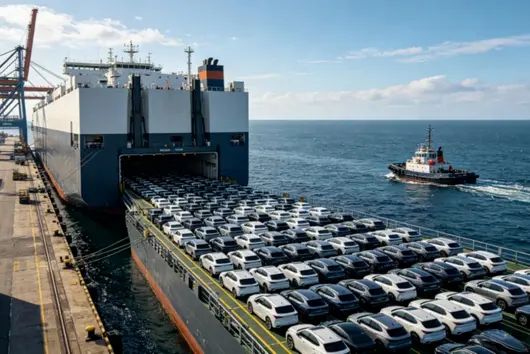
The pace of the Chinese automotive industry going global has been faster than anyone anticipated.
On July 9, the China Association of Automobile Manufacturers revealed H1 data: In June alone, Chinese auto exports reached 1.037 million units, a 75.1% year-on-year increase, achieving single-month exports over 1 million for the first time; from January to June, cumulative exports hit 5.096 million units, a 65.3% year-on-year increase, and semi-annual exports broke through 5 million units for the first time.
The full-year export target of 7.4 million units set at the beginning of the year now appears too conservative. Based on current growth rates, achieving 10 million units in full-year exports has become a high-probability event. However, beyond the breakthrough in sales figures, the structural changes behind them are worth more attention. Domestic car sales for the first half of the year were only 9.921 million units, a 21.1% year-on-year decrease, while exports accounted for nearly 40% of passenger car production.

In this magnificent wave of going global, which companies are leading the pack? Which models are selling the best? Which markets are the main drivers for growth? Where is the next trend?
Overview of Company Exports
With the continuous surge in the scale of going global, the overseas layout of domestic automakers has differentiated into clear tiers, with the top tier forming a pattern of "one dominant leader and multiple strong contenders".
Chery Group sat firmly in the top spot with a H1 export figure of 943,800 units, up 71.5% year-on-year. Notably, Chery's exports accounted for 69.5% of its total sales, and for three consecutive months from April to June, overseas sales share exceeded 70%. June single-month overseas sales reached an all-time high of 191,000 units. For every car sold domestically, Chery sold nearly three overseas, showing that exports have become Chery's absolute primary growth pole.

Following closely, BYD delivered a H1 export performance of 789,000 units, up 71% year-on-year, with June single-month exports reaching 170,900 units alone. Especially in the new energy export niche, BYD's advantage is more obvious. In the first half of the year, new energy exports reached 769,300 units, with a market share as high as 34.5%. In other words, for every three exported new energy vehicles, nearly one was a BYD.
Geely Automobile was the most eye-catching dark horse in terms of growth rate: Exporting 474,200 units in the first half of the year, up 158% year-on-year, with a growth rate leading among top automakers; June overseas sales broke 100,000 units for the first time, reaching 102,900 units. In terms of new energy exports, Geely's increase was even more stunning, with H1 new energy exports reaching 275,400 units, surging 601.4% year-on-year.
SAIC, relying on its well-perfect multi-brand globalization matrix, also remains firmly in the first tier. Overseas wholesale sales in the first half of the year reached 735,000 units. Its MG brand has cultivated the European market for many years and has ranked first in Chinese brand sales in Europe for 11 consecutive years. Great Wall Motor has steadily progressed overseas pacing, with H1 exports of 291,400 units, up 47.4% year-on-year, and the overseas market maintained stable expansion.

From the perspective of niche sectors, the competition landscape of new energy exports reflects the strength of each company more. In the top 10 list of new energy export manufacturers in the first half of the year, BYD firmly stayed in the first place, with Chery and Geely in second and third place, corresponding new energy export volumes of 290,300 units and 275,400 units respectively. Following them were Tesla China, SAIC Passenger Car, Leapmotor, Dongfeng, SAIC-GM-Wuling, Changan, and XPeng. Among them, Leapmotor's overseas breakthrough was particularly eye-catching. H1 overseas sales neared 100,000 units, exceeding its own total overseas sales for all of 2025 in just half a year.
Another worth mentioning is that in May 2026, across 31 European markets, BYD, SAIC, Geely, Chery, and Leapmotor, these five Chinese automakers sold a total of 138,400 new cars, up 65% year-on-year. Total sales for the first time exceeded the sum of six Japanese automakers such as Toyota and Nissan. The market share of Chinese brands locally jumped from 5.6% in May of the previous year to 10.7%. This was the first time Chinese automakers hit it out head-on against Japanese rivals in Europe, the world's third-largest automotive market.
Model Breakthrough and Market Map
The success or failure of going global ultimately depends on market acceptance. Focusing eyes from automaker tiers to specific models, from the disclosed market model performance, the outline of hit models is already very clear.
BYD Song Plus is the undisputed star model in the current export camp. In the first half of 2025, it topped the export model list with 134,000 units, a year-on-year increase of 184%; entering 2026, its overseas deployment pace accelerated further, continuously stocking from Southeast Asia to Western Europe, opening the situation with balanced design, extremely low usage costs, and accessible pricing, and is very likely to become the first true "Global Car" among Chinese brands.

From the technology route perspective, emerging markets such as Latin America and Southeast Asia focus on price-performance ratio, with 100,000 yuan range compact pure electric vehicles being the most popular; mature markets such as Europe are more accepting of plug-in hybrid SUVs in the 150,000-200,000 yuan price range under the influence of policies and usage habits. The pattern of pure electric and plug-in hybrid double line breakthrough is very clear.
Meanwhile, the more critical change is in price and technology. China's automotive export is accelerating from the old model of "low-price volume sales" to a leap of "value-based globalization". Zeekr's average export price per vehicle in the first half of the year approached 350,000 yuan, and there are plans to launch high-end models with a starting price exceeding 460,000 yuan overseas; Denza, Yangwang, and other high-end brands have also achieved simultaneous volume and price increases overseas. Intelligence is becoming the "new business card" for China's automotive export—Chery was the first to pass the EU UN/ECE R171 safety management system audit, equivalent to obtaining a "technical pass" for high-level intelligent driving export.

Turning eyes to the overall market map again, according to data from Gasgoo Automotive Research Institute, from January to May 2026, Brazil topped the list of China's passenger car export markets for the first time with an export volume of 372,000 units and a 178.7% year-on-year growth rate; Russia followed closely with 351,000 units and a 139.8% growth rate. These two markets alone contributed more than 40% of the top ten total.
Among them, Brazil's explosive growth was behind a special background: starting July 1, 2026, local new energy vehicle import tariffs will rise from 25% to 35%, causing dealers to focus on抢运 in the first half of the year, pushing up shipment volumes. However, even if the short-term window closes, as the largest economy in Latin America, Brazil's long-term consumption potential remains solid.

The European market showed a situation of multiple points blooming: The UK ranked third with 189,000 units and 82% growth, Belgium, Italy, and Spain recorded export volumes of 156,000, 123,000, and 94,000 units respectively, with Italy's year-on-year increase reaching 140.7%. If Russia is included, the entire Europe has occupied half of China's passenger car exports.
However, under high growth, hidden worries are also showing: UAE export volume decreased by 32.6% year-on-year, and Mexico's drop reached 40%. The former is an adjustment period after high-speed growth, and the latter is directly impacted by the tariff hike in January this year. This also means that going global is no longer a blue ocean with everywhere growth. Tariff policy fluctuations and market cycle rotation shocks will always be normal variables the industry needs to face directly.
Where is the Next Trend?
In the market map of hot and cold differentiation, combined with H1 data trends and policy movements, there are three markets most likely to become the incremental core for the next stage of China's automotive exports.
The first worth mentioning is Brazil. Although new energy vehicle tariffs rose to 35% from July 1st and the short-term rush window is closed, this does not mean the end of market dividends. As the largest economy in Latin America, Brazil's automotive electrification has just started, and Chinese brands have laid the initial user perception with price-performance ratio and product power.
More critically, automakers like Chery have already established production capacity layout locally. Localized production can become a handle to bypass tariff barriers and deeply penetrate the market. Next, competition in the Brazil market will no longer be a simple comparison of export volumes, but a contest of localized operation depth.

The second trend belongs to Europe, which is the most contradictory yet most certain battlefield. The EU's anti-subsidy tariffs on Chinese pure electric vehicles have been in effect for nearly two years. Some automakers' comprehensive tax rates have exceeded 45%. At the moment, they are also brewing to include plug-in hybrid models into the tax scope, and the tariff wall seems to be getting higher and higher. But the actual trend is exactly the opposite: In May 2026, the market share of Chinese brands in Europe had surpassed Japanese automakers.
The more control, the more growth. The logic behind this is: The comprehensive advantages formed by Chinese new energy vehicles in 800V high-voltage platforms, integrated die-casting, self-developed batteries, and other technologies, just filled the supply gap during the global electrification transition period.
Tariffs will temporarily raise costs and compress profits, but cannot reverse product-side advantages. That is why top automakers are accelerating to respond to tariff barriers with localization: BYD's Hungary factory is expected to start whole vehicle assembly in the fourth quarter of 2026. Chery's joint venture factory in Barcelona, Spain achieved mass production by the end of 2025. The new M1 production line officially started production in June this year. "Trading localization for market" is the strategy currently consensus among automakers on the European battlefield.

And the third potential trend is Southeast Asia, traditionally regarded as the "backyard" of Japanese brands. From January to May, Malaysia ranked tenth in export destination countries with 78,599 units of export volume. This volume is not particularly outstanding, but the signal revealed behind is extremely strong: The Southeast Asian market has long been monopolized by Japanese brands. Now Chinese brands have torn a gap here.
SAIC MG has cultivated Thailand for many years and laid the foundation. Leapmotor plans to land European local production through Stellantis's Spain factory. As RCEP tariff dividends continue to be released, this region is very likely to become the next explosive growth point following Europe. Especially countries that have launched new energy vehicle incentive policies such as Thailand, Indonesia, Malaysia, etc.

Overall, the H1 export figure of 5.096 million units marks that China's automotive export has moved from testing the waters to the stage of harvest. But a clearer signal is that the competitive logic of the second half of the game has changed. Tariff barriers, geopolitical fluctuations, localized operations, every level is a hard battle.
As Chen Shihua, Secretary-General of the China Association of Automobile Manufacturers, said, export for the second half of the year should be maintained with "cautious optimism". But without a doubt, Chinese car brands have already stood at the center of the global stage. From "going out" to "going in" and then to "going up", this industry's deep reform has just opened the curtain.

Vehicle Overview

Whether the Audi RS 3 is worth buying depends not on how attractive it looks, but on whether it can meet your actual usage needs. This article will focus on insurance, road tax, tires, and daily energy costs.
The price is set at RM 673,600. Buyers can first use this to assess budget pressure and positioning within the same class.
Vehicle Purchase Price Guide
The purchase budget for the Audi RS 3 can be measured starting from RM 673,600. This number truly affects monthly installments, insurance, and cash flow, not just the displayed price in the showroom.
If you are hesitating between a few versions, you can put the 2025 Sedan 2.5 TFSI quattro (RM 673,600) on the same list for comparison. Daily commuters should prioritize comfort and safety, while frequent highway drivers should place more emphasis on power, driver assistance, and cabin convenience.
Core Specifications Summary
When looking at the Audi RS 3's core specifications, the most important thing is to translate the numbers into real-life feelings.
Turbocharging, a 5-cylinder power base, is suitable for judging whether city driving and highway cruising will be easy. An output of 400 Ps and 500 N·m truly matters in terms of not being too strenuous when fully loaded, climbing hills, and overtaking. The settings of the DCT dual-clutch transmission and all-wheel drive layout will affect startup smoothness, wet road stability, and long-distance cruising feel.
Pros and Cons Analysis
The pros of the Audi RS 3 do not need exaggeration; the truly valuable part is whether it makes daily use more worry-free: clear budget positioning, easy direct comparison with same-class cars, power output supporting highway and overtaking needs, and space/body dimensions facilitating family buyers to predict practicality.
It should be noted that the final trade-offs will fall on version configuration, insurance, and long-term maintenance costs. These are not negative points, but life details that should be clarified before placing an order.
Common Car Buying Questions
Before buying an Audi RS 3, the most common question from buyers is not a single specification, but whether it can fit into their lives.
Who is this car suitable for? Buyers who prioritize insurance, road tax, tires, and daily energy costs. What should family users look at? Prioritize rear seat riding, child seats, luggage, and whether getting in and out of the car for daily use is convenient. Will driving it every day be troublesome? If energy costs, parking convenience, and version configuration all match your life rhythm, it will be easier to get along with.
Competitor Comparison Content
When putting the Audi RS 3 into the same-class car list, it is not recommended to look only at the brand or appearance. The truly useful comparison order is: first use RM 673,600 to lock the budget range, then see if the power is enough to handle highway and full load, and finally see if the space is suitable for family and luggage.
The results screened out this way are closer to daily life. You will be clearer whether it is suitable for city commuting, family transportation, long-distance cruising, or more suitable as a choice that seeks individuality.
Full Cycle Usage Guide
The key to owning an Audi RS 3 is confirming that insurance, road tax, maintenance, and tire costs are all within acceptable ranges. Buying a car is not ending with a one-time payment, but interacting every day.
If you often run the North-South Expressway, power and cabin comfort are more important than simply low price; if mostly in the city, parking flexibility, visibility, and low-speed smoothness will affect your mood more.


車型概覽

捷途旅行者 值唔值得睇,第一步唔係望牌子或者外形,而係睇佢能唔能夠配合你嘅香港日常。 呢篇會集中講家庭乘坐、行李同舒適度,幫你用買家角度篩走唔適合嘅選擇。
售價仍待確認,買家可以先把佢放入候選名單,等價格落實後再同同級車逐項比較。
購車價格指南
捷途旅行者 目前售價仍未清晰,較理性嘅做法係先睇版本、車身大小同動力形式,等價格落實後再決定值唔值得落訂。
如果有幾個版本可揀,可以先將 2025 1.5T 双离合两驅版(價格待確認)、2025 2.0T 雙離合四驅版(價格待確認)、2025 2.0T 自動四驅版(價格待確認) 放喺同一張清單。日常通勤重視舒適同易用,家庭買家就要優先睇後排、尾箱同安全配置。
核心規格重點
睇 捷途旅行者 嘅規格,重點唔係背數字,而係理解佢喺香港用車場景會帶嚟咩分別。
渦輪增壓、4 個 汽缸、1498/1998 mL 排量 嘅動力底子,重點係市區跟車夠唔夠順、高速巡航會唔會吃力。 184 Ps / 135 kW / 254 Ps / 187 kW、290/390 N·m 嘅輸出,對滿載、上斜同超車都比單睇馬力數字更有意思。 車長 4785/4782 mm、車闊 2006/2036 mm、車高 1880 mm、軸距 2800 mm 可以幫你預判商場停車場、屋苑車位同後排腿部空間。 濕式雙離合(DCT) / 手自一體(AT)、前置前駆 / 前置四駆 會影響起步順滑度、濕地穩定感同長途巡航性格。
優缺點分析
捷途旅行者 嘅優點唔需要講到天花龍鳳,真正有價值係佢能唔能夠令日常用車更省心:動力輸出對高速同上斜更有底氣、空間同車身尺寸方便家庭買家預判實用性。
要留意嘅係,香港停車場同窄路使用要留意車身闊度、售價未清晰前唔應該太早用性價比落結論。呢啲唔一定係缺點,但係落訂前應該先諗清楚。
買家常見問題
買 捷途旅行者 之前,真正要問嘅唔係單一規格,而係佢可唔可以融入你每日嘅生活節奏。
常見疑問係「捷途 Jetour 旅行者 嘅座艙智能嗎?」簡單講,捷途 Jetour 旅行者 採用咗高通驍龍 8155 芯片,反應好流暢。 放到實際用車,就係要睇佢對通勤、泊車、家庭乘坐同長期成本有幾大幫助。
同級對比內容
將 捷途旅行者 放入同級車清單時,唔建議只用外形或者品牌光環決定。比較順序可以係:先等售價落實,再決定佢應該同邊個級距比較、再睇動力係咪足夠應付高速併線同滿載、最後睇車身大小、座位同尾箱是否適合家人。
咁樣篩選會貼近香港買家真實生活:平日塞車、商場泊車、周末去新界、甚至一家人出入,先係一部車每日要面對嘅考驗。
用車全周期指南
擁有 捷途旅行者 唔係買車一刻就完結,之後仲有保險、輪胎、保養、泊車同日常能源成本要處理。
如果你主要喺市區行,視野、低速順滑度同泊車輔助會好影響心情;如果經常行高速或跨區,座椅舒適度、隔音同動力從容感會更重要。


