首頁ginseng

搜尋歷史
熱門搜尋
經銷商登入 / 註冊

喺馬來西亞嘅 SUV 市場,好多買家喺揀車嘅時候都會拿 Proton X90 同 Mazda CX-60 嚟做比較。這兩款車喺價位同定位上都幾接近嘅,今時今日我哋就從多個方面做一個詳細嘅比較,幫你節省咗做功課嘅時間。
Proton X90 喺馬來西亞嘅 OTR 售價係 RM 106,800 - 122,800,總共有 4 個版本,包括 2026 1.5T Prime X(RM 122,800)、2026 1.5T Prime(RM 116,800)、2026 1.5T Lite(RM 106,800) 等。
Mazda CX-60 喺馬來西亞嘅 OTR 售價係 RM 200,510 - 252,873,總共有 2 個版本,包括 2026 3.3T 4WD High Plus(RM 252,873)、2025 2.5L 2WD High(RM 200,510) 等。
睇返價錢,Proton X90 嘅起步價確實比 Mazda CX-60 平咗 RM 93,710。如果你預算有限,Proton 嘅入門版已經可以满足日常需要。但都要注意,平嗰幾千蚊,可能在配備上可能有取捨,具體要睇你嘅需要。

Proton X90 裝載 1.5L Turbo,140 匹。官方油耗 7.0 L/100km。
Mazda CX-60 裝載 2.0L 4-cyl,170 匹。官方油耗 8.0 L/100km。
動力方面,Mazda CX-60 嘅 2.0L 4-cyl 比 Proton X90 嘅 1.5L Turbo 多咗 30 匹。不過日常喺市區開,兩款車嘅動力都夠用,唔會覺得唔夠力。

Proton X90 車身長 4400 mm,尾箱 400 L。
Mazda CX-60 車身長 4500 mm,尾箱 450 L。
空間方面,Mazda CX-60 嘅車身比 Proton X90 長咗 100 mm,乘搭空間更有優勢。不過 Proton X90 喺城市入面停車會靈活啲,各有取捨。

Proton X90 採用 FWD 驅動方式。
Mazda CX-60 採用 FWD 驅動方式。
兩款車嘅驅動方式一樣,都係 FWD,日常駕駛感受唔會有太大分別。

Proton X90 保養保修 5 年/150,000km,保養間隔 每 10,000km 或 6 個月。
Mazda CX-60 保養保修 5 年/150,000km,保養間隔 每 10,000km 或 6 個月。
兩款車嘅保養保修條件一樣,呢方面唔使糾結。實際保養成本仲要睇品牌嘅服務網絡同零件價格,建議去車友群問下真實車主嘅經驗。

總括嚟講,Proton X90 同 Mazda CX-60 都係馬來西亞市場幾唔錯嘅車型。揀邊一輛,關鍵都係要睇你嘅個人需要同預算。建議大家做好功課,多比較幾間車行嘅報價,再去試駕做最終決定。買車係件大事,花少少時間做功課絕對唔會錯。


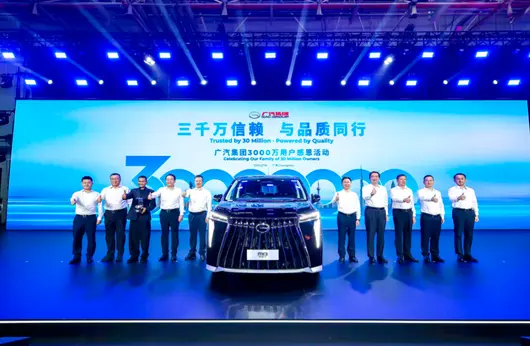
July 16, GAC Group welcomed the roll-off of its 30 millionth vehicle, entering a new milestone moment.
Different from the single vehicle roll-off of other brands in the past, the roll-off of GAC Group's 30 millionth vehicles included GAC Honda P7, GAC Toyota BZ7, Qijing GT7, GAC AION N60, GAC Hyper S600, and the finale right-hand drive version GAC Trumpchi M8 PHEV.

The roll-off of star models from all brands under GAC Group simultaneously also indicates its anchoring on electrification, intelligence, and internationalization strategic routes, entering a deeper level of strategic transformation in electrification, intelligence, and internationalization.


Subsequently, Feng Xingya handed the key of the 30 millionth vehicle to Thai owner Mr. Tony Jaa. This moment froze not just a number, but a warm witness of the "two-way rush" between GAC and global users.

This trust spanning mountains and seas is the confidence with which GAC broke through amidst industry changes. In the first half of this year, GAC Group sales reached 773,100 vehicles, a 2.35% year-on-year increase. Among them, new energy vehicle sales increased by 68.8% year-on-year; overseas exports broke through 120,000 vehicles, a 132% surge year-on-year, running a steady rhythm during the industry's deep restructuring period.
Quality as the Foundation, Building the Confidence of 10 Million Users' Travel
"Quality is the bottom line that GAC will never cede," Feng Xingya said in the closing remarks. In GAC's development, scale growth has always been based on quality. For years, GAC Group has adhered to the "Quality First" concept, integrating Honda Total Quality Management (TQM), Toyota Production System (TPS), and Lingnan culture, constructing a quality management model centered on "Integrated Innovation". The bottom line of everything is to build good cars that allow users to drive with peace of mind, use with peace of mind, and sit with comfort.


From the R&D end to the manufacturing end, GAC has established a strict quality control system for the whole chain: Before every new car launch, it must undergo extreme environment tests of "Five Highs, One Mountain, One Dust" such as high cold, high heat, high altitude, high humidity, high corrosion, mountain areas, and sand and dust, completing "Two Winters and One Summer" field road tests; aided by test fields and laboratories covering 12 major categories and over 1,500 verification sub-items of the whole vehicle, achieving systematic quality verification; GAC AION Smart Ecological Factory, as the "World's First New Energy Vehicle Lighthouse Factory", guarantees mass product quality stability with a digital intelligent manufacturing system.

At the core safety technology level, the Xingling Safety Protection System constructs four protection dimensions, with eight key systems adopting dual redundancy design. It has protected nearly 2 million users and avoided 6.28 million potential travel risks; the Dart Battery has cumulatively installed 1.5 million vehicles, with a safe driving mileage of over 160 billion kilometers; the service side synchronously adds guarantees. GAC took the lead in the industry to launch the independent brand "Three Responsibilities" policy, taking the initiative to cover battery and intelligent driving assistance issues of user concern, eliminating user concerns about vehicle use. It is precisely these lines of security defense and service commitments that support the brand confidence behind GAC's 30 million sales.
User-Oriented, Building a Full-Cycle Warm Service System
"What users care about, we keep in our hearts; what users expect, we go all out." Feng Xingya stated that this user-centric concept has long been deeply integrated into the development gene of GAC Group. For many years, GAC Group has always adhered to the corporate concept of "People as the Basis, Integrity as the Way, Innovation as the Priority". The core essence of "People as the Basis" is people-oriented.

On one hand, to face problems directly and listen to user voices, GAC regularly holds user open mic events, inviting users to the "home" for face-to-face communication. At the same time, establish a full-process closed-loop management mechanism to ensure that every suggestion can be properly handled, and common problems are optimized for all users at the first time.
In addition, GAC has also established exclusive user insight departments and promoted full-process changes from problem discovery to resolution, ensuring user requests have responses and matters have results from an organizational mechanism perspective.
On the other hand, the service network accelerates penetration simultaneously. At the channel end, promote service network sinking into counties, planning to add 1,000 county authorized stores this year; at the response end, launch "Super Butler" service, achieving 5-second response and 2-hour request completion, ensuring user requests are handled quickly and directly. At the energy replenishment end, build a "9 Vertical and 10 Horizontal" energy replenishment network, already covering 31 provinces and 213 cities nationwide, achieving "a station every 1km straight line" in core urban areas. Self-operated charging piles exceed 27,000, among which super charging piles break through 20,000, providing convenient energy replenishment services for new energy car owners.

The core theme of this gratitude activity is to express sincere return and thanks to the long-term support of 30 million users. At the event scene, Feng Xingya announced that from now on, GAC officially launches the "GAC Group 30 Millionth Vehicle Roll-off · Renewal Gratitude Season". GAC Honda, GAC Toyota, GAC Trumpchi, GAC AION, GAC Hyper, and Qijing Automobile six passenger car brands will launch characteristic policies around new purchase, trade-in to additional purchase respectively, to return every bit of companionship and support.

Tech-Centric, Empowering Real Travel with Frontier Technology
With 30 million as a new starting point, GAC will drive innovation, move towards a new journey of electrification and intelligence, and let frontier technology truly transform into user-perceivable peace of mind and convenience.
In the power field, Xingyuan Power developed by the "National Excellent Engineer Team" covers Xingyuan Extended Range, Xingyuan PHEV, and Xingyuan Super Dual Engine three technologies, which will be mass-produced with more models. Every product needs to pass 100,000 hours bench and whole vehicle validation, equivalent mileage exceeds 10 million kilometers, ensuring that performance remains steady as a rock under all scenarios and all regions.

In the "Three-Electricity" field, GAC continues to attack battery super-fast charging, low-temperature range and other industry pain points. It has built an all-solid-state battery pilot production line, launched ultimate energy consumption technology. The mass-produced Quark Electric Drive Motor's maximum efficiency breaks through 99%, the highest level in the industry.
In the intelligent connectivity field, the Super Brain Xingling Architecture continues to evolve, connecting intelligent driving assistance, intelligent cockpit, power, chassis, body, and vehicle networking six systems, achieving "One Brain Unified Command", comprehensive performance improvement by 40%; Galaxy Smart Cockpit achieves terminal-cloud integration, making the car become a real "thinking, understanding human heart" partner. GAC will also fight shoulder-to-shoulder with top partners such as Huawei, CATL, Didi, Tencent, Alibaba to build a more powerful AI intelligent ecosystem.
As of now, GAC Group's cumulative R&D investment exceeds 62 billion yuan, and the global R&D team exceeds 6,800 people. Continuous technical investment is driving GAC's products to evolve from commuting tools to intelligent travel partners, mobile smart spaces, and green energy ecosystems.
Looking to the future, GAC will continue to use user needs as anchors, quality as the foundation, technological innovation as the core driver, and global layout as the development path, accelerating to advance towards an ecological tech GAC, walking side by side with more users, achieving each other, and rushing towards a smarter, greener, and broader future together.

Have you ever seen the roads in India?
I've seen them online.
The scene is usually like this: a sedan blocked behind a cow, motorcycles running wild nearby, even milk tea vendors nearby, so "clean and hygienic".

However, in a place where many feel physically uncomfortable after watching, Toyota, Suzuki, Honda and other Japanese car companies decided to bet on India.
According to the Indian "Brand Quality Foundation" website, the three car companies will invest nearly $11 billion to build factories, increase capacity, and develop exports in India.
Some netizens commented: Did the three Japanese car companies have too much money?
In fact, they didn't have endless money to spend, nor were they bewildered by Indian curry. These Japanese car executives are much clearer than us.
Current Japanese car revenue and market share are declining. Raw material costs are soaring. Looking at the world map, finding a market that can accommodate capacity, expand share, and has gentle competition is not easy.
So, it wasn't that Japanese car companies chose India, but because they had no choice.
The Pain of Japanese Car Companies
Past Japanese cars were truly the envy of others.
Ask old drivers who drove Japanese cars over ten years ago, talking about Japanese cars, almost no one doesn't give a thumbs up, cheap price, fuel saving, durable...
Even many Japanese cars needed to be bought at a markup, but who would think this iron fortress would be beaten out of sight in a few short years.
With the wave of new energy vehicles coming, electrification and intelligence became the goal for many domestic car companies to "leapfrog". Relying on China's strong new energy vehicle industry chain advantages and car companies' own persistence on R&D and technology, Chinese independent brands quickly achieved "leapfrogging".
Domestic cars once criticized are now becoming more and more common on the roads, even surpassing joint ventures in share.
According to CPCA data, in April 2026, the share of independent brands reached as high as 62.5%, far exceeding Japan's 13.1%.

You need to know, the Chinese car market is the largest car market in the world. Losing speed in the Chinese market is like losing a huge piece of cake.
Meanwhile, the main theme of the Chinese market in recent years is still price wars. Racing on configuration, price, and service has become a normal state, which also had a huge impact on Japanese cars' profits.
Apart from China, Japanese cars are also not doing well in the US.
On January 20, 2025, Trump swore in as the 47th US President, starting a series of chaotic operations, including imposing additional car tariffs in the name of national security, causing the tariff rate for imported Japanese cars to reach as high as 27.5% at one point. Although it decreased later, it was still far higher than the initial tax rate.
This operation directly led to a tariff loss of over 2 trillion yen for seven Japanese car companies in fiscal year 2025.
Looking at Japan itself, it is actually not easy either.
Middle East geopolitical conflicts blocked shipping in the Strait of Hormuz, transportation costs and raw material costs soared, Japanese car companies also had to suffer in silence.

Executives looking at the reports, their backs went cold, only to find a new growth curve.
So, Japanese car companies didn't fall in love with India, there was nowhere else to go.
Deep Thought on Choosing India
So, what magic does India have, to make Japanese car companies invest heavily?
The first advantage is big. In 2025, the Indian car market achieved 5.517 million new car sales, up 6% year-on-year, breaking the historical record, ranking as the third largest car market in the world, exceeding Japan for four consecutive years, second only to China and the United States.
The value of this doesn't need me to say much. India achieved this result mainly because India has been promoting tax reduction policies to promote consumption, which led to a significant increase in domestic consumption willingness.
The second advantage is close, meaning it is close to places where Japanese cars sell well, such as Africa.
So, India for Japanese car companies is more like a convenience store built in the center of a crossroad. You don't need to ship cars to eight countries separately, just build well at this stop in India, then unload ship by ship, and you can save a lot of costs.

The Nikkei also believes that India is expected to become its global car supply center.
The third advantage is stability. You know, Japanese cars' advantage is fuel cars, after all, the three major components of engines, gearboxes, and chassis, they have played for many years, technology accumulation is number one in the world.
But the Chinese car market has fully promoted electrification and intelligence development, leading to Japanese cars' advantage becoming weaker and weaker, impossible to play out. But India is different, it has the characteristics of few charging piles and slow electrification process. Indian old people buying cars still look for cheap, fuel saving, easy to fix, and these three points are exactly Japanese cars' old trade.
Especially Suzuki, always been India's car market evergreen, almost always sitting on the best-selling model throne, reputation of being worry-free, better than any advertisement.
So, Japanese car companies' vigorous layout of the Indian market is obviously carefully considered.
But, is the Indian market really that easy to mix?
The Hard-to-Bite Indian Market
Of course, India is not perfect like a hot commodity, its disadvantages are as obvious as its advantages, and every one is enough for Japanese car companies to face a hard time.
First talk about electrification. Yes, right now India has few charging piles and electric cars don't sell well, it is indeed a shelter for Japanese fuel cars. But you have to think, how long can this "shelter" avoid?
India previously shouted the slogan of 30% of new cars being electric vehicles by 2030. Although it sounds like bragging, but can't help but they really give subsidies, really build charging stations.
Imagine, what if one day India suddenly wakes up, starts vigorously promoting electrification, doing infrastructure, charging piles popping out like mushrooms after rain, then Japanese cars will be dumbfounded?
Isn't this a version of the Thai market?
Back then Japanese cars in Thailand won easily. The entire Southeast Asian market was called Japanese cars' backyard. Result Thailand took the lead in promoting electrification. Chinese electric vehicles came in, directly became a hot commodity. Look at Japanese cars again, share in Thailand falling down rapidly.

If India accelerates electrification, history will likely repeat, and this time, Japanese cars don't even have a place to flee, how to prevent will become the first problem for Japanese car companies.
Next talk about policy. India's policy is like a pot of curry, you never know if you will eat chicken or potato next time.
This magical country, today low tariff encourages building factories, tomorrow may fine you a huge amount. What's more annoying is mandatory joint venture. Foreign car companies want to sell cars in India, have to find local partners to partner up. When your factory is built, supply chain is done, India directly backstabs you. At that time whether adding money or withdrawing capital, what you get is heartache.
So you see, this market like India is like a mango that looks very sweet, bite the first mouth it's okay, chew two more mouths hit the hard core.
Japanese cars now is calculating, while the core hasn't bit the tooth, hurry up to nibble a few more mouths, but the core will bite sooner or later, just don't know which day.
Epilogue
Japanese cars this trip to India, not go for tourism, is go to make a living.
Chinese and Southeast Asian dining tables are more crowded, production and transportation costs have risen. Looking around the world, only this pot in India is still steaming, even if what is boiling inside is curry-flavored stones, have to bite hard and chew down.
Japanese car companies want to expand market, India wants to pull economy, solve employment, both sides have their own thoughts.
As for the ending is Japanese cars in India regain their glory, or like past competitors shamefully walk away, then is not known.
But no matter how, this play just started, we slowly watch is okay.
Anyway India's story, never bored.

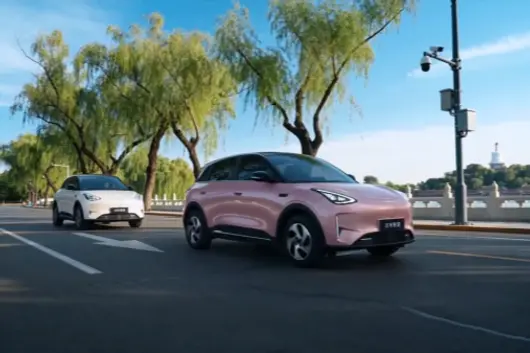
May 28, the all-new Geely Xingyuan officially launched, the entire series range has been comprehensively upgraded: 310 km upgraded to 410 km, 410 km upgraded to 480 km. The new car offers four versions: 410km Yearning Edition, 410km Riding Wind Edition, 480km Exploration Edition, 480km Exploration + Edition, launch limited-time benefits price 61,800 yuan - 91,800 yuan. To meet the needs of different users, for the 410km version, it still offers a 310km range reverse-select right, the price can be reduced by 7,000 yuan after selection. Starting today, users can place orders via Geely Galaxy APP, WeChat Mini Program, enjoy ten layers of purchase gifts and limited-time super trade-in cash and other rich benefits. In addition, for those who make a large deposit and lock the order before June 30, 2026, can enjoy a super trade-in cash right of 3,000 yuan.

Experts make another move, this all-new Geely Xingyuan officially launched, advanced further on the classic, comprehensively refreshed with five major upgrades, bringing users over 100 product power upgrades, achieving over 25 industry-exclusive features, providing users with cross-level experiences with generationally leading technology. As the 2025 China auto market sales champion across all categories, Geely Xingyuan delivery volume broke 700,000 units in 573 days, ranked in the top 3 global new energy sales in the first quarter of this year, it is the only Chinese brand model to enter the top 3 global new energy vehicle sales, continuously releasing champion momentum. At the new car launch event, the all-new Geely Xingyuan spokesperson Joey Yung also arrived on site, sharing her true stories with Geely Xingyuan with everyone, backing the new car with a gentle yet firm power, witnessing the refresh moment of this champion pure electric small car with 700,000+ users together.
At the same time, the new car joined hands with Xiaohongshu to create the country's first mobile 'Immersive Travel' car launch event, taking everyone to feel beauty together, enjoying beauty. Not only that, Geely Xingyuan also collaborates with CATL, Capybara, Colorkey, Goodbaby, Myfoodie and other cross-boundary brands, innovatively creating five major life scenarios: 'Harbor Family, Alley Family, Rainforest Family, Silk Road Family, Nomad Family', focusing on core daily travel scenarios, directly hitting users' real vehicle usage needs, redefining the pure electric small car value benchmark with champion strength.
Champion Strength One: Ultimate Driving Control Advanced — First Global Native Architecture + Sino-German Joint Tuning
Geely Xingyuan brings a calm, free, light, and agile driving experience for every user trip. This champion strength comes from Geely's first global native architecture and track-level tuning: Geely Xingyuan is the first in its class to adopt a native architecture, the first to standardize rear-wheel drive independent suspension, and the first pure electric small car to undergo global tuning, giving users the first time feeling that pure electric small cars can also have ultimate driving control!

Good driving control must stand the test. Currently, Geely Xingyuan has entered more than 30 countries globally, the R&D team gathered global resources, conducting comprehensive verification against different extreme road conditions globally, making the all-new Geely Xingyuan comprehensively upgraded on three core experiences: 'Driving, Steering, Braking', leading the small car driving control into the 2.0 era again. The G-TCS 2.0 All-Weather Anti-Slip System, while retaining rear-wheel drive flexible fun, ensures no slipping, no tail-swinging, no rolling on flat roads, slopes, and curves, even beginners can drive calmly; New brushless steering system responds 1x faster, supports three steering modes and steering center self-learning; G-CST 2.0 All-Scene Comfort Braking System simulates the feel of an old driver, braking no nodding, driving no carsickness. In addition, Geely Xingyuan is the only one in its class to successfully challenge the Fish Hook Test at 130km/h and the first in its class to successfully pass the Moose Test at 80.7km/h, handling performance compares favorably with 200,000-class sports sedans.
Champion Strength Two: Efficient Three-Electrical Advanced — Standard CATL across entire series + 480km Range + 19-minute Fast Charge
310 km upgraded to 410 km, 410 km upgraded to 480 km, the all-new Geely Xingyuan achieves full series range upgrade. Range is sufficient, not fake; charging is fast, lasts long; using electricity is saving, not wasting money, whether daily commute or occasional long-distance travel, the all-new Geely Xingyuan can handle it easily. The new car is the only pure electric small car in its class to standardize CATL cells, liquid-cooled temperature control, and 11-in-1 high-integrated electric drive across the entire series, three-electrical strength has been the ceiling in its class since launch. The new car is equipped with exclusive customized CATL new generation cells, energy density up to 190Wh/kg, max CLTC range 480km, sufficient for daily commute and weekend outings; Cooperating with the class-exclusive active front grille and low wind-resistance wheels, wind resistance reduced by 15 counts, actual range increased by another 10km.

Range is solid, energy replenishment efficiency also needs to continue upgrading. Regarding replenishment, 30%-80% fast charging takes only 19 minutes, a cup of coffee time is enough to depart with full power; Liquid cooling system and new BMS ensure full-speed charging whether cold or hot, and charging speed increase does not come at the cost of battery life. At the same time, the class-exclusive Star-Rui AI Cloud Power 2.0 achieves full-link energy management, covering smart charge/discharge, valley electricity price identification, battery temperature maintenance, energy consumption diagnosis, and battery maintenance functions, making every charge efficient, every journey using electricity worry-free.
Champion Strength Three: AI Smart Cockpit Advanced — Galaxy Flyme Auto 2 Smart Cockpit System + Eva Large Model
The all-new Geely Xingyuan puts warmth and wisdom into the cockpit, making the vehicle better to use, more understanding of people, and more comprehensive. The all-new Geely Xingyuan is equipped with Galaxy Flyme Auto 2 Smart Cockpit System, based on 7nm automotive grade Dragon Eagle 1 chip and 16G+128G large storage, fast response, smooth operation, easy to learn. Users can switch maps or favorite wallpaper desktops at will, cute pet wallpaper supports interactive functions, adding fun to the cockpit.

New AI Eva is even more the user's mobile smart partner, voice assistant Hi EVA supports fuzzy instruction understanding and context memory, can complete vehicle control, Q&A, entertainment, etc., good at everything. User says 'Hi Eva, I want to go home', vehicle can automatically call latest Amap 850 version to select optimal route. At the same time, the car machine adds support for CarPlay phone interconnection, compatible with iOS devices seamless connection, local common apps are all available, cloud has 200+ massive apps for free selection. Also has stealth mode, car wash mode, one-key car find, etc., thoughtful scenarios, and personalized custom assistants, automatically open navigation and adjust AC after getting off work, full of ritualistic welcome feeling. From navigation to entertainment, from life to surprises, the smart cockpit of the all-new Geely Xingyuan comprehensively covers user daily needs.
Champion Strength Four: Assist Driving Advanced — Qianli Haohan Assist Driving H3 Solution
All-new Geely Xingyuan is equipped with the Qianli Haohan Assist Driving H3 Solution derived from high-end models, can cover multiple driving scenarios, every function is truly helping users improve driving experience. The system has safely driven 1.38 billion kilometers, user usage volume growth rate is first, relying on G-ASD Smart Driving Bottom Layer and Star-Rui AI Large Model, bringing 'better to use the more you drive, smarter the more you drive' smart experience.

Highway/Overpass NOA is not limited by roads and rain/fog weather, supports voice lane change, multi-scenario avoidance, and automatic on/off ramps, users only need to lightly hold the steering wheel to easily drive long distance. All-scenario MPI takeover rate exceeds 200 kilometers, equivalent to continuous driving 3 hours requiring takeover only 1 time. At the same time, parking aspect can achieve all-scenario adaptation, APA parking assist function supports one-key parking, fingertip parking, remote control parking, covering 300+ parking scenarios. Targeting new driver parking difficulty, female driver parking anxiety, etc., actual pain points, HPA Memory Parking supports 2km ultra-long memory, cm-level precise positioning, after learning the route once, can automatically park for the whole journey, has intelligent car following, autonomous space finding, obstacle avoidance functions, temporary route change also does not require relearning, effectively reducing parking operation difficulty. In addition, DMS active fatigue detection if detects driver appears fatigue behavior or distracted driving, will timely remind the driver; Sentry mode can protect parking safety 24 hours all-day, if abnormal, immediately record video and send to user's mobile phone. From departure to arrival, from driving to parking, the all-new Geely Xingyuan makes complex driving simple and reassuring, letting users leave more energy to the scenery on the road and laughter of fellow travelers.
Champion Strength Five: Full-Dimensional Safety Advanced — Three-Electrical Safety + Active Passive Safety
Safety is the gene carved into Geely's bones! For Geely, whether big car or small car, whether luxury model or mainstream model, all brands under it adopt the same safety concept and strict standards. Geely has built a global full-domain safety center investing over 2 billion yuan, and released 'Person, Vehicle, Road, Cloud, Star' integrated full-domain safety 2.0 system, covering four core safety domains: Life Safety, Health Safety, Property Safety, Privacy Safety. All-new Geely Xingyuan also follows this high standard, and adheres to the concept 'Small Car, Must Have Big Safety', taking small car safety to the extreme.
In terms of passive safety, the all-new Geely Xingyuan created five longitudinal and eight transverse Star Armor Cage Body, like a solid yet light armor, front, back, left, right are all carefully reinforced — front end three force transmission paths cooperate with double 'Clover' relief structure, side battery to sill spacing 149mm and added double anti-collision longitudinal beams, rear 750mm long rear suspension and double '井' shaped rear subframe form a solid barrier; Roof pressure intensity increased to 3.4 times vehicle weight, A/B pillar and roof crossbeam etc. core area material upgraded, even if encountering rollover or heavy object pressing top, cockpit remains unharmed, side curtain airbag pressure holding technology can further protect head continuously during roll.

In terms of battery life, Geely Xingyuan's verification standard increased to 2 times national standard, after completing 1000 cycles, battery capacity still remains 90.72%. Moreover, Xingyuan that has actually driven 84,000 km, successfully challenged seawater corrosion, mud water flushing, bad road scraping bottom, extreme fire, etc. six large series limit tests, completed industry first.
In order to further improve battery safety protection, all-new Geely Xingyuan puts hard work in places users can't see, adopting industry-leading BDMU high voltage device deep integration technology, combining BMS battery management system and BDU high voltage distribution unit into one, greatly reducing interfaces, reliability steps up another tier, reducing battery sealing failure risk from the root. Worth mentioning, May 12, Geely joined hands with CCTV completed the first time in this class, and also the only continuous frontal and side collision in this class, high voltage system powered off in time, battery pack did not smoke or catch fire, passenger compartment structure intact, airbags accurately deployed, non-collision side door can open normally. In addition, all-new Geely Xingyuan equipped with direct tire pressure display, DOW Door Opening Warning, Sentry mode, more AEB Active Braking and AES Emergency Steering double insurance, successfully passed 120km/h static vehicle braking stop and 130km/h 'disappearing front car' active avoidance test, performance far exceeds industry mainstream level.
700,000 Users Trust, From China Champion to Global Top 3, Champion Path Never Stops
Always being imitated, never surpassed. Relying on high standards from R&D to manufacturing and generational leading product power, Geely Xingyuan has always won industry recognition and user love. Since October 2024 launch, Geely Xingyuan cumulative delivery has broken 700,000 units, equivalent to selling one unit per minute, it is not only the fastest star model in the whole industry to reach this goal, but also won the 2025 China auto market sales champion in one go. Entering 2026, Geely Xingyuan still continues to lead, stably staying at the top, in this year's first quarter global new energy vehicle sales ranking, Geely Xingyuan first time ranked in global top 3, achieved a new milestone for China A0-class electric cars.

Geely Xingyuan not only hot sales in domestic market, in overseas market also widely praised, currently has landed in more than 30 countries and regions globally. In Brazil launch two months sales volume broke 2,300 units; In Thailand auto show single week orders captured 3,300 units, and won 'Brazil Best Compact Electric Car of the Year' and 'Indonesia Auto Show Favorite Electric Car' double international awards. On the streets of the world, Geely Xingyuan is becoming a flowing new card of 'Made in China'.

The advancement of all-new Geely Xingyuan, let Geely Galaxy brand on the pure electric small car track again raised the 'High Quality Good Price' benchmark. In the future, Geely Galaxy will continue to adhere to 'Making Smart Premium Cars for Everyone' original intention, accurately grasp user's most real needs, bring products and services beyond expectations for users in all sub-markets.

兄弟姐妹們,今日講一個出海嘅大新聞——唔係賣車,係賣「司機」。6 月 2 號,文遠知行同 Uber 聯合宣佈咗一件事:計劃喺西班牙馬德里推出該國首個商業化 Robotaxi 試點服務。意思就係:西班牙人好快就可以用 Uber 叫到一台冇司機嘅出租車。呢次係文遠知行同 Uber 第一次一齊進入歐洲市場。馬德里亦成為文遠知行 Robotaxi 駛入嘅全球第十二個城市。
官方消息話,喺馬德里自治區政府嘅支持下,呢項服務今年內就會正式啟動。到嗰陣,馬德里嘅朋友哋打開 Uber App,就有一鍵呼叫文遠知行嘅 Robotaxi。同叫普通網約車一樣,分別係嚟嘅車冇駕駛員——至少喺初期,仲係有分別嘅。運營初期,車入面會配備經過專業培訓嘅安全員,終究係剛上線,穩妥第一。
文遠知行呢間公司,你可能聽過,也可能冇聽過。簡單介紹下:2017 年成立,一直埋頭搞 Robotaxi 技術研發同商業化。而家佢嘅 Robotaxi 已經覆蓋咗廣州、北京、新加坡、阿布達比、迪拜、利雅得、蘇黎世……加埋而家嘅馬德里,一共 12 個城市。西班牙亦係文遠知行進入嘅第五個歐洲市場——之前已經入咗瑞士、法國、比利時、斯洛伐克。按照文遠知行同 Uber 喺 2025 年 5 月達成嘅規劃,佢哋要喺五年內新增 15 個國際城市部署 Robotaxi 服務,全球部署數萬輛 Robotaxi。隨著馬德里落地,目前已經完成咗 4 個城市嘅佈局,仲有 11 個會喺 2030 年前陸續覆蓋。
講真嘅,中國自動駕駛公司出海唔係頭一回,但中國技術 + 全球出行平台 + 歐洲市場呢個組合,定係好有意思。馬德里係歐洲最具商業潛力嘅 Robotaxi 市場之一,人口多、出行需求大,當地政策都好友善。喺呢個市場站穩腳根,對文遠知行嚟講係個唔小嘅里程碑。對 Uber 嚟講,引進 Robotaxi 都係為咗降低成本——終究司機唔使發人工。對馬德里市民嚟講,以後打車可能更平。


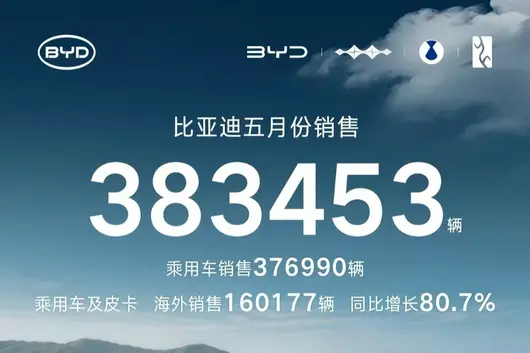
In May, China's automotive market overall presented a gentle recovery trend, with domestic brands still being the sales backbone of the market. Recently, BYD, Geely, Chery, Changan, and Great Wall, the top 5 domestic automakers, successively released their monthly performance reports. From the data, these five companies show a general characteristic of "stable total growth, divergence between domestic and international markets, and accelerated new energy penetration". Overseas exports and new energy vehicles have become the most core growth engines; export business has evolved from a "bonus item" to the "core foundation" for some companies. BYD's "dominant leader" status is further consolidated, Chery achieved high growth via exports, Geely's new energy penetration rate broke 56%, Changan focused steadily on balanced development, while Great Wall appeared slightly under pressure during structural transformation.
BYD: Export Hits New High Becomes Biggest HighlightIn May, BYD stood firmly at the top of domestic brands with a monthly sales volume of 383,500 vehicles, maintaining positive growth both year-on-year and month-over-month under a large base. Its two main brands, Dynasty and Ocean, sold a combined 330,200 vehicles, contributing 86.1% of total sales; Fangchengbao's monthly sales broke 30,000 units to reach 30,200, a year-on-year increase of 139.7%, setting a new high for the year; Denza sold 16,300 vehicles, and Yangwang delivered 286 vehicles. From a model perspective, BYD had eight models in May with monthly sales exceeding 20,000 vehicles. The Song Family and Yuan Family both broke 50,000 units, selling 51,370 and 56,691 vehicles respectively. The Sea Lion Family followed closely with 42,615 vehicles, and Seagull sales were also close to 40,000 vehicles.

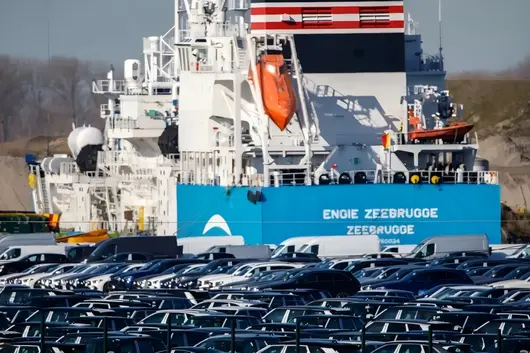
BYD's biggest highlight in May was exports. Overseas new energy vehicle sales reached 160,600 units, an 80.4% year-on-year increase, accounting for about 42%. The sharp expansion of export scale effectively countered the phased weakness in domestic demand. Cumulative exports from January to May exceeded 620,000 vehicles. High export growth mainly benefited from continued ramping up of overseas factory capacity, improved ocean shipping capacity, and accelerated channel network expansion. In the domestic market, BYD promoted Megawatt Super Charging and intelligent strategies simultaneously—Megawatt charging achieved about 90% charge in 9 minutes; 20,000 super charging stations are planned to be built by 2026; all series models are available with Sky Eye B intelligent driving solutions and city navigation safety fallback plans, accelerating the popularization of high-level intelligent driving. As Gen 2 Blade Battery capacity gradually releases, the company's orders are expected to continue rising.
Chery: Sales Growth Leads the Top 5Chery Group's total sales volume in May was 247,800 vehicles, a significant year-on-year increase of 20.5%, ranking first in growth speed among the top 5. Exports remained its most core growth engine—May exports reached 181,900 vehicles, an 80.5% year-on-year increase, accounting for 73.4% of total sales that month, continuously breaking the single-month export record for Chinese brands for three months. In terms of new energy, Chery New Energy sold 100,300 vehicles, a 58.8% year-on-year increase. April and May consecutively saw monthly new energy sales breaking 100,000 vehicles.

The strong performance in exports benefited from Chery's long-term deep cultivation of overseas channel advantages and localized operation capabilities. While overseas orders continued to rise, high export growth formed a sharp contrast with domestic sales—Chery's domestic sales in May were only 60,000 vehicles, accounting for one-quarter of total sales. From cumulative data, Chery Group accumulated 1.101 million sales from January to May, but against the annual goal of 3.2 million vehicles, monthly averages need to reach about 420,000 vehicles later, and pressure remains significant.
Geely: New Energy Penetration Rate Breaks 56%Geely Auto's total sales volume in May was 237,600 vehicles, a 1% year-on-year increase, achieving month-over-month double growth for three consecutive months. In terms of structure, Geely's "New Four Transformations" transformation showed significant results: new energy vehicle sales reached 133,400 units, accounting for 56% of total sales, with new energy share exceeding 50% for four consecutive months.

From sub-brands, performance was significantly divergent. Zeekr brand sales in May reached 34,400 vehicles, a 82% year-on-year increase; Zeekr 9 Series and 8 Series models combined sales approached 50% of total sales, showing bright performance in the high-end market; Galaxy brand sales were 81,700 vehicles; Geely brand sales were 182,500 vehicles, among which China Star Series sales reached 100,800 vehicles; Lynk & Co brand sales were 20,700 vehicles, with new energy vehicle sales share rising to 71%.
In terms of exports, Geely's overseas vehicle exports in May reached 85,100 vehicles, a explosive 184% year-on-year increase, setting a brand single-month export record high. Among exported products, new energy vehicles reached 40,800 units, accounting for nearly half; hybrid and pure electric products have successively landed in Southeast Asia, Middle East, Latin America, and other markets, highlighting the results of global strategy implementation.
Changan: Multi-brand Matrix Balanced EffortChangan Auto's delivery volume in May was 209,100 vehicles, among which new energy deliveries were 92,400 vehicles, a 5.8% year-on-year increase, with new energy share about 44%. In terms of exports, overseas deliveries reached 70,700 vehicles, a 38% year-on-year increase, becoming another major growth highlight for Changan in May.
In the sub-brand matrix, Changan Qiyuan delivered 34,500 vehicles in May; All-New Q05 delivered 15,800 units, with orders breaking 3,000 units within three days of listing in Thailand; Deepal sales in May were 33,200 vehicles, a 30% year-on-year increase; January to May overseas cumulative sales were 28,700 vehicles, a significant 167% year-on-year increase; Avatr delivered 7,336 vehicles in May; Changan Auto (Gravity) delivered nearly 49,000 vehicles in May.

Changan Auto's balanced layout was fully reflected in May: the fuel car base remained stable, new energy brands Deepal and Qiyuan accelerated volume growth, high-end brand Avatr continued to break through in technical cooperation, and overseas markets simultaneously achieved breakthrough growth. The pattern of five brands working together, driven by both new energy and exports, is initially taking shape.
Great Wall: Overseas Sales Growth Year-on-Year 46.75%Great Wall Motor's sales in May were 100,400 vehicles, slightly down compared to last May's 102,200 vehicles, making it the only company among the top 5 to show a year-on-year negative growth. From sub-brands, Haval brand sales in May were 55,500 vehicles, remaining Great Wall's most important sales pillar; Tank brand sales were 17,100 vehicles; both Haval and Tank brand sales showed year-on-year declines; Wey brand sold 8,119 vehicles, a 31.78% year-on-year increase, achieving growth against the trend; Ora brand performance was most stunning, with sales of 6,018 vehicles, a significant 206.88% year-on-year increase. In terms of new energy, Great Wall sold 30,400 new energy vehicles in May, with new energy vehicle transformation gradually accelerating.

The overseas market became Great Wall's biggest highlight in May, with overseas sales growing 46.75% year-on-year. Against the background of pressure on the domestic market, strong growth in overseas business effectively made up for the decline in the domestic market. Great Wall Motor's current core contradiction lies in: Haval and Tank, the two traditional main-selling brands, face weak growth, while Wey and Ora brands, although growing notably, have relatively small volume and are not yet enough to support overall growth. How to complete the "relay" between old and new brands is the key issue Great Wall must solve subsequently.
Final ThoughtsFrom May data, the growth pattern of the top 5 domestic brands has clearly diverged, but there are three common trends worth noting: First, exports have become a key engine for domestic brands to seek stability and growth. Second, new energy transformation is still accelerating, but paths differ among enterprises. Third, technological innovation continues to deepen brand moats. Looking ahead to the second half of the year, competition in the automotive industry will continue to upgrade around these three trends. Although everyone has a common direction, these three trends are all competing for the entire enterprise's industrial chain strength, and the strong will remain strong, which has almost become an inevitable outcome.