首頁fuel

搜尋歷史
熱門搜尋
經銷商登入 / 註冊

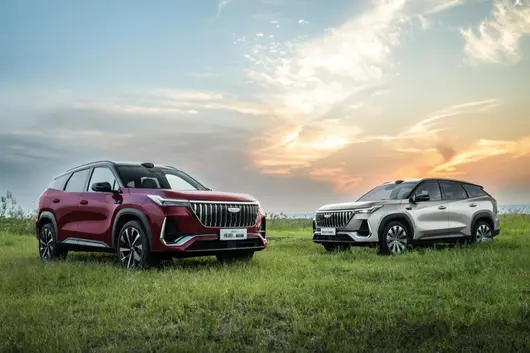
September 24, Kuangque Tower, Yuncheng, Shanxi. This ancient tower, remembered for 'going higher one more floor', welcomed a launch event that matched its temperament perfectly -- the all-new Fourth-Generation Boyue L officially launched. Fuel series launch limited price starts from 92,900 yuan, i-HEV series launch limited price starts from 99,900 yuan. Two cars launched together, nine trims, covering users with different power preferences and usage scenarios.

For the Chinese fuel SUV market, the name Boyue is not unfamiliar. Four generations in ten years, over 2.45 million users globally, consistently ranked first in A-segment fuel SUV sales for 14 consecutive months, January to August 2026 fuel vehicle sales champion. Behind these numbers is Boyue's consistent product logic: technology-driven, demand-oriented, reputation-based. And this time, the all-new Fourth-Generation Boyue L aims to, on top of the champion foundation, raise the standards even higher.

Dual Power Lines Running in Parallel, No Forced Choices
The most direct change in the all-new Fourth-Generation Boyue L is the expansion of power forms. The Fuel series continues to be equipped with the all-new 1.5TD Pro high-power engine, while the i-HEV series introduces Geely i-HEV Zhiqing hybrid for the first time. The two are not simply superimposed, but two solutions provided for different user scenarios.
The Fuel series is suitable for family users who prefer strong power, value cost-performance ratio, and are unwilling to change driving habits. The 1.5TD Pro high-power engine has a maximum power of 148kW, maximum torque of 315N·m, with overall parameters comparable to the 2.0TD power level of joint ventures. No charging pile needed, just refuel and go, long-distance driving and daily commuting are not restricted by charging conditions.

The i-HEV series targets users pursuing ultimate energy saving, long-distance commuting, and quiet comfort. Relying on the P1+P3 dual-motor decoupling architecture and 11-in-1 integrated electric drive, the vehicle can run purely electrically below 66km/h in urban areas, 0-30km/h acceleration takes only 2.11 seconds, power response time 10ms. WLTC combined fuel consumption as low as 4.67L/100km, full fuel and battery combined range exceeds 1200km, actual daily commuting fuel consumption as low as 3L level. For users who want to save fuel but don't want charging anxiety, this is a solution closer to actual usage scenarios.

Two power routes share the same intelligent, comfortable, and safety configuration. Whether choosing Fuel or HEV, users get the Qianli Haohan H5 assisted driving solution, Flyme Auto 2 smart cockpit, CCD variable damping suspension, fully equipped front seats, and other tier-crossing configurations. No need to make trade-offs between energy saving, intelligence, performance, and quality, this is the first answer given by the all-new Fourth-Generation Boyue L.
Three Strongest Technologies in the Same Class, Supporting Five Champion Product Powers
The product power improvement of the all-new Fourth-Generation Boyue L can be condensed into three technical highlights: Geely i-HEV Zhiqing Hybrid, all-new 1.5TD Pro high-power engine, Qianli Haohan H5 assisted driving solution. The three correspond to the core dimensions of energy saving, performance, and intelligence respectively, and also jointly support the five champion product powers: champion energy saving, champion performance, champion intelligence, champion quality, champion safety.
The core of champion energy saving is i-HEV Zhiqing Hybrid. The 1.5TD dedicated hybrid engine thermal efficiency reaches 47.26%, paired with 175kW electric drive system, over 80% operating conditions purely electric drive, engine running time reduced by 27% compared to traditional hybrid. Xingrui AI Cloud Power 2.0 large model can perceive temperature, humidity, altitude, slope and other environmental information in real time, intelligently match oil-electric strategies, comprehensive energy saving increased by over 10%. This system obtained the CATARC 'Industry's First HEV Intelligent Energy Saving Certification'.

Champion performance is reflected in two levels. i-HEV series 0-100km/h acceleration fastest 7.7 seconds, 0-30km/h acceleration 2.11 seconds, power response 10ms, 20 times faster than Japanese hybrid response speed of 200ms. The all-new 1.5TD Pro high-power engine first equipped in the Fuel series, jointly developed by Geely and Volvo, maximum power 148kW, increased by 15kW compared to previous generation; maximum torque 315N·m, increased by 25N·m compared to previous generation. Under the support of VGT variable geometry turbocharger, Joule engineering, mirror engineering technologies, WLTC combined fuel consumption 6.69L/100km, reduced by 2.3% compared to previous generation.
Champion intelligence is the most noteworthy change for the all-new Fourth-Generation Boyue L. The new car is the only fuel SUV under 300,000 yuan mass-produced equipped with a LiDAR, equipped with Qianli Haohan H5 assisted driving solution, equipped with 1 LiDAR, 3 mmWave radars, 11 HD cameras, 12 ultrasonic radars, total 27 sensors. Can achieve city NOA pilot driving assistance, highway NOA pilot driving assistance, and HPA multi-layer memory parking assistance. In terms of cockpit, Flyme Auto 2 smart cockpit system paired with 15.4-inch 2.5K ultra-clear central control screen and 25.6-inch AR-HUD, after Xingrui AI large model comes on board, voice interaction has capabilities such as emotional dialogue, complex intent vehicle control, navigation and itinerary planning. High-level intelligent driving is no longer the exclusive of new energy, this is the industry status quo the all-new Fourth-Generation Boyue L wants to break.

Champion quality is reflected in every detail of the cockpit. Front row seats support 6-way electric adjustment, 4-way electric lumbar support, leg rest, massage, heating, ventilation, memory, welcome, headrest audio, etc. 9 major functions; rear row equipped with seat heating and privacy glass; 16-speaker Flyme Sound Boundaryless Sound creates 7.1.2 panoramic surround sound; double-layer laminated glass improves quietness; steering wheel heating, crystal gear shift, 90% leather coverage rate improves touch; CMA premium architecture paired with CCD variable damping suspension, steering turnover lateral inclination reduced by 40%, filtering performance increased by 15%.

Champion safety takes '32+8+N' as the core. Among 32 active safety functions, AEB stationary braking stop supports up to 130km/h highest, and strengthens night backlight unexpected pedestrian emergence, night pedestrian popping out scene recognition; RMF driver incapacitation assistance can automatically slow down, turn on hazard lights, pull over steadily, and dial E-call rescue when driver has no power to control car. Passive safety aspect, 32000N·m/° body torsional stiffness, 1500MPa integrated hot-formed boron steel door ring, cloverleaf unloading force system and other structural technologies build a travel safety fortress. Breathing safety aspect, CN95 filter, '0' organic solvent and other material applications, make inside vehicle PM2.5 particle interception rate up to 99.9%, formaldehyde concentration only one-tenth of national standard threshold.

Over 200 Upgrades, Renewal Comparable to New Generation
The upgrade scale of the all-new Fourth-Generation Boyue L is not exaggerated to be described as 'comparable to new generation'. 8 styling upgrades, 75 energy saving upgrades, 48 performance upgrades, 53 intelligent upgrades, 16 major quality upgrades, 12 safety upgrades, cumulative over 200 functional upgrades, covering styling, energy saving, performance, intelligence, quality, safety six dimensions.
In terms of styling, the new car optimizes details on the basis of 'Mountain-River Aesthetics', front grille, front and rear bumper styling and process improvements, new Danxia Red, Snow Mountain Gold two body colors and Yunjin Brown interior color. Front grille adopts chrome trim strips in large areas, vehicle wind resistance reduced by 1.5%. Wheels new 19-inch Star Drill wheels and 20-inch Star Blade wheels, total 5 choices.

In terms of intelligence, 53 upgrades cover high-speed NOA traffic light response, city NOA narrow road passage, city roundabout passage, main/auxiliary road switching, vehicle lane intersection turn-around, extremely narrow parking space parking, 3D obstacle recognition, large vehicle avoidance reminder, etc. HMI visual interface upgrade, AI intelligent voice interaction, weather + music dual small window mode, external speakers and other configurations, further enrich cockpit experience.
In terms of quality, second row seat heating, double-layer laminated glass, steering wheel heating, rear privacy glass, fully equipped front seats, 1.9m large bed, 84.27% ultra-large usable space rate, 32 storage spaces, 90% leather coverage rate, NVH increased by 16%, 256-color ambient light, etc. 16 upgrades, allow all passengers to feel quality improvement.
Ten Years Four Generations, Champion Momentum Upward Again
Boyue's history is a miniature of Chinese brand SUVs continuously breaking through upwards. 2016 First Generation Boyue created the smart connectivity era, 2019 Second Generation Boyue created the smart safety era, 2022 Third Generation Boyue created the smart architecture era, 2025 Fourth Generation Boyue created the smart AI era. Four generations of models, each generation leads with industry-leading technology, product strength leads a generation.
Market performance also confirmed the effectiveness of this path. Boyue series cumulative sales broke 2 million, is one of the fastest models to break 500,000 and 1 million in Chinese SUV market. Sold to over 60 countries and regions, achieved local production in Belarus, Malaysia, etc. February 2025, Boyue global cumulative sales broke 2 million. January to August 2026, Boyue won fuel vehicle sales champion.

On top of the existing champion foundation, the goal of the all-new Fourth-Generation Boyue L i-HEV series is very clear: attack HEV market sales champion, together with Fuel series, help Boyue become Fuel + Hybrid 'Double Crown King'. From sales champion to value benchmark, from single power to dual car launch, from Fuel SUV to intelligent equality, the all-new Fourth-Generation Boyue L aims to do, not only continue the champion, but on top of the champion, take another step up.
From now until October 31, 2026, purchasing the all-new Fourth-Generation Boyue L can enjoy seven exclusive champion gifts, including champion cash gift, champion upgrade cabin gift, champion financial gift, champion renewal gift, champion traffic gift, champion gratitude gift, champion intelligent gift. Qianli Jinxiu Edition and Qianli Yuanxing Edition standard equipped with LiDAR, first owner limited time free enjoy value 25,000 yuan lifetime free pilot assisted driving function rights.
Fuel SUV First Choice, Never a Slogan. 92,900 yuan starting limited price, five champion product powers, over 200 functional upgrades, dual power running in parallel — all-new Fourth-Generation Boyue L gave everything it could give, the rest, let the market verify.


The first half of 2026 is over; it is time to review the development of the new energy vehicle market in the first half of the year.
Overall, China's market position dominated by new energy vehicles has become relatively stable. In June, the retail penetration rate of new energy vehicles remained at a historic high of 62.8%.
On July 8, the CPCA released market data for passenger cars in June. The word most used by CPCA Secretary General Cui Dongshu was differentiation — “collapse of domestic fuel car sales, dominant strength of new energy vehicles, and strong growth in exports”. More specifically, passenger car trends were difficult, commercial vehicles were hot, and the performance of plug-in hybrids and extended-range vehicles was far weaker than pure electric models.
From the data perspective, from January to June 2026, new energy passenger car retail sales were 4.704 million units, a year-on-year decrease of 14.0%; wholesale sales were 6.788 million units, a year-on-year increase of 5.1%. The coexistence of negative growth in retail and positive growth in wholesale, reveals the core characteristic of the current market, which is domestic consumption contraction and explosive growth in overseas exports.

With the retreat of subsidies and the impact of high oil prices, new energy vehicles stabilized their basic market share through technology iteration and explosive export growth. Fuel vehicles, under the dual suppression of new energy vehicles and high oil prices, saw their market share shrink significantly.
01
Domestic Brands Lead, New Forces Gain Share, Joint Ventures Face 'Fuel vs. Electric' Contrasting Fortunes
In terms of enterprises, without exception, BYD still leads the pack with a monthly wholesale sales volume of 397,000 units. Domestic brands such as Geely, Chery, and Leapmotor made strong breakthroughs, while joint venture brands showed a dramatic differentiation of 'dismal fuel sales vs. rapid electric growth' — mainstream joint venture new energy retail sales grew by 45% year-on-year, but their fuel car base shrank by 39% concurrently.
Manufacturers with New Energy Passenger Car Wholesale Sales Exceeding 10,000 Units in June

Source: CPCA
Enterprise Brands with Domestic New Energy Passenger Car Retail Sales Exceeding 20,000 Units in June

Source: CPCA
In terms of new forces, the retail share of new forces rose to 26.0% in June, an increase of 6.5 percentage points year-on-year, and it is particularly worth noting that the proportion of pure electric vehicle sales for new forces reached as high as 82.2%, and the sales proportion of 100,000-150,000 yuan level models increased significantly, indicating that they are penetrating the mass market.
In terms of second-generation creators, new energy brands incubated by traditional large groups such as Zeekr, Deepal, Arcfox, and Lantu performed brightly. The share of independent new energy brands from traditional domestic automakers reached 18.5%, an increase of 5.2 percentage points year-on-year.
In terms of joint venture brands, the penetration rate of mainstream joint venture new energy only rose to 11.9%, but joint venture new energy vehicle sales grew by 45% year-on-year, while fuel vehicle sales plummeted by 39%, forming a sharp contrast. The new energy penetration rate of luxury cars reached 39.6%, but overall retail still declined by 30%, significantly impacted by high oil prices and downgrading consumption.
02
New Energy Vehicle Penetration Rate 62.8%, Extended-Range Wholesale Plunged 25.2% Year-on-Year
From the wholesale perspective, pure electric and plug-in hybrid still maintain positive growth, while extended-range vehicles show a decline in both wholesale and retail; from the retail perspective, all three routes declined, with pure electric having the smallest decline at -6.6%; plug-in hybrid had the largest decline at -27.6%. The growth rate difference between retail and wholesale clearly reflects the degree of reliance on exports to drive each route.
Currently, the characteristic of the pure electric market is 'the more expensive, the easier to sell; the cheaper, the harder to sell'. Pure electric wholesale increased by 10.7% month-on-month in June, significantly higher than the retail month-on-month growth rate. Class B electric vehicles became the only sub-segment with high-speed growth, with wholesale volume of 295,000 units in June, a 37% year-on-year increase, accounting for 30% of pure electric share, an increase of 2 percentage points compared to the same period last year, with high-end models like Model Y and BYD Song continuing to sell well. While the entry-level market saw a cliff-like decline: Class A00 wholesale in June was only 77,000 units, a 50% year-on-year plunge, dropping from nearly 20% last year to 8% of pure electric share; Class A electric vehicles wholesale was 236,000 units, a decrease of 2.7 percentage points year-on-year. Although the combined share of Class A00 and A0 accounts for 40% of pure electric share, it mainly relies on exports for digestion, and the domestic market performance is weak.
Plug-in hybrid models are the sub-segment where domestic and foreign demand divergence is most severe among the three routes. Wholesale volume for the first half of the year was 1.997 million units, a year-on-year increase of 4.6%; retail volume was 1.155 million units, a year-on-year drop of 27.6%. The difference in growth rates between retail and wholesale was 32.2 percentage points,
Extended-range models are the only sub-segment among the three routes to show a decline in both wholesale and retail. Wholesale volume for the first half of the year was 504,000 units, a year-on-year decrease of 13.1%; retail volume was 439,000 units, a year-on-year decrease of 19.4%, and the decline showed an expanding trend — wholesale volume for June alone was 94,000 units, a year-on-year decrease of 25.2%, and a month-on-month decrease of 0.2%.
The share of extended-range vehicles in the new energy wholesale structure has been compressed from about 10% in 2025 to 6.4% (June alone).
The decline in plug-in hybrid and extended-range models is mainly affected by falling battery prices, flash charging technology, and the improvement of charging facilities.

Regarding the poor performance in the June retail sector, Cui Dongshu's explanation is that the Dragon Boat Festival mismatch created a high base effect, the '618' promotion failed to meet expectations, the World Cup kick-off diverted the time and budget of car buyers, the college entrance exam and farming busy season suppressed store traffic, compounded by hot and rainy weather, plus the rare frequency squeeze of high base factors.
In addition, the new national standards for new energy vehicle safety landed in July (mandatory requirements for battery 'thermal runaway without fire'), causing some consumers to possibly be in a state of delayed and waiting consumption.
However, the CPCA expressed concern about the weak growth of economic electric vehicles. They believe that from a long-term popularization trend perspective, economic electric vehicle growth has the most potential; only the popularization of entry-level electric vehicles can truly drive sustainable incremental growth in the car market. However, the reality is that the county and township markets, entry-level models declined too much, the marginal impact of subsidy retreat on low-price models far exceeds that of high-end models. If the situation of 'high-end volume, entry-level collapse' continues, it will seriously restrict the popularization process of new energy. Economic electric vehicle standards are urgently needed to guide the industry to fill the entry market blank.
03
Exports Become Core Engine, Overseas Share Jumps
New energy vehicle exports were the biggest highlight of the first half of the year.
First, explosive growth in exports. In June, new energy passenger car exports reached 499,000 units, a year-on-year increase of 152.7%, a month-on-month increase of 17.6%, accounting for 56.9% of total passenger car exports. Cumulative exports for the first half of the year were 2.231 million units, a year-on-year increase of 124.3%, among which fuel car exports also grew by 33% concurrently. In terms of going global, the situation of 'both fuel and electric increase' was formed.
Secondly, the export structure is also being optimized. Pure electric vehicles account for 58.7% of new energy exports, narrow plug-in hybrids account for 37.7%, up 4.3 percentage points from last year; extended-range accounts for 3.6%. In June, BYD (exports 171,000 units), Chery (74,000 units), and Geely (62,000 units) ranked in the top three for exports. The CKD (complete knock-down assembly) export model was promoted rapidly, with Great Wall and SAIC-GM-Wuling, etc., having CKD shares exceeding 30%, and international system capabilities significantly enhanced.
Additionally, the overseas market share is still jumping up. From January to May 2026, China's new energy passenger cars accounted for 62% of the world share, of which pure electric accounted for 58%, plug-in hybrid accounted for 71%. The sales share of autonomous new energy overseas markets jumped significantly from 15.8% in 2025 to 23.4%, with rapid growth in markets such as Brazil, Australia, Thailand, and the UK. Although the US market was significantly affected by subsidy cancellation fluctuations, European new energy grew by 29% year-on-year, and domestic brands are accelerating to fill the blank.
In terms of market forecasting, the CPCA estimates the year-on-year growth rate of domestic narrow passenger car retail sales in 2026 to be about -14%, but Cui Dongshu believes that from the third quarter onwards, the decline will gradually narrow, and market growth expectations may rise by a few percentage points.