首頁cybercab

搜尋歷史
熱門搜尋
經銷商登入 / 註冊

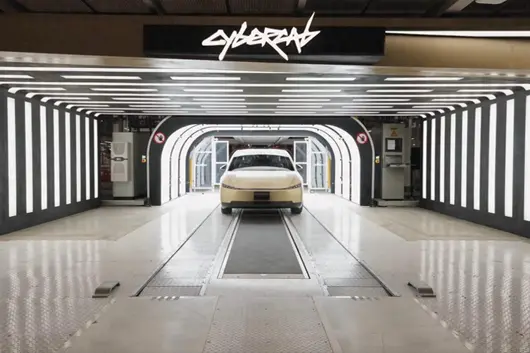
Tesla CEO Elon Musk posted on social media on the 9th local time, stating that redesigning the Cybercab production process achieved a production speed more than 5 times faster than traditional car manufacturing models. He explained that relying on the Unboxed (disassembly modular production) mode, various assembly modules are produced in parallel, and the entire vehicle is assembled at the final step; the production line footprint is halved, and output increases. The Cybercab, which started production at the Texas Gigafactory in February 2026, has become an industry focus again thanks to the astonishing production capacity achieved in just over half a year.

Of course, there are still unresolved issues. As of early September, only 45 Cybercabs are registered in Texas, accounting for 11% of the total 420 registered autonomous vehicles in Tesla's Texas. The effect of cost reduction remains to be verified by the actual utilization rate and final vehicle selling price. Drastic changes in production models are not exclusive to Tesla. Vehicle manufacturers like Ford and Hyundai Motor Group are reworking their assembly lines in their own ways. The century-old underlying logic of automobile manufacturing is wavering. This article reviews the technical routes of each company.

After Henry Ford, the iteration of production models
In 1913, Henry Ford introduced assembly line assembly at his Highland Park Plant in Michigan. The body moves along the conveyor belt, and workers at fixed stations repeatedly complete assigned tasks. The Model T went off the line in 90 minutes, and cars truly went to the masses. This model became the standard paradigm of the automotive industry for over a hundred years thereafter.
The electrification era is overturning this logic. Internal combustion engines and gearboxes are eliminated, and the number of parts is greatly reduced; simplified vehicle structures centered around batteries and motors have spawned new assembly processes. Starting with Tesla, Ford, Hyundai Motor Group, Toyota, Volkswagen, and BYD, each car manufacturer has offered different solutions. The focus of EV competition is shifting from batteries and software to the manufacturing process itself.

Tesla Abandoning Conveyor Belts
Tesla first unveiled the Unboxed modular production process on Investor Day in March 2023, redefining the concept of sequential assembly. Instead of completing the entire vehicle sequentially along a long assembly line, the 5 major modules—front cabin large die-cast parts, rear cabin large die-cast parts, structural battery pack, interior, and pre-painted exterior coverings—are manufactured synchronously on independent lines, and finally assembled into a complete vehicle at once in the final assembly area.

In traditional car manufacturing, painting is an independent process after the body is completed. The Unboxed mode directly colors the component panels in advance, eliminating the whole vehicle painting step. Tesla's goal is to reduce the Model Y production cost by nearly half and compress the single vehicle assembly time to 5-10 seconds. Referencing the 33-second production cycle of a single Model Y at Shanghai Gigafactory, the target speed is equivalent to more than 3 times the current level.
The United States Patent and Trademark Office granted Tesla the Unboxed process patent in September 2025. The first model to implement this process is the autonomous Robotaxi Cybercab, mass-produced at the Texas Gigafactory in February 2026. Existing mass-produced models such as Model 3, Model Y, and Cybertruck have not fully implemented this process yet. The planned budget-friendly new cars under $30,000 mass-produced in the middle of 2026 will also adopt this production method. However, there is also industry skepticism: Can this production line achieve multi-model co-line production? Referencing Tesla's past record of multiple production delays, whether this process can land stably on schedule remains to be seen.

Ford: Three-Path Split "Assembly Tree" Production Line
As the pioneer of assembly lines, Ford, after over a century, is personally deconstructing the production system it invented itself. Universal EV Production System (Universal EV Production System): Splits a single long production line into front, middle, and rear three branches, finally converging for final assembly, Ford calls this Assembly Tree (assembly tree). This architecture was made possible by eliminating internal combustion engine and gearbox assembly processes: The middle production line responsible for assembling batteries, seats, center consoles, and carpets serves as the main trunk, while front and rear cabin large aluminum die-cast parts are completed on independent lines and then merge into final assembly. Parts and tools are transported along the assembly tree to corresponding workstations, reducing workers' body twisting and large arm reaching actions.

This system was first implemented at Ford's Louisville Assembly Plant in Kentucky. Ford invested $2 billion to retrofit this plant and $3 billion in the Michigan battery plant, totaling an investment of $5 billion. The scrap metal from demolition reached 25,000 tons, and installing the new truss structure consumed a total weld length of 700 miles (about 1,126 km). The plant's first mass-produced model is the $30,000 level mid-size electric pickup Fathom. Ford stated that the assembly speed of this universal EV production system increased by 40% compared to traditional lines; the factory added dedicated workstations where software can be pre-flashed before module assembly; the plant's 5G network supports synchronized quality inspection during the assembly process. Parts mass production is scheduled for Q1 2027, and official mass production for consumers is expected in 2028.
Ford stopped electric pickup F-150 Lightning production in December 2025, with the official reason being the inability to find a viable profit path. This massive investment in the Louisville plant forms a sharp contrast with it, reflecting Ford's shift in electrification focus towards affordable high-volume models.

Hyundai Motor Group: Exploring Two Process Routes in Parallel
Hyundai Motor Group has not selected a single route but is synchronously advancing differentiated manufacturing innovation in Singapore, the US, and Ulsan.
The Hyundai Motor Group Global Innovation Center HMGICS located in Jurong, Singapore, directly abandons conveyor belts. The factory layout includes 27 oval independent work cells to achieve multi-model flexible mixed-line production. AGV unmanned transfer robots can carry up to 3 tons of car body, transporting between work cells, replacing conveyor belts. Boston Dynamics' quadruped robot Spot captures assembly points to complete quality inspection. The factory produces both IONIQ5 and autonomous Robotaxis simultaneously, with an annual capacity of over 30,000 units, leaning towards an experimental factory for small batches and multi-varieties.

The HMGMA (North American Gigafactory) in Ellaville, Georgia, US, scales the cell mode up to mass production scale. It adopts manufacturing platforms verified by HMGICS, with an annual capacity of 300,000 units; 161 Autonomous Mobile Robots (AMR) achieve logistics automation for interior assembly; the battery module factory is directly connected to the vehicle factory via a tunnel conveyor belt, improving logistics efficiency. The factory started producing the IONIQ5, added the Kia Sorento Hybrid model on June 2, 2026, and continues to expand co-line models.

The third route is in Ulsan, South Korea. Unlike 1996's Asan plant where Hyundai built a new vehicle plant, they chose to build a giant die-cast dedicated production line within the existing Ulsan factory. Using 6,000-ton or larger large-scale die-casting equipment to form car body parts in one piece, greatly reducing the number of parts and welding processes. Industry forecasts predict this process will be featured first on the 2026 large electric SUV Genesis GV90.

Hyundai Motor Group's route differs from Tesla and Ford, belonging to a dual-line parallel strategy: The Singapore factory focuses on the Cell cell mode for small batches and multi-varieties; the Georgia and Ulsan factories target large-scale mass production, developing large die-casting and automated logistics. Not pursuing a single standard answer, they implement multiple solutions in parallel based on production capacity scale and product goals.

Toyota, Volkswagen, BYD: Their Respective Routes?
Toyota still relies on the two pillars of the TPS Toyota Production System: Just-in-Time production and Jidoka (Autonomation), while conducting new trials. In June 2023, the Technical Workshop unveiled the self-driving assembly line: EVs rely on their own sensors to move autonomously through various processes, eliminating the need for conveyor belts. The goal is to reduce equipment investment and adapt to multi-variety, small-batch production. Meanwhile, next-generation EVs (prioritizing Lexus) will implement large die-casting processes starting from the 2026 model year, with the vehicle body split into three major parts (front, middle, rear) assembled integrally.

Volkswagen once launched the Trinity project benchmarking against Tesla, planning to build a new factory in Wolfsburg, compressing single-vehicle manufacturing time to 10 hours, only one-third of ID.3's current production duration. However, software R&D delays, management changes, and stagnant European EV demand led to repeated postponements. In 2026, Volkswagen is considering closing 4 factories in Germany and laying off up to 100,000 people. This case fully illustrates that even grand manufacturing innovation concepts are easily shelved in the face of financial crises.
Chinese BYD does not fuss over production line forms, focusing instead on vertical supply chain integration. 70-80% of core parts such as batteries, power semiconductors, motors, and electronic controls are developed and produced in-house, building a system immune to external supply chain fluctuations. The Shenzhen headquarters final assembly line produces a complete vehicle every 51 seconds. R&D of parts allows battery technology iterations to be synchronized to vehicle design and manufacturing processes quickly, which is the core reason behind its high cadence.

The Key in the End: Cost and Execution Capability
Each company's route is different, but the general direction is converging: Relying on large die-casting to reduce parts; abandoning fixed conveyor belts, shifting to flexible logistics with robots and AGVs; completing software flashing in advance during the assembly stage. Every company is utilizing the simplified vehicle structure brought by electrification to forge their own path.

But the implementation progress differs significantly among companies: Hyundai Motor Group operates a small-scale Singapore test line while advancing Georgia and Ulsan mass production lines, and has even integrated hybrid models into production. Tesla and Ford have set commercialization timelines using Cybercab and Fathom as explicit new vehicle carriers, but it still takes time to reach stable mass production. In contrast, Volkswagen proves that manufacturing innovation is easily downgraded due to corporate financial conditions.
Now, the EV markets in various global regions are cooling and heating differently, and manufacturing innovation has become a cost-reduction measure that determines the life or death of car companies. It cannot be determined yet which process will become the industry new standard, but the conveyor belt assembly line that has lasted for a hundred years is no longer the only solution.

特斯拉行政總裁埃隆・馬斯克於當地時間 9 日在社交媒體發文稱,重新設計 Cybercab 的生產流程,實現了相比傳統造車模式 5 倍以上嘅生產速度。佢介紹,依靠 Unboxed(拆解式模組化生產)模式,並行生產各類組裝模塊,喺最後一道工序完成整車總裝;生產線佔地面積縮減一半,產量反而得到提升。2026 年 2 月喺得州超級工廠投產嘅 Cybercab,憑借半年多就達成嘅驚人均產量,再次成為行業焦點。
當然目前仍存在待解決嘅課題。截至 9 月初,得州登記在冊嘅 Cybercab 僅有 45 台,佔特斯拉得州自動駕駛車輛登記總數 420 台嘅 11%。成本削減效果,仍有待實際開工率與最終整車售價嚟驗證。生產模式劇變並非只有特斯拉。福特、現代汽車集團等整車企業,都在以自己嘅方式重新改造組裝產線。延續百年嘅汽車製造底層邏輯正在搖動,本文梳理各家企業嘅技術路線。
亨利・福特之後,生產模式嘅迭代
1913 年,亨利・福特喺密歇根州海蘭帕克工廠引入流水線裝配。車身隨傳送帶移動,工人固定工位重複完成指定工序。T 型車 90 分鐘即可下線,汽車由此真正走向大眾。呢套模式喺此後百餘年成為汽車工業嘅標準範式。
電動化時代正在顛覆呢套邏輯。內燃機、變速箱被取消,零部件數量大幅減少;以電池、電機為核心嘅簡化整車結構,催生全新裝配工藝。以特斯拉為開端,福特、現代汽車集團、豐田、大眾、比亞迪,各家车企拿出唔同解決方案。電動車競爭嘅重心,正從電池、軟件,轉移至製造工藝本身。
拋棄傳送帶嘅特斯拉
特斯拉喺 2023 年 3 月投資者日首次公開 Unboxed 模組化生產工藝,重新定義咗順序裝配嘅概念。唔再沿著一條長流水線依次完成整車,而是將前艙大型壓鑄部件、後艙大型壓鑄部件、結構電池包、內飾、噴塗完成嘅外覆蓋件,共 5 大模塊,分別喺獨立產線上同步製造,最終喺總裝區域一次性合車。
傳統造車,噴塗係車身完工之後嘅獨立工序。Unboxed 模式直接對零部件面板預先完成上色,省去整車噴塗環節。特斯拉目標,依靠呢套工藝把 Model Y 生產成本降低近一半,單車裝配時間壓縮至 5‑10 秒。參考上海超級工廠 Model Y 單車 33 秒嘅生產節拍,目標速度相當於現有水平嘅 3 倍以上。
美國專利商標局 2025 年 9 月向特斯拉授予 Unboxed 工藝專利。該工藝首次落地車型為無人駕駛 Robotaxi Cybercab,2026 年 2 月於得州超級工廠量產。Model3、Model Y、Cybertruck 等現有量產車型,尚未完整落地呢套工藝。計劃 2026 年年中量產嘅 3 萬美元以下平價新車,也將採用呢套生產方式。但行業也存在質疑:呢套產線能否實現多車型共線生產?參考特斯拉過往多次產能延期記錄,呢套工藝能否如期穩定落地,仍有待觀察。
福特:三路分流嘅「裝配樹」產線
作為流水線嘅開創者,福特時隔百餘年,正在親手解構呢套自己發明嘅生產體系。 通用电動車生產系統(Universal EV Production System):將單條長產線拆分為前、中、後三條分支,最終匯流總裝,福特稱為裝配樹(Assembly Tree)。內燃機與變速箱裝配工序被取消才得以實現呢套架構:負責裝配電池、座椅、中控、地毯嘅中間產線作為主幹,前後艙大型鋁合金壓鑄件分別喺獨立產線完工後匯入總裝。零部件、工具沿着裝配樹輸送至對應工位,減少工人扭轉身體、大幅度伸手嘅作業動作。
呢套系統首次落地肯塔基州路易斯維爾組裝工廠。福特為改造該工廠投入 20 億美元,密歇根電池工廠投入 30 億美元,合計投資 50 億美元。拆除產生嘅廢金屬就達 25000 公噸,固定全新桁架結構耗费縫合總長 700 英里(約 1126 公里)。工廠首款量產車型為 3 萬美元級中型電動皮卡 Fathom。福特稱呢套通用电動車生產系統裝配速度相比傳統產線提升 40%;工廠新增專用工位,可喺模塊裝配前預刷寫軟件;廠區 5G 網絡支持裝配過程同步質檢。零部件量產定于 2027 年一季度,面向用戶嘅正式量產預計 2028 年。
福特已於 2025 年 12 月停止電動皮卡 F‑150 Lightning 生產,官方理由係無法搵到可行嘅盈利路徑。對路易斯維爾工廠嘅鉅額投入與之形成鮮明對比,體現福特電動化重心轉向平價走量車型。
現代汽車集團:兩套工藝並行探索
現代汽車集團沒有選定單一路線,喺新加坡、美國、蔚山同步推進差異化製造革新。
位於新加坡裕廊嘅現代汽車集團全球創新中心 HMGICS,直接捨棄傳送帶。廠區布置 27 個橢圓形獨立作業單元,實現多車型柔性混線生產。AGV 無人轉運機器人最多可承載 3 公噸車身,喺各個作業單元之間轉運,替代傳送帶。波士頓動力四足機器人 Spot 拍攝裝配點位完成質檢。工廠同時生產 IONIQ5 同無人駕駛 Robotaxi,年產能 3 萬台以上,偏向小批量多品種嘅實驗工廠。
美國佐治亞州埃拉維爾嘅 HMGMA(北美超級工廠),把單元模式放大到大批量生產規模。導入 HMGICS 驗證過嘅製造平台,年產能 30 萬台;161 台自主移動機器人 AMR 實現內飾裝配物流自動化;電池模組工廠與整車工廠通過隧道傳送帶直連,提升物流效率。工廠從生產 IONIQ5 起步,2026 年 06 月 02 日新增起亞獅鉑拓界混合動力車型,持續拓展共線車型。
第三條路線喺韓國蔚山。現代沒有像 1996 年牙山工廠那樣新建整車廠,選擇喺現有蔚山廠區內部建設巨型壓鑄專屬產線。採用 6000 公噸以上大型壓鑄設備一體成型車身部件,大幅減少零件數量與焊接工序,行業預測呢套工藝將率先搭載喺 2026 年大型電動 SUV 捷尼賽思 GV90。
現代汽車集團嘅路線同特斯拉、福特有所區別,屬於雙線並行策略:新加坡工廠主打小批量多品種嘅 Cell 單元模式;佐治亞、蔚山工廠面向大規模量產,發展大壓鑄與自動化物流。不追求唯一標準答案,根據產能規模、產品目標,並行落地多種方案。
豐田、大眾、比亞迪各自路線?
豐田依舊以 TPS 豐田生產方式兩大支柱:準時化生產、自動化為根基,同時開展全新嘗試。2023 年 6 月技術工坊公開自驅式裝配線:電動車依靠自身傳感器自主移動流轉各個工序,唔需要傳送帶。目標降低設備投入,適配多品種小批量生產。同時,下一代電動車(優先雷克薩斯)從 2026 年車型開始落地大壓鑄工藝,車身拆分為前、中、後三大部件一體裝配。
大眾曾經推出對標特斯拉嘅 Trinity 項目,計劃喺伍爾夫斯堡新建工廠,將單車製造時間壓縮至 10 小時,僅為 ID.3 現有生產時長嘅三分之一。但軟件研發延期、管理層更迭疊加歐洲電動車需求低迷,計劃一再推遲。2026 年嘅大眾,正考慮關閉德國 4 座工廠、最多裁員 10 萬人。呢一案例充分說明,再宏大嘅製造革新構想,喺財務危機面前也極易被擱置。
中國比亞迪並不糾結產線形式,重心放喺供應鏈垂直整合。電池、功率半導體、電機、電控等核心零部件 70‑80% 實現自研自產,構築唔受外部供應鏈波動影響嘅體系。深圳總部總裝產線,每 51 秒下線一台整車。自研零部件可以快速把電池技術迭代同步到整車設計與製造流程,呢係其高節拍背後嘅核心原因。
歸根結底嘅關鍵:成本與執行力
各家企業路線各唔相同,但大方向趨同:依靠大型壓鑄減少零部件;拋棄固定傳送帶,轉向機器人、AGV 嘅柔性物流;喺裝配階段提前完成軟件刷寫。各家都在利用電動化帶來嘅整車結構簡化,走出自己嘅道路。
但各家落地進度差距明顯:現代汽車集團一邊運營新加坡小規模試驗線,一邊推進佐治亞、蔚山大批量產線,甚至已經把混合動力車型納入產線。特斯拉、福特分別以 Cybercab、Fathom 作為明確新車載體定下商業化時間,但距離穩定大規模量產仲需要時間。反觀大眾,足以證明製造革新好容易受企業財務狀況影響而降級。
如今全球各區域電動車市場冷熱分化,製造革新已經成為決定車企生死嘅降本手段。而家仲不能斷定邊套工藝會成為行業新標準,但延續百年嘅傳送帶流水線,已經唔再係唯一解。

特斯拉的无人驾驶出租车,要来中国了。但这次,它只负责站台,不负责接单。

9月14日,特斯拉在社交媒体上宣布,Cybercab将于9月17日起在北京、上海两地亮相,北京华贸特斯拉体验店展期为9月17日至27日,上海兴业太古汇展期为9月17日至21日。特斯拉明确表示,此次仅为静态展示,不涉及上市销售和无人驾驶网约车商业运营安排。
Cybercab是特斯拉Robotaxi业务线推出的专用无人驾驶车型,也是特斯拉将自动驾驶能力从“卖给车主的FSD功能”转向“自营出行服务”的核心载体。该车于2024年10月在美国加州伯班克举行的“We, Robot”活动上首次亮相,采用双座、双门、无方向盘和无踏板的设计,量产版本面向没有车内驾驶员的短途接驳场景;其核心技术建立在特斯拉以摄像头视觉感知、神经网络和端到端算法为基础的FSD自动驾驶体系之上,并计划配合无线感应充电、车队调度及远程运营系统,降低车辆补能、维护和人力成本。
Cybercab已于2026年2月在得州超级工厂下线首辆生产车,并于4月启动量产爬坡,但实际规模仍有限;9月起,该车已在美国得州奥斯汀划定区域内接入特斯拉Robotaxi服务,乘客可通过专用App叫车,目前获准运营的Cybercab约45辆,仍处于小规模商业验证阶段,同时还面临美国监管部门对其安全合规性的审查。海外方面,特斯拉正通过巡展扩大产品曝光;近期在北京、上海进行的首次公开静态展示活动,官方也明确表示,不涉及Cybercab在华销售,也不代表无人驾驶网约车服务已在中国落地。

其中,百度旗下的萝卜快跑是目前全球规模最大的运营商。截至2026年8月,萝卜快跑已覆盖全球28座城市,累计完成超2300万次订单,自动驾驶总里程突破3.5亿公里,其中全无人驾驶里程超2.4亿公里。今年3月,单周订单峰值突破35万单。萝卜快跑已在武汉、北上广深、川渝等地运营,并进入香港,迪拜、阿布扎比等海外市场也在推进。
不过,实际落地运营目前也还是存在风险。今年3月31日晚,武汉多辆萝卜快跑在行驶中突然“停摆”,部分车辆直接停在三环线高架等路段中央,多名乘客被困,最终依靠交警到场才安全撤离。武汉交警通报称,初步判断为系统故障所致,无人员受伤。这次事件暴露的不仅是技术层面的系统故障,也包括远程应急响应在极端场景下的兜底能力。
来源:车观察

在国内无人驾驶出租车市场,萝卜快跑、小马智行和文远知行绝对是头部主力。据最新数据,深圳地区的萝卜快跑市场占有率已经高达六成,足见其规模优势。无论是第三方自动驾驶技术运营商,还是像小鹏这样走车企自研路线的玩家,竞争都已进入白热化阶段。

特斯拉也没有缺席。其专为无人驾驶载客服务打造的Cybercab,已于9月3日在美国得州奥斯汀正式投入运营,
而近日,这台没有方向盘、没有踏板的全自动驾驶车辆,以香港作为亚洲巡展的首站正式亮相,并将于九月中旬起在北京、上海等城市陆续展出,迎来中国内地的首次公开亮相。

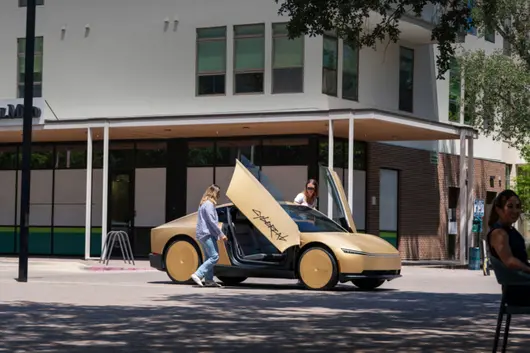
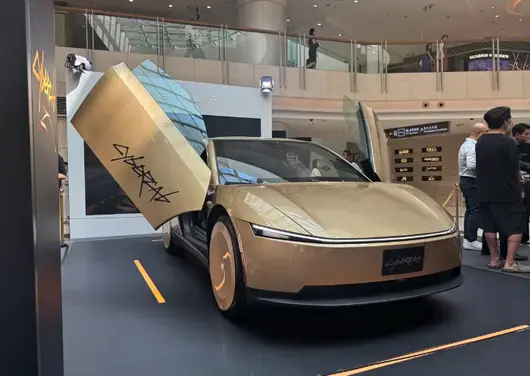
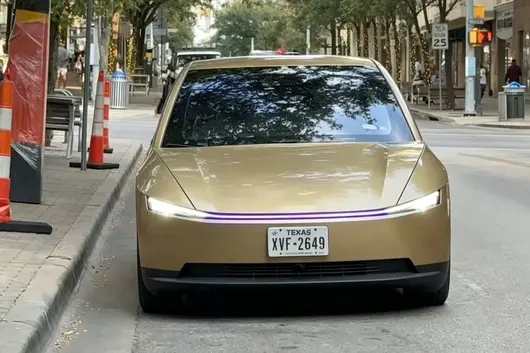
不得不说,Cybercab在设计上确实足够拉风。整车延续了特斯拉家族简约科幻的风格,溜背造型配合大尺寸封闭式轮毂,两侧车门采用向上开启的飞翼式蝴蝶门设计,极具视觉冲击力。

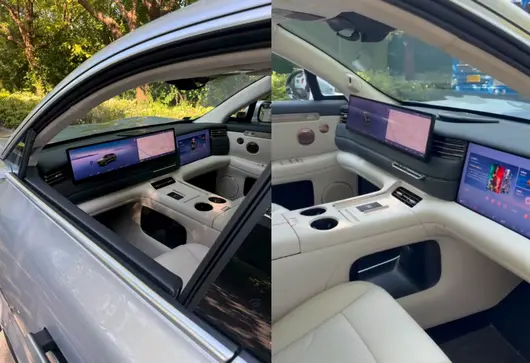
不过,车内为双座布局,没有方向盘、油门和刹车踏板,仅在中控位置配备一块触控屏,乘客可通过它调节座椅、控制空调,甚至登录个人音乐账户、播放影片或运行游戏。座椅采用宽大舒展的沙发式设计,强调乘坐舒适性,但看上去有点单薄。

智驾方面,Cybercab采用端到端纯视觉方案,全车搭载8颗高清摄像头和AI 4车载硬件平台。动力上配备容量低于50kWh的电池组,依托轻量化车身,综合工况续航里程接近500公里。

但回到最关键的问题:它什么时候能引入内地市场?Cybercab在香港展出期间,是无法在道路上行驶,随后内地城市也仅仅是展览,纯粹是静态试水。而目前特斯拉FSD在中国内地获批许可才是关键。
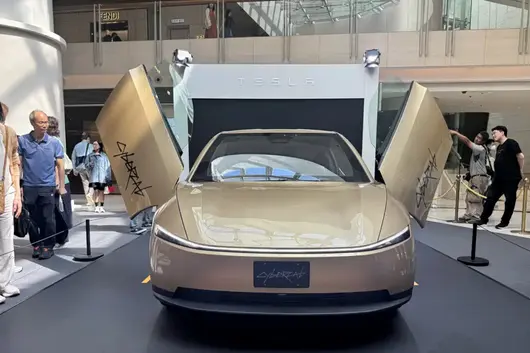

9月9日,香港九龙圆方,一台没有方向盘、没有踏板、甚至连传统驾驶位都消失了的金色小车,就这么静静停在那里,但是路过的每个人都忍不住停下脚步。这台金色小车就是特斯拉Cybercab,而它的亚洲巡展首站选在了香港。


上周它刚在德州奥斯汀亮相,当地已经有超过40辆Cybercab通过Robotaxi App跑在指定区域接客。转眼间,这台车就空降香港,速度堪比“闪现”。接下来三周,它会在圆方、太古广场和启德AIRSIDE体验中心轮流展出,之后还要去东京、北京、上海继续刷脸。


说回这台车本身,金色的低矮车身、向上翻飞的蝴蝶门,一眼看过去确实有几分《银翼杀手》里走出来的味道。但真正让人“破防”的是打开车门的那一刻,方向盘没了,油门刹车踏板也没了,取而代之的是一块22英寸的大屏和两个宽敞得像头等舱的座位。马斯克管它叫“超舒适休息室”,换句话说,你坐进去之后除了发呆、刷剧、打游戏,什么都不用干,车自己会开。


当然,受限于香港现行法规,这台车暂时还不能在香港道路上跑起来,但这不妨碍它成为这几天香港最火的“打卡点”,毕竟谁不想亲眼看看未来的出租车长什么样?有意思的是,就在Cybercab香港首展的前一天,智己汽车放出了一段视频,一台没有方向盘的测试车在上海街头正常起步、转弯、避让行人。智己大大方方地配了一句话——“这台车,不在大洋彼岸,而是在中国上海”。

老司机辣评:一个在香港静态展示,一个在上海上路实测,一个来自大洋彼岸的硅谷明星,一个出自本土的国产品牌。虽然没有方向盘的车短期内还不会大规模普及,但两家公司几乎同时在这一赛道上亮出底牌,已经足以说明一件事,方向盘消失的那一天,可能比我们想象中来得更快。

没有方向盘的车,开始离普通消费者越来越近了。
9月9日,特斯拉Cybercab登陆香港,开启亚洲巡展首站。前一天,智己刚放出一段工程测试视频:主驾位置已经没有方向盘,但车辆依然可以正常起步、转向,并完成对行人的避让。
智己随后确认,这台测试车使用的是全新一代LS6同源技术。9月10日,新一代LS6就将正式开启预售。

两个时间点挨得很近,也让“无方向盘”这件事一下从Robotaxi的话题,落到了国内量产车上。
当然,新一代LS6不会真的取消方向盘。这台测试车更多是在展示另一件事:当汽车开始使用线控转向之后,方向盘和车轮之间那套存在了一百多年的机械连接,已经不是必须的了。
方向盘为什么能拆?
传统汽车转向并不复杂。人转动方向盘,力量经过转向柱、转向机等机械结构,最后传递到车轮。
线控转向把中间这套机械连接拿掉了。驾驶员的操作先变成电信号,再由电子控制系统和执行机构控制车轮。所以智己把方向盘拆掉之后,车依然可以完成转向。

对普通用户来说,它最直接的价值是转向比更灵活、方向盘转动幅度更小,同时还能释放座舱空间。但放到高阶自动驾驶里看,意义更大。

智驾开始卷底层
过去几年,智驾主要卷“怎么看、怎么想”:摄像头、激光雷达、芯片算力、端到端、世界模型,解决的都是车辆如何理解环境并做出决策。
问题是,判断完成以后,还得把动作做出来。系统决定向左避让,车轮就要准确向左转;系统判断前车减速,制动就要及时介入。越往L3、L4发展,车辆对转向、制动和驱动执行的速度、精度和冗余要求越高。
智驾负责决定“怎么开”,线控底盘负责把这个决定真正执行出来。
这也是线控转向、线控制动越来越重要的原因。智己在NEXT·2028战略中,已经把全线控底盘与NEO三电架构、IM Claw智能体并列为三大技术支柱,目标就是把感知、决策和执行真正打通。
如果只是做一辆没有方向盘的测试车,其实没那么值得讨论。真正有意思的是,智己明确把它和全新一代LS6绑在了一起。
9月10日,新一代LS6将正式开启预售。从目前公布的信息看,这次升级并不是简单换外观、加配置,而是把NEXT·2028战略里的NEO三电架构、全线控底盘和IM Claw智能体集中放进一台20万元级主流SUV。

其中最值得关注的,就是全线控底盘。因为相比屏幕、座椅或者续航,它改变的是汽车更底层的控制方式。智己用“拆方向盘”来给LS6预热,想表达的是这台家用SUV已经开始使用面向下一阶段自动驾驶的底层架构。
此前全新一代智己L6已经把全线控转向、大角度线控后轮转向和线控制动带到了19.99万元起的价格区间。现在LS6再把这套技术放到销量规模更大的SUV产品上。

一项技术真正改变行业,往往不是从第一次出现开始,而是从进入主流价格区间开始。800V、激光雷达、高阶智驾都经历过类似过程,线控底盘现在也开始往这一步走。
因此,等到9月10日预售,除了价格和版本配置,全线控底盘最终怎么下放、覆盖哪些车型,会是一个更值得看的信息。
汽车的“新三大件”变了燃油车时代,评价一台车绕不开发动机、变速箱和底盘。电动车起来之后,行业开始更多讨论电池、电机、电控。
但随着高阶智能驾驶继续往前走,这套技术框架可能还会再变。三电负责能源,智能驾驶负责感知和决策,线控底盘负责执行。这三部分,正在越来越像智能汽车时代真正的“新三大件”。

从机械控制走向线控,从驾驶员直接操控机械结构,到人与智能驾驶系统都通过电子信号控制车辆,这才是无方向盘测试车背后的行业趋势。
Cybercab只是把这种未来表现得更直观,而全新一代LS6真正值得看的,是这套过去更多存在于Robotaxi、概念车和高端车型上的底层技术,开始进入20万元级家用SUV。
接下来几年,汽车行业要卷的,可能已经不只是“谁的智驾更好用”,而是谁能更早把一台汽车,从机械产品变成真正可以被软件直接控制的机器。

特斯拉的无人驾驶车,终于来了!
美国当地时间9月3日,无方向盘无踏板、为自动驾驶而生的特斯拉Cybercab正式落地。

不得不说,从去年开始,各种小道消息就已经把Cybercab透露了个七七八八,这次正式对外发布,其实只是补充了一些细节。
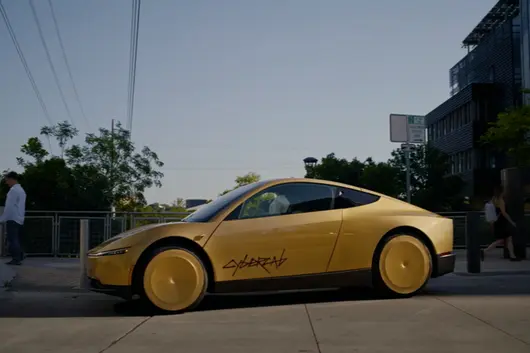
外观上不用多说,金色是主打色、造型低趴、蝴蝶门设计,马斯克也亲自在X上做出了官方定义:
Cybercab,象征着无人驾驶出租车的风暴降临。

内饰还是特斯拉的极简风格,除了一块中控屏几乎什么都没有,方向盘、踏板、后视镜悉数取消。虽说是两座纯电车型,胜在乘坐空间充足,后备厢容积约572L、最大承重100kg。

从Cybercab的使用说明书来看,这就是一台彻头彻尾的无人驾驶出租车:
用户从APP上打到车以后,几乎就不需要自己动手了,车开过来检测到用户的手机在附近,会自动打开车门。用户坐进去系好安全带后,车辆会自动关门,此时手动在中控屏上点击“开始”,就能启程。

而在理论上的全自动运行之外,Cybercab的手动操作基本都集中在中控屏上,包括开关门及后备厢、调整座椅、调整空调温度及风速。
Cybercab的车内,只保留了数量极少的物理按键,比如内部的开门按键、车窗控制按键。

另外,在乘客使用Cybercab期间,可以通过中控屏找点乐子,除了常规的听音乐、看视频,还能打游戏,车内配备V5 Starlink硬件,网络服务由星链支持。

总而言之,现阶段Cybercab呈现出来的状态,和大家伙想象中该有的样子基本大差不差了,打眼一瞧确实一股子拉风的高科技感。
不过,让人费解的是,Cybercab看上去没啥毛病,特斯拉对它的处理却极为低调。
要知道,Cybercab是承载马斯克在自动驾驶领域最大野望的产品,从2024年10月首次对外亮相开始,就始终保持着极强的存在感,是当之无愧的全球顶流科技产品。
前不久8月放出正式定档日期后,全球科技爱好者更是翘首以盼等着9月3日到来。
谁承想,特斯拉却根本就没给Cybercab安排一场正儿八经的新车发布会!

现场没邀请媒体、没安排直播,甚至连参加发布会的人员都事先签好了保密协议,参会前不能透露任何信息,活动没结束前,也不可以对外分享实时动态。
结合此前特斯拉公布的信息,这场宣告Cybercab正式加入特斯拉Robotaxi车队的发布会,本质上只是一场针对特斯拉KOC举行的小范围分享会。
有意为之的冷处理,让人不得不浮想联翩。
只能说,在Robotaxi这一涉及到生命安全的领域里,习惯了先画饼再做饼的马斯克,站在商业化运营的关键节点上,或许真的学会了谨慎行事。
01. Cybercab落地,意味着什么?
特斯拉首次在美开启Robotaxi服务,是在2025年6月。
在长达一年的时间里,特斯拉所谓的无人驾驶出租车队,其实全部由改装的Model Y和Model 3组成。

直到今年6月底,专门为自动驾驶设计的Cybercab才真正落地,一边在公开道路进行工程测试,一边提供给特斯拉内部员工进行通勤试运营。
从最初公布Cybercab的存在,再到将这台车彻底落地,两年的时间里,智能驾驶领域的变化相当剧烈。
L2领域,端到端大模型赋能的辅助驾驶能力成为行业第一梯队主流;
L4领域,既有老牌巨头Waymo持续推进扩张,又有小鹏、华为等渐进性发展路线的公司不断加速触及临界点。

(Waymo计划进入德国)
留给特斯拉领先的时间不多了,无人驾驶也不再是令人激动的新概念。
就目前来看,各家专门针对无人驾驶设计的车型正在批量化落地,Cybercab在技术上也几乎不存在任何难以逾越的困难节点,Cybercab的量产已不会颠覆公众的认知,自然难再掀起市场太多的情绪。
就连曾经舆论场上火热的技术路线问题,也渐渐淡出公众视线——特斯拉采用的纯视觉方案,骂的人都没以前那么多了。

因为事到如今,还关注自动驾驶的人,关注重点已经变了:用什么方式实现的不重要,真正带来无需动手的体验才重要。
正所谓英雄不问出处,今天自动驾驶离落地越近,评价方式也就越以结果为导向。
近期国内公布的《智能网联汽车自动驾驶系统安全要求》强制性国家标准,就将这个道理写得很明白。

在新国标的定义当中,自动驾驶的定义与方案选择、传感器多少、自研与否都无关,只看系统是否能“在设计运行条件下,持续地执行全部动态驾驶任务”。
说白了,不需要人类驾驶员参与就能把车开好,同时车企还敢为系统担责的自动驾驶,就是好的自动驾驶系统。
在这个评价体系里,海外的特斯拉、Waymo也好,国内的小鹏、萝卜快跑也罢,所有的自动驾驶玩家都站在同一条起跑线上。
而眼下,正是大伙即将冲线的成果验收期。
特斯拉的Cybercab还能牵动全球科技爱好者的心绪,在于它占了个第一:
全球第一款原生且闭环的无人驾驶出租车。

在它之前,并非没有专门为自动驾驶设计的车型落地。Waymo、萝卜快跑、文远知行都采用前装量产的自动驾驶车型投入运营,以L3、L4标准设计的量产车更是比比皆是。
但自动驾驶公司不造车,投入Robotaxi商业化运营的车型,来自与车企的深度合作,而车企面向市场打造的量产车,目前只是宣称具备自动驾驶能力,实则没有资格称之为自动驾驶汽车。
真正采用自研自动驾驶系统、能自己打造正儿八经自动驾驶汽车的,只有亲身入局Robotaxi业务的车企。
而特斯拉在这个领域内进展最快,Cybercab就是Robotaxi赛道上第一款吃螃蟹的车。

从这个角度看,Cybercab最大的价值正在于,其具有丰富借鉴价值的首发身份。
如果Cybercab能成功跑通无人驾驶出租车的商业化,相当于为所有布局Robotaxi业务的车企蹚出一条第二收入曲线。
哪怕失败,它的经验教训也将成为整个行业的养料,帮助其他公司修正方向、越挫越强。
02. FSD,缺席中国市场?
Cybercab落地投入到Robotaxi商业化运营,其实是特斯拉FSD的大型广告现场。
目前特斯拉在美运行的Robotaxi车队规模相对有限,车内无安全员的Robotaxi汽车大概只有45辆。Cybercab正式落地搞得这么低调,初期加入到车队中的数量大概率不会太多。
尽管马斯克预计,到2026年底,Cybercab的Robotaxi服务将覆盖美国四分之一至一半的区域。
不过考虑到Cybercab当下仅开放了美国得州奥斯汀市的部分区域,马斯克关于Cybercab的扩张计划有没有谱,还是未知数。

所以当未来很长一段时间,各地用户都很难有机会体验到Cybercab服务的情况下,相信会有不少人选择退而求其次,去体验Cybercab的平替——一辆具备FSD的特斯拉Model 3/Y。
不得不说,这大概率也是马斯克计划好的。
马斯克曾多次在公开场合介绍过特斯拉的战略计划,即转型为一家以AI和机器人技术为核心的科技公司。

尽管汽车业务仍是特斯拉营收的绝对大头,但特斯拉早已将公司的发展重点,从卖车转向了提升FSD的渗透率。
这不止是基于对更高利润率的追求——和“一本万利”的软件收益相比,造车这一实体制造业带来的利润显得微不足道。
同时也是聚焦公司新业务方向的必然表现:FSD将同时应用于Robotaxi业务和机器人业务,是特斯拉未来战略的绝对中心。
今年2月特斯拉为美国用户推出订阅制FSD,每月99美元的订阅费用大大降低降低了FSD的使用门槛,可以让更多人从尝鲜开始慢慢成为FSD的忠实用户。

而马斯克向美国用户抛出的诱饵,就是FSD有潜力让每辆特斯拉都成为一辆具备完全自动驾驶能力的电动车。
此时再加上Cybercab的落地,FSD有了一个展示其全部自动驾驶能力的样板间。
一旦Cybercab在Robotaxi业务中表现出色,无疑将激励更多量产版的特斯拉车主订阅FSD。
唯一美中不足的是,Cybercab和当下“立等可取”的FSD,可能都和中国吃瓜群众无缘了。

自打FSD问世以来,FSD入华就成了一个薛定谔的话题。
今年5月,特斯拉官方在X发文时,将中国也纳入到FSD监督版(即L2组合驾驶辅助)可用范围内,好不容易让人觉得FSD入华有了盼头。
结果没过3个月,又网传中国从FSD监督版的全球可用地区清单中消失了。
甚至几天后,网上还传来特斯拉FSD上海数据中心“人去楼空”的传闻。

(特斯拉官方已辟谣,并且还在招人)
考虑到当下智能驾驶对各种道路数据的收集能力,FSD的监管问题的确相当棘手,这也是限制FSD监督版在全球市场推广的重要原因。
至于Cybercab入华,难度只会更大。
不过,对喜欢特斯拉的小伙伴来说,至少还有一个好消息。Cybercab将于9月在亚洲巡回亮相,其中9月9日抵达香港,9月18日抵达北京和上海。

届时,至少能亲眼目睹Cybercab的芳颜。
03. 写在最后
眼下,Robotaxi赛道已经形成中美争霸的格局,行业内有名有姓的头部竞争对手基本都来自中美两国。
其中,Waymo、特斯拉领衔的美国公司以美国市场为大本营,重点向欧洲、日本等区域扩张;
萝卜快跑、小马智行、文远知行等中国公司以中国市场为大本营,重点向中东、欧洲等区域扩张。

显然,中美两国都在本土市场之上,在全球海外市场跑马圈地。
特斯拉的优势在于品牌和成本。
品牌效应不必多说,马斯克本人作为全球顶流,在Cybercab的宣传推广上起到了举足轻重的作用。
成本方面,据马斯克介绍,Cybercab售价在3万美元(约人民币20万元)以下。行业内分析,Cybercab的单车成本大概在2.3-2.5万美元,相当于人民币15.45万元-16.79万元。
比起刚刚引进极氪CM1-E作为降本手段的Waymo来说,特斯拉在Robotaxi业务上的单车成本只相当于Waymo的五分之一都不到,能跟中国公司坐一桌——

萝卜快跑2024年推出的第六代车型,售价20.46万元,Cybercab甚至还占了上风。
考虑到中国在新能源汽车制造业上面的巨大成本优势,不得不说特斯拉在Cybercab的打造上确实有点东西。
而从产品定义、生产流程简化再到后续的品牌运营,也值得中国公司“摸着石头过河”。
毕竟Cybercab的出现,表明Robotaxi正在逐渐日常化,技术、成本都并非遥不可及。
接下来Robotaxi行业会出现什么新东西、又将对日常生活带来什么样的变化,让我们拭目以待。

【懂车之道 产业】我们来盘点一下2026年9月4日,汽车圈都发生了一些什么大事件。
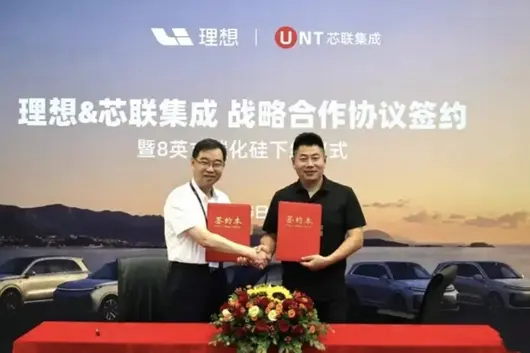
汽车事件一:理想与芯联集成签署新一轮战略合作协议

近日,芯联集成(688469.SH)与理想汽车开展深度战略合作交流,双方共同见证8英寸碳化硅晶圆成功下线,并签订新一轮战略合作协议,开启深化合作。
经过多年稳步协同,芯联集成与理想的合作层级与业务版图持续升级,合作产品应用场景从整车电驱动进一步延伸至车载热管理系统等领域。
汽车事件二:小米汽车将于2027年进军欧洲

9月3日,小米汽车宣布将于2027年进入包括德国在内的欧洲市场,并在2026柏林国际消费电子展(IFA)现场与首批八家德国头部汽车经销商集团签署合作备忘录(MoU)。
自2024年初推出首款电动车以来,小米在中国实现快速增长,累计交付超过70万辆。在此基础上,小米汽车计划于2027年将其技术驱动的车型与智能出行体验带到欧洲。欧洲作为汽车的诞生地和全球最成熟的汽车市场之一,是小米汽车国际化征程中的重要里程碑。
汽车事件三:全新一代问界M9累计交付突破3万台

9月4日,鸿蒙智行宣布全新一代问界M9交付12周累计交付量突破30000台!以60万元均价连续两个月位居50万以上车型销量第一。
汽车事件四:特斯拉Cybercab在美国奥斯汀投入运营

北京时间9月4日,特斯拉赛博无人驾驶电动车Cybercab量产版正式发布,并正式在美国奥斯汀投入运营。该车无需方向盘、踏板和后视镜,以更高使用效率,承担更多出行需求。据悉,Cybercab将在9月9日香港展出,9月18日在北京、上海同步展出,迎来国内首次公开亮相。
《每天车闻》,这里有最新的当天汽车新闻,请继续关注《懂车之道》。

作者 | 郭月
编辑 | 志豪
不到20万,能自己赚钱的特斯拉来了!
车东西9月4日消息,就在刚刚,特斯拉发布量产版Cybercab,彻底去掉方向盘、踏板、后视镜,依靠FSD实现全自动驾驶。
特斯拉高管现场官宣,Cybercab正式加入Robotaxi车队,向公众开放试乘,目标尽快规模化运营。

▲X网友分享Cybercab可以让行冲过马路的小孩
有人认可Cybercab乘坐空间充足,双脚摆动自如。

▲X网友分享Cybercab空间够大
还有人认为,Cybercab的APP功能更加完善了,可以给小费,可以评分,像在网约车程序里那样。

▲X网友分享Cybercab可以给小费、评分
不过,也有人表示,Cybercab疑似“翻车”。

▲X网友分享Cybercab疑似并排停车惹周边车辆不满
在这名网友的叙述中,Cybercab给了用户7分钟上车时间,车子和周边车辆并排停在路中间,引得周围汽油车司机狂按喇叭。

▲X网友分享用户乘坐Cybercab画面
整体上看,这场发布会办得极为特殊和神秘,没有直播,也不允许与会者实时分享动态,甚至根据与会者会后晒出的视频,马斯克没有登台,会上没有公布新的价格,也没有开放个人购车渠道,这意味着官方非常谨慎,而Cybercab距离真正改变全球用户的出行还有很长的路要走。

▲Cybercab发布会现场
不过,对于特斯拉来说,Cybercab的重要性不言而喻。
就在今天,特斯拉亚洲官方账号发布, Cybercab本月将在香港、东京、北京和上海亮相,其中将于9月18日在北京和上海同步展出。

▲Cybercab将迎来中国首次公开亮相
此次活动旨在展示其产品设计与技术理念,不涉及Cybercab在中国市场的上市销售或无人驾驶网约车商业运营安排。
01.
没开直播、要签保密协议
特斯拉无人出租正式发布
本次特斯拉Cybercab发布会相当神秘,线上各大官方账号都没有开通直播,并且仅邀请了少部分人现场参与发布会,X平台上多位与会大V表示,他们被要求签署保密协议,在活动期间不要发布任何内容。

▲X网友透露特斯拉要求与会者活动期间保密
尽管特斯拉高管此前公布了发布会时间,但活动开始后的1个小时内,外界依然无法获取任何现场消息。

▲特斯拉官方发布一系列Cybercab介绍视频
随后,特斯拉发布了特斯拉 《Cybercab乘客指南 》、应用程序更新说明、车队意向表以及一系列产品介绍视频。车东西经过一番梳理,整理了Cybercab的关键信息。

▲马斯克表示正进入交通运输黄金时代
具体来看,Cybercab的外观很有辨识度,金色车身,车宽为1754毫米(约1.75米),高度仅1408毫米(约1.41米),比普通轿车(约1.45-1.5米)看起来更为低矮。

▲特斯拉Cybercab内外参数信息
这种低趴造型有望带来更优的风阻表现和高速稳定性,也让整车视觉效果更具未来感。

▲特斯拉Cybercab外观
此外,该车离地间隙为144毫米,配合向上旋转开启的蝴蝶门设计,为乘客上下车提供了充裕的操作空间。

▲特斯拉Cybercab外观
并且,特斯拉Cybercab 没有前备箱,引擎盖无法打开,后备箱容积约572升,最大承重100公斤,按照官方演示,该后备箱足以容纳两件托运行李加两件随身行李,满足机场接送等日常出行需求。

▲特斯拉Cybercab 现场展示引擎盖内部构造
内饰方面,该车则彻底颠覆了传统汽车的内饰布局,配置非常极简,仅有两个座位,没有方向盘、没有加速踏板、没有制动踏板,也没有手套箱,取而代之的是一块22英寸中央触摸屏和紧急停车物理按钮。

▲特斯拉Cybercab中控屏
屏幕开机后会显示Cybercab字样,还能实时显示车辆周围的状况。
需要注意的是,特斯拉官方特别强调,用户座椅靠背倾斜角度必须小于35度,超过可能会增加受伤风险。
值得一提的是,Cybercab还在无障碍设计方面下足了功夫:座椅高度与标准轮椅齐平,方便行动不便的用户完成从轮椅到座椅的平稳转移。

▲特斯拉Cybercab方便视障用户上下车
车门开关和紧急按钮等关键实体按键均带有盲文标识,方便视障人士独立操作。

▲Cybercab多处按键带有盲文标识
Cybercab车上还搭载了9个摄像头,其中方向朝内的摄像头会检查车辆清洁度和用户是否遗失物品。
根据公开信息,Cybercab采用Unboxed模块化生产工艺,全线控底盘搭配48V低压架构、单电机前驱、48度电池包,整车重量1412公斤,EPA续航约472公里。
02.
全程可以通过APP手动操作
13岁以下禁乘
对于用户来说,通过Robotaxi手机应用即可完成整个出行流程。
打开App后,在服务范围内输入目的地,系统会显示预估车费和等待时间,确认下单后车辆便会自动驶来。
接驾过程中,Cybercab车尾贯穿灯带亮起红色,前脸RGB灯带则会显示App分配给该用户的专属颜色。

▲车辆前脸RGB灯带会显示App分配给用户的专属颜色

▲特斯拉 Robotaxi App会显示用户乘坐车辆的专属颜色
用户系好安全带后车门自动关闭,用户也可通过触摸屏手动操作,待所有乘客正确就座、车门和后备箱完全关闭后,点击屏幕上的“Start Ride”即可出发。
行程途中,触摸屏实时显示行进路线和预计到达时间,乘客可自由调节空调温度,或使用内置的影院、音乐和游戏等娱乐应用,车辆配备V5 Starlink硬件,实现全面互联。

▲Cybercab车辆行驶过程中状态
如需更改目的地,用户可通过手机App操作;若需靠边停车或求助,点击“Pull Over”或“Support”即可。
用户乘坐全程必须保持就座并系好安全带,特斯拉官方特别提到, 13岁以下未成年人目前禁止乘坐,且车内没有ISOFIX/LATCH接口(汽车儿童安全座椅的专用固定锚点系统),只能使用安全带固定安全座椅。
03.
两座/四座出租车供选择
敞开Robotaxi大门
值得注意的是,特斯拉还更新了其Robotaxi应用程序,提供双车型,让用户根据出行需求自由选择。
更新后的Robotaxi App界面并排展示了两种选项:两座Cybercab和四座Model Y。

▲特斯拉 Robotaxi App提供两种车型可选
大多数单人或双人用户可选择匹配Cybercab,实现更低成本和更高运营效率;三人及以上或需要更多空间的用户,则可预订仍保留方向盘和踏板的Model Y Robotaxi。
取消方向盘后,车辆在维护或特殊场景下的移动成为一个工程难题。
这车本来就是给FSD全自动驾驶设计,日常载客不需要人开,但面对维修、挪车、应急这些特殊场景,特斯拉提供了备用的方案,又不破坏Cybercab“完全无方向盘”的纯粹设计理念。
就在发布会前夕,特斯拉开始收集公众购买Cybercab车队意向,征集有意采购Cybercab车队或为其网络提供基础设施的商业伙伴。

▲特斯拉Cybercab
申请者需提供公司名称和部署地区,并可选择车辆采购、移动枢纽与基础设施、活动协作等合作类别。
这表明特斯拉对Cybercab的期望远不止于自营车队——它希望构建一个可扩展的Robotaxi网络,而这一目标的实现,特斯拉有意愿借助第三方的力量。
当前,特斯拉Cybercab的载人服务仅在美国得克萨斯州奥斯汀市的限定区域开放,按照马斯克的预估,到2026年底,该服务将覆盖美国四分之一至一半的区域。
04.
结语:Robotaxi,特斯拉下一个核心增长点
在特斯拉战略中,Robotaxi被视为特斯拉的下一个核心增长点,而Cybercab正是特斯拉撬动这个巨大市场的关键工具,它意味着为特斯拉带来更多持续性服务收入。
且相对于自动驾驶出租车友商的产品,Cybercab的核心优势在于其纯视觉方案带来的极致成本控制,有望重塑市场竞争格局。
此外,摩根士丹利分析师Andrew Percoco指出,Cybercab的发布将比以往任何产品演示都更重要,该业务在特斯拉400美元(约合人民币2687元)目标价中占到120美元(约合人民币806元)的价值。
可以说,Cybercab的成败,在很大程度上决定了资本市场对特斯拉未来的信心。
关于Cybercab何时在更多区域合法上路、正式商用,目前还是未知。


一辆能赚钱的 Robotaxi,和一家能赚钱的公司,中间隔了多远的距离?
2026 年第二季度,小马智行 Robotaxi 收入同比暴涨 691%,文远知行毛利率达到 37.5%,创下历史新高。

单看这些数字,很容易得出一个判断:Robotaxi 正在跨过规模盈利的临界点。
但两家公司仍在亏损,增长数字很热,盈利目标冷静得多。小马智行 CFO 王皓俊判断,Robotaxi 车队至少达到 4 万至 5 万辆,才有望实现自由现金流转正。
对小马智行而言,4 万至 5 万辆更像是从单车经济性走向规模经济的关键量级。
它未必是整个 Robotaxi 行业统一的盈利线,但至少说明了一件事:当车队规模从千辆级迈向万辆级乃至数万辆级,Robotaxi 才真正开始进入规模经济的讨论区间。
而Robotaxi 真正要回答的问题,不再是「一辆车能不能赚钱」,而是「这门生意有没有规模经济」。
从单车盈利到规模经济,Robotaxi 还要跑多远?
01、单车盈利,只是 Robotaxi 的第一关Robotaxi 的盈利拆开看,单车这一层已经跨过去了:
收入端,是每天能够完成多少订单、跑多少里程、产生多少车费收入。
成本端,则包括车辆折旧、充电、维保,以及直接运营所产生的人力等成本。
小马智行在广州、深圳跑通了单车盈利。Robotaxi 作为一项「运输服务」,在单车层面已经可以养活自己,拿到商业化的入场券。

但车队的账,不是「单车利润×车队规模」的简单算法。成本结构不同于单车,运营人员要增加,调度体系要更复杂,远程协助、车辆维护、保险、充电、停车、事故处理,每一项都要建体系。
公司要盈利是真正的重头戏。一家 Robotaxi 公司要支付的,不仅是车队的运营成本,还有研发、销售、管理、基础设施,以及全球市场拓展的全部费用。
小马智行上半年研发费用 7.07 亿元,是当期营收的 1.5 倍;文远知行更是达到了 2.3 倍。
单车盈利转正,是商业模式跑通的信号。
真正困难的第二关,是让规模经济成立,让成本被更多收入摊薄。这时 Robotaxi 的成本结构,可以拆成三层:
规模扩大不是简单增加车辆数量,提高运营效率成了关键,半固定成本和变动成本都可以通过软件和自动化逐步提升效率。
当规模达到一定量级,增加车辆之间的网络密度,收入端也会被反向拉动。

在已经验证的城市内,车辆投放增加后,用户等待时间缩短、留存率提升。车队规模不断扩大,也会进一步带动单车日均收入提升。L4 系统已经跑通,扩大车队就是最直接的收入放大器。
王皓俊在财报会上点破一个事实:在同一城市增加车队规模时,部分新增成本的增长速度,会明显低于收入的增长速度。
这恰恰说明,车队规模本身不构成规模经济,车队扩大之后,成本结构是否发生质变,才是分水岭。
自动驾驶最大的不同,是城市扩张的成本。
广州跑通,不意味着深圳能直接复制。深圳跑通,也不意味着东京、伦敦能直接照搬。
每进入一座新城,面对的不仅仅是简单的软件部署,还有不同的道路环境、交通规则、驾驶习惯、天气条件、监管要求。
把跑通的系统放进一个全新的物理环境,数据要重新积累,安全验证要重做一轮,运营体系要重新搭一遍。
过去进入一座新城市,需要数十名工程师完成适配;现在借助世界模型,人机协作就能完成。城市这个维度的边际成本,开始往下走。
小马智行的 PonyWorld 2.0 世界模型,让公司能以更少研发资源在多个城市同步部署车队,不再同比例增加工程资源投入。

这时候再看小马智行 4 万至 5 万辆的「盈利目标」,更像一个经济性拐点,从「单车经济性」走向「规模经济」。
一辆 Robotaxi 能赚钱,证明的是这门生意在单车层面成立,市场愿意买单。
但一家自动驾驶公司要证明的,是另一件事:当车队从 1000 辆变成 1 万辆、10 万辆,收入能不能跑得比成本更快,能不能把赚钱变成规模经济。
02、从卖 Robotaxi,到卖「自动驾驶能力」车队规模,是 Robotaxi 收入杠杆里的重要变量。规模经济的另一个方向,是把同一套技术资产放进更多业务。
100 亿元研发投入,如果只服务 Robotaxi,分摊的空间终究有限。
但一套感知、决策、数据、模型能力,如果同时服务 Robotaxi、Robobus、L2++/L3、Robotruck、Robosweeper,每进入一个新场景,都能给这套技术带来新的商业收入。研发投入就不再是压在某一个业务上的负担,而是所有业务共享的基座。
真正提高的是「技术资产利用率」,让已有的技术资产产生更多收入。
就像 Linux 操作系统可以支持多种设备,构建一个通用的自动驾驶操作系统,可以支持底层逻辑一致的场景。
文远知行一套 WeRide One 物理 AI 底座,同时服务 L4 和 L2++,形成「双数据飞轮」:一趟 L4 车队的真实运营数据,能反哺 L2++ 的量产方案;
而 L2++ 超 30 款车型的规模化数据,又能反过来加速 L4 对长尾场景的覆盖。
这一技术底座的结构:WITT(World Intelligence Toward Truth)拆解物理事实,GENESIS 负责生成仿真场景,两者结合形成数据闭环,让边际部署成本随着市场增加而递减。
数百万公里的道路测试可以压缩到几天内完成,数据采集和标注成本能降低 75% 以上。

这一点在财务数据上已经开始体现。文远知行 2026 年第二季度 L2++/L3 业务收入同比增长 2594%,WRD 3.0 出货量约 3 万套。
为 L4 Robotaxi 投入的技术,可以在其他业务线上创造全新的、高利润的收入流。文远知行全球 L4 车队约 3400 辆,包含 Robotaxi、Robobus、Robosweeper、Robovan 四个品类,这些业务共享同一套技术基座,意味着研发投入被多个业务线共同分摊。

Robotruck 本身就是技术向另一类 L4 场景的延伸,小马智行 Robotruck 和 Robotaxi 两个业务在代码层面的复用度超过 80%,硬件层面超过 90%。
这意味着,为 Robotaxi 研发的感知、预测、规划能力,同样可以服务于卡车场景,不需要反复投入。
2026 年上半年,小马智行 Robotruck 业务收入达到 1.60 亿元,第四代无人驾驶重卡进入量产,并与港口合作开始商业化部署。
L4 级无人驾驶轻卡是同样的一步棋,面向快递分拨、商超补货等城配场景,计划 2030 年前落地 10 万辆。
轻卡几乎可以完全复用 Robotaxi 的技术和运营基础设施,研发与运营两端的成本,都被同一套底座吃下来。这并非技术上的巧合,而是战略上的主动设计。

规模想继续放大,就得把市场这道墙往外推。中东、欧洲等海外市场,越来越频繁地出现在 Robotaxi 公司的商业化版图里。

小马智行全球布局
表面看,出海是在找新市场。但如果只把这一步理解为增加收入,就低估了海外对 Robotaxi 商业模型的意义,真正被改写的,是单位经济模型本身。
不同市场的网约车客单价存在明显差异。
德意志银行的报告显示,伦敦 5 公里出租车费用约合人民币 160 元,是中国网约车市场的十余倍。
同样的订单密度,变现能力差别不同,这种客单价差异,直接改变盈亏平衡的节奏。
Robotaxi 替代的,从来不是汽车,而是有人驾驶的运输服务。人力成本越高的市场,自动驾驶带来的成本优势就越明显。
文远知行 CEO 韩旭给出了宏观层面的判断:老龄化叠加司机短缺、经济基础好的市场,天然就是 Robotaxi 的潜在市场。
高客单价,把收入上限顶高;高人工成本,把无人化价值放大。
而 Robotaxi 企业如果以技术输出进入市场,与当地车企、出行平台、运营商合作,单位经济模型还会进一步被改写。
相比自购车辆、自建车队,技术输出模式下的资产压力要轻得多。

小马智行与Bolt、Stellantis在卢森堡启动Robotaxi测试项目
技术授权费本身就是高毛利业务,不会稀释利润。小马智行在共建车队模式下,车辆资产由合作伙伴承担,小马智行输出 AI 司机能力。
把车队规模做大,资本开支却不必跟着车辆数量线性增长。
「软件自持+车队合作方出资」的轻资产模式正在被多个市场验证,到今年 7 月,文远知行已经跑进 13 个国家、60 多个城市,海外收入上半年同比增长 154%,占比爬到了 34.5%。
单辆 Robotaxi 每年可带来 4 万至 5 万美元的经常性收入。在中东,Robotaxi 车队约 400 辆,阿布扎比和迪拜的无人驾驶服务覆盖 70% 以上核心城区。

文远知行与Uber落地欧洲苏黎世
海外规模化投放后,不是简单地帮 Robotaxi 公司多卖一些订单、多一条增长曲线,而是通过不同的收入水平、人工成本和商业合作模式,直接改善单位经济模型。
Robotaxi 的全球化,更像一场压力测试:司机成本、出行价格、车辆利用率、订单密度、监管环境,这些变量在不同市场完全不同。
开到海外只是表象,更关键的是,当规模继续扩大,边际成本到底能不能真的降下来。
整体来看,Robotaxi 的规模经济,正在经历三个节点:
Robotaxi 要证明的,从来不只是无人驾驶能赚钱。
真正的命题,是一套自动驾驶技术被足够多的车、城市、业务共同使用后,能否长出一套可以持续扩张的商业模型。
当更多车、更多城市、更多业务叠加在一起,规模经济的效应才真正开始显现。
规模经济不是口号,不同玩家从不同维度给出了自己的答案。
Waymo 把周均 100 万次付费出行视为拐点,计划在 2026 年底前撞线,谷歌 CEO Sundar Pichai 预期,Waymo 最快在 2027 年将对母公司的财务状况做出实质性贡献。
萝卜快跑从武汉单城盈利,到在全球 28 城铺开,以香港为入口开拓右舵市场,推动更多城市实现单位经济盈亏平衡。
小马智行划定了 4 万至 5 万辆的盈利阈值。文远知行 CFO 李璇则给出了另一个刻度:2028 年实现单季度经营现金流转正,2029 年实现全年盈亏平衡。
Robotaxi 商业化真正的终局,是把「单车生意」做成「规模生意」。


Written by | Zhang Linyu
Edited by | Zhang Nan
Designed by | Zhen Youmei
At 4:30 PM Central Time on July 22, Tesla's Q2 earnings call began, with little mention of its traditional automotive business.
During the Q&A session, analysts no longer asked when the low-cost model colloquially known as Model 2 would go into mass production. Tesla has never officially used this name, nor did they inquire about the progress of the next-generation model.
Elon Musk and his core executives shared information with the audience regarding FSD (Full Self-Driving, Tesla's fully autonomous driving software, which still requires driver supervision at all times in the current version), Robotaxi, Optimus robot, and chip factory.
This forms a certain contrast with Tesla's current revenue structure.
Revenue Increase Without Profit Increase
In Q2 2026, Tesla delivered a total of 480,126 vehicles globally, a 25% year-over-year increase and a 34% quarter-over-quarter increase, marking the company's best Q2 delivery record, second only to the historical record of 497,099 vehicles set in Q3 2025.
Among them, 467,762 Model 3 and Model Y vehicles were delivered, accounting for 97.4% of total deliveries; other models including Model S, Model X, Cybertruck, and Semi trucks totaled 12,364 deliveries, accounting for only 2.6%.

Production for the same period was 451,758 units. Deliveries exceeded production by 28,368 units, and global vehicle inventory days dropped from 27 days in the previous quarter to 15 days.
Tesla did not disclose absolute sales by region for Q2, but Chief Financial Officer Vaibhav Taneja revealed that compared to Q1, deliveries grew 60% in the Americas, 27% in Asia-Pacific, and 12% in EMEA. He also stated that Tesla ended Q2 with the largest order backlog since 2023.

The shareholder letter listed the markets where Q2 delivery records were set: South Korea, Australia, Colombia, Japan, Taiwan, Thailand, Portugal, Philippines, Chile, Slovenia, and Lithuania. Taneja additionally noted that Model Y set sales records in the Netherlands, Australia, and New Zealand.
Sales grew, but profits did not increase correspondingly.
In Q2, Tesla's total revenue was $28.236 billion, up 26% year-over-year, marking the first time revenue over the past 12 months exceeded $100 billion. Among them, automotive business revenue was $20.516 billion, up 23% year-over-year, accounting for 72.7% of total revenue; energy generation and storage business revenue was $3.139 billion, up 13%; service and other business revenue was $4.581 billion, up 50%, becoming the fastest-growing business.

Tesla's gross profit for the quarter was $4.751 billion, up 23% year-over-year; GAAP gross margin was 16.8%, down 41 basis points from 17.2% in the same period last year.
Operating profit was only $398 million, down 57% year-over-year; operating margin dropped from 4.1% to 1.4% compared to the same period last year.
In other words, Tesla's revenue increased by $5.74 billion year-over-year, but operating profit decreased by $525 million.
One source of pressure on profits came from expenses. In Q2, Tesla's R&D expenses reached $2.371 billion, up 49% year-over-year; sales, general, and administrative expenses reached $1.982 billion, up 45%. The two expenses totaled $4.353 billion, almost eating up all gross profit.
The shareholder letter attributed expense growth to three areas: R&D projects such as AI, equity incentives (including 2025 CEO compensation plan), and sales and admin expenses. Equity incentive expenses were $1.151 billion pre-tax this quarter, compared to $635 million in the same period last year.
Automotive regulatory credit revenue dropped from $439 million last year to $146 million, down 67% year-over-year; it was $380 million last quarter. The $7,500 U.S. federal EV tax credit expired on September 30, 2025; after federal law amendments, fines for automakers failing to meet fuel economy standards were zeroed out, removing the motivation to buy Tesla credits.
Automotive business GAAP gross margin was 16.9%; automotive gross margin excluding regulatory credit revenue was 16.3%, higher than 15.0% in the same period last year, but significantly lower than 19.2% in Q1 this year.
Taneja explained that Q1 automotive gross margin was helped by approximately $230 million in reserve reversals for warranties and tariff reductions; these benefits did not repeat in Q2; excluding these impacts, automotive gross margin excluding credits was roughly flat with the previous quarter.
In the attribution of revenue and profit in the shareholder letter, 'decline in average selling price per vehicle' is listed as a negative factor in two places.
The energy business also saw 'revenue increase without profit increase'.
In Q2, Tesla's energy storage deployment reached 13.5 GWh, up 41% year-over-year and 53% quarter-over-quarter, the second-highest quarter in history. However, due to approximately $240 million in warranty expenses caused by supplier cell issues, the energy business gross margin dropped from 39.5% in Q1 to 20.4%.
Service and other businesses became one of the few clear profit growth points.
This business's gross profit grew from $166 million in the same period last year to $648 million, an increase of $302 million quarter-over-quarter; gross margin rose from 5.5% last year and 9.2% last quarter to 14.1%, a historic high.
Tesla's GAAP net profit for the quarter was $1.114 billion, down 5% year-over-year; diluted EPS was $0.32, down 3% year-over-year.
This $1.114 billion includes an unrealized gain from a SpaceX equity investment, $1.005 billion pre-tax and $763 million after-tax. Tesla bought this SpaceX equity for $2.002 billion in Q1 2026, realizing a paper gain of $1.005 billion one quarter later.
Taneja said this approximately $1 billion gain was offset by approximately $300 million in foreign exchange losses and about $100 million in Bitcoin losses. On the income statement, the total 'Other income (expense), net' for the quarter was $590 million.
Excluding equity incentives, SpaceX paper gains, digital asset fluctuations, and special tax items, Tesla's non-GAAP net profit was $1.153 billion, down 17% year-over-year; non-GAAP diluted EPS was $0.33, down 18% year-over-year.
In Q2, Tesla's operating cash flow was $4.697 billion, up 85% year-over-year; capital expenditures reached $5.789 billion, up 142% year-over-year, resulting in $1.092 billion of negative free cash flow.
The company expects capital expenditures for the full year 2026 to exceed $25 billion, and capex will continue to grow in the next two to three years.
As of the end of June, Tesla held $43.524 billion in cash, cash equivalents, and short-term investments, down $1.219 billion from Q1.
Automotive remains Tesla's largest revenue source and the foundation supporting cash flow and capital expenditures, but the earnings call is no longer about cars.
Elon Musk Only Discussed Three Things
After the earnings call began, Elon Musk sounded emotionally down. He later explained to analysts that he was sick that day, 'If I sound a bit off, it's because I'm sick today and feeling unwell.'
He briefly mentioned three things.
The first thing was Cybercab. He announced that Cybercab production has started at the Texas Gigafactory. As a two-seater model designed specifically for Robotaxi with no steering wheel or pedals, Cybercab is seen as the core carrier for Tesla shifting from selling cars to operating an autonomous driving fleet. Tesla has provided Cybercab ride experiences for employees within the Texas factory campus since July.

However, Cybercab will not scale up rapidly in the short term.
Since it uses a completely new chassis, Tesla must first let test vehicles equipped with steering wheels, accelerator pedals, and brake pedals accumulate sufficient driving data to complete the autonomous driving system calibration for the Cybercab chassis.
The second thing was the Optimus robot.
Musk again called Optimus 'the largest product ever', but he also admitted this will be the hardest product for Tesla to date to achieve mass production.

Cars at least have mature supply chains for tires, glass, mirrors, and body parts, but almost all components of Optimus need to be redesigned and supply systems established.
Tesla has dismantled the Model S and Model X production lines at the Fremont factory and started installing the first-generation Optimus production line; the Optimus building at the Texas factory is also under construction.

The shareholder letter said the first batch of Optimus will be deployed within Tesla's Optimus Academy for collecting training data and developing features.
Musk stated that Optimus production ramp will follow a typical S-curve, but due to many new components, the initial flat phase of the curve will be very long.
Musk hopes the third-generation Optimus will eventually reach an annual production of 1 million units, and the fourth generation 10 million units. However, he immediately emphasized these are ideal targets, and achieving true mass production is 'surprisingly difficult'.
The third thing was the chip factory.
This is a massive chip manufacturing project in cooperation between Tesla and SpaceX. Terafab not only produces logic chips but also covers storage chips, advanced packaging, testing, and photomask manufacturing.
Musk did not disclose the site location at the earnings call, only stating there will soon be a separate launch event because this project 'deserves its own day' and should not be squeezed into an earnings call.
He envisioned placing photomask manufacturing, logic chips, storage chips, packaging, and testing in the same building to shorten chip design and validation cycles.
Terafab's main task is not to produce traditional chips for cars, but to solve the AI computing power needed for future large-scale Optimus mass production.
Musk believes that without its own chip manufacturing capability, Optimus will eventually be constrained by AI chip supply.
There was another chip statement in the shareholder letter: Tesla's semiconductor wafer fab in Austin is advancing construction and equipment procurement; the project is still in early stages, aiming to build its own chip manufacturing capability to ensure long-term supply of logic and storage chips. The full shareholder letter does not mention Terafab.
June 4, 2026, Hsinchu, Taiwan, TSMC 2026 Annual Shareholders' Meeting.
A corporate shareholder representative asked TSMC Chairman and CEO C.C. Wei how he viewed Musk building his own wafer fab. Wei said: 'My only comment is to 'bless him'.' He also said TSMC has never lacked opponents; the only way to face them is to continue to strive and win.

Cybercab, Optimus, and Terafab form the main axis of Musk's entire narrative at this earnings call. The traditional automotive business only exists as a cash source and AI implementation platform.
The Limitation on Production Is Not Demand, but Battery Packs
The shareholder letter stated in two places that battery pack capacity is the main limiting factor for recent vehicle production increases. Taneja added at the meeting that production growth will be limited by supply chains, not just batteries, but also electronic components.

In the same quarter, Tesla faced the largest order backlog since 2023.
As of the end of Q2, Tesla's paid FSD subscriptions reached 1.48 million, up 56% year-over-year; global paid users approached 1.5 million, with 55% one-time purchase and 45% subscription. Over 55% of new cars in North America had FSD subscriptions activated at delivery.
The shareholder letter stated Tesla has pushed FSD v14 lite to vehicles equipped with AI3 hardware in the U.S. and South Korea, by distilling driving behaviors from the v14 series on AI4 into the camera and compute configuration of AI3.
Hardware 3 and Hardware 4 correspond to AI3 and AI4. Musk said in the Q&A session that upgrading vehicles below Hardware 4 'will eventually be economically reasonable', but Tesla public documents have no hardware upgrade plans.
The shareholder letter listed nine Robotaxi metro areas: California's SF Bay Area with safety drivers; Texas Austin, Dallas, Houston and Florida Miami, Orlando, Tampa in unsupervised operational ramp-up phase; Arizona Phoenix, Nevada Las Vegas in preparation.

Tesla claimed Robotaxi is online in 7 major metro areas, cumulatively driving over 380,000 miles safely with no accident records.
Analyst Q&A Transcript
Below is the transcript of the Q&A session from Tesla's Q2 2026 Earnings Call, compiled by this publication from the conference call recording, with omissions.
Earnings Call Executive List
Host: Travis Axelrod (Travis Axelrod, Head of Investor Relations at Tesla)
Musk (Elon Musk, Tesla Co-founder and CEO)
Vaibhav Taneja (Vaibhav Taneja, Tesla CFO)
Ashok Elluswamy
Karn Budhiraj
Lars Moravy (Lars Moravy, Vice President of Vehicle Engineering at Tesla)
Brandon Ehrhart (Brandon Ehrhart, Tesla General Counsel and Corporate Secretary)
Q1: Currently there is no mature Optimus supply chain, so Tesla has to do much of the work internally. In the process of advancing this, are there suppliers willing to co-invest with you to establish local manufacturing capability in the U.S., helping Tesla achieve scale faster? From an investment cycle perspective, having partners advance together could improve capital efficiency. How do you consider this?
Musk: Our suppliers are performing exceptionally well. To support Optimus, Robotaxi, and other projects, they have invested and are continuing to invest huge funds.
Especially Samsung Electronics and TSMC, both building wafer fabs. TSMC is building in Arizona, Samsung is building in Texas, investing tens of billions of dollars to produce AI computing chips for Optimus and Robotaxi.
Panasonic has also invested billions of dollars to expand battery production.
Please excuse me, I'm feeling a bit unwell today, slightly sick. If my voice sounds off, it's because I'm indeed feeling unwell today.
Our partners are all excellent. I want to thank them for their support, their investments, and their hard work.
Karn Budhiraj: I want to add a point on this basis. A significant portion of Samsung's wafer fab capacity will be used for future projects. This is a massive investment involving billions of dollars.
We also see investment of similar scale in the storage chip sector. Additionally, investment has emerged in some new dedicated parts areas, such as metal injection molding parts, flexible printed circuits, and various non-traditional technologies. These technologies are mostly designed for robots, differing from our traditional automotive supply chains in the past.
In some areas, if we cannot find suitable partners, we never hesitate to move production internally. We have a very strong manufacturing engineering team and design team that can help us scale up production of these products.
Musk: I also want to thank Micron Technology (Micron Technology, U.S. storage chip manufacturer) for allocating storage chip capacity for us. They must make some very difficult decisions on storage chip capacity allocation. Given the crazy high price of storage chips today, we are very grateful that Micron is willing to reserve space for Tesla in the coming years and allocate considerable capacity to us under reasonable terms.
Q2: Regulations in U.S. states seem to be changing, possibly involving sensor configuration requirements. For Robotaxi deployment, what approach do you want regulators to take? To avoid excessive regulation while ensuring Robotaxi lands correctly, what regulatory environment do you hope to see?
Lars Moravy: When discussing regulations, especially the U.S. regulatory environment, significant progress has been made. The federal government has taken very proactive measures around the 'Federal Motor Vehicle Safety Standards' (FMVSS), beginning to accept and promote specifically designed autonomous vehicles. We are very grateful for the support from the U.S. National Highway Traffic Safety Administration (NHTSA) in this regard.
As for individual states, some recent movements in New Jersey are obviously somewhat disappointing.
But as Ashok said in his opening remarks, what we really care about is the vehicle's own performance. Ultimately, it is product performance that drives regulators and the public to accept this technology.
I believe the best way to regulate is to set a goal or task for companies and innovators, then let us find solutions ourselves. If some regulations define the solution before clearly stating the problem, we certainly won't welcome that practice.
Tesla has always proven itself with actual performance in the past, and will continue to do so in the future. This will also become the foundation for our continued expansion.
Q3: Next, what milestones should investors focus on? After reaching which milestones will you accelerate Robotaxi fleet expansion or market deployment? Is it further safety validation, such as mileage per accident, or other metrics? Additionally, will you consider partnering with third parties like ride-hailing platforms to increase vehicle utilization, or continue to maintain full vertical integration?
Musk: We expect Robotaxi to adopt a vertical integration model, like Tesla's other businesses. I don't think Robotaxi will face a problem of insufficient demand. Its economics will be extremely attractive, with many people wanting to use this service, and demand will exceed our service capacity. In this case, vertical integration is obviously the choice.
The real issue is just what we call the progression of reliability 'multiple 9s'. That is, to scale up, how many 9s of reliability does the system actually need to reach?
Ideally, we want reliability to reach 99.999999%. I believe the only limitation to Robotaxi growth is moving towards more 9s of reliability.
Q4: Outsiders have been discussing the possibility of SpaceX and Tesla merging in some way. The two companies have already carried out extensive cooperation. Will merging the two companies eventually produce synergies? As time passes, is this reasonable?
Musk: As everyone can see from the extensive cooperation carried out by the two companies in many fields, the overlap between their businesses is increasing, especially the Terafab project. This will be a true massive project.
But obviously, we cannot discuss matters like company mergers on an earnings conference call. Such matters must be carried out according to appropriate procedures.
Brandon Ehrhart: We have always benefited from our relationship with SpaceX. SpaceX is an excellent partner, and we have conducted many transactions beneficial to both parties with them.
Earlier this year, we deepened the relationship between the two sides through an investment and a framework agreement. This will enable us to continue working with SpaceX to advance the projects Elon just mentioned, such as Terafab and Digital Optimus.
Musk: Additionally, there are many other collaborations. Grok (the large model of Musk's AI company xAI) has now been integrated into the car, and Grok is also helping drive Digital Optimus. Starlink (SpaceX's satellite internet service) is being integrated into Cybercab. In the future, Starlink will also be integrated into all our automotive products, at least in markets where Starlink is already operating.
Because in Robotaxi application scenarios, the network must cover all places.
Even in Silicon Valley, there are many places with very poor mobile network signals, sometimes even no signal at all. When I drive to work, the first 10 to 15 minutes I cannot actually make calls because the mobile network connection is too poor.
We cannot let Robotaxi enter these 'Bermuda Triangles' lacking mobile network connections and get stuck there. Starlink can provide network connections anywhere, so it is very important. This avoids Robotaxi losing connection.
If people are sitting in the car, they might want to handle work efficiently, or they might hope to get an entertainment experience. With Starlink, people can watch 4K live sports events in the car, and the cost per GB of data is very low. This is actually difficult to achieve through mobile communication networks.
Vaibhav Taneja: You can understand this from the Cybercab ride experience. In a world where you don't need to focus on driving, all the time you sit in the car can be used for other things, whether attending conference calls, watching movies, or doing other activities.
Therefore, if you observe the design of Cybercab, you will see it is equipped with a very large screen.
We have started providing Cybercab ride experiences within the Austin factory. In the not-so-distant future, consumers will also be able to experience it. Once you truly experience it, you will understand why network connections become so important.
Q5: Currently Robotaxi is constantly adding operating cities, but according to media reports, the number of vehicles seems to still be only dozens, not hundreds. Why not concentrate on expanding the scale of Austin or one or two cities first? To achieve higher deployment volume in a major city, what else do you need to solve?
Ashok Elluswamy: The reason we chose to expand to different cities instead of focusing on only one city is that we want to ensure the tech stack has strong generality.
It is indeed a general system. We just want to prove to ourselves and the outside world that this system can run in many different cities, and entering each city does not require investing too much extra work. This is exactly what we see internally.
As Elon just mentioned, the growth rate is actually rising exponentially, it's just that it's currently in the early stage of the exponential curve, so the outside world finds it hard to understand this growth.
As for whether to focus on mileage or vehicle count, since vehicles in the Robotaxi fleet will basically run continuously, while human drivers might only use vehicles a few hours a day, there is a huge difference between the two.
These vehicles will operate continuously for the vast majority of the time. This means that even if the number of vehicles is small, a large amount of mileage can be generated. Therefore, we focus more on unsupervised driving mileage rather than simply the number of vehicles.
We hope to operate a very efficient fleet. All work that improves operational efficiency will further increase the mileage each vehicle in the fleet can contribute.
Vaibhav Taneja: We are trying to expand this business, while also ensuring to solve various problems that may exist. These problems involve not only software but also operations, and we are also working on handling them. Therefore, we hope to first expand the geographic coverage, and before truly large-scale deployment, solve these problems through a smaller, controllable fleet.
Musk: Regarding Cybercab, one point needs special explanation. Because Cybercab uses a completely new vehicle chassis, before mass deployment, we must accumulate driving data specifically for Cybercab.
Model 3, Model Y, and other models already have millions of cars driving on the road, we have a lot of data, but Cybercab does not yet have such data foundation.
We must first let Cybercab equipped with devices such as steering wheels, accelerator pedals, and brake pedals accumulate mileage, thereby completing system calibration for the Cybercab chassis.
When we establish sufficient confidence in this, everyone will see a significant increase in the number of Cybercabs in various cities.
Lars Moravy: Another reason to point out is that total cost of ownership and transportation regulatory environments are not the same between different cities and different states. Currently, there is no unified federal regulatory framework.
The reason we expand city by city is to ensure we can meet these requirements separately and respond to the specific requirements of each city as much as possible.
We must enter every city to meet local requirements. We will continue to do this, and expand the scale further after meeting all conditions.
Q6: The U.S. National Highway Traffic Safety Administration is pushing to cancel pedals and steering wheels. Will these become factors limiting Cybercab production expansion? At the federal level, are there any other problems that need to be solved to truly release your ability to expand Cybercab scale?
Lars Moravy: The short answer is, no. We maintain a very good relationship with the U.S. National Highway Traffic Safety Administration, especially with Administrator Jonathan Morrison.
I think they are just catering to public demand and the trend known worldwide to be coming. They are trying to stay ahead of the trend to ensure appropriate measures are taken.
In the past few years, we have always honestly introduced our plans and ongoing work to them.
I don't want to say the two sides are completely in step, but I feel we have a partner there, and both sides are advancing relevant work together.
[Editor's Note: Morrison was confirmed by the U.S. Senate to serve as NHTSA Administrator on September 18, 2025. He served as NHTSA General Counsel from 2017 to 2021. Before returning to NHTSA in 2025, he was responsible for legal, regulatory, government affairs, and policy in Apple's Special Projects Group (i.e., Apple's car project)]
Q7: Starlink has been integrated into Cybercab. Can Cybercab in turn become a remote hotspot for Starlink mobile services? Also, when do you expect to start developing autonomous driving for Tesla Semi? Considering the shortage of truck drivers, autonomous driving trucks also seem to be a market of large scale.
Musk: As you mentioned, there is indeed a very serious shortage of truck drivers now. Not enough people are willing to drive trucks, and trucks are crucial for U.S. freight transportation. Autonomous Semi will be very important for solving the truck driver shortage problem and also helps improve safety.
For Tesla Semi still driven by truck drivers, autonomous driving functions will also significantly improve driving safety and comfort.
Since the number of Tesla Semis is currently still very small, even by the end of this year, its proportion in Tesla's total vehicles will still be very low, therefore, it is reasonable to prioritize autonomous driving R&D resources for high-volume models.
We will prioritize solving the autonomous driving problems of Model 3, Model Y, and Cybercab, truly making these models achieve universal, unsupervised autonomous driving.
We expect Tesla Semi's autonomous driving function might be realized by the end of this year or early next year. I just don't want the Semi project to distract our attention from continuously improving safety reliability and moving towards more 9s on Model 3, Model Y, and Cybercab.
Therefore, in the next approximately six months, the priority of the autonomous Semi project will be slightly pushed back. However, it will definitely be achievable next year and able to catch up with Tesla Semi's process of large-scale production increase.
As for communication, we might treat the Starlink terminals in Tesla cars as mobile communication base stations, or some kind of network connection relay towers, providing network relay to mobile phones on the ground and anyone who wants to use Wi-Fi.
Obviously, fixed Starlink terminals can also provide similar services. [Editor's Note: Shareholder letter states Tesla Semi will start production at a new factory in Nevada this year]
Q8: Optimus will use microprocessors, microcontrollers, actuators, and other semiconductors. Tesla can purchase from the market, design them themselves and hand them over to third-party wafer fabs for manufacturing, or design and produce them themselves. For these components, which approach do you prefer?
Musk: Optimus uses a large number of highly specialized power electronic devices and circuit boards. All of these are designed by Tesla, but the manufacturing work is completed by suppliers.
Fourth-generation Optimus will be produced in Austin. Compared to third-generation products, the supply system of fourth-generation Optimus will achieve a higher degree of vertical integration.
Our goal is for the production volume of fourth-generation Optimus to be an order of magnitude higher than third-generation products. Ideally, the annual production of third-generation Optimus will be 1 million units, and fourth-generation products will reach 10 million units per year.
Of course, all relevant cautionary statements need to be added here, because scaling up production is an extremely difficult task.
Fourth-generation Optimus will adopt a higher degree of vertical integration. Therefore, at that time we may complete a large amount of printed circuit board related work internally.
Q9: Does Tesla still plan to upgrade Hardware 3 to Hardware 4 in order to run V15 and future versions of FSD? Will existing vehicles still undergo hardware upgrades?
Musk: I think upgrading all vehicles below Hardware 4 will eventually be economically reasonable, basically all cars already equipped with cameras.
If there is not even a camera system, the required modifications might be too many. For any vehicle already designed around the camera system, upgrading at a certain point in time will be economically reasonable. I think we hope to upgrade these vehicles directly to the next-generation AI compute board.
Specifically, there might be two options. We have an upgraded AI4 chip, with a certain degree of improvement compared to AI4, which might go into production around mid-next year. Then there is AI5, we hope AI5 can also achieve mass production around mid-next year. AI5 will initially be applied to Optimus.
Currently, we have made very good progress in AI5. Tesla's chip team is performing excellently, advancing AI5 R&D at an unbelievable speed.
I am very excited about the design of Tesla's AI6 chip. I think it will become the world's best edge computing chip. If someone owns a better chip, I really want to meet him and shake hands, because the AI6 chip is really too excellent.
Progress in chips is very smooth. Thank you again to TSMC, Samsung, and Micron for their support.
Q10: In the current round of capital expenditure cycle, to what extent is the investment speed limited by efficiency? If investment continues to increase, will it lead to a decrease in capital efficiency? To what extent does the capital expenditure speed determine Tesla's progress in lifting supply constraints?
Musk: The requirement I put to the Tesla team is that as long as it doesn't cause excessive waste, we should carry out capital expenditure as quickly as possible.
We are not pursuing extreme high efficiency of capital investment, because that would slow down project progress. We need to strike a balance between capital efficiency and time.
If the project can be completed earlier, then slightly lower capital efficiency is acceptable, because from the company's perspective, this will actually bring higher net present value.
Overall, I am quite satisfied with the current progress. We are carrying out construction and capacity expansion of astonishing scale in multiple completely different fields simultaneously.
I think, previously no company has advanced so much work on such a large scale at the same time. Perhaps when Henry Ford expanded Model T production, it was close to this situation in relative scale; or during World War II, enterprises once tried to massively expand weapon production.
I think, this might be the fastest industrial-scale expansion in the United States since World War II.
Vaibhav Taneja: If you observe our capital expenditure, you will find that all expenditures are used to build assets that can be put into production. We are expanding various factories, including Optimus factories, Cybercab factories, Lithium Iron Phosphate Battery factories that started production earlier this year, Semi factories, and even semiconductor wafer factories.
In addition, we also plan to build large-scale solar manufacturing capacity in the U.S., raising the scale of solar manufacturing in the U.S. by an order of magnitude. This point is very important, the importance of solar manufacturing is underestimated.
None of this work is easy. To build a factory, you must start from zero. Due to too many construction projects underway, Tesla eventually became the general contractor for almost all construction projects.
We are expanding at a very fast speed. This means we need to advance many things simultaneously. Therefore, we can only move forward at the fastest speed humans can reach to ensure these projects can truly operate in the real world.
Musk: I think our capital expenditure efficiency is good beyond conventional scales.
Q11: In the foreseeable future, to what extent will the energy storage business be limited by supply? Of the current energy storage projects, how much is used for public utility peak shaving and valley filling, and how much is used to solve power quality problems caused by drastic fluctuations in electricity consumption at data centers? What is the state of demand in the data center and utility sectors respectively?
Musk: This is not just peak shaving and valley filling, it also includes grid balancing. Battery packs are not only activated for short periods. For balancing the power generated by wind power and solar power, batteries are an excellent tool.
In the future, the vast majority of global energy will be produced through a combination of solar and batteries. All Starlink satellites are also powered by solar panels and batteries. You can completely imagine the Earth as a huge satellite.
The energy the sun can provide far exceeds any other energy source. We believe that power constraints will become a major problem facing AI. In fact, it is already a major problem.
Just starting AI computers requires consuming a large amount of power. The power demand for AI computing is very high, and even super-large cloud computing companies find it difficult to find enough power for AI computing and smoothly enable relevant equipment.
In addition, power fluctuations must be suppressed. Especially during AI model training, power demand will change drastically in a very short time.
During a training process, power consumption might drop 70% within 100 milliseconds. This requires very fast-responding advanced power electronic equipment to suppress large power changes, especially changes during AI model training.
This is why SpaceX bought a large number of Megapacks (Tesla's large-scale energy storage product) for data centers. They are mainly used to suppress power fluctuations appearing during training. Batteries can also help data centers obtain more power from the grid.
If you tell utility companies that during the few hours or days with the worst power usage conditions in the year, they don't need to supply power to you because batteries can undertake the power supply task, then they will be easier to provide power access to you.
In fact, the best way to increase the total output of energy in the United States might be to use batteries on a large scale. The United States has about 1.2 to 1.3 terawatts of power generation capacity, but the average power consumption is only about 0.5 terawatts. That is to say, the power generation capacity in the United States is about 2.5 times the average power consumption.
This means that by just using batteries, the energy output of the United States could potentially double. Therefore, we believe that the demand for Megapacks in the future market will be very high.

撰文 | 張霖郁
編輯 | 張 南
設計 | 甄尤美
美國中部時間 7 月 22 日下午 4:30,特斯拉第二季度財報會開始,幾乎冇涉及傳統汽車業務。
問答環節,分析師們不再追問外界俗稱 Model 2 嘅廉價車型何時量產兌現,呢個名特斯拉從未正式用過,亦不再過問新一代車型嘅進展。
馬斯克本人以及佢嘅核心高層同大家分享嘅,係 FSD(Full Self-Driving,特斯拉嘅完全自動駕駛軟件,當前版本仍要求駕駛員全程監督)、Robotaxi、機器人 Optimus 以及芯片工廠。
呢樣同特斯拉當下嘅收入結構形成某種反差。
增收不增利
2026 年第二季度,特斯拉喺全球共交付 480126 輛汽車,同比增長 25%,環比增長 34%,創下公司史上最好嘅第二季度交付成績,僅次於 2025 年第三季度創下嘅 497099 輛歷史記錄。
其中,Model 3 同 Model Y 交付 467762 輛,佔總交付量嘅 97.4%;包括 Model S、Model X、Cybertruck 同 Semi 卡車在內嘅其他車型合計交付 12364 輛,只佔 2.6%。
同期產量 451758 輛。交付比產量多出 28368 輛,全球整車庫存天數從上一季度嘅 27 日降到 15 日。
特斯拉冇公佈第二季度各地區嘅絕對銷量,但首席財務官瓦伊巴夫·塔內賈(Vaibhav Taneja)透露,與第一季度相比,美洲地區交付量增長 60%,亞太地區增長 27%,歐洲、中東同非洲地區增長 12%。佢仲講,特斯拉退出第二季度時,持有 2023 年以來最大嘅在手訂單積壓。
股東信列出的第二季度交付創紀錄市場係韓國、澳大利亞、哥倫比亞、日本、中國台灣、泰國、葡萄牙、菲律賓、智利、斯洛文尼亞同立陶宛。塔內賈另外提到,Model Y 喺荷蘭、澳大利亞同新西蘭創下銷售紀錄。
銷量增長,利潤卻冇同步嚟。
第二季度,特斯拉總營收為 282.36 億美元,同比增長 26%,過去十二個月營收首次突破 1000 億美元。其中,汽車業務收入 205.16 億美元,同比增長 23%,佔公司總收入嘅 72.7%;能源發電與儲能業務收入 31.39 億美元,同比增長 13%;服務及其他業務收入 45.81 億美元,同比增長 50%,成為增長最快嘅業務。
特斯拉當季毛利潤為 47.51 億美元,同比增長 23%;GAAP 毛利率為 16.8%,同去年同期嘅 17.2% 下降 41 個基點。
營業利潤只有 3.98 億美元,同比下降 57%;營業利潤率從去年同期嘅 4.1% 降至 1.4%。
換句話講,特斯拉營收同比增加 57.40 億美元,營業利潤卻減少咗 5.25 億美元。
利潤受到嘅一重壓力來自費用。第二季度,特斯拉研發費用達到 23.71 億美元,同比增長 49%;銷售、一般同管理費用達到 19.82 億美元,同比增長 45%。兩項費用合計 43.53 億美元,幾乎食晒全部毛利潤。
股東信把費用增長歸為三處:AI 等研發項目、股權激勵(含 2025 年 CEO 薪酬方案)、銷售同管理費用。當季股權激勵費用稅前 11.51 億美元,去年同期為 6.35 億美元。
汽車監管積分收入從去年同期嘅 4.39 億美元降至 1.46 億美元,同比下降 67%,上一季度仲有 3.80 億美元。7500 美元嘅美國聯邦電動車稅收抵免已於 2025 年 9 月 30 日到期;聯邦法律修改後,車企未達標燃油經濟性標準嘅罰款被歸零,購買特斯拉積分嘅動機隨之消失。
汽車業務 GAAP 毛利率為 16.9%,扣除監管積分收入後嘅汽車毛利率為 16.3%,高於去年同期嘅 15.0%,但明顯低於今年第一季度嘅 19.2%。
塔內賈解釋,第一季度嘅汽車毛利率曾受到約 2.3 億美元質保準備金回撥同關稅減免幫助,呢啲利好冇喺第二季度重複出現;剔除呢啲影響,扣除積分嘅汽車毛利率與上一季度基本持平。
股東信喺營收同利潤嘅歸因入面,兩處把「單車平均售價下降」列為負面因素。
能源業務亦出現咗「增收不增利」。
第二季度,特斯拉儲能部署量達到 13.5GWh,同比增長 41%,環比增長 53%,為歷史第二高季度,但由於供應商電芯問題帶來約 2.4 億美元質保費用,能源業務毛利率從第一季度嘅 39.5% 下降至 20.4%。
服務及其他業務成為少數明確嘅利潤增長點。
該業務毛利潤由去年同期嘅 1.66 億美元增長至 6.48 億美元,環比增加 3.02 億美元;毛利率由去年同期嘅 5.5%、上一季度嘅 9.2% 升至 14.1%,創歷史新高。
特斯拉當季 GAAP 淨利潤為 11.14 億美元,同比下降 5%;攤薄後每股盈餘為 0.32 美元,同比下降 3%。
呢 11.14 億美元入面包含一筆 SpaceX 股權投資未實現收益,稅前 10.05 億美元,稅後 7.63 億美元。特斯拉喺 2026 年第一季度以 20.02 億美元買入呢筆 SpaceX 股權,一個季度後浮盈 10.05 億美元。
塔內賈講,呢筆約 10 億美元嘅收益被約 3 億美元匯兌損失同約 1 億美元比特幣損失抵銷。利潤表上,當季「其他收益(費用)淨額」合計 5.90 億美元。
剔除股權激勵、SpaceX 浮盈、數字資產波動同特殊稅務項目後,特斯拉非 GAAP 淨利潤為 11.53 億美元,同比下降 17%;非 GAAP 攤薄後每股盈餘為 0.33 美元,同比下降 18%。
第二季度,特斯拉經營現金流為 46.97 億美元,同比增長 85%;資本開支達到 57.89 億美元,同比增長 142%,由此產生 10.92 億美元負自由現金流。
公司預計,2026 年全年資本開支將超過 250 億美元,未來兩三年資本開支仲會繼續增長。
截至 6 月底,特斯拉持有 435.24 億美元現金、現金等價物及短期投資,較第一季度減少 12.19 億美元。
汽車依然係特斯拉最大嘅收入來源,亦係支撐現金流同資本開支嘅基本盤,但財報會已唔係一場關於汽車嘅財報會。
馬斯克只講咗三件事
財報會開始後,馬斯克嘅聲音聽起嚟情緒唔佳,佢其後向分析師解釋,自己當日病咗,「如果聽起嚟有點唔對,係因為我今日生病,有些唔舒服。」
佢簡單講咗三件事。
第一件事係 Cybercab。佢宣佈,Cybercab 已喺德克萨斯超級工廠開始生產。作為一款冇方向盤同踏板、專門為 Robotaxi 設計嘅兩座車型,Cybercab 視為特斯拉從賣車轉向運營自動駕駛車隊嘅核心載體。特斯拉 7 月起已喺得州工廠園區內為員工提供 Cybercab 乘坐體驗。
不過,Cybercab 短期內唔會迅速放量。
由於佢採用全新底盤,特斯拉必須先讓配備方向盤、加速踏板同制動踏板嘅測試車積累足夠多嘅行駛數據,完成針對 Cybercab 底盤嘅自動駕駛系統校準。
第二件事係機器人 Optimus。
馬斯克再次把 Optimus 稱呼為「可能係有史以來最大嘅產品」,但佢同時承認,呢將係特斯拉迄今最難實現規模化生產嘅產品。
汽車至少擁有成熟嘅輪胎、玻璃、後視鏡同車身零部件供應鏈,Optimus 卻幾乎所有部件都需要重新設計同建立供應體系。
特斯拉已經拆除弗里蒙特工廠嘅 Model S 同 Model X 生產線,開始安裝第一代 Optimus 生產線,得州工廠嘅 Optimus 廠房亦喺建設緊。
股東信講,首批 Optimus 將投入特斯拉內部嘅 Optimus Academy,用於採集訓練數據同開發功能。
馬斯克稱,Optimus 生產爬坡將遵循常見嘅 S 形曲線,但由於大量零部件係全新嘅,曲線最初嘅平緩階段會非常漫長。
馬斯克希望第三代 Optimus 最終達到年產 100 萬台,第四代達到年產 1000 萬台。不過,佢隨即強調,呢啲只係理想目標,真正實現規模化生產「難度高得驚」。
第三件事係芯片工廠。
呢係特斯拉同 SpaceX 合作嘅巨型芯片製造項目。Terafab 不僅生產邏輯芯片,仲要覆蓋存儲芯片、先進封裝、測試同光刻掩膜製造。
馬斯克冇喺財報會上公佈選址,只講好快會有一場單獨嘅發布活動,因為呢一項目「值得擁有自己嘅一天」,而不應該被塞入財報會。
佢設想將光刻掩膜製造、邏輯芯片、存儲芯片、封裝同測試放喺同一座建築物中,以縮短芯片設計同驗證週期。Terafab 嘅主要任務並唔係畀汽車生產傳統芯片,而係解決未來 Optimus 大規模量產所需要嘅 AI 計算能力。
馬斯克認為,如果冇自己嘅芯片製造能力,Optimus 最終會受到 AI 芯片供應限制。
股東信入面另有一處芯片表述:特斯拉喺奧斯汀嘅半導體晶圓廠正喺推進建設同設備採購,項目仍處早期,目的係自建芯片製造能力,保障邏輯芯片同存儲芯片嘅長期供應。股東信全文冇出現 Terafab。
2026 年 6 月 4 日,中國台灣新竹,台積電 2026 年度股東常會。
一位法人機構股東代表問台積電董事長兼行政總裁魏哲家點睇馬斯克自建晶圓廠。魏哲家講:「我唯一嘅說法就係『祝福佢』。」佢同時講,台積電一直唔缺對手,唯一能面對嘅方式就係持續努力持續贏。
Cybercab、Optimus 同 Terafab,構成咗呢場財報會上馬斯克全部敘事嘅主軸。傳統汽車業務只係作為現金來源同 AI 落地平台存在。
限制產量嘅唔係需求,係電池包
股東信兩處寫明,電池包產能係近期整車產量提升嘅主要限制因素。塔內賈喺會上補充,產量增長將受供應鏈限制,唔只係電池,仲包括電子元器件。
同一個季度,特斯拉面臨 2023 年以來最大嘅在手訂單積壓。
截至第二季度尾,特斯拉付費 FSD 訂閱數 148 萬份,同比增長 56%;全球付費用戶接近 150 萬,其中 55% 為一次性買斷,45% 為訂閱。北美超過 55% 嘅新車喺交付時已開通 FSD 訂閱。
股東信稱,特斯拉已同美國同韓國搭載 AI3 硬件嘅車輛推送 FSD v14 lite,做法係把 AI4 上 v14 系列嘅駕駛行為蒸餾進 AI3 嘅攝像頭同算力配置。
Hardware 3、Hardware 4 對應嘅正係 AI3、AI4。馬斯克喺問答環節講,升級低於 Hardware 4 嘅車輛「最終會擁有經濟合理性」,特斯拉公開文件入面冇硬件升級計劃。
股東信列出九個 Robotaxi 都會區:加州舊金山灣區配備安全員;得克萨斯州奧斯汀、達拉斯、休斯頓同佛羅里達州邁阿密、奧蘭多、坦帕處於無監督運營爬坡階段;亞利桑那州菲尼克斯、內華達州拉斯維加斯籌備緊。
特斯拉稱 Robotaxi 已喺 7 個主要都會區上線,累計安全行駛超過 38 萬英里,無事故記錄。
分析師問答實錄
以下係特斯拉 2026 年第二季度財報會嘅回答環節實錄,本刊據電話會錄音編譯,有刪節。
財報會現場高層名單
主持人:特拉維斯·阿克塞爾羅德(Travis Axelrod,特斯拉投資者關係主管)
馬斯克(Elon Musk,特斯拉聯合創始人、行政總裁)
瓦伊巴夫·塔內賈(Vaibhav Taneja,特斯拉首席財務官)
阿肖克·埃盧斯瓦米(Ashok Elluswamy)
卡恩·布迪拉傑(Karn Budhiraj)
拉爾斯·莫拉維(Lars Moravy,特斯拉車輛工程副總裁)
布蘭登·爾哈特(Brandon Ehrhart,特斯拉總法律顧問兼公司秘書)
Q1:目前實際上並唔存在一條成熟嘅 Optimus 供應鏈,因此特斯拉不得不將好多工作轉為內部完成。喺推進呢項工作嘅過程中,有無供應商願意同你哋共同投資,喺美國建立本土製造能力,從而幫助特斯拉更快實現規模化?從投資週期睇,讓合作夥伴共同推進可能會提高資本效率。你哋點樣考慮呢個問題?
馬斯克:我哋嘅供應商表現非常非常出色。為咗支持 Optimus、Robotaxi 以及其他項目,佢哋已經投入,正喺投入巨額資金。
尤其係三星電子同台積電,佢哋都喺建設晶圓廠。台積電正喺亞利桑那州建廠,三星則喺得州建廠,並投入數百億美元,為 Optimus 同 Robotaxi 生產 AI 計算芯片。
松下亦投入咗數十億美元,用於擴大電池生產。
唔好意思,我今日身體有些唔舒服,有一點生病。如果我嘅聲音聽起嚟唔太啱,係因為我今日確實有些唔舒服。
我哋嘅合作夥伴都非常出色。我要多謝佢哋給予我哋嘅支持,多謝佢哋所做嘅投資同付出嘅辛勤勞動。
卡恩·布迪拉傑:我想喺呢個基礎上補充一啲。三星嘅晶圓廠將有相當大一部分產能用於未來項目。呢係一筆規模巨大嘅投資,涉及數十億美元。
我哋仲看到,存儲芯片領域亦喺進行同等規模嘅投資。此外,一啲新嘅專用零部件領域亦出現咗投資,例如金屬注射成型零部件、柔性印刷電路,同各種非傳統技術。呢啲技術更多係為機器人設計嘅,同我哋過去嘅傳統汽車供應鏈唔同。
喺某些領域,如果我哋搵唔到合適嘅合作夥伴,我哋從來唔會猶豫是否將其轉為內部生產。我哋擁有一支能力非常強嘅製造工程團隊同設計團隊,可以幫助我哋擴大呢啲產品嘅生產規模。
馬斯克:我仲要感謝美光科技(Micron Technology,美國存儲芯片製造商)為我哋分配存儲芯片產能。佢哋必須喺存儲芯片產能分配方面做出一些非常艱難嘅決定。考慮到如今存儲芯片價格高得瘋狂,我哋非常感謝美光願意喺未來幾年為特斯拉留出空間,並合理條件向我哋分配相當可觀嘅產能。
Q2:美國各州嘅監管規定似乎正喺發生變化,其中可能涉及傳感器配置要求。對於 Robotaxi 部署,你哋希望監管機構採取咩做法?為咗避免過度監管,同時確保 Robotaxi 以正確方式落地,你哋希望睇到咩樣嘅監管環境?
拉爾斯·莫拉維:當我哋討論監管,尤其係美國嘅監管環境時,已經取得咗好大進展。聯邦政府圍繞《聯邦機動車安全標準》(FMVSS)採取咗一啲非常積極嘅舉措,開始接受同推動專門設計嘅自動駕駛汽車。我哋非常感謝美國國家公路交通安全管理局(NHTSA)喺呢方面給予嘅支持。
至於各州嘅情況,新澤西州最近出現嘅某啲動向顯然有些令人失望。
但正如阿肖克喺開場發言中所講,我哋真正關注嘅係車輛本身嘅表現。最終,正係產品表現推動監管機構同公眾接受呢項技術。
我認為,最好嘅監管方式係同企業同創新者設定一個目標或任務,然後讓我哋自己搵解決方案。如果某啲監管規定已經未明確問題係咩,就預先規定咗解決方案,我哋確實唔會歡迎呢種做法。
特斯拉過去一直、未來亦會繼續用實際表現證明自己。呢亦會成為我哋未來繼續擴張嘅基礎。
Q3:接下來,投資者應該關注邊啲里程碑?達到邊啲里程碑後,你哋會加快 Robotaxi 車隊擴張或市場部署?係進一步嘅安全驗證,例如每發生一次意外對應嘅行駛里程,定係其他指標?另外,你哋會否考慮同網約車平台等第三方合作,以提高車輛利用率?定係繼續保持完全垂直整合?
馬斯克:我哋預計 Robotaxi 將採用垂直整合模式,好似特斯拉嘅其他業務一樣。我唔認為 Robotaxi 會面對需求不足嘅問題。佢嘅經濟性將極具吸引力,希望使用呢項服務嘅人會非常多,需求將超過我哋嘅服務能力。喺呢種情況下,顯然可以選擇垂直整合。
真正嘅問題只係我哋所謂嘅可靠性「多個 9 嘅進階」。即係話,為咗擴大規模,系統究竟需要達到幾多個 9 嘅可靠性?
理想情況下,我哋希望可靠性達到 99.999999%。我認為,Robotaxi 增長真正受到嘅唯一限制,就係不斷向更多個 9 嘅可靠性邁進。
Q4:外界一直喺討論 SpaceX 同特斯拉以某種方式合併嘅可能性。兩間公司目前已經進行咗大量合作。最終將兩間公司合併會否產生協同效應?隨著時間推移,咁樣做係唔係合理?
馬斯克:正如大家從兩間公司喺眾多領域開展嘅大量合作中看到那樣,雙方業務之間嘅重合度越來越高,尤其係 Terafab 項目。呢將係一個真正嘅巨型項目。
但好明顯,我哋唔能喺財報電話會上討論公司合併之類嘅事情。呢類事項必須按照適當程序進行。
布蘭登·爾哈特:我哋一直從同 SpaceX 嘅關係中受益。SpaceX 係一位非常出色嘅合作夥伴,我哋同佢哋開展咗許多對雙方都有利嘅交易。
今年早些時候,我哋透過一筆投資同一份框架協議进一步深化咗雙方關係。呢將使我哋能夠繼續同 SpaceX 合作推進埃隆剛才提到嘅項目,例如 Terafab 同數字 Optimus。
馬斯克:此外仲有好多其他合作。而家車入面已經接入咗 Grok(馬斯克旗下人工智能公司 xAI 嘅大模型),Grok 亦喺幫助驅動數字 Optimus。Starlink(SpaceX 嘅衛星互聯網服務)正喺集成到 Cybercab 中。未來,Starlink 仲將集成到我哋所有嘅汽車產品中,至少喺 Starlink 已經運營嘅市場會咁樣做。
因為喺 Robotaxi 嘅應用場景中,網絡必須覆蓋所有地方。
即使係喺矽谷,亦有許多地方嘅流動網絡信號非常差,有時甚至完全冇信號。我開車上班時,最初 10 分鐘到 15 分鐘實際上無法打電話,因為流動網絡連接實在太差。
我哋唔能讓 Robotaxi 進入呢啲缺少流動網絡連接嘅「百慕大三角」,然後被困喺嗰度。Starlink 能夠喺任何地方提供網絡連接,因此好重要。咁樣可以避免 Robotaxi 失聯。
如果人坐喺車入面,可能會想高效處理工作,亦可能希望獲得娛樂體驗。有咗 Starlink,人可以喺車內睇 4K 直播體育賽事,而且每 GB 數據嘅成本非常低。呢透過流動網絡實際上好難實現。
瓦伊巴夫·塔內賈:可以從 Cybercab 嘅乘坐體驗理解呢一點。喺一個唔需要專注於駕駛嘅世界入面,你坐喺車入面嘅全部時間都可以用於其他野,無論係參加電話會議、睇電影,定係從事其他活動。
因此,如果觀察 Cybercab 嘅設計,就會睇到佢配備咗一塊好大嘅屏幕。
我哋已經開始喺奧斯汀工廠內提供 Cybercab 乘坐體驗。喺唔遠嘅未來,消費者亦將能夠體驗到。等你真正體驗過之後,就會明白點解網絡連接會變得如此重要。
Q5:而家 Robotaxi 一直喺增加運營城市,但根據媒體報道,車輛數量似乎仍然只有幾十架,而唔係幾百架。點解唔先集中擴大奧斯汀或一兩座城市嘅規模?要想喺一座主要城市實現更高投放量,你哋仲要解決邊種問題?
阿肖克·埃盧斯瓦米:我哋之所以選擇向不同城市擴張,而唔係只集中發展一座城市,係因為我哋希望確保技術棧具備好強嘅通用性。
佢確實係一套通用系統。我哋只係希望向自己同外界證明,呢套系統能夠喺許多不同嘅城市運行,而且進入每座城市唔需要投入太多額外工作。正係我哋喺內部睇到嘅情況。
正如埃隆剛才提到嘅,增長率實際上已經呈現指數級上升,只係而家仲處於指數曲線嘅早期階段,因此外界好難理解呢種增長。
至於應該關注行駛里程定係車輛數量,由於 Robotaxi 車隊中嘅車輛基本上會持續行駛,而人類駕駛員可能每日只使用車輛幾個小時,所以兩者存在好大差異。
呢啲車輛喺絕大多數時間都會持續運營。這代表,即使車輛數量唔多,亦能產生大量行駛里程。因此,我哋更關注無人監督行駛里程,而唔係單純關注車輛數量。
我哋希望運營一支效率非常高嘅車隊。所有提高運營效率嘅工作,都會進一步提升車隊中每架車能夠貢獻嘅行駛里程。
瓦伊巴夫·塔內賈:我哋正喺嘗試擴大呢項業務,同时要確保解決其中可能存在嘅各種問題。呢啲問題唔僅涉及軟件,仲涉及運營,我哋亦努力處理。因此,我哋希望先擴大地理覆蓋範圍,喺真正大規模部署之前,透過規模較細、可控嘅車隊解決呢啲問題。
馬斯克:關於 Cybercab,有一點需要特別說明。因為 Cybercab 採用咗全新嘅車輛底盤,喺大量投放之前,我哋必須積累專門針對 Cybercab 嘅行駛數據。
Model 3、Model Y 以及其他車型已經有數百萬輛汽車喺道路上行駛,我哋擁有大量數據,但 Cybercab 仲未具備咗咁樣嘅數據基礎。
我哋必須先讓配備方向盤、加速踏板同制動踏板等裝置嘅 Cybercab 累計行駛里程,從而對 Cybercab 底盤完成系統校準。
當我哋對此建立足夠信心後,大家將會睇到,各城市中嘅 Cybercab 數量出現大幅增長。
拉爾斯·莫拉維:另一個需要指出嘅原因係,總擁有成本以及交通運輸監管環境,喺不同城市、不同州之間都唔同。而家並唔存在統一嘅聯邦監管框架。
我哋之所以逐個城市擴張,係為咗確保能夠分別滿足呢啲要求,並盡一切可能回應每座城市提出嘅具體要求。
我哋必須進入每一座城市,才能滿足當地要求。我哋會繼續咁樣做,滿足所有條件後再進一步擴大規模。
Q6:美國國家公路交通安全管理局正喺推動取消踏板同方向盤。呢啲會否成為限制 Cybercab 擴產嘅因素?喺聯邦層面,仲有無其他問題需要解決,才能真正釋放我哋擴大 Cybercab 規模嘅能力?
拉爾斯·莫拉維:簡單嘅回答係,冇。我哋同美國國家公路交通安全管理局,特別是同喬納森·莫里森(Jonathan Morrison)局長,保持著非常好嘅關係。
我認為,佢哋只係喺順應公眾需求,以及全世界都知道即將到嚟嘅趨勢。佢哋試圖走喺趨勢前面,確保制定適當嘅措施。
過去幾年入面,我哋一直坦白地向佢哋介紹我哋嘅計劃同正喺推進嘅工作。
我唔想講雙方完全步調一致,但我感覺我哋喺嗰度擁有一位合作夥伴,雙方正喺共同推進相關工作。
〔編者注:莫里森 2025 年 9 月 18 日經美國參議院確認出任 NHTSA 局長。佢曾於 2017 年至 2021 年任 NHTSA 總法律顧問,2025 年重返 NHTSA 之前,喺蘋果特別項目組(Special Projects Group,即蘋果造車項目)負責法務、監管、政府事務同政策〕
Q7:Starlink 已經集成到 Cybercab 中。Cybercab 能否倒轉成為 Starlink 移動服務嘅遠程熱點?另外,你哋預計幾時開始為 Tesla Semi 開發自動駕駛?考慮到卡車司機短缺,自動駕駛卡車似乎亦係一個好大嘅市場。
馬斯克:正如你提到嘅,而家確實存在非常嚴重嘅卡車司機短缺問題。願意駕駛卡車嘅人唔夠多,而卡車對於美國嘅貨物運輸至關重要。自動駕駛 Semi 對於解決卡車司機短缺問題將非常重要,亦有助於提高安全性。
對於仍然由卡車司機駕駛嘅 Tesla Semi 來說,自動駕駛功能亦會顯著提高駕駛安全性同舒適性。
由於 Tesla Semi 而家嘅數量仍然好少,即使到今年年底,佢喺特斯拉全部車輛中嘅佔比仍然會非常低,因此,將自動駕駛研發資源優先投入高銷量車型係合理嘅。
我哋會優先解決 Model 3、Model Y 同 Cybercab 嘅自動駕駛問題,真正使呢啲車型實現通用嘅、無人監督嘅自動駕駛。
我哋預計,Tesla Semi 嘅自動駕駛功能可能喺今年年底或明年初實現。我只係唔希望 Semi 項目分散我哋喺 Model 3、Model Y 同 Cybercab 上不斷提高安全可靠性、向更多個 9 邁進嘅注意力。
因此,喺未來大約六個月入面,自動駕駛 Semi 項目嘅優先級會稍微靠後。不過,佢明年肯定可以實現,並能夠趕上 Tesla Semi 大規模提高產量嘅進程。
至於通訊,我哋或許可以把特斯拉汽車中嘅 Starlink 終端當作流動網絡基站,或者某種網絡連接中繼塔,為地面上海機同任何希望使用 Wi-Fi 嘅人提供網絡中繼。
好明顯,固定式 Starlink 終端都可以提供類似服務。〔編者注:股東信稱,Tesla Semi 今年將喺內華達州新工廠投產〕
Q8:Optimus 將使用微處理器、微控制器、執行器同其他半導體。特斯拉可以從市場採購,可以自己設計後畀第三方晶圓廠製造,也可以自己設計同生產。對於呢啲零部件,你哋更傾向於採取點種方式?
馬斯克:Optimus 使用咗大量高度專用嘅電力電子設備同電路板。呢啲全部由特斯拉設計,但製造工作由供應商完成。
第四代 Optimus 將喺奧斯汀生產。與第三代產品相比,第四代 Optimus 嘅供應體系將實現更高程度嘅垂直整合。
我哋嘅目標係,第四代 Optimus 嘅產量比第三代產品高一個數量級。理想情況下,第三代 Optimus 嘅年產量為 100 萬台,第四代產品達到每年 1000 萬台。
當然,呢度需要附加所有相關嘅謹慎說明,因為擴大生產規模係一件極其困難嘅事情。
第四代 Optimus 將採用更高程度嘅垂直整合。因此,到時我哋可能會喺內部完成大量印刷電路板相關工作。
Q9:特斯拉是否仍計劃把 Hardware 3 升級至 Hardware 4,以便運行 V15 及未來版本嘅 FSD?現有車輛是否還會進行硬件升級?
馬斯克:我認為,升級所有低於 Hardware 4 嘅車輛最終會擁有經濟合理性,基本上係所有已經配備攝像頭嘅汽車。
如果連攝像頭系統都冇,所需要嘅改動可能太多。對於任何已經圍繞攝像頭系統設計嘅車輛,喺某個時間點進行升級,喺經濟上都係合理嘅。我認為,我哋希望直接將呢啲車輛升級到下一代 AI 計算板。
具體而言,可能有兩種選擇。我哋有一款升級版 AI4 芯片,相比 AI4 有一定幅度嘅提升,可能會喺明年年尾左右投入生產。然後係 AI5,我哋希望 AI5 亦能喺明年年尾左右實現量產。AI5 最初將應用於 Optimus。
而家,我哋喺 AI5 方面取得咗非常好嘅進展。特斯拉芯片團隊嘅工作非常非常出色,正以難以置信嘅速度推進 AI5 研發。
我對特斯拉 AI6 芯片嘅設計感到非常興奮。我認為,佢將成為全世界最優秀嘅邊緣計算芯片。如果有咗更優秀嘅芯片,我好想見佢,並與佢握手,因為 AI6 芯片實在太出色。
芯片方面嘅進展非常順利。再次感謝台積電、三星同美光給予我哋嘅支持。
Q10:喺目前呢輪資本開支週期中,投資速度喺多大程度上受到效率限制?如果繼續增加投資,會否導致資本效率下降?資本開支速度喺多大程度上決定咗特斯拉解除供應限制嘅進度?
馬斯克:我向特斯拉團隊提出嘅要求係,只要唔會造成過度浪費,我哋就應該盡可能快進行資本開支。
我哋唔係要追求資本投入嘅極致高效率,因為嗰會拖慢項目進度。我哋需要喺資本效率同時間之間取得平衡。
如果能夠讓項目更早完成,那麼資本效率略低係可以接受嘅,因為從公司嘅角度睇,呢實際會帶來更高嘅淨現值。
總體而言,我對而家嘅進展相當滿意。我哋正喺多個完全不同嘅領域,同時進行規模驚人嘅建設同產能擴張。
我認為,此前從來冇有一間公司以如此大嘅規模同時推進咗這麼多工作。或許當年亨利·福特擴大 Model T 生產時,喺相對規模上接近呢種情況;或者喺第二次世界大戰期間,企業曾經嘗試大規模擴充武器生產。
我認為,呢可能係第二次世界大戰以來,美國速度最快嘅一次工業規模擴張。
瓦伊巴夫·塔內賈:如果觀察我哋嘅資本開支,就會發現,所有支出都用於建設能夠投入生產嘅資產。我哋正喺擴大各種工廠,包括 Optimus 工廠、Cybercab 工廠、今年早些時候已經投產嘅磷酸鋰鐵電池工廠、Semi 工廠,甚至仲包括半導體晶圓廠。
此外,我哋仲計劃喺美國建設大規模太陽能製造能力,把美國嘅太陽能製造規模提高一個數量級。呢一點好重要,太陽能製造嘅重要性被低估咗。
呢啲工作都唔容易。要建設一座工廠,必須從頭開始。由於正喺進行嘅建設項目實在太多,特斯拉最終成為幾乎所有建設項目嘅總承包商。
我哋正喺以非常快嘅速度擴大規模。這代表我哋需要同時推進好多野。因此,我哋只能以人類所能達到嘅最快速度前進,確保呢啲項目能夠喺現實世界真正運轉起嚟。
馬斯克:我認為,我哋嘅資本開支效率高得好超出常規尺度。
Q11:喺可預見嘅未來,儲能業務喺多大程度上會受到供應限制?而家嘅儲能項目入面,有幾多用於公用事業削峰填谷,有幾多用於解決數據中心因用電量劇烈波動帶來嘅電能質量問題?數據中心同公用事業領域嘅需求分別處於點咩狀態?
馬斯克:呢唔僅僅係削峰填谷,仲包括電網平衡。電池包唔只喺短時間內啟用。對於平衡風力發電同太陽能發電產生嘅電力,電池係一種非常出色嘅工具。
未來,全球絕大多數能源都將透過太陽能同電池嘅組合生產。所有 Starlink 衛星亦係透過太陽能電池板同電池供電。你完全可以把地球想像成一顆巨大嘅衛星。
太陽所能提供嘅能源遠遠超過其他任何能源。我哋認為,電力限制將成為 AI 面對嘅一項重大問題。事實上,佢而家已經係一個重大問題。
僅僅係啟動 AI 電腦,就需要消耗大量電力。AI 算力嘅電力需求非常高,就算係超大型雲端計算公司,都好難為 AI 算力搵到足夠嘅電力並順利啟用相關設備。
此外,仲必須平抑電力波動。尤其係喺 AI 模型訓練過程入面,電力需求會喺極短時間內發生劇烈變化。
喺一次訓練過程中,耗電量可能會喺 100 毫秒內下降 70%。呢就非常需要反應迅速嘅先進電力電子設備,以平抑大幅度嘅電力變化,尤其係 AI 模型訓練過程中嘅變化。
呢就係 Space 為什麼喺数据中心購買大量 Megapack(特斯拉大型儲能產品)嘅原因。佢哋主要用於平抑訓練過程中出現嘅電力波動。電池仲可以幫助數據中心從電網獲得更多電力。
如果你話話公用事業公司,喺一年中用電狀況最糟糕嘅幾個小時或幾日入面,唔需要佢哋向你供電,因為電池可以承擔供電任務,那麼佢哋就容易向你提供電力接入。
事實上,提高美國能源產出總量嘅最佳方式,可能就係大規模使用電池。美國大約擁有 1.2 太瓦至 1.3 太瓦嘅發電能力,但平均用電功率只有大約 0.5 太瓦。即係話,美國嘅發電能力約為平均用電量嘅 2.5 倍。
這代表,僅僅係透過使用電池,美國嘅能源輸出量就有可能增加一倍。因此,我哋認為,未來市場對 Megapack 嘅需求將會非常高。


7月9日,小鹏集团董事长何小鹏亲自完成Robotaxi内测首单,标志该项目自2025年11月官宣起,仅8个月便跑通了常态化道路测试(2026年1月)、量产车下线(5月18日)及全链路内测。
在此之前,小鹏曾召开Robotaxi业务首次全员会议,宣布该业务正式进入员工内测阶段。明确Robotaxi将作为集团物理AI与“机器人汽车”战略的核心载体。

无独有偶,在今年的北京国际车展上,吉利汽车正式发布了中国第一款完全自己从头打造的Robotaxi无人出租车原型车——Eva Cab。这台车完全基于自动驾驶运营场景设计,集成了吉利的整车制造能力、千里浩瀚G-ASD L4智驾系统,以及曹操出行十年的运营数据与服务洞察。吉利宣告,已全面进入全域AI 2.0时代。
新势力的高调入局、传统车企的全力押注——种种迹象表明,在国内,Robotaxi赛道正从"百度领跑"的单极格局,走向多方角力的群雄竞逐。
而这个时间节点,距离震动业界的萝卜快跑武汉"趴窝"事件,仅仅过去了三个多月。

2026年3月31日晚8时,在武汉城市三环线、太子湖大桥、白沙洲大桥等主要交通干道,近百辆萝卜快跑无人驾驶出租车,几乎同时减速,然后直挺挺地停驻在车流之中。
这场突如其来的集体“瘫痪”,持续了近两小时,导致部分路段出现严重拥堵,也引发了公众对无人驾驶技术可靠性的广泛质疑。

更戏剧性的一点是,就在前一天,百度刚刚宣布,萝卜快跑将在迪拜启动全无人驾驶商业化运营。
这并非萝卜快跑首次出现类似问题。2024年7月,亦有车辆在晚高峰时段异常停车——但此次事件的特殊性在于并非单车故障,而是区域范围内运营车辆的集体响应。
萝卜快跑是百度在智能驾驶与出行服务领域的核心业务,也是百度将AI技术商业化的重要方向。据官方消息,萝卜快跑由百度四层全栈AI架构(云基础设施、深度学习框架、大模型、应用程序)提供支撑。
截至2026年6月,萝卜快跑布局已扩展至全球27座城市,其中,自2025年2月起,萝卜快跑在中国内地所有运营城市,包括北京、上海、深圳、武汉、成都、重庆、海口、三亚等,实现100%的全无人驾驶运营(即车内无安全员),即L4级别,并在多个城市获得收费许可。
这标志着自动驾驶技术从“有人监督”向“完全无人”的关键突破。
国际市场方面,其已先后进入迪拜、阿布扎比、伦敦、圣加仑、首尔等城市。6月16日,萝卜快跑又正式获得瑞士L4级自动驾驶出租车运营许可。这是中国自动驾驶技术首次在欧洲取得规模化商业运营资质。
根据公开数据,萝卜快跑累计向公众提供的无人驾驶出行服务订单已超2200万单。
其技术水平也得到了业界的广泛认可——自动驾驶行业分析机构Guidehouse Insights在2025年第四季度发布的研究报告中,将百度Apollo列为全球自动驾驶领域的两大领导者之一,另一位则是谷歌旗下的Waymo。
但也正是因此,才让此次事件变得尤其令人关注。

根据武汉交警后续发布的公告,初步判断此次事件为“系统故障”所致。
而根据《财闻》公众号采访同济大学汽车与能源学院教授、中国汽车工程研究院智能网联首席专家朱西产的报道,朱教授的分析称:“3月31日晚上的故障,很可能就是通讯网络出了问题。车和云之间的联系断了,系统触发安全机制,网络故障区域内的车辆集体停车。这不是‘车坏了’,而是‘网断了’。”

也就是说,与车辆误识别障碍物、错误预测行人轨迹等“感知决策类事故”性质不同,此次更多是通信与系统设计层面的问题。
但这恰恰是自动驾驶一直以来最令人担忧的部分。
当前多数自动驾驶系统采用“车-云协同”模式,其中,云端负责高精地图实时更新、交通全局调度、复杂场景计算支援。一旦云端这个“大脑”与车辆的“神经”联结中断,汽车就会失去指挥。
正常情况下,一旦遇到类似情况,人工可以直接进行接管,从而保证驾驶的连续性与安全性;但在无人驾驶的场景下,车辆就只能遵循已有的设定执行——此次事件中,萝卜快跑就直接停在了主干道上,所幸根据后续通告,此次事件未造成人员受伤。
但这也暴露出萝卜快跑对此类事件的应急预案准备不够充分。
对此,朱西产表示,合理的做法是,触发安全机制后,应该是把车驶离城市快速路,开到路边停车,并提醒乘客下车,到安全区域后再联系监管平台。
但我们能因此全盘否定自动驾驶技术吗?显然不能。此次事件中车辆依据预设安全逻辑主动停车而非失控,恰是安全设计的体现。朱西产亦指出,示范区运营的本质就是在真实场景中暴露问题、推动成熟。

毫无争议的一点是,自动驾驶是人工智能最具社会价值与经济意义的应用领域之一,也是数字经济发展与产业升级的重要引擎。不能因局部性、阶段性问题而否定技术探索的整体方向。
事实上,我国在自动驾驶测试评价体系、技术标准、认证监管等方面已在持续推进——从封闭场地到开放道路,从单车智能到车路协同,相关安全框架与测评方法正在不断完善。
数据显示,在武汉等部分城市,萝卜快跑已实现核心区域的全覆盖,用户满意度高达4.9分(满分5分),这反映出自动驾驶服务在真实场景中的接受度仍在持续提升。
而在海外,Waymo和特斯拉的实践已验证了Robotaxi规模化运营的可行性——Waymo在2万辆车队规模即可实现盈亏平衡,特斯拉无人出租车在100万辆规模下每英里成本可降至0.2美元。
从技术路径看,Waymo的高冗余传感器路线和特斯拉的视觉大模型路线正在相互借鉴融合,L4公司通过持续优化降低成本,车企则通过大模型提升安全性,最终将共同迈向完全无人驾驶——值得注意的是,特斯拉V14.2版本实测显示其"危险接管里程"已提升15倍,展现出技术迭代的加速态势。

总体而言,无人驾驶已进入商业化前夜,未来三年将决定各企业在新时代的竞争地位,而像萝卜快跑这样的先行者,其经验与教训,都将成为推动整个行业向前发展的重要基石。

从全球范围看,自动驾驶出租车(Robotaxi)已成为科技企业和传统车企竞相布局的赛道。而武汉3·31事件之后的三个多月里,行业非但未因此降温,反而迎来了更为密集的商业化推进。
在中国市场,小鹏的快速推进最具代表性。从2025年11月官宣到2026年7月完成内测首单,仅用8个月便走完了从立项到全链路内测的全过程。
吉利Eva Cab则走了一条不同于百度基于量产车改装、小鹏从自有车型切入的路径——Eva Cab是一款从零开始为无人驾驶运营场景设计的原生Robotaxi。这标志着主机厂正从"提供车辆"向"定义出行空间"转型。

萝卜快跑也在事件后持续推进。截至2026年7月,萝卜快跑在中国香港的测试项目已运营超过一年,63辆持牌自动驾驶车辆累计行驶24万公里,测试范围已扩展至九龙东和南区。在阿布扎比,其已正式启动面向公众的全无人驾驶商业化运营,并计划2026年部署数百台无人车。
小马智行、文远知行等头部玩家也在各自深耕的城市扩大运营规模,中国Robotaxi市场正从"百度独大"走向"多方竞合"的新阶段。
此外,中国企业在政府支持、路网协同和高复杂场景应对方面积累了独特经验。特别是中国城市道路的复杂情况,包括大量电动车、行人和非机动车混行的场景的经验,有利于无人驾驶技术的数据积累。
总的来看,无人驾驶路径带来的变革正在重塑整个汽车与出行产业。
一方面,产业合作已成主流,车企与科技公司形成“制造+技术”共生关系。比如丰田投资小马智行,就是典型的车企提供制造与车辆平台,科技公司贡献自动驾驶技术,期望形成优势互补。
另一方面,车辆形态也被重新定义。为共享出行而生的定制化Robotaxi开始出现,如百度的Apollo颐驰06以及Eva Cab就取消了方向盘甚至是驾驶座,以图重构车内空间与用户体验。
对普通用户与社会而言,Robotaxi带来的最大影响是出行成本的大幅降低:规模化后,其价格可能比当前网约车低30%-50%。而公众担忧的"司机被迫下岗"问题,从现阶段看,纯驾驶岗位的确可能减少,但运维、远程监控、客服等新岗位则在同步涌现。
但无论从何种角度看,安全与信任仍是最关键的核心。尽管理论上无人驾驶能减少人为事故,但3·31事件表明,在技术完全成熟前,任何一次系统性故障都可能动摇公众的信心。
3·31事件如同一面镜子,将长期照出L4自动驾驶商业化必须直面的系统性挑战——通信网络的可靠性、应急预案的完备性、监管框架的适应性;也映照出行业已从实验室走向真实道路、从示范运营迈向规模化商业落地的不可逆趋势。
而小鹏、吉利等新玩家的加速入局,则给出了另一个维度的信号:这个赛道不会因为一次挫折而停滞,反而在阵痛中迎来了更丰富的参与者、更多元的路径和更激烈的竞争。
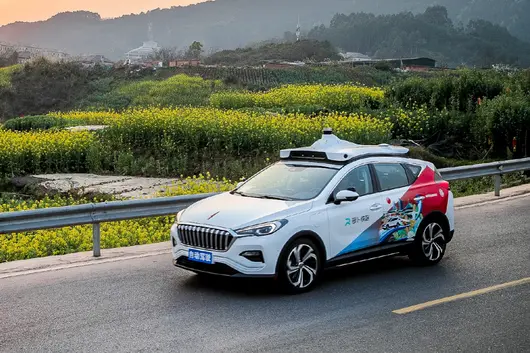

7月2日,广汽集团发布6月产销公告。数据显示,上半年,全集团汽车销量77.31万辆,同比增长2.35%,其中节能与新能源车销量占比达62.82%。自主品牌出口量保持翻倍增速,上半年累计达12.15万辆,同比增132%,已接近去年全年水平。

今年以来,随着“番禺行动”系列改革积极效果传导至市场端,广汽集团自主品牌销量加速攀升。上半年,广汽自主品牌累计销量34.60万辆,同比增长35.69%。今年7月,广汽集团累计产销量将突破3000万辆里程碑,标志着规模化发展正式迈入新阶段。
自主与合资齐头并进
新能源、高端化成果加速兑现
今年以来,广汽集团在新能源和高端化赛道全面提速。
昊铂埃安BU积极推进改革及品牌焕新,上半年累计销量达18.16万辆,同比增长67.08%,C端用户占比超80%。面向大众市场的埃安持续推出多款热销车型,其中埃安i60月销持续破万,跻身A级双动力SUV销量前列;埃安N60自4月底上市以来,已交付超万辆。与此同时,锚定新豪华赛道的昊铂持续发力,20万级豪华运动SUV的昊铂S600已于6月12日上市。

埃安N60

昊铂S600
广汽传祺上半年销量达16.44万辆,同比增长12.36%。MPV家族累计销量突破88万辆,6月同比劲增36%。广汽传祺显著加快产品升级速度,传祺M6 MAX、向往E8 PHEV及向往M8 PHEV L已于上半年相继上市,并计划于今年第三季度推出首款硬派越野SUV传祺“越7”。渠道与服务同步升级,5月,广汽传祺与中升集团战略合作落地,首批12家全新授权经销门店在核心城市同步揭牌,预计全年将落地超30家。

传祺向往M8 PHEV L
今年6月,广汽集团向高端化突破取得重要进展,与华为乾崑联合打造全新高端品牌——启境,首款车型启境GT7于6月26日在杭州正式上市,24小时大定订单突破5200辆,市场反响热烈,新车将于7月初开启全国交付。启境GT7搭载华为六大汽车智能化解决方案,拥有最强全栈技术,将首批搭载华为乾崑智驾ADS 5。根据规划,启境还将于下半年推出新一代智能阔五座SUV启境GX7,双车矩阵战略正式落地,品牌发展全面驶入快车道。

启境GT7
合资板块中,广汽丰田上半年销量35.6万辆,同比增长3.29%,并于3月、4月、5月连续三个月居合资车企销量榜首。本土化开发车型持续发力,铂智3X上市以来累计终端销量已突破11万辆,刷新了合资新能源车型达成该纪录的速度,连续10个月领跑合资纯电市场,成为上半年合资纯电销冠;另一款本土开发车型铂智7上市3个月交付已破万。全球战略车型表现稳健,赛那与凯美瑞上半年于各自细分市场均居销量前列。此外,近期广汽丰田第1000万辆量产车下线,晋升千万级车企行列。

广汽丰田铂智3X
广汽本田6月销量环比增长55.65%,第二季度连续2个月实现双位数环比正增长。雅阁在《2025年度中国汽车保值率报告》中蝉联合资中型车保值率冠军。新皓影于5月20日焕新上市,作为本田首款搭载与华为云联合打造智能云车机的车型,精准回应家庭用户全场景出行需求。面向2027年,广汽本田将推出3款全新产品,覆盖燃油、混动及新能源三大领域,展现出强劲的体系韧性与转型活力。
借势2026年新能源汽车下乡,广汽8款车型入选活动名录,渠道加速下沉,年内计划落成1000家县域授权门店,截至6月底,已完成600家网点认定。产品向上、渠道向下,广汽正以体系实力打开增量新空间。

广汽本田皓影
上半年出口同比132%
全球五大区跨越式增长
随着体系化出海战略持续推进,海外市场已成为广汽集团爆发力最强的板块。1-6月,广汽自主品牌出口量达12.15万辆,同比大增132%。

广汽“体系化出海”加速全球布局
上半年,广汽在海外市场销量集中爆发,包括美洲、亚太、中东、非洲及欧洲在内的五大区域同步实现高增。其中,在美洲的墨西哥,埃安UT和ES分别位居B/C级纯电市场前三;在玻利维亚,传祺向往S7、埃安UT拿下年度插混、纯电车型销量冠军,广汽接连多月蝉联当地中国品牌乘用车市场销冠;在巴西和哥伦比亚,广汽6月销量环比分别大增1129%、804%,乌拉圭则同比增长254%。
在亚太区域,广汽市占率在多地刷新纪录。其中,在中国香港1-5月电动车市占率突破11%;泰国市场6月销量环比劲增207%;新加坡市场6月环比增长77%。非洲及中东市场也在稳步突围。继1-2月中东区域销量同比增长282%后,5月影速拿下黎巴嫩B级SUV销冠,埃塞俄比亚6月销量环比大增510%。
在备受关注的欧洲市场,广汽已建立从本地化生产到核心市场终端销售的全链路运营体系,上半年进入意、英、西等国,拿下6月希腊中国品牌纯电销量第二,同时埃安UT已于奥地利KD工厂投产。
具身智能、飞行汽车、Robotaxi
前沿科技版图加快商业化突破
广汽集团以前瞻布局加快培育新质生产力,上半年在低空经济、具身智能和自动驾驶三大赛道均实现商业化突破。
6月25日,广汽孵化的具身智能机器人企业慧仑科技与广汽动力BU签署战略协议,将联合打造万台人形机器人标准化产线,并率先在广汽动力BU工厂内部署机器人产品,加速具身智能在工业场景落地。同时,慧仑科技自研的第四代具身智能人形机器人GoMate Mini已具备全天候、全场景智慧物业运维能力,上半年在多个社区及产业园区实现常态化运营与小规模商业化落地,已获近千万元人民币订单,规划2027年实现规模化量产。

广汽第四代具身机器人GoMate Mini在广州地铁站内投入服务
在飞行汽车方面,高域科技广州黄埔工厂已于5月底落成,并下线首台飞行汽车GOVY AirCab。目前,该机型已获近2000架意向订单,适航取证稳步推进,预计年底完成认证交付。

广汽高域多旋翼飞行汽车GOVY AirCab
在Robotaxi领域,广汽与滴滴自动驾驶联合打造的Robotaxi R2已于今年1月正式交付,并先后获广州和北京两地智能网联汽车道路测试牌照,正稳步推进复杂场景下的L4级自动驾驶验证工作。旗下如祺出行“Robotaxi+”战略正推进自动驾驶规模化运营,运营的Robotaxi车辆超300辆,未来计划组建超万辆车队,覆盖100个核心城市。
下半年,广汽集团将推出硬派越野SUV传祺“越7”、面向年轻市场的埃安智能轿跑、新一代智能阔五座SUV启境GX7等重磅车型,产品阵容再升级,并将以更强劲的产品与体系实力,为用户创造超越期待的移动出行价值。

【导语:2026年,Robotaxi商业化落地步伐正在加速。日前,自动驾驶科技公司、整车企业、出行平台集中发布新的Robotaxi发展计划。小马智行拓展全球车队规模;文远智行携手联想开启五年规划;小鹏集团聚焦物理AI。以上种种,无一不是围绕Robotaxi技术研发、成本控制、牌照资源、市场份额展开的全方位竞争。】
作者:蔡言
在一众无人驾驶玩家中,吉利旗下的曹操出行发布了中国首款原生Robotaxi,采用了完全不同于其他企业的技术路线。那么,当2026年Robotaxi行业跨过技术验证期,转向规模化和商业化竞争,曹操出行这块“原生量产”的拼图,能否悄然重构Robotaxi的中国路径?
何为原生Robotaxi ?
原生Robotaxi,即车辆从立项、研发、落地都是围绕“智能无人驾驶”开发的,车辆电子电气架构、底盘控制、座舱布局、智驾算法优先满足无人化、智能化、安全性与空间体验。

曹操出行Robotaxi很可能会改变Robotaxi竞争格局,主要源于“新模式”对“旧模式”的冲击。过去很长一段时间里,无论是全球无人驾驶标杆Waymo,还是国内早期玩家, Robotaxi大多采用“量产车+后装套件”模式,即“在民用量产车的基础上,增加一堆硬件,从而满足无人驾驶条件”。
这套“后装模式”,之所以行得通,除了硬件水平外,主要原因在于:一方面早期Robotaxi赛道资本不计成本地大撒币,试验状态下能够支持企业高成本运行;另一方面则是Waymo、萝卜已经用这套模式跑通了基础商业闭环,这些企业们最先考虑的事情,往往是拓展运营规模,借助规模化摊薄单车成本。
实际上,无论是Waymo还是国内头部无人驾驶企业,即便行业不断刷新算法能力和路测数据,但始终未能跨越规模化运营盈利的门槛。导致“后装模式”盈利困难的痛点在于,一方面为改装成本高、可靠性差、能耗高、车辆总拥有成本(TCO)居高不下;另一方面则是技术与运营脱节,自动驾驶科技公司、整车企业、出行平台作为Robotaxi赛道的三大势力,每种企业都有独特的优势,同时也会出现科技公司缺车、车企缺运营、平台缺技术对应的难题。

因此,尽管2024年之后,Robotaxi玩家都在加快商业化,努力实现自身造血,但最亮眼的战报,往往局限于“片区盈利,亏损收窄,车队扩张,整车成本下降,牌照增加”。
曹操出行原生Robotaxi的模式优越性在于,“智能定制车+智能驾驶技术+运营平台”才是Robotaxi商业闭环的正确打开方式。或者说未来的Robotaxi商业化模式,与其科技公司、整车企业、出行平台各自为战,不如多方合作发挥各自优势。
曹操出行Robotaxi有什么优势?
吉利和曹操联合打造Robotaxi——Eva Cab,最值得关注的地方,并非产品层面,而是商业化模式,曹操出行作为吉利的出行平台,同时也是吉利Robotaxi最重要的商业化载体,曹操出行Robotaxi不必从零开始搭建模式,直接拥有“智能定制车+智能驾驶技术+运营平台”全方位能力。
在定制车和智能驾驶技术层面,Eva Cab成为了吉利在整车和AI技术体系的能力体现。
Eva Cab在设计之初便采用转向、制动、电源、计算平台多重冗余配置,并且配备传感器自清洁、线控双冗余等系统。在座舱空间方面,由于Eva Cab取消了方向盘和副驾,车内乘员空间使用空间大幅提升,车门则采用对开式电滑门布局,让车辆所有设计都围绕乘员舒适性体验服务。
为了适应中国城市高密度、高复杂度的运营环境,Eva Cab搭载全球首个“量子AI电子电气架构EEA 4.0”,为AI时代重新设计整车电气系统。量子加密技术覆盖蓝牙钥匙、远程车控、OTA升级、数据隐私等全链路。

在核心算力方面,Eva Cab在英伟达SuperChip+Thur U+高通骁龙8797三块旗舰芯片的堆料下,车端算力超过3000TOPS,这也让WAM世界行为模型的参数量提升7倍、推理帧率提升3倍,决策响应效率是人类驾驶员的3倍之多。
在感知硬件配置上,Eva Cab原型车配备了43颗感知元件,最值得关注的是,全球首个2160线数字化激光雷达上车,重点是吉利称其为“可量产千线级”超长距数字化激光雷达,每秒2592万点、最远600米探测距离,主要满足Robotaxi对于“冗余、稳定、应对复杂路况”的多维度需求。

软件层面,Eva Cab以“千里浩瀚G-ASD L4”量产方案为技术底座,融合曹操出行十年出行积累的调度算法、亿级用户基础和超19亿次海量真实出行数据,让算法不再单纯依赖仿真,而是扎根真实的道路场景,持续反哺Robotaxi自动驾驶体验。
将角度落到更加宏大的“生态”叙事,此次曹操出行和吉利深度打造的,并不局限于单独一辆车,而是一套可以持续升级的系统。
吉利把这套布局描述为“地面+低空+低轨”的天地一体化出行解决方案,Robotaxi通过接入低轨卫星、AI数字底盘、云端大脑以及曹操出行“绿色智能通行岛”,打造技术端到运营端的落地链条。

回归最现实的商业化落地角度,无论是整车、智能技术还是运营、可持续生态层面,吉利曹操围绕Robotaxi所有的动作,值得关注的最核心原因——成本控制。
吉利负责整车供应链成本控制,曹操出行负责运营经验,能够无缝迁移至Robotaxi场景,成为Robotaxi大规模铺开的经济基石。
原生Robotaxi让整车设计寿命达到普通私家车2~3倍,关键部件寿命远超普通乘用车,保养周期大幅延长,从源头降低车辆TCO(拥车成本)。运营体系的复用,无论在营销层面,还是数据反哺层面,都能大幅降低费用成本。
根据弗若斯特沙利文数据,曹操出行定制车相比民用纯电车,平均TCO降低约36.4%,目前传统改装Robotaxi的每公里运营成本普遍在2.5元至4元之间。
说到底,曹操出行这次联手吉利深度定制原生Robotaxi,一开始就瞄准了“车辆即服务”的终局,而非科技公司的炫技式叙事。如此一来,硬件回归最本质的服务载体,软件成为无人驾驶的驱动数据,将技术持有、运营、维保到退役,全部纳入一条精密运转的资本回报系统。
Robotaxi商业化提速
按曹操出行Robotaxi“三步走”战略,目前已经从初期的技术验证和小规模测试运营,来到了探索无人化运营阶段,曹操出行已经在杭州、苏州等城市试运营Robotaxi超过一年。
今年将逐步开拓更多城市,计划在中国香港及其他国际市场探索Robotaxi业务,2027年吉利量产面向曹操出行的定制版Eva Cab,到2030年,累计投放10万辆原生定制的Robotaxi全面铺向全球各地。
据灼鼎咨询报告预计,2030年中国Robotaxi市场规模有望达到515亿元。国内和海外玩家都很有默契的在今年,加快Robotaxi商业化速度。Waymo计划2026年在美国及国际市场20个城市扩大测试并推出新的商业服务,目标为2026年底前实现美国市场每周超过100万次付费Robotaxi出行。小马智行宣布2026年计划在全球20余城部署超过3000辆Robotaxi;文远知行与联想携手计划未来五年内全球范围内部署20万辆Robotaxi。

此外,3月小鹏汽车宣布成立Robotaxi独立业务部,计划在年内推出3款全栈自研车型,并于下半年开启载客示范运营。特斯拉于4月正式投产Cybercab,加之5月初,特斯拉监管版全自动驾驶车队累计行驶总里程突破100亿英里,这均意味着特斯拉Robotaxi业务加速落地。
点评
2026年,“商业化、规模化、体系化”作为Robotaxi行业的关键词,竞争模式已经从算法的单点突破,进入到了“制造+运营+算法”的全产业体系对决,未来拥有硬核技术实力+精细化成本管理+全域运营体系的玩家,才是真正的市场主流选手。
(本文系《禾颜阅车》原创,未经授权,不得转载)
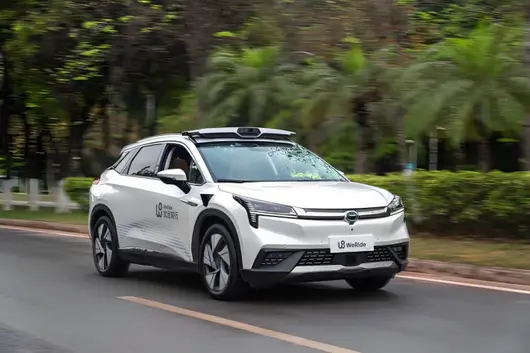


编译 | 莫 莉
编辑 | 黄大路
设计 | 甄尤美
来源 | Reuters,Financial Times等
Uber这次打算真金白银押注Robotaxi了。
4月15日,路透社援引英国《金融时报》报道称,Uber已承诺投入超过100亿美元,用于采购数千辆自动驾驶汽车,并入股相关技术开发商。
此举标志着Uber告别轻资产的零工经济(gig economy)商业模式,以应对自动驾驶出租车带来的行业冲击。
按测算,约有25亿美元会流向股权投资,超过75亿美元会用于车队采购,而且相关协议大多都附带部署里程碑条件。
针对这一情况,Uber未立即回应媒体的置评请求。
不过,把Uber过去两个月连续公开的动作放在一起看,这并不是一条孤立消息,更像是公司已经启动的一轮战略转向。
从今年2月起,Uber一边对外强调自动驾驶是核心战略优先项,一边开始把钱投向整车、股权和配套基础设施。
其先后披露了对Rivian、Lucid、Waabi等伙伴的资金承诺,也宣布建设自动驾驶充电枢纽、推出面向合作方的商业化工具包,并把Robotaxi的扩张时间表写得更具体。
按Uber和合作方近期公开的信息,到2026年底,平台计划促成Robotaxi行程覆盖全球最多15座城市;到2028年,搭载英伟达方案的无人车队目标是在至少28座城市落地。
从轻资产转型

这次之所以引发关注,关键不只在100亿美元本身,而在于涉及到Uber过去几年一直强调的边界。
2020年,Uber出售自研自动驾驶业务,转向更谨慎的合作路线,以降低现金消耗,把重心拉回出行和配送主业。现在,Uber并没有重回自研自动驾驶的老路,但也不再只是做撮合订单的平台,而是开始提前为车辆、股权和后续运营投入真金白银。
2月4日Uber财报公布后,路透社评价称,公司正在为这种资本密集、仍处早期阶段的自动驾驶战略背书。
Uber当时表示,会向车辆合作伙伴投入资本,以确保早期供应并加快部署,同时还会与银行和私募股权机构合作,为大部分自动驾驶车队融资。
Uber首席执行官达拉·科斯罗萨西(Dara Khosrowshahi)对外表示,公司愿意先把资本拿出来,先锁定后续供给。
这意味着,Uber仍想做平台,但它也在调整做法:如果想在Robotaxi时代继续掌握用户入口,只靠撮合订单已经不够了。
Uber判断,Robotaxi不是简单替代现有出行需求,而是会通过增加运力、改善可靠性和压低价格,把整个出行市场再做大。
其公开目标是,到2026年底在全球最多15座城市促成Robotaxi出行,并准备把业务扩展到西班牙马德里、香港、休斯敦和瑞士苏黎世。
达拉·科斯罗萨西还表示,在Uber平台上运营的自动驾驶车辆,利用率和接驾速度都优于独立运营的Robotaxi服务,这也是它判断大平台能做出更好经济账的原因。
随后,Uber把这套合作思路进一步落到具体业务上,正式推出Uber Autonomous Solutions。从公司自己的定义看,这不是一个单独产品,而是一整套给自动驾驶合作方用的商业化能力,分成基础设施、用户体验和车队运营三块。
Uber提到,它能提供的不只是需求入口,还包括数据采集、地图、监管支持、融资、车内交互、远程协助、现场运维和保险。
达拉·科斯罗萨西表示,自动驾驶的创新进展很快,但真正有意义的商业化会慢得多,Uber要做的,是把自己过去十多年在按键叫车、履约、客服和运营上的积累,对外输出给合作伙伴。
这条消息之所以值得汽车行业重视,在于Uber的角色正在变化。它不再只是等合作方把车开上路后再接入平台,而是开始向前一步,介入车辆采购、资金投入和运营准备。
路透社还特别提到,经历多年跳票之后,近几个月市场对无人驾驶出租车的兴趣重新回升,而人工智能能力进步以及科技公司、平台和车企之间的新合作,被认为有机会更快处理复杂路况,也有机会摊薄高成本。
Uber也正是在这一轮行业回暖中,重新调整自己在Robotaxi产业链里的位置。
向车和股权砸钱

如果把Uber近几个月披露的合作一项项拆开看,这笔钱具体会投向哪里,其实已经越来越清楚。
最重的一笔,是3月19日公布的Rivian合作。
据报道,Uber将向Rivian最多投资12.5亿美元,首笔先投3亿美元,剩余资金到2031年前分阶段支付,前提是Rivian达到自动驾驶里程碑。
作为交换,Uber将从2028年起部署1万辆全自动Rivian R2 SUV作为Robotaxi,且在2030年还拥有再买4万辆的选择权。
对Rivian来说,这笔钱既是研发自动驾驶路线图所需的资金,也带来一个大体量商业客户。对Uber来说,它提前锁住的是一批能规模化交付的整车供给。
另一笔钱,是Lucid与Nuro这条线。今年1月5日,Lucid、Nuro和Uber在拉斯维加斯发布了一款接近量产状态的Robotaxi,为当年晚些时候的商业落地做准备。
4月14日,Lucid进一步宣布,Uber已把采购承诺从此前水平提高到至少3.5万辆Lucid车辆,覆盖Lucid Gravity和未来的中型平台车型,同时再追加2亿美元投资,使其对Lucid的总投资升至5亿美元。
Lucid还披露,下一代Robotaxi服务计划在2026年晚些时候于旧金山湾区启动,Nuro主导的道路测试已在2025年12月启动,Lucid在今年2月完成了全部测试车辆交付。
在这笔Lucid合作里,Uber看中的不只是Lucid的车型本身,也看重这套车在采购、制造和后续运营上的成本空间。
Lucid提到,未来的中型平台起售价计划压到5万美元以下。达拉·科斯罗萨西表示,Lucid未来的中型平台,让Uber看到了更清晰的单车经济性路径。
这意味着,Uber现在挑伙伴,不只是看谁的自动驾驶能跑,还看谁的整车平台能把采购、制造和运营成本压下来。
Lucid时任临时首席执行官Marc Winterhoff也在公告中提到,Lucid中型平台要解决的是成本效率、制造简化和面向下一代出行网络的用户体验。
再往前看,Uber对软件公司的下注也早已开始。
自动驾驶公司Waabi在1月完成10亿美元融资并与Uber达成合作,达拉·科斯罗萨西当时表示,Waabi未来生产的首批2.5万辆乘用车,将独家部署在Uber平台。
Waabi的公告称,这笔合作包含来自Uber的额外里程碑式资本支持,目标是在未来部署2.5万辆或更多搭载Waabi Driver的Robotaxi。
从已披露的合作看,Uber的资金已经同时投向整车企业和自动驾驶技术公司,而不是只押注其中一端。多项合作也都设置了量产、验证或部署节点。
平台不只管接单

从最近公开的信息看,Uber现在补的不只是车源和合作伙伴,还包括Robotaxi落地后每天怎么跑、怎么充电、怎么运营。
目前最成熟的案例,还是Waymo和Motional。
Waymo官网和Uber官网都显示,奥斯汀和亚特兰大的乘客已经可以只通过UberApp匹配Waymo车辆,车型为纯电Jaguar I-PACE。
乘客发起UberX、Uber Comfort等订单后,有机会被系统匹配到Waymo,不需要额外下载另一个应用。
另一边,Uber与Motional在3月13日宣布,拉斯维加斯用户已经可以在指定区域通过UberApp叫到Motional IONIQ 5 Robotaxi,涵盖拉斯维加斯大道沿线的多个上车点。
Uber强调,用户如果被匹配到自动驾驶车辆,既可以接受,也可以改回普通订单。
国际化扩张也在同步推进。今年2月10日,Uber与百度将在迪拜上线自动驾驶打车服务,首批覆盖迪拜朱美拉部分区域,乘客可以在UberApp里选择Autonomous选项,或在UberX、Uber Comfort订单中被匹配到Apollo Go车辆。
到了3月31日,Uber又宣布与WeRide在迪拜启动全无人、可收费的Robotaxi运营。此外,其与WeRide的合作已支撑阿布扎比、迪拜和利雅得的商业部署。
除中东市场外,欧洲、美国西海岸和日本的新项目也在陆续推进。
4月8日,Volkswagen集团旗下MOIA America宣布,已在洛杉矶启动自动驾驶ID. Buzz上路验证,测试阶段车队会扩至100多辆,计划在2026年晚些时候通过Uber平台向乘客开放,并在后续扩至数千辆。
今年三月中旬,Uber与英伟达宣布,搭载英伟达软件方案的L4级的Robotaxi将于2027年上半年先在洛杉矶和旧金山上线,到2028年扩至全球28座城市。
此外,日产、Uber和Wayve在3月12日宣布,三方计划在2026年晚些时候于东京启动Robotaxi试点,首阶段仍会配备受训安全员,并通过日本本地持牌出租车伙伴运营。
这解释了为什么Uber在2月18日又单独宣布,要拿出超过1亿美元建设自动驾驶充电枢纽。
据了解,这笔钱将先投向湾区、洛杉矶和达拉斯,用于建设自动驾驶车队的日常充电站和中途补能点。同时,Uber还会和EVgo、Electra、Ionity等运营商签“利用率保障协议”,在多个城市新增数百个充电桩。
对于车企和自动驾驶技术公司来说,车辆能不能上路只是第一步,车队能不能稳定充电、持续周转、把运营效率跑出来,是另一道更现实的门槛。Uber现在也在补这部分能力。
放在一起看,Uber这笔100亿美元承诺并不是一句空话。
过去两个月,公司已经围绕整车采购、股权投资、运营落地和充电网络连续出手。按路透社的说法,Uber正把自己定位为多个Robotaxi运营商的合作平台。对它来说,接下来要做的,不只是把更多自动驾驶车辆接入平台,而是更早介入车辆、资金和运营环节。